How Frivolous Spending and Lazy Living Destroy the Modern Household”
“There is treasure to be desired and oil in the dwelling of the wise; but a foolish man spendeth it up.” — Proverbs 21:20
In the age of delivery apps and digital wallets, the household has become a leaking cistern. What God designed to be a fortress of dominion and production has been turned into a sieve, dripping dollars into the hands of corporations, tech overlords, fast food franchises, and the merchants of vanity. And at the center of this destruction is not merely greed, but something even more damning: sloth, a lifestyle of laziness, unplanning, and indulgent ease, especially among wives, and increasingly among weak, passive husbands.
This epidemic is not a private matter. It is the open rebellion of a household against the dominion mandate of God. It is a public insult to the sacred calling of stewardship. It is a declaration that pleasure and convenience are more precious than legacy and responsibility.
Let the sons of God not remain silent. Let us confront the sin, expose the causes, and restore the glory of household order.
I. A Culture Addicted to Waste
Frivolous spending is not just an occasional indulgence in modern society, it is the lifestyle norm. The spirit of the age whispers, “You deserve it,” and the flesh responds with a tap, a click, and another $40 meal from Uber Eats.
Gone is the noble vision of a family home as a productive economy, a training ground for virtue, and a storehouse for generational inheritance. In its place stands the modern suburban hamster wheel, a cycle of wage slavery and weekend splurging, convenience meals and crumbling budgets, Amazon packages and unpaid credit cards.
Even among so-called “Christian” homes, many operate like pagan households, enslaved to consumption rather than consecrated to purpose.
How Does the Leak Happen?
- Daily takeout orders because no one wants to cook
- Subscription boxes for makeup, snacks, or novelty trinkets
- Endless “self-care” items justified by emotional indulgence
- Hobby shopping instead of homemaking
- Instant gratification from online deals, flash sales, and influencer ads
- Poor food stewardship, groceries wasted while eating out
- Impulse Amazon orders at midnight because of “convenience”
- Paid delivery for everything from coffee to toilet paper
This is not merely foolish, it is wicked. Because it robs the household, mocks the labor of the provider, and makes ease the chief household god.
II. Sloth: The Root of the Drain
“The desire of the slothful killeth him; for his hands refuse to labour.” — Proverbs 21:25
Frivolous spending is often blamed on vanity, materialism, or lack of budgeting. But these are fruits of a deeper root: sloth.
Sloth is not just laziness, it is the willful refusal to plan, work, or take dominion. It is passivity wrapped in excuses. It chooses the easiest path rather than the righteous one. It avoids discipline. It craves comfort.
And when sloth enters the household, spending follows. Why?
Because sloth creates dependence on others to do what God has called us to do ourselves.
Instead of cooking, we pay someone else to cook.
Instead of learning, we pay someone else to solve our problems.
Instead of creating, we consume.
This is why sloth leads to debt. It’s not always the person who doesn’t work, it’s often the person who refuses to work at home. The wife who won’t plan meals. The husband who won’t inspect the budget. The couple who won’t steward time, effort, and money as holy offerings to God.
III. The Sin of the Slothful Wife
Let’s be clear. One of the gravest offenses in the modern home is the wasteful and lazy spending habits of the wife.
God created woman to be a helper to her husband, a keeper of the home (Titus 2:5), and a manager of his household wealth (Proverbs 31:27). She is not the queen of indulgence, she is the queen of stewardship.
But today, many wives have cast off their sacred role and embraced emotional spending, digital convenience, and slothful living:
- Ordering food instead of cooking
- Letting groceries rot while opting for Chick-fil-A
- Buying clothes weekly while neglecting laundry and sewing
- Binge-watching shows while claiming exhaustion
- Spending hours scrolling Pinterest but refusing to bake bread or sweep a floor
- Running errands inefficiently, with no plan, wasting time and fuel
Such women will blame “mental load,” “stress,” or “burnout”, but the truth is this: they have no vision of order. They are not too busy, they are too disordered. And sloth loves disorder.
Wife, hear this clearly: if you spend frivolously, refuse to plan meals, avoid cooking, neglect the upkeep of the home, and consume more than you contribute, you are violating your calling. And your husband, children, and household will pay for it.
IV. The Abdicating Husband
The sin of the slothful wife is often enabled by the passivity of her husband.
Too many men today are cowards when it comes to finances. They bring in money, but don’t govern it. They see the spending, but say nothing. They feel the bleed, but justify it because they don’t want conflict.
Or worse, they join in, buying gadgets they don’t need, indulging in daily lunches out, subscribing to streaming services, and wasting hours and dollars alike.
This is not headship. This is abdication.
“He that is slothful in his work is brother to him that is a great waster.” — Proverbs 18:9
The slothful man is kin to the waster because failure to work is failure to preserve.
A righteous man must not only earn, he must oversee. Every dollar in the home is a soldier for dominion. To allow it to be squandered is to be an unfaithful general.
V. The Toll on the Household Economy
Frivolous and slothful spending is not just a spiritual error, it is an economic catastrophe for the household.
Consider:
- Missed opportunity: Money spent on fast food could have bought garden tools, homeschool supplies, or bulk food storage.
- Debt cycles: Unplanned spending leads to credit cards, which lead to interest, which leads to enslavement.
- No savings: Emergencies cannot be met, investments cannot be made, and future plans are paralyzed.
- Stolen inheritance: Money that should have gone to children, land, or legacy is wasted on fleeting comforts.
- Weakened witness: Sloppy finances are a poor testimony. The world sees Christians who cannot manage what they’ve been given.
The household is God’s dominion embassy on earth. If it cannot manage money, it cannot rule.
VI. Examples of Sloth-Driven Waste
To be brutally specific. These are not rare, anecdotal cases. They are now the norm in far too many households, even among those who profess Christ.
1. Daily DoorDash or Uber Eats
- A $60 dinner that could have been a $12 home-cooked meal
- Justified because “we’re tired”
- Done habitually rather than exceptionally
Root cause: Laziness, poor planning, addiction to convenience
2. Subscription Everything
- Streaming, apps, Audible, boxes, game passes, premium this or that
- Monthly siphoning without awareness
- No fruit, no gain, no necessity
Root cause: Desire for distraction, lack of budget discipline
3. Grocery Waste + Eating Out
- Buying groceries with good intentions, then letting them spoil
- Grabbing takeout three times a week
- Losing both the food and the money
Root cause: No meal planning, no kitchen leadership
4. Amazon Impulse Spending
- “It’s only $20” repeated ten times a week
- Emotional purchases to fill time or cope
- No inventory tracking, no delayed gratification
Root cause: Disordered desire, slothful restraint
VII. What God Commands Instead
God’s Word is not vague about household stewardship. It is rich with commands for productivity, discipline, and dominion:
“Go to the ant, thou sluggard; consider her ways, and be wise.” — Proverbs 6:6
“She looketh well to the ways of her household, and eateth not the bread of idleness.” — Proverbs 31:27
“He that is faithful in that which is least is faithful also in much.” — Luke 16:10
From these passages, we learn that:
- Small spending matters. God watches the little leaks.
- Idleness breeds ruin. An idle woman will destroy what her husband builds.
- Wisdom is active. The godly woman and man plan, labor, and inspect.
VIII. The Cure: Return to the Ordered Household
We must not merely complain about this slothful spending, we must overthrow it with order, discipline, and reformation.
1. Reinstate the Husband’s Financial Headship
- Review the budget weekly
- Approve all major purchases
- Remove frivolous subscriptions
- Train children to see every dollar as a tool of dominion
2. Restore the Wife’s Stewardship Role
- Plan meals weekly
- Cook consistently, even simply
- Inventory food and household goods
- Learn skills: sewing, baking, preserving, couponing
- Say no to emotional purchases
3. Create a Household Economy
- Budget based on God’s priorities: tithe, save, invest, provide
- Include children in financial conversations
- Establish frugality as a family culture
- Produce more than you consume
4. Live by Schedules and Routines
- Set times for meal prep, chores, errands
- Do bulk shopping strategically
- Plan holidays and birthdays with thrift
- Wake early, eat together, work joyfully
IX. Final Word: Rebuild the Gates
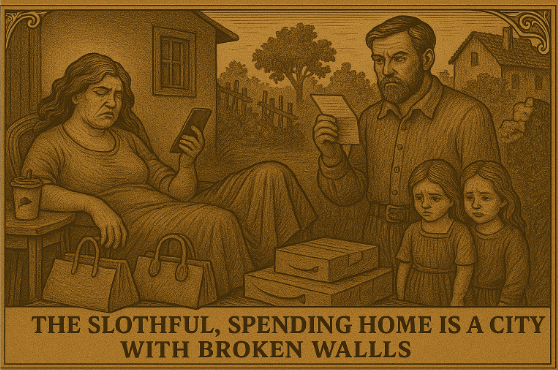
The slothful, spending home is a city with broken walls. Its gates are unguarded. Its stores are plundered. Its inhabitants are not soldiers, they are slaves to ease.
But the house built on wisdom, diligence, and dominion is a fortress.
Men: rise and lead. Inspect the budget. Rule the house.
Women: take up your God-ordained role. Manage the home. Protect the storehouse.
Children: learn from your parents the joy of wise stewardship.
Because in The Great Order, there is no room for waste. There is no room for sloth. There is no room for weak, unruled homes.
There is only room for strength, holiness, and dominion, for homes that do not leak, but overflow with the fruit of discipline and grace.
“Be thou diligent to know the state of thy flocks, and look well to thy herds.” — Proverbs 27:23
Let us look well to our flocks. And may the Lord bless the homes that do.