
Category Archives: Irish

Album Release: The Journey of the Patriarch

The Journey of the Patriarch is an epic Celtic instrumental saga following the rise of a patriarch who builds a household, raises sons and daughters, gathers a clan, and leads his people under the banner of legacy and dominion.

Driven by war drums, soaring pipes, Celtic strings, and cinematic orchestration, the album tells a story of family, honor, leadership, and the unbroken strength of bloodline. Eventually completing his mission and passing the torch to those he raised up.


For centuries the Irish have told their stories through music. Long before written chronicles or printed histories, the melodies of pipes, fiddles, and harp carried the memory of a people. Battles, births, victories, losses, faith, family, and legacy were all preserved in song. Often these melodies carried no words at all, yet they possessed a profound ability to convey the story, the emotion, and the spirit of the moment in a way that every heart could understand.

The Journey of the Patriarch follows in that ancient tradition.

This album tells the life story of a patriarch through instrumental Celtic music – from the raising of his banner and the forming of his household, to the birth of children, the founding of a chapel, the gathering of a clan, and the trials of war. Each track represents a chapter in the life of a man who builds a house, leads his people, and leaves behind a legacy carried forward by the next generation. A man who leads his people through seasons of peace and war.

From the first march of the patriarch to the raising of the clan’s chapel, from the laughter of children in the hall to the thunder of war drums beneath the banner, each piece is a chapter in a greater story, the story of a house built, a clan forged, and a legacy carried forward through generations. Driven by war drums, soaring pipes, Celtic strings, and cinematic orchestration, this music tells a story not with words, but with feelings of honor, faith, family, and the enduring strength of a house built to stand.

And when the patriarch’s days are finished and his watch is ended, the music reminds us of a solemn truth: a faithful man may rest, but the house he built will endure.

This is The Journey of the Patriarch • a Celtic saga told in music.

Now Available on Apple Music, iTunes, Instagram Music, Facebook Tunes, TikTok, ByteDance stores, YouTube Music, Amazon Music, Pandora, Deezer, Tidal, iHeartRadio, Qobuz, Saavn, Boomplay, Anghami, NetEase, Tencent, Claro, Música, Joox, Kuack Media, Adaptr, Flo, MediaNet, Roblox, Snapchat, …and basically everywhere music lives.

Track 1. The Patriarch’s War March

Before the house was raised, before the hearth was lit, there was a man, and before the man was formed, there was a calling placed upon him. It was not announced with thunderous applause, nor was it written upon the sky in fire, but settled upon his spirit with quiet weight impossible to ignore. While others pursued ease and wandered through life without aim, he felt the burden of something far greater, as though his steps were being measured for a path not yet revealed. He learned early that strength is not given freely but shaped through trials; that discipline is only a companion to those who would endure; and that a man who refuses the call to rise will be ruled by those who humbly answer it. So, he labored, he sacrificed, he hardened himself, and he set his face toward a future not yet seen but already appointed.

And so the march began, not merely a march of feet upon the earth, but a march of purpose within his soul. Each step was taken with steadfast resolve, as though he walked before witnesses unseen. He did not yet possess land, nor house, nor sons to carry his name, yet within him was the seed of all three. For it is written in the Great Order of things that a man must first rule himself before he is given rule over others. And in those early steps, though no banner yet flew and no clan yet followed, the foundation of a patriarch was being laid; stone upon stone, choice upon choice, until the man himself became the beginning of the house.


Track 2. Raise the Red Banner

There comes a moment in every story when what is hidden must be revealed, when a man no longer prepares in silence, but stands in defiant declaration. The banner is not raised for exhibition, nor for the approval of men – it is raised as a sign. A signal that a man has taken his rightful place, that he will no longer drift among the uncertain, but will stand boldly, rooted, and unyielding. When he lifted the banner, it was as though a line had been drawn upon the earth, marking the place where his authority would begin and would be non-negotible. It spoke without words: here stands a man who will build, who will lead, and who will not retreat from what has been set before him.

And as the banner moved in the wind, so too did it call forth those who were meant to gather. For men are drawn to order as dry ground longs for rain. They came not by force, nor by plea, but by recognition; seeing in him a steadiness they themselves had not yet mastered. Under that banner, they found direction; under his hand, they found purpose. And though the company was small, and the days still uncertain, something had begun that would not easily be undone. For where a banner stands with conviction, a people will form; and where a people gather under rightful authority, the beginnings of a house (and even a nation) are at hand.


3. The Taking of Wives

It is not good for a man to build alone, nor can a house stand long without order within its walls. And so he turned his attention not outward, but inward, to the forming of his household. The taking of wives is not an act of impulse or desperation, but of intention. Each union was entered with understanding, that what he was building would extend beyond himself, beyond his own years, into generations yet unborn. These were not bonds of fleeting desire, but of structure and covenant, where each role carries covenant weight, and each place within the house is set with purpose. For a house without order is a house divided, and a divided house will not endure.

Within these walls, life began to take shape. The hearth was lit, and its fire was not only for warmth, but for continuity. The voices within the home carried both peace and responsibility, as the rhythm of the household settled into form. Here, the man who had marched alone began to learn a deeper rule, not only command, but stewardship; not only authority, but provision. And though the world beyond the hills still lay waiting, the greater work had already begun within. For it is through the household that a man’s true strength is revealed, and from the household that his legacy will either rise – or fall.


4. Daughters of the Hearth

As the house was established and its order set in place, life began to blossom within its walls. The hearth burned steadily, not only as a source of warmth, but as the center of all that was being built. And within that light, daughters were raised, gentle in voice, yet strong in spirit, formed by the rhythm of the household and the guidance set before them. They learned not from the world, but from the Word; not from confusion, but from clarity. In their presence, the house was softened, yet not weakened, made whole in a way that strength alone could never accomplish.

For daughters carry within them a quiet inheritance, one not always seen, yet deeply felt. They preserve what is worth keeping, and they bring life where there might otherwise be only structure. And the patriarch, though firm in rule, saw in them a reflection of something sacred; that what he built was not merely to stand, but to flourish. The hearth was no longer just a fire, but a living center, and in its light, the house began to take on a fullness that could not be forged by strength alone.


5. The Firstborn Son

In time, the house was given its first heir. The firstborn son was placed into his arms, not by happenstance, but as the beginning of continuation. In that moment, the unseen future took form, and the weight of legacy became something tangible. The patriarch looked upon the child and saw more than an infant, he saw a name carried forward for all time, a standard upheld, and a responsibility that would one day be passed from his hands to another. For a man may build, but it is through sons that what is built endures forevermore.

And so the work deepened. What had once been personal now became generational. The child would not be left to chance, nor shaped by the world beyond the house. He would be trained, instructed, and guided with steadfast intention. For it is written in the Great Order of life that what is not formed with care will be formed by force. And the patriarch, knowing this, set his hand to the task, not merely to raise a son, but to prepare a successor worthy of the legacy being established.


6. Children of the Iron House

The house did not remain small, nor was it ever meant to. What began as a foundation of order and covenant was soon filled with life, as sons and daughters grew beneath the authority and care of the patriarch. The halls once quiet were now overcome with movement, footsteps, voices, learning, and correction. Each day carried its own rhythm, not of chaos, but of structure. For within this house, nothing was left to chance. The children were not blindly allowed to grow; they were intentionally formed. Their minds were instructed, their hands were trained, and their spirits were guided, that they might become more than what the world would make of them.

This was no fragile dwelling, easily shaken or swayed. It was an iron house, tempered by discipline, strengthened by consistency, and held together by order that did not bend under difficult circumstance. The children learned early that they were part of something greater than themselves. They bore a name, a standard, and a future that would one day rest upon their shoulders. And the patriarch, watching over them, understood that what he built in them would outlast even the walls around them. For a house is not measured by its structure alone, but by what it produces, and here, within these walls, a generation was being forged that would reign in cultural defiance above all others.


7. The Chapel of the Clan

Yet even as the house grew strong and the clan began to take form, the patriarch knew that strength alone was not enough to survive the battle against evil. For no man, and no house, can stand rightly unless it is set in proper order beneath Heaven. And so he turned his hand to something greater still; the establishing of a place where his people would not look inward, but upward. The chapel rose, not as a monument to man, but as a declaration that the house itself was under the authority of God. Stone was laid upon stone, not to build walls, but to mark a place set apart, where the clan would gather in reverence and humility to their creator.

And within that place, a greater alignment was made. The banner, once raised as a sign of his authority, now stood alongside the Cross, not above it, but beneath its meaning. Here, the patriarch bowed, and in doing so, taught his house the order of all things: that authority flows from above, and that a man who leads rightly must first submit rightly. The clan gathered, not as individuals alone, but as a people united in both blood and belief. And from that union came a strength deeper than steel, a foundation that no enemy could break, for it was not built on man alone, but on what is eternal.


8. Oath of the Clan

What had been built within the house now extended beyond it. The family had become a clan, and the clan required more than shared blood, it required shared purpose and commitment. And so the time came for the oath. Not spoken in haste, nor taken lightly, but entered into with full understanding of its conventional weight. The men stood together, not as scattered individuals, but as those bound by purpose, by loyalty, and by the authority under which they lived. Each one knew that the oath was not a formality, it was a line drawn between what they were and what they now chose to become.

As the words were spoken, they carried more than formality, they carried agreement and mission. A binding together not only in presence, but in ironclad resolve. For an oath, once given, is not easily cast aside. It shapes the man who speaks it, and it binds him to those who stand beside him. And from that moment forward, the clan was no longer a gathering, it was a brotherhood of the highest order. A people who would stand together, fight together, and endure together regardless of cost or adversity. And in that unity, something unbreakable was formed, not by force or coercion, but by will aligned in the Great purpose.


9. The War Horn Calls

No house that is built with purpose is left untested, and no man who stands in authority is permitted to remain unproven. Beyond the hills and beyond the borders of what had been established, the world stirred in ways that could not be ignored. There are seasons when a man builds, and there are seasons when what he has built must be tested and defended. The patriarch had long known this day would come, though it had not yet been seen with the eye. And when the time arrived, it did not come with uncertainty, but with clarity. The horn sounded across the land (its voice deep, ancient, and unyielding) and all who heard it understood that the hour had come to stand.

The sound carried over the valleys, through the trees, and into the very bones of the men who had been raised under the banner. It was not merely a call to arms, it was a call to purpose, a summoning to the moment for which they had been prepared. The patriarch did not waver, for he had not built in ignorance of this day. The training, the order, the discipline, all of it had been laid for such a time as this. The men gathered, in readiness, armor was taken up, blades were fastened, and the banner was lifted once more. And as the echo of the horn lingered in the air, the clan stood as one, ready not only to fight, but to prove that what had been built would not be taken from them.


10. Blades Beneath the Banner

The field was set, and the moment could not be delayed any longer. Beneath the banner, the clan moved forward, not as scattered men, but as one body, ordered and aligned by a shared calling. The ground trembled beneath their steps, and the air itself seemed to hold its breath as the distance between them and their adversary closed. There is a point in every man’s life when preparation gives way to action, when what has been spoken must be lived out, and what has been trained must be proven. That moment had come. Steel was drawn, and the first clash rang out like a bell across the field, signaling that the hour of testing had begun.

And yet, in the midst of the noise, the force, and the chaos, there remained something unshaken. The banner still stood, visible above the movement of men and the clash of arms. Beneath it, the clan held its formation, not breaking into disorder, not retreating into fear. For they did not fight as men alone, they fought as a people, bound by oath, shaped by discipline, and strengthened by the order set before them. Each man knew his place, and each stood within it. And though the battle pressed hard, and though the cost was not small, they did not falter. For what is built upon truth and held together in unity does not fail, even under the weight of overwhelming odds.


11. Bloodline Unbroken

When the battle had passed and the field grew quiet once more, there remained a stillness that spoke louder than the clash that had come before it. The air was heavy, carrying both the great cost of what had been endured and the weight of what had been preserved. For every conflict leaves its mark, and every victory carries a remembrance within it that shapes the future. The patriarch stood among his men (not untouched, but unbroken) and looked upon the field with the understanding that what had been defended was not merely land, nor position, but the very continuation of his name, his house and his legacy.

And yet, above all that had been lost, one truth stood firm – the bloodline endured. The banner still flew, not torn down nor cast aside, but lifted still in the hands of those who remained. The clan had not been scattered, and the house had not been brought to ruin. What had been built in discipline and order had withstood the storm. And in that endurance, there was a victory deeper than triumph over an enemy. It was the victory of preservation, the confirmation that what is established rightly, and defended faithfully, will not be erased by the enemy. The bloodline remained, and with it, the promise of continuation and expansion.


12. The Patriarch’s Hall

The return to the hall was not as it had once been, for those who entered carried with them the knowledge of what had been faced and overcome. The fire still burned within its walls, yet its light now revealed men who had been tested, who had stood in the place where strength is proven and found not wanting. The voices that rose within the hall were no longer those of jolly untested days, but of somber remembrance, of reflection, and of unity forged in costly trials. For those who endure together are bound in ways that cannot be broken, and what is shared in hardship becomes part of the foundation of all that follows in the building of the Kingdom.

And there, seated among them, was the patriarch, not removed from his people, but present among them, as both leader and father. He listened as the accounts were spoken, as the lessons were drawn from what had been endured. The hall became more than a place of rest, it became a place of transmission, where what had been learned would be passed to those who would one day stand in the same place. For a house does not endure by silence, but by remembrance rightly spoken. And in that gathering, the next generation began to understand not only what had been done, but what would one day be required of them, as it is required of all men.


13. Legacy of the Clan Lord

The years moved forward, as they always do, and the strength of the patriarch, though still ever-present, began to take on a different form. No longer was it the strength of constant motion, but of a deeply established presence, of a man who had built, who had led, and who now stood as the foundation upon which others continued. He walked among his people and saw what had come from his labor. Sons who now bore responsibility with purpose and dedication. Daughters who upheld the order of their own households. A clan that no longer depended upon his voice for every step, but moved in alignment with what had already been set in place long ago.

And as he beheld all this, there came not sorrow, but a quiet fulfillment. For he understood that the measure of a man is not found in how long he stands at the center, but in whether what he has built can stand when he steps away. The banner still flew strong, not only by his hand, but by many. The house still held, not because of his presence alone, but because of the order he had established within it. And in that, he saw the true weight of legacy, not something held tightly, but something carried forward. What he had built had become greater than himself, and in that, his work was nearing completion.


14. The Patriarch’s Rest

At last, the time came when the labor of his life reached its proper and inevitable end. Not in disorder, nor in haste, but in peaceful completion. The years had been full, the work had been done, and the house stood as witness to all that had been built. He did not depart as one unfinished, nor as one whose foundation would crumble in his absence. He departed as one who had fulfilled what had been set before him. And there is a peace that belongs only to such a man, a rest not born of weariness alone, but of completion earned and rightly achieved.

As he was laid to rest, the house did not fall silent, nor did the clan lose its way. The banner did not lower, for it was no longer held by one alone. The sons stood in their place, the order remained, and the foundation endured. And in that, the final truth was made clear: a man may pass from this life, but what is built in truth, in order, and under rightful authority will stand beyond him. The patriarch had finished his course, but the house he built would continue (generation after generation) carrying forward the legacy of a man who answered the call, made the sacrifice, and did not falter from his mission regardless of the cost. This is the Legacy of a Patriarch.
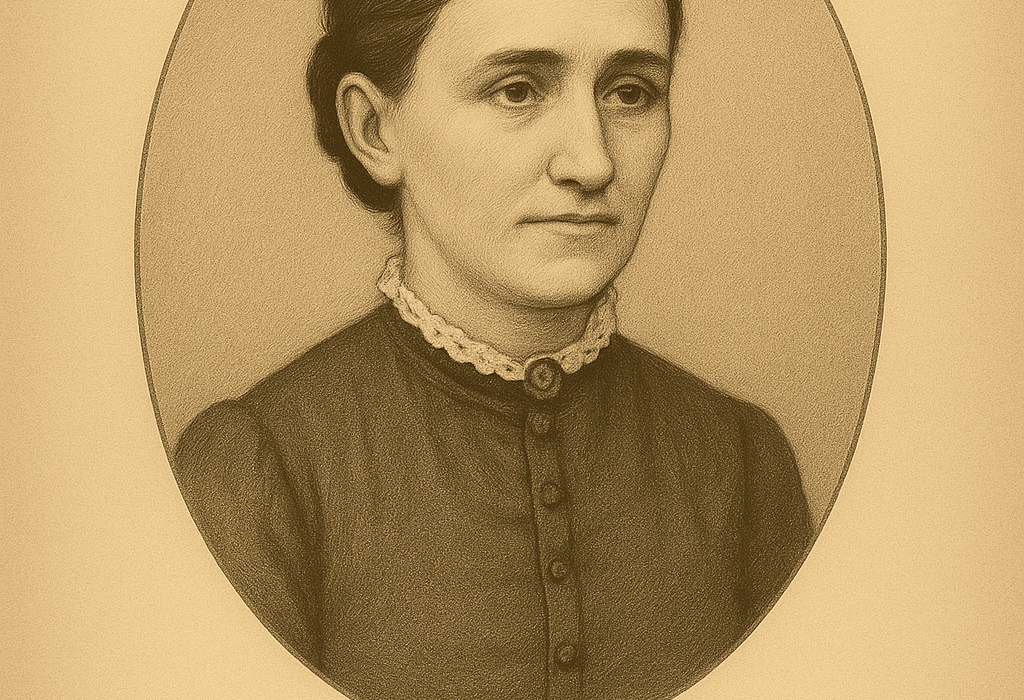
The Forgotten Titaness of Smiljan: The Life and Labor of Đuka Tesla

I have been fascinated with Nikola Tesla for as long as I can remember. His mind was lightning bottled in human form, a genius who seemed less a man and more a conduit of cosmic invention. For decades I have studied his life, read every biography I could find, and marveled at his visions of the future. Yet the deeper I dug into Tesla’s story, the more one figure emerged from the shadows, a woman almost invisible in the history books, yet indispensable to the man the world celebrates. His mother, Georgina “Đuka” Tesla, was the unseen engine who forged the discipline, endurance, and imagination that made Nikola possible. 

To speak of Tesla’s brilliance without honoring the furnace that shaped it, his mother’s tireless, hidden labor, is to tell only half the story. The story of Nikola Tesla is known the world over. The eccentric genius, the wizard of electricity, the prophet of alternating current. But behind him stood a woman whose name most cannot pronounce and whose life modern ears would call unlivable. Raised without schooling, and remembered by her son as “indefatigable.”

She was illiterate. She never published a thing. She never gave a lecture. She never appeared on a podcast or launched a brand. Yet Nikola Tesla himself, the man whose brain ran on lightning, said: “Whatever I had accomplished in life was due to the influence of my mother’s guidance and genius.”

That sentence should stop the modern reader in their tracks. Because if you think the average woman today, latte in one hand, smartphone in the other, laundry piling up, Instacart order delayed, husband begging for attention, and children ignored or shipped off to public school has even a molecule of Đuka’s steel in her spine, you’re delusional.


Childhood of Sacrifice

Đuka was the eldest of eight children. At sixteen, just as her life might have blossomed into courtship or further training as a future wife, disaster struck. Her mother went blind. Suddenly, little Đuka was no longer just the daughter. She became the household’s surrogate mother, responsible for raising seven siblings and caring for her disabled mother on her own as her father grieved and worked 18 hour days to support his family alone.

Forget prom dresses, TikTok dances, or college “self-discovery years.” Imagine spending your late teens not at parties or summer camps, but hauling water, scrubbing floors, preparing food for ten mouths, mending clothes until your fingers bled, tending gardens, and keeping livestock alive,  all before breakfast. That was Đuka’s youth. She sacrificed starting her own family to care for her siblings and her mother.

She learned discipline the hard way: not from motivational posters, not from a “self-care” influencer, but from necessity. And that steel, that unyielding capacity for sacrifice, was what she carried into her marriage and her motherhood. And all without any medications or “therapy”


Marriage and Household Dominion

In 1847, at age 25, she married Milutin Tesla, a Serbian Orthodox priest. This was not the life of a bishop’s palace or some grand estate. Their home in Smiljan was a two-room, single-story parish house, set on less than two acres of land. Two rooms. Seven people. Do the math.

There was no running water, no electricity, no air conditioning, no internet, no television, no delivery services, no refrigerator, and no modern cooking appliances. The fire had to be tended at all times, for warmth, for cooking, for survival. If it went out, you didn’t tap a button on a stove. You struck flint and rebuilt it, praying you had dry wood.

Milutin’s priestly stipend, after adjusting for today’s value, worked out to maybe $250 a week (around $200 was for the home). That was it. From this, Đuka ran the entire household. And by “ran,” I mean she orchestrated a full-scale domestic economy.

She grew food, raised animals, cooked every meal, milked cows, baked bread, chopped firewood, spun and wove textiles, embroidered clothing, repaired tools, cleaned, laundered, and disciplined children. She also directed the education and moral training of her children, all while inventing small household appliances and tools to make her work more efficient. She even bartered for labor, securing a full-time servant (paid partly in goods), and occasionally a seasonal helper at harvest.

Compare that to the modern housewife, who collapses if the Wi-Fi goes down for an afternoon, and cannot go 30-minutes without being glued to her screen!


A Day in the Life

Đuka rose between 4 and 5 a.m. every day. Before her children’s eyes opened, she had already stoked the fire, prepared bread, and made breakfast. The smoke of her chimney was the first signal of dawn seen in her parrish. She set the tone and the standard for her entire village.

After feeding her family, she assigned chores: older children hauling water, gathering kindling and firewood, or tending goats and chickens. She spun thread while keeping an eye on pots simmering over open flames. She repaired or made clothing while supervising lessons. She carried burdens on her back, her arms, and her mind, because literally everything depended on her vigilance.

The average modern woman struggles to fold a basket of laundry without streaming a podcast to “get through it.” Đuka did laundry by hand in icy rivers, scrubbing garments on stones until her knuckles cracked. She made clothes from the raw fibers of her sheep (after hand sheering them), not from a UPS delivery box. She preserved food without refrigeration. She raised children without screens, apps, or Google parenting blogs.

Her entertainment? Memorizing and reciting entire Serbian epic poems while working, keeping culture alive while stirring pots and mending garments. She could perform mental feats of memory that would shame most Ph.D.s today.


Where Was Her Husband?

Milutin Tesla was not absent in the modern deadbeat sense,  he was a Serbian Orthodox priest. That meant his days were consumed with duties outside the home: conducting morning and evening services (daily), preparing sermons, teaching catechism, visiting parishioners, attending baptisms and funerals, keeping church records, writing correspondence, and mediating disputes in the community. His role was public, intellectual, and spiritual, and in the 19th-century Austrian Military Frontier, it was relentless.

Most days, he was physically present with his family only a couple of hours in the evening – if at all. The rest of the time, the survival of seven people on less than two acres of land rested squarely on Đuka’s shoulders.

But here is the truth: he could only do those things because he knew his wife carried the full burden of the home. Milutin could stand at the altar in confidence because Đuka was at the hearth in vigilance. He could walk the parish roads without fear because he knew she was managing the household economy, laundry, meals, gardens, livestock, firewood, repairs, schooling, children, clothing, textiles, and cleaning. He could pour his time into the parish because she poured herself out for the home.

If he was present in the house a couple of hours in the evening, it was only because the day had already been conquered by her labor. He stood in front of the parish with confidence because she stood behind the fire with vigilance. His priesthood was possible only because her household dominion was relentless. Without Đuka, his sermons go unwritten, his parishioners unvisited, his vocation undermined by a collapsing home. With her, he could appear serene and learned, because she was sweating, bleeding, and exhausting herself to hold everything together.


The Weight of Survival

Trips to the market were rare, perhaps once, maybe twice monthly. Everything else the family needed was grown, spun, woven, baked, butchered, bartered, or built at home. If they wanted flour, they ground grain. If they wanted clothes, they raised sheep for wool, spun the yarn, and wove the fabric. If they wanted milk or butter, they milked the cow by hand at dawn. Nothing arrived in a box, nothing came shrink-wrapped an nothing was outsourced.

Now take their average budget, the equivalent of about $200 a week in today’s money, and realize how thin that margin was. No restaurants, no Amazon, no Target runs, no streaming subscriptions, no electricity bill (just firewood), no internet bill (just survival). And here’s the kicker: the bulk of that money didn’t even go toward feeding the family. It went to feeding the animals. Sheep, chickens, cows, and horses all had to eat before anyone else did, because they were the very engines of survival. No fodder, no milk. No grain, no eggs. No hay, no wool. No horse, no plowing, no hauling, no transportation. The animals ate first, because they were the household’s machinery.

So Đuka stretched what little was left not only to clothe and feed seven people, but also to hire and/or barter labor, she maintained a full-time servant in addition to a  seasonal helper at harvest. That was how iron-fisted her management had to be. Every coin and every crumb were leveraged to their maximum use.

And it worked. The household survived. More than survived: it became the soil from which sprang Nikola Tesla, the man who would dream electricity into a world still stumbling under gas lamps.


Genius in Disguise

Though illiterate, Đuka had a mind like a steel trap. She was known throughout her community for her inventive spirit and creative craftsmanship. She devised simple machines and tools to ease farming burdens, embroidered with unmatched skill, and preserved the dignity of her family under conditions that would have crushed weaker souls and nearly any modern woman.

Nikola himself admitted that his mind was a reflection of hers. “My mother invented and constructed all kinds of appliances. She wove the finest designs and possessed a memory beyond comparison. She could recite entire works of poetry, folk songs, and passages of Scripture without a single error.” Her memory was not casual, it was photographic, total, and living.

And here’s the uncomfortable truth for modern readers: that brilliance was born not in spite of her lack of schooling, but because of the uncluttered intensity of her life. She had no television flickering in the corner, no social media feeds dripping trivialities into her brain, no endless circle of “friends” distracting her with gossip. Her mind was free from digital noise and trivial entertainment, so it became a vault, capable of storing and recalling culture, scripture, and song with a precision that put most “educated” men to shame.

Modern feminists scream for “recognition,” demanding applause for simply existing. Đuka never demanded recognition. She did not tweet her embroidery or beg validation for memorizing verse. She simply lived, worked, and built her household with relentless discipline. And yet, her genius is stamped into the circuitry of the modern world through her son. If your phone glows in your hand today, if the grid hums around you tonight, it hums because a woman in a two-room parsonage lived without distraction and forged her son’s genius in the furnace of her own hidden brilliance.


Death and Legacy

Georgina “Đuka” Tesla died in 1892, having poured seventy years of labor into her family. Only one known photograph of her survives,  a faint image of a stern but composed woman whose face bore the marks of firelight and toil.

No followers. No media presence. No glamour. No applause. No electricity, no modern convenience, no audience beyond the walls of her two-room house. And yet, from her hands came one of the greatest minds civilization has ever seen.

The modern woman scrolls TikTok while her dishwasher hums, her dryer spins, and her microwave beeps. She sighs about being “overwhelmed.”

Đuka Tesla ran an entire subsistence economy on two acres, in two rooms, with no machines, no running water, no help from her husband beyond evening hours, and only the discipline of her will to keep it all from collapsing.

This is what respect for home, husband, and family once looked like: sacrifice without complaint, invention without applause, rigor without escape. And if you want to understand Nikola Tesla, don’t start with lightning. Start with the woman who struck flint before dawn and carried fire until dusk, the woman who never stopped burning so that her household might live.

Irish Slave Trade

They came as slaves; vast human cargo transported on tall British ships bound for the Americas. They were shipped by the hundreds of thousands and included men, women, and even the youngest of children.

Whenever they rebelled or even disobeyed an order, they were punished in the harshest ways. Slave owners would hang their human property by their hands and set their hands or feet on fire as one form of punishment. They were burned alive and had their heads placed on pikes in the marketplace as a warning to other captives.

We don’t really need to go through all of the gory details, do we? We know all too well the atrocities of the African slave trade.

But, are we talking about African slavery? King James II and Charles I also led a continued effort to enslave the Irish. Britain’s famed Oliver Cromwell furthered this practice of dehumanizing one’s next door neighbor.

The Irish slave trade began when 30,000 Irish prisoners were sold as slaves to the New World. The King James I Proclamation of 1625 required Irish political prisoners be sent overseas and sold to English settlers in the West Indies. By the mid 1600s, the Irish were the main slaves sold to Antigua and Montserrat. At that time, 70% of the total population of Montserrat were Irish slaves.

Ireland quickly became the biggest source of human livestock for English merchants. The majority of the early slaves to the New World were actually white.

From 1641 to 1652, over 500,000 Irish were killed by the English and another 300,000 were sold as slaves. Ireland’s population fell from about 1,500,000 to 600,000 in one single decade. Families were ripped apart as the British did not allow Irish dads to take their wives and children with them across the Atlantic. This led to a helpless population of homeless women and children. Britain’s solution was to auction them off as well.

In 1641, Ireland’s population was 1,466,000 and in 1652, 616,000. According to Sir William Petty, 850,000 were wasted by the sword, plague, famine, hardship and banishment during the Confederation War 1641-1652. At the end of the war, vast numbers of Irish men, women and children were forcibly transported to the American colonies by the English government.(7) These people were rounded up like cattle, and, as Prendergast reports on Thurloe’s State Papers(8) (Pub. London, 1742), “In clearing the ground for the adventurers and soldiers (the English capitalists of that day)… To be transported to Barbados and the English plantations in America. It was a measure beneficial to Ireland, which was thus relieved of a population that might trouble the planters; it was a benefit to the people removed, which might thus be made English and Christians … a great benefit to the West India sugar planters, who desired men and boys for their bondsmen, and the women and Irish girls… To solace them.”(9)

J. Williams provides additional evidence of the attitude of the English government towards the Irish in an English law of June 26, 1657: “Those who fail to transplant themselves into Connaught (Ireland’s Western Province) or (County) Clare within six months… Shall be attained of high treason… Are to be sent into America or some other parts beyond the seas…”(10) Those thus banished who return are to “suffer the pains of death as felons by virtue of this act, without benefit of Clergy.”(11)

The following are but a few of the numerous references to those Irish transported against their will between 1651 and 1660.

Emmet asserts that during this time, more that

“100,000 young children who were orphans or had been taken from their Catholic parents, were sent abroad into slavery in the West Indies, Virginia and New England, that they might lose their faith and all knowledge of their nationality, for in most instances even their names were changed… Moreover, the contemporary writers assert between 20,000 and 30,000 men and women who were taken prisoner were sold in the American colonie as slaves, with no respect to their former station in life.”(12)

Dunn claims in Barbados the Irish Catholics constituted the largest block of servants on the island.(13) Higham estimated that in 1652 Barbados had absorbed no less than 12,000 of these political prisoners.(14) E. Williams reports: “In 1656 Cromwell’s Council of State voted that 1,000 Irish girls and 1,000 Irish young men be sent to Jamaica.”(15) Smith declares: “it is impossible to say how many shiploads of unhappy Irish were dispatched to America by the English government,” and “no mention of such shipments would be very likely to appear in the State Papers… They must have been very considerable in number.”(16)

Estimates vary between 80,000 and 130,000 regarding the amount of Irish sent into slavery in America and the West Indies during the years of 1651 – 1660: Prendergast says 80,000(17); Boudin 100,000(18); Emmet 120,000 to 130,000(19); Lingard 60,000 up until 1656(20); and Condon estimates “the number of Irish transported to the British colonies in America from 1651 – 1660 exceeded the total number of their inhabitants at that period, a fact which ought not to be lost sight of by those who undertake to estimate the strength of the Celtic element in this nation…”(21)

It is impossible to ascertain the exact number of those unfortunate victims of English injustice during this period, but we do know the amount was massive. Even though the figures given above are but estimates, they are estimates from eminent historians.

The flow of the Irish to the American colonies throughout the remainder of the 17th century was large and continuous, but not nearly as massive as between 1651 and 1660. Some of the many statements by historians give evidence of this Irish tide. Higham reports that in 1664 the Irish took the place of the French on St. Bartholomew’s.(22) Smith claims that during the four years leading up to 1675, already 500 Irish servants were brought to Jamaica by ships from Bristol, England that stopped in Ireland for provisions.(23) During 1680 on the Leeward Islands, Dunn posits: “with so many Irish Catholic servants and farmers… The English planters became obsessed with the fear of popery.”(24) Dunn also states that in Jamaica in 1685 the 2nd Duke of Aberlmarle, after his appointment by James II, a Catholic, mustered his chief support from the Irish Catholic small planters and servants and that the indentured servants who constituted the island militia were mainly Irish Catholic.(25) In reporting on Father Garganel’s statements, Lenihan claims: “in 1699 Father Garganel, S.J., Superior of the island of Martinique, asked for one or two Irish Fathers for that and the neighboring isles which were ‘fill of Irish’ for every year shiploads of men, boys and girls, partly crimped, partly carried off by main force for the purposes of slave trade, are conveyed by the English from Ireland.”(26)

During the 1650s, over 100,000 Irish children between the ages of 10 and 14 were taken from their parents and sold as slaves in the West Indies, Virginia and New England. In this decade, 52,000 Irish (mostly women and children) were sold to Barbados and Virginia. Another 30,000 Irish men and women were also transported and sold to the highest bidder. In 1656, Cromwell ordered that 2000 Irish children be taken to Jamaica and sold as slaves to English settlers.

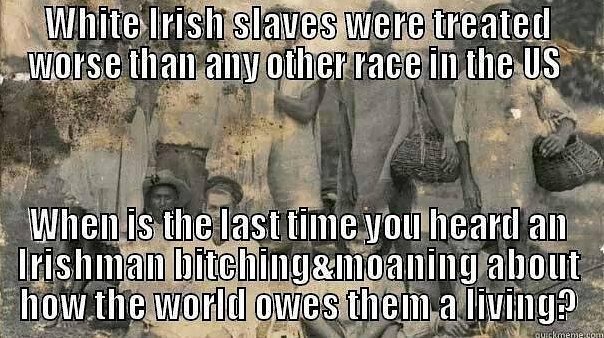
Many people today will avoid calling the Irish slaves what they truly were: Slaves. They’ll come up with terms like “Indentured Servants” to describe what occurred to the Irish. However, in most cases from the 17th and 18th centuries, Irish slaves were nothing more than human cattle.

As an example, the African slave trade was just beginning during this same period. It is well recorded that African slaves, not tainted with the stain of the hated Catholic theology and more expensive to purchase, were often treated far better than their Irish counterparts.

African slaves were very expensive during the late 1600s (50 Sterling). Irish slaves came cheap (no more than 5 Sterling). If a planter whipped or branded or beat an Irish slave to death, it was never a crime. A death was a monetary setback, but far cheaper than killing a more expensive African. The English masters quickly began breeding the Irish women for both their own personal pleasure and for greater profit. Children of slaves were themselves slaves, which increased the size of the master’s free workforce. Even if an Irish woman somehow obtained her freedom, her kids would remain slaves of her master. Thus, Irish moms, even with this new found emancipation, would seldom abandon their kids and would remain in servitude.

In time, the English thought of a better way to use these women (in many cases, girls as young as 12) to increase their market share: The settlers began to breed Irish women and girls with African men to produce slaves with a distinct complexion. These new “mulatto” slaves has a higher intelligence level than that of African slaves, brought a higher price than Irish livestock and, likewise, enabled the settlers to save money rather than purchase new African slaves. This practice of interbreeding Irish females with African men went on for several decades and was so widespread that, in 1681, legislation was passed “forbidding the practice of mating Irish slave women to African slave men for the purpose of producing slaves for sale.” In short, it was stopped only because it interfered with the profits of a large slave transport company.

England continued to ship tens of thousands of Irish slaves for more than a century. Records state that, after the 1798 Irish Rebellion, thousands of Irish slaves were sold to both America and Australia. There were horrible abuses of both African and Irish captives. One British ship even dumped 1,302 slaves into the Atlantic Ocean because the crew was low on food.

There is little question that the Irish experienced the horrors of slavery much more in the 17th Century than the Africans did. There is, also, very little question that those brown, tanned faces you witness in your travels to the West Indies are very likely a combination of African and Irish ancestry. In 1839, Britain finally decided on its own to end its participation in Satan’s highway to hell and stopped transporting slaves. While their decision did not stop pirates from doing what they desired, the new law slowly concluded this particular chapter of nightmarish Irish misery.

But, if anyone, black or white, believes that slavery was only an African experience, then they’ve got it completely wrong. Irish slavery is a subject worth remembering, researching and not erasing from our memories.

But, where are our public (and PRIVATE) schools???? Where are the history books? Why is it so seldom discussed?

Do the memories of hundreds of thousands of Irish victims merit more than a mention from an unknown writer? Or is their story to be one that their English pirates intended: To (unlike the African book) have the Irish story utterly and completely disappear as if it never happened.

None of the Irish victims ever made it back to their homeland to describe their ordeal. These are the lost slaves; the ones that time and biased history books conveniently forgot.

Extensive content and references for this post provided by www.globalresearch.ca