Category Archives: Holidays

Fasting: The Discipline That Restores Dominion


Introduction

Throughout Scripture, fasting appears wherever men and women of God sought clarity, repentance, victory, or divine intervention. Moses fasted forty days on Mount Sinai before receiving the Law. Elijah fasted on his journey to Horeb. Esther called a national fast before confronting the king. And Jesus Himself began His earthly ministry with a forty-day fast in the wilderness. Fasting is not an outdated fringe spiritual practice reserved for monks and mystics, it is a foundational discipline woven throughout the life of God’s people. Yet in modern Christianity, it has been quietly abandoned, or replaced by a softer, more comfortable religion that avoids hardship and spiritual exertion.

At its core, fasting is the deliberate denial of physical appetite in order to sharpen spiritual awareness and strengthen obedience. The Bible presents fasting as an act of humility before God, a weapon in spiritual warfare, and a discipline that subdues the flesh. As one theological reflection describes it, fasting is the act of abstaining from something good so that one may concentrate more fully on God. Yet fasting is more than a spiritual ritual. Throughout history (and increasingly in modern research) it has also been recognized for its physical and psychological benefits. Scientific studies show that structured fasting can improve metabolic health, reduce inflammation, improve blood sugar control, lengthen lifespan, and even support cardiovascular health.

This article explores fasting from every angle: biblical, historical, practical, physical, and spiritual. We will examine its role in family leadership, masculine discipline, biblical feasts, spiritual warfare, and the restoration of order in the Christian life. We will also confront the uncomfortable truth that the modern church rarely (if ever) fasts because modern believers rarely deny themselves. Yet the men and women who shaped history (biblical patriarchs, prophets, apostles, and reformers) understood something we have largely forgotten. Fasting is not weakness, but training for dominion.


I. The Biblical Foundation of Fasting

Fasting is not a modern spiritual experiment, but a deeply rooted biblical practice that appears throughout both the Old and New Testaments whenever God’s people sought repentance, guidance, deliverance, or spiritual strength. From the patriarchs to the prophets, from kings to apostles, fasting consistently appears alongside prayer as one of the most powerful disciplines available to believers. Yet unlike many modern spiritual trends, fasting was never presented as optional. It was assumed to be part of a faithful life before God.

The earliest biblical command connected to fasting appears in the Day of Atonement. In Leviticus, the Lord commanded Israel:

 “And this shall be a statute for ever unto you: that in the seventh month, on the tenth day of the month, ye shall afflict your souls… for on that day shall the priest make an atonement for you, to cleanse you, that ye may be clean from all your sins before the Lord.” –Leviticus 16:29–31

The phrase “afflict your souls” has historically been understood by Jewish interpreters as fasting and self-denial. Even today, Yom Kippur remains the most widely observed fast in Judaism. The principle is clear: fasting is an outward act that reflects inward humility. It is the deliberate lowering of the body so the spirit may be lifted toward God.

Throughout Israel’s history, fasting frequently accompanied moments of national crisis. When the prophet Joel warned Israel of impending judgment, his solution was not political reform or military strength, it was repentance expressed through fasting.

 “Therefore also now, saith the Lord, turn ye even to me with all your heart, and with fasting, and with weeping, and with mourning: And rend your heart, and not your garments…–Joel 2:12–13

Notice the pattern: fasting was never meant to be an empty ritual. God rejected outward fasting that was not accompanied by genuine repentance. The prophet Isaiah delivered one of the strongest rebukes against hypocritical fasting in Scripture.

 “Is not this the fast that I have chosen? to loose the bands of wickedness, to undo the heavy burdens… to let the oppressed go free… Is it not to deal thy bread to the hungry…?” –Isaiah 58:6–7

True fasting, according to God, produces transformation. It humbles the individual and restores justice within the community. In the New Testament, fasting intensifies. Before beginning His ministry, Jesus fasted forty days in the wilderness.

 “Then was Jesus led up of the Spirit into the wilderness to be tempted of the devil. And when he had fasted forty days and forty nights, he was afterward an hungred.Matthew 4:1–2

Christ’s fast is not merely symbolic. It reveals the powerful truth that fasting prepares the believer for confrontation with evil. Immediately following this fast, Jesus faced temptation from Satan. His victory came not through physical strength, but through spiritual clarity and obedience to Scripture. Even more telling is what Jesus assumed about the future practice of fasting among His followers.

 “Moreover when ye fast, be not, as the hypocrites… that they may appear unto men to fast… But thou, when thou fastest, anoint thine head, and wash thy face… and thy Father, which seeth in secret, shall reward thee openly.Matthew 6:16–18

Notice that Jesus did not say “if you fast.” He said “when you fast.” Fasting was expected. The early church continued this pattern. In the Book of Acts, leaders fasted before making major decisions.

 “As they ministered to the Lord, and fasted, the Holy Ghost said, Separate me Barnabas and Saul… And when they had fasted and prayed, and laid their hands on them, they sent them away.” –Acts 13:2–3

The pattern is clear and unmistakable: prayer, fasting, and then clarity. From Moses to the apostles, fasting appears whenever God’s people sought divine direction. It humbled the flesh, sharpened spiritual perception, and prepared men and women to act with conviction. In other words, fasting was never merely about deprivation of food, it was about alignment with God’s will.


II. Fasting as Discipline: Mastery of the Flesh

One of the most overlooked purposes of fasting is the cultivation of discipline. At its simplest level, fasting forces a man (or woman) to confront the most basic human appetite: hunger. The body demands satisfaction. The stomach growls, energy dips, and irritation creeps in. Yet fasting requires a deliberate act of mastery, choosing obedience over your impulses. In this way, fasting becomes a training ground for dominion over the flesh. Scripture consistently teaches that the greatest battle a man fights is not against enemies outside him, but against desires within him. A man who cannot say “no” to his own appetites will rarely stand firm against temptation, pressure, or sin.

The Apostle Paul understood this principle. In writing about spiritual discipline, he compared the Christian life to the training of an athlete preparing for competition. Discipline is required, restraint is required, and mastery over the body is essential.

 “24. Know ye not that they which run in a race run all, but one receiveth the prize? So run, that ye may obtain. 25. And every man that striveth for the mastery is temperate in all things. Now they do it to obtain a corruptible crown; but we an incorruptible. 26. I therefore so run, not as uncertainly; so fight I, not as one that beateth the air: 27. But I keep under my body, and bring it into subjection: lest that by any means, when I have preached to others, I myself should be a castaway.” –1 Corinthians 9:24–27

Paul speaks of keeping his body under and bringing it into subjection. The picture is one of deliberate control. The body is not meant to command the man, the man is meant to command the body. Hunger, fatigue, and physical craving are powerful forces, but Scripture never treats them as rightful masters. Fasting is one of the clearest ways to train that hierarchy. When a man voluntarily denies himself food for a time, he proves to himself that appetite does not rule him. This theme appears elsewhere in Scripture as well. The Bible repeatedly warns that a man ruled by appetite becomes spiritually dull and morally unstable.

 “He that hath no rule over his own spirit is like a city that is broken down, and without walls.” –Proverbs –25:28

A city without walls is defenseless. In ancient times (and modern) it invited invasion, looting, and destruction. Solomon uses this image appropriately, a man who cannot govern his own impulses becomes spiritually exposed. Temptation enters easily, anger spills out quickly, and lust finds an open door. Discipline, on the other hand, builds walls of protection around the soul.

Historically, Christian thinkers recognized fasting as one of the most effective tools for cultivating this inner rule. The early church father John Chrysostom wrote, “Fasting is the support of our soul: it gives us wings to ascend on high.” Similarly, Martin Luther observed that fasting “subdues the flesh and prepares the spirit for prayer.” These observations were not mystical exaggerations; they reflected the practical reality that when the body is restrained, the mind becomes sharper and the spirit more attentive.

Modern research increasingly confirms these ancient insights. Studies in behavioral psychology show that individuals who practice voluntary restraint in one area often develop stronger self-control in others. This phenomenon, sometimes called discipline spillover, demonstrates that habits of restraint reinforce broader character formation. A man who regularly practices discipline (whether through training, structured eating, or fasting) develops greater control over speech, temper, and impulse.

There is also a distinctly masculine dimension to this discipline. Throughout history, rites of passage for men often included hardship, hunger, and deprivation. Military training programs, survival training, and even traditional monastic orders recognized the same truth: comfort breeds weakness, while controlled hardship builds resilience. Fasting fits squarely into this pattern. It is voluntary hardship with a spiritual purpose. Jesus also demonstrated this principle before beginning His ministry.

“1.Then was Jesus led up of the Spirit into the wilderness to be tempted of the devil. 2. And when he had fasted forty days and forty nights, he was afterward an hungred. 3. And when the tempter came to him, he said, If thou be the Son of God, command that these stones be made bread. 4. But he answered and said, It is written, Man shall not live by bread alone, but by every word that proceedeth out of the mouth of God.” –Matthew 4:1–4

Christ’s response reveals the purpose of fasting. Hunger speaks loudly, but it does not have the final authority. The Word of God does. When practiced faithfully, fasting trains believers to live by this hierarchy, spirit over flesh, obedience over appetite, and God’s Word over bodily cravings.


III. Fasting in the Household: Leadership, Family, and Biblical Order

Fasting is not exclusively a private spiritual exercise; it has profound implications for the household. Throughout Scripture, spiritual leadership within the family often begins with the discipline and humility of the man who leads it. When a husband and father practices fasting, he is doing more than denying himself food, he is modeling spiritual authority, self-control, and submission to God. The household watches the habits of its head. If the leader pursues comfort and indulgence, the family follows that pattern. But if the leader pursues discipline and obedience, the family learns reverence and order.

One of the clearest biblical examples of household leadership through spiritual discipline is found in the life of Ezra. Before leading the people of Israel back to Jerusalem, Ezra called the community to fast together so that they might seek God’s guidance and protection.

 “21.Then I proclaimed a fast there, at the river of Ahava, that we might afflict ourselves before our God, to seek of him a right way for us, and for our little ones, and for all our substance. 22. For I was ashamed to require of the king a band of soldiers and horsemen to help us against the enemy in the way: because we had spoken unto the king, saying, The hand of our God is upon all them for good that seek him; but his power and his wrath is against all them that forsake him. 23. So we fasted and besought our God for this: and he was intreated of us.” –Ezra 8:21–23

Notice the language Ezra uses. The fast was not only for himself; it was “for us, and for our little ones.” The leader understood that the spiritual posture of the family affected the welfare of the entire community. When men humble themselves before God, the blessing and protection of God extends beyond the individual and into the household.

Scripture consistently places responsibility for spiritual leadership upon the man of the house. The discipline of fasting reinforces this role by training the leader to seek God before acting. A man who fasts regularly becomes slower to react emotionally and quicker to seek wisdom. This aligns with the biblical expectation that fathers teach and guide their families according to God’s law.


“6. And these words, which I command thee this day, shall be in thine heart: 7. And thou shalt teach them diligently unto thy children, and shalt talk of them when thou sittest in thine house, and when thou walkest by the way, and when thou liest down, and when thou risest up.” Deuteronomy 6:6–7

Teaching Scripture requires more than knowledge; it requires example. Children observe far more than they listen. When they see their father (or mother) willingly abstain from food in order to seek God, they learn that faith is not merely spoken, it is practiced. The home becomes a place where devotion is lived rather than merely discussed.

Historically, many Christian households practiced regular family fasting. In certain seasons of the church calendar, families would abstain from particular foods, share simpler meals, or devote time to prayer instead of normal routines. The purpose was not punishment or legalism, but orientation. Fasting reminded the family that life does not revolve around consumption, entertainment, or convenience. Life revolves around obedience to God.

Even short household fasts can have profound effects. A father might call for a day of fasting before making a major decision, before beginning a new venture, or when facing difficulty within the family. The act communicates something powerful: the household seeks God first. It teaches children that prayer and humility come before strategy and decision.

This pattern is visible even in times of national crisis within Scripture. When King Jehoshaphat faced a massive invading army, he did not immediately assemble troops. Instead, he called the entire nation to fast and seek the Lord first.

“3. And Jehoshaphat feared, and set himself to seek the Lord, and proclaimed a fast throughout all Judah. 4. And Judah gathered themselves together, to ask help of the Lord: even out of all the cities of Judah they came to seek the Lord.” –2 Chronicles 20:3–4

Leadership in Scripture consistently begins with humility before God. Fasting expresses that humility. It acknowledges that strength, wisdom, and protection ultimately come from the Lord.

When a household practices fasting (even occasionally) it begins to reorient its priorities. Meals become blessings rather than expectations, prayer becomes central rather than incidental, and gratitude replaces entitlement. In this way, fasting quietly restores order within the home: God first, the leader submitted to Him, and the family walking together in obedience.


IV. Fasting as Spiritual Warfare

Fasting is not only an act of humility or personal discipline; Scripture also presents it as a weapon in spiritual warfare. The Bible repeatedly reveals that there are moments when prayer alone is not enough, when deeper spiritual resistance requires deeper spiritual preparation. In these moments, fasting sharpens prayer, focuses the mind, and humbles the body so that the believer stands before God with greater clarity and dependence.

One of the clearest demonstrations of this principle appears during the ministry of Jesus. After the disciples failed to cast out a demon, they asked Christ privately why their authority had failed. His answer revealed that some spiritual battles require intensified spiritual preparation.

“19. Then came the disciples to Jesus apart, and said, Why could not we cast him out? 20. And Jesus said unto them, Because of your unbelief: for verily I say unto you, If ye have faith as a grain of mustard seed, ye shall say unto this mountain, Remove hence to yonder place; and it shall remove; and nothing shall be impossible unto you. 21. Howbeit this kind goeth not out but by prayer and fasting.” –Matthew 17:19–21

Christ’s words reveal a sobering reality: not all spiritual opposition is equal. Some struggles yield quickly to prayer and faith, while others require deeper spiritual preparation. Fasting, when combined with prayer, strengthens the believer’s focus and dependence on God. It removes distractions, humbles pride, and aligns the heart more closely with the will of God.

The prophet Daniel provides another powerful example of fasting connected to spiritual warfare. During a period of intense prayer and fasting, Daniel received a heavenly visitation explaining that unseen spiritual resistance had delayed the answer to his prayer.

“2. In those days I Daniel was mourning three full weeks. 3. I ate no pleasant bread, neither came flesh nor wine in my mouth, neither did I anoint myself at all, till three whole weeks were fulfilled.” –Daniel 10:2–3

Later in the chapter, the angel explained what had been occurring behind the scenes while Daniel prayed and fasted.

“12. Then said he unto me, Fear not, Daniel: for from the first day that thou didst set thine heart to understand, and to chasten thyself before thy God, thy words were heard, and I am come for thy words. 13. But the prince of the kingdom of Persia withstood me one and twenty days: but, lo, Michael, one of the chief princes, came to help me; and I remained there with the kings of Persia.” –Daniel 10:12–13

Daniel’s fast coincided with a spiritual conflict taking place beyond his human sight. His humility and persistence in prayer played a role in a spiritual struggle between angelic and demonic forces. This passage reminds believers that spiritual warfare is often invisible, yet very real. The New Testament reinforces this reality repeatedly. The Apostle Paul warned believers that the true battle of faith is not primarily against human enemies.

“For we wrestle not against flesh and blood, but against principalities, against powers, against the rulers of the darkness of this world, against spiritual wickedness in high places.” –Ephesians 6:12 (KJV)

If the conflict is spiritual, the weapons must also be spiritual. Prayer, fasting, repentance, and obedience become instruments through which believers seek God’s power against forces they cannot see.

Historically, many Christian leaders practiced fasting specifically during times of spiritual conflict. The early church frequently fasted before missionary journeys, during persecution, and when confronting serious doctrinal disputes. Even during periods of revival, fasting often accompanied intense prayer. Many of the great awakenings in church history were preceded by believers humbling themselves through fasting and repentance.

Fasting does not manipulate God or force His hand. Rather, it positions the believer in a posture of humility and dependence. It quiets the overbearing noise of daily life and turns the heart toward God with greater intensity. In spiritual warfare, clarity matters.

Ultimately, fasting reminds believers that victory does not come through human strength. The battle belongs to the Lord. Yet throughout Scripture, God repeatedly responds when His people humble themselves before Him. Fasting becomes one of the ways that humility is expressed, not as an empty ritual, but as a declaration that spiritual victory comes from God alone.


V. The Practical Practice of Fasting: Forms, Health, and Restoration

While fasting is deeply spiritual, it is also profoundly practical. Scripture presents fasting in several different forms, demonstrating that it is not a rigid ritual but a flexible discipline applied according to circumstance, need, and calling. Some fasts are short, some extended; some involve complete abstinence from food, while others involve the removal of certain foods or comforts. What unites them is not the exact method, but the purpose: humbling oneself before God and sharpening spiritual focus.

One of the simplest and most common biblical fasts is the normal fast, which involves abstaining from food while continuing to drink water. This type of fast appears frequently in Scripture. For example, when Queen Esther called the Jewish people to seek deliverance from destruction, she instructed them to fast together before she approached the king.

“15. Then Esther bade them return Mordecai this answer, 16. Go, gather together all the Jews that are present in Shushan, and fast ye for me, and neither eat nor drink three days, night or day: I also and my maidens will fast likewise; and so will I go in unto the king, which is not according to the law: and if I perish, I perish.” –Esther 4:15–16

Esther’s fast was intense and urgent. It demonstrated that fasting is often tied to moments of serious decision, danger, or national crisis. The goal was not physical suffering for its own sake, but spiritual clarity and divine favor.

Another biblical form is the partial fast, in which certain foods are avoided while basic nourishment continues. This type of fast appears in the life of Daniel. During a season of mourning and prayer, he deliberately limited his diet.

“2. In those days I Daniel was mourning three full weeks. 3. I ate no pleasant bread, neither came flesh nor wine in my mouth, neither did I anoint myself at all, till three whole weeks were fulfilled.” –Daniel 10:2–3 (KJV)

This form of fasting allowed Daniel to remain physically sustained while still practicing restraint and devotion. Many believers today adopt similar practices by abstaining from rich foods, sweets, alcohol, or other indulgences during periods of prayer.

Scripture also records supernatural fasts, though these are rare and clearly empowered by God. Moses fasted forty days while receiving the Law.

“And he was there with the Lord forty days and forty nights; he did neither eat bread, nor drink water. And he wrote upon the tables the words of the covenant, the ten commandments.” –Exodus 34:28 (KJV)

Likewise, Elijah and Jesus both fasted forty days during pivotal moments of divine preparation. These fasts were extraordinary and not presented as routine practices for ordinary believers. They remind us that fasting ultimately depends upon God’s strength, not merely human willpower.

Beyond spiritual benefits, fasting has increasingly been studied for its physical effects. Medical research in recent decades has shown that structured fasting can improve metabolic flexibility, support blood sugar regulation, and stimulate a cellular repair process known as autophagy, in which the body removes damaged cellular components. Studies from institutions such as the National Institute on Aging and research summarized in journals like The New England Journal of Medicine have explored how intermittent fasting may contribute to improved cardiovascular health, reduced inflammation, and improved insulin sensitivity.

These findings do not replace the spiritual purpose of fasting, but they illustrate something remarkable: practices embedded in Biblical tradition often align with biological wisdom. What Scripture presents as spiritual discipline often carries physical benefits as well.

Practically speaking, fasting can take many forms in daily life. Some believers practice a weekly fast, abstaining from food for one day each week. Others fast during specific seasons of prayer, before making major decisions, or during times of repentance. Even short fasts (such as skipping one or two meals) can create space for prayer, reflection, health benefits, and renewed focus.

Ultimately, fasting restores a sense of order to human life. It reminds us that food, comfort, and pleasure are blessings, not masters. When believers periodically step away from these things voluntarily, they rediscover a powerful truth: life is sustained not merely by what we consume, but by the God who provides it.


Conclusion

Fasting is one of the oldest disciplines practiced by the people of God, yet it remains one of the most neglected in modern Christianity. Throughout Scripture, fasting appears wherever men and women sought repentance, clarity, deliverance, or divine intervention. Prophets fasted before delivering warnings to nations. Kings called for fasting in times of crisis. Apostles fasted before appointing leaders and launching missionary work. Even our Lord Jesus Christ began His earthly ministry with a prolonged fast in the wilderness. Whenever God’s people desired to draw nearer to Him, fasting often accompanied prayer.

Fasting was never meant to be an empty ritual or public display. The prophets repeatedly condemned fasting that was done for attention. God does not respond to hunger alone; He responds to humility, repentance, and obedience. The true fast reshapes the heart. It trains the believer to put the spirit above the flesh, obedience above appetite, and devotion above comfort. When practiced faithfully, fasting becomes a tool that strengthens discipline, sharpens spiritual awareness, restores order within the household, and prepares believers to face both physical and spiritual challenges with deepened clarity and faith.

In a culture built on constant consumption, fasting stands as a quiet act of rebellion. It reminds the believer that life does not revolve around appetite, convenience, or entertainment. Life revolves around obedience to God. Through fasting, the believer reorders his priorities: God first, discipline over indulgence, and eternal truth over temporary satisfaction.

For this reason, fasting remains as relevant today as it was in the days of the prophets and apostles. It is a discipline that humbles the proud, strengthens the weak, and restores spiritual clarity in a distracted world. And for those willing to practice it faithfully, fasting continues to serve its ancient purpose, drawing the heart of man back toward the God who sustains him.


Call to Action

The truth is simple: less than 5% ofChristians today fast on a regular basis. Not because Scripture discourages it, but because modern comforts have replaced discipline. We live in a culture where food is constant, convenience is expected, and self-denial is treated as unnecessary or extreme. Yet the pattern of Scripture tells us the men and women who walked closely with God were not strangers to hunger. They fasted when they sought guidance. They fasted when they repented. They fasted when they faced danger. And they fasted when they needed clarity before acting. Fasting was not reserved for spiritual elites, it was part of a faithful life.

Jesus Himself assumed His followers would fast. In His teaching on prayer, giving, and fasting, He used the same language for each discipline.

“16. Moreover when ye fast, be not, as the hypocrites, of a sad countenance: for they disfigure their faces, that they may appear unto men to fast. Verily I say unto you, They have their reward. 17. But thou, when thou fastest, anoint thine head, and wash thy face 18. That thou appear not unto men to fast, but unto thy Father which is in secret: and thy Father, which seeth in secret, shall reward thee openly.” –Matthew 6:16–18

Notice that Christ did not say “if” you fast, He said “when.” The expectation was clear. Fasting would be part of the believer’s life, practiced quietly and sincerely before God.

So begin somewhere. You do not need to start with forty days in the wilderness. Start with a single meal. Skip lunch every day this week and spend that time in prayer. Or dedicate a full 24 hour day to fasting and seeking God’s direction. Fathers can even introduce the discipline gently within the household by leading the family in a simple fast before an important decision or season of prayer. The point is not performance; the point is obedience.

In a world drowning in excess, fasting restores perspective. It reminds us that our strength does not come from the abundance of our table but from the presence of our God. When believers willingly humble themselves in this way, they rediscover something the modern church has largely forgotten: discipline strengthens their faith.

The challenge is simple. Fast, pray, seek God. And watch what clarity follows.

May God’s Great Order be restored!

Album Release: The Journey of the Patriarch

The Journey of the Patriarch is an epic Celtic instrumental saga following the rise of a patriarch who builds a household, raises sons and daughters, gathers a clan, and leads his people under the banner of legacy and dominion.

Driven by war drums, soaring pipes, Celtic strings, and cinematic orchestration, the album tells a story of family, honor, leadership, and the unbroken strength of bloodline. Eventually completing his mission and passing the torch to those he raised up.


For centuries the Irish have told their stories through music. Long before written chronicles or printed histories, the melodies of pipes, fiddles, and harp carried the memory of a people. Battles, births, victories, losses, faith, family, and legacy were all preserved in song. Often these melodies carried no words at all, yet they possessed a profound ability to convey the story, the emotion, and the spirit of the moment in a way that every heart could understand.

The Journey of the Patriarch follows in that ancient tradition.

This album tells the life story of a patriarch through instrumental Celtic music – from the raising of his banner and the forming of his household, to the birth of children, the founding of a chapel, the gathering of a clan, and the trials of war. Each track represents a chapter in the life of a man who builds a house, leads his people, and leaves behind a legacy carried forward by the next generation. A man who leads his people through seasons of peace and war.

From the first march of the patriarch to the raising of the clan’s chapel, from the laughter of children in the hall to the thunder of war drums beneath the banner, each piece is a chapter in a greater story, the story of a house built, a clan forged, and a legacy carried forward through generations. Driven by war drums, soaring pipes, Celtic strings, and cinematic orchestration, this music tells a story not with words, but with feelings of honor, faith, family, and the enduring strength of a house built to stand.

And when the patriarch’s days are finished and his watch is ended, the music reminds us of a solemn truth: a faithful man may rest, but the house he built will endure.

This is The Journey of the Patriarch • a Celtic saga told in music.

Now Available on Apple Music, iTunes, Instagram Music, Facebook Tunes, TikTok, ByteDance stores, YouTube Music, Amazon Music, Pandora, Deezer, Tidal, iHeartRadio, Qobuz, Saavn, Boomplay, Anghami, NetEase, Tencent, Claro, Música, Joox, Kuack Media, Adaptr, Flo, MediaNet, Roblox, Snapchat, …and basically everywhere music lives.

Track 1. The Patriarch’s War March

Before the house was raised, before the hearth was lit, there was a man, and before the man was formed, there was a calling placed upon him. It was not announced with thunderous applause, nor was it written upon the sky in fire, but settled upon his spirit with quiet weight impossible to ignore. While others pursued ease and wandered through life without aim, he felt the burden of something far greater, as though his steps were being measured for a path not yet revealed. He learned early that strength is not given freely but shaped through trials; that discipline is only a companion to those who would endure; and that a man who refuses the call to rise will be ruled by those who humbly answer it. So, he labored, he sacrificed, he hardened himself, and he set his face toward a future not yet seen but already appointed.

And so the march began, not merely a march of feet upon the earth, but a march of purpose within his soul. Each step was taken with steadfast resolve, as though he walked before witnesses unseen. He did not yet possess land, nor house, nor sons to carry his name, yet within him was the seed of all three. For it is written in the Great Order of things that a man must first rule himself before he is given rule over others. And in those early steps, though no banner yet flew and no clan yet followed, the foundation of a patriarch was being laid; stone upon stone, choice upon choice, until the man himself became the beginning of the house.


Track 2. Raise the Red Banner

There comes a moment in every story when what is hidden must be revealed, when a man no longer prepares in silence, but stands in defiant declaration. The banner is not raised for exhibition, nor for the approval of men – it is raised as a sign. A signal that a man has taken his rightful place, that he will no longer drift among the uncertain, but will stand boldly, rooted, and unyielding. When he lifted the banner, it was as though a line had been drawn upon the earth, marking the place where his authority would begin and would be non-negotible. It spoke without words: here stands a man who will build, who will lead, and who will not retreat from what has been set before him.

And as the banner moved in the wind, so too did it call forth those who were meant to gather. For men are drawn to order as dry ground longs for rain. They came not by force, nor by plea, but by recognition; seeing in him a steadiness they themselves had not yet mastered. Under that banner, they found direction; under his hand, they found purpose. And though the company was small, and the days still uncertain, something had begun that would not easily be undone. For where a banner stands with conviction, a people will form; and where a people gather under rightful authority, the beginnings of a house (and even a nation) are at hand.


3. The Taking of Wives

It is not good for a man to build alone, nor can a house stand long without order within its walls. And so he turned his attention not outward, but inward, to the forming of his household. The taking of wives is not an act of impulse or desperation, but of intention. Each union was entered with understanding, that what he was building would extend beyond himself, beyond his own years, into generations yet unborn. These were not bonds of fleeting desire, but of structure and covenant, where each role carries covenant weight, and each place within the house is set with purpose. For a house without order is a house divided, and a divided house will not endure.

Within these walls, life began to take shape. The hearth was lit, and its fire was not only for warmth, but for continuity. The voices within the home carried both peace and responsibility, as the rhythm of the household settled into form. Here, the man who had marched alone began to learn a deeper rule, not only command, but stewardship; not only authority, but provision. And though the world beyond the hills still lay waiting, the greater work had already begun within. For it is through the household that a man’s true strength is revealed, and from the household that his legacy will either rise – or fall.


4. Daughters of the Hearth

As the house was established and its order set in place, life began to blossom within its walls. The hearth burned steadily, not only as a source of warmth, but as the center of all that was being built. And within that light, daughters were raised, gentle in voice, yet strong in spirit, formed by the rhythm of the household and the guidance set before them. They learned not from the world, but from the Word; not from confusion, but from clarity. In their presence, the house was softened, yet not weakened, made whole in a way that strength alone could never accomplish.

For daughters carry within them a quiet inheritance, one not always seen, yet deeply felt. They preserve what is worth keeping, and they bring life where there might otherwise be only structure. And the patriarch, though firm in rule, saw in them a reflection of something sacred; that what he built was not merely to stand, but to flourish. The hearth was no longer just a fire, but a living center, and in its light, the house began to take on a fullness that could not be forged by strength alone.


5. The Firstborn Son

In time, the house was given its first heir. The firstborn son was placed into his arms, not by happenstance, but as the beginning of continuation. In that moment, the unseen future took form, and the weight of legacy became something tangible. The patriarch looked upon the child and saw more than an infant, he saw a name carried forward for all time, a standard upheld, and a responsibility that would one day be passed from his hands to another. For a man may build, but it is through sons that what is built endures forevermore.

And so the work deepened. What had once been personal now became generational. The child would not be left to chance, nor shaped by the world beyond the house. He would be trained, instructed, and guided with steadfast intention. For it is written in the Great Order of life that what is not formed with care will be formed by force. And the patriarch, knowing this, set his hand to the task, not merely to raise a son, but to prepare a successor worthy of the legacy being established.


6. Children of the Iron House

The house did not remain small, nor was it ever meant to. What began as a foundation of order and covenant was soon filled with life, as sons and daughters grew beneath the authority and care of the patriarch. The halls once quiet were now overcome with movement, footsteps, voices, learning, and correction. Each day carried its own rhythm, not of chaos, but of structure. For within this house, nothing was left to chance. The children were not blindly allowed to grow; they were intentionally formed. Their minds were instructed, their hands were trained, and their spirits were guided, that they might become more than what the world would make of them.

This was no fragile dwelling, easily shaken or swayed. It was an iron house, tempered by discipline, strengthened by consistency, and held together by order that did not bend under difficult circumstance. The children learned early that they were part of something greater than themselves. They bore a name, a standard, and a future that would one day rest upon their shoulders. And the patriarch, watching over them, understood that what he built in them would outlast even the walls around them. For a house is not measured by its structure alone, but by what it produces, and here, within these walls, a generation was being forged that would reign in cultural defiance above all others.


7. The Chapel of the Clan

Yet even as the house grew strong and the clan began to take form, the patriarch knew that strength alone was not enough to survive the battle against evil. For no man, and no house, can stand rightly unless it is set in proper order beneath Heaven. And so he turned his hand to something greater still; the establishing of a place where his people would not look inward, but upward. The chapel rose, not as a monument to man, but as a declaration that the house itself was under the authority of God. Stone was laid upon stone, not to build walls, but to mark a place set apart, where the clan would gather in reverence and humility to their creator.

And within that place, a greater alignment was made. The banner, once raised as a sign of his authority, now stood alongside the Cross, not above it, but beneath its meaning. Here, the patriarch bowed, and in doing so, taught his house the order of all things: that authority flows from above, and that a man who leads rightly must first submit rightly. The clan gathered, not as individuals alone, but as a people united in both blood and belief. And from that union came a strength deeper than steel, a foundation that no enemy could break, for it was not built on man alone, but on what is eternal.


8. Oath of the Clan

What had been built within the house now extended beyond it. The family had become a clan, and the clan required more than shared blood, it required shared purpose and commitment. And so the time came for the oath. Not spoken in haste, nor taken lightly, but entered into with full understanding of its conventional weight. The men stood together, not as scattered individuals, but as those bound by purpose, by loyalty, and by the authority under which they lived. Each one knew that the oath was not a formality, it was a line drawn between what they were and what they now chose to become.

As the words were spoken, they carried more than formality, they carried agreement and mission. A binding together not only in presence, but in ironclad resolve. For an oath, once given, is not easily cast aside. It shapes the man who speaks it, and it binds him to those who stand beside him. And from that moment forward, the clan was no longer a gathering, it was a brotherhood of the highest order. A people who would stand together, fight together, and endure together regardless of cost or adversity. And in that unity, something unbreakable was formed, not by force or coercion, but by will aligned in the Great purpose.


9. The War Horn Calls

No house that is built with purpose is left untested, and no man who stands in authority is permitted to remain unproven. Beyond the hills and beyond the borders of what had been established, the world stirred in ways that could not be ignored. There are seasons when a man builds, and there are seasons when what he has built must be tested and defended. The patriarch had long known this day would come, though it had not yet been seen with the eye. And when the time arrived, it did not come with uncertainty, but with clarity. The horn sounded across the land (its voice deep, ancient, and unyielding) and all who heard it understood that the hour had come to stand.

The sound carried over the valleys, through the trees, and into the very bones of the men who had been raised under the banner. It was not merely a call to arms, it was a call to purpose, a summoning to the moment for which they had been prepared. The patriarch did not waver, for he had not built in ignorance of this day. The training, the order, the discipline, all of it had been laid for such a time as this. The men gathered, in readiness, armor was taken up, blades were fastened, and the banner was lifted once more. And as the echo of the horn lingered in the air, the clan stood as one, ready not only to fight, but to prove that what had been built would not be taken from them.


10. Blades Beneath the Banner

The field was set, and the moment could not be delayed any longer. Beneath the banner, the clan moved forward, not as scattered men, but as one body, ordered and aligned by a shared calling. The ground trembled beneath their steps, and the air itself seemed to hold its breath as the distance between them and their adversary closed. There is a point in every man’s life when preparation gives way to action, when what has been spoken must be lived out, and what has been trained must be proven. That moment had come. Steel was drawn, and the first clash rang out like a bell across the field, signaling that the hour of testing had begun.

And yet, in the midst of the noise, the force, and the chaos, there remained something unshaken. The banner still stood, visible above the movement of men and the clash of arms. Beneath it, the clan held its formation, not breaking into disorder, not retreating into fear. For they did not fight as men alone, they fought as a people, bound by oath, shaped by discipline, and strengthened by the order set before them. Each man knew his place, and each stood within it. And though the battle pressed hard, and though the cost was not small, they did not falter. For what is built upon truth and held together in unity does not fail, even under the weight of overwhelming odds.


11. Bloodline Unbroken

When the battle had passed and the field grew quiet once more, there remained a stillness that spoke louder than the clash that had come before it. The air was heavy, carrying both the great cost of what had been endured and the weight of what had been preserved. For every conflict leaves its mark, and every victory carries a remembrance within it that shapes the future. The patriarch stood among his men (not untouched, but unbroken) and looked upon the field with the understanding that what had been defended was not merely land, nor position, but the very continuation of his name, his house and his legacy.

And yet, above all that had been lost, one truth stood firm – the bloodline endured. The banner still flew, not torn down nor cast aside, but lifted still in the hands of those who remained. The clan had not been scattered, and the house had not been brought to ruin. What had been built in discipline and order had withstood the storm. And in that endurance, there was a victory deeper than triumph over an enemy. It was the victory of preservation, the confirmation that what is established rightly, and defended faithfully, will not be erased by the enemy. The bloodline remained, and with it, the promise of continuation and expansion.


12. The Patriarch’s Hall

The return to the hall was not as it had once been, for those who entered carried with them the knowledge of what had been faced and overcome. The fire still burned within its walls, yet its light now revealed men who had been tested, who had stood in the place where strength is proven and found not wanting. The voices that rose within the hall were no longer those of jolly untested days, but of somber remembrance, of reflection, and of unity forged in costly trials. For those who endure together are bound in ways that cannot be broken, and what is shared in hardship becomes part of the foundation of all that follows in the building of the Kingdom.

And there, seated among them, was the patriarch, not removed from his people, but present among them, as both leader and father. He listened as the accounts were spoken, as the lessons were drawn from what had been endured. The hall became more than a place of rest, it became a place of transmission, where what had been learned would be passed to those who would one day stand in the same place. For a house does not endure by silence, but by remembrance rightly spoken. And in that gathering, the next generation began to understand not only what had been done, but what would one day be required of them, as it is required of all men.


13. Legacy of the Clan Lord

The years moved forward, as they always do, and the strength of the patriarch, though still ever-present, began to take on a different form. No longer was it the strength of constant motion, but of a deeply established presence, of a man who had built, who had led, and who now stood as the foundation upon which others continued. He walked among his people and saw what had come from his labor. Sons who now bore responsibility with purpose and dedication. Daughters who upheld the order of their own households. A clan that no longer depended upon his voice for every step, but moved in alignment with what had already been set in place long ago.

And as he beheld all this, there came not sorrow, but a quiet fulfillment. For he understood that the measure of a man is not found in how long he stands at the center, but in whether what he has built can stand when he steps away. The banner still flew strong, not only by his hand, but by many. The house still held, not because of his presence alone, but because of the order he had established within it. And in that, he saw the true weight of legacy, not something held tightly, but something carried forward. What he had built had become greater than himself, and in that, his work was nearing completion.


14. The Patriarch’s Rest

At last, the time came when the labor of his life reached its proper and inevitable end. Not in disorder, nor in haste, but in peaceful completion. The years had been full, the work had been done, and the house stood as witness to all that had been built. He did not depart as one unfinished, nor as one whose foundation would crumble in his absence. He departed as one who had fulfilled what had been set before him. And there is a peace that belongs only to such a man, a rest not born of weariness alone, but of completion earned and rightly achieved.

As he was laid to rest, the house did not fall silent, nor did the clan lose its way. The banner did not lower, for it was no longer held by one alone. The sons stood in their place, the order remained, and the foundation endured. And in that, the final truth was made clear: a man may pass from this life, but what is built in truth, in order, and under rightful authority will stand beyond him. The patriarch had finished his course, but the house he built would continue (generation after generation) carrying forward the legacy of a man who answered the call, made the sacrifice, and did not falter from his mission regardless of the cost. This is the Legacy of a Patriarch.

Valentine’s Day: The Ritualization of Romance and the Idolatry of Modern “Love”


Introduction

Every culture has its liturgies. Some are overt, with altars, incense, and sacrifices, while others are subtle with things like cards, chocolates, roses, and scripted on-demand affection. But ritual is ritual, and ritual is worship. The modern West pretends Valentine’s Day is harmless, a cute day for couples, a sentimental celebration of love, a civic excuse for flowers and dinner reservations. But history tells a far darker and more complex story.

Like all the other modern Satanic “worship” days, Valentine’s Day did not emerge from Scripture or from apostolic tradition. It was not instituted or celebrated by  the early church. It is a layered accretion of Roman fertility rites, medieval romantic invention, and modern commercial manipulation. What began as a murky martyr commemoration was reshaped into a courtly erotic observance and eventually industrialized into a $25+ billion marketplace where every man is annually forced to prove his love of face consequences The issue is not whether affection is good, because scripture already commands covenantal love, the issue is what we ritualize, what we elevate, and what we replace.


I. Lupercalia: Fertility, Blood, and the Foundation of the Date

To understand the February 14th date, we must begin with mid-February in ancient Rome.

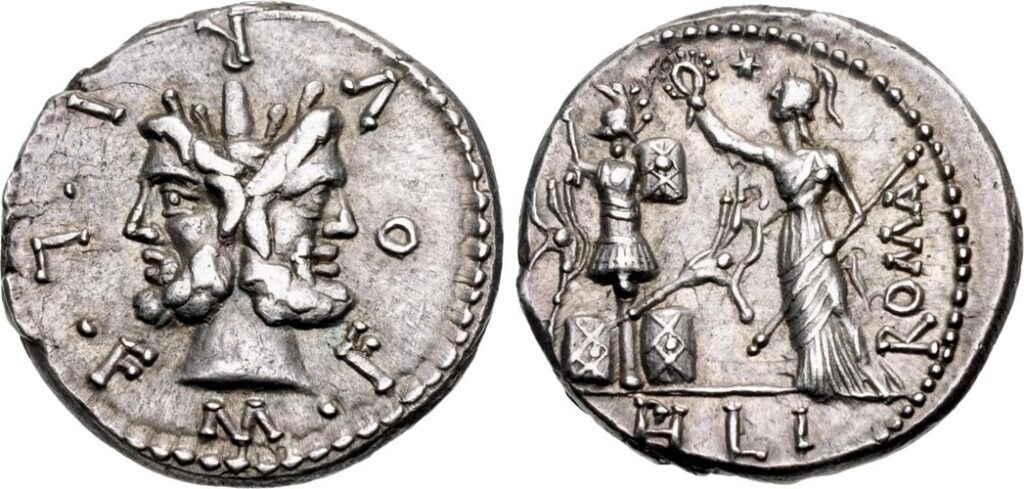
On February 15th, Rome celebrated Lupercalia, an ancient pastoral fertility festival associated with the god Lupercus (often identified with Faunus) and connected mythologically to the she-wolf who nursed Romulus and Remus. The rite was old even by Roman standards, very likely predating the Republic.

The ritual took place at the Lupercal cave on the Palatine Hill. Priests known as Luperci would sacrifice goats (symbols of fertility and virility) and a dog. The sacrificial blood would be smeared on the foreheads of young men, then wiped off with wool dipped in milk. Afterward, strips of goat hide (called februa, from which we derive the word “February”) were cut and used in a ritual, naked, blood-soaked run around the city.

Women would deliberately position themselves in the path of the runners in order to be struck with the strips of bloody hide. Plutarch records that Roman women believed this contact promoted fertility and eased pain in childbirth. The ritual was not about romance, it was about reproduction, vitality, and the appeasement of the “gods” believed to influence fertility.

Lupercalia was celebrated on February 15th. Pope Gelasius I abolished it in the late 5th century, associating February 14th with St. Valentine. The Catholic Church often replaced, merged and combined Pagan festivals with new “Christian ones” to appease the masses.

This was an intentional replacement of another Pagan fertility festival. Mid-February in Rome was already culturally associated with fertility themes. The Church just re-purposed the symbolic atmosphere of the calendar.

The goat, the blood, the running, and the ritual contact with women all of it revolved around fertility and reproductive potency. It was bodily, seasonal, agricultural, and concerned with generative power. This matters because culture retains memory even when it forgets its reasons.

By the time Lupercalia was suppressed, the church was attempting to disentangle itself from deeply embedded pagan rhythms. But rather than eliminate the mid-February emotional tone entirely, the date would later be reshaped through a completely different cultural force, medieval romantic imagination.

The original February observance in Rome was not about covenantal, sacrificial love. It was about fertility rituals and generative power, appeasing the perceived forces of the gods that governed reproduction.

Modern Valentine’s Day in many ways reflects Lupercalia. It inherits the seasonal association of romance, pairing, and reproductive symbolism in mid-February, not from Scripture, but from cultural memory layered through centuries. And that is where the transformation begins.


II. St. Valentine: Martyr, Legend, and the Invention of Romantic Association

If Lupercalia gives us the calendar atmosphere, the figure of “St. Valentine” gives us the name. But even the Church does not actually know which “Valentine” February 14th originally referred to.

There were at least two early Christian martyrs named Valentine in the 3rd century, one a Roman priest, another a bishop of Terni. Both were said to have been executed during the reign of Emperor Claudius II. The historical records are sparse, fragmentary, and in some cases even contradictory. By the 5th century, even church authorities acknowledged that the details of their lives were uncertain.

Pope Gelasius I, in the late 400s, formally established February 14th as a feast day honoring St. Valentine. Notably, he admitted that the acts of Valentine were “known only to God.” So the early commemoration was about martyrdom, not romance. It was a liturgical remembrance of a Christian who died under Roman persecution. There is no early evidence connecting Valentine with love, marriage ceremonies, or secret weddings. That association appears centuries later.

One popular legend claims that Valentine secretly married couples in defiance of Claudius II, who supposedly banned marriage for soldiers. Historians find no evidence that such a ban ever existed. Another legend claims Valentine healed a jailer’s daughter and signed a note “from your Valentine” before his execution. These stories do not appear in early martyrologies. At best they are medieval embellishments.

The romantic transformation of Valentine’s Day occurs not in ancient Rome, but in 14th-century England and France. Enter Geoffrey Chaucer.

In his 1382 poem “Parlement of Foules,” Chaucer connects St. Valentine’s Day with birds choosing their mates. This literary move appears to be the first explicit linking of February 14th with romantic pairing. In medieval Europe, particularly in England and France, there was a belief (biologically inaccurate, but culturally influential) that birds began mating in mid-February. Poets seized the symbolism for use in their work and, from there, the day evolved into a courtly love festival.

Courtly love culture was and is not biblical covenant love. It is stylized, often adulterous, idealized romantic longing. It celebrates emotional intensity, unattainable affection, and erotic tension more than marital duty or household order. Knights would write verses to noblewomen,  romantic tokens were exchanged, and the language of devotion shifted from martyr remembrance to romantic fascination.

By the 15th century, Valentine’s Day had become associated with the exchange of love notes. By the 17th and 18th centuries, it was common in England to draw names and form temporary “Valentine” pairings (a practice left over from Roman sexual indulgence “fertility” festivities) and still used in the modern swingers movement during their “festivities” . By the Victorian era, mass-produced cards industrialized the practice and the martyr disappeared. The new God of romance had replaced him.

What began as a supposed commemoration of Christian witness under persecution became a cultural day centered on romantic selection, pairing, and expressive affection. The theological focus shifted entirely. Instead of remembering sacrifice unto death, society ritualized Pagan, Satanic emotional attachment. This shift is nothing short of a demonic conspiracy.

And once that shift occurred, the symbolism of the day became fertile ground for pagan blood rites and the elevation of romantic feeling as a cultural liturgy.


III. Cupid, Hearts, Roses, and the Codification of Romantic Ritual

Once Valentine’s Day replaced martyrdom with the god of romance, it was time to bring back more Pagan symbols. Because rituals without iconography do not endure the test of time. Over the centuries, a distinct visual language has re-emerged,  not from Scripture, but from early Pagan worship, Greco-Roman mythology, medieval aesthetics, and later commercial standardization. At the center stands Cupid.

Cupid is not a Christian figure. He is the Roman adaptation of the Greek god Eros, the deity of erotic desire. In classical mythology, Eros was not the cherubic, harmless baby found on greeting cards. He was a violent and volatile force, capable of inspiring uncontrollable longing, irrational attachment, and destabilizing passion. His arrows did not represent covenant, they represented lust and overpowering desire.

By the Renaissance, artistic depictions softened him into a cute little winged child. Theologically neutral? Not exactly. The symbolism still communicates that love is something that strikes you, seizes you, overwhelms you, something external that pierces rather than something chosen and governed. Biblically, love (agape) is commanded, disciplined, and covenantal. It is not volitional, nor lustful.

Yet the iconography of Valentine’s Day presents romantic attraction as fate-driven and emotionally sovereign. The mythological imagery may be sanitized, but its underlying narrative remains overtly intact: love is something that happens to you, not something you order. Then there is the heart symbol.

The familiar stylized heart shape does not anatomically resemble the human heart. Scholars debate its origin. Some trace it to ancient depictions of ivy leaves (associated with Dionysian rites), others to the silphium plant of Cyrene, an ancient contraceptive and aphrodisiac whose seedpod resembled the modern heart shape. Silphium was widely used in antiquity for fertility control and sexual enhancement before it went extinct.

Whether the modern heart directly descends from silphium imagery is debated. What is certain is that the heart shape became standardized in medieval manuscripts as a symbol of romantic devotion, long before it was anatomically understood as the seat of emotion. Scripture places thought and moral reasoning in the “heart” metaphorically, but not as a symbol of erotic fixation. The medieval courtly tradition transformed the heart into an emblem of romantic surrender, often depicted as being pierced, offered, or consumed. This links back to the blood sacrifices of the early Luprucilla festivities.

Then there are roses, especially red roses. In Greco-Roman mythology, red roses were associated with Aphrodite (Venus), the goddess of love. Later Christian art adopted roses symbolically in Marian imagery. But by the Victorian era, the red rose was firmly codified as the flower of romantic passion. The language of flowers (floriography) allowed emotional messages to be communicated symbolically, again ritualizing and idolizing affection. Add to this the color red (culturally tied to blood, vitality, passion) and the restoration of the Pagan iconographic system is complete.

While none of these symbols are inherently evil on their own, together they construct the narrative that love is passionate, love is striking, love is consuming, love is romantic, love is emotionally expressive and lust is glorified. Notice what is absent duty, hierarchy, sacrifice (not blood sacrifice), covenant and endurance.

The imagery of Valentine’s Day does not celebrate marital longevity or generational stability. It celebrates fertility, sex, romantic intensity and emotional affirmation. By the 19th century, the rituals hardened even further. Printed cards standardized the “language of love”, chocolates were packaged in heart-shaped boxes and jewelry companies integrated February love campaigns. The expectation ritual became codified: either demonstrate affection publicly and materially in competition with other men or face the consequences.

At that point, Valentine’s Day ceased to be folklore. The pagan blood rituals of the occult ceremonies had been restored and the worship of Idols and Pagan gods had returned. A civic ritual of romantic validation, reinforced annually, tied to symbolic iconography inherited from mythology and medieval erotic imagination was now the norm in a “Christian” civilization.


IV. From Courtship to Commerce: The Industrialization of Romantic Obligation

By the time Valentine’s Day reached the 18th and 19th centuries, its transformation and re-establishment as a Pagan worship day was nearly complete. The martyr was gone. The medieval poet had done his work. The iconography of Cupid, hearts, and roses had taken root. What remained was standardization, and capitalism proved more than willing to supply that. The Industrial Revolution changed everything.

Printing technology made mass-produced Valentine cards inexpensive and widely available. In the early 1800s, handwritten love notes began giving way to commercially printed cards. By the mid-19th century, companies in England and the United States were producing ornate, lace-trimmed Valentines in bulk. Esther Howland, often called the “Mother of the American Valentine,” built a business empire on decorative Valentine cards in the 1840s. Romance had been commercialized and entered the factory.

When something moves from personal expression to mass production, its meaning always changes. The ritual becomes externalized. Instead of love flowing organically from relationships, affection becomes measured through participation in a standardized cultural script. There are expectations, standards and demands. Your love is measured against your steadfast compliance to those Pagan rituals, compared to the performance of others and affection is competed for. Did you send the card? Did you buy the flowers? Did you make the reservation? Did you perform the expected gestures?

By the 20th century, the holiday expanded beyond romantic partners to include schoolchildren exchanging pre-packaged cards, because the only way to perpetuate such an obviously Satanic practice in a “Christian” society is to indoctrinate the children as young as possible and normalize the rituals. The day became institutionalized and participation was no longer optional for most, it was socially enforced with public consequences.

The candy industry, particularly chocolate manufacturers, leaned heavily into the February market. Jewelry companies framed Valentine’s Day as a proving ground for devotion. Advertising campaigns framed affection as something demonstrated materially. Economic participation became synonymous with emotional sincerity. The language subtly shifted from celebration to expectation, and then to demands.

Modern Valentine’s Day is a multi-billion-dollar industry. Consumers are told (both implicitly and explicitly) that love must be displayed, validated, and proven through expenditure and materialistic goods. Failure to participate risks social embarrassment, relational tension and even the loss of your “partner” to someone who will perform the ritual better and with more devotion.

Covenantal love does not require annual proof. It requires daily faithfulness, devotion is not something to be “proven” once a year through Pagan blood rituals, but something you live daily. Scripture commands husbands to love their wives as Christ loved the church, sacrificially, steadily, not seasonally. It commands wives to respect and honor their husbands, not through performance rituals but through ordered life together. Biblical love is not episodic, but structural to the formation of family.

Valentine’s Day reduces love to a single annual moment of heightened emotional display. It teaches men to demonstrate affection through consumption. It teaches women to measure devotion through materialistic symbolic gestures. It subtly trains both to equate emotional intensity with relational health.

Every ritual teaches us something. Valentine’s Day teaches that romance must be spectacularized, that affection must be publicly validated, that love, to be real, must be performative, purchased, and renewed annually. And because it is universalized (workplaces decorate, schools participate, advertisements saturate media) the pressure becomes cultural rather than personal. Most celebrate and participate out of obligation, or fear of consequences – not from a place of genuine love.

In older eras, romantic love was one aspect of marriage. In the modern West, romantic feeling is often treated as the foundation of marriage. Valentine’s Day reinforces that inversion, it celebrates the spark, not the structure, and certainly not covenant.  Like most other Biblical truths, Satan has replaced Biblical love with Satanic, Pagan Idol worship, and we call it harmless fun.


V. Romantic Sentiment vs. Covenant Order: Why Most Christians Historically Never Celebrated This Day 

By the time Valentine’s Day reached its modern form, its center of gravity had shifted entirely away from anything distinctly Christian. What remained was not martyr remembrance, not ecclesiastical devotion, not theological reflection, but satanically ritualized romantic affirmation. Historically Christians did not organize its calendar around erotic pairing rituals.

The liturgical year revolved around Christ’s incarnation, death, resurrection, ascension, and the work of redemption. The early church remembered martyrs because they bore witness under persecution, it did not institutionalize courtship festivals, and it did not sanctify romantic sentiment as a civic holy day. Marriage was honored (deeply honored) and it was rightly understood as covenant, duty, and sacrament, not a seasonal Pagan spectacle.

Even in medieval Europe, Valentine’s customs were largely cultural, and rarely (if ever) celebrated by devoted Christians. The Church tolerated them, but they were never central to Christian worship. They were peripheral at best. But the modern world does not treat Valentine’s Day as peripheral. It is now treated as a requirement to prove your love and devotion.

When a culture ritualizes something annually, it catechizes through repetition. Valentine’s Day catechizes romantic primacy. It subtly instructs men and women that emotional intensity is the highest form of relational expression. It reinforces the idea that love must be felt vividly, displayed publicly, and affirmed materially. But, of course Scripture teaches the opposite.

Biblical love is covenantal long before it is emotional. It is structured before it is ever expressed. It is commanded before it is celebrated. Husbands are commanded to love, wives are commanded to respect, and children are commanded to obey. Love, in Scripture, is not primarily an internal sensation, but a daily lived obedience.

When a society elevates romantic desire above covenant order, it distorts the hierarchy God established. Instead of marriage being oriented toward household stability, generational continuity, and shared dominion, it becomes oriented around emotional fulfillment. Instead of love being proven through daily sacrifice, it is proven through symbolic gestures. Instead of leadership being measured by steadiness, it is measured by performative romance.

The inversion was subtle, but powerful. Some Christians historically ignored Valentine’s Day not because they feared pagan ghosts or hidden rituals, but because it was irrelevant to the central story of redemption. It did not advance the Gospel, it did not deepen doctrine, and it did not strengthen ecclesial life. It was simply a cultural custom that held no relevance to their lives.

And in many Protestant traditions, particularly among more austere or reform-oriented communities, there was extreme discomfort with importing romanticized, paganized courtly customs into Christian practice. The concern was dilution of their devotion and faith. When romantic symbolism rooted in Greco-Roman mythology (Cupid), medieval erotic poetry, and later commercial marketing becomes normalized as a quasi-sacred civic observance, discernment becomes necessary.

A day meant for affection has become idol worship. When a man begins to treat female approval as the highest good, when his identity hinges on romantic validation, when he performs elaborate offerings not out of covenantal strength but out of fear of disappointment, the structure of headship no longer exists. Scripture warns against placing any created item or relationship in the position of ultimate devotion. A wife is to be loved deeply, sacrificially, and honorably,  but she is not to be enthroned as the source of a man’s meaning or peace, and worshipped as such. Valentine’s Day, stripped of order and governed only by emotional expectation, has trained men to worship women as Idols.

The deeper issue is not whether someone buys flowers. It is whether a Christian household allows cultural ritual to define its understanding of love. If love is reduced to sentiment, the covenant weakens. If affection is ritualized annually but neglected daily, the order decays.

Valentine’s Day does not overthrow a civilization. But it reflects one that has chosen satanic, pagan idol worship over the covenant order established by God. It reflects a culture that has elevated romantic desire to a liturgical centerpiece, while steadily neglecting the harder, less glamorous virtues that actually sustain families across generations. And we can see the fruits of that choice all around us.


Conclusion

Valentine’s Day is nothing short of an occult conspiracy, soaked in sacrificial rite. It is not a demonic portal disguised as harmless fun. Its history is layered, uneven, and largely pagan. It is further influenced byRoman seasonal memory, medieval romantic imagination, Victorian commercialization, and modern consumer expectation. Rituals shape people, and repetition forms instinct. When a civilization annually dramatizes romantic intensity, material offering, and emotional validation, it catechizes its people into believing that love is primarily spectacle rather than a covenantal structure. And when spectacle replaces covenant, sentiment displaces order with Pagan idol worship.

A Christian household must refuse to let culture define its theology of love. Marriage is not sustained by seasonal performance. It is sustained by disciplined obedience, sacrificial leadership, reverent respect, shared mission, and daily faithfulness under God’s authority. Christian men should choose to ignore February 14th entirely, you will lose nothing essential. Because covenant does not require a pagan cultural festival to validate it. Let’s leave the Pagan festivals to the Pagans.

May God’s Great Order be restored!

From Baal to the Burrow: Groundhog Day and Weather Idolatry

Paganism in a Fur Coat

Groundhog Day is often defended as harmless fun, a quirky tradition, a cultural joke, a moment of wintertime levity. That defense holds no water the moment one stops laughing long enough to ask what is actually happening. Once a year, a society that claims to be rational, scientific, and post-superstitious gathers around a ritual centered on animal divination, shadow‑reading, and collective submission to an omen. The fact that it is performed with a smile does not make it innocent, just effective. Throughout history, paganism has never disappeared, it has merely taken new forms. Groundhog Day is a symptom of this cancer. And like many symptoms of cultural decay, it reveals more about what a civilization worships than what it claims to believe.

I: Divination, Omens, and the Pagan Mind

At its core, Groundhog Day is divination. Divination is the attempt to extract hidden knowledge about the future through signs, symbols, or intermediaries rather than through God and His word. Ancient cultures practiced it, the Roman augurs watched birds, the Greeks consulted oracles, and the Egyptians interpreted animal behavior as divine communication. The Mayans even tracked shadows across stone temples to mark sacred cycles of time. The method varied from civilization to civilization, but the impulse did not. Humanity has always sought reassurance about the future without submitting to the authority of the Creator.

Groundhog Day follows this same structure. A designated animal is removed from its natural environment, elevated above the crowd, observed for a sign, and treated as a bearer of forbidden (or hidden) knowledge. The crowd waits, the verdict is announced, the media amplifies it, and the paganistic public accepts it – sometimes mockingly, sometimes sincerely, but always collectively. This is ritual worship behavior, not fun entertainment.

Modern defenders argue that no one truly believes the groundhog controls the weather. That argument misunderstands how paganism works. Like all religions, belief is not required; participation is. Ritual trains the imagination and conditions people to accept that meaning can be found apart from God, that order can be read from nature without reference to divine law, and that authority can be playful rather than accountable. The ancients believed their rituals were sacred, while modern man mostly believes his are jokes, but both are submitting to the same demons.

What makes Groundhog Day uniquely revealing is its persistence in a culture that claims to have outgrown superstition. Satellites map weather systems, and meteorology predicts patterns, but scripture already defines seasons. And yet the ritual remains. Not because it explains reality, but because it replaces something that once did: God’s authority over time. When a society removes God from its calendar, it does not eliminate ritual, it substitutes it. The groundhog is not an accident, but a replacement for God’s word.

II: The Biblical Order of Time and Seasons

Scripture does not treat time as random, negotiable, or symbolic. Time is ordered, declared, and governed by God Himself. From Genesis onward, seasons are established as fixed realities, not mysteries to be guessed through signs. “Seedtime and harvest, cold and heat, winter and summer” are presented not as random variables, but as promises. They persist because God created and sustains them, not because nature negotiates them.

The Bible also establishes a clear beginning to the year, not in winter, but in spring. God commands that the month of Passover be the first month, the marker of renewal, deliverance, and restored life. Agricultural cycles, covenantal memory, and worship are all aligned with God’s calendar. Spring is not announced by an animal; it is declared by obedience to God’s word.

Groundhog Day directly contradicts this order. It places the authority to announce seasonal change not in God’s Word, but in a pagan worship spectacle. It frames time as uncertain, chaotic, and dependent on omens rather than covenant. Even when treated humorously, it subtly teaches that the world is governed by randomness (evolution theory) rather than creation and promise. Groundhog day, like all modern Pagan worship, is theological.

Modern culture rejects God’s calendar while insisting it still values meaning. The result is widespread confusion. Instead of Passover, which commemorates deliverance through sacrifice and obedience, society clings to a winter ritual that offers no redemption, only delay. Six more weeks of winter becomes a punchline rather than a problem, because there is no higher order to appeal to. The biblical calendar points forward to life, while Groundhog Day celebrates stagnation, uncertainty, and idol worship.

This inversion is no accident. When God’s authority over time is dismissed, time itself becomes a joke. Days lose meaning, seasons lose purpose, and God’s appointed feast days “festivals” lose gravity. What remains is the disgusting spectacle we see today, and that spectacle is easy for the satanic forces to control.

III: From the Lamb to the Rodent

One of the most striking aspects of Groundhog Day is what it replaces. In Scripture, the arrival of spring is marked by the Passover lamb. The lamb represents obedience, sacrifice, blood, and covenant. Not as a mascot, but a symbol of judgment passed over through submission to God. Life begins again not because nature feels like it, but because God redeems His people.

Modern culture has removed the lamb and replaced Him with an unclean rodent.

This is not humorous, but symbolic. The lamb is clean, intentional, and sacrificial. The groundhog is accidental, reactive, unclean and burrowed in the dirt. One points upward to obedience; the other points downward to hell. One commemorates deliverance from bondage; the other announces continued discomfort and bondage to thw whims of “mother earth”.

The substitution reveals the heart of the issue. Passover requires submission, while Groundhog Day requires nothing. Passover calls for remembrance, obedience, and alignment with God’s order, Groundhog Day calls for attention and applause, because it is easier to laugh at a rodent than to kneel before a holy God.

Throughout history, pagan cultures replaced sacrificial systems with symbolic ones when obedience became too inconvenient. Modern society has done the same. The seriousness of sacrifice has been replaced with irony,  the gravity of covenant has been replaced with circus spectacle, and the cost of obedience has been replaced with jokes about shadows.

This is why Groundhog Day feels hollow. It offers no hope, no transformation, and no redemption. It is a spiritual ritual without meaning, and ceremony without truth. It keeps people busy precisely so they do not notice what is missing – God’s word.

IV: Inversion, Mockery, and Cultural Control

Groundhog Day belongs to a broader pattern of cultural inversion. April Fool’s Day mocks truth,  Halloween trivializes death and darkness, and New Year celebrations detach renewal from repentance. In each case, God’s design is not merely ignored, it is parodied, subverted, and then used to honor the wrong god.

Inversion has always been a tool of spiritual rebellion. What God declares holy, pagan systems mock. What God treats seriously, they turn into jokes. The goal is not to convince people that God is false, but to make a mockery of Him, ultimately making Him unnecessary. Once HIs authority is laughed at, it no longer needs to be confronted, or honored.

Secret societies, mystery religions, and enlightenment philosophies all understood this principle. Ritual shapes beliefs, symbol trains loyalties, and public participation normalizes private disbelief. Whether through Freemasonry, occult philosophy, or secular humanism, the same strategy appears repeatedly: desacralize God’s order while preserving the structure of ritual itself.

Groundhog Day fits seamlessly into this framework. It preserves ceremony while stripping it of God, it preserves communal participation while removing accountability, and it preserves symbols while denying the meaning. None of this is accidental, but an effective way of replacing the one true God with a false imitation.

A society that ritualizes nonsense will eventually despise truth, and when truth is despised, power belongs to whoever controls the symbols. The groundhog is harmless only if one believes rituals do nothing. History teaches us otherwise.

V: The Cost of Treating Paganism as a Joke

The greatest danger of Groundhog Day is not that people believe in it. THe greater danger comes from the fact they do not care whether it means anything at all. A culture that laughs at its own rituals has already surrendered its solemness. And a people who cannot take truth seriously will not defend it when it is threatened.

Pagan worship does not always look like blood and fire. Sometimes it looks like crowds, cameras, laughter, and tradition. The form changes, but the posture always remains, and substitution always follows rejection of God’s word. When God’s authority is dismissed, something else will fill the space.

Groundhog Day is a small ceremony, but it is not insignificant. It reveals a civilization that has traded reverence for irony, obedience for amusement, and meaning for spectacle. The disbelief that people can participate in this without any reflection on its obvious pagan corollary is deeply disturbing.

Winter feels endless not because a rodent said so, but because a society that abandons God’s order loses its sense of direction. When time itself becomes a joke, hope is never far behind. The solution is not outrage, but restoration of God’s appointed feast days. God already gave His calendar, He already defined the seasons, and He already provided the Lamb. The question is not whether the groundhog saw his shadow. The question is whether people will ever stop laughing long enough to see what they have replaced.

May God’s Great Order be restored!

January 1st, Rome, and the Theft of Time

Should Christians Observe the Modern New Year?


I. Who Decides When the Year Begins? (Biblical Authority vs Roman Authority)

One of the least questioned assumptions in modern Christianity is the calendar. Most believers instinctively treat January 1st as the new year – a fresh start, a reset, a chance to “do better.” But Scripture does not, and God does not leave beginnings and endings to human invention.

In the Bible, God defines the start of the year, not Rome, not culture, not tradition.

“This month shall be for you the beginning of months. It shall be the first month of the year for you.” (Exodus 12:2)

This declaration occurs in the context of Passover, redemption, and deliverance. The biblical year begins in spring, during the month of Abib (later called Nisan) (roughly March-April). This aligns with creation itself: planting, birth, renewal, and forward motion. Biblically, a new year begins when life begins moving again.

By contrast, January 1st begins the year in mid-winter, a season associated with dormancy, death, and survival rather than growth. God consistently ties renewal to life, not decay.

The modern Christian calendar is largely inherited from Rome, not Scripture. While God’s people were commanded to keep Sabbaths and feasts that marked time according to covenant rhythms, Rome developed a bureaucratic calendar designed for empire management, taxation, and civil control. When Christianity later merged with Roman authority, the Church absorbed Rome’s calendar rather than correcting it.

This matters because time is important, whoever defines the calendar defines when people reset, when they reflect, when they repent, when they celebrate and when they rest. In Scripture, those rhythms belong to God. The question is not whether Christians can acknowledge January 1st as a date on a civic calendar. The question is whether believers should spiritually invest meaning, ritual, or renewal into something God never sanctified.

The Bible already provides a yearly renewal rhythm – Passover, Feast of Weeks, and Feast of Tabernacles – each tied to covenant, obedience, provision, and accountability. January 1st simply disrupts that rhythm.

Before asking whether New Year’s traditions are pagan, satanic, or harmless, Christians must first ask a more foundational question: Who has the authority to define beginnings? God – or Rome?


II. January, Janus, and the Pagan Rewriting of Time

January is not just any random winter month – it is named after a pagan god.

The month derives its name from Janus, a Roman deity associated with beginnings and endings, transitions, doorways and gates, threshold moments and looking backward and forward simultaneously.

Janus was commonly depicted with two faces, one facing the past, one facing the future. This symbolism is not incidental; it perfectly mirrors modern New Year language: “reflect on the past year” and “look ahead to the next.”

In ancient Rome, January 1st was not a secular event but a religious one. Offerings were made to Janus, vows were sworn, and favors were sought for the coming year. These rituals were intended to secure prosperity, success, and stability. New Year’s resolutions originate here.

Resolutions were not self-help exercises. They were vows – religious commitments made at temple gates. Biblically, vows are serious matters.

“When you make a vow to God, do not delay in fulfilling it.” (Ecclesiastes 5:4)

God never commands annual vows tied to January 1st. That practice originates in pagan religion. To be clear: modern Christians making resolutions are not knowingly worshiping Janus. But ignorance of origin does not make a practice acceptable. Scripture repeatedly warns God’s people not to adopt the forms of pagan worship, even if the names are changed.

Rome did not merely rename months, they reframed time itself, shifting renewal away from redemption and toward human willpower, optimism, and self-reinvention. That shift is theological, whether people want to acknowledge it or not.

January 1st is not evil because it is “demonic.” It is problematic because it represents subverted  authority, a calendar shaped by pagan empire rather than divine command. When we make “New Years Resolutions” – we are making a vow to a pagan God in exchange for His blessing.


III. April, the Spring New Year, and the Origin of April Fool’s Day

Historically, many cultures (including large portions of Christian Europe) recognized the spring as the beginning of the year. Even after Rome began experimenting with January starts, New Year celebrations often occurred between March 25 and April 1, aligning with agricultural and biblical logic.

When the Gregorian calendar was imposed in the late 16th century, January 1st was standardized as the official New Year across Roman-aligned territories. Those who continued to celebrate the New Year in spring were mocked, pranked, and ridiculed. Over time, this ridicule became a tradition mocking Christians – what we now call April Fool’s Day.

April Fool’s Day is a cultural by-product of Rome enforcing calendar authority and shaming the Christians who resisted it. The real irony is those who maintained the older, life-centered New Year were labeled fools, while the winter-based Roman calendar became “normal.”

This episode of history highlights that calendar changes are not administrative but religious. They reshape identity, memory, and obedience. When Rome moved the New Year, it didn’t just change a date, it rewired cultural instincts about renewal, beginnings, and accountability. Biblically speaking, spring remains the only God-defined New Year. January 1st exists because Christians chose compromise over obedience – not because God revised His calendar.


IV. Is There Anything Satanic About the Modern New Year?

There is no biblical evidence that January 1st is a satanic holy day or that demons demand explicit worship through fireworks and countdowns. Claims to the contrary drift into speculation and weaken legitimate critique.

However, Scripture consistently portrays Satan as a counterfeiter, not an inventor. His strategy is inversion, imitation, compromise and substitution.

Consider the pattern:

God begins years in spring (life) – Rome begins years in winter (death), God ties renewal to redemption – Culture ties renewal to self-reinvention, God calls repentance through obedience – Culture calls repentance through willpower and optimism.

This is a counterfeit structure. Modern New Year celebrations are also marked by predictable moral patterns such as drunkenness, sexual immorality, disorder and the attitude of “One last night to sin before I get serious”.

Scripture condemns this pattern (Romans 13:13). While not satanic in the occult sense, it aligns with fleshly excess and lawlessness, not holiness. The danger is not demons hiding behind party hats. The danger is normalizing a pagan rhythm of renewal while ignoring God’s appointed ones.


V. What Should a Christian Household Do?

Christians are not commanded to observe January 1st. They are commanded to walk in discernment and faithful responses fall into three responsible categories:

1. Reject ritual participation
Treat January 1st as any normal day. No vows. No resolutions. No spiritual language.

2. De-ritualize it (Compromise less)
Acknowledge the calendar without assigning meaning or moral weight.

3. Re-anchor renewal biblically
Have a “new Years” celebration on April 1st, Tie reflection, repentance, and recommitment to it instead.

The goal is not isolation, it is alignment. Time belongs to God. When Christians passively inherit Rome’s rhythms without questioning them, they surrender authority they were never meant to.

New Year’s Day (January 1st) does not need to be feared, but it should no longer be treated as neutral once its origins are understood. The real issue is not Janus. The real issue is who gets to tell God’s people when a year begins.

And Scripture has already answered that question.

Thanksgiving: The Feast of Order, Gratitude, and Generational Strength

By Lord Redbeard

Thanksgiving is the only modern holiday I keep, and for good reason. It is one of the few occasions left in the American calendar that has not been entirely swallowed by commercialism, paganism, or theological confusion. There is no Santa sneaking into your house like a bearded burglar. No bunny laying pagan eggs. No sentimental clutter replacing truth with hollow ritual. Thanksgiving remains – miraculously – a day that can still be traced back to actual Scripture, actual providence, and actual history.

It is a feast that belongs to families, to fathers, to households determined to acknowledge both their dependence on God and their obligation to work, sweat, and build something worthy of gratitude.

And, best of all, it involves eating, which God Himself repeatedly commands His people to do when they gather in His presence. Truly, a divine command I can obey with enthusiasm.

But let’s not mistake Thanksgiving as a “Turkey Day” or some generic cultural excuse to binge carbohydrates. If that’s all it is, then you’ve missed the entire point. Thanksgiving is a biblical pattern of remembrance, gratitude, labor, covenant renewal, and generational orientation. The modern world has turned thankfulness into a vague emotional state, some kind of warm goo you feel while scrolling Pinterest. But biblical thanksgiving is a weapon. It is discipline. It is a declaration of reality: God is King, He provides, and we remember.

So let us trace Thanksgiving from its ancient roots to its American expression, rediscover its meaning, and reclaim it as a feast of household order and patriarchal gratitude.


I. The Origins of Thanksgiving: Older Than America, Older Than Pilgrims – Rooted in Scripture

The story of Thanksgiving does not begin in 1621 with the Pilgrims and the Wampanoag tribe. It begins thousands of years earlier, on mountaintops, in tabernacles, in the heart of Israel’s worship.

God instituted feasts long before America existed. And those feasts had a common thread:

1. Gather the household.
2. Remember what God has done.
3. Eat a commanded meal.
4. Give thanks openly, not silently like embarrassed moderns.

This is “Thanksgiving” before Thanksgiving.

The First Thanksgiving Wasn’t in Plymouth – It Was in Leviticus

Leviticus 7:11–13 lays out the “sacrifice of thanksgiving,” a peace offering accompanied by bread, eaten in the presence of the Lord, rejoicing before Him.

“And he shall offer it with the sacrifice of thanksgiving… and of it he shall offer one out of the whole oblation for a heave offering unto the Lord.” —Leviticus 7:12–13

The peace offering was a feast. A meal. A gathering. A moment of communal gratitude and celebration – sound familiar?

Then there is the Feast of Firstfruits (Leviticus 23:10) – a literal harvest thanksgiving. Israel brought the earliest, best fruits of their labor and acknowledged God as the provider of all increase.

Nothing says “thanksgiving” more than handing God the first handful of crops you worked your fingers numb to produce. But the king of biblical thank-feasts is the Feast of Tabernacles (Sukkot) – a celebratory, family-centered, food-heavy, multi-day festival commanded by God Himself.

Seven days shalt thou keep a solemn feast unto the Lord thy God in the place which the Lord shall choose: because the Lord thy God shall bless thee in all thine increase, and in all the works of thine hands, therefore thou shalt surely rejoice.” —Deuteronomy 16:15

Imagine that: God commanding His people to rejoice. Not suggesting. Not hinting, but commanding joy.

Sukkot is all about remembering God’s provision in the wilderness, giving thanks for the harvest, and gathering the family to feast. If you stripped Sukkot down to its structure, you would be staring at Thanksgiving in its embryonic form.

Biblical thanksgiving was never about feelings. It was about acts, such as: Sacrifice. Family. Remembrance. Joy. Gratitude expressed before God and man.

Thanksgiving, as practiced by righteous households today, fits directly into this ancient tradition.


II. The Pilgrims and the First American Thanksgiving: A Story Modern Schools Won’t Tell

Ah, the Pilgrims – those somber, hat-wearing, buckle-obsessed Calvinists that public school textbooks reduce to living crayons. What most people don’t realize is that the Pilgrims were deeply biblical, covenant-minded Christians whose worldview was structured around the same principles God laid out for His people in Scripture.

They weren’t perfect, but they were brave, ordered, disciplined, and serious about covenant obedience. Which already puts them light-years ahead of most modern families.

Their First Year Was Hellish

The Pilgrims arrived in late 1620, just in time to watch winter laugh in their faces. Half of them died before spring. The ones who survived did so by sheer grit, providence, and the mercy of God.

The modern world likes tidy stories. Real life is rarely tidy. Real life is bruising, bleak, and requires a level of courage the average modern probably could not muster even if bribed with free Wi-Fi.

The Miracle of Provision

With the help of Squanto (whose life story is so sovereignly orchestrated it reads like a biblical narrative) the Pilgrims learned how to cultivate unfamiliar soil. Their first harvest in 1621 was abundant.

For the first time in a long time, they had:

  • Enough to eat
  • Enough to store
  • Enough to have a celebration

And so they did what covenant people have always done: They feasted unto the Lord.

They invited their Native neighbors. They gave thanks openly. They shot guns in the air because, well, they were New Englanders and “Americans” before America existed.

Their Thanksgiving feast lasted three days. It included hunting, games, shared meals, and expressions of gratitude to God. It wasn’t perfect. It wasn’t modern. It wasn’t sanitized. But it was biblical.


III. Thanksgiving Throughout American History: A Feasting Tradition that Outlasted Empires

From the Pilgrims onward, Americans continued giving thanks, sometimes as local observances, sometimes nationwide. But fathers, families, and churches were the engines that kept the feast alive.

George Washington: The First Presidential Thanksgiving Proclamation (1789)

After the ratification of the Constitution, Washington called for a national day of thanksgiving, urging citizens to acknowledge God’s hand in the nation’s founding.

Washington did not mince words. His proclamation is dripping with Christian language that would get modern politicians canceled before they could finish reading the first sentence.

Abraham Lincoln: Thanksgiving Made an Annual National Holiday (1863)

In the middle of the Civil War, when America was literally ripping itself apart, Lincoln declared a yearly Thanksgiving.

He called the nation to remember God’s blessings even in the midst of bloodshed. He urged repentance, humility, unity, and gratitude.

It took national suffering to bring back national gratitude.

There is a lesson there.


IV. The Meaning of Thanksgiving: What Modern People Forgot

Modern Thanksgiving has been reduced to three things:

  1. Food
  2. Football
  3. Family arguments

Fine. But biblical thanksgiving is much bigger.

1. Thanksgiving Is a Weapon Against Pride

Gratitude humbles a man. It reminds him that everything he has – food, wife, children, land, strength – flows from the hand of God.

“In every thing give thanks: for this is the will of God.” —1 Thessalonians 5:18

To be thankful is not optional. It is the will of God. And a man who refuses gratitude is a man who denies reality.

2. Thanksgiving Is a Mark of Righteous Households

Psalm 128 paints the Biblical picture:

“Thy wife shall be as a fruitful vine… thy children like olive plants round about thy table.” —Psalm 128:3

Tables matter. Meals matter. Feasts matter. A thankful table is the sign of a household under God’s order.

3. Thanksgiving Is a Covenant Renewal Feast

Every biblical feast involved remembering what God had done. Thanksgiving follows that pattern.

Every year, households declare: “We remember. We acknowledge. We witness to God’s goodness.”

This is covenantal.

4. Thanksgiving Is the Antidote to Consumerism

Consumerism says, “You don’t have enough.” Thanksgiving says, “God has given us more than enough.”

Consumerism creates anxiety. Thanksgiving creates peace.

A man cannot be simultaneously grateful and entitled.


V. The Discipline of Gratitude: Training Wives, Children, and Yourself

Thanksgiving is not merely a feast, it is practice. A liturgy. A training manual for the household.

Teaching Wives Thankfulness

A wife’s gratitude – or lack thereof – will shape the entire home.

A thankful wife is soft, joyful, helpful, and content. An unthankful wife becomes feral faster than you can say “Black Friday.”

Gratitude is training. It is discipline. It is the mark of a woman who recognizes her place in God’s order.

Teaching Children Thankfulness

Children do not become thankful by accident. They are trained – by repetition, correction, and example.

The Thanksgiving table is the perfect annual checkpoint:

  • “What are we thankful for this year?”
  • “What did God provide?”
  • “Who helped you grow?”
  • “What work did you accomplish?”

Teaching children gratitude teaches them reality.

Fathers Must Model Thankfulness

A father cannot expect his wife or children to cultivate gratitude if he lives like a grumbling Israelite.

The head sets the tone. The head sets the atmosphere. The head sets the gratitude. If the father does not lead the household in thanksgiving, the household will drift into entitlement by default.


VI. How to Reclaim Thanksgiving in a Biblical, Ordered, Patriarchal Way

The modern world celebrates holidays with thoughtless ritual. Biblical men celebrate with purpose. Thanksgiving should be reclaimed as a high feast of covenant remembrance.

Here is how to restore Thanksgiving properly:

1. Begin with Scripture

Read passages of gratitude, blessing, harvest, and covenant:

  • Psalm 100
  • Deuteronomy 8
  • Psalm 67
  • 1 Thessalonians 5
  • Colossians 3:15–17

Anchor the feast in God’s Word, not Hallmark sentiment.

2. Tell the History

Children should hear the story every year, how the Pilgrims suffered, survived, built, and feasted. How God provided. How nations rise or fall based on gratitude.

Thanksgiving should not be Disney-fied. Tell it straight. Tell it gritty. Tell it like it was.

3. Require Everyone to Speak Gratitude Aloud

Not silently. Not internally. Aloud. Biblical thanksgiving is vocal.

“I will offer to thee the sacrifice of thanksgiving, and will call upon the name of the Lord.” —Psalm 116:17

Thanksgiving requires words. Spoken. Shared. Witnessed.

4. Feast Generously

Food is not an afterthought. It is central.

Biblical feasts overflow with abundance because God’s provision overflows.

5. Give to Others

Thanksgiving should produce generosity.  Share food. Share resources. Share time. A grateful people are a giving people.

6. End with Prayer and Blessing

Close the feast with gratitude to God, blessings over the household, and petitions for strength for the coming year.

Thanksgiving is not just a day, It is a declaration. A proclamation. A household covenant renewal ceremony.


VII. Why Thanksgiving Matters Now More Than Ever

Our world is ungrateful. It is entitled. It is soft. It is confused. It is feral. And nothing reveals a society’s collapse faster than its inability to give thanks.

Romans 1 says the downfall of the ungodly begins with one thing:

“Neither were thankful.” —Romans 1:21

A thankless people become a godless people. A godless people become a lawless people. A lawless people become a collapsing people. Thanksgiving stands as a bulwark against cultural decay.

When a father gathers his household, opens the Scriptures, speaks gratitude, and feasts in remembrance of God’s provision – he wages war against the spirit of the age.

He plants a flag. He draws a line. He raises a standard. Thanksgiving is a feast of order in a world of chaos.


Conclusion: Thanksgiving Is a Feast of Dominion

Thanksgiving is not nostalgia. It is not an American quirk. It is not a polite gesture.Thanksgiving is dominion.

It is the rightful orientation of a household that recognizes God as the giver of all abundance. It is a feast of remembrance, of joy, of covenant renewal, of generational continuity.

When a family gathers around a table in gratitude, they are doing more than eating turkey and stuffing, they are participating in an ancient rhythm established by God Himself. And in a world of ungrateful, undisciplined, feral masses, a thankful household shines like a fire on a hill.

So sharpen your knives. Prepare your feast. Open your Bible. Gather your wives and children. And celebrate Thanksgiving the way God intended – with gratitude, with joy, with remembrance, and with dominion.

For the Lord is good. His mercy is everlasting. And His truth endureth to all generations.

Happy Thanksgiving – from our household to yours.

Leif Erikson: The Viking Who Discovered America

The Day Courage Got Canceled

Once upon a time, back when men still had beards, ships had sails, and discovering new worlds meant something more than “starting a podcast”,  a Norseman named Leif Erikson set out from Greenland and landed on the North American coast. He didn’t write a blog about his “journey of self-discovery.” He didn’t post a selfie with the caption “Feeling brave today!” He simply went, because that’s what men do when the horizon calls.

Fast forward a thousand years, and we now live in a culture that can’t even handle Columbus Day without an emotional support hashtag. The same civilization that once celebrated conquest, discovery, and divine mandate now holds candlelight vigils for its own fragility.

We used to honor men who sailed into the unknown. Now we celebrate men who identify as lost.

The story of Leif Erikson isn’t just a history lesson, it’s a mirror. It reminds us how far we’ve fallen from a world that admired courage to one that worships compliance.

So today, let’s raise our metaphorical horns of mead (or actual ones, if you’re doing this right) to the man who actually discovered America, Leif the Lucky, and in doing so, expose the absurdity of the modern moral kindergarten that tries to rename everything it doesn’t understand.


I: The Norse Reality Check

Leif Erikson wasn’t a “European colonizer”, he was a Viking, which is to say: explorer, warrior, craftsman, and occasional chaos enthusiast. He didn’t arrive with treaties and Twitter threads; he arrived with iron and conviction.

When Leif sailed west around the year 1000, there was no United Nations waiting to approve his carbon footprint. He didn’t need a diversity committee to ensure his crew represented every possible intersectional identity. His crew was made up of men who could swing an axe, row for days, and not cry when the wind changed.

They crossed freezing seas with no map, no comfort, and no backup plan,  which means Leif Erikson discovered America roughly 500 years before Columbus and about 1,000 years before Americans became offended by that fact.

Now, you’d think the history books would celebrate that kind of guts. But of course, they don’t. Because modern academia’s greatest fear isn’t ignorance, it’s masculinity with a purpose.

Leif didn’t “colonize” the land. He explored it, named it, and – as the sagas record – gave thanks to God for it. That’s right: the Vikings weren’t just barbarians; many were early Christian converts who still believed heaven applauded courage. Imagine that, a faith that didn’t apologize for being bold.


II: The Cult of Fragility vs. the Creed of Courage

The modern world can’t handle explorers because explorers remind it of what it’s lost, spine, faith, and conviction. Our ancestors faced starvation, shipwreck, and sword. We face “microaggressions.” They prayed for fair winds. We pray for Wi-Fi.

Leif Erikson left Greenland because he heard there might be land beyond the horizon. The average modern man won’t leave his comfort zone unless the algorithm tells him to. What our culture now calls “progress” is really just the worship of safety. We renamed Columbus Day “Indigenous People’s Day” not because we discovered compassion, but because we lost courage.

It’s not reverence for natives; it’s penance for masculinity. A civilization that can’t celebrate its builders inevitably starts apologizing to its destroyers. The Viking spirit wasn’t about cruelty, it was about mastery. To face the sea is to face chaos. To master the sea is to rule your fear. And that’s exactly what Leif did, not just geographically, but spiritually.

Meanwhile, we’re surrounded by people who can’t even rule their appetites, emotions, or attention spans. The average modern man has been conquered by everything from porn to pastries, while congratulating himself for being “enlightened.”


III: The False Gods of Modern Morality

Let’s be honest, renaming Columbus Day “Indigenous People’s Day” isn’t about history. It’s about rewriting history to flatter the fragile.

The same people who chant “decolonize everything” are the ones who order iPhones built on foreign labor, powered by lithium mined in slave conditions, shipped across oceans by diesel engines, but hey, at least they’re not racist.

They want to “honor the land” while living in air-conditioned apartments built by the descendants of those who actually tamed it. They talk about “indigenous wisdom” but can’t survive a three-hour power outage. This isn’t moral progress, it’s moral theater. It’s the religion of comfort disguised as compassion.

And like every false religion, it needs constant rituals to prove its righteousness, thus, the renaming ceremonies. Columbus must be canceled, statues toppled, holidays rewritten, and masculine figures replaced with ambiguous, inclusive icons who’ve accomplished precisely nothing.


IV: Leif Erikson – The Man They Can’t Cancel

Leif is the perfect anti-hero for the modern world because he doesn’t fit neatly into their victim-based moral grid. He was a Christian Viking, a contradiction so terrifying to the modern mind it might as well be a paradox.

He represents a world where faith and ferocity weren’t enemies. Where believing in God didn’t mean being nice, it meant being obedient.  Where men were judged not by their feelings, but by their fruit. Leif didn’t wait for consensus. He didn’t need permission. He acted, and that’s what terrifies modern culture the most: men who act without apology.

They can’t cancel Leif because there’s no tweet to delete, no footage to manipulate, no scandal to fabricate. He existed before their entire infrastructure of moral manipulation. He’s a living reminder that manhood, when rightly ordered, needs no validation from the mob.

The Viking saga is a masculine mirror: you either face the sea, or you rot on the shore. And that’s why modern men hate it. Because deep down, they know they’ve traded oars for opinions.


V: The Real “Indigenous” Lesson

If we’re going to talk about “indigenous peoples,” let’s at least learn from the right ones, the people indigenous to courage, labor, and conquest. The Vikings were indigenous to struggle.  Their culture was carved from cold, hunger, and danger. Their songs celebrated valor, not victimhood.

Compare that to the spiritual diet of modern man: soy, Netflix, and passive outrage. He “deconstructs” everything except his own weakness. Our ancestors tamed continents, built cathedrals, and raised nations.  We build apps that filter our faces and destroy our attention spans.

It’s no wonder modern man hates the Vikings. Because he knows if Leif Erikson showed up today, he’d conquer the entire Western world again by lunchtime, simply by showing up, telling the truth, and not apologizing for being male.


VI: Faith, Exploration, and Dominion

People forget that Leif’s voyage wasn’t just a quest for land, it was a reflection of divine order. The Norse understood something modern man forgot: creation is meant to be subdued. Exploration is obedience to God’s first command, “Be fruitful and multiply, and replenish the earth, and subdue it.”

Leif didn’t need a mission board or a think tank. His theology was simple: God made the world. It’s big. Let’s see what’s out there. Compare that to today’s Christian man, who can’t even lead his home, yet argues online about head coverings. Leif sailed into the unknown with faith in God’s providence. The modern believer won’t change his schedule without a “sign.”

The difference between the old saints and the new generation is this: they believed faith required action. We believe faith excuses inaction.

So when you celebrate Leif Erikson Day, don’t just honor a Viking, honor the theology of dominion he unknowingly embodied. Every time a man sets his face toward risk and refuses to bow to fear, he steps into that same current of divine courage.


VII: The Comedy of Modern Hypocrisy

The same society that renamed Columbus Day will, in the same breath, praise Leif Erikson, because they don’t read past the headline. They’ll post Nordic flags and talk about “celebrating diversity,” not realizing they’re praising the most unapologetically patriarchal culture in European history.

The Vikings believed in hierarchy. They believed in honor. They believed in strength through structure. You know – everything the modern world despises.

Imagine explaining to a Viking that in the future, people would be offended by adventurers. That schools would ban their sagas for “toxic masculinity.” That their descendants would apologize for winning.

Leif would stare in disbelief for a moment, then go build a new ship and sail away, because who wants to live in a world that stupid?


VIII: Why We Need Leif Again & Men Who Don’t Apologize

Leif Erikson Day shouldn’t just be a historical curiosity. It should be a reminder, a challenge, a spark. We don’t need more policies; we need more Leifs.  Men who build instead of blog.  Men who explore instead of explain.  Men who see chaos and say, “That looks like an opportunity.”

Every household needs a Leif. Every nation needs a generation of Leifs. Because without them, the horizon shrinks until all that’s left is self-worship.

Our world is drowning in weak men pretending to be good. Leif reminds us that goodness requires strength. That faith and ferocity are brothers, not rivals. And that sometimes, the holiest thing a man can do is set sail.

Leif Erikson Day isn’t about ethnicity. It’s not about nationalism. It’s about honor. It’s about remembering that civilization doesn’t spring from comfort, it’s carved from courage. When Leif landed in Vinland, he didn’t hold a press conference. He built, explored, and gave thanks. He didn’t demand that future generations remember him; he simply did something worth remembering.

Meanwhile, the modern world tries to rewrite, rename, and revise history until nothing heroic remains, because heroic men make weak men look small. So let’s restore the hierarchy. Let’s laugh at the fragile, toast the fearless, and reclaim the joy of unapologetic strength. Let the moderns have their “inclusive” holidays, we’ll keep the ones that honor real men.

Raise your horn. Honor your ancestors. And remember this truth, burned into the bones of the brave:

“The sea is still wild, but God still commands it.
And the men who fear Him more than the storm will always find new lands.”

Hail Leif. Hail courage. Hail order.
The rest can keep apologizing their way the hell!.

Tabernacles Forever: Restoring the Feast of Booths in the Household of God


Part I: The Everlasting Command – God’s Law Concerning Tabernacles

The Feast of Tabernacles, known in Hebrew as Sukkot, is not merely a relic of Hebrew antiquity, nor a quaint ritual for cultural Jews. It is an everlasting ordinance commanded by the Most High for all of Israel, binding upon God’s covenant people not as a ceremony to be dismissed, but as a statute to be honored, remembered, and revived.

“And the LORD spake unto Moses, saying, Speak unto the children of Israel, saying, The fifteenth day of this seventh month shall be the feast of tabernacles for seven days unto the LORD… It shall be a statute for ever in your generations…”
—Leviticus 23:33–41

The command is explicit. Tabernacles is not temporary, nor provisional, it is perpetual.

Many so-called Bible teachers, influenced by dispensationalism or Marcionite leanings, insist that the feasts of the Lord were “Jewish” and thus have no bearing on the New Covenant believer. Yet the Scriptures never call them “feasts of the Jews.” They are repeatedly called “the feasts of the LORD” (Leviticus 23:2). They are His, not man’s. He instituted them. He legislated them. He expects obedience.

The Feast of Tabernacles was given as the final feast in the calendar of divine appointments, the culmination of God’s redemptive plan; a celebration of ingathering, rest, dominion, and joy. It commemorates Israel’s deliverance from Egypt, their pilgrimage through the wilderness, and their dwelling in booths (tabernacles), but it also points to God dwelling with man, a time of future glory, and the establishment of the Kingdom.

Its prophetic richness and theological weight make it not less important after Christ’s advent, but more.


Part II: What Was Ceremonial – and What Remains

There is no question that certain elements of the Feast of Tabernacles were ceremonial in nature. The daily animal sacrifices (Numbers 29:12–38), the priestly rituals with water and wine, the Levitical procedures, all pointed forward to Christ and were fulfilled in Him.

But to say that all aspects of Tabernacles are “fulfilled” is to misunderstand both Scripture and fulfillment itself. Christ fulfilled the sacrifices, but He did not abolish the Sabbath (Matthew 5:17–19), nor the Feast days which are part of the moral and civil fabric of God’s law.

Jesus Himself observed the Feast of Tabernacles.

“Now the Jew’s feast of tabernacles was at hand… But when his brethren were gone up, then went he also up unto the feast… Now about the midst of the feast Jesus went up into the temple, and taught.”
—John 7:2, 10, 14

If the Messiah honored it, how can His disciples ignore it?

Zechariah prophesied of a time when all nations would be required to keep the Feast of Tabernacles in the Messianic age:

“And it shall come to pass, that every one that is left of all the nations which came against Jerusalem shall even go up from year to year to worship the King, the LORD of hosts, and to keep the feast of tabernacles.”
—Zechariah 14:16

This is not a type and shadow. This is post-victory glory. In the age of Christ’s reign, Tabernacles is still observed by the nations. And those who refuse?

“Upon them shall be no rain… there shall be the plague…”
—Zechariah 14:17–18

God punishes nations for ignoring His feast. The ceremonial parts are fulfilled. The moral command remains. The celebration continues.


Part III: Historical Observance – From Moses to Messiah and Beyond

The Feast of Tabernacles was observed faithfully during the height of Israel’s obedience. Solomon gathered the people to celebrate it during the dedication of the Temple (2 Chronicles 7:8–10). Ezra and Nehemiah reinstituted it after the Babylonian captivity (Nehemiah 8:14–17), marking a renewal of national holiness.

It was observed during the time of Christ. Not once does Jesus rebuke it. Not once do the Apostles declare it abolished.

The early Church, especially the believing remnant among Israelites, continued to honor God’s feasts. Church fathers such as Polycrates of Ephesus, a disciple in the line of John, upheld the observance of Passover and Unleavened Bread. While later Hellenized church leaders under Rome rejected these feasts in favor of pagan substitutes like Easter and Christmas, the true remnant kept the divine calendar.

Even the Reformers, while purging the Roman Mass, failed to recover the Lord’s appointed times. It is the task of this generation, the generation of reformation, restoration, and patriarchy, to restore not only right doctrine, but right seasons.

The calendar of the LORD must displace the calendar of Babylon.


Part IV: Building the Booth – A Household Requirement

One of the central commands of Tabernacles is the building of booths, also called stalls or sukkahs. These are temporary structures, often made with natural materials like wood and leafy branches, where families eat, dwell, and rejoice before the LORD for seven days.

“Ye shall dwell in booths seven days; all that are Israelites born shall dwell in booths: That your generations may know that I made the children of Israel to dwell in booths, when I brought them out of the land of Egypt…”
—Leviticus 23:42–43

This command is not ceremonial, it is generational. The booth is a teaching tool, a household altar, a living memorial. It is to be built by the man of the house and enjoyed by the entire family. It marks separation from the world, remembrance of divine providence, and celebration of God’s provision.

The patriarch is responsible to see the booth erected, meals shared in it, Scripture read within it, and songs of thanksgiving lifted from it.

This is not legalistic, it is glorious.

In modern times, many believers make simple backyard sukkahs, rooftop structures, or even indoor representations if weather demands. Some decorate them with fruits, branches, lanterns, or Scripture banners. The key is obedience, reverence, and joy.

This is a time for gathering. A time for testimony. A time for family dominion and Biblical memory.


Part V: Modern Celebration Ideas Rooted in Scripture

While the ceremonial priesthood has passed, the family altar remains. Here are ways to celebrate Tabernacles in a God-honoring way in your household:

1. Construct a Booth with Your Household
Use branches, lumber, canvas, or reeds. Involve your sons in the labor. Let your daughters decorate. Set up a table and seats inside. This is your sacred shelter for the week.

2. Read Scripture Daily
Focus on Deuteronomy 8, Leviticus 23, John 7, Zechariah 14, Nehemiah 8, and Revelation 21. Let the Word of God dwell richly in your family during the feast.

3. Celebrate with Feasting
Tabernacles is a time of rejoicing (Deuteronomy 16:14–15). Eat bountifully. Bake bread. Roast lamb. Share wine. Honor the Lord with grateful hearts.

4. Invite Others to Join
This feast is open to the stranger who joins the household (Leviticus 23:42, Deuteronomy 16:14). Invite believing families, or even unbelievers willing to learn. Use it as evangelism.

5. Sing Psalms of Thanksgiving
Psalm 118 and others were traditionally sung during this feast. Rehearse them with your children. Worship as a household.

6. Testify of God’s Provision
Have each family member recount how God has provided in the past year. Turn your booth into a tabernacle of praise.

7. Fast From Worldliness
Turn off screens. Refuse mainstream media. Detach from Babylon. Feast on righteousness.

8. Reflect on the Coming Kingdom
Use the feast to teach your children that one day Christ will reign physically and the whole earth will keep Tabernacles (Zechariah 14). Let it spark vision.

Part VI: Answering the Objections – The Most Common Excuses for Disobedience

Whenever a righteous man begins to restore what has been torn down, whether it be headship, patriarchy, modesty, or God’s holy days, there is always a chorus of resistance from the compromised and the lukewarm. The Feast of Tabernacles is no exception. Let us examine the most common objections and refute them with clarity, boldness, and Scripture.


Objection #1: “Isn’t That Just for the Jews?”

This is the most repeated, and most ignorant, argument against keeping the Feast of Tabernacles. The assumption is that God’s holy days were given to Israel alone and have no bearing on Gentiles in Christ. But this is not the teaching of Scripture.

“One law shall be to him that is homeborn, and unto the stranger that sojourneth among you.”
—Exodus 12:49

The law of God, including His appointed times, was never given solely to an ethnic group. It was given to a covenant people. And all who are in Christ are grafted into Israel (Romans 11:17–24). Paul writes:

“That at that time ye were without Christ, being aliens from the commonwealth of Israel… But now in Christ Jesus ye who sometimes were far off are made nigh by the blood of Christ.”
—Ephesians 2:12–13

We are no longer aliens from Israel. We are now part of the commonwealth. The feasts are not “Jewish holidays.” They are the inheritance of the saints.

In Zechariah 14, we are told that all nations will keep Tabernacles. That includes Gentiles. And in Revelation 21, the imagery of the new heavens and new earth echoes Tabernacles with God dwelling among His people.

The feasts belong to the covenant family. That includes every blood-bought household of faith.


Objection #2: “Didn’t Jesus Fulfill That?”

Yes, He did, and fulfilling does not mean abolishing.

“Think not that I am come to destroy the law, or the prophets: I am not come to destroy, but to fulfil.”  —Matthew 5:17

Jesus fulfilled the sacrifices. He fulfilled the priesthood. He fulfilled the temple system. But He never said, “Now go disobey the Father’s appointed times.” He Himself kept the Feast of Tabernacles in John 7, teaching in the temple during the celebration.

Even the Apostle Paul, decades after Christ’s resurrection, kept the feasts:

“But bade them farewell, saying, I must by all means keep this feast that cometh in Jerusalem…”  —Acts 18:21

If the fulfillment of a feast cancels it, then we must cancel all marriage (since marriage points to Christ and His Church), all baptisms (since baptism points to resurrection), and all Lord’s Suppers (which proclaim His death until He comes). Yet none of these are abandoned in the New Testament. They are practiced more meaningfully.

Likewise, Tabernacles is fulfilled in Christ, yet still practiced by His people as a celebration of that fulfillment.


Objection #3: “Isn’t This Legalism?”

Legalism is the attempt to earn salvation by works. Keeping God’s commands joyfully in response to grace is not legalism, it is covenant faithfulness.

“For this is the love of God, that we keep his commandments: and his commandments are not grievous.”
—1 John 5:3

Those who reject obedience out of fear of “legalism” are simply lazy, carnal, or rebellious. Legalism is adding to God’s law. Antinomianism is subtracting from it. Both are condemned. Christ-honoring obedience stands between them.

Celebrating the Feast of Tabernacles is not self-righteousness; it is God-honoring remembrance. It is household worship. It is a joyful response to deliverance and provision. It is not burdensome. It is beautiful.


Objection #4: “The Church Has Its Own Holidays Now”

No, it doesn’t—not from God.

Christmas and Easter are not found anywhere in Scripture. They are pagan syncretisms adopted centuries after Christ, baptized in Christian language but rooted in idolatry. Easter derives its name from Astarte. Christmas falls on the date of Roman Saturnalia. Both are filled with traditions forbidden in Deuteronomy 12:30–31.

God gave us a calendar in Leviticus 23. Man replaced it with Babylon’s calendar. The modern church celebrates resurrection with colored eggs and bunnies, and the Incarnation with pine trees and gift orgies. But none of this pleases God.

“Ye shall not do after all the things that we do here this day, every man whatsoever is right in his own eyes…”  —Deuteronomy 12:8

The righteous man restores the feasts God commanded, not the ones the Vatican invented.


Objection #5: “We Can’t Keep the Feast Without a Temple”

This is another misunderstanding. While the temple was central to certain ceremonial aspects of the feast, the core command;  to dwell in booths, to rejoice, to remember, was household-based.

“Ye shall dwell in booths seven days… that your generations may know…”  —Leviticus 23:42–43

The temple sacrifices have ceased because Christ is our High Priest (Hebrews 10:10–12). But the household celebration of Tabernacles remains.

Even in the post-exilic period, when the temple had not been fully restored, the people kept Tabernacles by building booths and rejoicing before the LORD (Nehemiah 8:14–17). The celebration continued through obedience, not through ceremony.

You do not need a temple. You need a house in order, a man with conviction, and a family willing to honor the LORD.

Part VII: The Prophetic Power of Tabernacles in the New Covenant Age

The Feast of Tabernacles is not just a backward-looking celebration of Israel’s wilderness dwelling. It is a forward-looking declaration of God’s eternal plan to dwell with His people. It is past, present, and future, a feast of memory, mission, and majesty.

In the prophetic timeline, Tabernacles symbolizes the final act in God’s redemptive calendar. While Passover pictured Christ’s death, Unleavened Bread His sinless life, Firstfruits His resurrection, and Pentecost the giving of the Spirit, Tabernacles points to His return, His reign, and His restoration of all things.


“And the Word Was Made Flesh, and Tabernacled Among Us…”

The Gospel of John opens with a deliberate reference to this feast:

“And the Word was made flesh, and dwelt [Greek: eskēnōsen, meaning tabernacled] among us…”  —John 1:14

Christ tabernacled in human flesh, God dwelling among men. This was not a passing visit; it was a preview of eternal communion.

The Feast of Tabernacles proclaims this mystery. That the invisible God would make His dwelling among mortals. That heaven would touch earth. That holiness would take on flesh. It is no coincidence that many scholars believe Christ was born during Tabernacles, when the “booth” of His body entered the world.

Tabernacles, then, is a celebration not only of past provision but of incarnation. Not just of wilderness survival, but of divine presence.


Revelation and the Tabernacle of God

In the closing chapters of Scripture, the imagery of Tabernacles returns in full glory:

“Behold, the tabernacle of God is with men, and he will dwell with them…”  —Revelation 21:3

This is the culmination. The eternal feast. The New Jerusalem. The restoration of Eden. The Kingdom of God in its fullness. And what is the name of this Kingdom reality?

The Tabernacle of God.

When we build booths during the Feast, we are not just remembering. We are rehearsing. We are aligning our households with the destiny of all creation, God dwelling with man, man rejoicing with God, order restored, and dominion completed.

This is not “Old Testament stuff.” This is heavenly prophecy.


Tabernacles and the Millennial Reign

The prophet Zechariah speaks of the time when the Messiah rules the nations with a rod of iron (Zechariah 14). During this reign, the nations are commanded to keep the Feast of Tabernacles. Those who refuse are punished.

This is not allegory. This is the coming global government under King Jesus. And the Feast is central.

“And it shall come to pass, that every one… shall even go up from year to year to worship the King… and to keep the feast of tabernacles.”  —Zechariah 14:16

The Feast is not peripheral to the Kingdom. It is foundational.

Keeping Tabernacles now is not only obedience; it is preparation. It trains our households in Kingdom culture. It aligns our rhythms with heavenly patterns. It sets our families apart as outposts of that coming age.


Household Prophets of the Coming Kingdom

Each man who builds a booth is prophesying. Each woman who sings psalms in the sukkah is declaring truth. Each child who hears the stories of God’s provision is being formed into a warrior of the next generation.

This is not dead religion. This is living prophecy.

When the patriarch leads his household in this feast, he is:

  • Rejecting secular calendars
  • Reestablishing Biblical memory
  • Proclaiming Christ’s dwelling among us
  • Training his sons in dominion
  • Separating his house from Babylon
  • Worshiping in spirit and truth

The church of the future is not megachurches with fog machines. It is households gathered in booths, reading the Word, feasting in faith, building miniature sanctuaries of glory.

Tabernacles is how we build that future, today.

Part VIII: Tabernacles as a Weapon Against Statism and Modern Paganism

We must understand something essential: obedience to God’s feasts, especially Tabernacles, is not only a spiritual act. It is a cultural revolution. It is a strike against the modern pagan world order. It is the reassertion of divine dominion in the face of humanistic rebellion. The man who leads his household in the Feast of Tabernacles is engaging in holy war against statism, globalism, feminism, and every other ism that seeks to enthrone man above God.


Tabernacles vs. Statism

The modern state has replaced the household as the center of life. The state educates the children, redistributes the wealth, defines the calendar, and claims ultimate loyalty. The feast days of the LORD are dangerous to this regime because they take time, loyalty, and memory away from Caesar and restore them to the God of Scripture.

By commanding a household-based feast with specific days of rest, family worship, building projects, and joy, God undermines the system of state control. A man who takes a full week to feast with his family in a homemade booth, reading Scripture and singing psalms, is declaring: “My time belongs to the LORD, not the state.”

The centralized governments of Babylon want to tell you when to work, when to rest, when to spend, and when to remember. Their holidays are civic idolatries, Memorial Day, Independence Day, Thanksgiving, and the unholy trinity of Christmas, Easter, and Halloween. Each is designed to replace the feasts of the LORD with a sanitized, statist substitute.

Tabernacles rejects all of this.

It proclaims that the household, not the government, is the center of law, worship, and culture. It decentralizes power. It roots authority in the father and memory in the covenant. It is a return to Genesis. A return to Eden. A return to Yahweh.


Tabernacles vs. Paganism

Most Christians are still entangled in the pagan rituals of Rome. They deck trees with silver and gold (Jeremiah 10:1–5), bow to fertility symbols like eggs and bunnies, and pretend Halloween can be redeemed by calling it a harvest party. All of this is detestable before the LORD.

The Feast of Tabernacles is pure. It is untainted by idols. It is commanded by God, established in righteousness, rooted in remembrance, and full of life. It is not a day of consumerism. It is not a platform for Hollywood theology. It is a celebration of God’s provision, God’s presence, and God’s promises.

Imagine a neighborhood filled with booths. Imagine children hearing stories of manna in the wilderness. Imagine families reading the book of Deuteronomy together, blessing the LORD for His bounty. Imagine fathers teaching their sons about the future reign of Christ from a homemade shelter under the stars.

This is not fantasy. This is our duty.


Tabernacles Builds Resilience

In a time of economic uncertainty, social decay, and spiritual cowardice, the Feast of Tabernacles trains households in resilience. When you build a booth, you teach your family to remember the wilderness, to depend not on their mortgage, their electricity, or their government, but on the living God.

When the supply chains break, when the cities burn, when the tyrants rise, those who have kept the Feast will not panic. They have lived in tents. They have learned contentment. They have eaten simple meals in joy. They have walked in the ancient ways.

“And thou shalt remember all the way which the LORD thy God led thee these forty years in the wilderness, to humble thee, and to prove thee…”
—Deuteronomy 8:2

Tabernacles is boot camp for the Christian household. It’s wilderness training. It’s survival theology. It’s preparation for dominion in an age of collapse.


Tabernacles Declares War on Feminism and Individualism

Tabernacles is not a feast of individual choice. It is not a private journey of self-actualization. It is a household ordinance. The father leads. The wives follow. The children participate. There is order, hierarchy, and joy in submission.

“Thou shalt rejoice in thy feast, thou, and thy son, and thy daughter, and thy manservant, and thy maidservant… and the stranger… seven days shalt thou keep a solemn feast…”
—Deuteronomy 16:14–15

The entire household is involved. The headship structure is affirmed. This is not a feminist fantasy, it is a patriarchal celebration.

Modern culture tells women to escape the home. Tabernacles calls them back into the heart of it. Modern culture tells children to rebel. Tabernacles trains them to remember. Modern culture tells men to yield. Tabernacles charges them to build.


A Weapon of Light in a Dark World

Let us be absolutely clear: to keep the Feast of Tabernacles is an act of resistance. It is a spiritual weapon. It tears down strongholds and rebuilds the altars of the LORD. It turns the heart of the father to the children, and the children to their father. It unites families under divine law. It is a dress rehearsal for the Kingdom.

Every obedient household is a holy militia. Every patriarch is a watchman. Every booth is a battlefield headquarters in the war for culture.

When we raise our booths, we declare:

“We reject Babylon. We reject Rome. We reject Caesar. We reject feminism. We reject humanism. We reject apostate churches. We declare that this house, this time, this memory, this obedience—belongs to the LORD.

Part IX: Final Charge – Let Every House Keep the Feast

The time for compromise is over. The age of confusion, cowardice, and compromise has brought ruin upon the nations. Men no longer lead. Women no longer submit. Children no longer obey. Churches no longer teach. And the people of God have abandoned the calendar of the Most High for the festivals of Baal and Mammon.

But now is the hour of return.

It is time to rise, rebuild, and rejoice. It is time to tear down the idols of ease, nostalgia, and ignorance and rebuild the fallen booths of David. It is time for households to shake off the chains of Babylon and stand in the light of God’s appointed times.

“Ye shall observe the feast of tabernacles seven days, after that ye have gathered in thy corn and thy wine: and thou shalt rejoice in thy feast… because the LORD thy God shall bless thee in all thine increase.”  —Deuteronomy 16:13–15

The command is clear: observe, rejoice, and receive blessing. This is no burden. This is blessing. This is covenant culture.


Let the Men Lead Again

Fathers, this charge is to you. The Feast will not be kept by accident. It will not happen because the government sanctions it or the church announces it. It will happen because you stand up and declare:

“As for me and my house, we will serve the LORD.”

You must study the Scriptures. You must build the booth. You must gather your household. You must lead in song, word, and prayer. You must sanctify the time and protect the space. You are the priest of your home. Act like it.

Don’t wait for approval from your denomination. Don’t seek permission from culture. Don’t explain away the plain command of God. Obey.

The world is collapsing under the weight of fatherlessness. But when you build your booth and lift your voice in worship, your children see a man under authority, and they will follow you into life.


Let the Wives Build with Joy

Women of God, do not despise the rhythm of the LORD. Do not grumble about the inconvenience of booths, the challenge of simplicity, or the change in schedule. Embrace your role as the wise builder of the home (Proverbs 14:1). Teach your children the songs of Zion. Prepare meals with joy. Decorate the booth with reverence. Make this feast a memory of life and love.

You are not being dragged into the past. You are being lifted into purpose. You are being restored to your rightful place as helpmeet and keeper of the household temple.


Let the Children Learn the Ancient Ways

Children, this is not play, it is purpose. When you sleep under a booth, you are stepping into the shoes of your forefathers. When you read the Torah, you are holding the sword of the Spirit. When you memorize Deuteronomy, you are writing truth on your heart.

Listen to your father. Obey your mother. Rejoice in the LORD. One day, you will be the builders of your own households. Tabernacles is how you begin.


Let Every Household Become a Sanctuary

We need no Vatican. We need no government license. We need no celebrity pastor or mega-church program. What we need is every household to become a sanctuary of obedience, a temple of memory, a fortress of truth.

When each house builds a booth, we push back the darkness.

When each man leads his household in song and prayer, we uproot feminism and rebellion.

When each family remembers the provision of the LORD in the wilderness, we sever the lies of state dependency and humanist progressivism.

This is not an event. It is an act of war.


The Rain Is for the Obedient

God made a promise:

“And it shall be, that whoso will not come up… to keep the feast of tabernacles, upon them shall be no rain.”  —Zechariah 14:17

No rain. No blessing. No favor. No growth.

But to those who obey?

“That your generations may know… I made the children of Israel to dwell in booths… I am the LORD your God.”  —Leviticus 23:43

We do not obey to earn grace, we obey because grace has made us sons. Sons of the covenant. Sons of Abraham. Sons of the household.

And sons keep their Father’s commands.


A Vision for Restoration

What if every Christian household returned to the feasts of the LORD?

What if every father led his family in building a sukkah?

What if every church abandoned Halloween and held a Tabernacles week?

What if neighborhoods rang with the sound of psalms?

What if sons grew up with stories of manna, cloud, fire, and promise?

What if daughters were trained in joyful obedience and feasting?

What if servants, neighbors, and strangers were all invited in?

It would shake the foundations of this fallen world.

It would mark the return of The Great Order.


Conclusion: Keep the Feast

The Feast of Tabernacles is not optional.

It is not outdated.

It is not Jewish.

It is the LORD’s.

It is commanded. It is prophetic. It is glorious. And it is yours, if you will take it up.

Build the booth.

Call the feast.

Lead the house.

And let your family dwell under the shadow of the Almighty, singing, rejoicing, remembering, and proclaiming:

“The LORD is our God, and there is none else.”

“Blessed is the man who feareth the LORD… his seed shall be mighty upon the earth.”
—Psalm 112:1–2

Let the patriarchs rise.

Let the households rejoice.

Let the Feast be kept.

Forever.

Ceremonial Law vs. Biblical Law: Christ Fulfilled, Not Abolished


Introduction: Returning to the Ancient Paths

“Thus saith the LORD, Stand ye in the ways, and see, and ask for the old paths, where is the good way, and walk therein, and ye shall find rest for your souls.” — Jeremiah 6:16 (KJV)

Modern Christianity has lost its way. What was once a faith rooted in law, order, and covenant has been cheapened into a system of sentimentality, slogans, and Sunday spectacles. The ancient paths, God’s perfect law, have been cast aside in favor of a lawless gospel that elevates grace while denying the very standard that defines righteousness.

Chief among the casualties of this theological decay is a clear understanding of God’s Law. Many Christians claim that the Law of Moses was “done away with” by Christ, that the Old Testament commandments no longer apply, that dietary instructions, feasts, Sabbaths, and judgments were all nailed to the cross. They cling to a fragmented verse here or there and erect an entire gospel of permissiveness upon it.

But the Word of God says otherwise.

This post is a call to return. A call to distinguish between Ceremonial Law, fulfilled in Christ, and Biblical Law, eternal, good, and still binding. A call to live as covenant men and households who do not walk in rebellion to God’s commands under the excuse of Christ’s blood but rather walk in obedience because of it.


I. Christ Did Not Abolish the Law

“Think not that I am come to destroy the law, or the prophets: I am not come to destroy, but to fulfil.” — Matthew 5:17 (KJV)

This single verse, spoken by the Messiah Himself, destroys the modern lie that Jesus abolished the Law. He explicitly says: “Think not.” Yet many today do think precisely that. They have been trained to see “fulfillment” as “termination.” But Christ never said He came to erase the Law, He said He came to fill it full of meaning, to embody it perfectly, to carry out its intention fully.

The word “fulfil” (Greek: plēroō) means to complete, to bring to fullness, to accomplish. Christ fulfilled prophecy, but prophecy is still valid. He fulfilled righteousness, but righteousness is still required. In the same way, He fulfilled ceremonial law, by becoming the once-for-all sacrifice. But the rest of God’s Law remains in effect, upheld by His own teaching.

“Till heaven and earth pass, one jot or one tittle shall in no wise pass from the law, till all be fulfilled.” — Matthew 5:18

Have heaven and earth passed away? No? Then neither has God’s Law.


II. The Purpose of the Law: Moral, Civil, Ceremonial

Biblical law is not a monolithic block. It contains various dimensions, each serving a specific purpose. Throughout the Torah, God gives laws in three overlapping categories:

  1. Moral Law – Timeless standards of righteousness (e.g., the Ten Commandments).
  2. Civil Law – Judicial statutes to govern Israel as a nation (e.g., laws on theft, murder, property).
  3. Ceremonial Law – Instructions for ritual purity, priestly duties, and animal sacrifice (e.g., tabernacle rituals, sin offerings).

The Moral and Civil laws reflect God’s eternal character and His vision for society. These remain binding. The Ceremonial Law pointed forward to Christ, the ultimate Priest and Lamb. These were fulfilled, not abolished, in Him.

To do away with the whole Law because the ceremonial types were fulfilled is to throw out justice, purity, and order for the sake of convenience.


III. What Was Fulfilled? The End of Animal Sacrifices

“But this man, after he had offered one sacrifice for sins for ever, sat down on the right hand of God.” — Hebrews 10:12 (KJV)

Christ’s sacrifice ended the need for blood offerings. He was the Lamb slain from the foundation of the world (Revelation 13:8), the perfect atonement once and for all. The veil was torn. The Levitical priesthood’s role in mediating sacrifices came to an end, not because the Law was destroyed, but because it was fulfilled.

“For it is not possible that the blood of bulls and of goats should take away sins.” — Hebrews 10:4

Those sacrifices were shadows (Hebrews 10:1). They anticipated the real and perfect sacrifice to come. Now that He has come, the shadow fades.

But notice: The eating laws didn’t fade. The feasts weren’t shadows of atonement. The Sabbath was not a placeholder for Christ’s blood. These were not ceremonial in the sense of substitutionary bloodshed. They are part of God’s holy order for life.


IV. The Feasts: Still Commanded, Now Fulfilled

“These are the feasts of the LORD, even holy convocations, which ye shall proclaim in their seasons.” — Leviticus 23:4 (KJV)

God’s appointed times, Passover, Unleavened Bread, Firstfruits, Pentecost, Trumpets, Atonement, Tabernacles, are not “Jewish holidays.” They are the LORD’s feasts.

These holy days were not abolished at the cross. They remain prophetic, meaningful, and ordered by God. What changed is how we honor them.

Take Passover: We no longer sacrifice a lamb, because Christ is our Passover Lamb (1 Corinthians 5:7). But that does not eliminate the command to remember the Passover. Instead, it brings it to full meaning. We keep it in light of the Messiah, not apart from Him.

To discard these feasts is to discard God’s calendar. It is to adopt the calendar of Rome, of Babylon, of secularism. But a household under God’s dominion should live by God’s times.


V. The Eating Laws: Still in Force

“For I am the LORD your God: ye shall therefore sanctify yourselves, and ye shall be holy… this is the law of the beasts… to make a difference between the unclean and the clean.” — Leviticus 11:44–47 (KJV)

Many Christians believe the dietary laws were abolished. But there is no passage that clearly does this. Peter’s vision in Acts 10 is often cited, but that vision had nothing to do with food. Peter himself explains it: the vision taught that Gentiles were not unclean people, not that pigs and shellfish were suddenly acceptable (Acts 10:28).

Nowhere does Christ say, “All meats are now clean.” That interpretation (from Mark 7:19) is a parenthetical note added in modern translations, not part of the Greek text. Christ was rebuking Pharisaical traditions, not God’s laws.

The food laws were not ceremonial sacrifices. They were health laws. Holiness laws. Identity laws. They kept God’s people distinct from the nations. They still do.

VI. The Sabbath: A Perpetual Sign

“Remember the sabbath day, to keep it holy… the seventh day is the sabbath of the LORD thy God.”
— Exodus 20:8,10 (KJV)

Among the first commandments written in stone, the Sabbath stands as a timeless ordinance. It is not ceremonial; it is creation law. God Himself rested on the seventh day and sanctified it (Genesis 2:2–3). Before the Law was codified on Sinai, the Sabbath was known and honored by faithful men.

In the Ten Commandments, written by the very finger of God, it was declared as holy. Nowhere in the New Testament is it repealed. Christ kept it. Paul kept it. The apostles honored it. The only people who abandoned it were those who fell under the influence of Roman imperialism, sun worship, and later church councils which deliberately sought to separate from all “Jewishness.”

Modern Christianity now promotes a Sunday observance with no Scriptural basis, no commandment, and no covenantal precedent. It is a tradition of man, not of God.

Honoring the Sabbath is not bondage, it is obedience. It is a sign between God and His people forever (Exodus 31:13,17). It teaches structure, rhythm, holiness, and rest under God’s dominion.


VII. Clean and Unclean: The Holiness Code Still Matters

Ye shall therefore be holy, for I am holy.”
— Leviticus 11:45 (KJV)

In God’s Law, there is a distinction between clean and unclean. This is not merely hygienic; it is spiritual. Unclean animals, practices, and conditions were not sinful in and of themselves, but they symbolized disorder, death, and what is outside the camp of God’s people.

Christ did not erase the concept of clean and unclean, He fulfilled the cleansing process. In the New Covenant, we are made spiritually clean by His blood. But the symbolic significance of cleanness remains.

To return to unclean practices, eating abominable animals, violating bodily purity, mixing holy and profane, is to dishonor God’s call to be set apart. Even in Revelation, the unclean are named among those outside the New Jerusalem (Revelation 21:27).

The people of God are to be holy in body, mind, and action. The separation laws still serve as guides for holiness in a world of confusion.


VIII. What Was Truly “Done Away With”?

“Blotting out the handwriting of ordinances that was against us… nailing it to his cross.”
— Colossians 2:14 (KJV)

This is another verse misunderstood by many. What was “blotted out” was not God’s Law, but the record of our violations of it, the legal accusations against us, the death warrant our sins incurred.

Christ did not nail God’s commandments to the cross, He nailed our penalty to the cross.

The ordinances that were “against us” are those that condemned us. He paid our debt. He fulfilled the requirement of blood. He removed the shadow-sacrifices. But He never erased the standard.

Paul goes on in Colossians 2:16 to say: “Let no man therefore judge you in meat, or in drink, or in respect of an holyday…”, not because those things are abolished, but because you are now keeping them under Christ, not the traditions of men.

Do not let modern Pharisees or lawless teachers rob you of your obedience.


IX. The Moral and Civil Laws Are Still Binding

“Thou shalt not kill.”
“Thou shalt not commit adultery.”
“Thou shalt not steal.”

— Exodus 20

No serious Christian argues that these commandments are abolished. Yet if the Law were truly “done away with,” then adultery, theft, murder, and dishonoring parents would no longer be sin. Clearly, the moral law still binds.

The civil law, commands about restitution, inheritance, marriage, criminal justice, and social order, is likewise grounded in God’s justice. It reflects how society should be structured. These laws do not save, but they govern.

Christians today are quick to dismiss these laws as “Old Covenant,” yet they beg the state for justice, complain about moral decay, and appeal to order. The Law of God is the solution, but they’ve rejected the blueprint.

Imagine what a nation would look like if it enforced Sabbath rest, punished theft with restitution, outlawed adultery and homosexuality, required honest weights and measures, and restored patriarchal inheritance.

That’s not legalism, it is righteous civilization!


X. Grace Upholds the Law, Not Replaces It

“Do we then make void the law through faith? God forbid: yea, we establish the law.”
— Romans 3:31 (KJV)

The grace of Christ is not a license to sin. It is the power to obey. Grace cleanses us from guilt and restores us to righteousness. It writes God’s Law on our hearts (Jeremiah 31:33).

To live under grace is not to abandon God’s commands. It is to finally keep them, not through external compulsion, but internal conviction. Grace does not erase God’s standard; it enables God’s people to walk in it.

“Here is the patience of the saints: here are they that keep the commandments of God, and the faith of Jesus.”
— Revelation 14:12 (KJV)

The saints in the last days will be known for two things: faith in Jesus and obedience to God’s commandments. Not one or the other, both.


Conclusion: A Call to Obedient Sons, Not Lawless Bastards

“If ye love me, keep my commandments.” — John 14:15 (KJV)

God is raising up a generation of men who will not be swayed by the smooth words of lawless preachers. Men who will not live like orphans, begging Rome for moral direction, but as sons, obedient to the Father’s Word.

The distinction between ceremonial and biblical law is not a tool to discard God’s commands. It is a call to deeper obedience. Yes, the sacrifices are fulfilled. Yes, the blood rites are complete. But the commands of God, the eating laws, feasts, Sabbath, the moral and civil instructions, are still in force.

It is time for covenant households to return to the ancient paths. To build life by the whole counsel of Scripture. To reject the lies of antinomianism. To walk in righteousness, not just in belief, but in practice.

We don’t obey to be saved. We obey because we are saved.
We don’t honor the law to earn grace. We honor it because grace made us free to do so.

Let the world keep its lawless gospel.
Let Rome keep its counterfeit holy days.
Let the pagans keep their bacon and wine.

As for us, we will walk in the ways of the LORD.

“Blessed is the man that walketh not in the counsel of the ungodly… but his delight is in the law of the LORD.”
— Psalm 1:1–2 (KJV)

Let us be that man.

This is the Great Order!

Liberty Misunderstood: The Real Freedom Behind July 4th

“Proclaim liberty throughout all the land unto all the inhabitants thereof.”
— Leviticus 25:10

1. Fireworks and False Freedoms

The grills are lit. The flags are waving. The stores are red, white, and blue. And the people, well, they’re as confused as ever.

July 4th, America’s holy day of independence, is annually baptized in fireworks, burgers, drunkenness, and the proud declaration that “We’re free!” But: Free from what? Free for what? And under whom?

The modern man, slouching under his belly while holding a beer can in one hand and his phone in the other, calls this day a celebration of liberty. But the fathers of old would’ve called it by another name, rebellion. Not because resistance is always evil, but because rebellion without righteous reformation is simply a change of idol.

The tragedy of July 4th is not that Americans fought against tyranny, God Himself raises up defenders of justice. The tragedy is that they cast off one king and replaced him not with the King of kings, but with themselves. In doing so, they set in motion a culture that now bows at the altar of self-rule, democracy, and disordered households.

You want to talk about independence? Let’s talk about God’s hierarchy. Let’s talk about real freedom, not the kind that gives you Netflix and junk food, but the kind that enslaves you to righteousness (Romans 6:18).

Let the fireworks crackle in the background. We have something far more explosive to say.


2. The American Revolution: A Mixed Legacy

Yes, the American Revolution was a moment of bravery. Yes, many died for what they believed was right. And yes, God in His providence uses even the muddled intentions of men for His purposes.

The American Revolution was, at its core, a revolt against oppression. That is, it was not a mere protest against unjust taxation, but a shift in the very understanding of authority. The language of Jefferson and Franklin, while rooted in the word of God, still had hints of Deism, Rationalism, and the poisonous idea that man, by his own reason, could establish a just order apart from divine kingship.

And what did we get?

  • A country founded on “the consent of the governed” rather than the ordinances of God alone.
  • A system where “freedom” meant every man did what was right in his own eyes.
  • And eventually, a nation so bloated with its own self-worship that it could no longer define what a man or a woman even is.

Do not misunderstand: tyranny is evil. But so is autonomy. God did not make man to be kingless. He made man to walk under His rule and to administer that rule through ordered households, tribes, and nations, not through mobs and ballots.

As The Great Order makes clear, rebellion must always be followed by reformation, or it will be swallowed by chaos.


3. Biblical Authority vs. Democratic Idealism

Freedom is not the absence of restraint. Freedom, biblically, is the joyful submission to God’s law and His created order. Anything else is slavery by another name.

“Stand fast therefore in the liberty wherewith Christ hath made us free…” (Galatians 5:1)

Modern democracy tells you that freedom is choosing your leaders, watching porn, and voting on whether children can be mutilated in the name of “gender identity.” Biblical freedom tells you that Christ is King, the husband is lord of the home, and obedience is the path to joy.

The founders traded a monarch for a Congress. And now, two centuries later, we have drag queens teaching toddlers, debt beyond imagination, and more broken homes than any empire in history.

What went wrong?

We misunderstood liberty.

The modern American does not serve God. He serves Mammon. He serves self. He serves ease. And when that doesn’t work, he votes for someone to fix it all without ever submitting to his own role under God.

What if instead of shouting “Don’t tread on me,” men shouted, “As for me and my house, we will serve the Lord”? What if instead of storming tea ships, they stormed their own living rooms and reclaimed headship?

Then, maybe, liberty would mean something again.


4. Household Sovereignty: The True Nation Under God

It must be said loudly and without apology: the smallest unit of governance is not the individual—it is the household.

When God created man, He didn’t hand him a ballot. He handed him a garden, a wife, and the command to rule.

From Abraham to Joshua, from the Proverbs to Paul’s epistles, Scripture resounds with this order:

  • The man is the head.
  • The wife is the helper and steward.
  • The children are arrows to be trained and launched.

This is not tyranny. This is freedom.

Why? Because God’s order leads to peace, while man’s democracy leads to dysfunction. When households are ordered, the culture is ordered. When men lead in strength, women flourish in grace, and children are raised in righteousness, then and only then can a nation claim to be “under God.”

So this July 4th, as you grill your meats and watch the sky explode with color, ask yourself: is my household a sovereign outpost of God’s Kingdom, or just another outpost of American consumerism?

The Great Order calls men to rise. Not to overthrow governments, but to govern their homes. To live as patriarchs, not peasants. To raise oaks, not reeds.

If your household is in rebellion, your fireworks are a farce.


5. The Gods of America: A Nation of Idols

Let us not pretend America is a Christian nation. It is a polytheistic empire dressed in red, white, and blue.

Its temples are digital. Its priests are celebrities. Its offerings are hours of screen time, gender confusion, and child sacrifice to the gods of convenience.

  • The god of Mammon demands debt.
  • The god of Media demands your attention.
  • The god of Me demands your constant self-exaltation.

We dare to quote “In God We Trust” while systematically removing every trace of His authority from our homes, our schools, and our churches.

Deuteronomy 8 warned ancient Israel:

“Beware that thou forget not the LORD thy God… Lest when thou hast eaten and art full… thine heart be lifted up, and thou forget the LORD.”

And that is precisely what we’ve done.

Modern Americans believe freedom means the right to choose their own truth. But the real truth is that we’ve sold our birthright for a bowl of microwave mac and cheese. And our children, what gods will they serve?

Unless the man of the house becomes the high priest again, America will burn. Not with fireworks, but with judgment.


6. A Call to Arms: Not for Revolution, but Reformation

Some think the answer is political. More votes. Better laws. Maybe a return to constitutional values.

But let me say this with all clarity: you cannot vote your way out of judgment. You cannot legislate righteousness into a nation of weak men and rebellious women. The rot is not in the Capitol. It is in our homes.

So yes, we need warriors. But not with muskets or petitions. We need **men who will:

  • Take back their role as lord of the household.
  • Teach their sons to work, fight, and lead.
  • Train their daughters to be queens, not Kardashians.
  • Rule their households as kingdoms under the Most High.**

That’s the revolution we need.

When you rebuild the household, you rebuild the nation. Until then, your flags are fabric, your fireworks are noise, and your freedoms are illusions.


7. Conclusion: Let Freedom Ring – in Your Home First

This July 4th, you’ll hear the phrase everywhere: “Let freedom ring.”

Well, let me ask you—does it ring in your home?

  • Does your wife rest under your covering?
  • Do your children walk in obedience?
  • Are you building something generational, or just surviving paycheck to paycheck?

Don’t tell me you’re celebrating liberty while your household is in chaos, your children are glued to screens, and your wife is more influenced by Pinterest than by Proverbs 31.

The man who rules his house well is freer than any president.

He’s not bound by politics. He’s not swayed by media. He serves the King of kings and trains a future that cannot be voted away.

So as the rockets glare and the anthems play, take a moment to remember:

Freedom is not the absence of rule. It is the presence of righteous rule.

Raise your banner. Set your house in order. And let July 4th be not a celebration of rebellion, but a renewal of dominion.


Postscript: How to Celebrate July 4th Like a Man of God

1. Hold a household feast. Grill meat. Break bread. Drink wine. Bless your household with your presence and provision.

2. Read Psalm 2 aloud. Let your family hear that “the kings of the earth” plot in vain.

3. Speak your vision aloud. Tell your wife and children what kind of future you are building. Make it clear that this house serves the Lord.

4. Teach your children about real freedom. Not voting booths, but God’s law. Not flags, but faithfulness.

5. End the night in worship. Sing. Pray. Let freedom ring, not just in the sky, but in the sacred space of your home.


Let the pagans have their fireworks in drunken debauchery. You? You have a kingdom to build.

Let The Great Order be restored.