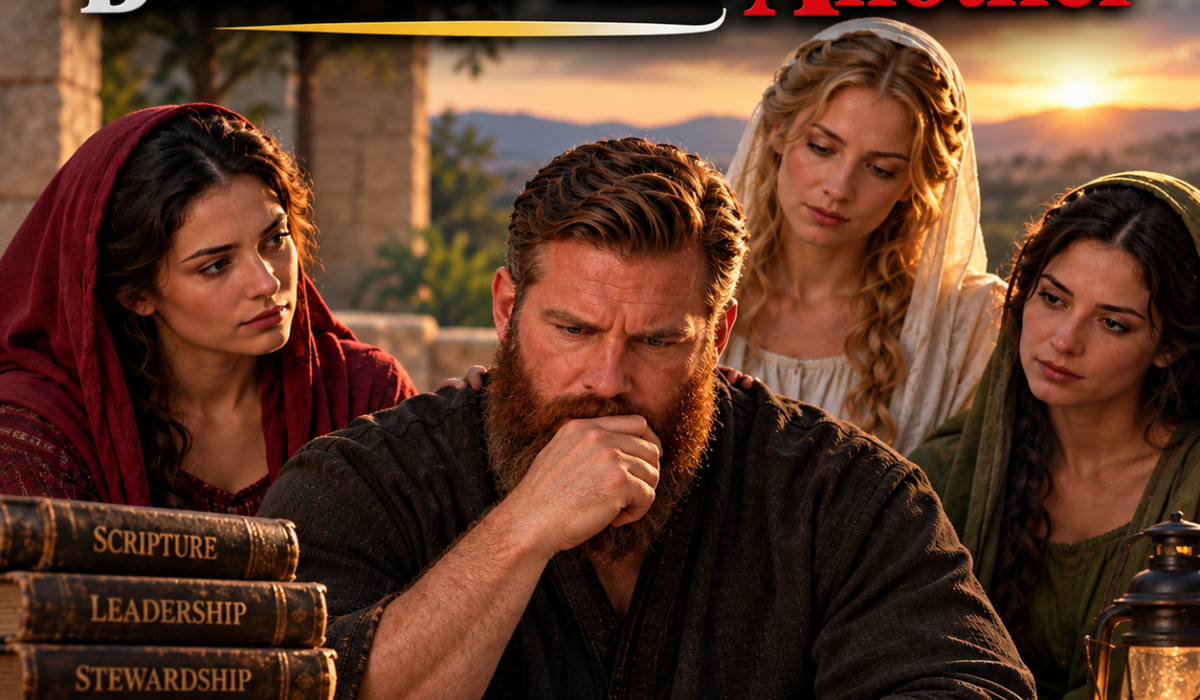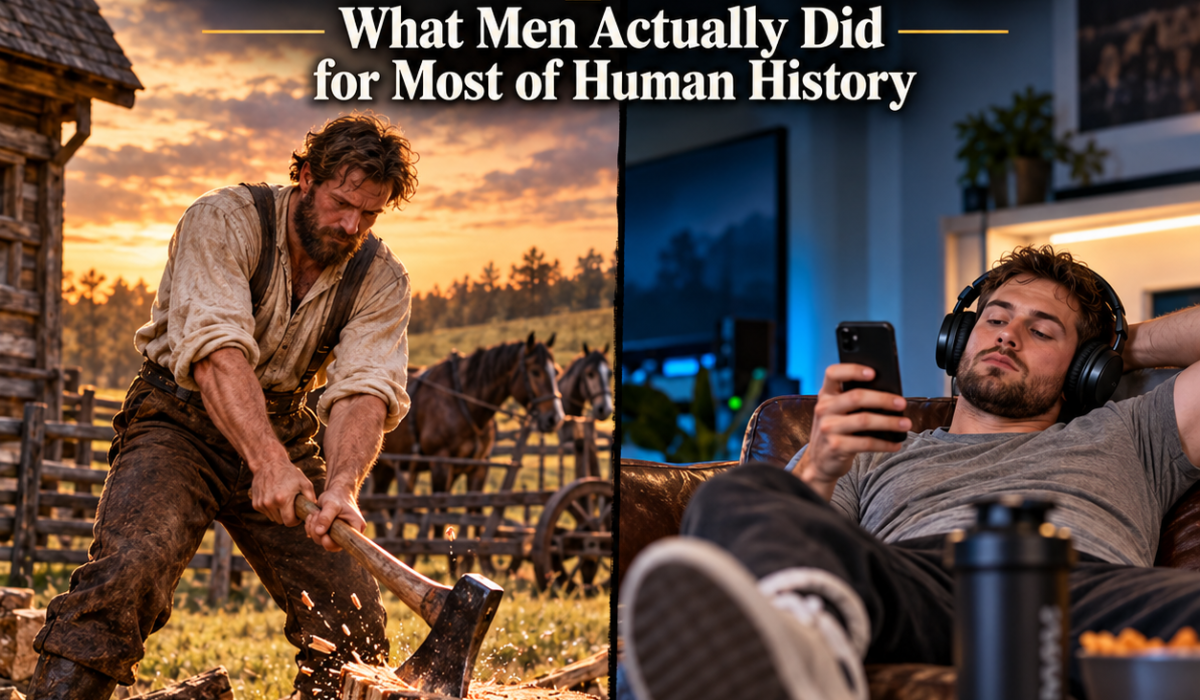
Certified Pre-Owned: A Buyer’s Guide to the Modern Dating Market


Introduction

There was a time when a man looking for a wife would speak with her father, court her intentionally, demonstrate his ability to provide, and make a lifelong covenant before God and witnesses alike. There was a time when a woman understood that her greatest earthly asset was not her career trajectory, her Instagram following, or her collection of passport stamps, but her character, virtue, fertility, and capacity to build a household alongside a competent man. Those days, it seems, have largely been traded in for something that more closely resembles a chaotic used-car lot run by carnival barkers, social media influencers, government regulators, and people who have learned from romantic comedies.

Spend a few weeks observing the modern dating market and you will notice something fascinating. The same behaviors, incentives, deceptions, and absurdities that plague the used automobile industry have migrated into human relationships. Asking prices bear little resemblance to actual value. Marketing departments work overtime to conceal wear and tear. Previous ownership histories are carefully omitted. Mileage is considered offensive to discuss. Warning lights are ignored. Serious buyers are disappearing. Everyone claims to be a luxury model, and nearly every vehicle arrives with a disclaimer explaining why the previous owners were entirely at fault. While the comparison is obviously tongue-in-cheek, it also reveals uncomfortable truths about modern courtship, marriage, divorce, and the collapse of biblical standards. So, for the benefit of prospective buyers everywhere, let us take a stroll through today’s dating dealership and examine the inventory.


I. Why Every 2008 Corolla Thinks It’s a Ferrari

The first lesson every used-car buyer learns is that asking price and actual value are loosely acquainted at best. The seller may have spent years convincing himself that his faded sedan with mismatched tires, a cracked dashboard, and 247,000 miles is a rare collector’s item. He remembers what he paid for it. He remembers how much he loved it. He remembers that one time someone complimented the paint. But the market does not care about his feelings.

The modern dating market suffers from the same condition. Thanks to social media, dating apps, celebrity culture, and decades of self-esteem propaganda, nearly every woman has become convinced she is premium inventory. A generation has been raised on the belief that they are exceptional, unique, and deserving of the very best. Participation trophies have become participation spouses, average has become offensive, and ordinary has become an insult. Everyone wants a king while bringing the qualifications of a court jester.

Dating apps have poured gasoline on this delusion. Historically, most people selected spouses from a relatively small social circle consisting of family connections, church communities, neighborhoods, and local acquaintances. The average woman compared local men to other local men. The average man compared local women to other local women. This kept expectations naturally moderated by reality. Today, however, a woman in a town of ten thousand can receive attention from men hundreds or thousands of miles away. A man can spend hours scrolling through endless profiles, and the illusion of infinite options replaces the discipline of choosing wisely.

Researchers have documented this phenomenon well. Studies examining dating-app behavior consistently find that a relatively small percentage of users receive a disproportionately large share of attention. Everyone notices the luxury models, while they ignore the economy cars.

The irony is almost poetic. Despite unprecedented access to potential partners, marriage rates continue to decline while loneliness continues to rise. We have created a marketplace with more inventory than any civilization in history and somehow fewer successful transactions. It turns out abundance does not necessarily produce satisfaction.

Scripture recognized this principle long before economists gave it a name. Proverbs warns against pride, self-deception, and inflated self-assessment. “When pride cometh, then cometh shame: but with the lowly is wisdom” (Proverbs 11:2). Wisdom begins with accurately assessing reality. A wise buyer knows what he is purchasing. A wise seller knows what he is offering. Trouble begins when a 2008 Corolla starts demanding Ferrari prices simply because someone on Instagram told it to “know its worth.”

The dating market today is filled with individuals who have confused unlimited male attention with value and compliments with qualifications. The result is a showroom full of vehicles sitting under bright lights, accumulating dust, waiting for offers that will never arrive. Everybody believes they deserve more. Meanwhile, the calendar keeps turning, the mileage keeps increasing, and the market quietly continues its ruthless evaluation of reality.


II. Certified Pre-Owned: The Rebranding Department

If there is one thing the automotive industry understands, it is the power of marketing. A vehicle that struggled to attract attention yesterday can suddenly become desirable today with the addition of a fresh coat of wax, a detailed inspection report, and a shiny sticker that reads “Certified Pre-Owned.” The transmission may still have trust issues. The suspension may still groan when asked to carry weight. The previous owner may have treated oil changes as optional suggestions. Yet somehow, through the miracle of branding, we are encouraged to view the vehicle not as “used,” but as “experienced.”

The modern dating market has adopted this strategy with enthusiasm. In previous generations, divorce carried a social stigma, not because people were cruel, but because marriage was viewed as a covenant rather than a contract. A failed marriage represented something serious was potentially wrong with the participant. It was not necessarily unforgivable, nor was it always the fault of both parties, but it was recognized as a significant life event worthy of careful consideration. Today, modern culture has developed an entire vocabulary dedicated to making every previous relationship sound like an advanced educational opportunity.

A divorce is no longer a divorce, but a growth journey, a failed engagement becomes self-discovery, three broken relationships become valuable experience, Four former partners become evidence of knowing what one wants.

The dealership’s marketing department has been working overtime. Now, before someone begins composing an angry email, let’s acknowledge the obvious. Scripture recognizes legitimate grounds for divorce in certain (extremely limited) circumstances, and God extends grace. People make mistakes. Some individuals genuinely are victims of abandonment, adultery, abuse, or circumstances beyond their control. Redemption is one of the central themes of Christianity. The point is that pretending history does not exist serves nobody.

When purchasing an actual vehicle, every sensible buyer asks questions about previous ownership. How many owners has it had? Has it been wrecked? What repairs have been performed? Has it been maintained properly? Nobody interprets these questions as personal attacks. Yet somehow, when similar questions arise in modern relationships, we are informed that the past is irrelevant and that any interest in prior history constitutes judgmental behavior.

Curiously, the people making this argument rarely purchase houses without inspections, businesses without audits, or vehicles without maintenance records. History matters because patterns matter.

King Solomon observed, “As a dog returneth to his vomit, so a fool returneth to his folly” (Proverbs 26:11). Human beings possess an extraordinary ability to repeat destructive behaviors while insisting that this time will be different. While any divorce is an instant “red flag”, one failed marriage may be a tragedy, two may be unfortunate, three begins to indicate serious issues.

The broader statistics cannot be ignored. Multiple studies have shown that the likelihood of divorce increases in subsequent marriages. While individual circumstances vary, the overall trend proves that relationship habits, expectations, and conflict patterns persist. The same software tends to produce the same error messages regardless of how many times the hardware is replaced.

Wise buyers ask questions, not because they are cruel, or lack compassion, or because they deny redemption. They ask because covenant requires trust, and trust requires honesty.

In modern dating everyone has a history. The remarkable thing is that we now live in a culture that simultaneously insists the past does not matter while demanding understanding for why the past matters. We are expected to ignore the Carfax report while spending years discussing the emotional impact of every previous owner. A wise man should do neither.

The biblical position is neither condemnation nor denial, but truth. Grace without truth becomes sentimentality, and truth without grace becomes cruelty. But truth and grace together allow a buyer to accurately assess the inventory before making what is intended to be a lifelong purchase. And unlike a certified pre-owned vehicle, marriage does not come with a return policy.


III. Mileage Matters Whether We Pretend It Does or Not

There are few topics in modern dating capable of triggering a stronger emotional reaction than the discussion of mileage. Mention age, weight, income, education, politics, religion, or favorite pizza toppings, and most people can maintain a reasonably civil conversation. Mention sexual history, relationship history, or accumulated baggage, however, and suddenly everyone begins reaching for the emergency exits. This is unfortunate, because reality remains stubbornly indifferent to our discomfort.

When purchasing a vehicle, mileage is not the only factor that matters, but it is certainly one of  the most important factors. A well-maintained truck with 150,000 miles may be a better purchase than a neglected vehicle with 60,000. IN this way context matters. But nobody seriously argues that mileage is completely irrelevant. Nobody walks into a dealership and says, “I can’t believe you’re asking how many miles are on it. That information belongs in the past.” And yet this is precisely how modern dating often operates.

We are told that previous relationships do not matter. Sexual history does not matter. Emotional baggage does not matter. Past decisions do not matter. Every person, we are assured, should be evaluated as though they emerged from the factory yesterday morning with the protective plastic still covering the seats.

The problem is that human beings are not factory-fresh products. We are creatures of habit, memory, attachment, and experience. Every decision leaves an imprint. Every relationship teaches lessons (both good and bad.) Every success and failure shapes our future behavior.

This is a Biblical fact and psychological reality. Researchers studying attachment theory, relationship satisfaction, and long-term pair bonding have consistently found correlations between past relational behavior and future relational outcomes. The exact interpretations remain debated, but the underlying principle is hardly controversial: habits will persist unless confronted and intentionally changed.

The Bible recognized this thousands of years before psychologists began publishing journals. “Can the Ethiopian change his skin, or the leopard his spots? then may ye also do good, that are accustomed to do evil” (Jeremiah 13:23).

Christianity is founded upon the belief that people can change. The point is that genuine transformation requires effort, repentance, discipline, and time. What Scripture rejects is the modern fantasy that transformation occurs automatically simply because someone desires a different outcome.

A great irony of contemporary culture is that we have become simultaneously obsessed with trauma and dismissive of consequences. We are constantly reminded that past experiences shape our behavior, influence our emotions, affect our trust, and impact our relationships. Yet when the discussion turns toward evaluating a potential spouse, we are suddenly expected to believe that none of those same experiences matter. Apparently history matters tremendously, until it becomes inconvenient.

Mileage, however, extends beyond sexual history. Emotional mileage exists, financial mileage exists, and relational mileage exists. There are individuals who have accumulated years of bitterness, resentment, entitlement, and cynicism while remaining technically “low mileage” by other measures. There are also individuals who have endured hardship, loss, and suffering yet emerged wiser, stronger, and more stable than before.

This is why wise buyers look beyond the odometer.They inspect maintenance records, they listen for unusual noises, they examine signs of neglect, and they evaluate whether repairs have actually been completed or merely covered with fresh paint.

The same principle applies in relationships. Character matters more than image, repentance matters more than excuses, and true growth matters more than branding.

Unfortunately, modern dating culture prefers to avoid reality. We are encouraged to believe that every “vehicle” is equally desirable regardless of condition, every warning light is merely a social construct, and every maintenance issue can be solved through positive thinking.

Reality disagrees.

The truth is neither cruel nor complicated. Past choices influence future outcomes. Actions produce consequences. Habits become character. Character becomes destiny. A wise man does not obsess over mileage, but neither does he ignore it. He understands that every vehicle has a story, and that story matters. Because eventually, after the advertisements have faded and the sales pitch has ended, someone still has to drive the thing home and maintain it.


IV. Lemon Laws, Extended Warranties, and Other Modern Dating Myths

Every experienced vehicle buyer will eventually learn a painful lesson: not every problem can be fixed with optimism.

The salesman may assure you that the knocking sound is “completely normal.” He may explain that the warning lights are merely being overly sensitive. He may insist the smoke coming from beneath the hood is simply the vehicle expressing itself. Nevertheless, there comes a point where reality must be acknowledged. Some vehicles have problems. Some problems are serious. Some problems are expensive. And some problems should cause a prudent buyer to walk away immediately.

Modern dating culture, unfortunately, has declared war on this principle. We live in an age where nearly every warning sign is dismissed as judgment, every concern is labeled insecurity, and every obvious defect is repackaged as a personality trait. Debt is reframed as ambition, anger becomes passion, laziness becomes self-care, entitlement becomes confidence, and emotional instability becomes authenticity. A complete inability to maintain healthy relationships is now proof that everyone else was toxic.

The dealership’s marketing department has truly outdone itself. Previous generations understood that character flaws had consequences. Parents, churches, and communities actively evaluated potential spouses. They asked uncomfortable questions. Was he responsible? Was she trustworthy? Did he work hard? Did she demonstrate self-control? Was either party known for dishonesty, recklessness, violence, or chronic foolishness?

Today, asking such questions is often treated as a violation of human rights. Instead, we are encouraged to believe that love alone possesses magical repair capabilities. If two people simply feel strongly enough about one another, decades of bad habits, unresolved trauma, destructive patterns, financial irresponsibility, addiction, selfishness, and emotional immaturity will somehow disappear beneath the warm glow of romantic affection. History proves otherwise.

The divorce courts are full of people who were deeply in love. Bankruptcy filings contain the names of people who were deeply in love. Marriage counselors spend their careers helping people who were deeply in love. Love is important, love is necessary, love is biblical. But love is not a substitute for wisdom.

The book of Proverbs praises foresight and discernment. “A prudent man foreseeth the evil, and hideth himself: but the simple pass on, and are punished” (Proverbs 22:3). Notice that Scripture does not celebrate the man who ignores danger, but celebrates the man who recognizes danger before it destroys him.

Modern dating advice often resembles a demolition derby sponsored by motivational speakers. The dashboard is flashing, the transmission is slipping, the frame is bent, the check engine light has been on continuously since the previous administration, and somebody inevitably says, “Have you tried communicating?”

Communication is valuable. Communication is not a replacement for character. One of the most dangerous myths in modern relationships is the belief that marriage transforms people. It does not. Marriage magnifies people. The disciplined become more disciplined. The selfish become more selfish. The generous become more generous. The responsible become more responsible. Marriage is a pressure test, what exists before the wedding will only be exposed and magnified.

In fact, many of the warning signs people desperately try to ignore during courtship become the very complaints they voice during divorce proceedings, only magnified. A vehicle does not become reliable because you signed paperwork, and a person does not become virtuous because they exchanged rings.

This is why wise buyers inspect thoroughly before making commitments. They look beyond appearances. They investigate patterns. They evaluate behavior over time. They understand that excitement can cloud judgment and that attraction can temporarily silence common sense. The goal is not perfection. No vehicle is perfect. No person is perfect. The goal is identifying the difference between normal wear and catastrophic failure.

Because despite what modern culture promises, there is no extended warranty that covers foolish decisions. And unlike a used truck, you cannot trade your spouse in every three years when the constant noise of pre-existing problems and programming defects become unbearable.


V. The Collector’s Garage: When One Vehicle Isn’t Enough

Another strange feature of modern society is the insistence that there is only one acceptable vehicle ownership model. A man may own a pickup truck for work, a sports car for weekends, a motorcycle for recreation, a bass boat for fishing, a tractor for the property, and an RV for vacations without attracting any criticism. Entire television networks are dedicated to helping men expand their collections. Yet suggest that a prosperous, capable man might successfully maintain more than one wife, and suddenly people begin reacting as though you have proposed replacing the interstate highway system with a team of alpacas. The inconsistency is fascinating.

Throughout all of human history, powerful men often maintained what a dealership would describe as an extensive fleet. Kings maintained multiple households. Patriarchs maintained multiple households. Wealthy merchants, tribal leaders, landowners, and rulers frequently maintained multiple households. Scripture records Abraham, Jacob, Gideon, David, and 40+ others as possessing family structures that would cause modern relationship experts to spill their fair-trade coffee.

Curiously, the biblical narrative never pauses to deliver the lecture modern readers expect. This is because Scripture focuses on responsibility rather than outrage.

The modern objection is framed in practical and emotional terms. “One wife is hard enough,” people say. “How could a man possibly manage more than one?” This argument is frequently delivered by individuals currently maintaining three ex-spouses, four dating applications, two active situationships, several unresolved emotional entanglements, and a therapist who has not had a quiet week since 2017. All while winking at the secretary.

Apparently managing multiple failed relationships is entirely reasonable, while managing multiple successful relationships is considered completely impossible. The issue, however, is not quantity. The issue is stewardship.

Nobody questions whether a man can physically purchase a second vehicle. The question is whether he can maintain it. Can he afford it? Can he house it? Can he insure it? Can he care for it properly? Can he remain responsible for it? The same principle appears in Scripture. The biblical concern was never whether a man desired additional wives. The concern was whether he possessed the resources, character, discipline, and leadership necessary to provide for them.

This is where contemporary discussions immediately derail. Some men imagine multiple wives as though they are collecting trading cards. Some critics imagine multiple wives as though every household immediately transforms into a medieval soap opera. Both groups are generally detached from reality. The truth is far less glamorous.

Every additional relationship increases responsibility. Every additional household member requires time, leadership, resources, protection, and emotional investment. The husband becomes more and more accountable, not less. His obligations multiply. His failures become more consequential.

A second vehicle does not repair a neglected first vehicle. Expanding the fleet does not improve poor maintenance habits. If the garage is already on fire, adding inventory is generally discouraged. The biblical patriarchs provide numerous examples of this principle. Abraham dealt with household tensions. Jacob experienced conflict between wives. David’s family endured significant struggles. Scripture does not hide these difficulties. Instead, it presents them honestly as reminders that every form of household leadership carries challenges and responsibilities.

What Scripture notably does not do is condemn the ownership model. The modern church treats polygyny as though it were explicitly forbidden in Scripture, despite the fact that no direct prohibition exists. Instead, what Scripture consistently condemns are neglect, favoritism, abuse, injustice, adultery, and failures of leadership. The problem is not the size of the garage, but whether the owner is fulfilling his responsibilities.

For most men, one vehicle will likely be more than sufficient. For some men, a larger collection may be lawful and manageable. But the lesson remains the same regardless of fleet size: ownership creates obligation, leadership creates accountability, and stewardship creates responsibility.

And the man who cannot faithfully maintain a single dependable vehicle should postpone his dreams of becoming a collector.


VI. Why Granddad Still Owns His First Vehicle 40 Years Later

Walk through any classic car show and you will notice something remarkable. Every vehicle has a story. The owner can tell you where it came from, how long it has been in the family, what repairs have been made, and the adventures experienced along the way. There is pride in preservation, there is satisfaction in stewardship, and there is honor in maintaining something rather than constantly replacing it.

Now compare that mindset to the modern dating market. Today, relationships are approached with the same mentality people use when selecting a cell phone plan. Everything is temporary, everything is upgradeable, and everything is disposable. If a newer model appears, trade up. If maintenance becomes inconvenient, move on. If excitement fades, start browsing the inventory again. Commitment has been replaced with consumerism and the numbers tell the story.

In 1950, approximately 83% of American adults were married. Marriage was viewed as the normal foundation of adulthood, family formation, and community stability. Today, marriage rates have fallen below 48%. The median age of first marriage continues to rise, birth rates continue to decline, and loneliness has become so widespread that health researchers increasingly describe it as a public health crisis.

Curiously, the culture that promised unprecedented freedom has produced record levels of isolation. Perhaps this should not surprise us. The automobile industry depends upon repeat customers. Strong families do not.

For most of human history, marriage has been understood as a covenant rather than a vehicle for personal fulfillment. This does not mean people lacked affection, quite the opposite. Historical letters, journals, and personal writings reveal deep love between husbands and wives. The difference is that previous generations viewed love as something strengthened by commitment rather than threatened by it.

Modern culture has reversed the formula. Commitment now must wait until every emotional need is guaranteed. Marriage must wait until every personal life goal is first accomplished. Children must wait until financial perfection arrives and they will no longer be perceived as an inconvenience or hardship. Responsibility must wait until convenience permits (if ever). As a result, most people now spend decades preparing for a life they never begin.

When Jesus was questioned regarding marriage, He pointed back to creation: “What therefore God hath joined together, let not man put asunder” (Matthew 19:6). Marriage was designed as a covenant binding two imperfect people together under God’s authority. That design contains tremendous wisdom.

A vehicle maintained for forty years will accumulate scratches, components will wear out, and some repairs will become necessary. Yet because the owner remains committed, the vehicle becomes more valuable over time rather than less. The same principle applies to marriage.

The strongest marriages are built by people who remain committed when difficulties inevitably arrive. This is one of the great secrets modern culture struggles to understand. Happiness is the byproduct of commitment, not the prerequisite. Trust grows through faithfulness, intimacy grows through sacrifice, and stability grows through perseverance.

Granddad did not keep the same vehicle for forty years because it never broke down. He kept it because he believed some things were worth repairing. Likewise, previous generations did not remain married because every day felt like a honeymoon. They remained married because they understood that covenant requires endurance. They understood that families, communities, inheritances, and legacies are built over decades and by sacrifice.

The irony is that while modern society celebrates unlimited choice, the people who report the greatest satisfaction are those who made a choice and stayed with it. They stopped comparing, and they stopped wondering whether a better deal was waiting around the corner. They invested where they were.

In the end, the healthiest marriages are not luxury imports driven only on sunny weekends. They are the dependable workhorses that carried families through life’s storms, endured countless miles, survived unexpected breakdowns, and remained on the road long after newer models had come and gone.

And that, perhaps, is the greatest lesson the used-car lot can teach us.


Conclusion

By now, some readers are undoubtedly preparing strongly worded emails explaining that human beings are not automobiles. This is true. Human beings are vastly more valuable than automobiles. They are created in the image of God, possess eternal souls, and carry a dignity that no machine could ever possess. The purpose of the analogy is not to reduce people to property (although there are corollaries). Rather, it is to expose the absurdities, contradictions, incentives, and delusions that increasingly define the modern dating marketplace.

Sometimes the quickest way to recognize the foolishness of a culture is to translate its assumptions into another context and observe how ridiculous they appear. If nobody would purchase a vehicle without examining its history, condition, maintenance records, and long-term reliability, it is curious that we encourage people to make one of the most important decisions of their lives while pretending those same factors are irrelevant.

The deeper lesson is a biblical one. Marriage was never intended to function as a consumer transaction, to maximize excitement, provide  endless options, or for our personal convenience. It was designed to establish covenant, create families, build legacies, and glorify God. The modern dating market encourages people to think like shoppers, comparing seemingly unlimited inventory while searching for a deal that does not exist. Scripture calls men and women to think like builders instead. A wise man seeks character over marketing, substance over appearances, and covenant over consumption.

A wise woman does the same. The goal is not finding a flawless luxury model with zero miles and unlimited warranty coverage. Such inventory does not exist. The goal is finding a faithful companion with whom to build something lasting. And for those still wandering the dealership lot, endlessly kicking tires and negotiating with reality, a final piece of advice may be in order: eventually the showroom closes, the inventory changes, the mileage increases, and the best opportunities drive off the lot. Choose wisely, maintain diligently, honor your commitments, and remember that the most valuable vehicles are the ones still faithfully running after decades on the road.

The Great Lexical Impoverishment and the Floccinaucinihilipilification of English


Prologue: The Diminishing Vocabulary of Man

In a previous essay, The Death of Conversation, I lamented the gradual extinction of meaningful discourse in the modern age. The thesis was simple: a civilization that loses its capacity for sustained conversation will lose the principal mechanisms by which wisdom, culture, and truth are transmitted from one generation to the next. Upon further reflection, I have come to suspect that the death of conversation is not the disease, but merely one of its more conspicuous symptoms. After all, before men cease speaking well, they cease thinking well; and before they cease thinking well, they cease possessing the linguistic apparatus necessary for sophisticated thought. One cannot communicate profundity with a vocabulary composed chiefly of grunts, abbreviations, emojis, and cultural slang.

This brings us to a related, though perhaps even more alarming phenomenon: the Great Lexical Impoverishment. The English language (once a vast and magnificent treasury of Anglo-Saxon vigor, Norman refinement, Latin precision, and Greek intellectuality) is undergoing a slow but undeniable contraction in common usage. Words once employed by ordinary educated men and women are now regarded as ostentatious curiosities, relics fit only for academics, antiquarians, and insufferable know-it-alls. The modern speaker is increasingly encouraged to exchange eloquence for simplicity, precision for accessibility, and intellectual aspiration for linguistic minimalism. Indeed, we have arrived at the peculiar historical moment in which a man may spend twelve years in public education, possess unlimited access to the accumulated knowledge of civilization through a device in his pocket, and yet regard a four-syllable word as an act of aggression.

The irony is almost too delicious to ignore. Never before has mankind possessed greater access to books, dictionaries, libraries, universities, lectures, and educational resources. The average peasant of the fourteenth century would have regarded the modern smartphone as a repository of near-omniscience. Despite these unprecedented advantages, studies consistently show that reading habits are declining, attention spans are shrinking, and vocabulary acquisition is stagnating nearly all of the population. The National Endowment for the Arts has documented decades of decline in literary reading among adults, while numerous educational assessments have noted troubling deficiencies in reading comprehension and advanced literacy. We inhabit an age of informational abundance and intellectual malnutrition simultaneously, a feat so paradoxical that future historians may struggle to determine whether it was tragic, comedic, or both.

This lexical diminution is not just an aesthetic concern for grammarians and word enthusiasts who derive unreasonable pleasure from terms such as perspicacious, ineffable, recondite, or sesquipedalian. Words are not ornamental baubles affixed to thought after the fact. They are the primary instruments through which thought is formed, organized, refined, and communicated. As the philosopher Ludwig Wittgenstein observed, “The limits of my language mean the limits of my world.” A man equipped with a rich vocabulary possesses a greater capacity for distinction, nuance, and conceptual precision than one confined to a meager lexicon. To lose words is not merely to lose sounds, but to lose categories, distinctions, and ways of perceiving reality.

Nor should Christians regard this matter as trivial. Scripture places extraordinary emphasis upon language. God creates through speech. Adam exercises dominion by naming creation. Wisdom and folly are repeatedly distinguished by their words throughout Proverbs. Most strikingly, the Gospel of John opens not with language: “In the beginning was the Word, and the Word was with God, and the Word was God” (John 1:1). Language is foundational to civilization. Consequently, a civilization that habitually abandons precision, depth, and eloquence in favor of verbal simplicity should not be surprised when its reasoning becomes equally simplistic.

Thus, this essay is not simply a defense of large words, nor an exercise in sesquipedalian exhibitionism for its own sake. Rather, it is an examination of what is lost when a people gradually abandon linguistic ambition. For beneath the cumbersome yet delightfully appropriate title lies a serious contention: that the floccinaucinihilipilification (the estimation of something as worthless) of English vocabulary has contributed to a broader cultural tendency to regard intellectual rigor as unnecessary. And when a society treats precision of language as pretension, it will discover too late that precision of thought will follow it into oblivion.


I. The Cathedral of Words and the Barbarians at the Gate 

The English language did not emerge fully formed from the brow of some literary deity. The greatest, most expressive and complex system of communication ever developed was forged across centuries through conquest, commerce, theology, philosophy, scholarship, and no small measure of civilizational tumult. Old English contributed its sturdy and practical foundation; Norman French supplied refinement and sophistication; Latin bestowed precision and technicality; Greek furnished the language of philosophy, science, and theology. The result was a linguistic cathedral, a sprawling edifice of astonishing depth and complexity wherein a man might find a word for nearly every conceivable shade of thought, emotion, object, virtue, vice, or circumstance.

Consider the lexical inheritance bequeathed to us by previous generations. The translators of the King James Bible, working in the early seventeenth century, employed a vocabulary that modern publishing houses would likely deem too difficult for contemporary audiences. Shakespeare casually utilized thousands of unique words, many of which remain recognizable centuries later. Statesmen, theologians, merchants, and craftsmen alike possessed vocabularies that would surprise most contemporary university graduates. One need only peruse personal correspondence from the eighteenth or nineteenth centuries to discover ordinary citizens employing terms such as vicissitude, amelioration, magnanimity, obduracy, and circumspection without apology or explanation.

The evidence of this linguistic richness is not anecdotal. Historical analyses of literature reveal that earlier generations routinely encountered a broader range of vocabulary through sermons, newspapers, books, public lectures, and formal education. Even elementary readers from the nineteenth century exposed children to words that today might provoke demands for simplification. Noah Webster, whose name became synonymous with American lexicography, believed that education should elevate the student to the language rather than degrade the language to the student. Such an assumption now appears almost quaint, if not outright revolutionary.

What distinguished these generations was not intelligence, but aspiration. They expected language to stretch the mind. A difficult word was viewed as an invitation to learn rather than an affront to one’s dignity. The encounter with an unfamiliar term often prompted inquiry, reflection, and growth. Today, however, many regard lexical complexity with suspicion. Words that once conveyed learning now risk accusations of elitism. A man may be praised for ignorance so long as it is confidently expressed, while the individual who employs a precise or uncommon term is often treated as though he has committed an act of social aggression.

This represents a profound inversion of historical norms. For centuries, vocabulary functioned as a ladder by which individuals ascended toward greater knowledge. Increasingly, however, modern culture is determined to shorten the ladder lest someone be inconvenienced by the climb. The result is diminished aspiration. We have inherited a linguistic cathedral and, through a peculiar mixture of indolence and egalitarian sentimentality, have begun converting it into a storage shed. The stones remain. The architecture still stands. But fewer and fewer people venture inside, and fewer still appreciate the grandeur that surrounds them.


II. The Cult of Simplification and The Tyranny of Accessibility 

One curious development of the modern age is the widespread assumption that every form of simplification constitutes progress. We are told that language must be streamlined, shortened, condensed, optimized, modernized, and rendered perpetually accessible to the broadest (and dumbest) possible audience. The stated intention is usually noble enough. Communication ought not be needlessly obfuscatory. A writer should strive for clarity over verbosity. Yet somewhere along the path from clarity to accessibility, civilization took a wrong turn and wandered headlong into the swamp of intellectual mediocrity on an inevitable path to idiocracy.

While clarity seeks to illuminate truth, simplification often seeks to eliminate difficulty. These are not identical pursuits. A competent teacher explains a complex concept in a manner that can be understood. A poor teacher simply removes the complexity. The former produces wisdom; the latter produces ignorance adorned with confidence. Modern communication has embraced the latter approach. Newspapers that once assumed a literate readership now target progressively lower reading skill levels. Educational materials are frequently rewritten to accommodate shrinking vocabularies. Public discourse increasingly favors slogans, feelings and assertions over evidence and eloquence.

The consequences are visible everywhere. Political rhetoric has become increasingly reductive. Corporate communication has been distilled into vacuous platitudes. Advertising agencies, social media consultants, and marketing professionals labor tirelessly to transform every conceivable message into a sequence of digestible fragments capable of being consumed by individuals whose attention span rivals that of an over-caffeinated squirrel. We are surrounded by language engineered to accommodate its lowest common denominator. The result is a peculiar cultural feedback loop: as vocabulary declines, communicators simplify their language; as language is simplified, vocabulary declines further and the cycle continues ad nauseam.

This phenomenon might appropriately be called the democratization of ignorance. Previous generations sought to democratize education by expanding access to knowledge. Modern society appears content to democratize ignorance by lowering intellectual expectations. The distinction is subtle but significant. The goal is to bring the summit for everyone down to the lowest denominator student. Unfortunately, mountains cease being mountains when enough of their elevation is removed.

One need not search far for examples. Universities increasingly report students arriving with diminished reading endurance and reduced familiarity in advanced vocabulary. Professors routinely assign shorter readings, simpler texts, and less demanding material than their predecessors. Even among educated adults, there exists a growing reluctance to engage with language that requires effort. Encountering an unfamiliar word no longer inspires curiosity but irritation. The immediate response is not, “What does this mean?” but rather, “Why didn’t you use an easier word?” Such a reaction would have perplexed our forebears to the point of exasperation. To them, the discovery of a new word represented an expansion of one’s intellectual armory. To modern readers, it is perceived as an inconvenience too burdensome to bear.

The irony, of course, is delicious. We live in an age where every dictionary in human history can be accessed within seconds. Never has it been easier to learn a word. Never has the cost of ignorance been lower. Yet never have so many people insisted upon remaining comfortably uninformed. The problem, therefore, is a lack of aspiration. The modern war against big words is not truly a war against vocabulary, but effort. And like most wars against effort, it is being won with alarming efficiency.


III. The Necessity of Sesquipedalianism 

A persistent absurdity of modern discourse is the belief that large words exist to make simple ideas sound complicated. According to this popular fiction, the individual who employs terms such as perspicacious, ineluctable, circumlocution, or magniloquent is engaged in some form of linguistic peacocking, strutting about the verbal barnyard in search of admiration. Certainly, there are occasions when a man may indulge in needless verbosity. Every profession possesses its charlatans, and every dictionary has its show-offs. But to dismiss uncommon words as ornamental affectations is to fundamentally misunderstand why language develops in the first place. Words exist because distinctions exist.

A civilization does not create additional vocabulary out of boredom. Vocabulary is created  because reality proves more intricate than the existing lexicon can adequately describe. Consider the emotional spectrum. A child may know only the word angry. While a mature speaker, however, recognizes substantial differences between irritation, annoyance, vexation, indignation, resentment, exasperation, wrath, and apoplexy. Each describes a distinct state of mind. To condense them all into the word angry is rather like insisting that every shade of color be called blue. Communication remains possible, but precision greatly suffers.

Likewise, there is a meaningful distinction between a person who is intelligent, one who is knowledgeable, one who is wise, one who is shrewd, one who is astute, one who is sagacious, and one who is perspicacious. These terms overlap, yet they are not interchangeable. A knowledgeable fool remains a fool. A shrewd villain may lack wisdom. A perspicacious observer may discern truths that escape a merely intelligent man. The existence of these distinctions allows thought, and thereby expression to become more refined. Vocabulary is the principal mechanism by which ideas are formed.

This principle is easily observed by linguists, psychologists, and educators. Research consistently demonstrates correlations between vocabulary breadth, reading comprehension, academic achievement, and critical thinking ability. Individuals possessing larger vocabularies process complex information more effectively because they possess a greater number of conceptual categories through which information can be organized and understood. Language functions as a cognitive infrastructure. A man who possesses only a handful of conceptual tools can perform only a limited range of intellectual tasks.

The philosopher and statesman Francis Bacon observed that “reading maketh a full man; conference a ready man; and writing an exact man.” Implicit within this observation is the understanding that words are instruments of precision. A craftsman does not carry twenty different tools because he wishes to impress passersby. He carries them because different tasks require different instruments. No sane carpenter attempts to build a house using only a hammer and screwdriver. However our modern society increasingly expects language to accomplish every intellectual task with a remarkably limited verbal toolkit.

The matter is even clearer when one examines the language of theology, philosophy, and law. Terms such as propitiation, sanctification, jurisprudence, teleology, ontology, and epistemology  emerged because entire realms of thought required vocabulary capable of expressing subtle distinctions. If you remove or condense this expressive terminology the distinctions become difficult (or impossible) to articulate. 

Scripture reflects this reality. The Book of Proverbs contrasts wisdom with folly, prudence with simplicity, and understanding with ignorance. “The heart of the prudent getteth knowledge; and the ear of the wise seeketh knowledge” (Proverbs 18:15). Knowledge requires categories, categories require language, and language requires vocabulary. Consequently, the man who voluntarily limits his vocabulary limits his capacity for understanding.

Big words, then, are not the enemy of communication. More often, they are the servants of precision. They exist because reality is complicated, because truth possesses nuances, and because the human mind requires linguistic tools capable of navigating the realm in which we exist and hope to understand. To reject them wholesale is an act of intellectual self-impoverishment. One might as well discard half the instruments from a surgeon’s tray and then boast of one’s commitment to simplicity.


IV. The Digital Babel and the Triumph of Verbal Gruel 

Previous generations gradually diminished their vocabularies through educational neglect and cultural simplification, the digital age has accelerated the process with all the subtlety of a battering ram. Never before in human history have so many people communicated so frequently while saying so little. We inhabit a civilization perpetually engaged in conversation, yet increasingly incapable of sustained expression. Millions of messages are transmitted every minute, billions every day, and an alarming percentage of them could be adequately summarized by a medieval monk as, “The villagers continue making noises.”

The architecture of modern communication bears much of the blame. Social media platforms reward brevity, speed and emotional impact over depth, reflection, and intellectual rigor. The algorithms governing digital discourse do not ask whether a statement is thoughtful, nuanced, or accurate. They simply ask whether it is engaging. Consequently, the modern communicator is incentivized to be provocative, reactionary, and concise rather than comprehensive. The result is a linguistic environment in which vocabulary is treated as an obstacle rather than an asset.

We need only observe the evolution of online communication. Entire phrases have been reduced to acronyms. Complete thoughts have been condensed into hashtags. Complex emotions are increasingly represented by tiny yellow pictographs whose expressive range would be the envy of ancient cave painters. A civilization capable of producing Shakespeare, Milton, and the translators of the King James Bible now frequently communicates through combinations of abbreviations, animated images, and symbols depicting laughing faces, crying faces, and vegetables. Forgive me if I hesitate to call this progress.

The irony is particularly striking because the internet possesses the potential to be the greatest educational instrument ever devised. For the first time in human history, any individual can access ancient manuscripts, scholarly journals, dictionaries, lectures, and entire libraries from virtually anywhere on earth. A word that once required a trip to a university library can now be defined in seconds. A curious mind has never enjoyed greater opportunities for intellectual expansion. However, the same technology that grants access to the accumulated wisdom of civilization also inundates the user with an endless torrent of distractions specifically engineered to prevent sustained concentration and production.

Recent studies on digital media consumption have shown constant exposure to fragmented information encourages skimming rather than deep reading. Individuals increasingly consume information in short bursts rather than extended periods of contemplation. Long-form reading has declined below single digit percentages. Attention spans have contracted more than 3700% in the last five generations. Vocabulary acquisition has slowed to a trickle. Our brains have adapted to the environment in which we operate, and an environment dominated by snippets, headlines, captions, and notifications will naturally cultivate habits of superficial engagement. It is impossible to acquire a sophisticated vocabulary when one’s reading consists primarily of comments sections and arguments conducted entirely through memes, emoji’s and slang.

Perhaps more troubling is the emergence of what might be termed linguistic minimalism as a cultural virtue. Brevity has always possessed value when employed judiciously. The problem arises when brevity becomes the highest good. Not every idea can be compressed into a slogan, not every truth fits in a caption, and not every argument survives reduction to a soundbite. Our modern communication increasingly demands precisely these reductions. Complexity is viewed with suspicion, nuance is treated as weakness, and qualification is mistaken for uncertainty. The result has created a public discourse nourished upon verbal gruel – easily consumed, rapidly digested, and almost entirely devoid of intellectual nutrition.

A society that communicates through fragments will think in fragments. A society that abandons difficult reading will abandon difficult thinking. And a society that ceases striving for linguistic excellence will be a society where intellectual intelligence becomes increasingly rare. For language is not merely the vessel that carries thought; it is the forge in which thought is shaped.


V.The Logos, the Lexicon, and the Loss of Civilization 

At this juncture, the reader may be tempted to dismiss the foregoing discussion as little more than the lamentations of grammarians, bibliophiles, and incurable word enthusiasts mourning the disappearance of their favorite sesquipedalian curiosities. Surely civilization faces graver concerns than the decline of words such as perspicacity, munificence, concupiscence, or circumspection. Yet such a conclusion mistakes the symptom for the disease. Vocabulary is the principal mechanism through which knowledge, wisdom, law, theology, history, and civilization are preserved and transmitted. When language deteriorates, the consequences will extend far beyond the dictionary.

The biblical witness repeatedly affirms the profound significance of language. The opening chapter of Genesis depicts a God who creates the world and everything on it through speech. The universe literally emerges from divine utterance. Shortly thereafter, Adam is entrusted with the task of naming the creatures, an act that signifies both understanding and stewardship. Throughout Scripture, words are treated with an unparalleled level of importance. Proverbs contains hundreds of admonitions regarding speech, wisdom, understanding, instruction, and knowledge. “Death and life are in the power of the tongue” (Proverbs 18:21). Such language presupposes that words possess consequence, substance, and authority.

More strikingly, the Apostle John opens his Gospel with a declaration of staggering theological profundity: “In the beginning was the Word, and the Word was with God, and the Word was God” (John 1:1). The Greek term employed is Logos, a word carrying layers of meaning that encompass reason, order, discourse, wisdom, and divine self-expression. Entire libraries have been written exploring the implications of that single term. If a society gradually loses the vocabulary necessary to understand complex concepts, it also loses the ability to engage deeply with theological truths. The impoverishment of language will inevitably contribute to the impoverishment of doctrine.

This reality extends far beyond theology. Law depends upon precise definitions. Philosophy depends upon conceptual distinctions. Science depends upon technical terminology. History depends upon accurate description. Commerce depends upon carefully negotiated language. Every sophisticated human endeavor and behaviour rests upon the assumption that words possess stable meanings capable of conveying nuanced ideas. If you remove enough vocabulary those distinctions will collapse. Ambiguity will replace precision, emotion will supplant reason, and slogans will replace arguments. In such an environment, manipulation thrives.

Indeed, there exists a deeply political dimension to lexical decline. A populace incapable of understanding complex language is far easier to govern through simplistic narratives. The individual who lacks vocabulary also lacks the conceptual categories necessary to identify deception, contradiction, equivocation, or sophistry. He may sense that something is wrong but he will struggle to articulate precisely why. By contrast, the person possessing a rich and disciplined vocabulary will enjoy a greater capacity for analysis, discernment, and resistance to rhetorical manipulation. Tyrants have seldom feared an illiterate mob, but they have always feared educated readers.

The civilizational consequences are therefore profound. A culture that ceases reading demanding books will lose the ability to produce demanding books. A people that abandons eloquence will cease to recognize eloquence when they encounter it. A generation raised upon verbal minimalism will find the writings of previous centuries increasingly inaccessible. The result is a form of cultural amnesia. The wisdom of ancestors remains physically available and becomes practically unreachable because the linguistic bridge connecting past and present has been purposefully demolished.

For this reason, the decline of vocabulary should concern anyone interested in preserving civilization, faith, and culture. Words are repositories of accumulated human understanding. They are vessels carrying ideas across centuries and generations. They are instruments by which truth is discerned, wisdom is communicated, and reality is apprehended. To treat them as expendable is an act of astonishing shortsightedness.

Civilizations rarely collapse in a single cataclysmic moment. More often they deteriorate through countless small abdications of responsibility. The abandonment of difficult words may appear inconsequential when viewed in isolation, but when a people consistently choose convenience over precision, simplification over understanding, and intellectual ease over intellectual growth, the cumulative effect will be substantial. Lexical impoverishment is a civilizational issue of paramount importance. For when a culture loses its words, it will lose far more than its vocabulary.


Conclusion: The Last Custodians of the Lexicon

The decline of sophisticated vocabulary is not, in itself, the greatest crisis confronting modern civilization. Nations have endured wars, plagues, famines, invasions, and revolutions without losing their identity. However, language occupies a unique position among the pillars of culture, for it serves as the medium through which every other pillar is maintained. Laws are written in words, Scripture is preserved in words, philosophy, science, history, commerce, and education are all transmitted through words. Consequently, when a society neglects its language it is quietly undermining the foundation upon which civilization rests.

The tragedy is not that fewer people know the meaning of floccinaucinihilipilification, delightful though that word may be. The tragedy is that many no longer see any value in knowing it, or in learning any unfamiliar word at all. Curiosity and aspiration have been replaced by convenience and accommodation. We have reached the peculiar point in history where a man may spend decades mastering the intricacies of video games, memorizing sports statistics, or debating the minutiae of popular entertainment, yet regard the acquisition of new vocabulary as an unreasonable burden. Such priorities reveal a fundamental cultural failure and profound spiritual inadequacy.

The remedy, fortunately, is neither complicated nor inaccessible. Read old books. Read difficult books. Read books that force you to keep a dictionary nearby. Read the King James Bible. Read Shakespeare. Read Milton, Burke, Chesterton, Webster, and the countless forgotten authors whose works once formed the backbone of an educated society. When an unfamiliar word appears, wrestle with it, learn it, and use it. Language grows through exercise just as muscles grow through labor. A vocabulary, like a garden, flourishes only when cultivated.

Parents should challenge their children with language rather than perpetually simplifying it. Teachers should elevate students toward knowledge rather than dragging knowledge downward toward ignorance. Writers should strive for clarity without surrendering precision. Readers should recover the habit of intellectual exertion. Most importantly, we must reject the pernicious notion that complexity is inherently elitist or that understanding difficult words is somehow pretentious. There is nothing arrogant about learning, there is nothing oppressive about precision, and there is certainly nothing noble about remaining intellectually stagnant.

The English language remains the most magnificent linguistic achievement in human history. Its vaults are filled with treasures accumulated over centuries, words of astonishing beauty, precision, utility, and power. If we continue treating our lexical inheritance as an inconvenience, future generations will inherit only fragments of what once existed. The cathedral will still stand, but its halls will be empty, its libraries neglected, and its grandeur forgotten to time.

A civilization will not become wiser by shortening its vocabulary any more than a carpenter will become more skilled by discarding half his tools. The man who knows ten thousand words can perceive distinctions unavailable to the man who knows one thousand. He can articulate truths with greater precision, identify errors with greater clarity, and engage reality with greater depth. Words are the instruments of thought, tools of dominion, and repositories of culture.

And so the question before us is whether we shall be faithful stewards of the extraordinary linguistic inheritance entrusted to us, or sheep continuing down the path of simplification, abbreviation, and intellectual indolence until our discourse consists chiefly of slogans, emojis, and verbal grunts. THe time is now to recover the lost virtues of curiosity, eloquence, precision, and learning.

For the death of conversation is merely the beginning. The floccinaucinihilipilification of English threatens something far greater: the gradual abandonment of the very language by which civilization remembers, reasons, and endures.

No, Your Dog Is Not in Heaven: What the Bible Really Says About Animals and Eternity


Introduction:

For modern Christians, the death of a beloved pet is met with a familiar assurance: “Don’t worry, you’ll see him again in Heaven.” It is spoken sincerely, usually through tears, often accompanied by stories about dogs waiting at pearly gates and cats lounging somewhere beyond the clouds. The sentiment is understandable in a fallen society because pets occupy a unique place in human life. They offer companionship, loyalty, comfort, and, in some cases, more affection than relatives. However sincerity does not create truth, a comforting lie remains a lie, no matter how warmly it is delivered by your so-called “pastor”

The problem is that modern Christianity increasingly substitutes emotional feelings for biblical doctrine. Rather than asking what God has revealed, many ask what would make them feel better. The result is a theology shaped by greeting cards, children’s movies, and sentimental Facebook memes featuring golden retrievers with angel wings. The question before us is: does the Bible teach that your individual dog, cat, hamster, goldfish, or emotionally fragile rescue llama will spend eternity with you in Heaven? The answer, despite popular opinion, is no.


I. The Bible Never Promises Eternal Life to Animals

The strongest argument against the popular belief that pets go to Heaven is also the simplest: Scripture never says they do. Throughout the entirety of the biblical record (from Genesis to Revelation) God speaks of eternal life, resurrection, salvation, judgment, redemption, glorification, and the destiny of mankind. Animals are discussed frequently, but never in the context of receiving eternal life as individuals.

The Bible consistently distinguishes man from beast. Genesis 1:26-27 declares that humanity was created in the image of God. No animal shares this distinction. No dog, regardless of loyalty, reflects the divine image in the way a human being does. No horse, however noble, bears moral responsibility before God. No cat, despite its obvious belief in its own divinity, was created as God’s covenant representative on earth.

Ecclesiastes 3:19-21 appears in many discussions about animal souls. Solomon writes that man and beast both die and return to dust. He then asks who knows whether the spirit of man goes upward and the spirit of the beast goes down into the earth. This passage is not teaching animal immortality. Rather, Solomon is emphasizing the limitations of human observation under the sun. Externally, both men and animals die. Elsewhere Scripture clarifies the distinction. Hebrews 9:27 declares that man is appointed once to die and then face judgment. Animals never face judgment because animals are not moral agents.

The New Testament consistently connects eternal life to redemption through Christ. John 3:16 speaks of believing humans receiving everlasting life. Romans 8 discusses the redemption of God’s children. First Corinthians 15 details the resurrection of believers. The subjects are always people, not once are animals included among the “redeemed.”

Historically, this understanding was universal among Christian theologians. Augustine, Thomas Aquinas, John Calvin, Martin Luther, Charles Hodge, and countless others rejected the notion that animals possess immortal souls equivalent to humans. While they differed on many theological matters, they all agreed here.

Modern assumptions about pets in Heaven owe far more to sentimentality than Scripture. The doctrine emerged from emotional attachment (More on that in section IV). Unfortunately, many Christians have become so accustomed to hearing something repeated that they mistake repetition for revelation. The Bible never promises eternal life to your Labrador, your Persian cat, or your emotional-support iguana.


II. Animals Are Living Creatures, But They Are Not Human Souls

A common source of confusion seems to stem from the biblical word translated as “soul.” Many assume that because animals are called living creatures, they therefore possess immortal souls identical to human beings. But this misunderstanding does not hold up under even basic examination of Scripture.

The Hebrew word nephesh is often translated as soul, living being, or creature. Genesis 1 uses the term repeatedly to describe animals. Genesis 2 uses it for mankind as well. The word does not automatically imply immortality, it simply refers to a living creature. A fish can be a nephesh, a bird can be a nephesh, and a man can be a nephesh. Context determines the meaning.

Human beings possess qualities animals do not. Humanity bears God’s image. Humanity exercises moral reasoning. Humanity enters covenant relationship with God. Humanity is accountable for sin. Humanity stands before divine judgment. Animals do none of these things. You may think your dog feels guilty after destroying the couch, but that is not conviction of sin. It is recognition that consequences are approaching.

The distinction becomes even clearer throughout Scripture. God makes covenants with people. Christ dies for people. Angels minister to people. The Gospel is preached to people. Resurrection is promised to people. The final judgment concerns people. The entire redemptive narrative revolves around humanity’s relationship with God.

Philosophically, this distinction was recognized throughout history. Aristotle distinguished rational souls from animal life. Aquinas argued that animals possess life and sensation but lack the rational, immortal soul unique to man. Jewish scholars likewise recognized humanity’s unique status as image bearers.

Scientific observations reinforce rather than undermine this distinction. Animals demonstrate remarkable instincts, emotions, and even minimal forms of intelligence. Dogs can recognize hundreds of words. Crows solve puzzles. Dolphins exhibit sophisticated social behaviors. But none display moral accountability, religious worship, abstract theological reasoning, or covenant consciousness. Intelligence is not the same thing as personhood.

The modern tendency to anthropomorphize pets has only deepened the confusion. Many owners increasingly treat animals as surrogate children, assigning them human motives, emotions, and even spiritual capacities. Pet expenditures in the United States now exceed hundreds of billions of dollars annually, reflecting a cultural shift that often elevates animals to near-human status, but this affection does not erase ontological distinctions.

The Bible celebrates animals as part of God’s creation. It commands kindness toward them. It recognizes their value and purpose. But Scripture never blurs the line between beast and man. God created both, loves both within their proper place, and assigns each a different role within creation. Confusing those roles produces bad theology, no matter how adorable the puppy pictures may be.


III. What About the Animals Mentioned in the New Creation?

At this point someone usually raises an objection: “But there are animals in Heaven!” The statement is partially true and entirely irrelevant to the claim that individual pets receive eternal life. Scripture does indeed indicate the presence of animals within God’s restored creation. The issue is whether those animals are resurrected household pets. That is an entirely different question.

Isaiah’s prophecies concerning the Messianic kingdom describe wolves dwelling with lambs, lions eating straw like oxen, and harmony among creatures previously marked by predation. Isaiah 11 and Isaiah 65 present a restored order in which creation experiences peace. These passages demonstrate that animals have a place within God’s renewed world.

Romans 8:19-22 expands this concept. Paul teaches that creation groans under the curse and awaits liberation. The fall affected the entire created order. Disease, decay, predation, and death entered the world through sin’s consequences. Paul’s language suggests a future restoration that extends beyond mankind.

Revelation also includes imagery involving horses and creatures participating within heavenly scenes. Christ returns mounted upon a white horse in Revelation 19. Clearly, animals exist within biblical visions of the future.

However, none of these passages identify individual pets receiving resurrection.God restoring animal life does not mean He is restoring every specific animal that ever lived. One does not automatically lead to the other.

Consider an analogy. Scripture teaches that trees exist in the New Creation. Yet no one assumes the oak tree removed from their backyard in 1848 will be resurrected and waiting beside the River of Life. The existence of a category does not imply the restoration of every individual thing of that category.

Most theologians acknowledge the possibility that God may create animals in the New Earth. Some even suggest He may choose to recreate particular animals according to His pleasure. God can certainly do whatever He wishes. But Scripture reveals no promise concerning the resurrection of specific pets.

The distinction between possibility and doctrine matters enormously. Christians should never build theology upon speculation or emotion. We build theology upon revelation. God has revealed the resurrection of believers. He has revealed the restoration of creation. He has revealed the return of Christ. He has NOT revealed the eternal destiny of your childhood beagle named Sparky.

Many people desperately want certainty where God has provided none. Unfortunately, wishful thinking is not a recognized hermeneutical method. Biblical doctrine requires more than hopeful imagination and a framed photograph of Mr. Whiskers.


IV. The Fur-Baby Religion: When Pets Replace the Children We Refused to Have

To understand why so many modern people are emotionally invested in the idea that pets must be waiting in Heaven, one must first understand a much larger cultural transformation. The question is demographic, sociological, and psychological. The modern West has experienced one of the most dramatic collapses in fertility ever recorded. Nearly every developed nation now faces birth rates significantly below replacement level. Marriage rates have fallen. The average age of first marriage has risen. Millions delay or reject parenthood altogether. Yet pet ownership exploded.

For most of human history, people loved animals without confusing them with children. Farmers named horses, shepherds cared for sheep, hunters valued their dogs, and families mourned beloved animals when they died. But nobody threw birthday parties for goats, pushed terriers in strollers through shopping malls, purchased matching pajamas for cats, or referred to a pug as their “fur son.” Society understood the distinction between an animal and a child. One was a companion. The other was an heir.

Today that distinction is increasingly blurred. Terms such as “dog mom,” “cat mom,” “pet parent,” and “fur baby” have become commonplace. Entire industries now exist around the humanization of animals. Pet birthday cakes, pet daycare centers, pet insurance policies, pet psychiatrists, pet inheritance trusts, luxury pet hotels, and even pet custody battles have become normalized. Americans now spend hundreds of billions of dollars annually on pets, often treating them as substitute family members.

What changed? The answer is painfully obvious. Human beings were designed for family. Men were designed to build households. Women were designed with powerful nurturing instincts directed toward husbands, children, grandchildren, and community. Those instincts do not simply disappear because modern culture declares motherhood optional. They remain, and they seek an outlet. And when a society systematically discourages marriage, delays childbearing, celebrates childlessness, and treats fertility as an inconvenience, those instincts are redirected elsewhere. Increasingly, they are redirected toward pets.

This reality explains why discussions about pets in Heaven generate such intense emotional reactions. A person who views a dog as a dog may grieve its death. A person who views a dog as a child experiences the loss a parent feels because the relationship has become parental. Once that emotional substitution occurs, the desire for eternal reunion becomes overwhelming. Suddenly, the question is no longer, “What does Scripture teach?” but, “How could God possibly separate me from my baby?”

A golden retriever is a wonderful animal. He may be loyal, affectionate, protective, and deeply loved. But he cannot inherit your family legacy. He cannot carry your name into the next generation. He cannot produce grandchildren. He cannot fulfill God’s command to be fruitful and multiply. He cannot become the future of your household. He is a dog!

Likewise, a cat may provide companionship, comfort, and affection. But she cannot replace a husband, a family, or a house full of children. She was never designed to do so. The growing tendency to treat animals as substitutes for human relationships reflects deep confusion about God’s created order.

The irony is difficult to ignore. Previous generations pushed strollers containing babies. Modern society increasingly pushes strollers containing French bulldogs wearing sweaters. Only one of those choices builds civilizations.

This cultural substitution also helps explain why pet-heaven theology has become so popular. People are not searching the Scriptures and discovering hidden doctrines about canine immortality. They are beginning with emotional attachment and then searching for theological justification. The conclusion is reached before the investigation begins.

For many, the doctrine serves a psychological purpose. It protects a surrogate parent-child bond from the finality of death and offers comfort in a culture increasingly disconnected from the very institutions God created to provide meaning, legacy, and continuity. In other words, the obsession with pets in Heaven reveals less about the afterlife and more about the loneliness, childlessness, and family degradation of modern society.

The Bible never condemns caring about animals. Scripture commands kindness toward them. What it does condemn is idolatry, taking something good and elevating it into a place it was never intended to occupy. When pets become replacements for children, substitutes for families, and foundations for theology, they have ceased being companions and have been elevated to Idols.

And once a dog becomes a child in the mind of its owner, it becomes  impossible to convince that owner that the Bible does not promise its resurrection. Because the emotional investment is enormous. The doctrine survives not through exegesis, but through attachment, and is driven by replacement.


V. What Christians Should Actually Hope For

If Christians should not place their hope in seeing their pets again, where should their hope rest? Scripture provides the answer.

The central promise of Christianity is reconciliation with God. The great hope of the believer is not that Fluffy waits beyond the gates of Heaven, but that Christ has conquered sin and death. The Gospel centers on the resurrection of Jesus, the forgiveness of sins, the redemption of God’s people, and the establishment of His eternal kingdom.

First Corinthians 2:9 declares that no eye has seen, nor ear heard, nor heart imagined what God has prepared for those who love Him. Revelation describes a future without death, mourning, crying, or pain. God’s people will dwell in His presence forever. Every legitimate longing will be fulfilled in ways beyond present comprehension.

This truth also addresses the fear underlying much pet-related grief. Many people assume Heaven would somehow be incomplete without their favorite animal. This assumption unintentionally reveals a diminished view of God. If the fullness of joy exists in God’s presence, then nothing essential will be lacking. Psalm 16:11 says that in His presence is fullness of joy and pleasures forevermore.

That does not mean short-term grief over a pet is wrong. Scripture acknowledges sorrow. Animals are gifts from God, their loss should hurt because they brought genuine blessing. Mourning that loss is natural and appropriate.

What Christians should avoid is elevating personal wishes to the level of doctrine. If God chooses to populate the New Creation with animals, wonderful. If He chooses to recreate specific animals according to His sovereign pleasure, wonderful. If He does neither, His goodness remains unchanged.

The irony is that believers who obsess over finding their dog in eternity often overlook the infinitely greater reality awaiting them. The Creator of galaxies, the Savior who conquered death, the King of Kings who purchased redemption with His own blood, that is the One Christians are promised they will see. Compared to that glory, even the best golden retriever ever wagged its tail in the shadow of something far greater.


Conclusion

The Bible presents animals as valuable, purposeful, and worthy of proper care. They are part of God’s good creation, beneficiaries of His providence, and participants in the broader restoration of the created order. Scripture never grants them the status of image bearers, never promises them individual resurrection, and never teaches that beloved household pets await believers in Heaven. The doctrine simply is not there and only survives because people want it to be true.

Christians must resist the temptation to build theology upon sentiment. God’s Word alone determines truth. Your dog may have been loyal, your cat may have been lovable, and your horse may have been magnificent. But none of those realities create biblical promises God never made. The good news is that believers are offered eternal life with Christ. And if standing face to face with the risen King somehow leaves a person disappointed because their schnauzer is missing, the problem is not with Heaven. The problem is that they never properly understood its glory in the first place.

The Empty Roads of Dawn and the Poverty of Excuses


Introduction:

There is a peculiar phenomenon that reveals itself to anyone disciplined enough to be awake before sunrise. It requires neither a Ph.D. nor a government grant to observe. All it requires is a cup of coffee, a windshield, and the willingness to leave the house before most of society has rolled over to hit the snooze button for the third time. Spend enough mornings on the road before dawn and a pattern emerges so consistently that one begins to wonder whether modern civilization has simply forgotten what previous generations took for granted. The roads are different, the people are different, the vehicles are different, and most importantly, the attitudes are different.

At 5:30 in the morning, the roads belong to builders. By 8:00 a.m., they belong to workers, by noon, they belong to the sluggards . This observation is not an attack upon any particular individual. There are indeed successful people who sleep later, there are poor people who rise early, and there are exceptions to every rule. Societies are not measured by exceptions. They are measured and judged by patterns. Throughout recorded history, across cultures, civilizations, and economic systems, those who consistently rise early, organize their lives, and begin productive labor before others have begun their day are disproportionately represented among the successful, the prosperous, the influential, and the productive. This article examines why that pattern exists, why it has persisted since the beginning of time, and what it reveals about the modern obsession with comfort, leisure, and the increasingly popular religion of “work-life balance.”


I. The Dawn Patrol: Who Is Actually on the Road?

For over a decade I have made a habit of observing traffic patterns during the earliest hours of the morning. The results are remarkably consistent. Beginning around 5:00 to 5:30 a.m., the roads are occupied by a distinct class of people. Luxury vehicles become disproportionately common, high-end pickup trucks appear in abundance, and successful service fleets are already moving. Contractors, business owners, executives, healthcare professionals, logistics operators, and entrepreneurs begin filling the highways long before the average office worker has poured his first cup of coffee.

As the morning progresses, the composition of the traffic changes. Around 7:00 to 8:00 a.m., construction crews, tradesmen, healthcare workers, utility employees, public servants, and other blue-collar professionals dominate the roads. These are the men and women who actually keep civilization functioning. They build homes, repair infrastructure, deliver goods, maintain utilities, and provide essential services. They are not necessarily wealthy, but they are productive, useful members of society who are a net positive.

By 9:00 and 10:00 a.m. the roads become more crowded, but the average quality of vehicle noticeably declines. Maintenance is obviously less consistent, and driving behavior becomes more erratic. The urgency and purposefulness of earlier traffic gives way to a slower, less focused atmosphere. By noon, the roads contain a larger proportion of unemployed individuals, welfare recipients, habitual consumers, and those whose schedules are not governed by productive obligations. Again, there are always exceptions. The wealthy investor who attended 3 meetings before breakfast may be on his way to lunch with the Mayor, driving beside the man who has not held employment in years. Nevertheless, the broad social pattern is clear.

Critics will object that this is an anecdotal observation. Human beings have always recognized patterns before formal institutions attempted to quantify them. Modern research on conscientiousness, self-discipline, delayed gratification, and occupational success consistently demonstrates that highly productive individuals structure their lives differently than the average sluggard population. Studies repeatedly identify conscientiousness as the strongest predictor of professional achievement, income growth, health outcomes, and long-term stability.

What one observes on the roads at dawn is the visible manifestation of priorities. The early morning does not magically create success. Rather, it attracts those whose lives are organized around responsibility. The CEO is not wealthy because he wakes up at 5:00 a.m. He wakes up at 5:00 a.m. because he is the type of man who accepts the responsibilities the workers and sluggards avoid. The contractor is not successful because he owns a truck, he owns the truck because he spent years doing what others were unwilling to do.

The road at dawn is not a perfect measure of virtue. It is, however, a remarkably honest mirror of societal priorities. And what it reflects is a truth many desperately want to ignore: productive people organize their lives around purpose, while unproductive people organize their lives around comfort and entertainment.


II. The Mathematics of Productivity: Why Three Hours Matters More Than Three Dollars

Most people dramatically underestimate the power of time because they think in terms of wages rather than production. They ask, “What can I earn in an hour?” when they should be asking, “What can I build in ten years?” The difference between those two questions explains the economic separation that exists in modern society. One man thinks about his next paycheck. Another thinks about the next decade. Unsurprisingly, they arrive at very different destinations.

Consider the average household. For simplicity, let us assume two adults working traditional forty-hour jobs. Together, they produce eighty labor hours per week. Those eighty hours sustain the household, the mortgage gets paid, the lights stay on, the pantry remains stocked, the vehicle payment is made, and life continues. Most families stop there. They view the completion of those eighty hours as the completion of their productive obligations. Everything beyond that is designated for entertainment, recreation, consumption, relaxation, or what modern society affectionately calls “having a life.”

Let us alter the equation. Suppose both adults begin their day three hours earlier. Not three hours of mindless scrolling through social media. Not three hours of staring into the glowing altar of Netflix. Three genuinely productive hours. Add to this a productive Sunday consisting of eleven hours directed toward a family business, investment activity, skill development, property improvement, homeschooling, gardening, ministry, or any other value-producing endeavor. Suddenly the household has created fifty-two additional productive hours every week. Pause and consider the magnitude of that number, 2,704 extra productive hours per year.

An eighty-hour household has become a one hundred thirty-two-hour household. Productive capacity has increased by approximately sixty-five percent without changing employers, obtaining a promotion, winning the lottery, inheriting wealth, or waiting for the government to solve anything. The family has simply reclaimed time that already existed.

Now compound that reality over a year. Fifty-two additional hours per week becomes approximately 2,700 productive hours annually. Over ten years, that represents roughly 27,000 hours. Malcolm Gladwell popularized the idea that mastery requires 10,000 hours of deliberate practice. By this standard, the disciplined household could theoretically achieve expertise in multiple fields while the average household is debating which streaming service deserves its monthly subscription.

This principle helps explain why wealth accelerates. The public sees the successful business owner driving a luxury vehicle at age fifty and imagines a lucky break. What they rarely see are the decades spent working before sunrise, building systems, acquiring skills, making investments, and accumulating assets while others accumulated entertainment. Thomas Sowell observed that there are no solutions, only trade-offs. Wealth is less about brilliance than it is about consistently choosing production over consumption.

Scripture affirms this principle. Proverbs 13:4 declares, “The soul of the sluggard craves and gets nothing, while the soul of the diligent is richly supplied.” Proverbs 21:5 similarly teaches, “The plans of the diligent lead surely to abundance, but everyone who is hasty comes only to poverty.” The contrast is not intelligence versus stupidity, but diligence versus complacency.

The modern economy obscures this reality because we focus obsessively on income while ignoring our productivity. Income is merely one form of harvest. A truly productive household will generate far more than money, it would  create skills, businesses, investments, strong children, healthy marriages, community influence, and generational wealth. The extra hours become assets, and assets will begin working on behalf of their owners.

This is why the early morning matters. Not because there is something mystical about 5:00 a.m., but because productive people understand a truth that comfortable people refuse to acknowledge: every hour will serve either your future or your excuses. It cannot serve both.


III. Builders, Workers, and Sluggards: The Three Classes Found in Every Society

Every civilization, regardless of language, race, religion, geography, or era, divides itself into three broad categories of people. The names may change, the clothing may change, the technology may change, but the categories remain constant. Scripture recognizes them, history records them, and economies depend upon them. They are the Builders, the Workers, and the Sluggards.

The Builder is the man who creates productive capacity. He starts businesses, develops systems, organizes labor, acquires assets, and plants orchards whose fruit he may never personally eat. Builders think in years and generations rather than days and weeks. They see potential where others see obstacles. While the average person asks, “How much will this cost?” the Builder asks, “What will this produce?” Most builders are not geniuses. In fact, many are surprisingly ordinary. What distinguishes them is a relentless willingness to assume responsibility. They carry burdens others avoid.

The Worker occupies the second category. Civilization could not function without him. The Worker builds the roads, repairs the power lines, drives the trucks, staffs the hospitals, teaches the apprentices, maintains the machinery, and performs the thousands of tasks necessary for daily life. Unlike the Builder, the Worker typically exchanges labor directly for compensation. There is honor in this role. Scripture consistently affirms the dignity of labor. The Apostle Paul instructed believers that “if any would not work, neither should he eat” (2 Thessalonians 3:10). Workers are the backbone of society. They may never own the company, but they make the company possible.

Then there is the third category: the Sluggard.

Modern society hates this word because it lacks therapeutic ambiguity. The sluggard is not merely poor, he is not merely unfortunate, and he is not merely struggling. The biblical sluggard is defined by habitual avoidance of responsibility. Proverbs dedicates extraordinary attention to this character. “A little sleep, a little slumber, a little folding of the hands to rest, and poverty will come upon you like a robber” (Proverbs 24:33-34). Scripture does not describe catastrophic failure, but gradual surrender. The sluggard rarely ruins himself through dramatic decisions. He ruins himself through accumulated laziness and neglect.

Our modern culture wrongly teaches these categories are determined by income. They are not. There are wealthy sluggards living on inherited assets. There are poor builders working tirelessly to establish something meaningful. There are workers steadily advancing toward becoming builders. The distinction is always behavioral rather than financial.

What becomes visible during the early morning hours is not simply wealth disparity but category disparity. At dawn, the roads disproportionately contain Builders and Workers. They have obligations, they have customers, they have crews to manage, patients to treat, deliveries to make, projects to complete, and families to support. Their schedules are governed by purpose.

The sluggard, by contrast, structures his life around convenience. He seeks maximum comfort with minimum responsibility. He desires the rewards of diligence without practicing the diligence required. He envies outcomes while rejecting causes. As Proverbs 13:4 states, “The soul of the sluggard craves and gets nothing, while the soul of the diligent is richly supplied.”

The health of any society can be measured by the proportion of its Builders, Workers, and Sluggards. A healthy civilization honors Builders, respects Workers, and encourages Sluggards to reform. A declining civilization increasingly subsidizes sloth, ridicules ambition, and treats productivity as a vice.

History’s verdict is consistent. Societies prosper when Builders lead, Workers flourish, and Sluggards are expected to become productive. They always decline when those priorities are reversed or disproportionate.


IV. The Productive Household: What Our Great-Grandparents Understood

Perhaps nowhere is the modern misunderstanding of productivity more visible than within the household. For all of human history, a home was not a place where people slept, consumed resources, and watched entertainment. It was a center of production. The household was an economic engine. It generated food, goods, services, education, wealth, and stability. Every member of the family contributed according to age, ability, and role. The modern assumption that a home exists for comfort would have appeared bizarre to our ancestors.

Consider the average American household in the eighteenth or nineteenth century. Food was grown, preserved, stored, and prepared almost entirely within the home. Clothing was sewn, repaired, altered, and maintained by family members. Livestock required daily care. Gardens produced vegetables and medicinal herbs. Children contributed meaningful labor from an early age. Candles, soap, butter, cheese, furniture, tools, and countless other necessities were frequently produced on the property. Even households that were not wealthy participated in productive activities that generated tangible economic value.

The homemaker of previous centuries was not “unemployed.” She was o ne of the most productive members of the economy. Historians estimate that pre-industrial domestic labor required dozens of hours each week simply to maintain basic living standards. Washing clothes alone could consume an entire day. Preserving food for winter required extensive preparation. Producing garments required hundreds of hours annually. Yet despite these immense responsibilities, productive households still found time to expand gardens, raise livestock, educate children, care for extended family members, participate in church life, and contribute to their communities in meaningful ways. Now compare that reality to modern life.

Today, washing machines clean clothing while we drink coffee. Dishwashers clean dishes while we watch television. Refrigeration eliminates much of the preservation labor our ancestors performed. Grocery stores replace the food production process. Online shopping reduces travel time. Mechanized tools eliminate thousands of hours of physical labor. Tasks that once required entire days can now be completed in minutes, by children. Yet despite possessing the greatest labor-saving technologies in human history, modern households frequently claim they have less time than ever before.The point is that modern society has largely forgotten the distinction between maintenance and production.

Maintenance keeps the household functioning, while production improves the household’s future. Historically, productive households understood this difference. Once the essential tasks were completed, additional labor was directed toward creating value. Gardens expanded, businesses were started, new skills were learned, children were trained, property was improved, debt was eliminated, and assets were accumulated.

Today, households consume nearly all surplus time through entertainment, recreation, digital distractions, and passive consumption. Most people remain constantly busy, the issue is that busyness and productivity are not synonyms. One can spend twelve hours occupied and produce nothing of lasting value.

Scripture repeatedly presents the household as a productive institution. Proverbs 31 describes a woman who purchases fields, plants vineyards, manages servants, produces goods, engages in trade, and contributes economically to her family. She is neither idle nor dependent. Her household prospers because she transforms her labor into value.

The lesson is straightforward. Time exists, and productive capacity exists. The question is not whether households possess these resources, the question is whether they choose to employ them. Our great-grandparents understood that a household was something to build. Most modern families can’t even maintain one. The difference between those two mindsets will determine whether a family survives or genuinely prospers.


V. The Cult of Comfort: How Modern Society Learned to Worship Leisure

Every civilization develops a dominant religion. Sometimes that religion is openly theological, sometimes it is political, and sometimes it is philosophical. Modern Western society increasingly worships something far less noble than any of those three: comfort.

The highest virtue of previous generations was duty. Men were expected to fulfill obligations, women were expected to manage households, and children were expected to mature into productive adults. Communities were expected to contribute to the common good. The question was never, “What do I feel like doing?” The question was, “What needs to be done?” While no generation lived perfectly according to this ideal, the ideal remained largely unquestioned.

Today, the ideal has been reversed. The modern citizen is taught from childhood that life revolves around their personal fulfillment, comfort, convenience, entertainment, and self-expression. Entire industries exist to eliminate effort, reduce inconvenience, and maximize leisure. Advertisements promise easier meals, easier transportation, easier communication, easier shopping, easier relationships, and easier lives. Technology has delivered many genuine benefits, but it has also fostered the illusion that the purpose of life is the avoidance of hardship. And that mindset inevitably reshapes how people think about work.

The phrase “work-life balance” provides a useful example. In its most reasonable form, it simply means that people should not neglect family, health, worship, or relationships in pursuit of money. Fair enough. No sensible person would argue that a man should become wealthy while destroying his marriage, abandoning his children, and neglecting his duties before God. But in practice, the phrase often functions very differently.

For most people, “work-life balance” is a socially acceptable way of saying, “I have decided that additional productivity is not worth the sacrifice required.” Again, every individual has the right to make that decision. TBut, our society has begun treating that choice as a virtue rather than a trade-off.

Thomas Sowell observed that there are no solutions, ”only trade-offs.” The family that spends every evening pursuing entertainment rather than productive activity is making a trade-off. The individual who spends three hours every night consuming content online is making a trade-off. The person who sleeps until the last possible moment before work is making a trade-off. None of these decisions are free of negative consequences.

The lost garden, the unrealized business, the undeveloped skill, the unpaid debt, the unfunded investment account, the neglected ministry, and the unfinished project all represent opportunities you have exchanged for comfort.

Scripture warns against this temptation. Proverbs presents the sluggard not as a cautionary tale. He desires abundance, but he simply desires comfort more. He wants the harvest without the plowing, prosperity without diligence, and reward without sacrifice. The tragedy is that he continually chooses present ease over future gain, and consistently complains about the outcome.

Meanwhile, Builders and productive Workers make a different choice. They understand that comfort is not evil, but it is a terrible master. Rest has a purpose, recreation has a purpose, and leisure has a purpose. But none of these are intended to be the organizing principle of human existence.

The irony is that the modern pursuit of comfort produces the opposite result. Anxiety rises, debt increases, physical health declines, families weaken, meaning diminishes, and people become exhausted despite working less than any previous generation. Having abandoned purpose, they attempt to replace it with entertainment and discover that consumption is a poor substitute for accomplishment.

The roads at dawn reveal a truth that our society desperately avoids. Builders rise because there is something to build. Workers rise because there is work to do. Sluggards remain where they are because comfort has become their destination rather than their reward. 

And civilizations, like individuals, will become what they choose to worship.


Conclusion

The lesson of the early morning road is not about traffic patterns, alarm clocks, luxury vehicles, or wealth. Every society, every household, and every individual receives the same twenty-four hours each day. The difference lies in what is done with that time. Throughout history, the men and women who built prosperous families, thriving businesses, strong communities, and enduring civilizations were never those who devoted themselves to comfort. They were Builders who created productive capacity, Workers who faithfully fulfilled their responsibilities, and households that understood the difference between maintaining life and actively improving it. They recognized that time is not something to be spent, but something to be invested. The roads at dawn make visible what has always been true: productive people organize their lives around purpose, while unproductive people organize their lives around convenience. As Benjamin Franklin observed, “Dost thou love life? Then do not squander time, for that is the stuff life is made of.”

Scripture reaches the same conclusion with greater authority. “Go to the ant, thou sluggard; consider her ways, and be wise” (Proverbs 6:6). The ant simply works while the season permits work. The same principle governs households, businesses, churches, and nations. A civilization that honors Builders, respects Workers, and expects Sluggards to become productive will prosper, while a civilization that subsidizes idleness, glorifies leisure, and treats diligence as an inconvenience will decline. The choice facing our society is therefore not complicated, though it is uncomfortable. We may continue worshipping comfort and wondering why prosperity fades, or we can rediscover the timeless virtues of diligence, responsibility, discipline, and productive labor. History has already rendered its verdict. The question is whether we are willing to listen before the sun rises again.

Stop Calling It a Birthday Party: America Is Planning Its Own Funeral


Introduction

Every Fourth of July, Americans gather beneath exploding fireworks, wave flags, grill hamburgers, and sing songs celebrating the birth of a nation unlike any the world had ever seen. Children laugh, sparklers illuminate suburban cul-de-sacs, and patriotic music echoes through parks and small towns. For a few fleeting hours, we collectively pretend that everything is exactly as it ought to be. We call it Independence Day, celebrate America’s birthday, and congratulate ourselves for preserving the “land of the free.” But birthdays celebrate life. They celebrate growth, health, and a promising future. Should we instead be considering a funeral to commemorate what has died?

Perhaps it is time to ask the question: are we celebrating the birth of a republic while quietly attending its funeral? A nation is not immortal simply because it once accomplished something extraordinary. Rome was once unconquerable. Athens once shaped civilization. The British Empire once ruled a quarter of the earth. History offers no shortage of civilizations that assumed their greatness guaranteed their perpetual survival, and the American Republic is no exception. Our founders understood liberty to be fragile, demanding, and inseparable from virtue. As John Adams observed, “Our Constitution was made only for a moral and religious people. It is wholly inadequate to the government of any other.” Now we must ask “Do the American people still possess the character necessary to preserve what previous generations sacrificed to establish?”


I. The Most Dangerous Lie Americans Believe About Freedom

A great misunderstanding in modern America is philosophical. We have forgotten what freedom is. Ask the average citizen to define liberty, and the general answer is: “It means I can do whatever I want.” Freedom has been reduced to unrestricted personal autonomy, the removal of all restraints, and the absence of accountability. In practice, liberty has become little more than socially acceptable selfishness. That understanding would have been wholly foreign not only to all of Christian teaching but also to all of the statesmen whose names we proudly invoke every July.

Classical political philosophy distinguished between liberty and license. Liberty was understood as the ordered freedom to pursue what is good, true, and just. License was the unrestrained pursuit of desire and appetite. This matters because appetites, when left unchecked produce bondage. Scripture explains this paradox. Jesus declared, “Whosoever committeth sin is the servant of sin” (John 8:34, KJV), while the Apostle Paul warned, “Stand fast therefore in the liberty wherewith Christ hath made us free” (Galatians 5:1), cautioning believers not to use liberty “for an occasion to the flesh” (Galatians 5:13). Biblical liberty was never synonymous with moral anarchy. It was freedom from slavery to sin in order to become servants of righteousness.

Republics are uniquely dependent upon the self-government of their citizens. Monarchies may survive with passive subjects. Dictatorships require fearful subjects. A constitutional republic, however, requires disciplined citizens capable of restraining themselves without constant supervision. When self-restraint declines, external restraint inevitably expands. This is observable throughout history. Every vice that individuals refuse to govern eventually invites institutions to regulate it. As a result, families disintegrate, and bureaucracies grow. Communities abandon responsibility, and centralized authority fills the vacuum. The erosion of character always creates demand for greater control.

The irony is humorous, were it not so tragic. Americans proudly proclaim that no one can tell them what to do while simultaneously inviting governments, corporations, algorithms, and financial institutions to organize nearly every aspect of their lives. We reject moral authority only to submit ourselves to addiction, consumerism, debt, screens, entertainment, and overt tyranny of convenience. We congratulate ourselves on being independent while carrying chains of our own choosing. A man mastered by his appetites is no freer because his prison lacks bars. Liberty has never meant the absence of restraint, but has always required the discipline to choose what is right over what is desired.


II. America Won Independence in 1776, The Hard Part Came After.

Winning a revolution is dramatic, while governing a free people is not. The War for Independence demanded courage on the battlefield, but preserving the republic demanded something less glamorous and far more difficult: millions of ordinary citizens exercising discipline in daily life. It required fathers who governed their households, churches that formed moral character, communities that cultivated civic responsibility, and citizens who understood that liberty survives only when people voluntarily limit themselves according to principle.

The generation that secured American independence understood this connection. The Declaration of Independence grounds human rights not in government but in the Creator, affirming that men “are endowed by their Creator with certain unalienable Rights.” Rights were therefore understood to exist alongside duties. Independence was never conceived as radical individualism without moral obligation, but political liberty ordered beneath divine authority. Remove the latter, and the former will lose its foundation. That is why early American political discourse so frequently emphasized religion, virtue, and education, not because the founders agreed on every theological question, but because they all recognized that republican institutions depended upon a populace capable of governing itself.

The truth is that no constitution, however brilliant, can compensate indefinitely for a citizenry unwilling to exercise self-control. A written charter cannot raise children, honor marriage vows, restrain greed, cultivate honesty, or teach sacrifice. Those habits are formed first in homes, reinforced in churches and local communities, and only secondarily reflected in civil government. When those formative institutions fail, governments will assume authority they were never designed to bear. The result is malicious tyranny in an expanding administrative state as a response to a lack of capacity for personal responsibility.

This is where Independence Day becomes deeply ironic. We celebrate political independence while most Americans struggle to exercise personal independence. A society increasingly burdened by unsustainable debt, widespread loneliness, declining civic participation, addiction, and chronic distraction illustrates that external liberty cannot sustain a free people. The founders gave America constitutional mechanisms; they could not guarantee the character required to preserve them. The revolution of 1776 secured freedom from a distant crown. Every generation since has faced a more demanding revolution, the daily conquest of self. That battle cannot be won with muskets, elections, or fireworks. 


III. Fireworks Cannot Hide National Decay

There is something ironically poetic about fireworks. They explode with breathtaking brilliance, command everyone’s attention for a few glorious seconds, and then vanish into darkness. Perhaps that is why they have become the perfect symbol of modern America. Every Fourth of July, we illuminate the night sky while carefully avoiding the shadows gathering beneath our feet. We celebrate the memory of a great civilization while pretending its present condition is a temporary inconvenience. Our patriotism has become less about honestly loving our country and more about politely ignoring her illnesses.

History teaches us that civilizations rarely collapse because they lose a single battle. They collapse because they lose themselves. The Roman Republic slowly surrendered civic virtue to luxury, political corruption, dependence upon the state, and public entertainment that distracted citizens from their declining institutions. The historian Will Durant observed that “a great civilization is not conquered from without until it has destroyed itself from within.” Whether you study Rome, Greece, or countless lesser empires, the pattern is consistent. External enemies administer the final blow, but internal decay prepares the corpse in advance.

America would do well to remember this lesson. We are wealthier than any civilization in history, but surveys report widespread loneliness, declining trust in institutions, and growing social isolation. Marriage rates have declined catastrophically over the past several decades, fertility has fallen below replacement levels, and millions of children continue to grow up outside stable two-parent homes. These trends carry measurable consequences for educational outcomes, economic mobility, crime, and long-term social stability. Social scientists continue to debate causes and policy responses, but almost none seriously dispute that the family remains the foundational institution upon which healthy societies depend.

Nonetheless, every July we reassure ourselves that everything is fine because the grills are hot, the flags are flying, and the fireworks are spectacular. It is rather like repainting a house whose foundation is on fire. The fresh coat may impress the neighbors, but it does nothing to quell the structural failure below.Much like a physician who refuses to diagnose disease is not compassionate; he is negligent. Likewise, a citizen who refuses to acknowledge national decay is not patriotic; he is sentimental. Love tells the truth, even when the truth is painful. America deserves more than nostalgic speeches. She deserves citizens courageous enough to confront reality before the celebration becomes nothing more than an annual memorial service for a once great republic.


IV. Moral Decay Always Becomes Political Decay

Politics is treated as the engine of civilization, but history suggests the opposite. Governments reflect the character of the people far more than they create it. Legislatures do not invent dishonesty; they inherit it. Courts do not manufacture moral confusion; they adjudicate the disputes produced by it. We frequently speak as though every national problem begins in Washington, but Washington is downstream from millions of decisions made in homes, churches, schools, businesses, and neighborhoods every single day.

This principle is presented throughout Scripture. Proverbs declares, “Righteousness exalteth a nation: but sin is a reproach to any people” (Proverbs 14:34, KJV). The prophet Hosea warned that societies reap what they sow: “For they have sown the wind, and they shall reap the whirlwind” (Hosea 8:7). These describe a pattern repeatedly confirmed throughout history. Character shapes culture, culture shapes institutions, and institutions shape governments. When honesty becomes optional, corruption always follows. When families weaken, bureaucracies expand to address problems families once solved. When personal responsibility diminishes, public dependency increases. 

This is why so many political debates are hollow. Americans passionately argue over presidents, parties, elections, judges, taxes, and legislation while quietly neglecting the institutions that produce virtuous citizens. No constitutional amendment can teach integrity to a dishonest child. No executive order can create faithful wives. No Supreme Court decision can instill courage, discipline, or self-control. Civilization is built around dinner tables long before it is debated in legislative chambers.

This reality should humble both political optimists and cynics. Elections matter. Laws matter. Good government matters. But no republic can long survive when its citizens expect politicians to solve problems that originate in the human heart. The decline of a nation starts long before the collapse of its government. It begins when ordinary people gradually abandon the habits that made self-government possible. By the time political institutions visibly deteriorate, the deeper moral erosion has been underway for generations.


V. America Doesn’t Need Another Revolution: It Needs Another Repentance.

Calls for revolution have become fashionable. Every election cycle, someone announces that America stands on the brink of civil war, national divorce, or a second revolution. The rhetoric is emotionally satisfying. It flatters our desire to imagine ourselves as modern descendants of Lexington and Concord. It also conveniently shifts responsibility somewhere else, that our problems are caused by corrupt rulers. Repentance begins by asking whether the corruption has first taken root within us.

Eighteenth-century America had been profoundly shaped by religious life, local self-government, voluntary associations, and the habits of responsibility that historians continue to recognize as essential to the development of the early republic. The colonies were far from perfect, and neither were the founders. They disagreed on many things, and often fell short of their own ideals. Yet they generally understood something we have forgotten: liberty requires a people capable of governing themselves. A republic cannot be maintained indefinitely by procedural rules. It requires virtue, sacrifice, accountability, and a willingness to submit personal desires to higher principles.

Scripture shows us national renewal. God told Solomon, “If my people, which are called by my name, shall humble themselves, and pray, and seek my face, and turn from their wicked ways; then will I hear from heaven, and will forgive their sin, and will heal their land” (2 Chronicles 7:14, KJV). The emphasis is on repentance. The prophets called Israel to examine itself before blaming foreign enemies. Judgment, they insisted, begins with covenant unfaithfulness long before it arrives through invading armies.

Perhaps that is the message America most needs to hear this Independence Day. The republic does not need louder slogans, larger parades, or more spectacular fireworks. It needs fathers who lead with integrity, mothers who cultivate virtue, churches willing to preach truth, neighbors who recover genuine community, and citizens who understand that liberty begins with self-government under God. Political renewal will follow such a revival, but it cannot substitute for it. Every person eventually answers the same question: will you humble yourself before truth, or will you continue celebrating until the funeral procession has begun?


Conclusion

This Fourth of July, millions of Americans will gather to celebrate a birthday. They will wave flags, sing patriotic songs, and watch fireworks burst across the evening sky. There is nothing inherently wrong with celebration, nor should we fail to honor the extraordinary achievement represented by the birth of the American Republic. The men of 1776 pledged “their Lives, their Fortunes and their sacred Honor” to secure a liberty they believed was worth sacrificing everything. Their courage deserves remembrance, and their vision deserves gratitude. But without stewardship it is meaningless. A nation can preserve the memory of its founding while simultaneously abandoning the principles that made its founding possible.

The question before us is therefore whether we are celebrating a birthday while it should be a funeral. If liberty has become license, if self-government has given way to self-indulgence, if virtue has been exchanged for comfort, and if repentance has been replaced by empty ceremony, then the greatest threat to the Republic is staring back at us from the mirror every morning. The fireworks will fade. The smoke will clear. The music will end. When it does, the future of this nation will depend upon whether we possess the wisdom, humility, and courage to recover the character that made that greatness possible in the first place.

Why Wives Should Never Start a Conversation with a Question

Introduction

Modern “trad” marriage has produced a curious phenomenon. The husband is frequently described as the head of the home, the leader of the family, and the one accountable before God for the welfare of his household. However, during ordinary conversations of daily life, he is reduced to the role of an information kiosk. His wife begins with, “Where are you?” “What are you doing?” or “When will you be home?” She gathers the facts she believes she lacks, assembles them with the facts she already possesses and is withholding from him, and only then determines what ought to happen next. By the time the husband understands why the questions were asked, the decision-making process is well underway, or even concluded. This article will show that, within a biblical model of household headship, this communication pattern usurps the proper order of authority and responsibility.

Questions are inherently wrong. Questions are indispensable whenever human beings seek knowledge. The issue is a wife gathering information for the purpose of rendering judgment. Scripture joins authority and accountability. “For the husband is the head of the wife, even as Christ is the head of the church…” (Ephesians 5:23, KJV). Leadership is a burden of responsibility. If a husband is expected to answer before God for the direction of his household, then communication is to reinforce (not undermine) that responsibility. The household functions coherently when information flows toward the only one charged with making decisions, and direction flows from the only one accountable for them.


I. Every Decision Begins with Information

Every decision, whether monumental or mundane, begins with information. No decision can be made without information. Facts must first be gathered, circumstances understood, and competing considerations weighed. Military commanders receive intelligence before issuing orders. Judges hear testimony before rendering verdicts. Kings throughout Scripture listened to reports before pronouncing judgment. When Moses judged Israel, the people “came unto Moses to inquire of God,” and he heard the matter before deciding it (Exodus 18:13–26). The pattern is consistent: information always precedes judgment, but information is gathered for the benefit of the one responsible for making that judgment.

Within the theological framework the same principle applies to the household. A wife often possesses valuable knowledge that her husband does not. She has observed events throughout the day, noticed developing needs, and become aware of circumstances requiring attention. Those observations are important contributions to the life of the family. The question is not whether she should communicate them. The question is how that communication should occur if the husband bears primary responsibility for directing the household.

The modern pattern taught to females is to begin by seeking information from the husband before presenting the facts and circumstances already known. A conversation opens with, “Where are you?” or “When will you be home?” or “What are you doing?” Only after several exchanges does the underlying issue start to emerge: dinner is ready, the children need to be picked up, an invitation has arrived, or a purchase is being considered. The husband has answered several questions without knowing the purpose for which the information was requested.

The Biblical model presented here is straightforward. Present the situation first. State the facts already known. Explain the circumstances requiring attention. Then request direction from the one understood to bear responsibility for the decision. Under this model, the husband receives the available information, integrates it with what he already knows, and exercises the judgment expected of him. In this way information serves leadership rather than replacing it. In that sense, the order of communication is not only a matter of etiquette. It reflects the reality that, in a biblical household, responsibility and decision-making is to remain united rather than separated by the structure of everyday conversation.


II. Information Flows Toward Authority

Every functioning institution understands the principle that households have forgotten: information flows toward responsibility. A private does not collect intelligence and formulate battle plans while the general answers his questions. A junior attorney does not secretly assemble the facts of a case, decide the legal strategy, and then inform the senior partner of the outcome. An employee does not interrogate the owner in order to determine the direction of the company. Those who bear responsibility receive all the relevant information, evaluate it, and render judgment. Leadership without relevant information is impossible, but information divorced from leadership is considerably more destructive.

The biblical household is no exception. Scripture unites authority with accountability. Adam (not Eve) was called to account first after the Fall (Genesis 3:9–12). Although Eve sinned first chronologically, God summoned the covenant head of the family. Throughout Scripture, this pattern remains consistent. The shepherd answers for the flock, the elder answers for the congregation, and the king answers for the nation. Responsibility always rests upon the one entrusted with authority. As the old legal maxim observes, “Responsibility without authority is tyranny; authority without responsibility is despotism.”

This is precisely why the flow of information matters. If the husband is accountable before God for the direction of his household, then communication should always place him in the position of receiving the facts necessary to exercise sound judgment. His wife is not diminished by faithfully reporting what she knows; rather, she strengthens the household by ensuring that the one responsible for making decisions possesses the fullest picture possible. Far from being passive, she becomes the household’s most trusted observer (its eyes and ears) bringing timely, accurate, and relevant information to the man charged with governing the home.

Modern culture has brutally and overtly reversed this process. Rather than viewing the husband as the primary evaluator of information, it encourages each spouse to operate as an independent executive. Decisions have become decentralized, conversations become interrogations, and questions have become instruments for collecting the remaining facts needed to complete one’s own analysis. The result is competing centers of judgment within the household. Two captains may both be intelligent, diligent, and sincere, but a ship with two captains is still a ship without a clear chain of command, doomed for mutiny.

This Bible (and history) demonstrates a different order. The wife observes. She reports. She communicates every material fact she possesses. The husband receives those facts, combines them with his own knowledge, weighs the circumstances, and determines the proper course of action. Information ascends to the one who bears responsibility; direction descends from the one entrusted with authority. This pattern by no means eliminates discussion, wisdom, or counsel. It simply preserves the principle that the responsibility to decide should remain with the person who is ultimately accountable for the decision.


III. Discovery Questions Are Household Reconnaissance

Questions are never merely the exchange of words, but the transfer of information toward a particular objective. Every conversation is moving somewhere. It is either gathering facts, rendering judgment, issuing direction, or carrying out a decision. The tragedy of modern marriage is that couples never stop to examine who is performing each of those functions. They simply repeat communication patterns inherited from a culture that has long since abandoned the biblical order.

Consider the most common opening questions in marriage. “Where are you?”, “How is your day going”, “What are you doing?”, “When will you be home?”

Notice that none of these questions reveals the purpose of the conversation. They merely seek additional information. The husband is expected to answer while remaining completely unaware of why the information is being requested. Is dinner waiting? Is there an emergency? Has a guest arrived? Is a child sick? Is someone at the door? Is there a scheduling conflict? He has no way of knowing because the objective has been concealed while the information-gathering (interrogation) process proceeds.

Military strategists have long understood the value of reconnaissance. Before a commander commits his forces, he gathers intelligence concerning terrain, enemy disposition, available resources, and timing. Reconnaissance is preparation for the battle. In much the same way, most everyday conversations from wife to husband begin with a period of reconnaissance. Information is collected first so that a course of action can later be determined. Then the warfare begins, the wife has gathered facts, formulated a plan and is not ready to impose that plan on her husband.

The communication model advocated in this article simply asks the question: Who should be gathering information for the purpose of determining the household’s course of action? If the husband bears primary responsibility for directing the family, then the communication pattern should support that responsibility. Rather than beginning with discovery questions that leave the purpose unstated, the wife should begin with the circumstances.

“Dinner will be ready at 6:30.”, “The children have finished their lessons.”, “The neighbors have invited us over.”, “I have a customer in front of me who is asking X”, “I’ve just learned that the repairman can come this afternoon.”, “The car needs gas and I have an appointment at noon”

Only after the situation has been presented does the request naturally follow: “How would you like me to proceed?”

There is a touch of irony in how modern communication reverses this order. A husband may answer five questions before discovering that the real issue was simply whether he wanted roast beef or chicken for supper. One almost expects an attorney to object: “Your Honor, counsel has been leading the witness.” Humor aside, the principle remains the same. A conversation is clearer, more efficient, and more consistent with biblical headship when its purpose is declared before information is requested. State the situation. Present the facts. Then seek direction. That order allows information to serve judgment instead of usurping it.


IV. Report the Situation, Then Request Direction

Theory is inexpensive, the application is costly. It is one thing to agree that authority and responsibility belong together; it is another thing to change decades of communication habits that undermine both. Most wives do not intentionally invert the order of the household. They simply speak the way culture and their parents trained them to. The pattern is so commonplace that people don’t even notice it. Yet communication habits shape relationships more profoundly than couples realize. Every repeated pattern either reinforces the structure of the home or usurps it.

The solution is surprisingly simple. Stop beginning with discovery questions. Begin with information. Not: “Where are you?”, But: “I’ve finished dinner. It will be ready at 6:30.” Not: “What are you doing?”, But: “I need a decision about tomorrow’s schedule.” Not: “When will you be home?”, But: “The children have eaten. Would you like me to  serve your dinner now or wait until you arrive.”

Notice what has changed here. The husband no longer has to wonder why he is being questioned. The circumstances are immediately apparent. He understands the situation before he is asked to evaluate it, and the conversation begins with facts rather than an interrogation.

Scripture illustrates this pattern. Throughout the historical books, messengers report events before kings render judgment. Military commanders receive intelligence before issuing commands. Elders hear testimony before settling disputes. Even Moses instructed the judges of Israel to “hear the causes between your brethren, and judge righteously” (Deuteronomy 1:16, KJV). The biblical pattern is: facts first, judgment second. Rarely (if ever) do we find God’s appointed leaders being cross-examined before they are told what problem requires their attention.

This communication model also produces greater efficiency. Consider how many unnecessary exchanges occur every day. Ten messages into the interrogation the husband finally discovers that dinner was the subject all along. A lawyer would call this laying a foundation. Most husbands call it Tuesday.

Contrast that with a single message: “Dinner will be ready at 6:30. Should I serve your plate then or would you rather eat after you get home?”

The objective is immediately clear. The relevant facts have already been supplied. The husband can make an informed decision without first participating in a scavenger hunt for context, and nothing has been lost.

Some object that this communication style sounds overly formal. Well-ordered communication is more respectful because it values another person’s time, attention, and responsibility. The wife faithfully communicates everything she knows. The husband faithfully exercises judgment with the information he has received. Each fulfills a distinct role. Information travels toward the one responsible for deciding. Direction flows from the one responsible for leading. The result is not only better conversation but a household whose daily communication consistently reflects the order it professes to believe.


V. A Household Cannot Function with Divided Responsibility

Every enduring institution has recognized a simple principle: responsibility and decision-making must remain aligned. When a person is held accountable for the outcome of an enterprise, that person must also possess the authority necessary to direct it. Conversely, assigning responsibility to one individual while distributing decision-making inevitably creates confusion over who answers for the result.

Within the Biblical theological framework the family is no exception. Scripture presents the husband as bearing primary responsibility for the leadership of the household. That responsibility is a stewardship carrying weighty accountability before God. The practical implication is that the family’s patterns of communication should reinforce that structure.

Communication therefore serves more than the exchange of information; it reflects the household’s understanding of responsibility. When circumstances arise, the relevant facts should be gathered and communicated to the person charged with rendering judgment. Advice, counsel, observations, and recommendations all have their place, but they remain distinct from the responsibility of making the final decision.

This model does not diminish the importance of a wife’s observations or wisdom. On the contrary, it depends upon honest, thorough, and timely communication. A household will  function best when both spouses faithfully contribute what they know, while remaining clear about who bears responsibility for determining the course of action. In that sense, communication is an expression of the household’s underlying understanding of order, stewardship, and accountability.

The central argument of this article is therefore not that questions from a wife are improper, but that communication should begin by presenting the relevant circumstances before requesting direction from the one understood to bear primary responsibility for leading the household. Whether readers ultimately accept the Biblical framework or not, the underlying organizational principle remains straightforward: clarity increases when information is communicated transparently, responsibilities are clearly defined, and decision-making authority corresponds to accountability.

May God’s Great Order be Restored!

The Sacred Bean: Coffee and the Preservation of Civilization 


Introduction:

There are certain truths so obvious that modern scholarship refuses to acknowledge them. Gravity pulls downward, fire is hot, taxes increase whenever government discovers a new way to spend money, and perhaps most importantly, coffee has played an integral role in every worthwhile achievement in human history. While secular historians continue to waste valuable grant money debating obscure economic trends and political theories, the evidence has been hiding in plain sight for centuries: whenever men gather to build civilizations, establish nations, advance science, preserve knowledge, or accomplish anything of lasting significance, coffee is always in hand.

Now, before the reader accuses me of exaggeration, allow me to clarify. This article is not suggesting that coffee should be elevated to the status of a sacrament (although it’s been considered). It is not the fourth member of the Trinity, nor is it explicitly mentioned in Scripture, though neither are diesel engines, antibiotics, chain saws, indoor plumbing, or air conditioning, and few rational people would volunteer to live without them. What this article does propose (through a combination of historical evidence, theological observation, economic analysis, and a healthy dose of common sense) is that coffee has contributed more to the advancement of civilization than any of the figures who receive monuments, holidays, and chapters in history books. Indeed, one could make a compelling case that without coffee, Western civilization as we know it would not exist. Repeatedly, throughout history, humanity has stood at the crossroads of progress and collapse. And remarkably often (if not always), someone standing nearby was holding a cup of coffee, ready to save it.


I. Eden, Babel, and the Missing Bean

The Bible opens with God creating a world of order, beauty, purpose, and abundance. Genesis 1:29 records the Lord providing mankind with seed-bearing plants and fruit-bearing trees for food. While Scripture does not specifically identify coffee among these gifts, it is worth noting that Scripture also does not specifically deny its existence. Modern scholars may object to such reasoning, but modern scholars also spent several decades insisting that boys and girls were interchangeable “social constructs”, so perhaps we should not place excessive confidence in their judgment.

Consider the pattern of early human history. Adam and Eve are placed into a perfect garden with direct access to God. Yet shortly thereafter they make a catastrophic decision with consequences affecting every generation since. Cain murders Abel, and humanity descends into violence before the Flood. Following the Flood, mankind attempts to build a tower to heaven at Babel in direct rebellion against God’s command. Throughout these accounts, one striking detail remains very consistent: there is absolutely no evidence that any of these people had access to coffee.

Coincidence? Perhaps. Yet the evidence is difficult to ignore.

Imagine Adam standing in the Garden at sunrise with a properly roasted Ethiopian blend. Does he impulsively accept advice from a talking serpent? It seems unlikely. Picture Cain taking a few moments to relax with a warm cup of coffee before confronting his brother in the field. Consider the engineers at Babel gathering around a coffee pot to discuss the practical limitations of constructing a tower into the heavens. Human history might have unfolded very differently.

Obviously, this is satire. Well, ….Partly.

The deeper point remains worth considering. Civilization requires long-term thinking, it requires planning, discipline, attention, and productive labor. These are the traits repeatedly absent during humanity’s earliest failures. Scripture associates wisdom with diligence and foolishness with impulsiveness. Proverbs praises the man who plans ahead, works faithfully, and exercises self-control. Whether by providence or simple chemistry, coffee is one of history’s most effective tools for supporting those very behaviors.

Ecclesiastes 1:9 famously declares, “There is no new thing under the sun.” If that is true, then coffee’s role in civilization may be older than we realize. Perhaps somewhere beyond the pages of Scripture, while Cain was babbling excuses and Nimrod was inventing bureaucratic headaches, some forgotten shepherd was quietly discovering that life becomes significantly more manageable after the second cup.

Regardless, the conclusion seems unavoidable. The first chapters of human history are filled with poor decisions, failed judgment, rebellion, and chaos. Historians have yet to uncover evidence of a functioning coffeehouse in any of those locations. This might actually be the strongest argument in favor of coffee ever recorded.


II. Monks, Muslims, and the Discovery of Liquid Productivity

While the biblical evidence remains frustratingly inconclusive, the historical evidence is considerably stronger once we enter the documented world of coffee’s origins. Historians trace coffee’s discovery to Ethiopia, where the famous legend of Kaldi tells of a goat herder who noticed his animals becoming unusually energetic after consuming the berries of a certain shrub. Upon observing goats behaving as though they had collectively discovered electricity, Kaldi reportedly shared the discovery with local monks. Thus began one of the most consequential relationships in human history: exhausted religious men and caffeine.

Whether the Kaldi story is entirely factual remains debated. What is not debated is that coffee cultivation spread from Ethiopia into Yemen by the fifteenth century, where it became deeply integrated into Islamic religious life. Sufi Muslims, known for lengthy periods of prayer and worship, found coffee particularly useful for remaining awake during nighttime devotions. This should not surprise anyone who has ever attempted to stay alert during a three-hour church meeting after a large lunch.

From Yemen, coffee rapidly spread throughout the Islamic world. Coffeehouses appeared in Mecca, Cairo, Damascus, and Constantinople. These establishments inevitably became centers of discussion, education, commerce, and intellectual exchange. Travelers reported rooms filled with merchants, scholars, poets, politicians, and religious thinkers engaged in lively debate. Some historians referred to these coffeehouses as “Schools of the Wise,” a title that modern social media platforms have thus far failed to earn.

Remarkably, coffee immediately attracted suspicion from the political authorities. Various rulers attempted to ban it religious authorities occasionally condemned it, a governments worried that large groups of educated people gathering together might begin discussing ideas, questioning authority, or developing independent thoughts. History repeatedly demonstrates that tyrants are uncomfortable whenever citizens start reading books, asking questions, and staying awake.

One ruler after another attempted to suppress coffee consumption, and one ruler after another failed.This should tell us something important. Nobody has ever attempted to outlaw broccoli because citizens were becoming dangerously productive. Nobody has ever convened an emergency council to address the threat posed by asparagus. Governments were concerned about coffee because coffeehouses became hubs of information, commerce, and communication. Men gathered there to exchange news, negotiate business arrangements, discuss philosophy, and build relationships. In short, civilization was happening.

Coffee did not create intelligence, it did not create wisdom, and it did not create virtue. It simply provided a gathering point where those things could flourish. History often credits kings, generals, and political leaders for shaping nations. Less attention is given to the countless conversations that preceded those achievements, conversations that increasingly took place over steaming cups of coffee.

Western civilization had not yet arrived. But the fuel that would power it had already entered the stage, and with that foundation we were bound to flourish.


III. Coffeehouses and the Accidental Invention of the Modern World

If coffee’s early history established it as a useful beverage, its arrival in Europe then  transformed it into something more dangerous: a catalyst for civilization. By the seventeenth century, coffeehouses had spread throughout England, and what followed was one of the most productive outbreaks of human competence ever recorded.

Prior to coffee’s rise, much of Europe routinely consumed alcohol during the day. Water quality was questionable, and even breakfast frequently involved beer or ale. Our ancestors built cathedrals, crossed oceans, and survived winters without central heating. Nevertheless, one cannot help but observe that the Scientific Revolution accelerated dramatically after large numbers of people replaced morning alcohol with coffee.

English coffeehouses became famous as “Penny Universities.” For the cost of a single penny and a cup of coffee, a man could sit among merchants, scholars, scientists, businessmen, politicians, and philosophers. As information flowed freely, ideas collided, debates flourished,  networks formed, and entire industries emerged from conversations that began over a simple drink.

Some of the most important institutions in Western civilization trace their origins to coffeehouses. Lloyd’s Coffee House became the birthplace of modern insurance markets. Jonathan’s Coffee House evolved into what would eventually become the London Stock Exchange. Newspapers circulated through coffeehouses. Business ventures were launched there. Political movements were discussed there. Scientific discoveries were debated there.

The Royal Society, founded in 1660 and dedicated to scientific inquiry, flourished in the same intellectual culture that coffeehouses created. Figures such as Sir Isaac Newton, Robert Hooke, Edmund Halley, and countless others operated within a society fueled by discussion, observation, experimentation, and coffee.

One famous historian observed that coffeehouses provided an environment where “men could meet on equal terms.” The wealthy merchant and the ambitious apprentice might find themselves discussing the same ideas. As knowledge became more accessible and conversation became more productive, society became more dynamic.

To summarize the situation, before coffee, many men drank ale at breakfast, after coffee, they invented calculus. That statement is admittedly a slight oversimplification. Yet it remains surprisingly difficult to argue against the broader pattern. Coffeehouses became incubators of commerce, science, finance, journalism, and political thought. The modern world emerged exclusively from coffeehouses, and it is remarkable how often one finds coffee waiting quietly in the background every time something historically significant occurred.

Civilization, it seems, runs remarkably well when intelligent men are awake, gathered in the same room, and drinking coffee.


IV. Coffee, Capitalism, and the Rise of Western Civilization

As coffee created the environment for intellectual advancement, it also helped fuel the economic systems that transformed the modern world. Historians have long noted the relationship between coffee consumption and the rise of commercial society. While coffee may not have single handedly invented capitalism, it certainly arrived at a suspiciously convenient moment.

Economic historian William H. Ukers famously described coffee as a beverage that “promotes sobriety and industry.” Unlike alcohol, which tends to encourage poor decisions shortly after the third serving, coffee encourages people to continue working, planning, building, calculating, organizing, and solving problems. Entire civilizations have been built on far less reliable foundations.

As Europe entered the Industrial Revolution, productivity became increasingly important. Factories required schedules. Merchants required accurate records. Banks required precision. International trade required coordination across enormous distances. These activities demanded alertness, discipline, and sustained concentration. Coffee just so happened to provide those things.

Modern research continues to support what generations of workers already knew. Numerous studies published through institutions such as the National Institutes of Health have demonstrated that caffeine can improve vigilance, reaction time, alertness, concentration, and certain aspects of cognitive performance. Researchers have observed benefits for tasks requiring sustained attention and mental endurance. In other words, science has spent millions of dollars confirming what every farmer, truck driver, accountant, pastor, and small-business owner discovered decades ago (shocking).

This is not to suggest that caffeine transforms lazy men into industrious men. Scripture remains clear that diligence is ultimately a matter of moral character. Proverbs praises the ant, not because the ant drinks coffee, but because the ant works. Nevertheless, there is no theological contradiction in acknowledging that a hardworking man will appreciate assistance from God’s creation while carrying out his responsibilities.

Indeed, one begins to notice a pattern throughout history. Great commercial centers consume coffee, financial districts consume coffee, universities consume coffee, and military headquarters consume coffee. Many other institutions such as Churches, missionaries,  entrepreneurs, and new parents consume coffee by the gallon. The cumulative evidence is impossible to ignore.

Western civilization was built upon faith, family, property rights, personal responsibility, free enterprise, biblical moral foundations, and coffee. Somewhere beneath those towering pillars sits an overworked merchant, a sleep-deprived pastor, and an exhausted father staring into a steaming mug and deciding that perhaps he can solve one more problem before lunch.

History rarely records the role of coffee, but civilization simply wouldn’t exist without it.


V. The Theological Case for Coffee

At this point, some readers may be wondering whether coffee deserves a place within a biblical worldview. While caution is always warranted whenever humans become attached to created things, the broader theological case for coffee remains surprisingly strong.

Scripture presents productive labor as a blessing rather than a curse. Adam was given work before the Fall. Proverbs celebrates diligence, planning, wisdom, and discipline. The Apostle Paul instructed believers that if a man would not work, neither should he eat. Throughout the Bible, faithful stewardship requires energy, effort, perseverance, and responsibility. Coffee only enhances those virtues by assisting the practitioner.

Psalm 104:15 states that God gives wine “that maketh glad the heart of man.” Fair enough. Wine may gladden the heart, but coffee gets the tractor started. Wine may improve conversation at the end of the day, but coffee helps a man survive the beginning of it. Both have their place, but only one is commonly consumed while repairing fences at sunrise.

Coffee can also be viewed through the doctrine of common grace. God, in His kindness, provides countless blessings that benefit humanity. Agriculture, medicine, engineering, music, mathematics, and useful plants all fall within this category. Coffee appears remarkably qualified for inclusion on that list.

Consider the practical reality of church life. Volunteers arrive early to set up classrooms, musicians rehearse before services, teachers prepare lessons, deacons organize events, pastors counsel struggling families, missionaries travel across continents, and entire congregations routinely gather around tables equipped with coffee pots large enough to support a small military operation.

The logical conclusion is unavoidable.Churches run on volunteers, volunteers run on coffee. Therefore churches run on coffee. Even Aristotle would struggle to find fault with such elegant reasoning.

Of course, coffee is not a sacrament. It does not confer salvation. No man enters heaven by faith, grace, and a dark roast. Nevertheless, history demonstrates that coffee has consistently served those who build, teach, govern, invent, protect, provide, and disciple. Perhaps that is its greatest contribution.


Conclusion

So where does all of this leave us?

The historical record is remarkably clear on several points. Coffee spread from Ethiopia into the Islamic world, where it became associated with scholarship, commerce, and religious devotion. It then migrated into Europe and quickly established itself at the center of intellectual life. Coffeehouses became gathering places for scientists, businessmen, inventors, merchants, journalists, and political thinkers. The institutions that shaped the modern world (from insurance markets to stock exchanges) emerged from conversations held over coffee. Modern research continues to demonstrate measurable benefits to alertness, concentration, and productivity. None of this is controversial. These are simply historical facts. What may be controversial is the increasingly unavoidable observation that whenever civilization advances, coffee is somewhere in the vicinity.

Did Adam drink coffee in the Garden of Eden? We cannot prove it. Did Noah carry roasted beans aboard the Ark to help endure months trapped on a floating zoo with thousands of animals and their associated odors? Scripture remains frustratingly silent. Did Joseph keep a small reserve hidden somewhere in Egypt while administering one of the greatest logistical operations in human history? We do not know. Did Nehemiah rebuild Jerusalem’s walls fueled entirely by determination, faith, and an alarming amount of caffeine? The biblical text declines to elaborate. Yet as we survey history, a pattern emerges that is impossible to ignore. Great builders, reformers, explorers, merchants, missionaries, inventors, pastors, fathers, and statesmen repeatedly appear with coffee in hand. Correlation does not necessarily prove causation, but after several centuries one begins to suspect the relationship deserves further investigation.

Indeed, perhaps the greatest irony is that coffee receives none of the recognition it rightly deserves. History books celebrate kings, presidents, generals, and industrialists. Monuments are erected to conquerors and politicians. Universities are named after wealthy benefactors. Yet somewhere behind nearly every major achievement stands a tired man staring into a steaming mug, calculating how much work remains before sunset. The inventor refining his design. The pastor preparing tomorrow’s sermon. The merchant balancing ledgers by candlelight. The father working overtime to provide for his household. The missionary translating Scripture into a new language. Civilization is not sustained by celebrities, influencers, or bureaucrats, but by ordinary men and women faithfully fulfilling their responsibilities day after day. And most of them are doing so with coffee in hand.

Western civilization was built upon biblical truth, strong families, private property, free enterprise, personal responsibility, hard work, sacrifice, and faith in God. To be clear, coffee did not create morality, or Christianity, but it may have created civilization. If history teaches us anything, it is that civilization appears to function considerably better when the people responsible for maintaining it are partaking of the sacred bean. The rise and fall of nations may ultimately rest in the hands of God, but the daily work of stewardship still falls to men. And more often than not, those men begin their day with coffee.

Therefore, after careful review of the evidence, this article reaches the following scholarly conclusion: Western civilization would not exist as we know it without the sacred bean!

Why Men Need Brotherhood More Than Ever

Isolation, Digital Addiction, and the Death of Male Spaces


Introduction:

There was a time when men did not have to schedule “social interaction” through an app like a dentist appointment. Brotherhood was simply part of civilization. Men built together, fought together, worshiped together, hunted together, and died together. Villages, guilds, churches, workshops, military units, trade halls, taverns, monasteries, and councils all functioned as distinctly male environments where strength, discipline, loyalty, and identity were forged. A man who isolated himself from other men was viewed with suspicion because healthy masculinity historically required comradery, accountability, and shared purpose. Today, however, the modern world has achieved the astonishing feat of surrounding men with constant “connection” while simultaneously producing the loneliest generation in recorded history. Millions of men now possess five hundred online “friends” and not a single brother who would help them move a couch, bury a father, defend their household, or rebuke them when they are acting like fools. We have Wi-Fi everywhere and community nowhere.

Male spaces have been systematically dismantled, mocked, sterilized, commercialized, or outright forbidden. The old hunting camp became a Discord server, the lodge became a Reddit thread, and the neighborhood garage became a streaming subscription. Men who once built cathedrals, railroads, nations, and families now sit alone at midnight arguing with strangers about comic book movies while eating microwaved sodium pellets shaped vaguely like chicken. And then society wonders why depression, anxiety, addiction, passivity, and aimlessness are devouring men. Scripture states in Ecclesiastes 4:9–10, “Two are better than one… For if they fall, one will lift up his fellow.” Yet modernity has convinced men that radical independence is strength while simultaneously reducing them into isolated consumers whose closest companion is a glowing rectangle. And we euphemistically call this “freedom” 


I. The Ancient Strength of Male Brotherhood

Throughout history, every stable civilization understood men become dangerous when isolated and powerful when united. Brotherhood was not only emotional support; it was infrastructure. Spartan warriors trained collectively from childhood. Roman legions functioned as deeply bonded units whose cohesion often mattered more than superior weaponry. Medieval guilds trained boys into men through apprenticeship, discipline, hierarchy, and shared labor. Even frontier America depended upon networks of neighboring men who raised barns together, defended settlements together, and survived harsh conditions only because mutual obligation existed. Men have always built identity through responsibility to one another.

The sociologist Robert Putnam famously documented the collapse of communal participation in his work Bowling Alone (2000), showing steep declines in civic organizations, churches, unions, and social clubs throughout the twentieth century. Men were especially affected because male friendship has traditionally centered around shared activity rather than emotional disclosure. Men bond shoulder-to-shoulder, not simply face-to-face. A fishing trip, construction project, military exercise, or shared hardship creates stronger loyalty than years of casual conversation. Modern society has destroyed most of these organic environments while replacing them with artificial substitutes that demand nothing and therefore produce nothing.

Historically, male-only spaces also served as systems of correction. Older men mentored younger men. Weakness was challenged, cowardice was mocked, and laziness carried severe social consequences. Today, many young men grow up entirely surrounded by female authority structures in schools, offices, media, and even churches. Masculinity is often treated as a pathology requiring containment rather than cultivation. Men are told to “open up” emotionally but are rarely taught duty, mastery, sacrifice, or leadership. A civilization will not survive long when boys are trained to avoid offense rather than overcome hardship.

Even Christ built a brotherhood. The disciples were not isolated spiritual consumers downloading inspirational content on social media. They walked together, suffered together, corrected one another, labored together, and ultimately died for the same mission. Proverbs 27:17 declares, “Iron sharpeneth iron; so a man sharpeneth the countenance of his friend.” Modern culture increasingly seeks to remove every hard edge from male interaction until men become emotionally fragile, conflict-averse, and spiritually neutered. Brotherhood, however, has always required sharpening, friction, accountability, and shared struggles. Men become strong only through purpose and brotherhood.


II. The Digital Cage: Connected to Everyone, Known by No One

Modern technology promised connection but delivered alienation, never in human history have men had greater access to communication while simultaneously suffering such profound loneliness. A 2023 survey from the Survey Center on American Life found that 35% of men reported having no close friends at all, compared to only 3% in 1990. Meanwhile, average screen time continues to rise into absurd territory, with most men spending more time staring at glowing boxes than interacting with actual human beings. Society has created a generation of men who can instantly access a stranger’s political opinion in Sweden but do not know the name of the neighbor living twenty feet away.

Digital addiction compounds the problem because modern platforms are deliberately engineered to hijack male attention. Social media, pornography, gaming loops, streaming platforms, and infinite-scroll entertainment all operate on the same neurological principle: dopamine extraction. The result is passive consumption replacing active participation. Instead of building friendships, men spectate influencers, instead of training their bodies, they watch fitness reels, instead of pursuing women, they consume pornography, and instead of building communities, they argue anonymously online with profile pictures of cartoon frogs and Viking helmets. The modern male increasingly lives as an observer in his own life.

Psychologist Jonathan Haidt and others have documented the severe mental health effects associated with digital dependency, particularly among younger generations. Depression, anxiety, attention, sleep disruption, and social withdrawal have risen dramatically in direct correlation with smartphone saturation. Ironically, many men now fear ordinary in-person interaction because digital communication allows total control over presentation. Online, a man can edit, filter, delete, mute, and disappear. Real brotherhood offers no such luxury, it requires vulnerability, loyalty, forgiveness, confrontation,  presence, and accountability.

Pornography deserves special mention because it functions as perhaps the most anti-brotherhood force in existence. It isolates men physically, emotionally, spiritually, and psychologically. Study after study has linked pornography use with increased loneliness, reduced relationship satisfaction, diminished motivation, and depressive symptoms. A man trapped in digital lust withdraws from authentic male community because shame thrives in secrecy. Satan rarely destroys men with dramatic explosions, more often, he sedates them into uselessness one glowing screen at a time.

The humor of modernity is that men are now “connected” twenty-four hours a day while eating dinner alone in silence. A man can livestream himself to thousands while remaining unknown by every person watching. He can collect likes, followers, and emojis while possessing no one willing to help him when his marriage crashes, his child dies, or his business fails. Brotherhood requires incarnation, men require flesh-and-blood loyalty.


III. The Systematic Eradication of Male Spaces

Another destructive development of the modern era has been the deliberate dismantling of male-only spaces. Nearly every institution that once allowed men to gather separately has either disappeared or been transformed into a sanitized, corporate-approved parody. Fraternal lodges declined. Trade unions weakened. Hunting camps vanished. Independent workshops disappeared beneath outsourcing and digital economies. Even local barbershops and diners (once informal centers of male conversation) have increasingly become transient commercial spaces where nobody knows each other’s name. Modern society now treats exclusively male environments with extreme suspicion, as though groups of men gathering without supervision represent some kind of emerging threat.

Historically, however, male spaces served critical civilizational functions. They transmitted values across generations. Older men taught younger men practical skills, discipline, etiquette, courage, and restraint. Boys learned how mature men spoke, handled conflict, treated women, carried responsibility, and endured hardship. Once we removed those environments,  boys increasingly learned masculinity from TikTok influencers, pornography, advertising, and entertainment media. In other words, civilization replaced fathers, mentors, craftsmen, pastors, and veterans with algorithms. Brilliant strategy. What could possibly go wrong?

Even institutions that still technically exist often punish masculinity. Schools increasingly medicate normal boy behavior while rewarding passivity and hyper-compliance. Many churches have become emotionally therapeutic environments designed almost entirely around female preferences and sensitivities. Risk, challenge, conquest, discipline, and authority (the very concepts that historically motivated men) are frequently absent or treated as spiritually suspicious. Meanwhile, corporations replace genuine camaraderie with forced “team-building exercises” that feel like hostage situations conducted by human resources departments. Nothing inspires masculine brotherhood quite like a mandatory trust fall supervised by a middle manager named Trevor holding a clipboard.

The decline of male spaces also correlates strongly with falling civic participation. The National Institute on Aging has repeatedly linked social isolation to increased risk of depression, cardiovascular disease, cognitive decline, and premature death. Men are particularly vulnerable because many rely heavily upon structured environments to sustain friendships. Women often maintain relational networks organically through communication, while men require mission-oriented contexts. Remove the mission, and the relationships will collapse.

Scripture affirms the necessity of men gathering together in strength and unity. David had his mighty men. Christ had His apostles. Paul traveled within brotherhood networks of believers. The early church functioned communally and Christianity spread not through isolated spiritual consumers but through disciplined brotherhood bound together by sacrifice and truth. Modern individualism, by contrast, treats dependence upon others as weakness while quietly producing millions of lonely, exhausted, spiritually confused men. The irony is devastating: society claims to celebrate “community” while systematically destroying every structure that created it.


IV. What Happens to Men Without Brotherhood

Human beings are not designed for prolonged isolation, especially men who were built for mission, labor, competition, and shared struggle. Deprived of healthy brotherhood, men often drift toward one of four outcomes: addiction, apathy, rage, or despair. Some disappear into pornography and entertainment. Others numb themselves with substances, work, or escapist hobbies. Some become chronically angry because isolation distorts perspective and removes accountability. Others simply give up, existing in a state of low-grade hopelessness while functioning just well enough to pay bills and avoid suicide.

The statistics surrounding male loneliness are horrifying. Men account for nearly 85% of suicides in the United States according to CDC data. Drug overdose deaths disproportionately affect men. Educational achievement among men continues declining. Marriage rates fall while social distrust rises. Hundreds of millions of men report having no meaningful friendships whatsoever. Our modern society responds to male suffering with either mockery or ideological hostility. A lonely woman is viewed as a societal concern requiring compassion. A lonely man is frequently treated as either pathetic or potentially dangerous. Unsurprisingly, many men retreat further into silence.

Isolation also destroys accountability. Brotherhood has always functioned as a corrective force against self-destruction. Other men noticed when a man drank too much, neglected his family, acted cowardly, or abandoned responsibility. Today, men can spiral for years without anyone intervening because nobody is close enough to notice, or care. A man can now spend entire weekends alone consuming junk food, pornography, gambling apps, and streaming content without a single human interruption. Civilization has effectively industrialized self-destruction.

The absence of brotherhood also weakens nations politically and spiritually. Isolated men are easier to manipulate because disconnected individuals lack organized loyalty and collective identity. Historically, tyrants feared organized brotherhood because bonded men are difficult to control. Alexis de Tocqueville warned that democratic societies risk producing isolated individuals detached from communal obligations, making them increasingly vulnerable to centralized authority. In many ways, modern society has fulfilled that warning.

Perhaps more tragically, isolated men lose purpose. Men endure hardship remarkably well when they believe they are needed and supported. Brotherhood reinforces meaning because men fight harder for shared missions than for abstract “self-care” reasons. This is why military veterans miss deployment camaraderie despite the suffering involved. Shared struggle creates profound identity. Modern life, however, increasingly offers comfort without any purposeful meaning. Men are encouraged to pursue unlimited entertainment, consumption, and personal pleasure while being denied the very things that historically made life worth living: responsibility, loyalty, sacrifice, brotherhood, and legacy. Then society acts shocked when millions of men are emotionally dead inside.


V. Rebuilding Brotherhood in a Failed Age

The solution to male isolation is not another awareness campaign, therapeutic slogan, or government initiative featuring stock photography of diverse people smiling near salads. Men do not need better marketing. They need restored structures, brotherhood must become intentional again because modern society no longer produces it naturally. If men do not consciously rebuild male community, the vacuum will continue filling with addiction, ideological extremism, loneliness, and despair.

First, men must reclaim physical presence. Brotherhood cannot exist online, digital tools may supplement relationships, but they cannot replace embodied community. Men need churches, workshops, gyms, hunting camps, business groups, study circles, volunteer organizations, martial arts schools, and shared projects. They need environments where labor, hardship, humor, and accountability occur naturally. Interestingly, some of the strongest male bonds still form in places involving physical discomfort and mutual effort, such as construction crews, combat sports, farming communities, disaster relief, military service, and mission work. Shared struggle will always be the fastest path to brotherhood because suffering strips away superficiality.

Second, older men must mentor younger men again. One of the great failures of modern masculinity is generational abandonment. Many young men possess virtually no meaningful access to wise older men capable of offering correction and guidance. Historically, this transfer of masculine wisdom occurred automatically through apprenticeships, churches, trades, and extended families. Today, it rarely occurs at all. Titus 2 emphasizes older believers teaching younger generations how to live rightly because civilization cannot survive when every generation is forced to reinvent manhood from scratch. Especially, using YouTube clips and social media influencers.

Third, men must rediscover mission beyond entertainment. Brotherhood forms naturally around shared purpose. Men united toward meaningful goals develop loyalty incidentally. Whether building businesses, serving churches, training physically, raising families, or protecting communities, men require common missions greater than themselves. Useless entertainment destroys this instinct because passive consumption creates spectators instead of builders, and a civilization filled with spectators will collapse because nobody remains willing to carry the weight.

Finally, men must reject the lie that masculinity is inherently toxic. Properly ordered masculinity built civilizations, defended nations, protected families, advanced science, created institutions, and spread Christianity across continents. Masculinity distorted by sin can indeed become destructive, but so can every other human trait. The answer to corrupted masculinity is disciplined brotherhood rooted in virtue, responsibility, and truth. The world does not suffer from too many strong men bound together by honor and sacrifice, but far too few!


Conclusion:

We have isolated men, digitized friendship, commercialized identity, and dismantled the structures that forged brotherhood. Yet the hunger remains because men were not created to walk alone. Deep within every man still exists the ancient longing for fellowship, loyalty, challenge, mission, and shared struggle. He wants brothers beside him, not merely followers online, coworkers in cubicles, or strangers in comment sections. He wants men who will sharpen him, rebuke him, stand beside him, and carry burdens with him when life becomes heavy. That desire is design.

The modern world promises infinite connection while delivering profound loneliness because it has confused access with relationship. Brotherhood cannot be downloaded, streamed, automated, or outsourced. It must be built deliberately through sacrifice, presence, loyalty, and shared purpose. Civilization depends upon this reality because isolated men do not build enduring cultures. Brotherhood built armies, churches, cathedrals, republics, and families long before social media existed. And despite the arrogance of modernity, human nature has not changed. Men still need brotherhood now just as desperately as they did two thousand years ago. The only difference is that today, they must fight to reclaim it from a world actively trying to erase it.

Happy Father’s Day to the Men Who Stayed


Introduction

Every year Father’s Day arrives with less fanfare than Mother’s Day. There are fewer cards sold, fewer emotional commercials, and considerably fewer social media campaigns declaring fathers to be heroes. In modern culture, fathers are portrayed as optional to family life, bumbling sitcom characters who can barely operate a grill, much less lead a household. But beneath the jokes lies the reality that civilization depends upon fathers.

This Father’s Day, I want to honor a particular group of men. Not merely biological fathers, but fathers who stayed. Fathers who got up before sunrise, worked long hours, paid bills they did not create, fixed problems they did not cause, sacrificed dreams they never complained about, and quietly carried responsibilities that no one noticed. The fathers who changed diapers, attended ballgames, disciplined children, taught life lessons, prayed at dinner tables, and remained faithful when leaving would have been far easier. These men don’t make headlines. Yet history, Scripture, and an overwhelming mountain of social science all point to the same conclusion: when fathers stay, children thrive


I. The Most Important Man in the House

For many decades, our culture has repeated the fiction that fathers are interchangeable, optional, or unnecessary. The data has always said otherwise. The evidence is so overwhelming that it would be considered settled science if it supported ANY other social claim.

Researchers across decades have consistently found that children raised by their married biological mother and father experience substantially better outcomes across every measurable category, in nearly every measurable category the disparage is several hundred percent (or more). They are less likely to live in poverty, less likely to drop out of school, less likely to abuse drugs, less likely to engage in criminal behavior, and more likely to form stable families of their own. Sociologist Sara McLanahan summarized years of family research with a simple observation: children who grow up with only one biological parent are substantially disadvantaged compared to those raised by both parents.

The U.S. Census Bureau and numerous academic studies have shown that father absence is  the strongest predictor of childhood poverty. While money is certainly part of the equation, fathers contribute something that cannot be measured by income. They provide structure, protection, discipline, accountability, identity, and stability. A father teaches a child how to navigate reality in a way that is impossible for ANY mother.

Scripture recognized this truth, Proverbs repeatedly portrays fathers as teachers, protectors, and guides. Psalm 127 describes children as arrows in the hand of a warrior, implying intentional direction. Ephesians 6:4 instructs fathers specifically to bring children up in the discipline and instruction of the Lord.

None of this diminishes the tremendous sacrifices made by many single mothers. Many women have heroically carried burdens they never intended to bear. But honoring those sacrifices should not require us to pretend that fatherlessness is harmless. If a pilot successfully lands what’s left of an airplane after losing an engine, we applaud the pilot. We do not conclude that airplanes only need one engine.

The most important man in a child’s life is the father who consistently shows up. Not because fathers are superior to mothers, but because children require both. Nature, Scripture, and common sense all agree on that point.


II. Fatherlessness: America’s Most Ignored Social Crisis

America spends billions of dollars addressing crime, poverty, addiction, educational failure, and mental health problems. Meanwhile the strongest predictor of all these outcomes is fatherlessness. Why are we not investing into understanding why fathers are not staying in the home?

According to data compiled over decades by researchers, children from father-absent homes are dramatically overrepresented in every negative social outcome. They are several orders of magnitude more likely to experience behavioral problems, incarceration, substance abuse, academic struggles, and emotional difficulties. While correlation is not causation in every individual case, the pattern is obvious.

Consider the juvenile justice system. Analyses have found that more than 85% percent of incarcerated youth come from homes without resident fathers. Similar patterns appear in studies of gang involvement, school discipline, and violent crime. Again and again, researchers “discover” the same factor appearing at the top of the list.

Why? Because fathers serve as society’s primary source of order. A good father establishes boundaries. He teaches delayed gratification. He models responsibility. He demonstrates how to control impulses. These are civilization virtues.

Historically, every successful society understood this principle. Ancient Israel emphasized paternal instruction. The Greeks valued household leadership. The Romans considered stable families essential to public order. Even cultures separated by geography, language, and religion always arrived at similar conclusions regarding the importance of fathers.

Modern entertainment mocks this reality. Television has given us a parade of incompetent fathers (from Homer Simpson to Peter Griffin) while simultaneously presenting maternal authority as unquestionable. 

Contrast that with some of the most beloved father figures in popular culture. Mufasa sacrifices himself for Simba. Uncle Phil becomes a father to a boy abandoned by his own. Even Darth Vader (perhaps cinema’s most famous bad father) eventually demonstrates that redemption requires accepting paternal responsibility. Popular culture accidentally reveals what social science confirms, that people instinctively understand the importance of fathers because they feel the void when fathers are absent.

Fatherlessness is an economic issue, an educational issue, a spiritual issue, a crime issue, a mental health issue, and ultimately a cultural issue. The collapse of fatherhood reaches schools, courts, Churches, prisons, and governments alike.


III. How Modern Culture Devalued Fatherhood

One of the strangest developments of the last half-century is that fatherhood has been simultaneously praised in speeches and undermined in practice. We celebrate fathers in theory while constructing a culture that increasingly treats them as expendable.

Beginning in the latter half of the twentieth century, dramatic shifts occurred in attitudes toward marriage, divorce, sexuality, and family structure. While feminism bears great culpability, no single movement bears sole responsibility, but many cultural forces collectively contributed to weakening the expectation that fathers should remain permanently connected to their families.

The sexual revolution separated intimacy from commitment. No-fault divorce made family dissolution simple. Popular media increasingly portrayed marriage as restrictive and paternal authority as suspicious. Feminist thought explicitly challenged traditional family structures, arguing that dependence upon husbands was inherently oppressive and that motherhood should be liberated from traditional expectations.

To be clear, every feminist has advocated for fatherlessness in some fashion. It is impossible to deny that the feminist movement spent decades minimizing the importance of fathers while elevating individual autonomy above family cohesion. The results are clearly visible throughout modern society.

The irony is striking. At the exact moment social science began producing stronger evidence for the importance of fathers, popular culture intensified its criticism of traditional fatherhood. Men were told they were unnecessary, dangerous, toxic, incompetent, privileged, or obsolete. Then society expressed utter shock when men disengaged from marriage and family formation.

Human beings tend to live up (or down) to expectations. When a culture repeatedly tells men they are not needed, some eventually believe it.

Scripture offers a very different vision. Fathers are covenantal leaders accountable before God. Biblical fatherhood is neither domination nor passivity, but sacrificial responsibility. It means carrying burdens, protecting those entrusted to you, and accepting accountability for the welfare of your household.

The biblical model has endured since the beginning of time because it aligns with human nature, and reflects God’s established order. Children benefit when fathers lead with wisdom. Wives benefit when husbands embrace responsibility. Communities benefit when families remain stable.

A civilization cannot spend decades dismantling fatherhood and then wonder why social stability is crumbling. What we celebrate, we cultivate. What we mock, we will lose.


IV. Why Fathers Matter More Than We Admit

The influence of a father extends far beyond childhood. In many ways, fathers help shape how their children perceive reality.

A father is a son’s first example of manhood. Through daily observation, boys learn work ethic, courage, discipline, integrity, and self-control. They discover what responsibility looks like when it is embodied rather than explained.

For daughters, fathers play an equally significant role. Every study on the topic has shown that father involvement influences self-esteem, relationship choices, emotional security, and educational outcomes. A daughter who experiences consistent paternal affection and protection gains a valuable reference point for future relationships. She learns what respect looks like because she has seen it firsthand.

The effects extend into adulthood. Research on intergenerational family patterns demonstrates that stable families reproduce stability, while family fragmentation almost always perpetuates itself across generations. Children frequently imitate what they witnessed growing up, whether healthy or unhealthy.

This is the primary reason fatherhood carries such extraordinary weight. A father is not simply raising children; he is shaping future fathers, future mothers, future husbands, future wives, and future citizens. The impact will echo across decades.

History provides countless examples. Many great leaders, inventors, pastors, soldiers, entrepreneurs, and statesmen have credited fathers for instilling the habits that later defined their success. While talent matters, character determines whether talent flourishes or self-destructs.

The opposite is also true. A father who abandons his responsibilities creates wounds that linger for years. Some individuals overcome those wounds and build remarkable lives eventually. Their success should be celebrated. But exceptional cases do not invalidate the general truth, and we cannot construct social policy around the exceptions.

Perhaps the greatest tragedy of fatherlessness is the loss of daily presence. The missed conversations. The absent guidance. The lessons never taught. The memories never created.

No government program can replace a father’s discipline. No institution can replicate a father teaching his son how to work or his daughter how she should be treated. These moments appear ordinary in the moment but prove priceless in retrospect.

A father’s greatest gift is his presence.


V. A Standing Ovation for the Men Who Stayed

This Father’s Day, society should spend less time celebrating celebrity fathers and more time honoring ordinary men who quietly fulfilled their obligations.

The father who worked overtime to pay for braces. The father who coached little league after a ten-hour shift. The father who stayed faithful during difficult seasons. The father who attended school plays, fixed bicycles, helped with homework, and knelt beside his children in prayer. These men never receive awards, but their contribution to civilization exceeds that of any public figure.

Our culture celebrates dramatic gestures while overlooking consistent responsibility. Children rarely remember grand speeches. They remember who showed up, they remember who was there when life became difficult, and they remember who remained.

The most heroic fathers are often the least visible. They are not trending on social media, and they are not receiving standing ovations. They are simply doing what fathers have done throughout history: providing, protecting, leading, teaching, and loving.

Scripture honors such men. Proverbs praises diligence, wisdom, and faithful leadership. The Apostle Paul compared spiritual leadership to fatherhood. God frequently reveals His relationship to His people through the language of fatherhood. 

Even popular culture occasionally stumbles into this truth. We cheer for characters like Mufasa, Uncle Phil, and Atticus Finch because they embody virtues we instinctively admire. We recognize courage when we see it. We recognize sacrifice when we witness it. Most importantly, we recognize the profound difference between a father who stays and a father who leaves.

The future of any nation ultimately depends fathers who embrace their responsibilities. Every stable neighborhood, successful school, thriving church, and prosperous community rests upon countless fathers who chose duty over convenience.

That choice deserves recognition. That choice deserves gratitude. That choice deserves honor.


Conclusion

This Father’s Day, let us celebrate the men who remained at their posts. Not the perfect fathers, because no such men exist. Rather, the faithful fathers. The fathers who understood that raising children is a lifelong calling. The men who carried burdens without applause, endured sacrifices without recognition, and stayed when leaving would have been far easier.

To every father who stayed: THANK YOU. The statistics say you matter. History says you matter. Scripture says you matter. Most importantly, your children know you matter. Long after the gifts are forgotten and the cards are discarded, your presence will remain one of the greatest blessings your family ever received. Civilization is built one household at a time, and strong households are built by fathers who stay.

May God’s Great Order be Restored!

Why Ancient Men Built Cathedrals and Modern Men Build Nothing


Introduction:

There was a time when men planted oak trees they would never sit beneath. They carved stones for buildings they would never see completed. They hauled granite, raised arches, cut timber, and stained glass (not for quarterly profits, social media engagement, or government grants) but because they believed they were part of something bigger than themselves. Medieval cathedrals often took generations to complete. The builders knew this. Many of the laborers who laid the foundations would die long before the bells rang from the towers. Yet they built anyway. Imagine explaining that to our society where people become emotionally exhausted because their two-day shipping took four days.

The modern world suffers from the disease of immediacy. We are surrounded by men who think in election cycles, subscription plans, dopamine hits, and weekend entertainment schedules. They consume constantly and construct almost nothing of lasting value. We live in an age of disposable architecture, disposable relationships, disposable morality, and increasingly disposable people. Ancient men built civilizations because they knew the future mattered. Modern men often struggle to assemble a bookshelf without watching a twenty-minute tutorial while arguing online about “toxic productivity.” The issue is spiritual. A civilization incapable of sacrifice will be incapable of permanence.


I. Cathedrals Were Built by Men Who Expected Their Civilization to Continue

The great cathedrals of Europe were not merely religious buildings, they were declarations of confidence in the future. Structures like Notre-Dame de Paris, Chartres Cathedral, and Cologne Cathedral were engineering marvels requiring enormous coordination, funding, logistics, mathematics, craftsmanship, and long-term social stability. Construction on Cologne Cathedral began in 1248 and was not completed until 1880. That is over six centuries of continuity. Think about that for a moment. Modern corporations collapse after six bad quarters, and medieval men built projects that outlived dynasties.

Historian Georges Duby noted that the cathedral represented “the collective soul of a civilization.” Entire towns participated in construction efforts. Blacksmiths, masons, carpenters, glassmakers, theologians, and laborers all contributed. These buildings unified economics, religion, art, science, and civic identity into one transcendent goal. Contrast that with modern architecture, where most urban skylines resemble sterile filing cabinets designed by depressed accountants.

The medieval world possessed many things we have lost, one of those is intergenerational thinking. Psalm 78 commands fathers to teach future generations so that “they should set their hope in God.” Proverbs 13:22 declares that “a good man leaveth an inheritance to his children’s children.” Ancient men understood themselves as stewards, their work existed within a chain extending backward to ancestors and forward to descendants.

Today we increasingly reject permanence because permanence implies responsibility. If you intend your civilization to endure, you must build institutions capable of surviving hardship. You must produce stable families, disciplined men, functioning churches, moral laws, and infrastructure that can outlive yourself and your children’s children. And that requires great sacrifice. Unfortunately, modern culture teaches men to maximize comfort rather than legacy. We have replaced the cathedral with the entertainment complex, the shopping center, and the social media feed.

Ironically, many modern men still crave greatness. You see it everywhere in their obsession with fantasy epics, empire-building video games, survivalism, and ancient history documentaries. Buried beneath layers of consumer conditioning is the lingering instinct that men were designed to build civilizations. The problem is that masculine ambition has been redirected into digital trivialities because modern society no longer offers worthy civilizational missions.


II. Ancient Men Understood Sacrifice; Modern Men Worship Convenience

“Every cathedral is a living sacrifice permanently frozen in stone”–Lord Redbead

Thousands of laborers worked in dangerous conditions for decades with little (if any) personal recognition. Medieval quarry workers died cutting stone, craftsmen spent entire lifetimes perfecting skills most modern schools no longer even teach, and entire communities tithed resources toward projects that offered no immediate material return. Why? Because they believed some things were worth suffering for.

Modern man, by contrast, has been conditioned to view any inconvenience as oppression. We inhabit a civilization where people demand therapy because somebody used the wrong pronoun but cannot change a tire, sharpen a blade, repair a fence, or endure thirty seconds of silence without checking their phone. The average American spends over seven hours per day consuming digital media. Meanwhile, rates of loneliness, anxiety, purposelessness, and depression continue climbing despite unprecedented technological conveniences.

Convenience is not inherently evil. The issue arises when that convenience and comfort becomes the highest societal value. Civilizations collapse when citizens prioritize ease over endurance. Rome did not fall because barbarians arrived, Rome decayed internally long before the gates were breached. Historian Edward Gibbon famously argued that civic virtue eroded into decadence and dependency ultimately causing the societal condition that allowed the barbarian invasion. Men stopped seeing themselves as guardians of civilization and increasingly viewed the state as a mechanism for personal gratification, much like today.

Scripture warns against this mindset. In Judges 2, generations arose “which knew not the Lord, nor yet the works which he had done for Israel.” Comfort produced forgetfulness, and prosperity produced softness. Deuteronomy warns Israel not to forget God once they inherit houses they did not build and vineyards they did not plant because comfort without discipline eventually creates entitlement.

Cathedral builders accepted delayed gratification because they possessed transcendent purpose. We now largely reject transcendence altogether. Without God, eternity, legacy, or inherited duty, sacrifice is irrational. Why deny yourself if pleasure is the highest good? Why build for descendants if civilization is viewed as oppressive? Why preserve heritage if every generation is taught to despise its ancestors?

This is partly why modern architecture is spiritually empty. Ancient builders sought beauty because beauty reflected the divine order. Gothic cathedrals intentionally lifted the eyes upward. Modern architecture often resembles giant air-conditioning units with windows. Efficiency has  replaced glory, and sterility has replaced transcendence. Apparently humanity spent two thousand years developing architecture only to culminate in luxury apartments that look like corporate microwaves.

A civilization unwilling to sacrifice will not produce greatness because greatness always costs greatly.


III. Men Once Built for Their Great-Grandchildren

Another defining characteristic of healthy civilizations is long-term planning. Ancient societies routinely planted orchards whose fruit they would never eat. They established institutions expected to endure centuries. Roman roads lasted millennia, medieval universities such as University of Bologna and University of Oxford survived wars, plagues, monarchies, revolutions, and technological upheavals because they were founded with permanence in mind.

Today, we increasingly struggle to think beyond our immediate consumption. Public infrastructure decays while governments borrow against future generations. Families disintegrate because adults prioritize self-fulfillment over covenantal responsibility. Corporations maximize quarterly profits while outsourcing long-term societal costs to everyone else. Even churches increasingly market themselves like entertainment brands rather than institutions stewarding truth across centuries and generations.

The economist Thomas Sowell observed that most social policies fail because they ignore “the next stage.” Modern thinking is obsessed with immediate emotional outcomes while neglecting downstream consequences. Ancient builders understood continuity. They recognized that every generation inherits both blessings and debts from its predecessors.

This principle is profoundly biblical. Psalm 145 speaks of one generation declaring God’s works to another. The covenantal structure of Scripture consistently emphasizes inheritance, continuity, lineage, and stewardship. The fifth commandment assumes multi-generational order. Christianity was never intended to function as isolated spiritual individualism detached from family, heritage, inheritance, or civilization.

When men cease thinking generationally, societies always become predatory. Debt skyrockets, birthrates collapse, infrastructure deteriorates, education becomes ideological, and art degenerates into narcissism. Eventually the culture consumes its inheritance faster than it can replenish it.

Consider modern birthrate trends. Every western nation now sits below replacement fertility levels. Sociologists increasingly warn of demographic collapse across Europe, Japan, and North America. Yet at the same time, modern culture celebrates perpetual adolescence. Men are encouraged to avoid responsibility, delay marriage indefinitely, consume entertainment freely, and fear commitment like medieval peasants feared plague ships.

Ancient men became adults by accepting burdens. Meanwhile modern men are told adulthood  is oppressive. The predictable result is declining ambition, declining competence, and declining civilization.

A cathedral is impossible without generational continuity because no single man completes it. Likewise, civilization cannot survive without men willing to build beyond their own lifespan. Legacy requires humility, it demands that a man accept he is part of a chain rather than the center of the universe.

Oddly enough, this actually produces meaning. Men deteriorate psychologically when they lack responsibility. Numerous studies associate purpose, family stability, religious participation, and meaningful labor with higher life satisfaction and psychological resilience. Human beings were designed for stewardship, not perpetual consumption.


IV. The Loss of Masculine Ambition Has Crippled Civilization

Ancient civilizations expected men to build, defend, govern, cultivate, invent, and endure hardship. Modern culture increasingly treats masculinity as a disease in need of eradication. Strength is labeled “toxic.” Authority is treated as inherently oppressive. Competitiveness is pathologized unless it benefits corporate revenue or political activism.

The irony is painful. The same civilization that condemns traditional masculinity still desperately depends upon masculine labor for survival. Bridges are maintained by men. Electrical grids are repaired by men. Sewage systems, freight logistics, construction, mining, steel production, military defense, and infrastructure remain overwhelmingly male-dominated fields. Civilization still runs on masculine sacrifice even while fashionable culture mocks the men performing it.

Historically, ambitious civilizations produced extraordinary works because they believed their culture deserved preservation. The Egyptians built pyramids. The Romans built aqueducts. Medieval Christians built cathedrals. Renaissance Europe produced universities, art, and scientific advancement. These societies were far from perfect, but they possessed a level of  confidence in their own continuity that we have lost.

Instead of building monuments, we often build temporary experiences. Instead of cultivating rooted communities, we cultivate transient lifestyles. Instead of teaching boys responsibility, we medicate them for failing to sit still eight hours daily under fluorescent lighting while being told masculinity is dangerous and “toxic.”

Research increasingly shows boys falling behind academically across much of the Western world. Male college enrollment has declined significantly relative to women. Rates of depression, addiction, suicide, social isolation, and aimlessness among men continue rising. A society that systematically strips men of mission should not be surprised when many become directionless.

Historian Arnold Toynbee argued civilizations collapse not primarily from external conquest but from internal failure of creative minorities, the leaders, builders, thinkers, and organizers who once sustained cultural momentum.  This helps explain the modern obsession with nostalgia. Men instinctively long for eras that demanded courage, competence, and contribution. They watch documentaries about medieval Europe, Rome, frontier life, and ancient warfare because these periods reflected existential seriousness absent from  modern life. Human beings desire meaning more than comfort.

Ecclesiastes reminds us that “where there is no vision, the people perish.” Men require missions worthy of sacrifice. Remove transcendent purpose, and society will balkenize into hedonism, tribalism, and nihilism.

Cathedral builders endured because they believed eternity mattered. We behave as though nothing matters beyond personal entertainment and political outrage.. Unsurprisingly, one worldview produced monuments still standing after centuries, while the other produces viral videos forgotten by Thursday afternoon.


V. Civilization Is Built by Men Willing to Become Ancestors

Perhaps one of the greatest differences between ancient men and modern men is this: ancient men consciously sought to become worthy ancestors.

They desired honor beyond their own lifespan. Their names, families, cities, and institutions mattered because they viewed themselves as custodians of inherited civilization. This mindset shaped everything from architecture to warfare to craftsmanship to fatherhood.

Our society increasingly rejects ancestry. Tradition is mocked, heritage is viewed suspiciously, and historical continuity is treated as oppressive rather than stabilizing. Yet human beings cannot survive  without rooted identity. Every civilization depends upon inherited moral frameworks, accumulated wisdom, social trust, and cultural memory for survival.

The cathedral represented this continuity physically. Its stones embodied theological conviction, artistic mastery, communal cooperation, inherited knowledge, and future hope simultaneously. It was both practical and symbolic. It declared that the builders believed truth transcended their own mortality. Hebrews 11 praises men and women who acted by faith toward promises they would not fully see fulfilled in their lifetime. Abraham wandered toward a future inheritance. Moses led people toward a land he would never enter. David gathered resources for a temple Solomon would build. Biblical civilization consistently requires long-term obedience beyond immediate gratification.

Our world struggles with this because it worships self-expression over stewardship. Men are encouraged to “find themselves” rather than discipline themselves. Historically identity was forged through responsibility. A man becomes meaningful by carrying burdens, building institutions, protecting others, and sacrificing for future generations.

Ironically, the rejection of legacy produces profound emptiness. Consumer culture offers distraction but never significance. Unlimited entertainment numbs existential anxiety temporarily but cannot replace the missing purpose, and men instinctively know they were designed to leave something behind.

This does not mean everyone must literally build cathedrals. But men should build families, businesses, churches, communities, farms, schools, institutions, traditions, and legacies capable of surviving them. They should produce children who surpass them. They should cultivate land, wisdom, craftsmanship, discipline, and faithfulness. The tragedy of modern civilization is the collapse of civilizational ambition. Too many men no longer believe anything is worth building permanently. And when a civilization loses the will to build, they will lose the ability to survive.

Even termites build mounds that outlast individual termites. Modern man, however, often leases an apartment, accumulates streaming subscriptions, argues online about politics he cannot influence, and calls that a meaningful life.


Conclusion:

The cathedral builders understood something we have forgotten: a meaningful life is not measured by personal comfort but by what remains standing after you are gone. Great civilizations emerge when men willingly sacrifice present ease for future strength. They decline when comfort replaces duty, consumption replaces stewardship, and immediacy replaces legacy.

The question facing modern men is therefore simple: what are you building that deserves to outlive you? Your descendants will inherit either your discipline or your negligence. They will inherit either foundations or rubble. Every generation lays stones future generations must stand upon, or dig themselves out from under.

Ancient men built cathedrals because they believed God, truth, family, and civilization were worth enduring hardship for. Our civilization desperately needs men capable of recovering that vision. Because civilizations do not survive on convenience, entertainment, and self-centeredness, they survive when men once again decide to become builders instead of consumers.

May God’s Great Order be Restored!

1 2 3 17