Category Archives: Technology

Bought and Paid For: Why Surrogacy is Modern Child Trafficking


Modern surrogacy is marketed as a beautiful act of generosity: hopeful parents finally holding a long-awaited baby, smiling doctors standing beside expensive fertility clinics, and emotionally charged slogans about “creating families.” The public relations machine surrounding the modern child trafficking industry is powerful, polished, and deeply emotional. Yet beneath the sentimental language lies the reality. Surrogacy is a commercial system in which human beings are contractually commissioned, manufactured through reproductive technology, and transferred in exchange for money. Strip away all the polite euphemisms, and the structure resembles something disturbingly close to child trafficking.

That comparison shocks people because modern society has learned to separate immoral acts from acceptable ones through language rather than substance. If a child is exchanged through illegal networks, society calls it trafficking. If a child is produced through lawyers, clinics, contracts, and six-figure payments, society calls it “family building.” But legality has never determine morality. History is filled with legal systems that institutionalized deeply evil practices. The central question is not whether surrogacy is legal in certain jurisdictions, but whether paying to obtain a child through contractual transfer fundamentally commodifies human life. Once that question is honestly answered, the parallels become impossible to ignore. Even setting aside the serious moral, psychological, medical, and theological problems associated with surrogacy (of which there are many), the transaction increasingly mirrors the logic, mechanics, and incentives of trafficking.


I: When Children Become Products

The defining feature of commerce is simple: a product is commissioned, produced, and transferred in exchange for compensation. Commercial surrogacy follows that framework. Intended parents pay agencies, lawyers, fertility clinics, and surrogate mothers in order to obtain a child. In the United States, commercial surrogacy arrangements commonly range from $100,000 to over $500,000 once medical procedures, legal fees, agency fees, insurance, embryo transfers, and “surrogate compensation” are included. The child is the object of the transaction.

The surrogacy industry often insists that parents are merely paying for “services,” not for the child. But this is simply not true. If the surrogate miscarries, intended parents frequently demand refunds, repeat procedures, or contractual remedies. Contracts routinely specify selective abortion clauses, embryo quantity requirements, health expectations, and behavioral restrictions. In many agreements, intended parents exercise extraordinary control over the pregnancy (and even the mother) because they view the outcome as something purchased and expected. That is not the language of gift, sacrifice, or adoption, but the language of consumer entitlement.

One of the clearest demonstrations that surrogacy operates as a commercial ownership arrangement rather than a purely compassionate act is found in the abortion and “selective reduction” clauses embedded in surrogacy contracts. Intended parents frequently demand contractual authority over whether the surrogate must terminate the pregnancy in cases involving disability, genetic abnormality, multiple embryos, or medical complications. In these agreements, the surrogate can face financial penalties, breach-of-contract lawsuits, criminal charges, and/or the withholding of compensation if she refuses. Courts have repeatedly wrestled with disputes involving intended parents demanding abortion and surrogates resisting those demands. The existence of such clauses exposes the underlying logic of the industry: the child is not treated as a sovereign human life but a commissioned product subject to quality control standards. A mother carrying her own child would never be viewed as contractually obligated to murder that child at another person’s request. Yet within commercial surrogacy, this requirement is normalized because the financial structure encourages the paying parties to view themselves as entitled decision-makers over both the pregnancy and the unborn child. 

Bioethicist Dr. Renate Klein, editor of Surrogacy: A Human Rights Violation, argued that surrogacy “turns women into breeders and children into commodities.” Meanwhile, philosopher Michael Sandel warned in What Money Can’t Buy that market logic increasingly invades areas of life where it does not belong, including human reproduction. Once human life becomes subject to contract and commercial expectation, moral boundaries no longer exist.

Even secular legal scholars have acknowledged the resemblance between commercial surrogacy and human trafficking systems. The European Parliament condemned surrogacy in 2015, stating that the practice “undermines the human dignity of the woman” and that the “human body and its reproductive functions should not be treated as commodities.” Critics across political and religious lines increasingly recognize that the industry monetizes both women and children simultaneously.

Scripture states in Psalm 127:3, “Children are a heritage from the Lord, the fruit of the womb a reward.” A reward is received from God, not commissioned through contractual acquisition.

The uncomfortable reality is: when money changes hands specifically so a child can be conceived, carried, and transferred to paying adults, society has already crossed into morally dangerous territory. The existence of legal paperwork does not eliminate commodification.


II: The Exploitation of Women and Economic Coercion

Commercial surrogacy depends heavily upon greed. Why don’t we see wealthy couples becoming surrogates for poorer women. The flow only moves in one direction: affluent individuals purchase reproductive labor from women in financially vulnerable positions, or women that value money more than human life. That imbalance is foundational to the industry itself.

In countries where commercial surrogacy expanded rapidly, exploitation scandals quickly followed. India became one of the world’s largest surrogacy hubs before tightening restrictions in response to widespread ethical concerns. Women living in poverty were recruited to carry babies for wealthy foreigners while agencies profited enormously from the arrangement. A 2013 report by the Centre for Social Research in India documented cases in which surrogates were isolated from their families, pressured into medical decisions, and inadequately informed about health risks. Similar concerns emerged in Thailand, Ukraine, Georgia, and other international surrogacy markets.

The industry often presents surrogate mothers as empowered entrepreneurs making free choices. If a woman agrees to rent her womb because she cannot pay medical bills, avoid eviction, or feed her children, how voluntary is the arrangement? Economic coercion does not disappear because contracts are signed.

Feminist scholar Andrea Dworkin once warned that systems which commercialize the female body inevitably become systems of exploitation. Even many degenerates who support abortion rights have expressed discomfort with surrogacy because it transforms pregnancy into paid labor subject to customer expectations. The surrogate’s body becomes a managed production environment overseen by clinics, agencies, and intended parents.

Medical risks are also significant. Surrogates face heightened risks of gestational diabetes, preeclampsia, postpartum depression, cesarean delivery, hemorrhage, and emotional trauma. A 2018 study published in Human Reproduction found 140% increased obstetric complications among surrogate pregnancies compared to traditional pregnancies. Yet despite these risks, surrogacy agencies frequently emphasize financial compensation over any long-term consequences.

The biblical vision of motherhood bears no resemblance to commercial surrogacy. Pregnancy is portrayed in Scripture as deeply relational, covenantal, and familial. In Genesis, the womb is consistently treated as sacred territory under God’s authority, not an economic asset for temporary lease. 

Surrogacy advocates frequently speak about compassion for infertile couples, and infertility is undeniably painful. But compassion cannot justify exploitation. A society that solves one person’s suffering by financially incentivizing another person’s bodily risk and emotional sacrifice is redistributing suffering downward through economic power.


III: The Deliberate Separation of Mother and Child

One of the most unnatural elements of surrogacy is that it intentionally creates maternal separation. The child is conceived with the expectation that the woman carrying him or her will surrender the baby immediately after birth. What adoption addresses after tragedy or crisis, surrogacy deliberately engineers in advance.

For decades, attachment research has demonstrated that bonds between mother and child begin in the womb. Studies published in journals such as Infant Behavior and Development show that unborn babies recognize maternal voices, rhythms, hormones, and stress patterns long before birth. Pregnancy is not simply biological incubation; it is relational formation. The surrogate mother and unborn child are connected physically, hormonally, neurologically, and emotionally throughout gestation.

Surrogacy contracts, however, require everyone involved to suppress or deny the significance of that bond. Surrogates are often instructed to emotionally distance themselves from the baby. Intended parents are encouraged to view the surrogate primarily as a carrier rather than a mother. The language has been engineered to weaken natural human attachment. Terms like “gestational carrier” replace “mother” because the industry understands the emotional power of motherhood.

Yet reality consistently intrudes. Nearly all surrogate mothers report grief, depression, and/or emotional distress after relinquishment. Children born through surrogacy increasingly describe identity confusion and emotional struggles related to their origins. Some feel fragmented by the knowledge that conception, gestation, genetics, and parenting were divided among multiple parties connected through financial arrangements.

Psychologist Nancy Verrier, author of The Primal Wound, argued that early maternal separation leaves profound psychological effects even when infants cannot consciously articulate the experience. While debate continues over the extent of those effects, it is increasingly difficult to maintain the fiction that maternal detachment is emotionally neutral.

The comparison to trafficking becomes especially troubling here because trafficking systems often involve the severing of natural family bonds for the desires or demands of others. Again, defenders object that intended parents love the child deeply. But traffickers may also claim benevolent intentions. Intent alone cannot sanctify morally distorted systems.

The Bible consistently emphasizes the unity between mother and child. Psalm 22:10 declares, “Upon you I was cast from my birth, and from my mother’s womb you have been my God.” The womb is not treated as a rental environment disconnected from maternal identity. Likewise, Isaiah 49:15 asks, “Can a woman forget her nursing child?” Scripture assumes maternal attachment is powerful, natural, and good.

Surrogacy requires society to deny this reality because acknowledging it would destabilize the industry, costing them billions of dollars. If pregnancy creates genuine maternal bonds, then commercial contracts demanding relinquishment are pre-negotiated separation agreements involving the ownership of human children.


IV: The Global Industry and the Machinery of Trafficking

Trafficking is not only about illegal abduction. Modern trafficking systems often involve legal paperwork, intermediaries, transportation networks, financial transactions, and often vulnerable  “3rd world” populations. By that broader definition, international surrogacy increasingly mirrors every other human trafficking infrastructure.

The global surrogacy market is projected to exceed tens of billions of dollars in coming years as demand rises among wealthy clients. Agencies recruit surrogate mothers, fertility clinics manufacture embryos, lawyers navigate parentage laws, brokers coordinate international arrangements, and children are transferred across borders after birth. Entire industries now exist to facilitate the movement of human children from reproductive suppliers to paying consumers.

Numerous scandals have exposed the dark underbelly of this machine. During the war in Ukraine, international media outlets reported chaotic scenes involving dozens of surrogate-born infants stranded in clinics awaiting pickup by foreign parents. The images were jarring: rows of babies produced through international reproductive contracts, delayed in transfer because geopolitical circumstances interrupted delivery logistics.

In another infamous case, the “Baby Gammy” scandal in Thailand involved the intended parents  abandoning one twin born with Down syndrome while taking the healthy sibling, because if children are just goods, then why pay for damaged ones? The case highlighted how easily children conceived through contractual arrangements can become subject to consumer preference and rejection.

Commercial surrogacy also creates complicated citizenship, legal parentage, and custody disputes. Some children born through international surrogacy arrangements have effectively become stateless due to conflicting national laws regarding parenthood. Others become trapped in prolonged legal conflicts between genetic contributors, surrogates, and intended parents.

The language of trafficking is difficult to avoid because the mechanics are the same. A woman is recruited, money changes hands, a child is produced under contract, legal intermediaries facilitate transfer, and wealthy clients acquire custody rights. International transportation (or occasionally domestic) then follows. The only substantial difference is paperwork.

From a biblical perspective, Babel-like technological ambition frequently leads humanity into moral confusion when capability outruns wisdom. Ecclesiastes 8:11 warns that when judgment against wrongdoing is delayed, “the heart of the children of man is fully set to do evil.” Modern reproductive technology has enabled humanity to separate conception, pregnancy, genetics, parenthood, sexuality, and family into modular commercial services. But the ability to do something does not establish a moral right to do it.

Industrialized surrogacy has never resembled compassionate caregiving, it is nothing more than supply-chain management for human reproduction.


V: The Loss of Human Dignity in the Age of Reproductive Commerce

At its core, the surrogacy debate is about whether human beings possess intrinsic dignity or market value. Once reproduction enters the marketplace children inevitably become products evaluated according to preference, specification, and consumer expectations.

Modern fertility clinics already allow embryo screening for sex selection and genetic abnormalities. In most cases, embryos are discarded because they fail to meet desired criteria. Surrogacy intensifies this logic because the child is not conceived naturally but intentionally commissioned through expensive technological processes. The emotional and financial investment encourages consumers to view themselves as entitled purchasers rather than grateful recipients of sacred life.

This mentality has reshaped parenthood. Historically, children were understood as gifts from God, entrusted to families. Modern reproductive commerce increasingly treats children as lifestyle acquisitions obtained through sufficient resources and technological advances. Desire has become entitlement, and pregnancy has become outsourced labor.

Underneath much of the modern fertility industry lies a deeper spiritual problem: the refusal to accept limits, timing, order, or authority outside the self. Scripture presents children as blessings given by God within covenantal structure. Yet modern surrogacy culture increasingly encourages people to circumvent natural, moral, relational, and even biological boundaries through money and technology rather than first examining whether their lives are aligned with God’s design.

In many cases, little attention is given to spiritual order, repentance, health restoration, or disciplined living. A culture drowning in processed food, hormonal disruption, obesity, pharmaceutical dependence, pornography, sexual disorder, delayed marriage, and rejection of biblical family structure now turns to laboratories and commercial wombs to solve problems that are often downstream of rebellion against natural and divine order. Instead of asking, “How do we honor God and restore healthy households?” society increasingly asks, “How do we obtain the outcome we desire regardless of cost?” The issue is not infertility, but humanity’s growing insistence on sovereignty over creation.

Scripture does not mock the pain of barrenness. Sarah, Rachel, Hannah, and Elizabeth (and others) all wept over infertility. But in each case, the answer was ultimately found in God’s providence rather than commercialized markets. Their stories point toward dependence upon God, prayer, covenant faithfulness, and trust.

The language used by the industry reveals the shift. Intended parents are called “clients.” Agencies advertise “guaranteed programs.” Clinics discuss “success rates” and “deliverables.” Some agencies even market “premium surrogate packages” resembling luxury service tiers. Human reproduction is no longer described in relational or familial terms, but increasingly in commercial terminology.

Pope Francis condemned surrogacy in 2024 as a practice that “violates the dignity” of both women and children because it turns the child into “an object of trafficking.” While many theological traditions differ on various reproductive questions, there is growing consensus among religious ethicists that surrogacy fundamentally risks reducing human life to a transaction.

Even secular critics increasingly warn that the marketization of reproduction destroys social morality. Political philosopher Michael Walzer argued that certain human goods become corrupted when bought and sold, and parenthood belongs among those goods. Love, family, and children cease to function properly once subordinated to consumer logic.

Surrogacy supporters frequently ask emotionally compelling questions: “Should infertile couples never have children?” The answer: Painful desires do not automatically justify every possible solution. Not every longing can be fulfilled morally. Human dignity imposes boundaries even on deeply emotional aspirations.

The fundamental issue remains unchanged no matter how sophisticated the technology becomes: if a child is intentionally produced through paid contractual arrangements for transfer to purchasing adults, then society has already entered territory dangerously adjacent to trafficking. The presence of compassion does not change the commodification. 


Conclusion:

Modern society often mistakes technological advancement for moral progress. Surrogacy is celebrated because it has been advertised as compassionate, sophisticated, and empowering. But civilizations are not judged by what they can accomplish technologically. They are judged by whether they preserve the dignity of the weak, the integrity of the family, and the sanctity of human life. Commercial surrogacy completely fails all three tests.

The deepest danger of surrogacy is not simply that it exploits women, confuses children, or enriches fertility corporations. The deepest danger is that it trains society to think of human beings as products obtainable through sufficient money, legal engineering, and technological power. Since that mentality has taken hold, the moral foundation beneath human dignity has eroded rapidly. Our civilization now sells children, and convinces everyone they are doing something good.

The Death of Conversation


Introduction

There was once a time (astonishingly recent in historical terms) when human beings could sit across one from another for hours without interruption, digital intrusion, or psychological fragmentation. Men debated philosophy beside hearth fires, families lingered around supper tables long after meals had ended, and friends walked together without compulsively documenting the experience for strangers on the internet. For most of human history courtship required attentiveness, friendship demanded patience, dialogue possessed cadence, depth, and continuity, and silence was not regarded as an intolerable void requiring immediate electronic anesthesia. Human beings once possessed the capacity to think before speaking, to listen without interruption, and to disagree without descending into hysteria. Today, such behavior appears nearly archaeological.

Modern society has all but completely dismembered conversation. The contemporary individual exists within a perpetual cyclone of stimuli: vibrating phones, algorithmically engineered outrage, flashing notifications, streaming media, incessant advertisements, social media feeds, divided attention spans, and a culture that rewards immediacy over contemplation. Even among adults, uninterrupted conversation has become nearly unattainable. A dinner conversation now competes against text messages, smartwatch alerts, YouTube videos playing in the background, toddlers wielding tablets at maximum volume, and the omnipresent compulsion to “quickly look something up.” Worse still, many individuals appear fundamentally incapable of sustaining meaningful discourse without technological assistance. They cannot recall information without a search engine, cannot tolerate conversational pauses without reaching for a device, and cannot maintain focused attention for even several uninterrupted minutes. As philosopher Neil Postman warned decades ago, “What we love will ruin us.” His prediction has proved devastatingly accurate.


I. The Tyranny of Constant Interruption

One of the defining characteristics of modern civilization is the absolute eradication of uninterrupted human presence. The average individual now lives within a state of continuous cognitive invasion. Smartphones vibrate incessantly, social media platforms dispatch notifications engineered to provoke emotional responses, and digital ecosystems compete aggressively for every remaining fragment of human attention. According to research from the University of California, Irvine, the average office worker is interrupted approximately every three minutes, while most require over twenty minutes to fully regain concentration afterward. The result is neurological fragmentation. Human thought has become disjointed, shallow, and perpetually incomplete.

Conversation suffers catastrophically under these conditions. Deep dialogue requires continuity. It demands sustained concentration, active listening, reflection, memory, emotional sensitivity, and intellectual patience. Our modern environments are constructed in direct opposition to those requirements. Restaurants blast televisions above every table. Coffee shops resemble miniature airports filled with ringing devices and transactional noise. Even churches increasingly resemble multimedia production studios rather than sanctuaries of contemplation. One may attempt a serious conversation with another adult only to watch them instinctively reach for their phone mid-sentence, as though silence lasting more than seven seconds constitutes a medical emergency.

Psychologists now speak openly about “continuous partial attention,” a condition in which individuals never fully focus on any single interaction because their minds remain hyper-vigilant toward incoming digital stimuli. Former Microsoft executive Linda Stone described it as a state where people are “constantly scanning for opportunities but never truly present.” The consequences are profound. Genuine intimacy becomes impossible when attention is perpetually divided among dozens of competing inputs. One cannot meaningfully know another person while simultaneously monitoring text messages, scrolling social media, and half-listening to a podcast.

Ecclesiastes 3:7 declares there is “a time to keep silence, and a time to speak.” Modern culture has abolished both. Silence is feared, and speech is diluted into intermittent bursts interrupted by technology every thirty seconds. Families sit together while staring separately into glowing rectangles. Couples attend dinner dates while simultaneously conversing with invisible strangers online. Parents increasingly pacify children with screens rather than discipline, interaction, or instruction, thereby ensuring the next generation inherits an even more severe inability to concentrate.

The tragedy is the dissolution of human attentiveness. A civilization incapable of sustained focus becomes incapable of wisdom, depth, reflection, or authentic relational life. Conversation dies not in one dramatic collapse, but beneath ten thousand notifications.


II. Attention Spans Reduced to Ruins

Modern man possesses access to more information than any civilization in history and yet appears increasingly incapable of sustained thought. The average attention span has declined dramatically over the last two decades, with several studies suggesting many adults now struggle to maintain focused engagement for more than three contiguous minutes. Whether one accepts every numerical estimate or not, the observable reality is undeniable: concentration has become extraordinarily rare. Entire populations now consume information almost exclusively through short-form fragments measured in seconds rather than minutes or hours. Humanity has trained itself to think in headlines, memes, clips, slogans, and emotional impulses instead of coherent arguments.

This cognitive deterioration has annihilated meaningful conversation. Genuine dialogue requires mental endurance. One must possess the ability to follow extended reasoning, absorb nuance, tolerate ambiguity, and entertain perspectives without emotional disturbance. Meanwhile, modern communication platforms actively condition users against such capacities. TikTok, YouTube Shorts, Instagram Reels, and algorithm-driven feeds reward rapid stimulation and instant gratification. If something does not produce immediate emotional excitement in seconds, the user swipes onward like an addict searching for another neurological hit.

Nicholas Carr, author of The Shallows, argued that the internet is “chipping away my capacity for concentration and contemplation.” His warning has proven prophetic. Many individuals can no longer remain mentally present long enough to develop ideas with the precision or depth needed for true contemplation. Conversations drift rapidly toward superficiality because sustained analytical thinking feels exhausting to minds conditioned by perpetual stimulation. People interrupt not only because they are rude, but because they have become neurologically incapable of patient listening.

One sees this degeneration everywhere. Adults compulsively check their phones during discussions. Individuals begin stories only to abandon them midway because another thought intrudes. Even disagreement has become impossible because audiences today rarely possess the patience necessary to fully understand opposing viewpoints before reacting emotionally. Discussions are truncated into slogans and accusations while reflection is mistaken for uncertainty and speed replaces wisdom.

The irony is deeply unsettling. Modern individuals often pride themselves on being “more connected” than previous generations while demonstrating astonishing incapacity for genuine interpersonal engagement. Previous centuries produced lengthy letters, enduring debates, theological treatises, and conversations extending late into the night. Today many people cannot endure a five-minute discussion without glancing toward a device like a nervous patient awaiting laboratory results.

Psalm 46:10 commands, “Be still, and know that I am God.” Even stillness has become nearly intolerable within contemporary society. Silence is immediately filled with scrolling, swiping, streaming, or some other form of noise/entertainment. We know that historically wisdom emerges from contemplation, and a civilization that destroys attention ultimately destroys thought. Once that thought has deteriorated, conversation inevitably follows.

The death of concentration is an intellectual catastrophe with far-reaching civilizational consequences.


III. Outrage Culture and the Disappearance of Civil Discourse

Meaningful conversation cannot survive in an environment where disagreement is interpreted as moral aggression. Unfortunately, contemporary culture increasingly treats differing opinions not as opportunities for dialogue, refinement, or intellectual challenge, but as existential threats requiring immediate condemnation. Modern discourse has become dominated by outrage, emotional volatility, and fake hostility. The objective is no longer to understand, but to claim  victory, humiliation, and social signaling.

Social media platforms have accelerated this decay catastrophically. Algorithms disproportionately reward emotionally charged content because outrage generates engagement, clicks, and advertising revenue. Calm discussion spreads slowly while fury spreads instantly. As a consequence, public discourse increasingly resembles an endless digital riot in which participants shout slogans past one another while desperately competing for validation from ideological tribes. The loudest, angriest, and most inflammatory voices receive the greatest visibility, while thoughtful moderation is buried beneath the algorithmic rubble.

Psychologist Jonathan Haidt has repeatedly warned that social media incentivizes moral grandstanding and tribal polarization. Instead of cultivating empathy or patience, digital environments reward impulsive reaction. People respond before thinking, condemn before understanding, and caricature before listening. Complex issues are compressed into emotionally manipulative binaries. One is expected to either celebrate or denounce immediately, often without possessing even basic familiarity with the subject or person under discussion.

This atmosphere renders authentic conversation nearly impossible. Many individuals now enter discussions not with curiosity, but with defensive hostility. They are perpetually prepared for ideological combat. The possibility that another person may possess partial truth (or simply a different perspective worthy of consideration) is treated as intolerable weakness. Conversation has ceased to function as collaborative exploration and instead degenerated into psychological warfare conducted through rehearsed talking points and internet slogans.

Proverbs 18:13 warns, “He that answereth a matter before he heareth it, it is folly and shame unto him.” Contemporary culture has institutionalized this exact behavior. People respond instantly without listening, condemn reflexively without reflection, and assume motives without understanding. Public humiliation has become a form of entertainment, and nuance has all but  disappeared because outrage leaves no room for complexity.

The consequences extend well beyond politics. Friendships are destroyed over disagreements once considered easily manageable. Families avoid substantive discussion entirely to preserve superficial peace. Young people increasingly lack exposure to respectful intellectual disagreement because educational institutions and online ecosystems alike reward ideological conformity and emotional sensitivity over rigorous discourse of any meaningful subject.

Ironically, societies historically capable of enduring fierce disagreements maintained stronger social cohesion than modern populations obsessed with tolerance rhetoric. Previous generations debated religion, philosophy, economics, and morality intensely while still preserving communal relationships. Contemporary culture, despite therapeutic language about inclusion and empathy, appears psychologically incapable of tolerating dissent without complete emotional destabilization.

Conversation dies when disagreement becomes impossible. And a civilization that cannot discuss differences rationally will eventually lose the ability to think collectively.


IV. The Technological Outsourcing of Thought

One of the most unsettling developments of the digital age is humanity’s increasing dependence upon external devices for basic intellectual functions. Smartphones no longer simply bolster memory or provide convenience; they increasingly function as prosthetic minds. Many individuals appear incapable of recalling information, navigating locations, settling debates, entertaining themselves, or sustaining discussion without immediate technological supplementation. The result thus far has not been enhanced intelligence, but cognitive dependency.

During conversation, this dependency recurrently manifests. A topic arises, and within seconds someone interrupts to “look it up.” A minor historical detail is forgotten, or not immediately recalled and attention instantly shifts from dialogue to screens. Rather than exploring ideas collectively through memory, reasoning, and speculation, conversation is repeatedly derailed by compulsive technological verification. Human beings increasingly distrust their own minds and reflection has been replaced by retrieval.

Research published in Science Magazine demonstrated what psychologists call the “Google effect,” wherein individuals are less likely to remember information if they believe it can easily be accessed (digitally) later. Put simply, people are intellectually lazy and outsource memory. The brain adapts accordingly. Why bother retaining knowledge when an external device remains perpetually available? But meaningful conversation depends heavily upon internalized understanding, reflection, and intellectual synthesis. One cannot converse deeply if every thought requires technological mediation.

The consequences are further compounded when combined with declining reading habits. Numerous studies indicate that long-form reading has diminished substantially among younger populations, some studies show as much as 400% for those under 35 years old. Instead of digesting books, essays, or extended arguments, most consume fragmented summaries, clips, or algorithmically curated snippets. Our vocabulary has shrunk, our patience has deteriorated, and our analytical reasoning has significantly weakened. Our collective conversations have  correspondingly become more simplistic because people cannot articulate complex thoughts they have never developed internally.

Neil Postman warned in Amusing Ourselves to Death that entertainment culture would transform serious discourse into shallow spectacle. He observed that societies do not “use technology”, they are reshaped by it. Contemporary life vindicates his warning with alarming precision. Human beings increasingly communicate through abbreviations, emojis, reaction images, and truncated bits rather than carefully constructed language. Even adults frequently struggle to articulate sustained arguments without resorting to slang internet phrases or slogans.

The biblical tradition emphasizes meditation, remembrance, contemplation, and wisdom cultivated internally. Psalm 1 praises the man who “meditates day and night” upon truth. Such meditation requires uninterrupted thought, reflection, and intellectual discipline. Modern technology trains precisely the opposite habits: immediacy, dependency, distraction, and externalization.

Human beings once carried great libraries in their minds through memory, repetition, discussion, and contemplation. Today many carry astonishingly little while possessing unlimited external access to “data”. The paradox is devastating: technological abundance has coincided with intellectual decline.

As thought continues to be outsourced more and more, conversation will simultaneously become more empty and hollow. Two people cannot meaningfully exchange ideas if neither possesses ideas deeply enough rooted to survive beyond a google search bar or Siri request.


V. Recovering the Lost Art of Presence

Despite the bleakness of the present condition, the death of conversation is not inevitable or irreversible. Human beings are not biologically doomed to perpetual distraction, emotional volatility, and intellectual shallowness. The crisis is cultural, behavioral, and spiritual. What has been degraded through habit can, at least partially, be restored through discipline. Such restoration will require deliberate rebellion against nearly every dominant impulse of modern society.

The first necessity is the recovery of presence. Genuine conversation demands undivided attention, something now so rare it feels radical. To sit with another person without checking a device, without glancing toward notifications, without mentally preparing one’s next response while the other speaks, has become countercultural. Our presence communicates dignity, and attentiveness is a form of respect. When individuals listen carefully, maintain eye contact, and resist interruption, they affirm that another human being possesses value beyond entertainment or utility.

Practical changes matter profoundly. Families should ban phones from dinner tables, beds and living rooms while watching television entirely. Friendships should require intentional environments free from televisions and digital distractions. Churches, homes, and communities  need to rediscover the importance of silence, contemplation, and sustained discussion. Parents especially bear responsibility to train children toward attentiveness rather than surrendering them to screens at the first sign of restlessness. An entire generation now grows up scarcely experiencing boredom, stillness, or uninterrupted thought, all essential prerequisites for imagination and emotional maturity.

Equally important is the recovery of intellectual humility. Conversation flourishes when participants seek understanding rather than domination. James 1:19 instructs believers to be “swift to hear, slow to speak, slow to wrath.” Our culture has inverted this command. People now speak instantly, listen poorly, and rage continuously. Recovering meaningful discourse requires patience, restraint, curiosity, and great emotional discipline.

Long-form reading must also return. Serious books cultivate concentration, vocabulary, analytical depth, and reflective capacity. One cannot maintain profound conversations while consuming only tidbits of digital content engineered for rapid emotional stimulation. Civilizations capable of enduring dialogue are civilizations capable of sustained thought!

Perhaps most importantly, individuals must rediscover solitude. Most people fear silence because silence exposes the internal emptiness concealed beneath the constant stimulation of modern life. But conversation becomes meaningful only when participants possess inner substance developed through contemplation, prayer, study, memory, and lived experience. People who never think deeply alone never converse deeply together.

The modern world relentlessly fragments attention because distracted people are easier to entertain, manipulate, market to, and control. Recovering conversation therefore becomes  an act of resistance against cultural disintegration.

Without the attentiveness, patience, and reflection we once had, our civilization has become little more than noise speaking to oblivion.


Conclusion

The death of conversation represents far more than changing social habits or technological inconveniences. It signals the erosion of fundamental human capacities: attentiveness, patience, contemplation, memory, empathy, and rational discourse. A society incapable of meaningful conversation will inevitably become incapable of meaningful relationships, meaningful thought, and eventually meaningful civilization. Human beings were designed for communion, not digital connectivity, but genuine presence, dialogue, and shared understanding. Our modern civilization increasingly conditions individuals toward distraction, superficiality, emotional impulsiveness, and intellectual dependency. The consequences now permeate families, friendships, churches, education, and public life alike.

And so modern humanity sits perpetually connected yet profoundly isolated. Billions speak constantly while saying almost nothing. Entire rooms glow blue with screens while silence hangs between the people within them. Deep conversation (once the primary mechanism through which wisdom, love, truth, and culture were transmitted across generations) has become a rarity bordering on extinction. Perhaps the very recognition of this loss provides reason for cautious hope. Anything consciously abandoned may, through discipline and conviction, be consciously restored. But restoration will require courage: the courage to be still, to listen, to think deeply, to disagree calmly, and perhaps most difficult of all, to place the phone face down long enough to remember what it means to converse with another human being.

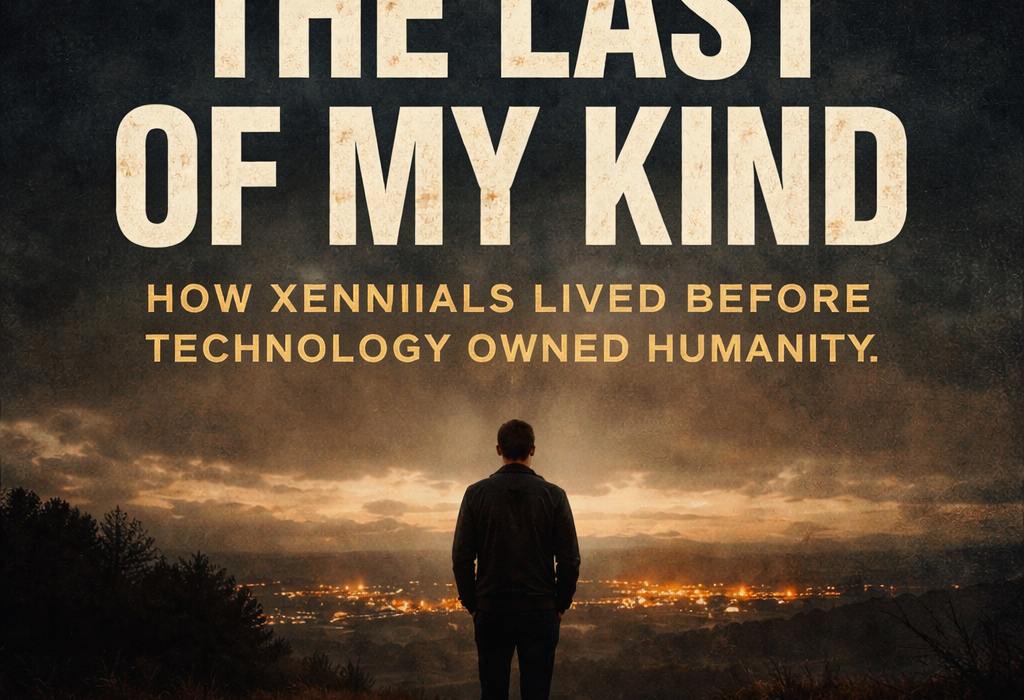
The Last of My Kind

How Xennials Lived Before Technology Owned Humanity

Introduction

There exists a narrow slice of humanity (those born between 1980 and 1983) who occupy a position no future generation ever will. We are not merely older Millennials, nor are we simply late Generation X. We are something very distinct: the last people on earth who came of age before technology irreversibly colonized our daily lives, yet were still young enough to be forcibly absorbed into the digital world as adults. We remember, in our bones, a world where presence mattered, where absence was normal, where knowledge had value, and where silence was a normal part of daily life.

This is not nostalgia or romanticism of a false past, but a factual contrast between two modes of human existence. One demanded patience, effort, self-direction, memory, and competence. The other demands constant availability, passive consumption, shallow recall, and obedience to algorithms. The Xennial generation stands as the hinge point between these worlds, having learned how to function without technology, and then watching, in real time, as technology consumed the minds of future generations like a cancer.


I. Life Before Ubiquity: When Technology Was a Tool, Not an Addiction

For the Xennial generation, technology existed, but it did not dominate, mediate, or define daily life. It was peripheral, occasional, expensive, and unreliable. Communication was deliberate,  access was limited, and silence was a normal, healthy part of life. You could not be reached instantly, and no one expected that you should be. This alone produced a radically different psychology, one built around autonomy rather than constant, incessant interruption.

Telephones were anchored to walls. Messages were recorded on physical cassette tapes that had to be played back, rewound, erased, and reused. If you missed a call, you missed it. There was no anxiety spiral, no expectation of immediate response, no interpretive drama about why someone hadn’t replied in ten minutes. You called back when you were home and had time,or you didn’t, and life went on. Even spouses, parents, and employers understood that absence was part of reality, not a personal offense.

Cell phones, when they finally arrived, were not extensions of your identity. They were clunky, fragile, expensive devices with limited minutes, poor reception, and virtually no functionality beyond the voice phone call (and very limited text). I got my first one at 16 (because I paid for it) and the use was minimal. Before these devices, if communication was necessary, you found a payphone, dug for quarters, and made the call. Communication required intentional effort, which filtered out triviality by default.

Commerce functioned the same way. Most daily transactions were conducted in cash. Registers were mechanical or basic, receipts were often handwritten, and invoices were carbon copies. Fraud was much harder, credit cards existed but were minimal. Accounting required competence, and you knew what you spent because you physically handled your money. There was no mindless consumption, no one-click dopamine loop, no invisible subscription bleeding you dry in the background, and you could not order worthless crap on a whim. Spending required presence, movement, thought and decision-making.

Entertainment was scarce and communal. Video games were not omnipresent pacifiers; they were rare, expensive, and shared. You didn’t disappear into private algorithmic feeds, you gathered around a single screen, took turns and then you stopped when it was time to do something else. Boredom existed, and boredom is the ONLY place where imagination, competence, and ambition are born.

When things broke, you didn’t replace them, you repaired them. You called the manufacturer, visited a parts supplier, and learned the name of the component that failed. You waited, and then you installed it yourself or paid someone who actually knew how things worked. Knowledge was embedded in people and places, it had a value and was not floating in an infinite digital fog.

Learning required effort. If you wanted to understand something, you went to a library, you used an index, you opened a dictionary, you read an encyclopedia, you bought manuals and you studied. Information was not infinite, but it was retained, because effort burns knowledge into your memory. Curiosity demanded discipline and answers were earned, not served up by the digital gods.

Even basic navigation required effort and awareness. You planned routes, read maps, got lost, and even asked for directions. You learned geography by necessity and mistakes carried consequences, which is how competence is forged.

This world did not make people perfect, but it made them capable. It inherently trained patience, memory, resilience, and self-reliance. And that is the world the Xennial generation internalized before the digital cancer arrived and quietly eroded every one of those traits, all while insisting it had made life “easier.”


II. Learning Had Weight: When Knowledge Required Effort

For Xennials, knowledge was never passive, it did not arrive instantly, automatically, or effortlessly. It had to be sought, and that act of seeking shaped the mind in ways modern generations cannot comprehend. Learning required time, planning, movement, patience, and (most importantly) commitment. Because access was limited, information had value. You didn’t casually “look something up.” You decided something was worth knowing, and then you worked to acquire that knowledge.

If you needed to understand a subject, you went to a library or a bookstore. You navigated card catalogs and indexes. You scanned tables of contents. You read entire chapters to extract a single answer. Dictionaries, encyclopedias, thesauruses, and reference books were physical objects that occupied space and required attention. They were not endlessly linked distractions pulling you away every ten seconds, they were singular tools that rewarded your focus. The effort required to obtain information forced discernment. You didn’t drown in data; you selected the knowledge that had a purpose.

This process trained memory. Because answers were not instantly retrievable, you retained what you learned. You internalized definitions, procedures, directions, and concepts because forgetting them meant repeating the entire laborious process. Knowledge stuck because forgetting was costly. Today, forgetting is consequence-free, you can always look it up again, so nothing sticks.

When something mechanical broke (especially vehicles) the response was not to google it or watch a YouTubevideo. You bought a repair manual for that exact make and model, you read it, you learned terminology, you followed diagrams and you diagnosed problems through reasoning and logic. That process built comprehension, not just task completion because you didn’t merely replace a part, you understood why it failed and how it works.

This matters because modern learning is almost entirely procedural and transient. People can “do” things while understanding nothing. Xennials were trained to understand first, because action without understanding often led to failure, wasted money, or danger.

Even curiosity was different. Wonder didn’t lead to infinite google searches, it led to sustained inquiry. You might spend weeks chasing an idea through books, conversations, and observation. The slowness allowed synthesis. You weren’t flooded with contradictory opinions in real time. You had space to think, compare, and arrive at conclusions independently. This produced coherence, something glaringly absent in the modern mind, which consumes fragments for every possible source but assembles nothing.

The modern world boasts “unlimited access to information,” yet produces generations that are profoundly ignorant. This is not a paradox, but a consequence, because unlimited access without effort destroys the value. When everything is immediately available, nothing is respected. When answers require no effort, thinking becomes cheap. When learning is entertaining, discipline is non-existent.

Xennials learned in an environment where effort was non-negotiable. That effort trained patience, discernment, critical thinking, and humility. You could not skim your way into competence. You either did the work or remained ignorant, and ignorance had consequences. This produced adults who understood the difference between knowing of something and actually knowing it.

Contrast this with today’s reality: children and adults alike outsource memory, navigation, calculation, spelling, grammar, reasoning, and even decision-making to devices. They mistake familiarity for understanding and access for intelligence. They cannot explain what they believe, repair what they own, or defend what they repeat. They are “informed” yet incapable of basic thought.

The Xennial mind was forged under constraints. And constraints are what sharpen tools. Unlimited access does not liberate the intellect, but destroys it. It replaces mastery with dependency and curiosity with consumption. We did not grow up smarter because we had less information. We grew up stronger thinkers because knowledge had a cost. And that cost trained us to value truth, retain understanding, and respect the difference between surface familiarity and real competence.


III. Presence Was Real: When Absence Was Not a Crisis

One of the most profound differences between the pre-digital world and the modern one is not technological at all, it is relational. Xennials grew up in a time when presence was intentional and absence was normal. Being unreachable was not strange, weird, alarming, suspicious, or rude; it was simply part of life. This reality shaped healthier relationships, stronger boundaries, and a clearer sense of personal sovereignty than anything that exists today.

In the world we came from, no one had an inherent right to your immediate attention. Communication was a privilege, and certainly not demanded. You called someone and hoped they were home. If they weren’t, you left a message and waited. If they didn’t call back that day (or even the next) there was no anxiety, resentment, or interpretive narratives. People were understood to be living their lives, not standing by in a perpetual state of availability.

This applied to everyone: friends, parents, employers, even spouses. You could leave the house for hours or days without explanation. You could be alone with your thoughts, work uninterrupted, travel without constant check-ins, and critically, this did not weaken relationships, it strengthened them. When people met, they were actually present. Conversations were not fragmented by buzzing devices or hijacked by digital interruptions, your attention was given fully and received fully because it was scarce.

Modern culture insists that constant connectivity somehow equals closeness, but the opposite is true. When communication is incessant, it becomes shallow, and when availability is mandatory, attention loses value. Xennials remember when seeing someone required effort, planning, coordination, and travel. Because of that effort, time together mattered. You listened, observed, and remembered details because you weren’t outsourcing your memory to a device that would remind you later.

Solitude was also not pathologized. Being alone was not treated as a problem to be solved with more stimulation. Long stretches of quiet were normal, you sat with your thoughts, you reflected, you replayed conversations, you argued with yourself, you imagined futures and you wrestled with ideas. This internal life (this private mental territory) is where philosophy, theology, creativity, and self-knowledge are formed and it cannot exist under constant interruption.

Today, silence is treated as a threat. Notifications invade every tiny gap where silence could start, and screens fill every pause. The modern person is rarely alone with their thoughts, and when they are, they experience discomfort bordering on panic. This is an addiction no different than a drug addiction, it is the consequence of training the mind to expect constant input and a society that demands constant attention. A mind that cannot tolerate silence cannot and will not reason deeply.

Xennials also learned boundaries naturally. Because communication took effort, and people respected limits. You didn’t call someone late unless it was genuinely important, you didn’t interrupt someone working unless it was absolutely necessary. You didn’t expect instant replies, and you certainly did not “check in” unless there was a purpose. These unspoken norms protected mental space and emotional energy. Today, boundaries must be aggressively enforced (and even then, they are routinely violated) because technology has erased all natural stopping points and people literally treat constant attention and communication as an addict would treat their drug of choice.

The cost of this erasure is staggering. Relationships have become less substantial, almost entirely performative in most cases. People mistake frequency of attention and communication for intimacy, they are constantly “in touch” yet profoundly disconnected from reality and genuine connection. They share endlessly yet understand each other less than any time in human history. And because everyone is always reachable, no one is ever truly present, and no one ever truly has peace.

Us xennials remember a world where attention was given, not constantly demanded. Where conversations ended because they naturally concluded, not because a screen demanded priority over the physical presence of another human being. Where being unreachable meant you were somewhere, doing something useful, not hiding or disengaging. That assumption of good faith is gone now, replaced by surveillance, expectation, and entitlement.

This shift has in no way made us closer, it has made us anxious, distracted, and relationally fragile. We have traded depth for immediacy, trust for tracking, and presence for constant attention. The generation that lived before constant connectivity carries an intuitive understanding that modern culture has lost: that relationships require peace, that silence is not neglect, that absence is not abandonment, and a life without interruption is not isolation, but freedom.


IV. Competence Was Mandatory: When Systems Didn’t Catch You

In the pre-digital world, failure had consequences. Mistakes cost time, money, embarrassment, and sometimes pain. There was no algorithm to cushion your incompetence, no app to silently correct errors, and no automated system to compensate for ignorance. This reality produced a baseline expectation that adults should be capable, not necessarily exceptional, just capable. And capability was not optional.

Xennials grew up in an environment where daily life required basic functional skills. You had to read maps, manage money, remember appointments, maintain equipment, diagnose problems, and make decisions without constant guidance. If you didn’t know how to do something, you learned, or you paid the consequences. This created a culture where self-reliance was not ideological, but practical. You either handled your responsibilities or suffered the result.

Navigation alone illustrates the difference. Getting lost meant you were lost. There was no recalculating voice, no blue dot absolving you of spatial awareness. You had to recognize landmarks, understand direction, read signage, and adapt. This trained situational awareness and decision-making in uncertain surroundings, skills that modern GPS dependency quietly destroyed. Today, many people cannot navigate their own city without a screen, despite having “better tools” than ever.

Mechanical competence followed the same pattern. Vehicles, appliances, tools, and systems required understanding. Warning lights were not explained by pop-ups. If your car made a new sound, you paid attention. You learned to distinguish between normal operation and impending failure. Preventive maintenance wasn’t a suggestion, it was survival. Ignoring small problems led to large ones, and you learned that lesson early.

Even social competence was sharper. Without digital buffers, interactions were direct. You learned to read tone, body language, and timing. You dealt with discomfort face-to-face. You learned restraint, patience, and negotiation because there was no mute button, no block feature, and no curated persona. Your reputation mattered because it traveled through real people, not vague online platforms.

Modern systems now absorb error on behalf of the user, calendars remind you, GPS corrects you, spellcheck thinks for you, autopay hides consequences and algorithms filter choices. These Interfaces are designed to minimize effort and responsibility. While this appears convenient, it atrophies judgment. When systems constantly rescue you, you stop developing the internal skills required to function independently and even accept the consequences of your actions.

This produces adults who are strangely helpless despite unprecedented technological support and access to knowledge. They cannot diagnose problems, anticipate consequences, or recover from minor disruptions without their smartphone. If the digital system was removed, most people would immediately become helpless toddlers. And today we call this empowerment… and progress.

Xennials experienced the opposite formation. We learned because we had to. We became competent because incompetence was punished by reality. This created a quiet confidence, called grounded self-trust, you knew what you could handle because you had handled it before. You didn’t need validation, attention or instruction for every task. You figured things out… on your own.

This is why the modern world feels shallow and brittle. Systems are efficient but fragile, and people are ever connected but woefully incapable. When something breaks (technologically, socially, economically) there is panic rather than calm adaptation. The skills that once allowed humans to respond creatively under pressure have been systematically destroyed by the cancer of technology.

Competence cannot be downloaded from an app, and it cannot be automated. It must be earned through effort, failure, and responsibility. The pre-digital world enforced this whether you liked it or not. And those shaped by it carry an internal resilience that no device can replicate and no later generation can comprehend. Xennials are not superior by nature. We were simply trained by reality instead of protected from it. And that training (hard, inconvenient, and unforgiving) is exactly what modern systems are quietly eliminating.


V. The Cost of Constant Interruption: When Thought Became Impossible

The greatest damage inflicted by the cancer of modern technology is not distraction in the casual sense, it is the destruction of sustained thought. Xennials remember a time when the mind could remain on a single problem, idea, or question for hours, days or even weeks without being interrupted and subverted every few minutes. That capacity is now rare, and its disappearance explains much of the intellectual, moral, and spiritual decay visible in the world today.

In the pre-digital world, attention was not constantly contested. There were natural gaps (waiting, traveling, sitting, resting) where the mind wandered, reflected, and synthesized. These periods were not wasteful, but productive. They allowed ideas to connect, arguments to form, and beliefs to solidify. Theology, philosophy, strategy, and creativity all require uninterrupted mental space. Without it, thought can only be shallow and reactive.

The cancer of modern technology has completely erased these gaps. Every moment of stillness is immediately filled by a screen. Notifications fragment attention into unusable shards, advertisements intrude into thought, constant messages demand response, and feeds refresh endlessly. The result is an addicted mind trained to scan, not contemplate; to react, not reason; and to consume, not create.

The inability to focus has consequences far beyond productivity. People struggle to read long texts, follow complex arguments, or construct coherent worldviews. Beliefs are adopted emotionally on a whim and abandoned just as quickly, opinions are borrowed, not developed through deep mental thought and reflection, and moral frameworks are inconsistent because they were never deeply reasoned through. When attention is constantly broken, true conviction cannot be formed.

Xennials remember doing nothing, and discovering that “nothing” was where everything happened. Long drives without any entertainment, quiet evenings without intrusive stimulation,  and manual labor without background noise. These were the environments in which the mind organized itself. You rehearsed conversations, planned futures, confronted fears and you argued internally until clarity emerged. That internal dialogue has now been drowned out by the noise of “communication”.

The modern person lives in a state of permanent cognitive siege. Even when they attempt to focus, their mind expects constant interruption. To the modern man, silence actually feels uncomfortable, he begins to have withdrawal symptoms from his addiction to constant stimulation. Concentration feels effortful, reflection feels unnatural, and so the mind flees back to stimulation, mistaking relief for satisfaction. This cycle produces anxiety, restlessness, and intellectual shallowness on a staggering level.

The tragedy is that technology promised efficiency and delivered cancerous mental fragmentation, it promised connection and delivered complete isolation, it even promised knowledge while delivering moral confusion. By eliminating effort, we have diminished the value of knowledge. Xennials stand as witnesses to what was lost. Not because we are wiser by nature, but because we experienced the conditions required for wisdom to develop. We know what it feels like to think without interruption, to learn without shortcuts, to live without constant surveillance of our attention.

This is why modern generations struggle to produce coherent theories, stable theologies, or durable philosophies. These things cannot be assembled between notifications. They require time, solitude, and sustained effort, conditions that have been systematically consumed by the cancer of modern technology.

The cost of constant interruption is the collapse of the interior life. And once the inner world is hollowed out, no amount of information, connectivity, or entertainment can ever fill it. We are not simply nostalgic for a quieter time. We are warning of a deeper loss: the disappearance of the human capacity to think deeply, live deliberately, and stand internally ordered in a world designed to keep us perpetually distracted.


Conclusion: The Last Witness Before the Fall

I am not reminiscing, but testifying. The world before constant connectivity did not vanish by accident, it was dismantled, piece by piece, and sold back to humanity as convenience. What was lost is our capacity for reason and thought. We have surrendered our manhood, womanhood, thought, and peace to the idol of convenience. 

We are the last humans who learned before we were programmed. The last who formed identities, opinions and convictions through mindful thought. Those who followed were not raised, they were conditioned, trained to respond, consume, and to obey notifications rather than conscience. They are mindless addicts of the technological cancer that is destroying them. 

The future will not ask whether technology was useful. It will ask why humanity surrendered its intellect so easily. Why fathers forgot how to teach, why sons forgot how to focus, why daughters forgot how to be still, and why everyone mistook constant stimulation for true meaning. A civilization that cannot think cannot govern itself, and a people that cannot be alone cannot be free.

We are the last of our kind not because time passed, but because a line was crossed. After us, there was no silence to grow in, no boredom to sharpen the mind, and no effort to forge the soul. What comes next is either a return to order, or a long, comfortable descent into extinction.

When the reckoning comes, someone will have to remember what humanity was before it asked permission to think, because any species that cannot endure stillness cannot endure truth.

May God’s Great Order be restored.

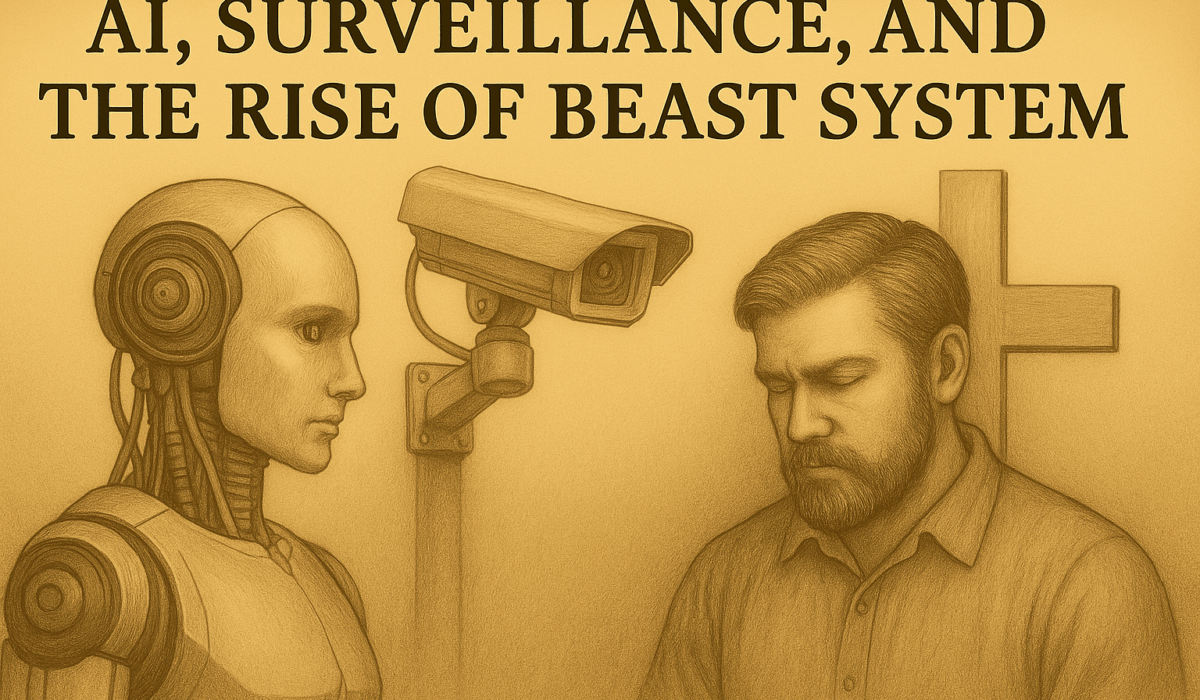
AI, Surveillance, and the Rise of the Beast System

How Modern Technology Wages War Against God, Order, Masculinity, and the Family

Summary: For those who lack the endurance to read what men used to write before attention spans died, Click here for the short version

⚔️ Summary for the Slumbering

This piece unmasks modern tech – AI, surveillance, social credit, CBDCs, and biometric IDs, as the wiring diagram of the Beast System. It is Babel rebuilt in silicon: a counterfeit omniscience that rewards compliance, punishes faith, and targets the last fortress of order, the patriarchal household. AI functions as a false “image” that speaks, censors, and judges; the panopticon conditions obedience; pornography, feminism, and transgenderism disarm men so families can be conquered.

This is not about gadgets; it’s about lordship: God or the Algorithm. Scripture’s pattern is clear, Nimrod’s centralization reborn as Digital Babel, and the command is the same: come out of her. The way out is not hiding but rebuilding order: fathers guarding the gates, mothers honoring their high calling, children trained in truth, and households refusing surveillance “conveniences” that buy and sell your soul. The tower will fall. Choose your footing now.

“And he causeth all, both small and great, rich and poor, free and bond, to receive a mark in their right hand, or in their foreheads: And that no man might buy or sell, save he that had the mark…”
—Revelation 13:16-17 (KJV)


INTRODUCTION: THE FALSE GODS OF MODERNITY

We stand at the threshold of a new religion, not one born of spirit, but of silicon. It does not kneel before the throne of God. It builds its own. It offers omniscience through cameras, omnipresence through networks, and omnipotence through algorithms. The Beast has risen, not from the sea, but from the server room.

Artificial Intelligence, global surveillance, social credit systems, and biometric tracking are no longer science fiction, they are the infrastructure of a new global altar. And what is sacrificed upon it? Not cattle or coin, but masculinity, the family, faith in God, and the very concept of divine order.

We must understand: this is not merely about technology. This is about authority. Who rules? God, or Google? Christ, or the Cloud? The patriarch, or the panopticon?


I. THE HISTORICAL ROOTS OF REBELLION AGAINST ORDER

From the very beginning, mankind has sought to overthrow divine order and build his own Babel.

In Genesis 11, the people said:

“Go to, let us build us a city and a tower, whose top may reach unto heaven; and let us make us a name…” (Gen. 11:4)

This is the prototype for all anti-God systems. It is not technological advancement that offends the Lord, it is autonomous rebellion. Man has ever longed to make a name for himself, independent of the name above all names.

The Enlightenment promised us reason without revelation. The French Revolution gave us liberty without the Lord. The Soviet Union gave us progress without piety. All of them failed, and yet the same spirit animates the modern technocratic movement. The serpent’s whisper is not new: “Ye shall be as gods.” (Gen. 3:5)

In the 20th century, this spirit manifested in Orwell’s Big Brother and Stalin’s NKVD. But now it is friendlier, cleaner, packaged in rainbow colors and pushed by smiling devices. The Beast no longer drags you to the gulag. It invites you to opt-in.


II. SURVEILLANCE: FROM WATCHTOWER TO DIGITAL PANOPTICON

In 1791, Jeremy Bentham proposed the Panopticon, a prison where the watched could never see the watcher. This, he said, would condition perfect obedience. Today, we live in a global panopticon. But now, we love our cage. We buy it. Subscribe to it. Install it ourselves.

The average citizen is tracked over 2,000 times per day online, according to a study by Surfshark (2022). Facial recognition cameras blanket city streets. Social media logs your preferences, location, politics, and theology. Every keystroke feeds Leviathan.

And what is Leviathan’s creed?

“There is no father but the State. There is no truth but the Algorithm. There is no love but the Machine.”

But contrast this to the design of the Lord:

“The eyes of the Lord are in every place, beholding the evil and the good.” —Proverbs 15:3

God watches as a righteous Judge, not a paranoid tyrant. His surveillance convicts the wicked and comforts the just. The surveillance state, however, punishes obedience to God and rewards submission to sin.

In China’s Social Credit System, a man who skips church is left alone, but a man who attends an underground house church may be blacklisted from public transport. In Canada, pastors are imprisoned for refusing to close church doors. In America, the “Disinformation Governance Board” nearly rose to federal prominence before being publicly “paused.” Make no mistake: the Beast has prototypes in every nation.


III. ARTIFICIAL INTELLIGENCE: A FALSE IMAGE OF GOD

AI is man’s attempt to mimic God’s intelligence without His righteousness. It is the pursuit of creation without the Creator.

AI tools can now write sermons, paint pictures of “Jesus,” and simulate human companionship. But these systems are not morally neutral. As Microsoft, Google, and OpenAI themselves have acknowledged, these models reflect the values of their programmers, who overwhelmingly support progressivism, transhumanism, and globalism.

Consider the chilling direction of AI-assisted parenting: Alexa raising your children, ChatGPT answering their moral questions, AI-generated influencers shaping their worldview. In other words: father and mother replaced by the godless machine.

And yet Scripture says:

“The fear of the Lord is the beginning of wisdom…” —Proverbs 9:10

AI offers knowledge without fear. Wisdom without repentance. It is a godless Golem, a talking mirror that always flatters and never convicts. It cannot lead you to righteousness. It can only mimic morality like a serpent imitating speech.

And soon it will judge:

  • AI already aids hiring processes, determining whose resumes are “qualified.”
  • AI surveillance is used in predictive policing.
  • AI censors theology and flags “harmful” speech online (usually meaning Biblical truth).

This is the Image of the Beast, not carved of stone, but rendered in code.


IV. THE DESTRUCTION OF MASCULINITY AND FAMILY THROUGH TECHNOCRACY

The family stands as the last resistance to the Beast System. Why? Because the father is the priest of the home, and the home is a microcosm of God’s kingdom.

The attack on masculinity is not accidental. It is strategic.

  • Masculinity is dangerous to tyranny because it leads, builds, protects, and rebels against evil.
  • Biblical masculinity fears God and provides for his household (1 Tim. 5:8).
  • It refuses to let AI raise its children, the State educate them, or society define them.

Therefore, the new regime must emasculate men.

Consider:

  • Pornography—a tool of pacification, funded and distributed by the very platforms now invested in AI.
  • Feminism—not about uplifting women, but unseating fathers, replacing them with government programs.
  • Transgenderism—the final mutilation of male identity, enforced by algorithmic propaganda.
  • Universal Basic Income—a gilded leash offered to the emasculated man, so he won’t fight back.

In this context, AI and surveillance are not innovations. They are enforcers. They ensure the lie is believed and the truth is punished.

And when the man is silenced, the family collapses. When the family collapses, God’s image on Earth is blurred. And when that happens, the Beast rises.


V. THE SCRIPTURAL WARNING: THE BEAST SYSTEM FORETOLD

Revelation does not give us technological specs, it gives us spiritual patterns.

“And I stood upon the sand of the sea, and saw a beast rise up out of the sea… and the dragon gave him his power…”
—Revelation 13:1-2

This Beast demands worship through deception, miracles, and systems of control. Its prophet points to the Image (v. 14), which speaks and causes those who won’t worship to be killed (v. 15).

Does AI now speak? Yes.

Does it punish those who resist? Yes.

Is commerce being restricted based on belief? Not fully, but the infrastructure is ready.

  • Central Bank Digital Currencies (CBDCs) can restrict purchases.
  • Vaccine passports already did.
  • Social credit is tested.
  • Biometric IDs are being integrated.

And all of it operates through networks of “intelligent” systems, guided not by conscience but by compliance.

Yet Daniel saw this beast and declared:

“But the judgment shall sit, and they shall take away his dominion, to consume and to destroy it unto the end.” —Daniel 7:26

There is hope, but only for those outside the Beast’s reach. And that means outside its control.


VI. ESCAPE THE SYSTEM: RETURN TO ORDER

The answer is not hiding in a cave. It is building something greater: families that fear God, fathers that take dominion, women who love their husbands and wear their veils without shame, and children raised in the truth.

To resist the Beast, one must reject his offer.

You will not be safe if you outsource your discernment to machines, your parenting to tablets, or your theology to YouTube shorts.

You must return to:

  • God’s Word — not AI summaries, but full KJV study.
  • God’s Order — male headship, female submission, and generational vision.
  • God’s Church — not the 501(c)(3) corporations, but true households of faith.

Only when men once again lead their homes with boldness will the Beast encounter resistance. Only when women once again honor their role as life-givers and helpmeets will the home be protected from algorithmic poison. Only when children are taught to fear God more than screens will the chain be broken.


VII. CHOOSE THIS DAY

“And if it seem evil unto you to serve the Lord, choose you this day whom ye will serve…”
—Joshua 24:15

There are only two systems:

  1. The Beast System — offering convenience, pleasure, and death.
  2. The Kingdom of God — offering truth, sacrifice, and eternal life.

You cannot flirt with the Beast and expect immunity. You cannot “leverage” the system that is designed to replace your Lord. It is a harlot that never satisfies, and a dragon that always devours.

The time has come for righteous men to take a stand, not just on Sunday, but every hour of every day. Watch what your home consumes. Guard your gates. Teach your children. Lead your wife. Cut the cords of the technocratic leash.

God is not mocked. His order will prevail. The Beast will fall.

But the question remains: Will you stand with the Lamb, or bow to the Machine?

VIII. DIGITAL BABEL AND THE RETURN TO NIMROD

“And they said, Go to, let us build us a city and a tower, whose top may reach unto heaven; and let us make us a name…”
—Genesis 11:4 (KJV)

The Tower of Babel was not merely an ancient construction project, it was the first recorded attempt at global unification under man’s authority, in rebellion against God’s command. After the Flood, God said, “Be fruitful, and multiply, and replenish the earth” (Gen. 9:1). But instead of spreading, the people clustered. Instead of submitting, they consolidated. Instead of bearing God’s name, they sought to make their own.

This spirit of rebellion, centralization without consecration, has returned in our day, not with brick and mortar, but with circuits and code.

A. Nimrod’s Spirit in the Modern Age

Genesis 10:8-10 tells us that Nimrod was “a mighty one in the earth,” and the founder of Babel, the very city where the great tower was raised. He was the first king to unite the post-Flood world in open defiance of God.

In Jewish tradition, Nimrod was a tyrant, a hunter not of animals, but of souls. A man who sought to bend nations under his rule, establishing a centralized, godless regime.

And so we ask: What is AI-powered global governance if not the return of Nimrod?

  • The new tower is digital.
  • The new language is code.
  • The new kingdom is virtual, but real in its power.
  • The new name they seek is not the LORD, but Data Sovereignty, Transhuman Unity, and Global Compliance.

Whether it’s the UN pushing biometric ID for all, the World Economic Forum salivating over “One World Governance,” or Silicon Valley evangelists declaring the age of AI divinity, the echo of Nimrod’s ambition is unmistakable.

“He opposeth and exalteth himself above all that is called God…”
—2 Thessalonians 2:4

Sound familiar?


B. The Collapse of Babel and God’s Judgment Against Centralization

God intervened at Babel not because mankind had the wrong tools, but because he had the wrong motive:

“…and now nothing will be restrained from them, which they have imagined to do.” (Gen. 11:6)

What does that sound like today?

  • CRISPR gene editing to make godless designer humans?
  • Neuralink devices aiming to bypass the soul and rewrite consciousness?
  • AI language models being trained to “correct” scripture?

Nothing restrained.

The LORD scattered them then. And He will again.

The punishment at Babel was not just linguistic, it was civilizational. God disrupted their ability to coordinate rebellion. But now, with real-time translation, 5G infrastructure, and a digitized economy, the reversal of Babel is almost complete, man is uniting again, against heaven.

But God is not mocked.


C. The New Tower: Global AI Governance

To be clear. The modern Digital Babel isn’t a singular tower in one city. It’s a network of:

  • Surveillance satellites in orbit
  • Global payment rails controlled by central banks
  • Voice-to-text data analysis from every smartphone
  • Algorithms determining what is “truthful,” “safe,” and “authorized”
  • Digital IDs being adopted in over 100 countries

The infrastructure for global technocratic judgment is being erected daily, and the Watchmen of God sleep.

Make no mistake: the “Beast” needs a tower, and the digital system is it.


D. The Role of Masculine Authority in Resisting Digital Babel

Who scattered Babel? God.

Who is God’s image on Earth? The patriarch.

The household under masculine authority is the last decentralized institution that cannot be surveilled, reprogrammed, or digitized. That is why it is under assault.

Just as Babel required a massing of peoples and a flattening of identities, the modern system seeks to:

  • Erase gender distinctions
  • Dissolve familial hierarchy
  • Destroy language with gender-neutral gibberish
  • Replace local governance with international technocrats

A man who rules his house under God is the last roadblock to global technocracy. A family loyal to Christ rather than consumer culture is an act of civil disobedience.


E. God’s Endgame: Judgment Upon the Second Babel

Revelation 18 shows the final destruction of the Mystery Babylon, a spiritual continuation of Babel. Her sins reach unto heaven, her fornications corrupt the earth, and her luxuries blind kings and merchants alike.

“Come out of her, my people, that ye be not partakers of her sins…”
—Revelation 18:4

You cannot reform Babel. You must exit it.

That means:

  • Canceling allegiance to digital idols
  • Refusing surveillance “conveniences”
  • Building alternative economies
  • Submitting only to the Head, Christ, and under Him, man

Just as Abraham left Ur of the Chaldees, a city built under Nimrod’s system, so too must the faithful today come out of Babylon, both spiritually and structurally.


F. Conclusion: The Tower Will Fall – But Will You?

In the end, the digital tower will collapse like its ancient predecessor. Its builders will be scattered, its code made corrupt, and its high priests thrown down.

But the question is not what happens to Babel. The question is: where will you be standing when it falls?

“And whosoever shall fall on this stone shall be broken: but on whomsoever it shall fall, it will grind him to powder.”
—Matthew 21:44

The Lord Jesus is that stone. Babel is the tower. Choose your footing wisely.