Category Archives: Conspiracies

The 1% Rebellion: How a Century of Arrogance Rewrote 99% of God’s Order

There is a lie so deeply embedded in the modern mind that we no longer recognize it as a lie. Rather, it is assumed, repeated, enforced, and weaponized without examination. That lie is this: that the current age (this 1% sliver of human history) is the most enlightened, the most just, the most morally advanced era that has ever existed. And from that poisoned root flows every modern distortion of truth, every inversion of order, and every rejection of what came before. We have simply declared war on the past and crowned ourselves victors without ever asking if we understood the battle.

For nearly all of human history (across nations, languages, empires, and covenants) there existed a shared understanding of reality that had never, until recently, been debated. God’s created order was simply accepted. Authority was not questioned at every turn, the family was not redefined, and we never found it necessary to defy the created order. Yet in the span of roughly a century (a blink in the timeline of mankind) those foundations have been dismantled, mocked, and replaced with unstable substitutes. And now, in breathtaking arrogance, modern man dares to judge the other 99% of history by the warped standards of the 1% that abandoned it.


I. The Ancient Consensus: Order Was Inherent

For the overwhelming majority of human history, the fundamental structures of life were not open for debate. God’s created order was obvious to anyone with an IQ above room temperature. Across civilizations as distant as ancient Israel, imperial Rome, dynastic China, and medieval Europe, there existed a striking and undeniable consistency in how societies were ordered. Authority flowed downward, households were governed, fathers ruled their homes, kings ruled their nations, priests mediated the sacred, and above all of it stood God (or the gods) whose authority has never been subject to human revision and interpretation. When radically different peoples, separated by geography, language, and culture, arrive at the same structural conclusions, you are no longer looking at culture preference, but  reality pressing itself onto human civilization.

Scripture presents God’s order as the design we must structure our lives and societies by. In Genesis, dominion is given, man is commanded to subdue, to rule, and to exercise authority over creation. This pattern cascades through every layer of biblical structure. The patriarchs did not hold family meetings to determine direction; they led. Abraham did not ask for consensus before moving his household, he obeyed God and the household followed. The law given through Moses issued commands backed by consequence. And in the New Testament, the same structure persists. Wives are commanded to submit, children to obey, and men to lead as reflections of divine order. “For God is not the author of confusion, but of peace” (1 Corinthians 14:33). Peace, in Scripture is the presence of rightly ordered authority.

What modern man calls “oppression,” the ancient world rightly understood as necessity. Not because they were cruel, but because they were not delusional about human nature. They understood something we have chosen to forget: that without structure, authority, and hierarchy  there is no stability, there is no accountability, and there is no freedom. This is why even pagan societies (those without the fullness of biblical revelation) still built rigid systems of authority. They recognized, however imperfectly, that order is not a social construct. Structured order is a basic requirement of long-term societal survival.

Our modern world recoils at this in horror because they have been trained to equate authority with abuse and submission with weakness. But that is not how history understood it, and it is not how Scripture defines it. Authority is protection, submission is alignment, and obedience is wisdom. These were not arbitrary burdens placed on humanity, but were guardrails that made civilization possible. The fact that nearly every society in human history independently affirmed these truths cannot be dismissed. When you reject something that universal, you are not making progress. You are stepping outside the boundaries that God established to keep humanity intact, and then calling the fall “freedom.”


II. The Modern Revolt: When Man Rejected What God Established

What God established, as we followed for thousands of years, was not gradually refined over millennia as we have been led to believe, instead it was aggressively attacked and viciously dismantled over a very short time. The last century did not produce a careful evolution of thought. While often presented as a revolt against injustice, it was in truth, a revolt against structure itself. Authority was no longer to be respected, it was to be questioned, then resisted, then destroyed. The household was no longer to be governed, and religion was no longer to be obeyed, but reinterpreted, softened, and eventually subordinated to our desires. What we are witnessing is rebellion, clean, deliberate, and theological in nature, whether modern man admits it or not.

Scripture describes this pattern with unsettling clarity. “Every man did that which was right in his own eyes” (Judges 21:25). That verse is an indictment of modern culture. It is the definition of disorder. And yet, that exact condition is now held up as the highest good in modern society. Personal autonomy has replaced obedience, self-expression has replaced submission, and individual desire has replaced the divine commands. What God established as fixed, man now treats as fluid. Our world is in open defiance of divine order.

The rejection of authority has not stopped at the throne or the church, the home has also been invaded. The father, once the unquestioned head of the household, has been reduced to a partner, participant, or worse, an unnecessary figure altogether. The mother, once honored within a defined structure, has been pushed into a role that often demands she abandon that structure entirely. Children, once trained in obedience, are now raised to challenge, question, and assert themselves as equals to those tasked with leading them. This is no accident, when you remove hierarchy, you do so for the purpose of eliminating harmony and replacing it with  competition. And when every member of the household is competing for authority, the household ceases to function as a unit, much like with see in the broader society today.

Even the church, which should have stood as the final line of resistance, has largely capitulated, being absorbed with modern culture. Instead of proclaiming truth and calling for repentance, it has softened, offered affirmations, and rebranded as “contextual,” “cultural,” or “misunderstood,” anything that conflicts with modern sensibilities. But truth that must be softened to survive is no longer truth, and that reality will become more costly the longer it persists.

This is the modern revolt, the rejection of authority itself. Not the correction of abuse, but the elimination of God’s established structure. And in doing so, modern man has untethered himself from the very framework that defined, restrained, and preserved human civilization for millennia. He now drifts (confident, expressive, and utterly unmoored) calling it freedom, while the foundations beneath him continue to collapse.


III. The Rewriting of History: Judging the Past by a Corrupt Standard

Once the revolt was well underway, it was not enough to simply abandon the old order, modern man had to justify his rebellion. And the most effective way to do that was not by proving himself right, but by declaring the past wrong. Entire civilizations, spanning thousands of years, were suddenly placed on trial, not in their own context, not according to the standards they lived by, but under the artificial lens of modern ideology. What could not be erased was reinterpreted, what could not be reinterpreted was condemned, and what could not be condemned outright was simply ignored. This is deeply dishonest,  intentional revision on a grand scale.

Ancient societies are labeled “primitive” not because they lacked intelligence, but because they refused to conform to our modern values. Biblical structures are dismissed as “cultural artifacts” rather than acknowledged as divine prescriptions. The patriarchal framework that dominated nearly every civilization is caricatured. Authority is recast as oppression, hierarchy is reframed as injustice, and submission is rebranded as degradation. But these are accusations rooted in a pre-decided conclusion: that modern man is morally superior to all who came before him.

Scripture warns us against this kind of arrogance. “Say not thou, What is the cause that the former days were better than these? for thou dost not enquire wisely concerning this” (Ecclesiastes 7:10). This article is not a call to blind nostalgia, but a warning against shallow judgment. The modern world does not “inquire wisely” about the past. It does not seek to understand why structures existed, what purpose they served, or what stability they provided. It simply assumes they were wrong because they are not in-line with the current “understanding.” This is chronological arrogance, the belief that being later in time automatically makes one more correct.

Consider the audacity of the modern position. For thousands of years, societies across the globe (many of which had no contact with one another) arrived at similar conclusions about authority, family structure, gender roles, and social order. Then, within a narrow slice of recent history, those conclusions were abruptly rejected. And instead of questioning the anomaly, we question the entirety of what came before it. We do not ask, “Why did they all agree?” We ask, “Why were they all wrong?” This is revisionist indoctrination.

Even the Scriptures are not spared, passages that were once understood clearly are now subjected to endless reinterpretation, not because the text has changed, but because the reader has. Commands regarding submission, obedience, and order are softened, contextualized, or dismissed entirely in an attempt to align eternal truth with temporary culture. But when the standard shifts from God’s Word to man’s comfort, the result is inevitable: truth becomes fluid, authority is no longer respected, and history becomes something to be rewritten.

This is the true cost of the modern lens. It corrupts the past. And when a society loses the ability to accurately understand where it came from, it also loses the ability to correctly determine where it is going. What remains is a people untethered from both origin and direction, confidently condemning their ancestors while unknowingly repeating their own errors, only this time without the benefit of inherited wisdom to correct them.


IV. The Collapse of Function: When Order Is Removed, Consequences Follow

These ideas produce outcomes. And when you dismantle the structures that governed human life for all of human history, you trigger consequences. The modern world loves to speak in abstractions (freedom, equality, autonomy, equity) but reality responds to structure. And when structure is removed, what follows is not liberation, but breakdown. You do not get a better-functioning society when you strip away authority, hierarchy, and defined roles. You get confusion, instability, and eventual collapse, no matter how appealing the language used to justify it.

This principle is demonstrated in Scripture: “Where there is no vision, the people perish” (Proverbs 29:18). Vision, in this context, is not ambition, but order, direction, and revealed authority. Remove it, and the result is decay. You can see it in every layer of modern life. The family, once the most stable and durable institution in human history, is now in tatters. Households are divided, roles are blurred, and leadership is either absent or constantly challenged. What was once a unit designed for continuity and strength has become a revolving door of instability, with each generation less anchored than the last.

Masculinity, once defined by responsibility, leadership, and restraint, has been either neutered or caricatured. Men are told to abandon authority but are given no viable replacement for it. The predictable result is passivity, confusion, and in many cases, complete withdrawal. And where men refuse to lead, others will fill the vacuum, and without the structure or accountability that leadership requires. Then they have the gall to call this “progress.”

Women, likewise, have not been burdened under the guise of “liberation.” Stripped of defined roles and clear expectations, they are now expected to function in every capacity at once, without the structural support that once made those roles sustainable. The promise was freedom; the result has often been exhaustion, instability, and dissatisfaction. Because when you remove the framework that orders responsibility, you multiply it, then scatter it across every aspect of life.

Even the broader society reflects this collapse. Institutions that once commanded respect now struggle to maintain legitimacy. Authority figures are questioned at every turn, not based on their actions, but on the mere fact that they hold authority at all. Discipline is viewed with automatic suspicion. Any standard is seen as oppressive. And without standards, there is no consistent measure for behavior, only shifting expectations driven by emotion and opinion.

The unavoidable reality is this: when you remove order you get disorder. When you reject hierarchy you get chaos. And when you abandon the structures that governed human life for millennia, you create something fragile, volatile, and unsustainable. The modern world is not evidence that the old ways were wrong, but evidence of what happens when they are ignored.


V. The Judgment of God: When a Civilization Refuses Order

There is a point at which disorder becomes judicial. Scripture not only describes what happens when man rejects God’s order; it explains why it happens. At a certain threshold, God no longer observes rebellion, but responds to it by giving man over to the very chaos he demands. The most chilling passages in Scripture are not those where God strikes immediately, but those where He withdraws restraint and allows a people to descend into the full expression of their own desires. This is judgment.

Romans 1 lays this out. “Professing themselves to be wise, they became fools… Wherefore God also gave them up…” That phrase repeats like a drumbeat of consequence. Given up to uncleanness, to vile affections, and given over to a reprobate mind. When a society rejects truth, redefines righteousness, and inverts what God has established, the result is degradation under divine allowance. God does not need to destroy such a society immediately. He allows it to unravel itself.

This is precisely where our world finds itself. The rejection of authority, the dissolution of the family, the confusion of roles, the redefinition of morality are symptoms of a deeper reality: a civilization that has rejected the order of God and is now experiencing the consequences of that rejection. What was once unthinkable is now normalized. What was once condemned is now celebrated. And what was once honored is now ridiculed. This is inversion, and inversion is a hallmark of judgment.

Even more sobering is the fact that this condition often comes with a sense of confidence. Those under judgment do not typically recognize it. They believe themselves to be advancing, improving, evolving. They create new language to justify old sins. They construct moral frameworks that affirm what God has already condemned. And they surround themselves with voices that reinforce the illusion. “Woe unto them that call evil good, and good evil; that put darkness for light, and light for darkness” (Isaiah 5:20). That is a diagnosis.

History confirms that civilizations do not collapse simply because of external threats. They collapse when the internal order decays. When discipline erodes, when authority is mocked, when moral clarity is replaced with relativism, the structure cannot hold. And when that collapse comes, it is often sudden, but never without warning. The warning is the disorder itself.

This is the final stage of the 1% rebellion, not merely rejecting the past, not merely rewriting truth, but standing under the consequences of that rejection while insisting it is virtue. And that is the most dangerous position a society can occupy. Because when judgment is mistaken for progress, repentance is not considered, and without repentance, the outcome is inevitable.


Conclusion

The issue before us is foundational. It is not about preferences, trends, or generational differences. We must decide whether reality is something we were appointed by the creator or something we invent. For 99% of human history, that question did not have to be asked. Order was not created by man, authority was not negotiated, and the family was not an experiment. Above all, God was not subject to reinterpretation, He was the standard by which all things were measured. That world was not perfect, but it was anchored. It understood that stability does not come from reinvention, but from alignment with what is fixed and true.

But in the last 100 years, man has attempted something unprecedented. He has stepped outside of that inherited order and declared himself the architect of a new one. He has taken what was clear and made it muddy. What was commanded, he has made optional. And in doing so, he has made himself god. The modern world is not standing on the shoulders of history; it is severed from it, drifting, unstable, and increasingly unable to explain the very disorder it continues to produce.

The question, then, is whether the past was closer to reality than what we have now. Whether the structures that endured for thousands of years did so because they were oppressive, or because they were ordained by God. Whether the commands of God were burdens, or guardrails. And whether the collapse we are witnessing is the result of rebellion.

Because in the end, the choice is not between old and new. It is between order and disorder. Between submission to what God has established, or rebellion against it. And history (nearly all of it) has already shown us which one sustains civilization, and which one destroys it.

May God’s Great Order be Restored!

Devotion That Costs Nothing Is Worth Nothing

Everyone claims devotion. The word is thrown around casually, worn like a badge, spoken as if saying it makes it so. Men claim devotion to truth, Christians claim devotion to God, Women claim devotion to their husbands, and husbands claim devotion to their families. But when you begin to examine those claims (when you strip away comfort, convenience, and social approval) you find something quite unsettling. What most people call devotion has never been tested, never been proven, and most importantly, has never cost them anything significant.

That is the problem. Devotion that costs nothing requires nothing. It demands no sacrifice, no loss, no discomfort, no risk. It is maintained as long as it is easy, as long as it is beneficial, as long as it does not interfere with personal desires. But the moment a price is introduced )reputation, relationships, comfort, control, money) that so-called devotion ceases. And that which disappears under pressure was never real to begin with. True devotion is not revealed in words or intentions, but in cost. If it did not cost you something to hold onto it, then you were never really devoted in the first place.


I. Devotion Has Always Required Sacrifice

There has never been a version of true devotion (real, binding, immovable devotion) that did not require sacrifice. This is not a modern idea, nor is it an extreme interpretation but the consistent pattern found across history, across Scripture, and across every serious commitment that has ever existed. Devotion, by its very nature, demands that something be given up in order to prove that what is held onto matters more. Without that exchange, there is no weight behind the claim. Where there is no proof, there is no devotion.

Look at the pattern laid out in Scripture. When Abraham was called to prove his devotion, he was asked for his son. The command was not symbolic, convenient, easy to explain or comfortable to carry out. It cut directly against his desires, his future, and his understanding. And that is precisely why it was proof. Devotion is only revealed when obedience costs you something you are not willing to lose. If Abraham had been asked to give what he did not value, it would have proven nothing.

The same pattern follows in the lives of the disciples of Jesus Christ. They did not demonstrate devotion by agreement. They left livelihoods, security, reputation, and in many cases, their very lives. They were rejected, ridiculed, and hunted. Their devotion was measurable in what they lost. And that loss was the evidence. You cannot separate their devotion from the cost they paid to prove it and to maintain it.

Even outside of Scripture, the principle holds true. Every meaningful commitment (whether to a cause, a mission, a family, or a calling) demands sacrifice. The man devoted to building something gives up comfort and leisure. The man devoted to mastery gives up distraction and ease. The man devoted to his household gives up autonomy and selfish ambition. In every case, devotion narrows his life. It removes options and it forces him to choose (and to keep choosing) what matters most at the expense of everything else.

People in our modern culture want to claim devotion without accepting its defining characteristic. They want the identity without the cost. But devotion without sacrifice is not devotion at all. What you choose when it is easy, when it benefits you, and when it aligns with your desires is not devotion. Of course, the moment it stops being easy, the moment it begins to cost you something real, preference disappears and only true devotion remains.

And that is the dividing line. Devotion is not proven when everything is aligned in your favor. True devotion is proven when maintaining that devotion requires you to give something up, something you would rather keep. That is the moment of truth. That is the point where words are exposed, where intentions are tested, and where reality is revealed. Because in the end, devotion is not what you say you value but what you are willing to sacrifice to keep it.


II. The Modern Lie: Devotion Without Cost

The modern world has perfected a lie that would have been laughable to past generations: the idea that devotion can exist without cost. And people have embraced this fantasy because it allows them to claim identity without undergoing transformation, to speak with authority without paying a price, and to feel righteous without ever being tested.

Nowhere is this more obvious than in modern Christianity. Men and women claim devotion to God, but their lives remain untouched by it. There is no separation from the world, no obedience that cuts against personal desire, no willingness to endure rejection or loss. Faith has been redefined into something that fits comfortably into an already self-directed life. It asks for nothing that would disrupt routine, threaten relationships, or require real sacrifice. And yet, it is still erroneously called devotion.

But devotion that never contradicts your will is not devotion. If your “faith” has never required you to stand alone, to lose something, to obey when it hurts, then it has never been tested. And what is untested cannot be trusted. A devotion that costs nothing is indistinguishable from a preference that happens to be socially acceptable.

The same lie has infected marriage. Women will speak openly about their devotion to their husbands, about loyalty, support, and love, but what did it cost them? What was surrendered? What was laid down? If marriage requires no real loss, no yielding of control, no restructuring of priorities, no submission of self, and no abandoning of the old life, then what exists is not devotion, but proximity. She did not give herself; she added a man to her life and she is not a wife.

Real devotion in marriage is not measured by words or displays of emotion, but by what is given up. It is seen in the quiet, consistent surrender of self, of preferences, of autonomy, of the constant demand to be centered. Without that cost, what is called “devotion” is simply coexistence with “benefits”.

And then there is truth. Everyone claims to stand for it. Everyone believes themselves to be a person of principle, until telling the truth comes with consequences. Until it threatens income, reputation, relationships, or social standing. Suddenly, truth becomes negotiable. It becomes something to be softened, delayed, or avoided entirely. And in that moment, their false claim is exposed.

Because truth, like all real devotion, demands a price. If you only speak it when it is safe, then you are not devoted to truth, comfort is your god. If you only stand firm when there is no risk, then you are not courageous, you are a coward. The presence of cost is what separates conviction from convenience.

This is the modern lie: that you can have devotion without sacrifice, identity without cost, and commitment without loss. But when the illusion is stripped away, what remains is emptiness. Because devotion that demands nothing gives nothing, and in the end, it produces nothing real at all.


III. Cost Is the Proof of Devotion

Cost is not an insignificant unfortunate side effect of devotion but the very proof of it. This is where most people fundamentally misunderstand the concept. They see sacrifice as something extreme, something reserved for the especially committed, something beyond what should reasonably be expected. But that thinking reveals the crux of the problem. If devotion does not require sacrifice, then it requires nothing at all. And if it requires nothing, then it proves nothing.

Every claim of devotion is ultimately tested at the point of cost. The test comes when maintaining that devotion forces a choice, when something must be given up in order to remain faithful to what is claimed. That is the moment where reality is revealed. Because if nothing is at stake, then nothing has been chosen. And if nothing has been chosen, then there is no devotion, only agreement with what was already easy.

This is why cost is the ultimate dividing line. It forces prioritization, and demands that one thing be valued above another. You cannot claim to be devoted to something if you have never had to choose it over something else you wanted. Devotion is not simply what you say you value, but what you consistently choose when there is a competing option. And the greater the cost of that choice, the clearer the devotion.

If a man claims devotion to his work, but abandons it the moment it becomes difficult, then he was never devoted. If a woman claims devotion to her marriage, but resists any loss of control or comfort, then she is not devoted. If a person claims devotion to truth, but retreats when it becomes dangerous, costly or unpopular, then they are not committed. Cost exposes all of this instantly. It removes ambiguity, strips away language and reveals reality. Because when faced with loss (whether it is comfort, approval, opportunity, or control) people show what they actually value. They reveal what they are truly devoted to, not by what they say, but by what they are unwilling to lose.

And this is why devotion cannot exist without cost. Without sacrifice, there is no separation from alternatives. Without loss, there is no prioritization. Without risk, there is no commitment. Devotion requires all three, it demands that you narrow your life, that you bind yourself to something in such a way that walking away would cost you more than staying. Most people avoid this entirely. They structure their lives to ensure that their “devotions” never conflict with their desires. They carefully maintain a version of commitment that never forces them to choose, never requires them to sacrifice, never exposes them to loss. And in doing so, they protect themselves from ever having to prove anything.

But that protection comes at a price. Because devotion that is never tested is never real. And when the moment inevitably comes (when cost is introduced, when sacrifice is required) what they claimed was devotion collapses instantly. Not because it failed, but because it never existed in the first place.


IV. Cheap Devotion Is a Lie People Tell Themselves

Cheap devotion exists because people want the reward of being seen as devoted without paying the price required to become it.This is a deliberate construction, a way to maintain a certain identity while avoiding the cost that would make that identity real. People do not drift into cheap devotion; they build it, protect it, and defend it, because it allows them to feel aligned with something higher without ever being constrained by it.

This is why cheap devotion is so often loud. It talks constantly, declares itself, posts, signals, affirms, and insists. It surrounds itself with language, symbolism, and appearance, all designed to create the impression of commitment. But the moment that devotion is required to produce action (real action that carries a cost) it stalls, hesitates, negotiates, and eventually retreats.

The man who claims to be devoted to truth will speak boldly when there is no consequence, but suddenly becomes measured and cautious when his reputation or money is at stake. The woman who claims devotion to her husband will speak of loyalty and support, but resists any expectation that disrupts her autonomy or challenges her preferences. The Christian who claims devotion to God will profess faith openly, but avoids any obedience that would isolate them from the culture around them. In each case, the pattern is the same: the claim is strong, but the cost is completely avoided.

What makes this particularly grievous is that cheap devotion is convincing, especially to the person holding it. It allows them to point to words, intentions, and selective actions as proof. It gives them just enough evidence to reassure themselves that their devotion is real, even while they carefully avoid any situation that would truly test it. Over time, they become insulated from reality. They no longer measure their devotion by what it costs, but by how strongly they feel or how often they declare it.

But reality is not deceived by their perception. Cheap devotion can never produce real outcomes because it is not rooted in real commitment. It cannot endure pressure because it has never been built to withstand it. And when the moment comes (when sacrifice is required, when loss is unavoidable) it collapses instantly. Because what was being maintained was not devotion, but the mere appearance of it.

This is why cheap devotion is ultimately a lie, a self-deception that allows a person to live comfortably while believing they are committed. It removes the tension that real devotion creates. It eliminates the need for discipline, for sacrifice, for hard decisions. And in doing so, it strips devotion of its very nature. Because real devotion binds,it limits, and it costs. Cheap devotion does none of these things. It asks nothing, gives nothing, and ultimately means nothing. And the longer a person clings to it, the further they get from anything real.


V. What Real Devotion Actually Looks Like

If cheap devotion is defined by what it avoids, real devotion is defined by what it embraces. It expects great cost and accepts great sacrifice. Real devotion understands from the beginning that to be bound to something is to lose the freedom to choose otherwise. And instead of resisting that reality, it leans into it.

Real devotion costs you something you wanted to keep, not just something easy to give up, but something that forces a decision. It requires you to surrender comfort when comfort competes with your commitment. It demands that you give up control when control stands in the way of order. It calls for the laying down of preferences, habits, and even relationships when they conflict with what you have chosen to be devoted to. This is the point. Devotion that never threatens what you want or have is devotion that has never taken hold.

It also forces consistency. Real devotion is not reactive, not emotional, and not dependent on circumstances. It does not rise and fall based on mood, convenience, or external validation. It is steady because it is anchored in a decision that has already accounted for and expects the cost. The man devoted to his work does not abandon it when it becomes difficult because difficulty was assumed. The woman devoted to her household does not withdraw when it becomes demanding because great demand was expected. The person devoted to truth does not go silent when it becomes dangerous because danger was part of the agreement from the beginning.

And because real devotion is rooted in cost, it naturally narrows a person’s life. It removes options. It closes doors. It eliminates alternatives that would conflict with what has already been chosen. This is often what people fear most. They want to keep every door open, every option available, every path accessible. But devotion requires the opposite. It binds you to one path and forces you to walk it regardless of what or who you must leave behind.

This is why real devotion always produces results. It builds things, sustains things, and creates stability, order, and momentum because it is not constantly renegotiated. It does not collapse under pressure because it has already been tested through cost. What remains after sacrifice is  stronger, more defined, and more real.

This is the difference. Real devotion is not loud, but it is unmistakable. It does not need constant declaration because it is demonstrated in action, in sacrifice, in consistency over time. It is seen in what a person gives up without complaint, in what they endure without retreat, and in what they protect even when it would be easier to walk away.

In the end, real devotion is simple to recognize, not by what is said, but by what it costs.


Conclusion

Stop claiming devotion to things that have cost you nothing. Strip away the language, the identity, the fake performance, and ask the only question that actually matters: what has this cost me? Because that is where the truth is found. Not in what you say, not in what you feel, not in what you intend, but in what you have been willing to lose in order to hold on. If your faith has required no obedience that hurt, no separation that stung, no sacrifice that mattered, then it is not devotion. If your marriage has demanded no surrender of self, no yielding of control, no restructuring of your life, then it is not devotion. If your commitment to truth has never put you at risk, never forced you to stand when it would have been easier to sit down, then it is not devotion.

You are always paying a cost. Every day, in every area of your life, something is being spent, your time, your energy, your attention, your loyalty. The only question is what you are spending it on. Because where your cost goes reveals your devotion. Devotion is demonstrated, and it is demonstrated at the point of sacrifice, at the moment where you choose to lose something in order to remain faithful to what you claim matters most. If there is no cost, there is no devotion. And if there is no devotion, then all that remains is a lie dressed up as something real.

May God’s Great Order be Restored!

From Baal to the Burrow: Groundhog Day and Weather Idolatry

Paganism in a Fur Coat

Groundhog Day is often defended as harmless fun, a quirky tradition, a cultural joke, a moment of wintertime levity. That defense holds no water the moment one stops laughing long enough to ask what is actually happening. Once a year, a society that claims to be rational, scientific, and post-superstitious gathers around a ritual centered on animal divination, shadow‑reading, and collective submission to an omen. The fact that it is performed with a smile does not make it innocent, just effective. Throughout history, paganism has never disappeared, it has merely taken new forms. Groundhog Day is a symptom of this cancer. And like many symptoms of cultural decay, it reveals more about what a civilization worships than what it claims to believe.

I: Divination, Omens, and the Pagan Mind

At its core, Groundhog Day is divination. Divination is the attempt to extract hidden knowledge about the future through signs, symbols, or intermediaries rather than through God and His word. Ancient cultures practiced it, the Roman augurs watched birds, the Greeks consulted oracles, and the Egyptians interpreted animal behavior as divine communication. The Mayans even tracked shadows across stone temples to mark sacred cycles of time. The method varied from civilization to civilization, but the impulse did not. Humanity has always sought reassurance about the future without submitting to the authority of the Creator.

Groundhog Day follows this same structure. A designated animal is removed from its natural environment, elevated above the crowd, observed for a sign, and treated as a bearer of forbidden (or hidden) knowledge. The crowd waits, the verdict is announced, the media amplifies it, and the paganistic public accepts it – sometimes mockingly, sometimes sincerely, but always collectively. This is ritual worship behavior, not fun entertainment.

Modern defenders argue that no one truly believes the groundhog controls the weather. That argument misunderstands how paganism works. Like all religions, belief is not required; participation is. Ritual trains the imagination and conditions people to accept that meaning can be found apart from God, that order can be read from nature without reference to divine law, and that authority can be playful rather than accountable. The ancients believed their rituals were sacred, while modern man mostly believes his are jokes, but both are submitting to the same demons.

What makes Groundhog Day uniquely revealing is its persistence in a culture that claims to have outgrown superstition. Satellites map weather systems, and meteorology predicts patterns, but scripture already defines seasons. And yet the ritual remains. Not because it explains reality, but because it replaces something that once did: God’s authority over time. When a society removes God from its calendar, it does not eliminate ritual, it substitutes it. The groundhog is not an accident, but a replacement for God’s word.

II: The Biblical Order of Time and Seasons

Scripture does not treat time as random, negotiable, or symbolic. Time is ordered, declared, and governed by God Himself. From Genesis onward, seasons are established as fixed realities, not mysteries to be guessed through signs. “Seedtime and harvest, cold and heat, winter and summer” are presented not as random variables, but as promises. They persist because God created and sustains them, not because nature negotiates them.

The Bible also establishes a clear beginning to the year, not in winter, but in spring. God commands that the month of Passover be the first month, the marker of renewal, deliverance, and restored life. Agricultural cycles, covenantal memory, and worship are all aligned with God’s calendar. Spring is not announced by an animal; it is declared by obedience to God’s word.

Groundhog Day directly contradicts this order. It places the authority to announce seasonal change not in God’s Word, but in a pagan worship spectacle. It frames time as uncertain, chaotic, and dependent on omens rather than covenant. Even when treated humorously, it subtly teaches that the world is governed by randomness (evolution theory) rather than creation and promise. Groundhog day, like all modern Pagan worship, is theological.

Modern culture rejects God’s calendar while insisting it still values meaning. The result is widespread confusion. Instead of Passover, which commemorates deliverance through sacrifice and obedience, society clings to a winter ritual that offers no redemption, only delay. Six more weeks of winter becomes a punchline rather than a problem, because there is no higher order to appeal to. The biblical calendar points forward to life, while Groundhog Day celebrates stagnation, uncertainty, and idol worship.

This inversion is no accident. When God’s authority over time is dismissed, time itself becomes a joke. Days lose meaning, seasons lose purpose, and God’s appointed feast days “festivals” lose gravity. What remains is the disgusting spectacle we see today, and that spectacle is easy for the satanic forces to control.

III: From the Lamb to the Rodent

One of the most striking aspects of Groundhog Day is what it replaces. In Scripture, the arrival of spring is marked by the Passover lamb. The lamb represents obedience, sacrifice, blood, and covenant. Not as a mascot, but a symbol of judgment passed over through submission to God. Life begins again not because nature feels like it, but because God redeems His people.

Modern culture has removed the lamb and replaced Him with an unclean rodent.

This is not humorous, but symbolic. The lamb is clean, intentional, and sacrificial. The groundhog is accidental, reactive, unclean and burrowed in the dirt. One points upward to obedience; the other points downward to hell. One commemorates deliverance from bondage; the other announces continued discomfort and bondage to thw whims of “mother earth”.

The substitution reveals the heart of the issue. Passover requires submission, while Groundhog Day requires nothing. Passover calls for remembrance, obedience, and alignment with God’s order, Groundhog Day calls for attention and applause, because it is easier to laugh at a rodent than to kneel before a holy God.

Throughout history, pagan cultures replaced sacrificial systems with symbolic ones when obedience became too inconvenient. Modern society has done the same. The seriousness of sacrifice has been replaced with irony,  the gravity of covenant has been replaced with circus spectacle, and the cost of obedience has been replaced with jokes about shadows.

This is why Groundhog Day feels hollow. It offers no hope, no transformation, and no redemption. It is a spiritual ritual without meaning, and ceremony without truth. It keeps people busy precisely so they do not notice what is missing – God’s word.

IV: Inversion, Mockery, and Cultural Control

Groundhog Day belongs to a broader pattern of cultural inversion. April Fool’s Day mocks truth,  Halloween trivializes death and darkness, and New Year celebrations detach renewal from repentance. In each case, God’s design is not merely ignored, it is parodied, subverted, and then used to honor the wrong god.

Inversion has always been a tool of spiritual rebellion. What God declares holy, pagan systems mock. What God treats seriously, they turn into jokes. The goal is not to convince people that God is false, but to make a mockery of Him, ultimately making Him unnecessary. Once HIs authority is laughed at, it no longer needs to be confronted, or honored.

Secret societies, mystery religions, and enlightenment philosophies all understood this principle. Ritual shapes beliefs, symbol trains loyalties, and public participation normalizes private disbelief. Whether through Freemasonry, occult philosophy, or secular humanism, the same strategy appears repeatedly: desacralize God’s order while preserving the structure of ritual itself.

Groundhog Day fits seamlessly into this framework. It preserves ceremony while stripping it of God, it preserves communal participation while removing accountability, and it preserves symbols while denying the meaning. None of this is accidental, but an effective way of replacing the one true God with a false imitation.

A society that ritualizes nonsense will eventually despise truth, and when truth is despised, power belongs to whoever controls the symbols. The groundhog is harmless only if one believes rituals do nothing. History teaches us otherwise.

V: The Cost of Treating Paganism as a Joke

The greatest danger of Groundhog Day is not that people believe in it. THe greater danger comes from the fact they do not care whether it means anything at all. A culture that laughs at its own rituals has already surrendered its solemness. And a people who cannot take truth seriously will not defend it when it is threatened.

Pagan worship does not always look like blood and fire. Sometimes it looks like crowds, cameras, laughter, and tradition. The form changes, but the posture always remains, and substitution always follows rejection of God’s word. When God’s authority is dismissed, something else will fill the space.

Groundhog Day is a small ceremony, but it is not insignificant. It reveals a civilization that has traded reverence for irony, obedience for amusement, and meaning for spectacle. The disbelief that people can participate in this without any reflection on its obvious pagan corollary is deeply disturbing.

Winter feels endless not because a rodent said so, but because a society that abandons God’s order loses its sense of direction. When time itself becomes a joke, hope is never far behind. The solution is not outrage, but restoration of God’s appointed feast days. God already gave His calendar, He already defined the seasons, and He already provided the Lamb. The question is not whether the groundhog saw his shadow. The question is whether people will ever stop laughing long enough to see what they have replaced.

May God’s Great Order be restored!

Divided at the Tree: Genesis, the Fall, and the Birth of Two Seedlines

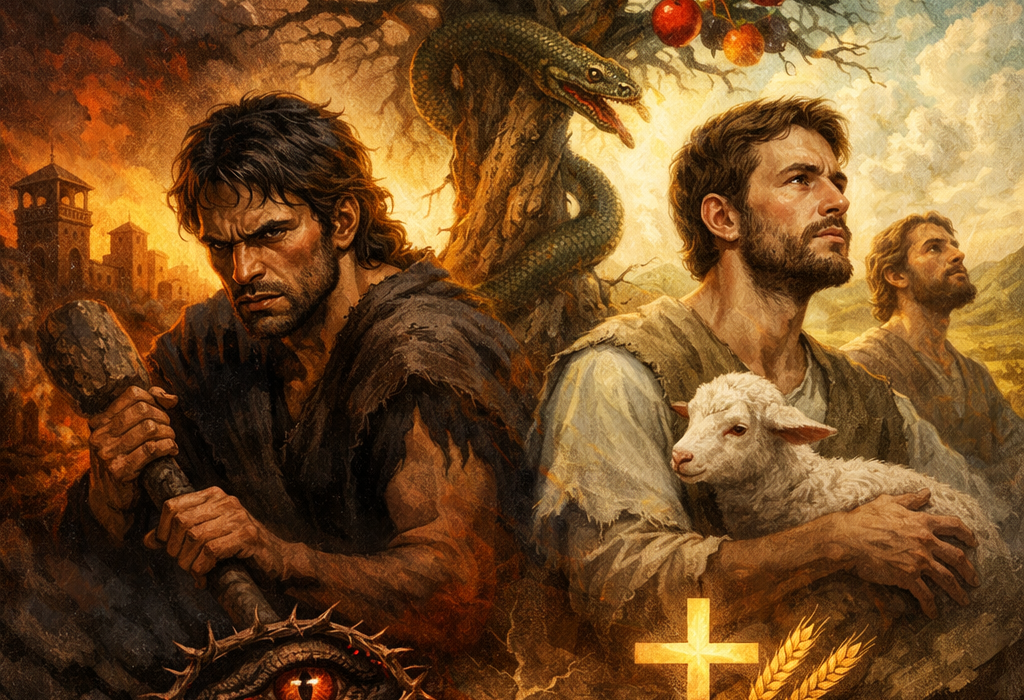
Genesis is often treated as a simple origin story, one fall, one humanity, one problem evenly shared by everyone. Yet the text refuses such simplicity. From the moment God declares enmity in Genesis 3:15, the narrative introduces division, conflict, and lineage as defining features of human history. Seed is set against seed. Brothers are set against brothers. And very quickly, Scripture stops telling a universal story and begins telling a selective one, tracing some lines while abandoning others.

This article argues that this selectivity is not an accident. The early chapters of Genesis consistently frame history through seed, inheritance, and covenant continuity, not through moral equality. Cain, Abel, and Seth are not equal sons; they represent divergent trajectories with enduring consequences. Whether you approach the text cautiously or controversially, the Bible demands an explanation for why humanity parts ways, and why redemption proceeds only through one appointed line. Dual seedline theory persists because it confronts that question head-on.

I. What Is Dual Seedline Doctrine? Text, Assumptions, and First Principles

Dual seedline doctrine is not a single, cohesive theory but a cluster of interpretive models attempting to explain the internal tensions of early Genesis (especially Genesis 3–5) by taking seriously the Bible’s own language of seed, enmity, and lineage. At its core, the doctrine asserts that Scripture presents two rival lines emerging from the Fall: one aligned with God’s promise, and one opposed to it.

The foundational text is Genesis 3:15, often called the Protoevangelium:

“I will put enmity between thee and the woman, and between thy seed and her seed…”

This verse is unique because it does not merely predict moral conflict,  it introduces seed as an oppositional category. Throughout Genesis, “seed” (zeraʿ) functions not abstractly but genealogically, the seed of Abraham, the seed of Isaac, the seed of Jacob. Dual seedline doctrine begins with the observation that Genesis itself invites a lineage-based reading of human history.

Importantly, Genesis 3 depicts the fall as affecting all of humanity and introduces division immediately by enmity, conflict and rivalry. Genesis 4 follows not with peace and reconciliation but with fratricide, reinforcing the idea that something more than forgivable sin has entered the world. Cain is not merely disobedient; he is outright hostile to his righteous brother, ultimately murdering him. Also notice that God had no respect for Cain’s offering and no reason or explanation was given. God Himself distinguishes between them.

Dual seedline interpretations diverge on how this division originates, but they share several first principles:

  1. Genesis is a very compressed narrative, not exhaustive history. Early Genesis routinely omits many details later assumed such as unnamed daughters, unnamed wives and vast spans of time. This forces interpreters to distinguish between what Scripture says, what it implies, and what it leaves silent.
  2. “Seed” is not metaphor-only, while seed can be used figuratively, Genesis overwhelmingly uses it biologically and covenantally. Promises, curses, and blessings flow through lineage.
  3. Cain is treated as categorically different, Cain is the firstborn recorded, yet Scripture never presents him as heir. Instead, Seth is appointed to replace Abel (Gen 4:25), signaling selection among sons, not equality of line and not recognising Cain as firstborn.

Historically, Jewish and Christian interpreters have wrestled with these tensions. Some Second Temple texts, such as the Book of Jubilees, emphasize lineage purity and angelic corruption. Later rabbinic and mystical traditions expand on Genesis 6 and the nature of hybridization, showing that seed anxiety has been around for centuries and is not a modern invention.

Extra-biblical traditions surrounding figures like Lilith (found in sources such as the Alphabet of Ben Sira) are often dismissed. While these texts are not authoritative or inerrant, their persistence suggests that ancient communities sensed unresolved questions in Genesis’ early chapters, particularly regarding sexuality, transgression, and origin.

Crucially, dual seedline doctrine does not require non-Adamic humanity. Some models posit other human populations; others maintain Adam and Eve as the sole human progenitors while distinguishing seedlines by paternity, allegiance, or covenantal orientation. This distinction matters. The doctrine stands or falls not on speculative anthropology, but on whether Scripture itself supports meaningful, enduring division within humanity rooted at the Fall.

What this article series will argue is not that every seedline model is correct, but that the Bible itself is not in opposition to this idea. Genesis presents differentiation early, sharply, and persistently. Cain and Seth are not equal brothers who merely made different life choices; they become heads of divergent lines with radically different outcomes.

Before addressing how the transgression occurred, or how later traditions attempt to explain it, one conclusion must be established: Genesis invites lineage-based thinking. Any serious engagement with dual seedline doctrine must begin there.

II. Genesis 3 and the Nature of the Transgression: Eating, Seed, and Competing Readings

Genesis 3 stands at the center of every dual-seedline discussion because how one understands the transgression determines how one understands the division that follows. The chapter itself is brief, symbolic, and limited in scope, offering just enough detail to establish culpability while withholding and exhaustive explanation. This extreme compression has produced two dominant interpretive camps: literal-consumptive readings and symbolic-sexual readings of “eating.”

The traditional view holds that Adam and Eve literally consumed forbidden fruit (I.E. an apple” in direct violation of God’s command. This reading has the advantage of simplicity and longstanding acceptance. However, it raises interpretive tensions when read alongside the rest of Scripture. The tree is never described botanically; its fruit is never named; and its effect (sudden knowledge of nakedness) appears disproportionate to mere dietary violation. The punishment likewise extends far beyond appetite, specifically touching fertility, authority, pain in childbirth, and lineage (seed).

By contrast, symbolic-sexual readings observe that Scripture frequently uses eating, knowing, and fruit-bearing as metaphors for intimacy and reproduction. “Knowing” is explicitly sexual elsewhere in Genesis (Gen 4:1), and “fruit” consistently represents offspring. Within this framework, the Tree of Knowledge represents illicit acquisition of knowledge through forbidden union, not eating an apple.

Dual seedline doctrine typically operates within this second framework, arguing that Genesis 3 introduces corrupted seed through transgressive sexual union. This reading gains support from Genesis 3:15, where God declares enmity not between abstract moral positions, but between seed. The serpent is said to possess seed; the woman is said to possess seed; and the conflict between them is enduring, genealogical, and embodied in history.

Critics often object that this sexual reading is imposed on the text. Yet it must be acknowledged that all readings import assumptions, including modern literalism. Ancient Near Eastern literature routinely encoded sexual realities in symbolic language, especially in sacred texts. Genesis itself avoids explicit sexual description even when sexual acts are unquestionably in view, favoring euphemism and understatement in every other example.

Further, Genesis 4 immediately follows with a birth narrative (Cain) whose moral character is treated as fundamentally opposed to righteousness. God does not merely rebuke Cain; He distinguishes him as different. Cain’s offering is rejected, his anger is described “very wroth”, and his lineage culminates in Lamech, a man of violence and defiance. The narrative reads not as random moral failure, but as the outworking of an origin of evil.

The appointment of Seth reinforces this reading of the narrative. Seth is not just another son; he is given instead of Abel, and his line is explicitly traced as the continuation of the godly seed. Genesis 5 does not trace all sons; it traces one line. This selective genealogy signals that lineage matters, not merely individual beliefs. Why was Seth not given to replace the first born Cain?

Importantly, symbolic-sexual readings do not require the serpent to be a literal reptile engaging in physical intercourse. In Scripture, spiritual beings are frequently described using embodied language. Genesis 6, Jude, and Second Temple literature all attest to ancient beliefs about boundary violation between spiritual and human realms. Whether one accepts those interpretations or not, they demonstrate that sexualized readings of early Genesis are ancient in origin and not modern.

At the same time, in my opinion serious problems arise if Adam’s guilt is treated as purely derivative – flowing to him only through Eve’s transgression. Biblical law consistently treats sexual sin as personal, not automatically transferable. A husband is not condemned for his wife’s adultery by default. Restoration, not extinction, is the biblical pattern. This creates opposition within sexualized seedline models to account for Adam’s direct culpability, not merely his proximity to his wife.

Thus Genesis 3 presents seed conflict, lineage consequence, and embodied judgment, while failing to explain the mechanics in the modern terms we expect. Literal-consumptive readings struggle to account for the depth of the fallout; symbolic-sexual readings explain the fallout but must carefully address covenantal consistency.

The remainder of this article will not assume a single mechanism prematurely. Instead, it will argue that Genesis itself demands a seed-conscious reading, and that any model (literal or symbolic) must explain why Scripture so quickly, and so decisively, divides humanity with extreme consequences.

III. Cain, Abel, and Seth: Firstborn Status, Covenant Selection, and Lineage Logic

Genesis 4–5 only intensifies the questions raised in Genesis 3 by presenting three sons (Cain, Abel, and Seth) yet treating them unequally. This unequal treatment is not explained in terms of personality, behavior or action; it is embedded in lineage logic. Dual seedline doctrine begins to take clear shape here, not by speculation, but by observing how the text (and God) prioritizes one line over another.

Cain is the firstborn child recorded (Genesis 4:1). In the ancient world, firstborn status carried legal, cultic, and covenantal weight. If Genesis were presenting a standard  anthropology (where all children are equal) Cain would be the presumptive heir. Instead, Scripture immediately challenges the firstborn expectations. Cain’s offering is rejected, Abel’s is accepted, and God addresses Cain not as misunderstood but as a man with sin “crouching at the door” (Gen 4:7), using predatory imagery.

Abel’s righteousness is affirmed, yet his role is brief. He dies without any recorded offspring, removing him from genealogical continuity. This sets the stage for Seth, whose birth is framed  as appointment: “God has appointed me another seed instead of Abel” (Gen 4:25). The language is deliberate. Seth is born, and installed as the replacement seed for Able.

Genesis 5 reinforces this by shifting tone and structure, rather than narrating further events, the text moves into formal genealogy, tracing one line only (Adam → Seth → Enosh) and onward. The phrase “in his own likeness, after his image” (Gen 5:3) echoes creation language, signaling restored alignment after the failure of Genesis 3–4. This is not said of Cain.

Critically, Genesis does not say Cain is non-human, nor does it say he is biologically unrelated to Adam. What it does say (repeatedly) is that his line diverges in moral character, direction, and destiny. Cain builds a city, names it after his son, and his lineage culminates in Lamech, who boasts of violence and rejects proportional justice (Gen 4:23–24). Civilization appears, but covenant is not exemplified.

This distinction aligns with broader biblical patterns. Throughout Scripture, God chooses specific genealogical lines. Isaac over Ishmael. Jacob over Esau. Judah over his brothers. Election is never democratic, but purposeful. Dual seedline doctrine observes that Genesis applies this logic earlier than commonly acknowledged, beginning not with Abraham but with Adam’s immediate offspring.

Genesis 5:4 states Adam had “other sons and daughters.” Why are none of them considered? The answer lies in how Scripture constructs meaning. The Bible frequently records existence without assigning significance. Many sons may be born, but only one carries the line through which promise, worship, and eventual redemption flow. Seth is not unique because he is chosen.

This choice becomes explicit in Genesis 4:26: “Then began men to call upon the name of the LORD.” Worship, covenantal invocation, and divine relationship are explicitly tied to Seth’s line. This is not a lineage marker, from this point forward, Scripture tracks history through this seed.

Second Temple Jewish literature reinforces the idea that lineage purity and corruption were normal ancient concerns. Texts such as the Book of Jubilees emphasize genealogical separation and trace moral decay through bloodlines, not just choices. While not authoritative, these writings demonstrate that early readers of Genesis did not treat Cain and Seth as equal branches of the same family.

Dual seedline doctrine, therefore, does not arise from a single controversial verse. It arises from patterns: firstborn displacement, selective genealogy, moral inheritance, and covenant continuity. Genesis does not treat humanity as a homogeneous mass corrupted equally. It introduces division, tracks it genealogically, and builds redemptive history on one line to the exclusion of others.

This does not answer every question about the mechanics of this theory. It does, however, establish a crucial point: Scripture frames early human history in terms of divergent lines, not merely divergent behaviors.

IV. Adam’s Culpability, Covenant Logic, and the Problem of Derivative Guilt

Any dual-seedline model, especially those that interpret the transgression of Genesis 3 symbolically or sexually, must account for Adam’s guilt in a way that coheres with the rest of Scripture. Genesis is explicit: Adam is held responsible and accountable. Death enters through him, exile applies to him and the curse of toil is addressed to him. The question is why?

A common explanation within some seedline frameworks is derivative guilt, the idea that Adam “partook” indirectly by receiving (having sex with) Eve after her transgression. Yet when this claim is tested against broader biblical covenant logic, serious problems arise.

Throughout the Torah, covenant responsibility flows from husband to household, not from wife to husband. A wife’s sexual sin does not automatically condemn a faithful husband. Adultery is personal and the guilt is not contagious. Restoration of the marriage covenant is possible, and lineage may continue even after transgression. If Adam were merely a passive recipient of Eve’s corruption, Genesis 3 would present a moral structure inconsistent with later biblical law.

This raises a critical tension in scripture, if Eve’s act alone constituted the transgression, what was Adam supposed to do? Should he have divorced Eve permanently? Should he have abstained from all future relations? Should he have ended the Adamic line and humanity entirely?

None of these options align with Scripture’s portrayal of God’s purposes. Adam was commanded to be fruitful and multiply (Genesis 1:28). Humanity’s continuation is assumed, not treated as a tragic compromise. Redemption presupposes survival of the adamic line and extinction is never presented as the righteous alternative.

Moreover, Cain is the firstborn child recorded. If Cain resulted solely from Eve’s transgression and Adam remained innocent, then Adam’s subsequent continuation of humanity would require either moral compromise or divine contradiction. Genesis presents us neither option, instead, Adam continues as husband, father, and progenitor, yet still bears full culpability.

This strongly suggests that Adam’s fall was volitional and direct, not merely associative. The text  emphasizes Adam’s responsibility. God’s command was given to Adam before Eve’s creation (Gen 2:16–17). Adam is present during the encounter (Gen 3:6). God addresses Adam first after the transgression (Gen 3:9). Paul later reinforces this, stating that sin entered through one man (Rom 5), not through the woman. Whatever Eve did, Adam’s action is treated as the decisive sin.

Within symbolic-sexual frameworks, this necessitates more than passive reception. Adam’s “partaking” must represent his own act of disobedience, not simply acceptance of consequences from his wife’s transgression. Otherwise, Genesis would undermine the biblical principle of personal guilt.

Here, I propose that Adam’s transgression involved direct participation in forbidden union, rather than mere association. This does not require inventing new commands or dismissing Eve’s role. It simply recognizes that Adam’s guilt must be commensurate with the judgment he receives.

Extra-biblical traditions, while not authoritative, demonstrate that ancient readers sensed unresolved questions here as well. Lilith traditions (found in sources such as the Alphabet of Ben Sira and others) portray Adam as confronted with sexual rebellion beyond Eve. While these accounts are mythological and late, they may reflect attempts to reconcile Adam’s guilt with his agency, not to rewrite or subvert Scripture.

In no way am I attempting to argue that Lilith is historical or canonical. Rather, it is an observation that derivative guilt alone is insufficient to explain Adam’s condemnation if Genesis 3 is read sexually. Any coherent seedline model must explain why Adam’s action warranted universal extreme consequences.

Thus, the dilemma is unavoidable, if the transgression was purely Eve’s, Adam’s punishment is unjust by biblical standards. If Adam knowingly participated, his guilt is coherent, and humanity’s continuation makes sense. Genesis does not spell out mechanics of the transgression, but it leaves no doubt about responsibility. Adam did not fall by ignorance, he disobeyed. Adam’s culpability required direct action. How that action is understood (literal or symbolic) must align with covenant logic across Scripture. 

V. Historical Reception, Objections, and Why Dual Seedline Theory Persists

Dual seedline doctrine has never occupied a comfortable place within mainstream church  theology, yet it has never disappeared. Its persistence is not the result of contrarianism, but of unresolved textual pressures that surface whenever readers take early Genesis seriously as history, theology, and lineage narrative rather than moral allegory.

Historically, ancient Jewish readers were far more attentive to genealogical purity and corruption than modern interpreters realize. Second Temple literature such as the Book of Jubilees emphasizes strict lineage boundaries, angelic transgression, and the consequences of corrupted seed. While Jubilees is not Scripture, it demonstrates that early readers did not assume a non divergent origin story after the Fall. They expected corruption to move through genealogical lines.

Similarly, later rabbinic and mystical traditions (though often speculative) reflect discomfort with unanswered questions in Genesis 3–6. The emergence of Lilith traditions in texts like the Alphabet of Ben Sira shows how later communities attempted to explain Adam’s guilt, sexual disorder, and the presence of evil without diminishing divine justice. These traditions should not be treated as sources of truth, but neither should they be dismissed as arbitrary inventions of fantasy.

The Apostle Paul’s insistence that sin entered through one man (Romans 5) reinforces Adam’s unique role as covenant head, while simultaneously affirming that humanity divides into those “in Adam” and those “in Christ.” Even here, lineage language persists, federal, representative, and embodied. Paul preserves headship and inheritance.

The primary objections to dual seedline doctrine generally fall into three categories:

  1. “It introduces non-Adamic humans.” This objection applies only to certain versions of the doctrine. As demonstrated throughout this article, dual seedline theory does not require multiple human origins. Division can be paternal, covenantal, or representative without denying Adamic universality.
  2. “It relies on extra-biblical sources.” Scripture alone remains authoritative. However, extra-biblical sources are not used to prove doctrine, but to show that questions raised by Genesis are ancient and persistent. The doctrine arises from biblical tensions; external texts merely illustrate how others have grappled with them historically.
  3. “It over-sexualizes the text.” This objection often assumes modern sensibilities rather than ancient ones. Scripture uses sexual symbolism extensively and discreetly. If “seed” is taken seriously as lineage, then sexuality cannot be dismissed as irrelevant to early Genesis.

The most compelling reason dual seedline theory persists, however, is that the Genesis  text did not resolve everything. It introduces enmity, seed conflict, and genealogical divergence, then builds redemptive history through selective lines. Cain and Seth are not treated as equals; they are treated as heads of inherently opposed trajectories.

Moreover, purely moral or symbolic readings struggle to explain why violence, deception, and rebellion escalate so rapidly and systematically in one line while worship, covenant, and divine invocation flourish in another. 

Dual seedline doctrine, at its strongest, is not an attempt to sensationalize Genesis. It is an attempt to take its language seriously, seed, enmity, inheritance, replacement, calling, and lineage. It recognizes that the Bible does not tell history as a modern textbook would, but intentionally, emphasizing what matters for covenant and redemption.

This article does not claim that every version of dual seedline theory is correct, nor that speculative elements should be elevated to the status of doctrine. What it does claim is that the Bible supports a divided anthropology from the beginning, and that dismissing lineage-based interpretations altogether requires ignoring the very categories Scripture insists upon.

January 1st, Rome, and the Theft of Time

Should Christians Observe the Modern New Year?


I. Who Decides When the Year Begins? (Biblical Authority vs Roman Authority)

One of the least questioned assumptions in modern Christianity is the calendar. Most believers instinctively treat January 1st as the new year – a fresh start, a reset, a chance to “do better.” But Scripture does not, and God does not leave beginnings and endings to human invention.

In the Bible, God defines the start of the year, not Rome, not culture, not tradition.

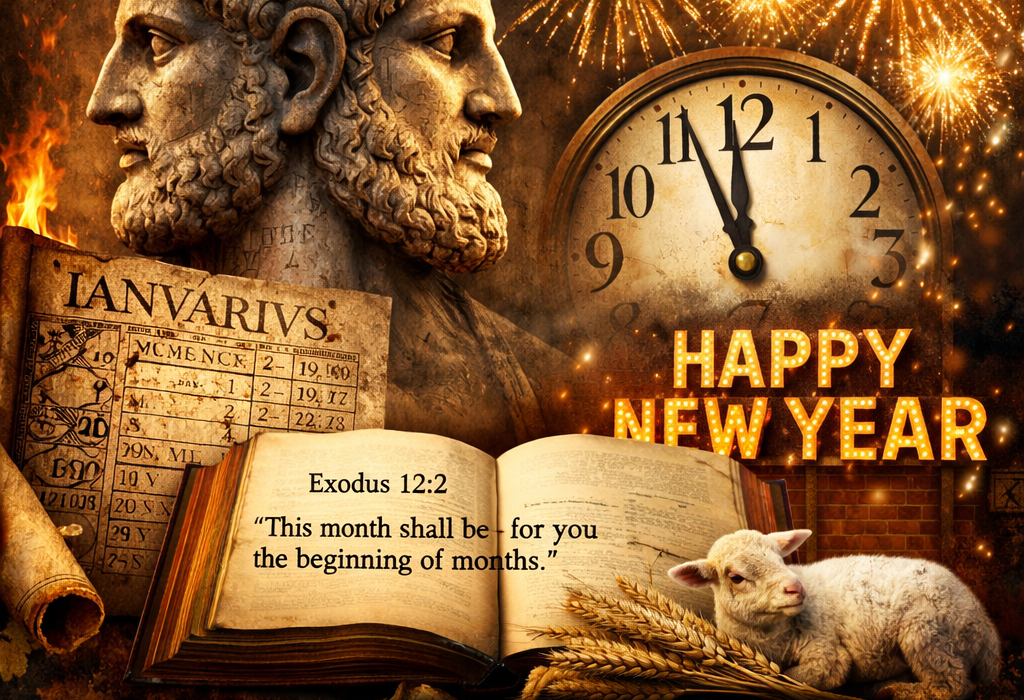
“This month shall be for you the beginning of months. It shall be the first month of the year for you.” (Exodus 12:2)

This declaration occurs in the context of Passover, redemption, and deliverance. The biblical year begins in spring, during the month of Abib (later called Nisan) (roughly March-April). This aligns with creation itself: planting, birth, renewal, and forward motion. Biblically, a new year begins when life begins moving again.

By contrast, January 1st begins the year in mid-winter, a season associated with dormancy, death, and survival rather than growth. God consistently ties renewal to life, not decay.

The modern Christian calendar is largely inherited from Rome, not Scripture. While God’s people were commanded to keep Sabbaths and feasts that marked time according to covenant rhythms, Rome developed a bureaucratic calendar designed for empire management, taxation, and civil control. When Christianity later merged with Roman authority, the Church absorbed Rome’s calendar rather than correcting it.

This matters because time is important, whoever defines the calendar defines when people reset, when they reflect, when they repent, when they celebrate and when they rest. In Scripture, those rhythms belong to God. The question is not whether Christians can acknowledge January 1st as a date on a civic calendar. The question is whether believers should spiritually invest meaning, ritual, or renewal into something God never sanctified.

The Bible already provides a yearly renewal rhythm – Passover, Feast of Weeks, and Feast of Tabernacles – each tied to covenant, obedience, provision, and accountability. January 1st simply disrupts that rhythm.

Before asking whether New Year’s traditions are pagan, satanic, or harmless, Christians must first ask a more foundational question: Who has the authority to define beginnings? God – or Rome?


II. January, Janus, and the Pagan Rewriting of Time

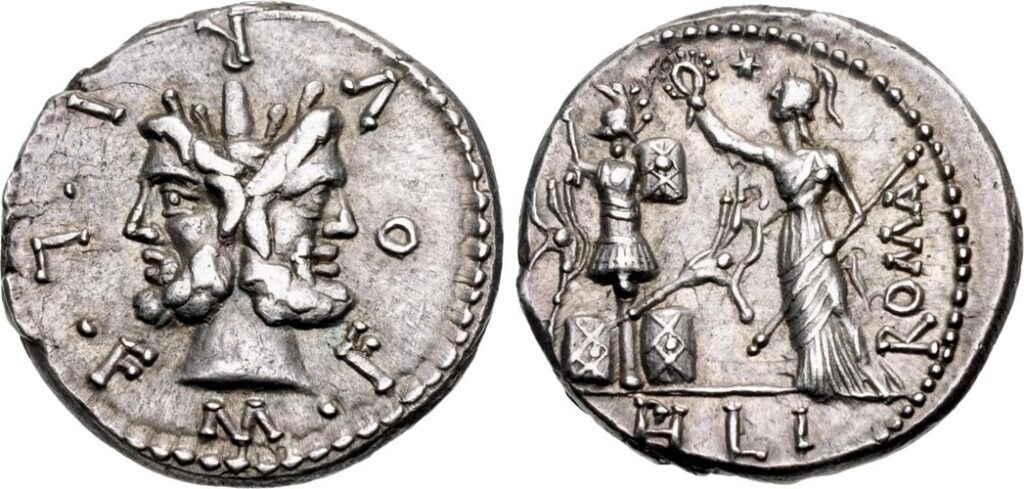
January is not just any random winter month – it is named after a pagan god.

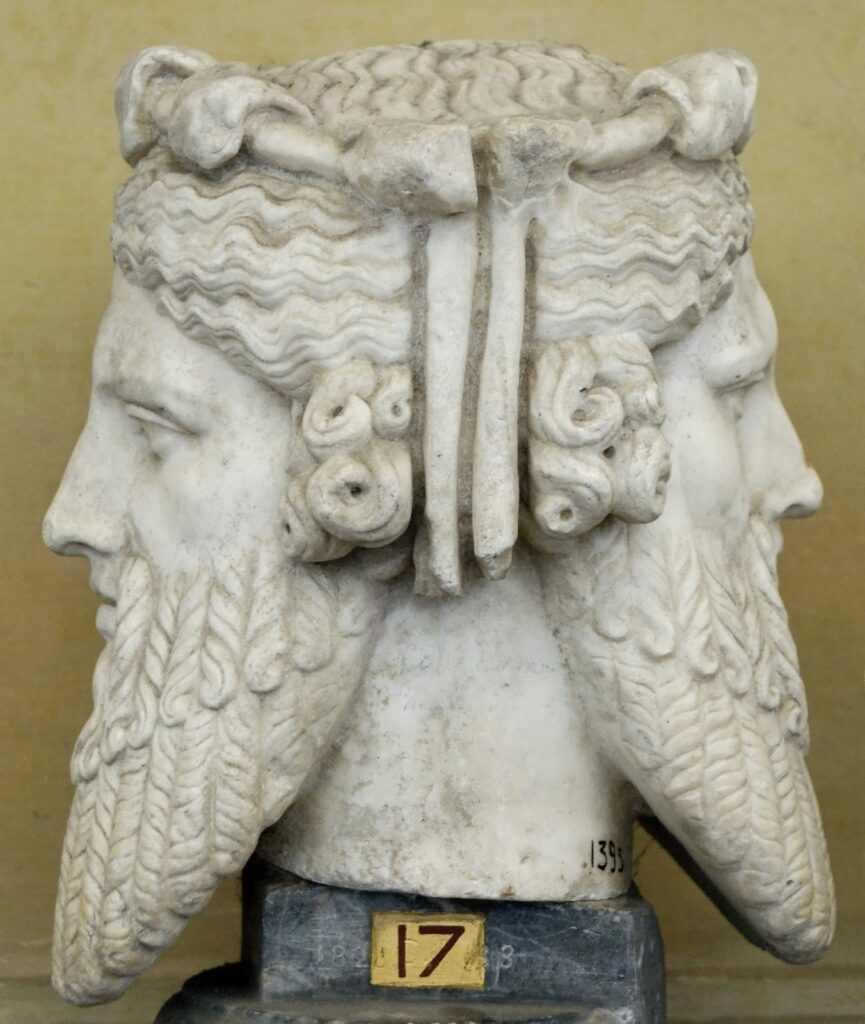
The month derives its name from Janus, a Roman deity associated with beginnings and endings, transitions, doorways and gates, threshold moments and looking backward and forward simultaneously.

Janus was commonly depicted with two faces, one facing the past, one facing the future. This symbolism is not incidental; it perfectly mirrors modern New Year language: “reflect on the past year” and “look ahead to the next.”

In ancient Rome, January 1st was not a secular event but a religious one. Offerings were made to Janus, vows were sworn, and favors were sought for the coming year. These rituals were intended to secure prosperity, success, and stability. New Year’s resolutions originate here.

Resolutions were not self-help exercises. They were vows – religious commitments made at temple gates. Biblically, vows are serious matters.

“When you make a vow to God, do not delay in fulfilling it.” (Ecclesiastes 5:4)

God never commands annual vows tied to January 1st. That practice originates in pagan religion. To be clear: modern Christians making resolutions are not knowingly worshiping Janus. But ignorance of origin does not make a practice acceptable. Scripture repeatedly warns God’s people not to adopt the forms of pagan worship, even if the names are changed.

Rome did not merely rename months, they reframed time itself, shifting renewal away from redemption and toward human willpower, optimism, and self-reinvention. That shift is theological, whether people want to acknowledge it or not.

January 1st is not evil because it is “demonic.” It is problematic because it represents subverted  authority, a calendar shaped by pagan empire rather than divine command. When we make “New Years Resolutions” – we are making a vow to a pagan God in exchange for His blessing.


III. April, the Spring New Year, and the Origin of April Fool’s Day

Historically, many cultures (including large portions of Christian Europe) recognized the spring as the beginning of the year. Even after Rome began experimenting with January starts, New Year celebrations often occurred between March 25 and April 1, aligning with agricultural and biblical logic.

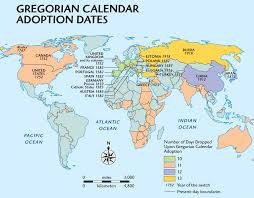
When the Gregorian calendar was imposed in the late 16th century, January 1st was standardized as the official New Year across Roman-aligned territories. Those who continued to celebrate the New Year in spring were mocked, pranked, and ridiculed. Over time, this ridicule became a tradition mocking Christians – what we now call April Fool’s Day.

April Fool’s Day is a cultural by-product of Rome enforcing calendar authority and shaming the Christians who resisted it. The real irony is those who maintained the older, life-centered New Year were labeled fools, while the winter-based Roman calendar became “normal.”

This episode of history highlights that calendar changes are not administrative but religious. They reshape identity, memory, and obedience. When Rome moved the New Year, it didn’t just change a date, it rewired cultural instincts about renewal, beginnings, and accountability. Biblically speaking, spring remains the only God-defined New Year. January 1st exists because Christians chose compromise over obedience – not because God revised His calendar.


IV. Is There Anything Satanic About the Modern New Year?

There is no biblical evidence that January 1st is a satanic holy day or that demons demand explicit worship through fireworks and countdowns. Claims to the contrary drift into speculation and weaken legitimate critique.

However, Scripture consistently portrays Satan as a counterfeiter, not an inventor. His strategy is inversion, imitation, compromise and substitution.

Consider the pattern:

God begins years in spring (life) – Rome begins years in winter (death), God ties renewal to redemption – Culture ties renewal to self-reinvention, God calls repentance through obedience – Culture calls repentance through willpower and optimism.

This is a counterfeit structure. Modern New Year celebrations are also marked by predictable moral patterns such as drunkenness, sexual immorality, disorder and the attitude of “One last night to sin before I get serious”.

Scripture condemns this pattern (Romans 13:13). While not satanic in the occult sense, it aligns with fleshly excess and lawlessness, not holiness. The danger is not demons hiding behind party hats. The danger is normalizing a pagan rhythm of renewal while ignoring God’s appointed ones.


V. What Should a Christian Household Do?

Christians are not commanded to observe January 1st. They are commanded to walk in discernment and faithful responses fall into three responsible categories:

1. Reject ritual participation
Treat January 1st as any normal day. No vows. No resolutions. No spiritual language.

2. De-ritualize it (Compromise less)
Acknowledge the calendar without assigning meaning or moral weight.

3. Re-anchor renewal biblically
Have a “new Years” celebration on April 1st, Tie reflection, repentance, and recommitment to it instead.

The goal is not isolation, it is alignment. Time belongs to God. When Christians passively inherit Rome’s rhythms without questioning them, they surrender authority they were never meant to.

New Year’s Day (January 1st) does not need to be feared, but it should no longer be treated as neutral once its origins are understood. The real issue is not Janus. The real issue is who gets to tell God’s people when a year begins.

And Scripture has already answered that question.

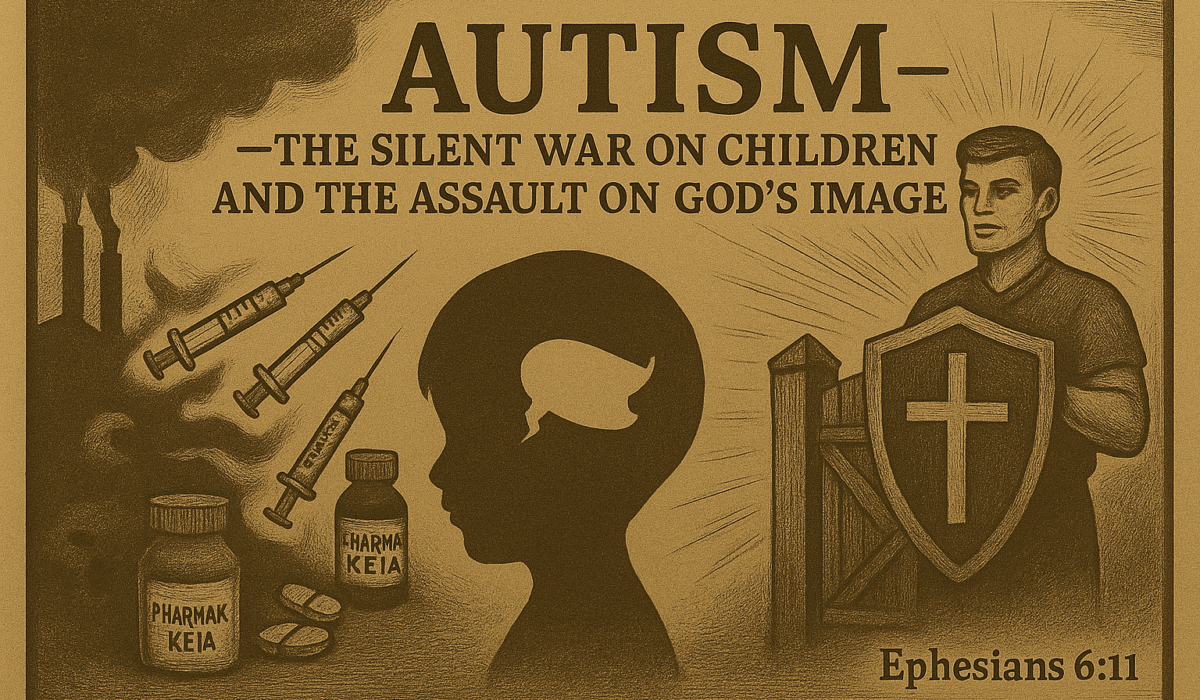
Autism – The Silent War on Children and the Assault on God’s Image


Summary: For those who lack the endurance to read what men used to write before attention spans died, Click here the short version

⚔️ Summary for the Slumbering

This article argues that the modern autism surge is not accidental but engineered, the fruit of “pharmakeia” (medical-industrial sorcery) and a wider spiritual war against God’s order, masculinity, and the family. It frames autism as population control by dependency, stealing speech, focus, independence, marriage, and fruitfulness, while culture launders the crisis through “awareness,” “neurodiversity,” and “non-judgmental” acceptance.

Core claims & arc:

  • Epidemic by design: From ~1 in 50,000 to 1 in 36, presented as environmental/iatrogenic, not genetics or “better diagnosis.”
  • Primary culprits named: Vaccines (adjuvants, scheduling), prenatal Tylenol, endocrine disruptors, processed foods, and compounded generational damage (epigenetics = biblical “sins of the fathers”).
  • Control groups & contrast: Amish and parts of the developing world are cited as largely free of autism where pharma penetration is minimal.
  • Population strategy: A disabled, dependent generation lowers fertility and resistance; quotes and global programs are invoked to argue intentionality.
  • Spiritual frame: Autism is read as judgment and warfare, needles and pills as modern altars to Molech; Satan’s aim is to mute prayer, halt dominion, and break households.
  • Fatherhood at the gate: The remedy is patriarchal responsibility, refusing mandates, guarding inputs (medicine, media, food), restoring order and discipline, and rebuilding health God’s way.
  • Path forward: Repentance, posted household law, natural nourishment, work, sunlight, Scripture, routines, and courage to bear ridicule, health through obedience, not compliance.
  • Testimony: A personal collapse post-vaccination and years of pharma harm reinforce the thesis; recovery begins with rejecting the system.

Bottom line: Autism is presented as mirror and warning – evidence of cultural rebellion and fatherly abdication, and a call to repent, resist pharmakeia, and restore God’s order so households can multiply, rule, and endure.

Introduction

Autism is no longer a medical curiosity whispered about in obscure journals. It is a household word, a cultural crisis, and a spiritual mirror. In the 1970s, one child in fifty thousand bore this affliction. Today it is one in thirty-six. That is not “evolution”, genetics or natural. That is engineered disorder on a civilizational scale.

And yet, the world shrugs. Doctors with their scripted smiles tell us it’s “better diagnosis.” Journalists with rehearsed compassion call it “neurodiversity.” Corporations sell puzzles pieces and awareness ribbons, training parents to normalize what should never have become normal. They call it acceptance, but it is surrender. They call it diversity, but it is devastation.

Behind the statistics are fathers robbed of legacy, mothers trapped as permanent caretakers, and children neurologically disarmed before they could even speak. A disorder that prevents fruitful marriages, large families, and independent living is not just medical, it is societal sabotage. And the silence around its cause is not ignorance. It is conspiracy.

Autism is not random. It is not accidental. It is the predictable result of decades of pharmakeia, pharmaceutical sorcery, combined with spiritual warfare waged by the powers of this age. Vaccines, Tylenol, poisoned food, endocrine disruptors, and generational sin have joined forces to rob generations of their speech, their fruitfulness, and their dominion.

Why should God shield us from the consequences when we have worshiped the FDA instead of Him? When we obey doctors more than Scripture? When we hand our babies to Caesar and call it “healthcare”?

Autism is not merely a medical diagnosis. It is a war report. It is the fruit of rebellion, the scar of disobedience, and the judgment of a God we have ignored. But for fathers with eyes to see, it is also a call to arms: guard your children, guard your seed, guard the gates of your household against pharmakeia and deception.


I. The Autism Epidemic: From Rare to Routine

Only a couple generations ago, autism was a medical rarity. So rare, in fact, that many doctors would never see a single case in their entire careers. In the 1970s, rates hovered around 1 in 50,000. By the year 2000, it was 1 in 150. Today it is 1 in 36. The trendline does not lie. Autism has not crept into our world, it has exploded. The medical community expects the rate to be 1 in 10 by 2035.

The establishment explanation? “Better awareness. Broader criteria.” A convenient excuse. As if classrooms full of nonverbal children who cannot function independently are simply the result of better clipboards and sharper pencils. As if the tidal wave of parents watching their toddlers regress into silence after routine shots is just “confirmation bias.”

The truth is undeniable: something has changed in the environment of Western man. Something foreign has been injected, swallowed, absorbed, and inherited. Something is rewiring brains, disrupting speech, and shackling households.

This is not “overdiagnosis.” This is overexposure. Overexposure to chemicals, to pharmaceuticals, to vaccines, to poisons baptized as “medicine.” Autism is the visible fruit of invisible warfare, both chemical and spiritual.

Meanwhile, culture scrambles to make peace with the plague. Entire industries have arisen around “autism awareness.” Billboards, charities, and consultants remind us to be compassionate and inclusive, as though compassion requires denial. As though the highest virtue is not seeking the cause, but celebrating the chaos.

Worse, a propaganda narrative has emerged: autism as “gift,” autism as “superpower.” Parents are coached to frame their child’s disorder as quirky brilliance. Schools demand entire classrooms bend around the dysfunction of one student while punishing healthy children for being “intolerant.” The state gains an endless stream of dependents, and pharmaceutical companies gain endless streams of profit. Everyone wins, except the children, and the fathers trying to raise them.

As a whole Autism is not a gift. It is not diversity. It is devastation. It cripples speech, shatters focus, and robs families of fruitfulness. It does not build; it consumes. And it has gone from rare to routine because the idols of pharmakeia have been enthroned above the God of order.

The epidemic is real. The devastation is measurable. And until fathers rise to acknowledge the true causes, pharmaceutical sorcery, poisoned seed, and spiritual rebellion, the numbers will only climb higher.

II. Vaccines – The Most Obvious Link

If autism has a smoking gun, it is vaccines. This is the connection the establishment will lie, censor, and intimidate to deny. Yet it is the most glaring fact: there has never been a recorded case of autism in a completely unvaccinated child of unvaccinated parents. Not one. Entire rural regions in the developing world, where vaccines are rare to nonexistent, report virtually no autism. The Amish, mocked and despised for refusing pharmakeia, live without an autism epidemic. If autism were genetic, racial, evolutionary or “inevitable,” it would appear everywhere. Instead, it appears wherever the needle reigns.

The evidence is not new. It has simply been buried. In the 1990s, Dr. Andrew Wakefield published his findings connecting the MMR vaccine to intestinal damage and autism. He was publicly vilified, stripped of his license, and made a global example. Yet subsequent studies confirmed that autistic children carry elevated aluminum levels in their brains, that vaccine adjuvants penetrate the blood-brain barrier, and that the developing nervous system is uniquely vulnerable to toxic assault. The “debunked” study has never been disproven, it has simply been politically assassinated.

By age six, a child in America can receive up to 72 doses of vaccines. Each dose carries not just weakened pathogens but aluminum, mercury (thimerosal), formaldehyde, and a cocktail of adjuvants designed to provoke immune response. These substances do not vanish, they accumulate in tiny bodies. The result? Brains inflamed, neurons rewired, speech pathways disrupted, and entire households thrown into lifelong crisis.

Parents have seen it with their own eyes. A bright, babbling toddler receives a round of shots and within days withdraws into silence, stops making eye contact, begins flapping and rocking. The mother is told it’s coincidence. The father is told it’s genetic. Both are told to ignore the evidence of their own senses and bow to the priesthood of white coats.

But the pattern is too consistent to ignore. Japan once delayed its vaccination schedule until age two, and rates of sudden infant death and neurological injury plummeted. In contrast, America doubled down: newborns are jabbed within hours of birth, before their immune systems have even formed. The result is not health, it is devastation.

The medical establishment has an answer for every objection except the truth. They say, “Correlation is not causation.” But when correlation is perfect, when entire unvaccinated communities are free of autism while vaccinated ones drown in it, causation is the only honest conclusion. They say, “The science is settled,” when in reality the science is censored. They say, “Trust the experts,” when those experts profit from the very system they defend.

Vaccines are not protection. They are pharmakeia, sorcery presented as medicine. They have not saved generations; they have stolen them. Autism is the most visible proof. And until fathers rip down the altar of the syringe and refuse to sacrifice their children to Molech in the name of “public health,” the epidemic will only grow.

III. Tylenol – The “Safe” Drug That Helped Build the Epidemic

For decades, mothers have been told that acetaminophen, Tylenol, was the “safe” choice. No aspirin, no ibuprofen, no stronger prescriptions. Just Tylenol. Doctors repeated it like gospel, and women believed it. The pastel bottles lined every shelf, the pediatrician’s office had them ready, and pharmacies pumped them into households without hesitation. It was marketed as harmless, necessary, and motherly. But behind the soft branding was yet another assault on the unborn.

Mounting evidence now shows that prenatal acetaminophen use is not harmless. Studies out of Johns Hopkins revealed that children with the highest levels of acetaminophen in their umbilical cord blood were far more likely to later be diagnosed with autism or ADHD. Mount Sinai researchers echoed the same findings: the more prenatal exposure, the greater the risk. Scientists have tiptoed around the word “causation,” but the pattern is too consistent to ignore.

Yet Tylenol is not acting in a vacuum. It is layered onto decades of chemical sabotage. By the time a child is conceived in the modern West, his DNA is already carrying scars from his parents and grandparents: weakened by vaccines, damaged by pharmaceuticals, compromised by pesticides, antibiotics, and hormones in the food supply. Epigenetic markers, what scientists politely call “imprinting errors”, are the visible fingerprints of pharmakeia passed down from generation to generation.

Into this already fragile environment comes the “safe” drug. A fever during pregnancy? Take Tylenol. A headache? Take Tylenol. A backache? Tylenol. Day after day, dose after dose, while the child’s brain is still forming. The result: children neurologically rewired before they are even born.

Think of the irony. Women avoided aspirin in pregnancy for fear of harming their baby, only to be told that Tylenol was the safe alternative. But the so-called alternative may have been the silent accelerant of the autism epidemic. How many mothers wept at their child’s regression, never realizing that the “safest” pill in their cabinet had already planted the seeds?

And yet, the medical establishment continues the charade. They whisper that more studies are needed. They shrug that the evidence is “inconclusive.” They warn against “causing panic.” But when the FDA itself begins discussions about label warnings, you know the truth is breaking through the cracks. The same doctors who once swore Tylenol was safe now quietly admit: “Use the lowest dose, for the shortest time possible.” A backhanded confession that safety was always an illusion.

But here is the greater truth: Tylenol is not the sole culprit. It is one weapon among many. Autism is not born of one pill, one shot, or one chemical. It is born of generations of compromise. Generations of trusting the white coats instead of the white robes. Generations of fathers handing over their children to pharmakeia instead of guarding the gates.

Tylenol reveals the pattern: what is marketed as safe is often the most dangerous. What is promoted as “for your health” is often the exact opposite. Just as vaccines cripple speech and cognition, just as endocrine disruptors sterilize, Tylenol’s legacy is neurological sabotage. And yet we were told it was safe. We were told it was love.

The truth is that every pill, every injection, every chemical carries a spiritual reality. When we trust the sorcery of pharmakeia instead of the sovereignty of God, we reap judgment in our own households. Tylenol is not just a drug, it is a sacrament of unbelief, swallowed by a generation that traded obedience for convenience. And the fruit has been bitter.

IV. Generational Pharmakeia – Compounded Damage

The autism epidemic did not start with your child’s shot. It did not even start with your pregnancy. It began long before that, years, decades, and generations before. The seeds were sown by our grandparents and great-grandparents, who were told to trust “modern medicine,” to abandon the old ways, and to accept the needle, the pill, and the processed plate as progress.

Today, we are living with the compounded consequences. Vaccines are the trigger, but they are not the whole story. Autism is the visible fruit of a long, slow poisoning, an inheritance of pharmakeia.

Modern scientists, to their credit, are starting to glimpse this reality. They speak of “epigenetics” and “imprinting errors”, the way environmental factors switch genes on and off, leaving marks that pass to the next generation. They marvel at how trauma, toxins, and hormones can alter the code without changing the letters. They tiptoe toward the truth but stop short of naming it: generational damage.

Scripture is less vague: “The sins of the fathers visit the children to the third and fourth generation” (Exodus 20:5). When men trade obedience for convenience, when families ingest the world’s potions and call it “health,” they plant seeds of disorder that sprout in their grandchildren. Science calls it epigenetics; God calls it judgment.

Consider what has been poured into our bodies over the past century:
– Vaccines laced with aluminum and mercury.
– Antibiotics administered like candy, gut flora destroyed.
– Synthetic hormones from birth control and “fertility treatments.”
– Pesticides, plastics, and preservatives saturating the food supply.
– Heavy metals and fluoride in the water.

Each exposure weakens the immune system, disrupts hormones, scars DNA expression. Each exposure is not just personal but generational. Your grandmother’s pill alters your child’s future. Your father’s vaccine alters your grandson’s mind. This is the inheritance of pharmakeia: weakened seed, disordered development, and a generation robbed of its inheritance before it is even conceived.

And then, into this compromised landscape, comes the final trigger: the modern vaccine schedule. Seventy-two doses before age six. Aluminum adjuvants injected into a brain already burdened with inherited vulnerabilities. Tylenol swallowed during pregnancy, impairing detoxification. A perfect storm.

The result is children neurologically crippled, families shackled to lifelong care, and nations losing their ability to multiply and resist. This is not chance. This is not coincidence. This is the cumulative effect of decades of rebellion against God’s design.

Fathers, this should terrify you. It means your decisions today echo for generations. It means what you permit into your wife’s body, your children’s bodies, and your own will shape not just your household but your lineage. You are not only the protector of your children’s present; you are the steward of your grandchildren’s future.

But this truth should also empower you. You can break the cycle. You can close the gate. You can reject the sorcery of pharmakeia and begin restoring your lineage to health and obedience. Scripture’s warning about the sins of the fathers also contains a promise: mercy to a thousand generations of those who love Him and keep His commandments (Exodus 20:6).

Generational pharmakeia has left us with weakened immune systems, disordered DNA expression, and children neurologically disarmed. But generational repentance can reverse the trend. It begins with fathers who refuse the lies, rebuild the household on God’s order, and guard the seed from the poison of the world.

V. Personal Testimony: How Pharmakeia Nearly Took My Life

I was a healthy child. No major illnesses beyond the normal respiratory issues of a home where three parents smoked indoors. I was born at home, raised on clean food, never vaccinated, never took pharmaceuticals. I was homeschooled, graduated at 15, and by 16 was entering college.

Then the state and the college pressured my parents, they refused my admission to college: “He needs his shots.” In compliance, I was given my only vaccines ever – MMR (measles, mumps, rubella), Varicella (chickenpox), and Tdap (tetanus, diphtheria, pertussis). Within weeks, my life changed.

I developed an array of serious health issues culminating in a TIA (mini-stroke) at 16. Tremors. Seizures. Nine months of physical therapy to relearn how to use my left side. Permanent neurological damage. A change in the way my brain worked. By today’s standards, I would likely have been diagnosed with mild autism. But at the time, no one associated my collapse with the vaccines.

Instead, I was misdiagnosed with condition after condition, fibromyalgia and many others, until finally being labeled with stage 4 lupus ten years later. Over 15 years, 12 different doctors prescribed me more than 100 medications, including 14 years on methadone for pain. By 2007, I was on 11 medications, 28 pills a day, and was told I’d be in a wheelchair by 30 and had a life expectancy of 40-45.

Had I stayed on the medical industry’s treatment plan, that probably would have been the outcome. But in 2007/2008, through my own research and revelation from God, I made radical changes. I stopped all medications. I rebuilt my diet, my mindset, and my faith. Today I take nothing but vitamins and the occasional Motrin. While I live with daily pain, my symptoms are manageable. The damage done by the medications was worse than the lupus itself.

There is no laboratory “proof” that vaccines were directly responsible for my collapse. But it is likely that my parents’ lifelong addiction to pharmaceuticals and smoking set the stage, and the vaccines were the final straw. I am living evidence of what I’ve been saying in this article: pharmakeia weakens the seed across generations, and a single trigger can unleash devastation.

I am also living evidence that there is a way out. You can reject the sorcery. You can turn to God. You can rebuild your health and your household outside the system. It is not easy. It is not painless. But it is possible.

VI. The Amish, the Third World, and the Evidence of Contrast

If autism were truly a random genetic condition, it would appear evenly across all races, nations, and cultures. It would not care whether a child was born in Pennsylvania or Papua New Guinea, Ohio or rural India. But reality tells a different story, one the medical establishment scrambles to ignore.

Look at the Amish. These communities, mocked as backwards and stubborn for rejecting modern medicine, have virtually no cases of autism. Pediatricians and journalists alike have tried to spin it, but the fact stands: a people who do not pump themselves or their children full of vaccines and pharmaceuticals do not suffer the epidemic the rest of us are drowning in. The white coats call it “underreporting.” The truth is simpler: if you don’t inject poison, you don’t reap its fruit.

Now look to the so-called “third world.” In vast stretches of rural Africa, South America, and Asia – regions with little to no vaccination programs, sparse access to pharmaceuticals, and diets far less industrialized, autism is virtually nonexistent. Entire villages and regions report no cases at all. Generations grow up without classrooms full of autistic children, without entire industries built around “neurodiversity.” The contrast is undeniable.

This is not a matter of race, intelligence, or culture. It is a matter of pharmakeia. Autism follows vaccines and pharmaceuticals like night follows day. Where the pharmakeia altar has not been erected, autism does not appear. Where the needle and the pill reign, autism explodes.

The establishment cannot let this truth stand. They scoff that rural areas simply don’t “diagnose properly.” They claim parents are too ignorant to recognize autism. As if parents cannot see when their child does not speak. As if whole communities cannot recognize when a generation is crippled. Such excuses are not science; they are gaslighting.

The Amish and the third world are the control group no scientist dares to acknowledge. They prove what our culture will not admit: autism is not inevitable. It is not natural. It is not random. It is pharmakeia’s plague, and it blooms only where the pharmakeia system is trusted.

This contrast leaves fathers in the West without excuse. The evidence is not hidden; it is in plain sight. The question is not whether autism is real, but whether we will continue to hand our children over to the same sorcery that destroyed them.

VII. Autism as Population Control

When you look at the effects of autism on individuals, families, and societies, a chilling pattern emerges. Autism does not just steal speech or focus. It steals independence. It steals fruitfulness. It steals the capacity to multiply and build households. It is not merely a medical condition, it is a lever of control.

A child robbed of normal speech, cognition, and social function will never fully step into manhood or womanhood. He or she will require constant supervision, therapy, and management. Marriage becomes unlikely. Large families become impossible. Self-sufficiency becomes unthinkable. That child becomes a permanent ward of the system. Multiply that by millions and you do not merely reduce births; you create a compliant, docile population too impaired to resist.

This is not speculation. The architects of modern pharmakeia tell us themselves. In a 2010 TED Talk, Bill Gates stated: “If we do a really great job on new vaccines, health care, reproductive health services, we could lower population by perhaps 10 or 15 percent.” They sell this as compassion, “reducing infant mortality”, but the net effect is the same: fewer functioning, fertile adults.

We have been trained to think of “population control” only in terms of death. But there is another method, slower and subtler: creating a generation that will never fully reproduce, never fully resist, and never fully rule. Autism achieves all three. It shackles minds before they can develop. It creates dependency where there should be dominion. It turns potential fathers and mothers into permanent children of the state.

This is why the fact that autism is virtually nonexistent in unvaccinated populations is so dangerous to the establishment. It destroys the myth of “mystery causes” and points directly at their needle. If the masses ever realized that their children were being neurologically disarmed in the name of “health,” the entire pharmakeia empire would crumble overnight.

Multiple independent investigations have already revealed how “health campaigns” have been weaponized for fertility control. In 2014, Kenyan Catholic doctors discovered that a UN-backed tetanus vaccine campaign was laced with hCG, a hormone used to prevent pregnancy. Women who received the shots became infertile. The World Health Organization denied it, until the evidence became overwhelming.

Vaccines, pharmaceuticals, and poisoned foods are not just for profit. They are for eugenics. For depopulation. For rebellion against God’s first command: “Be fruitful and multiply” (Genesis 1:28). Autism is one of the most devastating fruits of this rebellion. It is not simply an unfortunate side effect of well-meaning medicine. It is the predictable result of a system that hates fruitfulness, hates independence, and hates the image of God in man.

Fathers, this is not a game. It is not a “debate.” It is war. A war fought with needles and pills instead of bullets, but with the same objective: to break the will, sterilize the seed, and render households incapable of dominion. If you will not guard your children from this pharmakeia, no one else will.

VIII. Other Narratives Around Autism – Lies, Theories, and Partial Truths

Whenever a plague strikes, the world scrambles to explain it. Some explanations are smokescreens; some are glimpses of truth wrapped in sterile language. Autism is no exception. Beyond the official line (“genetics” and “better diagnosis”), three narratives swirl through the public square. Each of them reveals something, but also conceals something.


1. Autism as an Engineered Condition (Bio-warfare)

Whisper it in a coffee shop and you’ll be labeled a crank. But the theory persists: autism was not an accident. It was engineered. A bioweapon for the mind.

Step back and look at the outcome. A disorder that robs children of communication, independence, marriage, and fruitfulness. A condition that creates permanent wards of the state. A “mystery epidemic” that strikes hardest in nations most dependent on pharmaceuticals and vaccines. If you wanted to weaken a people without firing a single shot, what would you do differently? Nothing. This is the perfect weapon.

You can call it conspiracy or you can call it strategy. Either way, autism functions exactly as an engineered condition would. And the architects of pharmakeia are not shy about their goals: lower populations, manage behavior, and increase dependency. Autism accomplishes all three.


2. Epigenetics – The Sterile Name for Generational Damage

The more respectable scientists don’t talk about bioweapons. They talk about “epigenetics” and “imprinted gene imbalance.” They marvel at how environmental factors, chemicals, hormones, and toxins alter which genes are switched on or off, and how those alterations can be passed to children and grandchildren.

They are describing, in clinical language, what Scripture states: “The sins of the fathers visit the children to the third and fourth generation” (Exodus 20:5). Decades of vaccines, pharmaceuticals, and poisoned food have not just harmed individuals, they have altered lineages.

Epigenetics is their sterile way of saying: your seed is damaged. The code is scrambled. The potential of your children has been compromised before conception. They will never call it judgment, but that is what it is. They will never call it rebellion, but that is what caused it. Their language hides the spiritual reality: pharmakeia leaves a generational curse, and autism is one of its fruits.


3. The Overdiagnosis / “Better Awareness” Excuse

When all else fails, the establishment shrugs: “We’re just better at diagnosing.” This is the most insulting narrative of all. It implies that classrooms full of nonverbal children are an illusion. It suggests that parents watching their toddlers regress after shots are simply imagining it. It demands that you deny the evidence of your own eyes.

Yes, diagnostic criteria have broadened. Yes, schools now screen more aggressively. But no redefinition can create the tidal wave of autism we see today. This is not a bookkeeping problem. It is a health catastrophe. The overdiagnosis narrative is not an explanation, it is a cover story. It exists to lull parents into submission and to keep fathers from asking hard questions about the pharmakeia system that owns their children.


Each of these narratives, engineered condition, epigenetics, and overdiagnosis contains a fragment of truth. Autism does function like a weapon. Generational damage is real. Diagnostic creep has occurred. But taken together, they form a picture bigger than any one theory: a system of pharmakeia that poisons bodies, scrambles code, and gaslights parents while it does so.

Fathers, do not be distracted by smokescreens. See through the narratives to the reality. Whether you call it conspiracy, epigenetics, or misdiagnosis, the fruit is the same: a generation neurologically disarmed, households shackled, dominion stolen. And the only antidote is not a new theory but a new obedience, turning from pharmakeia and rebuilding households on God’s order.

IX. Autism as Spiritual Warfare

Autism is not only a medical or societal issue. It is a spiritual battlefield. You cannot understand its scale, its persistence, or its devastating fruit unless you see it as part of a larger war, a war against God’s image in man.

Satan’s agenda has always been the same: to destroy fruitfulness, dominion, joy, and order. In Eden, he tempted Eve to rebel. In Israel, he seduced fathers to sacrifice their children to Molech. In Babylon, he enslaved God’s people with sorcery. Today, he wages war through pharmakeia, needles, pills, and poisons disguised as medicine. The outcome is the same: children stolen, households weakened, nations crippled.

Autism fits this agenda impeccably. It robs speech, the power to name, to pray, to preach. It robs focus, the ability to build, to steward, to govern. It robs fruitfulness, the capacity to marry, to multiply, to raise the next generation. It takes the very things God commanded men to do and disables them at the source.

And why should God protect us from it? When His people ignore His laws, when fathers abdicate their duty to guard their seed, when mothers trust the FDA more than the Great Physician, what do we expect? We hand our babies to Caesar in white coats and call it “healthcare.” We bring our toddlers to the altars of pharmakeia and call it “prevention.” We reject biblical discernment and then wail at the consequences.

Scripture warns us: “The thief comes only to steal and kill and destroy” (John 10:10). Autism is one of the thief’s tools. It is not random. It is not natural. It is the fruit of rebellion, both engineered by evil men and permitted by a holy God as judgment on a faithless people.

This is not meant to crush hope but to awaken repentance. Because the same God who judges is the God who restores. The same Christ who overturned the tables in the temple can overturn the pharmakeia in your household. But you must turn. You must obey. You must stop trusting the sorcery of this age and start trusting the Savior of all ages.

Autism is not merely a diagnosis. It is a warning. It shows what happens when a nation abandons God’s order and bows to the idols of medicine, convenience, and control. But it also shows what can happen when fathers repent, rebuild, and resist. Because the same spiritual war that produced autism can be fought, and won, at the household gate.

X. Fathers at the Gate – Guarding the Household

Every war has gatekeepers. In ancient cities, the gates were the point of entry, the place of decision, the threshold between safety and destruction. Today, the household is the city, and fathers are the gatekeepers. Autism is not just an attack on children, it is an attack on fathers who failed to guard the gate.

The pharmakeia system thrives because men are passive. Doctors in white coats bark orders, and fathers nod. Teachers suggest labels, and fathers comply. Governments mandate shots, and fathers roll up their children’s sleeves. Meanwhile, God commands: “Guard your household. Protect your seed. Shepherd your flock.” When fathers abdicate, the enemy walks through the gates unopposed.

To guard the gate requires courage. It means saying “no” to the pediatrician’s checklist. It means rejecting the lie that the state owns your child’s body. It means choosing the harder path, nutrition over convenience, discipline over indulgence, faith over fear. It means enduring ridicule from family, neighbors, and even churches that bow to Caesar instead of Christ.

But this is the calling of men. You were not made to be liked; you were made to lead. You were not appointed to be agreeable; you were appointed to be immovable. God did not give you children so you could outsource their protection to bureaucrats and strangers. He gave you children so you could guard them, train them, and present them to Him as arrows ready for battle.

The autism epidemic is a mirror. It reflects not only the pharmakeia system’s malice but also fathers’ failures. We left the gates unguarded. We trusted liars. We obeyed tyrants. And our children paid the price.

But the mirror is not the end of the story. Fathers can repent. Fathers can rebuild. Fathers can stand at the gate once more and declare, “No more.” No more injections in my children’s blood. No more poisons on my table. No more lies in my household. As for me and my house, we will serve the Lord (Joshua 24:15).

The war on children is real. But so is the power of a father who fears God more than man. When fathers guard the gate, pharmakeia trembles. When fathers guard the gate, households stand. When fathers guard the gate, children live.

XI. The Path Forward – Building Health and Resistance

The autism epidemic is not just a diagnosis; it is a wake-up call. The enemy has shown his hand. The pharmakeia system has revealed its fruit. The question now is not whether the attack is real, but whether fathers will rise to defend their households. The path forward is not complicated, but it is costly. It demands obedience, order, and courage.

Health does not come from the syringe, the pill, or the lab. It comes from God’s design. Sunlight. Rest. Clean food. Discipline. Order. Scripture tells us: “If thou wilt diligently hearken to the voice of the Lord thy God… I will put none of these diseases upon thee… for I am the Lord that healeth thee” (Exodus 15:26). The solution is not new, it is ancient.

Feed your children real food grown from the earth, not the factory. Guard their bodies from heavy metals, plastics, dyes, and processed sludge. Use herbs, vitamins, and natural remedies that God made, not poisons mixed in cauldrons of industry. Train them to work, to sweat, to build, to pray. A strong body, a clear mind, and a disciplined spirit are the best immunity.

But health is not only physical. It is also household order. A chaotic home breeds weakness, rebellion, and sickness. A disciplined home breeds strength, obedience, and resilience. Fathers must establish routines, guard the sensory environment, and train their wives and children in consistency. The household is the immune system of civilization. When it is healthy, the body of a people is strong.

And above all, resistance requires faith. The pharmakeia system thrives on fear, fear of germs, fear of sickness, fear of being different. But God has not given us a spirit of fear, but of power, love, and a sound mind (2 Timothy 1:7). If you fear God more than disease, you will not bow to pharmakeia. If you trust His promises more than the FDA, you will not roll up your child’s sleeve.

The path forward is not easy. You will be mocked. You will be called ignorant, dangerous, irresponsible. You may be opposed by family, friends, even pastors. But obedience has always been costly. Better to be mocked by men than judged by God. Better to stand with truth in a crooked generation than to be swept into its lies.

The autism epidemic is not the end of the story. It is the proof that we must return to God’s order. Fathers, take the path of health and resistance. Build households immune to deception, households that multiply, households that stand when others fall. That is the only cure, and it has been in God’s Word from the beginning.

XII. Conclusion – Autism as Mirror and Warning

Autism is not a mystery. It is not a random twist of genetics or an accidental quirk of evolution. It is the predictable fruit of pharmakeia, of generations bowing to sorcery in white coats, of fathers abandoning their posts at the gate. It is the outcome of trusting the FDA more than the Great Physician, and of feeding our children needles and pills instead of faith and obedience.

From 1 in 50,000 to 1 in 36 in just a few decades, this is not natural. It is engineered. It is weaponized. It is spiritual. Vaccines, Tylenol, poisoned food, and generational damage have conspired to produce a generation neurologically disarmed before they could even rise. And the world dares to call it “diversity.”

But autism is more than statistics, it is a mirror. It reflects our rebellion back to us. It shows us what happens when fathers abdicate, when mothers trust the world, when churches bow to Caesar. It reveals the cost of disobedience in the most brutal way: children robbed of their voice, their focus, their fruitfulness. And God asks: why should I shield you, when you despise My laws?

Yet even in judgment, there is mercy. The same Christ who judged Israel’s idols offers restoration to those who repent. The same God who allowed pharmakeia to wound our seed promises blessing to a thousand generations of those who love Him and keep His commandments. Autism is a warning, but warnings are mercies for those willing to hear.

Fathers, the choice is before you. Continue to bow to pharmakeia, to roll your children’s sleeves for Molech, to call poison “prevention”, and reap more devastation. Or rise. Guard the gate. Feed your children God’s food, God’s Word, and God’s order. Refuse the sorcery of this age and restore the fear of the Lord in your household.

The thief comes only to steal, kill, and destroy. But Christ came that we might have life, and life abundant (John 10:10). Autism is the thief’s work, but abundance is Christ’s promise. Which fruit will your household bear? The answer depends on whom you trust, whom you fear, and whom you obey.

The war is not over. The gates are not closed. Fathers, take up your post. Build households that resist, multiply, and endure. Let the pharmakeia empire crumble. 

Let the Great Order be restored!
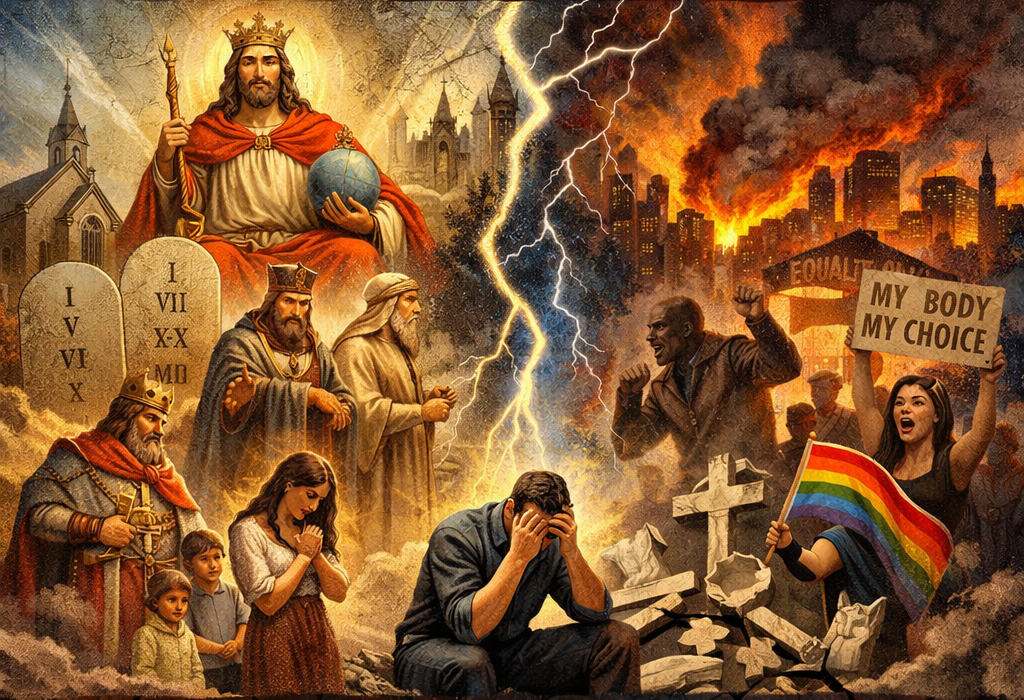
Out of the Shadows: Why Hiding Polygynous Families is Cowardice

Disclaimer:
I write this in 2025, with full awareness of the times that came before. While I personally believe that had our people remained steadfastly open – publicly, visibly, and without wavering, we would not face the hostility we do today, this article is in no way a condemnation of those who, for various reasons, chose to keep their polygynous families private. I recognize that in years past, the dangers were real: financial ruin, loss of freedom, political persecution, and social exile. It is possible that if I had lived in those same conditions, I might have done likewise.

But we are no longer in those times. The world has shifted, the battle lines are clear, and silence now serves only the enemies of truth. This article is written for the men of this generation, the ones who must choose whether to remain hidden or to live openly under the banner of God’s order.

Summary: For those who lack the endurance to read what men used to write before attention spans died, Click here the short version.

⚔️ Summary for the Slumbering

The article argues that hiding polygynous families out of fear or “wisdom” is no longer justifiable. It claims that secrecy dishonors God’s design, confuses children, fuels stigma, weakens legal and cultural defense, and surrenders the public narrative to hostile voices. Using biblical examples – Abraham, Jacob, and David, the author shows that righteous men’s households were public and honored, not concealed.

He contrasts this with the modern “trans” movement, which gained cultural dominance through bold visibility, suggesting that if a falsehood can advance by shameless openness, then truth should all the more be lived openly. The article concludes that living visibly as polygynous families is not pride but obedience, a way to testify that God’s order is good. Hidden households, it warns, dim their own light; courageous ones can reshape culture by example.

Introduction

For as long as I’ve been walking this path, I’ve noticed the same pattern among Christian men who live in polygyny: we stay in the shadows. Families are hidden. A second wife is introduced as a “friend, sister, aunt” or not introduced at all. Children are told to be careful how they describe their family. Conversations are guarded, coded, or full of nervous laughter. And when outsiders ask questions, we dodge, deflect, or change the subject.

We tell ourselves this is wisdom. “We’re just being careful.” “We don’t want to stir trouble.” But most of the time, if we’re honest, this isn’t wisdom. It’s fear.  And fear has consequences, not only for us, but for our wives, our children, our brethren, and the generations after us.

The Problem With Secrecy

When we hide, we make God’s design look like something shameful. Scripture is full of men whose households were public, visible, and blessed.

  • Abraham’s household was so vast and visible that kings took notice (Genesis 14:14–16).
    When Lot was captured, Abraham didn’t sneak around with a ragtag handful of hidden servants. He mobilized 318 trained men born in his house, his household was a military force in its own right. Kings and nations recognized Abraham’s family as a visible power on the earth. His wives, his children, his servants, his wealth, none of it was kept in the shadows. His household was so public, so undeniable, that it commanded respect even from rulers.
  • Jacob’s wives and children were not hidden, but named, counted, and honored as the foundation of Israel (Genesis 35:22–26).
    The inspired record doesn’t brush past Jacob’s marriages as an embarrassing footnote. His wives and concubines are named openly. His sons are listed, tribe by tribe, in detail. These women and their children weren’t treated as shameful or secret, they were honored as the very foundation of God’s covenant people. The nation of Israel was built on polygynous households, written in black and white for every generation to see.
  • David’s household was no secret – it was public enough that nations defined themselves by how they related to him and his family (2 Samuel 3–5).
    David’s wives and children weren’t tucked away in silence. His marriages shaped alliances. His sons were publicly acknowledged as princes. His household was central to Israel’s politics, identity, and even foreign relations. Nations measured their stance with David by how they treated his family. His household was not a hidden corner of his life, it was a public institution that testified to God’s favor and David’s strength as king.

Not one of these men treated their wives or children as if they were contraband to be smuggled around under cover. Their households were a testimony to God’s blessing, not something to be concealed. But us? We act like our families are scandals to be managed. We’ve trained our own children to feel like their home is something to whisper about. We’ve let the world define the narrative, and they are only too happy to call us cultists, predators, weird or strange.

And here’s the irony: when we complain about being misunderstood, stigmatized, or unprotected, we fail to see that our secrecy fuels the very problem. If we never show our lives as normal, why should anyone else believe they are?

Contrast: The Trans Example

Now let’s consider something even more jarring. The so-called “trans” movement. By every biblical, biological, and rational standard, it is bizarre. It is objectively abnormal. It’s rebellion against creation itself (Genesis 1:27). By all rights, it should have been dismissed as nonsense from day one.

And yet, look around. Less than 1% of the population has forced its way to the center of culture. Their flags fly on government buildings. Their ideology is taught in schools. Their pronouns are written into law. They are not just tolerated, they are celebrated.

How did they achieve this? By refusing to hide. They lived openly. They shouted their stories from the rooftops. They demanded recognition until visibility became normalization. If a lie that destructive can conquer culture by sheer boldness, then our timidity with God’s truth is laid bare. Our hiding is cowardice, plain and simple.

The Consequences of Our Hiding

The longer we hide, the more damage we do. Secrecy doesn’t just keep us safe—it actively undermines our families, our witness, and our future.

We Reinforce Stigma

The world takes its cues from us. If we act like our families are something to be hidden, whispered about, or apologized for, then we shouldn’t be surprised when others treat them the same way. Our behavior says, “This is shameful.” And the world is all too happy to agree. Christ Himself warned us, “Whoever is ashamed of me and of my words, of him will the Son of Man be ashamed when he comes in his glory” (Luke 9:26). When we shrink back in fear, we are teaching the culture, our churches, and even our enemies that we are embarrassed by God’s design. That stigma isn’t imposed on us, it’s confirmed by us.

We Confuse Our Children

Children are perceptive. They notice when Dad says one thing at home and another thing in public. They notice when Mom is treated as a “friend” in front of strangers but as a wife in the household. They notice when they’re told, “Don’t talk about our family at school” or “Be careful what you say about your moms.” What does that teach them? That their family is strange, wrong, or even sinful. That they should carry a burden of secrecy everywhere they go. Yet Scripture teaches: “Children are a heritage from the LORD, the fruit of the womb a reward” (Psalm 127:3). When we muzzle our children about their heritage, we train them to believe a lie, that their family is a mistake instead of a blessing. And long-term, that confusion breeds resentment and shame instead of pride and joy in God’s order.

We Lose the Narrative

Stories shape culture. And right now, the only stories the public hears about polygyny are tabloid scandals, TV dramas about “cults,” and horror stories twisted for entertainment. If we stay silent, those caricatures become the “truth” in people’s minds. Our absence from the conversation ensures that lies win by default. Instead of seeing strong households, fruitful marriages, and well-ordered children, the world only sees what Netflix and CNN decide to show them. Silence isn’t neutral, it’s surrender. And when we let our enemies write the story, we forfeit the chance to show the world that polygyny, lived biblically, produces stability, fruitfulness, and joy.

We Weaken Our Defense

Lawmakers don’t protect what they can’t see. Judges don’t feel pressure from people who never show up. Movements don’t change culture when they stay underground. If we remain invisible, we remain undefended. When hostile laws are written, there’s no visible constituency to resist. When false accusations are made, there are no public examples to counter them. In the eyes of the state and society, hidden families may as well not exist. And an invisible people is an undefended people. By hiding, we not only weaken our own defense, we practically guarantee that our children will face even harsher conditions in the future.

The Bottom Line

In short: secrecy backfires. It doesn’t shield our families, it strips them of dignity. It doesn’t protect our witness, it silences it. It doesn’t guard our future, it leaves us vulnerable. Every time we choose to live in the shadows, we are handing victory to the very forces we complain about. And until we step into the light, nothing will change.

A Call to Courage

This doesn’t mean we mimic the world’s parades or demand applause. Pride isn’t our model. Christ is. He told us, “You are the light of the world. A city set on a hill cannot be hidden. Nor do people light a lamp and put it under a basket, but on a stand, and it gives light to all in the house” (Matthew 5:14–15).

That’s the point: we are not meant to be invisible. Living openly is not arrogance, it is obedience. It’s letting your wives be known as wives, not “roommates.” It’s letting your children speak freely about their family. It’s allowing your household to stand as a visible testimony that God’s order is good.

A candle under a basket doesn’t light the room, no matter how brightly it burns. Its glow is smothered by the very thing meant to “protect” it. In the same way, a household hidden in fear can never shine as the testimony God intended it to be. We may convince ourselves that secrecy is keeping us safe, but in reality it’s snuffing out the witness of our marriages, our children, and our obedience. God didn’t design families to be hidden experiments; He designed them to be living parables of His order, cities on hills, lamps on stands, unmistakable in their brightness. To hide them is to waste the very light we were entrusted to carry.

From the Shadows to the Streets

The boldness of the trans movement exposes our cowardice. If less than 1% of the population can transform laws and norms through relentless visibility, what might a faithful remnant of godly households do if we simply lived without shame?

We face a choice. We can stay underground, complaining that we’re misunderstood, rejected, discriminated against and ignored. Or we can live faithfully in the open, letting our marriages, our children, and our households preach louder than our excuses.

If the world calls us strange, so be it, let it be because we have strong marriages, fruitful homes, and obedient children. Not because we acted like criminals for living out what Scripture teaches.

It’s time to stop whispering. It’s time to stop hiding. It’s time to be what we are: families living under God’s order, unashamed. Because if evil can thrive through shameless visibility, how much more could truth triumph through courageous obedience?

AI, Surveillance, and the Rise of the Beast System

How Modern Technology Wages War Against God, Order, Masculinity, and the Family

Summary: For those who lack the endurance to read what men used to write before attention spans died, Click here for the short version

⚔️ Summary for the Slumbering

This piece unmasks modern tech – AI, surveillance, social credit, CBDCs, and biometric IDs, as the wiring diagram of the Beast System. It is Babel rebuilt in silicon: a counterfeit omniscience that rewards compliance, punishes faith, and targets the last fortress of order, the patriarchal household. AI functions as a false “image” that speaks, censors, and judges; the panopticon conditions obedience; pornography, feminism, and transgenderism disarm men so families can be conquered.

This is not about gadgets; it’s about lordship: God or the Algorithm. Scripture’s pattern is clear, Nimrod’s centralization reborn as Digital Babel, and the command is the same: come out of her. The way out is not hiding but rebuilding order: fathers guarding the gates, mothers honoring their high calling, children trained in truth, and households refusing surveillance “conveniences” that buy and sell your soul. The tower will fall. Choose your footing now.

“And he causeth all, both small and great, rich and poor, free and bond, to receive a mark in their right hand, or in their foreheads: And that no man might buy or sell, save he that had the mark…”
—Revelation 13:16-17 (KJV)


INTRODUCTION: THE FALSE GODS OF MODERNITY

We stand at the threshold of a new religion, not one born of spirit, but of silicon. It does not kneel before the throne of God. It builds its own. It offers omniscience through cameras, omnipresence through networks, and omnipotence through algorithms. The Beast has risen, not from the sea, but from the server room.

Artificial Intelligence, global surveillance, social credit systems, and biometric tracking are no longer science fiction, they are the infrastructure of a new global altar. And what is sacrificed upon it? Not cattle or coin, but masculinity, the family, faith in God, and the very concept of divine order.

We must understand: this is not merely about technology. This is about authority. Who rules? God, or Google? Christ, or the Cloud? The patriarch, or the panopticon?


I. THE HISTORICAL ROOTS OF REBELLION AGAINST ORDER

From the very beginning, mankind has sought to overthrow divine order and build his own Babel.

In Genesis 11, the people said:

“Go to, let us build us a city and a tower, whose top may reach unto heaven; and let us make us a name…” (Gen. 11:4)

This is the prototype for all anti-God systems. It is not technological advancement that offends the Lord, it is autonomous rebellion. Man has ever longed to make a name for himself, independent of the name above all names.

The Enlightenment promised us reason without revelation. The French Revolution gave us liberty without the Lord. The Soviet Union gave us progress without piety. All of them failed, and yet the same spirit animates the modern technocratic movement. The serpent’s whisper is not new: “Ye shall be as gods.” (Gen. 3:5)

In the 20th century, this spirit manifested in Orwell’s Big Brother and Stalin’s NKVD. But now it is friendlier, cleaner, packaged in rainbow colors and pushed by smiling devices. The Beast no longer drags you to the gulag. It invites you to opt-in.


II. SURVEILLANCE: FROM WATCHTOWER TO DIGITAL PANOPTICON

In 1791, Jeremy Bentham proposed the Panopticon, a prison where the watched could never see the watcher. This, he said, would condition perfect obedience. Today, we live in a global panopticon. But now, we love our cage. We buy it. Subscribe to it. Install it ourselves.

The average citizen is tracked over 2,000 times per day online, according to a study by Surfshark (2022). Facial recognition cameras blanket city streets. Social media logs your preferences, location, politics, and theology. Every keystroke feeds Leviathan.

And what is Leviathan’s creed?

“There is no father but the State. There is no truth but the Algorithm. There is no love but the Machine.”

But contrast this to the design of the Lord:

“The eyes of the Lord are in every place, beholding the evil and the good.” —Proverbs 15:3

God watches as a righteous Judge, not a paranoid tyrant. His surveillance convicts the wicked and comforts the just. The surveillance state, however, punishes obedience to God and rewards submission to sin.

In China’s Social Credit System, a man who skips church is left alone, but a man who attends an underground house church may be blacklisted from public transport. In Canada, pastors are imprisoned for refusing to close church doors. In America, the “Disinformation Governance Board” nearly rose to federal prominence before being publicly “paused.” Make no mistake: the Beast has prototypes in every nation.


III. ARTIFICIAL INTELLIGENCE: A FALSE IMAGE OF GOD

AI is man’s attempt to mimic God’s intelligence without His righteousness. It is the pursuit of creation without the Creator.

AI tools can now write sermons, paint pictures of “Jesus,” and simulate human companionship. But these systems are not morally neutral. As Microsoft, Google, and OpenAI themselves have acknowledged, these models reflect the values of their programmers, who overwhelmingly support progressivism, transhumanism, and globalism.

Consider the chilling direction of AI-assisted parenting: Alexa raising your children, ChatGPT answering their moral questions, AI-generated influencers shaping their worldview. In other words: father and mother replaced by the godless machine.

And yet Scripture says:

“The fear of the Lord is the beginning of wisdom…” —Proverbs 9:10

AI offers knowledge without fear. Wisdom without repentance. It is a godless Golem, a talking mirror that always flatters and never convicts. It cannot lead you to righteousness. It can only mimic morality like a serpent imitating speech.

And soon it will judge:

  • AI already aids hiring processes, determining whose resumes are “qualified.”
  • AI surveillance is used in predictive policing.
  • AI censors theology and flags “harmful” speech online (usually meaning Biblical truth).

This is the Image of the Beast, not carved of stone, but rendered in code.


IV. THE DESTRUCTION OF MASCULINITY AND FAMILY THROUGH TECHNOCRACY

The family stands as the last resistance to the Beast System. Why? Because the father is the priest of the home, and the home is a microcosm of God’s kingdom.

The attack on masculinity is not accidental. It is strategic.

  • Masculinity is dangerous to tyranny because it leads, builds, protects, and rebels against evil.
  • Biblical masculinity fears God and provides for his household (1 Tim. 5:8).
  • It refuses to let AI raise its children, the State educate them, or society define them.

Therefore, the new regime must emasculate men.

Consider:

  • Pornography—a tool of pacification, funded and distributed by the very platforms now invested in AI.
  • Feminism—not about uplifting women, but unseating fathers, replacing them with government programs.
  • Transgenderism—the final mutilation of male identity, enforced by algorithmic propaganda.
  • Universal Basic Income—a gilded leash offered to the emasculated man, so he won’t fight back.

In this context, AI and surveillance are not innovations. They are enforcers. They ensure the lie is believed and the truth is punished.

And when the man is silenced, the family collapses. When the family collapses, God’s image on Earth is blurred. And when that happens, the Beast rises.


V. THE SCRIPTURAL WARNING: THE BEAST SYSTEM FORETOLD

Revelation does not give us technological specs, it gives us spiritual patterns.

“And I stood upon the sand of the sea, and saw a beast rise up out of the sea… and the dragon gave him his power…”
—Revelation 13:1-2

This Beast demands worship through deception, miracles, and systems of control. Its prophet points to the Image (v. 14), which speaks and causes those who won’t worship to be killed (v. 15).

Does AI now speak? Yes.

Does it punish those who resist? Yes.

Is commerce being restricted based on belief? Not fully, but the infrastructure is ready.

  • Central Bank Digital Currencies (CBDCs) can restrict purchases.
  • Vaccine passports already did.
  • Social credit is tested.
  • Biometric IDs are being integrated.

And all of it operates through networks of “intelligent” systems, guided not by conscience but by compliance.

Yet Daniel saw this beast and declared:

“But the judgment shall sit, and they shall take away his dominion, to consume and to destroy it unto the end.” —Daniel 7:26

There is hope, but only for those outside the Beast’s reach. And that means outside its control.


VI. ESCAPE THE SYSTEM: RETURN TO ORDER

The answer is not hiding in a cave. It is building something greater: families that fear God, fathers that take dominion, women who love their husbands and wear their veils without shame, and children raised in the truth.

To resist the Beast, one must reject his offer.

You will not be safe if you outsource your discernment to machines, your parenting to tablets, or your theology to YouTube shorts.

You must return to:

  • God’s Word — not AI summaries, but full KJV study.
  • God’s Order — male headship, female submission, and generational vision.
  • God’s Church — not the 501(c)(3) corporations, but true households of faith.

Only when men once again lead their homes with boldness will the Beast encounter resistance. Only when women once again honor their role as life-givers and helpmeets will the home be protected from algorithmic poison. Only when children are taught to fear God more than screens will the chain be broken.


VII. CHOOSE THIS DAY

“And if it seem evil unto you to serve the Lord, choose you this day whom ye will serve…”
—Joshua 24:15

There are only two systems:

  1. The Beast System — offering convenience, pleasure, and death.
  2. The Kingdom of God — offering truth, sacrifice, and eternal life.

You cannot flirt with the Beast and expect immunity. You cannot “leverage” the system that is designed to replace your Lord. It is a harlot that never satisfies, and a dragon that always devours.

The time has come for righteous men to take a stand, not just on Sunday, but every hour of every day. Watch what your home consumes. Guard your gates. Teach your children. Lead your wife. Cut the cords of the technocratic leash.

God is not mocked. His order will prevail. The Beast will fall.

But the question remains: Will you stand with the Lamb, or bow to the Machine?

VIII. DIGITAL BABEL AND THE RETURN TO NIMROD

“And they said, Go to, let us build us a city and a tower, whose top may reach unto heaven; and let us make us a name…”
—Genesis 11:4 (KJV)

The Tower of Babel was not merely an ancient construction project, it was the first recorded attempt at global unification under man’s authority, in rebellion against God’s command. After the Flood, God said, “Be fruitful, and multiply, and replenish the earth” (Gen. 9:1). But instead of spreading, the people clustered. Instead of submitting, they consolidated. Instead of bearing God’s name, they sought to make their own.

This spirit of rebellion, centralization without consecration, has returned in our day, not with brick and mortar, but with circuits and code.

A. Nimrod’s Spirit in the Modern Age

Genesis 10:8-10 tells us that Nimrod was “a mighty one in the earth,” and the founder of Babel, the very city where the great tower was raised. He was the first king to unite the post-Flood world in open defiance of God.

In Jewish tradition, Nimrod was a tyrant, a hunter not of animals, but of souls. A man who sought to bend nations under his rule, establishing a centralized, godless regime.

And so we ask: What is AI-powered global governance if not the return of Nimrod?

  • The new tower is digital.
  • The new language is code.
  • The new kingdom is virtual, but real in its power.
  • The new name they seek is not the LORD, but Data Sovereignty, Transhuman Unity, and Global Compliance.

Whether it’s the UN pushing biometric ID for all, the World Economic Forum salivating over “One World Governance,” or Silicon Valley evangelists declaring the age of AI divinity, the echo of Nimrod’s ambition is unmistakable.

“He opposeth and exalteth himself above all that is called God…”
—2 Thessalonians 2:4

Sound familiar?


B. The Collapse of Babel and God’s Judgment Against Centralization

God intervened at Babel not because mankind had the wrong tools, but because he had the wrong motive:

“…and now nothing will be restrained from them, which they have imagined to do.” (Gen. 11:6)

What does that sound like today?

  • CRISPR gene editing to make godless designer humans?
  • Neuralink devices aiming to bypass the soul and rewrite consciousness?
  • AI language models being trained to “correct” scripture?

Nothing restrained.

The LORD scattered them then. And He will again.

The punishment at Babel was not just linguistic, it was civilizational. God disrupted their ability to coordinate rebellion. But now, with real-time translation, 5G infrastructure, and a digitized economy, the reversal of Babel is almost complete, man is uniting again, against heaven.

But God is not mocked.


C. The New Tower: Global AI Governance

To be clear. The modern Digital Babel isn’t a singular tower in one city. It’s a network of:

  • Surveillance satellites in orbit
  • Global payment rails controlled by central banks
  • Voice-to-text data analysis from every smartphone
  • Algorithms determining what is “truthful,” “safe,” and “authorized”
  • Digital IDs being adopted in over 100 countries

The infrastructure for global technocratic judgment is being erected daily, and the Watchmen of God sleep.

Make no mistake: the “Beast” needs a tower, and the digital system is it.


D. The Role of Masculine Authority in Resisting Digital Babel

Who scattered Babel? God.

Who is God’s image on Earth? The patriarch.

The household under masculine authority is the last decentralized institution that cannot be surveilled, reprogrammed, or digitized. That is why it is under assault.

Just as Babel required a massing of peoples and a flattening of identities, the modern system seeks to:

  • Erase gender distinctions
  • Dissolve familial hierarchy
  • Destroy language with gender-neutral gibberish
  • Replace local governance with international technocrats

A man who rules his house under God is the last roadblock to global technocracy. A family loyal to Christ rather than consumer culture is an act of civil disobedience.


E. God’s Endgame: Judgment Upon the Second Babel

Revelation 18 shows the final destruction of the Mystery Babylon, a spiritual continuation of Babel. Her sins reach unto heaven, her fornications corrupt the earth, and her luxuries blind kings and merchants alike.

“Come out of her, my people, that ye be not partakers of her sins…”
—Revelation 18:4

You cannot reform Babel. You must exit it.

That means:

  • Canceling allegiance to digital idols
  • Refusing surveillance “conveniences”
  • Building alternative economies
  • Submitting only to the Head, Christ, and under Him, man

Just as Abraham left Ur of the Chaldees, a city built under Nimrod’s system, so too must the faithful today come out of Babylon, both spiritually and structurally.


F. Conclusion: The Tower Will Fall – But Will You?

In the end, the digital tower will collapse like its ancient predecessor. Its builders will be scattered, its code made corrupt, and its high priests thrown down.

But the question is not what happens to Babel. The question is: where will you be standing when it falls?

“And whosoever shall fall on this stone shall be broken: but on whomsoever it shall fall, it will grind him to powder.”
—Matthew 21:44

The Lord Jesus is that stone. Babel is the tower. Choose your footing wisely.

Polygyny in the Catholic Church: The Hidden Structure Behind the Veil

Polygyny is not a sin. It is not an aberration. It is not a deviation from divine intent, it is, in fact, the foundation of God’s revealed order.

While modern Catholicism preaches monogamy as the gold standard of marriage, the very structure of its ecclesiastical and spiritual life remains deeply and undeniably polygynous. It is not merely a relic of an ancient past. It is alive, operational, and affirmed in both doctrine and practice, though cloaked in symbolic language and sanitized metaphors to appease the fragile monogamist moderns who choke at the thought of hierarchy and headship.

The truth? God is polygynous. His covenants are polygynous. His kingdom is polygynous. And the Catholic Church, whether it wants to admit it or not, remains a shadow of that truth even as it publicly denounces the very structures it secretly preserves.

Let us tear the veil and show it for what it is.


I. God is Polygynous

Before anything else, let’s be clear: God is not confused. He did not spend 4,000 years allowing His chosen men to live polygynously only to change His mind once Rome got nervous about political appearances. He does not contradict Himself. He is the same yesterday, today, and forever (Hebrews 13:8). The covenants He makes, the structures He builds, and the metaphors He uses are not accidental, they are instructional.

Throughout scripture, God identifies Himself as a husband, not to one woman, but to many. Israel is His bride (Jeremiah 3:14). Yet so is Judah. And later, the Gentiles are grafted in, becoming part of the same covenantal household (Romans 11:17). This is not a metaphor for egalitarian fellowship, it is a divine marriage structure with multiple brides.

“Return, O backsliding children, saith the Lord; for I am married unto you.” — Jeremiah 3:14

God states clearly: “I am married unto you”, not to one individual, but to the nation, the collective, the covenant people. Later, through Hosea, He illustrates His relationship with the northern kingdom (Israel) as a harlot wife, contrasting it with the relatively more faithful southern kingdom (Judah). These are distinct brides, with different relationships to the same Husband.

This is not poetic flair, it is doctrinal reality. God doesn’t just tolerate polygyny; He models it in every time period, and in the very covenant that birthed the nations of Israel.


II. Patriarchy and Polygyny Go Hand in Hand

The Bible is not subtle about this. Every time God ordains a structure, He does so through patriarchy, and patriarchy always allows, and often assumes or even presumes, polygyny. Abraham, Jacob, Moses, David, Solomon, all of them were polygynous. And not only are they not rebuked, they are praised and favored. God gives David multiple wives and tells him explicitly that He would have given more:

“…and if that had been too little, I would moreover have given unto thee such and such things.” — 2 Samuel 12:8

It was not David’s multiple wives that drew God’s wrath, it was the theft and murder committed in adultery that violated covenant. The sin was not quantity; it was covetousness and bloodshed.

Likewise, Jacob, Israel himself, fathered the twelve tribes through four women: Leah, Rachel, Bilhah, and Zilpah. The foundation of God’s covenant people is a polygynous family. Let that sink in. The very structure of the Kingdom began with one man and four covenant-bound women, (two of the concubines) all bearing children under his name.

Even Moses, the lawgiver, took a second wife, an Ethiopian woman (Numbers 12:1). And when Miriam and Aaron murmured against him for it, God struck Miriam with leprosy. The sin was not the second wife. It was the rebellion against God’s appointed man.


III. The Two Kingdoms as Co-Wives

After the death of Solomon, the Kingdom of Israel split into two distinct entities: the northern kingdom (Israel) and the southern kingdom (Judah). Yet God continues to refer to both as His brides. In Ezekiel 23, He even gives them names, Oholah (Samaria) and Oholibah (Jerusalem) then describes their behavior in explicitly marital terms.

“Son of man, there were two women, the daughters of one mother… they committed whoredoms in Egypt… and they were defiled.” — Ezekiel 23:2-3

This is not incidental. It is polygyny by divine metaphor. Two brides, one Husband. The Lord disciplines, judges, restores, and makes covenant with them individually, yet they are both bound to Him in marriage covenant.


IV. Christ and the Church: One Husband, Many Brides

The New Testament does not erase this structure. It expands it.

Christ is called the Bridegroom, and the Church His Bride (Ephesians 5:25-32). But the word “Church” here does not refer to one individual woman, it refers to the entire body of believers across space and time. Multiple women across generations, nations, languages, and houses all married to one Man.

Paul reinforces this in his epistles. He calls local congregations churches, plural, and yet refers to all of them collectively as the one Bride of Christ. This is not monogamy. This is polygyny with unity of headship.

And it is codified in Catholic ecclesiology.


V. Nuns: Brides of Christ and a Silent Witness to Polygyny

Here is where the modern Catholic monogamist must squirm: Catholic nuns, by their own vows and theology, are called “Brides of Christ.”

Not symbolic daughters. Not mystic friends. Brides. They are veiled. They wear habits resembling wedding dresses. They take vows of fidelity to Christ alone, to live as His spiritual spouses.

And yet, Christ has thousands of such brides.

This is not metaphorical polygyny, it is functional, institutional polygyny. A single divine Husband with a multitude of consecrated women bound to Him. Even in their denial of earthly polygyny, the Church embraces its spiritual form and sanctifies it.

Ask yourself: if one man on earth claimed that 500 women were all his brides, what would they call him?

And yet, that is what the Catholic Church declares about Christ.


VI. The Male Hierarchy and the Feminine Collective

The entire hierarchical structure of the Church mimics a polygynous household. At the top is a single Father. Below Him, ordained sons. Beneath them, a collective body of submissive, feminized congregations and communities following in obedience.

This is not an accident, it is the divine household pattern. In the spiritual realm, Christ as Husband has multiple subordinate wives: the nuns, the churches, the souls consecrated to Him. In the physical realm, the priests act as stewards of this household, managing the affairs of the feminine collective under one Head.

There is no monogamous symmetry here. There is order. Rank. Multiplicity of submission to a singular authority.

And this structure mirrors the Biblical household: one man, multiple women, children born under rule, and peace enforced by hierarchy.


VII. Why Rome Rejected Earthly Polygyny

So why the public denial? Why did Rome, the eternal city that once honored Jupiter and ran polytheistic orgies, suddenly become puritanical about men having more than one wife?

Politics.

As the Church gained temporal power, it sought legitimacy from the Roman legal tradition, which favored monogamy as a symbol of Roman order and discipline. The empire needed tidy family units for inheritance, taxation, and governance. Polygyny was a threat to legal uniformity and property management, not to morality.

And so, under the guise of holiness, the Church gradually enforced monogamy, not because scripture required it, but because the state demanded it.

Consider that the Eastern Churches, which were not as tightly entangled with Roman legalism, allowed and still tolerate multiple wives under certain conditions. Even today, Eastern Orthodoxy permits remarriage after widowhood or divorce, understanding that a man’s bond to multiple women, over time or concurrently, does not violate God’s covenantal structure.


VIII. Canon Law and the Silent Admission

Interestingly, the Catholic Church never fully condemned polygyny in its canon law. What it did was prohibit simultaneous earthly marriages for clergy and laity alike, again, largely for administrative and political reasons. But the silence in scripture remains loud.

There is no verse in either testament that says, “Thou shalt not have more than one wife.” Not one. In fact, the opposite exists:

“If he take him another wife; her food, her raiment, and her duty of marriage, shall he not diminish.” — Exodus 21:10

God provides regulations for how to justly treat multiple wives, not prohibitions against having them.

The requirement for a bishop or deacon to be “the husband of one wife” (1 Timothy 3:2) is not a universal command, it is a qualification for a specific role for practical reasons (some interpretations even show it is not a prohibition but simply a requirement to be married in general). The same logic applies when Paul urges men to remain single “if possible”, a practical counsel, not a moral absolute and for a specific purpose.


IX. The Hypocrisy of Denying What Is Practiced

The modern Church now finds itself in an absurd position. It affirms spiritual polygyny, honors historical polygynists, accepts metaphorical multiple marriages, trains men to shepherd spiritual harems, and then turns around and tells laymen that one wife is the limit of holiness.

It is hypocrisy. Worse, it is cowardice dressed as theology.

If Christ can have millions of brides, and if every nun can be a bride of Christ, and if Israel and Judah can both be married to the Lord, and if David and Jacob can be praised as righteous men with multiple wives, then by what standard, what actual Biblical standard, does the Church forbid a man from having more than one wife?

The truth: it has none.


X. Restoration and the Future

The restoration of God’s order will not come by appeasing the Roman state, nor by bowing to Victorian sensibilities. It will come through men who reclaim the order God laid down from the beginning: one man, multiple women, one house under rule.

Polygyny is not about lust. It is not about conquest. It is about covenant. It is about building. It is about fathering many and covering the broken. In a world of broken women, broken homes, and broken sons, righteous polygyny offers a way forward. One righteous man, anchoring multiple households, restoring what was scattered. This is not sin, but sanctification.

The Church will either rediscover this, or it will continue its slide into sterile irrelevance. It will either align with the God of Abraham, or continue pretending the God of monogamy exists, though He never revealed Himself as such.


Conclusion: The Church Has Always Been a Polygynous Household

The Catholic Church stands today on the shoulders of polygynists. It mimics their structure, borrows their metaphors, clothes its spiritual brides in white, and calls Christ the eternal Husband of many. It dares not admit it, but it lives polygyny every day.

Let the men with eyes see, and the women with ears submit.

Polygyny is not a relic. It is not rebellion. It is the order of Heaven. And the Church, wittingly or not, continues to walk in its shadow.

It is time we bring it back into the light.

Let God’s Great Order be restored!

The Unbroken Word: Defending the King James Bible as God’s Preserved Scripture

Section I: The Corruption of Modern Bible Versions

In a world rapidly falling into apostasy, confusion, and rebellion, one might ask, what has changed? Why has the once solid foundation of Christian civilization crumbled into relativism, compromise, and spiritual powerlessness? The answer lies, in part, at the very root of Christian life: the Bible. The authority of the Word of God has been subverted. And worse yet, the words of God have been tampered with, diluted, twisted, and counterfeited.

The modern “Bible version” industry is nothing short of spiritual fraud; a multibillion-dollar empire built on deceit, ecumenism, gender neutrality, and humanist philosophy. Where once Christians stood unified upon one standard of truth, the majestic, fire-forged King James Bible, today there exists a bloated catalogue of corruptions: NIV, ESV, NLT, NASB, CSB, the “Message,” and more. These perversions do not merely update the language. They alter doctrine. They change meanings. They delete verses. They remove the deity of Christ. They undermine the Trinity. They attack God’s authority.

A Different Spirit: The Root of the Modern Versions

The history of these modern versions is neither sacred nor pure. Most trace their textual ancestry to the critical Greek texts of Westcott and Hort, 19th-century Anglican scholars who openly denied Biblical inerrancy and held to heretical views. Westcott questioned the bodily resurrection of Christ. Hort denied eternal punishment. These men despised the Textus Receptus, the traditional Greek text underlying the KJV, and instead exalted the minority Alexandrian manuscripts, which were found discarded in trash heaps and were heavily influenced by Gnostic thought.

These Alexandrian texts (especially Codex Vaticanus and Codex Sinaiticus) lie at the heart of every modern version, including the NIV, ESV, and NASB. Their textual lineage is one of corruption, deletion, and doctrinal compromise. Compared to the Textus Receptus, they omit thousands of words, entire verses, and key theological statements. Consider just a few examples:

  • Acts 8:37, where the Ethiopian eunuch confesses Christ before baptism, is completely missing in most modern versions. Why? Because modernists despise the doctrine of faith preceding baptism.
  • Matthew 18:11, “For the Son of man is come to save that which was lost,” is stripped from modern versions. Why? Because salvation, sin, and Christ’s mission are offensive to the modern mind.
  • Colossians 1:14 changes “through His blood” to simply “in whom we have redemption.” The blood of Christ, the very heart of the Gospel, is removed.

These are not minor translation choices. These are deliberate theological assassinations. And worse yet, they present themselves as “accurate,” “scholarly,” or “easy to read.” But Satan, the serpent, is subtle. His lies always sound smooth and reasonable to the undiscerning.

The Fruit Test: What Do the Versions Produce?

Christ said, “Ye shall know them by their fruits.” (Matthew 7:16). The King James Bible gave us the Reformation, the Puritans, the Pilgrims and the American Republic. It gave us a literate society, sound doctrine, powerful preaching, and robust family-centered religion. The fruit of the KJV is undeniable: repentance, order, patriarchy, dominion, revival!

Now look at the fruit of modern versions. What has the NIV produced? Feminism in the pulpit. Youth groups built on games and pizza instead of Scripture. Churches that can’t even define “sin.” Preachers afraid to say “hell.” Homosexual bishops. Genderless pronouns for God. “Christian” denominations debating whether Jesus is the only way to Heaven.

Many of these versions are owned and published by secular corporations, including Rupert Murdoch’s News Corp (Zondervan, which publishes the NIV). Copyright is leveraged to maintain financial control. Updates are pushed to sell new editions. It’s not a holy endeavor, it’s a business.

The KJV is in the public domain. No one profits from it. It stands alone, untethered from the commercial shackles of publishing houses. That alone should cause the righteous man to pause and consider: Whose Word am I reading?

Spiritual Weakness Through Doctrinal Dilution

Many will say, “But the new versions make the Bible easier to read.” The problem is not the vocabulary. The problem is spiritual discernment. The problem is the heart. The KJV uses noble, elevated language that sanctifies the text. It is not street slang, it is sacred tongue. The challenge of its cadence draws the reader upward, not downward. Children once memorized it with ease. Men once quoted it like breath.

But modern Christians are spiritually lazy, intellectually dull, and doctrinally malnourished, fed a steady diet of watered-down, neutered text stripped of power and majesty. The ESV and NIV do not rebuke sin with the force of the KJV. They do not exalt Christ with the same glory. They do not ring in the soul with the thunder of God.

The degradation of our society, the effeminization of the Church, and the collapse of family order have all accelerated in tandem with the abandonment of the King James Bible. Coincidence? No. Causation.

Section II: The Divine Preservation of the King James Bible

If the first section exposed the corruption of modern versions, this section must now affirm with full conviction the divinely appointed preservation and authority of the King James Bible. This is no mere preference of literary style, nor a nostalgic appeal to tradition. It is a declaration of faith, faith in the God who said:

“The words of the Lord are pure words: as silver tried in a furnace of earth, purified seven times.
Thou shalt keep them, O Lord, thou shalt preserve them from this generation for ever.”
—Psalm 12:6–7 (KJV)

These are not metaphors or vague sentiments. These are promises. And if God cannot keep His Word, then He is not God.

The Doctrine of Preservation

God does not merely inspire His Word and then leave it to decay. From the beginning, the Lord has promised to preserve His Word perfectly; in every generation (Psalm 119:89, Matthew 24:35). This means that there must exist a perfectly preserved Word of God today. Not a theoretical manuscript locked in a cave, not a digital hodgepodge of variants compiled by scholars, but a real, tangible Bible that is the Word of God.

The King James Bible alone fulfills this promise for the English-speaking world. It is not merely a good translation, it is the culmination of divine preservation.

The manuscripts behind the King James Version, the Hebrew Masoretic Text and the Greek Textus Receptus, are the texts preserved and used by the believing Church throughout history. These are not the rare, corrupted Alexandrian texts that underlie modern versions, but the universally received and trusted Scriptures used by God’s people for centuries.

“Seek ye out of the book of the Lord, and read: no one of these shall fail…” —Isaiah 34:16 (KJV)

God never once hinted that His Word would become a scholarly puzzle to be pieced together by unbelieving academics with agendas. He preserved it among the faithful. The King James Bible stands not just as a reliable translation, but as the providential fruit of divine oversight.

The Translators: God’s Appointed Men

The translation of the King James Bible was not a hasty work of ambition. It was the most extensive, prayerful, and scholarly translation project in human history. Commissioned by King James I of England in 1604, it brought together 54 of the most gifted scholars and theologians of the day; men steeped in Hebrew, Greek, Latin, and the ancient tongues, but also men of faith, reverence, and fear of the Lord.

These were not profit-driven publishers or seminary liberals. These were godly men who labored in teams, cross-checking and refining every word. They prayed, fasted, and treated the work not as intellectual recreation, but as holy burden. The translators themselves testified that their work was not new revelation, but the purification of what had been handed down faithfully from the Church fathers and earlier translations (Tyndale, Geneva, etc.), now unified in a single, majestic Bible.

It is not coincidence that this took place at the height of English expression, the same time Shakespeare’s pen was at work. The English language itself had matured by divine design, poised to carry God’s Word to the world. The King James Bible would become the seed of spiritual revolution, carried across oceans and continents, giving rise to the greatest missionary expansion in Church history.

The Language: Elevated, Exact, Eternal

Critics say the language of the KJV is “archaic.” What they mean is that it demands reverence. It does not sound like the world. Thee, thou, ye, thy; these are not random old words. They serve precise grammatical functions. “Thou” is singular; “ye” is plural. Modern English has lost this distinction, creating confusion in meaning. The KJV preserves clarity and depth.

Moreover, the poetic cadence, parallelism, and word choices of the KJV are unmatched. This is not accidental. It is the mark of divine beauty. The KJV speaks with authority, thunder, and holiness. Even its enemies admit its literary glory. But its glory is not mere style. It is the voice of God, magnified.

“He sent his word, and healed them, and delivered them from their destructions.” —Psalm 107:20

No other version speaks like this. No other version pierces like this. The KJV alone has shaped nations, converted sinners, and discipled empires.

The Fruit: Reformation, Revival, and Dominion

By their fruits ye shall know them. What did the King James Bible produce? It produced fire.

  • The Great Awakenings of the 18th and 19th centuries were fueled by the KJV. Whitfield, Wesley, Spurgeon, Finney, all thundered from the pages of the King James.
  • The American Revolution was undergirded by the sermons and principles drawn from the KJV.
  • The homeschool movement, the patriarchy revival, the restoration of Biblical masculinity and family order, all find their foundation and fuel in the uncompromising words of the KJV.

When families read the KJV aloud, when fathers teach from it, when pastors preach it without apology, the result is order, boldness, wisdom, and strength. It births no feminized Church. It breeds no woke seminaries. It tolerates no compromise.

It is the Sword of the Lord!

Section III: The Call to Return to the Standard

The time for double-mindedness is over. The age of compromise has yielded nothing but confusion, rebellion, and effeminacy in the Church and the home. If the foundation be destroyed, what can the righteous do? (Psalm 11:3) The righteous must return to the standard; to the preserved Word of God in the English language, the King James Bible.

This is not a matter of preference, convenience, or tradition. It is a matter of spiritual war. The battle lines have been drawn. The question is not simply, “Which version do you use?” The question is this: Do you believe God has preserved His Word perfectly for His people, or do you not?

The King James Bible: The Final Authority

Every revival of truth, order, and dominion begins with the right standard. The man of God cannot rule his house in righteousness if he does not have a trustworthy sword. The woman cannot raise children unto the Lord if her Bible changes meanings with every printing. The Church cannot speak prophetically to the world if it reads from the same lukewarm, diluted texts that the world tolerates.

The King James Bible is not merely another translation, it is the final authority. It is the English Bible. All others are counterfeits, distractions, and deceptions.

“Sanctify them through thy truth: thy word is truth.” —John 17:17

How can one be sanctified by truth if the truth has been altered? How can one believe in absolute truth if the very words of God are negotiable, footnoted, and fluid?

Modern versions do not produce holiness. They produce confusion. They replace certainty with doubt, absolutes with ambiguity, and they invite compromise. They say “oldest and best manuscripts” but cannot agree on what God actually said. They say “a better rendering might be,” but never say “Thus saith the Lord.”

Restoring the King James Bible in the Household

If The Great Order is to be built, it must be built upon a rock. And that rock must be the unchanging Word of God.

  • The father must teach and correct from the King James Bible as the supreme law in his household.
  • The mother must disciple her children in its words, not “easy-to-read” paraphrases but God-breathed fire.
  • Children must memorize, recite, and read the King James aloud until its cadences shape their minds and hearts.
  • Sabbath readings, morning devotions, disciplinary instruction, and courtship training must all proceed from the KJV alone.

This is not optional. This is covenantal obedience. God’s covenant people are marked by reverence for His Word:

“It is written, Man shall not live by bread alone, but by every word that proceedeth out of the mouth of God.” —Matthew 4:4

“Every word” means just that, every word. Not some words. Not approximate meanings. Not evolving interpretations. The KJV alone provides the entire preserved counsel of God in English.

Churches Must Repent

Churches that claim to be “Bible-believing” while using multiple versions are deceived. The flock is scattered. There is no unity of doctrine when the people cannot agree on what God said. Scripture reading in the service becomes a buffet. Preaching becomes comparison of versions. Pastors become editors, not heralds.

It is time for pulpits to be purged. The ESV, NIV, NLT, CSB, NASB; all must be thrown out, or better yet; burned. They are not the Word of God. They are polluted fountains. The only cure for doctrinal anemia, cowardice, and worldly compromise is the return of one Bible for one people: the King James.

Churches must burn their “Message” Bibles. They must repent of the lie that “any version is fine.” No, not all versions are fine. Only one was divinely orchestrated in perfect timing, language, scholarship, and spiritual authority. Only one bears the unmistakable mark of God’s preservation: the King James Bible.

“Thus saith the Lord, Stand ye in the ways, and see, and ask for the old paths, where is the good way, and walk therein, and ye shall find rest for your souls…” —Jeremiah 6:16

But the verse ends tragically: “But they said, We will not walk therein.” This is the modern Church’s attitude toward the King James Bible. They reject the old path. They want ease, not precision. Comfort, not conviction. Entertainment, not truth.

But let the faithful not be among them. Let the households of The Great Order rise up and say: We will walk therein.

The Judgment Against Those Who Alter His Word

To tamper with the Word of God is to call down judgment. Revelation 22:18-19 contains a solemn warning:

“If any man shall add unto these things, God shall add unto him the plagues… And if any man shall take away… God shall take away his part out of the book of life…”

These are not idle threats. Those who promote, publish, or profit from the corrupted versions of Scripture will answer to the Judge. Whether it is a seminarian who promotes the ESV or a woman’s group that reads the NIV, if they do not repent and return to the true Word, they are participating in the great apostasy.

Churches today are falling away, not only from sound doctrine but from sound Scripture. They quote corrupted verses. They omit entire passages. They redefine sin. They strip Christ of His deity. The KJV alone has resisted this tide.

And so we raise the standard again.

Lift Up the Banner: A Call to All Men

Now is the hour to rebuild. Now is the hour for patriarchs, fathers, pastors, and Christian heads of household to return to the divine Word that forged the Reformation, built Christian civilization, and sustained empires.

Let there be no double-mindedness. No lukewarm neutrality. This is a war of books, a war of words, and ultimately, a war for the soul of man.

Let the KJV be restored as the only Bible in the Christian home. Let it be memorized, read aloud, wept over, and preached. Let it shape the law of the household, the courtship of sons and daughters, the prayers of the family, and the praises of the saints.

Let it govern us.

“The entrance of thy words giveth light; it giveth understanding unto the simple.” —Psalm 119:130

Let the Great Order rise again, not on shifting sand, but upon the rock of the unchanging, majestic, divine Word of the King.

The King James Bible.

This is the Great Order!