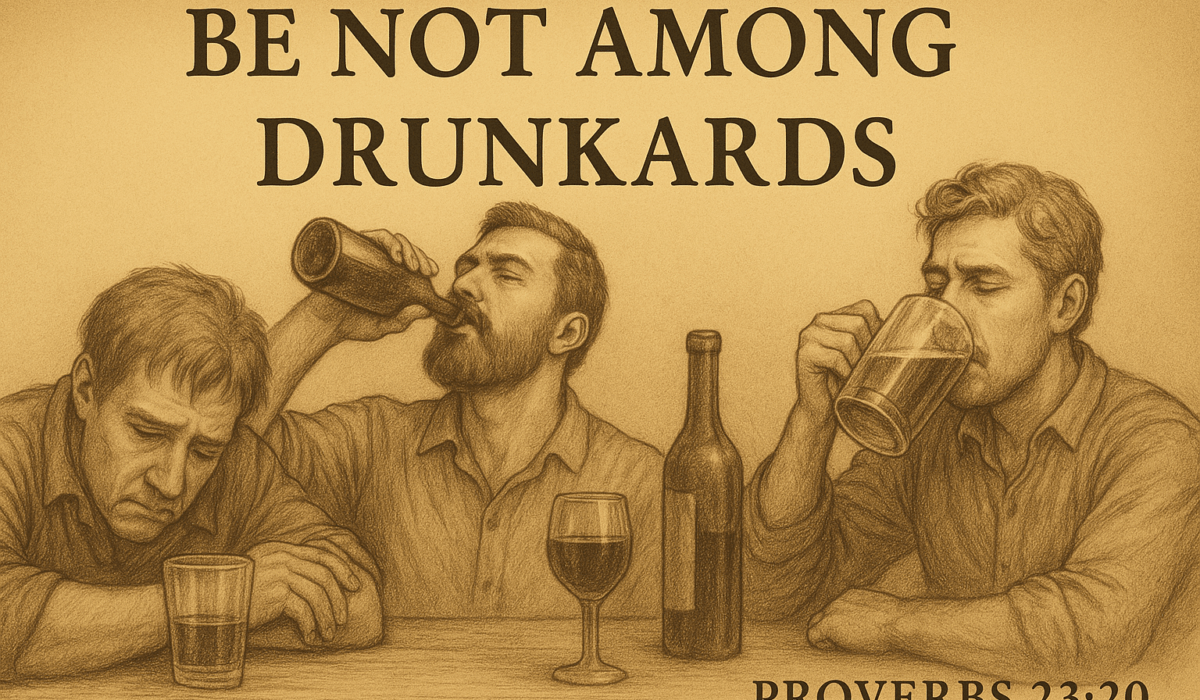
“Wine is a mocker, strong drink is raging: and whosoever is deceived thereby is not wise.”
— Proverbs 20:1 (KJV)
Introduction: A Culture Drenched in Drink
In a world spiraling into chaos, the bottle has become both an idol and escape. Alcohol is celebrated, glamorized, ritualized, and normalized, even in the church. It is served at weddings and funerals, praised in entertainment, and increasingly baptized into Christian liberty. But beneath the golden glow of beer commercials and the polished image of “Christian craft brewery” movements lies a bitter truth: alcohol is a destroyer of men, families, and nations.
This is not a call for legalism. It is a call for order. A call for fathers and sons to assess the times, measure the weight of Scripture, and count the cost of indulgence. A call to discern between liberty and license, between celebration and seduction, between sacred wine and satanic poison.
This post will explore alcohol from every side: Biblical commands, historical consequences, scientific data, cultural patterns, and practical applications for families walking in the Great Order.
I. Wine in Scripture: Blessing or Curse?
Scripture does not speak of alcohol in simplistic, one-dimensional terms. It is portrayed both as a blessing and a potential curse. The key lies not in the drink itself, but in the context, the heart, and the culture surrounding its use.
Wine as Blessing
In Psalm 104:14–15, God is praised for creating wine:
“He causeth the grass to grow for the cattle… and wine that maketh glad the heart of man.”
Wine was part of the sacrificial system (Exodus 29:40), used in covenant feasts, and offered by Melchizedek to Abraham (Genesis 14:18). Paul even tells Timothy to use a little wine for his stomach (1 Timothy 5:23).
Clearly, the Bible does not teach a universal prohibition.
Wine as Curse
Yet warnings against alcohol abound:
- Noah’s nakedness and shame (Genesis 9:21)
- Lot’s drunken incest (Genesis 19:33–35)
- Nadab and Abihu’s death while under the influence (Leviticus 10:1–10)
- Kings warned not to drink lest they pervert justice (Proverbs 31:4–5)
- Priests forbidden to drink while ministering (Leviticus 10:9)
- Drunkards excluded from the Kingdom (1 Corinthians 6:10)
Wine is never neutral. It is either a tool of dominion or a snare of death.
II. The Dangers of Drunkenness: Scripture’s Clear Condemnation
Scripture draws a hard line at drunkenness. It is a sin. Period.
“And be not drunk with wine, wherein is excess; but be filled with the Spirit.”
— Ephesians 5:18
Drunkenness dulls the mind, weakens the spirit, emboldens sin, and opens the door to demonic influence. Proverbs 23:29–35 offers a vivid warning:
“Who hath woe? who hath sorrow? who hath contentions?… They that tarry long at the wine… thine eyes shall behold strange women, and thine heart shall utter perverse things.”
Alcohol is no innocent substance. It is an accelerant for foolishness, adultery, violence, and despair.
Drunkenness and Judgment
In Isaiah 5:11, the prophet warns:
“Woe unto them that rise up early in the morning, that they may follow strong drink… the harp, and the viol, the tabret, and pipe, and wine, are in their feasts: but they regard not the work of the Lord.”
God brings judgment on nations that drown in drink. It is no coincidence that Babylon, he mother of harlots, is described in Revelation as holding a golden cup full of abominations and fornication (Revelation 17:4).
Drunkenness is not just personal sin; it is a national indicator of decay.
III. Historical Testimony: Alcohol and the Collapse of Men and Nations
From Rome to Russia, from America’s frontier towns to her college campuses, alcohol has been the great destabilizer of civilizations.
Rome’s Fall and Public Decay
As Rome degenerated from a Republic into an Empire, its people abandoned the virtues of discipline and moderation. Feasting and drunkenness became common, leading to moral collapse and political ruin.
Historian Edward Gibbon wrote in The Decline and Fall of the Roman Empire:
“Intemperance was universally indulged… every rank of citizens was infected.”
The Gin Epidemic in England
In 18th-century England, gin became the drug of the poor. Known as the “gin craze,” it devastated families. Parliament passed multiple laws trying to stem the social ruin, infant mortality, crime, poverty, and early death soared.
American Prohibition and Revival Movements
While Prohibition is often mocked today, it was birthed by Christian movements seeking to rescue families from destruction. The early 20th-century revivalists rightly identified alcohol as the fuel of domestic violence, abandonment, and moral failure.
They may have overreached legislatively, but their vision was righteous: a sober, God-fearing people.
IV. Science and Statistics: What the Studies Show
Today’s science confirms what Scripture and history have long known.
Alcohol and Health
- Cancer Risk: The CDC links alcohol to breast, liver, colorectal, and esophageal cancers. No level of alcohol has been deemed “safe” by the WHO.
- Brain Damage: Alcohol shrinks brain tissue, damages the prefrontal cortex, and impairs memory and judgment, especially in youth.
- Heart Disease: While moderate drinking was once thought heart-healthy, newer studies show that benefits were overstated and outweighed by cancer risk.
Alcohol and Society
- Crime: Over 40% of violent crimes involve alcohol. Domestic abuse skyrockets with drinking.
- Workplace Damage: The U.S. economy loses an estimated $249 billion annually from alcohol-related productivity loss.
- Family Destruction: Children of alcoholics are at greater risk for depression, abuse, suicide, and repeating the cycle.
When Scripture says “wine is a mocker,” it isn’t speaking metaphorically. It speaks with generational truth.
V. Christian Liberty and the Deception of “Moderation”
“All things are lawful unto me, but all things are not expedient…”
— 1 Corinthians 6:12 (KJV)
Modern Christians often hide their indulgence behind the banner of liberty. “We’re under grace,” they say. “Jesus drank wine.” But this line of reasoning, when misapplied, is not liberty, it’s license. Worse, it’s often a cloak for addiction, worldliness, or cowardice.
While Scripture permits lawful use of alcohol, it never commands it. You are not more righteous for abstaining, but you are not wise for pretending alcohol is risk-free. Wisdom discerns between what is allowed and what builds.
Christ’s Use of Wine: Not a Justification for Modern Drunkenness
Jesus turned water into wine (John 2), but He did not use it to entertain or numb His followers. The context was covenant celebration, not escapism. Jewish wine was often diluted 3:1 with water. The idea that Jesus’ use of wine validates modern hard liquor, binge drinking, or craft beer culture is theological sleight of hand.
Just as Christ touched lepers without becoming unclean, He used wine without being consumed by it. His example teaches restraint and holiness, not indulgence.
VI. Alcohol and Masculinity: Destroying the Patriarch’s Strength
“It is not for kings, O Lemuel… to drink wine; nor for princes strong drink.”
— Proverbs 31:4 (KJV)
Alcohol weakens a man’s judgment, energy, discipline, and self-control. It dulls the blade of leadership. It emasculates. A father under the influence is a danger to his children. A husband who drinks is a man whose house is vulnerable to collapse.
Men are commanded to be watchful, sober, vigilant. (1 Peter 5:8). To guard the gate. To lead with clarity. Alcohol undermines every one of these roles.
Drunkenness is not strength, it is surrender. It is trading your priestly garments for the rags of a fool.
A man who cannot say no to a drink will not be able to say no to a thousand other temptations. If you cannot master the bottle, you cannot master your home, your flesh, or your calling.
The Culture of “Masculine” Drinking
In popular media and frat-boy culture, drinking is portrayed as rugged and masculine. But the Bible paints a different picture. The drunkard is not a warrior, he is a mocker. He is not respected, he is avoided. Scripture calls him a “fool.”
True masculinity is self-governed, strong in spirit, disciplined in appetite, and sober in judgment. It doesn’t need a bottle to feel brave.
VII. Alcohol and the Feminization of Society
Just as alcohol undermines the strength of men, it plays a unique role in the softening of society. Drunkenness makes a people easy to rule, easy to manipulate, and easy to seduce.
“Woe to the crown of pride, to the drunkards of Ephraim… the Lord hath a mighty and strong one, which shall cast down to the earth with the hand.”
— Isaiah 28:1–2 (KJV)
A nation full of drunken men is a nation ripe for tyranny. Alcohol breaks down initiative, resistance, planning, clarity, and leadership. It makes men passive, dull, and pacified. And when men are neutralized, women begin to rule, improperly.
Drunken men retreat from duty, allowing feminism and statism to rush into the vacuum. This is not liberty. It is collapse.
VIII. Raising Children in a World of Alcohol
“Train up a child in the way he should go…”
— Proverbs 22:6 (KJV)
What you do in moderation, your children will do in excess. If a father “only drinks on weekends,” the son will find nothing strange in daily drinking. If the family keeps alcohol in the home without caution, daughters may marry drunkards.
Children are always watching. They remember the slurred speech, empty bottles, and irrational anger. The worldly associations, and lack of prayer on those nights.
A father must set the standard: we are a house of sobriety. We are a household of clarity, strength, and vigilance.
You cannot raise arrows if you’re half-blind. You cannot train warriors with a bottle in hand.
Teach your sons that alcohol is not evil, but it is dangerous. Teach your daughters,:a man who drinks freely is a man who cannot lead. Build families that reflect the priesthood of God, not the barroom of Babylon.
IX. Alcohol, Church Leadership, and the Household of God
“A bishop then must be blameless… not given to wine.”
— 1 Timothy 3:2–3 (KJV)
Church leaders are held to a higher standard. Paul does not say they must never touch wine, but he insists they must not be “given to it.” That is, not addicted, not reliant, not frequently associated with it. The leader must be known for clarity, gravity, and temperance.
Why? Because the Church is to model God’s household. If leaders are casual with alcohol, the flock will become careless. And soon, sin will flourish under the haze of “freedom.”
Sadly, many modern pastors are more likely to host a beer-tasting event than a prayer meeting. Elders joke about whiskey preferences. Deacons drink publicly on social media. And all of it is justified with “Christian liberty.”
But the Word says otherwise. The priest was forbidden from drinking before ministering in the tabernacle (Leviticus 10:9–10). Why? Because his judgment, his discernment, and his spiritual sensitivity were to remain pure.
God does not anoint drunken men. He removes them!
X. A Call to Sobriety in the Days of Judgment
“But ye, brethren, are not in darkness… Therefore let us not sleep, as do others; but let us watch and be sober.”
— 1 Thessalonians 5:4–6 (KJV)
We are living in a generation of confusion, corruption, and collapse. This is not the time for dull senses and blurred eyes. This is the time for warriors. For men who can see clearly. For households that shine as light in a drunken world.
Sobriety is not just abstaining from alcohol. It is a spirit, posture, and mindset. It is the clear-eyed resolve of the patriarch who watches over his house with vigilance. Who disciplines his appetite, prepares for war, and builds with eternity in view.
A sober man sees what others ignore. He notices the drift in his children. He corrects his household gently but firmly, and refuses to let Babylon pour its cup of deception into his family’s bloodline.
The Great Order demands sober men. Men who rise early, lead well and who eat and drink with thanksgiving, but never as slaves to their appetites.
Conclusion: Choose Dominion, Not Delusion
“They that be drunken are drunken in the night. But let us, who are of the day, be sober…”
— 1 Thessalonians 5:7–8 (KJV)
You have a choice to make.
You can follow the world’s path, where alcohol is worshiped, normalized, and excused. You can raise your sons in a home where “moderation” is the excuse and drunkenness is only one bad night away.
Or you can reject the seduction. You can build a house of order, discipline, and strength. You can raise sober men and wise women. You can lead with clarity and conviction.
Drinking may be lawful, but it is not always wise. In an age of destruction, wisdom demands we build walls of protection around our households. Walls that say:
“We will not bring Babylon’s cup to our lips.”
Be the man who chooses clarity over confusion. Strength over sedation. Order over indulgence, and dominion over delusion.
Let the world drink itself to death.
We will build something that lasts.
This is the Great Order!