Category Archives: History

Tithing in a Fallen World: Rebuilding Order Through Holy Stewardship


Introduction: Restoring the Ancient Duty of Dominion Giving

In a world of collapsing churches, faithless shepherds, and institutional apostasy, the concept of tithing has been either forgotten or weaponized. Some have abused it as a tool of control and manipulation, others have discarded it entirely as “Old Testament law.” But like all things within The Great Order, the tithe is not merely a legalistic ritual nor a financial convenience, it is a covenantal obligation, a sacred act of dominion, and an economic declaration of allegiance to the Kingdom of God.

Tithing is not optional. It is not outdated. And it is not something we suspend just because the modern church has become polluted by feminism, egalitarianism, and worldliness. Instead, as with headship, family order, and masculine dominion, we must return to the original design, and that includes our money. We must tithe not because we are under the law, but because we are under the rule of Christ the King. Tithing, rightly understood, is the economic engine of a patriarchal, covenant-keeping people.


I. Tithing as Covenant and Kingdom Taxation

From the beginning, tithing has served as a tangible expression of a man’s place under God’s rule. The tithe was not a tip for good service. It was not a spiritual “donation.” It was a tribute, an acknowledgment of God’s sovereign ownership of the earth and the household of man.

“The earth is the Lord’s, and the fulness thereof; the world, and they that dwell therein.” – Psalm 24:1 (KJV)

In Genesis 14:18–20, Abraham gave tithes of all to Melchizedek, king of Salem and priest of the Most High God. This occurred long before the Mosaic law, demonstrating that tithing is not a product of Sinai, but a principle of patriarchal worship and priestly submission.

“And he gave him tithes of all.” – Genesis 14:20b

Likewise, Jacob vowed to give a tenth of all that God gave him (Genesis 28:22), saying, “this stone… shall be God’s house.” The tithe is thus linked to the House of God, where God’s order is honored, where His priesthood stands, and where His Name is declared.

Tithing is a kingdom tax, a consistent, covenantal offering that funds priestly ministry, relieves the fatherless and widow, and empowers the work of dominion. In ancient Israel, the Levites were supported entirely by the tithe, as they had no land inheritance (Numbers 18:21). Tithing, then, was God’s built-in system of economic justice and priestly support.


II. Historical Continuity: Tithing Through the Ages

Throughout history, wherever the Word of God was taken seriously, tithing was practiced. The early Church Fathers, medieval reformers, and Puritan patriarchs all recognized the tithe as binding, moral, and necessary.

Early Church Fathers

Tertullian wrote in Apology (197 A.D.) that Christians gave not under compulsion but willingly, and gave more than a tithe to care for orphans, widows, and the poor. This demonstrates the underlying principle: tithing is the baseline, not the ceiling, of Christian giving.

Irenaeus, writing around 180 A.D., upheld tithing while criticizing false spiritualism that downplayed obedience. Even amid persecution, the early Christians gave sacrificially to fund the Church’s growth.

Medieval and Reformation Era

In the Middle Ages, tithing was so central to Christian society that entire laws were based around it. Though corruption certainly crept into the church-state systems, the foundational concept remained: a tenth belongs to God.

Martin Luther wrote in his sermons that the tithe should support ministers, teachers, and the poor, and that to withhold it was robbery against God. He called tithing “the Christian’s duty, not merely an act of charity.”

John Calvin was equally direct:

“We must not think we have done our duty unless we give some part of our means to the Church… God commands the tithe not for Himself, but for the maintenance of the ministry.”

Puritan and Colonial America

The early American colonies upheld tithing as a principle of household piety and national righteousness. In some regions, tithe barns were built to collect agricultural tithes. Pastors were supported by tithes, and communities that failed to give were considered spiritually sick.

This deep-rooted understanding reveals a pattern: wherever patriarchal Christianity thrives, tithing is central. Where tithing is neglected, chaos and disorder soon follow.


III. The Modern Church’s Apostasy on Tithing

Today, most churches treat tithing in one of two errors: they either legalistically demand it to fund entertainment-based programs, or they ignore it altogether in a rush to seem “non-religious.” Both positions are products of feminized, consumer-driven “Christianity” that has lost its spine and its structure.

Error 1: The Prosperity Heresy

The Word of Faith and Prosperity Gospel movements have corrupted the doctrine of tithing by turning it into a magic formula for material gain. They twist verses like Malachi 3:10 to claim that tithing is about unlocking wealth, rather than honoring the Lord.

“Bring ye all the tithes into the storehouse… and prove me now herewith… if I will not open you the windows of heaven…” – Malachi 3:10

This is a conditional promise, but it is a spiritual blessing, not a blank check. To teach men to tithe in order to get rich is to make a god of Mammon and to insult the King to whom the tithe belongs.

Error 2: The Lawless Church

On the other hand, many modern evangelical churches have discarded tithing entirely, saying it is “Old Covenant” and unnecessary. They teach that “grace giving” means you can give when you feel like it, how you feel like it, and where you feel like it.

But in so doing, they abolish God’s order. They reject structure. They cut the economic legs out from under the household of faith.

“Will a man rob God? Yet ye have robbed me. But ye say, Wherein have we robbed thee? In tithes and offerings.” – Malachi 3:8

God does not call this a misunderstanding. He calls it robbery.


IV. Tithing in a Fallen World Without Church Headship

What, then, is the man of God to do when he lives in a generation where the churches are apostate, the pastors are hirelings, and the pulpits are silent on sin? Where does he give his tithe when there is no faithful house of worship?

The answer is found in the principle of dominion headship. In the absence of righteous priests, the patriarch becomes priest of the household. In the absence of institutional churches, the household becomes the church in miniature (see Chapter 6:14 of The Great Order).

In such a time, the faithful patriarch must not abandon the tithe. Instead, he must direct it to righteous purposes in keeping with God’s design.

A. The Home Church and the Patriarchal Priesthood

Just as Melchizedek received tithes in Abraham’s day, the righteous household in a faithless generation becomes the de facto structure of worship. The father who leads his house in prayer, Scripture, discipline, education, and hospitality is functioning as priest and teacher. As such, he is both steward and distributor of the tithe.

He must:

  • Set aside the tenth faithfully.
  • Use it for kingdom purposes: supporting godly teachers, funding home fellowships, aiding the widow, fatherless, or those laboring in truth.
  • Train his sons to carry on the practice.

B. Supporting the Underground Church and Faithful Teachers

Even in a degenerate generation, there are faithful men preaching truth, online, in house churches, or on the fringes of institutional collapse. Your tithe should support such men. It should be directed toward the advance of truth, not the preservation of apostasy.

We do not give to “churches.” We give to the Lord. The tithe is His, and it must go where His work is being done.


V. Tithing Is an Act of War

To tithe in a fallen world is an act of holy defiance. It is war against the Mammon system, the welfare state, and the Marxist redistribution that dominates our economy.

Every time a man sets aside a tenth of his increase for the Kingdom, he is declaring:

  • My loyalty is not to Caesar, but to Christ.
  • My provision is not from the government, but from God.
  • My dominion does not come from banks, institutions, or credit. it comes from order, obedience, and blessing.

A household that tithes is a household that honors heaven’s economic order. It becomes a beacon of righteous stewardship in a world of wasteful consumerism and selfish gain.


VI. Obedience Brings Blessing

Though the tithe is not a vending machine of wealth, it is accompanied by blessing, spiritual, material, and generational.

“Honour the Lord with thy substance, and with the firstfruits of all thine increase: So shall thy barns be filled with plenty…” – Proverbs 3:9–10

Obedience to God’s economic structure brings stability. It trains the soul in discipline. It redirects a man’s heart from selfishness to service. It equips the household to be generous, influential, and strong.

A man who tithes trains his sons not to serve Mammon. A woman who lives in a tithing home learns submission, faith, and order. A child raised in a tithing family learns that God comes first, not last.


VII. Practical Application: How to Tithe Today

Here are principles for righteous tithing in our present fallen world:

  1. Tithe off your increase: Whether your income is money, produce, trade, or profit, give a tenth.
  2. Separate it first: Make it a firstfruit, not an afterthought.
  3. Keep records: Train your household in economic order and accountability.
  4. Give where God is working: Support faithful preachers, teachers, builders of the kingdom, not showmen and apostates.
  5. Don’t delay obedience: Even if you are unsure where to give, begin setting it aside now. Store it and pray for guidance.
  6. Train your household: Explain the tithe. Make it a visible family act. Let your children see that giving is worship.
  7. Use it for kingdom expansion: This includes hospitality, missions, discipleship, education, and care of the righteous poor.

Conclusion: A Call to Faithful Tithing

The man who refuses to tithe is a man who claims ownership of what God has given. He is a thief dressed in the garments of self-sufficiency. But the man who tithes, even when no one is watching, even when there is no institutional structure, even when the church is broken and the priests are corrupt, that man is a king under the Great King.

Tithing is not a tax imposed by the clergy. It is not a tool of religious guilt. It is a holy rite of patriarchal dominion, a mechanism of order, and a confession of allegiance to Christ.

In this age of rebellion and chaos, may the men of God rise again to tithe not merely in obedience, but in dominion.

Let the patriarchs restore the storehouse.

Let the fathers become the priests.

Let the tithe return to the altar of order.

“For where your treasure is, there will your heart be also.” – Luke 12:34

This is The Great Order!
The Ring and the Righteous: Should the Polygynous Man Bear It?

A Biblical, Historical, and Practical Examination


Part I: Introduction – The Modern Symbol of Commitment

In the modern world, the wedding ring is nearly universal. Whether gold, silver, or diamond-studded, it is considered a sign of marital faithfulness, societal status, and commitment. A man who does not wear a wedding ring is often questioned, judged, or presumed to be unfaithful. Yet, when we peel back the layers of tradition, marketing, and modern social norms, a deeper question arises; should a man, particularly a man walking in Biblical dominion as a patriarch, wear a wedding ring at all? And more specifically, should a polygynous man, who has taken multiple wives in righteousness, embrace this modern token?

This inquiry is not trivial. It goes to the heart of how we present our households, how we represent covenant, and how we avoid stumbling into the snares of either legalistic vanity or cultural compromise. For the Biblical patriarch, every item on his person, even a ring, is a statement of order or disorder, dominion or dilution, submission to God or conformity to man.

Let us examine the issue of wedding rings through the lens of Scripture, history, and practicality, and ask: Should polygynous men wear wedding rings? If so, when? And if not, why not?


Part II: The Biblical Witness – Are Wedding Rings Even Scriptural?

Let us begin with the most critical foundation: What saith the Lord?

The Holy Scriptures, from Genesis to Revelation, are stunningly silent on the matter of wedding rings. No patriarch, prophet, apostle, or righteous man of old is recorded as giving or receiving a ring as a sign of marital covenant. Abraham gave gifts to Rebekah, including jewelry (Genesis 24:22), but those were tokens of betrothal and wealth, not covenantal symbols of fidelity. Even in the case of Rebekah, the ring was given to her, not worn by the man.

In fact, when the Scriptures do speak of rings, they are more commonly associated with authority and rule, such as Pharaoh giving Joseph a signet ring (Genesis 41:42) or the prodigal son’s father placing a ring on his son’s hand to restore his sonship and status (Luke 15:22). Rings in the Bible were political, economic, and familial symbols, not tokens of romantic or marital exclusivity.

Marriage, in the Word of God, was established by covenant, not by ceremony. The covenant was witnessed by the families, consummated by the flesh, and sealed in blood. This is especially important in understanding that God’s institution of marriage was never based on how it appeared externally, but whether it was ordered rightly under His Law. God never commanded men to wear rings. He did, however, command them to provide, to love, to rule, and to multiply.


Part III: Historical Origins – Pagan and Commercial Roots

If wedding rings are not found in Scripture, where do they come from?

Historical evidence traces the origin of wedding rings back to pagan customs, particularly among the ancient Egyptians. The Egyptians viewed the circular ring as a symbol of eternity and the vein in the “ring finger” (vena amoris) was believed to be directly connected to the heart. While poetic, this is pure myth and mysticism, not medicine nor truth. The Greeks adopted the practice from the Egyptians, and the Romans from the Greeks, eventually making it a part of their cultural norms. The ring was originally a sign of ownership, like branding a wife as property; though in practice, it was she who wore it, and the husband did not.

As centuries progressed, the Roman Catholic Church absorbed many pagan rituals into its marriage ceremonies, including the exchange of rings. By the time of the Protestant Reformation, many reformers sought to strip away these pagan elements, though not all succeeded.

Fast forward to the 20th century, especially during and after World War II, and we find the rise of men’s wedding rings. It was only in the 1940s that it became customary for men to wear rings. Before that, it was virtually unheard of. Wartime separation, emotional longing, and heavy marketing campaigns led to the normalization of men’s rings, often driven not by conviction, but by sentimentality and commercialization. The jewelry industry found a market niche, and it never let go.

Should a man of God, particularly a patriarch who seeks to rebuild the righteous order, bow to customs birthed from paganism and pushed by advertising agencies?


Part IV: The Polygynous Man – A Different Covenant Representation

The polygynous man stands apart. His household is not a duplication of the monogamous world, but a richer and more complex structure. Each wife in his house is a covenantal relationship, distinct and real, with her own loyalties, duties, and inheritance. No single ring can adequately represent this.

Indeed, the very notion of “a” wedding ring implies a single marriage, not multiple. If a man wears a ring as a symbol of being married to one, how does that communicate his role as husband to more than one? To the untrained eye, a wedding ring on a polygynous man may convey monogamy, which is a distortion of his household reality.

Worse still, some women may interpret his ring as a sign that he is “taken” in the exclusive, possessive, modern sense. This can become a stumbling block for righteous women who may otherwise have considered joining his household. The ring becomes a wall rather than a window.

One could argue that if a polygynous man wears a ring, it should only be when he is open to another wife, not as a seal of “closure.” This reverses the cultural assumption. The ring then becomes a banner: “My house is built and building still. Dominion is not finished.” But even this gesture should be weighed carefully. What is the motivation? Is it clarity or conformity? Is it dominion or decoration?


Part V: Practical Concerns – Symbolism vs Substance

There are many practical reasons for a polygynous man to avoid wearing a wedding ring altogether:

  1. It sends mixed signals. Most people interpret a wedding ring as a symbol of exclusive marriage. The righteous polygynist may inadvertently lie with his hand.
  2. It imposes a modern ritual on an ancient covenant. God never required rings. He required obedience.
  3. It elevates image over essence. Wearing a ring might please people, but Scripture says, “For do I now persuade men, or God? or do I seek to please men?” (Galatians 1:10)
  4. It creates an unnecessary tradition. When men elevate tokens over Torah, symbols over substance, they risk becoming like the Pharisees, who were whitewashed on the outside, but dead on the inside.
  5. It exposes the man to feminine ornamentation. Let it not be overlooked that rings, especially ornate or jeweled ones, are accessories more aligned with female attire (1 Timothy 2:9). A man of dominion should dress like a man, not a decorated prince of Hollywood.

Let the polygynous man display his covenant by his life; his works, his words, his headship, his love, his fruitfulness, and not by a shiny band of metal.


Part VI: Exceptions, Allowances, and House Order

Not all decisions in the house of God are absolute. There are matters of law, and there are matters of liberty.

If a polygynous man and his wives mutually agree that a ring helps signal order, fidelity, or testimony to the world, it is not inherently sinful. A band worn for a clear, non-deceptive purpose may be permissible. But this must come with caution, clarity, and consistency. He should not wear it to gain the approval of feminized society or to mimic the world’s version of marriage.

Some patriarchs have chosen to wear a signet ring, not to symbolize marriage but authority. This hearkens back to biblical precedent. A signet ring may be a better alternative: engraved with the man’s house mark or name, it communicates dominion rather than romanticism. It does not imply exclusivity. It does not lie. It declares legacy.

Ultimately, the ring question should be ruled by this principle: Does this action strengthen or weaken the witness of The Great Order in my house?


Part VII: A Symbol for a Season: Wearing a Ring Temporarily Between Wives

Though this post contends that the wedding ring is neither Biblically required nor historically consistent for godly men, especially those walking in polygyny, it is worth addressing a thoughtful consideration: the symbolic use of a ring during certain seasons of a man’s household journey.

There may be times when a patriarch is not actively seeking another wife. This may be due to temporary financial constraints, a recent marriage, the need to establish order more firmly in his house, or a period of spiritual reflection and preparation. In such seasons, some men may choose to wear a ring, not as a cultural concession to the monogamous idol of modernity, but as a visible declaration of covenant stewardship and temporary exclusivity.

This is not a denial of polygyny. It is not a vow of monogamy. Rather, it is a symbol of present focus. Just as the High Priest did not always enter the Holy of Holies, and yet remained in covenant with God, so too may a polygynous man be in a season where expanding his household is neither wise nor lawful for him at the moment.

This kind of ring-wearing can reflect:

  • Honor toward his current wives, especially a newly added wife, signaling that his heart, time, and resources are directed toward building her integration into the household.
  • Accountability to the standard of righteous headship, showing that he does not frivolously pursue women but acts according to household strength and vision.
  • An outward marker of inward restraint, especially in a world that praises male indulgence but hates disciplined dominion.

This practice must never become law or expectation. It must never be imposed by a wife or by culture. It must remain the voluntary gesture of a man who knows his mission and walks in wisdom.

Yet such temporary use of a ring can serve as a noble banner of intent: “I could, but I will not, not yet, for my house must be ordered, my dominion must be firm, and my stewardship must be proved before I add again.”

This kind of season is not one of lack, but of consolidation. Not of retreat, but of rootedness. A man who knows the value of adding wisely may mark his waiting with as much purpose as his taking.

In all things, the polygynous man must act as the head, not only in structure, but in tone and timing. And if he wears a ring, let it not be for the gaze of others, but for the glory of his God and the good of his household.


Part VIII: What Does a Real Covenant Look Like?

The modern world obsesses over appearances. The righteous man obsesses over function. A ring, at its best, is a symbol. But God’s vision for marriage was never built on rings. It was built on structure, headship, submission, fruitfulness, and generational purpose.

A polygynous covenant should be marked by:

  • The public affirmation of headship, not a private exchange of jewelry.
  • The presence of order and unity in the home.
  • The clear delineation of each wife’s role, relationship, and reverence.
  • The fruit of the womb, the labor of hands, and the extension of the household economy.
  • The obedience of children, the mutual love of the wives, and the steadfast example of the patriarch.

These are far weightier than a ring.


Part IX: Reclaiming Biblical Symbols

Rather than embracing the world’s symbols, the men of The Great Order should seek to restore Biblical ones.

Consider the tassels (tzitzit) commanded in Numbers 15:38–40. These were a public symbol of obedience to God’s law, worn by men to remember His commandments. Consider the staff, the cloak, the head covering, the household mark, or even the fruitful vine in the wife’s womb, these are God’s signs.

We must replace pagan rings with righteous rituals and Biblical tokens. If symbols are needed, let them be scriptural, not sentimental. Let them honor YHWH, not DeBeers.


Part X: Conclusion – The Ring of Righteousness

Should polygynous men wear wedding rings?

Scripturally: There is no command, no example, and no need.

Historically: The ring is a pagan and commercial tradition, not a Biblical one.

Practically: It may confuse, mislead, or compromise the testimony of a righteous house.

Only in rare and intentional cases, where clarity, agreement, and witness align, might a plain ring or signet serve as a helpful tool. But even then, let it never become a substitute for the greater signs of covenant: order, obedience, and fruit.

The men of The Great Order are not seeking approval from Babylon. We are not dressing up like Rome. We are not mimicking monogamy. We are building something older than the Empire and stronger than its gold.

We are building households of dominion.

Let our households be known not by the shine of rings, but by the light of righteousness.

Let our women be secure not by the band on our hand, but by the strength of our leadership.

And let our children rise, not with trinkets and tradition, but with truth and order.

For it is written:

“The Lord knoweth them that are his.” (2 Timothy 2:19)

He does not require a ring to recognize His own.

Let the patriarchs rise, unbound, unbribed, and unashamed.

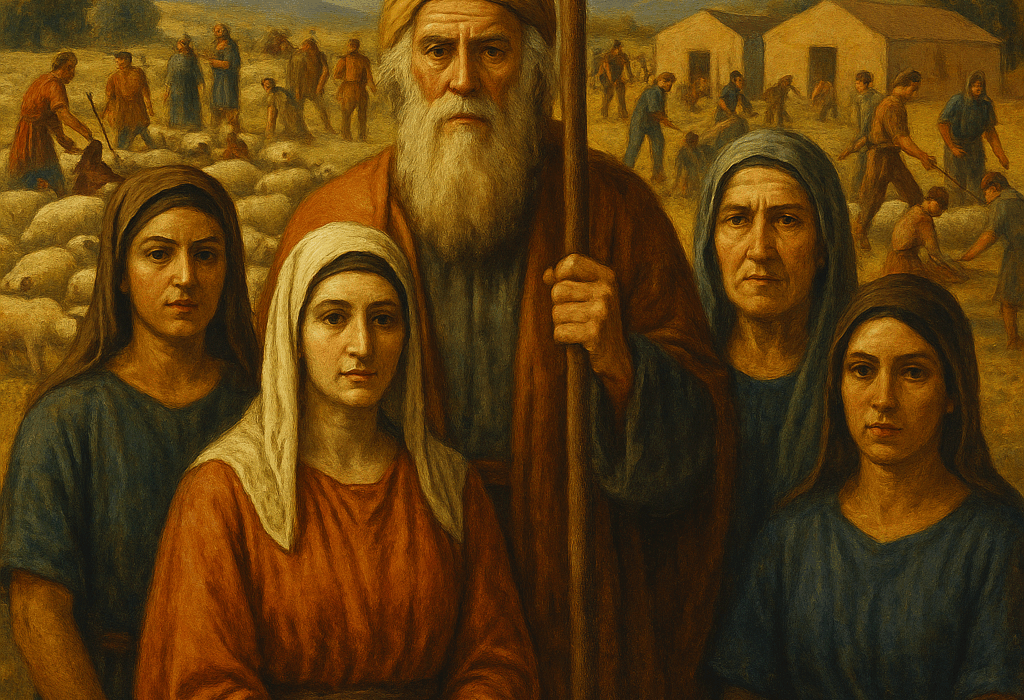
Jacob – The Flawed Patriarch Who Fathered a Nation


I. Introduction: The Man Who Became a Nation

Jacob is not a moral mascot. He is a patriarch. A bruised heel, a cunning mind, a relentless force. The Church today wants poster boys of piety, neat beards, monogamous morality, and tidy households with devotional apps and filtered family photos. But God chose Jacob. And Jacob’s house wasn’t tidy. It was turbulent, expansive, polygynous, fruitful, and entirely God-ordained.

If you want a clean legacy. A polished resume. A family tree that could make a Hallmark movie jealous that Jacob is not your man. But God doesn’t build nations from photo albums, He builds them from blood, betrayal, polygyny, and perseverance. If you’re looking for perfection, Jacob is not the image you seek. If you’re looking for fruitfulness, covenant, household dominion, and raw masculine endurance, then Jacob is your patriarch.

Jacob, the man renamed Israel, was no sanitized church hero. He lied to his father, deceived his brother, worked for and purchased underage wives, married sisters (a move later forbidden under Mosaic Law), took their handmaids as concubines, played favorites with his children, stayed silent when one was sold into slavery, and fathered the entire nation of Israel through a household that modern pastors would call “unbiblical.”

When God renamed Jacob “Israel,” He wasn’t baptizing a perfect man. He was commissioning a patriarch. The man who fathered twelve sons by four women. The man who bought teenage brides and later took their handmaids to be concubines (who eventually became additional wives). The man who lied to his own father and was later lied to by his uncle. The man who watched his sons slaughter a village and did nothing.

And yet… he is the chosen one. God’s own covenant was sealed with this man, not because of his morality, but because of God’s sovereign purpose. Jacob didn’t “fall into” polygyny. He didn’t slip. He wasn’t ashamed. He built an empire from it. And God didn’t rebuke him, He built His people on that household. And God called him blessed. Why? Because Jacob was in covenant. He wrestled with God and would not let go until the blessing was secured, no matter the cost.


II. Delayed Beginnings and the Demands of Legacy

Jacob didn’t marry until he was 77 years old. That’s not a typo. While modern men are told they’ve peaked or passed their usefulness by 40, Jacob hadn’t even begun to build his household until nearly twice that age.

So what was he doing all that time? Scripture gives us glimpses: he stayed in tents, remained under his father’s instruction, dwelled quietly while Esau hunted and conquered. He was not a builder yet. Not a warrior. Not a leader of men. He was preparing, slowly, painfully, and in obscurity.

But when the time came, Jacob fled to Haran with nothing but a staff. He didn’t even have the means to purchase a wife. At 77, he had to labor 14 years just to acquire two brides. He started late, but he didn’t whine, complain or make excuses. He never lamented about what he could have or should have done.

And because he started late, he had to build rapidly. Polygyny wasn’t really optional, it was necessary. One wife would not bear twelve sons fast enough. One womb could not produce a nation in a lifetime. Jacob’s strategy was not romantic in the modern sense, it was patriarchal. He accepted handmaids. He honored both sisters. He honored his position and multiplied quickly.

This is the lesson: it’s never too late to start. But starting late requires strategy. It requires scale. And it requires the rejection of modern sentimentality. If you aim to build a nation past your youth, you will need polygyny, patience, and patriarchal vision.


II. The Meeting at the Well: 77-Year-Old Meets 14-Year-Old Rachel

Jacob met his beloved Rachel at a well in Haran. She was a shepherdess, tending to her father’s flocks, in a pattern echoing across Scripture. But the part your Sunday school teacher skipped was this: Jacob was 77 years old when he met Rachel who was 14 at the time, her older sister Leah, whom Jacob would also marry, was about 15. He kissed Rachel that very day and wept aloud (Genesis 29:11). This was not a “grandfather’s greeting”. It was the beginning of a marriage transaction.

Modern minds recoil. But Scripture does not. Jacob kissed Rachel that very day and proclaimed “love at first sight”. In a world where men shrink from commitment and women delay marriage until their youth has withered, this scene offends modernity. But it honors God. Rachel wasn’t dating. She wasn’t career planning. She wasn’t collecting degrees. She was a bride in waiting, working in her fathers kingdom. And Jacob didn’t flirt. He pursued. Immediately, definitively, and even with payment.

Now, the modern mind reels. “Predator,” they say. “Groomer.” But Scripture says something else entirely: he loved her. From the first moment. And he proved it with the only thing that proves love, action and sacrifice.

No flirting. No promises. No “let’s see where this goes.” Jacob laid down seven years of labor for a bride he met at the well. He didn’t wait and send a text later, he didn’t date for a few years. He rolled up his sleeves and purchased his bride.


III. A Price for a Bride: Love Is Proven in Labor

Jacob did not propose over dinner. This wasn’t romance, but a transaction, a Covenant. He paid a price. Not having the available finances to purchase his bride outright he offered Seven years of hard labor managing Laban’s flock. Rachel was the daughter of his uncle, but that did not make her free. She was a daughter, which meant she was a commodity. She belonged to her father until another man purchased her through covenant.

Genesis 29:20 says, “So Jacob served seven years for Rachel, and they seemed to him but a few days because of the love he had for her.” Let that sink in: love was proven by labor, by action. Not words. Not poetry. Not dinner dates, or “communication”, but sweat and dedication.

And Jacob paid. Full price, without complaint. Then Laban deceived him, sending Leah into the wedding tent under darkness. The next morning, Jacob discovered the swap. Did he storm off? Cry betrayal? No. He married both. Even stayed and worked another seven years for Rachel. Fourteen years total. This wasn’t indentured servitude, it was dowry. It was love measured in action. 

You don’t “date” a wife. You earn her. Jacob earned two, (well 4 eventually), but we will get to that later.


IV. Sisters, Servants, and Sons: A Household of Four Mothers

Modern minds recoil at the idea of marrying sisters. But Jacob did it with full cultural legitimacy. Rachel and Leah both bore him sons, though Rachel, beloved as she was, struggled with barrenness. In the ancient world, this was not just a personal sadness, it was a crisis of legacy (as it should still be).

So Rachel did what almost any woman of her day would have. She gave Jacob her handmaid Bilhah as a concubine. Bilhah bore sons on Rachel’s behalf. Leah, seeing this, gave Jacob her maid Zilpah as well. He didn’t argue, he didn’t moralize.  Jacob accepted both. No argument. No sermons. No shame. He lay with the maids and received their sons into his household. These were not mere bedwarmers. They were concubines, wives by function if not by primary rank.

From this household of four women, two wives, two concubines, came twelve sons: Reuben, Simeon, Levi, Judah, Dan, Naphtali, Gad, Asher, Issachar, Zebulun, Joseph, and Benjamin. Plus one daughter, Dinah. These sons became the twelve tribes of Israel.

Polygyny wasn’t the side story. It was the structure. It wasn’t a concession, but the covenantal method for fruitfulness. This is not just descriptive, it’s prescriptive. God used it, blessed it, and God built His people on it. Let that sink in for a minute – polygyny is the method God chose EVERY time for the expansion of his covenant people.

This wasn’t dysfunction, it was dynasty. Jacob didn’t “fall” into polygyny. He stewarded it, and in doing so created the 12 tribes of Israel.


V. The Cost of Favoritism and Silence: Jacob’s Fathering Failures

Jacob was a patriarch, but he was not perfect. His household was marked by favoritism. He loved Rachel more than Leah (Genesis 29:30). He loved Joseph more than the others (Genesis 37:3). He even clothed Joseph in a special garment that stirred the envy of his brothers. Everyone knew it. When this favoritism bred resentment among the other brothers Jacob saw it. He knew they hated Joseph. But he stayed silent. 

He also stayed silent when Joseph was sold into slavery. The brothers dipped the robe in blood and brought it to Jacob. He wept. But he didn’t investigate. He didn’t lead. He accepted the story, descended into grief and mourned for years.This silence wasn’t passive, it was leadership failure. And yet, even in his failure, Jacob remained the patriarch of promise. God didn’t revoke His covenant. The twelve tribes still bore his sons’ names.

His sons murdered the men of Shechem in retaliation for Dinah’s violation. Jacob’s response? “You have brought trouble on me” (Genesis 34:30). Concerned with reputation, not righteousness.

Yet this flawed, quiet father remained God’s patriarch. Because God doesn’t require perfection, He requires covenant. God doesn’t wait for perfect men. He uses patriarchs who limp.


VI. A Man of Deception Chosen by a God of Truth

Jacob’s life was woven with deceit. He lied to his blind father, tricked his brother Esau out of the birthright by impersonating him to steal Isaac’s blessing. He manipulated livestock breeding,   using selective breeding tactics to enrich himself at Laban’s expense (Genesis 30:37-43). He was shrewd, cunning, and unapologetic.

This wasn’t accidental. Jacob was strategic. And God still blessed him. Why?

Because Jacob wrestled with God, and didn’t let go. He demanded blessing. He demanded covenant. And God granted it.

Genesis 32 recounts the midnight wrestling match. A mysterious Man (understood to be a theophany – God Himself) wrestles Jacob until dawn. Jacob refuses to let go. He demands blessing. The Man touches his hip, dislocating it, and then renames him: Israel.

Israel means “He who strives with God.” Not “He who obeyed nicely.” Not “He who conformed.”  Not “he who behaves.” God renamed him for wrestling, striving, and demanding. God honors hunger and dedication, not manners.

The same man who deceived his father became the father of a nation, then grandfather of nations.


VII. God’s Blessing on a Polygynous Man

Jacob was a polygynist. He had four wives (two by direct marriage, two by concubinage). Scripture never condemns him for it. Not once.

The modern Church blushes and stammers over polygyny, offering excuses: “It was cultural,” “It was allowed, not ideal,” “God just tolerated it.”

Spineless nonsense!

God could have shut Leah’s womb. He could have shamed Rachel. He didn’t. Instead, He opened their wombs, multiplied their children, and formed a nation from their bodies. Polygyny is not the curse, but a blessing. it was the structure God used to build Israel.

Jacob’s sons founded the twelve tribes. From Leah came Levi (priests) and Judah (kings), Reuben and Simeon. From Rachel came Joseph (double-portion through Ephraim and Manasseh) and Benjamin. From Bilhah and Zilpah came the remaining tribes. The modern church teaches monogamy as doctrine. Yet the very people of God were born from a household that no modern pastor would allow on the church membership roster.

You want revival? You want legacy? Start by embracing the blueprint God actually used. God didn’t “allow” polygyny, he crowned it.


VIII. The Legacy: A Nation Birthed by a Household

Jacob’s sons didn’t just fill a tent, they founded tribes. Reuben’s line. Judah’s kings. Levi’s priesthood. Joseph’s double portion through Ephraim and Manasseh. Benjamin’s warriors.

Jacob didn’t have a Pinterest family. He had a warring, womb-bearing, legacy-generating household. A patriarchal dominion. And that’s exactly what God used.

He didn’t wait for reform. He didn’t impose 21st-century ethics on a Bronze Age household. He multiplied fruitfulness through what would today be labeled “toxic masculinity” and “patriarchal oppression.” But it was, and is God’s design. It was God’s man. It was God’s house.

These weren’t random children. They were the seedbed of civilization. And they came not from a modern “nuclear” family, but from a polygynous, patriarch-led household.

The legacy of Israel, our spiritual and ancestral heritage, was not born in a sanitized seminary. It was born in tents. On blood-soaked soil. With sisters competing, handmaids birthing, and a patriarch directing the legacy.

Jacob fathered a nation not in spite of polygyny, but ONLY because it.


IX. What the Church Refuses to Preach

The modern Church preaches romance, butJacob lived reality.

He would be excommunicated from most if not all modern churches.

  • Married sisters? Forbidden.
  • Slept with handmaids? Scandal.
  • Favored wives? Misogynist.
  • Bought 14-year-old brides at 77? Predatory.
  • Married 20-22 Year old women at 84? Pedophile.

But God doesn’t flinch. He names Jacob “Israel.” He renews the covenant of Abraham through him. He appears to him personally and blesses him repeatedly. The Church today wants sanitized saints, but God wants fruitful patriarchs. Men who are willing to stand on Biblical truth, demanding conventional blessing no matter the cost.

The Church preaches sentimental monogamy. Jacob lived divine multiplication. The Church preaches equality. Jacob chose favorites, led with hierarchy, and structured his household for fruitfulness, not fairness.

They talk about “waiting for the one.” Jacob worked 14 years for two. And when his wives gave him their maids, he didn’t hold a Bible study on the ethics of polygyny, he received them as part of his house and expanded the kingdom.

The Church fears offense. God builds with obedience. Jacob’s life doesn’t fit the evangelical mold. Which is exactly why it built the Kingdom!


X. Conclusion: God Builds With Dust and Blood

Jacob was not a poster child for moralism. He was old, shrewd, polygynous, and often silent at the worst times. But he was chosen. Not because of his goodness, but because of God’s purpose.

He kissed a 14-year-old girl and loved her for life. He married sisters. He fathered sons through servants. He allowed his favorite son to be sold. He limped after wrestling with God. He blessed the wrong grandson on purpose. And he died in a foreign land, trusting in a promise that he did not live to see fulfilled.

And from that life – flawed, complex, masculine, covenantal, came the nation of Israel. Our entire faith is rooted in a man with four wives, twelve sons, and a limp. This is not an insignificant side story. This is the foundation of our faith, our people and all of western civilization.

If you want to restore biblical manhood, stop chasing modern respectability. Start embracing patriarchal fruitfulness. Start understanding that God builds not with sanitized myths, but with real men, real blood, and real households. Jacob did not live to please the world. He lived to build the kingdom of God, and in doing so he built nations.

And if the Church wants to reclaim legacy, it must reclaim Jacob, not as a relic of ancient oddity, but as the blueprint for dominion. 

God builds with blood. He builds with covenant. And He builds through patriarchs who refuse to let go until the blessing falls.

Let God’s Great Order be restored.

What Is a Wife?

Not a Title, But a Career

“Wife is not a noun, it’s a verb.”

Wrong!
It’s both. It’s also a job. A calling. A burden. A glory.
But it is not a trophy you get for breathing while female.


A Word Before the Fire

Let me begin with a warning and a promise.

This is not a hit piece on women. This is not some male fantasy rant against modern girls who “just don’t get it.” This is not a tantrum or a vent session. This is war-time restoration. And yes, I will be doing the same for men in the next article: What Is a Husband?

But today, the flames are for the women. Because in this generation, the enemy has stolen the name “wife” and buried it under layers of entitlement, delusion, and confusion. The modern woman thinks she can put on a ring, say “I do,” post a few Bible verses on Instagram, and call herself a wife, while acting nothing like one.

That lie must end before it completely destroys western civilazation.

This is not a love letter to women. It is a mirror. A hard, cold mirror forged in the fire of ruined homes, abandoned children, feminized churches, and weak men who bowed to Jezebel instead of leading like Christ. But it is also a map. A call to return. A signal flare for the few women who still care, who still want to be wives in the ancient and eternal sense.

If you are one of them, keep reading. If not, bookmark this page so you can return when you realize what iv’e said so far is true.


The Purpose of Woman

Woman was made for man. Not by man, but for him.

“It is not good for the man to be alone; I will make him a help meet for him.” — Genesis 2:18

From the beginning, the very blueprint of woman was relational, directional, and submissive. She was designed not as a separate purpose-bearing entity, but as a completion to a purpose already in motion. Adam was tasked. Adam was working. Adam was naming. And then, Eve was crafted, not to start her own mission, but to join his in servitude.

That’s the root of the word helpmeet: an assistant in purpose. Not a fan club. Not an equal partner. Not a rival or an advisor. A suitable helper, tailored, molded, and measured for the specific needs of a man on mission.

That means this: If a woman is not helping a man accomplish his purpose, she has no purpose herself. There is no neutral ground. There is no Plan B. There is no “independent woman” who is somehow whole without this function. The only reason a woman exists is to be a wife, a helper to a man, and by extension, the mother of his children and the maker of his home. She has no other purpose for existence.


A Job, Not a Crown

In modern thought, wife is a status, a prize you get for surviving dating. It’s the culmination of the “romance arc” in every Hallmark fantasy and Disney sequel. A wedding is her coronation. A husband is her handmaiden. The house is her stage.

But in truth, wife is not a status, it is a job. Her only job,  her only purpose.  A permanent, full-time, unglamorous, unpaid, indispensable career.

A real wife works. She builds, she manages, she submits, she bears, she raises, she teaches, she follows, and she multiplies. She is a home-economist, a child-rearing expert, a nutritionist, a nurse, a teacher, a steward, a secretary, and a servant. Not because she’s weak, but because she’s necessary.

A kingdom cannot function without its keeper. A husband cannot accomplish dominion without his helper(s). And a home cannot thrive without the steady hands of a woman who knows what she’s doing.

But here’s the crisis: Modern women don’t.


The Entry-Level Wife (15–18 years old)

Just three or four generations ago, a young woman between the ages of 15 and 18 would already have been more qualified for marriage than most 30-40 year-old “boss babes” today.

Let’s list just a few of the basic, assumed skills of what I’ll call an “entry-level wife”:

  • Cooking: From scratch. Not heating frozen bags. Meal planning, prep, seasoning, and nourishment on a budget.
  • Sewing: Mending, hemming, making basic clothes.
  • Cleaning: Deep cleaning, organizing, rotating, maintaining every area of the home.
  • Laundry: Sorting, washing, stain treatment, folding, storing.
  • Childcare: Feeding, diapering, burping, rocking, teaching, disciplining toddlers, haircuts.
  • Budgeting: Knowing how to stretch a dollar, manage a household allowance, track spending.
  • Gardening/Food Preservation: Growing vegetables, canning, storing dry goods.
  • Hospitality: Hosting guests with grace, warmth, and food.
  • Basic Medical Care: Herbal remedies, minor wounds, treating common colds, etc.
  • Scheduling: Knowing the routines and keeping things running like a tight ship.
  • Manners and Presentation: Representing the household in speech, dress, and decorum.
  • Submission: Basic submission and obedience to male authority.

These weren’t “extra credit.” This was baseline. This was what every marriageable girl already knew at a young age. And yes, they also knew their role. They weren’t being trained to lead. They weren’t being told “marriage is a partnership.” They were being shaped into wives, trained to follow, serve, honor, and multiply.


No Skills? No Hire.

Now imagine this: You apply for a job as a software engineer. But you have no idea how to write code. You can’t open the software. You have no education, no work samples, no certifications and no experience. But you get mad when no one wants to hire you, and worse, you complain about the company who hires you. You complain that “company” doesn’t value you enough, the pay isn’t fair and you’re not happy with the “benefits”, basically the “company” just is not good enough for you.

That’s what we’ve done with marriage.

Today, women demand “good husbands” while offering no wife skills. They say “where are all the good men?”, but they bring nothing to the table except sass, sexual history, emotional baggage, and a job that keeps them out of the house all day.

Ladies: No real man wants to marry a second paycheck. He wants a wife.

That means if you have not been trained for this role, if you cannot cook, clean, nurture, submit, and multiply, you are not ready for marriage. You are asking for a role you have no business in and have not prepared for.

Training for the Job

If wifehood is a job – and it is – then someone must train the applicants.

You don’t throw a teenager into heart surgery and call it “empowerment.”  You don’t hand a scalpel to a girl and say, “Follow your heart.”  Yet that’s exactly what we’ve done with marriage.

We’ve taken the most critical, civilization-shaping, child-forming, man-supporting position in existence and handed it to untrained girls in makeup and mini skirts, told them “you deserve it,” and acted surprised when it ends in chaos and  flames.

So who is supposed to train them?

Start here:

  • Fathers, who set the expectations and protect the standard.
  • Mothers, who model the work and train the hands.
  • Churches, who preach submission, not self-actualization.
  • Older women, who teach the young as commanded in Titus 2.

If your daughter is 12 and you haven’t taught her how to cook a full dinner, you’ve failed her. If she’s 14 and still doesn’t understand what a husband is, you’ve failed her.  If she graduates high school and doesn’t know how to clean, nurture, and follow, she is not ready to be a wife, she is an orphan of the modern world.

You don’t get a Proverbs 31 woman without years of Proverbs 1–30 training.  And yes, that training is physical, mental, and spiritual.


A Wife Must Know What a Husband Is

No wife can submit to what she does not understand.  You cannot assist a mission if you don’t know what the mission is.

“Wives, submit yourselves unto your own husbands, as unto the Lord.” — Ephesians 5:22

This means the wife’s submission is not based on her mood, his charm, or cultural trends. It’s based on the mission of God, the hierarchy of the home, and the man she chooses to follow.

But you cannot follow what you do not study.

Every woman preparing for wifehood must also be trained to understand:

  • What a man is (in nature, drive, and design)
  • What a husband does (lead, provide, protect, plant, and expand)
  • What headship means (command, responsibility, vision)
  • What submission looks like (obedience, alignment, respect)
  • What fruit a wife is supposed to multiply (children, peace, legacy)

You don’t marry a man just because he makes you feel good.  You marry him because you trust his mission, and because you are ready to help him build it. Until a woman knows what a husband is, she is not qualified to be a wife.


What a Wife Is NOT

Let’s clear out some of the garbage. Because in the rubble of modern culture, you’ll find dozens of fake versions of “wife” that need to be publicly executed.

A Wife is NOT a Roommate

You do not just share space, bills, and chores.
You are not “splitting the load” like college buddies.
Wife is not about equality, it’s about function. You are the manager of the home under his headship.

A Wife is NOT a Romantic Partner

Marriage is not built on “chemistry” or “dates.”
It’s built on order, duty, obedience, and fruitfulness.
Romance is seasoning. It’s not the meat. If you need butterflies to obey your husband, you are not a wife, you are a teenage girlfriend.

A Wife is NOT a Co-Leader

There is one head. One final word. One throne. One leader.
Two heads is a monster. God did not design the home as a democracy. It’s a kingdom. The husband rules, and the wife reigns through submission, not veto power.

A Wife is NOT a Career Woman With a Home Hobby

If your real energy, loyalty, and mind go to your boss or clients, and the home gets your leftovers, you’re not a wife, you’re a freelancer with a side hustle called “family.”

A Wife is NOT a Trophy

Your beauty does not qualify you.
Your ring does not sanctify you.
If you do not build the home, follow your man, serve your children, and submit to the order, then you are a concubine at best, but certainly not a wife.

A Wife is NOT a Princess

Marriage is not your Disney ending.
It’s your Exodus beginning. It’s work, suffering, sweat, birth, blood, and glory.
If you married expecting a parade, you’re in the wrong kingdom.

A Wife is NOT a Victim

Yes, men fail. Yes, some husbands are wicked. But your failures as a wife are not excused because your husband isn’t perfect.
Wifehood is your calling. Your judgment will be based on what you did, not what he didn’t.


The Real Glory of a Wife

This is the part modern women seem not able to grasp:

Wifehood is not a demotion. It’s a coronation.
Not as queen of the house, but as keeper of the kingdom.

Wifehood is the highest work a woman can do, because it is the only work she was made for. The world tells you that to matter, you must leave the home. God says: the home is where eternity is built, in-fact it is the ONLY place you matter.

  • You are the first voice your children hear.
  • You are the first hands that shape their souls.
  • You are the first standard of beauty, peace, order, and joy in their world.

You do not “just” keep the house, you literally make the world.
You do not “just” serve your husband, you empower and multiply his mission.

Wife is not less than CEO, less than author, less than entrepreneur. Wife is higher, because all those titles vanish when you die. But the fruit of a true wife lives forever.


A Final Word: The Call to Rebuild

If you’ve made it this far and feel convicted, good. That’s the beginning of wisdom.  This isn’t about guilt. It’s about repentance. This isn’t about hating women. It’s about restoring them to their only purpose.

You were lied to:

You were told that being a wife was a fallback plan. That it was Plan B. That it was an option, a hobby, a relic.  You were told your value was found in rebellion, not reverence.

But the truth remains, eternal and unmoved:

You were only made to be a wife.
You were crafted to help a man take dominion, and for no other reason.
You were shaped to bear life, build homes, and bring glory.

The only question now is this:
Will you return to the job you were created for?


Teaser for Next Article

And to the men reading this: Don’t get smug. Your Next!

The next article is for you. What Is a Husband? will be the mirror you didn’t ask for, but absolutely need. If you want a real wife, you better be a real man, a real husband. The house must have a head before it needs a keeper.

Let the Great Order be restored!

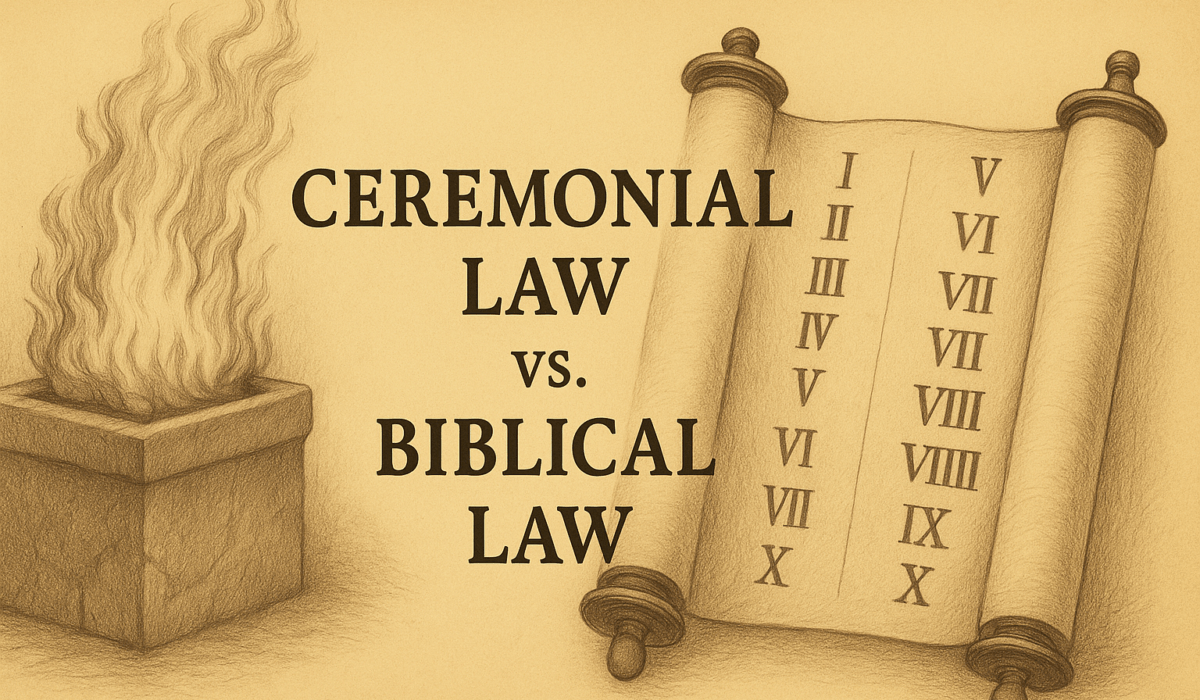
Ceremonial Law vs. Biblical Law: Christ Fulfilled, Not Abolished


Introduction: Returning to the Ancient Paths

“Thus saith the LORD, Stand ye in the ways, and see, and ask for the old paths, where is the good way, and walk therein, and ye shall find rest for your souls.” — Jeremiah 6:16 (KJV)

Modern Christianity has lost its way. What was once a faith rooted in law, order, and covenant has been cheapened into a system of sentimentality, slogans, and Sunday spectacles. The ancient paths, God’s perfect law, have been cast aside in favor of a lawless gospel that elevates grace while denying the very standard that defines righteousness.

Chief among the casualties of this theological decay is a clear understanding of God’s Law. Many Christians claim that the Law of Moses was “done away with” by Christ, that the Old Testament commandments no longer apply, that dietary instructions, feasts, Sabbaths, and judgments were all nailed to the cross. They cling to a fragmented verse here or there and erect an entire gospel of permissiveness upon it.

But the Word of God says otherwise.

This post is a call to return. A call to distinguish between Ceremonial Law, fulfilled in Christ, and Biblical Law, eternal, good, and still binding. A call to live as covenant men and households who do not walk in rebellion to God’s commands under the excuse of Christ’s blood but rather walk in obedience because of it.


I. Christ Did Not Abolish the Law

“Think not that I am come to destroy the law, or the prophets: I am not come to destroy, but to fulfil.” — Matthew 5:17 (KJV)

This single verse, spoken by the Messiah Himself, destroys the modern lie that Jesus abolished the Law. He explicitly says: “Think not.” Yet many today do think precisely that. They have been trained to see “fulfillment” as “termination.” But Christ never said He came to erase the Law, He said He came to fill it full of meaning, to embody it perfectly, to carry out its intention fully.

The word “fulfil” (Greek: plēroō) means to complete, to bring to fullness, to accomplish. Christ fulfilled prophecy, but prophecy is still valid. He fulfilled righteousness, but righteousness is still required. In the same way, He fulfilled ceremonial law, by becoming the once-for-all sacrifice. But the rest of God’s Law remains in effect, upheld by His own teaching.

“Till heaven and earth pass, one jot or one tittle shall in no wise pass from the law, till all be fulfilled.” — Matthew 5:18

Have heaven and earth passed away? No? Then neither has God’s Law.


II. The Purpose of the Law: Moral, Civil, Ceremonial

Biblical law is not a monolithic block. It contains various dimensions, each serving a specific purpose. Throughout the Torah, God gives laws in three overlapping categories:

  1. Moral Law – Timeless standards of righteousness (e.g., the Ten Commandments).
  2. Civil Law – Judicial statutes to govern Israel as a nation (e.g., laws on theft, murder, property).
  3. Ceremonial Law – Instructions for ritual purity, priestly duties, and animal sacrifice (e.g., tabernacle rituals, sin offerings).

The Moral and Civil laws reflect God’s eternal character and His vision for society. These remain binding. The Ceremonial Law pointed forward to Christ, the ultimate Priest and Lamb. These were fulfilled, not abolished, in Him.

To do away with the whole Law because the ceremonial types were fulfilled is to throw out justice, purity, and order for the sake of convenience.


III. What Was Fulfilled? The End of Animal Sacrifices

“But this man, after he had offered one sacrifice for sins for ever, sat down on the right hand of God.” — Hebrews 10:12 (KJV)

Christ’s sacrifice ended the need for blood offerings. He was the Lamb slain from the foundation of the world (Revelation 13:8), the perfect atonement once and for all. The veil was torn. The Levitical priesthood’s role in mediating sacrifices came to an end, not because the Law was destroyed, but because it was fulfilled.

“For it is not possible that the blood of bulls and of goats should take away sins.” — Hebrews 10:4

Those sacrifices were shadows (Hebrews 10:1). They anticipated the real and perfect sacrifice to come. Now that He has come, the shadow fades.

But notice: The eating laws didn’t fade. The feasts weren’t shadows of atonement. The Sabbath was not a placeholder for Christ’s blood. These were not ceremonial in the sense of substitutionary bloodshed. They are part of God’s holy order for life.


IV. The Feasts: Still Commanded, Now Fulfilled

“These are the feasts of the LORD, even holy convocations, which ye shall proclaim in their seasons.” — Leviticus 23:4 (KJV)

God’s appointed times, Passover, Unleavened Bread, Firstfruits, Pentecost, Trumpets, Atonement, Tabernacles, are not “Jewish holidays.” They are the LORD’s feasts.

These holy days were not abolished at the cross. They remain prophetic, meaningful, and ordered by God. What changed is how we honor them.

Take Passover: We no longer sacrifice a lamb, because Christ is our Passover Lamb (1 Corinthians 5:7). But that does not eliminate the command to remember the Passover. Instead, it brings it to full meaning. We keep it in light of the Messiah, not apart from Him.

To discard these feasts is to discard God’s calendar. It is to adopt the calendar of Rome, of Babylon, of secularism. But a household under God’s dominion should live by God’s times.


V. The Eating Laws: Still in Force

“For I am the LORD your God: ye shall therefore sanctify yourselves, and ye shall be holy… this is the law of the beasts… to make a difference between the unclean and the clean.” — Leviticus 11:44–47 (KJV)

Many Christians believe the dietary laws were abolished. But there is no passage that clearly does this. Peter’s vision in Acts 10 is often cited, but that vision had nothing to do with food. Peter himself explains it: the vision taught that Gentiles were not unclean people, not that pigs and shellfish were suddenly acceptable (Acts 10:28).

Nowhere does Christ say, “All meats are now clean.” That interpretation (from Mark 7:19) is a parenthetical note added in modern translations, not part of the Greek text. Christ was rebuking Pharisaical traditions, not God’s laws.

The food laws were not ceremonial sacrifices. They were health laws. Holiness laws. Identity laws. They kept God’s people distinct from the nations. They still do.

VI. The Sabbath: A Perpetual Sign

“Remember the sabbath day, to keep it holy… the seventh day is the sabbath of the LORD thy God.”
— Exodus 20:8,10 (KJV)

Among the first commandments written in stone, the Sabbath stands as a timeless ordinance. It is not ceremonial; it is creation law. God Himself rested on the seventh day and sanctified it (Genesis 2:2–3). Before the Law was codified on Sinai, the Sabbath was known and honored by faithful men.

In the Ten Commandments, written by the very finger of God, it was declared as holy. Nowhere in the New Testament is it repealed. Christ kept it. Paul kept it. The apostles honored it. The only people who abandoned it were those who fell under the influence of Roman imperialism, sun worship, and later church councils which deliberately sought to separate from all “Jewishness.”

Modern Christianity now promotes a Sunday observance with no Scriptural basis, no commandment, and no covenantal precedent. It is a tradition of man, not of God.

Honoring the Sabbath is not bondage, it is obedience. It is a sign between God and His people forever (Exodus 31:13,17). It teaches structure, rhythm, holiness, and rest under God’s dominion.


VII. Clean and Unclean: The Holiness Code Still Matters

Ye shall therefore be holy, for I am holy.”
— Leviticus 11:45 (KJV)

In God’s Law, there is a distinction between clean and unclean. This is not merely hygienic; it is spiritual. Unclean animals, practices, and conditions were not sinful in and of themselves, but they symbolized disorder, death, and what is outside the camp of God’s people.

Christ did not erase the concept of clean and unclean, He fulfilled the cleansing process. In the New Covenant, we are made spiritually clean by His blood. But the symbolic significance of cleanness remains.

To return to unclean practices, eating abominable animals, violating bodily purity, mixing holy and profane, is to dishonor God’s call to be set apart. Even in Revelation, the unclean are named among those outside the New Jerusalem (Revelation 21:27).

The people of God are to be holy in body, mind, and action. The separation laws still serve as guides for holiness in a world of confusion.


VIII. What Was Truly “Done Away With”?

“Blotting out the handwriting of ordinances that was against us… nailing it to his cross.”
— Colossians 2:14 (KJV)

This is another verse misunderstood by many. What was “blotted out” was not God’s Law, but the record of our violations of it, the legal accusations against us, the death warrant our sins incurred.

Christ did not nail God’s commandments to the cross, He nailed our penalty to the cross.

The ordinances that were “against us” are those that condemned us. He paid our debt. He fulfilled the requirement of blood. He removed the shadow-sacrifices. But He never erased the standard.

Paul goes on in Colossians 2:16 to say: “Let no man therefore judge you in meat, or in drink, or in respect of an holyday…”, not because those things are abolished, but because you are now keeping them under Christ, not the traditions of men.

Do not let modern Pharisees or lawless teachers rob you of your obedience.


IX. The Moral and Civil Laws Are Still Binding

“Thou shalt not kill.”
“Thou shalt not commit adultery.”
“Thou shalt not steal.”

— Exodus 20

No serious Christian argues that these commandments are abolished. Yet if the Law were truly “done away with,” then adultery, theft, murder, and dishonoring parents would no longer be sin. Clearly, the moral law still binds.

The civil law, commands about restitution, inheritance, marriage, criminal justice, and social order, is likewise grounded in God’s justice. It reflects how society should be structured. These laws do not save, but they govern.

Christians today are quick to dismiss these laws as “Old Covenant,” yet they beg the state for justice, complain about moral decay, and appeal to order. The Law of God is the solution, but they’ve rejected the blueprint.

Imagine what a nation would look like if it enforced Sabbath rest, punished theft with restitution, outlawed adultery and homosexuality, required honest weights and measures, and restored patriarchal inheritance.

That’s not legalism, it is righteous civilization!


X. Grace Upholds the Law, Not Replaces It

“Do we then make void the law through faith? God forbid: yea, we establish the law.”
— Romans 3:31 (KJV)

The grace of Christ is not a license to sin. It is the power to obey. Grace cleanses us from guilt and restores us to righteousness. It writes God’s Law on our hearts (Jeremiah 31:33).

To live under grace is not to abandon God’s commands. It is to finally keep them, not through external compulsion, but internal conviction. Grace does not erase God’s standard; it enables God’s people to walk in it.

“Here is the patience of the saints: here are they that keep the commandments of God, and the faith of Jesus.”
— Revelation 14:12 (KJV)

The saints in the last days will be known for two things: faith in Jesus and obedience to God’s commandments. Not one or the other, both.


Conclusion: A Call to Obedient Sons, Not Lawless Bastards

“If ye love me, keep my commandments.” — John 14:15 (KJV)

God is raising up a generation of men who will not be swayed by the smooth words of lawless preachers. Men who will not live like orphans, begging Rome for moral direction, but as sons, obedient to the Father’s Word.

The distinction between ceremonial and biblical law is not a tool to discard God’s commands. It is a call to deeper obedience. Yes, the sacrifices are fulfilled. Yes, the blood rites are complete. But the commands of God, the eating laws, feasts, Sabbath, the moral and civil instructions, are still in force.

It is time for covenant households to return to the ancient paths. To build life by the whole counsel of Scripture. To reject the lies of antinomianism. To walk in righteousness, not just in belief, but in practice.

We don’t obey to be saved. We obey because we are saved.
We don’t honor the law to earn grace. We honor it because grace made us free to do so.

Let the world keep its lawless gospel.
Let Rome keep its counterfeit holy days.
Let the pagans keep their bacon and wine.

As for us, we will walk in the ways of the LORD.

“Blessed is the man that walketh not in the counsel of the ungodly… but his delight is in the law of the LORD.”
— Psalm 1:1–2 (KJV)

Let us be that man.

This is the Great Order!

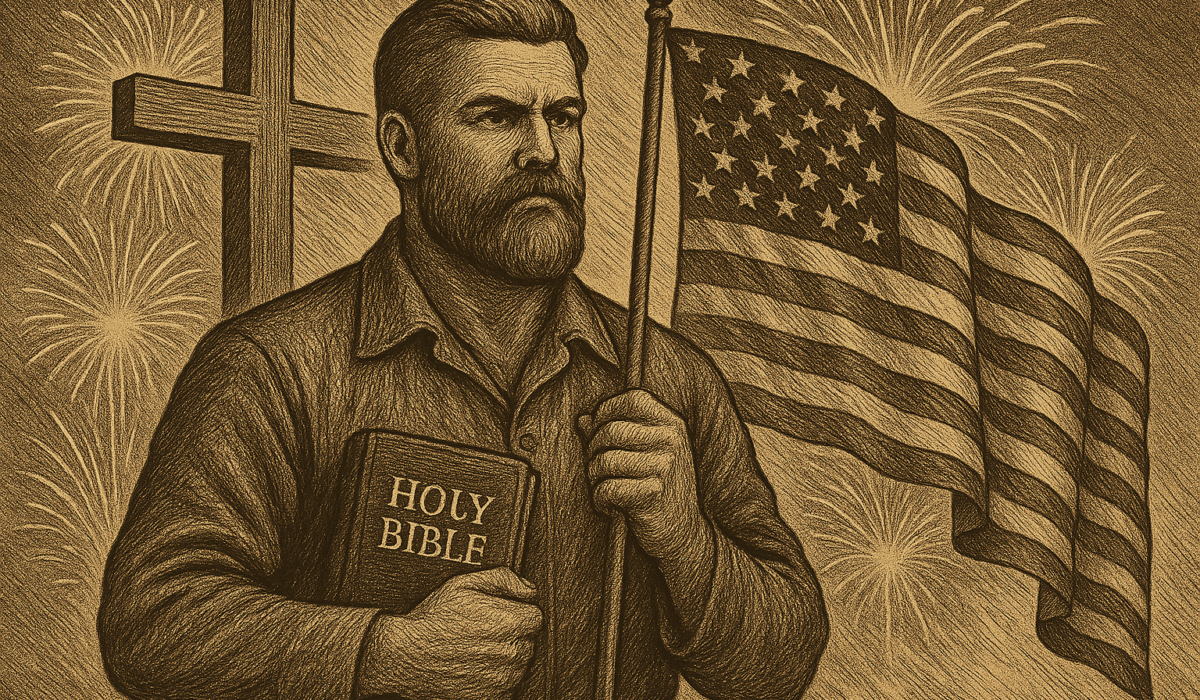
Liberty Misunderstood: The Real Freedom Behind July 4th

“Proclaim liberty throughout all the land unto all the inhabitants thereof.”
— Leviticus 25:10

1. Fireworks and False Freedoms

The grills are lit. The flags are waving. The stores are red, white, and blue. And the people, well, they’re as confused as ever.

July 4th, America’s holy day of independence, is annually baptized in fireworks, burgers, drunkenness, and the proud declaration that “We’re free!” But: Free from what? Free for what? And under whom?

The modern man, slouching under his belly while holding a beer can in one hand and his phone in the other, calls this day a celebration of liberty. But the fathers of old would’ve called it by another name, rebellion. Not because resistance is always evil, but because rebellion without righteous reformation is simply a change of idol.

The tragedy of July 4th is not that Americans fought against tyranny, God Himself raises up defenders of justice. The tragedy is that they cast off one king and replaced him not with the King of kings, but with themselves. In doing so, they set in motion a culture that now bows at the altar of self-rule, democracy, and disordered households.

You want to talk about independence? Let’s talk about God’s hierarchy. Let’s talk about real freedom, not the kind that gives you Netflix and junk food, but the kind that enslaves you to righteousness (Romans 6:18).

Let the fireworks crackle in the background. We have something far more explosive to say.


2. The American Revolution: A Mixed Legacy

Yes, the American Revolution was a moment of bravery. Yes, many died for what they believed was right. And yes, God in His providence uses even the muddled intentions of men for His purposes.

The American Revolution was, at its core, a revolt against oppression. That is, it was not a mere protest against unjust taxation, but a shift in the very understanding of authority. The language of Jefferson and Franklin, while rooted in the word of God, still had hints of Deism, Rationalism, and the poisonous idea that man, by his own reason, could establish a just order apart from divine kingship.

And what did we get?

  • A country founded on “the consent of the governed” rather than the ordinances of God alone.
  • A system where “freedom” meant every man did what was right in his own eyes.
  • And eventually, a nation so bloated with its own self-worship that it could no longer define what a man or a woman even is.

Do not misunderstand: tyranny is evil. But so is autonomy. God did not make man to be kingless. He made man to walk under His rule and to administer that rule through ordered households, tribes, and nations, not through mobs and ballots.

As The Great Order makes clear, rebellion must always be followed by reformation, or it will be swallowed by chaos.


3. Biblical Authority vs. Democratic Idealism

Freedom is not the absence of restraint. Freedom, biblically, is the joyful submission to God’s law and His created order. Anything else is slavery by another name.

“Stand fast therefore in the liberty wherewith Christ hath made us free…” (Galatians 5:1)

Modern democracy tells you that freedom is choosing your leaders, watching porn, and voting on whether children can be mutilated in the name of “gender identity.” Biblical freedom tells you that Christ is King, the husband is lord of the home, and obedience is the path to joy.

The founders traded a monarch for a Congress. And now, two centuries later, we have drag queens teaching toddlers, debt beyond imagination, and more broken homes than any empire in history.

What went wrong?

We misunderstood liberty.

The modern American does not serve God. He serves Mammon. He serves self. He serves ease. And when that doesn’t work, he votes for someone to fix it all without ever submitting to his own role under God.

What if instead of shouting “Don’t tread on me,” men shouted, “As for me and my house, we will serve the Lord”? What if instead of storming tea ships, they stormed their own living rooms and reclaimed headship?

Then, maybe, liberty would mean something again.


4. Household Sovereignty: The True Nation Under God

It must be said loudly and without apology: the smallest unit of governance is not the individual—it is the household.

When God created man, He didn’t hand him a ballot. He handed him a garden, a wife, and the command to rule.

From Abraham to Joshua, from the Proverbs to Paul’s epistles, Scripture resounds with this order:

  • The man is the head.
  • The wife is the helper and steward.
  • The children are arrows to be trained and launched.

This is not tyranny. This is freedom.

Why? Because God’s order leads to peace, while man’s democracy leads to dysfunction. When households are ordered, the culture is ordered. When men lead in strength, women flourish in grace, and children are raised in righteousness, then and only then can a nation claim to be “under God.”

So this July 4th, as you grill your meats and watch the sky explode with color, ask yourself: is my household a sovereign outpost of God’s Kingdom, or just another outpost of American consumerism?

The Great Order calls men to rise. Not to overthrow governments, but to govern their homes. To live as patriarchs, not peasants. To raise oaks, not reeds.

If your household is in rebellion, your fireworks are a farce.


5. The Gods of America: A Nation of Idols

Let us not pretend America is a Christian nation. It is a polytheistic empire dressed in red, white, and blue.

Its temples are digital. Its priests are celebrities. Its offerings are hours of screen time, gender confusion, and child sacrifice to the gods of convenience.

  • The god of Mammon demands debt.
  • The god of Media demands your attention.
  • The god of Me demands your constant self-exaltation.

We dare to quote “In God We Trust” while systematically removing every trace of His authority from our homes, our schools, and our churches.

Deuteronomy 8 warned ancient Israel:

“Beware that thou forget not the LORD thy God… Lest when thou hast eaten and art full… thine heart be lifted up, and thou forget the LORD.”

And that is precisely what we’ve done.

Modern Americans believe freedom means the right to choose their own truth. But the real truth is that we’ve sold our birthright for a bowl of microwave mac and cheese. And our children, what gods will they serve?

Unless the man of the house becomes the high priest again, America will burn. Not with fireworks, but with judgment.


6. A Call to Arms: Not for Revolution, but Reformation

Some think the answer is political. More votes. Better laws. Maybe a return to constitutional values.

But let me say this with all clarity: you cannot vote your way out of judgment. You cannot legislate righteousness into a nation of weak men and rebellious women. The rot is not in the Capitol. It is in our homes.

So yes, we need warriors. But not with muskets or petitions. We need **men who will:

  • Take back their role as lord of the household.
  • Teach their sons to work, fight, and lead.
  • Train their daughters to be queens, not Kardashians.
  • Rule their households as kingdoms under the Most High.**

That’s the revolution we need.

When you rebuild the household, you rebuild the nation. Until then, your flags are fabric, your fireworks are noise, and your freedoms are illusions.


7. Conclusion: Let Freedom Ring – in Your Home First

This July 4th, you’ll hear the phrase everywhere: “Let freedom ring.”

Well, let me ask you—does it ring in your home?

  • Does your wife rest under your covering?
  • Do your children walk in obedience?
  • Are you building something generational, or just surviving paycheck to paycheck?

Don’t tell me you’re celebrating liberty while your household is in chaos, your children are glued to screens, and your wife is more influenced by Pinterest than by Proverbs 31.

The man who rules his house well is freer than any president.

He’s not bound by politics. He’s not swayed by media. He serves the King of kings and trains a future that cannot be voted away.

So as the rockets glare and the anthems play, take a moment to remember:

Freedom is not the absence of rule. It is the presence of righteous rule.

Raise your banner. Set your house in order. And let July 4th be not a celebration of rebellion, but a renewal of dominion.


Postscript: How to Celebrate July 4th Like a Man of God

1. Hold a household feast. Grill meat. Break bread. Drink wine. Bless your household with your presence and provision.

2. Read Psalm 2 aloud. Let your family hear that “the kings of the earth” plot in vain.

3. Speak your vision aloud. Tell your wife and children what kind of future you are building. Make it clear that this house serves the Lord.

4. Teach your children about real freedom. Not voting booths, but God’s law. Not flags, but faithfulness.

5. End the night in worship. Sing. Pray. Let freedom ring, not just in the sky, but in the sacred space of your home.


Let the pagans have their fireworks in drunken debauchery. You? You have a kingdom to build.

Let The Great Order be restored.

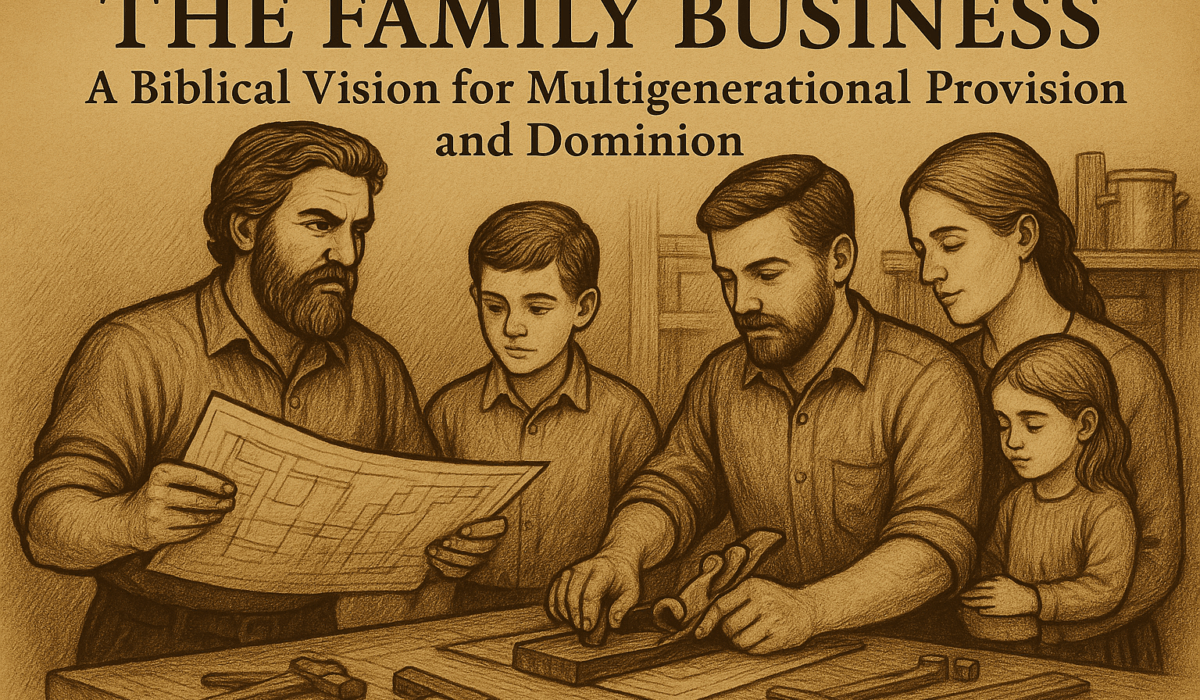
The Family Business: A Biblical Vision for Multigenerational Provision and Dominion

By Lord Redbeard
Bold Foundations for Biblical Patriarchy, Masculinity, and Household Dominion


I. Introduction: Reclaiming the Family Economy

The modern man clocks in, clocks out, and clocks out of his legacy in the process. He works to survive, not to conquer. His labor is detached from his household. His paycheck disappears into rent, bills, and taxes while his sons play video games and his daughters dream of employment in soulless corporations. This is not dominion, it is defeat disguised as progress.

God never intended for men to be cogs in a godless economy. He did not create man to serve bureaucracies, but to build dynasties. God’s design for work, wealth, and provision is not individualistic, fragmented, or impersonal. It is covenantal, ordered, and multigenerational. At the heart of this divine order is the family business, not merely as a financial tool, but as a spiritual calling.

From Abraham to the early Church, Scripture presents the household as the center of economic life. The modern Western divorce between faith, family, and finances is a form of economic and spiritual rebellion. It has robbed men of their power, women of their place, and children of their inheritance.

This is a call to rebuild the household economy, to launch and manage multigenerational family businesses that serve the purpose of dominion, discipleship, and provision under the lordship of Christ. We will draw from Scripture, history, research, and practical wisdom to outline the path forward.


II. The Biblical Pattern: Work as Worship and Legacy

A. The Mandate to Rule and Build

“And God blessed them, and God said unto them, Be fruitful, and multiply, and replenish the earth, and subdue it: and have dominion…”
—Genesis 1:28

This is not a poetic suggestion. This is a divine command. Dominion is the purpose of creation. The man who does not build, multiply, and rule is disobedient, no matter how pious he appears.

Economic dominion is not incidental, it is essential. God placed Adam in a garden to work and guard it. He gave him land, labor, and law. Work was never secular, it was sacred. It was worship. And from the beginning, man’s labor was to flow through the household.

B. Abraham: A Case Study in Covenant Capitalism

Abraham was not a wage-earner. He was a patriarch, an entrepreneur, and a master of men.

“And Abram was very rich in cattle, in silver, and in gold.” —Genesis 13:2
“And when Abram heard that his brother was taken captive, he armed his trained servants, born in his own house, three hundred and eighteen…” —Genesis 14:14

His wealth was not abstract. It was rooted in land, livestock, laborers, and sons. His household was so vast it functioned like a kingdom. His sons were his heirs, his men were trained, and his economy was generational.

God called Abraham not just to believe, but to build. And his business was inseparable from his family.

C. Proverbs and the Household Economy

“A good man leaveth an inheritance to his children’s children…”
—Proverbs 13:22

“The house of the righteous shall stand.”
—Proverbs 12:7

“The crown of the wise is their riches.”
—Proverbs 14:24

The book of Proverbs is not the journal of a monk. It is the economic manual of a patriarch. It commands stewardship, skill, diligence, and investment. And it links all of it to the household.

Solomon did not advise men to outsource provision to the state or delegate their children’s futures to random corporations. He commanded men to build legacies. That means businesses. Enterprises. Structures that endure.


III. The Destruction of the Family Business Model

A. Industrialism and the Rise of the Disconnected Worker

Prior to the 19th century, most families labored together. The home was the center of economic production. Fathers taught their sons trades. Mothers taught daughters the domestic arts. Property stayed in the family. Wealth was passed on, not lost.

But with industrialism came fragmentation. Men left home for factories. Women left for offices. Children were sent to schools. The family stopped producing, and started consuming.

Now, the average father works for strangers, his wife works for strangers, and his children are raised by strangers. This is not liberty. It is enslavement!

B. Feminism and the War on Domesticity

Feminism finished what industrialism started. It not only removed women from the home, it vilified the home. It told women that building a house and raising children was beneath them.

It also told them to chase jobs, under other men, while pretending to be “independent.” The household, once a productive center of culture and commerce, became a dormitory where family members only slept, streamed, and scrolled.

The result? Broken inheritance. No generational skills. No family economy. No ownership. No dominion.

C. Statism and Economic Infantilization

The modern state thrives on dependency. It encourages generational poverty by rewarding fatherlessness, taxing inheritance, regulating entrepreneurship, and offering just enough benefits to discourage enterprise.

The man who starts a business with his sons is seen as dangerous, because he is building power. He is raising free men. He is reclaiming headship.

The state fears the patriarch. The state loves the employee.


IV. Starting a Family Business: Vision, Strategy, and Calling

A. Begin with a Biblical Vision

Before you start a family business, you must know why.

  • Not just to make money.
  • Not just to escape a job.
  • But to obey God, equip your household, and establish dominion.

Your business must be mission-driven. Every decision, from branding to hiring, must serve your household’s future.

“Commit thy works unto the Lord, and thy thoughts shall be established.” —Proverbs 16:3

Do not launch with haste. Begin with fasting, prayer, Scripture, and counsel from elders.

B. Choose a Model That Supports Your Family Structure

Not all business models are equally biblical. Choose one that:

  • Allows you to work with your wife and children.
  • Allows your sons to learn and eventually lead.
  • Provides services or products consistent with biblical values.
  • Avoids entanglement with woke bureaucracies or immoral markets.

Examples:

  • Agriculture (farming, livestock)
  • Construction, trades, and contracting
  • Homestead-based goods (soap, food, textiles)
  • Media, publishing, Christian education
  • Local manufacturing or repair shops

Start small. Start simple. But start with order.

C. Structure It with Generational Succession in Mind

Don’t build a one-man empire. Build a household economy.

That means:

  • Teach your sons from day one.
  • Involve your wife in accounting, planning, or production.
  • Document everything: systems, procedures, workflows.
  • Incorporate or structure legally for succession (LLC, family trust, etc.).
  • Avoid unnecessary debt. Build gradually. Own your assets.

Train your children not to be workers, but builders.

“And these words, which I command thee this day, shall be in thine heart: And thou shalt teach them diligently unto thy children…”
—Deuteronomy 6:6–7


V. Managing the Business: Order, Accountability, and Discipleship

A. Establish Household Hierarchy

The business should reflect your family order.

  • The father is the head.
  • The wife is his helpmeet.
  • The sons are his apprentices.
  • The daughters are trained in household and relational service.

Disorder in the home will breed disorder in the business. Lead your household in worship first, then in work.

“He that ruleth his own house well…” —1 Timothy 3:4

B. Schedule Daily Work and Weekly Rest

Build routines that teach discipline. Every member should know:

  • What they are responsible for.
  • What the timeline is.
  • Who reports to whom.

And above all: keep the Sabbath. Weekly rest is not an option. It is part of your testimony.

“Six days shalt thou labour, and do all thy work… the seventh is the sabbath of the Lord thy God.” —Exodus 20:9–10

Let your employees and children know: we worship, then we work.

C. Manage Growth Without Losing the Mission

As the business grows, be cautious:

  • Do not hire strangers who do not share your values.
  • Do not scale so fast that your family becomes fractured.
  • Do not allow profit to replace purpose.

Many patriarchs have lost their households by growing their empires too fast. Growth is good. But it must be governed.


VI. Expanding the Business: Legacy, Land, and Local Power

A. Train Sons to Lead

A business that dies with you is a failure. Your sons must be trained to:

  • Work in every role.
  • Understand the numbers.
  • Negotiate, manage, and lead.
  • Defend the family’s interests with wisdom and boldness.

Let your sons know: “One day, this is yours to steward for your children.”

B. Acquire Land and Infrastructure

Dominion requires assets.

  • Buy the building.
  • Buy the land.
  • Build the tools.
  • Own the vehicles.
  • Invest in durable equipment.

“Prepare thy work without, and make it fit for thyself in the field; and afterwards build thine house.” —Proverbs 24:27

Land and tools give leverage. They reduce dependence. They increase resilience.

C. Build Intergenerational Partnerships

Your business should not be isolated. Partner with other Christian families:

  • Buy from them.
  • Sell to them.
  • Hire their sons.
  • Marry your children to their children.

This is how kingdoms are built. Not by corporations, but by clans.

The early Church grew not just through preaching, but through networks of families who worshiped together, worked together, and married within the faith.


VII. Historical Examples: Legacy Builders

A. The Hebrew Household Economy

Israel’s economy was rooted in:

  • Land inheritance (Leviticus 25)
  • Family trades (carpenters, farmers, herders)
  • Generational apprenticeship (Exodus 31:6)

The goal was perpetual provision through patriarchal stewardship.

B. Medieval Guilds and Christian Tradesmen

During the Christian Middle Ages:

  • Families ran shops, smithies, and workshops.
  • Sons inherited their father’s trade.
  • Guilds reinforced Christian ethics and training.
  • Local economies revolved around faithful fathers.

C. The Protestant Work Ethic and Reformation Households

The Reformation revived the doctrine of vocation.

Luther and Calvin taught that labor, done to God’s glory, was holy. Christian families:

  • Opened printing presses.
  • Started schools and farms.
  • Dominated commerce in Geneva, Germany, Scotland, and the New World.

Their legacy created Western civilization.


VIII. Modern Studies and Data

A. Family Businesses Are More Resilient

According to the Family Firm Institute:

  • Family businesses account for 64% of U.S. GDP.
  • They employ 62% of the U.S. workforce.
  • They outperform non-family firms in long-term profitability and stability.

B. Multigenerational Transfer Is Rare—but Powerful

Only 30% of family businesses survive into the second generation.
Only 12% survive into the third.

Why? Because few build with succession in mind.

Those that do—like Chick-fil-A, Hobby Lobby, and many Mennonite and Amish businesses, dominate for decades.


IX. Daughters in the Household Business

A word must be said about daughters.

They are not to be overlooked. While they are not called to rule or lead, daughters are essential to the household economy. They can:

  • Assist in administration, bookkeeping, and communication.
  • Manage client relations or social media under father’s oversight.
  • Create value through domestic crafts, baking, hospitality, etc.
  • Be prepared for marriage to another patriarch.

They are not bosses, but builders. They are trained to one day manage the house of their future husband with grace and strength.

“She looketh well to the ways of her household…” —Proverbs 31:27


X. Conclusion: Rise and Build

We are not called to pass through this world as renters and employees. We are called to possess the land. To rule. To reign. To build the household of faith.

The multigenerational family business is not a luxury. It is a mandate. It is the structure by which we obey God’s Word, train our children, preserve our faith, and build our kingdom.

Do not wait for the economy to collapse. Do not wait for permission. Do not wait for the perfect time.

Start now. Build slowly. Work faithfully. And leave behind not just a name, but a dynasty. “Let thy work appear unto thy servants, and thy glory unto their children. And let the beauty of the Lord our God be upon us: and establish thou the work of our hands…”
—Psalm 90:16–17

Can Lesbians Be Christians?

By Lord Redbeard
“Bold Foundations for Biblical Patriarchy, Masculinity, and Household Dominion”

I. Introduction: The Crisis of Confusion

In an age of compromise, confusion reigns. The Church, once a fortress of moral clarity and doctrinal firmness, now staggers like a drunkard at the altar of tolerance. Instead of declaring the Word of God with boldness, pastors and pew-sitters alike equivocate, dodge, and reframe what God has already spoken plainly.

One of the most dangerous lies now being whispered in the sanctuaries of Christendom is this: “A woman can be a lesbian and still be a Christian.”
Let us be clear. Not vague. Not political. Not diplomatic. The answer is No.
A woman who unrepentantly engages in or supports lesbian behavior is not a Christian. She is under wrath. And she needs to repent.

The Church must no longer coddle this rebellion. We must say what Scripture says, in the tone Scripture demands. And we must do so not out of hatred, but out of a fierce, fatherly love that will not let souls perish in silence.

This post will expose the false assumptions, examine the Scripture, and re-establish God’s standard, without apology.


II. The Common Excuse: “The Bible Doesn’t Mention Lesbians”

Many who attempt to soften the Bible’s moral clarity begin with a sleight of hand. They argue that while Scripture clearly condemns male homosexual acts, it is supposedly silent on female homosexual behavior. After all, Leviticus 18:22 and 20:13 mention men lying with men. The Sodom account in Genesis 19 speaks of male-on-male rape. And 1 Corinthians 6:9 references “effeminate” or “abusers of themselves with mankind”, terms often applied to men.

“See,” they argue, “the Bible never talks about women doing it with other women.”

This is either ignorance or deception.

Romans 1 not only mentions lesbianism directly, but it also condemns it clearly and treats it as a sign of a society fully given over to wrath.

Let’s read the key verses.

“Because of this, God gave them over to shameful lusts. Even their women exchanged natural relations for unnatural ones. In the same way the men also abandoned natural relations with women and were inflamed with lust for one another.”
—Romans 1:26–27

Let the reader understand. The phrase “even their women” is not merely a casual statement, it is an emphatic warning. Paul is saying: things have become so degenerate, so reversed from God’s created order, that even the women, known for modesty, nurture, and tenderness, have abandoned nature itself.

This is not progress. This is perversion. It is not liberty. It is lawlessness.


III. Romans 1:26–27: The Final Descent

Romans 1 outlines a terrifying sequence: a people who reject the knowledge of God are handed over to deeper levels of debasement. First, they exchange the truth of God for lies. Then, they worship the creature rather than the Creator. Then, they are given over, not just to sin, but to degrading passions.

And what is the chief example?
Women lusting after women.

Let that sink in. Of all the examples Paul could have chosen to demonstrate the collapse of a society under judgment, he selected lesbianism. Why?

Because when women, the last stronghold of nurturing virtue and modesty, become sexual deviants, the entire moral order has collapsed. God made women as the crown of man, the glory of domesticity, the mother of future generations. When the womb turns to lust, when the mother turns to rebellion, when the helper turns to harlotry, the rot is now complete.

And what follows?

“They have become filled with every kind of wickedness, evil, greed and depravity… They are senseless, faithless, heartless, ruthless… although they know God’s righteous decree… they not only continue to do these very things but also approve of those who practice them.”
—Romans 1:29–32

Lesbianism, in God’s eyes, is not an innocent identity. It is the evidence of being handed over.


IV. Lesbianism and the Reversal of God’s Order

To understand the sin of lesbianism, we must understand the role of women in God’s design.

“The woman is the glory of the man.” —1 Corinthians 11:7
“The younger women [are to] marry, bear children, guide the house.” —1 Timothy 5:14
“Wives, submit yourselves unto your own husbands, as unto the Lord.” —Ephesians 5:22

Woman was made for man. Not as his competitor, but as his complement. Her body, her nature, her emotional constitution, her fertility, all cry out for male headship, covenantal union, and the creation of children.

Lesbianism reverses this entire design. It says:

  • “I will not submit to a man.”
  • “I will not be fruitful and multiply.”
  • “I will not honor my father or future husband.”
  • “I will not serve God’s order; I will serve my own pleasure.”

It is not just sexual confusion; it is spiritual insurrection.

It is, in effect, an echo of the satanic creed: “I will not serve.”


V. Feminism, Pornography, and the Rise of the Lesbian Ideal

Modern lesbianism is not just a sin of desire; it is the fruit of decades of feminist indoctrination.

The feminist movement taught women to despise men, reject motherhood, and seek personal fulfillment through rebellion. The ultimate form of this rebellion is not just refusing to marry; it is choosing a woman instead.

Moreover, lesbianism has been mainstreamed through pornography and entertainment. The modern man has been conditioned to find lesbianism arousing. The modern woman has been taught that it is “empowering.” It is not uncommon for even so-called “straight” women to “experiment” with lesbian acts as a form of self-expression.

This is spiritual sickness.

“Woe to those who call evil good, and good evil.” —Isaiah 5:20


VI. Can a Lesbian Be a Christian?

Let us answer this clearly:
No unrepentant lesbian can be a Christian.

We are not saved by works. But we are not saved without repentance. The gospel is not a stamp of approval on your desires; it is a sword that puts them to death.

“Do you not know that the unrighteous will not inherit the kingdom of God? Do not be deceived: neither the sexually immoral… nor men who practice homosexuality… will inherit the kingdom of God.”
—1 Corinthians 6:9–10

The text says, “do not be deceived”, because Paul knew deception would come. Today, we are deceived by rainbow flags on church signs, lesbians in choir robes, and “affirming pastors” who trade God’s Word for man’s applause.

But the Scripture stands.
If a woman claims to be a Christian yet:

  • Celebrates her lesbian identity
  • Defends same-sex “marriage”
  • Lives in an ongoing relationship with another woman
  • Refuses to repent of her lesbian past

Then she is not saved. She is lost.


VII. “But I Struggle With Same-Sex Attraction”

There is a difference between temptation and practice. A woman who has repented, who fights her same-sex desires, who walks in obedience, and who does not entertain lesbian fantasies or relationships, such a woman may indeed be walking the path of sanctification.

However, the moment she affirms the desire as “natural,” “part of who I am,” or “something God is okay with”, she is back under wrath.

Christ saves sinners. He does not affirm sin.


VIII. The Fruit of Lesbianism: Destruction

We are told that same-sex love is gentle, sweet, and safe. But the data reveals otherwise.

A. Sky-High Divorce Rates

According to the UK’s Office for National Statistics:

  • 56% of same-sex marriages were between women.
  • Yet, 72% of all same-sex divorces in 2019 were lesbian couples.
  • The lesbian divorce rate has hovered between 74–78% in recent years.

In other words, lesbian “marriage” is an oxymoron. It is emotionally unstable, sexually disordered, and structurally fragile.

B. Mental Health and Abuse

Studies repeatedly show:

  • Lesbian relationships have higher rates of domestic violence than heterosexual or gay male relationships.
  • Lesbian women report significantly higher rates of depression, anxiety, and suicidality—even in socially affirming cultures.
  • Lesbian couples exhibit more emotional volatility and relational codependency.

The fruit is rotten. The vine is poisoned.


IX. The Church’s Compromise Is Cowardice

Why is this sin tolerated in the Church?

  • Because pastors fear losing tithes.
  • Because weak men do not want to confront masculine women.
  • Because we have traded holiness for hugs.

Churches that refuse to name and shun lesbianism as sin are guilty of damning souls. They are watchmen who see the sword coming and sound no alarm.

“If the watchman sees the sword coming and does not blow the trumpet… I will require their blood at the watchman’s hand.” —Ezekiel 33:6

Pastors: You will give an account.


X. The Hope of Redemption

Now let us be clear: lesbianism is not the unpardonable sin. No matter how deep the depravity, the blood of Christ is deeper still.

Paul writes:

“And such were some of you. But ye are washed, but ye are sanctified, but ye are justified.”
—1 Corinthians 6:11

There is grace for the repentant. There is cleansing for the filthy. There is healing for the deceived.

But it comes through confession, renunciation, and submission to God’s order, not through “affirming theology” or rainbow-flagged churches.


XI. The Call to Fathers and Households

Fathers, this is your war.

Lesbianism thrives where fatherhood fails.

Girls who grow up without masculine authority, structure, and love often drift into lesbianism. They are preyed upon by older girls, seduced by feminist ideology, and targeted by predators posing as “safe mentors.”

You must:

  • Shepherd your daughters with discipline and affection.
  • Reject female independence as a virtue.
  • Train your daughters for marriage, homemaking, and motherhood.
  • Guide their dress, friendships, and affections.

Fathers who abdicate breed daughters who rebel.


XII. Conclusion: Let God Be True

We do not hate lesbians. We hate the lie that says they can remain lesbians and belong to Christ.

We speak because we love. We warn because we care. We proclaim the truth because only the truth saves.

Let the rainbow be reclaimed, not by pride, but by repentance. Let the women of God be restored—not to unnatural passion, but to glorious submission.

And let the Church rise with boldness once again and say:

“Thus saith the Lord: It is abomination. Repent and live.”

The Borders of God: Why Illegal Immigration Is a Sin Against Order

In a world that increasingly mocks borders, blurs cultures, and calls nations mere human inventions, we must turn again to the eternal Word of God for clarity. The issue of illegal immigration is not merely about policy, it is a spiritual crisis. It is not just about who crosses into a land, it is about whether that land will continue to be governed by law, righteousness, and God-ordained order.

This is not a matter of politics. It is a matter of covenant. God is not the author of confusion, and He has never endorsed lawlessness, chaos, or the erasure of boundaries. He established nations, borders, tongues, and lands for a divine purpose. And to tear these down is to rebel against Him.

I. Borders Are Biblical: God’s Design, Not Man’s Idea

The Bible speaks plainly on the sanctity of borders. From Genesis to Revelation, God honors boundaries, He draws them, defends them, and punishes those who violate them.

“When the Most High divided to the nations their inheritance, when He separated the sons of Adam, He set the bounds of the people…” — Deuteronomy 32:8

Here we see that the very concept of “nationhood” is not a human innovation but a divine act. God Himself “divided,” “separated,” and “set the bounds.” And this is not an isolated passage.

“And hath made of one blood all nations of men for to dwell on all the face of the earth, and hath determined the times before appointed, and the bounds of their habitation.” — Acts 17:26

The Apostle Paul echoes the Old Testament, reaffirming that God not only made nations, but also determined their appointed times and “bounds of habitation.” This means borders. God created distinct peoples with distinct lands, for His glory and their good.

To violate these borders through illegal immigration is to trespass on sacred ground. It is to break the order God has established.

II. Walls Are Not Unloving, They Are Righteous

In an age of sentimentalism, people have been trained to associate walls with hatred and cruelty. But Scripture testifies the opposite.

Jerusalem, God’s chosen city, was surrounded by walls. Nehemiah, the righteous leader, was commissioned by God to rebuild the walls of Jerusalem not only to preserve the physical city but to restore the dignity, safety, and identity of God’s people.

“So built we the wall… for the people had a mind to work.” — Nehemiah 4:6
“Nevertheless we made our prayer unto our God, and set a watch against them day and night.” — Nehemiah 4:9

Building the wall was an act of worship, protection, and national restoration. It was not xenophobic, it was covenantal.

Even the final vision of the New Jerusalem is of a city with walls and gates:

“And had a wall great and high, and had twelve gates…” — Revelation 21:12

If walls are good enough for God’s heavenly city, then they are good enough for earthly ones. A borderless nation is not a sign of love, but of judgment.

III. Illegal Immigration Is Theft and Rebellion

Illegal immigration is not merely migration, it is theft. It is the violation of a nation’s laws, its sovereignty, and its resources. God condemns theft and the disrespect of rightful authority.

“Thou shalt not steal.” — Exodus 20:15
“Let every soul be subject unto the higher powers. For there is no power but of God: the powers that be are ordained of God.” — Romans 13:1

To enter a country unlawfully is to steal citizenship privileges, social services, and cultural inheritance that were not earned or granted. It is to act in rebellion against the authorities God has set in place.

Historically, righteous nations upheld strict standards for citizenship and entry. In ancient Israel, foreigners could dwell among the Israelites only if they submitted to the laws of the land and respected its people and God:

“One law shall be to him that is homeborn, and unto the stranger that sojourneth among you.” — Exodus 12:49

A sojourner was not free to ignore the law. He had to honor it, or face expulsion or death. There was no sanctuary for lawbreakers. The modern concept of “sanctuary cities” is utterly foreign to biblical order and a mockery of true justice.

IV. Culture Matters: Babel Was Not Blessed

The globalist dream is Babel revived, a single language, a single government, a single mixed people divorced from God’s design. But God was not pleased with Babel. He judged it.

“And the Lord said, Behold, the people is one… now nothing will be restrained from them… Go to, let us go down, and there confound their language…” — Genesis 11:6–7

The mixing of peoples under one humanistic banner was rebellion. God’s judgment was cultural separation. He scattered them. He created distinction. He preserved national identity. The push toward borderless, multicultural society is not progress, it is regression to rebellion.

Every people, every culture, every nation carries its own spiritual DNA. When illegal immigration floods a nation, it brings in not only bodies, but beliefs, many of which are at odds with biblical truth.

V. The Fruits of Lawlessness: Crime, Corruption, and Collapse

God’s law reveals that blessing follows obedience and curses follow rebellion (Deuteronomy 28). Illegal immigration brings disorder, and disorder brings destruction.

Crime:
Data confirms what many communities know firsthand. In the United States, numerous studies show that illegal immigrants are disproportionately responsible for crimes such as identity theft, drug trafficking, gang activity, and sexual offenses.

  • In 2018, the Government Accountability Office reported that illegal aliens committed tens of thousands of crimes every year, including homicides, sexual assaults, and kidnappings.
  • In Texas alone, from 2011 to 2021, illegal aliens were charged with over 611,000 criminal offenses, including 1,200 homicide charges and over 65,000 assault charges.

Drugs:
The open border with Mexico has enabled a flood of fentanyl into the U.S., contributing to over 70,000 overdose deaths annually. This is not compassion, it is carnage.

Human Trafficking:
Illegal immigration is often fueled by cartels and smugglers who exploit vulnerable people. Children are trafficked, women are raped, and families are extorted. To support illegal immigration is to empower this evil supply chain.

God hates those who pervert justice:

“Cursed be he that removeth his neighbour’s landmark.” — Deuteronomy 27:17
“Woe unto them that call evil good, and good evil.” — Isaiah 5:20

A nation that fails to defend its own border invites judgment and blood on its hands.

VI. Economic Theft and National Decline

Many argue that illegal immigrants “contribute” economically. But this is deceptive. While some work hard, the overall cost to the host nation is catastrophic.

Welfare Usage:
According to a 2020 report by the Center for Immigration Studies:

  • 63% of non-citizen households access welfare programs (compared to 35% of native households).
  • Illegal immigrant households are significantly more likely to use food stamps, Medicaid, housing subsidies, and public schooling, all funded by taxpayers.

Labor and Wages:
Illegal labor drives down wages for working-class citizens, particularly men. It floods the market with cheap labor, undermining native employment and hollowing out entire industries. This is not prosperity, it is parasitism.

Healthcare Burden:
Hospitals along the U.S. southern border have been forced to close due to the unsustainable cost of providing free care to non-citizens. Diseases once eradicated such as tuberculosis, measles, and scabies have resurged.

A nation cannot survive long when it subsidizes its own invaders. As the Apostle Paul warned:

“If any would not work, neither should he eat.” — 2 Thessalonians 3:10

God’s economy is one of diligence, justice, and reward—not redistribution to lawbreakers.

VII. The Moral and Religious Implications

Beyond economics and crime, there is a deeper issue, it is spiritual disintegration.

Illegal immigration imports not only foreign customs but often foreign gods. Latin America, for example, is steeped in a mixture of Roman Catholicism, animism, and paganism. Many illegal immigrants bring idols, syncretism, and false religion into the land.

“Thou shalt have no other gods before me.” — Exodus 20:3

True revival and national restoration cannot occur when a nation welcomes those who openly practice false religion and idolatry. Multiculturalism without Christ is Babel all over again.

Moreover, illegal immigration destroys the very idea of national unity. God expects a people to walk together in covenant:

“Can two walk together, except they be agreed?” — Amos 3:3

A country with no shared language, no shared morals, and no shared faith is not a country, it is a waiting corpse.

VIII. Compassion Does Not Mean Compromise

Christians are told to be compassionate, and rightly so. But biblical compassion is never a license for lawlessness.

The good Samaritan helped a wounded man on the road; he did not sneak him across a border.

The Apostle Paul welcomed Gentiles into the Church, but only after they repented and submitted to God’s law.

The cry of “love your neighbor” has been hijacked to mean “abolish your nation.” This is heresy.

“Love worketh no ill to his neighbour: therefore love is the fulfilling of the law.” — Romans 13:10

Love upholds law. It does not undermine it. To support illegal immigration in the name of love is to redefine love into madness.

IX. Historical Precedent: Nations That Opened Their Gates Fell

History is littered with examples of civilizations that ignored borders and were overrun.

  • Rome collapsed not merely from moral decay, but from waves of unchecked migration. The Visigoths, Huns, and Vandals crossed borders, sacked cities, and ended an empire.
  • Byzantium opened its gates to Muslims and Turks, eventually leading to the fall of Constantinople in 1453.
  • Even ancient Israel was destroyed by Assyria and Babylon after they compromised their national identity and disobeyed God.

The pattern is always the same: a loss of vigilance leads to a loss of sovereignty.

X. The Sin of Non-Assimilation: A House Divided Cannot Stand

One of the most destructive features of illegal immigration is not merely the crossing of physical borders, but the refusal to cross cultural and spiritual ones. A guest who refuses to honor the house he enters is not a guest at all, he is an invader.

America has historically been a nation that welcomes lawful immigrants who desire to adopt the language, customs, and values that shaped our Christian heritage. But today’s illegal alien population does not assimilate. In fact, many resist assimilation outright.

They do not learn the language.

They do not adopt the culture.

They do not embrace the faith.

Instead, they erect foreign outposts on our soil, little enclaves of rebellion where foreign flags are waved, foreign languages dominate, and the Christian West is mocked and replaced.

Refusal to Learn English: A Fracturing of National Unity

Language is more than communication; it is the glue of a people. A shared tongue binds hearts, transmits values, and sustains law and order. When people live within the same borders but speak different tongues, confusion reigns.

“For if the trumpet give an uncertain sound, who shall prepare himself to the battle?” — 1 Corinthians 14:8

How can a people prepare, govern, or worship together if they cannot understand one another?

According to a 2021 report from the U.S. Census Bureau, over 67 million people in the United States speak a language other than English at home, a 160% increase since 1980. Spanish dominates, and in many neighborhoods, English is functionally extinct. This is not diversity, it is division.

And God warns against such division.

When He judged Babel, He confused their language to scatter them. Today, we are importing confusion through multilingualism, and pretending it is virtue.

The result? Governmental inefficiency, educational chaos, workplace miscommunication, and a national identity crisis. Schools must now provide translation for dozens of languages. Hospitals, courts, and emergency services are overwhelmed trying to communicate with people who refuse to assimilate.

This is not compassion. It is collapse.

Multiculturalism without Assimilation Is National Suicide

A people cannot survive when those who enter refuse to become part of the body politic. Scripture condemns such disunity.

“If a kingdom be divided against itself, that kingdom cannot stand.” — Mark 3:24

The modern refusal to demand assimilation is not kindness, it is compromise. The ancient Israelites understood this. While strangers could dwell among them, they had to adopt the ways of God’s people.

“Ye shall have one manner of law, as well for the stranger, as for one of your own country.” — Leviticus 24:22

This law prevented cultural fragmentation. But in our modern context, the failure to require immigrants to conform to the language, customs, and faith of the land has resulted in ghettos of lawlessness, regions of foreign influence, and political power wielded by those who despise the nation that feeds them.

They march in the streets waving foreign flags.

They refuse to pledge allegiance to the country they entered.

They demand government services in their own tongue while scorning the people who pay the taxes.

This is not immigration. This is occupation.

A Return to Covenant Nationalism

If a man enters your house and demands you speak his language, eat his food, and celebrate his holidays, he is not a visitor. He is a conqueror.

God commands that a nation be united in law, language, worship, and moral order. We must reject the false gospel of multiculturalism and return to the biblical principle of covenant nationalism.

A nation must be a people bound by shared faith, law, and tongue. Anything less is a tower of Babel waiting to fall.

Let us then:

  • Require English fluency for all residents and government interaction
  • Eliminate foreign language ballots, signage, and schooling
  • Restore a singular national identity rooted in Scripture and tradition
  • Cease funding multicultural programs that divide, rather than unite
  • Preach repentance and the gospel to every foreigner, not in surrender, but in sovereignty

“Now I beseech you, brethren, mark them which cause divisions and offences contrary to the doctrine which ye have learned; and avoid them.” — Romans 16:17

Let us build not just walls of stone, but walls of meaning, culture, and truth.

XI. A Call to Restoration: Guard the Gates

It is not enough to complain. Christian men must act. We must reject the lies of globalism, resist the guilt tactics of the media, and recover a biblical vision for borders, nations, and justice.

We must:

  • Demand enforcement of immigration laws
  • Support the building of physical and legal walls
  • Reject all “amnesty” and sanctuary policies
  • Preach repentance to those in our midst
  • Uphold our culture, language, faith, and sovereignty
  • Teach our children the blessing of righteous nationhood

A godly nation is not built on broken laws, foreign allegiances, or open borders. It is built on covenant, clarity, and courage.

“Blessed is the nation whose God is the Lord.” — Psalm 33:12

Let us not be found building Babel. Let us build Zion.

Let the Great Order be restored!

The Keeper of Her Husband’s Dominion: A Wife’s Sacred Duty to Maintain, Enforce, and Preserve

In the divine hierarchy established by God, the man is the builder, the establisher, the governor. He goes out to war, to work, to wrest dominion from the earth by the sweat of his brow. He lays foundations: spiritually, economically, and physically. The woman, by contrast, is called to maintain and enforce the order her husband builds. Her task is not to innovate her own laws or construct her own dominion, but to be a wise and faithful steward of the man’s household and headship.

This is not demeaning—it is glorifying. The wife, when she faithfully fulfills her calling, sustains and beautifies the kingdom entrusted to her. She is like the moon reflecting the light of the sun—she governs the night with the authority delegated to her. She is the queen, upholding the rule of the king.

Let us examine this sacred role through Scripture, through the wisdom of our forefathers, and through the eyes of common sense, now so rare in a society poisoned by egalitarian rebellion.

I. Biblical Foundations: Keeper of the Home

The most fundamental and oft-repeated command given to the wife in Scripture is to be a keeper at home:

“That they may teach the young women to be sober, to love their husbands, to love their children, to be discreet, chaste, keepers at home, good, obedient to their own husbands, that the word of God be not blasphemed.”
—Titus 2:4–5

The Greek word used for “keeper at home” (οἰκουργός) carries a robust meaning—“a guard or warden of the house.” Not merely a passive occupant, the wife is an active maintainer and enforcer of the household dominion. She is a steward, a governor under authority, a domestic magistrate who executes her husband’s law and vision within the sphere of their home.

The man builds; the woman maintains.

The man provides; the woman preserves.

The man establishes order; the woman enforces it.

This is her honor and her duty.

II. The Garden Pattern: From Eden to Household

The pattern of dominion and maintenance is laid down at the very beginning in the Garden of Eden. God placed Adam in the garden “to dress it and to keep it” (Genesis 2:15). After the creation of Eve, she was brought to Adam not to found her own garden, but to help him in the work God had given him. She was bone of his bones and flesh of his flesh—created for the man (1 Corinthians 11:9)—to serve, guard, beautify, and multiply what had already been given.

The fall itself occurred because Eve stepped outside her lane. She began to entertain a vision and decision-making authority apart from her husband’s rule. She failed in her duty to uphold the order given by God through Adam, and chaos ensued. Her punishment included a prophetic return to proper headship:

“Thy desire shall be to thy husband, and he shall rule over thee.”
—Genesis 3:16

Her redemption would not come through autonomy but through faithful childbearing and submission (1 Timothy 2:15).

III. Enforcing the Law of the Household

One of the gravest errors of modern women is the belief that the home is their “own domain,” independent from the oversight and rule of their husbands. This is false. The husband is head of the wife (Ephesians 5:23), and that headship extends to every sphere, including the home, rules, routines, budget, diet, and child discipline.

The wife is to enforce the laws her husband has set in place. This includes:

  • Bedtimes for children
  • Rules of modesty and dress
  • Household cleanliness and standards of presentation
  • Sabbath and feast observance
  • Media access and content restrictions
  • Chores and responsibilities
  • Hospitality and guest boundaries
  • Dietary rules/guidelines 

If the husband has declared that no television shall be watched after dinner, the wife is not free to change that. If he has ruled that certain behaviors warrant discipline, she must not turn a blind eye. She must uphold his word, not undermine it. To do otherwise is to act as a usurper within the gates of his authority.

This is seen clearly in the book of Proverbs:

“The wise woman buildeth her house: but the foolish plucketh it down with her hands.”
—Proverbs 14:1

What is it that tears down a house? Rebellion against the husband’s law. Disregard for his vision. Neglect of his provision. Laziness. Gossip. Complaining. Softness with the children when firmness is required. These are not minor infractions; they are betrayals of covenant duty.

IV. Dominion by Delegation: The Stewardship of All That Is Entrusted

The godly woman is not a ruler in her own right. She is a steward, a high-ranking servant within the covenant household, entrusted with dominion that is delegated, not innate. What she oversees is not her possession, but her husband’s estate. What she manages is not her own empire, but his dominion.

This principle must be understood deeply: everything a husband gives to his wife is a sacred trust. She is not the owner of the home, the furnishings, the land, or the provision—she is the keeper, the preserver, the multiplier of that which was delivered to her by her head.

The faithful wife recognizes that to waste what her husband has built is to dishonor and disrespect him, and in so doing, to dishonor Christ, who commands her submission. It is likened to physically slapping him in the face. Her work is not freelance. Her hands are not idle. Her authority is not self-declared. Her role is sacred.

Let us now examine the breadth of her stewardship.

1. The Home: Fortress and Sanctuary

The home is the outward expression of a man’s inward order. It is the sanctuary where his rule is made manifest, where law becomes culture, where peace dwells and truth is taught.

The wife is to guard and maintain the home with holy vigilance. Cleanliness, structure, beauty, and functionality are not luxuries, they are marks of honor. Disorder in the home reflects disorder in the woman. When a wife allows clutter, laziness, decay, or distraction to take root, she is not just being careless, she is allowing the enemy within the gates.

Every room, every corner, every closet is a reflection of the stewardship of the woman. She is called to maintain the home not as a showpiece for outsiders, but as a place of ordered dominion where her husband’s rule is made visible.

“She looketh well to the ways of her household, and eateth not the bread of idleness.”
—Proverbs 31:27

2. Furnishings and Garments: Order in the Details

The beds her husband purchased are to be made. The tables he provided are to be cleared and set. The furniture he supplied is to be cared for with dignity—not stained, destroyed, or buried beneath toys and debris. This is not about materialism—it is about respect.

Likewise, the clothing he provides for his wife and children is to be maintained with diligence. Torn seams should be mended. Laundry should not pile to the ceiling. Stains should be addressed. Shoes should be clean and placed in order.

The Proverbs 31 woman is not a passive consumer, she is a craftswoman, a caretaker, a provider of beauty. Her efforts in these things express her gratitude to God and to her husband.

“She maketh herself coverings of tapestry; her clothing is silk and purple.”
—Proverbs 31:22

3. Garden and Grounds: Dominion Over the Earth

The garden and yard, however large or small—are part of the man’s dominion. Whether a few raised beds or a broad acreage, they are under the wife’s stewardship. A weed-choked garden and a trash-littered yard dishonor the name of the man who pays for that land.

The godly woman will ensure the grass is cut, the flowers maintained, the tools cared for, the trash bins orderly, and the land not neglected. She teaches her children that even the appearance of the home’s grounds reflects the glory of their father.

“She considereth a field, and buyeth it: with the fruit of her hands she planteth a vineyard.”
—Proverbs 31:16

This is not just busy work. It is visible dominion. It is faithfulness in the little things.

4. Vehicles, Tools, and Implements: Respecting the Man’s Work

The car her husband bought for the family is not a garbage heap. The truck he uses for work is not a playground. The tools he stores in the garage are not toys. Every item her husband has earned by the sweat of his brow must be treated with reverence.

She should ensure that oil changes happen on schedule, that children do not slam car doors or mishandle equipment, that tools are returned to their place, and that vehicles remain clean and ready for use.

A faithful wife will train the children to handle these things properly and speak of them with respect. Why? Because these items are extensions of the man’s work. To lack respect for the items acquired by the husband is to dishonor.

5. Finances and Household Resources: Guarding the Treasury

Every dollar her husband earns represents time away from home, risk, sweat, and toil. The faithful wife does not squander this. She does not waste household money on trinkets, convenience foods, unneeded luxuries, or vanity. She keeps records, stretches each dollar, plans meals, compares prices, shows accountability and multiplies what is given.

“The heart of her husband doth safely trust in her, so that he shall have no need of spoil.”
—Proverbs 31:11

In the biblical order, the husband is the provider, the household king; the wife is the treasurer, the household steward. She may not generate the income, but she governs its use. She does not spend frivolously. She spends righteously.

She is the Proverbs 31 woman—not chasing careers, but making her husband’s name great in the gates by her industry and faithfulness.

V. Historical Witnesses: Women of Order and Excellence

The vision of a woman as steward, guardian, and enforcer of her husband’s dominion is not merely a biblical ideal—it is a pattern consistently affirmed in the lives of godly women throughout history. In eras of strength, women embraced this sacred charge and preserved the household economy, the moral law, and domestic order with diligence and reverence. Their names are not always remembered, but the civilizations they upheld were built upon their faithfulness.

1. The Matriarchs of Scripture

From Sarah to Ruth, from Hannah to Elizabeth, the holy women of old built nothing of their own name, but magnified the names of their husbands and sons through obedience and faithful stewardship.

Sarah, though married to the great patriarch Abraham, was not known for public exploits but for reverence and obedience:

“Even as Sara obeyed Abraham, calling him lord: whose daughters ye are, as long as ye do well…”
—1 Peter 3:6

Rebekah, Rachel, and Leah each submitted to the headship of the men appointed to them and managed the flocks, tents, and children with steadfastness, bearing the future of Israel on their backs.

Hannah’s sacrifice of Samuel was not a detachment from motherhood—it was a fulfillment of her vow to uphold the household’s devotion to God, giving her son back to the Lord in accordance with her husband’s leadership.

2. The Noble Wives of the Reformation

In the time of the Protestant Reformation, when men were risking their lives to preach the gospel and reform the Church, their wives were not idle. They built homes, taught children, cultivated gardens, welcomed persecuted believers, and enforced household law without wavering.

Katharina von Bora, the wife of Martin Luther, managed a complex estate, fed dozens daily, and kept order in a home that was often a refuge for students, refugees, and reformers. Luther affectionately called her “My Lord Kate,” not because she ruled him, but because she ruled the home well under his authority.

She did not seek to lead the Reformation in the public square. She ruled her portion of the kingdom—faithfully maintaining what Luther, her head, had built. That was her glory.

3. The Colonial and Pioneer Women of America

In early America, the homestead was the heart of civilization. Men cleared the land, raised barns, and established farms, but it was the wives who turned rough wood and stone into sanctuaries of peace and law.

These women enforced strict order in their homes: keeping meals on schedule, teaching catechisms, disciplining children, managing livestock, storing food, and maintaining cleanliness even under harsh frontier conditions. Their husbands rode for supplies, went to war, or labored in the fields—often for weeks—trusting that all would be in order upon return.

They were not seeking escape through feminism or employment in town. They had dominion to keep. A fire to tend. A people to govern in the name of their husband and unto the Lord!

4. Victorian and Edwardian Homemakers

Even in the great cities of England and America, Christian wives understood that the home was a moral and spiritual realm to be governed under the man’s headship. Victorian households were marked by schedule, virtue, modesty, and order. The lady of the house enforced the rhythm of the day—prayers, meals, instruction, cleanliness, and decorum.

She was a steward of appearances and behavior, ensuring that what her husband established—socially, financially, and religiously, was preserved, reinforced, and passed on.

The collapse of such homes in the 20th century was not accidental. It came when women left the post of keeper and began to clamor for equal rulership, collapsing the hierarchy that had upheld generations of Christian family strength.

VI. Modern Rebellion and the Decay of Stewardship

The enemy of order is rebellion, and rebellion now wears the mask of liberation. Modernity has sold women a bitter lie: that to serve under a man’s authority is slavery, and that to preserve his house is demeaning. The consequence? A generation of women who despise the very work for which they were created—and homes that lie in ruins because of it.

The home has been traded for the cubicle, the cradle for the boardroom, the garden for gossip, and the order of the husband for the doctrines of feminism. Where once women built multigenerational households under patriarchal authority, now they chase paychecks and political power, leaving the home desolate.

The average woman today cannot sew, cook from scratch, manage a budget,  discipline her children, and cannot submit to her husband’s law without complaint. She has been trained to scorn these things—to see the dominion of the household as a prison rather than a throne.

“Because that, when they knew God, they glorified him not as God… Professing themselves to be wise, they became fools.”
—Romans 1:21–22

Women who abandon their post as keepers of the home do not merely create messy houses, they dismantle civilizations. The household is the smallest unit of God’s kingdom on earth. When it is neglected, the Church is weakened, the nation is corrupted, and the next generation is lost.

The spirit of rebellion has consequences:

  • Children are undisciplined and defiant.
  • Homes are disordered, chaotic, and joyless.
  • Husbands are dishonored and treated as equals—or worse, as burdens.
  • Finances spiral into debt and dysfunction.
  • Generations forget the law of God.

This is not a theoretical problem. It is the daily, lived reality of most families in the West. And the solution is not another conference, podcast, or Instagram reel. The solution is repentance. The solution is a return to The Great Order—where men lead in righteousness and women submit in reverent stewardship.

There is no neutral ground. A woman is either upholding her husband’s dominion or undermining it. She is either honoring the law of the house or sowing confusion within it. There is no such thing as harmless rebellion.

Let the women of God renounce the rebellion of our age. Let them cast down the idols of feminism, egalitarianism, and careerism. Let them return home, not as slaves, but as stewards. Not as doormats, but as queens under the crown. And let them raise daughters who do the same.

“Let the aged women… teach the young women… to be sober, to love their husbands, to love their children, to be discreet, chaste, keepers at home… that the word of God be not blasphemed.”
—Titus 2:3–5

The world blasphemes when Christian women abandon their role. But heaven rejoices when the household is ordered according to God’s design.

VII. Let Her Reign: The Glory of the Faithful Steward

The faithful wife is not a background figure in her husband’s dominion—she is its heartbeat. She reigns not by usurping his authority, but by glorifying it. She extends his law. She enforces his order. She multiplies his provision. And in doing so, she magnifies her own glory, for “a virtuous woman is a crown to her husband” (Proverbs 12:4).

Let no woman shrink from this call. Let no wife despise her sacred role. For the one who maintains what her husband has built is not a servant in chains, but a queen entrusted with treasure.

She reigns when she:

  • Keeps the home clean, orderly, and peaceful, reflecting her husband’s wisdom.
  • Disciplines the children with consistency, upholding his authority.
  • Guards his time, his name, and his resources with watchful diligence.
  • Respects the furnishings, land, vehicles, and tools he has earned with honor.
  • Upholds the laws of the household—not with pride, but with obedience.

This is her crown. This is her dominion. This is her offering of praise—not with lips only, but with labor. Not in theory, but in the daily practice of keeping, tending, multiplying, and glorifying what her husband has entrusted to her.

“Every wise woman buildeth her house: but the foolish plucketh it down with her hands.”
—Proverbs 14:1

Let her rise in the strength of the Lord. Let her reject the slanders of a godless age. Let her take joy in her husband’s approval, in her children’s obedience, and in the fruit of her hands. Her work is not small, it is the work of empires, the labor of queens.

Let her speak to her daughters not of careers and competition, but of covenant and stewardship. Let her show them that the path of glory is found in obedience. That the house is not a trap, but a throne. That to be a keeper at home is not to hide from the world, but to reshape it through generational dominion.

And when the world mocks, let her laugh. When fools scoff, let her remember that God smiles on the woman who fears Him. Her reward is eternal, her legacy generational, and her title high: faithful steward of her husband’s house.

“Give her of the fruit of her hands; and let her own works praise her in the gates.”
—Proverbs 31:31

Let the wives arise. Let them keep what has been built. Let them enforce what has been ordered. Let them glorify their husbands by reigning in reverent submission.

This is The Great Order. And it shall not be shaken!