Category Archives: Local

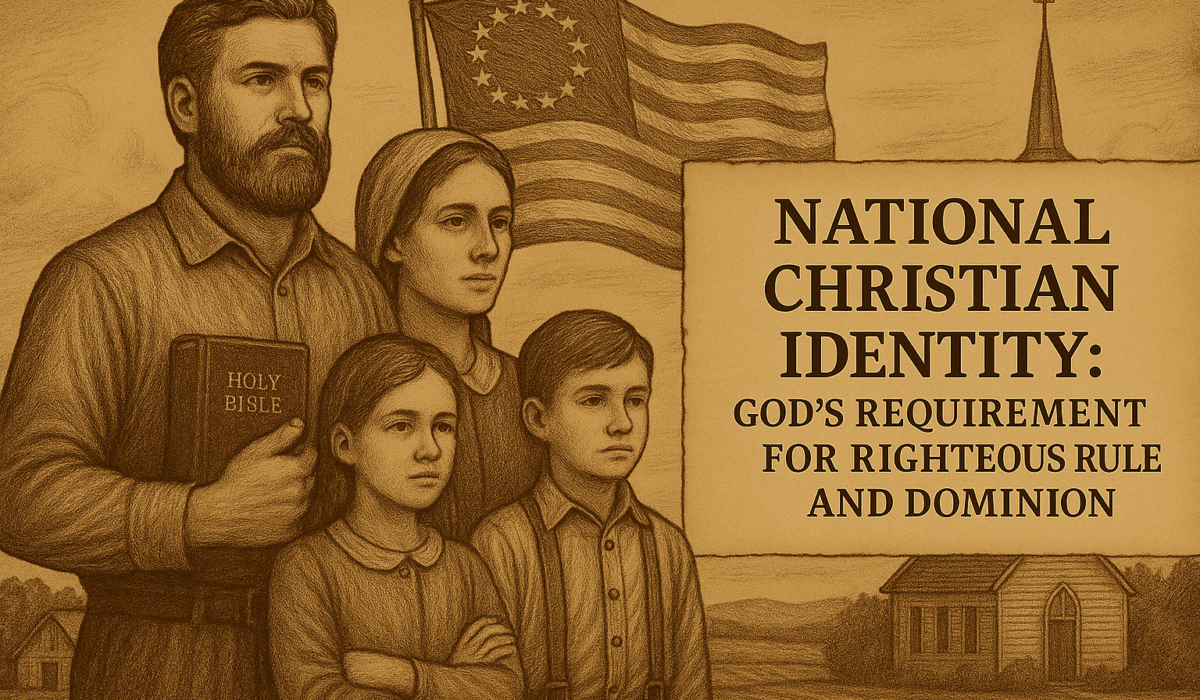
National Christian Identity: God’s Requirement for Righteous Rule and Dominion


Part I: God Requires Nations to Serve Him, Not Neutrally, But Explicitly

The modern myth of neutrality is perhaps the greatest lie swallowed by Christian men in this age. They’ve been taught that nations can be “secular” yet moral, “pluralistic” yet orderly, “inclusive” yet righteous. But the Word of God knows no such contradiction. The LORD of Hosts does not allow neutrality. He demands allegiance!

“Blessed is the nation whose God is the LORD; and the people whom he hath chosen for his own inheritance.”
—Psalm 33:12

This is not poetry without power, it is policy from the throne of Heaven. God blesses nations who call Him Lord. He curses those who reject Him. There is no middle ground.

The idea that Christianity is merely a personal religion, to be kept in private spheres and detached from national governance, is foreign to Scripture. In God’s law, national identity is deeply religious, familial, and jurisdictional. Nations were created by God, and He expects them to serve Him, not merely as individuals, but corporately.


Nations Are Not Accidents; They Are Covenantal Entities

The Tower of Babel was not merely about linguistic confusion; it was about divine judgment and separation. In Genesis 10–11, God divided the nations not simply by geography, but by appointed inheritance and divine boundaries (Deuteronomy 32:8). He created nations for His glory, and He requires that they walk according to His statutes.

The prophets constantly called nations to repent. God judged Moab, Edom, Assyria, Babylon, and Egypt, not merely individuals within them. Their national identity, rooted in false gods, unjust laws, and wicked culture, was the basis for their judgment.

And He called Israel not only as a chosen people, but as a holy nation (Exodus 19:6), with its own law, calendar, culture, and covenant distinct from the world.

That was never rescinded.


The Great Commission Is National

“Go ye therefore, and teach all nations… teaching them to observe all things whatsoever I have commanded you.”
—Matthew 28:19–20

Christ’s command was not just evangelism, it was discipleship of nations. He did not say, “Teach individuals within the nations.” He said, “Teach the nations.” Nations are to be brought under His rule, taught His commands, and restructured according to His law.

The idea of a “Christian nation” is not optional. It is the only lawful kind of nation that may exist. All others are under wrath.


When a Nation Does Not Serve the LORD

When nations reject the Lord, judgment follows. Consider the words of Psalm 9:

“The wicked shall be turned into hell, and all the nations that forget God.”
—Psalm 9:17

America, the West, and much of what we once called Christendom are being turned into hell. Why? Because they have forgotten God.

They’ve removed His name from their documents, His laws from their courthouses, His truth from their schools, and His image from their hearts.

What has followed?
— Blood in the womb
— Perversion in the streets
— Rebellion in the schools
— Tyranny in the courts
— Idols in the churches

This is not coincidence, It is consequence!

Without national Christian identity, there is no restraint. The people cast off God’s law and exalt man’s. Feminism rules. Sodomy is enshrined. Truth is hated. Righteousness is outlawed.

The only solution is not revival within private souls, it is the reestablishment of Christian national identity.


Part II: America Was Born a Christian Nation – And Must Be Reborn as One

Revisionists and atheists will lie about America’s founding, claiming it was secular. They quote Jefferson’s “wall of separation” out of context, ignore the laws of the colonies, and pretend the Constitution created neutrality. But history; real, documented, Christian history, says otherwise.

The Colonial Foundations Were Christian

Before the United States existed, the colonies were thoroughly Christian:

  • The Mayflower Compact declared:
    “Having undertaken for the Glory of God, and advancement of the Christian Faith…”
  • The Massachusetts Body of Liberties (1641) said:
    “If any man after legal conviction shall have or worship any other god, but the Lord God, he shall be put to death.”
  • The Delaware Constitution (1776) required that all officeholders affirm:
    “I do profess faith in God the Father, and in Jesus Christ His only Son…”

They did not seek religious pluralism. They did not tolerate idolaters in leadership. They did not create a secular public square. They built Christian commonwealths, governed by the Bible, dedicated to Christ.


The Founding Fathers Spoke Clearly

Yes, some were Deists. But many were devout. And all of them lived in a culture where Christian identity was assumed, expected, and practiced.

  • George Washington: “It is impossible to rightly govern the world without God and the Bible.”
  • John Adams: “Our Constitution was made only for a moral and religious people. It is wholly inadequate to the government of any other.”
  • Patrick Henry: “It cannot be emphasized too strongly that this great nation was founded, not by religionists, but by Christians.”

They did not invent Christian America. They inherited it.


The Constitution Did Not Abolish Christian Identity

The First Amendment says:
“Congress shall make no law respecting an establishment of religion, or prohibiting the free exercise thereof…”

This did not outlaw Christianity. It prohibited a national denomination (like the Church of England). It preserved the Christian identity of the states and guaranteed freedom for Christian expression.

Every state constitution at the time continued to affirm Christianity. Every community continued Sabbath laws, public worship, Bible education, and godly order.


What Changed?

The slow erosion began with liberal theology, was accelerated by Darwinism and secular humanism, and was legalized by judicial apostasy. Over time, Christians were convinced that they should retreat. That they had no right to legislate. That they must surrender the schools, the courts, the public square, and eventually the family.

This was treason, not to a political system, but to the LORD

Part III: Refuting the Lies – Multiculturalism, Pluralism, and Religious “Freedom” Without Christ

The push to erase Christian identity from nations did not happen by accident. It came by deception; slow, systemic, seductive. The serpent whispered: “Hath God said that a nation must serve Him?” And men listened. They traded covenant for comfort, truth for tolerance, and holiness for human rights. Let us now expose the lies that keep nations from returning to their God.


Lie #1: “Pluralism Makes Us Stronger”

This is perhaps the most common lie. The idea is that a nation filled with multiple religions, cultures, and moral systems can still prosper, so long as there is peace, dialogue, and shared values. But Scripture says otherwise.

“Can two walk together, except they be agreed?”
—Amos 3:3

Pluralism is not strength. It is fragmentation. A nation with competing gods, opposing laws, and conflicting worldviews cannot stand. It becomes a house divided.

Israel was repeatedly warned not to allow foreign religions or gods to dwell among them.

“They shall not dwell in thy land, lest they make thee sin against me…”
—Exodus 23:33

A Christian nation must not give full civil rights and institutional platforms to false religions. To do so is to welcome judgment. Tolerance of evil is not virtue. It is treason against Heaven!


Lie #2: “Separation of Church and State Means Christianity Must Stay Private”

The phrase “separation of church and state” is not in the Constitution. It was used by Thomas Jefferson in a private letter to reassure Baptists that no federal church would be imposed upon them.

It was never meant to imply separation of God and state.

In Scripture, the roles of church and state are distinct, but both are under the law of God. Kings were judged for how they ruled. Nations were destroyed for public sin. Rulers were commanded to kiss the Son.

“Be wise now therefore, O ye kings: be instructed, ye judges of the earth… Kiss the Son, lest he be angry, and ye perish from the way…”
—Psalm 2:10–12

The state is not neutral. It must submit to Christ.


Lie #3: “Religious Freedom Means Every Religion Is Equal”

The modern concept of religious freedom is a Trojan horse. It sounds good, until you realize what it means in practice:

  • Satanic clubs in schools
  • Mosques with taxpayer subsidies
  • Pagan altars in the military
  • Witches lecturing in universities
  • Christians fined for preaching truth

Religious freedom without limits is an idol. It places every god on equal footing with the LORD. But God declares:

“Thou shalt have no other gods before me.”
—Exodus 20:3

A Christian nation may permit the private conscience of unbelievers to exist with mercy, but it must not allow false religion to govern, to shape law, or to hold public office. The magistrate is a servant of God, not an umpire over spiritual diversity.


Lie #4: “Morality Can Exist Without Religion”

Some claim that we don’t need a Christian nation, we just need moral people. But where does that morality come from?

“The fear of the LORD is the beginning of wisdom.”
—Proverbs 9:10

There is no true morality apart from God’s law. Every other moral system is arbitrary, shifting, and ultimately satanic. Secular governments rewrite morality to serve power. Christian nations are anchored to eternal truth.

If we want righteous laws, protected families, justice in courts, and peace in the streets, we must return to the only source of morality: the law of God.


Lie #5: “Jesus Said His Kingdom Is Not of This World”

This lie is popular among pietists who reject political involvement. They quote John 18:36 to suggest that Christianity is only spiritual, not national. But they misread the text.

Christ was not denying His claim to earthly kingship, He was clarifying the source of His authority. His Kingdom does not originate from man, politics, or violence. It comes from Heaven.

But that Kingdom is coming to earth.

“The kingdoms of this world are become the kingdoms of our Lord, and of his Christ…”
—Revelation 11:15

We are not called to retreat, we are called to conquer. To teach nations. To disciple governments. To proclaim His Lordship in every sphere.


Summary: The Lies Must Be Burned

These five lies, pluralism, neutrality, false freedom, secular morality, and private-only Christianity, are the pillars of modern apostasy. They must be torn down. And in their place, the banner of Christendom must rise again.

The solution is not compromise. It is covenantal return.

Part IV: Why God Demands National Identity – Law, Covenant, and Dominion

A nation is not just a shared language, border, or economy. A true nation is a people defined by worship, by law, and by covenant loyalty to God. The Almighty did not build Babel. He broke it. He divided the nations and established His own dominion. From Abraham, He began to form a holy people, not only personally righteous, but nationally distinct.

Let us examine why God demands this.


1. Because Nations Are Under Law

Every nation has laws. The only question is: Whose laws?

  • Will we legislate based on the word of God or the will of man?
  • Will we use divine standards of justice or redefine evil as good?
  • Will we protect the righteous or punish them?

God told Israel:

“This is your wisdom and your understanding in the sight of the nations… what nation is there so great, that hath statutes and judgments so righteous as all this law?”
—Deuteronomy 4:6–8

God’s law is the foundation of a great nation. Without it, there is only confusion, corruption, and collapse.

Law must come from the top; from the throne of Heaven. When it comes from below, it reflects the heart of man: deceitful, desperately wicked, and full of rebellion.

The goal is not to elect better tyrants. The goal is to rebuild the nation on God’s law.


2. Because Covenant Is National

We often think of covenant only in terms of the individual, but Scripture teaches otherwise. When God made covenant with Israel, He did so with the entire nation. He brought them out as families, tribes, and a people.

“The LORD our God made a covenant with us in Horeb. The LORD made not this covenant with our fathers, but with us, even us, who are all of us here alive this day.”
—Deuteronomy 5:2–3

Covenant includes:

  • National obedience (Deuteronomy 28)
  • National blessings or curses
  • National remembrance through feasts
  • National repentance (2 Chronicles 7:14)

If nations are under covenant, then they must live like it. A Christian nation affirms its covenant by exalting Christ, submitting to His Word, honoring His calendar, and teaching His laws.

This is not just Old Testament truth. Paul wrote to churches by city. John addressed the seven churches in Asia. Christ rules over nations and households, not merely individuals.


3. Because Dominion Is Corporate

The command to take dominion (Genesis 1:28) is not fulfilled by lone individuals in isolation. It requires households, tribes, and nations acting in harmony with God’s purpose. Dominion is about filling the earth with God’s image, not just privately, but publicly.

“And the kingdom and dominion… shall be given to the people of the saints of the most High…”
—Daniel 7:27

A Christian nation is a vehicle of dominion. It trains its people in righteousness. It protects godly families. It punishes evil. It supports worship, education, industry, and holy order.

You cannot take dominion in a vacuum. You must build a culture, structure, and system of governance that reflects the Kingdom of Christ.

God requires national Christian identity because only a righteous nation can advance righteous dominion.


4. Because Identity Is a Weapon

The greatest threat to tyrants is a people who know who they are. National Christian identity is not just cultural nostalgia, it is a spiritual weapon.

  • It gives a people memory.
  • It gives them law.
  • It gives them clarity in chaos.
  • It binds generations under the same flag, Christ.

When a people lose identity, they become slaves. They adopt foreign gods, foreign laws, and foreign loyalties.

This is why God continually called His people to remember who they were:

“And thou shalt remember that thou wast a bondman in Egypt, and the LORD thy God redeemed thee…”
—Deuteronomy 15:15

Christian identity is not about superiority. It is about covenant loyalty. We are not better than others by nature, but we are different by grace. We are called to holiness, separation, and mission.


5. Because God Is Jealous for His Glory

Finally, God demands national allegiance because He alone is worthy of it. He will not share glory with false gods, false laws, or false kings.

“I am the LORD: that is my name: and my glory will I not give to another…”
—Isaiah 42:8

Nations that refuse to exalt Christ are stealing glory from God. They are building Babel again. They are attempting to govern without the Governor of the Universe.

But God will not be mocked. He is raising up a remnant; fathers, households, churches, and movements, that will rebuild the ancient foundations and declare, not in whispers, but in public law:

“Blessed is the nation whose God is the LORD.”

Part V: A New Christian Nation – What We Must Do to Reclaim and Rebuild

It is not enough to merely lament the loss of Christian identity. It is not enough to shake our heads at the rebellion of the culture or to whisper about revival from behind pulpits of compromise. God is calling for a generation of patriarchs to rise, to build, to govern, and to establish once again what our forefathers gave their blood to plant: a Christian nation.

This is not theoretical. This is not nostalgic. This is war. And the first battleground is the household.


Step 1: Rebuild the Christian Household

Every great nation begins with a great house. If the men of God will not rule their own homes, they are unfit to rule anything. We must begin with restored households:

  • A man submitted to Christ
  • Wives walking in joyful submission
  • Children taught the law of God
  • Sabbath observed
  • Feasts celebrated
  • Discipline enforced
  • Order restored

Each home becomes a government in miniature; an embassy of the coming Kingdom. From these households will emerge the leaders, builders, and lawgivers of the new Christian nation.


Step 2: Reform the Church

The modern church is complicit in the destruction of Christian national identity. It has preached pietism instead of dominion, pluralism instead of covenant, and tolerance instead of truth.

We must reform the church by:

  • Rejecting tax-exempt muzzling and political neutrality
  • Teaching the whole counsel of God, including His law
  • Calling nations, not just individuals, to repent
  • Training men in Biblical leadership
  • Rebuilding church discipline, authority, and worship

The church must once again teach nations to obey. Not just how to be saved, but how to govern, how to legislate, how to educate, and how to live.


Step 3: Take Local Ground

National transformation does not begin in Washington, D.C. It begins in your county, your town, your neighborhood. Raise up godly men to run for office, not to conform, but to conquer.

  • Elect school board members who will ban perversion
  • Elect judges who will uphold Biblical justice
  • Elect sheriffs who will defend local Christian law
  • Elect magistrates who will nullify tyrannical federal mandates

Build alternative systems:

  • Christian schools and homeschools
  • Christian businesses and co-ops
  • Christian networks for agriculture, finance, and media

Let the righteous build cities again.


Step 4: Enshrine Biblical Law in Civil Code

Christian identity is not just about symbolism. It must be codified. The law of God must become civil law again.

This means:

  • Criminal justice that reflects Exodus 21–23
  • Abolition of abortion, sodomy, and pornography
  • Restitution-based punishment
  • Public Sabbath protection
  • Public acknowledgment of Jesus Christ as King

A Christian nation is not just full of Christians. It is governed by the Christ. If the laws do not reflect God’s Word, the nation does not reflect God’s character.


Step 5: Reject and Replace Pagan Culture

We must burn the idols.

  • Replace Hollywood with household theater, storytelling, and hymnody
  • Replace state schools with generational discipleship
  • Replace media addiction with family worship
  • Replace secular music with psalms
  • Replace pornographic fashion with modesty
  • Replace feminism with fruitful femininity

Culture must flow from the household of faith. A Christian nation is not only just; it is beautiful. Its art, its holidays, its music, its customs, all point to the Lord of glory.


Step 6: Establish Confessional Documents and Covenantal Language

We must declare openly what we believe. The founding fathers wrote covenants, compacts, constitutions, and declarations. We must do the same.

  • Draft city charters that name Jesus Christ as Lord
  • Create statements of Christian civil order
  • Restore creeds and catechisms to family life
  • Write oaths of office that require submission to Christ’s kingship

Let the pen once again be the sword of reformation.


Step 7: Prepare to Suffer

The enemies of God will not go quietly. A return to Christian national identity will bring opposition. Some will lose jobs. Others will lose wealth. Some may face imprisonment or exile.

But we are not building a nation of comfort, we are building a Kingdom.

“Yea, and all that will live godly in Christ Jesus shall suffer persecution.”
—2 Timothy 3:12

We must teach our children to expect it. We must prepare our wives to endure it. We must discipline ourselves to embrace it.

Suffering is the seedbed of dominion.


Final Call: Rise and Rebuild

Christian men, the hour is late. The walls are broken. The gates are burned. The nation has been overrun by pagans, perverts, cowards, and traitors.

But the Kingdom of Christ cannot fail.

“Of the increase of his government and peace there shall be no end…”
—Isaiah 9:7

Our task is not to retreat. Our task is to advance. To raise the banner of Christ. To teach our children to rule. To disciple our wives in the law of God. To build churches that stand like fortresses. To seize the levers of culture and power with holy hands.

Let the Christian nation rise again.

Not by compromise.

Not by revolution.

But by reformation, repentance, and return.

Let the Christian man return to headship.

Let the Christian household return to dominion.

Let the Christian church return to courage.

Let the Christian nation return to covenant.

“Blessed is the nation whose God is the LORD.”
—Psalm 33:12

Let it be ours, and let the Great Order be restored!
A Wife’s Divine Role in the Household Economy

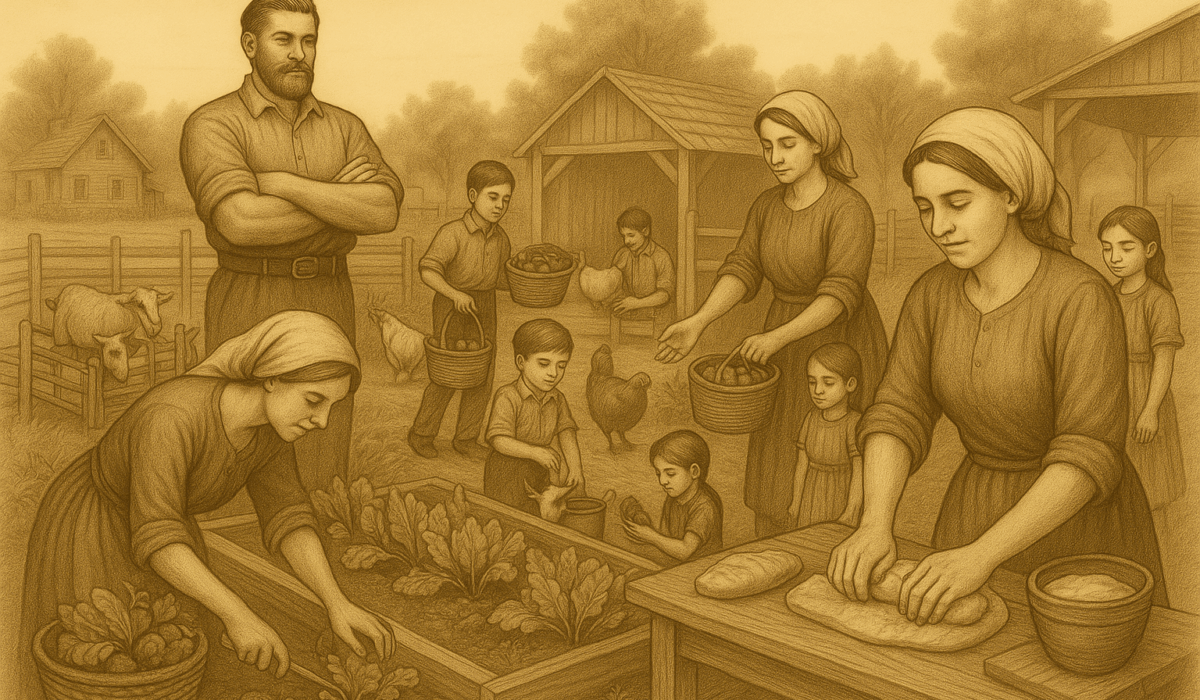
Throughout Scripture, the home is not a place of passivity, but a center of dominion, production, and wisdom. The biblical wife is not an idle consumer, she is a producer, manager, and guardian of the household economy. Proverbs 31, Titus 2, and 1 Timothy 5 collectively paint a picture of a woman who is resourceful, industrious, and economically impactful.

I. A Commanded Role

In Titus 2:4–5, older women are instructed to teach the younger to be: “…keepers at home… that the word of God be not blasphemed.” This is not a mere suggestion, it is a divinely ordained responsibility. The Greek phrase used, oikourgos, implies a worker at home: a steward, not merely a presence. She is not just in the home, she is managing it with purpose.

Proverbs 31 reveals a woman who buys land, plants vineyards, strengthens her arms, weaves with skill, and supplies her household with food, clothing, and profit. This is not a delicate flower waiting to be served. She is the engine of household resilience.

II. Her Husband’s Glory

“The heart of her husband doth safely trust in her, so that he shall have no need of spoil” (Proverbs 31:11).

This means that because of her efforts, her husband doesn’t need to raid or plunder, her productivity fills that need. In a modern context, this would be equivalent to not needing second jobs, payday loans, or takeout dinners. The wife’s economy protects and multiplies the husband’s provision, she does not drain, waste or squander it.

III. Historical Household Economies

Historically, households were productive units. Before the industrial era, women were vital contributors: spinning wool, baking bread, growing herbs, preserving harvests, and managing goods. In Colonial America, for example, wives produced nearly 80% of what their families consumed.

In medieval manors, the mistress of the house oversaw food stores, seasonal harvest planning, textile production, and even medical care via herbs and poultices. These skills were essential, not hobbies, and were handed down generationally.

Even as recently as the Great Depression, families that survived were those in which the wife could stretch resources, grow food, make clothes, and barter.

IV. Wives of a Great Household

Let us consider the context of a large biblical household, a husband, two wives, and nine children. Such a home is not maintained by money alone. It is upheld by the wise management and productive labor of the wives.

In this model, the goal is that the wives combined would produce at least 25% of the household’s food and goods, with a target of 50%. This is not fantasy; it is ancient precedent.

In an ideal climate and with just 600 square feet of garden space, a wife can grow hundreds of pounds of produce a year. With canning, fermenting, and preserving, this abundance carries through winter. Add bread-making, soap-crafting, meal planning, and haircuts, and the home becomes not just a place of consumption but of value creation.

V. The Daily Waste of Idleness

Let’s quantify what’s lost when this mandate is ignored. The estimates below are based on a 12-person household with 3 adults using the median amounts.

  • Not gardening: -$6/day
  • Store-bought bread: -$3/day
  • No canning: -$2/day
  • No bartering: -$3/day
  • Buying clothes: -$3.25/day
  • Store-bought cleaners: -$3.50/day
  • Buying candles: -$0.50/day
  • Children’s Haircuts: -$5.14/day
  • No meal planning: -$2/day
  • Energy waste: -$3/day
  • No herb garden: -$1/day
  • Coffee out: -$15/day
  • Food delivery: -$5/day
  • Streaming Media Filth: -$3/day

Total waste: $55.39/day

If that money were preserved and invested with just 8% annual growth, over ten years the family would gain:

$309,681.55

This is the cost of rejecting the woman’s dominion in the home, and this is just some of the waste. In the next section, we will explore how a 600 sq ft garden, in the hands of a skilled wife, can feed the family, reduce costs, and transform the family economy

VI. The 600 Square Foot Garden – Dominion from the Ground Up

The average American family considers gardening a hobby. In a righteous household, it is a strategy of dominion. With just 600 square feet, roughly the size of a small studio apartment or a 20’x30’ plot, wives can lay the foundation for economic transformation.

VII. What Can Be Grown

Assuming a temperate climate with 3-season growth, intensive gardening techniques such as vertical planting, square-foot gardening, and succession sowing allow for high-density food output. Here’s what a well-managed 600 sq ft garden can produce annually:

  • Tomatoes: 150–200 lbs
  • Leafy greens (lettuce, kale, chard): 100–150 lbs
  • Beans (pole and bush): 50–100 lbs
  • Root vegetables (carrots, beets, radish): 100–150 lbs
  • Peppers: 30–60 lbs
  • Summer squash/zucchini: 50–75 lbs
  • Potatoes (grown vertically): 100–200 lbs
  • Culinary herbs (basil, parsley, oregano, etc.): 10–20 lbs
  • Total yield: 900ish lbs of food/year Caloric value: ~400,000+ calories

That’s roughly 25% of the total household food budget. Grown with only sweat and stewardship.

VIII. Techniques for Maximum Output

  • Raised beds with rich composted soil
  • Vertical growing using trellises and cages
  • Companion planting to repel pests and optimize nutrients
  • Succession planting for continuous harvests
  • Rainwater collection and mulching to reduce watering needs

IX. Canning and Preserving the Surplus

Fresh produce is fleeting. Wise wives preserve the harvest:

  • Water-bath canning for tomatoes, pickles, fruits
  • Pressure canning for beans, squash, and broth
  • Drying and preserving for potatoes, garlic, onions
  • Freezing for greens and herbs

This ensures year-round food security and prevents dependence on fragile supply chains.

X. Cost and Value

Organic produce equivalent: ~$3–5 per pound

At 750 lbs × $4 avg = $3,008 value annually ($250.00 Monthly)

That’s just from the garden. When paired with home cooking, preservation, and trading with others, that space becomes a cornerstone of the household economy.


XI. Domestic Skill Sets – Building the Household Economy by Hand

The productive wife is not only a gardener, but also a builder of daily infrastructure, meeting family needs with her own hands. In a family of 12, every small saving multiplies, and every act of skillful provision compounds into generational wealth. These crafts, once considered basic to feminine maturity, are now revolutionary acts of household sovereignty.

A. Bread Baking: Daily Bread as Daily Wealth

A single loaf of artisan bread costs $5–$8 in today’s market. A wife can bake it for under $1.

  • Skill Level: Beginner
  • Startup Needs: Flour, salt, yeast/sourdough, standard oven
  • Savings: $5–$8 per loaf × multiple loaves per week = $2,500+/year

Children raised with fresh bread, homemade butter, and warm hospitality are both healthier and anchored in memory. These skills become traditions.

B. Soap & Cleaner Making: Removing Dirt, Adding Value

Homemade soaps, laundry detergent, and all-purpose cleaners cost pennies to make and remove the need for toxic commercial chemicals.

  • Ingredients: Lye, fat, baking soda, essential oils, vinegar
  • Tools: Mold, crockpot or stovetop, safety gloves
  • Savings: $3.50/day = $1,277.50/year

Soap-making can be batch-produced monthly, allowing for stockpiling and bartering.

C. Sewing & Mending: Stitching Wealth into Clothes

Mending ripped knees, hemming skirts, or making seasonal pajamas from patterns preserves clothing value and adds personal flair.

  • Startup Needs: Sewing machine, thread, needles, patterns, scrap fabric
  • Savings: $3.25/day = $1,186.25/year
  • Advanced Skills: Dressmaking, uniform making, denim repairs, custom sizing

D. Meal Planning: Strategic Stewardship

Planning meals weekly prevents food waste, lowers stress, and maximizes use of homegrown and bulk-bought goods.

  • Savings: $2.00/day = $730/year
  • Time: 10–30 minutes/week
  • Tool: Simple notebook, calendar, or app

E. Candle Making: Ambiance and Utility

In power outages or cozy evenings, beeswax or tallow candles are useful and beautiful. Homemade candles last longer and can be crafted with herbs or essential oils.

  • Cost to make: ~$0.50
  • Retail equivalent: $5–7 per candle
  • Savings: $0.50-1.00/day = $200+/year

F. Haircuts: $20 Every 5-6 Weeks × 9 Children

A pair of quality clippers and some practice yields professional results and saves hundreds yearly.

  • Savings: $5.14/day = $1,876.10/year

G. Bartering & Trading

Many women’s talents are uneven. One excels at sourdough, another at fermentation, another at sewing. Trading excess goods, sourdough starter, jams, soaps, baby clothes, builds local networks and replaces dollars with relationships.

  • Estimated value exchanged: $3.00/day = $1,100+/year

These skills are not luxuries. They are acts of economic warfare against a system designed to make women idle consumers. When women take dominion, they decentralize the economy, disempower Babylon, and elevate their homes.

In the next section, we’ll look at utility reduction, modern traps (like delivery and streaming), and the compounded savings of household wisdom.

XII. Modern Traps, Utility Reduction, and Compounded Wisdom

The modern home bleeds money not through major catastrophe but by a thousand daily cuts. Women who fail to steward their homes allow the enemy to rule through convenience, subscription, and passive waste. But wise wives can turn these liabilities into savings that grow exponentially.

XIII. Utility Stewardship: Lowering the Burn Rate

Utilities drain silently, electricity, heating, water, gas, unless someone takes dominion. The keeper of the home must also be the manager of its consumption.

  • Simple practices:
    • Line-drying clothes
    • Turning off unused lights and appliances
    • Using crockpots and solar ovens
    • Keeping doors closed
    • Closing off unused rooms during the day
    • Planning cooking times
    • Cooking outdoors
    • Strategic window insulation or coverings
    • Bathing children together or with reused rinse water
  • Daily Savings: $3.00/day = $1,095/year

XIV. The Lure of Delivery and Convenience Food

Ordering takeout, food delivery apps, and prepackaged meals are signs of household decline. These costs pile up especially in large families, where the economy of home cooking is exponential.

  • Estimated cost per order: $25–$60
  • Daily avoidance savings: $10.00/day = $3,650/year

Home-cooked meals from planned menus, rooted in your own garden and pantry, are not just frugal, they are feasts of obedience.

XV. Entertainment Addiction: Streaming and Screens

Households that stream Netflix, Disney+, Hulu, YouTube Premium, and Spotify are not merely wasting money, they’re outsourcing imagination. These platforms cost families spiritually and financially.

  • Average cost: $60–$100/month across services
  • Daily savings from cancellation: $3.00/day = $1,095/year

Replace screens with board games, books, prayer, reading aloud, nature walks, and family worship. This substitution saves money and souls.

XVI. Coffee Out: Latte Poverty

Modern adults often mistake $5 lattes for sanity breaks. Multiply that by three adults daily and you have an addiction disguised as necessity.

  • 3 adults × $5/day = $15.00/day = $5,475/year

A wife who learns to make strong, hot, nourishing coffee at home not only saves money, she reclaims rhythm and ritual.

XVII. The Compounding Cost of Convenience

Let’s total what’s wasted by a household of 12 when dominion is rejected in these modern traps:

  • Utility waste: $3.00
  • Delivery food: $10.00
  • Streaming: $3.00
  • Coffee out: $15.00

Daily Loss: $31.00

At 8% interest, compounded over ten years, this becomes:

$181,613.17 in preventable financial hemorrhage.

Add that to the savings from Sections 5 and we’re over $400,000 in economic dominion reclaimed. This is not prosperity gospel. This is simply Biblical stewardship.

Section 5: Final Tally – Ten Years of Faithful Stewardship

The combined daily savings from faithful wife-led productivity in this average biblical household add up rapidly. Below is a breakdown of economic impact based on conservative daily savings:

  • Gardening (600 sq ft) $8.25
  • Baking fresh bread $7.00
  • Canning & preserving $2.00
  • Trading/bartering with others $3.00
  • Sewing & mending clothes $3.25
  • Homemade soaps/cleaners $3.50
  • Homemade candles $0.75
  • Cutting children’s hair (9 kids) $5.14
  • Meal planning (reducing food waste) $2.00
  • Reducing utility use (conservation) $3.00
  • Growing culinary/medicinal herbs $1.00
  • Not buying coffee (3 adults @ $5/day) $15.00
  • Total Daily Savings $63.89

📈 Compound Impact Over 10 Years (8% Interest)

If the wives faithfully take dominion over these areas daily, the compounded financial effect over 10 years at just 8% interest is:

💰 Over $400,000 saved and reinvested.

This does not include the additional $145,623.17 saved from eliminating wasteful habits like food delivery, subscription entertainment, and unnecessary utility usage.

XVIII. Total Household Impact

$400,000 + $145,623 = $545,623 over ten years.

This is the legacy of wise women. Not one of luxury or vanity, but of faithfulness, frugality, and fruitfulness. Through the skills of her hands, the wisdom of her planning, and the labor of her love, the wife becomes the cornerstone of the household economy.

This is biblical. This is historic. And in an age of artificial ease, it is revolutionary.

Let her be praised.

“Give her of the fruit of her hands; and let her own works praise her in the gates.” – Proverbs 31:31

XIX. Beyond the Basics – Expanding the Household Economy and the Case for Multiple Wives

Everything covered thus far represents only the beginning, the minimum standard of productive stewardship. The truth is, the potential for wives to build and bless the household economy is vast. Once the basics are mastered, a household can expand into full-scale provision and even surplus.

A. Livestock and Animal Husbandry

  • Chickens provide daily eggs, occasional meat, composting help, and pest control.
  • Goats offer milk, manure, meat, and brush-clearing power.
  • A dairy cow can sustain butter, yogurt, cream, and cheese needs for the entire family.

These are not rustic fantasies, they are practical, proven systems for food security and economic independence.

B. Home-Based Production and Sales

  • Cheese, jams, breads, soaps, herbal salves, and sewn goods can be sold at local markets.
  • Online platforms like Etsy or local co-ops allow for cottage-industry income.
  • Children raised in these homes learn entrepreneurial thinking, not entitlement.

C. Strategic Frugality and Bulk Systems

  • Couponing and bulk buying save thousands annually.
  • Cloth diapering, reusable goods, and repair culture cut invisible costs.
  • Bartering labor or goods turns excess into trade value without taxation.

XX. Why Multiple Wives?

A household of twelve, with nine children, is not a small operation. It is a small nation. To run it well requires hands, hearts, and laborers.

  • Two wives can manage the foundational work, gardening, cooking, laundry, and children if they are focused and dedicated.
  • Three, four or more can expand the system into livestock, artisan goods, elder care, or homeschooling leadership.

Each wife brings her strengths: one may sew, one may bake, one may teach, one may manage livestock. Polygyny allows for household diversification and scale. No single woman can do it all, but a wise household led by a righteous man can multiply talent across his wives.

This is not exploitative, it is biblical (Genesis 4:19, Exodus 21:10), practical, and historically normal. More wives mean more output, more unity, and more margin. The modern nuclear model of isolated exhaustion fails where biblical households flourish.

Conclusion: The home is an economy, a ministry, a legacy. Wives are not burdens, they are builders. And in a rightly ordered home, every act of productivity becomes an act of praise.

This is The Great Order!

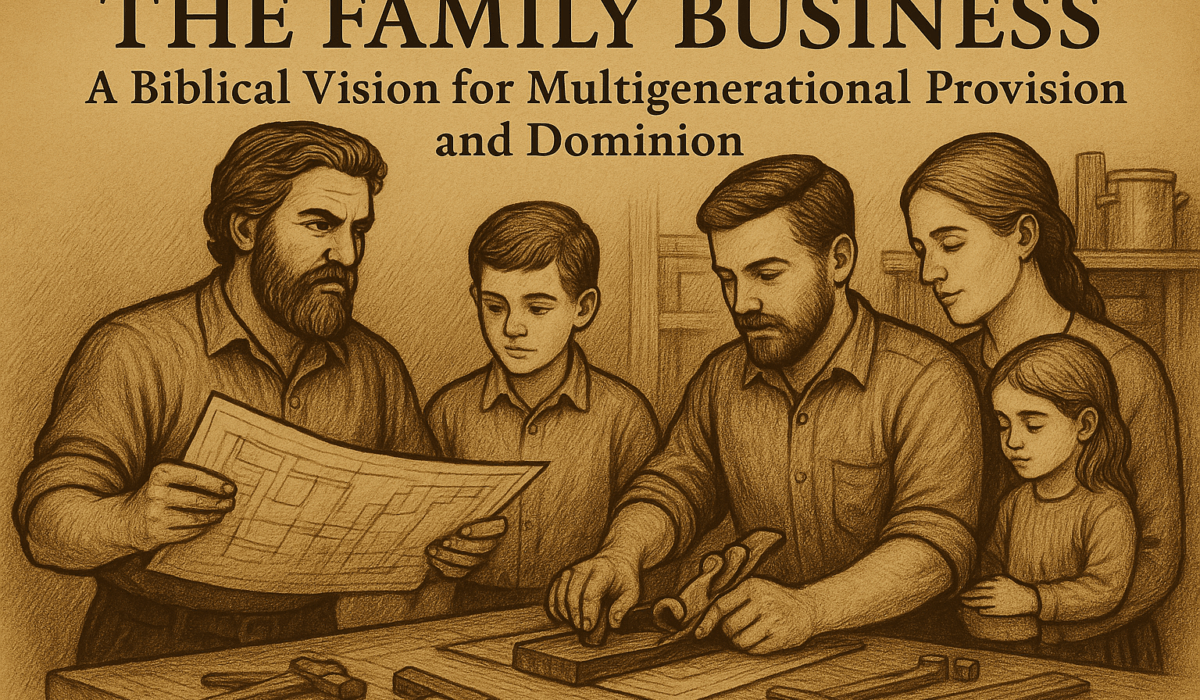
The Family Business: A Biblical Vision for Multigenerational Provision and Dominion

By Lord Redbeard
Bold Foundations for Biblical Patriarchy, Masculinity, and Household Dominion


I. Introduction: Reclaiming the Family Economy

The modern man clocks in, clocks out, and clocks out of his legacy in the process. He works to survive, not to conquer. His labor is detached from his household. His paycheck disappears into rent, bills, and taxes while his sons play video games and his daughters dream of employment in soulless corporations. This is not dominion, it is defeat disguised as progress.

God never intended for men to be cogs in a godless economy. He did not create man to serve bureaucracies, but to build dynasties. God’s design for work, wealth, and provision is not individualistic, fragmented, or impersonal. It is covenantal, ordered, and multigenerational. At the heart of this divine order is the family business, not merely as a financial tool, but as a spiritual calling.

From Abraham to the early Church, Scripture presents the household as the center of economic life. The modern Western divorce between faith, family, and finances is a form of economic and spiritual rebellion. It has robbed men of their power, women of their place, and children of their inheritance.

This is a call to rebuild the household economy, to launch and manage multigenerational family businesses that serve the purpose of dominion, discipleship, and provision under the lordship of Christ. We will draw from Scripture, history, research, and practical wisdom to outline the path forward.


II. The Biblical Pattern: Work as Worship and Legacy

A. The Mandate to Rule and Build

“And God blessed them, and God said unto them, Be fruitful, and multiply, and replenish the earth, and subdue it: and have dominion…”
—Genesis 1:28

This is not a poetic suggestion. This is a divine command. Dominion is the purpose of creation. The man who does not build, multiply, and rule is disobedient, no matter how pious he appears.

Economic dominion is not incidental, it is essential. God placed Adam in a garden to work and guard it. He gave him land, labor, and law. Work was never secular, it was sacred. It was worship. And from the beginning, man’s labor was to flow through the household.

B. Abraham: A Case Study in Covenant Capitalism

Abraham was not a wage-earner. He was a patriarch, an entrepreneur, and a master of men.

“And Abram was very rich in cattle, in silver, and in gold.” —Genesis 13:2
“And when Abram heard that his brother was taken captive, he armed his trained servants, born in his own house, three hundred and eighteen…” —Genesis 14:14

His wealth was not abstract. It was rooted in land, livestock, laborers, and sons. His household was so vast it functioned like a kingdom. His sons were his heirs, his men were trained, and his economy was generational.

God called Abraham not just to believe, but to build. And his business was inseparable from his family.

C. Proverbs and the Household Economy

“A good man leaveth an inheritance to his children’s children…”
—Proverbs 13:22

“The house of the righteous shall stand.”
—Proverbs 12:7

“The crown of the wise is their riches.”
—Proverbs 14:24

The book of Proverbs is not the journal of a monk. It is the economic manual of a patriarch. It commands stewardship, skill, diligence, and investment. And it links all of it to the household.

Solomon did not advise men to outsource provision to the state or delegate their children’s futures to random corporations. He commanded men to build legacies. That means businesses. Enterprises. Structures that endure.


III. The Destruction of the Family Business Model

A. Industrialism and the Rise of the Disconnected Worker

Prior to the 19th century, most families labored together. The home was the center of economic production. Fathers taught their sons trades. Mothers taught daughters the domestic arts. Property stayed in the family. Wealth was passed on, not lost.

But with industrialism came fragmentation. Men left home for factories. Women left for offices. Children were sent to schools. The family stopped producing, and started consuming.

Now, the average father works for strangers, his wife works for strangers, and his children are raised by strangers. This is not liberty. It is enslavement!

B. Feminism and the War on Domesticity

Feminism finished what industrialism started. It not only removed women from the home, it vilified the home. It told women that building a house and raising children was beneath them.

It also told them to chase jobs, under other men, while pretending to be “independent.” The household, once a productive center of culture and commerce, became a dormitory where family members only slept, streamed, and scrolled.

The result? Broken inheritance. No generational skills. No family economy. No ownership. No dominion.

C. Statism and Economic Infantilization

The modern state thrives on dependency. It encourages generational poverty by rewarding fatherlessness, taxing inheritance, regulating entrepreneurship, and offering just enough benefits to discourage enterprise.

The man who starts a business with his sons is seen as dangerous, because he is building power. He is raising free men. He is reclaiming headship.

The state fears the patriarch. The state loves the employee.


IV. Starting a Family Business: Vision, Strategy, and Calling

A. Begin with a Biblical Vision

Before you start a family business, you must know why.

  • Not just to make money.
  • Not just to escape a job.
  • But to obey God, equip your household, and establish dominion.

Your business must be mission-driven. Every decision, from branding to hiring, must serve your household’s future.

“Commit thy works unto the Lord, and thy thoughts shall be established.” —Proverbs 16:3

Do not launch with haste. Begin with fasting, prayer, Scripture, and counsel from elders.

B. Choose a Model That Supports Your Family Structure

Not all business models are equally biblical. Choose one that:

  • Allows you to work with your wife and children.
  • Allows your sons to learn and eventually lead.
  • Provides services or products consistent with biblical values.
  • Avoids entanglement with woke bureaucracies or immoral markets.

Examples:

  • Agriculture (farming, livestock)
  • Construction, trades, and contracting
  • Homestead-based goods (soap, food, textiles)
  • Media, publishing, Christian education
  • Local manufacturing or repair shops

Start small. Start simple. But start with order.

C. Structure It with Generational Succession in Mind

Don’t build a one-man empire. Build a household economy.

That means:

  • Teach your sons from day one.
  • Involve your wife in accounting, planning, or production.
  • Document everything: systems, procedures, workflows.
  • Incorporate or structure legally for succession (LLC, family trust, etc.).
  • Avoid unnecessary debt. Build gradually. Own your assets.

Train your children not to be workers, but builders.

“And these words, which I command thee this day, shall be in thine heart: And thou shalt teach them diligently unto thy children…”
—Deuteronomy 6:6–7


V. Managing the Business: Order, Accountability, and Discipleship

A. Establish Household Hierarchy

The business should reflect your family order.

  • The father is the head.
  • The wife is his helpmeet.
  • The sons are his apprentices.
  • The daughters are trained in household and relational service.

Disorder in the home will breed disorder in the business. Lead your household in worship first, then in work.

“He that ruleth his own house well…” —1 Timothy 3:4

B. Schedule Daily Work and Weekly Rest

Build routines that teach discipline. Every member should know:

  • What they are responsible for.
  • What the timeline is.
  • Who reports to whom.

And above all: keep the Sabbath. Weekly rest is not an option. It is part of your testimony.

“Six days shalt thou labour, and do all thy work… the seventh is the sabbath of the Lord thy God.” —Exodus 20:9–10

Let your employees and children know: we worship, then we work.

C. Manage Growth Without Losing the Mission

As the business grows, be cautious:

  • Do not hire strangers who do not share your values.
  • Do not scale so fast that your family becomes fractured.
  • Do not allow profit to replace purpose.

Many patriarchs have lost their households by growing their empires too fast. Growth is good. But it must be governed.


VI. Expanding the Business: Legacy, Land, and Local Power

A. Train Sons to Lead

A business that dies with you is a failure. Your sons must be trained to:

  • Work in every role.
  • Understand the numbers.
  • Negotiate, manage, and lead.
  • Defend the family’s interests with wisdom and boldness.

Let your sons know: “One day, this is yours to steward for your children.”

B. Acquire Land and Infrastructure

Dominion requires assets.

  • Buy the building.
  • Buy the land.
  • Build the tools.
  • Own the vehicles.
  • Invest in durable equipment.

“Prepare thy work without, and make it fit for thyself in the field; and afterwards build thine house.” —Proverbs 24:27

Land and tools give leverage. They reduce dependence. They increase resilience.

C. Build Intergenerational Partnerships

Your business should not be isolated. Partner with other Christian families:

  • Buy from them.
  • Sell to them.
  • Hire their sons.
  • Marry your children to their children.

This is how kingdoms are built. Not by corporations, but by clans.

The early Church grew not just through preaching, but through networks of families who worshiped together, worked together, and married within the faith.


VII. Historical Examples: Legacy Builders

A. The Hebrew Household Economy

Israel’s economy was rooted in:

  • Land inheritance (Leviticus 25)
  • Family trades (carpenters, farmers, herders)
  • Generational apprenticeship (Exodus 31:6)

The goal was perpetual provision through patriarchal stewardship.

B. Medieval Guilds and Christian Tradesmen

During the Christian Middle Ages:

  • Families ran shops, smithies, and workshops.
  • Sons inherited their father’s trade.
  • Guilds reinforced Christian ethics and training.
  • Local economies revolved around faithful fathers.

C. The Protestant Work Ethic and Reformation Households

The Reformation revived the doctrine of vocation.

Luther and Calvin taught that labor, done to God’s glory, was holy. Christian families:

  • Opened printing presses.
  • Started schools and farms.
  • Dominated commerce in Geneva, Germany, Scotland, and the New World.

Their legacy created Western civilization.


VIII. Modern Studies and Data

A. Family Businesses Are More Resilient

According to the Family Firm Institute:

  • Family businesses account for 64% of U.S. GDP.
  • They employ 62% of the U.S. workforce.
  • They outperform non-family firms in long-term profitability and stability.

B. Multigenerational Transfer Is Rare—but Powerful

Only 30% of family businesses survive into the second generation.
Only 12% survive into the third.

Why? Because few build with succession in mind.

Those that do—like Chick-fil-A, Hobby Lobby, and many Mennonite and Amish businesses, dominate for decades.


IX. Daughters in the Household Business

A word must be said about daughters.

They are not to be overlooked. While they are not called to rule or lead, daughters are essential to the household economy. They can:

  • Assist in administration, bookkeeping, and communication.
  • Manage client relations or social media under father’s oversight.
  • Create value through domestic crafts, baking, hospitality, etc.
  • Be prepared for marriage to another patriarch.

They are not bosses, but builders. They are trained to one day manage the house of their future husband with grace and strength.

“She looketh well to the ways of her household…” —Proverbs 31:27


X. Conclusion: Rise and Build

We are not called to pass through this world as renters and employees. We are called to possess the land. To rule. To reign. To build the household of faith.

The multigenerational family business is not a luxury. It is a mandate. It is the structure by which we obey God’s Word, train our children, preserve our faith, and build our kingdom.

Do not wait for the economy to collapse. Do not wait for permission. Do not wait for the perfect time.

Start now. Build slowly. Work faithfully. And leave behind not just a name, but a dynasty. “Let thy work appear unto thy servants, and thy glory unto their children. And let the beauty of the Lord our God be upon us: and establish thou the work of our hands…”
—Psalm 90:16–17