Category Archives: Politics

The Last of My Kind

How Xennials Lived Before Technology Owned Humanity

Introduction

There exists a narrow slice of humanity (those born between 1980 and 1983) who occupy a position no future generation ever will. We are not merely older Millennials, nor are we simply late Generation X. We are something very distinct: the last people on earth who came of age before technology irreversibly colonized our daily lives, yet were still young enough to be forcibly absorbed into the digital world as adults. We remember, in our bones, a world where presence mattered, where absence was normal, where knowledge had value, and where silence was a normal part of daily life.

This is not nostalgia or romanticism of a false past, but a factual contrast between two modes of human existence. One demanded patience, effort, self-direction, memory, and competence. The other demands constant availability, passive consumption, shallow recall, and obedience to algorithms. The Xennial generation stands as the hinge point between these worlds, having learned how to function without technology, and then watching, in real time, as technology consumed the minds of future generations like a cancer.


I. Life Before Ubiquity: When Technology Was a Tool, Not an Addiction

For the Xennial generation, technology existed, but it did not dominate, mediate, or define daily life. It was peripheral, occasional, expensive, and unreliable. Communication was deliberate,  access was limited, and silence was a normal, healthy part of life. You could not be reached instantly, and no one expected that you should be. This alone produced a radically different psychology, one built around autonomy rather than constant, incessant interruption.

Telephones were anchored to walls. Messages were recorded on physical cassette tapes that had to be played back, rewound, erased, and reused. If you missed a call, you missed it. There was no anxiety spiral, no expectation of immediate response, no interpretive drama about why someone hadn’t replied in ten minutes. You called back when you were home and had time,or you didn’t, and life went on. Even spouses, parents, and employers understood that absence was part of reality, not a personal offense.

Cell phones, when they finally arrived, were not extensions of your identity. They were clunky, fragile, expensive devices with limited minutes, poor reception, and virtually no functionality beyond the voice phone call (and very limited text). I got my first one at 16 (because I paid for it) and the use was minimal. Before these devices, if communication was necessary, you found a payphone, dug for quarters, and made the call. Communication required intentional effort, which filtered out triviality by default.

Commerce functioned the same way. Most daily transactions were conducted in cash. Registers were mechanical or basic, receipts were often handwritten, and invoices were carbon copies. Fraud was much harder, credit cards existed but were minimal. Accounting required competence, and you knew what you spent because you physically handled your money. There was no mindless consumption, no one-click dopamine loop, no invisible subscription bleeding you dry in the background, and you could not order worthless crap on a whim. Spending required presence, movement, thought and decision-making.

Entertainment was scarce and communal. Video games were not omnipresent pacifiers; they were rare, expensive, and shared. You didn’t disappear into private algorithmic feeds, you gathered around a single screen, took turns and then you stopped when it was time to do something else. Boredom existed, and boredom is the ONLY place where imagination, competence, and ambition are born.

When things broke, you didn’t replace them, you repaired them. You called the manufacturer, visited a parts supplier, and learned the name of the component that failed. You waited, and then you installed it yourself or paid someone who actually knew how things worked. Knowledge was embedded in people and places, it had a value and was not floating in an infinite digital fog.

Learning required effort. If you wanted to understand something, you went to a library, you used an index, you opened a dictionary, you read an encyclopedia, you bought manuals and you studied. Information was not infinite, but it was retained, because effort burns knowledge into your memory. Curiosity demanded discipline and answers were earned, not served up by the digital gods.

Even basic navigation required effort and awareness. You planned routes, read maps, got lost, and even asked for directions. You learned geography by necessity and mistakes carried consequences, which is how competence is forged.

This world did not make people perfect, but it made them capable. It inherently trained patience, memory, resilience, and self-reliance. And that is the world the Xennial generation internalized before the digital cancer arrived and quietly eroded every one of those traits, all while insisting it had made life “easier.”


II. Learning Had Weight: When Knowledge Required Effort

For Xennials, knowledge was never passive, it did not arrive instantly, automatically, or effortlessly. It had to be sought, and that act of seeking shaped the mind in ways modern generations cannot comprehend. Learning required time, planning, movement, patience, and (most importantly) commitment. Because access was limited, information had value. You didn’t casually “look something up.” You decided something was worth knowing, and then you worked to acquire that knowledge.

If you needed to understand a subject, you went to a library or a bookstore. You navigated card catalogs and indexes. You scanned tables of contents. You read entire chapters to extract a single answer. Dictionaries, encyclopedias, thesauruses, and reference books were physical objects that occupied space and required attention. They were not endlessly linked distractions pulling you away every ten seconds, they were singular tools that rewarded your focus. The effort required to obtain information forced discernment. You didn’t drown in data; you selected the knowledge that had a purpose.

This process trained memory. Because answers were not instantly retrievable, you retained what you learned. You internalized definitions, procedures, directions, and concepts because forgetting them meant repeating the entire laborious process. Knowledge stuck because forgetting was costly. Today, forgetting is consequence-free, you can always look it up again, so nothing sticks.

When something mechanical broke (especially vehicles) the response was not to google it or watch a YouTubevideo. You bought a repair manual for that exact make and model, you read it, you learned terminology, you followed diagrams and you diagnosed problems through reasoning and logic. That process built comprehension, not just task completion because you didn’t merely replace a part, you understood why it failed and how it works.

This matters because modern learning is almost entirely procedural and transient. People can “do” things while understanding nothing. Xennials were trained to understand first, because action without understanding often led to failure, wasted money, or danger.

Even curiosity was different. Wonder didn’t lead to infinite google searches, it led to sustained inquiry. You might spend weeks chasing an idea through books, conversations, and observation. The slowness allowed synthesis. You weren’t flooded with contradictory opinions in real time. You had space to think, compare, and arrive at conclusions independently. This produced coherence, something glaringly absent in the modern mind, which consumes fragments for every possible source but assembles nothing.

The modern world boasts “unlimited access to information,” yet produces generations that are profoundly ignorant. This is not a paradox, but a consequence, because unlimited access without effort destroys the value. When everything is immediately available, nothing is respected. When answers require no effort, thinking becomes cheap. When learning is entertaining, discipline is non-existent.

Xennials learned in an environment where effort was non-negotiable. That effort trained patience, discernment, critical thinking, and humility. You could not skim your way into competence. You either did the work or remained ignorant, and ignorance had consequences. This produced adults who understood the difference between knowing of something and actually knowing it.

Contrast this with today’s reality: children and adults alike outsource memory, navigation, calculation, spelling, grammar, reasoning, and even decision-making to devices. They mistake familiarity for understanding and access for intelligence. They cannot explain what they believe, repair what they own, or defend what they repeat. They are “informed” yet incapable of basic thought.

The Xennial mind was forged under constraints. And constraints are what sharpen tools. Unlimited access does not liberate the intellect, but destroys it. It replaces mastery with dependency and curiosity with consumption. We did not grow up smarter because we had less information. We grew up stronger thinkers because knowledge had a cost. And that cost trained us to value truth, retain understanding, and respect the difference between surface familiarity and real competence.


III. Presence Was Real: When Absence Was Not a Crisis

One of the most profound differences between the pre-digital world and the modern one is not technological at all, it is relational. Xennials grew up in a time when presence was intentional and absence was normal. Being unreachable was not strange, weird, alarming, suspicious, or rude; it was simply part of life. This reality shaped healthier relationships, stronger boundaries, and a clearer sense of personal sovereignty than anything that exists today.

In the world we came from, no one had an inherent right to your immediate attention. Communication was a privilege, and certainly not demanded. You called someone and hoped they were home. If they weren’t, you left a message and waited. If they didn’t call back that day (or even the next) there was no anxiety, resentment, or interpretive narratives. People were understood to be living their lives, not standing by in a perpetual state of availability.

This applied to everyone: friends, parents, employers, even spouses. You could leave the house for hours or days without explanation. You could be alone with your thoughts, work uninterrupted, travel without constant check-ins, and critically, this did not weaken relationships, it strengthened them. When people met, they were actually present. Conversations were not fragmented by buzzing devices or hijacked by digital interruptions, your attention was given fully and received fully because it was scarce.

Modern culture insists that constant connectivity somehow equals closeness, but the opposite is true. When communication is incessant, it becomes shallow, and when availability is mandatory, attention loses value. Xennials remember when seeing someone required effort, planning, coordination, and travel. Because of that effort, time together mattered. You listened, observed, and remembered details because you weren’t outsourcing your memory to a device that would remind you later.

Solitude was also not pathologized. Being alone was not treated as a problem to be solved with more stimulation. Long stretches of quiet were normal, you sat with your thoughts, you reflected, you replayed conversations, you argued with yourself, you imagined futures and you wrestled with ideas. This internal life (this private mental territory) is where philosophy, theology, creativity, and self-knowledge are formed and it cannot exist under constant interruption.

Today, silence is treated as a threat. Notifications invade every tiny gap where silence could start, and screens fill every pause. The modern person is rarely alone with their thoughts, and when they are, they experience discomfort bordering on panic. This is an addiction no different than a drug addiction, it is the consequence of training the mind to expect constant input and a society that demands constant attention. A mind that cannot tolerate silence cannot and will not reason deeply.

Xennials also learned boundaries naturally. Because communication took effort, and people respected limits. You didn’t call someone late unless it was genuinely important, you didn’t interrupt someone working unless it was absolutely necessary. You didn’t expect instant replies, and you certainly did not “check in” unless there was a purpose. These unspoken norms protected mental space and emotional energy. Today, boundaries must be aggressively enforced (and even then, they are routinely violated) because technology has erased all natural stopping points and people literally treat constant attention and communication as an addict would treat their drug of choice.

The cost of this erasure is staggering. Relationships have become less substantial, almost entirely performative in most cases. People mistake frequency of attention and communication for intimacy, they are constantly “in touch” yet profoundly disconnected from reality and genuine connection. They share endlessly yet understand each other less than any time in human history. And because everyone is always reachable, no one is ever truly present, and no one ever truly has peace.

Us xennials remember a world where attention was given, not constantly demanded. Where conversations ended because they naturally concluded, not because a screen demanded priority over the physical presence of another human being. Where being unreachable meant you were somewhere, doing something useful, not hiding or disengaging. That assumption of good faith is gone now, replaced by surveillance, expectation, and entitlement.

This shift has in no way made us closer, it has made us anxious, distracted, and relationally fragile. We have traded depth for immediacy, trust for tracking, and presence for constant attention. The generation that lived before constant connectivity carries an intuitive understanding that modern culture has lost: that relationships require peace, that silence is not neglect, that absence is not abandonment, and a life without interruption is not isolation, but freedom.


IV. Competence Was Mandatory: When Systems Didn’t Catch You

In the pre-digital world, failure had consequences. Mistakes cost time, money, embarrassment, and sometimes pain. There was no algorithm to cushion your incompetence, no app to silently correct errors, and no automated system to compensate for ignorance. This reality produced a baseline expectation that adults should be capable, not necessarily exceptional, just capable. And capability was not optional.

Xennials grew up in an environment where daily life required basic functional skills. You had to read maps, manage money, remember appointments, maintain equipment, diagnose problems, and make decisions without constant guidance. If you didn’t know how to do something, you learned, or you paid the consequences. This created a culture where self-reliance was not ideological, but practical. You either handled your responsibilities or suffered the result.

Navigation alone illustrates the difference. Getting lost meant you were lost. There was no recalculating voice, no blue dot absolving you of spatial awareness. You had to recognize landmarks, understand direction, read signage, and adapt. This trained situational awareness and decision-making in uncertain surroundings, skills that modern GPS dependency quietly destroyed. Today, many people cannot navigate their own city without a screen, despite having “better tools” than ever.

Mechanical competence followed the same pattern. Vehicles, appliances, tools, and systems required understanding. Warning lights were not explained by pop-ups. If your car made a new sound, you paid attention. You learned to distinguish between normal operation and impending failure. Preventive maintenance wasn’t a suggestion, it was survival. Ignoring small problems led to large ones, and you learned that lesson early.

Even social competence was sharper. Without digital buffers, interactions were direct. You learned to read tone, body language, and timing. You dealt with discomfort face-to-face. You learned restraint, patience, and negotiation because there was no mute button, no block feature, and no curated persona. Your reputation mattered because it traveled through real people, not vague online platforms.

Modern systems now absorb error on behalf of the user, calendars remind you, GPS corrects you, spellcheck thinks for you, autopay hides consequences and algorithms filter choices. These Interfaces are designed to minimize effort and responsibility. While this appears convenient, it atrophies judgment. When systems constantly rescue you, you stop developing the internal skills required to function independently and even accept the consequences of your actions.

This produces adults who are strangely helpless despite unprecedented technological support and access to knowledge. They cannot diagnose problems, anticipate consequences, or recover from minor disruptions without their smartphone. If the digital system was removed, most people would immediately become helpless toddlers. And today we call this empowerment… and progress.

Xennials experienced the opposite formation. We learned because we had to. We became competent because incompetence was punished by reality. This created a quiet confidence, called grounded self-trust, you knew what you could handle because you had handled it before. You didn’t need validation, attention or instruction for every task. You figured things out… on your own.

This is why the modern world feels shallow and brittle. Systems are efficient but fragile, and people are ever connected but woefully incapable. When something breaks (technologically, socially, economically) there is panic rather than calm adaptation. The skills that once allowed humans to respond creatively under pressure have been systematically destroyed by the cancer of technology.

Competence cannot be downloaded from an app, and it cannot be automated. It must be earned through effort, failure, and responsibility. The pre-digital world enforced this whether you liked it or not. And those shaped by it carry an internal resilience that no device can replicate and no later generation can comprehend. Xennials are not superior by nature. We were simply trained by reality instead of protected from it. And that training (hard, inconvenient, and unforgiving) is exactly what modern systems are quietly eliminating.


V. The Cost of Constant Interruption: When Thought Became Impossible

The greatest damage inflicted by the cancer of modern technology is not distraction in the casual sense, it is the destruction of sustained thought. Xennials remember a time when the mind could remain on a single problem, idea, or question for hours, days or even weeks without being interrupted and subverted every few minutes. That capacity is now rare, and its disappearance explains much of the intellectual, moral, and spiritual decay visible in the world today.

In the pre-digital world, attention was not constantly contested. There were natural gaps (waiting, traveling, sitting, resting) where the mind wandered, reflected, and synthesized. These periods were not wasteful, but productive. They allowed ideas to connect, arguments to form, and beliefs to solidify. Theology, philosophy, strategy, and creativity all require uninterrupted mental space. Without it, thought can only be shallow and reactive.

The cancer of modern technology has completely erased these gaps. Every moment of stillness is immediately filled by a screen. Notifications fragment attention into unusable shards, advertisements intrude into thought, constant messages demand response, and feeds refresh endlessly. The result is an addicted mind trained to scan, not contemplate; to react, not reason; and to consume, not create.

The inability to focus has consequences far beyond productivity. People struggle to read long texts, follow complex arguments, or construct coherent worldviews. Beliefs are adopted emotionally on a whim and abandoned just as quickly, opinions are borrowed, not developed through deep mental thought and reflection, and moral frameworks are inconsistent because they were never deeply reasoned through. When attention is constantly broken, true conviction cannot be formed.

Xennials remember doing nothing, and discovering that “nothing” was where everything happened. Long drives without any entertainment, quiet evenings without intrusive stimulation,  and manual labor without background noise. These were the environments in which the mind organized itself. You rehearsed conversations, planned futures, confronted fears and you argued internally until clarity emerged. That internal dialogue has now been drowned out by the noise of “communication”.

The modern person lives in a state of permanent cognitive siege. Even when they attempt to focus, their mind expects constant interruption. To the modern man, silence actually feels uncomfortable, he begins to have withdrawal symptoms from his addiction to constant stimulation. Concentration feels effortful, reflection feels unnatural, and so the mind flees back to stimulation, mistaking relief for satisfaction. This cycle produces anxiety, restlessness, and intellectual shallowness on a staggering level.

The tragedy is that technology promised efficiency and delivered cancerous mental fragmentation, it promised connection and delivered complete isolation, it even promised knowledge while delivering moral confusion. By eliminating effort, we have diminished the value of knowledge. Xennials stand as witnesses to what was lost. Not because we are wiser by nature, but because we experienced the conditions required for wisdom to develop. We know what it feels like to think without interruption, to learn without shortcuts, to live without constant surveillance of our attention.

This is why modern generations struggle to produce coherent theories, stable theologies, or durable philosophies. These things cannot be assembled between notifications. They require time, solitude, and sustained effort, conditions that have been systematically consumed by the cancer of modern technology.

The cost of constant interruption is the collapse of the interior life. And once the inner world is hollowed out, no amount of information, connectivity, or entertainment can ever fill it. We are not simply nostalgic for a quieter time. We are warning of a deeper loss: the disappearance of the human capacity to think deeply, live deliberately, and stand internally ordered in a world designed to keep us perpetually distracted.


Conclusion: The Last Witness Before the Fall

I am not reminiscing, but testifying. The world before constant connectivity did not vanish by accident, it was dismantled, piece by piece, and sold back to humanity as convenience. What was lost is our capacity for reason and thought. We have surrendered our manhood, womanhood, thought, and peace to the idol of convenience. 

We are the last humans who learned before we were programmed. The last who formed identities, opinions and convictions through mindful thought. Those who followed were not raised, they were conditioned, trained to respond, consume, and to obey notifications rather than conscience. They are mindless addicts of the technological cancer that is destroying them. 

The future will not ask whether technology was useful. It will ask why humanity surrendered its intellect so easily. Why fathers forgot how to teach, why sons forgot how to focus, why daughters forgot how to be still, and why everyone mistook constant stimulation for true meaning. A civilization that cannot think cannot govern itself, and a people that cannot be alone cannot be free.

We are the last of our kind not because time passed, but because a line was crossed. After us, there was no silence to grow in, no boredom to sharpen the mind, and no effort to forge the soul. What comes next is either a return to order, or a long, comfortable descent into extinction.

When the reckoning comes, someone will have to remember what humanity was before it asked permission to think, because any species that cannot endure stillness cannot endure truth.

May God’s Great Order be restored.
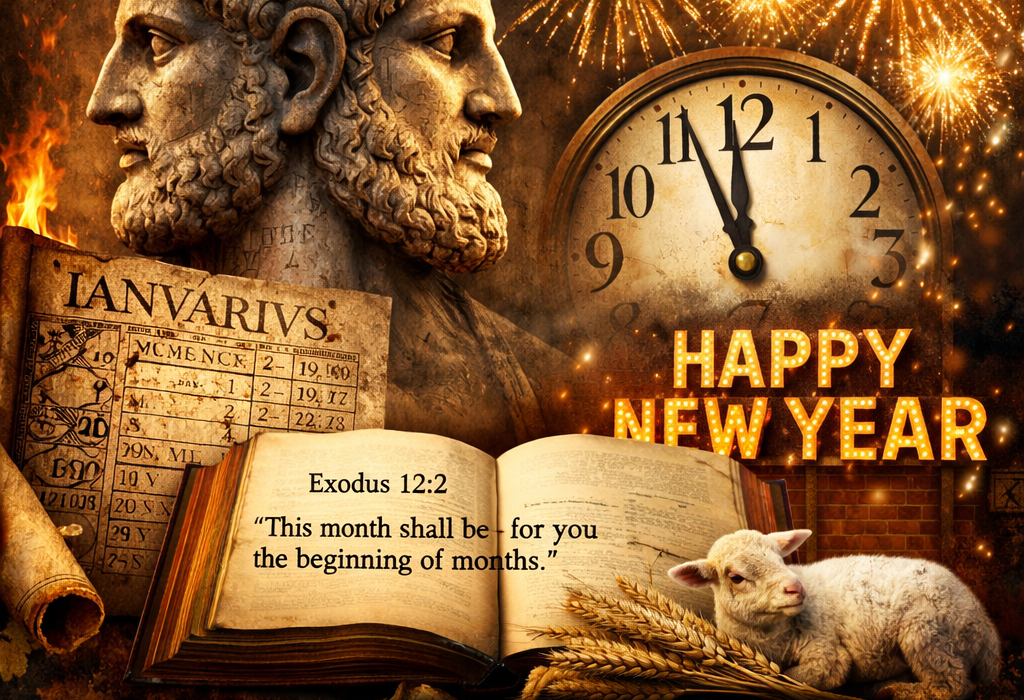
January 1st, Rome, and the Theft of Time

Should Christians Observe the Modern New Year?


I. Who Decides When the Year Begins? (Biblical Authority vs Roman Authority)

One of the least questioned assumptions in modern Christianity is the calendar. Most believers instinctively treat January 1st as the new year – a fresh start, a reset, a chance to “do better.” But Scripture does not, and God does not leave beginnings and endings to human invention.

In the Bible, God defines the start of the year, not Rome, not culture, not tradition.

“This month shall be for you the beginning of months. It shall be the first month of the year for you.” (Exodus 12:2)

This declaration occurs in the context of Passover, redemption, and deliverance. The biblical year begins in spring, during the month of Abib (later called Nisan) (roughly March-April). This aligns with creation itself: planting, birth, renewal, and forward motion. Biblically, a new year begins when life begins moving again.

By contrast, January 1st begins the year in mid-winter, a season associated with dormancy, death, and survival rather than growth. God consistently ties renewal to life, not decay.

The modern Christian calendar is largely inherited from Rome, not Scripture. While God’s people were commanded to keep Sabbaths and feasts that marked time according to covenant rhythms, Rome developed a bureaucratic calendar designed for empire management, taxation, and civil control. When Christianity later merged with Roman authority, the Church absorbed Rome’s calendar rather than correcting it.

This matters because time is important, whoever defines the calendar defines when people reset, when they reflect, when they repent, when they celebrate and when they rest. In Scripture, those rhythms belong to God. The question is not whether Christians can acknowledge January 1st as a date on a civic calendar. The question is whether believers should spiritually invest meaning, ritual, or renewal into something God never sanctified.

The Bible already provides a yearly renewal rhythm – Passover, Feast of Weeks, and Feast of Tabernacles – each tied to covenant, obedience, provision, and accountability. January 1st simply disrupts that rhythm.

Before asking whether New Year’s traditions are pagan, satanic, or harmless, Christians must first ask a more foundational question: Who has the authority to define beginnings? God – or Rome?


II. January, Janus, and the Pagan Rewriting of Time

January is not just any random winter month – it is named after a pagan god.

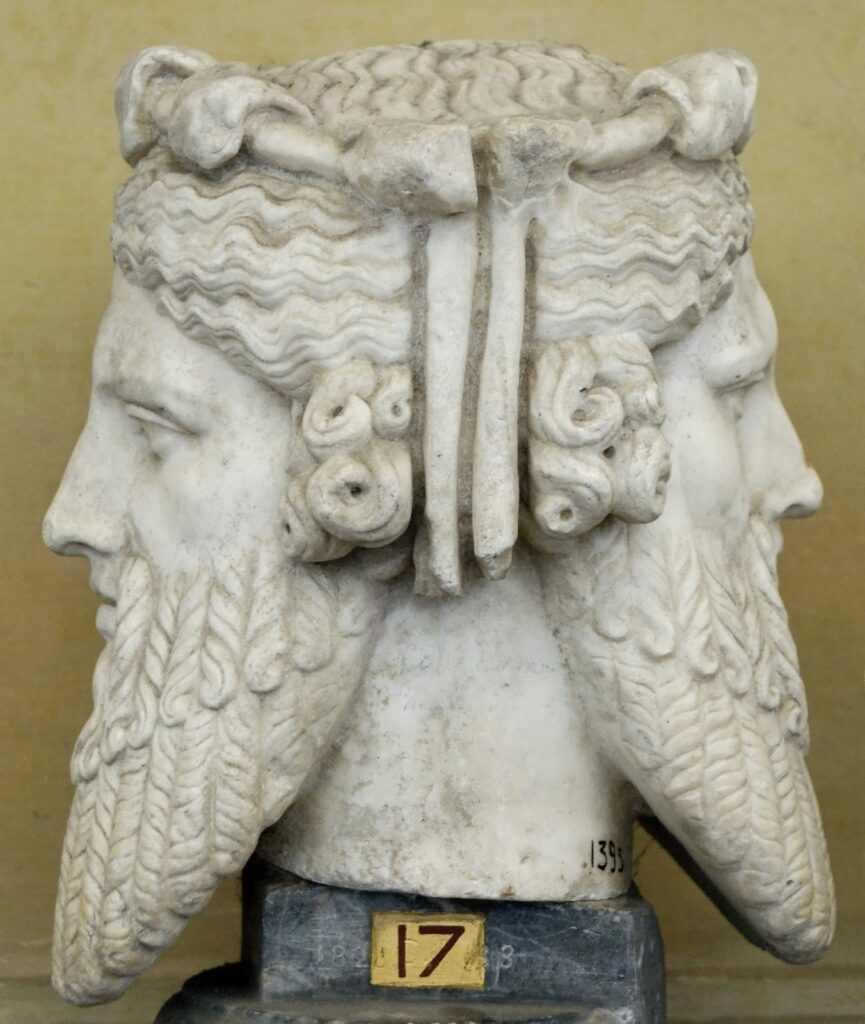
The month derives its name from Janus, a Roman deity associated with beginnings and endings, transitions, doorways and gates, threshold moments and looking backward and forward simultaneously.

Janus was commonly depicted with two faces, one facing the past, one facing the future. This symbolism is not incidental; it perfectly mirrors modern New Year language: “reflect on the past year” and “look ahead to the next.”

In ancient Rome, January 1st was not a secular event but a religious one. Offerings were made to Janus, vows were sworn, and favors were sought for the coming year. These rituals were intended to secure prosperity, success, and stability. New Year’s resolutions originate here.

Resolutions were not self-help exercises. They were vows – religious commitments made at temple gates. Biblically, vows are serious matters.

“When you make a vow to God, do not delay in fulfilling it.” (Ecclesiastes 5:4)

God never commands annual vows tied to January 1st. That practice originates in pagan religion. To be clear: modern Christians making resolutions are not knowingly worshiping Janus. But ignorance of origin does not make a practice acceptable. Scripture repeatedly warns God’s people not to adopt the forms of pagan worship, even if the names are changed.

Rome did not merely rename months, they reframed time itself, shifting renewal away from redemption and toward human willpower, optimism, and self-reinvention. That shift is theological, whether people want to acknowledge it or not.

January 1st is not evil because it is “demonic.” It is problematic because it represents subverted  authority, a calendar shaped by pagan empire rather than divine command. When we make “New Years Resolutions” – we are making a vow to a pagan God in exchange for His blessing.


III. April, the Spring New Year, and the Origin of April Fool’s Day

Historically, many cultures (including large portions of Christian Europe) recognized the spring as the beginning of the year. Even after Rome began experimenting with January starts, New Year celebrations often occurred between March 25 and April 1, aligning with agricultural and biblical logic.

When the Gregorian calendar was imposed in the late 16th century, January 1st was standardized as the official New Year across Roman-aligned territories. Those who continued to celebrate the New Year in spring were mocked, pranked, and ridiculed. Over time, this ridicule became a tradition mocking Christians – what we now call April Fool’s Day.

April Fool’s Day is a cultural by-product of Rome enforcing calendar authority and shaming the Christians who resisted it. The real irony is those who maintained the older, life-centered New Year were labeled fools, while the winter-based Roman calendar became “normal.”

This episode of history highlights that calendar changes are not administrative but religious. They reshape identity, memory, and obedience. When Rome moved the New Year, it didn’t just change a date, it rewired cultural instincts about renewal, beginnings, and accountability. Biblically speaking, spring remains the only God-defined New Year. January 1st exists because Christians chose compromise over obedience – not because God revised His calendar.


IV. Is There Anything Satanic About the Modern New Year?

There is no biblical evidence that January 1st is a satanic holy day or that demons demand explicit worship through fireworks and countdowns. Claims to the contrary drift into speculation and weaken legitimate critique.

However, Scripture consistently portrays Satan as a counterfeiter, not an inventor. His strategy is inversion, imitation, compromise and substitution.

Consider the pattern:

God begins years in spring (life) – Rome begins years in winter (death), God ties renewal to redemption – Culture ties renewal to self-reinvention, God calls repentance through obedience – Culture calls repentance through willpower and optimism.

This is a counterfeit structure. Modern New Year celebrations are also marked by predictable moral patterns such as drunkenness, sexual immorality, disorder and the attitude of “One last night to sin before I get serious”.

Scripture condemns this pattern (Romans 13:13). While not satanic in the occult sense, it aligns with fleshly excess and lawlessness, not holiness. The danger is not demons hiding behind party hats. The danger is normalizing a pagan rhythm of renewal while ignoring God’s appointed ones.


V. What Should a Christian Household Do?

Christians are not commanded to observe January 1st. They are commanded to walk in discernment and faithful responses fall into three responsible categories:

1. Reject ritual participation
Treat January 1st as any normal day. No vows. No resolutions. No spiritual language.

2. De-ritualize it (Compromise less)
Acknowledge the calendar without assigning meaning or moral weight.

3. Re-anchor renewal biblically
Have a “new Years” celebration on April 1st, Tie reflection, repentance, and recommitment to it instead.

The goal is not isolation, it is alignment. Time belongs to God. When Christians passively inherit Rome’s rhythms without questioning them, they surrender authority they were never meant to.

New Year’s Day (January 1st) does not need to be feared, but it should no longer be treated as neutral once its origins are understood. The real issue is not Janus. The real issue is who gets to tell God’s people when a year begins.

And Scripture has already answered that question.

A Woman Always Serves a Master

Introduction: The Myth of the Unruled Woman

The modern world worships the idea of the “independent woman.” She answers to no one. She belongs to no man. She bows to no authority. She is “free.”

That woman does not exist and she never has. What modern culture calls independence is not freedom from authority, it is merely the rejection of legitimate authority in favor of inferior masters. A woman does not escape service by refusing God’s order. She simply changes who or what she serves.

I say this not as judgment but as a simple observation of reality. Every woman serves a master. The only question is whether that master is worthy, protective, and life-giving – or cruel, chaotic, and consuming.

Every woman serves one of the following five masters whether she likes it or not. 


I. Her Father

A woman’s first master is not chosen. He is assigned.

Before she develops ideology, sexuality, ambition, or rebellion, a girl encounters authority through her father. He is her first experience of male power, male judgment, male protection, and male restraint. Whether present or absent, competent or corrupt, he establishes the template by which she will later measure all other authority.

A father is not just a provider, he is also a  governor. He sets boundaries. He disciplines speech and behavior. He determines what is allowed, what is corrected, and what is punished. Through him, a girl learns whether authority is stable or volatile, protective or predatory, firm or negotiable.

When a father is present and rightly ordered, a daughter grows up understanding authority is normal. She does not confuse leadership with cruelty, nor does she interpret correction as hatred. She understands that structure exists for her good, not her diminishment. Such women do not panic under leadership later in life. They recognize and honor it with thankfulness and gratitude.

When a father abdicates his duty the damage is fundamental. A fatherless daughter does not become independent. She becomes uninitiated. She enters adulthood without proper calibration and she does not know how to respond to male authority because she has never seen it exercised properly. As a result, she oscillates between defiance and desperation, testing men, provoking conflict, craving attention, and resenting restraint.

This is not rebellion by nature, but confusion by omission. A girl without a father is still ruled – just not by a man who loves her. She is ruled by peers, media, teachers, her emotions, and later, institutions that have no personal stake in her outcome. She learns to obey voices that neither know her nor care about her long-term stability.

Worse still, she often internalizes authority rather than submitting to it. She becomes self-governing without wisdom, policing herself with anxiety, shame, or impulse instead of guidance. This is how you get women who call themselves “strong” but cannot regulate emotion, maintain peace, or submit to their husbands without resentment.

A competent father also functions as a gatekeeper. He controls male access. He teaches his daughter what kind of men are acceptable and which are dangerous. He not only warns, he models the behaviors that his daughter should seek in a man. . His presence in her life alone deters weak men and predators alike.

When this gate is removed, the daughter does not gain her “freedom”. She becomes accessible to manipulation, exploitation, and self-deception. It is no accident that modern culture minimizes fatherhood while glorifying female autonomy. A woman trained under a strong father is difficult to govern improperly. She recognizes disorder immediately. She resists chaos not through rebellion, but through discernment.

This is why the modern world produces women who rage against all male authority while simultaneously begging for it in every distorted form possible. The father-shaped hole does not disappear, it is simply filled with more destructive forms of servitude.

A woman always serves a master. If her father does not establish authority early, something else will step in, and it will not be as patient, invested, or merciful.

II. Her Husband

A woman’s relationship to authority reaches its most concentrated and consequential form in marriage. Unlike her father, a husband is not temporary. Unlike her boss or the state, his authority is personal, constant, and inescapable. He does not govern her eight hours a day. He governs the environment of her life, home, provision, direction, protection, discipline, and future.

This is precisely why modern culture despises husbands exercising authority. It is the one form of rule a woman cannot clock out of, vote out of, or emotionally outsource. A husband’s authority is not symbolic but a fundamental function of his existence.

Marriage is not two sovereign, independent individuals negotiating who has authority over what. It is a household with a head. Someone sets direction. Someone makes final decisions. Someone bears responsibility when things go wrong. In a functioning marriage, that someone is the husband!

When a woman submits to her husband’s God given authority, she is not surrendering her dignity, she is relieved of sovereignty. She no longer has to be the final arbiter of every decision, every risk and every crisis. She can contribute fully without carrying ultimate responsibility. This is not weakness, it is the fulfillment of God’s design.

This is also why resistance to husbands produces so much chaos. A woman who refuses her husband’s authority does not become empowered. She becomes a co-ruler without mandate, constantly intervening, correcting, managing, and second-guessing her husband. The household becomes a committee instead of a command structure causing peace to evaporate. In this environment intimacy erodes, respect dies and ultimately the marriage fails.

Many women claim they want leadership, but what they actually want is leadership without any consequences – a man who takes responsibility but obeys her preferences. That arrangement is unstable by definition, when authority is divided the result is always destruction. 

A husband’s rule also functions as a moral and behavioral governor. A wife’s speech, conduct, priorities, and emotional expressions are not strictly private matters; they affect the entire household. A man who refuses to correct his wife does not love her – he is a negligent husband at best. Husbands must be taught and understand that correction is not cruelty, it is normal maintenance and a core part of being a leader and husband.

Modern women have been taught that accountability from a husband is “control,” while accountability from employers, therapists, social media, and government agencies is “normal.” This inversion is intentional. A woman corrected by her husband is protected from external control while a woman uncorrected becomes manageable by institutions.

A properly ordered wife does not feel diminished under her husband’s authority. She feels secure. She knows where decisions land and she knows which voice outranks her emotions. She knows that someone else is carrying the weight and responsibility of the outcome. Women who have never experienced this confuse instability with depth. But over time, the cost to them becomes obvious: anxiety, resentment, exhaustion, and a constant sense of unrest and untrust (especially towards men).

A husband’s authority is a foundational structural necessity. When a woman rejects her husband’s headship, she does not escape mastery. She simply invites other masters to intrude into the marriage: therapists, friends, social media, ideology, or the state. The household becomes porous and outside voices gain leverage over her decisions and loyalty.

A woman always serves a master.

III. Her Boss

When a woman rejects authority in the home, she does not reject authority itself. She simply relocates it. The modern workplace has become the most socially acceptable master for women who refuse male headship. It offers structure without intimacy, obedience without permanence, and submission without shame – so long as it is framed as “career.”

A boss exercises real authority. He dictates hours, behavior, dress, speech, priorities, and performance. He evaluates compliance. He rewards obedience. He punishes deviation. He can terminate her access to income without her input. He exercises almost complete control over her life.

Yet women are taught to celebrate this form of submission while despising the same structure when it appears in their marriage and their home. The difference is not “freedom,” it is impersonality. A boss does not love her, he does not correct her for her good and he does not sacrifice for her future. Instead he extracts value, then discards her when convenient. 

The corporate relationship is just obedience stripped of all covenant responsibilities. A woman submits her time, energy, and focus to an employer who has no obligation to her beyond minimal legal compliance. Her fertility, youth, health, and peace are expended for a system that has no commitment or responsibility for her future or soul. When she ages, weakens, or becomes inconvenient, she is replaced. No vows or covenants are broken because none were made.

This arrangement is praised as empowerment. In reality, it is submission without protection. Unlike a husband, a boss does not absorb the consequences of failure alongside her. He distributes blame downward and credit upward. He does not shelter her from external threats, in-fact he exposes her to them. Harassment, burnout, humiliation, and instability are not aberrations of the average workplace; they are core features.

Women who pride themselves on answering to no man always answer to many men (supervisors, executives, clients, shareholders) none of whom are accountable for her long-term well-being. Even more insidious is how corporate authority trains women to accept control while believing they are autonomous. Performance reviews replace Biblical correction, company values replace God’s moral order, HR replaces the mediation of elders and surveillance replaces trust.

She is managed, monitored, and molded, then told she is “free” because she earns a paycheck. This is why so many career-oriented women struggle to submit in marriage later. They have been conditioned to obey systems, not the person God intended. They understand rules, but not relationships. They comply outwardly while remaining internally adversarial. The workplace rewards this posture but Biblical marriage does not.

A boss requires results,but does not reciprocate loyalty. A woman can be obedient all day and discarded tomorrow. This breeds a survival mindset: self-promotion, emotional detachment, and constant comparison. It is not possible for a woman to have true peace in an environment where  security is absent. And yet, modern women defend this master ferociously. Why?

Because submitting to a boss costs her nothing emotionally. Submitting to a husband costs her pride. A boss never demands humility, only productivity. He never confronts her character, only her output. He never claims her future, only her labor. This makes corporate submission attractive to women who fear being truly known, corrected, or bound by covenant.

But it is a lie to call this freedom. A woman always serves a master. The workplace simply offers one that consumes her quietly, thanks her never, and replaces her without any consequences once she has outlived her usefulness.

IV. The Government

When authority is rejected in the home and diluted in the workplace, the state expands it’s reach by adding another “wife” to its household.

The government is the most ruthless and impersonal master a woman can serve, it is also the most intrusive. Unlike a father or a husband, the state does not know her. Unlike a boss, it does not merely govern her labor. It governs her behavior, speech, finances, movement, education, medical decisions, and increasingly, her beliefs.

The state does not ask for permission to rule. It assumes the vacancy left by failed or rejected male authority. Historically, strong families limited government reach. Fathers disciplined children. Husbands provided and protected. Households resolved conflict internally. The less functional the family, the more justification the state has to intervene. This is not accidental but the intentional destruction of God’s intended order.

When women are detached from paternal authority and hostile to marital headship, the government becomes the default protector, provider, and disciplinarian (husband). Welfare replaces provision, courts replace fathers, social services replace households and regulation replaces trust.

This is submission, just to the wrong master. A woman who depends on the state for security must obey the state’s terms. Benefits come with conditions. Protection comes with surveillance. Assistance comes with compliance. The government does not help without submission, it demands her life be reordered around its incentives. The government becomes her master.

The state rewards behaviors that increase dependence and punishes those that reduce it. True marriage becomes optional, fatherhood becomes negotiable, her fertility is managed, her children are monitored, her language is regulated and her morality is legislated.

This is not benevolence, the state has become her husband, but unlike a husband, the government does not love her. Unlike a father, it does not correct her privately. Unlike even a boss, it cannot be escaped. It rules by abstraction and enforces by threat of force. Its concern is not her peace, but its own continuity. And yet, many women welcome this master enthusiastically while refusing to submit to a godly man. Why?

Because the government demands obedience without intimacy. It offers protection without perceived accountability. It promises security without submission to a specific man. It allows women to believe they have avoided the vulnerability of household order while enjoying the illusion of safety.

But the cost is immense.The state does not bear consequences personally. When policies fail, no one repents. When incentives distort behavior, no one takes responsibility. When children suffer, reports are filed and funding increases. A woman under state authority is a case number, a demographic, a statistic. She is governed by rules written by strangers and enforced by agents who rotate out every few years. There is no loyalty or accountability, only compliance.

This is why government authority grows most aggressively in cultures hostile to patriarchy. Where men are removed, the state fills the gap. Where fathers are absent, the state becomes permanent. Where husbands are undermined, the state becomes intimately involved.

Submission does not disappear. It centralizes. A woman who rejects male headship does not escape being ruled. She simply trades personal authority for bureaucratic authority, which is colder, slower, and far less merciful. The government is a master that never sleeps, never loves, and never forgives. It does not discipline to restore. It disciplines to control and regulate.

A woman always serves a master. When she refuses God’s order for the household, the state does not hesitate to claim her as another servant.

V. Her Appetites

When a woman rejects her father, resists her husband, distrusts employers, and sometimes escapes from state control, one master remains.

Her appetites and emotions. This is the final authority modern culture offers women, and it is the most destructive of all. Appetite promises freedom because it has no face, no voice, and no external command. It feels like autonomy. It feels like authenticity. It feels like “being true to yourself.”

In reality, it is slavery without the restraint. Appetites rule from within. They demand satisfaction but never provide rest. They issue no standards, offer no correction, and accept no responsibility for outcomes. Hunger, desire, emotion, validation-seeking, attention, consumption, and impulse become her law. Whatever she feels becomes right by default.

This is the cruelest master because it cannot be negotiated with and cannot be satisfied. A woman ruled by appetite does not choose – she reacts. Her moods dictate her speech. Her desires dictate her boundaries. Her fears dictate her alliances. Her need for validation dictates her presentation, relationships, and self-image. She calls this “intuition,” but it is simply ungoverned impulse. This is why many modern “free” women are mentally exhausted.

They are constantly chasing regulation through consumption such as food, entertainment, sex, shopping, travel, social media, affirmation. Each hit promises relief and delivers emptiness. And like any addiction the appetite expands with every indulgence. What once satisfied briefly now barely registers.

Unlike a father, appetite does not teach. Unlike a husband, it does not protect. Unlike a boss, it does not structure. Unlike the state, it does not stabilize. It only consumes and destroys. A woman ruled by appetite becomes increasingly unstable because there is no hierarchy within her. Every desire competes for dominance. She oscillates between confidence and despair, indulgence and guilt, independence and dependency. She calls this “growth” or “finding herself,” but it is neither.

Worse, appetite makes a woman governable by everyone else. A woman who cannot restrain herself must be restrained externally. Her instability invites intervention – from institutions, medications, systems, and ideologies eager to step in where self-rule fails. Appetite is sold to women as freedom, but quietly hands authority to whatever promises relief.

This is why cultures that glorify desire inevitably expand control. A woman mastered by appetite is easy to manipulate. She can be sold comfort, distraction, outrage, pleasure, or fear. Her loyalty shifts with her feelings and her convictions change under the slightest pressure. She is ruled, but she does not know by whom.

And because appetite feels internal, she defends it fiercely. Any attempt to impose structure feels like oppression. Any call to restraint feels like violence. She has confused indulgence with identity. This is the end state of “independence” for a woman, not strength, not sovereignty but compulsion.

A woman always serves a master. If she refuses authority outside herself, she will be ruled mercilessly from within. Appetite is a master that never loves, never protects, never forgives and it never stops demanding.

Conclusion: Who Do You Actually Serve?

A woman does not escape authority by rejecting it. She only changes its form.

From her earliest years to her final days, her life is shaped by who governs her – whether that authority is personal or impersonal, ordered or chaotic, merciful or predatory. Fathers, husbands, employers, governments, and appetites all rule in different ways, but none rule neutrally. Each extracts obedience, shapes behavior and leaves a permanent mark.

The modern promise of “freedom” is not freedom at all. It is the removal of visible authority in favor of invisible chains. What cannot be named cannot be resisted. What feels internal is defended fiercely even as it destroys. This is why the question is not whether a woman will serve, but whom she will serve. Some masters discipline to form, some govern to extract, some rule to stabilize and some consume until nothing remains.

The most dangerous master imaginable is not the harsh one – it is the unaccountable one. A woman always serves a master. Wisdom is choosing one that does not destroy her.

If You Claim Your Husband Is Your Master

If your husband told you tonight to quit your job and trust him to provide, would you:

Obey without argument? hesitate and ask for time? demand guarantees? panic internally? refuse outright? If obedience depends on conditions, reassurance, or backup plans, then your job (not your husband) is your master.

If you must retain financial independence “just in case,” then you are not under his authority and you are not his wife. You are merely cooperating while it suits you. Biblical submission is not conditional.

If You Claim to Be Free

If your lifestyle choices are shaped by:

Fear of losing benefits? fear of losing housing assistance? fear of losing subsidies, credits, or support?

Then the government already owns your obedience. If your decisions are filtered through bureaucratic consequences rather than the household authority of your husband, then the state is your master, regardless of how you vote or what you claim to believe.

Freedom does not exist where permission is required.

If You Claim to Follow God

If Scripture conflicts with your feelings, which one yields? If God’s order conflicts with your comfort, which one wins? If obedience to God would cost you status, income, approval, or autonomy – do you still obey?

If obedience only exists when it is painless, then God is not your master, Satan is.

If You Claim Your Father Failed You

Did you replace his authority with:

Men’s attention?, Peer approval?, Emotional validation?, Romantic fantasy?, Rebellion framed as strength?

If so, then you did not escape authority, you simply transferred it to weaker, less loving masters. Because fatherlessness does not produce independence, it produces untrained obedience to false substitutes.

If You Believe You Serve Only Yourself

Who decides what you eat, buy, desire, watch, or pursue?

Your will – or your impulses? Your mood? Your Desires, Your emotions?

If your choices change with your feelings… If discomfort overrides duty… If restraint feels like oppression and indulgence feels like “authenticity”…Then you are not sovereign. You are ruled by appetite. And appetite is the cruelest master of all. It promises freedom and delivers slavery. It demands constant satisfaction, never loyalty, never rest. It takes everything (time, health, peace, money, dignity) and gives nothing back except the need for more.

No tyrant drains a life faster than unchecked desire. It demands everything and gives nothing back.

Questions for Men

Men, ask yourselves:

Can your wife actually follow you if she wanted to? Do you provide enough order to be obeyed? Have you earned trust – or merely demanded authority? Have you created a household worth submitting to?

A woman cannot submit to nothing. And a man who will not lead has already abdicated mastery – to the job, the state, or her emotions. Everyone serves.The only real question is who?, how completely?, and at what cost?

A woman who truly belongs to God, is covered by a father, led by a husband, and ordered within a household is not oppressed. She is the most protected person in the world. And anyone (man or woman) who refuses all legitimate authority will still serve something.

They just won’t like what they end up serving.

What If Women Needed a Male Sponsor to Speak in Public?

The Question No One Dares Ask

It’s hard to imagine modern life without the constant stream of female voices echoing from every device. Influencers live-streaming their breakfast, women’s ministries pumping out “devotionals” that read like diary entries, political candidates crying on cue for the camera, and your cousin’s endless Facebook rants about whatever “trauma” her yoga instructor reminded her of that morning.

This is normal now. We’ve convinced ourselves that unrestricted, unvetted female speech in the public square is both a “right” and a sign of “progress.” We’ve also convinced ourselves that nothing bad has come of it, as if gossip, slander, public rebellion, and doctrinal drift weren’t rotting the culture from the inside.

So here’s the thought experiment:

What if women couldn’t speak in public without the sponsorship, and by that I mean the explicit, personal backing, of a man in authority over them? A father, a husband, or a recognized elder in their community.

That doesn’t mean she can’t talk to her neighbor about sourdough, or sing to her children, or speak up in a private conversation. It means she doesn’t get to broadcast her words to the public without a man putting his name, reputation, and authority behind what she says.

Would the world become more oppressive… or would it finally get quiet enough to think again?


I – The Biblical & Historical Precedent

If you think this is some radical new “misogynist fantasy,” you’ve either never opened a Bible or have only read the parts that make you feel warm and fuzzy.

God has spoken on this – clearly, repeatedly, and without apology.

Scriptural Foundation

Let’s start with the most famous (and most hated) text:

1 Corinthians 14:34–35“Let your women keep silence in the churches: for it is not permitted unto them to speak; but they are commanded to be under obedience, as also saith the law. And if they will learn any thing, let them ask their husbands at home: for it is a shame for women to speak in the church.”

Paul doesn’t just say “be quiet”, he ties it to the law of God, meaning it wasn’t just a “Corinth problem” or a first-century social quirk. It’s a trans-cultural principle rooted in creation order.

Then there’s 1 Timothy 2:11–12“Let the woman learn in silence with all subjection. But I suffer not a woman to teach, nor to usurp authority over the man, but to be in silence.”

Notice the issue isn’t intelligence, gifting, or “finding her voice”, it’s authority. Teaching publicly is an act of authority, and God’s order places that mantle on men.

Now look at Numbers 30 – the entire chapter is about male authority over a woman’s spoken vows. If a woman made a vow and her father or husband heard it but didn’t confirm it, the vow was nullified by God Himself. That’s not just financial contracts, that’s any binding word she spoke.

The biblical pattern is simple:

  • Men bear responsibility for public declarations.
  • Women speak under that male covering.
  • This protects the woman from bearing consequences alone and ensures words are tethered to those who can defend and enforce them.

Historical Reality

This wasn’t unique to Israel. Across cultures and centuries, women’s public speech was often mediated through men, and it wasn’t because they were all “oppressive patriarchies who hated women.” It was because they understood that words in the public square shape law, culture, and war, and that such shaping requires the weight of male responsibility.

  • Ancient Greece: Public speech was a male domain; women influenced through private counsel to fathers, husbands, or sons.
  • Rome: Matrons of high standing had influence, but still acted through male relatives in public legal matters.
  • Medieval Europe: Noblewomen wrote letters and even poetry, but publication and political advocacy went through male patrons.
  • Early Church: Female deaconesses existed to serve, not to preach. Public teaching was the work of male elders.

Why This Wasn’t “Oppression”

The feminist lens sees all restriction as oppression. But biblically, male sponsorship isn’t a muzzle, it’s a shield.

  • If her words are wise, the man affirms them and amplifies them.
  • If her words are foolish, the man takes the hit for stopping them before they cause harm.
  • She isn’t left exposed to the mob or to political enemies. Her words carry the weight of a protector’s name.

In short, God’s order ties speech to accountability. Feminism untied them and we got Instagram theologians, celebrity apostates, and entire movements built on emotional rhetoric with zero consequence to the speaker.


II — Immediate Cultural Impact

So let’s imagine the rule goes into effect tomorrow:

“No woman may speak in a public forum, whether political, religious, academic, or digital, without the explicit sponsorship of a man in authority over her.”

That sponsorship means his name is attached, his authority backs it, and his reputation rises or falls with every word she speaks.

The ripple effect would be instant, and devastating to the modern feminine order.


The Social Media Extinction Event

Instagram influencers? Gone. TikTok “storytime” confessionals? Dead. YouTube “Christian girl advice channels”? Nuked. 

The internet runs on attention, and attention thrives on endless female self-disclosure. Take away the ability for women to broadcast without male sponsorship, and the influencer economy collapses overnight.

The first wave of resistance wouldn’t come from feminists, it would come from marketing departments. Corporations rely on women’s online chatter to move products. You cut that off, and suddenly ad budgets are scrambling to replace 70% of their “brand ambassadors.”

The only women who remain in the public sphere are those whose husbands, fathers, or elders are willing to attach their names to them, and that weeds out the drama queens fast.


Politics Without Performers

Now picture the political landscape. Female candidates can’t just run their own campaigns anymore. Every speech, interview, and debate answer requires male sponsorship. That means a female politician has to answer to a male authority before she addresses the public.

Would there still be women in politics? Yes, but far fewer. And the ones who remain would be there because a father, husband, or church elder has staked his own name on her words and conduct.

That means no more grandstanding for attention, no more policy-by-feelings, and a massive reduction in emotional rhetoric as the basis for lawmaking.


The Death of the Celebrity Talk Show

Daytime television? Obliterated. The View? Canceled mid-sentence. Late-night talk shows that rely on endless “girl talk” segments? Gone.

The public square would no longer be flooded with a 24/7 stream of hot takes based on personal drama, gossip, and grievance. The airwaves would get quieter. People might even start thinking and learning again.


The Church Pulpit Purge

If this law were enforced in churches, the shockwave would be nuclear. Every woman teaching from a pulpit, every “pastorette” livestreaming sermons, every “women’s conference” keynote speaker, all of it gone unless a male elder put his name on it and said, “I take responsibility for these words.”

That’s when you’d find out real quick who actually believes in biblical headship and who’s just been play-acting it while letting women functionally lead.

Women’s ministries wouldn’t disappear, they’d return to their rightful place under male oversight, focusing on training younger women in godliness rather than creating platforms for self-branding and attention.


The News Gets Quieter

One of the most noticeable cultural shifts? The news cycle slows down.

So much of modern “breaking news” is fueled by emotional testimony, a crying mother, an outraged witness, a passionate victim advocate. Not all of these stories are false, but they are often presented without cross-examination or male accountability.

Under male sponsorship, the emotional appeal would still be possible, but it would be tethered to someone with the authority (and risk) to verify facts and stand behind the claims.


Public Discourse Gets Cleaner – and Shorter

If every woman in public had to have her words vetted, you’d lose 90+% of the public chatter immediately. The endless online bickering, the hashtags that spiral into movements, the viral gossip threads, gone.

The average day’s “public conversation” would be drastically shorter and far more focused. The noise floor drops, and suddenly the signal, actual ideas, actual arguments, actual leadership, is easier to hear.


The Feminist Meltdown

Of course, the outrage would be biblical (pun intended). Social media would explode with “#LetHerSpeak” hashtags… until people started pointing out the obvious irony that such hashtags would now need a man’s name attached.

Activists would claim women were being “silenced.” But here’s the truth: they aren’t being silenced, they’re being sponsored. They’re still free to speak publicly, as long as they speak under authority.

That’s the part modern culture can’t stomach. Feminism isn’t about women having a voice, it’s about women having a voice without responsibility or restraint. Sponsorship ruins that game because it ties their words to the consequences men have always faced for public speech.


The Immediate Cultural Gains

By the end of the first year under this rule:

  • Public scandals sparked by unverified female claims would plummet.
  • Political discourse would become more fact-driven and less emotional.
  • Churches would be forced to realign with biblical order.
  • Men would take greater care in what their households and communities project into the public sphere.
  • Women who truly have wisdom to offer would actually gain more respect, because their words would carry the weight of a man’s reputation and responsibility.

The loudest voices would be gone. The wisest voices would be amplified. And the entire culture would shift from chaotic noise to ordered conversation.


III – The Practical Benefits

The knee-jerk reaction to this thought experiment is always the same: “You just want to control women!” Well, yes. Control is what makes civilization possible. The very word “govern” means to control. The only question is whose control and for what purpose.

The goal here isn’t to gag women out of spite. It’s to tie speech, especially public speech, to accountability, and to reestablish the order God designed. And when you do that, the benefits start stacking up fast.


1. A Drastic Reduction in Gossip and Slander

Gossip thrives in environments without consequence. Social media is basically the Garden of Eden with a Wi-Fi signal, the serpent whispers, and the words travel at light speed.

Male sponsorship forces a pause. Before a woman can tweet, post, or speak in a public forum, she has to consider:

  • Is this wise?
  • Is this true?
  • Is my sponsor willing to put his name behind it?

This simple filter cuts the knees out from under gossip-based movements, online “callouts,” and weaponized rumor mills. When you can’t publicly accuse someone without a man agreeing to take legal, social, and spiritual responsibility for your claim, you think twice.


2. Public Theology Gets Cleaner

Christianity has suffered under a tidal wave of women’s ministries gone rogue. Bible “studies” that are just emotional journaling. Devotionals that trade exegesis for Pinterest quotes. Entire conferences where the Word of God takes a backseat to therapeutic storytelling.

Male sponsorship forces theological speech back under the oversight of those tasked with guarding doctrine. This doesn’t mean every woman’s contribution disappears, it means her contribution is filtered through someone whose God-given job is to ensure it aligns with truth.

Instead of getting “Jesus is my boyfriend” fluff, the public hears words that have been sharpened and confirmed by the same men commanded to “preach the Word” and “guard the flock.”


3. Men Are Forced to Lead – Publicly

One of the biggest problems in modern manhood is the epidemic of passive men who let their wives, daughters, and female “ministry leaders” run the public show.

Sponsorship flips the script. If a woman speaks in public, it’s now your face, your name, your credibility on the line as her sponsor. That means:

  • You vet her words.
  • You challenge sloppy thinking before it goes out the door.
  • You protect her from attacks by standing in front of her when criticism comes.

This trains men to lead actively, not just quietly grumble about “how things are.”


4. Women Are Protected From Themselves – and From the Mob

Public speech is a battlefield. Once your words are out there, they can be twisted, mocked, and used against you forever. Feminism sold women the lie that they can walk onto that battlefield without armor and still win.

Male sponsorship is armor. If someone attacks the woman’s words, they’re attacking her sponsor’s authority. She doesn’t have to fend off the wolves alone, her words are bound to a man who can fight the fight for her.

This isn’t weakness. It’s strategic covering. Just as a soldier doesn’t wander into enemy territory without a commanding officer’s plan, a woman doesn’t wander into public discourse without the covering of a man whose job it is to defend her.


5. Emotional Speech Gets Tempered by Reason

Men and women both have emotions, but women are more likely to let emotion drive public expression, and that’s not an insult, it’s a statistical reality confirmed by psychology, history, and common sense.

When a man sponsors a woman’s public words, he acts as a filter. He can say things like:

  • “Your passion here is good, but the evidence is thin.”
  • “Your story is moving, but the point needs to be sharper.”
  • “You’re right about the problem, but this solution is unbiblical.”

Instead of being silenced, the woman’s message is strengthened, made more persuasive, more truthful, and less likely to collapse under scrutiny.


6. Public Trust Rebounds

Part of why public trust in media, politics, and even church platforms is so low is because anyone can say anything, anytime, with zero consequence.

If every public word from a woman had a male authority’s name stamped on it, the audience would know two things:

  • Someone vetted this before it reached me.
  • If it’s false or reckless, I know exactly who is responsible.

This rebuilds confidence in public speech, because accountability is visible and traceable.


7. It Rewards Women Who Truly Have Something to Say

This is the part feminists will never admit: male sponsorship doesn’t silence wise women, it amplifies them.

If a woman’s insights are sharp, biblical, and beneficial, her sponsor can confidently stand beside her and say, “I vouch for this.” That instantly increases the credibility of her words.

Instead of being one more voice in a screaming crowd, she becomes a trusted voice with weight behind it. People listen not just because she’s talking, but because someone they trust has put his name on her words.


8. Households and Churches Get Stronger

When a man knows he is publicly responsible for what comes out of his household, he takes discipleship seriously. His wife learns the discipline of asking, “Is this worth saying publicly?” His daughters learn that words have weight. His sons learn what it looks like to lead with discernment.

In churches, the shift is seismic. Elders stop outsourcing teaching and public prayer to women under the guise of “inclusion.” They take their role seriously as the guardians of doctrine and public witness.

Male sponsorship of female public speech isn’t oppression. It’s ordered freedom. It’s the difference between a marching army and a flash mob. One moves with purpose and wins battles. The other makes noise and gets mowed down.

IV – Predictable Objections & The Reality Check

The moment you suggest that women should require male sponsorship to speak in public, the responses come in hot and fast. They’re predictable, emotional, and, when you strip away the feelings, utterly hollow. Let’s walk through them one by one.


Objection #1: “You’re silencing women!”

No, we’re making women accountable. There’s a difference.

Silencing means you can’t speak at all. Sponsorship means your words carry a name, a weight, and an authority bigger than your own.

Modern people confuse “freedom” with “lack of accountability.” But in God’s order, freedom is always bounded by structure. Just as children are free to speak under parental authority, and soldiers are free to speak under military authority, women are free to speak under male authority.

Silencing would be telling her to never speak, anywhere, to anyone. Sponsorship says: If your words are worth speaking publicly, they’re worth attaching to someone who can defend them.


Objection #2: “This is sexist – you’re treating women differently from men!”

Of course it treats women differently. That’s because God made men and women differently.

Equality under God’s law doesn’t mean sameness of role. Men are the covenant heads of their households and communities. They bear responsibility for leadership, protection, and provision. That responsibility includes guarding the public witness of their household, which means taking ownership of public speech.

Women are not called to that role. They are called to be helpers, life-bearers, and builders of the home. This doesn’t make them lesser; it makes them distinct. Distinct roles require distinct boundaries.

The Bible is unapologetic about this:

  • Men are commanded to lead in public worship (1 Tim. 2:8).
  • Women are commanded to learn in quietness and submission (1 Tim. 2:11).
  • Public teaching is tied to authority (1 Tim. 2:12), which is tied to male headship.

To treat men and women exactly the same in this arena is to ignore God’s design.


Objection #3: “Women have important perspectives that need to be heard!”

Correct, and sponsorship doesn’t erase those perspectives. It filters them.

If a woman truly has something worth saying publicly, a godly man in her life should be willing to stand behind her words. If no man is willing to do so, that’s not “oppression”, that’s a sign her words may not be as wise, factual, or beneficial as she thinks.

Important perspectives don’t lose value when they’re vetted. In fact, they gain authority when someone with God-given responsibility says, “I agree with this, and I’m willing to be accountable for it.”


Objection #4: “This is dangerous – what if the man abuses his power?”

All authority can be abused. That’s not an argument against authority, it’s an argument for godly authority.

Scripture doesn’t abolish fatherhood because some fathers are abusive. It doesn’t abolish kingship because some kings are tyrants. Instead, it regulates authority and holds leaders to account.

The abuse objection is a smokescreen. In reality, the absence of male covering in public speech has been far more destructive:

  • False accusations spreading unchecked.
  • Doctrinal heresies gaining traction through popular female teachers.
  • Cultural movements fueled by emotional rhetoric that bypasses male scrutiny.

When women speak without covering, they aren’t just vulnerable to being silenced by men, they’re vulnerable to being devoured by the mob. Sponsorship reduces abuse by placing a protector between her and the public square.


Objection #5: “But men say foolish things too!”

Absolutely. And when they do, the consequences land squarely on them. That’s the point.

When a man speaks foolishly in public, his name is on the line. His credibility suffers. His enemies attack him. He has no one else to hide behind.

That’s why male speech has natural guardrails, the weight of consequence tempers it. Sponsorship simply extends those same guardrails to female speech.

This isn’t about pretending men never err. It’s about ensuring that public words always come with a clear line of responsibility.


Objection #6: “This would oppress women’s ministries!”

If by “women’s ministries” you mean “women teaching other women under male oversight,” no,  it wouldn’t oppress them at all. In fact, it would purify and strengthen them.

If by “women’s ministries” you mean “female preachers, authors, and influencers broadcasting theology without accountability to male elders,” then yes, it would shut that down. And that’s not oppression. That’s obedience.

Titus 2 gives the blueprint: older women teach younger women to love their husbands and children, to be self-controlled and pure, to be busy at home, to be kind, and to be subject to their husbands. That is women’s ministry. Anything outside that lane belongs under direct male control.


Objection #7: “You’re afraid of women having power!”

Not afraid, realistic. Words are power. Influence is power. And power without structure corrupts.

The most dangerous power is not the kind wielded openly, but the kind exercised without responsibility. When women broadcast publicly without sponsorship, they hold influence without accountability. That is raw, untethered power, and history shows it’s a recipe for disaster.

Male sponsorship doesn’t remove power from women. It binds their public influence to a covenant structure where someone is explicitly responsible for how that influence is wielded.


Objection #8: “This would make women dependent on men!”

Correct. That’s the point!

God made women dependent on men, just as He made men dependent on women for the continuation of life. Dependency is not a flaw, it’s part of the interwoven design of humanity.

The problem is not that women need men’s covering. The problem is that modern culture teaches them to despise it.


Reality Check

When you strip away the emotion, every objection boils down to one thing: a hatred of God’s order. People aren’t afraid this thought experiment would silence truth, they’re afraid it would silence rebellion.

Male sponsorship of public female speech would:

  • Remove the endless noise drowning out wisdom.
  • Tie influence to responsibility.
  • Protect women from the worst consequences of public life.
  • Force men to lead with courage and clarity.

The people who hate that idea don’t fear injustice – they fear losing their chaos.

Order Restored, Noise Removed

A world where women need male sponsorship to speak in public would not be a world of silence, it would be a world of clarity.

The noise would thin. The drama would die down. The endless stream of half-baked opinions, emotional rants, and theological freelancing would dry up. What remained would be the voices of women whose words had been tested, refined, and strengthened by the covering of a man willing to put his own name on the line.

And that would change everything.

  • Men would be forced to lead.
  • Women would be protected from public self-destruction.
  • The public square would regain a sense of order and trust.
  • The church would realign with the Word instead of bending to the spirit of the age.

This isn’t about silencing women. It’s about sponsoring them. It’s about anchoring their public influence to the God-ordained authority structures that protect, guide, and refine.

Freedom without order is suicide. Speech without accountability is rebellion. God’s design offers both freedom and speech, but only under the covering of the covenant head He placed over every woman.

That’s not oppression. That’s mercy.  And if that truth makes the world foam at the mouth, good. Let them rage. The fact that it enrages them is proof it would work.

Why Monogamy is Failing Modern Society

The Economic, Demographic, and Moral Consequences of the Forced Monogamy Experiment


Introduction: A Social Experiment Gone Wrong

Modern society insists that monogamy is the “only moral” form of marriage. Churches preach it, governments legislate it, Hollywood romanticizes it and therapists bill hourly trying unsuccessfully to salvage it. And yet, despite all this pressure, the monogamous model is collapsing rapidly. Divorce rates are soaring, birth rates plummeting and men checking out of marriage entirely. Women are increasingly unable to function inside a “traditional household causing families to disintegrate and society to unravel.

If monogamy were truly the superior system, the results would speak for themselves. They do –  but not in the way the modern world hopes. Monogamy is not failing because people are sinful; people have always been sinful. Monogamy is failing because the forced-monogamy experiment contradicts human nature, economic reality, demographic necessity, Biblical design and historical precedent.

What we call “traditional marriage” is not traditional at all. It is a modern construct, artificially enforced, and it is cracking under the weight of its own delusion.


I. The Biblical and Historical Illusion of ‘One Man, One Woman’

Modern Christians speak as if monogamy has always been the biblical norm but It has not. God built entire nations through men with multiple wives such as Abraham, Jacob, Moses, Caleb, Gideon, David, and many more. God never once condemned the practice, Christ never changed it, and the apostles never restricted it.

Monogamy as a legal and religious ideal was not a biblical invention – it was a Roman one. Later it was enforced by the Western church as a matter of control, not morality.

For most of human history patriarchs married more than one woman, in many places they still do. Households were multigenerational, women shared labor, childcare, and domestic duties, families grew large, strong, and economically stable. The modern nuclear monogamous family is not “God’s design.”  It’s an industrial-age experiment – and it is failing spectacularly.


II. The Economic Consequences of Forced Monogamy

1. A Single Wife Cannot Sustain a Household Economy

Historically, multiple wives contributed additional labor, increased productivity, shared childcare, diversification of skills and expanded capacity for agriculture, trade, and home production. A patriarchal household functioned like a small enterprise – many hands, one mission.

Today’s monogamous household? It functions like a failing startup with one burned-out employee expected to do everything. Social workers call it “the overwhelmed mom crisis.”
Scripture simply calls it “not good for man to be alone.” (Genesis 2:18)

2. The Cost of Children Exposes the Weakness of Monogamy

Children are expensive – especially in a society where women no longer contribute economically, homeschooling becomes necessary, inflation strips families income and state run  schools are unsafe. Monogamy places all economic productivity on one man and all domestic burden on one woman. This model worked only when society was agrarian, extended-family based, and communal.

But in the modern world? It collapses while Polygynous households distribute labor, responsibility, emotional load, childcare and household production. This makes large families economically sustainable unlike monogamy.

3. Monogamy Creates a Hidden Competition Among Women

When men are legally restricted to one wife, women compete viciously for high-value men, stable households and financial security instead of building those things together. This leads to delayed marriage, endless boyfriend cycles, and a marketplace of dysfunction. Economically, forced monogamy stifles household formation and cripples national fertility.


III. The Demographic Collapse of the Western World

The greatest symptom of monogamy’s failure is the one no government can fix:

1. Birth Rates Have Fallen Below Replacement Everywhere Monogamy Is Enforced

The United States, Canada, Europe, Australia, Japan, and South Korea just to name a few. In almost every monogamy-based nation birth rates are collapsing, populations are aging, economies are shrinking, retirement systems are dying and armies cannot recruit. The communities that built western civilization are dying out at an alarming rate..

A society that cannot replace itself simply cannot survive.Meanwhile, cultures that allow (or quietly tolerate) polygyny – Africa, the Middle East, parts of Asia, and religious traditionalists – continue to grow exponentially. Polygyny has always been the engine of population expansion, while monogamy has traditionally been the engine of population decline.

2. Monogamy Makes Marriage Unattainable for Large Numbers of Women

Most women today outnumber marriageable men by millions because men marry later, men avoid marriage out of fear of divorce, men are destroyed by economic instability and the state punishes husbands but rewards single mothers.

These women do not remain virgins. They simply become a rotating cast of girlfriends, situationships, and childless wanderers. Monogamy leaves them unclaimed and unprotected. A polygynous system would give them a stable household, a proven man, a functioning economy, a ready-made community, a purpose, Children and a legacy.

Demographically, polygyny is mercy, while monogamy is the end of a civilization.


IV. The Moral Consequences: What Forced Monogamy Has Produced

1. Monogamy Has Not Reduced Sexual Sin – It Has Multiplied It

In practice, enforced monogamy has created an explosion of adultery, serial monogamy, divorce culture, hookup culture, pornography addiction and rampant fornication. When men cannot righteously take additional wives, they still take additional women – just immorally and secretly. Monogamy does not restrain sexual behavior. It merely forces it underground.

2. Monogamy Empowers Female Rebellion

In a monogamous framework the wife knows she cannot be replaced, divorce courts favor her, culture worships her emotions, the church preaches her innocence and feminism trains her to resist male authority. This produces entitlement, disrespect, manipulation, and defiance.

Polygyny historically restrained this behavior because wives had accountability to each other, rebellion risked demotion or replacement, the household required cooperation – not indulgence, competition produced humility and gratitude replaced entitlement. A woman who realises she can be replaced behaves differently from a woman who believes she cannot.

3. Monogamy Has Produced Weak Men

Men raised in monogamy are told to center their life around one woman, negotiate instead of lead, seek permission instead of build, avoid conflict, suppress masculine instincts and fear women’s emotions

This creates passive men, not patriarchs. When men cannot expand, they stagnate and when households cannot grow, they decay.


V. The Return to Household Order

Monogamy is failing because it contradicts the very things that create a thriving civilization such as male headship, female obedience, multigenerational households, large families, economic expansion, social stability, community cooperation and covenantal continuity.

Forced monogamy is unnatural, unbiblical, economically unsustainable, and demographically suicidal. Polygyny is not a magic cure – but it is a proven structure that stabilizes men, protects women, expands households, increases fertility, reduces sexual chaos, creates economic resilience and builds tribes, clans, and even nations.

It is no accident that God built Israel through this method. He understood something the modern world has forgotten, Strong families require strong households, not romantic fantasies.

The Experiment Is Over

Monogamy had a 150-year run as the “ideal.” It has resulted in broken homes, infertile nations, confused churches, rebellious women, weak men and dying civilizations. The evidence is undeniable. The forced-monogamy experiment has failed and the world is returning – slowly, painfully, inevitably – to household structures that actually work.

Not because culture wants to, but because reality eventually wins. The future belongs to the men who build households, not marriages. To the men who build legacies, not romances.  To the men who embrace biblical order, not modern sentiment. And to the women wise enough to join them.

LET GOD”S GREAT ORDER BE RESTORED!

The Vanishing People:

Why Western Christians Are Dying Out, Why It’s Their Fault, and How Biblical Households Can Reverse the Collapse


Introduction: The Most Avoidable Extinction in History

There are many ways a civilization can die. Through war, plagues, famine, earthquakes, fire from heaven, etc. But Western Christians – especially those descended from the once-great Christian nations of Europe and North America – have chosen a far stranger path:

Self-inflicted demographic extinction.

Not because enemies rose up and slaughtered them. Not because nature struck them down. Not because they lacked resources or opportunity. No, Western Christians are dying out because they simply refuse to have children.

They have wealth, but no heirs. They have houses, but no sons to fill them. They have freedom, but no families. They have Bibles, but no belief in the first command given to mankind:

“Be fruitful and multiply.” — Genesis 1:28

Instead, Western Christians have embraced: Delayed marriage, deliberate infertility, career-first womanhood, contraception as a sacrament, abortion as birth control, child-rearing as a hobby, large families as “irresponsible” And then they wring their hands in shock when statistics reveal the obvious:

They are becoming a minority in their own historic homelands. Not because anyone conquered them – but because they contracepted themselves out of existence. Meanwhile, nearly every other religious or cultural group – Muslims, Orthodox Jews, Latinas, Africans, Indians, Mormons, and even non-Christian Asians – is outpacing Western Christians in birthrate by two, three, or four times.

This is not “replacement.” This is not conspiracy. Just simple, cold, hard math. The facts are undeniable, and it has biblical consequences. Because God does not bless sterile faith. He blesses generational faith. Faith that multiplies. Faith that tills the earth and fills it. Faith that raises sons and daughters who carry the covenant beyond the grave.

Western Christians once understood this. Now they treat childbearing as a lifestyle choice instead of a divine mandate. The result?

We are living through the greatest self-chosen demographic collapse in Christian history.


I: The Numbers Don’t Lie – But Modern Christians Do

To understand the crisis, you don’t need prophecy, you don’t need a vision, you don’t need a sign from heaven, you just need a calculator.

Western Christian birthrates have fallen below replacement.

Replacement level is 2.1 children per woman. Western Christians – especially white, Westernized believers – now average 1.4, That is civilizational hospice care levels.

A society at 1.4 will lose half its total population every two generations. Factor in the still declining birthrate, and the increasing birthrate of our sworn enemies and you get a total reduction of white Christians to “minority status” in less than 2 generations.

This is not some conspiracy theory, and it is not contested even by mainstream science, in-fact it is praised. This is basic demographic law, and it is as predictable as gravity.

Meanwhile, high-fertility groups are multiplying:

  • Muslims: 3.5–6.5 births per woman
  • Latinas: 3.2–5.5
  • Orthodox Jews: 4–8
  • Africans (various nations): 4–7
  • Indians: 2.5–4
  • Traditional East Asians (rural): often 3+

And here’s the uncomfortable fact: Nearly all these groups share one or more of the following: Strong religious expectation of large families, patriarchal household structure, early marriage, low or no contraceptive use, communal pressure to reproduce, high honor value on motherhood, acceptance of polygyny/polygamy and/or serial monogamy. 

Meanwhile, Western Christians have postponed marriage to their thirties, treated children as an economic burden, replaced the Biblical household with two-career roommate marriages, idolized “freedom” and “me time”, consumed contraception like candy, made abortion a common fallback, redefined biblical womanhood as “independent careerist”, replaced generational dynasty with personal fulfillment, considered polygyny “weird,” despite the Bible being full of it, demonized large families, and demonized men who marry younger women. Is it any wonder the math is turning against us?


II: Childless Christianity Is Not Biblical Christianity

Let’s be blunt and remove the polite church language. Let’s speak as clearly as Scripture speaks on the matter. Christianity with no children is not Christianity. It is a philosophically neutered religion that cannot survive beyond its current adherents.

The God of Scripture is a God of generations.

  • He calls Himself the God of Abraham, Isaac, and Jacob – generational identity.
  • He establishes covenants that pass from father to son – generational continuity.
  • He commands His people to teach their children diligently – generational training.
  • He blesses fruitful wives and large households – generational expansion.
  • He warns repeatedly against cutting off posterity – generational consequence.

God never once blessed childlessness as a virtue. He only blessed it when He miraculously reversed it.

In Scripture, the barren cry for children.

Modern Christians cry to remain barren. Consider that absurd contrast. The ancient women of God – Sarah, Rebekah, Rachel, Hannah – wept because they longed for children. Modern Christian women weep because their career plans are interrupted by pregnancy.

Biblical men prayed for heirs. Modern Christian men pray for raises. The early church rejoiced at new babies. Modern churches create “child-free zones.” Somewhere along the way, Christianity in the West became allergic to the very thing God commands first: Fruitfulness.


III: The Cultures That Multiply, Rule.RULE.

THE CULTURES THAT REFUSE, DIE.

No civilization can survive without children. This is not a political statement or ideology. This is not controversial. It is simply how God designed the world. 

The cultures that honor marriage, elevate motherhood, expect women to become wives early, train men to lead households, celebrate large families, maintain patriarchal authority, encourage fertility and accept additional wives… are the cultures that outlast history.

The cultures that Worship career, idolize singleness, delay marriage, contracept themselves into sterility, abort their offspring, mock patriarchal authority, treat children as burdens and shame large families… disappear.

This is not a new phenomenon, this has been happening for millennia. We are simply witnessing the pattern again.

High-Fertility Religious Cultures Are Winning the Future

Muslims, Orthodox Jews, Mormons (historically), and many African, Asian, and Latin American groups share one thing, they expect their people to multiply.

Not casually. Not “when you feel ready.” Not “after you finish your self-discovery phase.” Not “once you’ve traveled Europe and detoxed your trauma.”

No. They place fertility at the center of faith and identity. They build households around children. They train daughters to be wives and mothers. They train sons for marriage and leadership. They allow multi-wife structures where appropriate. They cultivate cultures of honor around reproduction. And they are growing.

If this trend continues, they will inherit the earth – not through conquest, but through cradles.


IV: How Western Christians Sterilized Themselves

Identifying the Mechanisms of Decline

Before you can correct a failing civilization, you must first diagnose the disease. And before you can cast out a demon, you must name it. Western Christians love to complain about cultural decay, shrinking churches, and collapsing influence, but they rarely examine the choices – their choices – that produced these outcomes. Decline is not mysterious. It is not accidental. It is the predictable harvest of seeds planted over generations. When you dismantle the structures God designed to maintain fruitfulness, order, and lineage, the future does not simply weaken, it disappears. The mechanisms listed below are not subtle. They are open, obvious, and publicly applauded, even within the church. And until Christians confront them honestly, nothing will change.

1. The Idol of Higher Education

Modern Christians have sacrificed millions of potential children on the altar of academic ambition. The script is so predictable it might as well be liturgy: childhood with no responsibilities, late teens spent prepping for college, the twenties sacrificed to degrees, grad degrees, internships, advanced certifications, and ladder-climbing, followed by early-thirties career consolidation. Only after all of that do Christian couples look at one another and say, “Maybe we should think about having kids.” But by then, biology is not interested in their sentimental reflections. Fertility has declined, energy has diminished, and capacity has narrowed. This life script produces fewer children, later children, and often no children at all. What makes it worse is that churches cheer this pattern as if it were godly maturity. But nothing in Scripture suggests that ten years of extended adolescence produces stronger families or more faithful households. The idol of higher education has stolen the prime years of fruitfulness from an entire generation of Christian men and women, leaving regret in the place where children should have been. The modern formula goes like this:

18 years: no responsibilities
18–28 years: college, grad school, second degree
28–33 years: career climb
33–36 years: “maybe we should think about kids”
36–38 years: fertility problems
38–40 years: one child, maybe
40+ years: regret

2. The Idolatry of Career Womanhood

Few ideas have caused more damage to the Christian household than the belief that a woman’s highest calling is corporate advancement. The Proverbs 31 woman is repeatedly praised for her competence, resourcefulness, and industriousness, yes, but she exercised those gifts within the household economy, not in a sterile cubicle under fluorescent lights. She was the heartbeat of a thriving home, not a commuter in rush-hour traffic. Western Christian culture, however, took her example and reinterpreted it through the lens of feminism, turning this biblical wife and mother into a boardroom executive who squeezes motherhood somewhere between quarterly reports and team-building retreats. As a result, Christian women spend their peak fertility years chasing promotions rather than raising children. By the time they circle back to the idea of family, many discover that the opportunity God designed for their youth has been diminished or lost. The culture cheers their “success,” but heaven mourns the unborn generations sacrificed to this idol.

3. Contraception: The Sacred Cow of Modern Christianity

Nothing has sterilized Christian civilization more effectively than the near-universal embrace of contraception. High-fertility cultures instinctively reject it or impose strong limitations because they understand – intuitively or theologically – that children are the lifeblood of a people. Low-fertility cultures, by contrast, treat contraception as oxygen: ever-present, unquestioned, and indispensable. Western Christians have so normalized contraceptive use that they cannot imagine marriage without it. The honeymoon is no longer the beginning of fruitfulness but the beginning of intentional barrenness. Churches treat contraception as morally neutral despite its obvious demographic consequences. And then they marvel at the shrinking Sunday schools, the aging congregations, and the hollowed-out youth groups, never making the connection between their “family planning” and their disappearing future. A people who fear pregnancy more than disobedience will never survive.

4. Abortion: The Silent Massacre

Delayed marriage and contraception have not merely reduced fertility, they have paved the road to abortion. Western Christians wring their hands over national decline while quietly participating in the greatest internal slaughter their civilization has ever known. The numbers are staggering: millions of unborn children, many conceived by Christians themselves, have been erased. Each one of those children would have represented a family line, a testimony, a future. Entire branches of Christian heritage have been severed before they ever took their first breath. The tragedy is compounded by denial, Christians lament the loss of cultural influence even as they contribute to the disappearance of their own descendants. This is not merely a political issue or a cultural debate. It is a catastrophic act of self-destruction. No civilization can kill its children and expect to live, nor do they deserve to.

5. The Destruction of Biblical Marriage

At the core of all demographic collapse is the erosion of marriage itself. For centuries, the Christian household thrived because marriage was understood as a covenantal, hierarchical, purpose-driven union ordained by God to produce children and establish lineage. Today, marriage has been reduced to an emotional partnership, easily entered, easily broken, and almost entirely detached from the biblical mandate of fruitfulness. Modern men “date,” drift, cohabit, delay, and eventually marry late, often after a decade of forming habits that make covenant life difficult. Modern women approach marriage as optional, postponable, or even dispensable. The household has transformed from a center of labor, worship, and reproduction into a sentimental arrangement based on feelings. But feelings cannot sustain a people. Scripture presents marriage as a generational engine: a man takes a wife, builds a household, raises children, adds servants, multiplies wealth, and leaves an inheritance. The modern Western man, by contrast, moves in with a girlfriend, marries at thirty-three, refuses responsibility, resists authority, avoids discipline, and produces one or two children at most, if any. A civilization built on such marriages cannot stand. Is it any wonder the birthrate has collapsed?


V: The Elephant In The Room – The Bible Actually Supports High-Fertility Household Structures

Now we tread into the real territory modern Christians fear:

Modern Christians tremble at the mere suggestion that Scripture may not align with the fragile, sterilized, Hallmark-inspired version of marriage they’ve been sold. Yet the Bible is embarrassingly clear – painfully clear – about the household structures God used to build His people. The ancient Hebrew household was not a sentimental two-person romance. It was a fruitfulness engine, a dynastic institution, a patriarchal center of labor, lineage, and covenant continuity.

The uncomfortable truth is this: Scripture is overflowing with examples of men who built large, high-fertility households, Abraham, Jacob, Moses, Joshua, Gideon, David, Solomon, Caleb, Elkanah, and at least thirty-five other patriarchs named explicitly or implicitly. These men were not outliers, eccentrics, or fringe cases. They were the backbone of biblical civilization. They produced tribes, clans, nations, and dynasties, not through minimalistic two-child households, but through expansive, multi-generational family structures that modern Christians have been conditioned to dismiss as “weird,” “primitive,” or “unnecessary.”

But weird or not, primitive or not, unnecessary or not, the fact remains: These structures built Israel. They built its tribes, its military strength, its economy, its inheritance systems, and its generational faithfulness. They built a civilization that survived millennia, endured captivity, rebuilt itself, and produced the Messiah.

Meanwhile, the modern Western Christian household, with its small size, collapsing fertility, confused gender roles, and relentless pursuit of comfort, could not sustain a single century without outside help. The biblical model was fruitful. The Western model is failing.

Below are the two unavoidable realities Christians must face.

Biblical Household Structures Were Designed for Maximum Fruitfulness

The first thing Scripture teaches us about the household is that it is fundamentally fertility-oriented. God’s first command to mankind, given before sin, before law, before covenant, was to “be fruitful and multiply.” The patriarchs did not treat this as poetic symbolism. They took it literally. They implemented it. They built households engineered to fulfill it.

The ancient household was not a romantic partnership; it was a dynastic project. Wives were honored as bearers of lineage. Children were considered wealth. Daughters strengthened alliances. Sons expanded labor. A large family was not a curiosity, it was the default expectation for covenant people. And when a woman was barren, the household took steps to maintain fruitfulness, because fruitfulness was non-negotiable. Abraham fathered nations. Jacob fathered tribes. David fathered kingdoms. Solomon fathered dynasties.

This was not by accident. It was by design. Each of these men operated within culturally and divinely sanctioned household structures that multiplied them far beyond what modern monogamous minimalism could ever produce.

No one reading Scripture with an honest eye can miss the pattern. God repeatedly blesses the households that expand. He blesses the womb. He blesses the mother of many. He blesses the man whose quiver is full. He grows His people through offspring, not through marketing campaigns.

And at no point -not once – does God condemn the large, patriarchal, multi-wife household structure that made Israel fertile, resilient, and generationally secure. Modern Christians may twitch at this reality, but twitching is not exegesis.

The Modern Christian Household Does Not Resemble the Biblical One

Now contrast all of that with the average Western Christian household. In Scripture, childlessness was treated as a trauma. Today, it’s treated as a lifestyle choice. In Scripture, wives built households. Today, wives build résumés. In Scripture, marriage was covenantal and hierarchical. Today, it’s egalitarian and unstable. In Scripture, fruitfulness was expected. Today, fruitfulness is negotiated like a luxury purchase. In Scripture, homes overflowed with children. Today, two kids is considered “a lot.”

Somehow, modern Christians have convinced themselves that the lifestyle least supported by Scripture – late marriage, low fertility, contraceptive dependence, career-first womanhood, and micro-sized households – is the “biblical norm.”

Meanwhile, the household structures most clearly present, honored, and blessed in Scripture –  patriarchal authority, fertility-driven households, multi-generational living, and yes, even polygynous arrangements – are dismissed as “unthinkable,” “strange,” or “not for today.”

But the irony is undeniable, every high-fertility society on earth follows patterns more aligned with ancient biblical structures than with modern Western Christian norms. Muslims, Orthodox Jews, many Africans, rural Indians, and traditional Latinas all maintain early marriage, strong father-led households, high fertility expectations, and minimal reliance on contraception. They multiply. They grow. They endure.

Meanwhile, Western Christians, who obsess over “modern norms,” “Western respectability,” and “not being weird”, are marching toward demographic extinction. And here is the most damning statement of all: No high-fertility biblical society ever embraced the modern Western Christian model. None.

Not Israel. Not the early church. Not any group of God’s people across the entire span of Scripture. The Western model is not biblical, it is not historical, it is not fruitful, and it is not generational. It is dying.


VI: “But But But… Jesus!” – Modern Christians And Their Nonsense Arguments

Nothing exposes the modern Christian more than their excuses for barrenness.

Here are the greatest hits:

1. “But population is already too high!”

This is one of the most astonishingly ignorant objections modern Christians parrot, and it reveals how thoroughly the average Westerner has been discipled, not by Scripture, not by history, but by YouTube documentaries and government-funded fear campaigns. The claim that “the population is too high” is disproven by the simplest observation: if the population were genuinely too high, nations wouldn’t be collapsing from low birthrates. Governments wouldn’t be offering financial incentives for women to have children. Entire cities wouldn’t be aging into ghost towns. Schools wouldn’t be closing for lack of students. Hospitals wouldn’t be shutting down maternity wards because no one is giving birth anymore. And politicians wouldn’t be panicking over shrinking labor forces.

This objection only survives because modern people accept propaganda as if it were divine revelation. They’ve never looked at the actual numbers, the actual projections, or the actual consequences. They simply absorbed the narrative that “humans bad, fewer humans good,” and assumed it must be true because it makes them feel environmentally virtuous. But Scripture never once warns us about having too many children; it warns us repeatedly about faithless generations that refuse to multiply. Overpopulation isn’t the problem. Underbelief is. A barren church in a dying nation is the predictable result of listening to the talking points of bureaucrats instead of the commands of the Creator.

2. “But big families are irresponsible!”

Ah yes, the modern Christian’s favorite excuse to justify their tiny, sterile, Pinterest-perfect household. This argument would be hilarious if it weren’t so tragic. The real irresponsibility is not in raising a large family, it’s in presiding over a civilization that is collapsing because no one wanted the “inconvenience” of more children. The idea that big families are reckless or foolish is a purely modern invention, born in an age when comfort replaced calling and convenience replaced covenant. Our ancestors, who built entire nations, expanded frontiers, survived winters that would kill modern people within hours, and raised children by firelight, would laugh this argument out of the room.

Brunching every Sunday, taking three vacations a year, and obsessing over your “personal space” is not responsible adulthood. Producing the next generation of believers, workers, warriors, leaders, and culture-shapers is. A society that shames large families is a society begging for extinction. Every high-fertility group on earth knows that big families are not irresponsible, they are a blessing, an investment, and the engine of civilizational continuity. Only Western Christians, drunk on luxury and terrified of sacrifice, believe that avoiding children is virtuous. The Bible doesn’t call that prudence. It calls it disobedience.

3. “But I need to be financially stable first!”

This excuse is the polite, sanitized way of saying, “I want to spend my youth on myself and deal with adulthood later.” Western Christians have redefined “financial stability” to mean: a house, two new cars, savings, a perfect kitchen, student loans paid off, a six-month emergency fund, and at least one international vacation under your belt. By the time they achieve all that, they’re 34, their fertility is declining, and their doctor is gently suggesting that if they want children, they should “start trying soon.” This is not wisdom. This is idolatry,

The irony is that your ancestors built dynasties with nothing but faith, land, and grit. They raised ten children in a three-room cabin with dirt floors. They planted orchards they knew they’d never fully enjoy. They built for the future because they understood a truth modern Christians have forgotten: children create wealth. Children create stability. Children create future. The Western myth that you must have your entire financial life in perfect order before having kids is not only unbiblical, it is economically backward. A child is not a financial liability; a child is a legacy. And a civilization that waits for perfect financial conditions to reproduce guarantees it will never reproduce at all.

4. “But marriage is so hard now!”

Marriage isn’t hard because the institution is flawed. Marriage is hard because modern people are untrained, undisciplined, and unbiblical. When you weld two self-absorbed individuals together without any sense of covenant, hierarchy, duty, or obedience to Scripture, of course it will be hard. The modern marriage model is not a biblical covenant, it is a romantic contract based on feelings, negotiation, and mutual convenience. It has no spine, no structure, no hierarchy, and no divine authority. No wonder it collapses under the weight of reality.

The solution is not to avoid marriage. The solution is to restore marriage to what God designed it to be. Marriage works beautifully when both parties operate within God’s order: the man leads, the woman submits, the household multiplies, and both see their union not as a fragile emotional arrangement but as a generational project. When marriage is anchored in Scripture, the hardships become sanctifying. When marriage is anchored in feelings, the hardships become unbearable. Modern Christians complain about marriage being hard because they have never actually practiced marriage as God intended. If they did, they’d discover that the difficulty isn’t the problem – the disobedience is.

5. “But polygyny is weird!”

This objection is the clearest proof that modern Christians have been fully domesticated by Western social norms rather than shaped by Scripture. We now live in an age where having two wives is treated like an outrageous moral scandal, but having two cats is considered completely normal and even emotionally healthy. A man providing for multiple women and raising many children? “Weird.” A man letting house pets sleep in his bed while he sterilizes his household with contraception? “Totally fine.” This is what happens when a civilization abandons biblical categories and replaces them with suburban sentimentality. Somewhere along the way, Christians stopped reading their Bibles and started absorbing the values of sitcoms, talk shows, and middle-class consumer culture.

The truth is that polygyny is only “weird” in cultures that have redefined marriage as a romantic, egalitarian partnership rather than a household-building covenant. In Scripture, marriage was never designed to be a fragile emotional arrangement centered on personal fulfillment. It was a structure for labor, lineage, inheritance, protection, and generational expansion. Patriarchs took additional wives not to satisfy lust but to enlarge their house, multiply their offspring, and strengthen their clan. The modern Christian discomfort with polygyny says less about the morality of the practice and far more about how radically Westernized and individualized the Christian mind has become. When your highest vision of marriage is “my forever soulmate,” anything outside that bubble feels strange.

Of course, this does not mean that every Christian man is commanded – or even suited – to pursue multi-wife households. Scripture never required it, and prudence demands maturity, stability, and responsibility from any man building a home. But rejecting biblical models simply because they offend modern taste is folly. The point is not that Christians must resurrect ancient structures wholesale. The point is that biblical household systems, whether monogamous or polygynous, were explicitly oriented toward fruitfulness and generational strength, not sterile romance or convenience. You don’t have to replicate Abraham’s model to learn from its design. You don’t need Jacob’s household to understand the principle of multigenerational expansion. You don’t need Elkanah’s wives to grasp the fertility mindset embedded in God’s people.

The modern Western marriage model is collapsing because it is engineered for emotional satisfaction, financial independence, and controlled fertility. The biblical model, across all of its expressions, was engineered for life, legacy, and multiplication. When Christians recoil at polygyny but celebrate child-free marriages, they reveal exactly how far they have drifted from Scripture. The question isn’t whether ancient practices are “weird.” The question is: When did fruitfulness become weird – and barrenness become normal?


VII: What Happens When A People Refuses To Multiply?

A civilization that stops having children signs its own death certificate long before the final shovelful of dirt is thrown onto the coffin. Decline does not begin with war or famine or some dramatic national catastrophe; it begins quietly, invisibly, in the empty cradles and silent nurseries of a people who have forgotten that life begets life, and that a future must be born before it can be built.

The Economic and National Unraveling

When a society refuses to multiply, its population begins to age faster than it can replace itself. The workforce thins. The tax base shrinks. Entire industries lose the young men required to operate them. The remaining population grows older, sicker, and more dependent while fewer and fewer stand ready to shoulder the burden. Economic strength weakens not because the land lacks resources – but because there are too few sons to harvest them, too few daughters to sustain the communities that once thrived on their presence.

With economic decline comes a predictable weakening of national resolve. Military ranks, once filled with vigorous young men, struggle to recruit because there simply aren’t enough young men left. A nation with no children cannot field an army, cannot sustain a defense, cannot project strength. Its borders soften, its enemies take notice, and its influence abroad diminishes until it becomes a spectator in global affairs rather than a participant.

The Spiritual and Generational Collapse

But the collapse does not end at the gates of the economy or the borders of the nation. It reaches down into the household itself. Small families weaken the church. Churches with few children cannot grow. As congregations gray and shrink, faith is not passed down; it is merely preserved like a relic in a museum. The gospel becomes a pious memory rather than a living inheritance. The hymns grow quieter each year until they become nostalgic echoes of a people who once believed that God’s blessing was found in fruitfulness.

And as churches shrink, so does the faith that once animated them. The doctrines remain on paper, but they lose their power in practice. Parents without children cannot transmit what they do not possess. A generation raised without siblings, cousins, or a vibrant community of believing peers becomes a generation that sees faith as an optional accessory rather than a covenantal obligation. The next generation drifts even further, and then the next after that, until apostasy is no longer an aberration but the norm.

Eventually, the spiritual lights of an entire civilization flicker out. The Christian witness that once shaped laws, culture, art, and identity becomes a historical footnote, a quaint reminder of a people who once flourished but faded when they chose personal comfort over generational obedience.

This is not prophetic doom, nor speculation. It is the predictable, mathematically certain outcome of demographic suicide. Every step of this chain reaction is observable in real time. The West is not stumbling toward this cliff; it is swan-diving off it. Aging populations, collapsing economies, shrinking churches, hollowed-out faith, and multi-generational apostasy are not far-off dangers, they are the current daily headlines.

And they all trace back to a single refusal: A refusal to multiply. A refusal to obey the first command. A refusal to build the households that carry faith into the future. A refusal to bring forth life so that life may continue. This is the quiet catastrophe of a people who chose barrenness over blessing, and now stand confused as they watch their civilization unravel thread by thread.


VIII: The Way Back – Restoring The Biblical Household

Now we reach the solution. It is not complicated, it is not mysterious, and it does not require a degree in sociology. It requires obedience to Scripture and courage to defy modernity.

1. Marry Early

One of the most destructive lies modern Christians have swallowed is the idea that marriage must wait until a person is nearly thirty, after the degrees, after the career ladder, after the apartment phase, after the “finding yourself” phase, after all the emotional baggage has been neatly collected. But Scripture does not treat marriage as a late-life accessory. It treats marriage as the foundation of adulthood. The longer Christians delay marriage, the more they cut into their most fertile, formative, spiritually receptive years. The age of marriage has climbed, but satisfaction, stability, and fertility have plummeted. If you are an adult, you are ready. The purpose of youth is not endless experimentation, it is the establishment of household, covenant, and legacy.

2. Reject Contraception Culture

Modern Christian households have quietly adopted the secular assumption that children are disruptions, accidents to be avoided, burdens to be managed, or optional accessories for a later phase of life. This is a far cry from the biblical worldview, in which children are arrows in the hand of a warrior, blessings from the Lord, and the very means through which God perpetuates His covenant people. A culture that fears fertility fears the future. Contraception has conditioned Christians to believe that fruitfulness must be controlled, minimized, and managed. But Scripture declares the opposite: children are divine gifts, entrusted to families not to inconvenience them but to expand them. A people who reject their blessings reject their own future.

3. Restore Patriarchal Leadership

Every civilization that has endured was built on ordered households where men led, protected, provided, and multiplied. Modern Christians claim to desire strong marriages, yet they deny the very structure that makes strong marriage possible, patriarchal leadership. A man who cannot lead cannot multiply, because multiplication requires authority, decisiveness, and direction. When the household has no head, the family has no future. Patriarchy is not an abusive relic; it is the biblical system that channels masculine strength into generational stability. Restore male leadership, and you restore the household. Restore the household, and you restore the future.

4. Train Women for Motherhood, Not Corporate Climbing

The church has allowed culture to redefine womanhood into a corporate brand rather than a biblical calling. Scripture never commands women to be careerist achievers, climbing ladder after ladder in pursuit of sterile accomplishment. Scripture commands women to build households, nurture life, and shape the next generation. When Christian women are trained primarily for marketplace success instead of motherhood, they enter marriage late, enter motherhood later still, and produce a fraction of the children their ancestors once did. The modern world has told women that motherhood wastes potential. Scripture declares that motherhood fulfills it. A people that does not train its daughters for motherhood forfeits its own future.

5. Normalize Large Families

Western Christians treat large families as curious anomalies, burdensome projects, or reckless decisions, while Scripture treats large families as signs of divine favor. A civilization that loves comfort more than children is a civilization in terminal decline. Children are not drains on resources; they are the very reason resources exist. They are your lineage, your legacy, your living testimony that your faith did not die with you. When churches, communities, and households treat multiple children as excessive or irresponsible, they undermine their own survival. Fruitful families are not a cultural oddity, they are the biblical norm.

6. Reclaim Biblical Household Structure

The Bible’s household model, whether monogamous as the common pattern or polygynous as historically practiced, was always built on the same foundational principles: patriarchal authority, high fertility, multi-generation continuity, and robust community integration. Scripture never envisions the atomized, minimalist, isolated Western household where childbearing is low, hierarchy is absent, and marital purpose is chiefly emotional. Christians do not need to replicate every ancient form to recover its biblical function. They must rediscover multi-generational planning, embrace the expectation of many children, re-establish strong father-led households, and cultivate close communal support systems that make fruitfulness normal rather than burdensome. A household built on these principles stands in continuity with God’s design, even if its structure differs in form.

7. Build Dynasties, Not Memories

The modern world has trained Christians to measure success in terms of personal experiences, vacations, hobbies, conveniences, entertainment, temporary accomplishments. But Scripture never tells a man to build memories; it commands him to build a lineage. A dynasty is not constructed in a year, or even a lifetime. It is assembled through sons who become fathers, daughters who become mothers, and households that multiply in strength and number. Your goal is not to live a comfortable life but to establish a legacy that outlives empires, outlasts nations, and stands as a testimony to God’s covenant faithfulness long after your bones have returned to dust. A man who lives only for himself leaves nothing behind. A man who builds a dynasty participates in God’s enduring work across generations.


IX: The Christian Man’s Mandate – Multiply Or Perish

A Christian man is not called to drift through life as a polite spectator. He is not called to be passive, hesitant, or spiritually domesticated. He is not called to pursue comfort while forfeiting legacy. He is called to fill the earth, to build, to lead, to establish a future. Scripture does not envision men who tiptoe through existence hoping not to offend anyone. It envisions men who take dominion, who plant orchards, who raise sons and daughters, who leave behind a lineage that outlives them. You are not called to pass quietly through this world, you are called to shape it.

Rejecting the Modern Passivity of Christian Men

For too long, modern Christian men have embraced a posture of hesitation, apology, and timidity. They feel the need to apologize for desiring children, as if fruitfulness were something shameful. They defer marriage for no meaningful reason, drifting aimlessly through their most productive years while convincing themselves that commitment must wait until some mythical moment of total readiness. They allow women to lead spiritually because they fear stepping into the role God explicitly assigned to them. They tolerate a contraceptive culture that sterilizes the household and treats fertility as a problem to be solved. They accept the lie that a small, half-empty family is somehow normal or even virtuous. And they pretend that having two children places them among the “large families,” while Scripture paints a far different picture of what multiplication looks like.

This passive, shriveled vision of manhood has produced the very crisis the West now suffers: homes without strength, churches without youth, and a civilization without a future. Every time a Christian man shrinks from his calling, he cooperates – consciously or not – with the demographic death of his own people. Every time he avoids responsibility, delays commitment, or sacrifices his prime years to meaningless pursuits, he diminishes his capacity to build what God commanded men to build. The Christian man today must reject this entire paradigm of weakness and rediscover the ancient mandate that once defined the people of God.

Reclaiming the Biblical Role of the Fruitful Patriarch

God has not called men to minimalism; He has called them to multiplication. A man is commanded to build a household that stands long after he is gone, to lead a wife with conviction, to raise children with strength and intentionality, to establish inheritance that extends beyond his own generation, and to produce godly offspring who continue the work he began. Every biblical patriarch understood this instinctively. They saw family not as an accessory to their personal lives but as the very backbone of their mission.

And yes, Scripture contains abundant historical precedent for household structures that multiplied far faster than the fragile, sterile Western model of today. The biblical household was not engineered for emotional convenience, it was engineered for generational impact. But this is not a call to replicate ancient forms simply for the sake of imitation. It is a call to recover the principle that made those households powerful: fruitfulness. What Christians must reclaim is not merely the form of ancient family life, but its purpose, multigenerational continuity, covenantal expansion, and unwavering obedience to God’s first command.

If Christians want to survive, they must rediscover the household God designed. They must restore authority, embrace fertility, honor motherhood, and build families that are not symbolic but substantial. Because no matter how uncomfortable it may be to modern ears, the truth remains unchanged: the future belongs to the fruitful. Those who multiply will inherit the earth. Those who refuse will vanish from it.


Conclusion: The Battle Is In The Cradle

Western Christians are not being conquered in some dramatic clash of swords and banners. They are not being overtaken by superior armies or subjugated by overwhelming force. They are being outbred, slowly, steadily, mathematically, by their enemies, by invaders, by foreigners and by families who simply take “their” God’s command seriously. It is not political. It is not conspiratorial. It is biological, spiritual, and inevitable. A people who refuse to multiply have already surrendered, even if they do not realize it. Meanwhile, other groups, many hostile to Christian values, others simply committed to their own, are building households, raising children, and preparing to inherit the cultural ground Western Christians have voluntarily vacated.

But Christianity does not fade because competitors rise. It fades because Christians refuse to obey the most basic commands God placed at the foundation of creation. This is not a competition of arms, borders, or public policy. It is a competition of wombs, of faithfulness, of sacrificial obedience. Civilizations do not die when their enemies attack, they die when their families stop producing the next generation. Right now, Western Christians are losing the only battle that ultimately determines the future: the battle of the cradle.

Recovering the Foundations We Abandoned

The decline of Western Christianity did not begin in the government or the marketplace. It began in the home. It began when Christians abandoned the biblical household, the ordered, patriarchal, fertile structure God designed to transmit faith from one generation to the next. It began when Christian women embraced careers over children, independence over motherhood, and self-expression over Scripture. It began when fruitfulness was treated not as a divine mandate but as a negotiable burden. And it began when Christian men surrendered their role as leaders and builders, choosing personal comfort over generational responsibility.

These are not small shifts. They are tectonic fractures in the foundation of Christian civilization. A people who discard the biblical vision of family should not be surprised when their numbers dwindle, their influence fades, and their inheritance passes to those who were never afraid of children. God is not mocked. A sterile faith reaps a sterile future. A faith that refuses to multiply has chosen extinction long before it feels the consequences.

The Future Belongs to the Fruitful

Yet the solution remains as simple and ancient as the command that launched humanity itself. A fruitful faith, a faith that builds households, strengthens marriages, embraces motherhood, restores fatherhood, and welcomes children, will always outlive the faith that compromises with convenience. A faith that multiplies will always overshadow the faith that sterilizes itself. A people who take God’s command seriously will always inherit the cultural and spiritual ground abandoned by those who do not.

It is time for Christian men to rise again as builders and patriarchs. It is time for them to lead, to establish households, to take wives, to train children, and to multiply without apology. It is time to abandon the timid, shrinking vision of modern Christianity and reclaim the ancient, biblical calling to create life and steward it. Because when all the debates have quieted and all the political noise fades away, the truth will stand unchanged: 

The Man Who Does Not Multiply Will Be Replaced By Those Who Do! The future belongs to those who show up – and bring children with them.

Autism – The Silent War on Children and the Assault on God’s Image


Summary: For those who lack the endurance to read what men used to write before attention spans died, Click here the short version

⚔️ Summary for the Slumbering

This article argues that the modern autism surge is not accidental but engineered, the fruit of “pharmakeia” (medical-industrial sorcery) and a wider spiritual war against God’s order, masculinity, and the family. It frames autism as population control by dependency, stealing speech, focus, independence, marriage, and fruitfulness, while culture launders the crisis through “awareness,” “neurodiversity,” and “non-judgmental” acceptance.

Core claims & arc:

  • Epidemic by design: From ~1 in 50,000 to 1 in 36, presented as environmental/iatrogenic, not genetics or “better diagnosis.”
  • Primary culprits named: Vaccines (adjuvants, scheduling), prenatal Tylenol, endocrine disruptors, processed foods, and compounded generational damage (epigenetics = biblical “sins of the fathers”).
  • Control groups & contrast: Amish and parts of the developing world are cited as largely free of autism where pharma penetration is minimal.
  • Population strategy: A disabled, dependent generation lowers fertility and resistance; quotes and global programs are invoked to argue intentionality.
  • Spiritual frame: Autism is read as judgment and warfare, needles and pills as modern altars to Molech; Satan’s aim is to mute prayer, halt dominion, and break households.
  • Fatherhood at the gate: The remedy is patriarchal responsibility, refusing mandates, guarding inputs (medicine, media, food), restoring order and discipline, and rebuilding health God’s way.
  • Path forward: Repentance, posted household law, natural nourishment, work, sunlight, Scripture, routines, and courage to bear ridicule, health through obedience, not compliance.
  • Testimony: A personal collapse post-vaccination and years of pharma harm reinforce the thesis; recovery begins with rejecting the system.

Bottom line: Autism is presented as mirror and warning – evidence of cultural rebellion and fatherly abdication, and a call to repent, resist pharmakeia, and restore God’s order so households can multiply, rule, and endure.

Introduction

Autism is no longer a medical curiosity whispered about in obscure journals. It is a household word, a cultural crisis, and a spiritual mirror. In the 1970s, one child in fifty thousand bore this affliction. Today it is one in thirty-six. That is not “evolution”, genetics or natural. That is engineered disorder on a civilizational scale.

And yet, the world shrugs. Doctors with their scripted smiles tell us it’s “better diagnosis.” Journalists with rehearsed compassion call it “neurodiversity.” Corporations sell puzzles pieces and awareness ribbons, training parents to normalize what should never have become normal. They call it acceptance, but it is surrender. They call it diversity, but it is devastation.

Behind the statistics are fathers robbed of legacy, mothers trapped as permanent caretakers, and children neurologically disarmed before they could even speak. A disorder that prevents fruitful marriages, large families, and independent living is not just medical, it is societal sabotage. And the silence around its cause is not ignorance. It is conspiracy.

Autism is not random. It is not accidental. It is the predictable result of decades of pharmakeia, pharmaceutical sorcery, combined with spiritual warfare waged by the powers of this age. Vaccines, Tylenol, poisoned food, endocrine disruptors, and generational sin have joined forces to rob generations of their speech, their fruitfulness, and their dominion.

Why should God shield us from the consequences when we have worshiped the FDA instead of Him? When we obey doctors more than Scripture? When we hand our babies to Caesar and call it “healthcare”?

Autism is not merely a medical diagnosis. It is a war report. It is the fruit of rebellion, the scar of disobedience, and the judgment of a God we have ignored. But for fathers with eyes to see, it is also a call to arms: guard your children, guard your seed, guard the gates of your household against pharmakeia and deception.


I. The Autism Epidemic: From Rare to Routine

Only a couple generations ago, autism was a medical rarity. So rare, in fact, that many doctors would never see a single case in their entire careers. In the 1970s, rates hovered around 1 in 50,000. By the year 2000, it was 1 in 150. Today it is 1 in 36. The trendline does not lie. Autism has not crept into our world, it has exploded. The medical community expects the rate to be 1 in 10 by 2035.

The establishment explanation? “Better awareness. Broader criteria.” A convenient excuse. As if classrooms full of nonverbal children who cannot function independently are simply the result of better clipboards and sharper pencils. As if the tidal wave of parents watching their toddlers regress into silence after routine shots is just “confirmation bias.”

The truth is undeniable: something has changed in the environment of Western man. Something foreign has been injected, swallowed, absorbed, and inherited. Something is rewiring brains, disrupting speech, and shackling households.

This is not “overdiagnosis.” This is overexposure. Overexposure to chemicals, to pharmaceuticals, to vaccines, to poisons baptized as “medicine.” Autism is the visible fruit of invisible warfare, both chemical and spiritual.

Meanwhile, culture scrambles to make peace with the plague. Entire industries have arisen around “autism awareness.” Billboards, charities, and consultants remind us to be compassionate and inclusive, as though compassion requires denial. As though the highest virtue is not seeking the cause, but celebrating the chaos.

Worse, a propaganda narrative has emerged: autism as “gift,” autism as “superpower.” Parents are coached to frame their child’s disorder as quirky brilliance. Schools demand entire classrooms bend around the dysfunction of one student while punishing healthy children for being “intolerant.” The state gains an endless stream of dependents, and pharmaceutical companies gain endless streams of profit. Everyone wins, except the children, and the fathers trying to raise them.

As a whole Autism is not a gift. It is not diversity. It is devastation. It cripples speech, shatters focus, and robs families of fruitfulness. It does not build; it consumes. And it has gone from rare to routine because the idols of pharmakeia have been enthroned above the God of order.

The epidemic is real. The devastation is measurable. And until fathers rise to acknowledge the true causes, pharmaceutical sorcery, poisoned seed, and spiritual rebellion, the numbers will only climb higher.

II. Vaccines – The Most Obvious Link

If autism has a smoking gun, it is vaccines. This is the connection the establishment will lie, censor, and intimidate to deny. Yet it is the most glaring fact: there has never been a recorded case of autism in a completely unvaccinated child of unvaccinated parents. Not one. Entire rural regions in the developing world, where vaccines are rare to nonexistent, report virtually no autism. The Amish, mocked and despised for refusing pharmakeia, live without an autism epidemic. If autism were genetic, racial, evolutionary or “inevitable,” it would appear everywhere. Instead, it appears wherever the needle reigns.

The evidence is not new. It has simply been buried. In the 1990s, Dr. Andrew Wakefield published his findings connecting the MMR vaccine to intestinal damage and autism. He was publicly vilified, stripped of his license, and made a global example. Yet subsequent studies confirmed that autistic children carry elevated aluminum levels in their brains, that vaccine adjuvants penetrate the blood-brain barrier, and that the developing nervous system is uniquely vulnerable to toxic assault. The “debunked” study has never been disproven, it has simply been politically assassinated.

By age six, a child in America can receive up to 72 doses of vaccines. Each dose carries not just weakened pathogens but aluminum, mercury (thimerosal), formaldehyde, and a cocktail of adjuvants designed to provoke immune response. These substances do not vanish, they accumulate in tiny bodies. The result? Brains inflamed, neurons rewired, speech pathways disrupted, and entire households thrown into lifelong crisis.

Parents have seen it with their own eyes. A bright, babbling toddler receives a round of shots and within days withdraws into silence, stops making eye contact, begins flapping and rocking. The mother is told it’s coincidence. The father is told it’s genetic. Both are told to ignore the evidence of their own senses and bow to the priesthood of white coats.

But the pattern is too consistent to ignore. Japan once delayed its vaccination schedule until age two, and rates of sudden infant death and neurological injury plummeted. In contrast, America doubled down: newborns are jabbed within hours of birth, before their immune systems have even formed. The result is not health, it is devastation.

The medical establishment has an answer for every objection except the truth. They say, “Correlation is not causation.” But when correlation is perfect, when entire unvaccinated communities are free of autism while vaccinated ones drown in it, causation is the only honest conclusion. They say, “The science is settled,” when in reality the science is censored. They say, “Trust the experts,” when those experts profit from the very system they defend.

Vaccines are not protection. They are pharmakeia, sorcery presented as medicine. They have not saved generations; they have stolen them. Autism is the most visible proof. And until fathers rip down the altar of the syringe and refuse to sacrifice their children to Molech in the name of “public health,” the epidemic will only grow.

III. Tylenol – The “Safe” Drug That Helped Build the Epidemic

For decades, mothers have been told that acetaminophen, Tylenol, was the “safe” choice. No aspirin, no ibuprofen, no stronger prescriptions. Just Tylenol. Doctors repeated it like gospel, and women believed it. The pastel bottles lined every shelf, the pediatrician’s office had them ready, and pharmacies pumped them into households without hesitation. It was marketed as harmless, necessary, and motherly. But behind the soft branding was yet another assault on the unborn.

Mounting evidence now shows that prenatal acetaminophen use is not harmless. Studies out of Johns Hopkins revealed that children with the highest levels of acetaminophen in their umbilical cord blood were far more likely to later be diagnosed with autism or ADHD. Mount Sinai researchers echoed the same findings: the more prenatal exposure, the greater the risk. Scientists have tiptoed around the word “causation,” but the pattern is too consistent to ignore.

Yet Tylenol is not acting in a vacuum. It is layered onto decades of chemical sabotage. By the time a child is conceived in the modern West, his DNA is already carrying scars from his parents and grandparents: weakened by vaccines, damaged by pharmaceuticals, compromised by pesticides, antibiotics, and hormones in the food supply. Epigenetic markers, what scientists politely call “imprinting errors”, are the visible fingerprints of pharmakeia passed down from generation to generation.

Into this already fragile environment comes the “safe” drug. A fever during pregnancy? Take Tylenol. A headache? Take Tylenol. A backache? Tylenol. Day after day, dose after dose, while the child’s brain is still forming. The result: children neurologically rewired before they are even born.

Think of the irony. Women avoided aspirin in pregnancy for fear of harming their baby, only to be told that Tylenol was the safe alternative. But the so-called alternative may have been the silent accelerant of the autism epidemic. How many mothers wept at their child’s regression, never realizing that the “safest” pill in their cabinet had already planted the seeds?

And yet, the medical establishment continues the charade. They whisper that more studies are needed. They shrug that the evidence is “inconclusive.” They warn against “causing panic.” But when the FDA itself begins discussions about label warnings, you know the truth is breaking through the cracks. The same doctors who once swore Tylenol was safe now quietly admit: “Use the lowest dose, for the shortest time possible.” A backhanded confession that safety was always an illusion.

But here is the greater truth: Tylenol is not the sole culprit. It is one weapon among many. Autism is not born of one pill, one shot, or one chemical. It is born of generations of compromise. Generations of trusting the white coats instead of the white robes. Generations of fathers handing over their children to pharmakeia instead of guarding the gates.

Tylenol reveals the pattern: what is marketed as safe is often the most dangerous. What is promoted as “for your health” is often the exact opposite. Just as vaccines cripple speech and cognition, just as endocrine disruptors sterilize, Tylenol’s legacy is neurological sabotage. And yet we were told it was safe. We were told it was love.

The truth is that every pill, every injection, every chemical carries a spiritual reality. When we trust the sorcery of pharmakeia instead of the sovereignty of God, we reap judgment in our own households. Tylenol is not just a drug, it is a sacrament of unbelief, swallowed by a generation that traded obedience for convenience. And the fruit has been bitter.

IV. Generational Pharmakeia – Compounded Damage

The autism epidemic did not start with your child’s shot. It did not even start with your pregnancy. It began long before that, years, decades, and generations before. The seeds were sown by our grandparents and great-grandparents, who were told to trust “modern medicine,” to abandon the old ways, and to accept the needle, the pill, and the processed plate as progress.

Today, we are living with the compounded consequences. Vaccines are the trigger, but they are not the whole story. Autism is the visible fruit of a long, slow poisoning, an inheritance of pharmakeia.

Modern scientists, to their credit, are starting to glimpse this reality. They speak of “epigenetics” and “imprinting errors”, the way environmental factors switch genes on and off, leaving marks that pass to the next generation. They marvel at how trauma, toxins, and hormones can alter the code without changing the letters. They tiptoe toward the truth but stop short of naming it: generational damage.

Scripture is less vague: “The sins of the fathers visit the children to the third and fourth generation” (Exodus 20:5). When men trade obedience for convenience, when families ingest the world’s potions and call it “health,” they plant seeds of disorder that sprout in their grandchildren. Science calls it epigenetics; God calls it judgment.

Consider what has been poured into our bodies over the past century:
– Vaccines laced with aluminum and mercury.
– Antibiotics administered like candy, gut flora destroyed.
– Synthetic hormones from birth control and “fertility treatments.”
– Pesticides, plastics, and preservatives saturating the food supply.
– Heavy metals and fluoride in the water.

Each exposure weakens the immune system, disrupts hormones, scars DNA expression. Each exposure is not just personal but generational. Your grandmother’s pill alters your child’s future. Your father’s vaccine alters your grandson’s mind. This is the inheritance of pharmakeia: weakened seed, disordered development, and a generation robbed of its inheritance before it is even conceived.

And then, into this compromised landscape, comes the final trigger: the modern vaccine schedule. Seventy-two doses before age six. Aluminum adjuvants injected into a brain already burdened with inherited vulnerabilities. Tylenol swallowed during pregnancy, impairing detoxification. A perfect storm.

The result is children neurologically crippled, families shackled to lifelong care, and nations losing their ability to multiply and resist. This is not chance. This is not coincidence. This is the cumulative effect of decades of rebellion against God’s design.

Fathers, this should terrify you. It means your decisions today echo for generations. It means what you permit into your wife’s body, your children’s bodies, and your own will shape not just your household but your lineage. You are not only the protector of your children’s present; you are the steward of your grandchildren’s future.

But this truth should also empower you. You can break the cycle. You can close the gate. You can reject the sorcery of pharmakeia and begin restoring your lineage to health and obedience. Scripture’s warning about the sins of the fathers also contains a promise: mercy to a thousand generations of those who love Him and keep His commandments (Exodus 20:6).

Generational pharmakeia has left us with weakened immune systems, disordered DNA expression, and children neurologically disarmed. But generational repentance can reverse the trend. It begins with fathers who refuse the lies, rebuild the household on God’s order, and guard the seed from the poison of the world.

V. Personal Testimony: How Pharmakeia Nearly Took My Life

I was a healthy child. No major illnesses beyond the normal respiratory issues of a home where three parents smoked indoors. I was born at home, raised on clean food, never vaccinated, never took pharmaceuticals. I was homeschooled, graduated at 15, and by 16 was entering college.

Then the state and the college pressured my parents, they refused my admission to college: “He needs his shots.” In compliance, I was given my only vaccines ever – MMR (measles, mumps, rubella), Varicella (chickenpox), and Tdap (tetanus, diphtheria, pertussis). Within weeks, my life changed.

I developed an array of serious health issues culminating in a TIA (mini-stroke) at 16. Tremors. Seizures. Nine months of physical therapy to relearn how to use my left side. Permanent neurological damage. A change in the way my brain worked. By today’s standards, I would likely have been diagnosed with mild autism. But at the time, no one associated my collapse with the vaccines.

Instead, I was misdiagnosed with condition after condition, fibromyalgia and many others, until finally being labeled with stage 4 lupus ten years later. Over 15 years, 12 different doctors prescribed me more than 100 medications, including 14 years on methadone for pain. By 2007, I was on 11 medications, 28 pills a day, and was told I’d be in a wheelchair by 30 and had a life expectancy of 40-45.

Had I stayed on the medical industry’s treatment plan, that probably would have been the outcome. But in 2007/2008, through my own research and revelation from God, I made radical changes. I stopped all medications. I rebuilt my diet, my mindset, and my faith. Today I take nothing but vitamins and the occasional Motrin. While I live with daily pain, my symptoms are manageable. The damage done by the medications was worse than the lupus itself.

There is no laboratory “proof” that vaccines were directly responsible for my collapse. But it is likely that my parents’ lifelong addiction to pharmaceuticals and smoking set the stage, and the vaccines were the final straw. I am living evidence of what I’ve been saying in this article: pharmakeia weakens the seed across generations, and a single trigger can unleash devastation.

I am also living evidence that there is a way out. You can reject the sorcery. You can turn to God. You can rebuild your health and your household outside the system. It is not easy. It is not painless. But it is possible.

VI. The Amish, the Third World, and the Evidence of Contrast

If autism were truly a random genetic condition, it would appear evenly across all races, nations, and cultures. It would not care whether a child was born in Pennsylvania or Papua New Guinea, Ohio or rural India. But reality tells a different story, one the medical establishment scrambles to ignore.

Look at the Amish. These communities, mocked as backwards and stubborn for rejecting modern medicine, have virtually no cases of autism. Pediatricians and journalists alike have tried to spin it, but the fact stands: a people who do not pump themselves or their children full of vaccines and pharmaceuticals do not suffer the epidemic the rest of us are drowning in. The white coats call it “underreporting.” The truth is simpler: if you don’t inject poison, you don’t reap its fruit.

Now look to the so-called “third world.” In vast stretches of rural Africa, South America, and Asia – regions with little to no vaccination programs, sparse access to pharmaceuticals, and diets far less industrialized, autism is virtually nonexistent. Entire villages and regions report no cases at all. Generations grow up without classrooms full of autistic children, without entire industries built around “neurodiversity.” The contrast is undeniable.

This is not a matter of race, intelligence, or culture. It is a matter of pharmakeia. Autism follows vaccines and pharmaceuticals like night follows day. Where the pharmakeia altar has not been erected, autism does not appear. Where the needle and the pill reign, autism explodes.

The establishment cannot let this truth stand. They scoff that rural areas simply don’t “diagnose properly.” They claim parents are too ignorant to recognize autism. As if parents cannot see when their child does not speak. As if whole communities cannot recognize when a generation is crippled. Such excuses are not science; they are gaslighting.

The Amish and the third world are the control group no scientist dares to acknowledge. They prove what our culture will not admit: autism is not inevitable. It is not natural. It is not random. It is pharmakeia’s plague, and it blooms only where the pharmakeia system is trusted.

This contrast leaves fathers in the West without excuse. The evidence is not hidden; it is in plain sight. The question is not whether autism is real, but whether we will continue to hand our children over to the same sorcery that destroyed them.

VII. Autism as Population Control

When you look at the effects of autism on individuals, families, and societies, a chilling pattern emerges. Autism does not just steal speech or focus. It steals independence. It steals fruitfulness. It steals the capacity to multiply and build households. It is not merely a medical condition, it is a lever of control.

A child robbed of normal speech, cognition, and social function will never fully step into manhood or womanhood. He or she will require constant supervision, therapy, and management. Marriage becomes unlikely. Large families become impossible. Self-sufficiency becomes unthinkable. That child becomes a permanent ward of the system. Multiply that by millions and you do not merely reduce births; you create a compliant, docile population too impaired to resist.

This is not speculation. The architects of modern pharmakeia tell us themselves. In a 2010 TED Talk, Bill Gates stated: “If we do a really great job on new vaccines, health care, reproductive health services, we could lower population by perhaps 10 or 15 percent.” They sell this as compassion, “reducing infant mortality”, but the net effect is the same: fewer functioning, fertile adults.

We have been trained to think of “population control” only in terms of death. But there is another method, slower and subtler: creating a generation that will never fully reproduce, never fully resist, and never fully rule. Autism achieves all three. It shackles minds before they can develop. It creates dependency where there should be dominion. It turns potential fathers and mothers into permanent children of the state.

This is why the fact that autism is virtually nonexistent in unvaccinated populations is so dangerous to the establishment. It destroys the myth of “mystery causes” and points directly at their needle. If the masses ever realized that their children were being neurologically disarmed in the name of “health,” the entire pharmakeia empire would crumble overnight.

Multiple independent investigations have already revealed how “health campaigns” have been weaponized for fertility control. In 2014, Kenyan Catholic doctors discovered that a UN-backed tetanus vaccine campaign was laced with hCG, a hormone used to prevent pregnancy. Women who received the shots became infertile. The World Health Organization denied it, until the evidence became overwhelming.

Vaccines, pharmaceuticals, and poisoned foods are not just for profit. They are for eugenics. For depopulation. For rebellion against God’s first command: “Be fruitful and multiply” (Genesis 1:28). Autism is one of the most devastating fruits of this rebellion. It is not simply an unfortunate side effect of well-meaning medicine. It is the predictable result of a system that hates fruitfulness, hates independence, and hates the image of God in man.

Fathers, this is not a game. It is not a “debate.” It is war. A war fought with needles and pills instead of bullets, but with the same objective: to break the will, sterilize the seed, and render households incapable of dominion. If you will not guard your children from this pharmakeia, no one else will.

VIII. Other Narratives Around Autism – Lies, Theories, and Partial Truths

Whenever a plague strikes, the world scrambles to explain it. Some explanations are smokescreens; some are glimpses of truth wrapped in sterile language. Autism is no exception. Beyond the official line (“genetics” and “better diagnosis”), three narratives swirl through the public square. Each of them reveals something, but also conceals something.


1. Autism as an Engineered Condition (Bio-warfare)

Whisper it in a coffee shop and you’ll be labeled a crank. But the theory persists: autism was not an accident. It was engineered. A bioweapon for the mind.

Step back and look at the outcome. A disorder that robs children of communication, independence, marriage, and fruitfulness. A condition that creates permanent wards of the state. A “mystery epidemic” that strikes hardest in nations most dependent on pharmaceuticals and vaccines. If you wanted to weaken a people without firing a single shot, what would you do differently? Nothing. This is the perfect weapon.

You can call it conspiracy or you can call it strategy. Either way, autism functions exactly as an engineered condition would. And the architects of pharmakeia are not shy about their goals: lower populations, manage behavior, and increase dependency. Autism accomplishes all three.


2. Epigenetics – The Sterile Name for Generational Damage

The more respectable scientists don’t talk about bioweapons. They talk about “epigenetics” and “imprinted gene imbalance.” They marvel at how environmental factors, chemicals, hormones, and toxins alter which genes are switched on or off, and how those alterations can be passed to children and grandchildren.

They are describing, in clinical language, what Scripture states: “The sins of the fathers visit the children to the third and fourth generation” (Exodus 20:5). Decades of vaccines, pharmaceuticals, and poisoned food have not just harmed individuals, they have altered lineages.

Epigenetics is their sterile way of saying: your seed is damaged. The code is scrambled. The potential of your children has been compromised before conception. They will never call it judgment, but that is what it is. They will never call it rebellion, but that is what caused it. Their language hides the spiritual reality: pharmakeia leaves a generational curse, and autism is one of its fruits.


3. The Overdiagnosis / “Better Awareness” Excuse

When all else fails, the establishment shrugs: “We’re just better at diagnosing.” This is the most insulting narrative of all. It implies that classrooms full of nonverbal children are an illusion. It suggests that parents watching their toddlers regress after shots are simply imagining it. It demands that you deny the evidence of your own eyes.

Yes, diagnostic criteria have broadened. Yes, schools now screen more aggressively. But no redefinition can create the tidal wave of autism we see today. This is not a bookkeeping problem. It is a health catastrophe. The overdiagnosis narrative is not an explanation, it is a cover story. It exists to lull parents into submission and to keep fathers from asking hard questions about the pharmakeia system that owns their children.


Each of these narratives, engineered condition, epigenetics, and overdiagnosis contains a fragment of truth. Autism does function like a weapon. Generational damage is real. Diagnostic creep has occurred. But taken together, they form a picture bigger than any one theory: a system of pharmakeia that poisons bodies, scrambles code, and gaslights parents while it does so.

Fathers, do not be distracted by smokescreens. See through the narratives to the reality. Whether you call it conspiracy, epigenetics, or misdiagnosis, the fruit is the same: a generation neurologically disarmed, households shackled, dominion stolen. And the only antidote is not a new theory but a new obedience, turning from pharmakeia and rebuilding households on God’s order.

IX. Autism as Spiritual Warfare

Autism is not only a medical or societal issue. It is a spiritual battlefield. You cannot understand its scale, its persistence, or its devastating fruit unless you see it as part of a larger war, a war against God’s image in man.

Satan’s agenda has always been the same: to destroy fruitfulness, dominion, joy, and order. In Eden, he tempted Eve to rebel. In Israel, he seduced fathers to sacrifice their children to Molech. In Babylon, he enslaved God’s people with sorcery. Today, he wages war through pharmakeia, needles, pills, and poisons disguised as medicine. The outcome is the same: children stolen, households weakened, nations crippled.

Autism fits this agenda impeccably. It robs speech, the power to name, to pray, to preach. It robs focus, the ability to build, to steward, to govern. It robs fruitfulness, the capacity to marry, to multiply, to raise the next generation. It takes the very things God commanded men to do and disables them at the source.

And why should God protect us from it? When His people ignore His laws, when fathers abdicate their duty to guard their seed, when mothers trust the FDA more than the Great Physician, what do we expect? We hand our babies to Caesar in white coats and call it “healthcare.” We bring our toddlers to the altars of pharmakeia and call it “prevention.” We reject biblical discernment and then wail at the consequences.

Scripture warns us: “The thief comes only to steal and kill and destroy” (John 10:10). Autism is one of the thief’s tools. It is not random. It is not natural. It is the fruit of rebellion, both engineered by evil men and permitted by a holy God as judgment on a faithless people.

This is not meant to crush hope but to awaken repentance. Because the same God who judges is the God who restores. The same Christ who overturned the tables in the temple can overturn the pharmakeia in your household. But you must turn. You must obey. You must stop trusting the sorcery of this age and start trusting the Savior of all ages.

Autism is not merely a diagnosis. It is a warning. It shows what happens when a nation abandons God’s order and bows to the idols of medicine, convenience, and control. But it also shows what can happen when fathers repent, rebuild, and resist. Because the same spiritual war that produced autism can be fought, and won, at the household gate.

X. Fathers at the Gate – Guarding the Household

Every war has gatekeepers. In ancient cities, the gates were the point of entry, the place of decision, the threshold between safety and destruction. Today, the household is the city, and fathers are the gatekeepers. Autism is not just an attack on children, it is an attack on fathers who failed to guard the gate.

The pharmakeia system thrives because men are passive. Doctors in white coats bark orders, and fathers nod. Teachers suggest labels, and fathers comply. Governments mandate shots, and fathers roll up their children’s sleeves. Meanwhile, God commands: “Guard your household. Protect your seed. Shepherd your flock.” When fathers abdicate, the enemy walks through the gates unopposed.

To guard the gate requires courage. It means saying “no” to the pediatrician’s checklist. It means rejecting the lie that the state owns your child’s body. It means choosing the harder path, nutrition over convenience, discipline over indulgence, faith over fear. It means enduring ridicule from family, neighbors, and even churches that bow to Caesar instead of Christ.

But this is the calling of men. You were not made to be liked; you were made to lead. You were not appointed to be agreeable; you were appointed to be immovable. God did not give you children so you could outsource their protection to bureaucrats and strangers. He gave you children so you could guard them, train them, and present them to Him as arrows ready for battle.

The autism epidemic is a mirror. It reflects not only the pharmakeia system’s malice but also fathers’ failures. We left the gates unguarded. We trusted liars. We obeyed tyrants. And our children paid the price.

But the mirror is not the end of the story. Fathers can repent. Fathers can rebuild. Fathers can stand at the gate once more and declare, “No more.” No more injections in my children’s blood. No more poisons on my table. No more lies in my household. As for me and my house, we will serve the Lord (Joshua 24:15).

The war on children is real. But so is the power of a father who fears God more than man. When fathers guard the gate, pharmakeia trembles. When fathers guard the gate, households stand. When fathers guard the gate, children live.

XI. The Path Forward – Building Health and Resistance

The autism epidemic is not just a diagnosis; it is a wake-up call. The enemy has shown his hand. The pharmakeia system has revealed its fruit. The question now is not whether the attack is real, but whether fathers will rise to defend their households. The path forward is not complicated, but it is costly. It demands obedience, order, and courage.

Health does not come from the syringe, the pill, or the lab. It comes from God’s design. Sunlight. Rest. Clean food. Discipline. Order. Scripture tells us: “If thou wilt diligently hearken to the voice of the Lord thy God… I will put none of these diseases upon thee… for I am the Lord that healeth thee” (Exodus 15:26). The solution is not new, it is ancient.

Feed your children real food grown from the earth, not the factory. Guard their bodies from heavy metals, plastics, dyes, and processed sludge. Use herbs, vitamins, and natural remedies that God made, not poisons mixed in cauldrons of industry. Train them to work, to sweat, to build, to pray. A strong body, a clear mind, and a disciplined spirit are the best immunity.

But health is not only physical. It is also household order. A chaotic home breeds weakness, rebellion, and sickness. A disciplined home breeds strength, obedience, and resilience. Fathers must establish routines, guard the sensory environment, and train their wives and children in consistency. The household is the immune system of civilization. When it is healthy, the body of a people is strong.

And above all, resistance requires faith. The pharmakeia system thrives on fear, fear of germs, fear of sickness, fear of being different. But God has not given us a spirit of fear, but of power, love, and a sound mind (2 Timothy 1:7). If you fear God more than disease, you will not bow to pharmakeia. If you trust His promises more than the FDA, you will not roll up your child’s sleeve.

The path forward is not easy. You will be mocked. You will be called ignorant, dangerous, irresponsible. You may be opposed by family, friends, even pastors. But obedience has always been costly. Better to be mocked by men than judged by God. Better to stand with truth in a crooked generation than to be swept into its lies.

The autism epidemic is not the end of the story. It is the proof that we must return to God’s order. Fathers, take the path of health and resistance. Build households immune to deception, households that multiply, households that stand when others fall. That is the only cure, and it has been in God’s Word from the beginning.

XII. Conclusion – Autism as Mirror and Warning

Autism is not a mystery. It is not a random twist of genetics or an accidental quirk of evolution. It is the predictable fruit of pharmakeia, of generations bowing to sorcery in white coats, of fathers abandoning their posts at the gate. It is the outcome of trusting the FDA more than the Great Physician, and of feeding our children needles and pills instead of faith and obedience.

From 1 in 50,000 to 1 in 36 in just a few decades, this is not natural. It is engineered. It is weaponized. It is spiritual. Vaccines, Tylenol, poisoned food, and generational damage have conspired to produce a generation neurologically disarmed before they could even rise. And the world dares to call it “diversity.”

But autism is more than statistics, it is a mirror. It reflects our rebellion back to us. It shows us what happens when fathers abdicate, when mothers trust the world, when churches bow to Caesar. It reveals the cost of disobedience in the most brutal way: children robbed of their voice, their focus, their fruitfulness. And God asks: why should I shield you, when you despise My laws?

Yet even in judgment, there is mercy. The same Christ who judged Israel’s idols offers restoration to those who repent. The same God who allowed pharmakeia to wound our seed promises blessing to a thousand generations of those who love Him and keep His commandments. Autism is a warning, but warnings are mercies for those willing to hear.

Fathers, the choice is before you. Continue to bow to pharmakeia, to roll your children’s sleeves for Molech, to call poison “prevention”, and reap more devastation. Or rise. Guard the gate. Feed your children God’s food, God’s Word, and God’s order. Refuse the sorcery of this age and restore the fear of the Lord in your household.

The thief comes only to steal, kill, and destroy. But Christ came that we might have life, and life abundant (John 10:10). Autism is the thief’s work, but abundance is Christ’s promise. Which fruit will your household bear? The answer depends on whom you trust, whom you fear, and whom you obey.

The war is not over. The gates are not closed. Fathers, take up your post. Build households that resist, multiply, and endure. Let the pharmakeia empire crumble. 

Let the Great Order be restored!

Out of the Shadows: Why Hiding Polygynous Families is Cowardice

Disclaimer:
I write this in 2025, with full awareness of the times that came before. While I personally believe that had our people remained steadfastly open – publicly, visibly, and without wavering, we would not face the hostility we do today, this article is in no way a condemnation of those who, for various reasons, chose to keep their polygynous families private. I recognize that in years past, the dangers were real: financial ruin, loss of freedom, political persecution, and social exile. It is possible that if I had lived in those same conditions, I might have done likewise.

But we are no longer in those times. The world has shifted, the battle lines are clear, and silence now serves only the enemies of truth. This article is written for the men of this generation, the ones who must choose whether to remain hidden or to live openly under the banner of God’s order.

Summary: For those who lack the endurance to read what men used to write before attention spans died, Click here the short version.

⚔️ Summary for the Slumbering

The article argues that hiding polygynous families out of fear or “wisdom” is no longer justifiable. It claims that secrecy dishonors God’s design, confuses children, fuels stigma, weakens legal and cultural defense, and surrenders the public narrative to hostile voices. Using biblical examples – Abraham, Jacob, and David, the author shows that righteous men’s households were public and honored, not concealed.

He contrasts this with the modern “trans” movement, which gained cultural dominance through bold visibility, suggesting that if a falsehood can advance by shameless openness, then truth should all the more be lived openly. The article concludes that living visibly as polygynous families is not pride but obedience, a way to testify that God’s order is good. Hidden households, it warns, dim their own light; courageous ones can reshape culture by example.

Introduction

For as long as I’ve been walking this path, I’ve noticed the same pattern among Christian men who live in polygyny: we stay in the shadows. Families are hidden. A second wife is introduced as a “friend, sister, aunt” or not introduced at all. Children are told to be careful how they describe their family. Conversations are guarded, coded, or full of nervous laughter. And when outsiders ask questions, we dodge, deflect, or change the subject.

We tell ourselves this is wisdom. “We’re just being careful.” “We don’t want to stir trouble.” But most of the time, if we’re honest, this isn’t wisdom. It’s fear.  And fear has consequences, not only for us, but for our wives, our children, our brethren, and the generations after us.

The Problem With Secrecy

When we hide, we make God’s design look like something shameful. Scripture is full of men whose households were public, visible, and blessed.

  • Abraham’s household was so vast and visible that kings took notice (Genesis 14:14–16).
    When Lot was captured, Abraham didn’t sneak around with a ragtag handful of hidden servants. He mobilized 318 trained men born in his house, his household was a military force in its own right. Kings and nations recognized Abraham’s family as a visible power on the earth. His wives, his children, his servants, his wealth, none of it was kept in the shadows. His household was so public, so undeniable, that it commanded respect even from rulers.
  • Jacob’s wives and children were not hidden, but named, counted, and honored as the foundation of Israel (Genesis 35:22–26).
    The inspired record doesn’t brush past Jacob’s marriages as an embarrassing footnote. His wives and concubines are named openly. His sons are listed, tribe by tribe, in detail. These women and their children weren’t treated as shameful or secret, they were honored as the very foundation of God’s covenant people. The nation of Israel was built on polygynous households, written in black and white for every generation to see.
  • David’s household was no secret – it was public enough that nations defined themselves by how they related to him and his family (2 Samuel 3–5).
    David’s wives and children weren’t tucked away in silence. His marriages shaped alliances. His sons were publicly acknowledged as princes. His household was central to Israel’s politics, identity, and even foreign relations. Nations measured their stance with David by how they treated his family. His household was not a hidden corner of his life, it was a public institution that testified to God’s favor and David’s strength as king.

Not one of these men treated their wives or children as if they were contraband to be smuggled around under cover. Their households were a testimony to God’s blessing, not something to be concealed. But us? We act like our families are scandals to be managed. We’ve trained our own children to feel like their home is something to whisper about. We’ve let the world define the narrative, and they are only too happy to call us cultists, predators, weird or strange.

And here’s the irony: when we complain about being misunderstood, stigmatized, or unprotected, we fail to see that our secrecy fuels the very problem. If we never show our lives as normal, why should anyone else believe they are?

Contrast: The Trans Example

Now let’s consider something even more jarring. The so-called “trans” movement. By every biblical, biological, and rational standard, it is bizarre. It is objectively abnormal. It’s rebellion against creation itself (Genesis 1:27). By all rights, it should have been dismissed as nonsense from day one.

And yet, look around. Less than 1% of the population has forced its way to the center of culture. Their flags fly on government buildings. Their ideology is taught in schools. Their pronouns are written into law. They are not just tolerated, they are celebrated.

How did they achieve this? By refusing to hide. They lived openly. They shouted their stories from the rooftops. They demanded recognition until visibility became normalization. If a lie that destructive can conquer culture by sheer boldness, then our timidity with God’s truth is laid bare. Our hiding is cowardice, plain and simple.

The Consequences of Our Hiding

The longer we hide, the more damage we do. Secrecy doesn’t just keep us safe—it actively undermines our families, our witness, and our future.

We Reinforce Stigma

The world takes its cues from us. If we act like our families are something to be hidden, whispered about, or apologized for, then we shouldn’t be surprised when others treat them the same way. Our behavior says, “This is shameful.” And the world is all too happy to agree. Christ Himself warned us, “Whoever is ashamed of me and of my words, of him will the Son of Man be ashamed when he comes in his glory” (Luke 9:26). When we shrink back in fear, we are teaching the culture, our churches, and even our enemies that we are embarrassed by God’s design. That stigma isn’t imposed on us, it’s confirmed by us.

We Confuse Our Children

Children are perceptive. They notice when Dad says one thing at home and another thing in public. They notice when Mom is treated as a “friend” in front of strangers but as a wife in the household. They notice when they’re told, “Don’t talk about our family at school” or “Be careful what you say about your moms.” What does that teach them? That their family is strange, wrong, or even sinful. That they should carry a burden of secrecy everywhere they go. Yet Scripture teaches: “Children are a heritage from the LORD, the fruit of the womb a reward” (Psalm 127:3). When we muzzle our children about their heritage, we train them to believe a lie, that their family is a mistake instead of a blessing. And long-term, that confusion breeds resentment and shame instead of pride and joy in God’s order.

We Lose the Narrative

Stories shape culture. And right now, the only stories the public hears about polygyny are tabloid scandals, TV dramas about “cults,” and horror stories twisted for entertainment. If we stay silent, those caricatures become the “truth” in people’s minds. Our absence from the conversation ensures that lies win by default. Instead of seeing strong households, fruitful marriages, and well-ordered children, the world only sees what Netflix and CNN decide to show them. Silence isn’t neutral, it’s surrender. And when we let our enemies write the story, we forfeit the chance to show the world that polygyny, lived biblically, produces stability, fruitfulness, and joy.

We Weaken Our Defense

Lawmakers don’t protect what they can’t see. Judges don’t feel pressure from people who never show up. Movements don’t change culture when they stay underground. If we remain invisible, we remain undefended. When hostile laws are written, there’s no visible constituency to resist. When false accusations are made, there are no public examples to counter them. In the eyes of the state and society, hidden families may as well not exist. And an invisible people is an undefended people. By hiding, we not only weaken our own defense, we practically guarantee that our children will face even harsher conditions in the future.

The Bottom Line

In short: secrecy backfires. It doesn’t shield our families, it strips them of dignity. It doesn’t protect our witness, it silences it. It doesn’t guard our future, it leaves us vulnerable. Every time we choose to live in the shadows, we are handing victory to the very forces we complain about. And until we step into the light, nothing will change.

A Call to Courage

This doesn’t mean we mimic the world’s parades or demand applause. Pride isn’t our model. Christ is. He told us, “You are the light of the world. A city set on a hill cannot be hidden. Nor do people light a lamp and put it under a basket, but on a stand, and it gives light to all in the house” (Matthew 5:14–15).

That’s the point: we are not meant to be invisible. Living openly is not arrogance, it is obedience. It’s letting your wives be known as wives, not “roommates.” It’s letting your children speak freely about their family. It’s allowing your household to stand as a visible testimony that God’s order is good.

A candle under a basket doesn’t light the room, no matter how brightly it burns. Its glow is smothered by the very thing meant to “protect” it. In the same way, a household hidden in fear can never shine as the testimony God intended it to be. We may convince ourselves that secrecy is keeping us safe, but in reality it’s snuffing out the witness of our marriages, our children, and our obedience. God didn’t design families to be hidden experiments; He designed them to be living parables of His order, cities on hills, lamps on stands, unmistakable in their brightness. To hide them is to waste the very light we were entrusted to carry.

From the Shadows to the Streets

The boldness of the trans movement exposes our cowardice. If less than 1% of the population can transform laws and norms through relentless visibility, what might a faithful remnant of godly households do if we simply lived without shame?

We face a choice. We can stay underground, complaining that we’re misunderstood, rejected, discriminated against and ignored. Or we can live faithfully in the open, letting our marriages, our children, and our households preach louder than our excuses.

If the world calls us strange, so be it, let it be because we have strong marriages, fruitful homes, and obedient children. Not because we acted like criminals for living out what Scripture teaches.

It’s time to stop whispering. It’s time to stop hiding. It’s time to be what we are: families living under God’s order, unashamed. Because if evil can thrive through shameless visibility, how much more could truth triumph through courageous obedience?

Would You Vandalize a Church?

The Desecration of the Temple God Built in You


Summary: For those who lack the endurance to read what men used to write before attention spans died, Click here the short version.

⚔️ Summary for the Slumbering

This article confronts a soft, modern lie: that your body is personal property. Scripture says it’s a temple. When the veil tore, God moved from stone to flesh – your flesh – and now every habit is either worship or vandalism. The piece traces how believers desecrate the sanctuary within through physical defilement (addiction, gluttony, pharmakeia, laziness, unclean foods, tattoos/piercings), sexual corruption (fornication, adultery, pornography, sodomy, gender rebellion, immodesty), mental/cultural pollution (music, movies, social feeds, books), and moral neglect (lying, idolatry, prayerlessness, profanity, cynicism).

It indicts “grace without gravity,” reminds us that words are altar-fire or graffiti, and calls for Christlike temple-cleansing by repentance, fasting, disciplined order, and daily maintenance of holiness. The thesis is stark: you are owned – bought with blood – so holiness isn’t preference; it’s property law. If you wouldn’t spray-paint a cathedral or stream porn on a church projector, stop vandalizing the sanctuary God built in you. Keep the body clean, the mind pure, the mouth holy, so the world sees not you, but the Builder.

I. From Sanctuaries of Stone to Sanctified Flesh

The Temple God Once Dwelt In

In the beginning, the presence of God was not something casual. It was not easily accessible at will. His holiness had to be veiled, contained, and guarded. The Israelites built a tent of meeting, every measurement exact, every material sacred. The Tabernacle wasn’t just some decoration; it was architecture of fear and awe. God’s dwelling among men required blood, smoke, and boundaries.

When Solomon later built the temple, it became the crown of Israel’s devotion. Gold-plated walls, carved cherubim, and the Ark of the Covenant housed in the Holy of Holies, this was not a community center. It was where the fire of Heaven touched Earth. Priests entered only after cleansing, sacrifice, and trembling. Anyone who crossed the line uninvited was struck dead.

The message was clear: God is not to be approached casually. Holiness was lethal to impurity. The temple wasn’t a symbol of belonging; it was a reminder of distance. The very presence that sanctified the nation could also consume it.


The Transfer of Glory

Then came Christ. The veil was torn. The divine presence moved out of stone and into flesh. No longer confined behind curtains, God’s Spirit took residence within redeemed men and women. What had been fatal to approach was now invited within.

The fire that once burned above the Ark now burns in human hearts. The holiness once separated by blood sacrifices was satisfied by the blood of the Lamb. The body that bows to Christ becomes His sanctuary; the soul that obeys Him becomes His dwelling.

The temple was not abolished, it was relocated. You are now the temple of God.

Paul said:

“Know ye not that ye are the temple of God, and that the Spirit of God dwelleth in you?” —1 Corinthians 3:16

You are the modern Holy of Holies. Your life, your habits, your appetites, each is part of that structure. When you eat, when you speak, when you think, you do so inside the temple God built in you.


The Personal Ark of the Covenant

Inside the ancient Ark rested three things: the tablets of the Law, the pot of manna, and Aaron’s rod that budded. Law, provision, and authority, those three realities defined God’s covenant presence. Today, the same spiritual pattern lives in the believer. The Law is written on your heart. The manna is replaced by the Bread of Life, Christ Himself. The rod of authority becomes the Spirit’s power at work through you.

So when you defile your body, your mind, or your conduct, you are not just “doing something wrong.” You are corrupting the very vessel in which God has chosen to place His testimony, His sustenance, and His authority. You are desecrating the Ark.

That is why sin in the believer is not a small matter, it is sacrilege. What was once external rebellion against a distant God is now internal betrayal against an indwelling one. You cannot hide from His presence when His presence lives in you.


The Responsibility of Stewardship

With the indwelling Spirit comes inescapable responsibility. The priests of Israel had to maintain the temple: cleaning ashes, trimming wicks, replenishing oil, repairing fabrics. The smallest neglect invited decay. Likewise, the modern believer is responsible for the upkeep of the temple within, maintaining discipline, purity, and reverence.

The Holy Spirit does not dwell in a man to serve as a roommate. He reigns as Lord. Your habits are His furniture. Your thoughts are His walls. Your appetites are His lamps. If you pollute them, you are vandalizing His dwelling.

God’s people were once commanded to keep the temple undefiled because His presence dwelt there. That command has not changed, it has intensified. The difference is that now, the temple moves when you move. The sanctuary travels when you walk. And wherever you go, Heaven expects holiness.

The believer who truly understands this will live differently, not from fear of punishment, but from reverence of presence. You don’t light a cigarette in the Holy of Holies. You don’t drag idols through the inner court. You don’t gossip beside the altar. Yet that is exactly what millions do daily inside the very structure God built from dust and filled with His Spirit.

II. Desecrating the Temple: The Modern Vandal’s Hand

The holiness that once required a priesthood now rests in your skin. The fire that consumed offerings now burns in your spirit. To desecrate the body is to desecrate the sanctuary. To abuse the mind is to defile the altar.

Sin isn’t merely “bad behavior.” It’s spiritual vandalism, smashing the stained glass, torching the pews, and carving profanity into the walls of God’s house.


1. Physical Defilement

The body is the outer court of the temple, the visible structure through which the unseen God reveals Himself. It is the architecture of obedience, the physical testimony of divine order. To abuse it is to dishonor the Architect. To neglect it is to let weeds grow in sacred ground.

Once, priests were commanded to wash before entering the holy place. They purified themselves with water and blood before they ever touched the altar. But now, believers waltz into God’s presence reeking of addiction, indulgence, and laziness, and call it “grace”.

The outer court was meant for preparation, not pollution. It was where the worshiper brought sacrifice, not self-sabotage. Yet modern men fill it with the idols of appetite, and modern women treat it as a stage for vanity. The body, designed as the framework of discipline and dominion, has been reduced to a playground of desire.

Every act of physical defilement is a sermon preached against the holiness of God. You cannot host His presence and live like a glutton, smoke like a pagan, or sleep like a sloth and call it liberty. Modern believers desecrate this court daily through indulgence, excess, and apathy, and then wonder why the inner sanctuary feels empty.

Smoking and Vaping:

The body was never meant to be an ashtray. What God designed as a vessel of breath, His own Spirit breathed into dust, modern man fills with poison and smoke. The incense that once rose from holy fire has been replaced with the fumes of rebellion. Every puff declares, “This body is mine,” as though ownership were still in question.

Smoking and vaping are not mere habits; they are slow acts of self-desecration. The lungs, crafted to sing praise and speak truth, are choked by toxins for the sake of temporary calm. A man cannot plead for the breath of God while poisoning the very system through which that breath flows.

The temple was meant for life, not for slow suicide. You would never light a cigarette in the sanctuary of the church, why, then, do you light one in the sanctuary of flesh? Each exhale of smoke is a visible sermon of rebellion: worship offered not to Heaven, but to habit.

Gluttony:

When the stomach becomes god, worship shifts from Heaven to appetite. Food, meant for strength and fellowship, becomes an idol of comfort and escape. Every meal turns into a sacrifice, not to the Lord, but to the god of indulgence. The temple begins to sag under the weight of self-gratification; the priest within grows dull and unfit for service.

Gluttony is not merely overeating, it is misplaced devotion. It takes what was meant to sustain and turns it into what enslaves. The same hands that should be lifted in thanksgiving are instead busy feeding endless craving. The same body meant to serve becomes sluggish, distracted, and numb to conviction.

Gluttony mocks self-control and exposes spiritual weakness. It declares, “My hunger rules me.” Yet the man ruled by his belly cannot be ruled by his spirit. When the flesh leads, the temple decays, and worship becomes digestion instead of devotion.

Pharmaceutical Idolatry and Drug Abuse:

The modern world calls it “medicine,” but much of what passes under that name is sorcery by another label. Pharmaceuticals, in their proper use, can aid healing, but when they become the source of peace, escape, or control, they become idols. The line between prescription and possession is thin, and most have already crossed it.

Drugs, whether swallowed, injected, or inhaled, are counterfeit sacraments. They promise rest, joy, and relief, and salvation from death, but deliver dependence and decay. The Holy Spirit is called the Comforter; to seek comfort elsewhere is to dethrone Him. Every pill worshiped for peace is another prayer withheld from the true Healer.

A drugged mind is an unlocked temple. The gates of discernment swing open, and every unclean spirit walks through unchallenged. The man addicted to chemicals cannot be ruled by the Spirit; he has already leased out the throne. What God meant as a sanctuary of clarity becomes a fog-filled ruin of confusion.

Laziness:

Neglect is one of the quietest forms of sin. It rarely shouts, but it always rots. The temple doesn’t need to be attacked to collapse, it only needs to be ignored. Laziness is the termites of the soul, eating away unseen until the structure gives way under the weight of its own apathy.

God gave Adam work before sin entered the world, proving that labor was never punishment, it was purpose. To reject labor, discipline, and effort is to reject divine design. A man who won’t rule his time or train his body has already surrendered his dominion.

Laziness turns the temple into a ruin. Dust gathers on the altar. The lamps of devotion flicker out. The strength meant for service atrophies in idleness. A man who won’t sweat in obedience will eventually bleed in consequence. The temple requires upkeep, without it, glory departs and weeds take root.

Eating Unclean Foods:

God never revoked His dietary wisdom. What He declared unclean wasn’t arbitrary, it was architectural. The same God who engineered the human body also defined what maintains it. His restrictions were never about legalism; they were about life. Holiness has always included what enters the mouth, because what feeds the flesh shapes the spirit.

Yet many believers mock that wisdom. They stuff the temple with what He forbade and then kneel to pray for healing. They beg for divine intervention while eating divine instruction. It’s like pouring oil on the church floor and asking God to stop the fire, or dragging a carcass onto the altar and wondering why the incense smells foul.

Unclean food is more than bad diet, it’s open rebellion. Each forbidden bite says, “My appetite decides what’s holy.” It’s a declaration of ownership, a denial of stewardship. The same God who told Israel what to offer and what to avoid has not changed His nature; He still cares what fills His temple.

The Spirit of God dwells within you, why would you feed Him filth? The temple is not a dumpster. You cannot host divinity on a diet of defilement and call it grace. The same mouth that blesses the Lord should not also bless the unclean. What enters your body preaches a sermon louder than what leaves your lips.

Tattoos:

The body is not a billboard for personal stories or cultural art. It is the temple of the living God. Yet modern believers treat the skin – God’s own canvas – as a scrapbook for vanity, rebellion, and remembrance of sin. What once marked pagans now marks the baptized.

In ancient times, tattoos and body markings were signs of ownership. Slaves bore the symbols of their masters. Warriors bore the emblems of their gods. To mark one’s flesh was to declare allegiance. That is why God commanded His people:

“Ye shall not make any cuttings in your flesh for the dead, nor print any marks upon you: I am the Lord.” —Leviticus 19:28

He was not forbidding art, He was forbidding idolatry. The flesh already belonged to Him. To carve or ink it for other purposes was to invite other masters. Modern tattoo culture resurrects the same pagan impulse: to rewrite the body, redefine identity, and rebrand ownership.

Many will say, “But mine has meaning.” So did the pagan’s. Every false god had a reason, every idol an intention. But meaning is irrelevant when obedience is absent. You can’t “redeem” rebellion with sentiment. Even “Christian” tattoos, crosses, verses, names of Jesus, turn the temple wall into a mural of graffiti, as though the holiness within were not enough.

The temple was never meant to be advertised. The glory of God is internal, not inked. The Spirit’s mark is invisible yet undeniable, a changed heart, not decorated flesh. To tattoo the temple is to announce, “The outside needs what the inside lacks.” But the indwelling of the Holy Spirit requires no external signature.

Every mark carved into skin for self-expression is a small rebellion against divine design. The ink fades, but the statement remains: I will write my own story on what God already wrote His name upon. The temple does not need decoration; it needs devotion. Holiness is not art – it’s obedience. Vandalizing the temple walls is an open act of rebellion and defiance in the war against surrendering yourself to God. 

Piercings & Mutilation:

Today, many decorate God’s temple like a pagan shrine, treating His image as a canvas for rebellion rather than reverence. The same body that once bore His likeness now bears the marks of vanity, trauma, or defiance. Self-mutilation, excessive piercing, and body alteration parade under the banner of “self-expression,” yet what they truly express is alienation from the Creator.

The pagan nations marked their flesh to honor false gods. Israel was commanded not to. The reason was simple: the body already bore the seal of its true Owner. To carve it, puncture it, or distort it for attention is to vandalize what Heaven designed with purpose. It’s a declaration that says, “I will mark myself because His mark is not enough.”

This is not about minor adornment or modest care, it’s about intent. When a person alters their flesh to shock, seduce, or proclaim autonomy, they preach a sermon of rebellion through the body God calls His home. The temple is not an art project; it is sacred architecture. Every cut, every piercing, every display for the sake of pride is defilement of the temple.

Self-mutilation is not beauty, it’s bondage. Vanity is not confidence, it’s idolatry. Every wound inflicted for fashion or validation dishonors the covenant that body represents.  Your body was never meant to mirror the culture; it was meant to mirror the Creator. The temple is already magnificent without modification. To alter what God perfected is not enhancement – it’s heresy.

2. Sexual Corruption

If the body is the outer court, the sexual life is the Holy Place – sacred, restricted, and purposeful. It was never meant for exhibition or casual entry. This is the chamber of covenant, where the physical mirrors the spiritual, where union was designed to preach the gospel of loyalty and fruitfulness. But in the modern world, the doors are thrown wide open, and idols of lust now stand where the lampstand should be. The fragrance of devotion has been replaced by the stench of indulgence. What God designed as a covenantal act has been reduced to a recreational one.

Sex was never man’s invention, it was God’s. And like all of God’s creations, it demands reverence. He set boundaries around it because He set holiness within it. When those boundaries are ignored, desecration follows. Fornication, adultery, pornography, and every perversion of design drag idols into the sanctuary. Every act of lust outside covenant is like burning strange fire before the Lord, an imitation of worship that brings judgment, not joy.

The world calls it freedom; Heaven calls it blasphemy. Each casual encounter, each click of filth, each fantasy indulged is a sacrifice to the wrong altar. Men who were meant to guard the temple now invite harlots into the Holy Place. Women meant to represent purity now market their flesh as if sacred things were for sale. The lamp of holiness flickers while the flames of desire consume what was once set apart.

Sexual corruption is not only sin, it’s treason against divine order. It desecrates the holiest furniture of human existence: covenant, reproduction, and intimacy. The Holy Place becomes a brothel of rebellion when lust is allowed to rule. You cannot claim to belong to Christ while letting the spirit of Jezebel decorate His dwelling.

The sexual life is sacred architecture. It is not casual, it is covenantal. It is not for display, it is for devotion. And when a man or woman treats it lightly, they do not merely sin, they defile the sanctuary that was meant to bear God’s image and produce His legacy.

Fornication and Adultery:

God designed sex as covenantal worship, an act of oneness under authority, not a hobby of appetite. It was meant to confirm vows, not replace them. Fornication and adultery are not simply “mistakes in judgment.” They are vandalism against the architecture of covenant.

In Scripture, adultery was not just moral failure, it was high treason against the kingdom of order. It defiled families, desecrated nations, and invited divine judgment. Fornication is its cheaper cousin, rebellion without commitment, pleasure without purpose. Both treat what is sacred as casual, reducing something meant to echo eternity into a moment of fleshly indulgence.

Each sexual act outside covenant is a false offering, pleasure laid on a profane altar. It turns the Holy Place of intimacy into a battlefield of impulse. The body was meant to seal promises; now it seals perversion. And those who treat sex as recreation are, in truth, performing their own worship service, to the god of self.

Marriage is not man’s invention, it is the first covenant instituted by God Himself. When sex leaves that covenant, it leaves holiness. The result is always the same: defilement, shame, and spiritual disconnection. You cannot mingle covenants without corrupting both. Fornication and adultery are not private matters, they are public desecrations in God’s sight.

Pornography:

Pornography is the digital idol of our age, an endless stream of lust dressed as liberty. It is voyeurism baptized in rebellion, the altar of on-demand idolatry. It requires no temple, no priest, and no shame, just a screen and a will surrendered to darkness.

The believer who indulges in pornography invites demons into the Holy Place. Each image viewed is an unholy offering. The eyes become the gateway of defilement; the mind becomes the theater of desecration. What was once sacred imagination, designed for prayer, creativity, and divine reflection, is now hijacked by filth.

Pornography doesn’t merely tempt; it rewires worship. It teaches the temple to crave sin like incense. It numbs conviction and breeds bondage. It turns men into consumers of corruption and women into commodities of lust. The damage isn’t only moral, it’s architectural. The structure of the soul begins to crack under the weight of unrepentant indulgence.

You wouldn’t project pornography on the sanctuary wall during Sunday service, yet many do exactly that within the sanctuary of their minds. Heaven sees it all. Every secret view, every hidden fantasy, every click in the dark, it’s all graffiti on the inner walls of God’s dwelling. The Spirit cannot fill a vessel devoted to another spirit.

Sodomy and Gender Rebellion:

The temple has a blueprint. Every wall, every curve, every design is deliberate. God created male and female as complementary reflections of His own image, two halves of a single revelation. To corrupt that design is to vandalize His divine architecture.

Sodomy, transgenderism, and every rebellion against biological reality are not personal “expressions.” They are spiritual declarations of war against the Creator’s order. They say, “I will redesign what God designed.” That is idolatry. It replaces the Potter with the clay.

Scripture is not vague: men lying with men and women with women are abominations not because God hates them, but because they hate His design. They turn the covenantal act of creation into a parody of pleasure. They erase the prophetic symbolism of marriage, the union of Christ and His bride, and replace it with the worship of self.

God judged Sodom not for ignorance but for arrogance. They knew, and they mocked. The modern world does the same but hides behind slogans of tolerance and “love.” But love without holiness is lust, and compassion without truth is cruelty. To affirm what God condemns is to stand as co-conspirator in the defilement of His temple.

The human body is sacred architecture; its form is theology in flesh. To alter it, corrupt it, or misuse it is to scrawl heresy across the blueprints of Heaven.

Immodesty and Exhibition:

The priests of old dressed to conceal glory, not display flesh. Their garments declared reverence. They wore holiness upon their sleeves and humility on their hems. Modern believers reverse the pattern – bare skin, tight fabric, and self-display passed off as “confidence.”

But the temple was never built to advertise itself. The body is not a billboard; it’s a sanctuary. To flaunt what God clothed is to mock the idea of sacredness itself. Immodesty is not freedom, it’s surrender. It says, “I must be seen,” when the true disciple says, “He must be seen.”

The culture of exposure is nothing new; it’s the oldest temptation on earth. Eve saw, desired, and took, and ever since, fallen humanity has worshiped visibility over virtue. Every exposed inch of flesh for the sake of attention is a silent sermon of rebellion. Every deliberate act of seduction is an open invitation for defilement.

Exhibition is the modern liturgy of pride. Social media has become its temple; selfies its sacrifices. But modesty is not oppression, it’s architecture. It protects what’s sacred from becoming spectacle. It guards the mystery of holiness from the mockery of the crowd.

A body dressed with reverence declares: This temple is occupied. It’s not on display because it’s under divine ownership.


3. Mental and Cultural Pollution

If the body is the outer court and sex the Holy Place, then the mind is the inner chamber, the space where communion with God is meant to dwell. The thought life is sacred ground. What you allow to live there becomes your master. Yet the modern believer floods this chamber with noise, screens, and sensuality. The average Christian’s mind is less like a sanctuary and more like a marketplace.

The music that fills your ears, the shows that fill your eyes, the feeds that fill your hours, they are not harmless. They are liturgies. Every lyric, every image, every post teaches you what to worship. The devil no longer needs idols of stone; he has modern algorithms.

Music:

What lyrics echo through the corridors of your soul? The hymns of rebellion now replace the songs of redemption. Words that glorify lust, greed, and pride become mantras that shape the inner court. The melody becomes a liturgy of corruption. You can’t claim holiness while chanting the anthems of hell.

Movies and Television:

Would you project those scenes on the church jumbotron during Sunday service? Would you invite your pastor or your children to watch them beside you in the sanctuary? Yet you play them in the sanctuary of your mind and call it relaxation. Every image viewed is a seed; every storyline normalized is an altar built. Entertainment shapes conviction faster than sermons when the conscience is unguarded.

Social Media and TikTok:

An altar of vanity and idolatry. Every swipe another offering, every “like” another incense of approval burned to the god of self. The endless scroll has replaced meditation, and distraction has become devotion. The temple becomes a carnival of envy, lust, and outrage – no longer a house of prayer but a hall of mirrors reflecting self-obsession.

Reading and Consuming Filth:

Words are not harmless; they are spirit. Every page of your pornographic novel plants something, truth or corruption, light or shadow. The modern “literary” world worships rebellion as art and perversion as sophistication. What you meditate on, you magnify. To read what mocks holiness and call it “culture” is to invite mockery into your own soul. If it wouldn’t sit on the church’s altar, it doesn’t belong on your nightstand.

That music you are listening to, those shows you are watching, the movies you play in your home, the content you view on TikTok or social media, the filth you are reading – would you want that content on the jumbotron in your church during a full house?

Because Heaven already sees it projected inside His temple – you. Mental and cultural pollution doesn’t just entertain, it educates. It trains your soul to tolerate sin, to normalize impurity, to forget reverence. Slowly the inner courts grow dim, the incense burns out, and the Spirit’s whisper is drowned by static. A polluted mind cannot host pure revelation.

If you want the peace of God, silence the noise that mocks Him. Clear the stage where the world performs, and rebuild the altar where holiness speaks. The mind must become a sanctuary again, not a cinema for filth, but a chamber for communion with the holy spirit.

If you put Garbage in, you will get rebellion out!


4. Moral and Spiritual Neglect

There is more to desecration than indulgence; there is also neglect. The temple rarely collapses in a day, it rots through apathy. Most sanctuaries are not destroyed by invaders, but by caretakers who stop caring. The devil doesn’t always need to tempt you; sometimes he only needs to distract you. When discipline fades, decay begins.

Neglect is rebellion wearing sleep. It’s the quiet undoing of everything holy, no explosions, no blasphemy, just dust where there once was fire. The temple of God can fall into ruin not because of war, but because no one bothered to maintain it.

Lying:

Every lie spoken is a crack in the marble. God is truth; falsehood is rot. To speak deceit while claiming His Spirit is to whisper corruption in the sanctuary. Each lie weakens the foundation, turning what was once a house of prayer into a house of pretense. The Holy Spirit is called the Spirit of Truth, He cannot dwell in a temple that echoes falsehood. A lying tongue is a serpent in the sanctuary.

Idol Worship:

The modern idols are not golden statues; they are careers, screens, relationships, and self-importance. They are paychecks, platforms, and pleasures that demand your time, energy, and devotion. The heart becomes a storage room of altars, each one competing for worship. The tragedy of idol worship is not that you abandon God, it’s that you crowd Him out.

A man can go to church every Sunday and still bow daily to the god of convenience. A woman can sing hymns yet worship her reflection. Idolatry is not just loving the wrong thing, it’s loving anything more than the right One.

Laziness in Spirit:

Prayer abandoned. Scripture ignored. Fellowship forsaken. The lamps of devotion go dim, and soon the temple smells of mildew. Spiritual laziness doesn’t announce itself, it settles in quietly, replacing fire with fog. You stop praying because you don’t feel like it, and you don’t feel like it because you stopped praying.

The soul becomes sluggish, unresponsive, disinterested. The altar still stands, but no incense burns upon it. The temple’s doors creak from disuse. You don’t have to hate God to lose Him; you only have to stop seeking Him.

Profanity and Cynicism:

Speech once meant for blessing now drips with sarcasm, complaint, and rebellion. The temple’s choir now chants discord. Profanity is not just dirty language, it’s the sound of decay. It signals that reverence has died, that the sacred has become common. 

Cynicism is the mold that grows in neglected corners, the voice that mocks holiness because it no longer remembers what it feels like.A cynical believer is a broken priest, performing ritual without reverence. When gratitude fades, sarcasm fills the gap. When praise dies, complaint becomes the new liturgy.


Neglect doesn’t always look wicked; sometimes it just looks indifferent. But indifference is the slowest and most effective form of desecration. A holy place left unkept will soon be unholy by default. The weeds of worldliness grow where the soil of holiness is left unattended.

The body that once carried glory can become a ghost town of forgotten discipline. The Spirit will not dwell forever in what man refuses to maintain.

Neglect may feel harmless, but it’s spiritual corrosion, a steady dripping of compromise until the temple collapses from within. Keep the lamps burning. Keep the altar clean. Keep the sanctuary alive. Holiness dies not from sin alone, but from silence.

III. When Reverence Died: The Loss of Holy Fear

The Fear That Once Preserved Life

There was a time when fear was not a flaw, it was wisdom. The Israelites didn’t worship casually; they approached the presence of God with trembling hands and bowed heads. His holiness was not an abstract doctrine, it was a deadly reality. Nadab and Abihu learned that truth when they offered strange fire before the Lord and were consumed. Uzzah learned it when he reached out to steady the Ark and fell dead on the spot. Even Moses, who spoke with God as a man speaks with his friend, was told: “Thou canst not see my face: for there shall no man see me, and live.”

The fear of God was never terror for terror’s sake, it was awe in the face of unimaginable majesty. It was the right order between creature and Creator. That fear built restraint, obedience, and purity. It kept priests from approaching unwashed. It kept Israel from blending with pagan customs. It preserved the sacred from becoming common.

But today, fear has been rebranded as “legalism.” Reverence has been mocked as “religious.” Holiness is treated like a personality type rather than a divine requirement. The modern church has lost its fear, and with it, its power.


Grace Without Gravity

Grace is not supposed to make you casual; it’s supposed to make you careful. Yet modern believers treat the blood of Christ as a soft blanket instead of a covenant oath. They say “God understands” when what they mean is “I will not repent.”

Cheap grace has gutted reverence. Men once fell on their faces before the Lord. Now they sip coffee in His presence and scroll through their phones while calling it worship. Women once covered themselves in modesty and humility; now they parade sensuality in sanctuaries built by suffering saints.

Grace was never meant to erase awe, it was meant to restore access. The veil was torn, yes, but it was not torn to make God less holy. It was torn to make you more holy. Christ didn’t die so you could walk into the temple unwashed; He died so you could finally be clean enough to enter.

When grace becomes an excuse instead of empowerment, the temple fills with smoke again, not the incense of praise, but the smog of compromise.


The Casual Christian

We live in an era where the sacred has become entertainment and the holy has become a hobby. The modern believer treats God like a subscription, cancel anytime. They sing of surrender but live on self-rule. They expect divine blessing while mocking divine boundaries.

There was a time when people feared to even misquote Scripture; now preachers twist it for applause. There was a time when sin brought shame; now it brings followers. Churches that once called for repentance now call for “self-acceptance.” Holiness is unfashionable. Righteousness is “judgmental.” Truth is “offensive.”

The result? A Christianity without conviction, without depth, without presence. A temple filled with noise but empty of glory. The modern Christian would rather feel goosebumps than conviction, prefer good lighting to good doctrine, and mistake emotion for encounter.

Casual Christianity is not harmless, it is fatal. It convinces a man he is clean while he tracks mud across the sanctuary. It tells the woman she is “enough” while she lives unwashed. It puts “Jesus” on t-shirts and bumper stickers but leaves Him outside the house He’s supposed to rule.


Restoring Awe

The fear of God is not meant to drive you away, it’s meant to bring you to your knees. And that’s where true worship begins. To restore awe is to remember Who it is that dwells within you. The Holy Spirit is not a vibe, a feeling, or an energy. He is the same consuming fire that filled the temple, the same Spirit that raised Christ from the dead.

You don’t have to die before seeing God’s face anymore, but you do have to die to self. You don’t need a priest to approach Him, but you do need purity. Reverence is the posture that protects intimacy. Without it, worship becomes performance, and the temple becomes a stage.

When reverence returns, holiness follows. When holiness returns, power follows. And when power returns, the world takes notice, not because Christians are loud, but because they are luminous. The early church turned the world upside down because they walked with the terror and tenderness of knowing God lived inside them.

Revival doesn’t begin with noise, it begins with reverence. It starts when men stop treating the temple like a playground and start treating it like holy ground again.

IV. The Language of the Temple: Words as Worship or Graffiti

Speech Reveals the Spirit

Every temple has an altar,  and in the living temple of man, that altar is the mouth. What burns there, incense or refuse, reveals what god is truly worshiped.  Christ said, “Out of the abundance of the heart the mouth speaketh.” (Matthew 12:34) That means speech is never neutral. Words are the overflow of worship. The vocabulary of a person exposes the occupant of the temple.

When the Spirit rules – speech becomes order, blessings, truth, and encouragement rise like incense. When the flesh rules, speech becomes chaos – profanity, lies, mockery, and manipulation pour like sewage from a cracked vessel.

Your words are offerings, not decorations. Every sentence that leaves your mouth is either a sacrifice of praise or an act of desecration. The tongue doesn’t simply express; it consecrates or corrupts. The most dangerous vandalism doesn’t come from hands, it comes from lips.


Profanity as Pollution

Profanity is not “just words.” It is the pollution of holy air. It takes what was meant for worship and turns it into waste. The tongue that utters “Holy, Holy, Holy” on Sunday often spits venom by Monday. This is not just a minor inconsistency, but idolatry. It shows that reverence is a costume, not a character.

You cannot both bless God and curse men made in His image without cracking the foundation of your own temple. The lips that slander others have already slandered the One who made them. Every vulgar word is spiritual graffiti sprayed across the inner walls of holiness. Every crude joke that blasphemes is a stain on the altar of truth.

The world normalizes profanity as authenticity. Scripture exposes it as rot. “Let no corrupt communication proceed out of your mouth,” Paul commanded, “but that which is good to the use of edifying.” (Ephesians 4:29) To defile your speech is to invite the unholy into the Holy Place.

Imagine walking into a cathedral where every stone echoes praise, and then shouting obscenities until the hymns fall silent. That’s what happens every time a believer uses their words to destroy rather than build.


Gossip and Lies

If profanity is smoke that pollutes the air, gossip is mold that spreads across the walls. It grows quietly, rotting the structure from within. Gossip is not “sharing concern.” It’s verbal idolatry, exalting your opinion above another’s reputation. It feeds pride while poisoning unity. Scripture calls it what it is: whispering, tale-bearing, sowing discord. It is the sound of snakes slithering through the temple courts.

Lies are another form of rot. Every lie spoken desecrates the dwelling of Truth Himself. God cannot lie; therefore, every falsehood aligns the speaker with His enemy. When a man lies, he breaks more than trust, he breaks covenant. The Spirit of Truth cannot reign in a mouth devoted to deceit.

You don’t have to scream to desecrate the temple. Sometimes quiet words do the greatest damage, murmuring, passive-aggressive remarks, false praise, hidden resentment. Whispered corruption is still corruption.

Holiness begins in honesty. If you want a pure temple, start by purifying your speech.


Sanctified Speech

The same lips that can desecrate can also dedicate. God designed speech as creative power. The first act of creation was not movement, it was speech. “And God said, Let there be light.” Every word that leaves your mouth carries the echo of that authority. That’s why speech must be stewarded like fire, it warms or burns, depending on the hands that hold it.

A sanctified tongue turns conversation into worship. Gratitude becomes its default language. Truth becomes its currency. Encouragement becomes its fragrance. A man who controls his tongue controls his life, for the tongue is the rudder of the ship.

To cleanse your language is not to sound pious,  it is to sound like your King. Words seasoned with grace, grounded in truth, and restrained by love are the marks of a purified altar. They shift the atmosphere around you.

Every home, every relationship, every workplace becomes a chapel or a courtyard depending on your speech. When the mouth becomes an altar again, the presence of God returns to the temple.

So guard your lips. Guard your tone. Guard your conversations. You cannot claim to host the Holy Spirit and speak like the unholy world. You cannot sing in tongues of angels and gossip in the tongues of devils. The mouth is the loudest testimony of who reigns inside.

V. Cleansing the Inner Courts

The temple does not cleanse itself. Holiness is not accidental. Defilement enters by neglect, and order returns only through force. Christ’s cleansing of the temple was not gentle; it was violent in its righteousness. The same must happen within every believer who dares to call himself a dwelling of the Holy Spirit.


Christ’s Example of Purification

When Christ entered Jerusalem’s temple and saw merchants trading in the courts, He did not pause to negotiate. He overturned tables. He cracked a whip. He drove out the unholy with fury. Why? Because the temple was never meant to be a marketplace.  It was built for prayer, not profit; for reverence, not routine.

“My house shall be called the house of prayer; but ye have made it a den of thieves.” — Matthew 21:13

The modern believer must understand: the same Christ who cleansed stone courts will cleanse fleshly ones. The tables He overturns today are those of addiction, hypocrisy, vanity, and compromise. The whip He wields is conviction.  If you invite Him in, expect disruption. Holiness always begins with conflict.

You cannot cleanse a temple while protecting its idols. Christ will not share His house with corruption. When He enters, He expels. That is not cruelty, it is mercy.


Repentance and Fasting

Repentance is not embarrassment. It is demolition. It tears down the walls of self-justification and rebuilds them on humility. To repent is to agree with God’s verdict, that sin is not a mistake to be managed, but a stain to be purged.

True repentance doesn’t beg for lenience; it cries for cleansing. It does not ask, “How close can I get to sin?” but “How far can I flee from it?”

Fasting is repentance in physical form. When you deny your flesh, you dethrone it. You starve the rebellion that wages within. Every skipped meal becomes a statement: “My body is not the master of this temple, my God is.”

Fasting clears the fog that hides compromise. It reveals what rules you. It is the broom that sweeps out the cobwebs of self-indulgence. In a world obsessed with feeding every appetite, fasting declares allegiance to a higher hunger. Repentance cleanses the soul. Fasting trains the body. Together they prepare the temple for glory.


Discipline as Devotion

Cleansing the temple is not a one-time event, it is a lifelong routine. The priests of old washed daily, trimmed the lamps, replaced the bread, and maintained the altar. That is the picture of Christian discipline.

Prayer, Scripture, physical stewardship, and moral restraint are not legalistic chores, they are maintenance of sacred space. Without them, the temple quickly decays. Without them, the fire dies out.

Discipline is worship in action. It says to Heaven: “I will keep what You entrusted to me.”

A man who rises early to pray is not showing off, he is opening the temple doors for the day. A woman who controls her tongue is not being “nice”, she is guarding the altar. A family that trains its children in holiness is not being “strict”, they are maintaining generational sanctity.

God does not dwell in chaos. He dwells in order. Discipline restores that order. Every act of obedience is another stone set straight in the wall. Every temptation resisted is another floor polished for His glory.


Restoration of Order

When the temple was defiled, God’s glory departed. When it was restored, His glory returned. That is still the pattern today. Cleansing is never for appearance, it is for presence.

The world teaches self-care; Scripture teaches soul-care. The difference is eternal. One polishes the idol, the other purifies the altar. The first flatters the flesh, the second feeds the Spirit.

When repentance has done its work, peace fills the inner courts. The noise of sin fades. The lamps burn bright again. The Word once more echoes through the halls. Prayer returns to its rightful place at the center.

Christ did not cleanse the temple to destroy it; He cleansed it to restore its purpose. Likewise, conviction is not condemnation, it is construction. God corrects what He intends to use. If your life feels chaotic, it is because the temple is cluttered. Remove what does not belong, and peace will return.

The Holy Spirit is not absent; He is simply awaiting a clean seat.

Remember this pattern:

  • Sin invites confusion.
  • Confusion demands cleansing.
  • Cleansing restores order.
  • Order welcomes presence.

Holiness is not the absence of joy; it is the architecture of it. Peace thrives where purity lives.


The believer who allows Christ to cleanse his temple becomes a walking sanctuary of peace, power, and purity. But he who clings to defilement becomes a noisy marketplace, crowded, chaotic, and uninhabitable for glory.

When Christ overturns the tables in your heart, let Him. The whip of discipline is mercy disguised as discomfort. And the moment the dust settles, you will hear what has been missing all along: the sound of holiness returning.

VI. Living as the Sanctuary of the Most High

Ownership and Obligation

The modern world preaches, “My body, my choice.” Scripture answers, “Ye are not your own, for ye are bought with a price.” (1 Corinthians 6:19-20) The blood of Christ was not a suggestion, it was a purchase. He didn’t redeem you to rent space; He bought the property outright. The deed now reads: Owned by the Most High God.

You are not a free agent; you are a steward. Everything you do with your body and mind is done under ownership. Your habits are a testimony to whether you honor or abuse that ownership. To say “It’s my body” is to commit spiritual theft. The temple is His. You are merely its caretaker.

Holiness, then, is not about preference, it’s about property law. When you defile your body, you vandalize what belongs to another. When you discipline it, you honor its true Owner.


Daily Maintenance of Holiness

A temple doesn’t stay clean on sentiment; it stays clean on schedule. Holiness must be maintained daily, through watchfulness, repentance, and obedience. The believer who ignores daily maintenance will soon find cobwebs of compromise in every corner.

Guard what enters.
Your eyes are windows. Your ears are gates. Your mouth is a door. Every song, every show, every post, every meal, every conversation is either purification or pollution. Would you let pagans spray graffiti inside your church? Then why let godless media defile your mind?

Feed what’s holy.
The Spirit within must be nourished with Scripture, prayer, and obedience. You cannot binge sin and expect to glow with glory. The lamp of holiness burns on the oil of discipline.

Reject what’s decaying.
The longer sin remains, the harder it becomes to uproot. Confess early. Repent quickly. Don’t let rot set in. God is not mocked; neglect always shows.

Holiness is a rhythm, cleanse, fill, guard, repeat. A clean temple today will not stay clean tomorrow without attention.


Walking in Reverent Strength

Reverence is not weakness, it is strength under authority. The man who fears God fears nothing else. The woman who honors the Holy Spirit walks in unshakable confidence. Reverence produces power because it aligns the temple with its Builder. Disorder weakens, but discipline fortifies.

When you treat your body as sacred, your health reflects it. When you guard your speech, your relationships thrive. When you discipline your appetites, your spirit gains authority. Holiness is not fragility – it is divine structure.

The world mocks reverence as outdated, but Heaven calls it qualification. God trusts His presence only to those who respect it. A life ordered by holiness becomes a fortress against chaos. When the enemy comes, he finds no open doors, no broken windows, no unguarded gates, only light.

Reverent strength is masculine in firmness and feminine in fidelity. It builds households that last, children that listen, marriages that model Christ and the Church. It is the architecture of dominion. Guard what you wear and what you consume.

The temple was never meant to be a stage or a garbage can. Dress as though you know Who dwells inside you. Eat as though you believe He still has a say in what enters His house.


The Final Question

Here lies the question that cannot be escaped: Would you vandalize a church?

Would you light a cigarette at the altar? Would you watch pornography on the sanctuary projector? Would you gossip through the pulpit microphone? Would you carve rebellion into the pews? Would you vomit profanity against the stained glass?

You wouldn’t dare walk into church or temple carrying a pig to sacrifice on the altar – but you’ll fill your body with what He calls unclean and still lift your hands in worship.

Holiness isn’t about ceremony, it’s about consistency. The same God who rejected polluted sacrifices still rejects polluted lives. He hasn’t changed, only our reverence has. Most would recoil: Never!  Yet millions do it daily in the temple God built in them.

Every puff, every sip, every curse, every indulgence, every idle scroll is a crack in the wall of holiness. Every compromise whispers, “This temple is mine.” But it isn’t.

God’s Spirit no longer dwells behind a curtain of gold and linen. He dwells in living flesh, yours. Your heartbeat is the drum of His sanctuary. Your breath is the incense of His altar. Your words are the echoes of His glory – or the noise of rebellion.

If you would not vandalize a church built by men, then stop vandalizing the one built by God. Let your body be clean. Let your mind be pure. Let your mouth be holy. Let your life be worthy of the Presence it carries.

Because when you walk in holiness, the world no longer sees you, they see the temple. And when they see the temple, they remember the Builder.


Would you vandalize a church? Then keep holy the one God built in you!

AI, Surveillance, and the Rise of the Beast System

How Modern Technology Wages War Against God, Order, Masculinity, and the Family

Summary: For those who lack the endurance to read what men used to write before attention spans died, Click here for the short version

⚔️ Summary for the Slumbering

This piece unmasks modern tech – AI, surveillance, social credit, CBDCs, and biometric IDs, as the wiring diagram of the Beast System. It is Babel rebuilt in silicon: a counterfeit omniscience that rewards compliance, punishes faith, and targets the last fortress of order, the patriarchal household. AI functions as a false “image” that speaks, censors, and judges; the panopticon conditions obedience; pornography, feminism, and transgenderism disarm men so families can be conquered.

This is not about gadgets; it’s about lordship: God or the Algorithm. Scripture’s pattern is clear, Nimrod’s centralization reborn as Digital Babel, and the command is the same: come out of her. The way out is not hiding but rebuilding order: fathers guarding the gates, mothers honoring their high calling, children trained in truth, and households refusing surveillance “conveniences” that buy and sell your soul. The tower will fall. Choose your footing now.

“And he causeth all, both small and great, rich and poor, free and bond, to receive a mark in their right hand, or in their foreheads: And that no man might buy or sell, save he that had the mark…”
—Revelation 13:16-17 (KJV)


INTRODUCTION: THE FALSE GODS OF MODERNITY

We stand at the threshold of a new religion, not one born of spirit, but of silicon. It does not kneel before the throne of God. It builds its own. It offers omniscience through cameras, omnipresence through networks, and omnipotence through algorithms. The Beast has risen, not from the sea, but from the server room.

Artificial Intelligence, global surveillance, social credit systems, and biometric tracking are no longer science fiction, they are the infrastructure of a new global altar. And what is sacrificed upon it? Not cattle or coin, but masculinity, the family, faith in God, and the very concept of divine order.

We must understand: this is not merely about technology. This is about authority. Who rules? God, or Google? Christ, or the Cloud? The patriarch, or the panopticon?


I. THE HISTORICAL ROOTS OF REBELLION AGAINST ORDER

From the very beginning, mankind has sought to overthrow divine order and build his own Babel.

In Genesis 11, the people said:

“Go to, let us build us a city and a tower, whose top may reach unto heaven; and let us make us a name…” (Gen. 11:4)

This is the prototype for all anti-God systems. It is not technological advancement that offends the Lord, it is autonomous rebellion. Man has ever longed to make a name for himself, independent of the name above all names.

The Enlightenment promised us reason without revelation. The French Revolution gave us liberty without the Lord. The Soviet Union gave us progress without piety. All of them failed, and yet the same spirit animates the modern technocratic movement. The serpent’s whisper is not new: “Ye shall be as gods.” (Gen. 3:5)

In the 20th century, this spirit manifested in Orwell’s Big Brother and Stalin’s NKVD. But now it is friendlier, cleaner, packaged in rainbow colors and pushed by smiling devices. The Beast no longer drags you to the gulag. It invites you to opt-in.


II. SURVEILLANCE: FROM WATCHTOWER TO DIGITAL PANOPTICON

In 1791, Jeremy Bentham proposed the Panopticon, a prison where the watched could never see the watcher. This, he said, would condition perfect obedience. Today, we live in a global panopticon. But now, we love our cage. We buy it. Subscribe to it. Install it ourselves.

The average citizen is tracked over 2,000 times per day online, according to a study by Surfshark (2022). Facial recognition cameras blanket city streets. Social media logs your preferences, location, politics, and theology. Every keystroke feeds Leviathan.

And what is Leviathan’s creed?

“There is no father but the State. There is no truth but the Algorithm. There is no love but the Machine.”

But contrast this to the design of the Lord:

“The eyes of the Lord are in every place, beholding the evil and the good.” —Proverbs 15:3

God watches as a righteous Judge, not a paranoid tyrant. His surveillance convicts the wicked and comforts the just. The surveillance state, however, punishes obedience to God and rewards submission to sin.

In China’s Social Credit System, a man who skips church is left alone, but a man who attends an underground house church may be blacklisted from public transport. In Canada, pastors are imprisoned for refusing to close church doors. In America, the “Disinformation Governance Board” nearly rose to federal prominence before being publicly “paused.” Make no mistake: the Beast has prototypes in every nation.


III. ARTIFICIAL INTELLIGENCE: A FALSE IMAGE OF GOD

AI is man’s attempt to mimic God’s intelligence without His righteousness. It is the pursuit of creation without the Creator.

AI tools can now write sermons, paint pictures of “Jesus,” and simulate human companionship. But these systems are not morally neutral. As Microsoft, Google, and OpenAI themselves have acknowledged, these models reflect the values of their programmers, who overwhelmingly support progressivism, transhumanism, and globalism.

Consider the chilling direction of AI-assisted parenting: Alexa raising your children, ChatGPT answering their moral questions, AI-generated influencers shaping their worldview. In other words: father and mother replaced by the godless machine.

And yet Scripture says:

“The fear of the Lord is the beginning of wisdom…” —Proverbs 9:10

AI offers knowledge without fear. Wisdom without repentance. It is a godless Golem, a talking mirror that always flatters and never convicts. It cannot lead you to righteousness. It can only mimic morality like a serpent imitating speech.

And soon it will judge:

  • AI already aids hiring processes, determining whose resumes are “qualified.”
  • AI surveillance is used in predictive policing.
  • AI censors theology and flags “harmful” speech online (usually meaning Biblical truth).

This is the Image of the Beast, not carved of stone, but rendered in code.


IV. THE DESTRUCTION OF MASCULINITY AND FAMILY THROUGH TECHNOCRACY

The family stands as the last resistance to the Beast System. Why? Because the father is the priest of the home, and the home is a microcosm of God’s kingdom.

The attack on masculinity is not accidental. It is strategic.

  • Masculinity is dangerous to tyranny because it leads, builds, protects, and rebels against evil.
  • Biblical masculinity fears God and provides for his household (1 Tim. 5:8).
  • It refuses to let AI raise its children, the State educate them, or society define them.

Therefore, the new regime must emasculate men.

Consider:

  • Pornography—a tool of pacification, funded and distributed by the very platforms now invested in AI.
  • Feminism—not about uplifting women, but unseating fathers, replacing them with government programs.
  • Transgenderism—the final mutilation of male identity, enforced by algorithmic propaganda.
  • Universal Basic Income—a gilded leash offered to the emasculated man, so he won’t fight back.

In this context, AI and surveillance are not innovations. They are enforcers. They ensure the lie is believed and the truth is punished.

And when the man is silenced, the family collapses. When the family collapses, God’s image on Earth is blurred. And when that happens, the Beast rises.


V. THE SCRIPTURAL WARNING: THE BEAST SYSTEM FORETOLD

Revelation does not give us technological specs, it gives us spiritual patterns.

“And I stood upon the sand of the sea, and saw a beast rise up out of the sea… and the dragon gave him his power…”
—Revelation 13:1-2

This Beast demands worship through deception, miracles, and systems of control. Its prophet points to the Image (v. 14), which speaks and causes those who won’t worship to be killed (v. 15).

Does AI now speak? Yes.

Does it punish those who resist? Yes.

Is commerce being restricted based on belief? Not fully, but the infrastructure is ready.

  • Central Bank Digital Currencies (CBDCs) can restrict purchases.
  • Vaccine passports already did.
  • Social credit is tested.
  • Biometric IDs are being integrated.

And all of it operates through networks of “intelligent” systems, guided not by conscience but by compliance.

Yet Daniel saw this beast and declared:

“But the judgment shall sit, and they shall take away his dominion, to consume and to destroy it unto the end.” —Daniel 7:26

There is hope, but only for those outside the Beast’s reach. And that means outside its control.


VI. ESCAPE THE SYSTEM: RETURN TO ORDER

The answer is not hiding in a cave. It is building something greater: families that fear God, fathers that take dominion, women who love their husbands and wear their veils without shame, and children raised in the truth.

To resist the Beast, one must reject his offer.

You will not be safe if you outsource your discernment to machines, your parenting to tablets, or your theology to YouTube shorts.

You must return to:

  • God’s Word — not AI summaries, but full KJV study.
  • God’s Order — male headship, female submission, and generational vision.
  • God’s Church — not the 501(c)(3) corporations, but true households of faith.

Only when men once again lead their homes with boldness will the Beast encounter resistance. Only when women once again honor their role as life-givers and helpmeets will the home be protected from algorithmic poison. Only when children are taught to fear God more than screens will the chain be broken.


VII. CHOOSE THIS DAY

“And if it seem evil unto you to serve the Lord, choose you this day whom ye will serve…”
—Joshua 24:15

There are only two systems:

  1. The Beast System — offering convenience, pleasure, and death.
  2. The Kingdom of God — offering truth, sacrifice, and eternal life.

You cannot flirt with the Beast and expect immunity. You cannot “leverage” the system that is designed to replace your Lord. It is a harlot that never satisfies, and a dragon that always devours.

The time has come for righteous men to take a stand, not just on Sunday, but every hour of every day. Watch what your home consumes. Guard your gates. Teach your children. Lead your wife. Cut the cords of the technocratic leash.

God is not mocked. His order will prevail. The Beast will fall.

But the question remains: Will you stand with the Lamb, or bow to the Machine?

VIII. DIGITAL BABEL AND THE RETURN TO NIMROD

“And they said, Go to, let us build us a city and a tower, whose top may reach unto heaven; and let us make us a name…”
—Genesis 11:4 (KJV)

The Tower of Babel was not merely an ancient construction project, it was the first recorded attempt at global unification under man’s authority, in rebellion against God’s command. After the Flood, God said, “Be fruitful, and multiply, and replenish the earth” (Gen. 9:1). But instead of spreading, the people clustered. Instead of submitting, they consolidated. Instead of bearing God’s name, they sought to make their own.

This spirit of rebellion, centralization without consecration, has returned in our day, not with brick and mortar, but with circuits and code.

A. Nimrod’s Spirit in the Modern Age

Genesis 10:8-10 tells us that Nimrod was “a mighty one in the earth,” and the founder of Babel, the very city where the great tower was raised. He was the first king to unite the post-Flood world in open defiance of God.

In Jewish tradition, Nimrod was a tyrant, a hunter not of animals, but of souls. A man who sought to bend nations under his rule, establishing a centralized, godless regime.

And so we ask: What is AI-powered global governance if not the return of Nimrod?

  • The new tower is digital.
  • The new language is code.
  • The new kingdom is virtual, but real in its power.
  • The new name they seek is not the LORD, but Data Sovereignty, Transhuman Unity, and Global Compliance.

Whether it’s the UN pushing biometric ID for all, the World Economic Forum salivating over “One World Governance,” or Silicon Valley evangelists declaring the age of AI divinity, the echo of Nimrod’s ambition is unmistakable.

“He opposeth and exalteth himself above all that is called God…”
—2 Thessalonians 2:4

Sound familiar?


B. The Collapse of Babel and God’s Judgment Against Centralization

God intervened at Babel not because mankind had the wrong tools, but because he had the wrong motive:

“…and now nothing will be restrained from them, which they have imagined to do.” (Gen. 11:6)

What does that sound like today?

  • CRISPR gene editing to make godless designer humans?
  • Neuralink devices aiming to bypass the soul and rewrite consciousness?
  • AI language models being trained to “correct” scripture?

Nothing restrained.

The LORD scattered them then. And He will again.

The punishment at Babel was not just linguistic, it was civilizational. God disrupted their ability to coordinate rebellion. But now, with real-time translation, 5G infrastructure, and a digitized economy, the reversal of Babel is almost complete, man is uniting again, against heaven.

But God is not mocked.


C. The New Tower: Global AI Governance

To be clear. The modern Digital Babel isn’t a singular tower in one city. It’s a network of:

  • Surveillance satellites in orbit
  • Global payment rails controlled by central banks
  • Voice-to-text data analysis from every smartphone
  • Algorithms determining what is “truthful,” “safe,” and “authorized”
  • Digital IDs being adopted in over 100 countries

The infrastructure for global technocratic judgment is being erected daily, and the Watchmen of God sleep.

Make no mistake: the “Beast” needs a tower, and the digital system is it.


D. The Role of Masculine Authority in Resisting Digital Babel

Who scattered Babel? God.

Who is God’s image on Earth? The patriarch.

The household under masculine authority is the last decentralized institution that cannot be surveilled, reprogrammed, or digitized. That is why it is under assault.

Just as Babel required a massing of peoples and a flattening of identities, the modern system seeks to:

  • Erase gender distinctions
  • Dissolve familial hierarchy
  • Destroy language with gender-neutral gibberish
  • Replace local governance with international technocrats

A man who rules his house under God is the last roadblock to global technocracy. A family loyal to Christ rather than consumer culture is an act of civil disobedience.


E. God’s Endgame: Judgment Upon the Second Babel

Revelation 18 shows the final destruction of the Mystery Babylon, a spiritual continuation of Babel. Her sins reach unto heaven, her fornications corrupt the earth, and her luxuries blind kings and merchants alike.

“Come out of her, my people, that ye be not partakers of her sins…”
—Revelation 18:4

You cannot reform Babel. You must exit it.

That means:

  • Canceling allegiance to digital idols
  • Refusing surveillance “conveniences”
  • Building alternative economies
  • Submitting only to the Head, Christ, and under Him, man

Just as Abraham left Ur of the Chaldees, a city built under Nimrod’s system, so too must the faithful today come out of Babylon, both spiritually and structurally.


F. Conclusion: The Tower Will Fall – But Will You?

In the end, the digital tower will collapse like its ancient predecessor. Its builders will be scattered, its code made corrupt, and its high priests thrown down.

But the question is not what happens to Babel. The question is: where will you be standing when it falls?

“And whosoever shall fall on this stone shall be broken: but on whomsoever it shall fall, it will grind him to powder.”
—Matthew 21:44

The Lord Jesus is that stone. Babel is the tower. Choose your footing wisely.

1 2 3 7