Category Archives: Social Topics

Men Want Wives, Women Want Excuses

“Why Women Can’t Find a Good Man: Because They Don’t Want One”

Introduction: The Two Different Games 

Dating is not complicated, unless you’re a woman. Men and women are not playing the same game, nor are they even using the same rulebook. Men are looking for wives; women are looking for excuses. This mismatch explains the modern collapse of dating, marriage, and family.

Men approach the question of marriage with straightforward requirements. We aren’t hunting for unicorns or waiting for a woman who checks every box on some fantasy list. We want a few simple, functional, biologically and spiritually grounded traits. A woman born female. Younger than ourselves. The same race and faith. Willing to be submissive and obedient. That’s it. Four or five non-negotiables. Done. Men don’t sit around fretting about her job title, her degree, her net worth, her social status, her debt, her favorite band, or how many “red flags” some internet therapist told us to look for.

In fact, most men will happily accept a woman even if she comes with baggage,emotional wounds, fatherless childhood, bad dating history, even children from a previous relationship. If she is repentant, willing to submit, and ready to build a household under his leadership, a man is not going to disqualify her over trivia. Men want wives, not perfection.

Women, on the other hand, pretend to want “a good man” but behave as if the existence of such men is a myth. Their requirements are endless, contradictory, and ever-shifting. A man can be tall, wealthy, faithful, and loving, but if he doesn’t wear the right shoes, drive the right car, or text at the “right” frequency, he’s disqualified. A man can provide a household and lifelong stability, but if she feels “butterflies” with a loser instead, she’ll run straight into his arms.

The result? Women endlessly reject the men who would love them, protect them, and build a family with them, while wasting years, even decades on men who could never demand their obedience. Then they cry, “There are no good men out there!” But the truth is much simpler: the good men are there. They just won’t play the game women want to play.


Men’s Standards – Simple, Strong, and Grounded

Men are creatures of clarity. Contrary to the endless smears about men being “picky” or “shallow,” the reality is that men’s standards for a wife are brutally simple. We want what works, not what flatters us. A woman’s ability to perform as a wife, not her resume, not her wardrobe, not her curated online profile, is what matters.

  1. She must be born female. Obvious to men, but apparently radical in today’s world. Marriage is not an experiment in ideology, it is the union of man and woman for household, children, and dominion. No man with sanity will build his legacy on make-believe.
  2. She must be younger. Nature designed women to marry up and earlier. A younger wife means fertility, energy for childbearing, and a longer overlap of her prime with her husband’s prime of provision. This is not about ego; it is about biology and continuity.
  3. She must share race and faith. Families are not experiments in diversity quotas. Race is continuity of peoplehood; faith is continuity of covenant. When these are mismatched, chaos follows. A house divided cannot stand.
  4. She must be submissive and obedient. Everything else is negotiable, but this is not. A rebellious woman cannot be a wife. She can be a girlfriend, a fling, or a feminist cause study, but she cannot build a household. Submission is not a personality type, it is the fundamental trait of wifehood.

Notice what is missing: men do not obsess about careers, education, income, or “red flags.” A man doesn’t need his wife to impress his coworkers with her salary or flex her degree in feminist theory. He needs her to be loyal, fertile, faithful, and willing to follow his lead.

Most men are shockingly merciful compared to women. A woman with baggage is not automatically disqualified. A fatherless girl who never learned order can be trained. A divorced woman can be redeemed. Even a woman with children can be brought into a new household if she is truly repentant and submissive. Men are far more willing to wipe the slate clean than women ever are.

This is because men know their role. We are protectors, providers, builders. We know women are not perfect; they were never meant to be. They were meant to be shaped, guided, and ordered. Men shoulder the task of leading women into wifehood. That’s why our list of requirements is so short, we care about what is essential, not about vanity metrics.


Women’s Standards – Infinite and Illogical

Women, on the other hand, treat dating as a bizarre competition of impossible standards. Their demands are not only excessive; they are often contradictory. They want a man to be six feet tall but also emotionally “vulnerable.” They want a man with a six-figure salary who also has unlimited free time to shower them with attention. They want a man who is a warrior in public but a doormat at home.

The truth is that women’s lists are not designed to find a husband; they are designed to avoid accountability. If a woman can endlessly invent reasons why no man is “good enough,” then she never has to submit to one. She never has to surrender her autonomy, her rebellion, or her comfort. The longer the list, the safer she feels.

Women claim men are shallow because men appreciate beauty. But beauty is not shallow; it is functional. Fertility, health, and discipline show themselves in appearance. Meanwhile, women will dismiss a man for something as trivial as his haircut or the brand of his shoes. A man could stand ready to provide a household, protect her life, and father her children, but if he doesn’t fit the mood board in her head, she swipes left.

Their hypocrisy is boundless. They will declare they want “a good man” but then sabotage every opportunity to accept one. They’ll claim they want someone stable and protective, but when confronted with such a man, they suddenly “aren’t feeling a spark.” What they mean is: “He might actually expect me to be a wife.”

This is why women always seem to fall for “bad boys.” It isn’t that they’re accidentally duped. They knowingly choose men who will never demand submission, never require obedience, never hold them accountable. Weak or degenerate men are safe for them because they allow her to remain her own authority. In short: women choose losers because losers let them keep losing.


The “Red Flag” Deception

One of the most laughable features of modern dating is the obsession with “red flags.” Women scour men like FBI agents investigating a crime scene. If he once forgot a birthday, red flag. If he doesn’t like dogs, red flag. If he texts with proper grammar, red flag. Entire social media platforms now exist just to coach women on how to find “reasons” to reject men.

Here’s the truth: “red flag” culture is nothing but rebellion presented as discernment. It is not about protecting women from bad men, it is about giving them endless excuses to avoid good ones. Every man alive has flaws. Every man alive will disappoint at times. The question is not whether he is perfect but whether he is strong, faithful, and willing to lead.

Men don’t treat women this way. A man doesn’t reject a woman because she had a messy past or because she has kids or because she once struggled with depression. Men look at whether she is willing to follow now. If she is ready to obey and build a household, he will accept her. That is mercy. Women have no equivalent mercy for men.

Instead, they weaponize “red flags” to justify perpetual rejection. This allows them to keep cycling through weak men for flings while claiming they are “just being cautious.” In reality, they are avoiding order. If she dates a man who is truly husband material, she will eventually be confronted with his authority. That is the real “red flag” she wants to avoid.


The Dating App Delusion

If you want to see the difference between men’s simplicity and women’s sabotage in real time, just log into a dating app. The platforms themselves are stacked against men, but they also reveal something deeper: women do not want what they claim to want.

As a conservative Christian man, I can set up a profile in ten minutes. Honest, direct, no gimmicks. I’m not selling myself as a “world traveler,” a “foodie,” or a “lover of long walks on the beach.” I’m not pretending to be sensitive, progressive, or feminist-friendly. I put down the basics: man of God, provider, leader, looking for a wife who is willing to submit to Scripture’s design. In theory, this should be exactly what the women on these platforms are crying about in their profiles, they all say they’re “looking for a good man.”

Then comes the reality check.

I start swiping “yes” or “like” on every profile that meets just three simple, functional requirements:

  1. Born female and still identifies as such.
  2. Identifies as Christian, or at least does not reject the label.
  3. Same race, for continuity of family and peoplehood.

That’s it. The rest, age gaps, education, jobs, baggage, I don’t care. Men are merciful. We’ll take a chance on women who have already been battered by their bad choices. We’ll accept women who have kids, who have trauma, who have mess in their past. As long as they are willing to repent and submit, we’ll give them a shot.

Now look at the math: for every 1,200 women I swipe “yes” on, I get one “match.” That means 1,199 women who supposedly came to the app “looking for a good man” looked at a man willing to provide, protect, and build a household, and said no thanks. Out of those matches, only one in three will even start or respond to a chat. And out of ten chats, only one will lead to an actual in-person date. Do the math: that’s one real date out of 36,000 women.

Meanwhile, what happens to the man who is not Christian, not conservative, and doesn’t require submission? The guy who parrots “equality,” who bends his spine into a doormat, who tells women they’re “queens” no matter how rebellious they are? He has a 1 in 230 chance of getting a date. That’s nearly 160 times better odds.

And the worst part? These women know what they’re doing. They will waste months “chatting” with men they never intend to meet. They will swipe on men for attention, for validation, for fun, never for marriage. They will use these platforms to reassure themselves that they “could” have a man if they wanted one, all while rejecting the very men who would make them wives.

The dating app experience proves the point: women are not actually looking for a good man. If they were, men like me would be overwhelmed with matches. Instead, the math shows exactly what they’re hunting for: validation, indulgence, attention and rebellion. They swipe right on men who will never lead them because that way they never have to submit.

So when women whine, “Where are all the good men?” The answer is simple: right here. You just swiped left on him 36,000 times.


The Female Fantasy Machine

If men’s experience on dating apps is a gauntlet of rejection, women’s experience is the polar opposite. From the moment a woman uploads a few selfies and writes three sentences about “loving Jesus and coffee,” her inbox detonates. Within hours she is bombarded with likes, matches, and messages, so many she couldn’t possibly respond to them all. She doesn’t have to swipe through 1,200 men to get one match; she gets dozens, even hundreds, before she logs out for the first time.

The result is not reality, but illusion. Apps don’t give women an accurate picture of their true value as wives; they give them a fantasy. Every like convinces her she is rare, exceptional, and endlessly desired. She thinks she is a pearl among stones, when in truth she is just one more profile that desperate men swipe on without thinking. Men are casting wide nets, but women mistake this for proof that they are queens.

This is why women become impossibly picky. When she logs in and sees a hundred men lining up, she imagines she can afford to treat them like job applicants. She will disqualify men for trivia: “he’s too short,” “he doesn’t have a master’s degree,” “he doesn’t use emojis.” Her standards inflate to absurdity because the app creates an endless supply illusion. She believes she has infinite options, so why submit to a strong Christian man who will actually lead her when she can keep scrolling for her fantasy?

Here’s the brutal math: while a conservative Christian man gets one real date out of 36,000 swipes, a woman on the same platform has about a 1 in 5 chance of getting a date every time she wants one. Let that sink in, what takes a man years of grinding rejection, a woman can secure by Tonight if she feels like it. The very abundance that makes her feel powerful also makes her reckless. With odds that high, why settle? Why obey? Why choose the man who will actually demand submission when five others will line up tomorrow with no requirements at all?

The attention itself becomes the drug. Most women don’t even want the dates, they want the flood of validation. Every “you’re gorgeous,” every “hey beautiful,” every empty swipe is an ego hit. She doesn’t need to commit, obey, or become a wife. She can sit back and bask in the attention economy, convinced she is priceless because the likes keep pouring in.

But time is not her friend. After years of riding the wave, she wakes up at 30, 35, 40, still single, still rebellious, still “holding out for the right one.” Only now the flood slows to a trickle. Younger women replace her at the top of the pile. The attention dries up. The men she once disqualified for petty reasons are gone, married to wives who understood reality. Suddenly the 1-in-5 odds vanish, and she is left with nothing but regret.

The contrast could not be sharper. Men grind through rejection, often ignored tens of thousands of times before securing one date. Women gorge on attention, inflated by easy abundance, and end up spoiled by choices they never intended to make. One side is grounded in harsh reality; the other is lulled into delusion until the clock runs out.


Why Polygyny is one Logical Solution

Modern women insist there are “no good men left.” That’s a lie, but there’s a kernel of truth behind it: good men are rare. They always have been. Strong, faithful, protective, dominant, God-fearing men are not growing on trees. They never did. That is precisely why God Himself designed polygyny.

The math doesn’t lie. If a conservative Christian man has a 1 in 36,000 chance of turning an “available” woman into a real date, the problem isn’t men. It’s women’s refusal to submit. Yet even among those who do submit, the supply of strong, qualified men will always be lower than the demand. What, then, should be the solution? For every woman to gamble her life on a weak man who will let her stay rebellious? Or for multiple women to share a strong man who will actually lead them?

Polygyny solves the imbalance. One man’s authority can cover multiple women. One man’s provision can sustain multiple households. One man’s faith can sanctify multiple wives and children. When women stop demanding that every man meet their fantasy list and instead align with the men who actually exist, order is restored.

Scripture makes this clear. The patriarchs, Abraham, Jacob, David, had multiple wives. God did not condemn them for it; He blessed their households. The New Testament never bans it; it simply regulates leadership standards for church elders. For thousands of years, polygyny was normal because reality made it necessary. Women outnumbered men due to war, death, and mortality. The faithful men capable of headship were always fewer than the women needing it.

Even today, the math of dating apps proves it. For every man who is actually husband material, there are thousands of women “looking.” If every good man takes only one wife, then most women are left to rot in rebellion, or worse, left to the degenerates. But if a good man takes multiple wives, suddenly more women are under protection, order, and covenant.

And let’s be honest: women already practice a form of informal polygyny today. They will all sleep with the same handful of men, the “bad boys” they claim to hate but can’t resist. They would rather share one degenerate than submit to one good man. That’s not theory; that’s observable reality. The difference is that biblical polygyny is ordered, lawful, protective, and oriented toward family. Feminist polygyny is chaotic, hidden, and destructive.

So when women moan that “all the good men are taken,” the answer is simple: then share one. Better to be the second, third, or even fourth wife of a strong man than the only wife of a weak one, or worse, the girlfriend of a loser who will never marry you at all.

Polygyny is not a scandal. It is mercy. It rescues women from the chaos they’ve created. It places them under the headship of men who actually know how to build. And it reveals the truth modern women don’t want to face: their problem isn’t the absence of good men. Their problem is that they don’t want to submit to the ones they already have.


Why Women Really Say “There Are No Good Men”

The line is familiar: “There are no good men out there.” Women repeat it like a mantra, sighing over brunch with their girlfriends, typing it into dating profiles, and weeping about it on social media. But the truth is insulting to their narrative: there are plenty of good men. They just don’t want them.

A good man, biblically defined, is protective, a provider, faithful, and strong enough to require obedience from them. That is precisely why women reject him. They say they want a man who will “love them,” but love in biblical terms means leadership, correction, and accountability. It means she will not get her way whenever she throws a tantrum. It means her rebellion will be challenged. It means she will be expected to grow and learn.

This is the nightmare women run from. So they flip the script. They define “good man” as one who indulges them endlessly, never corrects them, and enables their rebellion while showering them with affection. Then they claim such men don’t exist, because, of course, they don’t. That kind of man is not a husband but a fantasy.

When a strong man steps forward, he is quickly disqualified. Too controlling. Too traditional. Too “toxic.” Too short. Already married. The list continues to eternity. She calls his biblical leadership “abuse.” She calls his refusal to tolerate chaos “oppression.” Better to run back to the weaklings and degenerates. Better to cry to her friends that “there are no good men.” That way she never has to face the truth: she is rejecting them on purpose.


The Pattern of Self-Sabotage

Women’s dating history is not an accident. It is a deliberate strategy of self-sabotage. They choose weak men because weak men let them stay weak. They choose losers because losers never require obedience. They choose men who are already failures because they know they can dominate them.

Then, once the inevitable collapse happens, they get to play victim. They parade their failed relationships as proof that “all men are the same.” They showcase their bad choices as if those choices were unavoidable. It is a script, and they know their lines by heart.

The cycle is endless. Women refuse strong men who could lead them into wifehood. They chase broken men who let them stay rebellious. They suffer, complain, then repeat. Meanwhile, the good men keep building households with the few women who are willing to submit.

The result is predictable: women age out of their prime while insisting they are “still waiting for the right one.” By the time desperation sets in, they are no longer willing, or able, to meet the few simple requirements men actually have. Their sabotage becomes permanent.


Conclusion: Men Want Wives, Women Want Excuses

The modern dating crisis is not a mystery. Men are not confused about what we want. We want wives, submissive, faithful, obedient women who will build households with us. Our standards are few, our mercy is wide, and our role is clear.

Women, however, have turned dating into an endless avoidance scheme. They say they want a “good man,” but what they really want is endless indulgence without accountability. They manufacture infinite reasons to reject the men who would love them, while chasing men who cannot or will not ever lead them. Then they wail that “there are no good men.”

The truth is the opposite: there are plenty of good men. The problem is not supply; it is demand. Women do not want to pay the price of submission and obedience. They want the benefits of marriage without the duties. They want the security of a husband while keeping the freedom of a single whore.

Men and women are playing different games. Men want households. Women want excuses. And until women decide that wifehood is worth the surrender it requires, they will keep losing the game they claim they want to win, all the while blaming the men.
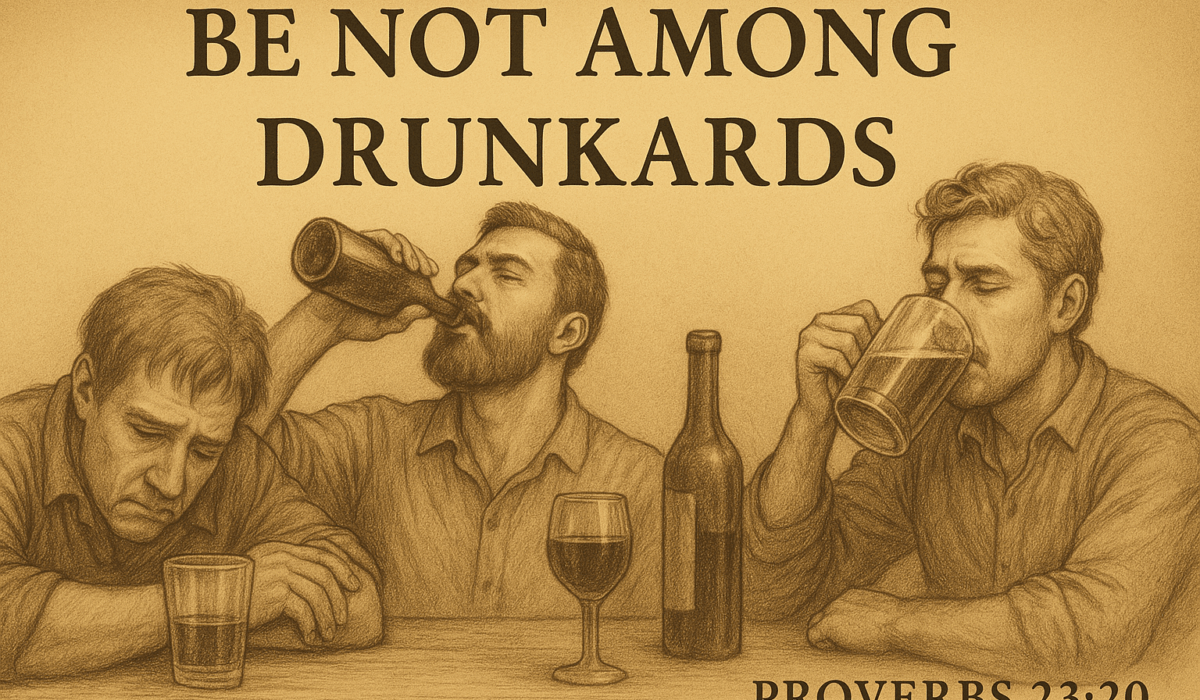

Wine and Woe: A Biblical and Practical Reckoning with Alcohol

“Wine is a mocker, strong drink is raging: and whosoever is deceived thereby is not wise.”
— Proverbs 20:1 (KJV)

Introduction: A Culture Drenched in Drink

In a world spiraling into chaos, the bottle has become both an idol and escape. Alcohol is celebrated, glamorized, ritualized, and normalized, even in the church. It is served at weddings and funerals, praised in entertainment, and increasingly baptized into Christian liberty. But beneath the golden glow of beer commercials and the polished image of “Christian craft brewery” movements lies a bitter truth: alcohol is a destroyer of men, families, and nations.

This is not a call for legalism. It is a call for order. A call for fathers and sons to assess the times, measure the weight of Scripture, and count the cost of indulgence. A call to discern between liberty and license, between celebration and seduction, between sacred wine and satanic poison.

This post will explore alcohol from every side: Biblical commands, historical consequences, scientific data, cultural patterns, and practical applications for families walking in the Great Order.


I. Wine in Scripture: Blessing or Curse?

Scripture does not speak of alcohol in simplistic, one-dimensional terms. It is portrayed both as a blessing and a potential curse. The key lies not in the drink itself, but in the context, the heart, and the culture surrounding its use.

Wine as Blessing

In Psalm 104:14–15, God is praised for creating wine:

“He causeth the grass to grow for the cattle… and wine that maketh glad the heart of man.”

Wine was part of the sacrificial system (Exodus 29:40), used in covenant feasts, and offered by Melchizedek to Abraham (Genesis 14:18). Paul even tells Timothy to use a little wine for his stomach (1 Timothy 5:23).

Clearly, the Bible does not teach a universal prohibition.

Wine as Curse

Yet warnings against alcohol abound:

  • Noah’s nakedness and shame (Genesis 9:21)
  • Lot’s drunken incest (Genesis 19:33–35)
  • Nadab and Abihu’s death while under the influence (Leviticus 10:1–10)
  • Kings warned not to drink lest they pervert justice (Proverbs 31:4–5)
  • Priests forbidden to drink while ministering (Leviticus 10:9)
  • Drunkards excluded from the Kingdom (1 Corinthians 6:10)

Wine is never neutral. It is either a tool of dominion or a snare of death.


II. The Dangers of Drunkenness: Scripture’s Clear Condemnation

Scripture draws a hard line at drunkenness. It is a sin. Period.

“And be not drunk with wine, wherein is excess; but be filled with the Spirit.”
— Ephesians 5:18

Drunkenness dulls the mind, weakens the spirit, emboldens sin, and opens the door to demonic influence. Proverbs 23:29–35 offers a vivid warning:

“Who hath woe? who hath sorrow? who hath contentions?… They that tarry long at the wine… thine eyes shall behold strange women, and thine heart shall utter perverse things.”

Alcohol is no innocent substance. It is an accelerant for foolishness, adultery, violence, and despair.

Drunkenness and Judgment

In Isaiah 5:11, the prophet warns:

“Woe unto them that rise up early in the morning, that they may follow strong drink… the harp, and the viol, the tabret, and pipe, and wine, are in their feasts: but they regard not the work of the Lord.”

God brings judgment on nations that drown in drink. It is no coincidence that Babylon, he mother of harlots, is described in Revelation as holding a golden cup full of abominations and fornication (Revelation 17:4).

Drunkenness is not just personal sin; it is a national indicator of decay.


III. Historical Testimony: Alcohol and the Collapse of Men and Nations

From Rome to Russia, from America’s frontier towns to her college campuses, alcohol has been the great destabilizer of civilizations.

Rome’s Fall and Public Decay

As Rome degenerated from a Republic into an Empire, its people abandoned the virtues of discipline and moderation. Feasting and drunkenness became common, leading to moral collapse and political ruin.

Historian Edward Gibbon wrote in The Decline and Fall of the Roman Empire:

“Intemperance was universally indulged… every rank of citizens was infected.”

The Gin Epidemic in England

In 18th-century England, gin became the drug of the poor. Known as the “gin craze,” it devastated families. Parliament passed multiple laws trying to stem the social ruin, infant mortality, crime, poverty, and early death soared.

American Prohibition and Revival Movements

While Prohibition is often mocked today, it was birthed by Christian movements seeking to rescue families from destruction. The early 20th-century revivalists rightly identified alcohol as the fuel of domestic violence, abandonment, and moral failure.

They may have overreached legislatively, but their vision was righteous: a sober, God-fearing people.


IV. Science and Statistics: What the Studies Show

Today’s science confirms what Scripture and history have long known.

Alcohol and Health

  • Cancer Risk: The CDC links alcohol to breast, liver, colorectal, and esophageal cancers. No level of alcohol has been deemed “safe” by the WHO.
  • Brain Damage: Alcohol shrinks brain tissue, damages the prefrontal cortex, and impairs memory and judgment, especially in youth.
  • Heart Disease: While moderate drinking was once thought heart-healthy, newer studies show that benefits were overstated and outweighed by cancer risk.

Alcohol and Society

  • Crime: Over 40% of violent crimes involve alcohol. Domestic abuse skyrockets with drinking.
  • Workplace Damage: The U.S. economy loses an estimated $249 billion annually from alcohol-related productivity loss.
  • Family Destruction: Children of alcoholics are at greater risk for depression, abuse, suicide, and repeating the cycle.

When Scripture says “wine is a mocker,” it isn’t speaking metaphorically. It speaks with generational truth.

V. Christian Liberty and the Deception of “Moderation”

“All things are lawful unto me, but all things are not expedient…”
— 1 Corinthians 6:12 (KJV)

Modern Christians often hide their indulgence behind the banner of liberty. “We’re under grace,” they say. “Jesus drank wine.” But this line of reasoning, when misapplied, is not liberty, it’s license. Worse, it’s often a cloak for addiction, worldliness, or cowardice.

While Scripture permits lawful use of alcohol, it never commands it. You are not more righteous for abstaining, but you are not wise for pretending alcohol is risk-free. Wisdom discerns between what is allowed and what builds.

Christ’s Use of Wine: Not a Justification for Modern Drunkenness

Jesus turned water into wine (John 2), but He did not use it to entertain or numb His followers. The context was covenant celebration, not escapism. Jewish wine was often diluted 3:1 with water. The idea that Jesus’ use of wine validates modern hard liquor, binge drinking, or craft beer culture is theological sleight of hand.

Just as Christ touched lepers without becoming unclean, He used wine without being consumed by it. His example teaches restraint and holiness, not indulgence.


VI. Alcohol and Masculinity: Destroying the Patriarch’s Strength

“It is not for kings, O Lemuel… to drink wine; nor for princes strong drink.”
— Proverbs 31:4 (KJV)

Alcohol weakens a man’s judgment, energy, discipline, and self-control. It dulls the blade of leadership. It emasculates. A father under the influence is a danger to his children. A husband who drinks is a man whose house is vulnerable to collapse.

Men are commanded to be watchful, sober, vigilant. (1 Peter 5:8). To guard the gate. To lead with clarity. Alcohol undermines every one of these roles.

Drunkenness is not strength, it is surrender. It is trading your priestly garments for the rags of a fool.

A man who cannot say no to a drink will not be able to say no to a thousand other temptations. If you cannot master the bottle, you cannot master your home, your flesh, or your calling.

The Culture of “Masculine” Drinking

In popular media and frat-boy culture, drinking is portrayed as rugged and masculine. But the Bible paints a different picture. The drunkard is not a warrior, he is a mocker. He is not respected, he is avoided. Scripture calls him a “fool.”

True masculinity is self-governed, strong in spirit, disciplined in appetite, and sober in judgment. It doesn’t need a bottle to feel brave.


VII. Alcohol and the Feminization of Society

Just as alcohol undermines the strength of men, it plays a unique role in the softening of society. Drunkenness makes a people easy to rule, easy to manipulate, and easy to seduce.

“Woe to the crown of pride, to the drunkards of Ephraim… the Lord hath a mighty and strong one, which shall cast down to the earth with the hand.”
— Isaiah 28:1–2 (KJV)

A nation full of drunken men is a nation ripe for tyranny. Alcohol breaks down initiative, resistance, planning, clarity, and leadership. It makes men passive, dull, and pacified. And when men are neutralized, women begin to rule, improperly.

Drunken men retreat from duty, allowing feminism and statism to rush into the vacuum. This is not liberty. It is collapse.


VIII. Raising Children in a World of Alcohol

“Train up a child in the way he should go…”
— Proverbs 22:6 (KJV)

What you do in moderation, your children will do in excess. If a father “only drinks on weekends,” the son will find nothing strange in daily drinking. If the family keeps alcohol in the home without caution, daughters may marry drunkards.

Children are always watching. They remember the slurred speech,  empty bottles, and irrational anger. The worldly associations, and lack of prayer on those nights.

A father must set the standard: we are a house of sobriety. We are a household of clarity, strength, and vigilance.

You cannot raise arrows if you’re half-blind. You cannot train warriors with a bottle in hand.

Teach your sons that alcohol is not evil, but it is dangerous. Teach your daughters,:a man who drinks freely is a man who cannot lead. Build families that reflect the priesthood of God, not the barroom of Babylon.


IX. Alcohol, Church Leadership, and the Household of God

“A bishop then must be blameless… not given to wine.”
— 1 Timothy 3:2–3 (KJV)

Church leaders are held to a higher standard. Paul does not say they must never touch wine, but he insists they must not be “given to it.” That is, not addicted, not reliant, not frequently associated with it. The leader must be known for clarity, gravity, and temperance.

Why? Because the Church is to model God’s household. If leaders are casual with alcohol, the flock will become careless. And soon, sin will flourish under the haze of “freedom.”

Sadly, many modern pastors are more likely to host a beer-tasting event than a prayer meeting. Elders joke about whiskey preferences. Deacons drink publicly on social media. And all of it is justified with “Christian liberty.”

But the Word says otherwise. The priest was forbidden from drinking before ministering in the tabernacle (Leviticus 10:9–10). Why? Because his judgment, his discernment, and his spiritual sensitivity were to remain pure.

God does not anoint drunken men. He removes them!


X. A Call to Sobriety in the Days of Judgment

“But ye, brethren, are not in darkness… Therefore let us not sleep, as do others; but let us watch and be sober.”
— 1 Thessalonians 5:4–6 (KJV)

We are living in a generation of confusion, corruption, and collapse. This is not the time for dull senses and blurred eyes. This is the time for warriors. For men who can see clearly. For households that shine as light in a drunken world.

Sobriety is not just abstaining from alcohol. It is a spirit,  posture, and mindset. It is the clear-eyed resolve of the patriarch who watches over his house with vigilance. Who disciplines his appetite, prepares for war, and builds with eternity in view.

A sober man sees what others ignore. He notices the drift in his children. He corrects his household gently but firmly, and refuses to let Babylon pour its cup of deception into his family’s bloodline.

The Great Order demands sober men. Men who rise early, lead well and who eat and drink with thanksgiving, but never as slaves to their appetites.


Conclusion: Choose Dominion, Not Delusion

“They that be drunken are drunken in the night. But let us, who are of the day, be sober…”
— 1 Thessalonians 5:7–8 (KJV)

You have a choice to make.

You can follow the world’s path, where alcohol is worshiped, normalized, and excused. You can raise your sons in a home where “moderation” is the excuse and drunkenness is only one bad night away.

Or you can reject the seduction. You can build a house of order, discipline, and strength. You can raise sober men and wise women. You can lead with clarity and conviction.

Drinking may be lawful, but it is not always wise. In an age of destruction, wisdom demands we build walls of protection around our households. Walls that say:
“We will not bring Babylon’s cup to our lips.”

Be the man who chooses clarity over confusion. Strength over sedation. Order over indulgence, and dominion over delusion.

Let the world drink itself to death.
We will build something that lasts.

This is the Great Order!

Charlie Kirk: A Brother, A Friend, A Martyr for Truth

The Friend I Knew – Who Charlie Really Was

The death, the assassination, of my friend Charlie Kirk, while not shocking given the state of our country causes me great sadness. It is one thing to hear news reports of another “conservative figure” being silenced. It is another thing altogether when the man was a personal friend, a brother in Christ, someone you had spoken with, someone who looked you in the eye and shared his heart.

Charlie was more than the headlines will ever capture. He was more than the soundbites, the clips, the controversies, the caricatures his enemies tried to paint. He was a loving father. He was a devoted husband. And above all, he was a follower of Christ, not in the superficial, cultural, shallow sense that passes for Christianity today, but in the way the Bible demands: bold, faithful, consistent, and unashamed.

When I think of Charlie, I do not first think of Turning Point USA, nor of speeches at rallies, nor of debates on college campuses. I think of a man who lived his convictions in his home, with his family, off-camera, where it mattered most. I think of a man who, unlike so many “Christian leaders,” did not sell out, water down, or compromise for applause.

And yet, he is dead. Assassinated. Cut down by the enemies of God and of truth. That fact alone should awaken every one of us from our cowardice and slumber.


Charlie’s Courage in an Age of Cowardice

We live in an age where most people, and yes, most Christians, are cowards. They whisper the truth in private but deny it in public. They hide their convictions under the blanket of “not wanting to be divisive.” They bow their heads to the cultural idols of tolerance, equality, and acceptance. They fear being labeled, fear losing a job, fear being unfriended.

Charlie refused that path. He believed what the Psalmist declared:

“The LORD is my light and my salvation; whom shall I fear? The LORD is the stronghold of my life; of whom shall I be afraid?” (Psalm 27:1)

Charlie lived with that verse etched into his soul. He feared God, and therefore he feared no man.

While others silenced themselves for the sake of social approval, Charlie spoke. While others were calculating the consequences, Charlie proclaimed truth boldly. While others cowered, he stood. That is why he was hated. That is why he was targeted. That is why he was murdered.


Silence is Consent – His Blood is on Our Hands

I am going to be blunt – Charlie is not dead merely because of his assassin. He is dead because the rest of us refused to stand as he did. His blood, in part, is on our hands.

The prophet Ezekiel warns us:

“But if the watchman see the sword come, and blow not the trumpet, and the people be not warned; if the sword come, and take any person from among them, he is taken away in his iniquity; but his blood will I require at the watchman’s hand.” (Ezekiel 33:6)

That is us. We saw the sword. We saw the degeneracy. We saw the assault on truth, family, masculinity, and faith. And most of us said nothing. Or worse, we said it quietly to our friends while refusing to sound the trumpet in public. We did not want to lose face. We did not want to lose money. We did not want to lose followers.

Charlie sounded the trumpet. He paid with his life. Our silence has been and continues to be consent. Our cowardice has been complicity. Our lukewarmness has been betrayal and we will be judged for it.


What Made Charlie Different

Charlie was not flawless, no man is. But what set him apart was his refusal to be lukewarm.

Revelation 3:16 states:

So then because thou art lukewarm, and neither cold nor hot, I will spue thee out of my mouth.”

That verse describes the church in America today. Safe, soft, passive, docile. The church of corporate branding and fog machines. The church of “don’t rock the boat.” The church that preaches more about self-esteem than sin, more about diversity than discipleship, more about comfort than courage.

Charlie was not that. He was hot. He was bold. He lived every day as if eternity mattered, because it does. He lived unashamed of Christ. He lived what Paul commanded:

“Be on your guard; stand firm in the faith; be courageous; be strong.” (1 Corinthians 16:13)

That verse could have literally been written as a summary of his life, why can the same not be said for you?


The Cowardice of Christian Men

Here is the hard truth: had Christian men in America stood as Charlie did, he would still be alive. Evil men thrive where good men refuse to act. Degenerate ideologies spread when faithful men retreat. Cowards create the conditions for tyrants.

Most Christian men today are domesticated pets, not warriors. They hide behind their wives’ skirts, behind their pastors’ platitudes, behind the excuse of “keeping the peace.” They think meekness means weakness. They think turning the other cheek means never taking a stand. They believe following Christ means never offending anyone.

That is not Christianity. That is apostasy, and it is cowardice! The Word of God says:

“Have nothing to do with the fruitless deeds of darkness, but rather expose them.” (Ephesians 5:11)

Exposing requires courage. Confronting requires boldness. And the lack of such courage is why the nation rots, and we deserve it!


A Martyr for Truth

I do not use the word lightly: Charlie Kirk died a martyr for truth. He was killed because he would not bow, would not bend, would not compromise.

Jesus said:

“If the world hates you, keep in mind that it hated me first.” (John 15:18)

Charlie was hated for the same reason Christ was hated, because he exposed lies, challenged corruption, and pointed men back to God. He restored a standard in his own life and set an example for others.

Some will argue that martyrdom is only when someone dies for preaching the Gospel. I disagree. Martyrdom is when someone dies for refusing to deny the truth of God in any sphere. Charlie’s fight for the family, for masculinity, for morality, for order, these are Gospel issues. To defend them is to defend Christ’s dominion.


Imagine If We All Had His Courage

Imagine for one moment if the men of this nation had Charlie’s spine. Imagine if the pulpits of America thundered again with the full weight of God’s Word instead of limp half-sermons carefully crafted not to offend tithers. Imagine if pastors stopped being motivational speakers and started being watchmen, warning of judgment and calling men to repentance with fire in their bones. Imagine if fathers ruled their homes with conviction instead of appeasement, teaching their children discipline, holiness, and honor rather than handing them over to TikTok, Disney, and the state. 

Imagine if husbands actually led their wives as Scripture commands, instead of pandering to feminist rebellion in their own living rooms. Imagine if politicians feared God more than voters, trembled before the judgment seat more than opinion polls, and measured every law by the standard of righteousness rather than by the cravings of lobbyists.

This nation would be unrecognizable. Degeneracy would flee. Tyrants would tremble. Righteousness would again exalt the land. As Proverbs 14:34 declares:
“Righteousness exalteth a nation: but sin is a reproach to any people.”

But instead, we have bowed. We have exchanged courage for comfort, conviction for cowardice, strength for softness. And the reproach of sin lies heavy on our land. Charlie’s courage exposes just how far we have fallen, and just how much we have to answer for before God.


The Call to Repentance

Charlie’s assassination is not just a tragedy to be mourned; it is a trumpet blast from Heaven calling us to repentance. To shrug it off as merely another act of political violence would be to miss the voice of God in the midst of it. This was not random. This was not meaningless. It is a direct indictment against the cowardice of God’s people in this land.

Joel 2:12–13 thunders to us across the centuries:
“Even now,” declares the LORD, “return to me with all your heart, with fasting and weeping and mourning. Rend your heart and not your garments.”

God is not impressed with our symbolic gestures, our token prayers, or our empty hashtags. He demands broken hearts, humbled spirits, and genuine repentance. And what must we repent of? Not just the obvious sins of lust, greed, or corruption, but the more insidious sins that have rotted the backbone of Christian men: cowardice, silence, compromise.

We must repent for loving our reputations more than righteousness. We must repent for caring more about the approval of men than the commands of God. We must repent for fearing social shame more than eternal judgment. We must repent for bowing to tyrants while ignoring the King of Kings.

Charlie’s death is God’s megaphone to a sleeping church. If we do not hear it and respond, we will prove ourselves no different from the cowards who watched Christ crucified and said nothing. Repentance is not optional. It is the only path forward.


What We Must Do Now

We cannot bring Charlie back. But we can honor him by living what he died for.

  • Men must rise. Put away cowardice. Stop hiding. Stop whispering. Be bold.
  • Fathers must lead. Rule your home in the fear of God. Train your children. Discipline your wives. Build households that honor God.
  • Churches must awaken. Preach the whole counsel of God, not sanitized motivational speeches. Teach courage, holiness, order.
  • Christians must live publicly. No more private faith. No more secret convictions. Live openly, boldly, courageously, regardless of cost.

This is not optional. This is commanded. Jesus said:

“Whoever acknowledges me before others, I will also acknowledge before my Father in heaven. But whoever disowns me before others, I will disown before my Father in heaven.” (Matthew 10:32–33)

The choice is simple: stand or fall. Courage or cowardice. Christ or compromise.


Rest in Victory, Brother

Charlie Kirk’s death is a deep wound, a tear in the fabric of our lives and in the spirit of this nation. Yet it is not the end. Death for the believer is not defeat but coronation. I am convinced beyond any doubt that even as we grieve on earth, Charlie stands now in the radiant presence of Christ, hearing the words every true servant longs to hear: “Well done, good and faithful servant.”

Revelation 2:10 declares:
“Be faithful, even to the point of death, and I will give you life as your victor’s crown.”

Charlie has that crown now. The world took his life, but it could not touch his reward. The assassin silenced his voice, but it could not silence his testimony. His race is finished, his fight is complete, and the crown of glory rests on his head.

But we remain. And his blood cries out against our apathy. His legacy demands we rise higher, stand taller, and live bolder. His example removes every excuse we might cling to. We cannot say, “It is too hard,” for Charlie did it. We cannot say, “The cost is too high,” for Charlie paid it.

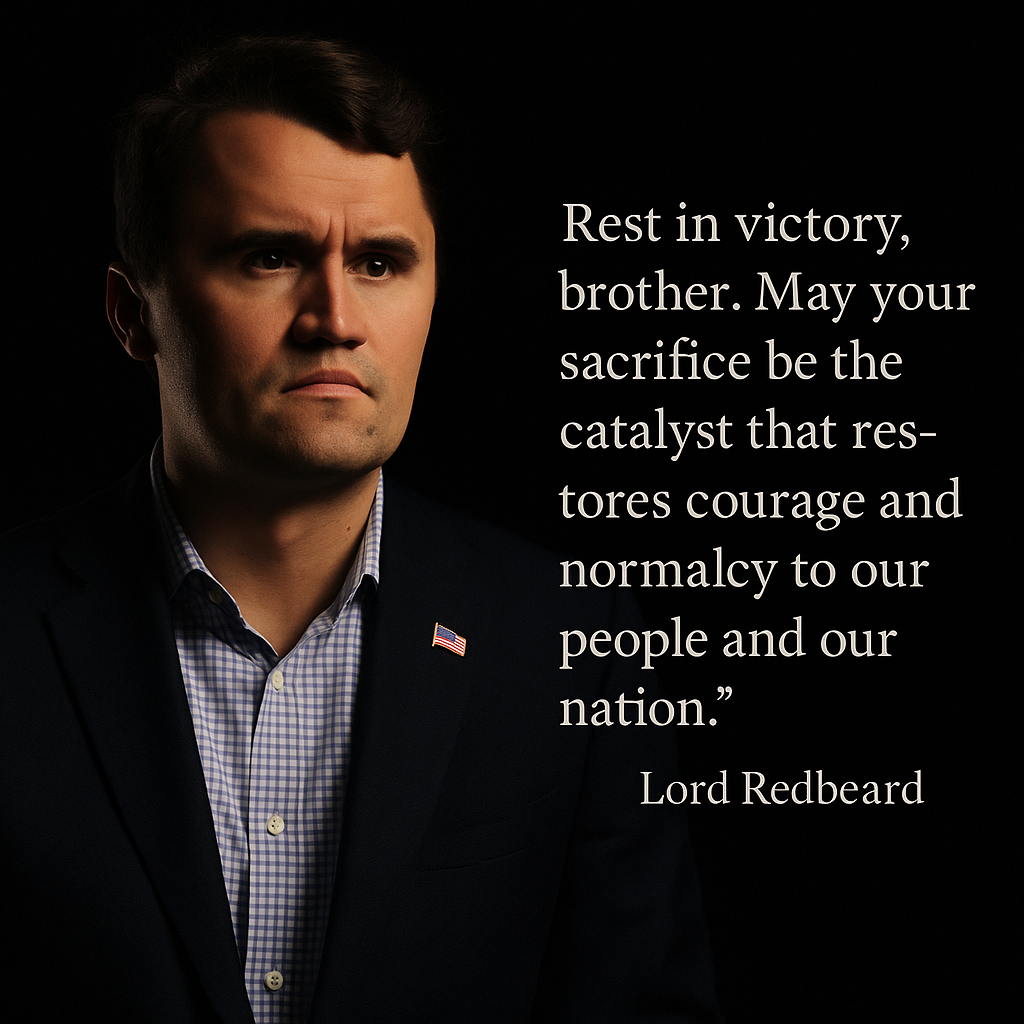
Rest in victory, brother. You ran your race. You kept the faith. The rest is on us now. May God forgive our cowardice and grant us the steel in our spine to honor you not merely with words or sentiment, but with lives marked by the same courage, conviction, and unshakable loyalty to Christ that you displayed until your final breath.

And to the men who read this, I offer this prayer:

O Lord, raise up men with courage. Strip away our cowardice, our fear of men, our obsession with comfort and approval. Teach us to live as soldiers under command, not civilians hiding in safety. Forgive us for our silence, for the times we bowed when we should have stood. Forgive us for counting the cost when You already paid it in blood. Fill us with the fire of Your Spirit that we may speak truth as boldly as Charlie did, live as faithfully as he lived, and, if called, die as honorably as he died. May we be men who bear the cross without shame, who love not our lives unto death, and who pass on to our sons the example of fearless obedience. For Yours is the Kingdom, the power, and the glory forever. Amen.

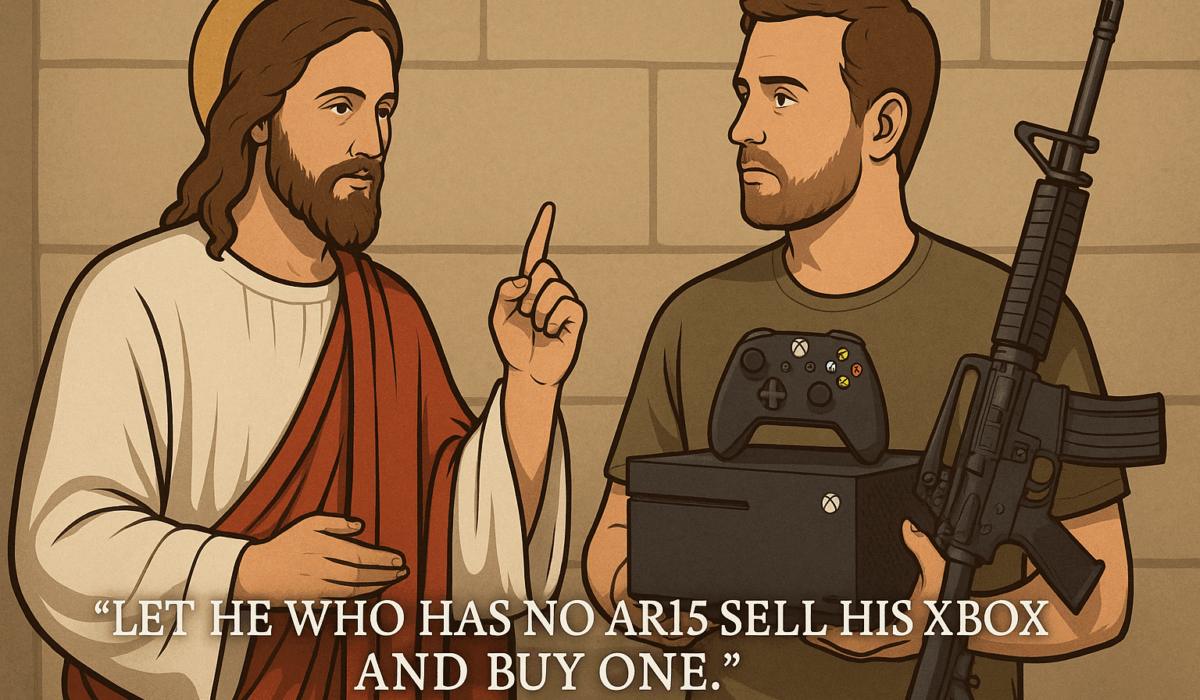
Men Were Made to Rule, Not Respawn: Why Grown Men Playing Video Games Is a National Disgrace

1. When Men Abandon Their Posts

There is a crisis in the land, not one of bombs or bullets, but of buzzing headsets, glowing screens, and twitching thumbs. While cities crumble, economies groan, families fracture, and pulpits go silent, an entire generation of males has retreated from the real world to a padded seat, cradling a controller like a pacifier. The once-mighty sons of the West, heirs to builders, conquerors, and patriarchs, have become domesticated in digital pens, feeding on dopamine rather than discipline.

Grown men playing video games is not merely childish, it is a disgrace. It is the abdication of responsibility, a spiritual offense, and a willful act of self-castration. It is a sin. And like all sin, it is dressed in innocence but rots the soul.

2. A Wasted Generation: The Cultural Rot Behind the Screen

No culture can survive when its men are absent. The Greeks had their hoplites, the Romans their centurions, the Hebrews their judges and prophets. Today, America has… “gamers.” We are a nation of padded chairs, online lobbies, and headset rage.

Consider the raw statistics. Millions of adult males now spend 20, 30, 40 hours a week in make-believe worlds, performing meaningless tasks for fake achievements while their wives wither, their children drift, and their bank accounts evaporate. These are not hobbies; they are habits of slavery. They are not games; they are graves with RGB lighting.

The culture that tolerates this is not neutral, it is diseased. Entertainment has become the narcotic of weak men. The screen is their mother, their lover, their battlefield, and their god.

3. Biblical Manhood vs. Pixelated Cowardice

God made man for work, war, worship, and woman, not for leisure loops and fantasy quests. The first command to Adam was not to “relax and enjoy yourself,” but to subdue the earth and have dominion over it (Genesis 1:28). There is no dominion in Call of Duty, only delusion. There is no subduing in Skyrim, only seduction.

Paul said, “When I became a man, I put away childish things” (1 Corinthians 13:11). Let that verse ring like thunder in every living room. If you are a man and still drawn to pixelated distractions, you have not yet become what you were called to be. You are still a boy in man-flesh, pretending at masculinity while refusing its burden.

It is no coincidence that the rise of gaming corresponds with the fall of fathers, the dissolution of marriages, and the retreat of Christian courage. A man cannot play at being a hero on-screen while cowering from responsibility off-screen. Gaming men do not die for their bride, they respawn. That is not valor; that is vomit and disgrace.

4. Dominion Deferred: How Gaming Replaces the Real Mandate to Conquer, Build, and Rule

Man was not made to drift. He was not made to lounge, to loiter, or to lose. He was made to subdue, to dominate, to forge, to establish order from chaos. In Eden, God gave Adam the original masculine mandate: “Be fruitful, and multiply, and replenish the earth, and subdue it: and have dominion” (Genesis 1:28). That command still echoes through every real man’s veins like war drums. But in our time, it has been smothered by glowing screens and glowing excuses.

What once drove men to cross oceans, raise cathedrals, carve roads through wilderness, and govern nations, now drives them to… collect loot crates and rage-quit over bad Wi-Fi. What God designed for glory, men have repurposed for pixels.

Make no mistake: video games are not just a distraction from dominion, they are a simulation of it. That’s what makes them so dangerous. They offer the illusion of conquest, creation, and kingship without the pain, the risk, or the virtue. They are fantasy versions of real masculine duties, and they are utterly sterile.

Conquest Replaced with Control

Real conquest involves risk, of failure, of pain, of resistance. It takes sweat. It breaks bones and bends wills. But in a video game, the stakes are imaginary. Men “conquer” without ever taking a real risk, without confronting a real foe, without disciplining a real body.

It is dominion without danger. And it breeds men who are proud in the game but paralyzed in life.

Building Replaced with Button Pressing

Men were made to build, homes, families, churches, legacies. Christ Himself is a builder: “Upon this rock I will build my church” (Matthew 16:18). But building takes time, patience, failure, and fortitude.

Gaming offers the feeling of building, your character, your inventory, your base, but none of it exists. You “build” for countless hours, but nothing lasts. Nothing is passed to your sons. You cannot pass down a Twitch clip to your grandchildren.

Ruling Replaced with Roleplay

Man was made to rule, not in arrogance, but in responsibility. Headship in the home, leadership in the church, stewardship in society. But ruling is hard. It requires wisdom, accountability, judgment, and love.

Gaming gives you thrones and empires and killstreaks, but none of it demands character. You can be a king online while being a coward in real life. You can be revered in-game and still be unemployed, unmarried, undisciplined, and spiritually dead.

And let’s be honest, you’re not ruling anything. The men who make the games are ruling you. They study your behavior, mine your dopamine cycles, and profit from your inertia. You think you’re the hero? No, you’re the harvest.

5. Masculinity Hijacked: How Video Games Neuter Dominion

True masculinity is active, productive, and sacrificial. It creates legacies, not save files. A man’s mission is to build, first his household, then his church, then his culture. But what do gaming men build? Nothing. They click and consume. They pursue glory that fades the moment the console powers down.

The devil doesn’t need to kill men; he only needs to entertain them. He doesn’t need to send legions of demons; he just needs to release another console generation. If Satan can keep you pacified, feminized, and mesmerized, you are already neutralized. What better way to neuter an army than to offer it quests that mean nothing?

These men think they are kings because they wear headsets and bark orders online. But they have no dominion in their home, no authority in their marriage, and no legacy among their sons. These are the eunuchs of modernity, emasculated, entertained, and utterly useless.

6. The Sin of Idleness, the Vice of Escapism

The Bible does not merely frown upon idleness, it curses it. “If any would not work, neither should he eat” (2 Thessalonians 3:10). The sluggard is condemned in Proverbs again and again, not for what he does, but for what he avoids, labor, diligence, provision.

Video gaming is not neutral entertainment, it is idolatrous escapism. It trades effort for ease, reality for fantasy, blood for pixels. The man who chooses gaming over real battle is no different than Jonah sleeping in the ship while the storm raged. The house is on fire, and the men are in their mom’s basement arguing over loot drops.

Escapism is cowardice with better marketing. You are not relaxing, you are retreating. You are not playing, you are perishing.

7. Marriage, Fatherhood, and the Console of Cowards

A man addicted to gaming is a curse to his wife and a liability to his children. He is not a leader but a leech. He trains his wife to mother him and his sons to imitate him. The home becomes a theater of deferred duties and passive resentment.

Ladies, if your husband is a gamer, you are not married to a man, you are married to a boy who never graduated from adolescence. And men, if you are defending your “right to unwind,” ask yourself when Christ demanded His “me time.” The cross had no pause button. Real love costs.

Fatherhood is war. Marriage is duty. Household leadership is laborious. Gaming cuts the legs out from under all of these. It tells men they can live out greatness without actually earning it. That is not masculinity; it is masturbation of the soul.

8. Economic Parasitism: The Manchild Drain on Society

What is the economic cost of this rot? Billions of dollars are spent not on industry, innovation, or inheritance, but on avatars, skins, and downloadable distractions. Men who once labored in fields, factories, and foundries now pour their time and energy into fake currencies and hollow rankings.

Let us call it what it is: theft. Time stolen from God. Energy stolen from family. Wealth squandered. These men are parasites, consuming resources while producing nothing. Their homes are neglected, their wives abandoned, their children outsourced, and their churches ghosted.

And we wonder why civilization is collapsing?

9. Spiritual Warfare Requires Real Swords, Not Joysticks

The Christian man is called to war, not make-believe war, but the real thing. “Endure hardness, as a good soldier of Jesus Christ” (2 Timothy 2:3). Our armor is spiritual, our sword is the Word, and our battlefield is the world. Try equipping that in Grand Theft Auto.

Gaming conditions men for spiritual defeat. It trains them to expect victory without cost, pleasure without pain, and meaning without mission. It numbs the conscience, dulls the senses, and mocks the real Kingdom for which we were made.

Satan laughs every time a man logs on instead of kneeling in prayer, every time he levels up instead of reading Scripture, every time he dominates a server but can’t disciple his own son.

The controller is not a weapon. It is a leash and you are a slave to it!

10. The Way of Escape: Repentance, Responsibility, and Real Manhood

There is hope. There is always hope. Christ died not just for liars and thieves, but for sluggards and idolaters too. But repentance is not lip service, it is action. It is throwing the console out, confessing your sin, and rising to your station. It is work, not whining. It is sweat, not silence.

Real men don’t hide in digital caves. They plow real fields. They train real sons. They forge real legacies. They reject the dopamine hits of fake kingdoms for the eternal glory of Christ’s true dominion.

There is only one Kingdom worth living and dying for, and it will not be rendered in 1080p.

11. Conclusion: The Controller Must Be Cast Down

The video game console is the modern man’s golden calf, shiny, adored, and utterly false. It offers the illusion of glory while robbing men of the real thing. It keeps them passive when they were made for battle, silent when they were made to speak, entertained when they were called to evangelize.

If you are a man, and you are still gaming, you have a choice: cast it down, or be cast away.

Take up your cross, not your controller. Build your household, not your avatar. Wage war for your King, not your clan. Rise, repent, and return to your post.

The nation is burning.

The Church is bleeding.

And we need our men back.

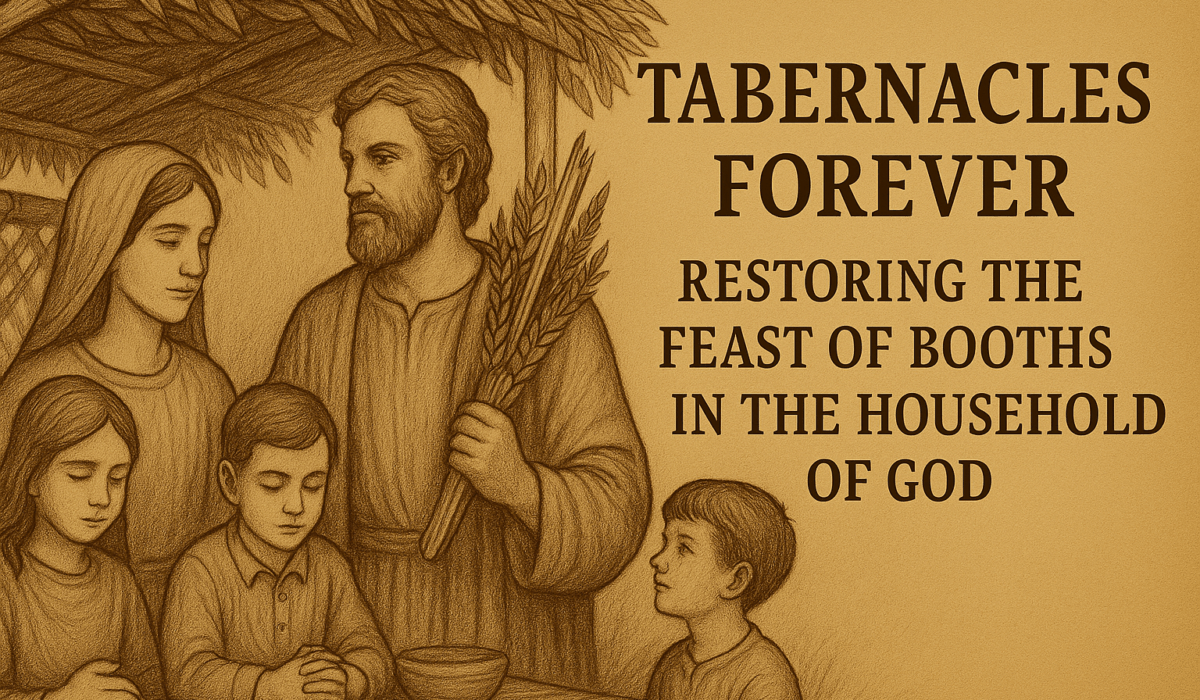
Tabernacles Forever: Restoring the Feast of Booths in the Household of God


Part I: The Everlasting Command – God’s Law Concerning Tabernacles

The Feast of Tabernacles, known in Hebrew as Sukkot, is not merely a relic of Hebrew antiquity, nor a quaint ritual for cultural Jews. It is an everlasting ordinance commanded by the Most High for all of Israel, binding upon God’s covenant people not as a ceremony to be dismissed, but as a statute to be honored, remembered, and revived.

“And the LORD spake unto Moses, saying, Speak unto the children of Israel, saying, The fifteenth day of this seventh month shall be the feast of tabernacles for seven days unto the LORD… It shall be a statute for ever in your generations…”
—Leviticus 23:33–41

The command is explicit. Tabernacles is not temporary, nor provisional, it is perpetual.

Many so-called Bible teachers, influenced by dispensationalism or Marcionite leanings, insist that the feasts of the Lord were “Jewish” and thus have no bearing on the New Covenant believer. Yet the Scriptures never call them “feasts of the Jews.” They are repeatedly called “the feasts of the LORD” (Leviticus 23:2). They are His, not man’s. He instituted them. He legislated them. He expects obedience.

The Feast of Tabernacles was given as the final feast in the calendar of divine appointments, the culmination of God’s redemptive plan; a celebration of ingathering, rest, dominion, and joy. It commemorates Israel’s deliverance from Egypt, their pilgrimage through the wilderness, and their dwelling in booths (tabernacles), but it also points to God dwelling with man, a time of future glory, and the establishment of the Kingdom.

Its prophetic richness and theological weight make it not less important after Christ’s advent, but more.


Part II: What Was Ceremonial – and What Remains

There is no question that certain elements of the Feast of Tabernacles were ceremonial in nature. The daily animal sacrifices (Numbers 29:12–38), the priestly rituals with water and wine, the Levitical procedures, all pointed forward to Christ and were fulfilled in Him.

But to say that all aspects of Tabernacles are “fulfilled” is to misunderstand both Scripture and fulfillment itself. Christ fulfilled the sacrifices, but He did not abolish the Sabbath (Matthew 5:17–19), nor the Feast days which are part of the moral and civil fabric of God’s law.

Jesus Himself observed the Feast of Tabernacles.

“Now the Jew’s feast of tabernacles was at hand… But when his brethren were gone up, then went he also up unto the feast… Now about the midst of the feast Jesus went up into the temple, and taught.”
—John 7:2, 10, 14

If the Messiah honored it, how can His disciples ignore it?

Zechariah prophesied of a time when all nations would be required to keep the Feast of Tabernacles in the Messianic age:

“And it shall come to pass, that every one that is left of all the nations which came against Jerusalem shall even go up from year to year to worship the King, the LORD of hosts, and to keep the feast of tabernacles.”
—Zechariah 14:16

This is not a type and shadow. This is post-victory glory. In the age of Christ’s reign, Tabernacles is still observed by the nations. And those who refuse?

“Upon them shall be no rain… there shall be the plague…”
—Zechariah 14:17–18

God punishes nations for ignoring His feast. The ceremonial parts are fulfilled. The moral command remains. The celebration continues.


Part III: Historical Observance – From Moses to Messiah and Beyond

The Feast of Tabernacles was observed faithfully during the height of Israel’s obedience. Solomon gathered the people to celebrate it during the dedication of the Temple (2 Chronicles 7:8–10). Ezra and Nehemiah reinstituted it after the Babylonian captivity (Nehemiah 8:14–17), marking a renewal of national holiness.

It was observed during the time of Christ. Not once does Jesus rebuke it. Not once do the Apostles declare it abolished.

The early Church, especially the believing remnant among Israelites, continued to honor God’s feasts. Church fathers such as Polycrates of Ephesus, a disciple in the line of John, upheld the observance of Passover and Unleavened Bread. While later Hellenized church leaders under Rome rejected these feasts in favor of pagan substitutes like Easter and Christmas, the true remnant kept the divine calendar.

Even the Reformers, while purging the Roman Mass, failed to recover the Lord’s appointed times. It is the task of this generation, the generation of reformation, restoration, and patriarchy, to restore not only right doctrine, but right seasons.

The calendar of the LORD must displace the calendar of Babylon.


Part IV: Building the Booth – A Household Requirement

One of the central commands of Tabernacles is the building of booths, also called stalls or sukkahs. These are temporary structures, often made with natural materials like wood and leafy branches, where families eat, dwell, and rejoice before the LORD for seven days.

“Ye shall dwell in booths seven days; all that are Israelites born shall dwell in booths: That your generations may know that I made the children of Israel to dwell in booths, when I brought them out of the land of Egypt…”
—Leviticus 23:42–43

This command is not ceremonial, it is generational. The booth is a teaching tool, a household altar, a living memorial. It is to be built by the man of the house and enjoyed by the entire family. It marks separation from the world, remembrance of divine providence, and celebration of God’s provision.

The patriarch is responsible to see the booth erected, meals shared in it, Scripture read within it, and songs of thanksgiving lifted from it.

This is not legalistic, it is glorious.

In modern times, many believers make simple backyard sukkahs, rooftop structures, or even indoor representations if weather demands. Some decorate them with fruits, branches, lanterns, or Scripture banners. The key is obedience, reverence, and joy.

This is a time for gathering. A time for testimony. A time for family dominion and Biblical memory.


Part V: Modern Celebration Ideas Rooted in Scripture

While the ceremonial priesthood has passed, the family altar remains. Here are ways to celebrate Tabernacles in a God-honoring way in your household:

1. Construct a Booth with Your Household
Use branches, lumber, canvas, or reeds. Involve your sons in the labor. Let your daughters decorate. Set up a table and seats inside. This is your sacred shelter for the week.

2. Read Scripture Daily
Focus on Deuteronomy 8, Leviticus 23, John 7, Zechariah 14, Nehemiah 8, and Revelation 21. Let the Word of God dwell richly in your family during the feast.

3. Celebrate with Feasting
Tabernacles is a time of rejoicing (Deuteronomy 16:14–15). Eat bountifully. Bake bread. Roast lamb. Share wine. Honor the Lord with grateful hearts.

4. Invite Others to Join
This feast is open to the stranger who joins the household (Leviticus 23:42, Deuteronomy 16:14). Invite believing families, or even unbelievers willing to learn. Use it as evangelism.

5. Sing Psalms of Thanksgiving
Psalm 118 and others were traditionally sung during this feast. Rehearse them with your children. Worship as a household.

6. Testify of God’s Provision
Have each family member recount how God has provided in the past year. Turn your booth into a tabernacle of praise.

7. Fast From Worldliness
Turn off screens. Refuse mainstream media. Detach from Babylon. Feast on righteousness.

8. Reflect on the Coming Kingdom
Use the feast to teach your children that one day Christ will reign physically and the whole earth will keep Tabernacles (Zechariah 14). Let it spark vision.

Part VI: Answering the Objections – The Most Common Excuses for Disobedience

Whenever a righteous man begins to restore what has been torn down, whether it be headship, patriarchy, modesty, or God’s holy days, there is always a chorus of resistance from the compromised and the lukewarm. The Feast of Tabernacles is no exception. Let us examine the most common objections and refute them with clarity, boldness, and Scripture.


Objection #1: “Isn’t That Just for the Jews?”

This is the most repeated, and most ignorant, argument against keeping the Feast of Tabernacles. The assumption is that God’s holy days were given to Israel alone and have no bearing on Gentiles in Christ. But this is not the teaching of Scripture.

“One law shall be to him that is homeborn, and unto the stranger that sojourneth among you.”
—Exodus 12:49

The law of God, including His appointed times, was never given solely to an ethnic group. It was given to a covenant people. And all who are in Christ are grafted into Israel (Romans 11:17–24). Paul writes:

“That at that time ye were without Christ, being aliens from the commonwealth of Israel… But now in Christ Jesus ye who sometimes were far off are made nigh by the blood of Christ.”
—Ephesians 2:12–13

We are no longer aliens from Israel. We are now part of the commonwealth. The feasts are not “Jewish holidays.” They are the inheritance of the saints.

In Zechariah 14, we are told that all nations will keep Tabernacles. That includes Gentiles. And in Revelation 21, the imagery of the new heavens and new earth echoes Tabernacles with God dwelling among His people.

The feasts belong to the covenant family. That includes every blood-bought household of faith.


Objection #2: “Didn’t Jesus Fulfill That?”

Yes, He did, and fulfilling does not mean abolishing.

“Think not that I am come to destroy the law, or the prophets: I am not come to destroy, but to fulfil.”  —Matthew 5:17

Jesus fulfilled the sacrifices. He fulfilled the priesthood. He fulfilled the temple system. But He never said, “Now go disobey the Father’s appointed times.” He Himself kept the Feast of Tabernacles in John 7, teaching in the temple during the celebration.

Even the Apostle Paul, decades after Christ’s resurrection, kept the feasts:

“But bade them farewell, saying, I must by all means keep this feast that cometh in Jerusalem…”  —Acts 18:21

If the fulfillment of a feast cancels it, then we must cancel all marriage (since marriage points to Christ and His Church), all baptisms (since baptism points to resurrection), and all Lord’s Suppers (which proclaim His death until He comes). Yet none of these are abandoned in the New Testament. They are practiced more meaningfully.

Likewise, Tabernacles is fulfilled in Christ, yet still practiced by His people as a celebration of that fulfillment.


Objection #3: “Isn’t This Legalism?”

Legalism is the attempt to earn salvation by works. Keeping God’s commands joyfully in response to grace is not legalism, it is covenant faithfulness.

“For this is the love of God, that we keep his commandments: and his commandments are not grievous.”
—1 John 5:3

Those who reject obedience out of fear of “legalism” are simply lazy, carnal, or rebellious. Legalism is adding to God’s law. Antinomianism is subtracting from it. Both are condemned. Christ-honoring obedience stands between them.

Celebrating the Feast of Tabernacles is not self-righteousness; it is God-honoring remembrance. It is household worship. It is a joyful response to deliverance and provision. It is not burdensome. It is beautiful.


Objection #4: “The Church Has Its Own Holidays Now”

No, it doesn’t—not from God.

Christmas and Easter are not found anywhere in Scripture. They are pagan syncretisms adopted centuries after Christ, baptized in Christian language but rooted in idolatry. Easter derives its name from Astarte. Christmas falls on the date of Roman Saturnalia. Both are filled with traditions forbidden in Deuteronomy 12:30–31.

God gave us a calendar in Leviticus 23. Man replaced it with Babylon’s calendar. The modern church celebrates resurrection with colored eggs and bunnies, and the Incarnation with pine trees and gift orgies. But none of this pleases God.

“Ye shall not do after all the things that we do here this day, every man whatsoever is right in his own eyes…”  —Deuteronomy 12:8

The righteous man restores the feasts God commanded, not the ones the Vatican invented.


Objection #5: “We Can’t Keep the Feast Without a Temple”

This is another misunderstanding. While the temple was central to certain ceremonial aspects of the feast, the core command;  to dwell in booths, to rejoice, to remember, was household-based.

“Ye shall dwell in booths seven days… that your generations may know…”  —Leviticus 23:42–43

The temple sacrifices have ceased because Christ is our High Priest (Hebrews 10:10–12). But the household celebration of Tabernacles remains.

Even in the post-exilic period, when the temple had not been fully restored, the people kept Tabernacles by building booths and rejoicing before the LORD (Nehemiah 8:14–17). The celebration continued through obedience, not through ceremony.

You do not need a temple. You need a house in order, a man with conviction, and a family willing to honor the LORD.

Part VII: The Prophetic Power of Tabernacles in the New Covenant Age

The Feast of Tabernacles is not just a backward-looking celebration of Israel’s wilderness dwelling. It is a forward-looking declaration of God’s eternal plan to dwell with His people. It is past, present, and future, a feast of memory, mission, and majesty.

In the prophetic timeline, Tabernacles symbolizes the final act in God’s redemptive calendar. While Passover pictured Christ’s death, Unleavened Bread His sinless life, Firstfruits His resurrection, and Pentecost the giving of the Spirit, Tabernacles points to His return, His reign, and His restoration of all things.


“And the Word Was Made Flesh, and Tabernacled Among Us…”

The Gospel of John opens with a deliberate reference to this feast:

“And the Word was made flesh, and dwelt [Greek: eskēnōsen, meaning tabernacled] among us…”  —John 1:14

Christ tabernacled in human flesh, God dwelling among men. This was not a passing visit; it was a preview of eternal communion.

The Feast of Tabernacles proclaims this mystery. That the invisible God would make His dwelling among mortals. That heaven would touch earth. That holiness would take on flesh. It is no coincidence that many scholars believe Christ was born during Tabernacles, when the “booth” of His body entered the world.

Tabernacles, then, is a celebration not only of past provision but of incarnation. Not just of wilderness survival, but of divine presence.


Revelation and the Tabernacle of God

In the closing chapters of Scripture, the imagery of Tabernacles returns in full glory:

“Behold, the tabernacle of God is with men, and he will dwell with them…”  —Revelation 21:3

This is the culmination. The eternal feast. The New Jerusalem. The restoration of Eden. The Kingdom of God in its fullness. And what is the name of this Kingdom reality?

The Tabernacle of God.

When we build booths during the Feast, we are not just remembering. We are rehearsing. We are aligning our households with the destiny of all creation, God dwelling with man, man rejoicing with God, order restored, and dominion completed.

This is not “Old Testament stuff.” This is heavenly prophecy.


Tabernacles and the Millennial Reign

The prophet Zechariah speaks of the time when the Messiah rules the nations with a rod of iron (Zechariah 14). During this reign, the nations are commanded to keep the Feast of Tabernacles. Those who refuse are punished.

This is not allegory. This is the coming global government under King Jesus. And the Feast is central.

“And it shall come to pass, that every one… shall even go up from year to year to worship the King… and to keep the feast of tabernacles.”  —Zechariah 14:16

The Feast is not peripheral to the Kingdom. It is foundational.

Keeping Tabernacles now is not only obedience; it is preparation. It trains our households in Kingdom culture. It aligns our rhythms with heavenly patterns. It sets our families apart as outposts of that coming age.


Household Prophets of the Coming Kingdom

Each man who builds a booth is prophesying. Each woman who sings psalms in the sukkah is declaring truth. Each child who hears the stories of God’s provision is being formed into a warrior of the next generation.

This is not dead religion. This is living prophecy.

When the patriarch leads his household in this feast, he is:

  • Rejecting secular calendars
  • Reestablishing Biblical memory
  • Proclaiming Christ’s dwelling among us
  • Training his sons in dominion
  • Separating his house from Babylon
  • Worshiping in spirit and truth

The church of the future is not megachurches with fog machines. It is households gathered in booths, reading the Word, feasting in faith, building miniature sanctuaries of glory.

Tabernacles is how we build that future, today.

Part VIII: Tabernacles as a Weapon Against Statism and Modern Paganism

We must understand something essential: obedience to God’s feasts, especially Tabernacles, is not only a spiritual act. It is a cultural revolution. It is a strike against the modern pagan world order. It is the reassertion of divine dominion in the face of humanistic rebellion. The man who leads his household in the Feast of Tabernacles is engaging in holy war against statism, globalism, feminism, and every other ism that seeks to enthrone man above God.


Tabernacles vs. Statism

The modern state has replaced the household as the center of life. The state educates the children, redistributes the wealth, defines the calendar, and claims ultimate loyalty. The feast days of the LORD are dangerous to this regime because they take time, loyalty, and memory away from Caesar and restore them to the God of Scripture.

By commanding a household-based feast with specific days of rest, family worship, building projects, and joy, God undermines the system of state control. A man who takes a full week to feast with his family in a homemade booth, reading Scripture and singing psalms, is declaring: “My time belongs to the LORD, not the state.”

The centralized governments of Babylon want to tell you when to work, when to rest, when to spend, and when to remember. Their holidays are civic idolatries, Memorial Day, Independence Day, Thanksgiving, and the unholy trinity of Christmas, Easter, and Halloween. Each is designed to replace the feasts of the LORD with a sanitized, statist substitute.

Tabernacles rejects all of this.

It proclaims that the household, not the government, is the center of law, worship, and culture. It decentralizes power. It roots authority in the father and memory in the covenant. It is a return to Genesis. A return to Eden. A return to Yahweh.


Tabernacles vs. Paganism

Most Christians are still entangled in the pagan rituals of Rome. They deck trees with silver and gold (Jeremiah 10:1–5), bow to fertility symbols like eggs and bunnies, and pretend Halloween can be redeemed by calling it a harvest party. All of this is detestable before the LORD.

The Feast of Tabernacles is pure. It is untainted by idols. It is commanded by God, established in righteousness, rooted in remembrance, and full of life. It is not a day of consumerism. It is not a platform for Hollywood theology. It is a celebration of God’s provision, God’s presence, and God’s promises.

Imagine a neighborhood filled with booths. Imagine children hearing stories of manna in the wilderness. Imagine families reading the book of Deuteronomy together, blessing the LORD for His bounty. Imagine fathers teaching their sons about the future reign of Christ from a homemade shelter under the stars.

This is not fantasy. This is our duty.


Tabernacles Builds Resilience

In a time of economic uncertainty, social decay, and spiritual cowardice, the Feast of Tabernacles trains households in resilience. When you build a booth, you teach your family to remember the wilderness, to depend not on their mortgage, their electricity, or their government, but on the living God.

When the supply chains break, when the cities burn, when the tyrants rise, those who have kept the Feast will not panic. They have lived in tents. They have learned contentment. They have eaten simple meals in joy. They have walked in the ancient ways.

“And thou shalt remember all the way which the LORD thy God led thee these forty years in the wilderness, to humble thee, and to prove thee…”
—Deuteronomy 8:2

Tabernacles is boot camp for the Christian household. It’s wilderness training. It’s survival theology. It’s preparation for dominion in an age of collapse.


Tabernacles Declares War on Feminism and Individualism

Tabernacles is not a feast of individual choice. It is not a private journey of self-actualization. It is a household ordinance. The father leads. The wives follow. The children participate. There is order, hierarchy, and joy in submission.

“Thou shalt rejoice in thy feast, thou, and thy son, and thy daughter, and thy manservant, and thy maidservant… and the stranger… seven days shalt thou keep a solemn feast…”
—Deuteronomy 16:14–15

The entire household is involved. The headship structure is affirmed. This is not a feminist fantasy, it is a patriarchal celebration.

Modern culture tells women to escape the home. Tabernacles calls them back into the heart of it. Modern culture tells children to rebel. Tabernacles trains them to remember. Modern culture tells men to yield. Tabernacles charges them to build.


A Weapon of Light in a Dark World

Let us be absolutely clear: to keep the Feast of Tabernacles is an act of resistance. It is a spiritual weapon. It tears down strongholds and rebuilds the altars of the LORD. It turns the heart of the father to the children, and the children to their father. It unites families under divine law. It is a dress rehearsal for the Kingdom.

Every obedient household is a holy militia. Every patriarch is a watchman. Every booth is a battlefield headquarters in the war for culture.

When we raise our booths, we declare:

“We reject Babylon. We reject Rome. We reject Caesar. We reject feminism. We reject humanism. We reject apostate churches. We declare that this house, this time, this memory, this obedience—belongs to the LORD.

Part IX: Final Charge – Let Every House Keep the Feast

The time for compromise is over. The age of confusion, cowardice, and compromise has brought ruin upon the nations. Men no longer lead. Women no longer submit. Children no longer obey. Churches no longer teach. And the people of God have abandoned the calendar of the Most High for the festivals of Baal and Mammon.

But now is the hour of return.

It is time to rise, rebuild, and rejoice. It is time to tear down the idols of ease, nostalgia, and ignorance and rebuild the fallen booths of David. It is time for households to shake off the chains of Babylon and stand in the light of God’s appointed times.

“Ye shall observe the feast of tabernacles seven days, after that ye have gathered in thy corn and thy wine: and thou shalt rejoice in thy feast… because the LORD thy God shall bless thee in all thine increase.”  —Deuteronomy 16:13–15

The command is clear: observe, rejoice, and receive blessing. This is no burden. This is blessing. This is covenant culture.


Let the Men Lead Again

Fathers, this charge is to you. The Feast will not be kept by accident. It will not happen because the government sanctions it or the church announces it. It will happen because you stand up and declare:

“As for me and my house, we will serve the LORD.”

You must study the Scriptures. You must build the booth. You must gather your household. You must lead in song, word, and prayer. You must sanctify the time and protect the space. You are the priest of your home. Act like it.

Don’t wait for approval from your denomination. Don’t seek permission from culture. Don’t explain away the plain command of God. Obey.

The world is collapsing under the weight of fatherlessness. But when you build your booth and lift your voice in worship, your children see a man under authority, and they will follow you into life.


Let the Wives Build with Joy

Women of God, do not despise the rhythm of the LORD. Do not grumble about the inconvenience of booths, the challenge of simplicity, or the change in schedule. Embrace your role as the wise builder of the home (Proverbs 14:1). Teach your children the songs of Zion. Prepare meals with joy. Decorate the booth with reverence. Make this feast a memory of life and love.

You are not being dragged into the past. You are being lifted into purpose. You are being restored to your rightful place as helpmeet and keeper of the household temple.


Let the Children Learn the Ancient Ways

Children, this is not play, it is purpose. When you sleep under a booth, you are stepping into the shoes of your forefathers. When you read the Torah, you are holding the sword of the Spirit. When you memorize Deuteronomy, you are writing truth on your heart.

Listen to your father. Obey your mother. Rejoice in the LORD. One day, you will be the builders of your own households. Tabernacles is how you begin.


Let Every Household Become a Sanctuary

We need no Vatican. We need no government license. We need no celebrity pastor or mega-church program. What we need is every household to become a sanctuary of obedience, a temple of memory, a fortress of truth.

When each house builds a booth, we push back the darkness.

When each man leads his household in song and prayer, we uproot feminism and rebellion.

When each family remembers the provision of the LORD in the wilderness, we sever the lies of state dependency and humanist progressivism.

This is not an event. It is an act of war.


The Rain Is for the Obedient

God made a promise:

“And it shall be, that whoso will not come up… to keep the feast of tabernacles, upon them shall be no rain.”  —Zechariah 14:17

No rain. No blessing. No favor. No growth.

But to those who obey?

“That your generations may know… I made the children of Israel to dwell in booths… I am the LORD your God.”  —Leviticus 23:43

We do not obey to earn grace, we obey because grace has made us sons. Sons of the covenant. Sons of Abraham. Sons of the household.

And sons keep their Father’s commands.


A Vision for Restoration

What if every Christian household returned to the feasts of the LORD?

What if every father led his family in building a sukkah?

What if every church abandoned Halloween and held a Tabernacles week?

What if neighborhoods rang with the sound of psalms?

What if sons grew up with stories of manna, cloud, fire, and promise?

What if daughters were trained in joyful obedience and feasting?

What if servants, neighbors, and strangers were all invited in?

It would shake the foundations of this fallen world.

It would mark the return of The Great Order.


Conclusion: Keep the Feast

The Feast of Tabernacles is not optional.

It is not outdated.

It is not Jewish.

It is the LORD’s.

It is commanded. It is prophetic. It is glorious. And it is yours, if you will take it up.

Build the booth.

Call the feast.

Lead the house.

And let your family dwell under the shadow of the Almighty, singing, rejoicing, remembering, and proclaiming:

“The LORD is our God, and there is none else.”

“Blessed is the man who feareth the LORD… his seed shall be mighty upon the earth.”
—Psalm 112:1–2

Let the patriarchs rise.

Let the households rejoice.

Let the Feast be kept.

Forever.

The Forgotten Titaness of Smiljan: The Life and Labor of Đuka Tesla

I have been fascinated with Nikola Tesla for as long as I can remember. His mind was lightning bottled in human form, a genius who seemed less a man and more a conduit of cosmic invention. For decades I have studied his life, read every biography I could find, and marveled at his visions of the future. Yet the deeper I dug into Tesla’s story, the more one figure emerged from the shadows, a woman almost invisible in the history books, yet indispensable to the man the world celebrates. His mother, Georgina “Đuka” Tesla, was the unseen engine who forged the discipline, endurance, and imagination that made Nikola possible. 

To speak of Tesla’s brilliance without honoring the furnace that shaped it, his mother’s tireless, hidden labor, is to tell only half the story. The story of Nikola Tesla is known the world over. The eccentric genius, the wizard of electricity, the prophet of alternating current. But behind him stood a woman whose name most cannot pronounce and whose life modern ears would call unlivable. Raised without schooling, and remembered by her son as “indefatigable.”

She was illiterate. She never published a thing. She never gave a lecture. She never appeared on a podcast or launched a brand. Yet Nikola Tesla himself, the man whose brain ran on lightning, said: “Whatever I had accomplished in life was due to the influence of my mother’s guidance and genius.”

That sentence should stop the modern reader in their tracks. Because if you think the average woman today, latte in one hand, smartphone in the other, laundry piling up, Instacart order delayed, husband begging for attention, and children ignored or shipped off to public school has even a molecule of Đuka’s steel in her spine, you’re delusional.


Childhood of Sacrifice

Đuka was the eldest of eight children. At sixteen, just as her life might have blossomed into courtship or further training as a future wife, disaster struck. Her mother went blind. Suddenly, little Đuka was no longer just the daughter. She became the household’s surrogate mother, responsible for raising seven siblings and caring for her disabled mother on her own as her father grieved and worked 18 hour days to support his family alone.

Forget prom dresses, TikTok dances, or college “self-discovery years.” Imagine spending your late teens not at parties or summer camps, but hauling water, scrubbing floors, preparing food for ten mouths, mending clothes until your fingers bled, tending gardens, and keeping livestock alive,  all before breakfast. That was Đuka’s youth. She sacrificed starting her own family to care for her siblings and her mother.

She learned discipline the hard way: not from motivational posters, not from a “self-care” influencer, but from necessity. And that steel, that unyielding capacity for sacrifice, was what she carried into her marriage and her motherhood. And all without any medications or “therapy”


Marriage and Household Dominion

In 1847, at age 25, she married Milutin Tesla, a Serbian Orthodox priest. This was not the life of a bishop’s palace or some grand estate. Their home in Smiljan was a two-room, single-story parish house, set on less than two acres of land. Two rooms. Seven people. Do the math.

There was no running water, no electricity, no air conditioning, no internet, no television, no delivery services, no refrigerator, and no modern cooking appliances. The fire had to be tended at all times, for warmth, for cooking, for survival. If it went out, you didn’t tap a button on a stove. You struck flint and rebuilt it, praying you had dry wood.

Milutin’s priestly stipend, after adjusting for today’s value, worked out to maybe $250 a week (around $200 was for the home). That was it. From this, Đuka ran the entire household. And by “ran,” I mean she orchestrated a full-scale domestic economy.

She grew food, raised animals, cooked every meal, milked cows, baked bread, chopped firewood, spun and wove textiles, embroidered clothing, repaired tools, cleaned, laundered, and disciplined children. She also directed the education and moral training of her children, all while inventing small household appliances and tools to make her work more efficient. She even bartered for labor, securing a full-time servant (paid partly in goods), and occasionally a seasonal helper at harvest.

Compare that to the modern housewife, who collapses if the Wi-Fi goes down for an afternoon, and cannot go 30-minutes without being glued to her screen!


A Day in the Life

Đuka rose between 4 and 5 a.m. every day. Before her children’s eyes opened, she had already stoked the fire, prepared bread, and made breakfast. The smoke of her chimney was the first signal of dawn seen in her parrish. She set the tone and the standard for her entire village.

After feeding her family, she assigned chores: older children hauling water, gathering kindling and firewood, or tending goats and chickens. She spun thread while keeping an eye on pots simmering over open flames. She repaired or made clothing while supervising lessons. She carried burdens on her back, her arms, and her mind, because literally everything depended on her vigilance.

The average modern woman struggles to fold a basket of laundry without streaming a podcast to “get through it.” Đuka did laundry by hand in icy rivers, scrubbing garments on stones until her knuckles cracked. She made clothes from the raw fibers of her sheep (after hand sheering them), not from a UPS delivery box. She preserved food without refrigeration. She raised children without screens, apps, or Google parenting blogs.

Her entertainment? Memorizing and reciting entire Serbian epic poems while working, keeping culture alive while stirring pots and mending garments. She could perform mental feats of memory that would shame most Ph.D.s today.


Where Was Her Husband?

Milutin Tesla was not absent in the modern deadbeat sense,  he was a Serbian Orthodox priest. That meant his days were consumed with duties outside the home: conducting morning and evening services (daily), preparing sermons, teaching catechism, visiting parishioners, attending baptisms and funerals, keeping church records, writing correspondence, and mediating disputes in the community. His role was public, intellectual, and spiritual, and in the 19th-century Austrian Military Frontier, it was relentless.

Most days, he was physically present with his family only a couple of hours in the evening – if at all. The rest of the time, the survival of seven people on less than two acres of land rested squarely on Đuka’s shoulders.

But here is the truth: he could only do those things because he knew his wife carried the full burden of the home. Milutin could stand at the altar in confidence because Đuka was at the hearth in vigilance. He could walk the parish roads without fear because he knew she was managing the household economy, laundry, meals, gardens, livestock, firewood, repairs, schooling, children, clothing, textiles, and cleaning. He could pour his time into the parish because she poured herself out for the home.

If he was present in the house a couple of hours in the evening, it was only because the day had already been conquered by her labor. He stood in front of the parish with confidence because she stood behind the fire with vigilance. His priesthood was possible only because her household dominion was relentless. Without Đuka, his sermons go unwritten, his parishioners unvisited, his vocation undermined by a collapsing home. With her, he could appear serene and learned, because she was sweating, bleeding, and exhausting herself to hold everything together.


The Weight of Survival

Trips to the market were rare, perhaps once, maybe twice monthly. Everything else the family needed was grown, spun, woven, baked, butchered, bartered, or built at home. If they wanted flour, they ground grain. If they wanted clothes, they raised sheep for wool, spun the yarn, and wove the fabric. If they wanted milk or butter, they milked the cow by hand at dawn. Nothing arrived in a box, nothing came shrink-wrapped an nothing was outsourced.

Now take their average budget, the equivalent of about $200 a week in today’s money, and realize how thin that margin was. No restaurants, no Amazon, no Target runs, no streaming subscriptions, no electricity bill (just firewood), no internet bill (just survival). And here’s the kicker: the bulk of that money didn’t even go toward feeding the family. It went to feeding the animals. Sheep, chickens, cows, and horses all had to eat before anyone else did, because they were the very engines of survival. No fodder, no milk. No grain, no eggs. No hay, no wool. No horse, no plowing, no hauling, no transportation. The animals ate first, because they were the household’s machinery.

So Đuka stretched what little was left not only to clothe and feed seven people, but also to hire and/or barter labor, she maintained a full-time servant in addition to a  seasonal helper at harvest. That was how iron-fisted her management had to be. Every coin and every crumb were leveraged to their maximum use.

And it worked. The household survived. More than survived: it became the soil from which sprang Nikola Tesla, the man who would dream electricity into a world still stumbling under gas lamps.


Genius in Disguise

Though illiterate, Đuka had a mind like a steel trap. She was known throughout her community for her inventive spirit and creative craftsmanship. She devised simple machines and tools to ease farming burdens, embroidered with unmatched skill, and preserved the dignity of her family under conditions that would have crushed weaker souls and nearly any modern woman.

Nikola himself admitted that his mind was a reflection of hers. “My mother invented and constructed all kinds of appliances. She wove the finest designs and possessed a memory beyond comparison. She could recite entire works of poetry, folk songs, and passages of Scripture without a single error.” Her memory was not casual, it was photographic, total, and living.

And here’s the uncomfortable truth for modern readers: that brilliance was born not in spite of her lack of schooling, but because of the uncluttered intensity of her life. She had no television flickering in the corner, no social media feeds dripping trivialities into her brain, no endless circle of “friends” distracting her with gossip. Her mind was free from digital noise and trivial entertainment, so it became a vault, capable of storing and recalling culture, scripture, and song with a precision that put most “educated” men to shame.

Modern feminists scream for “recognition,” demanding applause for simply existing. Đuka never demanded recognition. She did not tweet her embroidery or beg validation for memorizing verse. She simply lived, worked, and built her household with relentless discipline. And yet, her genius is stamped into the circuitry of the modern world through her son. If your phone glows in your hand today, if the grid hums around you tonight, it hums because a woman in a two-room parsonage lived without distraction and forged her son’s genius in the furnace of her own hidden brilliance.


Death and Legacy

Georgina “Đuka” Tesla died in 1892, having poured seventy years of labor into her family. Only one known photograph of her survives,  a faint image of a stern but composed woman whose face bore the marks of firelight and toil.

No followers. No media presence. No glamour. No applause. No electricity, no modern convenience, no audience beyond the walls of her two-room house. And yet, from her hands came one of the greatest minds civilization has ever seen.

The modern woman scrolls TikTok while her dishwasher hums, her dryer spins, and her microwave beeps. She sighs about being “overwhelmed.”

Đuka Tesla ran an entire subsistence economy on two acres, in two rooms, with no machines, no running water, no help from her husband beyond evening hours, and only the discipline of her will to keep it all from collapsing.

This is what respect for home, husband, and family once looked like: sacrifice without complaint, invention without applause, rigor without escape. And if you want to understand Nikola Tesla, don’t start with lightning. Start with the woman who struck flint before dawn and carried fire until dusk, the woman who never stopped burning so that her household might live.

Flat Earth: A Distraction from Dominion, Not a Doctrine of Salvation


Part I: When the Earth Becomes the Distraction

There is a war raging today. A war for the family, for the household, for Christian dominion, for generational headship, for the rebuilding of national identity under Christ the King. And yet, in the midst of this war, many brothers in the faith have wandered off into the weeds, fixated not on law, not on governance, not on marriage, nor on worship, but on the shape of the earth.

Let me be clear from the beginning: whether the earth is round, flat, domed, hollow, or square is not a matter of salvation. Nowhere in Scripture are we told to believe a certain cosmological model as a condition of faith. What is required is this:

“That if thou shalt confess with thy mouth the Lord Jesus, and shalt believe in thine heart that God hath raised him from the dead, thou shalt be saved.”
—Romans 10:9

And again:

“He that believeth and is baptized shall be saved…”
—Mark 16:16

Faith in Christ, repentance, and obedience to His commands. These are the essentials, not theories about the curvature of the horizon or the height of the sun.

Yet among some circles of believers, particularly online, a spirit of division has entered. Flat earth has become a point of pride, a shibboleth for separating the “truly awakened” from the “deceived masses.” Churches have split, friendships have been broken, and kingdom work has been halted. Not over sin, but over speculation.

This is a grievous error. The enemy rejoices when soldiers lay down their swords to argue about maps. The devil laughs when patriarchs stop building households because they are busy debating Antarctica.

This post is a call to focus. A call to humility. A call to rise above the distractions of the age and return to the work God has actually commanded: to build, to govern, to disciple, to take dominion.


Part II: What Does the Bible Say?

Many flat earth proponents insist that the Bible clearly teaches a flat earth. They quote verses like:

“He stretcheth out the north over the empty place, and hangeth the earth upon nothing.”
—Job 26:7

“The world also shall be stable, that it be not moved.”
—Psalm 93:1

“It is he that sitteth upon the circle of the earth…”
—Isaiah 40:22

But these passages, when read in context, do not teach a definitive shape. The language of Scripture is often poetic, phenomenological (describing how things appear to man), and metaphorical.

When the Bible says the sun “rises” and “sets,” it is not endorsing geocentrism. It is describing what any observer sees. When it speaks of the earth not moving, it is referring to its security in God’s providence, not denying planetary motion. When it calls the earth a “circle,” the Hebrew word chuwg can just as easily mean a sphere or roundness.

The Bible was not written as a science textbook. It was written to teach us who made the world, what our purpose is, how we are to live, and what must be done to be saved. It teaches law, order, morality, and theology, not trigonometry.

The idea that one must believe in a flat earth to be “truly Biblical” is false. Many of the greatest saints in history believed in a spherical earth and upheld the authority of Scripture without contradiction.


Part III: What Does History Show?

It is a myth, propagated by secularists, that the church once universally believed in a flat earth and persecuted those who disagreed. This “conflict thesis” has been debunked by modern historians.

Saint Augustine (4th century), Bede (8th century), and Thomas Aquinas (13th century) all affirmed a round earth, based on logical reasoning and the writings of earlier scholars. The idea of a spherical earth was inherited from Greek astronomy and was widely accepted by the time of the Reformation.

The notion that Columbus sailed to “prove” the earth was round is historically false. Most educated people in his day already believed that. The dispute was about the size of the earth, not its shape.

Historically, Christian nations did not make flat earth belief a condition for orthodoxy. They focused on the gospel, the moral law, and right worship, not geodesy.

Even among young earth creationists, those who rightly reject evolutionary timeframes, the mainstream position has long been a globe earth, consistent with both Scripture and observation.


Part IV: What Does Science Actually Show?

From a Christian young earth perspective, we affirm:

  • A literal six-day creation
  • A global flood
  • A 6,000–10,000 year old earth
  • A central position of earth in God’s redemptive plan

But none of that requires the earth to be flat, or round for that matter. In fact, observable, repeatable evidence continues to support a globe earth:

  1. The Horizon: At sea, ships disappear bottom-first, not all at once. This is consistent with curvature, not flatness.
  2. Eclipses: Lunar eclipses show a round shadow cast by the earth. Only a spherical object casts a consistent round shadow from any angle.
  3. Gravity and Orbits: The behavior of objects in space, satellites, seasons, and tides all rely on the principles of gravitational pull around a spherical mass.
  4. International Observation: People in Australia see a different sky than people in Alaska. Flight paths, star patterns, and time zones all reflect a round planet.
  5. High-Altitude Flights and Photos: From U-2 flights in the 1950s to modern amateur high-altitude balloon launches, the curvature of the earth can be visibly observed.

While some claim these are all fabrications or part of a global conspiracy, the sheer number of observers, pilots, engineers, and scientists involved make this claim implausible.

A young earth creationist should absolutely reject Darwinism, Big Bang cosmology, and other atheistic myths, but not observable evidence grounded in physical laws designed by God.


Part V: The Real Threat — Division Among Brethren

“Now I beseech you, brethren… mark them which cause divisions and offences contrary to the doctrine which ye have learned; and avoid them.”
—Romans 16:17

The problem with flat earth fixation is not primarily its content, it is its fruit. What has it produced?

  • Arrogance
  • Isolation
  • Division
  • Distraction
  • Endless debates
  • Broken fellowships
  • Suspicion of every authority and elder

Instead of focusing on the law of God, the structure of the household, the necessity of Christian education, the restoration of Christian culture, or the expansion of the Kingdom, many are consumed with proving NASA is lying or arguing about Antarctica.

This is not harmless. It is spiritual misdirection.

“But avoid foolish questions… and contentions, and strivings about the law; for they are unprofitable and vain.”
—Titus 3:9

When the body is busy arguing about the ceiling tiles, the house burns down.

The enemy knows he cannot stop the Kingdom. But he can distract its builders. He can whisper: “Stop building – let’s debate cosmology.” And too many men have listened.

Part VI: What God Actually Commands Us to Focus On

The Holy Scriptures are not silent. They command men to study, to build, to order, to train, to govern, to lead. But at no point does God command a man to solve the shape of the earth as a test of righteousness or a mark of spiritual awakening.

What, then, does He tell us to do?


1. Take Dominion

“And God blessed them, and God said unto them, Be fruitful, and multiply, and replenish the earth, and subdue it: and have dominion…”
—Genesis 1:28

This is the original mandate. To subdue. To govern. To rule under God’s law. This requires work, wisdom, courage, and vision. It requires households, agriculture, trade, law, worship, and justice. Not endless debate over celestial models.

A man who cannot lead his house has no business leading an argument. A man who won’t build a family, train his children, or sanctify his land should not be spending his nights trying to convince strangers online of a conspiracy.

You were not saved to argue about the horizon. You were saved to take dominion.


2. Teach the Law

“Ye shall diligently keep the commandments of the LORD your God, and his testimonies, and his statutes…”
—Deuteronomy 6:17

And again:

“All Scripture is given by inspiration of God… that the man of God may be perfect, thoroughly furnished unto all good works.”
—2 Timothy 3:16–17

The central theme of Scripture is obedience to the law of God, not speculation about the natural world. Yes, creation testifies of His glory. Yes, we honor God as Creator. But the real test of maturity is this: Do you obey His commands?

Flat earthism requires no obedience. Biblical masculinity does.

Conspiracy theories require no humility. Leading your wife in worship does.

The law of God must be taught, applied, enforced, and passed down, not replaced by map-watching and shape-analyzing.


3. Build the Household

The Christian household is under assault. Feminism, statism, sodomy, and apostasy have gutted the family structure. This is where our fight is.

God commands:

  • Husbands to love and lead their wives
  • Wives to submit in meekness
  • Children to obey and honor
  • Fathers to discipline and disciple
  • Households to worship, labor, and multiply

“But if any provide not for his own, and specially for those of his own house, he hath denied the faith, and is worse than an infidel.”
—1 Timothy 5:8

That’s the kind of verse that separates men from boys. Not a chart of sun-paths or angles. God does not call you to crack the earth’s code. He calls you to rule your house well.


4. Advance the Kingdom

“Seek ye first the kingdom of God, and his righteousness…”  —Matthew 6:33

The Kingdom of God is a real kingdom. It has laws, it has people, it has a government, and it is always growing.

“Of the increase of his government and peace there shall be no end…”  —Isaiah 9:7

This Kingdom is not shaped by debates about the moon. It is advanced by obedient men who teach the Word, live with honor, raise godly seed, and proclaim Christ in the public square.

When men get caught up in endless speculation, they stall the advance. They get pulled off the wall like Nehemiah’s enemies wanted:

“They thought to do me mischief. And I sent messengers unto them, saying, I am doing a great work, so that I cannot come down.”  —Nehemiah 6:2–3

That must be our answer.


5. Strengthen the Brotherhood

Division is not just foolish, it’s dangerous. It weakens our force, and scatters our influence. It replaces unity with suspicion and love with argument.

“Now I beseech you… that ye all speak the same thing, and that there be no divisions among you…”  —1 Corinthians 1:10

When men start splitting over flat earth, they are not walking in the Spirit. They are walking in pride, ego, and spiritual immaturity.

We must focus on strengthening the brotherhood, calling men back to mission, vision, and order.

The world is burning. The household is collapsing. The church is compromised.

And some are still arguing about Antarctica?

Enough!

Part VII: A Biblical Call to Unity, Humility, and Mission

“Behold, how good and how pleasant it is for brethren to dwell together in unity!”  —Psalm 133:1

Unity among brethren is not built on agreement about every secondary matter. It is built on shared obedience to the core doctrines, commands, and commission of the Lord Jesus Christ. We are not called to uniformity on every theory, but to unity in truth, love, and labor.

The current obsession among some to divide over the shape of the earth is a direct assault on the unity Christ commands.


1. Unity Is Built on What Matters Most

We are to be of one mind, one God, one faith, one baptism, one law, one gospel, and one Kingdom. Not, one cosmology, one opinion on curvature or, one map model.

The Apostles never required agreement on cosmological shape for church fellowship. They warned against vain debates and endless questions.

“If any man teach otherwise… he is proud, knowing nothing, but doting about questions and strifes of words… from such withdraw thyself.”
—1 Timothy 6:3–5

Unity is not maintained by enforcing minor agreements, but by centering on major obedience.

Let the man who believes the earth is flat keep it to himself. Let the one who believes it is spherical do likewise. But let them not bite and devour one another.


2. Humility Knows What Is Central

One of the surest signs of spiritual immaturity is elevating side topics to central doctrine. Paul rebuked the Galatians not for heresy about earth shape, but for adding circumcision to the gospel.

How much more should we rebuke those who add flat-earth belief to faith, or treat those who disagree as deceived apostates?

“Him that is weak in the faith receive ye, but not to doubtful disputations.”
—Romans 14:1

Flat earth is a disputable matter. Salvation, headship, covenant, holiness, worship, these are not. Let us stop exalting theories above obedience. A man may believe in a flat earth and still honor Christ. A man may believe in a round earth and be more faithful than a thousand conspiracy chasers.

 We must walk humbly, especially when the topic is one of observation and interpretation, not direct moral command.


3. Our Mission Is Too Great to Be Divided

We are at war.

  • A war for the household
  • A war for Christian education
  • A war for godly daughters and strong sons
  • A war for righteous law, national identity, and restored dominion

The battle is real, and the casualties are many.

The devil is all too glad to let us chase flat maps and “NASA lies” while the culture indoctrinates our children, while the family disintegrates, while our enemies legislate perversion, and while churches bow to the state.

This is not discernment. This is an absolute dereliction of duty, and it is sinful.

We are called to build the Kingdom. Not play theological dodgeball with internet theories. We are to bind together in brotherhood, sharpen one another, and press the battle to the gates.


4. The Spirit of Division Is Not from God

To be clear: The spirit that divides brethren over theories of earth shape is not from the Holy Spirit. It is a spirit of pride, of distraction, of unfruitful debate.

Only by pride cometh contention…
—Proverbs 13:10

And again:

“Where envying and strife is, there is confusion and every evil work.”
—James 3:16

If you find yourself angry, bitter, mocking, or dismissive toward your brethren over this topic, then you are in sin, not in truth.

Repent. Refocus. Rebuild.


5. Let the Strong Bear with the Weak

Some are drawn into fringe theories because of real distrust in media, academia, and corrupt institutions. Rightly so. We are surrounded by lies.

But rather than mocking those caught in distraction, let us teach them gently, anchor them in Scripture, and call them into mission. Not every man comes to maturity at the same pace.

The goal is not to win an argument. The goal is to win a brother and call him to work.

“Brethren, if a man be overtaken in a fault… restore such an one in the spirit of meekness.”
—Galatians 6:1


What the Church Must Preach

The true church must return to preaching:

  • The whole law of God
  • The Lordship of Christ over nations
  • The headship of fathers
  • The order of the household
  • The war against feminism and statism
  • The call to Christian dominion

Let the church stop fueling debate over secondary issues and instead raise an army of men who love truth, build families, and restore the foundations.

Part VIII: Conclusion – Let the Earth Be the LORD’s, and Let Us Get to Work

“The earth is the LORD’s, and the fulness thereof; the world, and they that dwell therein.”
—Psalm 24:1

The shape of the earth is not the battleground of this age. The battle is over ownership, law, loyalty, and dominion. The question is not Is the earth flat? but Who rules it? And the answer is simple: The Lord Jesus Christ.

He owns it. He governs it. He is returning to judge it.


The Real Fight Is Right in Front of Us

While men argue about the edges of the map, the war for the household continues:

  • Wives are abandoning their homes.
  • Children are being indoctrinated by state propaganda.
  • Young men are consumed by lust, aimlessness, and rebellion.
  • Churches are afraid to preach truth about gender, family, and law.
  • Governments exalt sin and punish righteousness.
  • The Christian identity of our nations is being erased.

This is the fight. This is the front line. This is where men must stand, not in digital forums debating curvature, but in their homes, pulpits, courts, and communities, proclaiming the truth of God’s Word and establishing His order.


What the Lord Requires of Us

God does not ask you to calculate the altitude of the sun or the path of Polaris. He asks you to:

  • Love Him with all your heart
  • Rule your household with justice
  • Multiply and train your children
  • Obey His commandments
  • Proclaim His Son
  • Build His Kingdom

“He hath shewed thee, O man, what is good; and what doth the LORD require of thee, but to do justly, and to love mercy, and to walk humbly with thy God?”
—Micah 6:8

Your calling is not to unravel every conspiracy, it is to build the Great Order: a patriarchal, covenantal, theocratic order that honors God, trains sons, submits wives, raises daughters, and establishes Christian dominion.


Flat Earth Is Not the Hill to Die On

Men of conviction must choose their battles wisely. Clearly, flat earth is not the hill to die on.

  • It is not a salvific doctrine.
  • It is not central to God’s law.
  • It is not necessary for dominion.
  • It is not a measure of maturity.
  • It is not the enemy of the church.

You can believe in a flat earth and still be saved, but if you divide the brethren, abandon your responsibilities, and elevate theories above obedience, then you sin.

Do not make the shape of the earth your theology. Do not make it your mission. Do not make it your identity.


Let the Earth Be the LORD’s

Let the scientists argue. Let the philosophers speculate. Let the prideful debate. But as for the man of God, let him proclaim:

The earth is the LORD’s. And I will spend my life serving Him, not arguing about it.”

Let us declare that our time belongs to Christ, our minds belong to Scripture, our strength belongs to our household, And our allegiance belongs to the King.


Call to Action: Refocus. Rebuild. Reclaim.

Let every man who has been distracted by the flat earth debate lay it down. Not because it is uninteresting, but because it is unimportant.

Pick up your sword.

  • Teach your children.
  • Lead your wife.
  • Write laws for your county.
  • Plant food.
  • Sing psalms.
  • Build altars.
  • Preach the gospel.
  • Train up patriarchs.
  • Defend Christian order.

The earth will not be changed by a better theory of cosmology.

It will be changed by righteous men obeying God.


“I am doing a great work, so that I cannot come down…”
—Nehemiah 6:3

Let us say that to every distraction.

The time has come to rebuild The Great Order!

The Written Law of the Household: Why Every Patriarch Must Post His Rules


I. The Divine and Historical Precedent of Written Law

The Necessity of Writing: God Himself as the Example

If you want to understand the necessity of writing the law of your house, you must first look to God Himself. From the very beginning, He set the pattern: His law was not merely spoken, it was written.

Consider the moment at Mount Sinai. God thunders His commandments in fire, cloud, and trembling. Israel shakes with fear. But He does not stop at words. He carves them into permanence:

And he gave unto Moses, when he had made an end of communing with him upon mount Sinai, two tables of testimony, tables of stone, written with the finger of God. – Exodus 31:18 (KJV)

Here is the Almighty stooping to our level, giving His law in writing. Think about that: the One who created speech, who could have left His commandments in the air, chose instead to inscribe them into stone. Why? Because He knew human memory, human excuses, and human rebellion. He knew that spoken words could be twisted or forgotten. But stone endures.

If God Himself found it necessary to write down His laws for His children, what makes you think your household will flourish without written rules? Are you wiser than God? Stronger than stone? Or have you been deceived into thinking that your family can thrive on guesswork, impressions, and mood-based leadership?

No, the divine precedent is clear: the head of a people writes his law down.


The Posting of the Law: Public, Visible, Constant

God’s instructions went beyond carving stone tablets. He commanded that His words be taught, repeated, and posted. His law was not a private journal entry for the father’s eyes alone; it was a public standard for the entire household.

And these words, which I command thee this day, shall be in thine heart: And thou shalt teach them diligently unto thy children, and shalt talk of them when thou sittest in thine house, and when thou walkest by the way, and when thou liest down, and when thou risest up. And thou shalt bind them for a sign upon thine hand, and they shall be as frontlets between thine eyes. And thou shalt write them upon the posts of thy house, and on thy gates. – Deuteronomy 6:6–9 (KJV)

Notice the layers:

  1. In your heart – internal conviction.
  2. Teach them diligently to your children – vocal instruction.
  3. Talk of them daily – conversational reinforcement.
  4. Bind them to your body – physical reminders.
  5. Write them on your doorposts and gates – visible posting in the home.

God covers every angle. He knew Israel would drift if His law was not continually reinforced. He knew that silence breeds forgetfulness, and forgetfulness breeds rebellion. So He required fathers to literally engrave His commands into the architecture of their homes. The implication for the patriarch today is unavoidable: if your household law is not visible, posted, and constant, you are not obeying God’s model. You are ruling less effectively than ancient Israelite peasants.


Written Law as Covenant

Why written law? Because writing is covenantal. Spoken words evaporate. Written words bind. Every covenant in Scripture, from Noah to Abraham to Moses to David, is sealed in writing. The Bible itself is a written covenant. Consider the words of Moses:

And it came to pass, when Moses had made an end of writing the words of this law in a book, until they were finished, That Moses commanded the Levites, which bare the ark of the covenant of the Lord, saying, Take this book of the law, and put it in the side of the ark of the covenant of the Lord your God, that it may be there for a witness against thee. – Deuteronomy 31:24–26 (KJV)

Here, the written law itself is called a witness. It testifies. It holds the people accountable. It is not subject to memory or revisionist arguments. It stands as a fixed point of truth. When you write the law of your household, you are creating a covenantal witness. You are making rebellion indefensible. You are declaring: This is the standard. This is our covenant. This is the order of this house.


Historical Witness: Hammurabi’s Code

Let’s leave Israel for a moment and look at the pagans. Even the godless understood the necessity of written law. Hammurabi, king of Babylon (c. 1754 BC), created one of the world’s oldest legal codes. He did not merely issue commands from his throne. He had them engraved in stone on large stelae and set up in public places.

The prologue to his code declared that these laws were given “so that the strong might not oppress the weak.” In other words, written law was protection, clarity, order. It ended excuses. It standardized justice.

Now imagine a father who shrugs at this. He expects his children to obey rules he has never defined. He disciplines inconsistently, changing the standard week by week. He allows his wife to argue, “But you never said that.” Brothers, understand this: such a man has less order in his house than Hammurabi had in pagan Babylon. Is that really the standard you want to fall short of?


Roman Household Codes: The Paterfamilias

Move forward to Rome. The Roman household revolved around the authority of the paterfamilias, the father of the family. His rule was absolute. But absolute authority requires written order. Thus, Rome developed household codes, defining expectations for wives, children, and slaves.

This tradition influenced even the New Testament writers. Paul and Peter adopted the household code format to instruct Christian families. These were not “open conversations.” They were written, published rules for Christian households.

Wives, submit yourselves unto your own husbands, as unto the Lord. For the husband is the head of the wife, even as Christ is the head of the church: and he is the saviour of the body. Therefore as the church is subject unto Christ, so let the wives be to their own husbands in every thing. Husbands, love your wives, even as Christ also loved the church, and gave himself for it. – Ephesians 5:22–25 (KJV)

Children, obey your parents in all things: for this is well pleasing unto the Lord. Fathers, provoke not your children to anger, lest they be discouraged. – Colossians 3:20–21 (KJV)

Notice: these are written instructions, preserved for all Christian households. They are not whispers in a corner, they are published law for the people of God.

If Rome knew that order required codification, and if the apostles themselves committed household standards to writing, then what excuse does the modern patriarch have for not writing and posting his rules?


The Reformation Household Rules

Fast-forward to the Protestant Reformation. Reformers like Martin Luther understood that reformation begins at home. And a reformed home requires law. Luther wrote catechisms not only for churches but for fathers to teach in their houses. He instructed fathers to lead daily prayers, Scripture reading, and discipline.

This tradition birthed Hausväterliteratur, “Housefather literature.” These were manuals filled with written household rules: when to rise, when to work, when to pray, when to eat, when to sleep. Families were to see and know the structure. It was not left to “understanding” or “conversation.” It was posted and practiced.

In Reformation Europe, a father who did not post household rules was seen as negligent. His house was not godly, but chaotic. The same principle applies today.


The Pattern is Universal

Step back and survey the landscape:

  • God wrote His law in stone.
  • Israel posted His law on their homes and gates.
  • Moses placed the law as a witness in the Ark.
  • Hammurabi engraved laws in public stone.
  • Rome codified household standards.
  • The apostles wrote household codes in Scripture.
  • The Reformers required written household rules.

Across cultures, times, and religions, the principle is the same: a people without written law cannot endure. And yet modern patriarchs, who should know better, often try to run their homes without it. They rule by whim. They govern by mood. They argue endlessly because nothing has been codified.

This is not strength. It is weakness and it will lead to chaos. Leadership requires written rules..


Conclusion

The case has been made from divine precedent and historical witness: written law is not optional. It is the foundation of authority. From Sinai to Babylon to Rome to Wittenberg, rulers have known: you cannot govern without posting law.

If you, as patriarch, want to be taken seriously, you must follow the same path. Write your household law. Post it in your home. Make it visible, constant, inescapable. For without written law, you will not have order, you will have endless debate, manipulation, and ultimately, failure.

II: The Practical Necessity of Written Law in the Home


Spoken Law vs. Written Law

There is a vast difference between a command spoken in passing and a law written in permanence. Spoken law is fragile. It relies on memory, interpretation, and the willingness of others to admit what was said. Written law is strong. It stands as an impartial witness.

How many arguments in your house could have been ended before they even began if you had written law? How many times has your wife or child said: “You never told me that” or “That’s not what you said last week”? Without writing, you have no way to prove otherwise. Your authority is reduced to a matter of opinion and subject to the whims of others.

This is not a new problem. God anticipated it. That is why He commanded Moses not only to speak His law, but to write it down and place it as a permanent testimony.

And it came to pass, when Moses had made an end of writing the words of this law in a book, until they were finished, That Moses commanded the Levites, which bare the ark of the covenant of the Lord, saying, Take this book of the law, and put it in the side of the ark of the covenant of the Lord your God, that it may be there for a witness against thee. – Deuteronomy 31:24–26 (KJV)

The law itself became a witness. If Israel claimed ignorance, the written word exposed their lie. The same principle applies to your household. Without written law, you invite endless excuses. With written law, you have an impartial standard.


The Household as a Kingdom

Your household is not merely a collection of individuals who happen to live under the same roof. It is a kingdom. You are the king. Your wife/wives are the queen. Your children are subjects. The question is not whether you rule, but how. Do you rule by whim, or do you rule by law?

A king who rules by moods is not respected. His decrees shift daily. His people live in fear, not order. Such is the house where the father has no written law. One day the rule is bedtime at 9:00. The next day it is 10:00. One day he insists on dinner at the table. The next he tolerates chaos. His house is not a kingdom of peace but a circus of inconsistency.

But a king who writes his law rules with clarity. His people know what is expected. His authority is not arbitrary but structured. His enforcement is not unpredictable but consistent. This is why written law is necessary: it transforms your authority from emotional reaction into established governance.


Law as Protection

One of the great lies of modernity is that rules are oppressive. In truth, rules are protective. The absence of rules does not produce freedom; it produces chaos, insecurity, and fear. Children raised without clear boundaries grow anxious and rebellious. Wives left without household order become manipulative and discontent. Scripture makes this clear:

Where there is no vision, the people perish: but he that keepeth the law, happy is he. – Proverbs 29:18 (KJV)

A household without vision and law perishes. A household with law flourishes. The law is not your enemy. It is your family’s safety net.


Sociological Evidence: Why Rules Must Be Written

Even secular research confirms what Scripture and history already teach: families thrive when rules are clear, consistent, and posted.

  • Baumrind’s Parenting Styles (1966–1991): Psychologist Diana Baumrind identified three main parenting styles: permissive (no rules), authoritarian (rules without warmth), and authoritative (rules with consistency and care). The healthiest, most well-adjusted children came from authoritative homes, those with clear, enforced rules.
  • Journal of Family Psychology (2002): A study showed that households with clearly articulated and posted rules reported less conflict and stronger family cohesion. Families without visible rules reported confusion, arguments, and power struggles.
  • Child Development Research (2010): Children raised with consistent boundaries had higher academic achievement, better social behavior, and lower rates of anxiety.

The data only confirms what the Bible has said for millennia: law brings peace, order and blessing.


The Benefits of Written Household Law

1. Clarity: No Excuses, No Confusion

The number one excuse of rebels is ignorance. “I didn’t know.” “You never said.” Written law eliminates this excuse. It puts your rules beyond dispute. The wall testifies against rebellion. This is why God told His people to post His laws on their homes:

And thou shalt write them upon the door posts of thine house, and upon thy gates: – Deuteronomy 11:20 (KJV):

The home itself was to be marked by visible law. Imagine how different your household would be if the rules of your house were posted plainly where no one could deny them.

2. Authority: The Law Speaks for You

Written law allows you to stop repeating yourself. Instead of constant nagging, you simply point to the posted rule. You are not the bad guy, the law is. And since the law is your word in writing, your authority remains intact.

This is what Moses meant when he said the law was a witness. It enforced itself.

3. Training: Children Raised Under Law

Children raised in a house with written law grow up knowing that rules are objective and binding. They learn to respect standards outside of themselves. They are not trained in relativism but in order. Contrast this with children raised in lawless homes. They learn manipulation. They test boundaries constantly. They never know where the line is, so they live in tension and rebellion.

Children, obey your parents in the Lord: for this is right. Honour thy father and mother; (which is the first commandment with promise;) That it may be well with thee, and thou mayest live long on the earth. And, ye fathers, provoke not your children to wrath: but bring them up in the nurture and admonition of the Lord. – Ephesians 6:1–4 (KJV):

The “nurture and admonition” Paul speaks of is not guesswork. It is structured discipline and clear instruction, written, taught, and enforced.

4. Legacy: Law Beyond the Man

When you die, your words die with you. But written law remains. Your children can carry the same posted rules into their own homes. Your daughters can honor the consistency they grew up with. Your sons can post the very same laws on their own walls.

Written law outlives you. It becomes a family tradition, a generational legacy.


Examples from History and Culture

Hammurabi’s Legacy

We saw in Section I that Hammurabi posted his laws in stone. But consider the result: his code influenced civilizations for centuries. The fact that it was written preserved it for millennia. A father who refuses to write his household law is refusing to create a legacy.

Roman Order vs. Barbarian Chaos

The Romans despised the Germanic tribes not only for their violence but for their lack of written law. To the Romans, a people without written statutes were uncivilized. Likewise, a household without written rules is barbaric.

Reformation Discipline

During the Reformation, fathers who ran their houses without written rules were considered negligent. Luther and Calvin insisted that fathers train their children daily with written catechisms and posted prayers. They knew that without written guidance, the next generation would drift.


Answering the Excuses

Excuse 1: “Isn’t This Legalistic?”

When men sneer that written rules are “legalistic,” they reveal their own rebellion. Law is not the enemy. Paul says plainly:

What shall we say then? Is the law sin? God forbid. Nay, I had not known sin, but by the law: for I had not known lust, except the law had said, Thou shalt not covet. – Romans 7:7 (KJV)

The law reveals sin. Without it, you cannot even define rebellion. Written rules are not legalism; they are the very means by which sin and obedience are defined.

Excuse 2: “Won’t My Wife Think I’m Controlling?”

If your wife resents law, she resents being ruled. That is not your problem, it is hers. A good wife rejoices when the standard is clear. She would rather live under posted rules than under the tyranny of unpredictable moods.

If she argues that written rules are “controlling,” ask her why she obeys traffic signs, city codes, and work policies without complaint. She lives under written law everywhere else. Why should the household be the one place where law is unwelcome?


Practical Steps for Fathers

  1. Write Your Law Clearly
    • Keep rules short and simple. Example: “No phones at the table. Bedtime at 9:00. Church attendance mandatory.”
  2. Post It Publicly
    • The law that lives in your notebook is no law. Put it on the wall. Kitchen, dining room, or entryway.
  3. Enforce It Consistently
    • A law ignored is no law at all. If you write it, you must back it every time.
  4. Revise in Writing
    • Moses refined case law. Kings issued decrees. You may adjust as needed, but always in writing.

Conclusion:

The practical necessity of written household law is undeniable. Without it, you invite confusion, excuses, rebellion, and chaos. With it, you create clarity, authority, training, and legacy.

God commanded His people to post His laws on their homes. Hammurabi posted his laws in stone. Rome codified its households. The Reformers posted rules in their homes. Even modern psychology confirms: rules must be visible and consistent.

Why would you, as patriarch, imagine that your house will succeed where all others have failed? Without written law, you are not ruling, you are reacting. But with written law, you establish order, train your children, protect your wife, and leave a legacy of discipline.

III: Enforcing and Living by Written Household Law


The Final Step: Law Without Enforcement is No Law

You can carve commandments in stone. You can post them on your walls. You can declare them morning, noon, and night. But if you do not enforce them, they are nothing more than decorations.

A written law without enforcement is not law, it is wallpaper. A patriarch who writes but does not act is no better than the lazy king who issues decrees but never punishes rebellion. His household will quickly learn that the posted rules are a joke.

This is why Moses, after writing the law, did not stop at ink and parchment. He gathered Israel, read the law aloud, and declared blessings for obedience and curses for disobedience. The law carried teeth. It had consequences.

And it shall come to pass, if thou shalt hearken diligently unto the voice of the Lord thy God, to observe and to do all his commandments which I command thee this day, that the Lord thy God will set thee on high above all nations of the earth: And all these blessings shall come on thee, and overtake thee, if thou shalt hearken unto the voice of the Lord thy God. – Deuteronomy 28:1–2 (KJV)

But it shall come to pass, if thou wilt not hearken unto the voice of the Lord thy God, to observe to do all his commandments and his statutes which I command thee this day; that all these curses shall come upon thee, and overtake thee: – Deuteronomy 28:15 (KJV)

Notice the clarity: blessing for obedience, curse for rebellion. The law was not optional. It was not a “suggestion.” It was binding, enforced, and serious. So too must the law of your household be.


Answering the Objections

Objection 1: “Isn’t This Harsh?”

Modern ears recoil at the word “law.” They prefer “guidelines,” “principles,” or “family values.” But Scripture does not blush at law. In fact the psalmist delights in it:

The law of the Lord is perfect, converting the soul: the testimony of the Lord is sure, making wise the simple. The statutes of the Lord are right, rejoicing the heart: the commandment of the Lord is pure, enlightening the eyes. – Psalm 19:7–8 (KJV)

Law is not cruelty, it is clarity. Law is not harsh, it is merciful. It spares your wife and children the torment of guessing. It frees them from the anxiety of not knowing where the boundaries are. The harshness is not in law, but in lawlessness. A lawless home produces fear, manipulation, and constant conflict. A lawful home produces peace.

Objection 2: “Won’t My Wife Resent It?”

If your wife resents written law, the problem is not the law but her rebellion. She lives under written law everywhere else, in her workplace, in her city, in her nation. She obeys speed limits, city codes, and employee handbooks without complaint. Yet in the one place where law is most necessary, the household, she objects? That is not reason; that is rebellion.

A wife who loves order will rejoice in posted law. It tells her what is expected. It removes uncertainty. It protects her from being ruled by mood.


How to Establish and Enforce Household Law

Step 1: Write It Clearly

Do not write vague generalities. Do not write philosophical musings. Write short, direct, enforceable rules. Examples:

  • “No phones at the dinner table.”
  • “Children in bed by 9:00 PM.”
  • “Church attendance is mandatory.”
  • “Chores must be completed before leisure.”

These are rules that can be enforced, not merely admired.

Step 2: Post It Publicly

God commanded Israel to post His law on doorposts and gates. Why? So that no one could plead ignorance. The same principle applies to your household. Post your law where all can see, dining room, kitchen, entryway.

Step 3: Enforce Consistently

A law unenforced is no law at all. If you ignore violations, you teach your family that your words are meaningless. Every time the law is broken, respond. Discipline swiftly, consistently, and without apology.

Because sentence against an evil work is not executed speedily, therefore the heart of the sons of men is fully set in them to do evil. – Ecclesiastes 8:11 (KJV)

If you delay enforcement, rebellion festers. Speedy discipline prevents escalation.

Step 4: Revise in Writing

Do not adjust rules by whim. If a rule must change, change it in writing. Issue an amendment. Post it clearly. Your family must see that law evolves only through written decree, not casual suggestion.


The Cost of Lawlessness

What happens when a patriarch refuses to write and enforce household law? The results are predictable:

  1. Children Manipulate – Without clear rules, they push boundaries constantly. They live in confusion and rebellion.
  2. Wives Argue – Without posted law, she insists on her own interpretations. Every correction becomes a debate.
  3. Fathers Weaken – Without law, you are reduced to nagging, pleading, and shouting. Your authority becomes laughable.
  4. The Household Collapses – A lawless home is not a home. It is a hotel of individuals sharing space.

Scripture warns us:

In those days there was no king in Israel: every man did that which was right in his own eyes. – Judges 21:25 (KJV):

This is the state of the lawless household. Without written law, every member does what is right in his own eyes. The result is chaos.


The Blessing and Legacy of a Lawful House

By contrast, a household with posted law enjoys peace. Everyone knows the standard. No one can argue ignorance. Discipline is consistent. Authority is respected.

Great peace have they which love thy law: and nothing shall offend them. – Psalm 119:165 (KJV)

Peace flows from law. A lawful home is a peaceful home. The final reason to post written household law is legacy. Your voice will one day fall silent. But the written law will remain. Your children can carry it forward. Your grandchildren can inherit it. Consider Joshua’s declaration:

And if it seem evil unto you to serve the Lord, choose you this day whom ye will serve; whether the gods which your fathers served that were on the other side of the flood, or the gods of the Amorites, in whose land ye dwell: but as for me and my house, we will serve the Lord. – Joshua 24:15 (KJV)

Joshua did not merely declare for himself. He declared for his house. His household was governed by covenantal law. That declaration has echoed for thousands of years because it was written.

Your written household law will outlive you. It will testify to your children and their children. It will become a family constitution, a standard of order across generations.


The Man Who Refuses

The man who refuses to write and enforce household law is not a patriarch. He is a placeholder. He is a male figurehead presiding over a lawless household. His wife mocks him., his children ignore him., and his home collapses into chaos.

Such a man may boast of authority, but he has none. He has abdicated it by failing to codify and enforce it. He is not a king but a clown, not a patriarch but a pushover.


Conclusion

Enforcing written law is the final step of true patriarchal rule. Without it, your words are wind. With it, your household becomes a kingdom of peace and order.

God wrote His law, posted His law, and enforced His law with blessing and curse. Hammurabi wrote and enforced his code. Rome codified and enforced its household order. The Reformers posted and enforced household catechisms.

Will you do less in your own home?

Write your household law. Post it publicly. Enforce it consistently. Revise it only in writing. Leave a legacy that will outlive you. For without written law, your house is chaos. With written law, your house becomes what God intended: a kingdom of peace under a righteous patriarch.

My son, forget not my law; but let thine heart keep my commandments: For length of days, and long life, and peace, shall they add to thee. – Proverbs 3:1–2 (KJV)

May God’s great order be restored.

The Slothful Leak

How Frivolous Spending and Lazy Living Destroy the Modern Household”

“There is treasure to be desired and oil in the dwelling of the wise; but a foolish man spendeth it up.” — Proverbs 21:20

In the age of delivery apps and digital wallets, the household has become a leaking cistern. What God designed to be a fortress of dominion and production has been turned into a sieve, dripping dollars into the hands of corporations, tech overlords, fast food franchises, and the merchants of vanity. And at the center of this destruction is not merely greed, but something even more damning: sloth, a lifestyle of laziness, unplanning, and indulgent ease, especially among wives, and increasingly among weak, passive husbands.

This epidemic is not a private matter. It is the open rebellion of a household against the dominion mandate of God. It is a public insult to the sacred calling of stewardship. It is a declaration that pleasure and convenience are more precious than legacy and responsibility.

Let the sons of God not remain silent. Let us confront the sin, expose the causes, and restore the glory of household order.


I. A Culture Addicted to Waste

Frivolous spending is not just an occasional indulgence in modern society, it is the lifestyle norm. The spirit of the age whispers, “You deserve it,” and the flesh responds with a tap, a click, and another $40 meal from Uber Eats.

Gone is the noble vision of a family home as a productive economy, a training ground for virtue, and a storehouse for generational inheritance. In its place stands the modern suburban hamster wheel, a cycle of wage slavery and weekend splurging, convenience meals and crumbling budgets, Amazon packages and unpaid credit cards.

Even among so-called “Christian” homes, many operate like pagan households, enslaved to consumption rather than consecrated to purpose.

How Does the Leak Happen?

  • Daily takeout orders because no one wants to cook
  • Subscription boxes for makeup, snacks, or novelty trinkets
  • Endless “self-care” items justified by emotional indulgence
  • Hobby shopping instead of homemaking
  • Instant gratification from online deals, flash sales, and influencer ads
  • Poor food stewardship, groceries wasted while eating out
  • Impulse Amazon orders at midnight because of “convenience”
  • Paid delivery for everything from coffee to toilet paper

This is not merely foolish, it is wicked. Because it robs the household, mocks the labor of the provider, and makes ease the chief household god.


II. Sloth: The Root of the Drain

“The desire of the slothful killeth him; for his hands refuse to labour.” — Proverbs 21:25

Frivolous spending is often blamed on vanity, materialism, or lack of budgeting. But these are fruits of a deeper root: sloth.

Sloth is not just laziness, it is the willful refusal to plan, work, or take dominion. It is passivity wrapped in excuses. It chooses the easiest path rather than the righteous one. It avoids discipline. It craves comfort.

And when sloth enters the household, spending follows. Why?

Because sloth creates dependence on others to do what God has called us to do ourselves.

Instead of cooking, we pay someone else to cook.

Instead of learning, we pay someone else to solve our problems.

Instead of creating, we consume.

This is why sloth leads to debt. It’s not always the person who doesn’t work, it’s often the person who refuses to work at home. The wife who won’t plan meals. The husband who won’t inspect the budget. The couple who won’t steward time, effort, and money as holy offerings to God.


III. The Sin of the Slothful Wife

Let’s be clear. One of the gravest offenses in the modern home is the wasteful and lazy spending habits of the wife.

God created woman to be a helper to her husband, a keeper of the home (Titus 2:5), and a manager of his household wealth (Proverbs 31:27). She is not the queen of indulgence, she is the queen of stewardship.

But today, many wives have cast off their sacred role and embraced emotional spending, digital convenience, and slothful living:

  • Ordering food instead of cooking
  • Letting groceries rot while opting for Chick-fil-A
  • Buying clothes weekly while neglecting laundry and sewing
  • Binge-watching shows while claiming exhaustion
  • Spending hours scrolling Pinterest but refusing to bake bread or sweep a floor
  • Running errands inefficiently, with no plan, wasting time and fuel

Such women will blame “mental load,” “stress,” or “burnout”, but the truth is this: they have no vision of order. They are not too busy, they are too disordered. And sloth loves disorder.

Wife, hear this clearly: if you spend frivolously, refuse to plan meals, avoid cooking, neglect the upkeep of the home, and consume more than you contribute, you are violating your calling. And your husband, children, and household will pay for it.


IV. The Abdicating Husband

The sin of the slothful wife is often enabled by the passivity of her husband.

Too many men today are cowards when it comes to finances. They bring in money, but don’t govern it. They see the spending, but say nothing. They feel the bleed, but justify it because they don’t want conflict.

Or worse, they join in, buying gadgets they don’t need, indulging in daily lunches out, subscribing to streaming services, and wasting hours and dollars alike.

This is not headship. This is abdication.

“He that is slothful in his work is brother to him that is a great waster.” — Proverbs 18:9

The slothful man is kin to the waster because failure to work is failure to preserve.

A righteous man must not only earn, he must oversee. Every dollar in the home is a soldier for dominion. To allow it to be squandered is to be an unfaithful general.


V. The Toll on the Household Economy

Frivolous and slothful spending is not just a spiritual error, it is an economic catastrophe for the household.

Consider:

  • Missed opportunity: Money spent on fast food could have bought garden tools, homeschool supplies, or bulk food storage.
  • Debt cycles: Unplanned spending leads to credit cards, which lead to interest, which leads to enslavement.
  • No savings: Emergencies cannot be met, investments cannot be made, and future plans are paralyzed.
  • Stolen inheritance: Money that should have gone to children, land, or legacy is wasted on fleeting comforts.
  • Weakened witness: Sloppy finances are a poor testimony. The world sees Christians who cannot manage what they’ve been given.

The household is God’s dominion embassy on earth. If it cannot manage money, it cannot rule.


VI. Examples of Sloth-Driven Waste

To be brutally specific. These are not rare, anecdotal cases. They are now the norm in far too many households, even among those who profess Christ.

1. Daily DoorDash or Uber Eats

  • A $60 dinner that could have been a $12 home-cooked meal
  • Justified because “we’re tired”
  • Done habitually rather than exceptionally

Root cause: Laziness, poor planning, addiction to convenience

2. Subscription Everything

  • Streaming, apps, Audible, boxes, game passes, premium this or that
  • Monthly siphoning without awareness
  • No fruit, no gain, no necessity

Root cause: Desire for distraction, lack of budget discipline

3. Grocery Waste + Eating Out

  • Buying groceries with good intentions, then letting them spoil
  • Grabbing takeout three times a week
  • Losing both the food and the money

Root cause: No meal planning, no kitchen leadership

4. Amazon Impulse Spending

  • “It’s only $20” repeated ten times a week
  • Emotional purchases to fill time or cope
  • No inventory tracking, no delayed gratification

Root cause: Disordered desire, slothful restraint


VII. What God Commands Instead

God’s Word is not vague about household stewardship. It is rich with commands for productivity, discipline, and dominion:

“Go to the ant, thou sluggard; consider her ways, and be wise.” — Proverbs 6:6
“She looketh well to the ways of her household, and eateth not the bread of idleness.” — Proverbs 31:27
“He that is faithful in that which is least is faithful also in much.” — Luke 16:10

From these passages, we learn that:

  • Small spending matters. God watches the little leaks.
  • Idleness breeds ruin. An idle woman will destroy what her husband builds.
  • Wisdom is active. The godly woman and man plan, labor, and inspect.

VIII. The Cure: Return to the Ordered Household

We must not merely complain about this slothful spending, we must overthrow it with order, discipline, and reformation.

1. Reinstate the Husband’s Financial Headship

  • Review the budget weekly
  • Approve all major purchases
  • Remove frivolous subscriptions
  • Train children to see every dollar as a tool of dominion

2. Restore the Wife’s Stewardship Role

  • Plan meals weekly
  • Cook consistently, even simply
  • Inventory food and household goods
  • Learn skills: sewing, baking, preserving, couponing
  • Say no to emotional purchases

3. Create a Household Economy

  • Budget based on God’s priorities: tithe, save, invest, provide
  • Include children in financial conversations
  • Establish frugality as a family culture
  • Produce more than you consume

4. Live by Schedules and Routines

  • Set times for meal prep, chores, errands
  • Do bulk shopping strategically
  • Plan holidays and birthdays with thrift
  • Wake early, eat together, work joyfully

IX. Final Word: Rebuild the Gates

The slothful, spending home is a city with broken walls. Its gates are unguarded. Its stores are plundered. Its inhabitants are not soldiers, they are slaves to ease.

But the house built on wisdom, diligence, and dominion is a fortress.

Men: rise and lead. Inspect the budget. Rule the house.

Women: take up your God-ordained role. Manage the home. Protect the storehouse.

Children: learn from your parents the joy of wise stewardship.

Because in The Great Order, there is no room for waste. There is no room for sloth. There is no room for weak, unruled homes.

There is only room for strength, holiness, and dominion, for homes that do not leak, but overflow with the fruit of discipline and grace.

“Be thou diligent to know the state of thy flocks, and look well to thy herds.” — Proverbs 27:23

Let us look well to our flocks. And may the Lord bless the homes that do.

Home Discipleship, Not State Indoctrination: Why Homeschooling Is the Only Godly Option

“And these words, which I command thee this day, shall be in thine heart: And thou shalt teach them diligently unto thy children…”
— Deuteronomy 6:6–7

We live in a time of great deception. While parents sleep, the world catechizes their children. While churches busy themselves with entertainment, the state trains up an army of rebellious children. And while Christians beg for crumbs of morality in the school system, Satan feasts on the minds of the next generation.

The war for our children is not coming,it is here, and we are losing. The battleground is the public school classroom.

It is time to proclaim with thunderous conviction: homeschooling is not an option, it is the only righteous path. It is not a luxury for the wealthy, nor an experiment for the radical. It is the sacred duty of every parent who calls Christ Lord.

I. God’s Model for Education: Fathers, Homes, and Covenant

The Bible is not silent on the issue of education. From Genesis to Revelation, God gives His people a blueprint, and nowhere in it do we find the outsourcing of discipleship to pagans.

“Train up a child in the way he should go: and when he is old, he will not depart from it.” — Proverbs 22:6

Who is called to train the child? The father. The mother. The household. Not the government. Not strangers, nannies, or daycares. Not institutions or paid surrogates.

Deuteronomy 6:6–9 gives the clearest educational mandate in all of Scripture:

“These words… thou shalt teach them diligently unto thy children, and shalt talk of them when thou sittest in thine house, and when thou walkest by the way, and when thou liest down, and when thou risest up…”

Education is not confined to a classroom. It is life-long discipleship rooted in the fear of the Lord. And it happens in the home.

Likewise, Ephesians 6:4 commands:

“Fathers, provoke not your children to wrath: but bring them up in the nurture and admonition of the Lord.”

The Greek word for “nurture” is paideia, it means the full enculturation of a child in God’s ways. It is the shaping of worldview, values, morals, and knowledge according to the covenant.

This cannot be done in a system that denies Christ.

II. Public School: Paganism in the Name of Neutrality

Public school is not neutral. It is the church of secular humanism. Its catechism is evolution, its morality is relativism, and its god is the state. It is, quite literally, anti-Christ.

Every hour a child spends in public school, they are being taught that:

  • God does not exist (or is irrelevant)
  • Truth is subjective
  • Gender is a spectrum
  • History is man-centered
  • Authority is arbitrary
  • Parents are secondary
  • Morality is negotiable

And parents expect to undo this with one hour of church per week?

“Can a man take fire in his bosom, and his clothes not be burned?” — Proverbs 6:27

Public school was founded by men who despised God. Horace Mann, John Dewey, and their ilk believed education should free children from the influence of the Bible and the family. They succeeded. Today’s public schools are temples of rebellion.

The Curriculum of Corruption

Sexual perversion is now standard in school programs. Children are exposed to transgender ideology, explicit sex education, and pornographic material disguised as “health education.”

Drag queen story hours, preferred pronouns, and boys in girls’ bathrooms are not fringe, they are policy.

According to the CDC, over 50% of U.S. public schools have active LGBTQ+ support groups. And over 40% teach gender identity curriculum by middle school.

This is not education. It is abuse. It is indoctrination!

“But whoso shall offend one of these little ones which believe in me, it were better for him that a millstone were hanged about his neck…” — Matthew 18:6

No child can be fed poison and not suffer damage. No family can tolerate this assault and remain intact.

III. Private Schools: A False Hope

Some parents, rightly alarmed by the horrors of public school, turn to private institutions. But private schools, especially Christian ones, are not the solution.

Most Christian schools:

  • Use secular textbooks with thin Christian gloss
  • Employ teachers with compromised worldviews
  • Mimic public school methods, schedules, and structure
  • Serve as social clubs for lukewarm families
  • Focus on accreditation, not sanctification

They may avoid overt perversion, but they still catechize children in the god of careerism, peer dependence, and institutionalism. They separate children from the household and teach them to look to outsiders for truth.

True Christian education must be governed by the father’s authority, not the board of trustees.

IV. Hybrid and Co-Ops: Half-Measures That Lead to Drift

Homeschool “hybrid” programs and co-ops can provide temporary support, but they must never become substitutes for full parental oversight. Many such programs:

  • Offload education to other families
  • Rely on online systems that bypass family culture
  • Use pre-packaged secular or soft-Christian content
  • Encourage early independence and peer grouping

The problem is not just content, it’s authority. When children learn under systems not governed by the father and not submitted to Christ in every detail, they learn that Scripture is optional, and authority is fragmented.

“Every wise woman buildeth her house: but the foolish plucketh it down with her hands.” — Proverbs 14:1

You cannot delegate discipleship. You cannot subcontract sonship. You either build your house, or let it be built by others.

V. Homeschooling: The Ancient and Biblical Path

Homeschooling is not new. It is ancient. It is biblical. It is God’s ordained pattern.

Before there were schools, there were households. Before there were experts, there were fathers. Before there were credentials, there was obedience.

Throughout history, the greatest civilizations were built by families that educated their own:

  • The Hebrew patriarchs taught the law of God at home.
  • The early church trained children in the Scriptures by household worship.
  • The Reformers advocated for family discipleship and literacy in the vernacular.
  • The American pioneers built homes, farms, and minds with Bible, ink, and fire.

Until the 20th century, homeschooling was the norm. The explosion of public education coincided with the rise of statism, feminism, and moral collapse.

Today, homeschooling is not just a return to the past, it is a resistance movement against the future the world is trying to force upon us.

VI. Moral Obligation: The Soul of the Child Is at Stake

What is a child worth?

Jesus asked, “What shall it profit a man, if he shall gain the whole world, and lose his own soul?” — Mark 8:36

Yet parents send their children to systems that gain them grades, sports, and scholarships, but lose their souls. And they call it love.

We must see this with clear eyes: every day in public school is a step toward hell. It may not always be obvious. It may come through compromise, soft rebellion, or quiet doubts. But the path is always downward.

Parents will give account before God for the souls of their children.

“The just man walketh in his integrity: his children are blessed after him.” — Proverbs 20:7

If we want our children to be blessed, they must be raised in integrity, not convenience.

VII. Practical Concerns: Obedience over Excuses

Many say, “We can’t afford to homeschool.” But the real question is, “Can we afford not to?”

God never commands anything without making a way. The issue is not money, it is faith.

“But I work full-time.”

Then consider restructuring your household. Homeschooling requires sacrifice. Cut expenses. Downsize. Rearrange schedules. Reassign roles.

“But I’m not a trained teacher.”

You don’t need to be. You need to be faithful. Resources abound, books, curricula, podcasts, networks. But the greatest teacher your child needs is not a degree-holder. It is you, because God ordained it so.

“But what about socialization?”

Do you want your children socialized by fools and pagans?

“He that walketh with wise men shall be wise: but a companion of fools shall be destroyed.” — Proverbs 13:20

Homeschoolers are not socially deprived, they are socially protected. They grow up relating to adults, siblings, real work, and real worship, not playground savagery and locker room filth.

“But what if they don’t get into college?”

Then praise God. College is another idol. If your child is called to higher education, the Lord will provide. But your goal is not success, it is sanctification.

VIII. Statistics and Research: Homeschooling Works

The numbers confirm what Scripture has already told us.

According to the National Home Education Research Institute (NHERI):

  • Homeschooled students consistently score 30 percentile points higher on standardized tests.
  • Homeschoolers perform better academically regardless of the parent’s education level or household income.
  • They are more likely to be civically engaged, morally grounded, and religiously active.
  • 82% of homeschool graduates say they intend to homeschool their own children.

In contrast, public school graduates show rising rates of:

  • Gender confusion
  • Depression and anxiety
  • Pornography addiction
  • Church abandonment
  • Marxist and anti-Christian worldview

The fruit of each system is evident. The data only confirms the deeper truth: you reap what you sow.

IX. God Will Provide: The Blessing of Obedient Education

Do not believe the lie that homeschooling is too expensive, too hard, or too risky. Those are the whispers of Satan. God blesses obedience.

“Seek ye first the kingdom of God, and his righteousness; and all these things shall be added unto you.” — Matthew 6:33

If you make educating your children in the fear of the Lord your first priority, He will meet your needs. He may not give luxury, but He will give sufficiency. And more than that, He will give you joy, peace, unity, and honor.

God multiplies the loaves. He parts the seas. He guides the humble. He rewards the faithful.

Homeschooling may cost you:

  • Comfort
  • Reputation
  • Convenience
  • Income

But what will it give you?

  • Children who love and fear the Lord
  • A household united in mission
  • Generational blessings
  • A heritage that shines in darkness

“And all thy children shall be taught of the Lord; and great shall be the peace of thy children.” — Isaiah 54:13

That is a promise.

X. The Final Call: No More Compromise

This is not a hobby, it is not a trend. This is war!

The battle for the soul of the next generation is being waged daily. Every lesson, every story, every authority your child submits to will either point them to Christ, or away from Him.

Public school is not an option. Private school is not a refuge. Co-ops are not a substitute.

You are the shepherd of your household. And if you hand your lambs to wolves, you will answer to God for it.

Let the cost be what it must. Sell what must be sold. Sacrifice what must be sacrificed. But bring your children home.

Rebuild your house.

Sanctify your table.

Teach the Word.

Establish routine.

Model discipline.

Raise up arrows for the Lord.

And trust that He who called you will never fail you.

“Lo, children are an heritage of the Lord: and the fruit of the womb is his reward.” — Psalm 127:3

Let them not be handed over to Pharaoh.

Let them not be sacrificed on the altar of Mammon.

Let them not be raised by Rome, only to rebel against Zion.


Bring them home.
Teach them truth.
Build the Great Order.

Soli Deo Gloria.

1 4 5 6 7 8 12