Category Archives: Health

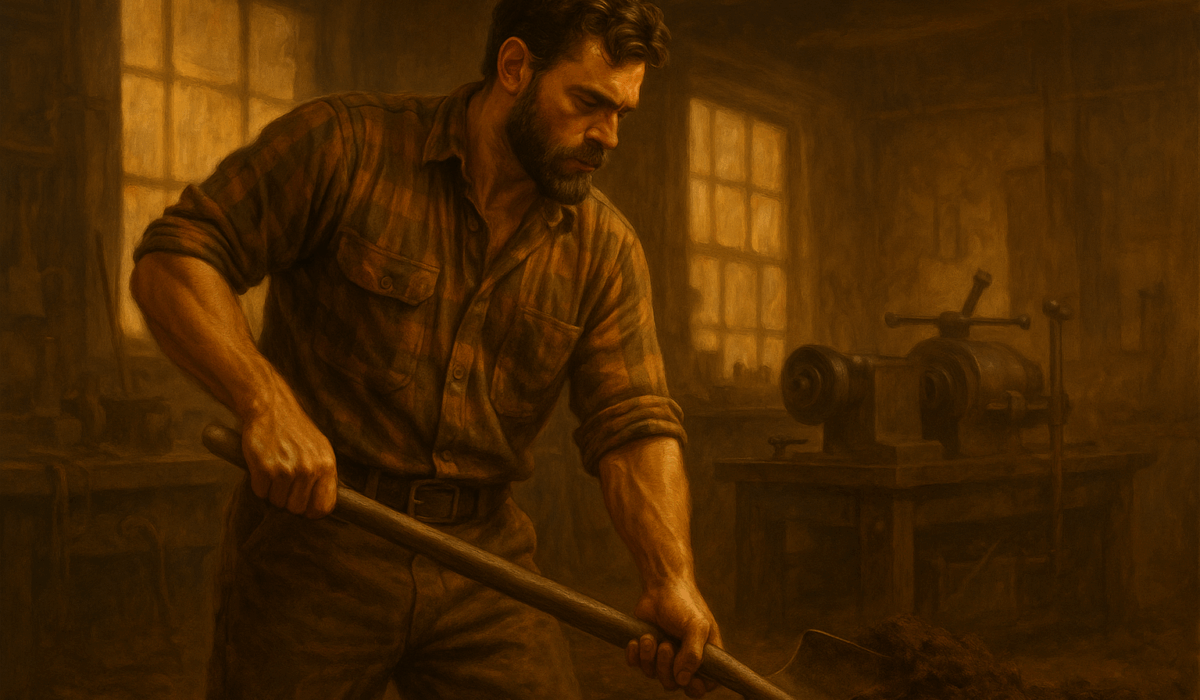
Dominion Through Diligence: Restoring the Biblical Work Ethic

“And whatsoever ye do, do it heartily, as to the Lord, and not unto men.” — Colossians 3:23 (KJV)

Introduction: The Crisis of Labor in a Decaying World

In this hour of societal decline, sloth and apathy have become the reigning spirits over many men. Work has been cheapened to a paycheck. Duty has been reduced to a punch card. Vocation is now viewed as little more than a burden, a necessary evil until the next leisure. The modern man trudges to labor with bowed shoulders, waiting eagerly for Friday to arrive and for his soul to be momentarily numbed by fleeting entertainment.

But this is not how a man of God ought to view his work. The created order demands something more, something sacred. The first man was placed in a garden, not a throne. He was commanded to dress it and to keep it. Before the fall, before pain and toil, there was labor. It was a holy duty, a divine calling, and it still is today for the faithful.

This post will serve as a call to return to the Biblical principle of work, a principle that demands diligence, mastery, ownership, and stewardship. We will explore how every man must treat his labor as if it were his own business, even if he serves another. The covenant man labors not for men, but for his Lord. And the Lord rewards faithfulness.

I. Dominion Begins with Labor

“And the LORD God took the man, and put him into the garden of Eden to dress it and to keep it.” — Genesis 2:15 (KJV)

From the beginning, man was not made for idleness. He was not made to sit passively under another’s vision, hoping merely to survive. No, he was made to exercise dominion, to build, to shape, to steward. Work was not a curse, it was a commission.

Even before the fall, Adam was given responsibility. He was placed in a particular plot of land, Eden/, and told to cultivate it. This means labor is not a result of sin, but a reflection of the image of God. God Himself worked six days and rested one. We, His image-bearers, are to follow suit. Therefore, the Christian man must see work not as drudgery, but as dignity.

A man who works faithfully is a man who reflects his Creator. The labor of his hands is a testimony. Whether he swings a hammer, programs code, teaches children, plants crops, or leads armies, he is fulfilling a divine mandate.

II. The Spirit of Ownership: Stewarding Another’s Vision as Your Own

“He that is faithful in that which is least is faithful also in much.” — Luke 16:10 (KJV)

One of the greatest weaknesses of modern Christian men is their tendency to separate responsibility from ownership. If a task is not “theirs,” they do it halfway. If a business is not “theirs,” they cut corners, avoid excellence, or resist innovation. This is the mindset of a hireling, not a son of the Kingdom.

Scripture calls us to a higher standard. The faithful steward, like Joseph in Egypt, treats every assignment as though it belongs to him. Joseph did not own Potiphar’s house or Pharaoh’s realm, yet he ruled it with wisdom, integrity, and vision. Why? Because he knew his true Master was God.

To treat your job like it is your business is to honor the Lord in everything. It is to understand that every hour worked, every task completed, every problem solved is under the gaze of the King of kings. Even if the business belongs to another man, you are called to manage it with excellence as unto the Lord.

This mindset transforms how you show up. You arrive early,  go beyond, and think creatively. You speak truthfully, lead when others shrink and you take responsibility when others pass blame. You are not waiting for a better job, you are working as if God Himself owns the enterprise.

And in a sense, He does!

III. Biblical Work Ethic: Diligence, Mastery, and Increase

“Seest thou a man diligent in his business? he shall stand before kings; he shall not stand before mean men.” — Proverbs 22:29 (KJV)

The Book of Proverbs is filled with rebukes for the sluggard and praise for the diligent. Diligence is not mere busyness. It is consistent, disciplined, fruitful labor. It is showing up daily with focus and resolve, pushing through difficulty, and delivering results that glorify God.

The sluggard makes excuses: “There is a lion in the streets.” He procrastinates, avoids responsibility, and sleeps when he should sow. But the diligent man is awake before dawn, laboring while others dream. He sees opportunity where others see obstacles.

Mastery is another principle bound to Biblical work. Paul tells Timothy, “Study to shew thyself approved unto God, a workman that needeth not to be ashamed.” (2 Timothy 2:15). The man of God does not do sloppy work. He does not deliver the bare minimum. He sharpens his skills, hones his craft, studies his trade, and exceeds expectations.

Such diligence leads to increase. The faithful servant in the parable of the talents took what he was given and multiplied it. The Lord did not rebuke him for not doing enough. Rather, He praised him for doing more. Work is meant to lead to growth, spiritual, financial, influential, and generational.

IV. Laboring Without Eye-Service

“Not with eyeservice, as menpleasers; but as the servants of Christ, doing the will of God from the heart.” — Ephesians 6:6 (KJV)

The world is full of employees who only work when the boss is watching. Their excellence is shallow. Their ethics are for show. But the man of God is not motivated by human eyes, he works as a servant of Christ.

Whether the manager is unfair or the owner is corrupt, your work is not wasted if done unto God. The Christian man does not manipulate appearances to get ahead. He labors with integrity in season and out, knowing that his real promotion comes from the Lord.

This principle crushes the entitlement mindset. You are not owed anything! Your raise, your influence, your promotion must be earned through faithful, fruitful labor, not demanded like a beggar at the gate. Even if your employer does not see it, God sees it and he will reward openly what is done in secret.

V. Turning Your Job Into a Kingdom Platform

Treating your job like your business means treating it like a Kingdom assignment. Every work environment is a battlefield of light versus darkness. Every team, every customer, every policy is an opportunity to advance righteousness or to compromise.

When you treat your job as a Kingdom platform, you become a light in darkness. You are not silent when evil reigns. You confront dishonesty, laziness, and immorality, not with arrogance, but with authority. You bring solutions, not complaints and you serve others, not self.

This mindset leads to influence. Even unbelievers begin to notice: “There’s something different about this man. He builds, solves, leads, and he can be trusted.”

And influence leads to authority. Joseph was exalted. Daniel was promoted. Nehemiah was commissioned. Each began as a servant, and each worked faithfully under pagan kings. Each was entrusted with great responsibility, but God used their secular labor as a means of dominion.

You are not “just” a technician, or clerk, or builder. You are an ambassador, a steward of the Lord’s name in that place. Treat it accordingly.

VI. The Sin of Sloth and the Curse of Dependency

“This we commanded you, that if any would not work, neither should he eat.” — 2 Thessalonians 3:10 (KJV)

Sloth is not merely a personal weakness; it is a moral failing and a direct rebellion against God’s order. The man who refuses to work is not simply idle, he is a threat to his household and his community. Scripture does not coddle the lazy; it condemns them. The early church had no room for able-bodied men who refused to labor. Paul’s command is stern and clear: no work, no food!

In a fallen society, laziness is rewarded with welfare, dependence, and excuses. But the Kingdom man sees these not as compassion, but as chains. To receive what you have not earned is to live like a slave, not a free man. The welfare state infantilizes men, strips them of initiative, and neuters their ability to provide, protect, and lead.

A man must train himself to hate sloth as he would hate theft. For it is theft, of time, of strength, of opportunity, and of the legacy his hands ought to build.

Children raised in houses without hard labor learn entitlement. Wives in homes ruled by passivity lose respect. Nations filled with idle men collapse into tyranny. The antidote is a return to the Biblical ethic, work or starve, build or be forgotten.

VII. Building Wealth by Stewardship, Not Scamming

“Wealth gotten by vanity shall be diminished: but he that gathereth by labour shall increase.” — Proverbs 13:11 (KJV)

Modern culture idolizes fast money. Schemes, lottery tickets, get-rich-quick pitches, multi-level marketing traps, and cryptocurrency speculation have replaced the steady, honest labor of godly men. But the Scriptures are consistent, wealth gained hastily will rot, while wealth built through stewardship will endure.

Treating your job like your business means being a long-term thinker. You are not hustling for a quick score, you are building for generations. You honor your employer, save diligently, reinvest wisely, avoid debt, and manage your household with precision and frugality.

A righteous man leaves an inheritance to his children’s children (Proverbs 13:22). This cannot be done by vanity or chance. It must be done by work, self-denial, and wise management. Your labor is the seed; your stewardship is the soil. God provides the increase, but not to the lazy or reckless.

When you treat every day at work as if your family’s legacy depends on it, you begin to think generationally. You become the oak tree under which your grandchildren will sit.

VIII. Men Who Built Civilization Worked Like Owners

“Be ye followers of me, even as I also am of Christ.” — 1 Corinthians 11:1 (KJV)

History honors men who toiled with purpose. The empires of old were not built by bureaucrats and clock-punchers. They were built by craftsmen, warriors, patriarchs, and entrepreneurs who took ownership, who labored with a vision larger than themselves.

Men like Noah, who labored for a hundred years on a task he could not fully understand, but obeyed God’s word with faith.

Men like Nehemiah, who rallied his brothers to rebuild a wall under constant threat, working with a tool in one hand and a sword in the other.

Men like Paul, who traveled, preached, planted churches, wrote epistles, suffered beatings, and still made tents so as not to burden the brethren.

The spirit of such men must fill our veins. The Kingdom needs no more entitled beggars or victims. It needs men who work like their task is essential, eternal, and eternally watched.

Even in a job you didn’t choose, treat it like it’s yours. Build it like you’ll pass it on, and lead like others are watching—because they are.

IX. Business Ownership and Entrepreneurial Dominion

“Go to the ant, thou sluggard; consider her ways, and be wise.” — Proverbs 6:6 (KJV)

While this post is about treating your job like it’s your business, we must also speak bluntly: the Biblical vision of dominion often includes men actually owning their business. Scripture does not forbid employment, but it points toward inheritance, land, productivity, and the freedom that comes with leading one’s own enterprise.

The ant works without overseer or ruler, because the ant governs himself. He stores, prepares, and builds while others sleep. This is the mindset of the Kingdom entrepreneur.

If God has given you the opportunity to start a business, farm, trade, or skill-based enterprise, do it with fervor. Do not despise small beginnings, build what can be passed down. Aim for independence, not comfort and train your sons to join you. Let your daughters become managers of the household economy. Let your wives be like the Proverbs 31 woman, strategic, productive, and wise.

Even if you remain under another’s employment, adopt the mindset of an owner. Make decisions with cost and legacy in mind. Think like a king, not a hireling. And if the Lord blesses your stewardship, step into ownership and multiply your dominion.

X. The Sabbath and Rest for the Righteous Worker

“Six days shalt thou labour, and do all thy work: But the seventh day is the sabbath of the LORD thy God.” — Exodus 20:9–10 (KJV)

A Biblical theology of work cannot exist without a Biblical theology of rest. Rest is not laziness, it is reward. It is the crown atop six days of faithful labor. It is not a weekend collapse, but a holy convocation, because the man who works as unto the Lord must also rest as unto the Lord.

The Sabbath is not just a day off, it is a declaration of trust. It says: “My labor is not my god. My Provider is Yahweh.” When you labor six days and rest one, you are declaring the Lordship of God over your time, body, and provision.

Modern man has flipped the order. He lives for rest and works as little as possible. But the man of God works with discipline and rests with worship. He leads his family in praise, and sets the table with joy. He reviews the week’s fruit and prepares for the next harvest.

Let your Sabbath rest be earned. Let it be meaningful, and let it nourish your soul, so that on the first day of labor, you rise with fire again.

Conclusion: The Legacy of Labor

“Let him that stole steal no more: but rather let him labour, working with his hands the thing which is good, that he may have to give to him that needeth.” — Ephesians 4:28 (KJV)

Work is not merely a way to survive, it is a means to build. A man who labors with purpose, diligence, and vision becomes a pillar. His name carries weight. His family walks taller, his sons learn what it means to bear responsibility, his daughters know what to expect in a husband, and his household becomes a well-watered garden in the desert of a dying culture.

To treat your job like it is your business is to cast off the chains of the world’s laziness and embrace the dignity of dominion. You are not a slave, or a cog, you are a man of God. Made in His image, and called to subdue the earth.

Whether you work in a field or a factory, a boardroom or a basement, do it unto the Lord. Show up with vision, speak with authority, and build with strength. Plan with legacy, then rest with honor.

And when your children rise to bless your name, let them say, “My father worked like a king, built like a patriarch, and served like a priest.”

For such is the way of the righteous man.

This is The Great Order!
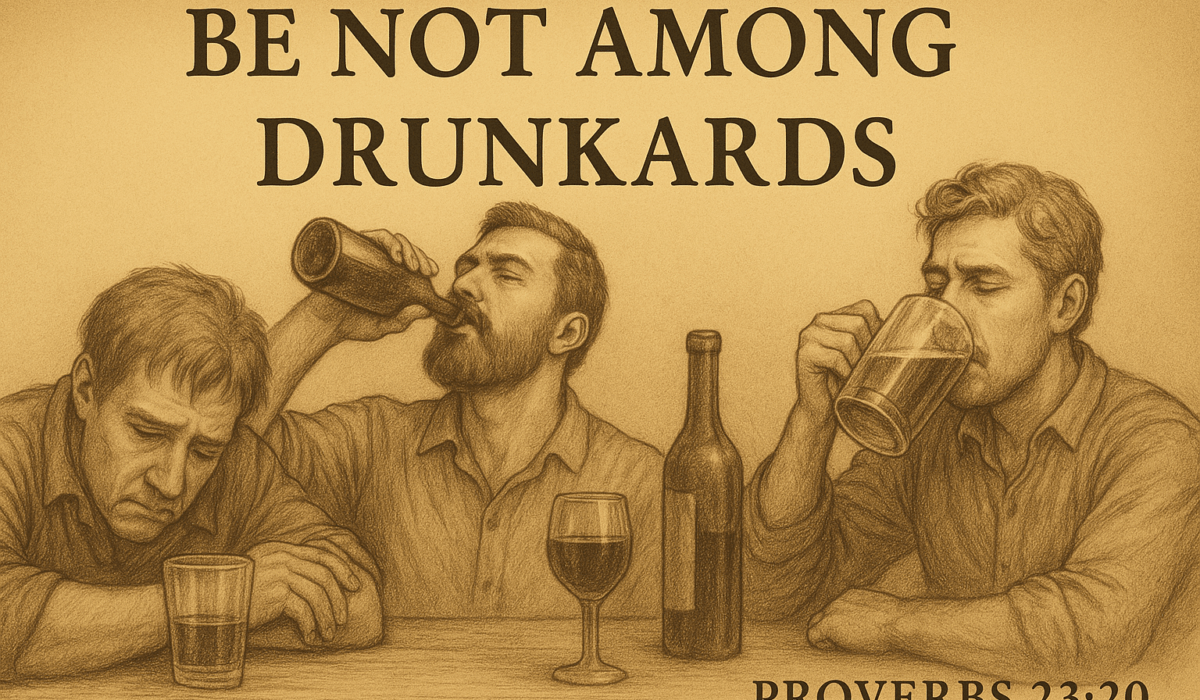
Wine and Woe: A Biblical and Practical Reckoning with Alcohol

“Wine is a mocker, strong drink is raging: and whosoever is deceived thereby is not wise.”
— Proverbs 20:1 (KJV)

Introduction: A Culture Drenched in Drink

In a world spiraling into chaos, the bottle has become both an idol and escape. Alcohol is celebrated, glamorized, ritualized, and normalized, even in the church. It is served at weddings and funerals, praised in entertainment, and increasingly baptized into Christian liberty. But beneath the golden glow of beer commercials and the polished image of “Christian craft brewery” movements lies a bitter truth: alcohol is a destroyer of men, families, and nations.

This is not a call for legalism. It is a call for order. A call for fathers and sons to assess the times, measure the weight of Scripture, and count the cost of indulgence. A call to discern between liberty and license, between celebration and seduction, between sacred wine and satanic poison.

This post will explore alcohol from every side: Biblical commands, historical consequences, scientific data, cultural patterns, and practical applications for families walking in the Great Order.


I. Wine in Scripture: Blessing or Curse?

Scripture does not speak of alcohol in simplistic, one-dimensional terms. It is portrayed both as a blessing and a potential curse. The key lies not in the drink itself, but in the context, the heart, and the culture surrounding its use.

Wine as Blessing

In Psalm 104:14–15, God is praised for creating wine:

“He causeth the grass to grow for the cattle… and wine that maketh glad the heart of man.”

Wine was part of the sacrificial system (Exodus 29:40), used in covenant feasts, and offered by Melchizedek to Abraham (Genesis 14:18). Paul even tells Timothy to use a little wine for his stomach (1 Timothy 5:23).

Clearly, the Bible does not teach a universal prohibition.

Wine as Curse

Yet warnings against alcohol abound:

  • Noah’s nakedness and shame (Genesis 9:21)
  • Lot’s drunken incest (Genesis 19:33–35)
  • Nadab and Abihu’s death while under the influence (Leviticus 10:1–10)
  • Kings warned not to drink lest they pervert justice (Proverbs 31:4–5)
  • Priests forbidden to drink while ministering (Leviticus 10:9)
  • Drunkards excluded from the Kingdom (1 Corinthians 6:10)

Wine is never neutral. It is either a tool of dominion or a snare of death.


II. The Dangers of Drunkenness: Scripture’s Clear Condemnation

Scripture draws a hard line at drunkenness. It is a sin. Period.

“And be not drunk with wine, wherein is excess; but be filled with the Spirit.”
— Ephesians 5:18

Drunkenness dulls the mind, weakens the spirit, emboldens sin, and opens the door to demonic influence. Proverbs 23:29–35 offers a vivid warning:

“Who hath woe? who hath sorrow? who hath contentions?… They that tarry long at the wine… thine eyes shall behold strange women, and thine heart shall utter perverse things.”

Alcohol is no innocent substance. It is an accelerant for foolishness, adultery, violence, and despair.

Drunkenness and Judgment

In Isaiah 5:11, the prophet warns:

“Woe unto them that rise up early in the morning, that they may follow strong drink… the harp, and the viol, the tabret, and pipe, and wine, are in their feasts: but they regard not the work of the Lord.”

God brings judgment on nations that drown in drink. It is no coincidence that Babylon, he mother of harlots, is described in Revelation as holding a golden cup full of abominations and fornication (Revelation 17:4).

Drunkenness is not just personal sin; it is a national indicator of decay.


III. Historical Testimony: Alcohol and the Collapse of Men and Nations

From Rome to Russia, from America’s frontier towns to her college campuses, alcohol has been the great destabilizer of civilizations.

Rome’s Fall and Public Decay

As Rome degenerated from a Republic into an Empire, its people abandoned the virtues of discipline and moderation. Feasting and drunkenness became common, leading to moral collapse and political ruin.

Historian Edward Gibbon wrote in The Decline and Fall of the Roman Empire:

“Intemperance was universally indulged… every rank of citizens was infected.”

The Gin Epidemic in England

In 18th-century England, gin became the drug of the poor. Known as the “gin craze,” it devastated families. Parliament passed multiple laws trying to stem the social ruin, infant mortality, crime, poverty, and early death soared.

American Prohibition and Revival Movements

While Prohibition is often mocked today, it was birthed by Christian movements seeking to rescue families from destruction. The early 20th-century revivalists rightly identified alcohol as the fuel of domestic violence, abandonment, and moral failure.

They may have overreached legislatively, but their vision was righteous: a sober, God-fearing people.


IV. Science and Statistics: What the Studies Show

Today’s science confirms what Scripture and history have long known.

Alcohol and Health

  • Cancer Risk: The CDC links alcohol to breast, liver, colorectal, and esophageal cancers. No level of alcohol has been deemed “safe” by the WHO.
  • Brain Damage: Alcohol shrinks brain tissue, damages the prefrontal cortex, and impairs memory and judgment, especially in youth.
  • Heart Disease: While moderate drinking was once thought heart-healthy, newer studies show that benefits were overstated and outweighed by cancer risk.

Alcohol and Society

  • Crime: Over 40% of violent crimes involve alcohol. Domestic abuse skyrockets with drinking.
  • Workplace Damage: The U.S. economy loses an estimated $249 billion annually from alcohol-related productivity loss.
  • Family Destruction: Children of alcoholics are at greater risk for depression, abuse, suicide, and repeating the cycle.

When Scripture says “wine is a mocker,” it isn’t speaking metaphorically. It speaks with generational truth.

V. Christian Liberty and the Deception of “Moderation”

“All things are lawful unto me, but all things are not expedient…”
— 1 Corinthians 6:12 (KJV)

Modern Christians often hide their indulgence behind the banner of liberty. “We’re under grace,” they say. “Jesus drank wine.” But this line of reasoning, when misapplied, is not liberty, it’s license. Worse, it’s often a cloak for addiction, worldliness, or cowardice.

While Scripture permits lawful use of alcohol, it never commands it. You are not more righteous for abstaining, but you are not wise for pretending alcohol is risk-free. Wisdom discerns between what is allowed and what builds.

Christ’s Use of Wine: Not a Justification for Modern Drunkenness

Jesus turned water into wine (John 2), but He did not use it to entertain or numb His followers. The context was covenant celebration, not escapism. Jewish wine was often diluted 3:1 with water. The idea that Jesus’ use of wine validates modern hard liquor, binge drinking, or craft beer culture is theological sleight of hand.

Just as Christ touched lepers without becoming unclean, He used wine without being consumed by it. His example teaches restraint and holiness, not indulgence.


VI. Alcohol and Masculinity: Destroying the Patriarch’s Strength

“It is not for kings, O Lemuel… to drink wine; nor for princes strong drink.”
— Proverbs 31:4 (KJV)

Alcohol weakens a man’s judgment, energy, discipline, and self-control. It dulls the blade of leadership. It emasculates. A father under the influence is a danger to his children. A husband who drinks is a man whose house is vulnerable to collapse.

Men are commanded to be watchful, sober, vigilant. (1 Peter 5:8). To guard the gate. To lead with clarity. Alcohol undermines every one of these roles.

Drunkenness is not strength, it is surrender. It is trading your priestly garments for the rags of a fool.

A man who cannot say no to a drink will not be able to say no to a thousand other temptations. If you cannot master the bottle, you cannot master your home, your flesh, or your calling.

The Culture of “Masculine” Drinking

In popular media and frat-boy culture, drinking is portrayed as rugged and masculine. But the Bible paints a different picture. The drunkard is not a warrior, he is a mocker. He is not respected, he is avoided. Scripture calls him a “fool.”

True masculinity is self-governed, strong in spirit, disciplined in appetite, and sober in judgment. It doesn’t need a bottle to feel brave.


VII. Alcohol and the Feminization of Society

Just as alcohol undermines the strength of men, it plays a unique role in the softening of society. Drunkenness makes a people easy to rule, easy to manipulate, and easy to seduce.

“Woe to the crown of pride, to the drunkards of Ephraim… the Lord hath a mighty and strong one, which shall cast down to the earth with the hand.”
— Isaiah 28:1–2 (KJV)

A nation full of drunken men is a nation ripe for tyranny. Alcohol breaks down initiative, resistance, planning, clarity, and leadership. It makes men passive, dull, and pacified. And when men are neutralized, women begin to rule, improperly.

Drunken men retreat from duty, allowing feminism and statism to rush into the vacuum. This is not liberty. It is collapse.


VIII. Raising Children in a World of Alcohol

“Train up a child in the way he should go…”
— Proverbs 22:6 (KJV)

What you do in moderation, your children will do in excess. If a father “only drinks on weekends,” the son will find nothing strange in daily drinking. If the family keeps alcohol in the home without caution, daughters may marry drunkards.

Children are always watching. They remember the slurred speech,  empty bottles, and irrational anger. The worldly associations, and lack of prayer on those nights.

A father must set the standard: we are a house of sobriety. We are a household of clarity, strength, and vigilance.

You cannot raise arrows if you’re half-blind. You cannot train warriors with a bottle in hand.

Teach your sons that alcohol is not evil, but it is dangerous. Teach your daughters,:a man who drinks freely is a man who cannot lead. Build families that reflect the priesthood of God, not the barroom of Babylon.


IX. Alcohol, Church Leadership, and the Household of God

“A bishop then must be blameless… not given to wine.”
— 1 Timothy 3:2–3 (KJV)

Church leaders are held to a higher standard. Paul does not say they must never touch wine, but he insists they must not be “given to it.” That is, not addicted, not reliant, not frequently associated with it. The leader must be known for clarity, gravity, and temperance.

Why? Because the Church is to model God’s household. If leaders are casual with alcohol, the flock will become careless. And soon, sin will flourish under the haze of “freedom.”

Sadly, many modern pastors are more likely to host a beer-tasting event than a prayer meeting. Elders joke about whiskey preferences. Deacons drink publicly on social media. And all of it is justified with “Christian liberty.”

But the Word says otherwise. The priest was forbidden from drinking before ministering in the tabernacle (Leviticus 10:9–10). Why? Because his judgment, his discernment, and his spiritual sensitivity were to remain pure.

God does not anoint drunken men. He removes them!


X. A Call to Sobriety in the Days of Judgment

“But ye, brethren, are not in darkness… Therefore let us not sleep, as do others; but let us watch and be sober.”
— 1 Thessalonians 5:4–6 (KJV)

We are living in a generation of confusion, corruption, and collapse. This is not the time for dull senses and blurred eyes. This is the time for warriors. For men who can see clearly. For households that shine as light in a drunken world.

Sobriety is not just abstaining from alcohol. It is a spirit,  posture, and mindset. It is the clear-eyed resolve of the patriarch who watches over his house with vigilance. Who disciplines his appetite, prepares for war, and builds with eternity in view.

A sober man sees what others ignore. He notices the drift in his children. He corrects his household gently but firmly, and refuses to let Babylon pour its cup of deception into his family’s bloodline.

The Great Order demands sober men. Men who rise early, lead well and who eat and drink with thanksgiving, but never as slaves to their appetites.


Conclusion: Choose Dominion, Not Delusion

“They that be drunken are drunken in the night. But let us, who are of the day, be sober…”
— 1 Thessalonians 5:7–8 (KJV)

You have a choice to make.

You can follow the world’s path, where alcohol is worshiped, normalized, and excused. You can raise your sons in a home where “moderation” is the excuse and drunkenness is only one bad night away.

Or you can reject the seduction. You can build a house of order, discipline, and strength. You can raise sober men and wise women. You can lead with clarity and conviction.

Drinking may be lawful, but it is not always wise. In an age of destruction, wisdom demands we build walls of protection around our households. Walls that say:
“We will not bring Babylon’s cup to our lips.”

Be the man who chooses clarity over confusion. Strength over sedation. Order over indulgence, and dominion over delusion.

Let the world drink itself to death.
We will build something that lasts.

This is the Great Order!

The Forgotten Titaness of Smiljan: The Life and Labor of Đuka Tesla

I have been fascinated with Nikola Tesla for as long as I can remember. His mind was lightning bottled in human form, a genius who seemed less a man and more a conduit of cosmic invention. For decades I have studied his life, read every biography I could find, and marveled at his visions of the future. Yet the deeper I dug into Tesla’s story, the more one figure emerged from the shadows, a woman almost invisible in the history books, yet indispensable to the man the world celebrates. His mother, Georgina “Đuka” Tesla, was the unseen engine who forged the discipline, endurance, and imagination that made Nikola possible. 

To speak of Tesla’s brilliance without honoring the furnace that shaped it, his mother’s tireless, hidden labor, is to tell only half the story. The story of Nikola Tesla is known the world over. The eccentric genius, the wizard of electricity, the prophet of alternating current. But behind him stood a woman whose name most cannot pronounce and whose life modern ears would call unlivable. Raised without schooling, and remembered by her son as “indefatigable.”

She was illiterate. She never published a thing. She never gave a lecture. She never appeared on a podcast or launched a brand. Yet Nikola Tesla himself, the man whose brain ran on lightning, said: “Whatever I had accomplished in life was due to the influence of my mother’s guidance and genius.”

That sentence should stop the modern reader in their tracks. Because if you think the average woman today, latte in one hand, smartphone in the other, laundry piling up, Instacart order delayed, husband begging for attention, and children ignored or shipped off to public school has even a molecule of Đuka’s steel in her spine, you’re delusional.


Childhood of Sacrifice

Đuka was the eldest of eight children. At sixteen, just as her life might have blossomed into courtship or further training as a future wife, disaster struck. Her mother went blind. Suddenly, little Đuka was no longer just the daughter. She became the household’s surrogate mother, responsible for raising seven siblings and caring for her disabled mother on her own as her father grieved and worked 18 hour days to support his family alone.

Forget prom dresses, TikTok dances, or college “self-discovery years.” Imagine spending your late teens not at parties or summer camps, but hauling water, scrubbing floors, preparing food for ten mouths, mending clothes until your fingers bled, tending gardens, and keeping livestock alive,  all before breakfast. That was Đuka’s youth. She sacrificed starting her own family to care for her siblings and her mother.

She learned discipline the hard way: not from motivational posters, not from a “self-care” influencer, but from necessity. And that steel, that unyielding capacity for sacrifice, was what she carried into her marriage and her motherhood. And all without any medications or “therapy”


Marriage and Household Dominion

In 1847, at age 25, she married Milutin Tesla, a Serbian Orthodox priest. This was not the life of a bishop’s palace or some grand estate. Their home in Smiljan was a two-room, single-story parish house, set on less than two acres of land. Two rooms. Seven people. Do the math.

There was no running water, no electricity, no air conditioning, no internet, no television, no delivery services, no refrigerator, and no modern cooking appliances. The fire had to be tended at all times, for warmth, for cooking, for survival. If it went out, you didn’t tap a button on a stove. You struck flint and rebuilt it, praying you had dry wood.

Milutin’s priestly stipend, after adjusting for today’s value, worked out to maybe $250 a week (around $200 was for the home). That was it. From this, Đuka ran the entire household. And by “ran,” I mean she orchestrated a full-scale domestic economy.

She grew food, raised animals, cooked every meal, milked cows, baked bread, chopped firewood, spun and wove textiles, embroidered clothing, repaired tools, cleaned, laundered, and disciplined children. She also directed the education and moral training of her children, all while inventing small household appliances and tools to make her work more efficient. She even bartered for labor, securing a full-time servant (paid partly in goods), and occasionally a seasonal helper at harvest.

Compare that to the modern housewife, who collapses if the Wi-Fi goes down for an afternoon, and cannot go 30-minutes without being glued to her screen!


A Day in the Life

Đuka rose between 4 and 5 a.m. every day. Before her children’s eyes opened, she had already stoked the fire, prepared bread, and made breakfast. The smoke of her chimney was the first signal of dawn seen in her parrish. She set the tone and the standard for her entire village.

After feeding her family, she assigned chores: older children hauling water, gathering kindling and firewood, or tending goats and chickens. She spun thread while keeping an eye on pots simmering over open flames. She repaired or made clothing while supervising lessons. She carried burdens on her back, her arms, and her mind, because literally everything depended on her vigilance.

The average modern woman struggles to fold a basket of laundry without streaming a podcast to “get through it.” Đuka did laundry by hand in icy rivers, scrubbing garments on stones until her knuckles cracked. She made clothes from the raw fibers of her sheep (after hand sheering them), not from a UPS delivery box. She preserved food without refrigeration. She raised children without screens, apps, or Google parenting blogs.

Her entertainment? Memorizing and reciting entire Serbian epic poems while working, keeping culture alive while stirring pots and mending garments. She could perform mental feats of memory that would shame most Ph.D.s today.


Where Was Her Husband?

Milutin Tesla was not absent in the modern deadbeat sense,  he was a Serbian Orthodox priest. That meant his days were consumed with duties outside the home: conducting morning and evening services (daily), preparing sermons, teaching catechism, visiting parishioners, attending baptisms and funerals, keeping church records, writing correspondence, and mediating disputes in the community. His role was public, intellectual, and spiritual, and in the 19th-century Austrian Military Frontier, it was relentless.

Most days, he was physically present with his family only a couple of hours in the evening – if at all. The rest of the time, the survival of seven people on less than two acres of land rested squarely on Đuka’s shoulders.

But here is the truth: he could only do those things because he knew his wife carried the full burden of the home. Milutin could stand at the altar in confidence because Đuka was at the hearth in vigilance. He could walk the parish roads without fear because he knew she was managing the household economy, laundry, meals, gardens, livestock, firewood, repairs, schooling, children, clothing, textiles, and cleaning. He could pour his time into the parish because she poured herself out for the home.

If he was present in the house a couple of hours in the evening, it was only because the day had already been conquered by her labor. He stood in front of the parish with confidence because she stood behind the fire with vigilance. His priesthood was possible only because her household dominion was relentless. Without Đuka, his sermons go unwritten, his parishioners unvisited, his vocation undermined by a collapsing home. With her, he could appear serene and learned, because she was sweating, bleeding, and exhausting herself to hold everything together.


The Weight of Survival

Trips to the market were rare, perhaps once, maybe twice monthly. Everything else the family needed was grown, spun, woven, baked, butchered, bartered, or built at home. If they wanted flour, they ground grain. If they wanted clothes, they raised sheep for wool, spun the yarn, and wove the fabric. If they wanted milk or butter, they milked the cow by hand at dawn. Nothing arrived in a box, nothing came shrink-wrapped an nothing was outsourced.

Now take their average budget, the equivalent of about $200 a week in today’s money, and realize how thin that margin was. No restaurants, no Amazon, no Target runs, no streaming subscriptions, no electricity bill (just firewood), no internet bill (just survival). And here’s the kicker: the bulk of that money didn’t even go toward feeding the family. It went to feeding the animals. Sheep, chickens, cows, and horses all had to eat before anyone else did, because they were the very engines of survival. No fodder, no milk. No grain, no eggs. No hay, no wool. No horse, no plowing, no hauling, no transportation. The animals ate first, because they were the household’s machinery.

So Đuka stretched what little was left not only to clothe and feed seven people, but also to hire and/or barter labor, she maintained a full-time servant in addition to a  seasonal helper at harvest. That was how iron-fisted her management had to be. Every coin and every crumb were leveraged to their maximum use.

And it worked. The household survived. More than survived: it became the soil from which sprang Nikola Tesla, the man who would dream electricity into a world still stumbling under gas lamps.


Genius in Disguise

Though illiterate, Đuka had a mind like a steel trap. She was known throughout her community for her inventive spirit and creative craftsmanship. She devised simple machines and tools to ease farming burdens, embroidered with unmatched skill, and preserved the dignity of her family under conditions that would have crushed weaker souls and nearly any modern woman.

Nikola himself admitted that his mind was a reflection of hers. “My mother invented and constructed all kinds of appliances. She wove the finest designs and possessed a memory beyond comparison. She could recite entire works of poetry, folk songs, and passages of Scripture without a single error.” Her memory was not casual, it was photographic, total, and living.

And here’s the uncomfortable truth for modern readers: that brilliance was born not in spite of her lack of schooling, but because of the uncluttered intensity of her life. She had no television flickering in the corner, no social media feeds dripping trivialities into her brain, no endless circle of “friends” distracting her with gossip. Her mind was free from digital noise and trivial entertainment, so it became a vault, capable of storing and recalling culture, scripture, and song with a precision that put most “educated” men to shame.

Modern feminists scream for “recognition,” demanding applause for simply existing. Đuka never demanded recognition. She did not tweet her embroidery or beg validation for memorizing verse. She simply lived, worked, and built her household with relentless discipline. And yet, her genius is stamped into the circuitry of the modern world through her son. If your phone glows in your hand today, if the grid hums around you tonight, it hums because a woman in a two-room parsonage lived without distraction and forged her son’s genius in the furnace of her own hidden brilliance.


Death and Legacy

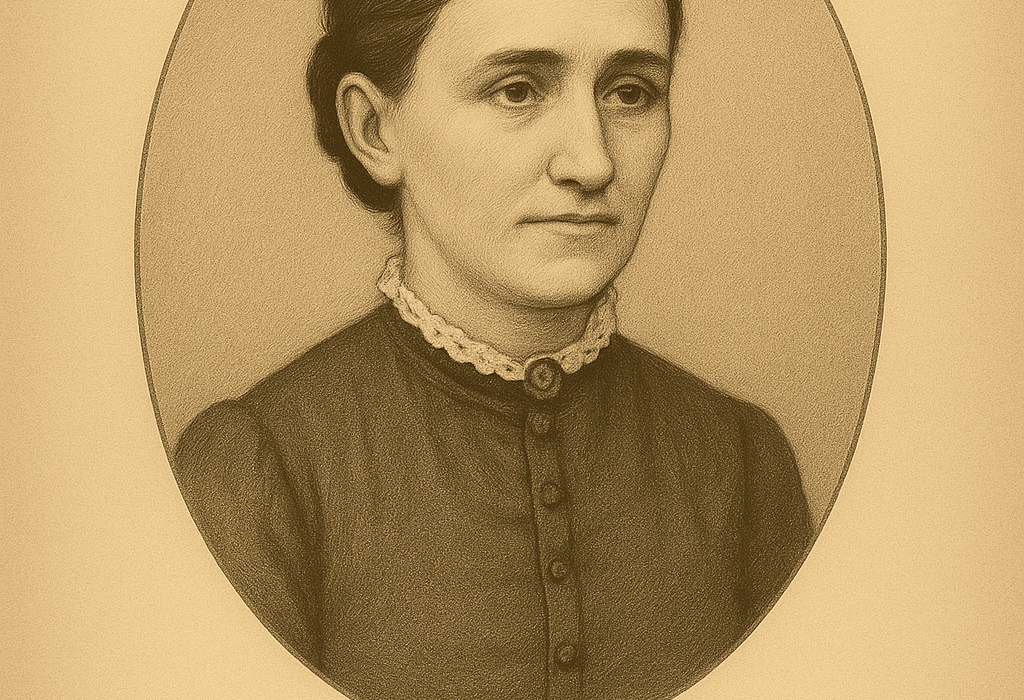
Georgina “Đuka” Tesla died in 1892, having poured seventy years of labor into her family. Only one known photograph of her survives,  a faint image of a stern but composed woman whose face bore the marks of firelight and toil.

No followers. No media presence. No glamour. No applause. No electricity, no modern convenience, no audience beyond the walls of her two-room house. And yet, from her hands came one of the greatest minds civilization has ever seen.

The modern woman scrolls TikTok while her dishwasher hums, her dryer spins, and her microwave beeps. She sighs about being “overwhelmed.”

Đuka Tesla ran an entire subsistence economy on two acres, in two rooms, with no machines, no running water, no help from her husband beyond evening hours, and only the discipline of her will to keep it all from collapsing.

This is what respect for home, husband, and family once looked like: sacrifice without complaint, invention without applause, rigor without escape. And if you want to understand Nikola Tesla, don’t start with lightning. Start with the woman who struck flint before dawn and carried fire until dusk, the woman who never stopped burning so that her household might live.

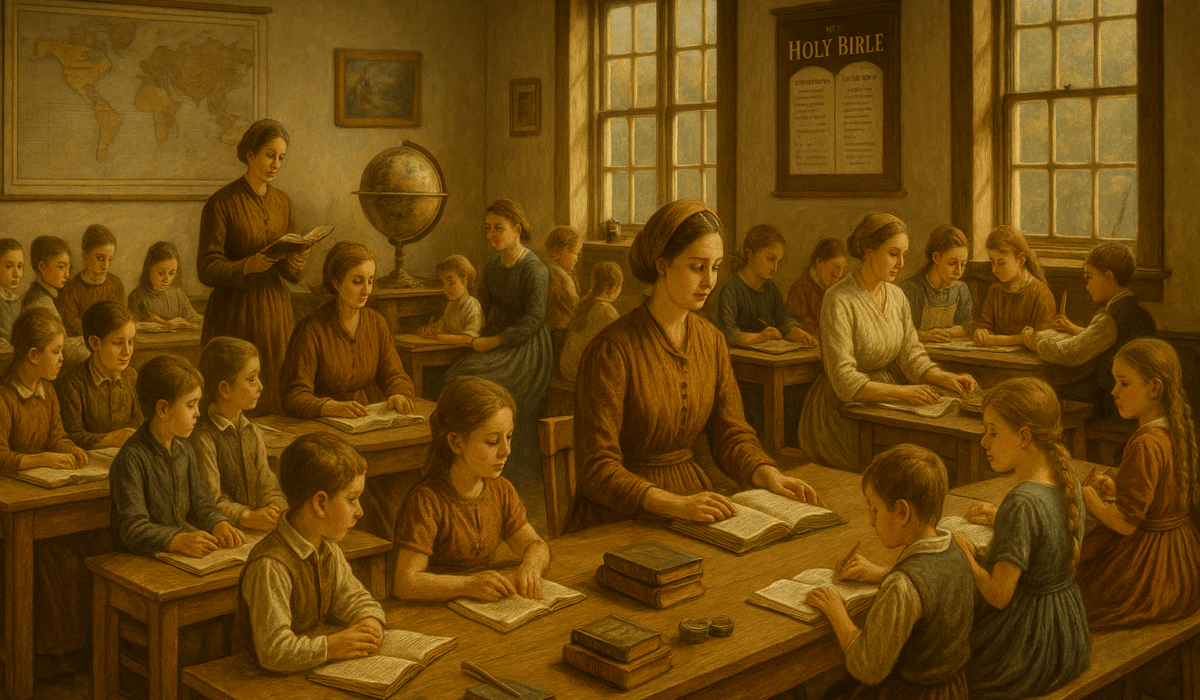
Home Discipleship, Not State Indoctrination: Why Homeschooling Is the Only Godly Option

“And these words, which I command thee this day, shall be in thine heart: And thou shalt teach them diligently unto thy children…”
— Deuteronomy 6:6–7

We live in a time of great deception. While parents sleep, the world catechizes their children. While churches busy themselves with entertainment, the state trains up an army of rebellious children. And while Christians beg for crumbs of morality in the school system, Satan feasts on the minds of the next generation.

The war for our children is not coming,it is here, and we are losing. The battleground is the public school classroom.

It is time to proclaim with thunderous conviction: homeschooling is not an option, it is the only righteous path. It is not a luxury for the wealthy, nor an experiment for the radical. It is the sacred duty of every parent who calls Christ Lord.

I. God’s Model for Education: Fathers, Homes, and Covenant

The Bible is not silent on the issue of education. From Genesis to Revelation, God gives His people a blueprint, and nowhere in it do we find the outsourcing of discipleship to pagans.

“Train up a child in the way he should go: and when he is old, he will not depart from it.” — Proverbs 22:6

Who is called to train the child? The father. The mother. The household. Not the government. Not strangers, nannies, or daycares. Not institutions or paid surrogates.

Deuteronomy 6:6–9 gives the clearest educational mandate in all of Scripture:

“These words… thou shalt teach them diligently unto thy children, and shalt talk of them when thou sittest in thine house, and when thou walkest by the way, and when thou liest down, and when thou risest up…”

Education is not confined to a classroom. It is life-long discipleship rooted in the fear of the Lord. And it happens in the home.

Likewise, Ephesians 6:4 commands:

“Fathers, provoke not your children to wrath: but bring them up in the nurture and admonition of the Lord.”

The Greek word for “nurture” is paideia, it means the full enculturation of a child in God’s ways. It is the shaping of worldview, values, morals, and knowledge according to the covenant.

This cannot be done in a system that denies Christ.

II. Public School: Paganism in the Name of Neutrality

Public school is not neutral. It is the church of secular humanism. Its catechism is evolution, its morality is relativism, and its god is the state. It is, quite literally, anti-Christ.

Every hour a child spends in public school, they are being taught that:

  • God does not exist (or is irrelevant)
  • Truth is subjective
  • Gender is a spectrum
  • History is man-centered
  • Authority is arbitrary
  • Parents are secondary
  • Morality is negotiable

And parents expect to undo this with one hour of church per week?

“Can a man take fire in his bosom, and his clothes not be burned?” — Proverbs 6:27

Public school was founded by men who despised God. Horace Mann, John Dewey, and their ilk believed education should free children from the influence of the Bible and the family. They succeeded. Today’s public schools are temples of rebellion.

The Curriculum of Corruption

Sexual perversion is now standard in school programs. Children are exposed to transgender ideology, explicit sex education, and pornographic material disguised as “health education.”

Drag queen story hours, preferred pronouns, and boys in girls’ bathrooms are not fringe, they are policy.

According to the CDC, over 50% of U.S. public schools have active LGBTQ+ support groups. And over 40% teach gender identity curriculum by middle school.

This is not education. It is abuse. It is indoctrination!

“But whoso shall offend one of these little ones which believe in me, it were better for him that a millstone were hanged about his neck…” — Matthew 18:6

No child can be fed poison and not suffer damage. No family can tolerate this assault and remain intact.

III. Private Schools: A False Hope

Some parents, rightly alarmed by the horrors of public school, turn to private institutions. But private schools, especially Christian ones, are not the solution.

Most Christian schools:

  • Use secular textbooks with thin Christian gloss
  • Employ teachers with compromised worldviews
  • Mimic public school methods, schedules, and structure
  • Serve as social clubs for lukewarm families
  • Focus on accreditation, not sanctification

They may avoid overt perversion, but they still catechize children in the god of careerism, peer dependence, and institutionalism. They separate children from the household and teach them to look to outsiders for truth.

True Christian education must be governed by the father’s authority, not the board of trustees.

IV. Hybrid and Co-Ops: Half-Measures That Lead to Drift

Homeschool “hybrid” programs and co-ops can provide temporary support, but they must never become substitutes for full parental oversight. Many such programs:

  • Offload education to other families
  • Rely on online systems that bypass family culture
  • Use pre-packaged secular or soft-Christian content
  • Encourage early independence and peer grouping

The problem is not just content, it’s authority. When children learn under systems not governed by the father and not submitted to Christ in every detail, they learn that Scripture is optional, and authority is fragmented.

“Every wise woman buildeth her house: but the foolish plucketh it down with her hands.” — Proverbs 14:1

You cannot delegate discipleship. You cannot subcontract sonship. You either build your house, or let it be built by others.

V. Homeschooling: The Ancient and Biblical Path

Homeschooling is not new. It is ancient. It is biblical. It is God’s ordained pattern.

Before there were schools, there were households. Before there were experts, there were fathers. Before there were credentials, there was obedience.

Throughout history, the greatest civilizations were built by families that educated their own:

  • The Hebrew patriarchs taught the law of God at home.
  • The early church trained children in the Scriptures by household worship.
  • The Reformers advocated for family discipleship and literacy in the vernacular.
  • The American pioneers built homes, farms, and minds with Bible, ink, and fire.

Until the 20th century, homeschooling was the norm. The explosion of public education coincided with the rise of statism, feminism, and moral collapse.

Today, homeschooling is not just a return to the past, it is a resistance movement against the future the world is trying to force upon us.

VI. Moral Obligation: The Soul of the Child Is at Stake

What is a child worth?

Jesus asked, “What shall it profit a man, if he shall gain the whole world, and lose his own soul?” — Mark 8:36

Yet parents send their children to systems that gain them grades, sports, and scholarships, but lose their souls. And they call it love.

We must see this with clear eyes: every day in public school is a step toward hell. It may not always be obvious. It may come through compromise, soft rebellion, or quiet doubts. But the path is always downward.

Parents will give account before God for the souls of their children.

“The just man walketh in his integrity: his children are blessed after him.” — Proverbs 20:7

If we want our children to be blessed, they must be raised in integrity, not convenience.

VII. Practical Concerns: Obedience over Excuses

Many say, “We can’t afford to homeschool.” But the real question is, “Can we afford not to?”

God never commands anything without making a way. The issue is not money, it is faith.

“But I work full-time.”

Then consider restructuring your household. Homeschooling requires sacrifice. Cut expenses. Downsize. Rearrange schedules. Reassign roles.

“But I’m not a trained teacher.”

You don’t need to be. You need to be faithful. Resources abound, books, curricula, podcasts, networks. But the greatest teacher your child needs is not a degree-holder. It is you, because God ordained it so.

“But what about socialization?”

Do you want your children socialized by fools and pagans?

“He that walketh with wise men shall be wise: but a companion of fools shall be destroyed.” — Proverbs 13:20

Homeschoolers are not socially deprived, they are socially protected. They grow up relating to adults, siblings, real work, and real worship, not playground savagery and locker room filth.

“But what if they don’t get into college?”

Then praise God. College is another idol. If your child is called to higher education, the Lord will provide. But your goal is not success, it is sanctification.

VIII. Statistics and Research: Homeschooling Works

The numbers confirm what Scripture has already told us.

According to the National Home Education Research Institute (NHERI):

  • Homeschooled students consistently score 30 percentile points higher on standardized tests.
  • Homeschoolers perform better academically regardless of the parent’s education level or household income.
  • They are more likely to be civically engaged, morally grounded, and religiously active.
  • 82% of homeschool graduates say they intend to homeschool their own children.

In contrast, public school graduates show rising rates of:

  • Gender confusion
  • Depression and anxiety
  • Pornography addiction
  • Church abandonment
  • Marxist and anti-Christian worldview

The fruit of each system is evident. The data only confirms the deeper truth: you reap what you sow.

IX. God Will Provide: The Blessing of Obedient Education

Do not believe the lie that homeschooling is too expensive, too hard, or too risky. Those are the whispers of Satan. God blesses obedience.

“Seek ye first the kingdom of God, and his righteousness; and all these things shall be added unto you.” — Matthew 6:33

If you make educating your children in the fear of the Lord your first priority, He will meet your needs. He may not give luxury, but He will give sufficiency. And more than that, He will give you joy, peace, unity, and honor.

God multiplies the loaves. He parts the seas. He guides the humble. He rewards the faithful.

Homeschooling may cost you:

  • Comfort
  • Reputation
  • Convenience
  • Income

But what will it give you?

  • Children who love and fear the Lord
  • A household united in mission
  • Generational blessings
  • A heritage that shines in darkness

“And all thy children shall be taught of the Lord; and great shall be the peace of thy children.” — Isaiah 54:13

That is a promise.

X. The Final Call: No More Compromise

This is not a hobby, it is not a trend. This is war!

The battle for the soul of the next generation is being waged daily. Every lesson, every story, every authority your child submits to will either point them to Christ, or away from Him.

Public school is not an option. Private school is not a refuge. Co-ops are not a substitute.

You are the shepherd of your household. And if you hand your lambs to wolves, you will answer to God for it.

Let the cost be what it must. Sell what must be sold. Sacrifice what must be sacrificed. But bring your children home.

Rebuild your house.

Sanctify your table.

Teach the Word.

Establish routine.

Model discipline.

Raise up arrows for the Lord.

And trust that He who called you will never fail you.

“Lo, children are an heritage of the Lord: and the fruit of the womb is his reward.” — Psalm 127:3

Let them not be handed over to Pharaoh.

Let them not be sacrificed on the altar of Mammon.

Let them not be raised by Rome, only to rebel against Zion.


Bring them home.
Teach them truth.
Build the Great Order.

Soli Deo Gloria.

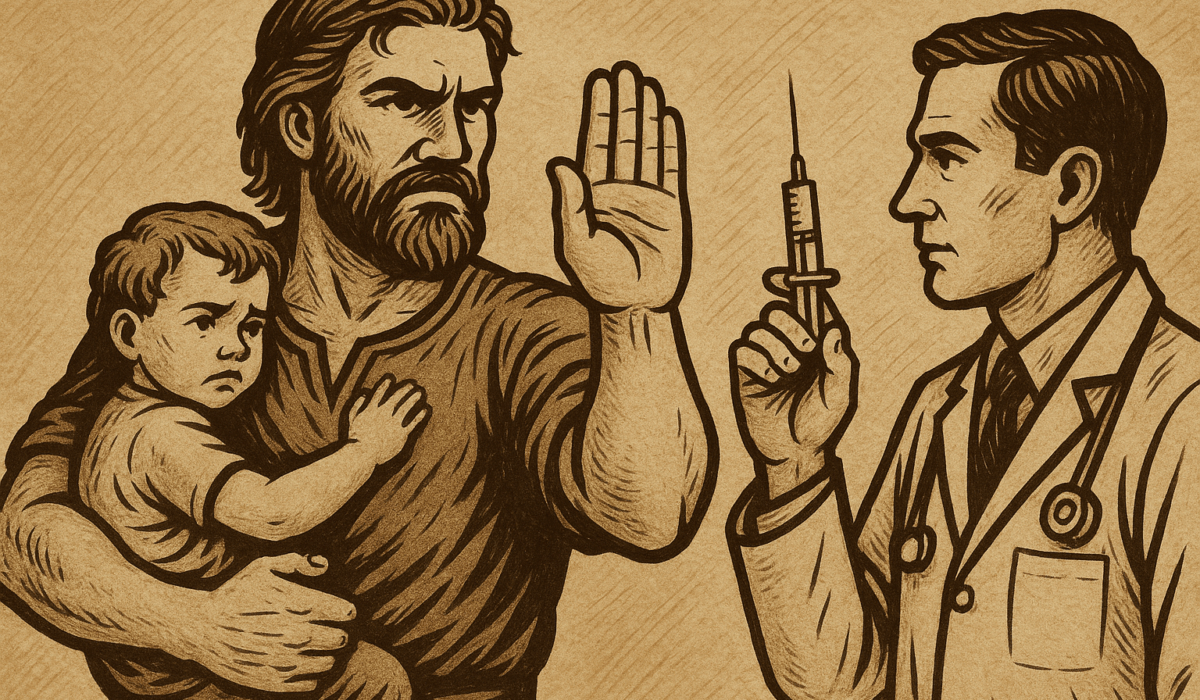
The Great Deception: Vaccines, the War on Children, and the Assault on God’s Order

In the age of technocratic tyranny, where the white coats of the medical priesthood have replaced the white robes of Biblical authority, a silent war has been waged, not with guns or bombs, but with needles. Behind the smiling faces of pediatricians and the sterile language of “immunization” lies a brutal truth: vaccines have caused incalculable damage to the bodies, minds, and souls of millions. They have been exalted as saviors, but they have left a trail of broken children, grieving parents, and depopulated nations.

This post is not mere alarmism. It is a call to righteous judgment, to reestablish God’s dominion over our homes, our health, and our offspring. We must tear down the altars of pharmakeia, where children are sacrificed in the name of public health, and build instead the altar of obedience to God’s Word.

I. The Sorcery of Pharmakeia

In Revelation 18:23, we are warned of Babylon’s seduction: “For by thy sorceries (Greek: pharmakeia) were all nations deceived.” This is no accident. The word “pharmakeia” is the same root from which we get “pharmaceutical.” The ancient world understood that the use of potions and poisons, under the guise of healing, was often a cloak for manipulation, idolatry, and control.

Today, this pharmakeia comes in the form of multi-dose vials, synthetic adjuvants, and state mandates. It promises health but often delivers sickness. It claims to prevent disease, but for many, it causes lifelong affliction. The lie is religious in nature, and the Church has been shamefully silent.

II. Vaccines and the Death of Innocents: Sudden Infant Death Syndrome (SIDS)

Sudden Infant Death Syndrome, the unexpected and unexplained death of seemingly healthy infants, has haunted parents for decades. But few dare to ask: Why has SIDS coincided so closely with the rise of the infant vaccination schedule?

A study published in The Journal of Pediatrics in 1983 noted that nearly 70% of SIDS deaths occurred within 3 days of DPT (Diphtheria, Pertussis, Tetanus) vaccination. Dr. Viera Scheibner, a renowned vaccine researcher, studied over 100,000 pages of medical literature and concluded:

“Vaccination is the single most prevalent and preventable cause of infant death.”

In countries like Japan, when the age of vaccination was delayed from 3 months to 2 years, SIDS cases nearly vanished. But in America, where newborns are routinely injected before their immune systems are even fully formed, the SIDS rate remains tragically high.

Do not be deceived, this is not random. This is blood on the altar of Molech, disguised in modern language.

III. Heartbreak by Design: Myocarditis and Cardiac Injury

The recent rollout of mRNA vaccines for COVID-19 has provided one of the clearest revelations of vaccine-related heart damage. Myocarditis, an inflammation of the heart muscle, has spiked in young men and adolescents, particularly after the second dose of the Pfizer and Moderna shots.

A CDC report in 2021 acknowledged elevated myocarditis rates, particularly among males aged 16–24. A study in JAMA Cardiology found that the rate of myocarditis post-vaccination was over 100 times higher than normal background rates in this age group.

These are not isolated incidents. These are broken hearts, literally, among the youth God has called to be strong, to rule, to build.

The heart is the engine of life. When the state demands injections that compromise it, it is not protecting life, it is playing god with yours.

IV. The Autism Explosion: A Crisis No One Will Admit

Autism rates have exploded in recent decades. In 1970, it was 1 in 50,000. By 2000, it was 1 in 150. Today, it is 1 in 36. What changed?

The vaccine schedule.

By the time a child is six years old, the CDC recommends up to 72 doses of vaccines. Aluminum adjuvants, mercury (thimerosal), and other neurotoxic substances are injected repeatedly into small, developing bodies.

And here is a fact the “experts” never want you to hear: in the majority of the third world, where vaccination rates are extremely low to nonexistent, autism is virtually unheard of. Entire rural regions have zero reported cases. In fact, there has never been a single documented case of autism in a completely unvaccinated child. The so-called “mystery” of autism’s cause is no mystery at all, unless you’re paid to keep it one.

Dr. Andrew Wakefield was vilified for pointing out a link between the MMR vaccine and autism. Though his original study has been relentlessly attacked, subsequent research has supported many of his findings:

A 2017 study in Frontiers in Neurology found that aluminum in vaccines may contribute to “neurological damage and autoimmune diseases.”

The Journal of Trace Elements in Medicine and Biology published findings showing significantly elevated aluminum levels in the brains of autistic individuals.

The temple of science has no answer for this plague. But the Bible does. It tells us that “The thief comes only to steal and kill and destroy” (John 10:10). What is more destructive than robbing a child of his mind, his communication, his relationships, his very essence?

V. The Hidden Agenda: Vaccines and Population Control

Vaccines have been sold as a benevolent tool of health. But in the mouths of the global elite, they are something darker. Bill Gates, who has poured billions into vaccine research, stated in a 2010 TED Talk:

“If we do a really great job on new vaccines, health care, reproductive health services, we could lower population by perhaps 10 or 15 percent.”

Why would vaccines lower population? Why would a health intervention reduce people?

We have been trained to think only in terms of death when we hear “population control.” But there is another method, slower, subtler, and in some ways more efficient: creating a generation that will never fully function, never fully reproduce, and never fully resist.

Autism is not just a medical condition; it is an economic and societal lever. A child who is robbed of normal speech, cognition, and independence becomes a permanent ward of the system. They will never be a fully free man or woman capable of raising a large, self-sufficient family. They will consume resources, require constant management, and remain dependent on state programs for life. Multiply that by millions, and you do not merely reduce births, you create a compliant, docile population too impaired to stand in the way of elite agendas.

This is why the fact that autism is virtually non-existent in unvaccinated populations is so dangerous to the establishment. It destroys the myth of “mystery causes” and points directly at their needle. If the masses ever realized that their children were being neurologically disarmed in the name of “health,” the entire pharmakeia empire would crumble overnight.

Multiple independent investigations, including by Kenyan Catholic doctors in 2014, discovered that a UN-backed tetanus vaccine campaign was laced with hCG, a hormone used to prevent pregnancy. Women who received the shots became infertile. The World Health Organization denied it, until the evidence became overwhelming.

Vaccines have been weaponized. Not just for profit, but for eugenics. For depopulation. For rebellion against God’s first command: “Be fruitful and multiply” (Genesis 1:28).

VI. Lowered Fertility and the Curse of Sterile “Health”

It is no accident that birthrates in the West are at historic lows while vaccine schedules are at historic highs. Fertility is fragile. The endocrine system, responsible for hormones, reproduction, and growth, is sensitive to foreign chemicals. Many vaccines contain known endocrine disruptors.

A study published in Toxicology Reports in 2017 linked the HPV vaccine to premature ovarian failure in adolescent girls. Multiple peer-reviewed journals have warned that ingredients like polysorbate 80 and aluminum may interfere with hormone production and ovarian development.

Even more disturbingly, animal studies have shown that vaccinated female mice exhibit significantly reduced fertility compared to unvaccinated ones. Males too show reduced sperm motility and viability.

What does this mean? It means the bodies God made for fruitfulness are being sterilized by the very “medicine” we are told to trust. The modern state promises “protection”, but it is protection from life itself.

VII. The Biblical Case Against Forced Medicine

The principle of bodily sovereignty is deeply embedded in Scripture. Our bodies are not the property of the state. They belong to God.

“What? know ye not that your body is the temple of the Holy Ghost… and ye are not your own? For ye are bought with a price.” —1 Corinthians 6:19–20

We are stewards, not slaves. Nowhere in Scripture does God authorize the government to inject foreign substances into our bodies “for our own good.” In fact, when foreign nations attempted to control the bodies of God’s people, they were judged severely (Daniel 1, 1 Samuel 8).

Parents, you are commanded to protect your children, not hand them over to Pharaoh’s physicians. Your duty is not to obey doctors; it is to obey Christ. And Christ never told us to hand over our babies to be injected with heavy metals and sterilizing agents.

VIII. Historical Warnings: From Smallpox to the COVID Regime

Vaccination is not a new idol. In the 1800s, the smallpox vaccine was mandated across Europe. But in England, entire communities resisted, citing Biblical and bodily sovereignty. They were fined, imprisoned, and mocked. Yet they stood firm.

In 1905, the U.S. Supreme Court upheld forced vaccination in Jacobson v. Massachusetts, opening the door to tyranny disguised as medicine. But the Church said nothing.

Fast forward to 2020: lockdowns, vaccine mandates, and digital passports. All justified by “public health.” But the fruit was devastation: destroyed businesses, isolated elderly, rising suicide rates, and death by injection. Many churches bowed to Caesar. But some, praise God, did not.

History repeats itself when men forget the lessons of faith and freedom.

IX. Restoring God’s Order: A Call to Fathers

Fathers, you are the gatekeepers of your home. You will answer to God for what enters your children’s bodies, not just through their eyes and ears, but through their bloodstream.

Do not let fear guide you. Let conviction guide you. Reject vaccines. Reject the culture of medical coercion. Reject the lie that health comes from the state rather than from the Lord.

“If thou wilt diligently hearken to the voice of the Lord thy God… I will put none of these diseases upon thee… for I am the Lord that healeth thee.” —Exodus 15:26

X. The Path Forward: Faith, Food, and Freedom

Health begins at home. Not in a clinic. Not in a bottle. Not in a shot.

Feed your family clean, God-made food.

Strengthen their immune systems with sunlight, exercise, and rest.

Use herbs, vitamins, and nutrition, not sorcery.

Raise them to fear God, not germs.

The path to health is not complex. It is ancient. It is Biblical. And it does not involve submitting to a system that has repeatedly lied, harmed, and profited from your obedience.

XI. Let the Great Order Rise – In Health and Honor

The Great Order is not just about headship. It is about holiness in every sphere, including how we treat the bodies God gave us.

Do not inject poison and call it love. Do not trust liars and call it submission. Do not destroy children in the name of protecting them.

Build a house of righteousness. Raise children in purity. And reject the pharmakeia of this age.

For we serve the living God, not the god of biotech.

And when the Lord returns, may He find not a vaccinated, sterilized, population-controlled people, but a mighty remnant who feared His Word more than the syringe.

Soli Deo Gloria. Let the patriarchy guard its gates. Let the fathers say “No more.” Let the children be free!

Children Working: The Biblical Mandate to Train Through Labor

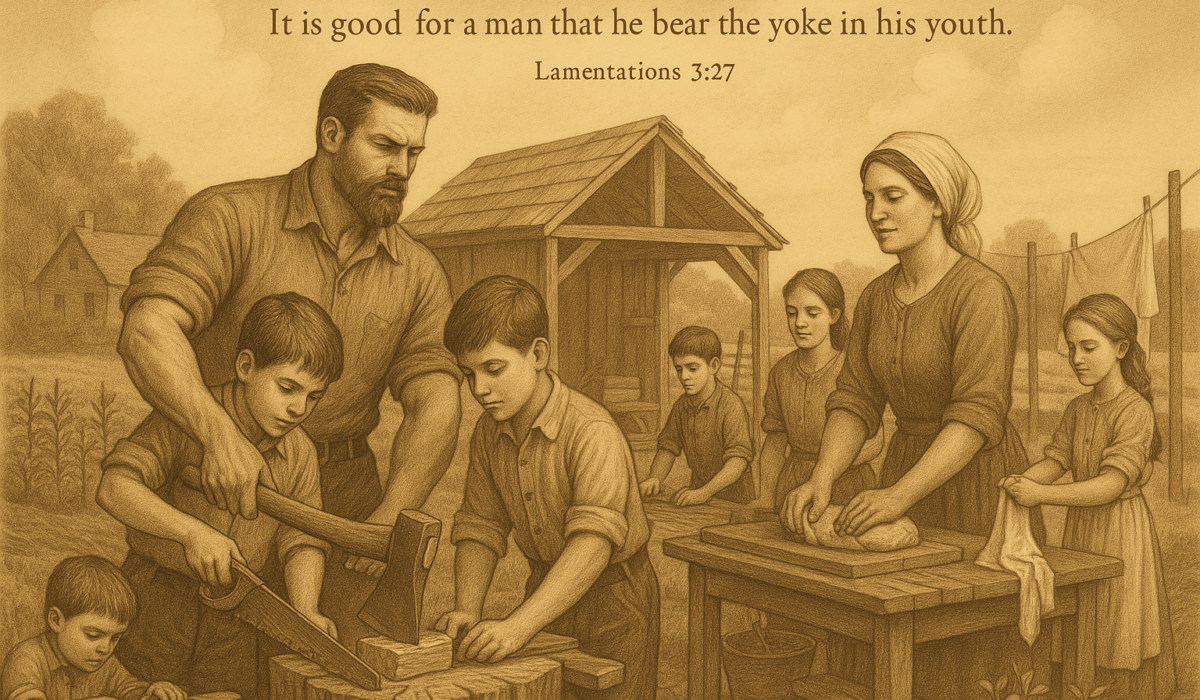
“It is good for a man that he bear the yoke in his youth.”
— Lamentations 3:27 (KJV)

Section I: Rejecting the Lie of Prolonged Childhood

The modern West has created a generation of idle, entitled, and emotionally unstable children; not by accident, but by design. Childhood has been extended into the twenties. Work has been delayed until adulthood. Responsibility has been withheld under the false belief that children should only play, consume, and be entertained until they are “ready.”

This lie is unbiblical, unhistorical, and ultimately destructive.

The Scriptures present an entirely different vision: children are to be trained through labor. They are not to be coddled, but formed. Not entertained, but equipped. Childhood is not an escape from responsibility, it is the furnace where strength is forged.

“Even a child is known by his doings, whether his work be pure, and whether it be right.” — Proverbs 20:11

Children are moral agents. They are not blank slates or decorative ornaments. God judges their work. He watches their diligence. And He has given them families, not merely for nurture and affection, but for training, discipline, and preparation.

To neglect giving children work is not compassion. It is sabotage.


The Secular Invention of “Childhood”

Historically, children worked. In agricultural societies, they helped in the fields as soon as they could walk. In biblical culture, sons worked with their fathers, daughters with their mothers. Childhood was not a phase of prolonged indulgence, it was a stage of apprenticeship.

It was the Industrial Revolution that began shifting labor from family fields to centralized factories. In reaction, new laws were passed to protect children from exploitation, and rightly so. But with that protection came a new social construct: the idle child. The state took work from the child and replaced it with schooling without responsibility, entertainment without contribution, and rewards without merit.

Today, children are taught to sit still for eight hours, consume content, press buttons, and “follow their dreams.” But they are not taught to build. To serve. To fix. To work with their hands. To shoulder burdens. To do their duty.

This is not progress. It is bondage.


Biblical Examples of Children in Labor

The Bible is not silent on children and work. It assumes, even commands, childhood labor as part of godly formation.

  • Joseph was seventeen and already managing flocks, reporting on the work of his brothers (Genesis 37:2).
  • David, the youngest of eight, was left alone with the sheep while his brothers went to war, he was a working shepherd boy (1 Samuel 16:11).
  • Jesus, the Son of God, submitted to His earthly father Joseph, working as a carpenter until age thirty (Mark 6:3).
  • Timothy, a young man trained from childhood in Scripture and ministry, was appointed by Paul to significant leadership; because his labor began early (2 Timothy 3:15).

Children who are given responsibility early become strong, capable, and dependable. Children who are raised in idleness grow weak, confused, and rebellious.


Why the Modern Church Resists This Truth

Many Christian parents have swallowed the world’s lie that “children should enjoy their youth.” What they really mean is: “Let them waste time before reality hits.” They believe work will make their children bitter, that discipline will drive them away, that chores will damage their emotions.

But the Bible says the opposite:

“Chasten thy son while there is hope, and let not thy soul spare for his crying.” — Proverbs 19:18

“Foolishness is bound in the heart of a child; but the rod of correction shall drive it far from him.” — Proverbs 22:15

If foolishness is bound in their heart, then work is part of the cure. Work disciplines the flesh, focuses the mind, and awakens the conscience.


Idleness: A Breeding Ground for Sin

When children are idle, they become restless. When they are restless, they are tempted. The sin of Sodom began with pride, fullness of bread, and abundance of idleness (Ezekiel 16:49).

Idle sons become perverse. Idle daughters become vain. Idle children become depressed. The hands that do not swing hammers will eventually swipe screens, write curses, or cause destruction.

But a child who learns to labor is a child who becomes a blessing:

“The father of the righteous shall greatly rejoice: and he that begetteth a wise child shall have joy of him.” — Proverbs 23:24

Section II: Training Through Labor – Theology, Skill, and Obedience in the Home

“And these words, which I command thee this day, shall be in thine heart: And thou shalt teach them diligently unto thy children…” — Deuteronomy 6:6–7 (KJV)

The home is the first and greatest training ground for dominion. Fathers are not called to merely shelter their children or provide luxuries, they are called to equip them for rule, stewardship, and righteousness. One of the greatest tools God has given for this purpose is labor.

Work is not a punishment. It is not a necessary evil. It is part of the divine image.

“And the LORD God took the man, and put him into the garden of Eden to dress it and to keep it.” — Genesis 2:15

Before sin entered the world, Adam was a worker. He was made to labor. And just as he was commanded to subdue the earth, so too are his sons. Every child of Adam is born with a purpose, to cultivate, produce, and build. But this must be taught. It must be modeled. It must be demanded.


The Father’s Role: Assigning the Yoke Early

Scripture says:

“It is good for a man that he bear the yoke in his youth.” — Lamentations 3:27

Why? Because the yoke forms him. The yoke disciplines him. The yoke gives him direction, rhythm, and a sense of identity. Just as an ox is trained to carry weight from an early age, so must our sons and daughters be taught to shoulder real responsibility while they are still tender.

A father who gives his child only comfort is preparing him for ruin. But a father who gives his child burden, not crushing, but challenging, prepares him for dominion.

Let your son carry wood, not just toys. Let your daughter manage the kitchen, not just her closet. Let your children rise with purpose, not lounge with entertainment.


The Mother’s Role: Building the Work Culture of the Home

Mothers are not just nurturers; they are household governors. The Proverbs 31 woman “looketh well to the ways of her household, and eateth not the bread of idleness” (v.27). She delegates, manages, and trains her daughters (and sons) in the art of dominion through domestic economy.

It is the mother who should teach her daughters how to:

  • Clean thoroughly and joyfully
  • Cook with skill and order
  • Care for younger siblings with patience
  • Manage time, tidiness, and emotional control

The daughters of Zion must learn early that productivity is a gift, not a burden. That making bread is better than making videos. That cleaning is training, not punishment.


Sons Must Be Apprentices

Every father should view his sons as future builders, of homes, of businesses, of legacies. Sons must be taught not merely in theory, but in practice. What they learn with their hands becomes a law written on their hearts.

Start young:

  • Age 4–6: picking up toys, helping sweep, fetching tools
  • Age 7–9: raking leaves, sorting nails, washing dishes
  • Age 10–13: chopping wood, mowing, organizing supplies, managing small tasks alone
  • Age 14–18: assisting in family business, learning a trade, building projects, taking ownership of chores

Work should grow with them, not wait for them. They don’t need part-time jobs at 16 if they’ve had full-time duty since they were six. By the time they are young men, they should already be providers-in-training.


Daughters Must Be Builders of Households

Today’s daughters are taught to dream of offices and college dorms. But God’s design is for them to build homes (Titus 2:5). This means their labor training must center on domestic dominion.

Daughters should not be raised to be ornamental or idle. They should be trained to:

  • Rise early and prepare meals
  • Care for children and elderly
  • Maintain cleanliness and order
  • Plan menus, budgets, and schedules
  • Sew, mend, preserve, bake, and manage

This is not slavery, it is glory. The wise woman builds her house (Proverbs 14:1). The modern woman destroys it with idleness and excuses.


Chores Are Not Punishment – They Are Purpose

Many modern parents treat chores as punishment or points-based systems. This is backwards. Chores are not punishment; they are a participation in dominion. They are training for life.

Your children should not be paid to clean their own rooms, to fold their own clothes, or to do basic tasks that serve the family. These are duties. To turn duty into bribery is to raise mercenaries, not sons and daughters.

Rather, train them to see that their labor serves the household. Their effort contributes to order. Their tasks are worthy, meaningful, and good.

Let your home have a culture of labor, not grudging, but joyful. Sing as you work. Encourage as they toil. Reward not just results, but right attitudes.


Dangers of the Screen-Slave Generation

Technology is not neutral. It offers endless temptation for idleness, entertainment, and emotional disconnection. Children who are glued to screens do not build anything – they consume everything.

Parents must be ruthless in protecting their children’s attention span, manual skills, and work ethic. Screens erode all three.

Establish strict limits:

  • No phones or tablets for young children
  • No entertainment before labor is done
  • Weekday screen-free hours
  • No screens in bedrooms

Then fill the vacuum with work. Not busywork, but productive labor. Let them build. Let them clean. Let them plan. Let them help. Let them fail. Let them sweat.

This is how strength is formed. This is how order is built.


Let’s continue with Section III, focusing on the fruit, legacy, and long-term transformation that comes through training children to work.

Section III: The Fruit of Labor – Raising Builders, Not Consumers

“Train up a child in the way he should go: and when he is old, he will not depart from it.” — Proverbs 22:6

The man who trains his children to work is not simply maintaining a clean home; he is preparing a multigenerational legacy. Children who are trained to labor do not grow up needing handouts, therapy, or institutional micromanagement. They grow up bearing burdens, for themselves, for others, for the Kingdom.

The laboring child becomes the productive man. The responsible daughter becomes the fruitful wife. The disciplined son becomes the dependable patriarch.

This is the harvest of faithfulness: children who are not liabilities, but arrows in the hand of a warrior (Psalm 127:4).


Children Who Work Become Confident

One of the great plagues of our time is the insecurity of youth. Teenagers today are anxious, fragile, and afraid of responsibility. Why? Because they’ve never built anything. They’ve never proven themselves in real work.

But give a child a meaningful task, and let him conquer it. Let him mow the lawn alone. Let him change the oil with you. Let her plan the family meal and serve it. Let them paint the fence or build the shed.

And then praise them not for their existence, but for their accomplishment.

“Well done, thou good and faithful servant…” — Matthew 25:21

They will begin to walk taller, speak bolder, and live freer. Confidence is not born of compliments, but of conquest.


Children Who Work Become Grateful

Idleness breeds entitlement. Children who are given everything without effort become selfish, whiny, and thankless.

But a child who works for what he has learns gratitude. When he cleans the barn, he thanks God for the roof. When she kneads the bread, she cherishes every slice. When he sweats over the garden, he rejoices at the harvest.

Children must feel the weight of contribution before they can appreciate provision. The child who contributes to the home honors the home.


Children Who Work Become Disciplined

Labor trains the will. It molds impulse. It teaches that the body does not rule the soul. That tiredness is not an excuse. That emotions are not the master.

When a child learns to work when they don’t feel like it, they learn the secret of godly manhood and womanhood: obedience without delay.

“He that hath no rule over his own spirit is like a city that is broken down, and without walls.” — Proverbs 25:28

Work becomes the wall. It builds strength inside, not just outside.


Children Who Work Become Mission-Ready

The Church is weak because her households are weak. Her households are weak because her men are weak. And her men are weak because they were raised to play, not to labor.

But a generation of trained children is a generation ready for mission.

  • They do not fear sweat.
  • They do not faint under pressure.
  • They do not collapse emotionally.
  • They do not need applause.
  • They do not outsource maturity.

They are trained to serve, build, and defend.


Common Objections Answered

“But children need time to be kids!”
Children need to be trained. There is no contradiction between labor and joy. A boy who works hard laughs harder. A girl who serves faithfully sings louder. The child who labors well lives fully.

“But I want my child to have what I didn’t!”
Give your child what you needed, not what you lacked. If what you lacked was character, wisdom, and purpose, then build that. Not toys.

“But they’ll resent me if I make them work.”
They’ll resent you far more if you raise them weak, directionless, and addicted to comfort. Children remember two things when they grow: the standards you held, and whether you held them in love.


A Household of Labor Is a Household of Glory

“Let them also learn to maintain good works for necessary uses, that they be not unfruitful.” — Titus 3:14

In the godly home, children are not accessories, they are apprentices. They are not burdens, they are blessings. But they must be discipled, and that begins with labor.

Raise them to:

  • Rise early and give thanks
  • Tend the garden and care for animals
  • Clean their rooms and manage their belongings
  • Cook meals and serve one another
  • Study the Word and help the weak
  • Carry burdens and correct errors
  • Respect hierarchy and uphold honor

This is not legalism. This is love.

“For whom the Lord loveth he chasteneth…” — Hebrews 12:6

Love does not coddle, it commands. Love does not spoil, it strengthens.


Conclusion: Let the Children Build

We do not have time to raise another generation of consumers, narcissists, or soft rebels. The world is burning. The Kingdom is advancing. And the sons and daughters of God must be trained to build, defend, and conquer.

That starts now, in your home, with your hands, and with your expectations.

Give your children work. Give them responsibility. Give them burden. And give them the joy that only comes from finishing a task in faith.

Raise laborers.
Raise leaders.
Raise arrows.
Raise saints.

And let the world see what a household under God’s dominion can produce.

“I have no greater joy than to hear that my children walk in truth.” — 3 John 1:4

This is The Great Order!

Children and Obedience: Building Submission, Strength, and Order from the Cradle

A Foundational Mandate in the Tone of The Great Order

“Children, obey your parents in the Lord: for this is right.”
— Ephesians 6:1 (KJV)

Section I: The Foundation of Obedience – Divine Order Begins in the Home

We live in an age of disobedient children. Their eyes are bold with defiance. Their tone is casual, sarcastic, and disrespectful. They treat their parents like peers, push back at every instruction, and scoff at discipline. Their homes are upside down, where the child leads, the mother negotiates, and the father tiptoes.

This is not just a family issue. It is a civilizational curse.

“This know also, that in the last days perilous times shall come. For men shall be lovers of their own selves… disobedient to parents…”
— 2 Timothy 3:1–2

God does not see disobedience as a phase. He sees it as perilous. It is not just a nuisance, it is rebellion. It is spiritual disorder. And it is one of the clearest signs that a society has abandoned God’s design.

In The Great Order, we return to the ancient paths. We restore what has been lost. And we proclaim boldly: children are to obey. Not occasionally. Not selectively. Not after debate. Fully. Immediately. Joyfully.


The Biblical Mandate Is Clear

“Honour thy father and thy mother: that thy days may be long upon the land…”
— Exodus 20:12

“Children, obey your parents in all things: for this is well pleasing unto the Lord.”
— Colossians 3:20

From the Ten Commandments to the Pauline epistles, obedience is not optional. It is not cultural. It is commanded. And more than that, it is pleasing to the Lord.

The obedient child is a sweet aroma in the household of God. The disobedient child is a stench, a grief, and a rebellion in seed form.


Obedience Trains the Will

Children are not born neutral. They are born foolish.

“Foolishness is bound in the heart of a child; but the rod of correction shall drive it far from him.”
— Proverbs 22:15

Disobedience is the natural state of fallen man. A child must be taught to obey, not merely through suggestion or persuasion, but through training. Obedience must become habit, not preference. It must be tied to duty, not mood.

Every act of obedience is a victory over the flesh. Every command obeyed without complaint strengthens the soul.


Obedience Is a Matter of Worship

Too many Christian parents treat obedience as a matter of control or convenience. They want peace and quiet, not holy order. But the Word teaches us: a child’s obedience is an act of worship.

“Children, obey your parents in the Lord…”
— Ephesians 6:1

Not just “obey your parents.” Obey in the Lord. This means obedience is unto God. When a child obeys his father, he honors the Father in heaven. When he disobeys, he dishonors the divine order God has placed over him.

This is why discipline matters so much. Not because it makes parenting easier, but because it guards a child’s soul.


Early Obedience Builds Future Authority

The child who learns to submit joyfully becomes the adult who leads wisely. Why? Because every good leader was first a good follower.

A son who resists correction will later resist conviction. A daughter who despises instruction will later despise her husband, her elders, and her God. But a child who learns the peace of obedience learns the power of order. They discover that peace comes through structure, joy flows from discipline, and safety is found in submission.

This is how we build nations, not with soft-willed youth, but with sons and daughters who know how to bow before authority with honor.


Satan’s War Against Obedience

In Eden, Satan’s first attack was to undermine obedience.

“Yea, hath God said…?” — Genesis 3:1

He planted the seed of rebellion through doubt, through suggestion, through desire. And ever since, that same spirit of rebellion has worked its way into the hearts of children through television, cartoons, education, and culture.

Modern children’s programming glorifies sarcasm, mockery of parents, independence from family, and self-centeredness. Schools train children to question authority. Courts remove discipline from the home. And “gentle parenting” has replaced the rod with reasoning and begging.

This is not progress. It is satanic subversion.

If you will not disciple your children into obedience, the world will disciple them into rebellion.


The Fruit of Disobedience: Biblical Warnings

Scripture is blunt about the end of the disobedient child.

“The eye that mocketh at his father, and despiseth to obey his mother, the ravens… shall pick it out, and the young eagles shall eat it.”
— Proverbs 30:17

“He that smiteth his father, or his mother, shall be surely put to death.”
— Exodus 21:15

“A stubborn and rebellious son… shall be stoned with stones, that he die: so shalt thou put evil away from among you…”
— Deuteronomy 21:18–21

These are not suggestions. They are the recorded judgments of a holy God. In the Old Covenant, disobedience to parents was not a minor infraction, it was a capital crime.

Why? Because rebellion in the home is rebellion against God Himself. It is the rejection of His appointed order. It is anarchy in seed form.

Section II: Training Children to Obey – Building Submission with Structure, Consistency, and Love

“He that spareth his rod hateth his son: but he that loveth him chasteneth him betimes.”
— Proverbs 13:24

There is no neutral ground. The child will either be shaped by the will of his parents or by his own fallen nature. If you do not form his will through discipline and training, it will deform under the weight of sin and selfishness. God has not left parents without instruction. He has given them a divine method to train children to obey.

Obedience is not accidental. It is cultivated through structure, consistency, clear expectations, and most importantly, love demonstrated through correction.


Parental Authority Is Not a Suggestion

In the modern therapeutic world, parents are told to “explain everything” and to avoid being too “authoritative.” But God’s order is not built on endless explanation, it is built on obedience to authority.

God does not negotiate His commandments. He declares them. And He expects them to be obeyed, not because they are always understood, but because they are true.

Likewise, parents must train their children to obey because it is right, not because they always agree.

“Children, obey your parents in the Lord: for this is right.” — Ephesians 6:1

You don’t need to justify why they must go to bed, why they must clean their room, or why they must speak with respect. You are the authority. God has placed them under your charge.

When they are older and mature, then you instruct and explain. But when they are young, obedience comes first. Understanding follows submission, not the other way around.


The Role of the Rod: Loving, Swift, and Controlled Discipline

God’s Word is unashamed in its endorsement of corporal discipline:

“Withhold not correction from the child: for if thou beatest him with the rod, he shall not die.”
— Proverbs 23:13

“The rod and reproof give wisdom: but a child left to himself bringeth his mother to shame.”
— Proverbs 29:15

This is not abuse. It is loving correction. The purpose of the rod is not to harm but to train, to reinforce that disobedience has consequences. When administered calmly, swiftly, and with clear communication, the rod becomes a tool of deliverance from foolishness.

Discipline must be:

  • Consistent: Never allow direct disobedience to go uncorrected.
  • Immediate: Correction delayed is training delayed.
  • Measured: Do not strike in anger. Discipline with control.
  • Restorative: Always follow discipline with love, prayer, and reassurance of relationship.

Children who are disciplined rightly feel secure. They know where the boundaries are. They learn that wrong actions produce painful consequences, and that obedience produces peace.


Teaching Obedience in the Small Things

Children are not trained in obedience by monumental moments, but by daily consistency. Every small command is a training opportunity.

  • “Come here.” — Does the child obey immediately or delay?
  • “Pick up your toys.” — Is the child expected to obey fully or halfway?
  • “Say ‘Yes sir.’” — Is the tone respectful or casual?

If you tolerate disobedience in the small things, you are training your child to ignore the big ones. Teach them early: delayed obedience is disobedience. Half-hearted obedience is rebellion. Tone matters. Attitude matters.

Obedience must be:

  • First time
  • Right away
  • With the right heart

Do Not Count. Do Not Repeat Yourself.

One of the greatest mistakes modern parents make is counting: “One… two… three…” or repeating instructions over and over again.

This trains the child that disobedience is tolerated until the parent is frustrated. It teaches delay. It teaches negotiation. It makes the parent’s authority into a game.

Instead, teach your children that when you speak, they must obey the first time. Your voice carries weight. Let your yes be yes, and your command be law in the home.


Encourage and Praise Obedience

While discipline is necessary, encouragement is just as important. When your child obeys quickly, joyfully, and respectfully, praise them. Let them know that their obedience is seen, valued, and honored.

“Well done, good and faithful servant…” — Matthew 25:23

Even God Himself praises the faithful. So should we.

A home full of correction but no affirmation becomes cold. A home full of praise with no correction becomes lawless. But a home that holds both high discipline and high encouragement will thrive.


The Role of the Father

Fathers must lead in discipline. Too many fathers delegate all correction to their wives and only step in when chaos has already bloomed. This is failure.

The father is the head of the house. His voice, presence, and standards must set the tone for order. When a child disrespects his mother, the father should respond swiftly. When rules are broken, the father enforces justice. He must also be gentle and firm, like a king and a priest.

If the father is passive, the child becomes bold in rebellion. If the father is inconsistent, the child becomes confused. If the father is absent, the child becomes bitter.

But if the father is present, engaged, consistent, and loving in discipline, the child will learn honor.


The Role of the Mother

The mother is the daily enforcer of order. Her tone, her consistency, her posture all teach the child how to submit. She must not be manipulated by whining, tears, or charm. She must be firm without being harsh, joyful without being permissive.

Mothers often spend more time with the children, this makes their role even more vital. A mother who trains her children to obey is a mother who guards the gates of her home.

“She looketh well to the ways of her household…” — Proverbs 31:27


Correcting Older Children Who Were Not Trained Early

What if your children are already past toddlerhood and have been raised without consistent training?

Start now!

Explain the new standard. Confess where you’ve failed. Begin enforcing expectations with clarity and follow-through. It may take time, but the fruit will come.

God is gracious. Children are resilient. And households can be re-ordered under God’s rule at any stage.

Section III: The Fruit of Obedience – Blessing, Dominion, and Generational Strength

“The just man walketh in his integrity: his children are blessed after him.”
— Proverbs 20:7

Obedience is not a burden. It is the foundation of blessing. Children who are trained to obey experience peace in the home, strength of character, and a life ordered by wisdom. Disobedient children become restless, unstable, and destructive; first to others, then to themselves.

The goal of obedience training is not robotic conformity, it is the shaping of a soul for dominion. A child who obeys early is a man or woman who can command later. For before one can lead, one must learn to submit.


Obedient Children Bring Joy to Their Parents

“My son, if thine heart be wise, my heart shall rejoice, even mine.”
— Proverbs 23:15

A disobedient child is a daily grief. Every meal is a battle. Every outing a scene. Every correction a struggle. But a child trained in joyful obedience brings life and joy to the home. The parents are not worn thin, they are built up.

“The father of the righteous shall greatly rejoice: and he that begetteth a wise child shall have joy of him.” — Proverbs 23:24

Christian parenting is not meant to be a war of attrition. It is meant to be a garden, cultivated in discipline, watered with affection, and bearing fruit in the form of righteous, obedient sons and daughters.


Obedient Children Build Order in Society

Households are the foundation of civilization. When children are obedient, the family is strong. When families are strong, churches are fortified. When churches are fortified, nations are secured.

But if children are lawless, homes collapse. And when homes collapse, society becomes ungovernable.

“The rod and reproof give wisdom: but a child left to himself bringeth his mother to shame.”
— Proverbs 29:15

This is not just about behavior, it is about the future of nations. A nation full of obedient children becomes a people able to submit to just authority, resist evil, build legacy, and sustain order. A nation of rebels becomes Babylon.


The Kingdom of God Is Built by the Obedient

“If ye love me, keep my commandments.”
— John 14:15

Obedience is the language of love. And children must be trained to love by being trained to obey. For if a child cannot submit to his father, he will not submit to God. If he cannot obey his mother, he will not obey Christ.

Obedience to parents is preparation for obedience to God. It trains the conscience. It forms the heart. It disciplines the flesh. It teaches respect, humility, and duty. It creates a man or woman who is usable by God.

Discipled children become builders of the Kingdom. Undisciplined children become its mockers.


Generational Blessing Flows from Obedient Sons and Daughters

When a son obeys, he preserves the name of his father. When a daughter obeys, she blesses her mother. And when those children rise up and train their children in the same order, the household becomes a dynasty.

“That our sons may be as plants grown up in their youth; that our daughters may be as corner stones, polished after the similitude of a palace.”
— Psalm 144:12

Imagine a household where sons rise early to work, obey their father, and honor their mother. Imagine daughters who are modest, helpful, and joyful in obedience. Imagine grandchildren who walk in the same pattern.

This is legacy. This is dominion. This is The Great Order.


Disobedience Brings Generational Curses

Just as obedience brings blessing, disobedience brings curses.

“Cursed be he that setteth light by his father or his mother. And all the people shall say, Amen.”
— Deuteronomy 27:16

A child who scorns his parents opens the gates to judgment. He may succeed in the eyes of the world, but he walks under the displeasure of God. He may gain popularity, but he will bring destruction upon himself and his offspring.

We are not raising children for this world. We are raising them for God’s Kingdom. And disobedience is not allowed within it.


A Final Call to Parents: Take Back Your Authority

Parents, God has given you the rod, the voice, the command, and the mantle. Use them.

Do not surrender your household to the world’s lies. Do not wait for the culture to change. Do not believe the myth that disobedience is harmless. It is not.

Take back your home. Reinstitute obedience as a daily expectation. Remove excuses. Reinforce structure. Discipline consistently. Praise rightly. Build order with your mouth, your hand, your posture, and your prayers.

God will bless it. Your children will rise to bless you (Proverbs 31:28). And generations will call your house a house of righteousness.


Conclusion: Let Obedience Reign Again

“Bring them up in the nurture and admonition of the Lord.”
— Ephesians 6:4

Let Christian households once again shine like lamps in a dark age, not just by the size of their Bibles or the music they play, but by the order of their children. Let it be said:

  • “There is peace in that home.”
  • “The children obey without defiance.”
  • “The parents discipline with love.”
  • “That house reflects God’s dominion.”

Let the sons and daughters of God be marked by obedience, not by rebellion disguised as personality. Let their submission bring glory to their Father in heaven.

Train your children to obey. And in doing so, you train them to rule.

“He that ruleth his spirit is better than he that taketh a city.”
— Proverbs 16:32

Start ruling now. Begin in the nursery. Establish it at the dinner table. Cement it in the morning chores. And carry it with you to the gates of the next generation.

The Curse of Vanity: A War Against Order, Holiness, and Contentment

“Favour is deceitful, and beauty is vain: but a woman that feareth the LORD, she shall be praised.”
— Proverbs 31:30 (KJV)

Introduction: A Generation Consumed by the Mirror

We live in an age of mirrors, not altars. Where men and women once rose early to serve their household or kneel in prayer, now they rise to take filtered photos of their own faces. The culture of vanity has saturated every inch of modern life, seducing women into obsession with appearance, and men into the prideful pursuit of status and external power. This is not accidental, it is a calculated war against divine order.

Vanity is not merely a weakness. It is idolatry, and the exaltation of self in the temple of God. It is a rebellion against humility, contentment, holiness, and truth. And it is destroying our women, our daughters, our men, our marriages, our society, and our witness before the world.

This is a call to war; not against lipstick and earrings in isolation, but against the entire spirit of vanity that exalts appearance over obedience, comparison over contentment, and attention over honor.


I. What Is Vanity? The Biblical Definition

The Bible speaks clearly about vanity. The Hebrew word often used is hebel, meaning vapor, emptiness, futility. Vanity is that which is fleeting, hollow, and deceptive.

“Vanity of vanities, saith the Preacher, vanity of vanities; all is vanity.” — Ecclesiastes 1:2

Solomon, the richest and most adorned king to ever live, declared all worldly striving to be empty. He had wealth, wives, status, glory, but without the fear of God, all of it was like chasing the wind.

Vanity is not merely enjoying beauty or having possessions. It is the pursuit of identity, worth, or security in those things. It is when the external replaces the internal. When the created replaces the Creator. When women obsess over looks more than virtue. When men chase possessions more than purpose. When families compare rather than build.

Vanity is spiritual rot dressed in attractive clothing!


II. The Seduction of Cosmetics: Makeup, Nails, and Eyelashes

Makeup is no modern invention. In ancient Egypt, Babylon, and Rome, women (and men) painted their faces to signal wealth, fertility, and seduction. It was tied to pagan religion and temple prostitution.

The Bible gives a sober example:

“And when Jehu was come to Jezreel, Jezebel heard of it; and she painted her face, and tired her head, and looked out at a window.” — 2 Kings 9:30

Jezebel, the pagan queen whose name now symbolizes manipulation, sexual immorality, and witchcraft, adorned herself with paint to seduce and manipulate. Her end was not one of glory.

Modern women who spend hours each week painting their faces, elongating their eyelashes, dyeing their brows, and glossing their lips are not acting independently, they are participating in an ancient pattern of vanity that exalts sensual appeal over inward holiness.

A woman’s strength is not in her beauty; it is in her meekness, her modesty, her devotion, and her fruitfulness.

“Whose adorning let it not be that outward adorning of plaiting the hair, and of wearing of gold, or of putting on of apparel; But let it be the hidden man of the heart…” — 1 Peter 3:3–4


III. Hairstyles, Hair Dyeing, and Jewelry: Decoration or Deception?

Hair in Scripture is given significance. For a woman, it is her glory (1 Corinthians 11:15). But what is meant to be a symbol of honor has become a platform for rebellion. The dyeing of hair, extreme hairstyles, braiding with ornaments, and attention-grabbing alterations are often not for function, but to project status, sensuality, or pride.

“In that day the Lord will take away the bravery of their tinkling ornaments… the headbands, and the tablets, and the earrings…” — Isaiah 3:18–23

God pronounces judgment on the daughters of Zion for their prideful adorning. Jewelry, makeup, perfume, and costly garments are all named in the list, not because the objects are inherently sinful, but because they represent a spirit of vanity. A heart far from God, seeking approval from men rather than God.

When a woman dyes her hair bright red, paints her nails black, and stacks jewelry on her neck, what is she saying? What message does it send? It is not submission, virtue, or holiness. It is identity-by-display. And that is vanity.


IV. Vanity in Men: The Idol of Appearance and Possession

While vanity often manifests in women through makeup and fashion, men are not exempt. For men, vanity often appears through possessions, status, muscle, appearance, and self-promotion.

Today’s man shaves his chest, oils his arms, posts shirtless selfies, flaunts designer brands, and flexes his car or watch or physique. He is not seeking to serve, he is seeking to be admired.

This is not manhood. This is pride in disguise.

“The LORD will destroy the house of the proud…” — Proverbs 15:25

Men are to build, to protect, to provide, to lead. Their strength should be measured in fruitfulness, sacrifice, and leadership; not in jawlines or clothing brands.

Vanity turns men into self-worshipers, men who abandon duty in the pursuit of digital validation.


V. Social Media: The Amplifier of All Vanity

If vanity is a fire, social media is the gasoline. Instagram, TikTok, and Facebook are temples of image-worship, where men and women curate their lives to be admired by strangers. Every photo is a pose. Every caption is a performance. Every post is a bid for attention.

It is no accident that the selfie generation is also the most anxious, depressed, and suicidal generation. We were not made to be worshiped. We were made to worship God.

The Scriptures warn:

“Men shall be lovers of their own selves, covetous, boasters, proud… lovers of pleasures more than lovers of God.” — 2 Timothy 3:2–4

This prophecy is fulfilled in the selfie and influencer culture. Women post cleavage and angles for likes. Men post gym photos and cars for praise. Children grow up learning that approval comes from filters, not fruit.

Social media is not neutral, it is a vanity machine. And households under God’s order must train their children to despise its lies, not participate in its parades.

VI. Keeping Up With the Idols: Possessions and the Race of Comparison

Vanity does not end with makeup and mirror-glances. It extends into the home, the garage, the wardrobe, and the digital feed. The spirit of vanity feeds on comparison, comparing homes, comparing outfits, comparing vacations, comparing children, comparing “likes.”

This disease infects families who once lived content and fruitful lives. Now, they chase after bigger homes, newer cars, trendier décor, and seasonal fashion rotations not because of need, but because of insecurity. They scroll through curated social media pages and begin to believe their homes are inadequate, their lives boring, their children behind, and their husbands insufficient.

And so, the rat race begins. Husbands feel pressure to earn more, not for necessity but for vanity. Wives chase appearances. Children learn the rhythm of restless covetousness instead of thankful contentment.

“Better is little with the fear of the LORD than great treasure and trouble therewith.” — Proverbs 15:16

The Word is plain. A small, peaceful home under God’s rule is better than a palace decorated in discontent.

Families must be taught to love simplicity, not status. To cherish function, not fashion. To seek usefulness, not impressiveness.


VII. The Hunt for Validation: Empty Praise and Emotional Addiction

Modern vanity thrives on one thing: attention. The woman who paints her face in three shades, sculpts her body through surgery, flaunts her clothing, and regularly posts pictures of herself is not doing so because she honors God. She is seeking validation and attention.

And this is not merely feminine. Men too are becoming validation addicts, boasting of themselves, showcasing their hobbies, signaling their virtue, or flexing their material gain.

Scripture warns:

“Let another man praise thee, and not thine own mouth; a stranger, and not thine own lips.” — Proverbs 27:2

To seek praise is to deny God’s sufficiency. Anyone who must be constantly told “You are beautiful” or “You are amazing” is not walking in strength, but in insecurity masked as confidence. Vanity is a fragile idol that must be fed constantly. And when the praise slows, so does the peace.

This is why vanity leads to anxiety and despair. The validation never satisfies and the attention is never enough.

True strength, and true honor, is found in fearing God and fulfilling duty. Not in applause, or compliments, and certainly not in “followers.”


VIII. Historical Patterns: From Babylon’s Paint to Rome’s Decay

Vanity is not a new sin. It always arises in times of peace, prosperity, and moral decline. In Babylon, women wore cosmetics, adorned their heads, and painted their eyes as acts of devotion to pagan deities. In Rome, women bleached their hair, painted their faces with poisonous white powder, and competed with one another in vanity displays.

The result was always the same: national collapse. Vanity is not just a personal flaw, it is a cultural death knell. It signals a people who no longer fear God, who are no longer fruitful, and who no longer train their children in self-denial.

When nations rise, they are marked by modesty, family strength, and discipline. When they fall, they are marked by sensuality, appearance-obsession, and gender perversion. We are not the first empire to collapse under our own vanity. But if we do not repent, we may be the last.


IX. God’s Standard: Modesty, Sobriety, Holiness, and Meekness

The Word of God gives clear instructions on how men and women are to present themselves.

“In like manner also, that women adorn themselves in modest apparel, with shamefacedness and sobriety…” — 1 Timothy 2:9

Modesty is not just about fabric length. It is about spirit. A modest woman is not attention-hungry. She dresses with dignity, not desire for praise. She draws attention to her good works, not her figure.

“Let your moderation be known unto all men.” — Philippians 4:5

The man of God is to be moderate. His clothing, possessions, speech, and presentation should reflect order and humility, not boastful consumption.

“As obedient children, not fashioning yourselves according to the former lusts… but as he which hath called you is holy, so be ye holy…” — 1 Peter 1:14–15

We are to be set apart. Holy. Different. Not in rebellion against beauty, but in alignment with God’s definition of beauty, obedience, honor, fear of the Lord, diligence, wisdom, purity, meekness, and fruitfulness.


X. Practical Application: Building a Household that Rejects Vanity

1. Teach your daughters early.
Show them the difference between beauty and vanity. Let them see modest women praised. Teach them that value is in obedience, not makeup.

2. Guard against social media.
Limit or eliminate it entirely. It is the sanctuary of envy and vanity. Refuse to let the world’s standards shape your family.

3. Model simplicity.
Wear simple clothing. Avoid excess. Let your home reflect usefulness and cleanliness, not opulence and status-chasing.

4. Praise the right things.
Compliment your wife or daughters not for their looks alone, but for their submission, service, and joy. Teach them to seek praise from God, not strangers.

5. Rebuke the spirit of vanity.
Call it what it is. Correct it in love. Do not laugh off vanity, it is not harmless. It is rebellion!

6. Preach identity in Christ.
True security, peace, and contentment are found in knowing you belong to God, not in being admired by man.


Conclusion: The Mirror or the Cross?

“If any man will come after me, let him deny himself, and take up his cross, and follow me.” — Matthew 16:24

The question before every household, every parent, every man and woman is this:
Will we bow to the mirror, or the cross?

Vanity is the gospel of self. The cross is the death of self. One leads to anxiety, emptiness, and judgment. The other leads to peace, holiness, and glory.

The Great Order requires modest women who build their homes, not parade their bodies. It requires sober men who train their sons, not flaunt their wealth. It requires families who walk in contentment, not comparison. In truth, not performance. In fruitfulness, not self-worship.

Let the world burn incense at the altar of Instagram.
Let them paint their faces, boast in their flesh, and compare their emptiness.

But as for us:
Let us be known for meekness.
Let us wear holiness like robes.
Let us be content with what the Lord provides.
Let our beauty come from obedience.
Let our honor come from heaven.

“The LORD taketh pleasure in them that fear him, in those that hope in his mercy.” — Psalm 147:11

That is the only approval that matters.

This is the Great Order!

Ceremonial Law vs. Biblical Law: Christ Fulfilled, Not Abolished


Introduction: Returning to the Ancient Paths

“Thus saith the LORD, Stand ye in the ways, and see, and ask for the old paths, where is the good way, and walk therein, and ye shall find rest for your souls.” — Jeremiah 6:16 (KJV)

Modern Christianity has lost its way. What was once a faith rooted in law, order, and covenant has been cheapened into a system of sentimentality, slogans, and Sunday spectacles. The ancient paths, God’s perfect law, have been cast aside in favor of a lawless gospel that elevates grace while denying the very standard that defines righteousness.

Chief among the casualties of this theological decay is a clear understanding of God’s Law. Many Christians claim that the Law of Moses was “done away with” by Christ, that the Old Testament commandments no longer apply, that dietary instructions, feasts, Sabbaths, and judgments were all nailed to the cross. They cling to a fragmented verse here or there and erect an entire gospel of permissiveness upon it.

But the Word of God says otherwise.

This post is a call to return. A call to distinguish between Ceremonial Law, fulfilled in Christ, and Biblical Law, eternal, good, and still binding. A call to live as covenant men and households who do not walk in rebellion to God’s commands under the excuse of Christ’s blood but rather walk in obedience because of it.


I. Christ Did Not Abolish the Law

“Think not that I am come to destroy the law, or the prophets: I am not come to destroy, but to fulfil.” — Matthew 5:17 (KJV)

This single verse, spoken by the Messiah Himself, destroys the modern lie that Jesus abolished the Law. He explicitly says: “Think not.” Yet many today do think precisely that. They have been trained to see “fulfillment” as “termination.” But Christ never said He came to erase the Law, He said He came to fill it full of meaning, to embody it perfectly, to carry out its intention fully.

The word “fulfil” (Greek: plēroō) means to complete, to bring to fullness, to accomplish. Christ fulfilled prophecy, but prophecy is still valid. He fulfilled righteousness, but righteousness is still required. In the same way, He fulfilled ceremonial law, by becoming the once-for-all sacrifice. But the rest of God’s Law remains in effect, upheld by His own teaching.

“Till heaven and earth pass, one jot or one tittle shall in no wise pass from the law, till all be fulfilled.” — Matthew 5:18

Have heaven and earth passed away? No? Then neither has God’s Law.


II. The Purpose of the Law: Moral, Civil, Ceremonial

Biblical law is not a monolithic block. It contains various dimensions, each serving a specific purpose. Throughout the Torah, God gives laws in three overlapping categories:

  1. Moral Law – Timeless standards of righteousness (e.g., the Ten Commandments).
  2. Civil Law – Judicial statutes to govern Israel as a nation (e.g., laws on theft, murder, property).
  3. Ceremonial Law – Instructions for ritual purity, priestly duties, and animal sacrifice (e.g., tabernacle rituals, sin offerings).

The Moral and Civil laws reflect God’s eternal character and His vision for society. These remain binding. The Ceremonial Law pointed forward to Christ, the ultimate Priest and Lamb. These were fulfilled, not abolished, in Him.

To do away with the whole Law because the ceremonial types were fulfilled is to throw out justice, purity, and order for the sake of convenience.


III. What Was Fulfilled? The End of Animal Sacrifices

“But this man, after he had offered one sacrifice for sins for ever, sat down on the right hand of God.” — Hebrews 10:12 (KJV)

Christ’s sacrifice ended the need for blood offerings. He was the Lamb slain from the foundation of the world (Revelation 13:8), the perfect atonement once and for all. The veil was torn. The Levitical priesthood’s role in mediating sacrifices came to an end, not because the Law was destroyed, but because it was fulfilled.

“For it is not possible that the blood of bulls and of goats should take away sins.” — Hebrews 10:4

Those sacrifices were shadows (Hebrews 10:1). They anticipated the real and perfect sacrifice to come. Now that He has come, the shadow fades.

But notice: The eating laws didn’t fade. The feasts weren’t shadows of atonement. The Sabbath was not a placeholder for Christ’s blood. These were not ceremonial in the sense of substitutionary bloodshed. They are part of God’s holy order for life.


IV. The Feasts: Still Commanded, Now Fulfilled

“These are the feasts of the LORD, even holy convocations, which ye shall proclaim in their seasons.” — Leviticus 23:4 (KJV)

God’s appointed times, Passover, Unleavened Bread, Firstfruits, Pentecost, Trumpets, Atonement, Tabernacles, are not “Jewish holidays.” They are the LORD’s feasts.

These holy days were not abolished at the cross. They remain prophetic, meaningful, and ordered by God. What changed is how we honor them.

Take Passover: We no longer sacrifice a lamb, because Christ is our Passover Lamb (1 Corinthians 5:7). But that does not eliminate the command to remember the Passover. Instead, it brings it to full meaning. We keep it in light of the Messiah, not apart from Him.

To discard these feasts is to discard God’s calendar. It is to adopt the calendar of Rome, of Babylon, of secularism. But a household under God’s dominion should live by God’s times.


V. The Eating Laws: Still in Force

“For I am the LORD your God: ye shall therefore sanctify yourselves, and ye shall be holy… this is the law of the beasts… to make a difference between the unclean and the clean.” — Leviticus 11:44–47 (KJV)

Many Christians believe the dietary laws were abolished. But there is no passage that clearly does this. Peter’s vision in Acts 10 is often cited, but that vision had nothing to do with food. Peter himself explains it: the vision taught that Gentiles were not unclean people, not that pigs and shellfish were suddenly acceptable (Acts 10:28).

Nowhere does Christ say, “All meats are now clean.” That interpretation (from Mark 7:19) is a parenthetical note added in modern translations, not part of the Greek text. Christ was rebuking Pharisaical traditions, not God’s laws.

The food laws were not ceremonial sacrifices. They were health laws. Holiness laws. Identity laws. They kept God’s people distinct from the nations. They still do.

VI. The Sabbath: A Perpetual Sign

“Remember the sabbath day, to keep it holy… the seventh day is the sabbath of the LORD thy God.”
— Exodus 20:8,10 (KJV)

Among the first commandments written in stone, the Sabbath stands as a timeless ordinance. It is not ceremonial; it is creation law. God Himself rested on the seventh day and sanctified it (Genesis 2:2–3). Before the Law was codified on Sinai, the Sabbath was known and honored by faithful men.

In the Ten Commandments, written by the very finger of God, it was declared as holy. Nowhere in the New Testament is it repealed. Christ kept it. Paul kept it. The apostles honored it. The only people who abandoned it were those who fell under the influence of Roman imperialism, sun worship, and later church councils which deliberately sought to separate from all “Jewishness.”

Modern Christianity now promotes a Sunday observance with no Scriptural basis, no commandment, and no covenantal precedent. It is a tradition of man, not of God.

Honoring the Sabbath is not bondage, it is obedience. It is a sign between God and His people forever (Exodus 31:13,17). It teaches structure, rhythm, holiness, and rest under God’s dominion.


VII. Clean and Unclean: The Holiness Code Still Matters

Ye shall therefore be holy, for I am holy.”
— Leviticus 11:45 (KJV)

In God’s Law, there is a distinction between clean and unclean. This is not merely hygienic; it is spiritual. Unclean animals, practices, and conditions were not sinful in and of themselves, but they symbolized disorder, death, and what is outside the camp of God’s people.

Christ did not erase the concept of clean and unclean, He fulfilled the cleansing process. In the New Covenant, we are made spiritually clean by His blood. But the symbolic significance of cleanness remains.

To return to unclean practices, eating abominable animals, violating bodily purity, mixing holy and profane, is to dishonor God’s call to be set apart. Even in Revelation, the unclean are named among those outside the New Jerusalem (Revelation 21:27).

The people of God are to be holy in body, mind, and action. The separation laws still serve as guides for holiness in a world of confusion.


VIII. What Was Truly “Done Away With”?

“Blotting out the handwriting of ordinances that was against us… nailing it to his cross.”
— Colossians 2:14 (KJV)

This is another verse misunderstood by many. What was “blotted out” was not God’s Law, but the record of our violations of it, the legal accusations against us, the death warrant our sins incurred.

Christ did not nail God’s commandments to the cross, He nailed our penalty to the cross.

The ordinances that were “against us” are those that condemned us. He paid our debt. He fulfilled the requirement of blood. He removed the shadow-sacrifices. But He never erased the standard.

Paul goes on in Colossians 2:16 to say: “Let no man therefore judge you in meat, or in drink, or in respect of an holyday…”, not because those things are abolished, but because you are now keeping them under Christ, not the traditions of men.

Do not let modern Pharisees or lawless teachers rob you of your obedience.


IX. The Moral and Civil Laws Are Still Binding

“Thou shalt not kill.”
“Thou shalt not commit adultery.”
“Thou shalt not steal.”

— Exodus 20

No serious Christian argues that these commandments are abolished. Yet if the Law were truly “done away with,” then adultery, theft, murder, and dishonoring parents would no longer be sin. Clearly, the moral law still binds.

The civil law, commands about restitution, inheritance, marriage, criminal justice, and social order, is likewise grounded in God’s justice. It reflects how society should be structured. These laws do not save, but they govern.

Christians today are quick to dismiss these laws as “Old Covenant,” yet they beg the state for justice, complain about moral decay, and appeal to order. The Law of God is the solution, but they’ve rejected the blueprint.

Imagine what a nation would look like if it enforced Sabbath rest, punished theft with restitution, outlawed adultery and homosexuality, required honest weights and measures, and restored patriarchal inheritance.

That’s not legalism, it is righteous civilization!


X. Grace Upholds the Law, Not Replaces It

“Do we then make void the law through faith? God forbid: yea, we establish the law.”
— Romans 3:31 (KJV)

The grace of Christ is not a license to sin. It is the power to obey. Grace cleanses us from guilt and restores us to righteousness. It writes God’s Law on our hearts (Jeremiah 31:33).

To live under grace is not to abandon God’s commands. It is to finally keep them, not through external compulsion, but internal conviction. Grace does not erase God’s standard; it enables God’s people to walk in it.

“Here is the patience of the saints: here are they that keep the commandments of God, and the faith of Jesus.”
— Revelation 14:12 (KJV)

The saints in the last days will be known for two things: faith in Jesus and obedience to God’s commandments. Not one or the other, both.


Conclusion: A Call to Obedient Sons, Not Lawless Bastards

“If ye love me, keep my commandments.” — John 14:15 (KJV)

God is raising up a generation of men who will not be swayed by the smooth words of lawless preachers. Men who will not live like orphans, begging Rome for moral direction, but as sons, obedient to the Father’s Word.

The distinction between ceremonial and biblical law is not a tool to discard God’s commands. It is a call to deeper obedience. Yes, the sacrifices are fulfilled. Yes, the blood rites are complete. But the commands of God, the eating laws, feasts, Sabbath, the moral and civil instructions, are still in force.

It is time for covenant households to return to the ancient paths. To build life by the whole counsel of Scripture. To reject the lies of antinomianism. To walk in righteousness, not just in belief, but in practice.

We don’t obey to be saved. We obey because we are saved.
We don’t honor the law to earn grace. We honor it because grace made us free to do so.

Let the world keep its lawless gospel.
Let Rome keep its counterfeit holy days.
Let the pagans keep their bacon and wine.

As for us, we will walk in the ways of the LORD.

“Blessed is the man that walketh not in the counsel of the ungodly… but his delight is in the law of the LORD.”
— Psalm 1:1–2 (KJV)

Let us be that man.

This is the Great Order!

A Wife’s Divine Role in the Household Economy

Throughout Scripture, the home is not a place of passivity, but a center of dominion, production, and wisdom. The biblical wife is not an idle consumer, she is a producer, manager, and guardian of the household economy. Proverbs 31, Titus 2, and 1 Timothy 5 collectively paint a picture of a woman who is resourceful, industrious, and economically impactful.

I. A Commanded Role

In Titus 2:4–5, older women are instructed to teach the younger to be: “…keepers at home… that the word of God be not blasphemed.” This is not a mere suggestion, it is a divinely ordained responsibility. The Greek phrase used, oikourgos, implies a worker at home: a steward, not merely a presence. She is not just in the home, she is managing it with purpose.

Proverbs 31 reveals a woman who buys land, plants vineyards, strengthens her arms, weaves with skill, and supplies her household with food, clothing, and profit. This is not a delicate flower waiting to be served. She is the engine of household resilience.

II. Her Husband’s Glory

“The heart of her husband doth safely trust in her, so that he shall have no need of spoil” (Proverbs 31:11).

This means that because of her efforts, her husband doesn’t need to raid or plunder, her productivity fills that need. In a modern context, this would be equivalent to not needing second jobs, payday loans, or takeout dinners. The wife’s economy protects and multiplies the husband’s provision, she does not drain, waste or squander it.

III. Historical Household Economies

Historically, households were productive units. Before the industrial era, women were vital contributors: spinning wool, baking bread, growing herbs, preserving harvests, and managing goods. In Colonial America, for example, wives produced nearly 80% of what their families consumed.

In medieval manors, the mistress of the house oversaw food stores, seasonal harvest planning, textile production, and even medical care via herbs and poultices. These skills were essential, not hobbies, and were handed down generationally.

Even as recently as the Great Depression, families that survived were those in which the wife could stretch resources, grow food, make clothes, and barter.

IV. Wives of a Great Household

Let us consider the context of a large biblical household, a husband, two wives, and nine children. Such a home is not maintained by money alone. It is upheld by the wise management and productive labor of the wives.

In this model, the goal is that the wives combined would produce at least 25% of the household’s food and goods, with a target of 50%. This is not fantasy; it is ancient precedent.

In an ideal climate and with just 600 square feet of garden space, a wife can grow hundreds of pounds of produce a year. With canning, fermenting, and preserving, this abundance carries through winter. Add bread-making, soap-crafting, meal planning, and haircuts, and the home becomes not just a place of consumption but of value creation.

V. The Daily Waste of Idleness

Let’s quantify what’s lost when this mandate is ignored. The estimates below are based on a 12-person household with 3 adults using the median amounts.

  • Not gardening: -$6/day
  • Store-bought bread: -$3/day
  • No canning: -$2/day
  • No bartering: -$3/day
  • Buying clothes: -$3.25/day
  • Store-bought cleaners: -$3.50/day
  • Buying candles: -$0.50/day
  • Children’s Haircuts: -$5.14/day
  • No meal planning: -$2/day
  • Energy waste: -$3/day
  • No herb garden: -$1/day
  • Coffee out: -$15/day
  • Food delivery: -$5/day
  • Streaming Media Filth: -$3/day

Total waste: $55.39/day

If that money were preserved and invested with just 8% annual growth, over ten years the family would gain:

$309,681.55

This is the cost of rejecting the woman’s dominion in the home, and this is just some of the waste. In the next section, we will explore how a 600 sq ft garden, in the hands of a skilled wife, can feed the family, reduce costs, and transform the family economy

VI. The 600 Square Foot Garden – Dominion from the Ground Up

The average American family considers gardening a hobby. In a righteous household, it is a strategy of dominion. With just 600 square feet, roughly the size of a small studio apartment or a 20’x30’ plot, wives can lay the foundation for economic transformation.

VII. What Can Be Grown

Assuming a temperate climate with 3-season growth, intensive gardening techniques such as vertical planting, square-foot gardening, and succession sowing allow for high-density food output. Here’s what a well-managed 600 sq ft garden can produce annually:

  • Tomatoes: 150–200 lbs
  • Leafy greens (lettuce, kale, chard): 100–150 lbs
  • Beans (pole and bush): 50–100 lbs
  • Root vegetables (carrots, beets, radish): 100–150 lbs
  • Peppers: 30–60 lbs
  • Summer squash/zucchini: 50–75 lbs
  • Potatoes (grown vertically): 100–200 lbs
  • Culinary herbs (basil, parsley, oregano, etc.): 10–20 lbs
  • Total yield: 900ish lbs of food/year Caloric value: ~400,000+ calories

That’s roughly 25% of the total household food budget. Grown with only sweat and stewardship.

VIII. Techniques for Maximum Output

  • Raised beds with rich composted soil
  • Vertical growing using trellises and cages
  • Companion planting to repel pests and optimize nutrients
  • Succession planting for continuous harvests
  • Rainwater collection and mulching to reduce watering needs

IX. Canning and Preserving the Surplus

Fresh produce is fleeting. Wise wives preserve the harvest:

  • Water-bath canning for tomatoes, pickles, fruits
  • Pressure canning for beans, squash, and broth
  • Drying and preserving for potatoes, garlic, onions
  • Freezing for greens and herbs

This ensures year-round food security and prevents dependence on fragile supply chains.

X. Cost and Value

Organic produce equivalent: ~$3–5 per pound

At 750 lbs × $4 avg = $3,008 value annually ($250.00 Monthly)

That’s just from the garden. When paired with home cooking, preservation, and trading with others, that space becomes a cornerstone of the household economy.


XI. Domestic Skill Sets – Building the Household Economy by Hand

The productive wife is not only a gardener, but also a builder of daily infrastructure, meeting family needs with her own hands. In a family of 12, every small saving multiplies, and every act of skillful provision compounds into generational wealth. These crafts, once considered basic to feminine maturity, are now revolutionary acts of household sovereignty.

A. Bread Baking: Daily Bread as Daily Wealth

A single loaf of artisan bread costs $5–$8 in today’s market. A wife can bake it for under $1.

  • Skill Level: Beginner
  • Startup Needs: Flour, salt, yeast/sourdough, standard oven
  • Savings: $5–$8 per loaf × multiple loaves per week = $2,500+/year

Children raised with fresh bread, homemade butter, and warm hospitality are both healthier and anchored in memory. These skills become traditions.

B. Soap & Cleaner Making: Removing Dirt, Adding Value

Homemade soaps, laundry detergent, and all-purpose cleaners cost pennies to make and remove the need for toxic commercial chemicals.

  • Ingredients: Lye, fat, baking soda, essential oils, vinegar
  • Tools: Mold, crockpot or stovetop, safety gloves
  • Savings: $3.50/day = $1,277.50/year

Soap-making can be batch-produced monthly, allowing for stockpiling and bartering.

C. Sewing & Mending: Stitching Wealth into Clothes

Mending ripped knees, hemming skirts, or making seasonal pajamas from patterns preserves clothing value and adds personal flair.

  • Startup Needs: Sewing machine, thread, needles, patterns, scrap fabric
  • Savings: $3.25/day = $1,186.25/year
  • Advanced Skills: Dressmaking, uniform making, denim repairs, custom sizing

D. Meal Planning: Strategic Stewardship

Planning meals weekly prevents food waste, lowers stress, and maximizes use of homegrown and bulk-bought goods.

  • Savings: $2.00/day = $730/year
  • Time: 10–30 minutes/week
  • Tool: Simple notebook, calendar, or app

E. Candle Making: Ambiance and Utility

In power outages or cozy evenings, beeswax or tallow candles are useful and beautiful. Homemade candles last longer and can be crafted with herbs or essential oils.

  • Cost to make: ~$0.50
  • Retail equivalent: $5–7 per candle
  • Savings: $0.50-1.00/day = $200+/year

F. Haircuts: $20 Every 5-6 Weeks × 9 Children

A pair of quality clippers and some practice yields professional results and saves hundreds yearly.

  • Savings: $5.14/day = $1,876.10/year

G. Bartering & Trading

Many women’s talents are uneven. One excels at sourdough, another at fermentation, another at sewing. Trading excess goods, sourdough starter, jams, soaps, baby clothes, builds local networks and replaces dollars with relationships.

  • Estimated value exchanged: $3.00/day = $1,100+/year

These skills are not luxuries. They are acts of economic warfare against a system designed to make women idle consumers. When women take dominion, they decentralize the economy, disempower Babylon, and elevate their homes.

In the next section, we’ll look at utility reduction, modern traps (like delivery and streaming), and the compounded savings of household wisdom.

XII. Modern Traps, Utility Reduction, and Compounded Wisdom

The modern home bleeds money not through major catastrophe but by a thousand daily cuts. Women who fail to steward their homes allow the enemy to rule through convenience, subscription, and passive waste. But wise wives can turn these liabilities into savings that grow exponentially.

XIII. Utility Stewardship: Lowering the Burn Rate

Utilities drain silently, electricity, heating, water, gas, unless someone takes dominion. The keeper of the home must also be the manager of its consumption.

  • Simple practices:
    • Line-drying clothes
    • Turning off unused lights and appliances
    • Using crockpots and solar ovens
    • Keeping doors closed
    • Closing off unused rooms during the day
    • Planning cooking times
    • Cooking outdoors
    • Strategic window insulation or coverings
    • Bathing children together or with reused rinse water
  • Daily Savings: $3.00/day = $1,095/year

XIV. The Lure of Delivery and Convenience Food

Ordering takeout, food delivery apps, and prepackaged meals are signs of household decline. These costs pile up especially in large families, where the economy of home cooking is exponential.

  • Estimated cost per order: $25–$60
  • Daily avoidance savings: $10.00/day = $3,650/year

Home-cooked meals from planned menus, rooted in your own garden and pantry, are not just frugal, they are feasts of obedience.

XV. Entertainment Addiction: Streaming and Screens

Households that stream Netflix, Disney+, Hulu, YouTube Premium, and Spotify are not merely wasting money, they’re outsourcing imagination. These platforms cost families spiritually and financially.

  • Average cost: $60–$100/month across services
  • Daily savings from cancellation: $3.00/day = $1,095/year

Replace screens with board games, books, prayer, reading aloud, nature walks, and family worship. This substitution saves money and souls.

XVI. Coffee Out: Latte Poverty

Modern adults often mistake $5 lattes for sanity breaks. Multiply that by three adults daily and you have an addiction disguised as necessity.

  • 3 adults × $5/day = $15.00/day = $5,475/year

A wife who learns to make strong, hot, nourishing coffee at home not only saves money, she reclaims rhythm and ritual.

XVII. The Compounding Cost of Convenience

Let’s total what’s wasted by a household of 12 when dominion is rejected in these modern traps:

  • Utility waste: $3.00
  • Delivery food: $10.00
  • Streaming: $3.00
  • Coffee out: $15.00

Daily Loss: $31.00

At 8% interest, compounded over ten years, this becomes:

$181,613.17 in preventable financial hemorrhage.

Add that to the savings from Sections 5 and we’re over $400,000 in economic dominion reclaimed. This is not prosperity gospel. This is simply Biblical stewardship.

Section 5: Final Tally – Ten Years of Faithful Stewardship

The combined daily savings from faithful wife-led productivity in this average biblical household add up rapidly. Below is a breakdown of economic impact based on conservative daily savings:

  • Gardening (600 sq ft) $8.25
  • Baking fresh bread $7.00
  • Canning & preserving $2.00
  • Trading/bartering with others $3.00
  • Sewing & mending clothes $3.25
  • Homemade soaps/cleaners $3.50
  • Homemade candles $0.75
  • Cutting children’s hair (9 kids) $5.14
  • Meal planning (reducing food waste) $2.00
  • Reducing utility use (conservation) $3.00
  • Growing culinary/medicinal herbs $1.00
  • Not buying coffee (3 adults @ $5/day) $15.00
  • Total Daily Savings $63.89

📈 Compound Impact Over 10 Years (8% Interest)

If the wives faithfully take dominion over these areas daily, the compounded financial effect over 10 years at just 8% interest is:

💰 Over $400,000 saved and reinvested.

This does not include the additional $145,623.17 saved from eliminating wasteful habits like food delivery, subscription entertainment, and unnecessary utility usage.

XVIII. Total Household Impact

$400,000 + $145,623 = $545,623 over ten years.

This is the legacy of wise women. Not one of luxury or vanity, but of faithfulness, frugality, and fruitfulness. Through the skills of her hands, the wisdom of her planning, and the labor of her love, the wife becomes the cornerstone of the household economy.

This is biblical. This is historic. And in an age of artificial ease, it is revolutionary.

Let her be praised.

“Give her of the fruit of her hands; and let her own works praise her in the gates.” – Proverbs 31:31

XIX. Beyond the Basics – Expanding the Household Economy and the Case for Multiple Wives

Everything covered thus far represents only the beginning, the minimum standard of productive stewardship. The truth is, the potential for wives to build and bless the household economy is vast. Once the basics are mastered, a household can expand into full-scale provision and even surplus.

A. Livestock and Animal Husbandry

  • Chickens provide daily eggs, occasional meat, composting help, and pest control.
  • Goats offer milk, manure, meat, and brush-clearing power.
  • A dairy cow can sustain butter, yogurt, cream, and cheese needs for the entire family.

These are not rustic fantasies, they are practical, proven systems for food security and economic independence.

B. Home-Based Production and Sales

  • Cheese, jams, breads, soaps, herbal salves, and sewn goods can be sold at local markets.
  • Online platforms like Etsy or local co-ops allow for cottage-industry income.
  • Children raised in these homes learn entrepreneurial thinking, not entitlement.

C. Strategic Frugality and Bulk Systems

  • Couponing and bulk buying save thousands annually.
  • Cloth diapering, reusable goods, and repair culture cut invisible costs.
  • Bartering labor or goods turns excess into trade value without taxation.

XX. Why Multiple Wives?

A household of twelve, with nine children, is not a small operation. It is a small nation. To run it well requires hands, hearts, and laborers.

  • Two wives can manage the foundational work, gardening, cooking, laundry, and children if they are focused and dedicated.
  • Three, four or more can expand the system into livestock, artisan goods, elder care, or homeschooling leadership.

Each wife brings her strengths: one may sew, one may bake, one may teach, one may manage livestock. Polygyny allows for household diversification and scale. No single woman can do it all, but a wise household led by a righteous man can multiply talent across his wives.

This is not exploitative, it is biblical (Genesis 4:19, Exodus 21:10), practical, and historically normal. More wives mean more output, more unity, and more margin. The modern nuclear model of isolated exhaustion fails where biblical households flourish.

Conclusion: The home is an economy, a ministry, a legacy. Wives are not burdens, they are builders. And in a rightly ordered home, every act of productivity becomes an act of praise.

This is The Great Order!