Category Archives: Religion

Cats Instead of Children: The Consequences of Careerism

In the modern West, a striking symbol of cultural inversion is the image of the single, professional woman cradling a cat rather than a child. It’s not merely a humorous meme—it’s a sociological reality that reflects a deep shift in values, priorities, and understanding of womanhood.

The Career as a New Identity

For much of human history, a woman’s primary domain was the household—a place of immense dignity, productivity, and influence. She nurtured life, shaped souls, and stewarded the future of her lineage. But with the rise of feminism and the industrial-technocratic model of life, women were told that their value could only be found outside the home. They were sold the idea that true fulfillment comes through career advancement, salary increases, and corporate achievements.

In this paradigm, children—especially young ones—are seen not as blessings, but as burdens. They are interruptions to productivity, threats to “freedom,” and liabilities to a woman’s upward mobility. The result? Delayed marriage, widespread infertility, and plummeting birthrates. Instead of lullabies, the halls of modern apartments echo with the meows of feline companions.

Cats Require No Sacrifice

A child requires immense sacrifice. Sleepless nights, constant attention, financial commitment, and the long, slow work of shaping another soul. It demands laying down one’s life daily. But a cat is convenient. Feed it, give it a litter box, and carry on with your life. It offers companionship without the demand of legacy. It scratches the emotional itch without requiring covenant or continuity.

This trade—life for lifestyle—is perhaps the clearest indictment of modern womanhood. In choosing cats over children, many have traded motherhood for momentary comfort. But cats don’t carry on a name. They don’t build households. They don’t honor their mother in old age or bear grandchildren.

The Feminist Promise Was a Lie

Feminism promised women “choice”—but in practice, it shamed traditional motherhood and elevated careerism as the only path to worth. The woman who chooses to bear many children, keep a home, and support her husband is often mocked as “wasting her potential.” Meanwhile, the woman who climbs the corporate ladder, drinks wine alone, and has a cat to come home to is celebrated by media as empowered.

But empowerment has come at a steep cost. Millions of women now find themselves in their 30s and 40s—lonely, childless, and deeply unfulfilled. Their fertility has faded, their relationships have withered, and their youth has been spent chasing the approval of bosses who replaced them with younger workers without a second thought.

A Culture Without Children Is a Dying Culture

When women stop having children, a nation stops having a future. The cat-as-child phenomenon is not just a personal tragedy—it’s a civilizational crisis. No generation can continue if its women reject the role of life-bearer. The womb, once seen as sacred, is now suppressed through pills, surgeries, and ideologies. But biology doesn’t bend to ideology. A woman’s body longs to nurture life, and when that drive is denied, it finds twisted replacements—whether through animals, activism, or artificial distractions.

The Path Back: Restoring the Dignity of Womanhood

The answer is not to shame women, but to call them back to glory. True femininity is not found in boardrooms or cubicles—it is found in the embrace of a newborn, the aroma of bread in the oven, the warmth of a family shaped by a wise and joyful mother. Careers can be replaced; children cannot. Promotions are temporary; legacy is eternal.

A godly woman does not need to prove herself by mimicking men. She flourishes in her God-given role as life-giver, nurturer, and queen of the home. This is not oppression. It is sacred dominion.

The Keeper of the Table: A Wife’s Duty in Nourishment, Frugality, and Dominion Over the Household Food Economy

The table is not just a place of eating. It is a place of worship, formation, and covenantal joy. The aroma of daily bread, the sight of a garden harvest, and the discipline of wholesome meals are not secondary to Christian living, they are vital expressions of order, stewardship, and feminine strength.

In a godly household, the wife is the keeper of the table. She governs not only the aesthetics of hospitality but the substance of nourishment. Her duties in food, nutrition, and frugality are not mundane tasks, they are holy responsibilities entrusted to her by God to bless her husband, raise strong children, and honor the covenantal home.

I. Food Preparation as a Sacred Ministry

From the earliest pages of Scripture, food preparation has been a domain of feminine care and virtue. Abraham’s wife, Sarah, “quickly kneaded three seahs of fine flour” to serve their angelic guests (Genesis 18:6). The Proverbs 31 woman “brings her food from afar” (Proverbs 31:14) and “rises while it is yet night to provide food for her household” (v.15). She is not idle, and her hands are diligent in feeding those under her care.

Food preparation is not a secular task. It is a form of love. When a wife prepares nourishing meals, she is doing more than satisfying hunger, she is building the bones and minds of future generations. She is creating an atmosphere of peace and stability. She is turning raw ingredients into sustenance for warriors and worshippers.

“She looks well to the ways of her household and does not eat the bread of idleness.”Proverbs 31:27

This ministry of nourishment is daily. It is repetitive. It is sacrificial. But it is glorious. A wife who governs the kitchen with wisdom and joy brings strength to her home, honor to her husband, and delight to her Creator.

II. Whole Food for Whole Families: Rejecting Industrial Poison

In modern times, food has been hijacked by industry and perverted by convenience. Processed sugars, chemical preservatives, seed oils, and hyper-palatable junk have replaced the God-given simplicity of grains, vegetables, legumes, and fresh produce. This shift has not only sickened bodies but has weakened wills, dulled minds, and sapped the energy of Christian homes.

A godly wife must resist this tide. She must take dominion over the kitchen, not by outsourcing it to fast food or microwaves, but by returning to whole food principles that nourish rather than harm.

  • Replace sugar with honey and fruit.
  • Replace refined flour with whole grains.
  • Eliminate junk snacks, sodas, and boxed meals.
  • Cook from scratch with rice, beans, seasonal produce, and clean meats.

The goal is not gourmet extravagance, it is wholesome simplicity. Meals built from God’s earth. Meals that are filling, healing, and strengthening.

“Whether you eat or drink, or whatever you do, do all to the glory of God.” – 1 Corinthians 10:31

The body is a temple (1 Corinthians 6:19). Feeding that temple with poison is an act of defilement. A godly wife understands this. She treats food not as a comfort drug or a hobby, but as a sacred trust.

III. Frugality and Creativity: Dominion Without Debt

The wise woman is not only a good cook, but she is also a skilled economist. She manages the food budget with shrewdness and foresight. She does not chase trends or waste money on convenience. She learns the art of frugality, not out of poverty, but out of purpose.

“She perceives that her merchandise is profitable.”Proverbs 31:18

In a time of inflation and supply chain instability, the wife who knows how to stretch meals, avoid waste, and creatively repurpose leftovers is a treasure. She buys in bulk. She plans meals in advance. She stores surplus. She prepares for lean seasons.

This frugality is not scarcity; it is abundance through wisdom. The family that eats rice and lentils for lunch, fresh bread for dinner, and garden vegetables for supper is eating better than the household living on frozen pizza and debt.

Such a wife becomes the financial gatekeeper of the home, ensuring that dominion is built not only through income, but through intelligent consumption.

IV. Supplementing with Gardening: Cultivating Eden at Home

In an era where even food is politically weaponized and biologically manipulated, many families are returning to gardening, not as a hobby, but as a necessity. A wife with a garden is a wife who brings Eden into her backyard. She becomes a producer, not just a consumer.

  • Lettuce, kale, and spinach for fresh greens.
  • Tomatoes, zucchini, and beans for seasonal staples.
  • Herbs like basil, oregano, and rosemary for flavor and health.
  • Potatoes, carrots, and onions for long-term use.

Gardening builds resilience. It teaches children responsibility. It reduces dependency on globalist systems and empowers the home to feed itself.

The Proverbs 31 woman “considers a field and buys it; with the fruit of her hands she plants a vineyard” (v.16). Likewise, the modern Christian wife should reclaim gardening as an act of dominion. Whether in pots on an apartment balcony or rows in a country yard, let her plant, harvest, and glorify God.

V. Preserving and Storing: Wisdom for Times to Come

In addition to daily meals, the virtuous woman thinks seasonally and strategically. She does not wait for winter to prepare. She preserves food. She stores dry goods. She builds a pantry as a bulwark against uncertainty.

“The wise store up choice food and olive oil, but fools gulp theirs down.”Proverbs 21:20 (NIV)

This includes:

  • Canning fruits, vegetables, and sauces.
  • Dehydrating herbs and meats.
  • Freezing harvests and broths.
  • Stockpiling rice, beans, flour, and salt.

This is not fear, it is foresight. Noah built the ark before it rained. Joseph stored grain before the famine. Likewise, the godly wife builds a food reserve, not to hoard, but to provide, even in times of trouble.

A home with shelves of home-canned peaches, dried herbs, buckets of oats, and fresh bread is a home that testifies to wisdom and love.

VI. Bread from Her Hands: The Daily Offering

Among the most ancient and powerful acts of feminine provision is the baking of bread. The Proverbs 31 woman “brings her food from afar,” and “her hands hold the spindle.” She is industrious in nourishing her household.

Daily bread is not merely food, it is a symbol of divine provision. Christ taught us to pray, “Give us this day our daily bread” (Matthew 6:11), because bread represents the essentials of life, humble, sustaining, fresh.

When a wife bakes bread daily, she embodies this principle. The home is filled with aroma and warmth. Children grow up with the memory of kneading dough beside their mother. Husbands are strengthened by their wife’s labor.

Simple loaves made from flour, salt, water, and yeast become sacraments of love. They are cheaper than store bread, healthier, and laden with meaning.

VII. Lessons from Early America: Strength Through Simplicity

Modern families could learn much from the agrarian households of early America. In the 1700s and early 1800s, meat was a rare luxury, not a daily staple. Sugar was scarce, used sparingly if at all. Meals consisted of:

  • Porridge and cornmeal mush
  • Root vegetables like turnips and potatoes
  • Beans, lentils, and seasonal greens
  • Bread made at home
  • Apples, preserved fruits, or wild berries

Despite the simplicity, these families were stronger, physically and mentally. Obesity was rare. Disease was less rampant. Children were hardy. And meals were sacred events, not hurried inconveniences.

Modern science confirms this. Diets high in sugar and processed food are linked to inflammation, heart disease, obesity, and depression. Returning to simple, whole foods is not nostalgic, it is righteous stewardship.

A wife who learns from the past is not regressive, she is wise. She sees that the way forward may mean reaching backward to principles that sustained generations before us.


Conclusion: The Hand that Feeds Rules the Home

The wife is not just a cook; she is a nourisher of nations. Through her hands, children grow strong, husbands are blessed, and guests are welcomed. Through her wisdom, the budget is guarded, the pantry is filled, and health is preserved.

She does not need a professional degree to rule the kitchen, only fear of the Lord, joy in her calling, and skill in her hands. She sees food not as a chore, but as a ministry. She understands that feeding the family is a matter of worship, not mere routine.

In this age of dietary chaos and culinary idolatry, let the Christian wife rise and take dominion over the kitchen. Let her plant, cook, preserve, and prepare, not just meals, but warriors, worshipers, and wise women.

Let her say with joy each evening, as her husband blesses the food, her children gather around the table, and the bread is broken:

“This is the portion the Lord has given me to tend, and I will do it with strength and love.”

When a Woman Marries a Biblical Husband, She Leaves All and Becomes One Flesh

In a world that prizes independence, self-expression, and perpetual connection to family and friends, the Biblical vision for marriage stands in stark, unwavering contrast. When a woman marries a man under God’s order, she is not simply signing a social contract or celebrating a romantic milestone—she is undergoing a covenantal death and resurrection. She dies to her former life and rises to walk in oneness with her husband. There is no looking back. No lingering ties. No dual loyalties. No competing authorities. She becomes his, and he becomes hers, under God.


1. The Covenant of Leaving and Cleaving

The foundation of Biblical marriage is established in Genesis 2:24:

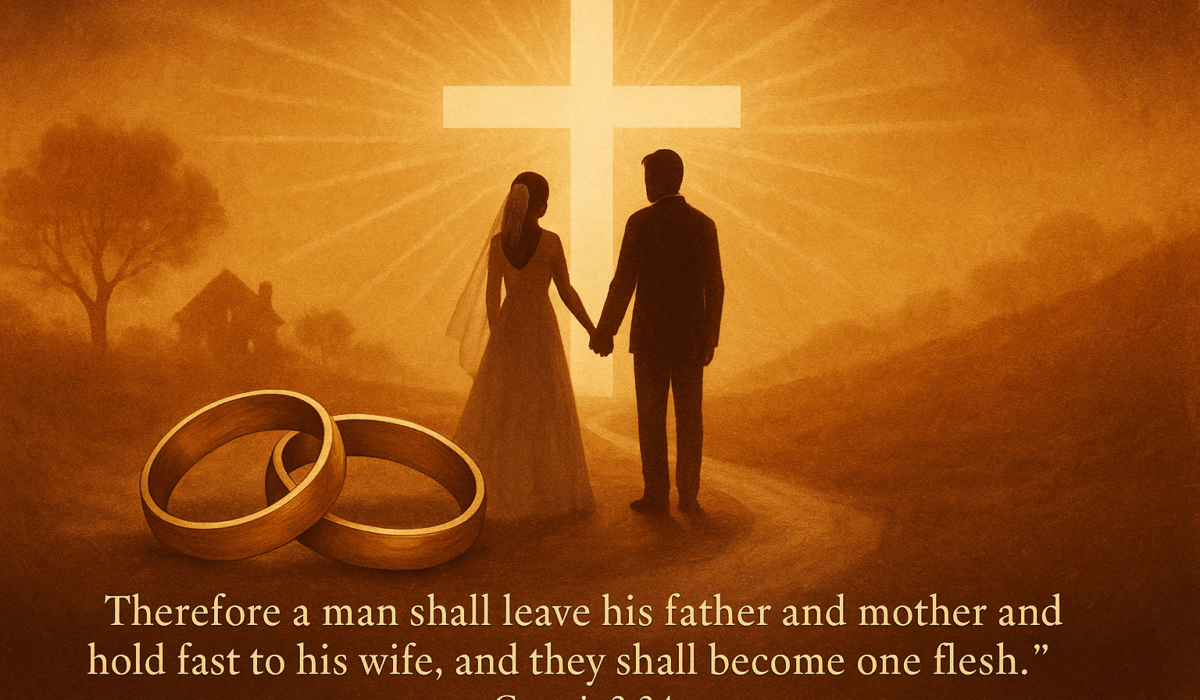
“Therefore shall a man leave his father and his mother, and shall cleave unto his wife: and they shall be one flesh.”

This passage is often quoted, but rarely understood in its full weight. While the verse addresses the man, the principle of leaving and cleaving applies equally to the woman. The man leaves his parents to initiate a new household. The woman, by marrying him, enters that household and leaves her own behind.

Marriage is not an arrangement of two individuals pursuing parallel dreams. It is the fusion of two lives into one household under one headship, not her father’s anymore, not her mother’s, not her pastor’s—but her husband’s.

“Wives, submit yourselves unto your own husbands, as unto the Lord.”Ephesians 5:22

Her loyalty is now exclusively to her husband. She has no spiritual, emotional, or relational ties that can override or compete with her submission to him.


2. A Severance Without Regret

The Biblical wife does not maintain dual allegiances. She is not torn between her husband’s leadership and her parents’ opinions. She is not divided between her husband’s vision and her girlfriends’ expectations. She is not emotionally tethered to a past life through social media, group chats, or nostalgia. She has cut the cord with the world—and she does not look back.

“Remember Lot’s wife.”Luke 17:32

Lot’s wife serves as a haunting warning. Though delivered from destruction, she looked back with longing to the world she was leaving—and was judged for it. In marriage, looking back at the old life is not harmless sentiment. It is rebellion in the heart. A wife who glances backward—toward old authority, old affections, or old habits—risks despising the new covenant she has entered.


3. Leaving Family: The Final Transfer of Headship

“Hearken, O daughter, and consider, and incline thine ear; forget also thine own people, and thy father’s house; So shall the king greatly desire thy beauty: for he is thy Lord; and worship thou him.”Psalm 45:10–11

This prophetic wedding Psalm pictures the bride leaving behind her father’s house to belong entirely to her lord—her husband. She is told to forget her people, to incline her ear to her new lord, and to offer him the loyalty of heart, body, and soul.

Modern women are raised to be emotionally attached to their parents, particularly their mothers, well into adulthood. But marriage is a transfer of authority and allegiance. A married woman who still runs to her parents for advice, sympathy, or protection is out of order. Her father is no longer her covering. Her mother is no longer her counselor. Her husband is now both leader and protector under God.


4. Leaving Friends and the World Behind

“Be not conformed to this world: but be ye transformed by the renewing of your mind…”Romans 12:2

Friendships from a woman’s past life—particularly with ungodly, unmarried, or feminist women—must be left behind Immediately and without exception. These relationships will become channels of rebellion, sowing doubt and dissatisfaction into the marriage. A wife united to her husband must guard the gates of influence and protect her affections.

“Evil communications corrupt good manners.”1 Corinthians 15:33

She does not “go out with the girls,” entertain worldly counsel, or seek emotional support outside the household. Her affections, concerns, and loyalties are reserved for her husband, her children, and her God. That is her new world.


5. One Flesh—One Life

“So then they are no more twain, but one flesh. What therefore God hath joined together, let not man put asunder.”Mark 10:8-9

Becoming “one flesh” is not poetic—it is ontological. A new organism is created in the covenant of marriage: the household. The woman is no longer her own. Her thoughts, her time, her body, her purpose—all belong to her husband. She has become him in covenantal unity, under his rule and protection.

“The wife hath not power of her own body, but the husband…”1 Corinthians 7:4

This is not slavery—it is sacred union. The feminist world cannot comprehend it. But in God’s design, the wife’s surrender is not dehumanization—it is glorification. She becomes a living picture of the Church, submitting to Christ.

“As the church is subject unto Christ, so let the wives be to their own husbands in every thing.”Ephesians 5:24


6. No Looking Back—Only Forward Together

Once married, a wife does not second-guess her obedience. She does not weigh her husband’s leadership against the opinions of others. She does not maintain back doors, backup plans or “escape” routes . Her heart is steady, her soul is aligned, and her eyes are fixed on the household’s future.

The moment a woman clings to the past, the marriage begins to fracture. But when she embraces her calling fully, cuts every tie that competes with her husband, and commits herself to building his name, the house becomes a fortress of peace and power.

“Her husband doth safely trust in her… She will do him good and not evil all the days of her life.”Proverbs 31:11-12

This is not popular. It is not easy. But it is the path of blessing.


7. Conclusion: A Holy Severing and a Holy Union

A woman who marries a Biblical husband does not merely add a role to her life—she is transplanted. She leaves her father’s house, her friendships, her comforts, her former authorities, and becomes one flesh with her husband, under Christ. This is not bondage—it is Biblical. It is not outdated—it is divine order.

She says, like Ruth:

“Whither thou goest, I will go; and where thou lodgest, I will lodge: thy people shall be my people, and thy God my God.”Ruth 1:16

No looking back. No divided heart. She is his. And in this sacred surrender, she finds her highest glory.

A Wife’s Role in Finding Her Husband Another Wife: A Biblical Case for Shared Stewardship

In a culture steeped in romantic individualism and emotional entitlement, the idea that a wife could — or should — be involved in finding another wife for her husband seems radical, even offensive. But when we return to the Bible, we discover a vision for family that is ordered, sacrificial, and aimed not at feelings and emotion but, fruitfulness and kingdom purpose.

This post will lay out a Biblical foundation for why a wife may not only support but even initiate the pursuit of another wife for her husband — not as a betrayal of her role, but as a fulfillment of it.


1. Polygyny in the Biblical Record: Not Condemned, but Regulated

The first step is acknowledging that polygyny (one man, multiple wives) is never condemned in Scripture regardless what you may have heard to the contrary. Abraham, Jacob, David, Solomon, and many others had multiple wives. While some situations led to strife, the Lord never outlawed the practice; instead, He gave laws to regulate it (see Exodus 21:10, Deuteronomy 21:15–17).

God is not the author of confusion (1 Cor. 14:33), and the presence of such relationships in His Word — including in the lineage of Christ cannot be dismissed simply because they are not currently “in style”. The Church has long tried to sweep this under the rug, but the Bible does not share that discomfort.


2. The Wife’s Role as a Helper and Keeper of the Household

Genesis 2:18 tells us the wife was created to be a helper fit for her husband. This is not a small task, it’s a sacred one. A godly wife is a builder of her household (Proverbs 14:1), and that includes discerning what her family needs to grow and thrive.

If a man is walking in righteousness, leading with strength, and bearing fruit in his work and leadership, the question becomes: Why wouldn’t a wise and godly wife desire to multiply that influence?

A woman who fears the Lord sees the bigger picture. She knows her husband’s strength is not just for her benefit, but for God’s glory.


3. An Example in Sarah: A Wife Who Gave Another Woman to Her Husband

Genesis 16 gives us a striking example: Sarai gave her maid Hagar to Abram to bear a child. While the result was complicated, it was Sarah’s idea. She saw her barrenness and sought to provide her husband with a son, and she was not condemned for this action.

Her motives were not perfect, but her initiative aligned with a foundational truth: a godly woman desires her husband’s name and legacy to continue. This isn’t weakness, it’s vision.


4. The Spirit of Selflessness in Biblical Marriage

Biblical love is not based on insecurity, jealousy, or possessiveness. First Corinthians 13 teaches us that love “does not envy,” “is not self-seeking,” and “rejoices in the truth.” A godly wife, confident in her place, understands that adding another woman is not a threat, it’s an act of expansion.

Just as Christ’s Bride (the Church) is not made of one person, but many, so too can a man’s household expand, ideally with the current wife/wives blessing and even involvement.


5. Unity and Order: A Wife as Gatekeeper, Not Gate Crasher

If a man simply adds a second wife without unity in his home, chaos can result. But when a first wife leads or participates in that process — helping to vet, disciple, and welcome a new wife into the family, there can be a greater chance of order, peace, and shared vision.

Rather than being left out, the first wife is honored with responsibility. She becomes not only a wife, but a matriarch, a Titus 2 woman who models maturity and sacrifice.


6. The Gospel Model: Multiplication Through Submission

The Gospel is a model of submission for the sake of fruit. Christ submitted to the Father. The Church submits to Christ. Husbands lay down their lives. Wives submit to their husbands, not because they are lesser, but because their obedience multiplies life.

In the same way, a wife’s willingness to open her home and heart to another woman, chosen with wisdom and prayer, can be a powerful testimony of Gospel love: not possessive, but sacrificial and abundant.


Conclusion: A Higher Vision for Marriage

This isn’t about competition or romantic indulgence. It’s about seeing marriage as mission, family as fruitfulness, and love as selfless.

A wife who encourages or even leads in seeking another godly woman for her husband isn’t abdicating her role, she is elevating it. She is thinking generationally. She is multiplying strength. She is trusting that God’s ways are higher than ours.

And in a world of broken homes and weak men, we need more women who are brave enough to build something bigger than themselves.


“A wise woman builds her house…” — Proverbs 14:1
“He who finds a wife finds a good thing and obtains favor from the Lord.” — Proverbs 18:22

Let us be women — and men — who pursue the favor of the Lord above the approval of man.

The Garments of Rebellion: Why Women Must Not Wear Pants

Clothing is not neutral. It is theology in textile. It proclaims order or defies it. It reflects reverence or rebellion. And in the long war against Biblical patriarchy, there is perhaps no more symbolic battlefield than the modern woman’s closet.

In this age of inversion—where men are weak and women are loud—our generation has forgotten even the most basic distinctions of God’s created order. One of the clearest? That a woman must not wear that which pertains to a man.

“The woman shall not wear that which pertaineth unto a man, neither shall a man put on a woman’s garment: for all that do so are abomination unto the Lord thy God.”
—Deuteronomy 22:5

This is not a suggestion. It is not cultural. It is not optional. It is a commandment from the mouth of Almighty God. And it still applies today.

The issue of women wearing pants is not about fashion. It is about headship, holiness, and health. It is about whether we will serve the Lord or follow the patterns of the pagan world. And the cost of ignoring it has been devastating—morally, spiritually, medically, and socially.

Let us walk through the evidence—Scriptural, historical, medical, and social—and let every woman who fears the Lord return to modesty, and every man who loves his household restore order at the gate.


I. Scriptural Foundation: God Commands Distinction

The Biblical worldview is built on order and separation.

God separates light from darkness (Genesis 1:4).
He separates the waters from the firmament (Genesis 1:6).
He separates the clean from the unclean (Leviticus 10:10).
He separates Israel from the nations (Leviticus 20:24).
And He separates male from female—in role, responsibility, and appearance.

Deuteronomy 22:5 does not mince words: for a woman to wear what pertains to a man is abomination. Not simply disobedience—abomination. The Hebrew word used is to‘ebah, the same word used for witchcraft, homosexuality, and idolatry.

This means that cross-dressing is not just inappropriate—it is profane.

Nowhere in Scripture are pants prohibited. That is not the argument. The argument is this: pants were historically male attire, and women began wearing them not from righteousness, but from rebellion.

Thus, when women began donning trousers, it was not to honor God, but to cast off His design.


II. Historical Dress: The Distinction Was Clear

For over 9,000 years of human history, men and women dressed differently. Always.

  • In ancient Israel, men wore tunics girded with belts for mobility, and women wore long, flowing robes distinct in cut and modesty.
  • In Greco-Roman cultures, men wore shorter tunics for labor and travel, while women wore longer stolas and peplos, modest and covering.
  • In Medieval Christendom, men wore hose and breeches, women wore long gowns.
  • In Victorian and Reformation-era Europe, a woman in trousers would have been regarded as mentally ill, immoral, or both.

Even in the early American colonies, modesty and gender distinction were unquestioned. The Puritans, the Baptists, and the early settlers knew that attire was theological. A woman in pants would be rebuked or excommunicated.

The Rise of Pants on Women: A History of Rebellion

It wasn’t until the mid-1800s that women first publicly began wearing trousers—through the influence of feminists and radicals.

  • Amelia Bloomer, a feminist activist, promoted the “bloomer costume”—pants for women—explicitly to break gender norms.
  • The suffragette movement and first-wave feminists used male clothing as a symbolic protest against male authority.
  • By the 1940s, during World War II, women wore trousers in factories out of necessity—but many kept them post-war.
  • By the 1960s, with the sexual revolution, women’s pants became a symbol of liberation from patriarchy, modesty, and Christian morality.

Make no mistake: the acceptance of women wearing pants was part of a broader rebellion against Biblical womanhood. It paralleled the rise of abortion, birth control, sexual promiscuity, divorce, and feminism.


III. Christian Testimony: The Church Once Stood Firm

Until the late 20th century, most Christian denominations opposed women in pants.

  • The Methodists, in early America, taught that women wearing “men’s garments” brought shame upon the church.
  • Southern Baptists in the 1950s preached that modesty and femininity excluded pants for women.
  • Pentecostals and Holiness movements retained skirts-only standards well into the 1990s, citing Deuteronomy 22:5 and modesty concerns.

Why did they care? Because clothing is a signal of submission to God’s order. When a woman dressed like a man, she was not just imitating his fashion—she was usurping his role.

The decay of modest dress paralleled the decay of the Christian household. When women dressed like men, they soon began to live like men—leaving the home, rejecting headship, avoiding motherhood, and abandoning submission.


IV. Modesty and Covering: The Role of Garments in Holiness

In Genesis 3:21, after the fall, God made garments of skins to clothe Adam and Eve. The Hebrew word kĕthoneth refers to a tunic covering the shoulders to the knees at minimum.

This was not fashion—it was a spiritual response to sin.

Throughout Scripture, garments are used to signal:

  • Holiness vs. uncleanness (Leviticus 13:47)
  • Office and authority (Exodus 28:2, priestly garments)
  • Shame or honor (Isaiah 47:2-3)

Pants—by their form-fitting structure—expose, rather than conceal, especially on the female form. They draw attention to the thighs, hips, and private areas—exactly what Biblical modesty seeks to conceal, not emphasize.

Isaiah 47:2–3 rebukes Babylon:
“Take the millstones, and grind meal: uncover thy locks, make bare the leg, uncover the thigh… Thy nakedness shall be uncovered, yea, thy shame shall be seen.”

God equates uncovering the thigh with shame. Pants, by their design, outline the thigh. This is not modesty. It is provocation. Even when paired with long tops, the core issue remains: pants are not feminine nor modest.


V. Health Concerns: Medical Risks of Pants for Women

Beyond the Scriptural and symbolic concerns, modern medical research shows that pants—especially tight ones—are harmful to female health.

1. Bacterial Vaginosis (BV) and UTIs

  • Tight pants restrict airflow and trap moisture—creating a warm, dark, damp environment ideal for bacterial overgrowth.
  • Studies have shown a correlation between wearing pants and 300%-600% increased risk of bacterial vaginosis, yeast infections, and urinary tract infections (UTIs).
  • According to the Journal of Lower Genital Tract Disease, women who wore tight jeans or pants for over 4 hours daily had significantly higher rates of BV and UTIs.

2. Polycystic Ovary Syndrome (PCOS) and Hormonal Disruption

While PCOS is primarily a hormonal condition, tight clothing—especially around the waist and hips—will exacerbate symptoms by:

  • Disrupting circulation to reproductive organs
  • Increasing cortisol and insulin sensitivity
  • Restricting lymphatic drainage

The British Journal of Obstetrics and Gynaecology noted that waist-restrictive clothing increased ovarian stress in women with pre-existing endocrine disorders.

3. Infertility and Miscarriage Risk

Chronic pressure around the pelvic area has been linked to:

  • Reduced blood flow to the uterus
  • Thermal damage to reproductive organs
  • Increased miscarriage risk, especially in early gestation

Dr. Niels Lauersen, author of “It’s Your Body”, reported that women wearing tight pants and synthetic undergarments experienced higher rates of infertility and irregular cycles.

4. Skin and Nerve Damage

  • Tight pants can cause “meralgia paresthetica,” a nerve compression condition that leads to numbness, tingling, and burning in the thighs.
  • They also increase the likelihood of folliculitis, ingrown hairs, and skin fungal infections, especially in hot or humid climates.

In short: pants were never designed for the female body. They compress, restrict, and expose, exactly the opposite of God’s design for a woman’s covering.


VI. Psychological and Social Impact: Clothing Shapes Identity

Psychologists refer to “enclothed cognition”—the idea that clothing not only expresses but shapes how we think, feel, and behave.

When a woman wears pants:

  • She often feels more aggressive and assertive
  • She adopts a masculine posture and stride
  • She is more likely to challenge male authority
  • She is treated differently—less like a nurturer, more like a peer or competitor

This is not an accident. It’s by design. Feminists embraced pants because they understood that clothing alters self-perception. The woman in a dress moves more gently, behaves more modestly, and signals submission—whether she realizes it or not.

When we clothe our daughters in pants, we teach them that gender is flexible, submission is optional, and order is negotiable. We sabotage their future before they even understand their calling.


VII. The Way Forward: Return to Distinct, Modest, Feminine Dress

We are not simply calling women to wear skirts. We are calling them to embrace:

  • God’s created order
  • Visible submission to headship
  • Reverence in attire
  • Health and holiness

A Biblical woman’s clothing should:

  • Cover her from shoulder to the ankle
  • Avoid tight, sheer, or form-exposing material
  • Distinguish her clearly from male attire
  • Proclaim modesty, meekness, and dignity

“In like manner also, that women adorn themselves in modest apparel, with shamefacedness and sobriety…”
—1 Timothy 2:9

Godly women are not ashamed of modesty. They rejoice in it. They know that their beauty is not in the outline of their thighs, but in the hidden man of the heart (1 Peter 3:4).


VIII. Fathers and Husbands: You Will Give Account

Men, this begins with you. Your wife and daughters are not fashion experiments. They are your household, your responsibility, your glory.

You will stand before God for how they dress. You are to teach, protect, and lead. If your wife is wearing leggings in public, your failure is visible to the world. If your daughter is wearing tight jeans, you are permitting disorder.

It is time to take back authority. To speak plainly. To restore the ancient standards.

Let your house reflect heaven, not Hollywood.


IX. Common Objections Answered

“But pants are modest if they’re loose!”
Not if they pertain to a man. Deuteronomy 22:5 does not say “immodest clothing”—it says man’s clothing. Even loose pants confuse the gender distinction.

“It’s a cultural thing.”
No. It is a creation thing. The command in Deuteronomy is rooted in God’s design of male and female. Culture cannot override creation.

“God looks at the heart.”
Yes—and the heart that loves God obeys His commands, including in outward dress.

“But I feel more comfortable in pants!”
So did the feminists. So do rebels. Comfort is not the standard—obedience is.


X. Let the Daughters Be Clothed in Glory

We do not call women to wear skirts because of nostalgia. We call them because Scripture commands distinction, history affirms modesty, and health demands covering.

The rebellion of pants must end.

Let the daughters of Zion be known by:

  • Their humility
  • Their holiness
  • Their honor
  • And their visible submission to God’s order

Let the wives of Christian men walk in dignity, not in defiance. Let the households of the righteous proclaim by their clothing: We will serve the Lord.

And let the world see that in a sea of confusion and compromise, there remains a remnant, unashamed, unbending, and unafraid.

Let the skirts flow.
Let the thighs be covered.
Let the husbands lead.
Let the daughters rejoice.
Let modesty return.
Let the Great Order rise again!

Soli Deo Gloria.

Is God a Globalist or a Nationalist?

Is God a Globalist or a Nationalist? I’m sure most modern Churches and Christians would contend that he is a Globalist, that he does not see race/creed/nation/culture etc. If so then why did he create these defining characteristics?

If you have children, family or even close relatives that live with you, it’s fair to assume you love them more than you love relatives other non-related families.

That doesn’t mean you hate other families, does it? You can have “empathy, compassion, and understanding” for your friends, neighbors and even total strangers without having them live in your house.

That’s because it’s your house. You may let people come in from time to time, as guests, or maybe even for an extended stay if they are suffering in some way, you may even allow them to join your family on a long term basis provided certain terms are set and boundaries established. But it is still your house, not theirs.

It’s the same with nations. Nations are people, not governments, just as a family is the people of the household, not the household rules. A Nation is your “Extended” family.  The word Nation is literally in reference to the nationality of it’s people.

A nation like America can have “empathy, compassion, and understanding” for other nations, particularly if those nations are suffering in some way, but the “house” still belongs to the Americans. “Nationalism” requires no hatred for other nations. It just clarifies who owns the house. The Indians own India, the Japanese own Japan, the Africans own Africa and the Americans own America.

But God is certainly no globalist. Surely He loves all the people of the globe, for He created them all. He loves the genuine diversity that exists in the variety of cultures, languages, and skin colors that He created to be different on purpose. But in terms of how those many diverse nations relate to each other, God is in fact a nationalist.

That does not mean we can sign God up for our political parties or pet projects. Far from it. It merely means from beginning to end, His Word speaks of the nations as nations, calls them to serve Him as nations, sets their borders, provides for the protection of those borders, and for the ultimate healing of those nations.

He clearly acts to disrupt globalist projects like the Tower of Babel, where the nations tried to live together in a globalist/multicultural empire. Against this globalist attempt, God scattered them into distinct nations with their own distinct cultures and languages.

Do we think ourselves wiser than God? He says explicitly in the Bible that He created diversity out of unity (the nations from the blood of one man), and that He sets the boundaries or borders where they are to live. Why? So that they will be better able to seek after Him and find Him:

“God…has made from one blood every nation of men to dwell on all the face of the earth, and has determined their pre-appointed times and the boundaries of their dwellings, so that they should seek the Lord, in the hope that they might grope for Him and find Him, though He is not far from each one of us….” (Acts 17:26–27)

Globalism/multiculturalism is clearly not God’s plan, insisting that all these different people live together in the same house (nation), thus destroying the beauty of all their individual nations, cultures and amazing diversity. The result is the opposite of what God said would happen when we respect national borders: the nations find it much harder to seek and find God.

So this begs the question, what nationality is America? we are ethnically, linguistically, historically, culturally, and religiously European. For the purposes of this writing Jesus was from Israel, to be sure, which is not in Europe. He is not a European (nor is He African). He is what most would call Middle Eastern. He is an Israelite, a son of David and Abraham. We are also a Christian Nation. the New Testament has a surprisingly European foundation. It’s written, not in Hebrew, but in a European language (Greek). The Son of God appeared in the midst of a European empire, and the Gospel was carried on European roads and in European ships. Paul was redirected from further eastward missionary activity by a vision of a European man. And the one man who wrote more of the New Testament than any other was Luke, a European.


These facts give us no cause to boast, but rather to be humble and thankful. Historically, so far, “the faith is Europe, and Europe is the faith,” as Hilaire Belloc put it. We should harbor no animosity toward people who look, live, or speak differently than us. We should pray for peace among all the nations, and for the love and truth of Christ to bring healing to every people on the face of the earth. We should treasure the unique cultures of every people and want them to be protected and preserved as God created them.

But again, our primary focus should be our own people and our own nation, as that is our duty to our families, children, neighbors and to God.

Therefore, Globalism/Multiculturalism, among other things, hinders the work of the Great Commission and proves that God is in fact a Nationalist!

Is it Acceptable for Christians to Pierce Their Bodies or Get Tattoos?

“Ye shall not make any cuttings in your flesh for the dead, nor print any marks upon you: I am the LORD.
Leviticus 19:28

We live in a culture obsessed with the body, with altering it, decorating it, mutilating it. The modern man wants to proclaim ownership of himself by etching ink into his skin and pushing metal through his flesh. The modern woman, deceived by vanity and rebellion, treats her body like a billboard for self-expression rather than a temple for God’s glory. The image of God has become a canvas for self-worship.

But what saith the Lord?

In an age when rebellion parades as freedom and defilement is called art, the Christian must once again ask: What does God say? What is righteous? What is holy? For those who walk in The Great Order, the answer must be clear, not according to trends, feelings, or peer approval, but rooted in the eternal Word of God.


I. God’s Prohibition in Leviticus – A Matter of Holiness, Not Just Ceremony

The foundational text is clear:

“Ye shall not make any cuttings in your flesh for the dead, nor print any marks upon you: I am the LORD.”
Leviticus 19:28

This command was not arbitrary. It was given to separate the people of God from the surrounding pagan nations. The Canaanites, Egyptians, and other heathen peoples engaged in self-cutting and tattooing as acts of mourning, idol worship, tribal identification, and magical ritual. Tattoos and body piercings were, in origin, sacrificial and religious acts, outward signs of allegiance to false gods.

The people of Israel were called out, to be distinct. The commandment was not merely hygienic or cultural. It was holy. It was a declaration: You belong to YHWH, not Baal. You are set apart. You are mine.

Many modern Christians hastily dismiss this as “Old Testament law” with no relevance today. But they do so inconsistently. For the very same chapter (Leviticus 19) also condemns witchcraft (v. 26), prostitution (v. 29), and dishonoring the elderly (v. 32). Are these no longer sins? Shall we also affirm child prostitution or necromancy under the banner of “freedom in Christ”?

Some laws in the Torah were ceremonial and tied to temple practices, but others reflected unchanging moral principles rooted in the nature of God. Leviticus 19:28 falls into the latter. It reveals a divine standard: that the body is sacred and must not be defaced like those of the heathen.


II. The New Testament Confirms the Principle: The Body Is Not Our Own

“What? know ye not that your body is the temple of the Holy Ghost which is in you, which ye have of God, and ye are not your own?
For ye are bought with a price: therefore glorify God in your body, and in your spirit, which are God’s.”
1 Corinthians 6:19–20

This verse is not metaphorical poetry, it is doctrine. The believer has been purchased. Redeemed. His body is now a vessel of the Holy Spirit. A consecrated structure. It is not a personal art project; it is a sacred temple.

If we understand the weight of Paul’s words, the gravity of defiling the temple becomes clear. When Jesus drove out the moneychangers from the temple, it was not a small thing. He fashioned a whip. He overturned tables. He drove them out with righteous fury. Shall we now bring tattoo needles and nose rings into the temple of our bodies, claiming “Christian liberty”?

To glorify God with our bodies means we must not deface them. Solomon’s temple was not defiled with carvings of dragons and skulls. It was adorned with gold, with beauty, with order, all by God’s command. Likewise, our bodies are to reflect His glory, not our rebellion.


III. The Pagan Roots of Tattoos and Piercings

Historical research reveals that tattoos and body piercings have long been associated with idolatry, tribal paganism, and spiritual bondage.

  • In ancient Egypt, tattoos were linked to goddess worship, particularly Isis. Women often tattooed themselves as symbols of fertility rites.
  • In Canaanite culture, markings were made on the body to honor the dead or as initiation into pagan mysteries.
  • Roman soldiers tattooed themselves to signify loyalty to Caesar, a false god of the state.
  • In Polynesian tribal religion, tattooing was a rite of passage into adulthood, manhood, or spiritual transformation.
  • Hindu practices often include nose piercings for women, connected to marriage and spiritual significance under their gods.

The association between tattoos and paganism is not incidental. It is consistent. Throughout the centuries, the marks placed on the body were declarations of spiritual allegiance. What man inscribes on his body reveals what master he serves.

Is it any wonder that in the Bible, God’s people are forbidden from such markings, while the servants of Satan are described in Revelation as bearing the “mark of the beast”?

“And he causeth all, both small and great, rich and poor, free and bond, to receive a mark in their right hand, or in their foreheads.”
Revelation 13:16


IV. Scripture Calls Us to Be Set Apart

“As obedient children, not fashioning yourselves according to the former lusts in your ignorance:
But as he which hath called you is holy, so be ye holy in all manner of conversation;
Because it is written, Be ye holy; for I am holy.”
1 Peter 1:14–16

“Abstain from all appearance of evil.”
1 Thessalonians 5:22

“Wherefore come out from among them, and be ye separate, saith the Lord, and touch not the unclean thing; and I will receive you.”
2 Corinthians 6:17

Holiness is not simply inward. It is visible. Observable. Tangible. A Christian’s walk should reflect God’s order — and that includes his attire, his speech, his habits, and yes, even his body.

When you see a tattooed body, does it cry out “set apart” or does it whisper “blending in”?

Let’s be honest. The modern tattoo culture is not driven by piety. It is driven by rebellion, vanity, and worldliness. It is associated with rock stars, gang members, feminists, bikers, and those who boast in sin. Shall we, the holy nation, the peculiar people, the royal priesthood, adorn ourselves like them?


V. The Deception of “Christian Tattoos”

Some will say, “But my tattoo is a cross!” or “It’s a verse!” or “It’s meant to honor God!”

The question is not what the tattoo says. The question is whether the practice itself honors the God who forbids it.

Would a man honor the King by disobeying His law? Would a priest paint graffiti on the temple wall and justify it by claiming it says “God is love”? A tattoo of Scripture is still rebellion if God has commanded us not to mark our bodies.

Furthermore, we must not forget that Satan often disguises evil as light.

“And no marvel; for Satan himself is transformed into an angel of light.”
2 Corinthians 11:14

“Christian tattoos” are often just a baptized version of worldliness. A sanctified mask for self-expression. But righteousness is not about rebranding the ways of the world, it’s about rejecting them.


VI. The Problem of Piercings

While some argue that earrings or piercings are culturally neutral or even biblical, pointing to references of earrings in Genesis or Exodus, we must make a key distinction.

In Scripture, earrings are often:

  • Given as spoil (Genesis 35:4; Exodus 32:2),
  • Associated with idol worship (Judges 8:24–27),
  • Or connected with feminine adornment (Ezekiel 16:12).

They are never commanded, and they are never treated as holy or righteous. In fact, their connection with idolatry should give us pause.

More importantly, in our current age, the proliferation of piercings, in ears, noses, lips, navels, and beyond, is a sign of cultural breakdown and gender confusion. Men now wear earrings. Women pierce their faces in grotesque ways. The lines between male and female blur, and the image of God is vandalized.

For the man of God walking in the Great Order, and for the woman of God pursuing meekness and modesty, piercings are not a mark of virtue. They are marks of conformity to a dying and decadent world.


VII. Forgiveness and Restoration

What if you already have tattoos or piercings? Is all hope lost? God forbid.

“If we confess our sins, he is faithful and just to forgive us our sins, and to cleanse us from all unrighteousness.”
1 John 1:9

The blood of Christ cleanses even the defiled temple. He forgives. He renews. But forgiveness is not a license to sin again. We do not presume upon grace.

Some tattoos cannot be removed, but they can be covered. Others may be a testimony, not of pride, but of repentance. The key is this: Do not justify the sin. Acknowledge it. Reject it. And do not repeat it.


VIII. Reason and Creation Affirm God’s Design

Let us conclude with simple reasoning and righteous deduction.

  • The body is the creation of God.
  • The body is the image of God.
  • The body is the temple of God.
  • The body is to be set apart from the world.

Therefore, it follows:

The Christian has no liberty to mutilate, mark, or desecrate his body according to his own whims or worldly fashion.

God did not make a mistake in your design. Your skin does not need improvement. As one Jewish rabbi once observed:

“No matter how well considered, a tattoo is the result of a short-term decision to decorate the body forever. What hubris to imagine that any of us, as individuals, can improve artistically on the original design of the Lord.”

Indeed. It is hubris. It is rebellion. It is a denial of God’s sufficiency.


IX. Let the People of God Be Holy

Let this be the cry of the remnant: We will not be marked by the world. We will not wear the badges of Babylon. We will be holy, consecrated, unpolluted.

Let the pagans ink their flesh. Let the rebels pierce their faces. Let the feminists defy God with rainbow tattoos. But let the people of the Great Order glorify God in body and spirit, which are His.

“Be ye not conformed to this world: but be ye transformed by the renewing of your mind…”
Romans 12:2


Conclusion:
Christians should not pierce their bodies or get tattoos. The weight of Scripture, the testimony of history, and the witness of creation all declare the same message: Your body is not your own. It is the Lord’s. Keep it holy.

Let us fear God. Let us obey His Word. Let us glorify Him with every fiber of our being, ink-free, metal-free, and set apart.

Soli Deo Gloria.
Let the Great Order rise.

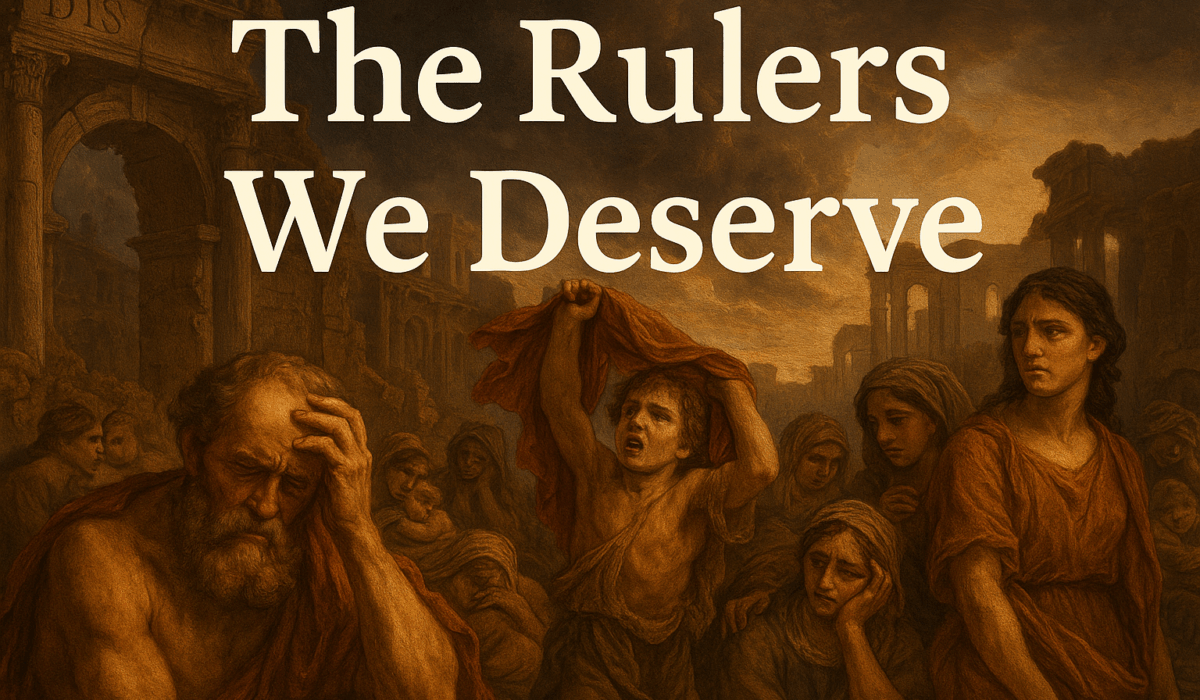
The Rulers We Deserve

A Call to Repentance, Reformation, and Household Dominion

By Lord Redbeard


I. A Nation in Decline Reaps What It Has Sown

Scripture does not stutter: we are governed not merely by what we choose, but by what we deserve. We are ruled in accordance with our collective obedience or rebellion. God is not mocked—for whatsoever a man soweth, that shall he also reap (Galatians 6:7). The condition of civil government in a nation is a spiritual thermometer of the people’s moral temperature. We are not victims of tyranny—we are under judgment. And the state of modern America proves it without question.

We are plagued by corruption in high places because we have allowed corruption in our hearts. Our laws reflect our idols. Our media mirrors our lusts. Our educational system teaches our rebellion. Our entertainment celebrates our abominations. And our rulers—confused, effeminate, godless, or greedy—are a visible judgment from God upon a people who have cast off His Word.

This is not unprecedented. In Isaiah 3, the Lord describes the condition of Judah just before He brings them into judgment. The people have forsaken His commandments. They boast in sin. They neglect the poor. They glorify wealth, vanity, and status. And what is God’s response? He removes the stabilizing structures of society.

“And I will give children to be their princes, and babes shall rule over them… As for my people, children are their oppressors, and women rule over them.”
— Isaiah 3:4, 12 KJV

The result is predictable: disorder, division, and eventual destruction. When a nation abandons righteousness, God does not simply allow decline—He ordains it as punishment. And in His justice, He gives the people the rulers they deserve.


II. When God Judges a Nation, He Starts with Leadership

God does not need to destroy a nation with fire from heaven. One of His most terrifying judgments is the removal of wise and righteous leadership. He withdraws His hand of protection and guidance, and in their place rise up fools, children, and women—those unfit to rule.

“Behold, the Lord, the LORD of hosts, doth take away from Jerusalem and from Judah the stay and the staff… the mighty man, and the man of war, the judge, and the prophet… the captain of fifty, and the honourable man…”
— Isaiah 3:1-3 KJV

These are not merely unfortunate political developments. These are divine removals. God strips a rebellious nation of its protectors and providers. Consider what has happened in modern America:

  • Our mighty men are removed from the battlefield. Our military is demoralized, not feared. Once feared by our enemies, it is now mocked, weakened by social engineering and political agendas.
  • Our judges are blind. They no longer uphold God’s justice but rewrite law to accommodate wickedness.
  • Our prophets preach smooth lies. Modern pastors no longer cry out against sin but market feel-good spirituality to itching ears.
  • Our craftsmen are few. Tradesmen, artisans, and men of skill have been replaced by consumers and office drones. Masculine labor is despised.
  • Our leaders are childish, emotional, and unpredictable. Politics is theater. Governance is chaos. Women and children now rule over us—and the people cheer.

This is judgment. Not political misfortune. Judgment.

God gives a nation leaders who reflect the hearts of the people. We have demanded comfort over courage, peace over principle, prosperity over piety. And now we reap the bitter harvest. We asked for Caesar, and we got clowns. We demanded equality, and we were given incompetence.

We are ruled by our own reflections. And until we repent, we will be ruled by ruin.


III. The Faces of Our Rebellion Are Public and Proud

The collapse of righteous leadership is not the root—it is the fruit. The root is national rebellion. And in our time, it is not a hidden rebellion. It is public, proud, and paraded.

“The shew of their countenance doth witness against them; and they declare their sin as Sodom, they hide it not. Woe unto their soul!”
— Isaiah 3:9 KJV

Once, sin brought shame. Now, it brings applause. Our culture celebrates abortion as a human right, sodomy as virtue, feminism as freedom, and rebellion as self-expression. We call evil good and good evil. We have exchanged God’s moral order for moral anarchy.

Our parades celebrate abomination. Our schools teach confusion. Our corporations reward perversion. And the church, instead of resisting, has largely joined the rebellion.

The Lord says, “Woe unto their soul!”—because the destruction they deserve is the destruction they will get.

This is why the righteous suffer alongside the wicked in times of judgment. Because the people, as a whole, are lawless. The covenant has been broken. And even among God’s people, repentance is rare. We lament wicked rulers, but we tolerate wickedness in our homes. We weep over ungodly laws, but we permit ungodly media, ungodly friendships, ungodly habits.

We are not victims of political misfortune. We are under righteous wrath.


IV. The Fall of Feminine Culture and the Curse of Female Rule

Isaiah speaks not only to the men of Judah, but to the women—and he does not mince words.

“Because the daughters of Zion are haughty, and walk with stretched forth necks and wanton eyes… Therefore the Lord will smite with a scab the crown of the head.”
— Isaiah 3:16-17 KJV

Rarely does God speak judgment directly to the women. But when He does, it is because their influence has become culturally destructive. The women of Judah, like the women of modern America, are steeped in vanity, seduction, consumerism, and self-worship. They lead their families, not toward God, but toward destruction.

This is not about voting or office-holding—it is about influence. Women, by nature, shape culture through fashion, tone, language, and domestic presence. When that influence becomes rebellious and sensual, the entire society follows. Just look at today:

  • Women flaunt their nakedness on social media and call it empowerment.
  • Feminists reject marriage, children, and submission to pursue careers, fame, and fornication.
  • Mothers abandon their homes for vanity, chasing influence rather than godly offspring.
  • Immodesty is a billion-dollar industry.
  • Men have become spineless, enslaved to the approval of harlots.

And the judgment?

“Women rule over them.” — Isaiah 3:12

This is not progress. It is judgment. The rise of female leadership in society is a sign that the men have abdicated, and God has cursed the land. It is not a blessing to have a female ruler—it is a disgrace to the men.

We must return to God’s order: men as heads, women as helpmeets, children as disciples. Until then, disorder will increase. And judgment will not relent.

V. What Then Shall the Righteous Do?

In the midst of judgment, God does not leave the faithful without hope.

“Say ye to the righteous, that it shall be well with him: for they shall eat the fruit of their doings.” — Isaiah 3:10 KJV

Even as the nation collapses, the righteous have a sure promise: they will be preserved. Their homes may be surrounded by chaos, but inside their walls there is peace. Their barns may not overflow, but their children will be taught of the Lord. Their influence may not be on television, but their legacy will endure for generations.

Righteousness always bears fruit. Always.

The faithful remnant must not lose heart. In times of judgment, they are not called to despair, but to build—to plant trees for their grandchildren, to dig deep wells of Scripture and truth, to labor in unseen places that the Lord might be glorified and future generations secured.

The patriarch must not concern himself with the presidency more than with his own table. The wife must not long for celebrity when she has been given the sacred task of shaping immortal souls. The children must not seek worldly popularity, but wisdom and holiness.

Faithfulness is resistance. Obedience is rebellion against the world. In an age of collapse, righteousness is a weapon.


VI. The Household: The Frontline of Resistance

The nation will not be saved by elections, protests, or political revolutions. It will be saved—if it is to be saved at all—by the reformation of households.

The home is where dominion begins. Before there can be righteous rulers in the land, there must be righteous rulers in the home. God is not looking for better ballots; He is looking for better fathers.

“Except the Lord build the house, they labour in vain that build it.” — Psalm 127:1

If we desire national restoration, we must return to God’s household model:

  • The father is the head: provider, protector, and priest. He governs with strength and wisdom.
  • The wives submit joyfully, serve diligently, and raise the next generation with excellence and virtue.
  • The children are trained in obedience, industry, worship, and responsibility.
  • The home is a miniature kingdom—a domain of righteousness, structure, and sacred order.

This is why feminism and statism have worked so hard to destroy the household. They know what many Christians have forgotten: he who controls the family controls the future.

It is time for fathers to rise again. Start by reclaiming what is yours:

  • Remove your children from government schools.
  • Lead family worship daily.
  • Take dominion through property, business, and legacy.
  • Train your sons to lead and your daughters to build.
  • Stop outsourcing what God commanded you to do.

The nation will not change until the men of God reclaim headship in their homes.


VII. What About the Government? What About Reform?

It is right to grieve over the condition of our nation. It is right to mourn the corruption, the wicked laws, the godless judges, the unjust rulers. But we must not be deceived into thinking that government reform can save us.

God controls rulers.

“By Me kings reign, and princes decree justice.” — Proverbs 8:15
“He removeth kings, and setteth up kings.” — Daniel 2:21

If we want better government, we must become better people. If we want righteous rulers, we must raise them.

When Israel demanded a king, God gave them one—not as a blessing, but as a judgment.

“They have not rejected thee, but they have rejected Me, that I should not reign over them.” — 1 Samuel 8:7

We must not ask for righteous government while rejecting God’s reign in our homes, churches, and communities. The irony is deep: we demand Christian presidents while refusing to rule our own children. We pray for godly laws while tolerating ungodliness in our own hearts.

God is not mocked. If we will not submit to His rule, He will give us tyrants. And until we repent, we will be ruled by the very sins we celebrated.


VIII. Return to God, Rebuild the Nation

The path back is not easy, but it is clear.

“If My people, which are called by My name, shall humble themselves, and pray, and seek My face, and turn from their wicked ways…” — 2 Chronicles 7:14

This is not a sentimental verse—it is a divine blueprint.

  • Humble yourselves — Reject pride, self-righteousness, and entitlement.
  • Pray — Not weak, emotional platitudes, but strong, reverent, Scripture-saturated prayer.
  • Seek His face — Return to His Word, His law, His will.
  • Turn from wicked ways — Repent. Break off your sins. Cleanse your house. Discipline your family.

Then—and only then—will He hear, forgive, and heal.

This means turning away from the idols of convenience. No more excuses. No more deflection. Reformation is costly. Repentance is painful. But restoration is impossible without them.

We must rebuild the nation like Nehemiah rebuilt the wall:

  1. Each family builds their section.
  2. Each man labors with a sword on his side.
  3. The people pray while they work.

This is how Jerusalem was rebuilt. This is how we must rebuild: family by family, household by household.


IX. Conclusion: We Deserve Our Rulers—But We Can Raise Up Better Ones

We deserve the rulers we have. We deserve godless policies, unjust courts, perverse education, and incompetent officials. We deserve female rule, effeminate pastors, and degenerate leaders. Why? Because we abandoned the covenant. We rejected the King of Kings. We made gods of ourselves and idols of our pleasures.

But all is not lost.

God is still on His throne. His Word is still true. His promises still stand.

“And they that shall be of thee shall build the old waste places: thou shalt raise up the foundations of many generations.” — Isaiah 58:12

You can begin today. Right now. Reclaim your household. Restore the fear of the Lord. Train your children in righteousness. Multiply. Establish dominion. Build. Teach. Reform.

And the day will come when God will raise up men of courage, wisdom, and justice—because they were formed by fathers who feared the Lord and ruled well.

Let it begin with you.
Let it begin with your home.
Let the patriarchs rise.

The Duties of a Christian Wife: Her High Calling in the Great Order

In an age of confusion, rebellion, and moral decay, there is no calling more despised than that of the Christian wife. The world mocks her submission, ridicules her obedience, and scorns her devotion to home and husband. Yet heaven smiles upon her. For while feminists rant and career women crumble, she quietly builds a kingdom from her kitchen table.

She is not oppressed – she is exalted.
She is not silenced – she is sanctified.
She is not enslaved – she is set apart.

A Christian wife is not merely a helper. She is a house-builder, a covenant-keeper, a cornerstone of generational blessing. Her duties are not the result of cultural conditioning, but of God’s eternal decree. And if we are to restore the Great Order, we must restore the honor, dignity, and gravity of the wife’s sacred duties.

Let us now walk the ancient paths and examine what Scripture, history, and reason say about the glorious office of wifehood under God.


I. Her Position: Under Authority, Not Underfoot

The first duty of the Christian wife is to embrace her position under headship.

“But I would have you know, that the head of every man is Christ; and the head of the woman is the man…”
—1 Corinthians 11:3

This is not chauvinism, it is creational order. The wife is not the head of her own life. She is under her husband, just as he is under Christ.

Submission is not passive. It is active obedience. It means yielding, following, honoring, and supporting the man God has given her. It is a visible reflection of the Church’s relationship to Christ:

“Wives, submit yourselves unto your own husbands, as unto the Lord.”
—Ephesians 5:22

To resist her husband’s authority is to resist Christ. To obey him is to honor heaven. This is not blind servitude, it is intelligent devotion to God’s hierarchy.


II. Her Purpose: Created for the Man

The Christian wife must understand her creation purpose.

“Neither was the man created for the woman; but the woman for the man.”
—1 Corinthians 11:9

Eve was made to complete Adam’s dominion, not to compete with it. Her very existence is a help to her husband’s mission. Her home, body, time, and gifts are not her own. They are to be offered daily in support of her lord, her husband.

This counters every message of the modern world. Feminism preaches female independence, but the Bible teaches female interdependence, a woman exists to glorify her head, to multiply his legacy, to help him fulfill his calling.

Her duty is to ask: What is my husband’s mission, and how can I assist it with all diligence?


III. Her Attitude: Meekness and Quiet Strength

The Christian wife’s duty is not only external submission but internal disposition.

“Even as Sara obeyed Abraham, calling him lord: whose daughters ye are, as long as ye do well, and are not afraid with any amazement.” —1 Peter 3:6

True obedience flows from the heart. A nagging, bitter, or anxious woman may perform tasks but defile her home. The Scripture praises a woman who is meek, gentle, quiet, and full of trust in God.

This meekness is not weakness. It is self-governed strength. The world encourages women to be loud, angry, and assertive. But God blesses the woman who speaks softly, works quietly, and bears hardship with grace.

Such a woman is a balm to her husband’s soul and a pillar to her home.


IV. Her Labor: Keeper at Home

Perhaps no duty is more countercultural today than the wife’s calling to work within the home.

“That they may teach the young women to be sober, to love their husbands, to love their children, to be discreet, chaste, keepers at home…Titus 2:4–5

A Christian wife is not a corporate assistant. She is the chief operating officer of the household. She manages schedules, educates children, prepares food, maintains cleanliness, facilitates hospitality, supports business, and guards the spiritual tone of the house.

This work is not menial. It is dominion work. It is civilization-building. When a wife abandons the home, the whole order collapses. Children are raised by the state. Meals are replaced by chemicals. The husband is dishonored. The household loses its center.

A woman who labors in her home fulfills her purpose. And she reaps eternal reward.


V. Her Demeanor: Modesty and Distinction

A Christian wife does not dress to please the world. She dresses to reflect shamefacedness and sobriety (1 Timothy 2:9).

Her attire should:

  • Cover her body respectfully
  • Distinguish her as a woman
  • Honor her husband’s standards
  • Avoid sensuality, vanity, and androgyny

She should not wear pants, tight clothing, or fashion designed to attract other men. She does not follow trends, she follows the Book.

Her voice is soft. Her posture is reverent. Her demeanor says, I am under authority and at peace in my role.


VI. Her Joy: Bearing and Raising Children

The wife’s crown is not in a corner office. It is in her children.

“I will therefore that the younger women marry, bear children, guide the house…”
—1 Timothy 5:14

Fruitfulness is not a burden. It is a blessing and duty. The Christian wife should be eager to bear as many children as the Lord will give. Birth control, abortion, and sterilization are tools of rebellion, not righteousness.

Once children are born, her duty continues. She:

  • Nurses and nurtures them
  • Trains them in obedience
  • Disciplines them with love and firmness
  • Catechizes them in the faith
  • Protects them from worldly influence

She does not send them to strangers. She does not outsource motherhood. She gives herself daily, joyfully, to their formation.


VII. Her Loyalty: Severing Ties with the Old Life

A wife must leave behind all former allegiances.

“Therefore shall a man leave his father and his mother, and shall cleave unto his wife…”
—Genesis 2:24

When a woman marries, she dies to her former self. She is no longer under her father’s authority. She is no longer bound to friendships that conflict with her husband’s order. She belongs to her husband, and to him alone.

This means:

  • No private conversations with male friends
  • No secret texting or social media flirtation
  • No complaints about her husband to outsiders
  • No prioritizing parents over her own house

She is one flesh with her husband. And her loyalty must reflect that union.


VIII. Her Conduct: Chaste in All Things

The Christian wife is a woman of chastity, sobriety, and fear of the Lord.

She is not a gossip. She is not flirtatious. She does not laugh at crude jokes or follow celebrity trash. She is not addicted to the phone or the television. Her life is centered, rooted, and stable.

“Who can find a virtuous woman? for her price is far above rubies.”
—Proverbs 31:10

She is rare. She is radiant. And her conduct brings honor to her husband, joy to her children, and glory to her King.


IX. Her Fellowship: Submissive Among Sisters

A Christian wife is not isolated. She walks with other God-fearing women, not to complain, but to sharpen.

Her fellowship is:

  • With other submissive wives
  • Centered on Scripture and prayer
  • Accountable to older, Titus 2 women
  • Guarded against bitterness, comparison, and discontent

She avoids idle chatter and “ladies’ nights” that undermine her household. She encourages other women to honor their husbands, be fruitful, and stay grounded in the home.


X. Her Weapon: Prayer and Intercession

The Christian wife is not silent in heaven. She prays for her household. She brings her husband before the throne. She weeps over her children in secret. She wars against spiritual darkness.

She is a spiritual force in the home, not by teaching over men, but by petitioning heaven daily.

“The effectual fervent prayer of a righteous man [or woman] availeth much.”
—James 5:16


XI. Her Spirit: Gratitude and Reverence

A godly wife is not a grumbler. She is not bitter. She is not discontent. She is thankful.

She thanks God for her role. She rejoices in the children, the kitchen, the chaos, and the peace. She sees her work not as a curse, but as a calling.

She fears God. She reverences her husband. She embraces her station.

And in doing so, she displays the glory of God more than any CEO or influencer ever could.


XII. Her Crown: The Fruit of Her Labor

A Christian wife who fulfills her duties will reap bountiful fruit:

  • Her husband praises her. (Proverbs 31:28)
  • Her children rise up and bless her.
  • Her household flourishes in peace.
  • Her community respects her.
  • Her God smiles upon her.

Let others chase vanity. Let women burn out in office towers. Let them trade their wombs for worthless paychecks.

As for the Christian wife, she builds a house, trains a nation, and pleases the Lord.


XIII. Her End: Glorified by Her Faithfulness

When her work is done, the faithful wife will hear:

“Well done, thou good and faithful servant…”

She will be greeted not with the applause of crowds, but the approval of heaven.

She will not regret missing a career.
She will not wish she had more applause.
She will rejoice that she poured herself out for her household.


Conclusion: Let the Wives Rise

Let the Christian wife no longer be ashamed of her role. Let her not apologize. Let her stand tall in submission, labor, purity, and praise.

Her duties are divine.

Let every woman who fears God examine herself.

  • Are you submitted to your husband?
  • Are you guarding your home?
  • Are you dressing in holiness?
  • Are you training your children in the fear of God?
  • Are you grateful for your calling?

This is the wife of the Great Order. She is rare. She is radiant. She is a weapon in the hand of God.

Let her arise.

Soli Deo Gloria.

Is Christmas Christian?

Should Christians Celebrate Christmas?

While most people recognize the Christmas season as the time of year for parties and celebrations, many are unaware it is also the time of year with the highest suicide rate.

In recent decades, many have sought to “secularize” (Actually re-secularize) Christmas by removing from it all references to Jesus Christ and His birth. Here in the United States, legal battles have successfully removed manger scenes from courthouse squares, and have created liabilities that prevent most school choirs from singing Christmas carols with “religious themes”. All while promoting Santa Clause as something to be worshipped as a God.

Millions of evangelicals have been deeply troubled by these trends. Feeling that they are in a battle with hostile secular forces that seek to eliminate everything that points to Christ and the Bible, they want to “reclaim” Christmas from the secularists. while not realizing that it rightly belongs to the pagans and secularists in the first place.

Millions more are simply turned off or offended by the crass commercialism associated with the Christmas season. Christmas has become a sales gimmick in the modern westernized world. Christmas-related sales are the key component of yearly profit margins for most retail sales operations. That is why, by the beginning of November, familiar Christmas music blares from the public address systems of malls across North America. Retailers are trying to get the public “in the mood” to begin Christmas shopping (Spending) early.

Decrying the commercial exploitation of the holiday season and deeply bothered by efforts to remove all reference to God and the Bible from public life, many well-meaning Christians are demanding that Christ be put back into Christmas. The secularists, they claim, have hijacked a sacred Christian holiday for their own ends.

Western society is increasingly described as “post-Christian,” and secular elites have been dubbed “the new pagans.” In such an environment, should Christians join together to somehow reclaim Christmas? In a society that is more and more disconnected from God, can this disconnect be healed by encouraging more references to Jesus Christ during the Christmas season?

What approach does God want His people to take regarding Christmas? Is Jesus Christ, in fact, “the reason for the season?” You may be shocked to learn that Christmas is actually not Christian in its origins! For centuries before Jesus Christ’s birth in Bethlehem, December 25 was associated with decorating evergreen trees, exchanging gifts and carousing at parties and celebrations.

How did Christmas become the primary “Christian” holiday? Is it (and can it ever be) Christian at all? You can search the New Testament from start to finish, and you will never find a reference to any sort of Christmas celebration. Moreover, you will never read of a religious service held to commemorate the birth of Jesus.

But if the first Christians did not celebrate Christmas, then why did they not do so? When and how did this celebration achieve such prominence on the calendar of professing-Christian churches?

What Is The Origin Of Christmas?

Did you know that there were Christmas celebrations in Rome long before there were any in Jerusalem? How could a holiday that most associate with Jesus Christ of Nazareth have its origins in Babylon and Egypt many centuries before His birth? And how could such a holiday come to be so widely accepted as Christian?

To help us understand, we can look at the word “Christmas” itself. It means “mass of Christ,” and has its origins in the practices of the Roman Catholic Church. Yet even Catholic sources acknowledge that Christmas was not among the earliest festivals of the church, and that it does not have apostolic origins. Notice: “Christmas (i.e. the Mass of Christ), in the Christian Church, the festival of the nativity of Jesus Christ… As late as 245 Origen, in his eighth homily on Leviticus, repudiates as sinful the very idea of keeping the birthday of Christ ‘as if he were a king Pharaoh.’ The first certain mention of Dec. 25 is in a Latin chronographer of A.D. 354, first published entire by Mommsen.… [December 25 was] a Mithraic feast and is by the chronographer above referred to, but in another part of his compilation, termed natalis invicti solis, or birthday of the unconquered Sun” (Encyclopaedia Britannica, 11th ed., article: “Christmas”).

The New Testament makes certain key dates plain; for example, it tells us that Jesus Christ died on the day of the Passover. Yet Scripture does not mention the date of Jesus’ birth and does not recount any Christians celebrating His birthday. In fact, the Bible associates the celebration of birthdays with the practices of heathen kings and never mentions such celebrations in a positive light. This is why Origen, one of the early “Fathers” of the Roman Church, writing in the third century, was shocked at the very idea of celebrating the Savior’s birthday.

When the early Roman Church established a festival to celebrate the Messiah’s birth, it timed that festival to coincide with an existing pagan festival celebrating the birthday of the sun god. By co-opting existing pagan rituals and customs, the church sought to win the pagan masses to its idea of Christianity, allowing converts to continue to practice familiar customs, just calling them by different names.

The “mother and child” motif in religion was well known in the ancient pagan world. The ancient Babylonians and Egyptians worshipped a “Madonna” whom they revered as the “Queen of Heaven”, a title that the Roman Church would apply centuries later to Mary, the mother of Jesus. In Egypt, Isis was the mother and Horus was the child. In Mesopotamia it was Ishtar and Tammuz.

These stories trace back to Semiramis and Nimrod, in the early years after Noah’s flood. Nimrod was a mighty hunter (see Genesis 10–11), and led mankind’s rebellion against God at the Tower of Babel. Nimrod was one of the chief architects of the human civilization that began at Babylon, and that spread around the world as people migrated to repopulate the earth after the great flood.

The real origin of Christmas goes back to these ancient times, before it was carried forward by an apostate “Christian” church. The winter solstice, the day with the shortest daylight in the northern hemisphere, was anciently associated with the birth of the sun god. It was a time of festivity. Called Saturnalia by the Romans, this holiday was a time very reminiscent of our modern Christmas, when gifts were given, hostilities ceased, civic functions were suspended and parties were held. “It was usual for friends to make presents to one another; all animosity ceased, no criminals were executed, schools were shut, war was never declared, but all was mirth, riot, and debauchery” (Lempriere’s Classical Dictionary, article: “Saturnalia”).

Jesus Was Not Born In Winter!

“Christmas” festivities are not just “pre-Christian” (dating to pagan worship of the sun god) they in fact have no connection to the date of birth of the true Messiah, Jesus Christ. How do we know this? While the Bible does not explicitly tell us the exact day of Jesus’ birth, it gives us clear evidence of the approximate time. From Scripture, it becomes obvious that winter is the one season in which Jesus could not have been born.

Luke tells us that on the night of Jesus’ birth, the shepherds were still keeping watch over their flocks in the field (Luke 2:8). In ancient Israel, the rainy season began after the Feast of Tabernacles (which generally occurs in early October). By November, when the weather was turning cool and wet, the shepherds had already brought their flocks in from pasture and were keeping them in winter quarters. Shepherds were no longer spending the nights in the fields with the sheep, as they had done from the beginning of spring through the early fall season.

Another vital piece of evidence is overlooked by most. From Luke 1:35–36 we learn that John the Baptist, born to Mary’s cousin Elizabeth, was approximately six months older than Jesus. We are told that John’s father, Zacharias, was an elderly priest officiating in the temple, burning incense on the altar when an angel appeared to tell him that he and his wife would have a son who would prepare the way for the Messiah (vv. 8–17). We know approximately when the angel made this announcement, because we are told that Zacharias was “of the course of Abijah” (v. 5, KJV).

What was the “course of Abijah”? Centuries earlier, in the days of King David, there had been many priests. King David divided them into 24 “courses” (or groups) that served by rotation in the temple (1 Chronicles 24:1–19). The course of Abijah was the eighth of the 24 courses and would normally have done its first week of service around the end of May. As Pentecost, the second of the three great pilgrim festivals, came the week after the eighth course served, and all 24 courses served during each of the three festival seasons, Zacharias could not have begun his return home until after the first week of June, or thereabouts. If John the Baptist was conceived shortly after his return home, near the middle of June, his birth would have been nine months later – around mid-March. Jesus, who was six months younger, would thus have been born soon after mid-September. This, of course, would have been while the shepherds were still staying with the fields at night with their flocks (Luke 2:8).

Consider also the traditional image of the three wise men who, together with the shepherds, are commonly represented standing in the stable to celebrate the newly born Messiah.

The Bible nowhere says that there were three wise men, and it makes clear that they did not come until at least a few weeks after His birth – by which time Jesus and His parents were living in a house (Matthew 2:11). We are told that these Magi came from the east. In first century parlance, this usually meant that they came from beyond the Euphrates River (which was then the eastern border of the Roman Empire). East of the Euphrates was the Parthian Empire, home to many remnants of the ten tribes of Israel who had gone into Assyrian captivity more than seven centuries earlier.

The Magi arrived at the king’s palace in Jerusalem several weeks after Jesus’ birth, looking for the Messiah. They had seen a mysterious “star” in the east, which had prompted them to make their journey to Judea. Upon hearing from the Magi about the timing of the star’s appearance, and what it portended, Herod ordered the slaughter of all boys in Bethlehem aged two years and younger (Matthew 2:16).

We know from Luke 2:22 that Jesus’ parents presented Him in the temple when He was 40 days old (cf. Leviticus 12:2–4), so they were still in the Jerusalem area when He was nearly six weeks old. Yet the family fled to Egypt, spurred by a warning Joseph received in a dream, immediately after the Magi visited them (Matthew 2:13–14). Clearly, the Magi did not arrive until well after Christ’s birth.

The Christmas Tree:

Clearly, the bible does not agree with this practice and nor should any real Christian, unless you are as upright as a palm tree or a heathen who enjoys vain customs.

jeremiah 10: 1-5:

1.Hear ye the word which the Lord speaketh unto you, O house of Israel: 2. Thus saith the Lord, Learn not the way of the heathen, and be not dismayed at the signs of heaven; for the heathen are dismayed at them. 3. For the customs of the people are vain: for one cutteth a tree out of the forest, the work of the hands of the workman, with the axe. 4. They deck it with silver and with gold; they fasten it with nails and with hammers, that it move not. 5. They are upright as the palm tree, but speak not: they must needs be borne, because they cannot go. Be not afraid of them; for they cannot do evil, neither also is it in them to do good.

In the ancient Egyptian tradition, many celebrations occurred around the time of the Winter Solstice, which is the shortest day and the longest night of the year. The Egyptians believed that this was when the sun god, Ra returned in strength. The solstice symbolized a time of renewal and hope. To celebrate, the people filled their homes with evergreen boughs. They chose the evergreen trees because they maintained their color throughout the harsh winter months. Other people groups, including Roman and Celtic cultures, hung evergreens during the Winter Solstice in celebration, and to keep away evil spirits and illness.

Until the mid-nineteenth century, the Christmas tree was seen as a pagan tradition in the United States. The early Puritan settlers did not accept the tradition because of its cultic roots. In 1659, a law was established in Massachusetts outlawing the celebration of Christmas in the new colonies, with the exception of church attendance. Hanging decorations of any kind was outlawed, especially Christmas trees. As America ventured further from our true Christian roots the tradition became more accepted.

In 1848, the London News published an image of Queen Victoria and Prince Albert with their family celebrating around their decorated tree. This photo and its reprints in America began the modern popularization of the Christmas tree, with its glistening lights, shiny bobbles, and awaiting presents.

The Pagan Origins Of Holly:

In Roman mythology, holly was the sacred plant of the god Saturn, and to honor him at the Saturnalia festival, the Romans gave each other gifts of holly wreaths.

When Christians began to celebrate the birth of Jesus, they risked being persecuted for their new religion, and to avoid detection, they would place holly wreaths in their houses. As far as passers-by were concerned they were celebrating Saturnalia, not Christmas.

The Druid Origins Of Mistletoe:

Mistletoe was revered as a sacred plant by the Celts, the Norse, and the North American Native Americans.

Druids believed that mistletoe could protect against thunder and lightning. Priests would use a golden sickle to cut a piece of mistletoe from an oak tree, catching the branches before they reached the ground. The mistletoe would then be cut into small pieces and distributed amongst the people.

Mistletoe was also recognized as a druidic symbol of joy and peace. If enemies met each other underneath the woodland mistletoe, they were obliged to put down their weapons and form a truce until the following day.

This is where the custom of hanging sprig ball of mistletoe from the ceiling and kissing under it originates from.

Romans Made Laurel Popular:

Laurel or bay leaves were popular with the pagan Romans because the leaves were sacred to Apollo, the sun god.

The ancient Romans used decorative wreaths, made from laurel wreaths as a sign of victory, and it is believed that this is where the seasonal hanging of wreaths on doors came from. They actually celebrated the Murder “Victory over” of Christ Seasonally with the display of wreaths.

In northern Europe, laurel leaves were not commonplace, and instead, evergreen branches were gathered and used to decorate houses at Christmas, either as swags or shaped into wreaths.

Because of the pagan connections surrounding ivy and laurel, early Christians did not use these to decorate the inside of their churches.

Odin The Pegan God:

Despite the fact that our modern-day image of Father Christmas has largely been shaped by a 1930s Coca-Cola advertising campaign, he most definitely has Pagan roots.

Children all over the world are told that Father Christmas developed from St. Nicholas, but those people that follow Paganism know there is more to the story than that. There was a Pagan god named Odin, often depicted as a chubby old man with a white beard who wore a long flowing cloak.

It is, therefore, a combination of these two characters, and a liberal sprinkling of Coca Cola advertising that has resulted in who we now call Father Christmas or Santa Claus.

Red And Green Christmas Colors:

The traditional Christmas colors of red and green are complementary colors that represent fertility for the pagan religion.

Pagan derived decorations that are still seen at Christmas time include the green leaves and red berries of holly, mistletoe, ivy and wreaths.

Red and green are the traditional colors for Christmas tree baubles, but in recent years many more colors have become available, often changing yearly with the latest fashions. In recent years turquoise, pink, purple, and orange have been seen on the best-dressed trees to represent the ever changing representation of Pegan fertility IE, sodalities and transgenders.

Celtic Yule Log Mythology:

The Yule log played a major role in the Yule festivities, with a piece of the previous year’s log being saved to start the fire the following year.

Traditionally, it was considered unlucky to buy a log and instead it was harvested from the householder’s land or received as a gift.

Once brought into the house and placed ceremoniously in the fireplace it was decorated with greenery, smothered with alcohol, and dusted with flour before being set on fire. The log would then burn all night, before smoldering for twelve days.

Celtic mythology told the stories of the Oak King and Holly King, with the Oak representing the time from the Winter Solstice to Summer Solstice, and the Holly representing the time from the Summer Solstice to Winter Solstice.

Christmas Caroling:

But where does this tradition come from? You might be surprised to learn that it has its roots in an ancient pagan ritual called “wassailing”

There are two traditions of wassailing. The house-visiting wassail is where groups of people go from house to house, wishing their neighbors health and good fortune for the new year. The orchard-visiting wassail is a ritual for waking up the apple tree spirits for the coming spring and to ensure a good harvest in Autumn. 

In the house-visiting wassail, people would prepare some sort of beverage, like cider or “wassail”, a hot drink made of mulled ale, curdled cream, roasted apples, eggs, cloves, ginger, nutmeg, and sugar. It sometimes had a frothy top that earned it the name “Lamb’s Wool”.

The wassail was carried in a large vessel, either shaped like a giant, stout goblet, or like a large bowl with handles on the sides.

Going from house to house, the group of people would sing songs in the hopes of receiving a little food or a few coins. Sometimes, they would challenge the homeowner to riddles or use a combination of wit and persuasion to try to gain entry to the house. If successful, the homeowner rewarded them with food or money.

In thanks for his kindness, the wassailers would offer the homeowner a drink from the bowl or they’d drink to the health of him and his family. Wealthy farmers or lords of manor were often targeted and if they refused to donate or were thought to be stingy, they risked getting their property vandalized

What Difference Does It Make?

Almost every year, newspapers and magazines will publish articles pointing out that Christmas customs originate not from the Bible, but from pagan antiquity. Most readers, when faced with these facts, simply say: “I don’t see what difference it makes,” and continue with their Christmas preparations. Millions of professing Christians insist that, regardless of what pagan practices might lie behind the origin of Christmas, they celebrate the holiday to honor Christ.

Does this make Christmas acceptable to God?

Several centuries ago, Scripture became widely available in English as Protestant believers threw off the shackles of the medieval Roman Catholic monopoly on the Bible. Eager Bible students found themselves wrestling with many issues as they looked into God’s word. One issue was the celebration of Christmas. What conclusion did they reach? According to the eleventh edition of the Encyclopaedia Britannica: “In 1644 the English puritans forbade any merriment or religious services [on Christmas] by act of Parliament, on the ground that it was a heathen festival” (article: “Christmas”). When King Charles II restored the monarchy, this ban was lifted, but the ban remained in many of North America’s early colonial settlements. Not until the 1840s was Christmas accepted as an acceptable holiday in Massachusetts.

Ask yourself a simple question. Should those who claim to be Christian take the Bible seriously? In Jeremiah 10:2, God declared to His people through the pen of the prophet: “Do not learn the way of the Gentiles.” He went on to state that “the customs of the peoples are futile,” that is, they are utterly empty and useless. God wants His people to follow His instructions, not to look at pagan practices and seek to copy them. What kind of empty, pagan customs was Jeremiah talking about in Jeremiah 10? The specific example in that chapter involved going out into the woods, cutting a tree and bringing it home to set it upright and decorate it (vv. 3–4). Does this sound amazingly like putting up a Christmas tree? It should.

Jesus declared: “And in vain they worship Me, teaching as doctrines the commandments of men” (Mark 7:7). Those who wish to use Christmas to worship Christ are faced with a dilemma: do they follow the pattern of worship prescribed in Scripture, or do they cling to cherished customs, regardless of when and how those customs originated? Jesus censured many of the religious leaders of His day because they rejected the commandments of God in order to keep their own traditions (v. 9).

Would Jesus say those same words to you, based upon your actions and your choices?

When the ancient Israelites were ready to enter the Promised Land, they were warned against adopting religious customs from the surrounding nations (Deuteronomy 12:30–31). God told them instead to observe all the things that He instructed them, neither adding nor taking away from what He had taught (v. 32).

So, instead of seeking to put Christ back into Christmas, we must acknowledge that He was never there in the first place! Christmas never was Christian! True Christians will give it back to the pagans, to whom it has belonged all along! Instead of borrowing from the world around us, we ought to take our religious customs and practices directly from the Bible. Then we will be worshiping our Creator in spirit and truth, just as He teaches us to do (John 4:24).