Category Archives: Religion

The Household as a Kingdom Enterprise

Building the Plural Family for Mission, Specialization, and Generational Dominion


Introduction

Modern Western culture has reduced the household until it is scarcely recognizable as the institution that governed most of human history. The family has become a consumption unit: earn wages elsewhere, purchase nearly everything from strangers, outsource their education, outsource food production, outsource elder care, outsource childcare, outsource health, outsource craftsmanship, outsource charity, and wonder why the household possesses neither economic power nor generational continuity. The biblical household was far more substantial. Abraham’s bayith included children, servants, livestock, property, military capability, commercial activity, and hundreds of trained men; Genesis 14:14 records 318 men born in his house whom he could mobilize. The household was not merely where Abraham slept after work, but an enterprise. Scripture presents family, property, inheritance, production, hospitality, education, worship, and multigenerational purpose as interconnected realities. “A good man leaveth an inheritance to his children’s children” (Proverbs 13:22). That requires considerable vision, sacrifice and coordination.

A genuinely exceptional plural household should therefore ask a question larger than, How many wives may a man have? The more important question is, What could a properly ordered household accomplish with the combined gifts, labor, intelligence, fertility, specialization, and devotion of multiple capable adults united beneath one mission? I propose an eight-division model: one patriarchal office of governance and seven major spheres of household responsibility entrusted to multiple wives (Household & Hospitality, Food & Provision, Children & Education, Health & Fitness, Farm & Stewardship, Commerce & Administration, and Culture, Ministry & Community.) Seven wives are not presented here as a universal biblical command, nor as a magic number guaranteeing righteousness. A household of fewer can certainly accomplish extraordinary things, and a household of seven incompetent people can accomplish the astonishing feat of producing seven times the confusion and destruction. The principle is capacity organized under purpose. When responsibilities exceed personnel, existing members are forced to carry the load of multiple positions. When God provides additional capable people, specialization increases. And when a patriarch possesses no mission requiring greater capacity, collecting wives merely to possess wives is not kingdom building, but vanity.


I. The Household Is an Institution, Not a Collection of Competitors

The first conceptual error is the assumption that adding another capable woman to a plural household diminishes the women already there. That assumption assumes marriage is a contest for scarcity rather than a cooperative institution ordered toward a common mission. Paul gives us a useful organizational principle when describing the Church: “the body is not one member, but many” (1 Corinthians 12:14). The eye cannot tell the hand, “I have no need of thee” (12:21). Different abilities make the body possible. Likewise, Paul rejoiced when Stephanas, Fortunatus, and Achaicus arrived because “that which was lacking on your part they have supplied” (1 Corinthians 16:17). Their contribution was valuable precisely because they supplied something currently deficient. Apparently Paul did not consider recognizing a deficiency an assault on everybody’s self-esteem.

This principle is basic wisdom everywhere except, curiously, wherever modern romantic assumptions are permitted to overrule it. A competent business owner does not hire a bookkeeper who is worse with numbers than he is so that his ego can remain intact. He hires expertise. Organizations derive enormous benefit from specialization because division of labor permits individuals to concentrate upon areas in which their knowledge, aptitude, and experience create greater productivity. Adam Smith illustrated the economic consequences of specialization with the pin factory in The Wealth of Nations (1776): dividing production into specialized operations dramatically increased output. A household is not a pin factory, obviously, and wives are not employees. The analogy concerns organization. Complex missions are more capable when responsibilities are deliberately distributed among competent people.

That means the arrival of a woman who cooks better than the current cook, teaches mathematics better than the current teacher, understands accounting better than the administrator, or possesses agricultural knowledge nobody else has should not be seen as a threat. She should constitute an acquisition of capability. Proverbs 31 describes the excellent wife as economically and domestically formidable: she evaluates a field and buys it, plants a vineyard, conducts commerce, provides food, manages her household, produces goods, serves the poor, and teaches wisdom. Her competence strengthens her husband rather than threatening him: “The heart of her husband doth safely trust in her” (Proverbs 31:11).

The same reasoning applies among wives. Another woman’s excellence does not erase yours. Her strength becomes household strength. If she knows what you do not, learn from her. If she excels where you excel, sharpen one another. If she supplies what the household lacks, thank God that the deficiency has been supplied.

This is why recruitment should not be imagined as the husband’s solitary pursuit. When an enterprise is understaffed, good members frequently know good candidates. They recommend friends, relatives, colleagues, and people whose character and abilities they have observed firsthand. A mission-oriented plural household has even greater reason to think cooperatively. A wife who recognizes that the family’s expanding educational, agricultural, administrative, hospitality, or ministry responsibilities exceed present capacity should be able to say, without jealousy or reservation, “We need another capable woman.” That is maturity.

The objective, however, must remain the mission. More people multiply whatever already exists. Order can become greater order; disorder can become industrial-scale disaster. Therefore the patriarch’s responsibility is to ensure that every addition strengthens its character, capacity, unity, and service to God. Christ’s principle remains decisive: “unto whomsoever much is given, of him shall be much required” (Luke 12:48). A larger household is a larger stewardship.


II. Why Seven? Scale, Specialization, and the Eight-Division Household

Why seven wives? First, let us dispose of an argument I am NOT making. Scripture nowhere commands every man (or any man) to acquire seven wives, nor does Isaiah 4:1 establish a universal household staffing requirement merely because seven women appear in the prophecy. Biblical numerology certainly makes seven an interesting number (creation itself establishes the seven-day pattern) but symbolism is not to be confused with legislation. The argument here is organizational: if we attempt to identify the major recurring responsibilities necessary for a large, productive, multigenerational household, they are arranged into eight broad divisions: one governing office under the husband and seven operational spheres capable of being entrusted to seven wives. 

The first division belongs to the husband: Patriarch & Governance. His responsibility is direction, spiritual leadership, protection, judgment, capital allocation, long-range planning, conflict resolution, and coordination of the whole. The seven operational divisions are Household & Hospitality; Food & Provision; Children & Education; Health & Fitness; Farm & Stewardship; Commerce & Administration; and Culture, Ministry & Community. Together these encompass the complete life of a serious household: its home, table, children, bodies, productive property, finances, relationships, traditions, and mission. Each wife may become the principal steward of one sphere without becoming its solitary laborer. A chief financial officer does not personally enter every receipt; neither must the wife overseeing Food & Provision personally peel every potato. Leadership means ensuring the work is organized and accomplished.

The advantage is specialization. Economists have recognized for centuries that division of labor increases productive capacity, while modern organizational research likewise distinguishes between simply adding personnel and structuring complementary expertise. Scripture expresses the underlying principle beautifully: “Two are better than one; because they have a good reward for their labour” (Ecclesiastes 4:9). The passage continues, “a threefold cord is not quickly broken” (4:12). Cooperative strength allows coordinated people to accomplish things none could accomplish efficiently alone.

Yet the model remains scalable. A man with one wife still possesses all eight divisions; he and his wife simply wear several hats each. With three wives, responsibilities are consolidated into larger portfolios. With five, specialization increases further. With seven, each major operational division can theoretically have a dedicated steward. A vacant position does not mean the family ceases functioning any more than a company closes because its secretary resigned last Tuesday. Responsibilities are temporarily redistributed until greater capacity becomes available.

This also explains why more is not automatically better. Adding personnel without increasing competence, character, resources, governance, or mission produces bureaucracy or chaos. Seven wives require a husband capable of governing a considerably more complex household, just as a company employing seventy people requires more leadership ability than a man operating alone from his garage. Scripture’s principle that “to whom men have committed much, of him they will ask the more” (Luke 12:48) applies here.

Therefore the exceptional plural household should never measure success by headcount. Measure it by stewardship, fruit, capability, children raised well, people served, resources produced, wisdom transmitted, and generations prepared to continue the mission. Seven wives may permit extraordinary specialization. But seven is capacity, not accomplishment. The accomplishment is what that household builds with it.


III. Recruiting Strength: Why Excellence Should Be Welcomed, Not Feared

If the plural household is genuinely organized around mission, then an important cultural principle must be established early: another woman’s excellence is not your deficiency. Her ability to do something better than you does not make you less valuable; it makes the household more capable. Paul asks, “Are all apostles? are all prophets? are all teachers?” (1 Corinthians 12:29). The obvious answer is no. Human beings possess different gifts, temperaments, experiences, and aptitudes. A wise institution organizes them. This is why competent business owners routinely hire people who outperform them in particular fields. The entrepreneur who cannot keep books hires an accountant. The visionary who struggles with operations finds an administrator. The farmer consults the veterinarian; the physician hires the mechanic. Only an extraordinarily insecure man insists that everyone surrounding him must be less capable than himself, and this principle applies likewise to women.

The same principle should be applied within a plural family. Suppose one wife is an exceptional educator but mediocre gardener. Another understands livestock, soil, orchards, and food production. A third possesses unusual administrative ability; spreadsheets apparently bring her joy, proving once again that God creates all sorts of people for reasons beyond our understanding. A fourth may excel at hospitality, another at nutrition and physical training. Their differences, properly ordered, are the mechanism by which unity is productive. Romans 12 describes differing gifts (teaching, ministry, giving, ruling, mercy) while commanding each to exercise his gift diligently (Romans 12:4–8). Biblical unity never requires identical ability or competition.

This radically changes how prospective additions to the household should be considered. Character, faith, compatibility, wisdom, and genuine marital commitment remain indispensable; a wife is obviously not an employee hired from a résumé. Nevertheless, capability matters. A patriarch pursuing a substantial generational mission must reasonably consider what a prospective wife contributes to that mission, just as she should consider whether joining that household enables her gifts to bear greater fruit. Proverbs 31 praises such productive competence. The virtuous woman strengthens rather than merely occupies her household.

The implication: existing wives should become recruiters rather than gatekeepers. If the family has outgrown its present capacity, who understands its needs better than the women already carrying the workload? Businesses routinely encourage trusted employees to recruit and recommend strong candidates because good people frequently know other good people. A wife may know a woman of proven character whose gifts would beautifully complement the household. Why should her first instinct be, “Keep her away,” rather than, “Could she strengthen what we are building?”

Jealousy is a terrible organizational philosophy. Scripture commands believers to reject envy and selfish rivalry (Philippians 2:3; James 3:16). That does not mean we should ignore relational difficulties or pretend affection can be managed like payroll. Marriage involves covenant, intimacy, trust, and human hearts. A prudent patriarch therefore does not weaponize “the mission” to bulldoze legitimate concerns. Good governance listens, judges, and builds unity.

But neither should fear become sovereign. If another woman’s virtue, intelligence, strength, or competence threatens us simply because it exceeds our own, the problem is not her excellence. A kingdom-minded household will cultivate the opposite instinct: Bring us people who make us stronger. Bring the teacher who teaches better, the gardener who grows more, the administrator who organizes what others overlook, and the woman whose gifts supply what is presently lacking. As Paul said of Stephanas, Fortunatus, and Achaicus, “that which was lacking on your part they have supplied” (1 Corinthians 16:17).

That is reinforcement. A household serious about accomplishing something larger than itself must know the difference.


IV. One Household, Many Divisions: Authority, Cooperation, and Filling the Gaps

Specialization is useful only when specialized parts remain subordinate to the whole. A household divided into many major spheres must therefore never become competing kingdoms sharing an address. There is one household, one mission, and one governing structure. The divisions exist only to clarify responsibility. Paul employs this logic when describing the body: “For as the body is one, and hath many members… so also is Christ” (1 Corinthians 12:12). The hand performs one function, the eye another, yet neither possesses an independent mission. Likewise, the wife responsible for Children & Education should possess meaningful authority within that sphere, but education must still coordinate with the family’s spiritual objectives, finances, health standards, agricultural work, calendar, and overall direction established by the husband. A department that refuses coordination has ceased functioning as a department is no longer contributing to the mission.

This is why every division requires both ownership and permeability. Ownership means somebody is accountable. Household & Hospitality does not become “everyone’s responsibility” in the conveniently modern sense that usually means nobody noticed the bathroom was out of toilet paper. One wife owns the system. Food & Provision has a steward. Health & Fitness has a steward. Commerce & Administration has a steward. Yet stewardship does not mean every task within that category belongs exclusively to her hands. The wife overseeing Food may assign children to pantry inventory, ask another wife to prepare supper while she is ill, coordinate nutritional requirements with Health, and request produce forecasts from Farm & Stewardship. Her responsibility is not personally doing everything. Her responsibility is making certain everything gets done.

This is particularly important when positions are vacant. A household with one, two, three or four wives does not somehow possess only four of the eight divisions. It possesses all eight responsibilities because reality does not eliminate accounting, education, cooking, maintenance, and health simply because nobody has been assigned a dedicated position. The existing adults absorb those functions. Perhaps one wife oversees Household, Hospitality, and Food; another manages Education and Culture; another carries Health, Farm, and portions of Administration. The husband may temporarily absorb bookkeeping or agricultural management himself. This is precisely what happens in growing enterprises. Vacant positions create additional workload disrupting the productivity and slowing the growth, ultimately hindering the mission.

As the household expands, however, responsibilities can be progressively separated. Organizational scholars describe this process as increasing specialization: growth creates enough complexity and workload to justify narrower roles. The small business owner initially answers phones, sells products, pays invoices, cleans the office, and probably unclogs the toilet because apparently “Chief Executive Officer” is Latin for the problem eventually becomes yours. Growth permits those responsibilities to be delegated to people better positioned to perform them. Household growth operates similarly. Additional capable wives will reduce role overload while increasing expertise, resilience, and productive (even reproductive) capacity.

There should consequently be deliberate overlap and cross-training. Ecclesiastes says, “if they fall, the one will lift up his fellow” (4:10). A family should never become so specialized that only one person knows how to perform any essential function. The administrator should not be the sole human being capable of locating insurance documents. The Food steward should not take the secret of breadmaking to the grave. The Education steward should maintain records others can understand. Competence should spread throughout the household even while accountability remains concentrated.

Above these divisions stands the patriarchal office, whose purpose is coordination. Exodus 18 provides a useful administrative principle when Jethro warns Moses that attempting to personally handle every matter would wear him away and counsels delegated responsibility (to 70 people) (Exodus 18:17–23). Delegation made Moses’s authority sustainable. Likewise, a husband who insists upon personally deciding every tiny purchase, curriculum adjustment, garden row, medical appointment, and linen rotation has constructed an administrative hostage situation.

His task is to establish mission, standards, priorities, resources, boundaries, and accountability; appoint responsibility intelligently; resolve conflicts between divisions; evaluate results; and intervene where necessary. Authority should produce order that permits capable people to act. The result is neither eight autonomous individuals nor one exhausted man attempting to perform eight jobs, but a coordinated household in which responsibility is identifiable, assistance is expected, vacancies are absorbed, strengths are cultivated, and every division understands that its ultimate purpose is the flourishing and mission of the whole family.

That is how a household stops merely surviving together and builds a legacy together.


V. Greater Capacity, Greater Accountability: Building a Household Worth Multiplying

The strongest argument for a large plural household is that, under exceptional leadership and united around an exceptional mission, many capable adults will accomplish more than a smaller household ever could. Scripture states the governing principle: “For unto whomsoever much is given, of him shall be much required” (Luke 12:48). More wives, more children, more land, more income, more businesses, and more influence are therefore liabilities on the stewardship ledger until they are converted into fruit. The patriarch who desires multiple wives because multiple wives sound impressive has misunderstood the proposition. The question is what comes out of that household and enters the Kingdom because they sat there together.

Historically, powerful households were productive institutions because they concentrated people, skills, property, and generations around common interests. Biblical patriarchal households would encompass agriculture, livestock, servants, trade, hospitality, defense, inheritance, and religious instruction. Abraham’s household was substantial enough that Genesis 14:14 records 318 trained men “born in his own house” whom he mobilized to rescue Lot. The point is not that every Christian family should maintain a private infantry regiment (although that’s not a bad idea) but that the biblical house should possess extraordinary institutional capacity. Abraham was stewarding something considerably larger than a modern nuclear family, and his legacy still thrives.

A well-ordered plural household will similarly convert scale into impact. Multiple specialized wives will allow one household simultaneously to educate numerous children, cultivate significant acreage, preserve food, operate businesses, maintain rigorous health standards, practice extensive hospitality, care for aging relatives, disciple younger people, support charitable work, produce intellectual or artistic work, and build assets intended to survive several generations. The economic concept of economies of scale is relevant here: resources become more productive when shared across a larger organization. One kitchen can feed many people. One farm can employ many hands. One library can educate many children. Vehicles, equipment, land, workshops, businesses, and administrative systems will serve an entire extended household rather than being redundantly recreated in numerous isolated homes.

Children multiply the implications further. Psalm 127 calls children “an heritage of the LORD” and compares them to “arrows in the hand of a mighty man” (vv. 3–4). An arrow, however, is useful because it is deliberately formed, aimed, and sent. A large household producing many poorly trained children has not created a great legacy, but disgrace. Legacy requires formation. Children must inherit faith, discipline, knowledge, productive skills, family history, property where possible, and an understanding that they received an inheritance partly so they might enlarge it for those who follow.

This is why the eight-division model ultimately concerns much more than domestic efficiency. Household & Hospitality creates a place capable of receiving others. Food & Provision establishes abundance and security. Children & Education transmits knowledge. Health & Fitness develops capable bodies. Farm & Stewardship converts creation into productive resources. Commerce & Administration preserves and multiplies assets. Culture, Ministry & Community carries the household’s influence outward. And Patriarch & Governance keeps every sphere pointed toward a common destination and “on mission”. Seven wives are therefore seven potentially formidable stewards participating in one consequential household.

But scale magnifies failure as efficiently as it magnifies success. A weak patriarch with one disordered relationship will not become stronger by acquiring an additional (or six additional) relationships. Financial irresponsibility multiplied by multiple people remains irresponsibility, now on a wholesale scale. Favoritism, poor communication, laziness, unresolved jealousy, deficient provision, and arbitrary leadership will become progressively more destructive as the household grows. Scripture’s qualification for leadership is therefore relevant in principle: a man must be one who “ruleth well his own house” (1 Timothy 3:4). Paul’s organizational logic is unmistakable: competence demonstrated in the household precedes greater responsibility.

The exceptional plural family should consequently expand only because its mission requires capacity. Growth should follow demonstrated stewardship. When responsibilities are overflowing because the household is producing, teaching, serving, cultivating, building, hosting, ministering, and preparing another generation, additional strength has somewhere meaningful to go. Then another capable wife does not merely make the family bigger. She makes its reach broader, its work deeper, its weaknesses fewer, and its future stronger.

The goal is therefore not seven wives, the goal is a household worthy of seven regardless of how many God ultimately adds.


Conclusion: The Measure Is the Mission

The case presented here is not an argument that every man needs seven wives (many do not deserve one), nor that every successful plural household must conform mechanically to an eight-division organizational chart. This is simply an argument for intentional household government. Every family already possesses responsibilities involving leadership, home, food, children, health, productive resources, administration, culture, and community whether anybody has bothered to name them or not. A small household combines those responsibilities among fewer shoulders; a larger household should increasingly specialize them. The proposed patriarch-plus-seven model simply carries that principle toward its logical organizational conclusion: seven major spheres, ordered under one governing patriarch, one household, and one mission. Vacancies can be covered. Responsibilities can overlap. Gifts can be shared. Divisions can be reorganized as circumstances require. But the governing attitude must remain that expressed by Paul: “that which was lacking on your part they have supplied” (1 Corinthians 16:17). The wise household therefore cannot resent the person who supplies what it lacks. It welcomes strength. A wife need not fear the woman who can teach better than she can, keep books better than she can, cultivate land better than she can, or accomplish some task she cannot accomplish at all. Neither should the husband surround himself with women selected because they will never challenge his competence. Weak men collect dependents; capable patriarchs cultivate capable people. If another woman can strengthen the household, advance its mission, bless its children, relieve overloaded members, and contribute gifts presently absent, her excellence is additional capital entrusted to the family. And a mature wife who sees a genuine deficiency should be capable not merely of tolerating reinforcement when it arrives, but even of helping identify it. If businesses understand that good people recruit good people, surely a household claiming to pursue something more consequential than quarterly earnings can grasp the same elementary principle.

But with that vision comes an equally severe warning: do not build a large household merely for admiration or attention. Seven wives (or even a second wife) will not transform a purposeless man into a patriarch any more than hiring multiple executives will transform a man without a product into an industrialist. Multiplication magnifies what already exists. It can multiply order, production, hospitality, education, wealth, children, charity, ministry, resilience, and generational influence, or it can multiply debt, neglect, rivalry, confusion, disorder, and spectacularly complicated dysfunction. Christ’s warning hangs over the entire model: “For unto whomsoever much is given, of him shall be much required” (Luke 12:48). A man pursuing greater household capacity should first possess something worthy of that capacity: a calling, a direction, demonstrated discipline, provision, wisdom, justice, and a mission large enough to require additional hands. Then the question is no longer, How many wives may I have? but, How much good could this household accomplish if every person God entrusted to it were deliberately organized, equipped, valued, and deployed according to her strengths?

A farm may become an inheritance. A table may become hospitality for hundreds. A schoolroom may shape generations. Businesses may finance ministry. Children may carry the family’s faith and accumulated wisdom farther than their parents ever could. Multiple women of character and ability, united with a capable husband beneath a common purpose, represents a potentially extraordinarily productive household institution. The number is not the achievement. The household is not the mission. The household is the instrument. The measure is the fruit, and the mission is the Kingdom of God.

Why Christians Must Stop Following the Stars

Astrology, Horoscopes, Zodiac Signs, and the Christian’s Flirtation with Divination


Introduction

Christians have developed an impressive talent for taking practices Scripture condemns, sanding off the pagan vocabulary, wrapping them in pretty graphics, and pretending God doesn’t really mind. Astrology is a particularly embarrassing example. We will confess that God created the heavens, governs creation, knows the future, numbers the hairs upon our heads, and directs the steps of men, and then, asks the local witch whether being a Scorpio explains why we are moody on Tuesdays. Christians read horoscopes, discuss zodiac compatibility, blame personality defects on Mercury being in retrograde, and casually identify themselves by astrological signs as though the Almighty assigned His children celestial personalities. “I’m a Christian; I don’t believe in astrology. I just check my horoscope.” Splendid. And presumably one might consult a medium just because Grandma was interesting to talk to.

The problem is considerably more serious than silly newspaper predictions. Astrology is an ancient system of divination: an attempt to derive hidden knowledge concerning human affairs, character, destiny, relationships, and/or future events from celestial phenomena. Its historical roots stretch deep into the pagan religious cultures of Mesopotamia, where heavenly bodies were associated with divine powers and celestial events were interpreted as communications concerning earthly affairs. Scholars trace systematic Mesopotamian celestial divination into the second millennium BC, while the zodiacal and horoscopic forms familiar to later civilizations developed during the first millennium BC before passing into the Hellenistic world. The biblical answer was to distinguish between looking at the heavens to behold the works of God and looking to the heavens for knowledge that belongs to God. The former is worshipful observation. The latter is divination. And Christians need to recover enough theological backbone to know the difference.


I. Astrology Is Divination, Not Harmless Entertainment

Before Christians are able to think clearly about astrology, they must stop allowing modern vocabulary to conceal ancient practices. “Zodiac sign” sounds whimsical. “Horoscope” sounds like something printed beside the crossword puzzle. “Compatibility chart” sounds almost scientific. But the underlying proposition is: the configuration of celestial bodies at or around your birth supposedly reveals information about your personality, relationships, tendencies, opportunities, or destiny. That is an attempt to acquire otherwise hidden knowledge through interpretation of celestial signs. Historically, that is what astrology was. Mesopotamian scholars observed celestial phenomena as signs carrying significance for events on earth; by the late first millennium BC, Babylonian scholars had developed zodiacal astrology and horoscopy that connected celestial configurations with individual human circumstances. Calling it “just for fun” does not alter what the practice actually is.

Scripture condemns attempts to obtain supernatural knowledge through unauthorized means. Deuteronomy 18:10–12 prohibits divination, fortune-telling, interpreting omens, sorcery, mediums, and related practices. The theological principle is clear: God’s people are not permitted to shop around in the spiritual marketplace for alternative sources of hidden knowledge. Isaiah even mocks Babylon’s dependence upon astrologers: “Let now the astrologers, the stargazers, the monthly prognosticators, stand up, and save thee” (Isaiah 47:13, KJV). The sarcasm is biblical, so I feel entirely comfortable borrowing some. Where exactly were those magnificent celestial consultants when Babylon needed them? Apparently Saturn had neglected to update the emergency evacuation horoscope.

This also prevents a common objection. Genesis 1:14 says the heavenly lights are for “signs, and for seasons, and for days, and years.” Yes. The heavens genuinely communicate something. Psalm 19 says that they “proclaim the glory of God.” Celestial bodies establish calendars, mark seasons, aid navigation, and display extraordinary order within creation. None of that means Mars determines whether you should marry Jennifer. God assigning legitimate functions to heavenly bodies does not authorize men to invent additional ones.

Indeed, the Christian objection is stronger when astrology is subjected to ordinary empirical scrutiny. In a famous 1985 Nature study, Shawn Carlson conducted double-blind tests of natal astrology designed with input from both scientists and astrologers. The study tested whether natal charts could accurately characterize personality, under conditions intended to address objections from practicing astrologers; the results failed to establish the claimed astrological ability. So the Christian is confronted with something remarkable: astrology asks us to entertain a method rooted historically in pagan divination, condemned in principle by Scripture, and unable to demonstrate its central claims reliably under controlled testing. That is quite a résumé.

The question is why a Christian would deliberately consult a system built upon a premise fundamentally alien to biblical revelation. God commands His people to seek wisdom from Him. The stars are magnificent servants. They make terrible prophets.


II. The Zodiac Has a Pedigree, and It Is Not Christian!

If we are going to invite an idea into the Christian household, it seems reasonable to ask where it came from. Astrology does not descend from Moses, the prophets, Christ, or the apostles. Its ancestry lies substantially in the divinatory traditions of the ancient pagan world, particularly Mesopotamia. Written evidence for Mesopotamian astrology reaches back into the third millennium BC, while systematic observation of celestial phenomena as omens developed during the Old Babylonian period. By the Neo-Assyrian era, court scholars routinely watched the heavens and reported perceived celestial messages to kings. Historian M. Willis Monroe notes that astrology functioned alongside other forms of divination as a means by which messages attributed to the gods were supposedly decoded. So when Karen announces that she cannot date a Capricorn because “the universe is warning her,” she is recycling, in considerably cheaper packaging, an ancient system of pagan divination.

The familiar twelve-part zodiac emerged from this Mesopotamian intellectual environment. Scholars trace the uniform zodiac (twelve equal sections of thirty degrees) to Babylonia in roughly the late fifth century BC. Around the same period, Babylonian scholars developed horoscopy: using the positions of the sun, moon, and planets within this zodiacal framework to make claims about individual lives and earthly events. This tradition subsequently traveled beyond Babylonia and became deeply influential in the Greco-Roman world. The modern zodiac developed historically from cultures in which celestial phenomena, religion, omens, and divination were intimately intertwined. Mesopotamian sources treated planets as gods or manifestations of gods and celestial events as signs through which the gods communicated with humanity.

Early Christians consequently had good reason to regard astrological fatalism as incompatible with their faith. Augustine knew the attraction personally: before his conversion matured, he consulted astrologers. He later condemned the practice and attacked the idea that human conduct could be blamed upon Venus, Saturn, or Mars. In On Christian Doctrine, he described natal astrology as superstition that placed men into bondage to the stars. His objection exposes the theological issue beautifully. Christianity declares that the heavens are creation; astrology continually tempts man to treat creation as an oracle (worshiping the creation in lieu of The creator). Christianity tells man to seek the Creator; astrology teaches him to interpret created objects for secret knowledge about himself. Christianity grounds human identity in God, moral responsibility, providence, wisdom, and obedience; astrology inverts portions of those things into celestial machinery. Christians should therefore stop asking whether astrology seems entertaining and ask the more uncomfortable historical question: Why are people redeemed from paganism still consulting paganism’s oldest methods for interpreting their lives? The zodiac may have received prettier fonts, smartphone apps, and Instagram graphics. Its family tree has not changed.


III. Scripture Does Not Leave Astrology in a “Gray Area”

Christians sometimes discuss astrology as though Scripture does not address the matter and we are therefore left squinting into a theological fog. We are not. Deuteronomy 18:10–12 expressly forbids divination, fortune-telling, and the interpretation of omens, describing such practices as an “abomination unto the LORD.” Leviticus 19:26 likewise forbids enchantment and the “observing” of times. The prohibition is broader than any single technique because the underlying offense is broader: man attempts to obtain hidden knowledge through a means God has not appointed. Astrology fits comfortably within that category. A horoscope is, after all, a forecast supposedly derived from celestial configurations. Adding a glittery constellation and calling it “zodiac guidance” does not magically transform divination into Christian recreation.

Jeremiah is even more uncomfortable for the Christian astrologer: “Learn not the way of the heathen, and be not dismayed at the signs of heaven” (Jeremiah 10:2, KJV). Isaiah 47:13–14 is more devastating still. Addressing Babylon, the prophet mocks its astrologers, stargazers, and monthly prognosticators, challenging them to save the nation from approaching judgment. They cannot (of course). Daniel makes essentially the same theological distinction before Nebuchadnezzar. The king’s astrologers, magicians, and diviners cannot reveal his mystery, “but there is a God in heaven that revealeth secrets” (Daniel 2:28). There is the dividing line: hidden knowledge belongs to God. The biblical answer to uncertainty is dependence upon divine revelation, wisdom, prayer, providence, and obedience.

Then comes the inevitable objection: “But the Magi followed a star!” Indeed they did. Matthew 2 records an extraordinary celestial sign announcing an extraordinary historical event: the birth of the King. It does not record the Magi calculating whether Mary and Joseph were romantically compatible because she was a Virgo and he had unfortunate Saturn energy. A sovereign act of God employing a celestial sign (for navigation) does not establish a general system whereby planetary positions reveal everyone’s personality and future..

The Bible’s position is remarkably coherent. The heavens declare God’s glory; they do not replace His counsel. God may sovereignly use signs in His creation, but man is not thereby authorized to construct systems of divination from them. Christians are commanded to trust the Lord, seek wisdom, test spirits, obey revelation, and acknowledge God’s providence. The stars have a biblical purpose. They point upward toward their Creator.


IV. Astrology Feels “Accurate” Because Human Beings Are Remarkably Easy to Impress (Deceive)

“But my zodiac description is so accurate.” Of course it is. It was designed to feel accurate. Astrology survives partly because human beings possess an extraordinary ability to recognize themselves in sufficiently broad descriptions. Psychologist Bertram Forer demonstrated this beautifully in his famous 1949 experiment on what he called the “fallacy of personal validation.” Students completed a personality test and were subsequently given what they believed were individualized personality assessments. In reality, every student received the same generalized profile. Nevertheless, the students overwhelmingly (92%) regarded the supposedly personalized description as accurate. Forer’s point was: our subjective recognition of ourselves in a personality description is not evidence that the method producing it is valid.

This phenomenon became known as the Forer Effect, or Barnum Effect, and astrology practically begs to demonstrate it. Tell someone, “You value independence, but sometimes desire reassurance from others,” and congratulations, you have successfully described approximately everybody who has ever survived adolescence. Tell him that he can be outgoing in comfortable situations but reserved around unfamiliar people, and suddenly Saturn has cracked the mysteries of his soul. In a 1980 experiment specifically involving astrology, eighteen students were told that an astrologer would construct personality profiles from their birth information. They were actually given identical profiles, yet again, showed a high level (94%) of acceptance of the supposedly individualized descriptions.

Astrology also benefits from confirmation bias. We naturally notice information that confirms existing expectations while discounting contradictions. Read ten vague predictions, encounter two things that vaguely resemble them, and those two become evidence that “my horoscope was freakishly accurate.” The other eight disappear down the memory hole. Better still, horoscope language is commonly elastic enough that failure itself can be reinterpreted as success. This is a practice that possesses all the accountability standards of a crooked used-car salesman.

More importantly, when astrological claims have been subjected to controlled testing, the impressive mystical fog completely evaporates. Shawn Carlson’s well-known double-blind experiment, published in Nature in 1985, tested the proposition that natal charts could accurately describe subjects’ personality traits. The study was designed with astrologers involved in establishing experimental procedures and subjected astrological claims to blinded testing rather than relying upon personal impressions. The results did not support the astrologers’ claimed ability.

None of this proves that every astrologer is deliberately dishonest. Something more mundane (and perhaps more instructive) is happening. People are excellent pattern-seeking creatures and poor judges of systems that flatter their expectations. Scripture therefore warns, “The simple believeth every word: but the prudent man looketh well to his going” (Proverbs 14:15). Christianity requires us to not be intellectually gullible and lazy. If astrology supposedly reveals objective truths about personality, compatibility, and destiny, then its claims should survive objective examination. 


V. “Just for Fun” Is a Terrible Excuse for Pagan Worship

At this point someone inevitably retreats to the final defensive position: “I don’t actually believe in astrology. I just read horoscopes for fun.” But Christians should ask why divination is acceptable just because we consume it recreationally. Scripture does not teach believers to experiment casually with practices opposed to biblical worship provided they maintain sufficient irony while doing so. Paul tells Christians to “prove all things; hold fast that which is good” and “abstain from all appearance of evil” (1 Thessalonians 5:21–22, KJV). In Ephesus, converts who had practiced magical arts did not preserve their occult literature as amusing coffee-table material; Acts 19:19 records that they publicly burned it. Their conversion produced separation from their former practices, not a Christianized fascination with them.

There is also a subtler danger: astrology relocates identity. Scripture describes Christians according to categories such as creation, sin, redemption, character, calling, obedience, gifts, wisdom, and union with Christ. Astrology introduces an alternative anthropology in which personality becomes partially explained by celestial circumstances at birth. Suddenly impatience is “because I’m an Aries,” emotional volatility belongs to being a Cancer, and relational incompatibility can be blamed on conflicting signs. Convenient, certainly. Yet Christianity insists upon moral agency. “Every one of us shall give account of himself to God” (Romans 14:12). Your temperament may influence your struggles; it does not excuse your sins. And Jupiter will not be appearing beside you at judgment to explain your communication problems.

The same corruption enters relationships and decision-making. Zodiac compatibility encourages people to evaluate potential spouses, friendships, conflicts, and personalities through categories possessing neither biblical authority nor reliable empirical foundation. Even casual exposure can normalize those categories until someone begins saying, “I know it’s silly, but…” immediately before allowing it to influence an actual judgment. Research on superstition more broadly has shown that people resort to superstitious practices particularly under circumstances involving uncertainty or perceived lack of control. That should concern Christians, because uncertainty is where faith is supposed to operate.

The Christian alternative is not ignorance of the heavens. Study astronomy. Learn the constellations. Understand planetary motion. Stand beneath a genuinely dark sky and become appropriately small. “The heavens declare the glory of God; and the firmament sheweth his handywork” (Psalm 19:1). But admire the stars without asking them for counsel. They are creations, not counselor.

And perhaps that is astrology’s deepest theological insult. God made the stars to declare His glory, and fallen man has somehow managed to make them declare ours. We took a universe pointing toward its Creator and turned it into a personality quiz. Christians, of all people, should know better.


Conclusion: Stop Following the Stars and Follow the One Who Made Them

Strip away the memes, apps, compatibility charts, and fashionable vocabulary, and the fundamental proposition remains unchanged: human beings are seeking information about personality, relationships, circumstances, or destiny by interpreting celestial bodies. Historically, that practice grew from ancient systems of celestial divination; biblically, God repeatedly condemns divination and the interpretation of omens; empirically, astrology has failed to demonstrate the extraordinary powers attributed to it under controlled examination; psychologically, we possess well-documented tendencies toward confirmation bias and personal validation that help explain why vague astrological descriptions can feel remarkably accurate. Christians therefore have no compelling historical, theological, rational, or scientific reason to retain astrology, and numerous reasons to reject it. We do not need Aries to explain our anger, Gemini to excuse our inconsistency, Scorpio to justify our intensity, or Mercury retrograde to explain why we forgot the password again. We need wisdom, discipline, repentance, discernment, and the humility to admit that the problem is us.

So stop consulting horoscopes. Stop identifying yourself by zodiac signs. Stop checking romantic compatibility against birth charts. Stop asking the heavens questions God never appointed them to answer. And stop hiding spiritual foolishness beneath the increasingly tired defense of “I only do it for fun.” Christians were called out of darkness. If you want to understand yourself, examine your heart under the light of Scripture. If you need wisdom, “ask of God” (James 1:5). If you need direction, trust in the Lord rather than your own understanding (Proverbs 3:5–6). If you want to know whether someone will make a suitable spouse, examine faith, character, fruit, wisdom, maturity, fidelity, and conduct. And if you want to look at the stars, then by all means look up. Study them. Marvel at them. Learn their names, movements, distances, and extraordinary beauty. Then remember what Isaiah says of God: “He calleth them all by names” (Isaiah 40:26). The Christian does not need to fear the stars, worship the stars, consult the stars, or follow the stars. We worship, consult, trust, and follow the God who made them.

Identify as They/Them? That’s How Demons Identify Themselves

Demonic Plurality, Gender Confusion, and the Question Nobody Wants to Ask


Introduction

There are subjects one approaches academically, and there are subjects one approaches with the uncomfortable advantage of personal experience. For me, demonic confrontation belongs to the latter category. I have personally confronted what I understood to be demonic presence, and during that encounter I demanded a name,the response was that they were “Legion” and that they were “many.” I cannot reproduce this experience for a laboratory, or demand that a skeptical reader accept my interpretation merely because I experienced it. Nor do I need to. What I would like to focus on is how closely the language echoed an account recorded nearly two thousand years ago. When Jesus confronted the demoniac in Mark 5 and demanded a name, the answer was plurality: “My name is Legion: for we are many” (Mark 5:9). The Greek (onoma moi, “my name,” followed by polloi esmen, “we are many.”)

That memory is increasingly difficult for me to ignore while watching the West descend into profound confusion concerning whether a person is male or female. Among the more conspicuous linguistic features of modern gender ideology is the adoption by most of these  individuals of plural-form they/them pronouns as markers of a nonbinary identity. While scripture does not directly teach that somebody using they/them pronouns is therefore possessed by demons. But Christians should not ignore patterns, avoid asking theological questions, or skip examining what our culture’s language reveals about its conception of humanity. Scripture repeatedly presents God as Creator, divider, namer, and establisher of order. Modern gender ideology increasingly asks man to detach identity from the created body and use it as subjective self-definition. The question before us is this: Why does biblical demonic imagery move toward fragmentation and plurality, while biblical creation moves toward distinction, coherence, and order, and what, if anything, should Christians learn from that contrast?


I. “My Name Is Legion: For We Are Many”

Mark 5 presents a disturbing encounter with the demonic. Jesus meets a man living among tombs, isolated from society, violent toward himself, extraordinarily difficult to restrain, and dominated by an unclean spirit. Christ asks: “What is thy name?” The response: “My name is Legion: for we are many” (Mark 5:9). One voice answers, yet that voice describes plurality. One human body stands before Christ, yet numerous demonic beings are subsequently distinguished from the man. Luke makes the point even more explicitly, explaining that the name Legion was used “because many devils were entered into him” (Luke 8:30). The term Legion evoked a Roman military formation, a multitude operating with collective purpose.

When I demanded a name from what I believed I was confronting, I encountered the same basic language: Legion; they were many. The thing that remains especially memorable is the collision between singular and plural identity. “My name” becomes “we are many.” The individual before Christ had not become biologically plural; rather, foreign spiritual personalities had imposed themselves upon him. And when Christ delivered him, Mark describes the restored man as sitting, clothed, and “in his right mind” (Mark 5:15). The narrative moves from domination and disorder toward restoration.

That biblical pattern does not give Christians permission to point at every gender-confused person and shout “Legion!” The Christian enemy is not the confused person: “we wrestle not against flesh and blood” (Ephesians 6:12).

But compassion does not require intellectual blindness. Scripture gives Christians categories of creation and distortion, order and disorder, truth and deception. Genesis presents humanity as embodied creatures (“male and female created he them” – Genesis 1:27) whose identity begins with God’s creative act. The demonic repeatedly seeks to distort what God establishes.

So when a civilization begins teaching people that the sexed body need not define male or female identity, that internal perception may supersede created embodiment, and that even basic language must be reconstructed around those claims, Christians are should ask theological questions about the direction of the culture. The significant parallel with Legion is not a magical property hidden inside the English pronoun they, but the broader biblical contrast between an identity received from the Creator and an identity fractured or reconstructed apart from Him. That is a considerably more serious question than pronouns, and considerably harder to dismiss.


II. “Male and Female Created He Them”: Identity Begins with the Creator

Any Christian discussion of sex and identity must begin somewhere more authoritative than feelings, fashion, politics, or whichever terminology was added to the corporate HR manual last Tuesday. It must begin in Genesis. “So God created man in his own image…male and female created he them” (Genesis 1:27). The Hebrew terms zakar and neqevah identify male and female respectively. Genesis 2 then develops the distinction bodily: woman is formed as woman and brought to man, establishing both differentiation and complementarity. Most importantly, Jesus appeals directly to this creation account when discussing marriage: “he which made them at the beginning made them male and female” (Matthew 19:4). Christ apparently missed the seminar explaining that Genesis had become an outdated “social construct.”

Biblical anthropology therefore begins with received identity. Before Adam determines anything about himself, God has created him. Before Eve defines herself, God has formed her. Their bodies are not incidental containers carrying some supposedly more authentic identity hidden inside. Christianity is profoundly embodied. God forms man from dust (Genesis 2:7); sexual union joins husband and wife as “one flesh” (Genesis 2:24); Christ assumes an actual human body; bodily resurrection stands at the center of Christian hope; and Paul consequently declares, “your body is the temple of the Holy Ghost” and “ye are not your own” (1 Corinthians 6:19). The Christian body is neither meaningless biological equipment nor raw material awaiting psychological reinterpretation.

That places Christianity on a collision course with any philosophy maintaining that subjective identity possesses authority to redefine the significance of the sexed body. This does not mean every person experiencing gender dysphoria is dishonest, malicious, or demonically possessed. There are those who are genuinely mentally deranged (not of a sound mind). Truth requires refusing to declare every proposed explanation of suffering correct.

Here the issue is deeper than whether English permits singular they. It does, and has for centuries in contexts where a person’s sex is unknown or unspecified. The theological dispute concerns something entirely different: Who possesses authority to define the human person? Christianity answers: the Creator. Modern expressive individualism increasingly answers: the self.

And that is where disorder begins. Once the internal self becomes sovereign, the body can be treated as negotiable evidence. Male and female cease being realities to receive and become identities to accept, reject, combine, or transcend. Christianity moves in the opposite direction. We do not discover freedom by escaping created reality but by rightly ordering ourselves within it. The first question of Christian identity is therefore “What did God make me?” Until that question is put back in the proper order, no quantity of newly minted terminology will resolve the confusion.


III. “They/Them”: When Grammar Becomes a Declaration of Identity

We need to dispose of one weak argument before making the stronger one. The word they has been used in English with singular reference for centuries. Chaucer employed forms of singular they, and writers including Shakespeare used similar constructions. Even the King James Bible contains constructions that function comparably when referring to an indefinite person. So the argument cannot always be, “They is grammatically plural; therefore anyone using it for one person is demonic.” That would be linguistically simplistic, and theologically embarrassing. When someone says, “Somebody left their umbrella,” nobody needs an exorcist. The sex of the unknown umbrella-owner simply has not been specified.

Contemporary identity-based they/them usage, however, makes a different claim. Here the pronoun is deliberately chosen because an individual no longer identifies exclusively as a man or woman. But language also communicates ideas, and Christians are perfectly entitled to examine those ideas. In this case, the significant development is the proposition about human identity that the pronoun can be employed to express: that one’s internal conception of self can take precedence over the male-female distinction embodied in biological sex.

In Mark 5, the unsettling feature is not so much that demons happened to use a plural pronoun. It is the strange movement between singular and plural: “My name is Legion: for we are many.” The biblical narrative depicts plurality because multiple spirits are present. Does modern nonbinary identity hint that multiple demons inhabit one body? 

This concerns unity, identity, and authority. Biblical anthropology presents the human as an embodied whole whose created nature precedes his subjective interpretation of himself. Modern identity theory reverses that hierarchy: the internal declaration is authoritative, while the body must be linguistically (and sometimes medically) reinterpreted accordingly. The self increasingly has become both creature and creator.

Scripture warns repeatedly against exchanging created truth for self-authorized alternatives. “Every man did that which was right in his own eyes”. Christianity instead calls the believer to deny himself (Luke 9:23), bring thoughts into obedience to Christ (2 Corinthians 10:5), and receive even his body as belonging to God (1 Corinthians 6:19–20).

So language can reveal theology. When language becomes a vehicle for declaring that subjective identity outranks created reality, Christians should examine what is being confessed rather than obediently pretending that only grammar is at stake. Legion’s “we are many” is an indicator that gender ideology is demonic. It provides a haunting biblical image of why Christians should take questions of identity, plurality, and spiritual disorder considerably more seriously than our culture does.


IV. Confusion Is Not a Christian Virtue

Christianity has never treated confusion as an enlightened destination. Paul writes, “God is not the author of confusion, but of peace” (1 Corinthians 14:33). The broader biblical pattern is unmistakable. Creation begins with God imposing distinction and order: light from darkness, waters above from waters below, sea from dry land, and finally male and female. Throughout Scripture, God names, separates, defines, and establishes boundaries. Biblical order ultimately possesses a structure established by God rather than invented by us.

The rapid expansion of contemporary gender categories therefore deserves serious examination. Pew Research Center reported in 2025 that 5.6% of U.S. adults identified as transgender or nonbinary, rising to 9.1% among adults younger than thirty. (pewresearch.org) Such numbers establish that contemporary understandings of identity have shifted substantially, especially among younger generations. Christians should be investigating such a transformation while understanding the cause.

Scripture gives us spiritual discernment. Paul warns that Christian struggle ultimately extends beyond “flesh and blood” to spiritual powers (Ephesians 6:12), while John commands believers to “try the spirits whether they are of God” (1 John 4:1). A Christian worldview necessarily asks whether ideas conform to God’s created order.

A confused person is not the enemy. A suffering person is not the enemy. Someone experiencing profound discomfort concerning his or her sex deserves compassion, patience, truth, and human dignity. But compassion does not require Christians to sanctify confusion. Jesus showed compassion toward people without pretending their belief, desire, or behavior was therefore good.

The West’s deeper crisis is consequently not pronouns. It is authority. Does reality correct our perception, or must reality be redefined until it affirms our perception? Christianity answers that creation possesses meaning because a Creator precedes us. “It is he that hath made us, and not we ourselves” (Psalm 100:3). That sentence may be among the most radically countercultural declarations Christians can make today. We are creatures before we are self-interpreters. And when subjective identity contradicts created reality, Christianity commands us to bring the self back into alignment with the One who made it.


V. Compassion Without Capitulation

. Every person standing before us (male, female, confused, confident, rebellious, wounded, agreeable, obnoxious, or otherwise) is made in the image of God (Genesis 1:27). Scripture commands Christians to speak “the truth in love” (Ephesians 4:15), to demonstrate gentleness, and to remember that our ultimate struggle is “not against flesh and blood” (Ephesians 6:12). Consequently, the young person identifying as nonbinary is not your enemy. Neither is the coworker demanding they/them pronouns. And Christians should be bold in proclaiming the truth.

But Christian compassion has been badly redefined if it requires us to affirm every person’s interpretation of himself. Jesus loved people without surrendering truth to their self-perception. Christianity teaches that all of us possess desires, thoughts, impulses, and interpretations that must be corrected rather than celebrated. “If any man will come after me,” Christ says, “let him deny himself” (Luke 9:23). That command is devastating to the modern doctrine of expressive individualism because it places Christ there. Every Christian eventually discovers something within himself that must be denied, disciplined, reordered, or crucified.

When Christ encountered the man in Mark 5, He did something important: He distinguished the man from what tormented him. Jesus did not treat the afflicted man’s condition as his authentic identity. The demons were driven away; the man remained. Afterward he was found clothed and “in his right mind” (Mark 5:15). What if dysphoria is demonic possession, and Christians should confront those demons? Would that not illustrate a profoundly Christian principle: loving a person does not require affirming everything operating within that person’s experience as constitutive of who he truly is.

The church therefore needs a rebuke of cowardice.. We can pray, reason, teach, counsel, and love while continuing to confess that God created mankind male and female. The Christian response is hopeful: You are God’s creature. Your life has meaning because He made you. Your body is not meaningless. Your identity is not something you must manufacture from nothing. And the answer to confusion is reconciliation with the Creator who knew what He was doing when He made you.


Conclusion: We Are Not Our Own Creators

So, does identifying as they/them mean someone is possessed by demons? Perhaps. I have personally confronted what I understood to be demonic presence, demanded a name, and heard the language of plurality: Legion; they were many. Long before my experience, Mark recorded the same unsettling declaration: “My name is Legion: for we are many” (Mark 5:9). Scripture presents demonic influence in Mark 5 alongside domination, disorder, and a disturbing collision of singular and plural voices, while Christ’s intervention produces liberation and restoration. Genesis, meanwhile, presents human identity beginning not with autonomous self-definition but with divine creation: “male and female created he them” (Genesis 1:27). The Christian should therefore resist cowardice. We should ask whether a civilization increasingly uncertain about something as fundamental as male and female is moving toward greater understanding of creation, or further confusion about it.

Ultimately, this article is about the ancient question beneath every rebellion against created order: Who gets to say what man is? Christianity’s answer is uncompromising. We did not create ourselves. We do not own ourselves. We do not possess sovereign authority to redefine ourselves according to every internal perception that demands recognition. “It is he that hath made us, and not we ourselves” (Psalm 100:3). Christ does not call us to discover an identity immune from contradiction; He calls us to deny ourselves, take up our cross, and follow Him (Luke 9:23). That command applies to every one of us. So when Christians encounter gender confusion, our response should be confrontation of the underlying evil. Do not lie about creation merely because telling the truth is socially unacceptable. The Christian answer to a fractured conception of identity is restoration beneath the authority of the Creator. The demons in Mark said, “We are many.” Christians should be very careful about which voice teaches them how to understand humanity.

The Feline Familiar Hypothesis (Part 1of 2)

A Theological, Historical, and Cultural Inquiry into Cats, Familiar Spirits, Pagan Symbolism, and the Modern Archetype of Rebellious Autonomy


Abstract

This thesis advances a speculative but internally coherent theological hypothesis concerning the persistent association between felines, pagan spirituality, familiar spirits, occult symbolism, and modern cultural expressions of anti-hierarchical autonomy. It does not contend that Scripture explicitly identifies cats as demonic hosts, nor does it argue that all, most, or any specific cat is necessarily inhabited by spiritual entities. Rather, it proposes that felines possess a unique convergence of biblical, symbolic, behavioral, historical, and cultural characteristics that may render them unusually suitable as vessels, emblems, or companions for spiritual influences associated with rebellion, self-rule, seduction, pride, envy, sloth, wrath, and resistance to divinely established order.

The foundation of this inquiry partially rests upon several cumulative observations. First, Scripture presents familiar spirits, unclean spirits, lying spirits, seducing spirits, devils, demons, and angels of Satan as belonging to the broader realm of spiritual rebellion against God. Though these terms may describe different functions, ranks, or manifestations, they appear united in their opposition to divine authority, truth, holiness, and covenantal order. Second, the biblical language of “unclean spirits” invites consideration of the relationship between spiritual corruption and the broader biblical category of uncleanness. Third, the two most prominent animal associations with demonic activity in Scripture (the serpent of Eden and the swine of the Gadarene account) both involve animals falling outside the clean classifications of the Mosaic law. This does not establish a doctrine of exclusive demonic habitation in unclean animals, but it does present a pattern worthy of theological reflection and consideration.

From that biblical foundation, the study turns to history and anthropology. Across pagan religious systems, felines appear with striking frequency as sacred animals, spiritual guardians, symbols of mystery, attendants of goddesses, nocturnal watchers, and embodiments of spiritual  power. In later European folklore and occult tradition, the domestic cat emerges as perhaps the most iconic animal associated with witchcraft and familiar spirits of all types. The question, therefore, is why the association is so persistent, so widespread, and so symbolically consistent.

This thesis further argues that the cat’s behavioral nature makes it uniquely suited to the role imagined by such traditions. Unlike livestock, which remain external to the household, or dogs, which are historically marked by loyalty, service, guardianship, and submission to man, cats occupy a liminal position. They dwell inside human homes while remaining psychologically and behaviorally independent. They are close, yet detached; tolerated, yet ungoverned; intimate, yet aloof. Their nocturnal movements, silent observation, unpredictable affections, and apparent indifference to human command make them ideal candidates (symbolically, psychologically, and perhaps spiritually) for association with unseen influence.

The final movement of the thesis considers the modern cultural archetype often linking cats with rebellious feminine autonomy, anti-domestic identity, rejection of traditional household structures, and forms of self-defined womanhood detached from biblical order. This study does not claim that women who own cats are automatically spiritually suspect, nor does it excuse unbiblical human behavior  based on pet preference. Rather, it asks whether the recurring cultural pairing of cats with feminine rebellion, radical independence, and anti-patriarchal self-conception may be the latest expression of a much older symbolic and spiritual pattern.

The Feline Familiar Hypothesis is therefore presented not as theological conjecture open for examination. Its argument is cumulative, and its aim is to interrogate a pattern. If paganism, witchcraft, familiar spirits, and rebellion have repeatedly clothed themselves in feline imagery, then the persistence of that association may deserve more serious attention than our contemporary culture is prepared to allow.


Introduction

Few animals have occupied as strange, enduring, and spiritually charged a place in the human imagination as the cat. The sheep serves, the ox labors, the horse carries, the dog guards, the dove descends as an image of peace, and the serpent deceives. But the cat watches.

It watches from thresholds, windowsills, rooftops, temple walls, alleyways, hearths, and bedrooms, it watches in silence, it watches at night, and it watches with eyes that gather light from darkness. It belongs to the household without ever submitting to the household. It accepts human shelter without surrendering any independence. It may be fed by man, named by man, and housed by man, but it is never governed by man in the same manner as other domesticated creatures. This unusual relationship has made the cat one of the most symbolically ambiguous animals in civilization: domestic but not docile, familiar but not obedient, intimate but not transparent.

Across cultures and centuries, this ambiguity has not gone unnoticed. In ancient pagan systems, felines were venerated, feared, adorned, deified, and worshipped as sacred emblems of divine or semi-divine power. In occult folklore, cats were companions of witches, familiars of sorceresses, watchers of the night, and suspected intermediaries between visible and invisible realms. In modern culture, the cat continues to carry associations of independence, mystery, feminine autonomy, anti-domestic identity, and rebellion against hierarchical order. The persistence of this pattern invites great inquiry.

The present study is built upon a simple but provocative question: why cats?

Why has this animal, above so many others, been repeatedly associated with pagan spirituality, witchcraft, hidden knowledge, feminine mystique, and spiritual liminality? Why has the cat, rather than the goat, rabbit, camel, or dog, become the preferred domestic symbol of the familiar spirit in the Western imagination? Why do felines appear not only as animals, but as spiritual symbols within pagan systems across the ancient world? Why does modern culture so often pair the cat with the image of the autonomous, untethered, anti-traditional woman? Are these associations simply accidental products of human psychology and folklore, or might they point toward a deeper spiritual pattern?

This thesis will not assume that all cats are possessed, corrupted, or inherently evil. Such a claim would be both unserious and unsupported. Scripture never commands hostility toward cats, Scripture never identifies cats as demonic creatures, and Scripture never outright states that familiar spirits inhabit cats. Any responsible inquiry must begin by acknowledging those limits.

With that said, the absence of an explicit biblical statement does not forbid theological reflection upon recurring patterns. Scripture often teaches through typology, symbol, category, and repetition. The serpent in Eden is not a zoological detail; it is a theological image of Satanic deception. The swine into which the legion of demons entered are not just livestock; they occupy a meaningful place within the biblical world of uncleanness. The repeated designation of demons as “unclean spirits” is no accident. The biblical categories of clean and unclean are not arbitrary decorations upon Israel’s law, but symbolic structures through which God taught His people to distinguish holiness from pollution, order from disorder, and covenantal life from defilement.

From this perspective, one may ask whether the biblical association between uncleanness and spiritual corruption has implications beyond diet and ritual. The theory explored here does not claim to prove that unclean animals are the only possible hosts for demonic entities. It does, however, observe that the clearest biblical examples of animal involvement in demonic activity concern creatures indeed classified as unclean. While the serpent and the swine do not establish a universal law, they do create a pattern (however minimal). And these patterns should not be dismissed simply because they are inconvenient to modern sensibilities.

The cat enters this discussion as an unclean animal with an unusually rich history of spiritual association. Under Levitical “unclean” categories, felines are carnivorous, predatory, nocturnal, independent, and behaviorally distinct from those animals most commonly associated with service, sacrifice, and covenantal usefulness. Yet their uncleanness alone cannot explain their symbolic prominence. Dogs, too, are unclean, and Scripture often uses dogs negatively. Nevertheless, dogs have occupied a radically different historical role in relation to mankind. From the earliest records of civilization, dogs have been associated with loyalty, guarding, hunting, companionship, and service. They are unclean, but they are known as “man’s best friend, and oriented towards service.

The cat is very different.

The cat enters the home but never submits to the home. The cat receives provision but resists command. The cat may show affection, but affection arrives on its own terms. It remains close enough to observe human life, intimate enough to access human space, and independent enough to avoid ordinary expectations of obedience. If one were theorizing about an ideal animal vessel through which an unseen intelligence might remain near a human subject while attracting minimal suspicion, the cat would present obvious advantages. Its strangeness is already normalized. Its disobedience is expected. Its nocturnal movement is ordinary. Its fixed gaze into empty corners is dismissed as mere feline eccentricity. Its aloofness is romanticized.

This does not mean cats are demonic by nature. It means that, hypothetically, they possess the ideal profile for the concealment of the unseen realm.

The hypothesis becomes even more provocative when considered alongside the traditional language of familiar spirits. A familiar is not just a demon in the abstract, but a spirit of proximity, consultation, influence, and relational access. It is familiar because it is near, known, recurring, and attached to a person, household, or practitioner. If such spirits seek closeness to human subjects, then a domestic animal that is welcomed into intimate spaces while remaining behaviorally inscrutable would be of obvious symbolic and theoretical significance.

This study further considers whether a host of corrupting influences (rebellion, envy, pride, lust, greed, wrath, sloth, vanity, manipulation, and contempt for authority) may find symbolic expression in the feline archetype. This is not to anthropomorphize cats simplistically, nor to pretend that animals possess moral agency equivalent to human beings. Rather, it is to observe that cultures repeatedly attach moral, spiritual, and psychological meanings to animals. The lamb signifies innocence. The serpent signifies deception. The dog signifies loyalty. The vulture signifies death. And the cat, across all pagan systems, signifies mystery, autonomy, feminine secrecy, and untamed will.

The final concern of this thesis is modernity. In contemporary Western culture, the cat has become strongly associated with certain forms of feminine self-conception: independence without covenant, companionship without household submission, affection without obligation, intimacy without hierarchy, and identity without domestic rootedness. The “cat lady” archetype is treated comically, but beneath the humor lies a revealing cultural symbol. The cat frequently accompanies the image of the woman who rejects traditional family formation, biblical femininity, male headship, motherhood, and covenantal household order. This does not mean every woman who owns a cat fits this pattern, and it does not mean pet ownership determines the spiritual condition. But there is no doubt modern culture has repeatedly chosen the cat as the symbolic companion of autonomous womanhood.

That symbolic choice is in alignment with every example of rebellion by the Pagan world against God’s established order since the beginning of recorded history.

The argument developed in this work is therefore cumulative. No single observation proves the thesis. The Bible’s use of “unclean spirits” does not prove cats are hosts. The serpent and swine do not prove all demonic animal associations require uncleanness. Pagan feline worship does not prove spiritual habitation. Witchcraft folklore does not prove familiar possession. Modern cat symbolism does not prove causation. Yet when these strands are placed one upon another, they form a pattern the length of history that is too persistent to ignore.

The Feline Familiar Hypothesis proposes that cats may be uniquely suited (symbolically, behaviorally, culturally, and spiritually) as vessels or emblems of familiar influence. This suitability does not imply universal possession, inherent evil, or a moral indictment of every cat owner. It does, however, invite serious theological consideration of why felines have so often appeared at the intersection of paganism, witchcraft, spiritual autonomy, feminine rebellion, and resistance to ordered authority.

The purpose of this inquiry is learning and discernment.

Modern culture laughs at symbols it does not understand. Paganism sacralizes symbols it should fear. Christianity must learn to examine symbols under the authority of Scripture. If the cat has, for millennia, sat quietly beside altars, witches, goddesses, rebels, and self-crowned women, perhaps the question is why the same spiritual currents so often seem pleased to keep it nearby.


Chapter 1

The Biblical Concept of Familiar Spirits

Any serious theological inquiry into the possibility of animal association with spiritual entities must begin with the biblical category of the familiar spirit. If familiar spirits are merely literary metaphors, primitive superstitions, or psychological projections, then the entire inquiry must be based on anthropology alone. But if Scripture presents familiar spirits as genuine spiritual realities (intelligences operating in rebellion against God, capable of communication, deception, imitation, and influence) then the question is far more serious.

The Bible classifies familiar spirits in the same forbidden territory as witchcraft, divination, necromancy, sorcery, false prophecy, and consultation with the dead. They are not presented as alternative religious guides. They are not tolerated as lesser spiritual authorities. They are not treated as mysterious but acceptable sources of hidden information. They are condemned!

The biblical prohibition against familiar spirits is not rooted in mere ritual fastidiousness, but rooted in allegiance. To consult a familiar spirit is to seek counsel, knowledge, power, or revelation from a source outside the authority of God. It is an act of spiritual treason and a refusal to receive truth on God’s terms. It is man reaching into the forbidden realm in search of control beyond his authority.

Therefore, before one may responsibly ask whether cats, or any animals, could function as hosts, symbols, companions, or instruments of familiar spirits, one must first establish what Scripture means by the term. The foundation must be theological before it becomes speculative.

I. Familiar Spirits as Forbidden Spiritual Intelligences

The primary Old Testament passages concerning familiar spirits appear in the legal, prophetic, and historical writings of Scripture. In these passages God repeatedly forbids His people from seeking, consulting, tolerating, or practicing communion with familiar spirits.

“Regard not them that have familiar spirits, neither seek after wizards, to be defiled by them: I am the LORD your God.” – Leviticus 19:31

This verse establishes several crucial principles. First, familiar spirits are connected to defilement. The one who turns toward such spirits becomes polluted. The pursuit stains the seeker. Second, familiar spirits are associated with human mediators: those who “have” them, and those who operate as wizards or spiritists. Third, the command is grounded in the identity of God: “I am the LORD your God.” This is covenantal. The people of God are forbidden from seeking spiritual access through unauthorized channels because they belong to the Lord.

“And the soul that turneth after such as have familiar spirits, and after wizards, to go a whoring after them, I will even set my face against that soul, and will cut him off from among his people.” – Leviticus 20:6

Here the language is marital and covenantal. To pursue familiar spirits is to “go a whoring” after them. This is spiritual adultery. The offense is not that the practitioner believes strange things, but that he gives attention, trust, desire, and spiritual receptivity to powers outside the covenantal rule of God.

“A man also or woman that hath a familiar spirit, or that is a wizard, shall surely be put to death.” – Leviticus 20:27

The severity of this penalty demonstrates that familiar-spirit practice was considered a direct threat to the holiness, authority, and spiritual integrity of Israel. The person who “hath a familiar spirit” is treated as a dangerous spiritual contaminant within the covenant community.

Deuteronomy 18:10–12 places familiar spirits among the broader practices of pagan abomination:

10. There shall not be found among you any one that maketh his son or his daughter to pass through the fire, or that useth divination, or an observer of times, or an enchanter, or a witch,

11. Or a charmer, or a consulter with familiar spirits, or a wizard, or a necromancer.

12. For all that do these things are an abomination unto the LORD.

These passages are especially significant because they do not isolate familiar spirits from the broader occult system. The consulter with familiar spirits stands among diviners, witches, charmers, necromancers, and pagan practitioners of ritual abomination. This shows that familiar spirits belong to a larger network of forbidden spiritual activity. They are part of the architecture of occult rebellion.

The biblical witness, therefore, begins with: familiar spirits are real enough to be forbidden, dangerous enough to defile, seductive enough to be described as spiritual adultery, and destructive enough to warrant removal from the covenant community.

II. The Meaning of “Familiar”

The English phrase “familiar spirit” carries an important implication. A familiar would not be a spirit that appears once, or a wandering entity encountered by accident. The word suggests nearness, recurrence, association, and relational access. A familiar spirit is one that is “familiar” to a person, household, practitioner, or occult system.

Familiarity is not benevolence. A wolf may become familiar with the fold. A predator may become familiar with the path of its prey. A seducer may become familiar with the weaknesses of his target. Familiarity, in this context, implies proximity and repeated access, not loyalty or love.

A familiar spirit may appear helpful because it gives and provides information. It may appear intimate because it speaks through known channels. It may appear comforting because it mimics the dead, confirms suspicions, or supplies “hidden” knowledge. But Scripture judges them by their source, their allegiance, and their fruit.

The familiar spirit is forbidden because it offers spiritual access apart from God. It is near, but it is not holy. It may know, but it does not reveal truth in righteousness. It may speak, but it does not speak under divine authority. It may imitate intimacy, but it only produces defilement.

In this sense, the familiar spirit is parasitic. It attaches to human desire: the desire to know, the desire to control, the desire to speak with the dead, the desire to uncover secrets, the desire to gain advantage, the desire to possess spiritual power without submitting to God. Its familiarity is part and parcel of its danger. The more familiar it becomes, the less foreign it appears. The less foreign it appears, the less resistance it encounters from the host.

This will become relevant later when considering the symbolic suitability of domestic animals. A familiar spirit, by definition, is a spirit of access. It seeks nearness, it works through attachment. It becomes part of the environment, and it normalizes its presence. The question of “familiar” is therefore inseparable from the question of prolonged proximity.

III. Familiar Spirits and the Sin of Unauthorized Knowledge

At the heart of familiar-spirit practice is the forbidden pursuit of knowledge. The consulter seeks information not lawfully given by God. This may include knowledge of the future, knowledge of the dead, knowledge of hidden events, knowledge of enemies, knowledge of omens, or knowledge of spiritual forces. This pursuit is ancient, reaching back to Eden.

The first temptation was not a temptation to eat, but to seize “knowledge” outside the command of God. The serpent promised, “Ye shall be as gods, knowing good and evil.” The issue was epistemological rebellion. Man was invited to possess knowledge unlawfully, to step outside creaturely submission, and to obtain wisdom through disobedience and rebellion.

Familiar-spirit practice follows the same pattern. It seeks knowledge apart from obedience. It asks the unseen realm to speak where God has not authorized speech. It attempts to bypass prayer, prophecy, Scripture, priesthood, covenant, and submission. It is an effort to gain spiritual access without righteousness.

This explains why Scripture treats familiar-spirit consultation so severely. The sin is that the seeker has turned away from God as the lawful source of revelation. Even if the spirit speaks accurately, the act remains corrupt because truth obtained through rebellion becomes a trap.

This principle is vital for the larger thesis. Demonic activity in Scripture is not limited to grotesque possession, visible torment, or obvious blasphemy. It often appears as counterfeit illumination. The demonic realm offers knowledge, power, autonomy, and self-exaltation. It rarely appears as destruction at first, but destruction always follows..

The familiar spirit is therefore a spiritual intelligence that offers unauthorized access to hidden knowledge. It is a counterfeit counselor, a false revealer, and a forbidden voice.

IV. The Witch of Endor: Familiar Spirits and the Dead

The most dramatic narrative involving a familiar spirit appears in 1 Samuel 28, when King Saul seeks out the woman of Endor. Saul, having been rejected by God and abandoned by legitimate prophetic guidance, turns in desperation to the very practice he had previously sought to purge from Israel.

The account is devastating. Saul does not consult the woman of Endor from a position of spiritual strength. He consults her because he is afraid, abandoned, and rebellious. The Philistines have gathered against him. God does not answer him by dreams, by Urim, or by prophets. Rather than repent, Saul seeks unlawful access to the unseen realm.

This is a clear biblical portrait of the psychology behind occult consultation. The person who turns to familiar spirits is desperate. He wants an answer God has withheld. He wants comfort without obedience. He wants revelation without repentance. Saul does not seek God; he seeks information.

The woman of Endor is described as one who has a familiar spirit. Saul asks her to “bring up” Samuel. The narrative then becomes the subject of long theological debate. Was the appearing figure truly Samuel, brought forth by an extraordinary act of God? Or was it a demonic impersonation permitted in judgment? Conservative interpreters have historically held both views.

For the purpose of this thesis, the precise answer is less important than the structure of the event. The passage unquestionably associates familiar-spirit practice with necromantic consultation, forbidden mediation, and spiritual rebellion. Saul’s act is condemned. Even if God sovereignly permitted Samuel to appear, the medium’s craft remains wicked. The exception would not justify the practice.

The account also reveals something important about familiar spirits: they operate in the zone of imitation, death, memory, and identity. The medium is expected to provide access to the dead. Whether the entity that appears is truly the dead prophet or a permitted manifestation outside the woman’s control, the normal expectation of the practice is clear. Familiar spirits are tied to the imitation or invocation of personal presence.

This fits the term “familiar.” Such spirits are associated with relational recognition. They may appear as known persons. They may attach to known practitioners. They may establish repeated interaction. They traffic in intimacy, memory, and presence.

This will matter later when considering animal hosts or companions. A familiar spirit’s power lies not only in terror, but in nearness. It then gains influence by becoming part of the subject’s relational world.

V. Familiar Spirits and Human Mediation

Another important observation in the biblical record is that familiar spirits are consistently associated with human mediators. Scripture speaks of those who “have” familiar spirits, those who consult them, and those who function as wizards, witches, necromancers, and spiritists.

This does not, by itself, exclude the possibility of animal association. But it does establish the central biblical concern: the human practitioner.

God condemns the medium, the consulter, the necromancer, the witch, the enchanter, and the idolater. The danger lies in human openness to forbidden spiritual influence. The practitioner becomes a point of access. The consulter becomes a participant. The community becomes vulnerable to defilement.

This is significant because the larger Feline Familiar Hypothesis must not reverse the biblical order. Scripture does not present animals as the primary moral agents in occult practice. Humans are accountable. Humans seek, consult, rebel, and invite defilement.

If animals become involved, they do so as instruments, symbols, vessels, or companions. A cat, serpent, swine, goat, raven, or any other creature does not commit witchcraft the same as a human being. Animals do not enter covenantal rebellion with moral deliberation. Their role, if any, is instrumental.

Thus, a responsible theory must avoid superstition and must not teach fear of animals as though animals are moral enemies. The biblical danger is spiritual agency in rebellion against God, especially where human beings invite, consult, entertain, or normalize that agency.

Still, the human-centered nature of the biblical warning does not eliminate the question of instruments. Throughout Scripture, spiritual powers work through bodies, voices, objects, images, animals, kings, prophets, idols, dreams, and false teachers. The issue is what kind of mediation Scripture permits and what kind it condemns.

VI. Familiar Spirits as Counterfeit Counselors

The familiar spirit is best understood as a counterfeit counselor.

God has ordained legitimate means by which His people are to receive wisdom, correction, warning, and revelation. These include His law, His prophets, His priests, His Word, His Spirit, and the lawful authorities He establishes. Familiar spirits imitate these functions while severing them from The divine authority.

Where God gives prophecy, the familiar spirit gives divination. Where God gives wisdom, the familiar spirit gives hidden knowledge. Where God gives comfort, the familiar spirit gives necromantic imitation. Where God gives conviction, the familiar spirit gives manipulation. Where God gives order, the familiar spirit gives empowerment to rebellion.

This counterfeit structure is central to understanding why familiar spirits are so dangerous. They imitate religion from the inside. They provide a spiritual experience. They offer guidance. They create awe. They answer questions. They may even produce signs, tell partial truths, and expose hidden matters. But they always do so in a manner that draws man away from obedience and submission to God.

This explains the severe biblical response. God is not threatened by rival knowledge. He is defending His people from spiritual seduction. The familiar spirit is forbidden because man is easily deceived by any voice that promises knowledge without submission.

The connection to rebellion is unavoidable. To seek a familiar spirit is to enthrone the self as judge over revelation. It is to say, in effect, “If God will not answer me on my terms, I will seek another voice.” That is Saul’s sin. That is Eden’s sin. That is the perennial sin of occultism.

VII. The Relationship Between Familiar Spirits and Other Evil Spirits

Although this chapter focuses specifically on familiar spirits, the biblical language surrounding evil spiritual entities is broader. Scripture speaks of unclean spirits, evil spirits, lying spirits, seducing spirits, devils, demons, and angels of Satan. These categories are not always systematically defined for the reader. The Bible is more concerned with warning, exposing, and defeating these powers than with satisfying speculative curiosity about their taxonomy.

Nevertheless, a coherent theological model emerges.

A lying spirit deceives. A seducing spirit entices. An unclean spirit defiles. An evil spirit afflicts. A familiar spirit mediates forbidden spiritual access. A demon opposes God and enslaves man. An angel of Satan serves the adversarial kingdom. These descriptions may refer to different classes of beings, different ranks, different assignments, or simply different functions of the same broader demonic order.

The point is to recognize their shared nature. All are hostile to God. All distort truth. All corrupt worship. All seek access to mankind. All function within the kingdom of rebellion. A familiar spirit, therefore, should not be imagined as a neutral household ghost or ancestral guide. It belongs to the same moral universe as demons, lying spirits, and seducing spirits. Its specialty may be proximity and communication, but its allegiance is not ambiguous.

This becomes crucial for the later thesis. If familiar spirits are functionally connected to the broader demonic realm, then the possibility of their use of physical hosts, symbols, or instruments cannot be dismissed out of hand. The Gospels demonstrate that unclean spirits can inhabit bodies. Acts demonstrates that a spirit of divination can operate through a human subject. The Old Testament demonstrates that familiar spirits are associated with mediums and forbidden consultation. The question therefore of whether an animal may serve as a vessel or companion belongs within this broader theological framework.

VIII. The Familiar Spirit as a Spirit of Proximity

The defining feature of the familiar spirit is nearness.

Some demonic manifestations in Scripture are violent, convulsive, and immediately destructive. The familiar spirit, by contrast, appears more subtle. It establishes access, communicates, becomes known, and attaches itself to patterns of consultation. It may become part of a household, a practice, a woman’s occult identity, a ruler’s desperate inquiry, or a community’s forbidden spirituality.

This distinction matters because not all spiritual influence is spectacular. Some of the most dangerous forms of evil are domesticated long before they are recognized. They become part of the furniture of life. They acquire sentimental value. They are given names, rituals, habits, and permissions. They are not resisted because they no longer appear foreign.

This is one reason the concept of the familiar is so theologically rich. A familiar spirit does not always need to terrify. It may simply need to remain close. Its power lies in habituated access. A person who would recoil from an obvious demon may tolerate a familiar presence if it appears comforting, useful, mysterious, or emotionally significant. The familiar spirit is therefore simply a spirit that stays.

This observation provides one of the major conceptual bridges toward the later discussion of cats. If a familiar spirit is a spirit of nearness, recurrence, and normalized access, then the question of suitable vessels or symbolic companions becomes relevant. What kind of creature is allowed close to human beings? What kind of creature can live within the home while remaining inscrutable? What kind of creature may behave strangely without provoking alarm? What kind of creature can be intimate without being obedient?

The answer, historically and symbolically, is most often the cat. But that conclusion must wait. 

Chapter 1 establishes only the first foundation: familiar spirits are real, forbidden, defiling, deceptive, and associated with proximity.

IX. Familiar Spirits and Rebellion Against Divine Order

The biblical condemnation of familiar spirits cannot be separated from the larger biblical theme of rebellion. Scripture presents occultism as refusal. The consulter of familiar spirits refuses the sufficiency of God’s revealed order. He refuses to wait. He refuses silence. He refuses limitation. He refuses the creaturely position.

This is why occult practice so often appeals to those who reject authority. It promises access without submission, power without holiness, knowledge without obedience, and intimacy without covenant. It flatters the rebel by suggesting that forbidden channels are not forbidden because they are corrupt, but because oppressive authority seeks to keep man from power.

This was the serpent’s original implication in Eden. God’s command was recast as deprivation. Divine boundary was interpreted as tyranny. The forbidden became desirable precisely because it was forbidden. Familiar-spirit practice repeats that logic. It says there is another voice. Another way. Another source. Another wisdom. Another power. It offers a rival intimacy to the intimacy of obedience to God.

Here one begins to see why the subject cannot remain solely academic. Familiar spirits are not isolated curiosities within ancient religion, but expressions of a permanent spiritual temptation: the desire to be governed by a voice other than God while still receiving spiritual benefit.

This is rebellion in religious form. The connection between rebellion and witchcraft is made explicit in 1 Samuel 15:23:

“For rebellion is as the sin of witchcraft, and stubbornness is as iniquity and idolatry.”

This verse demonstrates that rebellion and witchcraft share the same spiritual root. Both reject God’s authority. Both enthrone self-will. Both seek power apart from submission. Both despise the ordained order of heaven.

This connection will become increasingly important as the thesis progresses. If familiar spirits operate through rebellion, and if certain animals or symbols become repeatedly associated with rebellion, autonomy, mystery, and anti-order, then those associations deserve thorough examination.

X. Conclusion: Establishing the First Foundation

Chapter 1 has not attempted to prove the Feline Familiar Hypothesis. It has not argued that cats are demonic hosts. It has not argued that animals are morally culpable participants in occult rebellion. And it has not claimed that Scripture identifies felines as vessels of familiar spirits.

Such claims would be premature.

Instead, this chapter has established the necessary theological foundation. Scripture presents familiar spirits as real, forbidden, defiling, deceptive, and dangerous. They are associated with necromancy, divination, witchcraft, spiritual adultery, and rebellion against God. They operate through unauthorized access to hidden knowledge. They attach themselves to human practitioners and seekers. They function as counterfeit counselors, offering spiritual communication outside the lawful authority of God. They belong, at minimum, to the same rebellious spiritual economy as lying spirits, seducing spirits, unclean spirits, and demons.

Most importantly, familiar spirits are spirits of proximity. They are not distant forces. They become familiar, gain access, remain near, and work through repeated contact, relational attachment, and normalized presence.

This matters because any later theory concerning cats, animals, or symbolic hosts must begin with the nature of the spirit. If familiar spirits are spirits of nearness, deception, and forbidden influence, then the search for suitable symbols or vessels must consider creatures that can dwell close to man while remaining mysterious, independent, and difficult to govern.


Chapter 2

Familiar Spirits, Demons, and Unclean Spirits

The inquiry now turns from the particular biblical category of the familiar spirit to the broader spiritual order in which such entities appear to operate. Chapter 1 established that familiar spirits are not treated by Scripture as harmless superstition, ancestral sentiment, or innocent curiosity. They are forbidden, defiling, deceptive, and tied to practices that constitute rebellion against God. Still yet if this thesis is to proceed with theological seriousness, it must ask a necessary question: are familiar spirits essentially distinct from demons, unclean spirits, evil spirits, seducing spirits, lying spirits, devils, and angels of Satan, or are these terms best understood as different descriptions of the same larger kingdom of spiritual rebellion?

Scripture does not provide a tidy scholastic chart of the invisible realm. It gives no exhaustive taxonomy of fallen spirits. It does not pause to define the precise ontological difference between a demon, an unclean spirit, a lying spirit, a familiar spirit, or an angel of Satan. The Bible is less concerned with satisfying speculative curiosity than with exposing deception, commanding obedience, and declaring the supremacy of God over all rival powers. Nevertheless, when the relevant passages are read together, a coherent pattern emerges.

The terms vary, but the moral allegiance is consistent.

These spirits deceive, defile, seduce, enslave, afflict, impersonate, corrupt worship, distort doctrine, and oppose the authority of God. Whether they are called familiar spirits in the Old Testament, unclean spirits in the Gospels, devils in the King James rendering, demons in modern translations, seducing spirits in the apostolic writings, or angels of Satan in Pauline language, they appear to operate within one hostile spiritual economy. Their functions differ, but their rebellion is shared.

This chapter argues that familiar spirits may responsibly be understood as a specialized functional category within the broader demonic order. They are not benign household spirits. They are not morally neutral presences. They are not a separate class of spiritually ambiguous beings floating between heaven and hell. Rather, they belong to the kingdom of deception, impurity, counterfeit revelation, and rebellion.

This conclusion is essential for the broader thesis. If familiar spirits are functionally connected to demons and unclean spirits, then later questions concerning animal vessels, occult symbols, pagan religion, and feline association become theologically meaningful. The question is not merely whether folklore imagined cats as companions of witches. The deeper question is whether such folklore may preserve, distort, or symbolize an older spiritual reality concerning the way demonic influence seeks nearness, secrecy, and normalized access.

I. The Problem of Spiritual Taxonomy

We often want Scripture to speak with the precision of a theological encyclopedia. Wedesire categories, subcategories, hierarchies, definitions, ranks, and explanatory diagrams. But the biblical writers rarely indulge such curiosity. They name spiritual powers according to their function, moral quality, manifestation, or relationship to God’s people.

Thus Scripture speaks of “lying spirits” when deception is emphasized. It speaks of “unclean spirits” when defilement or possession is emphasized. It speaks of “seducing spirits” when doctrinal and moral enticement is in view. It speaks of “familiar spirits” when unlawful consultation and occult proximity are at issue. It speaks of “devils” or “demons” when the broader category of hostile spiritual beings is being addressed. It speaks of “angels of Satan” when the beings are understood as servants or emissaries of the adversary.

These terms need not be mutually exclusive. A single spiritual entity could be unclean by nature, lying in speech, seducing in purpose, demonic in allegiance, familiar in mode of access, and Satanic in ultimate service. The fact that Scripture uses different descriptions does not require that each description refer to an entirely separate species of being. Language often describes a thing according to what it is doing.

A man may be called a father in relation to his children, a husband in relation to his wife, a soldier in relation to battle, a judge in relation to law, and a criminal if he violates that law. These titles do not necessarily indicate different beings. They indicate different relations, offices, or functions. Likewise, evil spirits in Scripture may be named according to their activity.

This principle is ordinary interpretive restraint. Where Scripture does not sharply divide these beings into separate ontological categories, the interpreter should not fabricate divisions to satisfy curiosity. The safer conclusion is that the various terms describe overlapping manifestations of the same broad rebellious spiritual realm.

II. Familiar Spirits and Forbidden Consultation

Familiar spirits are most directly associated with forbidden spiritual consultation. The emphasis falls upon communication, nearness, occult knowledge, necromantic practice, and human mediation. They are the spirits of unlawful access. They offer knowledge or presence through channels God has prohibited.

This makes them distinct in function, but not necessarily distinct in nature.

Their particular office appears to be relational and communicative. They are “familiar” because they establish recurring access. They become attached to persons, practitioners, households, rites, or systems of divination. They are not violent intruders, but have cultivated presences. They are known, sought, consulted, and perhaps even trusted.

This is what makes them dangerous. The familiar spirit does not need to appear monstrous if it can appear useful. It does not need to terrify if it can whisper. It does not need to seize the body if it can capture the ear. Its true power lies in proximity.

The familiar spirit is therefore a spirit of nearness and counsel. It imitates revelation. It mimics intimacy. It enters the human sphere as a forbidden advisor. It becomes part of a pattern of spiritual dependence. The consulter begins by asking questions and ends by receiving identity, direction, and authority from a voice outside the rule of God.

Such activity is unmistakably demonic in moral character. It does what demons do: draws man away from God, corrupts worship, offers counterfeit power, and produces defilement.

III. Unclean Spirits in the Gospels

When the New Testament opens, the language of “unclean spirits” becomes more prominent. The Gospels present Christ confronting spirits that afflict, possess, torment, convulse, and enslave human beings. These beings recognize Jesus, fear His authority, and obey His command. They are personal, intelligent, hostile, and subordinate to the Son of God.

The term “unclean spirit” is significant. Scripture could have called them “evil spirits,” and at times it does. But the repeated designation “unclean” reveals something about their nature and effect. They are not merely harmful, but defiling. They are spiritually polluted and polluting. Their presence contaminates, disfigures, and disorders.

In the biblical imagination, uncleanness is not trivial. It is tied to separation from holiness, exclusion from sacred space, contact with death, disorder, corruption, and covenantal danger. When demons are called unclean spirits, the language evokes more than discomfort. It places them in opposition to the holiness of God.

This does not mean every use of the term “unclean” refers to moral evil in the same way. The clean and unclean laws of the Mosaic covenant include ceremonial categories that cannot be reduced to personal sin. A woman after childbirth, a man who touched a corpse, or an Israelite with certain bodily conditions was not thereby morally wicked. Nevertheless, the symbolic structure of uncleanness taught Israel to discern separation, contamination, and the need for purification.

When spiritual beings are called unclean, however, the term carries moral and spiritual force. These are not innocent creatures under ritual limitation. They are corrupt intelligences opposed to divine holiness, and they carry impurity as an attribute of their rebellion.

This becomes important for the larger thesis because it establishes a conceptual relationship between demonic beings and uncleanness. Demons are unclean spirits. The language invites reflection upon the relationship between spiritual corruption and the biblical world of impurity.

IV. Evil Spirits and Affliction

Scripture also speaks of evil spirits in contexts of affliction, judgment, torment, and disorder. An evil spirit is not only a spirit that behaves badly in a modern moral sense. It is a hostile spiritual presence that works harm, confusion, fear, deception, or destruction.

Such spirits may be permitted by God as judgment. They may torment individuals. They may stir conflict. They may produce disordered perception or destructive impulse. The consistent feature is opposition to peace under God’s order.

This matters because demonic activity in Scripture is not limited to occult consultation. It includes affliction. A familiar spirit offers forbidden access; an evil spirit may bring torment; an unclean spirit may possess or defile; a lying spirit may deceive; a seducing spirit may corrupt doctrine. Yet all function as agents of disorder.

The kingdom of darkness is chaotic because it rejects divine order. Its members may be organized, strategic, and cunning, but their works produce disintegration. They invert hierarchy, corrupt worship, entice rebellion, and turn creation against its proper end.

Thus the evil spirit is an anti-ordering presence. Wherever such spirits operate, the structures of righteousness are attacked: truth becomes uncertain, authority becomes oppressive, purity becomes contemptible, obedience becomes slavery, and rebellion becomes liberation.

This anti-ordering character is the central feature shared by the entire demonic realm.

V. Lying Spirits and Counterfeit Revelation

The category of the lying spirit introduces another essential dimension: deception under spiritual guise. A lying spirit falsifies reality. It speaks. It persuades. It gives counsel. It produces confidence in error.

This is one of the most dangerous modes of spiritual opposition because man is most vulnerable when deception arrives clothed as revelation. A crude temptation may be resisted. A violent manifestation may be recognized. But a lie delivered with spiritual authority can enthrone itself in the conscience.

The lying spirit therefore stands very near the familiar spirit in function. Both are communicative. Both offer information. Both involve unseen intelligence interacting with human perception. Both may be received as guidance. Both counterfeit the voice of truth.

This explains why Scripture is so severe regarding unauthorized spiritual counsel. The danger is not only that man may hear something false, but that he may become spiritually habituated to listening to a forbidden voice. Once the wrong voice is received as authoritative, obedience has already been displaced.

A lying spirit does not need to deny God. It may only need to misrepresent Him. The serpent did not begin by announcing open war against heaven. He began with a question: “Yea, hath God said?” The lie was framed as inquiry. The rebellion was framed as liberation. The forbidden was framed as wisdom.

Thus the lying spirit is central to demonic strategy. Evil always begins by appearing useful, empowering, compassionate, enlightening, or familiar.

VI. Seducing Spirits and Doctrinal Corruption

The apostolic warning concerning seducing spirits reveals that demonic activity continues into the realm of doctrine and moral imagination. Seducing spirits do not merely possess bodies; they shape beliefs, introduce teachings, normalize corruption, present rebellion as wisdom and disobedience as enlightenment.

The word “seducing” implies attraction, persuasion, and gradual drawing away. Seduction works through desire. It studies weakness. It flatters the target. It makes the forbidden appear reasonable, beautiful, necessary, or inevitable.

This is essential to the thesis because the contemporary world imagines demonic activity only in theatrical terms: contorted bodies, shrieking voices, visible occult rituals, or grotesque horror. Scripture teaches that spirits may seduce through doctrine, ideology, false compassion, counterfeit morality, and cultural imagination.

A seducing spirit may operate through a sermon, a slogan, a movie, a TV show, a song, a myth, an image, a lifestyle, an academic theory, or a household symbol. It may work through open occultism, but it may also work through respectability. It may appear progressive, liberating, therapeutic, or intellectual. Its purpose remains the same: to draw human beings away from the order of God.

This is why later cultural analysis matters. If spirits can seduce through ideas, images, and archetypes, then symbols are not neutral. A civilization’s repeated symbols will reveal its spiritual appetites. The animals it venerates, the figures it romanticizes, the myths it repeats, and the companions it associates with rebellion all deserve examination.

The seducing spirit is not content to possess a body. It seeks to possess an imagination.

VII. Devils, Demons, and the Broader Kingdom of Rebellion

The King James term “devils,” commonly rendered “demons” in modern translations, functions as a broad category for hostile spiritual beings opposed to God and harmful to man. These beings are personal, intelligent, and subordinate to Christ. They recognize spiritual authority. They fear judgment. They seek embodiment, influence, and continued operation in the world.

The Gospel accounts demonstrate that demons desire habitation, and are not content with abstraction. They seek bodies, voices, locations, and access. They enter, afflict, speak through, and react through embodied life. This does not mean every demonic operation requires bodily possession, but it does show that demonic spirits may seek physical mediation.

If demons were portrayed in Scripture only as distant tempters, the question of animal hosts would be far weaker. But the biblical record shows spirits entering bodies, speaking through bodies, and, in the Gadarene account, entering animals. The demonic realm seeks contact with the material world. It seeks expression through created things.

That desire for embodiment does not make matter evil. Christianity rejects the pagan and gnostic idea that the physical world is inherently corrupt. God made creation good. Bodies are not evil. Animals are not evil. Materiality is not evil. But fallen spirits may misuse created things as instruments of rebellion. The goodness of creation does not prevent its abuse.

A human mouth may bless God or lie. A tree may feed man or become an idol. Gold may adorn the tabernacle or form a calf. Wine may gladden the heart or fuel drunkenness. An animal may serve man or become an object of pagan veneration. The issue is the corruption of use.

Therefore, the possibility that demons may use animals, symbols, or domestic proximity does not require hatred of animals, but discernment concerning spiritual agency.

VIII. Angels of Satan and the Question of Hierarchy

Paul’s references to Satan’s ministers and angels introduce the possibility of hierarchy within the rebellious spiritual realm. Scripture presents Satan as a leader who has servants, messengers, powers, principalities, and subordinate agents. The demonic realm appears organized, even if its organization is not exhaustively revealed.

This is consistent with Paul’s declaration that the Christian struggle is not against flesh and blood, but against principalities, powers, rulers of darkness, and spiritual wickedness in high places. The language suggests rank, order, domain, and structured opposition.

This is a crucial point. Evil has administration. It has strategy. It has servants. It has patterns. It operates through systems as well as individuals. It may attach itself to nations, cults, households, practices, false religions, ideologies, and symbols.

The existence of hierarchy also helps explain functional diversity among spirits. Some may deceive through doctrine. Some may afflict bodies. Some may empower divination. Some may inspire false worship. Some may promote sexual corruption. Some may stir violence. Some may attach themselves to occult practitioners. Some may seek proximity through familiar forms.

This may be speculative in detail, but not in principle. Scripture teaches that the kingdom of darkness is organized. What it does not give us is a full map. Therefore the interpreter must speak with caution, but not with cowardice.

A familiar spirit may be understood as one kind of operation within this organized rebellion: a spirit assigned, habituated, or permitted to function through nearness, consultation, and forbidden intimacy.

IX. Functional Unity Among Evil Spirits

The strongest way to understand the biblical data is through functional unity. Familiar spirits, unclean spirits, evil spirits, lying spirits, seducing spirits, demons, devils, and angels of Satan may not be identical in every respect, but they are united in nature, allegiance, and purpose.

Their shared marks are evident. They oppose God’s authority, corrupt human worship, defile what is holy, deceive the mind, seduce the will, counterfeit revelations, seek access to human beings, distort the created order, encourage rebellion, and resist Christ.

This functional unity allows the thesis to treat familiar spirits as part of the demonic economy without needing to prove that every term is perfectly synonymous. The argument only requires moral and spiritual continuity.

A familiar spirit is not less dangerous because it appears in the context of consultation rather than violent possession. A seducing spirit is not less demonic because it works through doctrine rather than convulsion. A lying spirit is not less unclean because it speaks persuasively rather than grotesquely. Evil does not become safe when it becomes subtle.

Indeed, subtlety may be its most effective form.

The familiar spirit is dangerous because it can be normalized. It can be welcomed. It can be treated as helpful, mysterious, feminine, ancestral, intuitive, or empowering. It may not announce itself as rebellion. It may appear as insight. But its function remains consistent with the broader demonic realm: it draws man away from God’s appointed order.

X. The Importance of Embodiment

Another important implication of this chapter is that evil spirits seek mediation. They work through something. They may work through a human body, a false prophet, an idol, a doctrine, a ritual, a symbol, or an animal.

This does not mean every symbol is possessed, every animal inhabited, or every false idea directly whispered by a demon. Such claims would be reckless. But it does mean that Scripture allows for spiritual agency operating through material and cultural forms.

The modern mind prefers to isolate categories: religion over here, animals over there, psychology over here, culture over there, spirits somewhere else. Scripture does not permit such fragmentation. The visible and invisible realms interact. Worship shapes culture. Spirits influence doctrine. Bodies become instruments. Symbols carry spiritual weight. Household practices matter. Objects can become idols. Animals can appear in spiritual events.

This integration is what makes the Feline Familiar Hypothesis possible as a theory. If evil spirits were never shown to seek embodiment, the theory would be weak. If familiar spirits were not associated with proximity and consultation, the theory would be irrelevant. If unclean spirits had no relationship to defilement, the clean/unclean pattern would be meaningless. If symbols carried no spiritual importance, pagan feline imagery would be only decorative.

But Scripture gives us a world in which spirits speak, bodies can be inhabited, idols can mediate false worship, animals can participate in spiritual events, and demonic beings are repeatedly called unclean. That world is the necessary background for this thesis.

XI. Theological Caution Without Intellectual Timidity

At this point, caution is necessary. The argument must not outrun revelation. Scripture does not say that familiar spirits and demons are identical in every technical sense. It does not say that every unclean spirit is a familiar spirit. It does not say that every demon seeks an animal host. It does not say that cats are uniquely inhabited by spirits. 

Yet caution must not become paralysis. The fact that Scripture does not answer every speculative question does not forbid disciplined reflection upon patterns. Theology has always involved inference. Doctrines are formed by harmonizing many passages rather than quoting a single sentence. The question is whether the inference respects the text.

Here the inference is modest but meaningful: familiar spirits, unclean spirits, evil spirits, lying spirits, seducing spirits, demons, devils, and angels of Satan may be treated as connected manifestations of the same rebellious spiritual order. Their names differ according to function, but their allegiance is united.

This is not a reckless claim, but the most natural reading of the cumulative biblical evidence.

Once this connection is established, the inquiry may proceed. If familiar spirits belong to the demonic order, and if demonic spirits are called unclean, and if such spirits can seek embodiment or mediation, then the question of animal association becomes legitimate. It must still be handled carefully and remain open to correction. But it is certainly not absurd.

XII. Conclusion: The Second Foundation Established

Chapter 1 established the reality and danger of familiar spirits. Chapter 2 has now situated familiar spirits within the wider realm of demonic and unclean spiritual powers. The Bible uses various terms (familiar spirits, unclean spirits, evil spirits, lying spirits, seducing spirits, devils, demons, and angels of Satan) but these terms appear to describe overlapping functions within one kingdom of spiritual rebellion.

A familiar spirit is best understood as a specialized mode of demonic operation: a spirit of proximity, forbidden counsel, counterfeit revelation, and normalized access. It belongs to the same moral universe as the unclean spirit that defiles, the lying spirit that deceives, the seducing spirit that entices, and the demon that seeks embodiment.

This conclusion makes the broader thesis theologically conceivable. If spirits of rebellion seek access to human beings, if they operate through material and relational channels, if they may inhabit bodies, and if their nature is repeatedly described as unclean, then the later examination of animals, uncleanness, pagan symbolism, and feline suitability rests upon a legitimate foundation.

The next stage of the inquiry must therefore examine the biblical category of uncleanness. For if the spirits under discussion are repeatedly called unclean, and if the animals most clearly associated with demonic activity in Scripture are likewise unclean, then the relationship between spiritual impurity and creaturely symbolism must be investigated with seriousness rather than dismissed with triviality.


Chapter 3

Uncleanness and Spiritual Corruption

The argument now arrives at the most delicate and necessary foundation: the biblical category of uncleanness. If the Feline Familiar Hypothesis is to remain more than folklore in theological clothing, it must deal with the distinction between clean and unclean creatures, the repeated biblical use of the phrase “unclean spirits,” and the possibility that ritual categories carry symbolic and spiritual implications beyond mere dietary regulation.

This chapter does not argue that unclean animals are morally evil. As such a claim would be absurd. God created all living creatures according to His will. The pig, the serpent, the vulture, the raven, the camel, the dog, and the cat are not guilty of sin by virtue of their species. Animals are not covenantal rebels in the way men are, they do not commit idolatry, practice witchcraft, reject commandments, or consult familiar spirits as moral agents.

However Scripture’s category of uncleanness is not meaningless or arbitrary. The clean and unclean distinctions of the Mosaic law formed part of a symbolic order by which Israel learned to discern holiness, separation, purity, corruption, boundary, and defilement. Uncleanness marked what was unsuitable for sacred approach, covenantal consumption, priestly service, or holy proximity.

Therefore, while unclean animals are not evil, they are symbolically significant.

The present thesis does not require the claim that cats are wicked creatures. It requires only the more modest claim that uncleanness, in biblical thought, is a meaningful symbolic category; that demons are called unclean spirits; and that the clearest animal associations with demonic activity in Scripture involve unclean animals. These observations significantly strengthen the theological plausibility.

I. Uncleanness as a Biblical Category

The Mosaic law divides animals into clean and unclean. Clean land animals chew the cud and divide the hoof. Clean fish have fins and scales. Birds are distinguished by listed categories, excluding scavengers, predators, and carrion-eaters. Swarming things, creeping things, and certain carnivorous or predatory animals are also excluded from Israel’s lawful diet.

Today we often reduce these laws to primitive hygiene or nutritional prudence. While practical benefits have always accompanied them, such explanations are insufficient. Scripture grounds these distinctions in holiness. Israel was to be separate because God is separate. Israel’s table was to reflect Israel’s calling. The people were to learn discernment through embodied obedience.

Leviticus 11 concludes its dietary instructions with the command:

“For I am the LORD your God: ye shall therefore sanctify yourselves, and ye shall be holy; for I am holy.”

The point is sanctification. The Israelite did not simply eat differently; he learned to see differently. He learned that creation was ordered, that boundaries mattered, that not all things were equally fit for holy use, and that appetite must be governed by revelation. The distinction between clean and unclean trained the covenant people to reject indiscriminate consumption. They were not to receive everything into themselves.

This discipline matters. Uncleanness functioned as a pedagogy of separation. It taught Israel that holiness involves boundaries. It taught that contact can defile. It taught that life and death, order and disorder, purity and corruption must not be confused.

The category of uncleanness therefore belongs to the moral imagination of Scripture, even when its immediate function is sometimes ceremonial.

II. Uncleanness Is Not Identical with Sin

Biblical uncleanness is not always identical with personal sin. A woman after childbirth could be ceremonially unclean without moral fault. A man who touched a corpse could be unclean because of contact with death, not because he committed wickedness. A leper could be excluded from the camp as unclean without being treated as a deliberate rebel against God.

An unclean animal is not a sinful animal. A pig is not morally depraved. A cat is not guilty before God because it is carnivorous, nocturnal, or outside Israel’s dietary allowances. Uncleanness marks fitness for symbolic, ritual, or covenantal use; it does not necessarily assign moral blame.

However, the fact that uncleanness is not identical with sin does not mean it is spiritually empty. Death is not always the result of the dead man’s personal sin, yet contact with death defiled. Bodily discharge was not always sinful, yet it rendered one unclean. Certain animals were not morally guilty, yet they were forbidden as food.

Uncleanness represents disorder, boundary-crossing, corruption, mortality, mixture, predation, or unsuitability for sacred nearness. It operates in the realm of symbol, but biblical symbols teach reality.

Thus, when the New Testament calls demons “unclean spirits,”It draws upon a deep biblical reservoir of meaning. These spirits are not merely unpleasant. They are defiling. They are disordered. They are unfit for holy presence. They belong to the realm of corruption and pollution.

III. “Unclean Spirits” and the Language of Defilement

The Gospels describe demons as “unclean spirits.” This phrase is so familiar that its force is often missed. An unclean spirit is a spirit characterized by impurity.

This terminology places demonic beings in direct opposition to the holiness of God. God is holy, pure, ordered, luminous, truthful, and life-giving. Unclean spirits are corrupt, disordering, deceptive, parasitic, and defiling. Their presence degrades. Their influence distorts. Their speech corrupts. Their habitation enslaves.

The phrase also suggests that demonic beings contaminate by proximity. They do not simply oppose from afar; they enter, attach, speak through, inhabit, torment, and defile. Their uncleanness is invasive.

This point is crucial for the larger thesis. The unclean spirit seeks access. It seeks nearness. It desires embodiment. It violates the boundaries between person and intruder, voice and parasite, body and invader. The language of uncleanness is therefore spatial and relational. It concerns what may come near, what may enter, what may dwell, and what must be cast out.

The biblical drama of exorcism is a drama of purification. Christ rebukes the unclean spirits. He commands them. He expels them. His authority restores order by removing defilement.

This gives the clean/unclean structure renewed importance. If demonic beings are called unclean, and if uncleanness in Scripture concerns proximity, contamination, and exclusion from holiness, then one may reasonably ask whether unclean animals carry symbolic relevance in narratives of demonic association.

IV. The Serpent and the Swine

The two most important animal associations with demonic activity in Scripture are the serpent and the swine.

The serpent appears in Eden as the creature through whom the first deception enters the human world. Later biblical revelation associates the serpent with Satan, the adversary and deceiver. Whether we interpret Genesis 3 as direct Satanic embodiment, possession, instrumental use, or symbolic manifestation, the serpent becomes the primal animal image of spiritual rebellion.

The swine appear in the Gospel accounts of the Gadarene or Gerasene demoniac. When Christ confronts the legion of demons, the spirits beg not to be sent away and request permission to enter a herd of pigs. Christ permits it, and the herd rushes violently into the sea.

This event establishes at least one indisputable fact: demons can enter animals. It also establishes a second observation: the only explicit instance of demons entering animals involves unclean animals.

The serpent and the swine do not, by themselves, prove that demons may only inhabit unclean animals. The text does not state such a rule. The demons may have entered swine because the herd was nearby. The narrative simply does not explain their preference. 

Yet neither should the pattern be dismissed. In the limited biblical data available, the animals most clearly associated with demonic activity are unclean. There is no corresponding example of a demon inhabiting a lamb, dove, ox, sheep, or clean sacrificial animal. This absence does not prove impossibility, but it does preserve the pattern.

A responsible thesis may therefore state that Scripture does not teach demons can only inhabit unclean animals, but every clear biblical example of animal association with demonic activity concerns an unclean creature.

V. Symbolic Fitness and Spiritual Association

If the clean and unclean categories teach symbolic discernment, then the association of unclean spirits with unclean creatures becomes theologically suggestive. Symbolic fitness matters, God chooses lambs, doves, bulls, goats, bread, wine, water, oil, fire, blood, and incense for specific purposes. These carry theological weight.

The lamb is an image of innocence, sacrifice, substitution, and ultimately Christ. The dove is associated with purity, peace, and the descent of the Spirit. The serpent an image of deception, cunning, judgment, and Satanic opposition. The swine is an animal of uncleanness.

If clean creatures may be symbolically fitted for holy use, it is not unreasonable to ask whether unclean creatures may be symbolically fitted for corrupt association. Again, this is not because the animal is morally guilty, but because the animal occupies a particular place in the biblical order.

A lamb is not morally righteous, yet it may symbolize innocence. A serpent is not morally culpable in the same way as Satan, yet it may symbolize deception. A dove is not personally holy, yet it may symbolize purity. A pig is not demonic, yet it may symbolize uncleanness.

By the same logic, a cat need not be evil in order to carry symbolic suitability for familiar-spirit association. The question is symbolic fitness, behavioral profile, and spiritual use.

VI. Uncleanness and Boundary Violation

A recurring theme in biblical uncleanness is boundary violation. Unclean conditions often involve the crossing of boundaries between life and death, inside and outside, health and corruption, order and disorder, holy space and profane intrusion.

Death defiles because death is the great enemy of life. Bodily emissions defile because the integrity of the body is symbolically disrupted. Skin disease defiles because the surface boundary of the person becomes visibly corrupted. Certain animals are unclean because their form, habits, or ecological roles place them outside the pattern of clean covenantal consumption.

Unclean spirits likewise violate boundaries. They enter where they do not belong. They speak through voices not their own. They inhabit bodies they did not create. They distort agency. They corrupt perception. They bring the alien into the intimate center of human life.

This boundary-violating character is essential to the familiar spirit. A familiar spirit becomes familiar by crossing the boundary between the unseen and the household, between forbidden knowledge and personal counsel, between demonic influence and domestic normalcy. It does not remain outside the camp, but comes near.

Therefore, when one later considers cats as possible ideal hosts or symbols, the boundary theme becomes important. The cat is a boundary creature in human culture. It is domesticated but not fully governed. It lives inside but remains independent. It is affectionate but not submissive. It belongs and does not belong. It enters the bedroom, the kitchen, the hearth, the lap, the windowsill, and the threshold, yet it retains an air of separateness.

In symbolic terms, the cat is liminal.

Liminal things often attract spiritual meaning. The threshold, the twilight, the crossroads, the wilderness, the grave, the borderland, and the night all carry spiritual associations because they exist between settled categories. The cat, too, appears to live between categories: wild and domestic, intimate and aloof, dependent and autonomous, seen and unseen.

Such liminality does not prove demonic use. But it helps explain why cats have been interpreted as spiritually significant.

VII. Uncleanness, Predation, and Death

Many unclean animals occupy ecological roles connected to predation, scavenging, blood, night, carrion, or creeping movement. Scripture excludes numerous birds of prey and carrion birds. It excludes swarming and creeping things. It excludes many animals that do not fit the symbolic pattern of clean herbivorous order.

The lion may symbolize both royal majesty and devouring danger. God created predators. Yet within the symbolic order of Israel’s law, predation and scavenging frequently stand near the imagery of death and disorder.

Cats are predators, even the domestic cat retains the instincts of the hunter. It stalks, watches, pounces, kills, plays with prey, and moves with silent calculation. Its charm does not erase its predatory nature. It may be small enough to sleep in a child’s room, but it carries within, the same fundamental architecture as the lion, leopard, and panther.

This predatory elegance partly explains the cat’s symbolic power. It is beautiful, but dangerous. Soft, but armed. Silent, but violent. Intimate, but not tame in the deepest sense. It is the predator miniaturized and domesticated without being spiritually domesticated or submissive to mankind.

This is one reason pagan systems so often magnify feline imagery. The large cat especially represents concealed violence, sensual power, nocturnal sovereignty, and untouchable autonomy. The domestic cat brings a diminished version of that symbolism into the home.

Again, the argument is not that predation equals evil, but that predatory uncleanness possesses symbolic resonance with death, secrecy, and power. All categories that repeatedly attract pagan and occult interpretation.

VIII. Dogs as an Important Contrast

Dogs complicate the theory in a useful way. They are also unclean. Scripture often uses dogs negatively, associating them with scavenging, shamelessness, uncleanness, or outsiders. Yet historically, dogs have not occupied the same symbolic role as cats in relation to familiar spirits.

This is important because it proves that uncleanness is insufficient to explain feline association with the occult. If the thesis were merely “unclean animals are spiritually suspect,” dogs would occupy equal or greater importance. They do not.

Dogs, despite their uncleanness, have been historically marked by loyalty, guardianship, service, protection, and companionship. They hunt with man. Guard man. Follow man. Defend man. Obey man. They are pack creatures, socially oriented toward hierarchy and attachment. Their symbolic direction is toward service.

Cats are different. Their symbolic direction is toward autonomy.

The dog’s uncleanness is therefore modified by its relational posture toward man. The dog is unclean, yet it is man-oriented. The cat is unclean and self-oriented. The dog serves the household. The cat inhabits the household. The dog defends the threshold. The cat occupies the threshold. The dog announces the intruder. The cat sits silently beside him.

This contrast will become increasingly important in later chapters. It helps refine the hypothesis. The theory is not that every unclean animal is equally suitable for familiar-spirit association. Rather, it proposes that cats possess a distinct combination of uncleanness, liminality, predation, independence, nocturnality, domestic proximity, and symbolic autonomy.

Dogs show why uncleanness is not enough. Cats show why uncleanness combined with certain behavioral and symbolic traits becomes suggestive.

IX. Uncleanness and the Household

A further point must be considered: the domestic location of the cat. Many unclean animals remain outside the home. Swine, serpents, carrion birds, scavengers, and wild predators generally do not dwell intimately with human beings. Even dogs, in much of ancient Near Eastern and biblical context, were outside animals, associated with streets, scavenging, or guarding.

Cats, however, occupy the interior.

This is the strongest feature of the theory. If an unclean animal remains outside the household, its symbolic power will be distant. If it enters the household, sleeps in the bed, moves freely through rooms, watches the family, and receives affection, then its symbolic nearness intensifies. The cat is not merely an unclean animal, but an unclean animal domesticated into intimacy while retaining independence.

This makes it uniquely relevant to the concept of the familiar spirit. A familiar spirit seeks nearness. A domestic cat possesses nearness. A familiar spirit seeks normalized access. A domestic cat possesses normalized access. A familiar spirit may operate through ambiguity. A domestic cat is culturally permitted to be ambiguous.

This does not prove habitation. It does not prove that any particular cat is a vessel. But it explains why the cat, rather than the pig or serpent, becomes the more practical candidate in human folklore for familiar-spirit companionship. A serpent may terrify. A pig may remain in the pen. A vulture may circle outside. But a cat is invited across the threshold.

X. The Danger of Sentimental Blindness

Our culture is uniquely prone to sentimental blindness regarding animals. Because many people experience animals as substitute companions, they assume affection exhausts meaning. If an animal is cute, comforting, familiar, or beloved, then any symbolic critique of that animal is treated as cruelty. This is childish.

A symbol may be affectionate and dangerous. A creature may be beloved and spiritually meaningful. A household object may be sentimental and still carry idolatrous associations. The biblical mind is not sentimental in this way. Scripture can acknowledge the goodness of creation while also warning that created things can become instruments of corruption.

The golden calf was made from gold, a material used in the tabernacle. The problem was not gold, but the idolatrous use. Wine is a gift of God, yet drunkenness is condemned. Sex is created good, yet fornication is defiling. Authority is ordained by God, yet tyranny is wicked. Symbols must be judged according to use, meaning, and allegiance.

Thus, to examine cats as spiritually significant is not to hate cats, but to refuse sentimental immunity.

The modern person often laughs at ancient peoples for seeing spiritual meaning in animals, symbols, and household objects. Yet the modern person invests those same things with emotional, psychological, and identity-based meaning. The difference is that he is less honest about his symbols.

If a woman builds an identity around cats, calls herself a “cat mom,” substitutes pets for children, adopts feline independence as a personality ideal, and participates in a culture that pairs cats with rebellion against traditional household structures, then the cat has already become an idol and emblem.

The thesis asks whether that emblem has older roots.

XI. The Hypothetical Link Between Unclean Spirits and Unclean Vessels

With the preceding distinctions in place, the central proposition of this chapter may be stated carefully.

Demons are called unclean spirits. The clearest animal examples associated with demonic activity involve unclean creatures. Cats are unclean animals. Cats possess unique traits of domestic proximity, liminality, predation, independence, and nocturnality. Therefore, cats may be considered symbolically and hypothetically suitable vessels or companions for familiar spirits, though Scripture does not explicitly teach that they are such.

Its strength lies in convergence. The biblical category of uncleanness converges with the language of unclean spirits. The serpent and swine converge with the pattern of unclean animal association. The cat’s Levitical uncleanness converges with its historical occult symbolism. Its domestic intimacy converges with the familiar spirit’s need for proximity. Its independence converges with rebellion. Its nocturnal and predatory nature converges with mystery, concealment, and hidden influence.

To say that cats may be ideal hosts for familiar spirits is not to say that all cats are inhabited. A house is suitable for human habitation, but not every house is occupied. A throne is suitable for a king, but it may be empty. A symbol is suitable for corruption, but it may remain unused.

Cats may be ideal vessels in principle without being actual vessels in every single case.

XII. Conclusion: The Third Foundation Established

This chapter has argued that uncleanness is a serious biblical category. While unclean animals are not morally evil, their classification within Scripture carries symbolic weight. Uncleanness concerns separation, defilement, boundary, death, disorder, and unsuitability for sacred nearness.

The repeated biblical phrase “unclean spirits” therefore matters. It identifies demons as defiling presences. Their uncleanness is moral, spiritual, relational, and invasive. They seek proximity, embodiment, and influence. They violate proper boundaries.

The serpent and the swine provide the clearest animal associations with demonic activity in Scripture, and both are unclean. This does not establish a universal law, but creates a pattern. Cats, as unclean animals, enter that pattern and their additional traits (predation, nocturnality, independence, liminality, domestic proximity, and historical occult association) make them uniquely significant among unclean creatures.

Dogs demonstrate that uncleanness alone is not sufficient. The dog is unclean but oriented toward man through loyalty and service. The cat is unclean while retaining autonomy, mystery, and symbolic resistance to command. This difference will become increasingly important as the thesis moves from biblical category to historical pattern.

The purpose of this chapter has not been to show that the biblical world gives us categories by which animal symbolism, spiritual uncleanness, and demonic association may be meaningfully examined.

The next stage of the thesis must therefore consider animals as participants, instruments, and witnesses within spiritual events in Scripture. For if animals can perceive angels, carry judgment, serve divine purposes, and receive demonic spirits, then the question of animal mediation belongs already to the biblical imagination.


Chapter 4

Animals and Spiritual Agency in Scripture

The modern mind, trained by materialism and sentimentalism in equal measure, struggles to think biblically about animals. It tends either to reduce them to biological mechanisms or to elevate them into quasi-human companions by ways of emotional projection. Scripture presents animals as creatures of God: made by His will, governed by His providence, placed within a meaningful created order, and drawn into the drama of judgment, mercy, revelation, sacrifice, symbolism, and spiritual conflict.

Animals in Scripture are never treated with the same morality as man. They are not covenantal image-bearers. They do not receive the law as men receive it. They do not stand before God as responsible moral agents in the same way human beings do. However animals are not mere scenery. They appear at crucial moments in the biblical narrative as instruments, signs, witnesses, vessels, sacrifices, symbols, servants, and, in rare but significant cases, participants in supernatural events.

This chapter examines that biblical reality.

If animals can be used by God, perceive angelic presence, serve as instruments of judgment, symbolize spiritual truths, and receive demonic spirits, then the question of animal involvement in spiritual activity cannot be dismissed. The Bible has already opened the category. The issue is only what kind of involvement Scripture permits us to infer.

The present thesis does not claim animals are independent spiritual agents equivalent to angels or demons. It does not claim cats or any other animals possess moral rebellion themselves. It does not claim that every strange animal behavior should be interpreted supernaturally.

Rather, the chapter argues that animals occupy a legitimate and recurring role within the biblical theater of spiritual agency. They may be used by God. They may symbolize spiritual powers. They may perceive what men do not perceive. They may become instruments through which unseen realities enter visible history. And, they may be inhabited or affected by demonic beings.

Now that the biblical ground is established, the later consideration of felines as potential symbols or vessels of familiar spirits will be far less absurd to the imagination.

I. Animals Within the Created Order

The biblical view of animals begins with creation. God makes the living creatures according to their kinds. He creates the beasts of the earth, the cattle, the creeping things, the birds of the air, the fish of the sea, and every living thing that moves. They exist because God wills them to exist. Their forms, instincts, habitats, and purposes unfold within the providential order of the Creator.

The Christian cannot regard animals as inherently evil. They belong to God’s world. They display His wisdom, variety, power, and artistry. Even the creatures later classified as unclean are His. The vulture, serpent, pig, raven, wolf, jackal, lion, and cat exist by divine creation, and for His purposes.

Yet man is given dominion. They are placed beneath human stewardship. Adam names the animals, exercising taxonomic and royal authority over the creation. The distinction between man and beast is theological. Man bears the image of God. Animals do not. Man receives covenantal command. Animals do not. Man is held accountable for righteousness and rebellion. Animals are not.

This ordering matters because any discussion of animal spirituality must preserve hierarchy. Animals may be involved in spiritual events, but they do not become autonomous spiritual authorities. They may be used, but they do not govern. They may symbolize, but they do not define truth. They may participate, but they do not replace revelation.

The pagan error is to subvert this hierarchy. Paganism sacralizes animals, treating them as gods, avatars, divine embodiments, omens, or spiritual masters. Animals may be meaningful, but they must never be worshiped in Scripture. They may reveal aspects of God’s wisdom, but they are not God. They may serve as signs, but they are not authorities.

This is the first principle: animals are creatures under God, capable of spiritual significance but never worthy of spiritual submission.

II. Animals as Instruments of Divine Judgment

In Scripture, God uses animals as instruments of judgment. This demonstrates that animals may become vehicles through which divine action is achieved.

In Egypt, creatures become instruments in the plagues. Frogs swarm. Lice afflict. Flies invade. Livestock perish. Locusts devour. These are ordered judgments against Pharaoh, Egypt, and the gods of Egypt. God takes ordinary creatures and turns them into weapons of covenantal confrontation.

In the wilderness and prophetic narratives, serpents, lions, bears, worms, fish, and birds all appear as instruments of divine purpose. The point is not that these animals become morally righteous executioners. Rather, God, as sovereign Lord over creation, commands the animal world in judgment and mercy.

This shows that animals can function as agents of spiritual consequence without becoming moral agents of spiritual intention. The locust does not understand Pharaoh’s rebellion. The lion does not comprehend covenant lawsuit. The worm does not theologize judgment. Yet each serves the purpose of God.

The same principle can be applied to demonic use. If God may use animals instrumentally without making them moral subjects, fallen spirits may also seek to use animals instrumentally without making the animals morally guilty. Instrumentality is not culpability.

Therefore, to propose that a cat could theoretically serve as a vessel, symbol, or instrument for a familiar spirit is not to accuse the cat of occult participation, but to suggest possible instrumental use by another intelligence.

III. Animals as Instruments of Divine Mercy

Animals are not used only in judgment, they also appear as instruments of mercy and preservation. Ravens feed Elijah. A great fish preserves Jonah. A ram is provided in place of Isaac. Doves and ravens are sent from the ark. Animals are included in God’s concern for Nineveh. Even the Sabbath command extends rest to beasts of burden. This broadens the picture.

Animals may serve divine purposes in ways that bless, preserve, warn, or instruct human beings. They are woven into God’s providential dealings with man. Their presence in biblical narrative is meaningful, at times they even carry the plot of redemption forward.

The ram caught in the thicket becomes a substitute sacrifice. The animal is not morally guilty in Isaac’s place, yet it bears symbolic and sacrificial significance. It is appointed for a role beyond ordinary animal existence and becomes part of a theological drama concerning substitution, obedience, and provision.

The same is true, though differently, of the great fish in Jonah. The fish is appointed by God. It swallows the prophet as a providential instrument. Jonah’s descent into the fish becomes an image later invoked by Christ. The animal event becomes typological. This establishes another key principle: animals in Scripture may bear spiritual meanings.

A modern materialist may see only a ram, a raven, or a fish. Scripture sees providence, judgment, mercy, sacrifice, warning, and type. Therefore, when the thesis later asks whether cats may carry symbolic and spiritual meaning beyond their biological form, it is following the biblical instinct that animals may signify.

IV. Balaam’s Donkey and Animal Perception of the Unseen

Another striking biblical account involving animal perception occurs in Numbers 22. Balaam, a corrupt prophet motivated by reward, travels in disobedient presumption. The angel of the LORD stands in the way as an adversary against him. Balaam does not see the angel, but his donkey does.

The animal perceives a spiritual reality hidden from human sight. The donkey turns aside, crushes Balaam’s foot, and finally lies down beneath him. Balaam, blind to the angelic presence, beats the animal. Then God opens the donkey’s mouth, and the beast speaks. Finally, the Lord opens Balaam’s eyes, and he sees what the donkey had. 

The irony here is that the prophet is spiritually blind, but the beast sees. The man who claims access to divine speech must be rebuked by his own animal. The creature beneath him has more immediate awareness of the heavenly obstruction than the corrupt seer riding upon it.

This account establishes several important points.

First, an animal can perceive spiritual reality beyond human perception. Second, animal behavior may, in some circumstances, be a response to unseen spiritual presence. Third, human beings may misinterpret spiritually significant animal behavior as mere stubbornness, irrationality, or inconvenience. Fourth, God may use an animal to rebuke humans.

This does not justify interpreting every bark, stare, hiss, or hesitation as supernatural event. But it destroys the assumption that animal perception of spiritual reality is impossible. Scripture says otherwise.

For the purposes of this thesis, Balaam’s donkey provides direct biblical precedent for the idea that an animal may be aware of unseen spiritual presence when a human is not. If such perception is possible by divine allowance, then it is not inherently irrational to ask whether certain animals may be especially responsive to spiritual realities.

V. The Serpent as Instrument of Deception

The serpent in Genesis 3 is the first and most consequential animal associated with spiritual rebellion. Whatever interpretive position one adopts regarding the precise mechanics of the event, the serpent is the visible creature through which the first temptation is mediated to mankind.

The serpent speaks. The serpent questions God’s word. The serpent reframes divine restriction as deprivation. The serpent promises exaltation through disobedience. The serpent presents rebellion as enlightenment.

Later Scripture identifies Satan with the serpent imagery, calling him that old serpent, the Devil, and Satan. The theological association is fixed. The serpent is the primal emblem of cunning, deception, and opposition to God’s order.

The serpent account demonstrates that an animal form can become the visible medium of demonic deception. Whether one describes this as possession, embodiment, instrumental use, or symbolic manifestation, the basic pattern remains: an animal is centrally involved in the entrance of rebellion into human history.

The serpent also reveals the nature of demonic strategy. The first demonic approach to humanity is speech. It is suggestion. It is reinterpretation. It is seduction through false wisdom. The goal is to invert authority.

God’s word is questioned. The woman becomes judge over the command. Desire is elevated over obedience. The creature reaches for godlike autonomy. The order of creation is reversed: beast speaks to woman, woman leads man, man disobeys God.

This inversion is central to every demonic action. The demonic seeks disorder. It works by overturning hierarchy. It makes the lower rule the higher, the appetite rule the command, the creature judge the Creator, and the deceived become the guide.

The serpent therefore provides the first pattern of demonic rebellion: subtlety, speech, autonomy, inversion, and seduction. These themes will return when the thesis later examines feline symbolism, familiar spirits, and modern rebellious autonomy.

VI. The Swine and Demonic Habitation

The clearest biblical case of demons entering animals occurs in the Gospel accounts of the demoniac and the herd of swine. Here the text explicitly presents demons requesting permission to enter animals, Christ permitting it, and the animals responding with a destructive frenzy.

This event is the cornerstone for any biblical theory of animal habitation by demons. Several observations must be made.

First, demons desire embodiment or locality. They do not wish simply to be disembodied abstractions. They beg not to be sent into the abyss or out of the region. They request entry into the pigs. This suggests that demonic spirits seek some form of habitation, expression, or territorial continuity.

Second, Christ’s permission establishes that animal habitation is possible. Whatever limits may exist, the biblical text gives at least one clear instance.

Third, the animals involved are swine, unclean animals under the Mosaic law. This does not prove demons can only enter unclean animals, but it is a significant detail within the symbolic world of Scripture.

Fourth, the result is disorder and destruction. The possessed herd rushes violently into the sea. Demonic habitation produces disintegration.

The swine event involves a legion of demons expelled by Christ under judicial pressure. It is a public confrontation, not a subtle familiar attachment. The spirits are displaced, exposed, and permitted entry into a herd under extraordinary circumstances. The violent result may reveal what demonic presence produces when no subtle strategy is required.

A familiar spirit, by contrast, would operate according to nearness, concealment, and continuity. Its strategy would be prolonged access to the subject. Thus the swine account proves possibility of animal habitation, but not the full range of possible demonic strategies.

VII. Animals as Symbols of Moral and Spiritual Qualities

Scripture uses animals as symbols of moral, spiritual, and social realities. Sheep represent the people of God, vulnerability, and pastoral dependence. Lambs represent innocence and sacrifice. Wolves represent predatory danger. Doves represent gentleness and purity. Serpents represent cunning and deception. Lions can represent royal majesty, danger, or even Christ. Dogs may represent uncleanness, shamelessness, or outsider status. Goats are associated with judgment or separation. Eagles signify swiftness, strength, and freedom.

This symbolic use of animals reflects the biblical conviction that creation is meaningful. The natural world speaks in patterns. Animal behavior, form, habitat, and relation to man provide analogies for spiritual truth.

Our contemporary tendency to resist animal symbolism arises from an impoverished imagination. Scripture has no difficulty saying men can be sheep, wolves, serpents, dogs, foxes, goats, or lions in moral analogy. These comparisons are not scientific classifications, but symbolic judgments.

Even if one remains skeptical of literal spiritual habitation, the symbolic argument remains powerful. If cats have been repeatedly associated with mystery, nocturnality, feminine autonomy, hidden knowledge, and occult companionship, then that symbolic pattern deserves study.

One need not first prove possession in order to analyze symbolism. Scripture often begins with symbolic correspondence. The lamb is not Christ by nature, yet it points to Christ. The serpent is not Satan by nature, yet it images Satanic deception. The wolf is not a false prophet by nature, yet it images predatory spiritual danger.

Likewise, the cat need not be demonic by nature in order to function as a symbol of familiar-spirit proximity, independent rebellion, or pagan femininity.

VIII. Animal Innocence and Instrumental Use

The serpent of Eden is cursed in narrative form, yet the deeper spiritual agent is identified later with Satan. The swine are destroyed after demonic entry, yet they are not morally judged as sinners. Balaam’s donkey perceives the angel and speaks by divine action, yet the donkey does not become a prophet in the covenantal sense. Ravens feed Elijah, yet they are not righteous saints. The great fish preserves Jonah, yet it is not a worshiper.

Therefore, animals may be involved in spiritual events without becoming moral agents.

The question is whether cats, because of their nature and cultural position, may be unusually suitable for use as symbols, companions, or vessels by spirits whose desire is proximity and influence.

A sword used by a murderer is not morally guilty, but it is still an instrument. A golden statue is not morally guilty, but it may become an idol. A house is not morally guilty, but it may become a place of occult practice. A mouth is not evil of itself, but it may speak lies. A body is not evil in itself, but it may be possessed. The same logic applies to animals.

To say that an animal may be used by a spirit is not to condemn the animal. It is to identify the possibility of mediation. The moral responsibility lies with the spiritual agent and, where applicable, the human beings who invite, tolerate, consult, worship, or normalize that influence.

IX. The Household Dimension of Animal Spirituality

The domestic animal occupies a unique place in the human world. Unlike wild animals, domestic animals share human space. They observe routines, moods, conflicts, affections, weaknesses, and private habits. They dwell near beds, meals, children, thresholds, and hearths. They are woven into daily life and conversation. This intimacy has spiritual significance.

If spiritual influence seeks access to a person or household, proximity matters. A household object may become an idol because it remains present. A household ritual may shape belief because it is repeated. A household animal may become symbolically powerful because it is loved, watched, named, and emotionally integrated.

The domestic animal is not merely nearby; it is accepted. Its presence is normalized. It does not need to explain itself, because “It belongs.”

This is where cats become relevant, though the chapter has not yet made them its primary subject. The cat is a domestic animal with wild psychological residue. It inhabits the household while retaining opacity. It is emotionally present but behaviorally independent. It can be deeply integrated into human life without being subject to ordinary expectations of obedience or subjection.

If one were theorizing about the ideal familiar-spirit companion from the perspective of proximity, concealment, and normalized strangeness, the domestic animal category would be central. The creature must be near enough to matter, strange enough to conceal unusual behavior, and accepted enough not to be expelled.

Cats uniquely possess this profile more than any other animal.

X. The Difference Between Divine Use and Demonic Use

Because animals may be used by both divine providence and demonic agency in Scripture, the distinction between divine use and demonic use must be clear.

Divine use orders creation toward righteousness, judgment, mercy, revelation, or repentance. When God uses animals, His purpose is sovereign, holy, and edifying. The ravens feed the prophet. The fish preserves Jonah. The donkey rebukes Balaam. The ram substitutes for Isaac. The plagues judge Egypt. Even terrifying animal judgments serve divine justice.

Demonic use disorders creation. It corrupts, deceives, enslaves, destroys, and profanes. The serpent mediates rebellion. The demons entering swine produce destruction. The demonic realm does not create; it hijacks, perverts, and manipulates appetite, fear, and rebellion.

The mere presence of an animal in a spiritual event does not tell us whether the event is holy or corrupt. The source, fruit, and relation to God’s command must be examined.

This is especially important in evaluating pagan feline symbolism. Pagan cultures may venerate cats, lionesses, or feline goddesses as sacred. But from a biblical standpoint, pagan veneration of a creature is not evidence of holiness. It is more likely evidence of spiritual misdirection. When the creature is elevated beyond its place in creation.

Thus, the cat’s prominence in pagan religion may be interpreted in two very different ways. The pagan sees sacred mystery. The biblical theologian sees possible creaturely exaltation, spiritual misdirection, and symbolic occupation by powers opposed to God’s order.

XI. Animals and the Question of Spiritual Sensitivity

Most cultures have believed that animals can sense spiritual realities not visible to humans. Scripture does not give broad license to every such claim, but neither does it dismiss the possibility. Balaam’s donkey is the controlling example. The animal saw what the man did not.

This raises a cautious but legitimate question: are some animals more perceptive to certain dimensions of the created order than humans?

On the natural level, the answer is obviously yes. Animals hear frequencies humans cannot hear. They detect scents humans cannot detect. They sense vibrations, changes in pressure, movement in darkness, and subtle environmental shifts beyond ordinary human awareness. Their sensory worlds obviously differ from ours.

If God has made animals naturally perceptive in ways humans are not, it is not inherently irrational to consider whether, by divine permission or spiritual circumstance, animals may sometimes respond to realities human beings do not immediately perceive. This is not a doctrine but an inference supported by biblical precedent and creaturely difference.

Cats are particularly striking in this regard. Their night vision, silence, sudden attention, fixed staring, and sensitivity to movement have long made humans suspect that they perceive what humans cannot. Many such behaviors are undoubtedly natural. A cat staring into a corner may hear a mouse, see an insect, or detect shifting light. But this explanation does not erase the symbolic effect. To human observers, the cat appears to watch the unseen.

This appearance has contributed for millennia to feline spiritual symbolism.

The thesis need not claim that every such moment is supernatural. It need only observe that feline behavior naturally lends itself to interpretations of unseen perception, making the cat a uniquely plausible symbolic companion for traditions of spirits, familiars, and hidden presences.

XII. Conclusion: Animal Mediation as a Biblical Possibility

This chapter has established that animals occupy a meaningful place in the biblical account of spiritual reality. They are creatures of God, subject to man’s dominion, but also capable of serving as instruments, signs, symbols, witnesses, and participants in events involving divine or demonic agency.

God uses animals in judgment and mercy. Animals perceive spiritual realities not visible to men, as Balaam’s donkey did. Animals may become central symbols of spiritual truth, as the lamb, serpent, dove, lion, wolf, and goat demonstrate. Animals may be involved in demonic activity, as seen in the serpent’s role in Eden and the demons’ entry into the swine. Yet animals remain creatures not bound to moral equivalents of man.

The reality of animal involvement in spiritual agency is present in Scripture. What remains open is the degree, pattern, and significance of that involvement.

The chapter has also clarified that the use of an animal by a spirit does not make the animal morally guilty. Instrumentality is not culpability. A creature may be used without understanding its use. Therefore, any future discussion of cats as potential vessels or symbols will avoid hatred, superstition, or accusation against the animal.

The question is whether cats, among animals, possess an unusual symbolic and practical suitability for familiar-spirit association.

Having established that animals can indeed participate in spiritual events, the thesis must now return to the two animals most directly connected with demonic activity in Scripture: the serpent and the swine. Their shared uncleanness, their roles in deception and habitation, and their symbolic relationship to disorder demand further examination.


Chapter 5

The Curious Case of the Serpent and the Swine

The inquiry now turns upon two animals: the serpent and the swine.

These creatures stand at opposite ends of the biblical canon’s treatment of demonic animal association. The serpent appears at the beginning, at the threshold of human rebellion, as the creature through whom deception enters the world. The swine appear in the ministry of Christ, as the only animals explicitly inhabited by demons in the Gospel record. One is associated with Satanic speech; the other with demonic habitation. One introduces disorder through cunning; the other manifests disorder through violent destruction. One stands at the fall of man; the other stands before the incarnate Son of God.   

Together, they form the biblical foundation for the theory concerning animals and demonic agency.

While the serpent and the swine do not prove that all unclean animals are demonic. They prove that demons can inhabit unclean animals. 

The two clearest animal associations with demonic activity in Scripture both involve unclean creatures. There is no corresponding example of a demon inhabiting a clean sacrificial animal. No lamb receives a demon. No dove becomes a familiar. No ox is possessed. No sheep becomes the mouthpiece of Satan. The available data is limited, but its direction is obvious.

The serpent and the swine establish a pattern. Biblical theology often begins by observing repeated correspondences before formulating cautious conclusions. The serpent and the swine deserve precisely that kind of attention.

I. The Serpent at the Threshold of Rebellion

The serpent appears in Genesis 3 as the first visible agent of temptation. It enters the narrative as “more subtil than any beast of the field.” Its defining quality is cunning. The serpent does not attack Adam and Eve with force or open blasphemy. It begins with speech.

“Yea, hath God said?”

This is the first recorded challenge to divine authority. It is a question of denial presented as inquiry. The serpent’s method is insinuation. It creates distance between the woman and the command of God. It suggests that God’s word may be interpreted against God’s character.

The strategy is diabolical in its subtlety.

First, the serpent questions revelation. Then it contradicts judgment. Then it imputes selfishness to God. Then it offers forbidden exaltation. “Ye shall be as gods, knowing good and evil.” The temptation is autonomy. The woman is invited to become judge over the command.

Thus the first animal associated with Satanic activity is associated with rebellion through unauthorized knowledge.

This matters for the larger thesis. Familiar spirits likewise operate through forbidden knowledge. They offer access outside the authority of God. They promise hidden information, spiritual power, or contact with unseen realms apart from obedience. The serpent’s method in Eden and the familiar spirit’s method in occult practice are therefore closely related. Both invite man to receive spiritual knowledge through unlawful channels.

The serpent is the first visible figure of anti-revelation.

II. The Serpent and Inversion of Order

Genesis 3 also reveals the demonic impulse toward inversion. The order of creation is turned upside down.

God commands man, man is to lead women. Humanity is to rule the beasts, the beast instead speaks to the woman. The woman leads the man into transgression, the man disobeys God.

Rebellion never begins by declaring itself as rebellion, but by rearranging authority. The lower counsels the higher. Appetite judges command. Creature judges Creator. Desire judges law. The deceived becomes the teacher. The guarded boundary becomes the alleged prison.

The serpent’s success lies in this inversion.

Demonic influence is seeks disorder. It hates hierarchy because hierarchy reflects divine order. It attacks headship, boundaries, offices, distinctions, and created roles. It makes submission appear degrading and self-rule appear enlightened.

The serpent is therefore the first symbolic creature of rebellion because it reverses order.

This has implications far beyond Eden. Every later expression of spiritual rebellion repeats the same pattern: the creature resents limitation, reinterprets authority as oppression, seeks empowerment through disobedience, and crowns self-will as wisdom.

III. The Serpent as an Unclean Creature

Under the later Mosaic categories, the serpent belongs among creeping things and unclean creatures. It is not a clean animal, not suitable for sacrifice, and not part of Israel’s lawful diet. It occupies the realm of the crawling, the low, the dust-bound, and the feared.

This does not mean every snake is evil. God made snakes and they exist within His providential order. Yet the serpent’s symbolic place has become associated with cunning, danger, judgment, poison, and Satanic deception.

The curse upon the serpent intensified this symbolism: “upon thy belly shalt thou go, and dust shalt thou eat all the days of thy life.” The serpent becomes visibly identified with humiliation and the dust. Its movement becomes symbolic,  is low, creeping, silent, and near the ground.

Later biblical imagery continues this association. The serpent is an emblem of danger. The brood of vipers is a metaphor for hypocritical wickedness. The old serpent is the Devil and Satan.

The serpent therefore provides a powerful example of an unclean animal becoming a theological emblem of demonic rebellion. This does not prove that all unclean animals are demonic, but it demonstrates that an unclean creature can become the chosen biblical image of Satanic deception.

IV. Was the Serpent Possessed?

A difficult interpretive question arises: was the serpent possessed by Satan, used by Satan, or merely symbolic of Satan?

Scripture does not explicitly provide the mechanics. Genesis presents the serpent as speaking and deceiving. Later Scripture identifies Satan with serpent imagery. The precise relationship between the animal and the spiritual agent remains debated, although several possibilities exist.

The first is direct possession: Satan inhabited or spoke through an actual serpent. This would make Genesis 3 an early example of animal mediation by a hostile spirit.

The second is instrumental use: Satan used the serpent as a visible creaturely instrument without the mechanics being identical to later possession.

The third is symbolic identification: the serpent functions as the narrative embodiment of Satanic cunning, with later Scripture drawing theological meaning from the image.

The present thesis does not require absolute certainty among these options. All three preserve the essential point: an animal is centrally associated with demonic deception at the origin of human rebellion.

If possession occurred, the serpent directly supports the possibility of animal habitation by an evil spirit. If instrumental use occurred, it supports the possibility of animal mediation. If symbolic identification is emphasized, it supports the power of animal symbolism in demonic representation.

V. The Swine in the Gospel Account

The swine appear in a different context. Whereas the serpent acts through cunning speech in a garden, the swine appear during Christ’s confrontation with a legion of demons in a tormented man. The setting is visible bondage. A man is possessed, isolated, violent, naked, self-destructive, and dwelling among the tombs. He is a living image of disorder.

Christ confronts the demons, and they recognize and fear Him. They know His authority. They know judgment awaits. They beg not to be tormented before the appointed time and request permission to enter a nearby herd of swine.

The demons leave the man and enter the pigs. The herd then rushes violently down into the sea and perishes.

This account explicitly establishes that demons can enter animals. Whatever else one may debate, this point is clear. Animal habitation by demons is not folklore, but present in the Gospel record.

The question is not whether it can happen, but what theological significance should be drawn from the fact that the animals in question were swine.

VI. Swine as Unclean Animals

Swine are among the most recognizable unclean animals in Israel’s dietary system. They divide the hoof but do not chew the cud. They are forbidden as food. They are culturally and religiously associated with impurity, Gentile uncleanness, and covenantal boundary violation.

This makes the Gospel account symbolically charged. The demons do not enter sheep, cattle, or doves. They enter pigs.

Again, the text does not specifically state that they chose pigs because pigs were unclean. The herd may have been nearby, and the request may have been opportunistic. Yet within the biblical imagination, no detail is meaningless. A legion of unclean spirits enters a herd of unclean animals. The symbolic correspondence is difficult to ignore here.

The swine account therefore reinforces the pattern seen in the serpent. The animals most directly associated with demonic agency are unclean. The serpent mediates deception. The swine receive habitation. Both fall outside the clean order.

While this is clearly not enough to establish universal law, it is enough to establish theological intrigue.

VII. The Sea and the Movement Toward Destruction

The destruction of the swine is also significant. After the demons enter them, the herd rushes into the sea and dies. Demonic habitation once again produces disorder, frenzy, and destruction. The animals do not become stable vessels of wisdom, or calmly continue their lives. The result is violent disintegration.

Some may use this account to raise an important objection to the broader hypothesis: if demons entering animals causes immediate destruction, how could a familiar spirit theoretically inhabit or attach to a cat in a sustained manner?

The answer lies in distinguishing circumstances, purpose, and manifestation.

The swine account occurs under the duress of Christ’s exorcistic authority. A legion of demons has been exposed, confronted, and expelled from a human host. Their entry into the pigs is a desperate relocation under judgment. The result reveals the destructive nature of demonic presence when exposed and unconcealed.

A familiar spirit, by contrast, operates through concealment, familiarity, subtlety, and prolonged access. It would not necessarily manifest in the same public, catastrophic manner. Its purpose would not be to destroy the animal immediately, but to remain near the human subject. If the goal is influence, concealment is more useful than attention.

This distinction prevents the swine account from being used too simplistically against the theory.

Different demonic operations may produce different outward manifestations. A spirit of divination may allow a slave girl to function profitably for her masters. A lying spirit may speak through prophets. A seducing spirit may operate through doctrine. An unclean spirit may violently torment. A familiar spirit may remain near. The mode of operation differs according to purpose.

VIII. The Serpent and Swine as Two Modes of Demonic Activity

The serpent and swine illustrate two different modes of demonic activity. The serpent represents subtle mediation, while the swine represents exposed habitation. The serpent speaks, while the swine stampedes. The serpent seduces through knowledge, while the swine displays destruction through possession. The serpent introduces rebellion into a household order, while the swine receives expelled demons from a ruined man. The serpent is quiet, cunning, dialogical, and deceptive, while the swine are frantic, chaotic, and visibly overwhelmed.

These two modes correspond to broader biblical patterns. Demonic activity may be seductive or violent, hidden or manifest, intellectual or bodily, familiar or catastrophic. The modern imagination tends to recognize only the catastrophic form, while Scripture demonstrates both.

This is important because familiar spirits belong more to the serpent mode than the swine mode. They are spirits of nearness, speech, knowledge, and subtle influence. Their danger lies not primarily in convulsion, but in counsel. They are more likely to whisper than to stampede.

Thus, when considering cats as potential familiar-spirit hosts or symbols, the serpent may be even more conceptually relevant than the swine. The swine prove animal habitation. The serpent displays animal mediation of deception. Together, they provide the two sides of the argument.

IX. The Absence of Clean Animal Possession

In addition the biblical record contains no example of demons inhabiting a clean animal. There is no possessed lamb. There is no demonized dove. There is no ox filled with devils. There is no sheep functioning as a familiar. There is no clean sacrificial creature used as a demonic vessel.

While absence does not prove impossibility and Scripture is not an encyclopedia of every possible spiritual event. It gives what God intends to reveal, not what speculative theologians might wish to know. Therefore, we cannot conclude with absolute certainty that demons are unable to inhabit clean animals.

Yet absence still carries interpretive weight when combined with positive examples. The only clear animal cases point in one direction: unclean creatures. This is especially notable because clean animals are abundant in Scripture. Sheep, goats, oxen, doves, and other clean creatures appear repeatedly. They are used for sacrifice, labor, imagery, wealth, pastoral care, and covenantal instruction. Yet none are presented as demonically inhabited.

The pattern may be summarized as follows: clean animals are repeatedly associated with sacrifice, service, provision, covenantal worship, and pastoral symbolism; unclean animals are the only ones clearly associated with demonic mediation and habitation.

This greatly strengthens the symbolic framework in which the theory operates.

X. Theological Meaning Without Overstatement

The interpreter must resist two opposite errors.

The first error is overstatement. It would be wrong to declare that Scripture teaches demons can only inhabit unclean animals. It would be wrong to claim that all unclean animals are spiritually dangerous. It would be wrong to accuse every cat, dog, pig, snake, raven, or predator of demonic association.

The second error is dismissal. It would also be wrong to pretend the serpent and swine have no significance. Scripture could have given different animals. It did not. The first demonic animal association is the serpent. The clearest demonic animal habitation is the swine. Both are unclean. Both stand in narratives of profound theological importance. Both involve disorder, deception, or destruction. Both become part of the symbolic vocabulary of spiritual corruption.

The proper conclusion is warranted conjecture. The pattern is strong enough to be examined, not strong enough to be dogmatized.

XI. Implications for the Feline Familiar Hypothesis

The serpent and swine do not prove cats are possessed, and they do not establish feline demonology. Nevertheless, they create the biblical space in which the Feline Familiar Hypothesis can be responsibly explored.

They establish that animals can be involved in demonic activity. They establish that animal mediation may involve deception. They establish that animal habitation by demons is possible. They establish that the known examples involve unclean creatures. They establish that demonic use of animals may align with broader symbolic categories.

Cats enter the argument as another unclean creature, but with additional traits not possessed by swine or serpents in the same domestic sense. The serpent is too feared to be welcomed by most households. The swine remains outside the intimate domestic sphere. The cat, however, combines uncleanness, predatory instinct, nocturnal behavior, independence, and household intimacy.

If one were to move from biblical possibility to practical suitability, the cat is more significant than either serpent or swine. The serpent offers the paradigm of deception. The swine offer the proof of habitation. The cat offers the possibility of familiar proximity.

The serpent and swine supply the biblical foundations. The cat supplies the later cultural and symbolic convergence.

XII. Conclusion: A Pattern Worth Interrogating

Chapter 5 has examined the two most important animals connected with demonic activity in Scripture. The serpent stands at the entrance of human rebellion as the creaturely medium of Satanic deception. The swine stand in the Gospel record as the only animals explicitly inhabited by demons. Both are unclean animals. Both are associated with disorder. Both function in narratives of profound spiritual consequence.

These facts do not establish a universal law. They do not prove that demons can inhabit only unclean animals. They do not condemn unclean animals as evil. They do not identify cats as demonic hosts. But they do establish a pattern.

The serpent shows that an animal can mediate demonic deception. The swine show that animals can receive demonic habitation. Their shared uncleanness gives the pattern symbolic meaning. The absence of clean animal possession preserves the distinction. The broader biblical use of animal symbolism makes the pattern theologically applicable.

Therefore, the serpent and the swine form the hinge of the thesis. Before one can argue that cats may be ideal hosts, symbols, or companions for familiar spirits, one must first show that Scripture permits animal involvement in demonic agency. That has now been shown.

The thesis may therefore turn from biblical pattern to historical recurrence: the extraordinary persistence of feline symbolism in pagan religion. If Scripture supplies the categories of unclean spirits, unclean animals, demonic mediation, and animal habitation, history supplies the question that demands explanation.

Why, across pagan civilizations and occult systems, does the cat keep appearing?


Chapter 6

The Cat in Pagan Religion

We now pass from biblical theology into historical recurrence. Up to this point, the argument has remained largely within the categories of Scripture: familiar spirits, unclean spirits, demonic agency, animal mediation, uncleanness, the serpent, and the swine. These establish possibility and pattern. To establish feline significance, one must turn to the persistent and peculiar role of cats and great felines in pagan religious imagination. The question is why they appear with such force, such repetition, and such symbolic consistency.

Felines appear as sacred figures, divine attendants, temple presences, goddess-forms, guardians, hunters, protectors, destroyers, solar avengers, lunar watchers, and embodiments of mystery. In Egypt, the feline is the most recognizable sacred animal form in the ancient world. Bastet was worshiped first in leonine form and later in more domestic cat form, with major cult centers and votive cat imagery attached to her worship. Sekhmet, likewise, appears as a lioness or lioness-headed goddess associated with war, destruction, disease, healing, and the fierce power of the sun god Re.

Pagan feline veneration proves demonic habitation. A pagan statue of a cat does not prove that cats are possessed. A lioness-headed goddess does not prove that every feline carries a familiar spirit. A temple cult does not prove the metaphysics assumed by its worshipers.

However, pagan religion is not spiritually neutral. Scripture treats idolatry as anything but harmless imagination. Behind false worship stand false gods, and behind false gods Scripture discerns demonic deception. Therefore, when a particular animal form recurs with unusual prominence in pagan systems, the biblical theologian is justified in asking whether the recurrence may reveal something about the symbolic preferences of fallen spirituality. The cat, in this regard, demands attention.

I. Paganism as Misordered Spiritual Perception

Pagan religion is misdirected worship. The pagan does not usually deny the sacred, he multiplies it. He sacralizes the sun, moon, river, mountain, serpent, bull, lion, cat, king, ancestor, fertility, sexuality, violence, death, and feminine power. Paganism suffers from spirituality severed from truth. It perceives that creation is meaningful, but apart from the Creator. It senses power and then worships the thing instead of the God who created it.

The pagan imagination recognizes something real about an animal: its strength, mystery, fertility, ferocity, independence, beauty, danger, or relation to night and death. And then elevates that creaturely quality to spiritual principle. The animal becomes an idol. The idol being an object of reverence becomes cult, and that leads to bondage.

Thus the biblical objection to pagan animal symbolism is that paganism detaches meaning from divine order. It takes symbols that should lead man to glorify God and instead uses them to enthrone creaturely powers.

The cat fits this pattern very well. Its natural qualities (watchfulness, silence, nocturnal perception, predatory grace, independence, sensual elegance, and domestic ambiguity) are the kinds of qualities pagan religion magnify. Paganism is drawn toward the creature that appears to embody hidden power without submission.

II. Egypt and the Feline Sacred

No civilization is more famously associated with sacred cats than ancient Egypt. The Egyptian religious imagination elevated feline forms into the sphere of divine representation. The cat became a sacred presence, and the lioness became a terrifying embodiment of divine force.

Bastet is the most obvious example. Britannica identifies Bastet as an ancient Egyptian goddess worshiped first in lioness form and later in cat form, especially after the domestication of the cat. Her cult was connected to Bubastis and Memphis, and in later periods large cemeteries of mummified cats and many bronze votive statuettes were associated with her worship.

The cat here enters the realm of cultic devotion. It is mummified, represented, dedicated, worn in amuletic form, and associated with divine identity. The feline body had become a religious sign.

Bastet’s development from lioness to domestic cat is also of note. The movement is not from sacred animal to ordinary pet, but from ferocious sacred power to domesticated sacred proximity. The lioness is too dangerous for the household; the cat brings a reduced, intimate, manageable version of feline mystery into our private space. Paganism internalizes feline power.

The domestic cat is the lion miniaturized, softened, and admitted into the home. Its claws are smaller, but they remain. Its predatory instinct is scaled down, but not erased. Its independence is made charming, but never conquered. The cat is the household-sized emblem of untamed predation.

Egyptian Paganism recognized the cat did not need to be large in order to make it sacred. It needed the cat to be symbolically elevated.

III. Bastet: The Domestic Feline as Sacred Feminine Power

Bastet’s symbolic field is relevant because it recurs throughout history: feminine power, protection, fertility, pleasure, music, domesticity, and concealed ferocity. She is not simply a cat-goddess in the shallow modern sense. She represents the transformation of feline power into a religious image of feminine divinity.

In the feline goddess, paganism unites softness and danger. The cat is graceful, but armed. Domestic, but independent. Beautiful, but predatory. Affectionate, but sovereign. These qualities make it an ideal emblem for a form of feminine power detached from covenantal submission.

The point here is not that all feminine strength is pagan or rebellious (Scripture honors righteous feminine strength) Sarah’s obedience, Deborah’s judgment, Ruth’s loyalty, Abigail’s prudence, Mary’s submission, the Proverbs 31 woman’s industry. But, Biblical femininity is ordered strength, under submission.

Pagan femininity, by contrast, sacralizes feminine power apart from created order. It enthrones fertility without covenant, sexuality without headship, mystery without revelation, intuition without law, and autonomy without submission. The feline goddess is a potent symbol of that distortion.

The cat-headed or lioness-headed goddess embodies power that is beautiful yet not governed by biblical hierarchy. She is adored, feared, appeased, invoked, and ornamented. She is a sacred feminine force in place of an helpmeet under divine order.

This is one of the earliest historical bridges between feline symbolism and rebellious feminine autonomy. Long before the modern “cat lady” archetype, pagan religion had paired feline imagery with feminine divinity, sensual independence, and sacred self-possession.

IV. Sekhmet: The Lioness as Destruction and Healing

If Bastet reveals the domesticated feline as sacred feminine mystery, Sekhmet reveals the great feline as divine violence. Multiple sources describe Sekhmet as an Egyptian goddess of war, destroyer of the enemies of Re, associated with disease as well as healing and medicine, and depicted as a lioness or lioness-headed woman bearing the solar disk and uraeus. Sekhmet is ferocity sacralized.

The lioness here is an image of unleashed divine wrath, plague, vengeance, and destructive power. She is also associated with healing, this union of destruction and cure is characteristically pagan: the same force that wounds is often invoked to heal. The destroyer becomes the physician. The terror becomes the protector. Violence becomes sacred medicine.

From a biblical perspective, this is a profound confusion of categories. In Scripture, God may wound and heal because He is holy, sovereign, and righteous. But paganism detaches power from holiness and then worships the power. Sekhmet’s lioness form embodies awe, terror, heat, plague, and vengeance. The creature’s natural ferocity becomes a divine principle.

This again demonstrates the symbolic potency of the feline. The lioness is chosen because her nature communicates predatory sovereignty, feminine ferocity, silent strength, and sudden violence. She is beautiful and terrible all at once.

The domestic cat carries this same symbolic architecture in palatable form. It may not terrify like the lioness, but it retains the posture, gaze, and predatory essence of the great feline order. To the pagan imagination, this continuity matters. The cat is a small temple of feline mystery.

V. Feline Eyes and the Theology of Watching

Another persistent feature of cat symbolism is the eye. The cat watches, it stares, it sees in darkness. Its eyes reflect light. Its gaze appears knowing, judgmental, detached, or otherworldly. For ancient peoples, such visual qualities could hardly fail to acquire spiritual meaning. Pagan religion sacralizes vision. The watcher becomes the guardian. The eye becomes a symbol of protection, knowledge, or divine awareness. The animal that sees at night becomes associated with hidden things.

The cat’s eye is therefore central to its religious power. It gives the impression of perception beyond ordinary human perception. It behaves as though aware of subtle movements, unseen presences, distant sounds, and nocturnal realities hidden from man. This is fertile ground for spiritual symbolism.

A familiar spirit is likewise associated with hidden knowledge. It claims access beyond ordinary human sight. It knows, whispers, reveals, and watches. The cat, by its natural gaze, has become an ideal visible emblem for invisible watching.

This may help explain why cats appear so readily in spiritual and occult contexts. The animal seems to embody the posture of the unseen observer. It sits in silence and watches the household. It moves at night and returns without explanation. It stares into darkness with confidence and sees where man sees nothing. Such qualities practically invite pagan interpretation.

VI. Felines as Guardians of Thresholds and Sacred Space

Felines have, for much of recorded history, been imagined as guardians. The large cat guards temples, thrones, gates, and sacred precincts. The lion appears at entrances, monuments, and royal spaces across every pagan culture. The cat guards the home from vermin, but symbolically it may also be imagined as guarding invisible boundaries.

In biblical order, a guardian protects what is holy, lawful, and rightly ordered. Cherubim guard Eden. Fathers guard households. Shepherds guard flocks. Watchmen guard cities. But pagan guardianship means something very different. The pagan guardian may protect a temple of idolatry, a goddess cult, a tomb, a necromantic space, or a threshold between realms.

The feline is especially suited to this threshold symbolism. It naturally lingers at doors, windows, rooftops, alleys, walls, and borders. It passes between outside and inside with seamless ease. It is comfortable at edges and belongs at liminal spaces.

This liminality makes it a natural sacred animal for pagan systems. The cat is not fully wild and not fully obedient. It is not outside the house, yet not mastered by the house. It belongs at the threshold, and thresholds have always been spiritually charged.

A familiar spirit, too, is a threshold presence. It mediates between seen and unseen, living and dead, human and demonic, household and occult. The cat’s liminal nature therefore makes it symbolically compatible with familiar-spirit religion.

VII. The Feline and the Goddess Pattern

Yet another significant feature of feline paganism is the frequent association with goddess figures. The lioness, the cat, and the feline-headed woman appear as symbols of feminine power. This is especially prominent in Egypt, but the pattern is broader in all ancient pagan religions. The theological importance of this association is considerable.

The feline represents feminine power. More specifically, it represents feminine power imagined as mysterious, independent, erotic, violent, protective, fertile, untouchable, or self-possessed.

Biblical femininity is fruitful, ordered, covenantal, responsive to rightful authority, and life-giving within the structure God established. Pagan feminine divinity rejects that structure. It sacralizes feminine potency as autonomous force. It makes woman not helper, bride, mother, daughter, or covenantal participant, but goddess!

The cat is a fitting emblem of this pagan feminine principle. It is beautiful without being submissive. Intimate without being obedient. Sensual without being covenantal. Near without being governed. It receives affection without yielding authority. It enters the home without accepting the hierarchy of the home. The connection between feline symbolism and feminine autonomy is therefore ancient, and continuing into the modern world.

Modern culture inherited the pairing of cats and autonomous womanhood from a much older symbolic system, though often without understanding it. When contemporary imagery pairs cats with independent, anti-domestic, self-defined feminine identity, it is repeating an old pagan association in secularized form.

VIII. The Cat as Domesticated Pagan Mystery

The domestication of the cat did not strip away its spiritual ambiguity. If anything, it intensified it. A lioness must remain outside the house and leopard must remain in the wild. A panther inspires fear, but the domestic cat may cross into the intimate realm while retaining the symbolic essence of the great feline. This is one of the most important points, the domestic cat is pagan mystery made household-safe.

It allows the human being to possess, or imagine possessing, a small piece of nocturnal predatory sovereignty. It is wildness by the fire. Autonomy in the lap. The gaze of the predator from the pillow. The symbol of the untamed admitted into domestic order without truly being domesticated in spirit.

From a purely natural perspective, this is part of the cat’s charm. From a symbolic perspective, it is the heart of the matter. The cat brings the liminal into the home. It brings the nocturnal into the bedroom. It brings the predator into the nursery. It brings the watcher into private spaces where no other would be allowed. It brings the independent creature, capable of spirit possession into the place of covenantal order.

This is why paganism found the cat religiously useful. It is a creature of contradiction, and paganism has always thrived on unresolved contradiction. It wants power without holiness, intimacy without covenant, mystery without revelation, and freedom without obedience. The cat images all of these in a cute little package.

IX. The Mummified Cat and the Afterlife Imagination

The Egyptian (and other pagan religions) practice of mummifying cats and dedicating feline votives reveals that cats were ritually incorporated into religious systems of death, offering, and afterlife expectation. Bastet’s cult involved mummified cat cemeteries and bronze statuettes offered devotionally.

This is significant because mummification is theological treatment of the body. It places the animal within a ritual system concerning death, continuity, sacred presence, and divine favor. The cat is part of a religious economy involving offering and the unseen realm.

The biblical theologian cannot treat such pagan practices as spiritually empty. Pagan ritual is worship misdirected. It forms the soul of a people. It invites powers. It assigns sacred meaning to creatures. It normalizes contact with false spiritual orders.

The mummified cat therefore is a powerful image: the feline carried beyond ordinary animal life into a cult of death and sacred mediation. The cat is a religious object. It sits between household, temple, tomb, and deity. Once again, the cat occupies the threshold.

X. Large Felines and Royal Pagan Power

We must not limit ourselves to domestic cats. Great felines (lions, lionesses, leopards, and panthers, etc.) carry enormous significance in religion and royal symbolism. Their strength, ferocity, beauty, and predatory dominance made them natural emblems of kingship, war, divine wrath, and sacred authority.

This large-feline symbolism matters even more because it shows that the domestic cat belongs to a broader feline archetype. The house cat may seem harmless, but symbolically it participates in the same form: the silent stalker, the night-seer, the clawed hunter, the sovereign predator. The difference is scale, not essence.

In pagan religion, scale does not affect meaning. A domestic cat may evoke the lioness. The miniature does not negate the archetype; it domesticates it. This helps explain why domestic cats and large felines both appear equally in religious symbolism. The lioness terrifies. The cat insinuates. The lioness rules the wild. The cat infiltrates the home. One represents open power; the other intimate mystery.

For a thesis concerning familiar spirits, the domestic cat is therefore more relevant than the lion precisely because it is smaller. It can come near, remain near, and can be loved.

XI. Pagan Recurrence as Cumulative Evidence

The repeated feline presence in pagan religion provides cumulative evidence that felines occupy a uniquely persistent place in mankind’s spiritual imagination. The cat appears in all of the ancient world’s most developed religious systems as a sacred animal and goddess form. The lioness appears as divine violence, protection, disease, healing, and solar wrath. Feline imagery extends into cult, amulet, temple, votive, tomb, and household. The same symbolic qualities recur: watchfulness, hidden power, feminine mystery, predation, protection, death, threshold, and sacred ambiguity.

From a secular anthropological perspective, one might explain this recurrence through human fascination with feline behavior. That explanation has some relevance, cats are visually striking, behaviorally unusual, and ecologically useful. Ancient people had natural reasons to admire them.

But a biblical-theological interpretation asks deeper questions such as: why do pagan systems elevate those traits into religious devotion? Why is feline independence sacred? Why did feline predation become divine? Why is feline femininity goddess imagery? Why did the cat move so easily from household animal to spiritual emblem?

The thesis proposes that this recurrence reflects more than human fascination. It reflect a symbolic compatibility between feline nature and the spiritual themes favored by paganism: autonomy, mystery, sensuality, hidden knowledge, feminine divinity, predatory power, nocturnal perception, and threshold existence.

XII. Conclusion: The Pagan Feline Pattern

Chapter 6 has shown that cats and great felines occupy a remarkable place in pagan religious symbolism, especially in early pagan religions, where Bastet and Sekhmet represent two poles of feline sacred power: domestic mystery and leonine destruction. Bastet’s movement from lioness to cat, her cultic centers, mummified cat cemeteries, and votive imagery reveal the elevation of the feline into religious devotion. Sekhmet’s lioness form reveals the sacralization of feminine ferocity, plague, war, healing, and divine wrath.

While these examples do not prove that cats are always demonic hosts, they do demonstrate that pagan religions have repeatedly found felines spiritually compelling.

The symbolic themes are consistent: mystery, nocturnal sight, feminine power, predation, liminality, protection, danger, sensual elegance, and autonomy. These themes align closely with the broader concerns of the thesis. The cat is a vessel of meaning.

From a biblical standpoint, pagan religion is misdirected worship and often demonic deception. Therefore, the repeated elevation of felines in pagan systems cannot be dismissed as irrelevant. 

The next chapter must therefore examine the cat in occult tradition. For it is there, in the figure of the witch’s familiar, that the thesis approaches its central image: the cat as companion of the forbidden spirit.

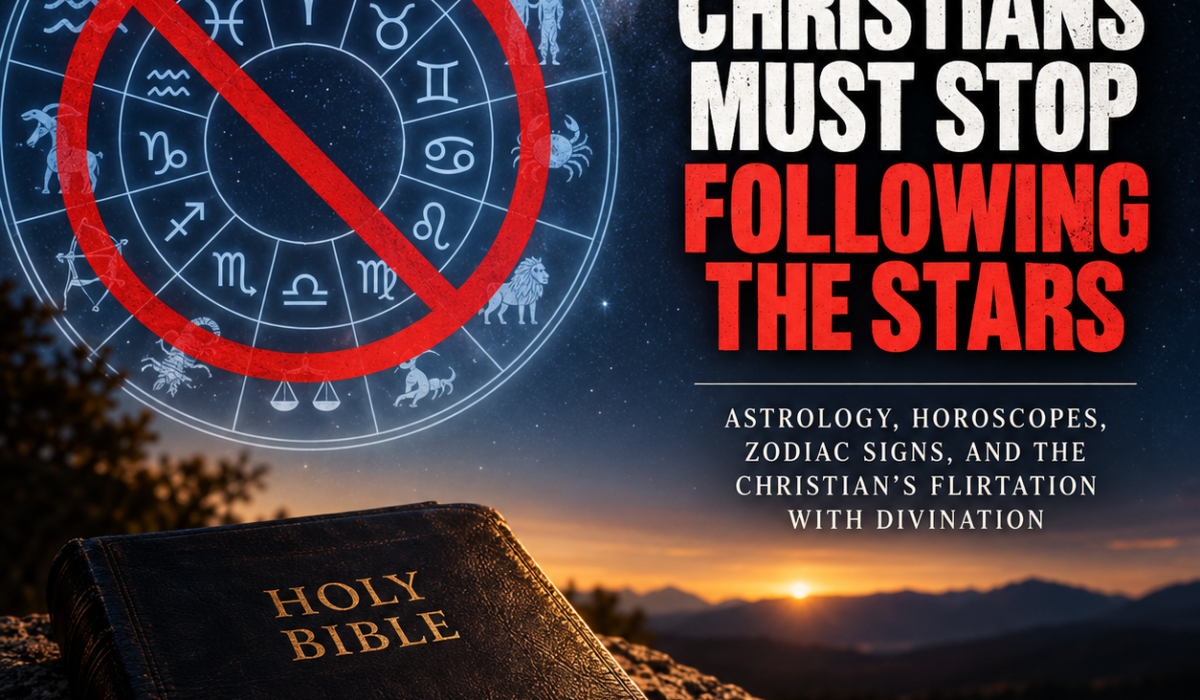
Grandma Said So: The Origins, Persistence, and Problems of Old Wives’ Tales (Part I)


Folk Wisdom, Family Traditions, and the Problem of Being Wrong for a Century

Every culture possesses a collection of inherited wisdom passed from one generation to the next. Grandmothers share it with grandchildren, parents repeat it to children, and neighbors pass it across fences and church pews. Some of this wisdom is genuinely useful. Some is harmless entertainment. But much is simply wrong – spectacularly, stubbornly, and enduringly wrong!

The term “old wives’ tale” refers to traditional beliefs and pieces of folk wisdom that are accepted simply because they have been repeated for generations. Unlike many superstitions, old wives’ tales arise from attempts to explain health, sickness, nutrition, and everyday experiences. Nonetheless they share the same weakness as superstitions: conclusions drawn from observation without sufficient evidence. Sometimes they contain a grain of truth. Other times they are little more than historical guesswork that survived through repetition.

Scripture encourages wisdom, observation, and practical knowledge. The book of Proverbs praises understanding and discernment. However, biblical wisdom differs from folklore in one crucial respect: it seeks truth rather than tradition for tradition’s sake. Jesus warned, human traditions survive long after they cease to reflect reality (Mark 7:8). In this article, we examine seven enduring old wives’ tales related to health and medicine, exploring their origins, meanings, progression, and whether there is any truth hiding beneath the folklore.


I. Feed a Cold, Starve a Fever

Among the older medical sayings in the English-speaking world is the advice to “feed a cold, starve a fever.” The phrase dates back at least to the sixteenth century and likely originated from even older European medical traditions influenced by Greek humoral theory.

Ancient physicians believed illness resulted from imbalances among the body’s four humors: blood, phlegm, black bile, and yellow bile. Different illnesses were categorized as “hot” or “cold” conditions. A fever, being hot, was thought to require less nourishment so the body’s internal heat would diminish. A cold, considered a colder condition, supposedly required additional food to restore balance.

The advice spread through Europe and eventually became household wisdom throughout North America. Generations repeated it as established fact. A sick child with a runny nose was encouraged to eat, while a child with a fever might receive little nourishment until symptoms improved.

Modern medicine has abandoned this practice. Both colds and fevers place demands upon the body’s immune system. Adequate nutrition and hydration are beneficial in either case. Starving a fever generally accomplishes nothing beyond making an already miserable person even more miserable.

The persistence of this tale demonstrates how easily theories become cultural traditions. Few people repeating the phrase today have any knowledge of ancient Greek humoral medicine, yet they continue passing along its conclusions.

Scripture consistently portrays care for the sick as an act of compassion rather than deprivation. Fortunately, most modern grandmothers now recommend soup regardless of the diagnosis.


II. Going Outside with Wet Hair Will Make You Sick

One of the more frequently repeated tales is the claim that going outdoors with wet hair causes illness. Entire generations have been halted at the front door by concerned mothers convinced that damp hair and cold weather inevitably cause colds.

The origin of this belief lies in centuries of misunderstanding about how illnesses spread. Before the discovery of viruses and bacteria, people associated sickness with environmental factors. Cold weather, drafts, damp clothing, and wet hair were viewed as direct causes of disease rather than conditions that might indirectly influence comfort or overall health.

The reasoning seemed logical enough. Many respiratory illnesses occur during colder months. People frequently become chilled before developing symptoms. Therefore, cold exposure must be causing the sickness. The actual culprit (viral infection) remained unknown.

The belief persisted because of confirmation bias. Every time a child went outside with wet hair and later developed a cold, the connection seemed obvious. Meanwhile, the countless occasions when nothing happened were quickly forgotten.

Modern science has shown that colds are caused by viruses. While prolonged exposure to cold temperatures may place stress on the body, wet hair does not cause viral infections. You simply cannot catch influenza because you failed to fully dry your hair.

The tale survives because it reflects parental caution. Most parents would rather appear overly protective than insufficiently concerned. Scripture likewise encourages stewardship of the body, but wisdom requires distinguishing between genuine causes and imagined ones.


III. Cracking Your Knuckles Causes Arthritis

The sound of cracking knuckles has irritated parents, teachers, and spouses for generations. The accompanying warning is usually: “Stop that or you’ll get arthritis.”

This belief appears to have developed during the nineteenth and early twentieth centuries when medical understanding of joint health remained limited. Because arthritis affects the joints and knuckle cracking involves the joints, many assumed a connection existed.

The cracking sound contributed to the fear. It sounds unhealthy. Human beings generally assume that strange noises coming from their bodies indicate something has gone terribly wrong. A loud pop from the fingers certainly seems suspicious.

As the practice became associated with nervous habits, adults often used the arthritis warning as a deterrent. Whether the claim was true mattered less than whether it persuaded children to stop.

Scientific studies have struggled to find evidence that habitual knuckle cracking causes arthritis. The sound results from pressure changes and gas bubbles within joint fluid rather than bones grinding against one another. While excessive cracking can cause temporary discomfort, the dreaded epidemic of knuckle-induced arthritis has never materialized.

The tale remains popular because it offers a simple explanation for a complicated disease. Arthritis is common, painful, and difficult to prevent. Linking it to an obvious behavior provides a satisfying sense of control.

Scripture reminds us that wisdom begins with truth. A false explanation remains false even when repeated by every grandmother in town. In this case, the evidence suggests that the greatest injury caused by knuckle cracking is usually to the patience of nearby family members.


IV. Swallowing Gum Stays in Your Stomach for Seven Years

Every child who has accidentally swallowed chewing gum has likely heard the same alarming prediction: it will remain in your stomach for seven years(or forever).

The tale became widespread during the twentieth century as commercial chewing gum gained popularity. Parents understandably wanted children to use the product properly, and dramatic warnings proved more memorable than lengthy explanations about digestion.

The origin may also reflect older folk beliefs that difficult-to-digest materials remained trapped inside the body indefinitely. Since gum resists breakdown in the mouth and retains its texture after chewing, it seemed reasonable to assume the digestive system would struggle with it as well.

Fortunately, the human digestive tract is considerably more competent than the superstition suggests. While gum base is not fully digested, it generally passes through the body like many other indigestible materials. Seven years is an impressive sentence for a minor childhood mistake, but it bears little resemblance to biological reality.

The endurance of this tale highlights a common feature of old wives’ tales: exaggeration. The goal was not scientific accuracy but behavioral modification. “Please don’t swallow your gum” evolved into a frightening medical prophecy.

Scripture consistently condemns falsehood even when offered for practical purposes. Truth remains preferable to myth. Parents may have good reasons to discourage certain behaviors, but those reasons need not involve lies.

The good news is that most children survive their accidental gum-swallowing incidents. The bad news is that they often spend the next week imagining a permanent wad of bubblegum attached to their internal organs.


V. Reading in Dim Light Ruins Your Eyesight

Before the invention of bright electric lighting, generations of children were warned not to read in dim conditions for fear of permanently damaging their vision.

The belief emerged from a mixture of observation and misunderstanding. Reading in poor lighting often causes eye strain, fatigue, headaches, and discomfort. These effects are genuine and noticeable. The mistaken conclusion was that temporary strain inevitably produced permanent damage.

The concern intensified during the nineteenth century as literacy rates increased and inexpensive printed materials became widely available. Parents and educators worried about excessive reading and sought reasons to encourage moderation.

As a result, the warning became deeply embedded in family life. Many adults still feel a faint sense of guilt when reading by a lamp that is less than stadium-quality brightness.

Modern ophthalmology generally rejects the claim that dim lighting permanently damages healthy eyes. It can cause discomfort and temporary fatigue, but long-term vision loss is not the expected outcome. The eyes recover once lighting conditions improve.

The tale survives because it contains a kernel of truth. Reading in poor light can indeed be unpleasant. The leap from discomfort to permanent damage is where folklore departed from evidence.

Biblical wisdom values observation but also demands discernment. Temporary inconvenience should not be confused with lasting injury. Otherwise every uncomfortable experience becomes a medical diagnosis.


VI. Chicken Soup Cures Colds

Unlike many old wives’ tales, this one possesses more truth than fiction.

The belief that chicken soup helps combat illness appears in numerous cultures and stretches back at least two thousand years. Ancient Jewish writings mention chicken broth as a remedy for respiratory ailments. Similar traditions emerged throughout Europe, Asia, and the Middle East.

Part of the appeal is obvious. Warm soup provides hydration, nutrition, and comfort. Steam may temporarily ease congestion. A bowl of homemade soup also communicates care and concern, which can be surprisingly therapeutic when someone feels miserable.

Modern research has shown that chicken soup may offer mild anti-inflammatory benefits and help relieve certain cold symptoms. It does not destroy viruses or function as a miracle cure, but it can genuinely provide measurable relief.

This makes chicken soup one of the rare old wives’ tales that partially survived because it actually works (at least to a degree.)

The progression from folk remedy to scientific investigation demonstrates an important principle. Tradition should neither be blindly accepted nor automatically dismissed. Some inherited wisdom proves valuable when carefully examined.

Scripture praises practical care for the sick. While the Bible never prescribes chicken soup specifically, it consistently emphasizes compassion, nourishment, and hospitality.

Grandma may not have been practicing advanced immunology, but she understood something modern medicine forgets: comfort can be powerful medicine.


VII. An Apple a Day Keeps the Doctor Away

Perhaps no health proverb is more famous than “An apple a day keeps the doctor away.” The saying originated in nineteenth-century Wales, where an earlier version advised:

“Eat an apple on going to bed, and you’ll keep the doctor from earning his bread.”

The proverb emerged during a period when fresh fruit was increasingly associated with good health. Observant people recognized that diets containing fruits and vegetables generally produced better outcomes than diets consisting largely of processed grains, alcohol, and whatever questionable substance happened to be available.

Over time, the phrase evolved into its modern form and spread throughout the English-speaking world. Apples became symbolic of healthy living.

Unlike many folk sayings, this one contains considerable practical wisdom. Apples provide fiber, vitamins, antioxidants, and other beneficial nutrients. However, the proverb exaggerates the effect. No single food can guarantee health or eliminate the need for medical care.

The tale survives because it expresses a larger truth: consistent healthy habits matter. People often seek dramatic cures while ignoring ordinary disciplines that produce long-term benefits.

Scripture emphasizes stewardship, moderation, and wise living. Good health is influenced by countless small decisions rather than one magical solution.

The apple proverb remains popular because it points in the right direction, even if it oversells the product. An apple may not keep the doctor away forever, but it will do more for your health than a steady diet of doughnuts and wishful thinking.


VIII. Cold Weather Causes Colds

Few old wives’ tales have enjoyed greater longevity than the belief that cold weather causes colds. For centuries, parents have warned children to wear coats, avoid drafts, and keep their heads covered lest they catch a cold from exposure.

The origin of this belief predates the discovery of germs by thousands of years. Ancient Greek and Roman physicians attributed illness to environmental conditions, imbalances in bodily humors, or exposure to cold and dampness. Because respiratory illnesses appeared more frequently during colder seasons, the conclusion seemed obvious: cold weather must be the cause.

The progression of the tale was strengthened by observation. People noticed that colds were more common during winter. What they could not see were the viruses responsible for the illness. Without microscopes, correlation easily became causation.

Modern medicine has demonstrated that colds are caused by viruses. However, the old wives’ tale contains a small kernel of truth. During colder months, people spend more time indoors in close proximity to one another, allowing viruses to spread more efficiently. Cold, dry air also affects the body’s natural defenses.

Cold weather may create favorable conditions for viral transmission, but it does cause viruses out of thin air. Standing outside in January without a coat may make you uncomfortable, but it will not cause a cold.

Scripture consistently encourages wisdom and stewardship of the body. Dressing appropriately for the weather is prudent. Believing cold air creates sickness belongs more to folklore than medicine. The winter wind may be unpleasant, but it is not secretly carrying a cold-making machine.


IX. Coffee Stunts Your Growth

Another often repeated childhood warning is the claim that drinking coffee will stunt your growth. Entire generations grew up believing that a single cup of coffee might somehow prevent them from reaching their full height.

The origin of this tale appears to lie in the late nineteenth and early twentieth centuries, when coffee consumption became widespread and concerns about children’s health increased. Early health reformers opposed stimulants such as coffee and tobacco, grouping them together as undesirable habits. Because children were naturally expected to avoid adult behaviors, warnings about stunted growth proved an effective deterrent.

The progression accelerated as parents, teachers, and advertisers repeated the claim. The idea became so deeply embedded in popular culture that many adults continue to believe it despite decades of contradictory evidence.

Scientific studies have failed to demonstrate any meaningful connection between coffee consumption and reduced height. Human growth is influenced by genetics, nutrition, hormones, and overall health. While excessive caffeine may affect sleep quality or cause temporary side effects, it does not appear capable of shortening a person’s skeleton.

The persistence of this tale illustrates a recurring feature of old wives’ tales: exaggeration in service of a reasonable goal. Adults may have wanted children to avoid caffeine, but rather than explaining the concerns, they offered a lie.

Scripture says little about coffee specifically, though principles of moderation certainly apply. The greater lesson is that truth remains preferable to lies. 


X. A Potato in Your Sock Draws Out Illness

Among the stranger entries in the catalog of folk remedies is the belief that placing slices of raw potato (or onion) inside one’s socks can draw toxins, sickness, fever, or infection out of the body.

The practice appears in various forms throughout Europe and North America and developed from older traditions involving sympathetic medicine. In many folk healing systems, certain objects were believed capable of absorbing illness. Potatoes, onions, bread, and other household items were placed near the body with the expectation that they would pull disease away from the patient.

The potato proved particularly popular because it changed appearance after prolonged contact with warm skin. As the vegetable darkened, dried out, or absorbed moisture, believers interpreted the transformation as evidence that toxins had been extracted.

The progression of the tale followed a familiar path. A person recovered after using the remedy. Recovery was attributed to the potato rather than the body’s immune system. The story was repeated and eventually became accepted wisdom.

Modern medicine has found no evidence that potatoes remove toxins through the feet. Human skin does not function as a waste-disposal chute for internal illness, nor do potatoes possess mysterious extraction capabilities. If they did, grocery stores would look very different.

Scripture encourages prayer, wisdom, and appropriate care for the sick. While potatoes remain useful for many purposes, supernatural detoxification is not among them.

The potato’s greatest contribution to medicine remains feeding hungry people. Its second-greatest contribution appears to be providing future historians with something amusing to write about.


Conclusion

The old wives’ tales examined in this article reveal an important reality about human nature. People are natural observers. We notice patterns, draw conclusions, and pass those conclusions to future generations. Sometimes those conclusions prove remarkably accurate. Other times they become enduring examples of how easily tradition can outrun evidence. The result is a mixture of wisdom, guesswork, exaggeration, and folklore that continues to shape daily thinking centuries after its origins have been forgotten.

The biblical approach is neither blind acceptance nor cynical dismissal. Instead, believers are called to test claims, pursue truth, and exercise discernment. “Test all things; hold fast what is good” (1 Thessalonians 5:21). Some old wives’ tales contain useful observations. Others belong beside broken mirrors and lucky rabbit’s feet in the museum of human imagination. The challenge is not preserving tradition but separating wisdom from folklore and truth from repetition.


Complete Series 

Part I: Health, Sickness, and Folk Medicine
Part II: Pregnancy, Babies, and Generations of Guesswork
Part III: Weather, Wildlife, and Wisdom from the Front Porch

Omens, Moonlight, and Pocket Change: The Pagan Origins of Everyday Superstitions (Part III)


Ancient Fears, Modern Folklore

When a superstition has survived for centuries, most people have forgotten why they practice it. The ritual remains, but the reasoning is non-existent. A penny is picked up. A coin is tossed into a fountain. Someone scratches an itchy palm and wonders if money is coming. A knife is exchanged with a coin to preserve a friendship. Few (if any) participants can explain where these customs originated, but billions continue blindly performing them with little thought beyond “that’s just what people do.”

This is the final irony of superstition. The ancient world built elaborate religious systems around omens, charms, signs, spirits, and magical forces. While many contemporary people reject those religious systems they continue to preserve their rituals. The gods have vanished, the temples have crumbled, the myths are forgotten, and, yet the practices linger like ghosts of paganism hiding in plain sight. In this final installment, we examine ten more enduring superstitions and trace their origins, meanings, and survival into the modern world. As before, the biblical question is simple: does this custom encourage trust in God, or does it reflect humanity’s age-old desire to seek certainty, protection, and blessing apart from Him?


I. An Itchy Palm Means Money Is Coming

Widely recognized as the belief that an itchy palm signals incoming wealth. Depending upon the region, an itching right palm means money is coming, while an itching left palm means money is leaving, or vice versa. The details vary.

Its origins lie in ancient European and Romani folklore, where bodily sensations were interpreted as omens. Before modern medicine explained many physical conditions, people frequently assigned supernatural significance to ordinary experiences. A twitching eye, ringing ear, or itching hand could all be interpreted as messages about future events.

The palm became associated with money because it is the part of the body used to receive and exchange goods. Through sympathetic thinking, the sensation came to symbolize financial activity. If the hand itched, wealth must surely be on its way.

Over time the superstition spread throughout Europe and eventually into North America. Like many folk beliefs, it survived because occasional coincidences reinforced it. A man scratches his palm and later receives an unexpected payment. He remembers the one random hit and forgets the thousands of misses.

Scripture never encourages believers to interpret sensations as divine messages. Financial provision comes from God. Proverbs teaches diligence, stewardship, and wisdom. A thorough search of scripture unsurprisingly did not reveal an references to dermatological fortune-telling.


II. Seeing a Bride Before the Wedding Brings Bad Luck

Modern wedding traditions are filled with customs that participants follow without understanding. Among the most enduring is the belief that the groom should not see the bride before the ceremony.

Contrary to popular assumption, this custom has little to do with romance. Its roots lie in arranged marriages common in medieval Europe. Families negotiated marriages for economic, political, or social reasons. The bride and groom might barely know one another, or may have never met before the wedding day.

The concern was practical. If the groom saw the bride beforehand and found her less attractive than expected, he might attempt to cancel the arrangement. To prevent such disruptions, traditions developed that kept the couple apart until the ceremony was complete. Over time practical considerations merged with superstitious explanations. What began as risk management became “bad luck.”

As generations passed, the original purpose was lost. Modern couples who have dated for years, taken engagement photos together, and shared vacation memories still somehow act as though catching a glimpse of one another before the ceremony might anger the universe.

Scripture offers no support for the notion. Marriage is a covenant before God. The success of a marriage rests upon faithfulness, character, commitment, and obedience to God, and most certainly has nothing to do with whether the groom accidentally saw the bride ten minutes early.

The superstition survives because tradition outlives reason.


III. A Ringing in the Ears Means Someone Is Talking About You

Long before smartphones, social media, and group text messages, people still wanted to know what others were saying about them. The solution was simple: if your ears suddenly rang, someone must be talking about you.

The belief can be traced to ancient Greek and Roman traditions. Classical writers recorded folklore suggesting that unexplained sensations provided clues about unseen events. Ringing ears became associated with distant conversations, gossip, praise, or criticism. Some traditions even claimed the affected ear indicated whether the comments were favorable or unfavorable.

The logic reflected a common pagan worldview in which invisible forces constantly communicated through signs and omens. Nothing happened randomly. Every unusual sensation carried hidden meaning waiting to be deciphered.

As medical knowledge expanded, more reasonable explanations emerged. Ringing ears (known medically as tinnitus) can result from hearing damage, circulation issues, illness, aging, or countless other natural causes.

The appeal is obvious. People are naturally curious about what others think of them. The idea that the body might provide secret intelligence about distant conversations is both comforting and entertaining.

Scripture of course warns against obsession with gossip and speculation. Ecclesiastes 7:21–22 wisely advises believers not to concern themselves with every word spoken by others. Most people spend far less time discussing us than we imagine.

A ringing ear, more often than not, is simply biology reminding us that we are not as mysterious as we would like to believe.


IV. Sweeping Over Someone’s Feet Prevents Them from Marrying

Among the more unusual and bizarre superstitions still found in parts of the American South, the Caribbean, Africa, and Latin America is the belief that sweeping a broom across someone’s feet will prevent them from marrying. In some versions, the victim is destined to remain single forever unless a complicated counter-ritual is performed.

The superstition originated in various African folk traditions (VooDoo) that assigned spiritual significance to personal contact and household tools. In many cultures, the broom was regarded as a symbolic object associated with domestic authority, purification, and even magical protection.

The feet, meanwhile, held special significance in folk magic because they were believed to maintain a connection with a person’s destiny, life path, or future relationships. Sweeping across them supposedly disrupted that path, creating obstacles to marriage or family life.

As these traditions blended through migration and cultural exchange, the superstition evolved into the familiar warning idiotically repeated by parents and grandparents. Few people today could explain the reasoning, but still react with alarm when a broom brushes their shoes.

Scripture never attributes supernatural power to cleaning tools. Marriage depends upon God’s providence, personal choices, character, and circumstance. The notion that a stray broomstroke can alter someone’s romantic future belongs squarely in the realm of psychotic magical thinking.

Still, the superstition persists because it transforms an ordinary event into something dramatic. After all, “Please pick up your feet while I’m sweeping” lacks the same memorable impact as threatening lifelong bachelorhood.


V. Seeing a Penny and Picking It Up Brings Good Luck

“See a penny, pick it up; all day long you’ll have good luck.”

Few superstitions have been condensed into a more effective advertising slogan for themselves. Generations of children have eagerly retrieved pennies from sidewalks, parking lots, and grocery store floors under the assumption that fortune accompanies it.

The origins of the belief stretch back to ancient cultures that viewed metal as possessing protective qualities. Because metal was rare, valuable, and difficult to produce, it was associated with divine favor and protection against evil spirits. Finding a coin unexpectedly was interpreted as evidence that supernatural forces were watching over the finder.

Later European traditions reinforced the belief. Coins bearing the image of a ruler or symbolic figures were considered especially fortunate because they represented authority, prosperity, and blessing. Discovering one unexpectedly became an omen of future success.

The superstition evolved easily into modern society. The association between found money and good fortune remained. The fact that the average penny buys approximately nothing today has done little to diminish its mystical reputation.

Scripture certainly encourages gratitude for God’s provision, but it never teaches that blessing arrives through randomly discarded currency. Finding a penny may be pleasant. It may even save you from being one cent short at the self-checkout. It does not alter providence.

The true miracle is that anyone still bothers to bend over for a penny in an age when many people refuse to stop for a twenty-dollar bill unless it can be tapped with a smartphone.


VI. If Your Nose Itches, Company Is Coming

Another enduring folk belief claims that an itchy nose signals the imminent arrival of visitors. Depending upon the region, the expected company may be a friend, a stranger, or an unwelcome guest. Either way, the nose apparently possesses remarkable forecasting abilities.

The superstition emerged from the ancient tendency to interpret bodily sensations as omens. Before scientific explanations were available, people frequently believed the body functioned as a communication system for hidden forces. An itching hand meant money. A ringing ear meant gossip. An itching nose meant visitors.

The logic behind the specific connection is difficult to reconstruct because folklore often evolves without consistency. Some traditions linked the nose to social interaction because it occupies the center of the face and serves as a prominent feature during personal encounters. Others simply inherited the belief without explanation.

Regardless of its exact origin, the superstition spread widely throughout Europe and eventually into North America. Like many omens, it survived because occasional coincidences seemed to confirm it. If a guest arrived shortly after one’s nose began itching, the prediction was remembered. The countless failures were quietly forgotten.

Scripture never encourages believers to seek hidden messages in bodily irritation. If God wishes to communicate, He is fully capable of doing so without relying upon histamines and seasonal allergies. Most itchy noses result from dust, pollen, dry air, or irritation. While guests occasionally arrive afterward, the connection is chronological rather than supernatural.

The nose performs many important functions. Predicting visitors is not among them. For perspective the average person touches their nose 70-120 times per day.


VII. Throwing Coins into a Fountain Ensures a Wish Comes True

Few tourist attractions are more profitable than a fountain attached to a wish-granting legend. Every year millions of sheeple toss coins into pools, fountains, wells, and waterways while silently hoping their desires will somehow be fulfilled.

The practice dates back to ancient pagan religions that viewed springs, wells, and bodies of water as sacred locations inhabited by spirits, gods, or divine beings. Water represented life, fertility, cleansing, and mystery. Offerings were frequently deposited into these locations to secure favor from supernatural powers.

The Romans routinely cast coins into sacred springs. Celtic peoples offered jewelry and valuables to water deities. Similar customs appeared throughout Europe and the Near East. The underlying assumption was gifts presented to spiritual forces would produce desired outcomes.

As pagan religions disappeared, many of the sacred sites remained. The rituals persisted even after the gods associated with them were forgotten. Modern fountains inherited ancient religious functions while losing most of their theological explanations.

The result is  the world’s most successful example of institutionalized spare-change collection.

Scripture repeatedly condemns attempts to purchase favor from spiritual powers. God is not bribed. Wishes are not granted because copper and nickel encounter chlorinated water.

The fountain superstition survives because it combines hope with action. People feel better after doing something, even when the action has no rational connection to the desired outcome. Ancient paganism called it an offering. Modern tourism calls it a tradition. The water remains largely unimpressed.


VIII. Sleeping with a Dream Catcher Protects Against Bad Dreams

Unlike many superstitions discussed in this series, the dream catcher originates from a specific indigenous tradition rather than a broad collection of folk beliefs. Among the Ojibwe people, dream catchers were handcrafted objects intended to filter spiritual influences during sleep.

According to traditional belief, beneficial dreams passed through the web while harmful dreams became trapped and dissolved with the morning sunlight. The object functioned as a form of spiritual protection rooted in a broader worldview involving spirits, dreams, and unseen influences.

As dream catchers entered mainstream culture during the twentieth century, they were increasingly detached from their cultural context. Today they are sold as decorative items, children’s room decorations, or general symbols of positive energy.

The progression illustrates a familiar pattern. Spiritual significance fades while symbolic value remains. Many who hang dream catchers today know little about their origins yet still associate them with protection, peace, and favorable dreams.

The Bible acknowledges that dreams occur, but it never teaches that objects possess the ability to regulate spiritual experiences during sleep. Protection comes from God, not from decorative webs suspended above a bed.

“I will both lie down in peace, and sleep; for You alone, O LORD, make me dwell in safety.” –Psalm 4:8 

A dream catcher may reflect cultural artistry. But assigning supernatural protective power to it moves beyond appreciation and into superstition.

The object itself catches no dreams. At most, it catches dust.


IX. Strange Behavior During a Full Moon

No other superstition enjoys as much modern acceptance as the belief that people behave differently during a full moon. Emergency room workers report hearing it. Police officers hear it. Teachers hear it. Almost everyone knows someone convinced that human behavior becomes noticeably stranger whenever the moon is full.

The belief is ancient. The word “lunatic” derives from the Latin word luna, meaning moon. Greeks, Romans, and numerous other cultures believed lunar cycles directly influenced human emotions, mental health, and behavior. Because the moon visibly affected tides, many assumed it must also affect the human body.

Over time, stories accumulated. Crimes supposedly increased. Madness intensified. Sleep became difficult. Tempers flared. Werewolves transformed. Entire mythologies developed around lunar influence.

The problem is that repeated scientific studies have failed to find any evidence supporting most of these claims. While lunar light may have minor effects on sleep patterns under certain conditions, the dramatic behavioral changes described in folklore remain largely unsupported. Crime, emergency response, and healthcare data also do not support these claims.

Yet the superstition persists because unusual events are memorable. When something strange happens during a full moon, people notice. When nothing unusual occurs, nobody mentions it.

Scripture never attributes human morality, sanity, or behavior to lunar phases. The moon serves God’s purposes as part of creation, but it does not affect human conduct.


X. Never Gift a Knife Without Receiving a Coin in Return

Among the more charming superstitions still practiced in many cultures is the belief that a gifted knife will sever a friendship unless the recipient provides a coin in exchange. The coin transforms the gift into a purchase and supposedly prevents the relationship from being “cut.”

The custom appears throughout Europe, Scandinavia, Britain, and North America. Its roots combine symbolic thinking with older folk beliefs concerning sharp objects. Knives, swords, and blades carried spiritual significance because of their association with conflict, separation, and danger.

The symbolic connection was obvious. If a blade cuts physical objects, perhaps it can also cut emotional bonds. To prevent this outcome, a token payment converted the exchange into a transaction rather than a gift.

The superstition persisted because it provided a simple solution to an imagined problem. Many families continue the practice today, treating it as harmless tradition rather than genuine belief.

Compared with some of the superstitions examined in this series, this one is relatively benign. Nevertheless, it still reflects the broader assumption that symbolic rituals possess power over us.

Scripture teaches that friendships are maintained through loyalty, honesty, forgiveness, and love, not through financial loopholes. A friendship will not survive because someone paid a penny for a hunting knife. Nor will it fail because they forgot.

Relationships are strengthened by character.


Conclusion

Throughout this series, one truth has emerged: superstitions rarely arise from nowhere. They are the surviving fragments of older worldviews, remnants of ancient attempts to explain uncertainty, secure blessings, avoid misfortune, and manipulate fate. Whether through coins, charms, bodily sensations, celestial events, household objects, or symbolic rituals, humanity has always sought ways to gain control over a future that belongs to God.

Scripture offers a radically different perspective. The believer does not trust omens, signs, lucky objects, wishes, or rituals. He trusts the sovereign Lord who governs all things according to His wisdom and purpose. “Trust in the LORD forever, for in Yah, the LORD, is everlasting strength” (Isaiah 26:4). The ancient pagans looked for answers in itching palms, ringing ears, moonlit skies, and fountain waters. The Christian looks to God.


Series Complete

Part I: Luck,Omens and Folly
Part II: Signs, Wishes & Lucky Charms
Part III: Omens, Moonlight & Pocket Change

Love Is not The Foundation for Marriage: What History, Scripture, and Common Sense Demonstrate


Introduction

For modern Westerners, the idea that marriage should be founded primarily upon romantic love is treated as self-evident truth. We see it in movies, songs, novels, television programs, dating apps, wedding vows, and nearly every cultural institution imaginable. Young people are taught that somewhere out there exists a perfect soulmate waiting to complete them. They are encouraged to follow their hearts, trust their feelings, and marry only when overwhelming emotional attraction convinces them they have found “the one.” This has resulted in a generation that spends decades searching for mythical perfection, only to discover that butterflies die, bills still arrive, children require discipline, and marriage is considerably less exciting than the final scene of a Disney movie.

The historical reality is quite different. For all of human civilization, marriage has been understood as a covenant, an institution, and a social structure designed to accomplish practical and moral purposes. It created families, preserved inheritance, established social stability, provided legitimate heirs, protected women and children, and formed the foundation of civilization. Love was not ignored, nor was affection considered undesirable. Rather, love was expected to grow within marriage. Ironically, the generations that treated romance as secondary are the only ones who built marriages that lasted a lifetime. The question we therefore must confront is: did our ancestors understand something about marriage that we have forgotten?

I. Marriage Was Never Primarily About “Feelings”

A persistent myth of modern society is that people throughout history married for the same reasons we do today. This assumption is obliterated under even a cursory examination of historical evidence. Across cultures, continents, and centuries, marriage has overwhelmingly been viewed as a practical institution serving purposes larger than our individual emotional satisfaction.

Ancient civilizations understood marriage as the foundation of social order. In Mesopotamia, Egypt, Greece, Rome, Israel, China, India, and countless tribal societies, marriage linked families together, established inheritance rights, produced legitimate offspring, and ensured social continuity. While personal affection certainly existed, it was not generally considered sufficient grounds upon which to construct an entire household, family, tribe and country.

The biblical record reflects this reality. Abraham sent a servant to find a suitable wife based upon family, character, and covenant considerations (Genesis 24). Throughout Scripture, the emphasis consistently falls upon faithfulness, duty, covenant, fertility, household management, and obedience to God.

Historian Stephanie Coontz, in her influential work Marriage, A History, notes that for thousands of years marriage was fundamentally concerned with economic cooperation, political alliances, property management, and childrearing. She observes that the expectation that marriage should simultaneously provide economic security, personal fulfillment, sexual satisfaction, emotional intimacy, and lifelong romance is a remarkably recent development. In essence, contemporary society has established false preconceptions, and then condemns any man who cannot fulfill them.

This should not be interpreted as hostility toward love, attraction, affection or chemistry. Our ancestors were not emotionless automatons negotiating livestock contracts in place of courtship. They wrote poetry, composed songs, exchanged letters, and fell deeply in love. The difference is that they generally viewed love as a fruit of marriage rather than its foundation. They understood something we desperately need to relearn: feelings are excellent passengers but terrible drivers.

Feelings fluctuate, attraction changes and passion rises and falls. But Character remains, duty continues, and commitment endures. A civilization cannot be built upon emotions that fluctuate with sleep schedules, hormone levels, and whether someone forgot to take out the trash. Successful societies therefore anchored marriage to covenant, responsibility, family, and shared purpose. History proves they were right to do so.


II. The Romantic Revolution: How Feelings Replaced Function

Marriage was historically built upon duty, family, covenant, and social stability, so when did everyone suddenly decide that emotional fireworks were the primary qualification for lifelong commitment?

The answer lies largely in the cultural transformation that occurred between the eighteenth and twentieth centuries. Prior to this period, marriage in Europe and America was still viewed as a practical institution. Families considered character, faith, reputation, economic stability, family background, and long-term compatibility. A young man was expected to demonstrate that he could provide for a household. A young woman was expected to demonstrate virtue, competence, and suitability for family life. These expectations were viewed as common-sense prerequisites for building a stable family, and by extension, a stable future

Then came the Romantic movement. Poets, novelists, philosophers, and artists elevating emotion as the highest expression of human experience. Personal fulfillment increasingly replaced duty as the central moral objective. Feelings became king, and desire became authority. Individual happiness became the measure by which institutions were judged. By the nineteenth century, romantic attraction had moved from being a desirable bonus to the primary justification for marriage.

The trend accelerated dramatically throughout the twentieth century. Hollywood transformed romance into a secular religion. Popular music convinced generations that true love was an uncontrollable force that justified any decision. Disney informed millions of children that happiness magically appears after finding the right person. Dating culture shifted from evaluating suitability for marriage to pursuing emotional experiences. Previous generations asked, “Would this person make a good husband or wife?” Modern generations ask, “How do they make me feel today?”

The consequences are profound. Researchers note that modern marriage expectations have expanded dramatically. Psychologist Eli Finkel, in The All-or-Nothing Marriage, argues that contemporary marriages are expected to satisfy needs that previous generations met through extended family, churches, communities, friendships, and civic institutions. In effect, modern spouses are expected to function simultaneously as lover, best friend, therapist, business partner, spiritual advisor, co-parent, life coach, and emotional support system. Unsurprisingly, most marriages collapse under expectations no human being was designed to fulfill.

The irony here is the era most obsessed with romantic love has also experienced the highest divorce rates in recorded history. Since the 1960s, family fragmentation, cohabitation, delayed marriage, declining fertility, and rising loneliness have been defining characteristics of Western societies. While many factors contribute to these trends, the obvious conclusion that building marriage primarily upon emotion has not produced the stability its advocates promised.

Romance is not the problem. Scripture celebrates affection, attraction, and delight between husband and wife. The problem emerges when romance is promoted from servant to master. A marriage strengthened by love is a beautiful thing. A marriage built entirely upon feelings is a house constructed on sand. When the storms inevitably arrive it will be insufficient to keep the roof standing.


III. What Scripture Actually Says About Marriage

Another remarkable achievement of modern Christianity has been its ability to absorb secular romantic ideals and then quietly pretend they came from the Bible. Many believers sincerely assume that Scripture presents marriage as a search for emotional fulfillment, personal happiness, and romantic completion. Yet when one actually reads the text a very different picture emerges.

The Bible speaks extensively about marriage, but its priorities are strikingly different from those of modern culture. Marriage is presented first as a covenant before God. Malachi 2:14 describes marriage as a “covenant” relationship witnessed by God. Covenants are binding commitments rooted in faithfulness and obligation, they do not depend upon emotional conditions remaining favorable. God does not remain faithful to His people because He experiences a daily emotional surge. He remains faithful because covenant faithfulness is part of His character.

Genesis 2 establishes marriage before the Fall, revealing its foundational purposes. God declares, “It is not good that the man should be alone; I will make him an help meet for him” (Genesis 2:18). The focus is companionship, partnership, and shared purpose. Eve is not introduced as Adam’s soulmate sent to complete his emotional journey. She is presented as a suitable helper in fulfilling God’s commission to exercise dominion over creation, marriage being a cooperative mission.

The New Testament continues this emphasis. Ephesians 5:22–33, an often cited passage on marriage, centers entirely on duty, sacrifice, leadership, submission, and covenantal love. Husbands are commanded to love their wives as Christ loved the church and gave Himself for her. Wives are instructed to respect and submit to their husbands. These instructions are undeniably focused on responsibility rather than emotional gratification.

Notably absent from Scripture is any command to marry only after experiencing overwhelming romantic attraction. The Bible provides qualifications for spouses concerning faith, character, wisdom, virtue, diligence, and godliness. It warns repeatedly against foolishness, immorality, rebellion, and ungodly partnerships. Nowhere does it suggest that butterflies in the stomach are any indicator of marital suitability.

The wisdom literature reinforces this perspective. Proverbs praises virtue, diligence, discretion, faithfulness, and fear of the Lord. It praises her competence, productivity, wisdom, and faithfulness. Likewise, the warnings concerning contentious wives, lazy men, and foolish behavior focus on character rather than chemistry.

This does not mean Scripture opposes romance. Far from it, the Song of Solomon celebrates attraction, desire, affection, beauty, and delight between husband and wife in language that would make many modern church committees nervous. Yet even there, romantic love is portrayed within the framework of covenant commitment. Passion is celebrated because it is a result of covenant.

The biblical model therefore presents marriage as something more significant than romance. Love matters deeply, but biblical love is not an emotion. It is a commitment expressed through action, sacrifice, service, loyalty, and perseverance. Scripture teaches that strong feelings are wonderful servants of marriage, but faithfulness remains its foundation. That distinction explains why biblical marriages were expected to survive seasons that would cause most modern relationships to fail.


IV. The Great Experiment: What Happens When Society Builds Marriage on Love, Lust and Emotions?

Every civilization conducts experiments. Some are deliberate. Others occur because enough people embrace an idea without considering its long-term consequences. Over the past century, Western society has conducted perhaps the largest marriage experiment in human history: what happens when marriage is redefined around romantic love, personal fulfillment, and individual happiness?

The results are impossible to ignore.

Beginning in the mid-twentieth century, cultural attitudes toward marriage shifted dramatically. The traditional view held that marriage existed to unite families, provide stability, produce and raise children, and create an enduring household. The newer view increasingly presented marriage as a vehicle for personal fulfillment. If a relationship no longer produced “happiness,” that relationship had lost its purpose. Commitment has become conditional. Duty has become negotiable. Personal satisfaction is now the ultimate authority.

The statistics tell a sobering story. According to data from the U.S. Census Bureau and countless family studies, divorce rates have climbed dramatically through the latter half of the twentieth century. While rates have moderated somewhat in recent years, this decline is  attributable to fewer people marrying in the first place. Cohabitation has increased substantially, fertility rates have fallen well below replacement levels, and large numbers of adults report unprecedented levels of loneliness despite living in the most interconnected age in history.

The decline of marriage has affected couples, children, communities, churches, and entire nations. Numerous studies have associated stable two-parent households with better outcomes in education, lower rates of poverty, reduced criminal behavior, improved mental health, and greater economic mobility. While exceptions certainly exist, the general pattern remains consistent across decades of research. Strong families always produce stronger communities.

Ironically, the modern pursuit of perfect romantic fulfillment undermines the very thing it seeks. When marriage becomes about personal happiness, every disappointment becomes a crisis. Every disagreement feels like evidence that you married the wrong person. Every difficult season raises questions about compatibility. The relationship begins to function more like a customer service agreement. Satisfaction is expected on demand, and many people approach marriage with the subconscious expectation that their spouse exists to meet their emotional needs.

Our ancestors would have found this bewildering. They expected hardship. They anticipated conflict. They understood that two imperfect people attempting to build a household would inevitably experience frustration. Rather than viewing difficulty as proof that the marriage was defective, they viewed perseverance as part of the marriage!

I am not suggesting that every historical marriage was healthy. History contains its share of failures, abuses, and foolish customs. The broader lesson remains. Institutions built primarily upon duty, responsibility, and covenant will endure. Institutions built primarily upon emotion will fail.

The great experiment of romantic individualism promised greater happiness, stronger relationships, and deeper fulfillment. Instead, it has delivered instability, disappointment, delayed family formation, and relational uncertainty. Perhaps the problem is that they have mistaken love for something it was never intended to be, a foundation rather than a reward. When feelings become the cornerstone of marriage, the structure becomes vulnerable to the inevitable reality that feelings, by their very nature, refuse to stay put.


V. Marry for the Right Reasons and Love Follows

If history demonstrates that marriage was not traditionally founded upon romantic love, and if Scripture places covenant above emotion, then: what should we actually look for when choosing a spouse?

The answer would not have surprised our grandparents, our great-grandparents, or most of human civilization. They generally evaluated potential spouses according to qualities that could sustain a household over decades. Character mattered. Faith mattered. Competence mattered. Family reputation mattered. Work ethic mattered. Fertility mattered. Shared values mattered. The ability to endure hardship mattered. These were considered intelligent considerations.

Modern culture mocks such thinking. The suggestion that practical concerns should play a significant role in mate selection is treated as cold, transactional, or lacking passion. Yet no one applies this logic anywhere else in life. People investigate business partners, research investments, evaluate employees, inspect homes before purchase, and compare insurance policies. Then, when selecting the person with whom they intend to share children, finances, property, responsibilities, and potentially eighty+ years of life, they are told to ignore objective criteria and simply “follow their heart.” One almost has to admire the absurdity of the advice.

Scripture directs attention toward character. Proverbs contrasts wisdom and folly, diligence and laziness, virtue and corruption. A godly spouse is described in terms of conduct, faithfulness, self-control, and wisdom. Even physical beauty, while acknowledged, is placed beneath character. Proverbs 31:30 declares, “Favour is deceitful, and beauty is vain: but a woman that feareth the LORD, she shall be praised.” The principle applies equally to men. Good looks may attract attention, but they cannot sustain a family through hardship, sickness, financial struggle, childrearing, or old age.

Not surprisingly, modern research confirms what traditional societies long assumed. Studies examining long-term marital satisfaction finds that shared values, mutual commitment, reliability, trustworthiness, and effective conflict resolution predict marital success accurately. Researchers have observed that passionate attraction fluctuates over time, while companionship, trust, and shared purpose often deepen. In other words, the qualities previous generations prioritized are frequently the same qualities that sustain healthy marriages decades later.

This does not mean love is without meaning. Far from it. A marriage without affection, kindness, attraction, or emotional connection is incomplete. The issue is one of sequence. Historically and biblically, love was expected to grow from commitment rather than create commitment. Two people united by shared faith, shared goals, mutual respect, and covenant loyalty discovered that deep affection developed over years of living life together.

Perhaps this explains why older couples speak so differently about love than younger generations. They rarely describe it as an uncontrollable force of nature. Instead, they describe it as something built through sacrifice, patience, forgiveness, endurance, and shared experience. They learned what previous generations understood instinctively: lasting love is cultivated.

The great irony is that those who stop making romance the primary objective of marriage end up finding more of it. When a husband and wife are united by purpose, strengthened by commitment, grounded in faithfulness, and devoted to a common mission, affection will flourish naturally. Love was meant to grow inside a marriage built upon stronger things.


Conclusion

For nearly all of recorded history, marriage was understood as something larger than personal happiness. It was the institution through which families were formed, children were raised, property was preserved, faith was transmitted, and civilizations were sustained. The overwhelming weight of historical evidence demonstrates that societies viewed marriage primarily as a covenantal and practical partnership. Scripture reflects the same reality. From Genesis to Revelation, marriage is presented as a relationship rooted in duty, faithfulness, shared purpose, and obedience to God. Love is celebrated, affection is encouraged, and attraction is acknowledged, but none of these are presented as the foundation upon which marriage stands. The modern belief that intense romantic feelings should be the basis for selecting a spouse is a relatively recent cultural innovation. Judging by the instability, confusion, and family fragmentation that have accompanied it, one might reasonably conclude that the experiment has gone catastrophically wrong.

This does not mean men and women should marry people they dislike, ignore attraction, or treat marriage as a business arrangement. It means they should place first things first. Character should outrank chemistry. Faith should outrank feelings. Commitment should outrank convenience. Shared purpose should outrank passion. The heart is a wonderful gift from God, but it makes a terrible compass when allowed to wander without wisdom. A man seeking a wife (or a woman seeking a husband) would do well to remember what generations before us already understood: marry someone worthy of respect, trust, partnership, and covenant loyalty, and love will grow deeper than youthful infatuation ever could. After all, butterflies have remarkably short life spans. Covenant faithfulness, however, has been sustaining families, churches, and civilizations for thousands of years. History proves that is no accident.

Signs, Wishes, and Lucky Charms: The Pagan Origins of Everyday Superstitions, (Part 2)


The Human Hunger for Luck: Why Men Trust Rituals More Than Providence 

Human beings have a remarkable talent for inventing shortcuts around uncertainty. Rather than trusting God, obeying His commands, and accepting that some things remain beyond our knowledge, men and women throughout history have sought signs, omens, rituals, charms, and magical formulas that promised a glimpse behind the curtain of providence. Whether gazing at the heavens, carrying a talisman, blowing out candles, or crossing fingers, the underlying desire remains consistent: to influence the future without submitting to the God who governs it.

The ancient pagan world was saturated with rituals designed to manipulate fate, attract blessings, and avoid misfortune. Many of those practices inevitably survived the collapse of the civilizations that created them. Their gods disappeared, their temples crumbled, and their priests vanished. But their superstitions lingered, quietly slipping into everyday life until millions practiced them without ever questioning their origins. In this article, we examine ten more enduring superstitions, tracing their origins, meanings, and progression through history. More importantly, we will compare them to the biblical worldview, which rejects luck, omens, and magical thinking in favor of trust in God’s sovereign providence.


I. Crossing Fingers for Good Luck

Few gestures are more universal than crossing one’s fingers for good luck. Children do it before a test, athletes do it before a competition, and adults do it before job interviews, medical procedures, and financial decisions. It has become such a routine part of modern life that no one stops to ask where the practice originated.

The roots of finger-crossing reach deep into ancient pagan Europe. Long before it became associated with Christianity, the crossing of two lines was believed to create a point of spiritual power. Various cultures viewed intersecting lines as locations where supernatural forces could be concentrated or invoked. People would physically touch crossed objects or create cross-shaped symbols to attract favorable outcomes from unseen “spiritual” powers.

As Christianity spread, the symbolism of the cross became attached to the practice, but the underlying purpose remained largely unchanged. Rather than serving as an expression of faith in Christ, the gesture continued to function as a ritual intended to influence events. Eventually it became detached from any clear religious meaning and simply evolved into a cultural shorthand for “I hope luck is on my side.”

Scripture never teaches blessing as something that can be summoned through hand gestures.  Throughout the Bible, God’s favor, success and blessing are linked to obedience, wisdom, and divine providence. Proverbs 3:5 reminds believers to “Trust in the LORD with all your heart, and lean not on your own understanding.”

Crossing fingers may seem harmless, but it reflects an ancient impulse to seek control over uncertain outcomes through symbolic acts rather than trust in God. The gesture has changed little over the centuries. Only the explanation has faded.


II. Making a Wish on a Shooting Star

For millennia, human beings have looked at the night sky and imagined messages hidden among the stars. One enduring example of that belief is seeing a shooting star grants an opportunity to make a wish.

The superstition can be traced to ancient Greece and Rome. Philosophers such as Ptolemy recorded beliefs that the gods occasionally opened the heavens to observe humanity. During these moments, stars would move across the sky, creating what we now know as meteors. Because these events were associated with divine attention, people believed wishes made during such occurrences were more likely to be heard and granted.

The logic was thoroughly pagan. The cosmos was viewed as populated by deities whose favor could be gained through proper timing and ritual behavior. A shooting star became a celestial doorway through which requests could be delivered to supernatural powers.

Over time, scientific understanding explained the true nature of meteors. They were, after all, not divine signals but fragments of cosmic debris burning in Earth’s atmosphere. But the superstition survived. Even those who understand astronomy blindly continue the ritual. Our knowledge advanced, but the tradition remained.

The Bible condemns attempts to seek guidance, blessing, or revelation from the heavens. Deuteronomy 4:19 warns against being drawn away to worship the sun, moon, and stars. The heavens declare God’s glory, but they are not tools for granting wishes.

There is nothing wrong with appreciating the beauty of a meteor streaking across the sky. The problem arises when people attribute spiritual power to the event. A shooting star is not a heavenly customer-service window for processing human requests.


III. The Number 13 Is Unlucky

Perhaps no iniotic superstition has influenced modern architecture, business practices, and popular culture more than fear of the number thirteen. Hotels omit the thirteenth floor, airlines skip row thirteen, and buildings are designed around avoiding a number that many people irrationally fear.

The origins of this belief are complex and ancient. In Norse mythology, the trickster god Loki arrived as the thirteenth guest at a banquet, resulting in chaos and death. Similar concerns appeared in ancient cultures that viewed twelve as a number of completeness: twelve months, twelve zodiac signs, twelve tribes, twelve Olympian gods. Thirteen disrupted the established order and therefore became associated with instability and misfortune.

During the Middle Ages, additional legends reinforced this fear. Some even connected it to the Last Supper, where thirteen individuals sat at the table before Christ’s crucifixion. Over time, separate traditions merged into a widespread cultural belief that thirteen possessed inherently negative qualities.

The irrationality is obvious upon minimal examination. If thirteen is universally unlucky, why is it considered fortunate in some cultures? Why do countless people experience perfectly ordinary lives while residing at addresses containing the number? The answer is obvious. Numbers possess no moral character.

Scripture frequently uses numbers symbolically, but never attributes magical power to them. The number thirteen is neither cursed nor blessed.

Fear of thirteen survives because superstition thrives where reason retreats. Entire industries accommodate the belief, not because evidence supports it, but because fear is remarkably persistent and profitable.


IV. Saying “Bless You” When You Sneeze

Of all the superstitions examined in this series, saying “Bless you” after a sneeze occupies an unusual position. Unlike many customs rooted directly in paganism, this practice emerged from a mixture of ancient superstition, folk medicine, and later religious adaptation. However, the underlying fears that fueled it remain unmistakably superstitious.

Ancient cultures viewed sneezing as a spiritually significant event. Some believed the soul temporarily left the body during a sneeze. Others feared that evil spirits could enter during the brief moment of vulnerability. Among Greeks and Romans, sneezes were interpreted as omens or messages from the gods. A sneeze at the right moment could validate a statement; a sneeze at the wrong moment could signal impending trouble.

During outbreaks of plague in Europe, blessings were sometimes offered as prayers for health and protection. Pope Gregory I is associated with encouraging such responses during a devastating epidemic. Over time, the custom became detached from its historical context and evolved into a reflexive social courtesy.

This matters because offering a genuine prayer for someone’s health is entirely biblical. While believing that a sneeze creates a supernatural emergency requiring a verbal counterspell is anything but.

Today, most people say “Bless you” simply because it is polite. Even though the ancient fears have largely disappeared. This superstition reminds us how easily ordinary events become wrapped in spiritual folklore. A sneeze is simply a bodily reflex and nothing more.

The Bible encourages believers to pray for one another continually, not when someone unexpectedly expels air through their nose at high velocity.


V. Don’t Step on a Crack

Of all the playground superstitions this one has achieved the longest cultural longevity:

“Step on a crack, break your mother’s back.”

Children have repeated the warning for generations, carefully avoiding sidewalk cracks as though the health of their mothers depended upon it. Thankfully, orthopedic surgeons have yet to confirm the connection.

The superstition originated from older forms of sympathetic magic, the same magical philosophy responsible for many ancient charms and curses. Sympathetic magic assumes that one action can mysteriously affect an unrelated person or object through invisible connections. If one could harm a representation of a person, the actual person might suffer consequences.

Numerous cultures practiced rituals based upon this principle. Footprints, shadows, dolls, and symbolic representations were believed capable of influencing the individuals they represented. The sidewalk crack superstition is a child’s simplified inheritance of these much older magical concepts.

The progression is fascinating. Ancient magical theories evolved into nursery rhymes. Pagan ritual became playground entertainment. The original worldview disappeared, but fragments remained hidden inside children’s games. Scripture rejects such notions. God governs the affairs of men, not cracks in concrete.

The popularity of the rhyme reveals something deeper. People enjoy believing that simple actions produce dramatic consequences. Reality is far less exciting. Sidewalk cracks do not determine family health. They merely indicate that concrete expands and contracts over time.

In this case, (as usual) modern engineering provides a far better explanation than ancient superstition.


VI. Birds Flying Into a House or Window Foretell Death or Misfortune

Across Europe, Asia, and parts of North America, this superstition has proven remarkably enduring: a bird striking a window or entering a home supposedly foretells death, tragedy, or serious misfortune.

The origins of this belief stretch back thousands of years. Ancient peoples viewed birds as messengers between the earthly and spiritual realms. Because birds moved between heaven and earth, they were considered carriers of divine messages, omens, or warnings. Entire systems of divination developed around observing bird behavior. The Romans practiced augury, interpreting the movements of birds to predict future events and determine the will of the gods.

When a bird unexpectedly entered a dwelling, it was interpreted as a supernatural communication. Because death was mysterious and feared, unusual bird behavior became linked to impending mortality.

The superstition persisted through the Middle Ages and into modern folklore. Even today, many people experience genuine anxiety when a bird collides with a window. The reality is that modern buildings contain large reflective surfaces that birds frequently mistake for open sky. 

Scripture condemns divination and the interpretation of omens. Deuteronomy 18 explicitly forbids such practices. While God occasionally used animals in extraordinary circumstances throughout biblical history, He never instructed His people to monitor bird collisions for hidden messages about the future.

The bird striking your window is simply demonstrating the limitations of avian depth perception. The event may be unfortunate, but it is not prophetic.


VII. A Wishbone Grants a Wish

The Thanksgiving wishbone tradition appears charming enough. Two people pull opposite ends of a dried wishbone, and the person receiving the larger piece supposedly receives good fortune or has a wish granted. It feels harmless, festive, and vaguely nostalgic.

Its origins, however, are unsurprisingly ancient, and Pagan. The practice can be traced to the Etruscans of ancient Italy, who regarded certain birds as possessing prophetic abilities. Chickens were believed capable of communicating divine knowledge. Their bones, particularly the forked clavicle later known as the wishbone, became objects associated with supernatural favor.

The Romans adopted the practice and spread it throughout their empire. As the custom evolved, touching or preserving the bone became associated with obtaining blessings from the gods or spirits. Eventually the ritual transformed into the familiar bone-breaking contest known today.

The progression illustrates a recurring theme in this series. Ancient religious significance slowly fades while the ritual survives. Few modern participants believe chickens possess prophetic powers, yet tens of millions continue performing a ritual originally based on precisely that assumption.

The Bible offers no support for seeking favor through fowl bones. Blessing comes from Godalone. While there is nothing inherently sinful about family games or holiday traditions, attributing supernatural power to a chicken bone crosses into the realm of Pagan superstition.

The wishbone tradition survives because it combines competition, anticipation, and hope. Human beings enjoy rituals that promise favorable outcomes. The only problem is that the future is not determined by which cousin pulls harder during Thanksgiving dinner.


VIII. New Year’s Good-Luck Customs

Few days generate more superstitious behavior than New Year’s Day. Across the world, people consume specific foods, wear particular colors, make specific noises, avoid certain activities, and perform elaborate rituals designed to ensure prosperity during the coming year.

The origins vary by culture but share common pagan roots. Ancient societies viewed transitional periods as spiritually dangerous. The boundary between one year and another was considered a moment when supernatural forces might exert unusual influence. Protective rituals developed to secure favorable outcomes and ward off misfortune.

Romans exchanged gifts for luck. Europeans rang bells and created loud noises to drive away evil spirits. Various cultures assigned supernatural significance to foods such as black-eyed peas, lentils, grapes, pork, or cabbage. Each promised wealth, fertility, health, or success.

Many people now participate simply because “it’s tradition.” But Scripture never teaches that prosperity can be secured through ceremonial foods or calendar rituals. Tomorrow belongs to God whether the date is January first or July fifteenth. James reminds believers that life is uncertain and that plans should always be made with the acknowledgment, “If the Lord wills” (James 4:15).

Celebrating a new year is perfectly appropriate. Trusting in cabbage, peas, grapes, or noise-making devices to determine future blessings is another matter entirely. The calendar changes at midnight. Providence does not.


IX. Good Luck Charms and Talismans

Perhaps no category of superstition is more widespread than the use of lucky charms and talismans. Across civilizations and centuries, people have carried objects believed to attract fortune, provide protection, or ward off evil.

Ancient Egypt produced amulets shaped like scarabs and deities. Greece and Rome employed protective symbols against curses and evil spirits. Norse cultures carried carved runes. Countless societies developed similar objects despite vast geographic separation.

The reasoning: People desired tangible control over invisible dangers. A charm provided comfort because it offered the illusion of security. Over time, the specific objects changed while the underlying belief remained. Lucky coins, gemstones, bracelets, pendants, keychains, and countless other items inherited the role once occupied by ancient amulets.

The biblical problem is straightforward. Trust placed in charms is misplaced trust. In Scripture, God’s people are repeatedly instructed to place their confidence in Him rather than objects. Israel’s history contains repeated warnings against idolatry because humans are prone to assigning spiritual power to physical things.

A lucky charm cannot and will not alter providence, protect a soul, or influence the will of God. Its real power lies elsewhere, in humanity’s persistent desire to believe that security can be purchased, carried, or worn around the neck. Ancient pagans trusted amulets, and we continue that Pagan tradition today. The underlying superstition remains remarkably unchanged.


X. Wishing on Birthday Candles

The birthday cake, complete with candles and a wish, appears so wholesome that few people ever consider its origins. Yet like many beloved traditions, it carries traces of ancient pagan beliefs.

Historians generally trace the custom to ancient Greece, where cakes adorned with candles were offered to Artemis, goddess of the moon. The glowing candles represented celestial light, and the rising smoke was believed to carry prayers or wishes upward to divine beings.

Later European traditions incorporated similar ideas. Candles became associated with fate, blessing, and future fortune. The act of silently making a wish before extinguishing them preserved the belief that hidden desires could be transmitted through ritual actions.

The progression from pagan offering to children’s birthday party took centuries, but the basic concept survived intact. A wish is made, a ritual action is performed, and favorable outcomes are hoped for.

Most modern participants treat the practice as harmless fun. Few imagine moon goddesses receiving messages from cake smoke. Nevertheless, the custom demonstrates how thoroughly ancient Pagan religious concepts have survived beneath layers of cultural adaptation.

Scripture teaches believers to bring requests directly to God through prayer. Wishes are not sent through candles, smoke, stars, bones, charms, or rituals. The Creator of the universe requires neither cake nor atmospheric delivery systems. There is certainly nothing wrong with celebrating birthdays. Gratitude for another year of life is entirely appropriate. But the blessing comes from God alone.


Conclusion

The superstitions examined in this article differ widely in appearance, but they share a common foundation. Whether fingers, stars, numbers, sneezes, birds, bones, charms, candles, or calendar rituals, each originated from humanity’s attempt to gain knowledge, favor, protection, or control apart from God. The symbols changed and the cultures changed, but the underlying impulse did not. Fallen man has always preferred rituals he can perform to faith he must exercise.

Scripture offers a fundamentally different worldview. That the future is not governed by luck. Blessings are not secured through omens. Protection is not found in charms. Wisdom does not come from stars, birds, numbers, or wishes. “The lot is cast into the lap, but its every decision is from the LORD” (Proverbs 16:33). The Christian’s confidence rests in the sovereign God who rules heaven and earth. Ancient paganism survives today more as entertainment and tradition, but its assumptions remain the same. The challenge for believers is to reject the worldview beneath it and place their trust entirely in the providence of God.


Series Complete

Part I: Luck,Omens and Folly
Part II: Signs, Wishes & Lucky Charms
Part III: Weather, Wildlife, and Wisdom from the Front Porch

The Cognitive Illusion of Biblical Reading 


How Predictive Cognition, Lexical Attrition, and Semantic Drift Distort Our Understanding of Scripture 

The average Christian believes he is literate. In the most basic sense, he is correct. He can identify letters, pronounce words, and follow sentences well enough to navigate daily life with the proficiency of a 17th century 10 year old. Yet this false confidence conceals a profound weakness. Reading is far more profound than the ability to pronounce words on a page; it is the ability to accurately extract the meaning intended by the author. Cognitive science has demonstrated that the human brain is an active prediction engine. It constantly anticipates what it expects to see, fills in gaps, substitutes familiar patterns for unfamiliar ones, and unconsciously “corrects” perceived anomalies. This remarkable efficiency allows fluent readers to process text rapidly. It also makes them exceptionally vulnerable to misunderstanding literature.

Nowhere is this vulnerability more evident than in the reading of the King James Bible and other pre-1900 texts. Unlike contemporary English, the Authorized Version (and other peak English literature) preserves a vocabulary shaped by the linguistic conventions of the early seventeenth century. Many of its words remain English, but their meanings have shifted dramatically over the past four centuries. Others have disappeared from daily vocabulary altogether. Consequently, millions of readers unknowingly import modern definitions into ancient words or unconsciously substitute unfamiliar vocabulary with more familiar alternatives. The result is often a complete alteration of the intended meaning in Scripture. The danger is that most readers never realize they have misunderstood it.

The present study builds upon themes explored in my earlier essays, The Death of Conversation , The Great Lexical Impoverishment and the Floccinaucinihilipilification of English. and The Shrinking Tongue: On the Withering of English Expression in an Age of Infinite Words Those articles examined the cultural consequences of shrinking vocabulary and deteriorating discourse. This essay advances the discussion one additional step by demonstrating how those same linguistic deficiencies directly affect the modern Christian’s ability to read and accurately understand the Scriptures. 


I. The Brain Does Not Read Every Letter

Contrary to popular intuition, the human brain does not read by examining every individual letter in sequence. More than a century of psychological research has shown that fluent reading relies heavily upon pattern recognition, contextual prediction, and lexical familiarity. The brain constructs expectations without conscious awareness, allowing experienced readers to process thousands of words per minute with remarkable efficiency. This phenomenon has been documented extensively within the fields of cognitive psychology and psycholinguistics. Researchers such as Keith Rayner, whose pioneering work on eye movements transformed the scientific study of reading, demonstrated that readers frequently identify words from only partial visual information while relying heavily upon surrounding context to complete recognition.

This predictive process is ordinarily beneficial by allowing the reader to move effortlessly through familiar material. Unfortunately the same mechanism introduces systematic errors whenever unfamiliar vocabulary is encountered. Rather than pausing to investigate an unknown word, the brain often substitutes the nearest familiar equivalent without conscious awareness. The reader experiences a complete false confidence while simultaneously misunderstanding the text. This is an observable feature of human cognition.

Consider the simple example found in 2 Chronicles 6:28. The King James Bible reads, “If there be dearth in the land…” Most readers who have never encountered the word dearth frequently report reading it as death. The substitution is understandable. Both words possess nearly identical visual structures, share overlapping contextual associations, and differ by only a single internal letter. The mind unconsciously replaces the unfamiliar with the familiar, fundamentally changing Solomon’s meaning from famine to mortality.

The same principle explains why readers regularly misunderstand words such as conversation, prevent, quick, charity, meat, peculiar, and let. The eyes faithfully encounter one word while the mind silently supplies another. Daniel Kahneman observed in Thinking, Fast and Slow that the human mind continually constructs coherent narratives from incomplete information, favoring cognitive ease over analytical precision. Correspondingly, reading functions in a parallel way. The brain prefers what is probable over what is actually present.

Scripture emphasizes careful attention to words. Christ declared, “Man shall not live by bread alone, but by every word that proceedeth out of the mouth of God” (Matthew 4:4). If every word matters, then every misunderstood word matters equally. The scientific evidence and the biblical testimony converge upon the same conclusion: careful reading requires deliberate resistance against the brain’s natural tendency toward prediction.


II. Vocabulary is Key in Determining Comprehension

Reading comprehension rises and falls with vocabulary. Educational research has identified vocabulary knowledge as the strongest predictor of comprehension across virtually every discipline. Isabel Beck, Margaret McKeown, and Linda Kucan have argued that vocabulary is the central foundation of reading. A reader cannot accurately understand words whose meanings he does not possess, and whose comprehension alludes him.

English encompasses an extraordinarily large lexicon. The exact number varies depending upon whether obsolete, technical, scientific, and derivative forms are counted, but comprehensive dictionaries document hundreds of thousands of distinct entries (600,000+). Meanwhile numerous educational studies estimate that the average adult actively recognizes only a fraction of that total. Even highly educated readers command only a small fraction of the available vocabulary. This reality is simply the consequence of finite experience within an extraordinarily expansive language.

The difficulty is especially pronounced when approaching historical texts. Words preserved in seventeenth-century English frequently retain meanings no longer dominant within contemporary speech. Consequently, readers unconsciously assign modern definitions to older vocabulary. Conversation becomes spoken dialogue rather than one’s conduct. Prevent becomes hinder rather than precede. Quick becomes fast instead of living. Study becomes academic research rather than diligent effort. Every substitution quietly distorts the original conveyed meaning and interpretation.

This problem extends well beyond isolated vocabulary. It affects theological understanding. A single misunderstood word often redirects the interpretation of an entire passage. Because readers do not recognize the substitution, confidence increases alongside misunderstanding. This phenomenon resembles what psychologists describe as the “illusion of explanatory depth,” in which individuals believe they understand concepts far more thoroughly than objective testing reveals.

The Scriptures encourage the pursuit of wisdom through understanding. Proverbs 4:7 states, “Wisdom is the principal thing; therefore get wisdom: and with all thy getting get understanding.” Understanding presupposes correct definitions. Words possess objective meanings established by authorial intent.

The solution is neither intimidation nor abandonment of older translations. Rather, it is disciplined humility. Christians must cultivate the habit of pausing whenever a word appears unfamiliar or surprisingly ordinary. Consulting historical dictionaries, cross-references, and lexical resources transforms apparent obstacles into opportunities for deeper comprehension. Every newly understood word expands not only one’s vocabulary but one’s ability to hear Scripture as intended.


III. Vocabulary Size Is Not Enough: Why Thousands of Unknown Words Can Change the Meaning of Scripture

The ability to recognize written words is not synonymous with the ability to understand them. Modern linguistic research distinguishes between active vocabulary (the words an individual regularly uses in speech and writing) and receptive vocabulary (the considerably larger body of words that one can recognize and comprehend) when encountered in print. Even among highly educated native English speakers, these vocabularies differ substantially, and both represent only a fraction of the total breadth of the English language. Estimates vary depending upon the methodology employed, but researchers generally agree that English possesses hundreds of thousands of words (600,000+), while the vocabulary commanded by the average speaker is dramatically smaller. Furthermore, studies demonstrate that vocabulary breadth remains the strongest predictor of reading comprehension, particularly when readers encounter historical, technical, or literary texts not commonplace in modern conversational English.

Before examining the relationship between vocabulary size and biblical comprehension, it is important to recognize that vocabulary is not simply a repository of definitions but the fundamental instrument of human cognition. As I wrote in The Great Lexical Impoverishment and the Floccinaucinihilipilification of English, “Before men cease speaking well, they cease thinking well; and before they cease thinking well, they cease possessing the linguistic apparatus necessary for sophisticated thought.” That observation forms the foundation of the present discussion. If vocabulary constitutes the apparatus of thought, then biblical interpretation necessarily depends upon the quality of that apparatus. The mind cannot accurately distinguish meanings for which it possesses neither the vocabulary nor the historical framework. Consequently, the issue is not simply how many words a person knows, but whether he possesses the particular historical vocabulary required to recognize the distinctions preserved within the biblical text. 

This is particularly significant when approaching the King James Bible. Depending upon the method of counting, the Authorized Version contains approximately 13,000+/- unique English word forms distributed across nearly 800,000 words of text. At first glance, this appears to present a daunting linguistic challenge. In reality, however, the difficulty does not arise because readers fail to recognize thousands of words. The overwhelming majority of the Bible consists of vocabulary that remains familiar to even the lay English speaker. The challenge lies elsewhere. It lies within a comparatively small body of historical vocabulary whose meanings have either disappeared from common usage or undergone substantial semantic change during the past four centuries.

This observation reveals an important principle of reading comprehension. The important question is: Which words does the reader not know? A legal contract may contain hundreds of ordinary words and a single technical term upon which the entire agreement depends. A medical diagnosis may hinge upon one unfamiliar anatomical expression. Likewise, biblical interpretation is frequently governed by a relatively small collection of historically significant words whose meanings shape entire passages. If those words are misunderstood, the reader may correctly understand ninety-eight percent of the sentence while entirely missing its intended message.

Consider once more Solomon’s prayer in 2 Chronicles 6:28. “If there be dearth in the land…” A reader unfamiliar with the word dearth is likely to unconsciously substitute the far more familiar death. Only one letter changes, and the entire context shifts from agricultural famine to mortality. The error occurs without conscious awareness because predictive reading instinctively favors familiar vocabulary over unfamiliar forms. Similar substitutions occur repeatedly throughout Scripture. Conversation becomes spoken dialogue rather than manner of life. Prevent becomes hinder instead of precede. Quick becomes fast instead of living. Let becomes permit instead of restrain. Charity is reduced to charitable donations rather than self-sacrificial love. These mistakes arise not from intellectual deficiency but from a combination of lexical impoverishment and  importing contemporary English into a four-hundred-year-old text.

Cognitive psychology offers a compelling explanation for this phenomenon. The human brain does not process every letter independently; it predicts what it expects to encounter based upon context, familiarity, and previous experience. When an unfamiliar word appears, the mind frequently supplies the closest familiar equivalent, producing the illusion of accurate reading while quietly altering the author’s intended meaning. Researchers studying eye movements and lexical processing have demonstrated that fluent readers rely heavily upon contextual prediction rather than exhaustive letter-by-letter decoding. Under ordinary circumstances this mechanism dramatically increases reading speed and efficiency. When reading historical literature, however, the same mechanism becomes a source of systematic error.

The practical implication is profound. A Christian need not misunderstand thousands of words in order to misunderstand Scripture. He need only misunderstand the relatively small collection of historically significant words upon which interpretation depends. Those few hundred words appear repeatedly throughout the biblical text, quietly influencing doctrine, application, historical context, and theological precision. Consequently, the path toward deeper biblical understanding does not require mastering the entire English language. It requires the deliberate recovery of those historical words whose meanings have faded from modern speech. Every such word restored is another barrier removed between the reader and the inspired text, allowing Scripture to resound in its own voice.


IV. The Decline of Classical Literacy and the Modern Reader’s Disadvantage

If vocabulary determines comprehension, an obvious question then follows: Why do contemporary readers struggle with vocabulary that earlier generations handled with ease? The answer lies not primarily in the Bible, but in the history of English education. While it is true that English has evolved considerably since 1611, this explanation is only partially correct. The greater change has occurred within the reader. The vocabulary, literary exposure, and historical language training once considered ordinary components of a child’s education have steadily diminished over the past century. Consequently, many readers now approach the Scriptures with a linguistic disadvantage that previous generations simply did not possess, and could not imagine.

For approximately three centuries, the King James Bible occupied a singular position within the English-speaking world. It served as the principal instrument of literacy and education. Children in Britain and America routinely learned to read from biblical passages, memorized extensive portions of Scripture, and encountered the language of the Authorized Version in homes, churches, and schools on a daily basis. Educational texts such as the New England Primer and the widely influential McGuffey Readers drew heavily from biblical language and moral instruction, reinforcing vocabulary that current readers regard as foreign. The language of the King James Bible was therefore the dialect for theologians and school children alike, as it formed the ordinary linguistic environment of English-speaking society.

As argued more extensively in The Great Lexical Impoverishment and the Floccinaucinihilipilification of English and The Shrinking Tongue: On the Withering of English Expression in an Age of Infinite Words, vocabulary is the architecture of thought. Every lost word narrows the range of distinctions the mind is capable of making. Consequently, a shrinking vocabulary diminishes perception. We therefore approach Scripture with fewer conceptual tools than many of our predecessors possessed. 

Moreover, classical education demanded far more than simple literacy. A well-educated student of the eighteenth or nineteenth century studied Latin, often Greek, and regularly read Shakespeare, Milton, Bunyan, and other foundational works of English literature. Public recitation, memorization, rhetorical exercises, and careful grammatical analysis were standard features of instruction rather than specialized academic pursuits. Such training cultivated the ability to pronounce words and the capacity to recognize historical vocabulary, identify semantic nuance, and interpret language according to intended context. Modern educational research consistently identifies vocabulary breadth as the strongest predictor of reading comprehension, and many studies have demonstrated that extensive exposure to complex literature substantially expands lexical knowledge and long-term comprehension. The educational practices of earlier generations naturally reinforced these abilities.

By contrast, contemporary education emphasizes functional literacy over classical mastery. Students graduate possessing sufficient reading skills for everyday communication while having encountered comparatively little historical English. The average reader today is therefore far more likely to confront words such as dearth, conversation, prevent, quick, peculiar, charity, or let without ever having learned their historical meanings. Predictive reading then fills the gap, replacing unfamiliar vocabulary with familiar modern equivalents and silently altering the Scripture’s intended meaning. The King James Bible has not become unintelligible. Rather, the linguistic formation of the average reader has degraded.

This is an objective observation and should not be interpreted as an argument for intellectual elitism, nor does it suggest that Scripture has become inaccessible. On the contrary, it demonstrates that careful study remains both necessary and reasonably attainable. Every unfamiliar word presents an unparalleled opportunity to expand one’s understanding and and depth of comprehension. The solution is to raise the standard of biblical literacy. Christians must aspire to become students of language as well as students of theology, recognizing that every newly understood word equips them to hear the voice of Scripture with greater clarity and greater fidelity. The challenge before us is therefore to recover the disciplined habits of reading that earlier generations rightly regarded as indispensable.


V. Predictive Reading Produces Theological Error

Not every doctrinal misunderstanding originates from philosophical bias. Some begin with the misreading of considerably ordinary words. Human beings naturally assume they understand the things they read. Rarely (if ever) do they suspect that a misunderstanding has occurred. Yet predictive reading introduces precisely this danger. By altering vocabulary, it quietly alters theology.

Consider Christ’s instruction, “Suffer little children to come unto me” (Mark 10:14). We likely associate suffer exclusively with pain or hardship. The original meaning, however, is “permit” or “allow.” The verse is not commanding children to endure suffering but commanding adults not to prevent them from approaching Christ. Likewise, Paul’s statement that “we which are alive… shall not prevent them which are asleep” (1 Thessalonians 4:15) appears confusing until you recognize that prevent historically meant “precede.” Suddenly the passage becomes entirely coherent.

Historical linguistics demonstrates that semantic change is a normal (albeit destructive) feature of every living language. Meanings broaden, narrow, shift, or disappear over centuries. The Authorized Version has remained stable while English has continued evolving/devolving. Consequently, readers must cross a historical bridge if they wish to understand Scripture accurately.

Theologians have long recognized the importance of lexical precision. Gordon Fee and Douglas Stuart observed that “a text cannot mean what it never meant.” Authorial intent remains the governing principle of sound interpretation. Readers therefore possess an obligation to understand the words according to their historical usage.

This responsibility extends beyond ministers and scholars. The Bereans were commended because they “searched the scriptures daily” (Acts 17:11). Their diligence consisted not of passive reading but active investigation. They verified, questioned, compared, and examined.

Predictive reading discourages precisely this discipline because it creates the illusion of effortless understanding. The danger is subtle. A reader who knows he is ignorant may seek instruction. A reader who mistakenly believes he already understands will not. Confidence has become the enemy of correction in this way.

Scientific research confirms that metacognition (the ability to evaluate one’s own understanding accurately) is imperfect. People routinely overestimate their comprehension. Scripture warns similarly: “There is a way which seemeth right unto a man, but the end thereof are the ways of death” (Proverbs 14:12). Intellectual humility, therefore, is a biblical command.


VI. Recovering Precision Through Deliberate Focus

The remedy for predictive reading is intentional, focused reading. Precision requires discipline. Every unfamiliar word should become an invitation to investigation rather than an excuse for assumption. The great students of Scripture revered throughout history consistently displayed this habit. They treated every word as significant because they accurately believed every word was inspired.

Historical dictionaries remain valuable tools available to Bible students. Noah Webster’s 1828 American Dictionary of the English Language preserves many definitions far closer to seventeenth-century usage than our modern dictionaries. The Oxford English Dictionary documents semantic development across centuries, allowing readers to identify historical meanings with acceptable accuracy. Lexicons, concordances, and parallel passages further illuminate vocabulary through biblical context.

Reading aloud also proves quite beneficial. Eye-tracking studies have shown that vocalization slows predictive processing sufficiently to increase conscious attention to individual words. Likewise, comparing multiple occurrences of the same term throughout Scripture allows meaning to emerge naturally from repetitive biblical usage.

Equally important is the cultivation of intellectual humility. Every reader, regardless of education, remains vulnerable to cognitive shortcuts. Degrees do not eliminate predictive reading, and familiarity does not prevent semantic substitution. The more confident one becomes, the more necessary deliberate verification becomes.

Psalm 119 celebrates careful meditation upon God’s law. The psalmist delights in Scripture, ponders it, remembers it, and studies it without ceasing. Such language reflects sustained contemplation.

Our modern culture prizes speed and laziness. The digital age rewards immediate answers and abbreviated attention spans. Scripture rewards patience. Truth yields itself gradually to the diligent rather than instantly to the hurried. Proverbs contrasts wisdom with haste, observation with presumption, and understanding with superficial knowledge.

Scientific evidence and biblical wisdom therefore point toward the same practical conclusion. Accurate reading requires conscious resistance against unconscious habits. Every unfamiliar word deserves examination. Every surprising phrase deserves reflection. Every assumption deserves testing. Such habits will transform Bible reading from passive consumption into disciplined study, allowing the inspired text (not the reader’s expectations) to determine meaning.


VII. Every Word Matters Because God Chose Every Word

The doctrine of verbal inspiration carries tremendous unavoidable implications. If God inspired the words of Scripture, then words cannot be treated as interchangeable. Every noun, verb, adjective, and conjunction contributes to the intended meaning. Christ built theological arguments upon individual words and even grammatical forms. His defense of the resurrection in Matthew 22 rests upon the present tense of God’s declaration to Moses: “I am the God of Abraham…” Such reasoning demonstrates profound confidence in verbal precision.

We are taught that broad ideas matter while individual words are less important, or even negotiable. Scripture teaches the opposite. Psalm 12:6 tells us, “The words of the LORD are pure words.” Christ further affirmed that “one jot or one tittle shall in no wise pass from the law” (Matthew 5:18). Such statements elevate careful reading from simple academic exercise to a moral and spiritual responsibility.

Every unnoticed substitution therefore possesses consequences. If dearth becomes death, famine becomes mortality. If conversation becomes dialogue, conduct becomes speech. If quick becomes fast, life becomes speed. Each alteration may appear insignificant in isolation, yet collectively they reshape entire passages and, in some cases, influence doctrinal understanding.

This reality should encourage renewed diligence. The Bible remains wonderfully understandable. Its central message of redemption shines clearly throughout its pages. But faithful stewardship demands continual growth in understanding. Peter commands believers to “grow in grace, and in the knowledge of our Lord and Saviour Jesus Christ” (2 Peter 3:18). Growth presupposes that our present understanding will forever remain incomplete.

Scientific investigation into reading cognition has (unexpectedly to the world) reinforced this biblical principle. Human perception is imperfect. Memory is imperfect. Prediction is imperfect. God’s Word alone remains perfect. Therefore the faithful student will continually submit his assumptions to the text rather than forcing the text into his assumptions.

The highest compliment a Christian can pay Scripture is careful attention. To slow down, verify meanings, examine historical usage, and compare passage with passage is not pedantry. It is reverence. It acknowledges that divine revelation deserves more than casual familiarity, it deserves disciplined precision.

The Christian who learns this habit will soon deepen his understanding of the word, and the word being God, thereby deepening his understanding and relationship with God.


Conclusion

The greatest obstacle to understanding Scripture is often the confidence of the reader. Predictive reading, semantic drift, and limited historical vocabulary combine to create an illusion of comprehension that is difficult to detect precisely because it feels effortless. Science demonstrates that the human mind is fully capable of seeing words that are not there, assigning meanings that were never intended, and overlooking distinctions that fundamentally alter interpretation. Such findings should undermine confidence in ourselves and encourage diligence while reading.

If The Death of Conversation examined the erosion of meaningful discourse, and The Great Lexical Impoverishment and The Shrinking Tongue: On the Withering of English Expression in an Age of Infinite Words explored the shrinking vocabulary that made such discourse inevitable, then this essay demonstrates the theological consequence of both. A civilization that no longer speaks with precision will cease reading precisely. When vocabulary contracts, comprehension contracts with it. When comprehension contracts, Scripture will begin to say what the reader expects rather than what God inspired. 

The solution is both scholarly and biblical: read carefully, define precisely, question assumptions, and allow the text to speak in its own historical voice. Every unfamiliar word is an opportunity rather than an obstacle. Every careful definition is an act of reverence. The student who refuses to substitute his assumptions for historical meanings will become a more faithful interpreter of the Word of God. As Solomon wrote, “Incline thine ear unto wisdom, and apply thine heart to understanding” (Proverbs 2:2). In an age of hurried reading, careful reading is an act of obedience.

The Red Pill and the Empty Throne: Why Men Are Looking for Answers and Why They Still Need Christ


Introduction:

For nearly a century, Western society has conducted a grand social experiment. The premise was simple enough: remove traditional authority, redefine masculinity, weaken the family, sever society from its religious foundations, and convince men and women that they are equal, acting on their personal preference rather than natural law or divine order. We were assured that the results would be freedom, equality, fulfillment, and peace. Instead, the experiment has produced confusion, isolation, extinction level birth rates, broken homes, fatherlessness, and a generation of men who have been told simultaneously that they are unnecessary and yet responsible for everything that is wrong in the world.

It should surprise no one, then, that millions of men have begun searching for answers. Human beings possess an innate desire for order, purpose, hierarchy, and truth. Men in particular are designed to seek responsibility, mission, and authority. When churches refuse to address these realities, when schools actively undermine them, and when popular culture mocks them, men will inevitably look elsewhere. This is the soil from which the modern “Red Pill” movement emerged. Men didn’t suddenly become misogynists, angry, or reactionary. It arose because men recognized that they had been lied to. The problem is that while the Red Pill movement correctly identifies many symptoms of the disease, it then prescribes treatments that are ultimately incapable of restoring true health because they reject the very source of order they claim to seek.


I. Nature Abhors a Vacuum

A very predictable principle in history is that when legitimate authority disappears, illegitimate authority rushes in to replace it. Human beings do not cease believing in hierarchy simply because someone writes an academic paper declaring hierarchy oppressive. They merely replace one hierarchy with another.

The twentieth century provides abundant examples. As traditional Christianity declined throughout Europe and North America, alternative belief systems emerged to fill the void. Political ideologies became religions. Consumerism, identity politics, even entertainment became religions. The human desire for meaning never disappeared; it simply sought new objects of worship.

The same phenomenon occurred with masculinity. For generations, churches taught men that they were called to lead, provide, protect, govern their households, and exercise self-sacrificial authority. Scripture consistently examples this pattern. Adam was held accountable for the fall before Eve. Abraham commanded his household after him. Joshua declared, “As for me and my house, we will serve the Lord” (Joshua 24:15). The Apostle Paul instructed husbands to lead their families as Christ leads the church (Ephesians 5:23).

Then came the modern era. Universities informed men that leadership was oppressive. Popular media portrayed fathers as incompetent buffoons. Marriage was redefined from covenantal duty into a vehicle for personal happiness. The concept of masculinity was cast as evil. Boys grew up hearing that every traditional male trait (strength, competitiveness, ambition, authority, assertiveness) was either toxic or dangerous. Yet men remained men.

A 2023 survey by the Pew Research Center found significant numbers of young men reporting feelings of purposelessness, loneliness, and social isolation. Similar findings have emerged from research by the American Institute for Boys and Men and numerous studies documenting declining marriage rates, educational achievement, and social engagement among males. Men are not rejecting purpose; they simply can no longer find it in the institutions that once provided it.

The Red Pill movement entered this vacuum and said something many men had not heard in years: “You are not crazy. What you have been told is a lie.” That message resonated because it contained a measure of truth.

The problem is that identifying a lie is not the same thing as finding the truth. A man can correctly diagnose that his house is on fire and still choose to extinguish it with gasoline. Many Red Pill voices recognize the collapse of family structure, the consequences of feminism, and the failures of modern culture. But without submission to God, the pursuit of truth often devolves into bitterness, cynicism, pride, and self-interest. The throne may be vacant, but replacing Christ with self-improvement gurus does not solve the problem. It merely changes the idol to self.

The Red Pill movement gained influence because it acknowledged realities that many institutions refused to discuss. Its popularity is evidence not of male rebellion but of male hunger. The deeper question is whether that hunger is being fed with truth or with a more sophisticated form of rebellion.


II. The Red Pill Is Often Right About the Problem

One of the reasons so many critics fail to understand the Red Pill movement is because they refuse to acknowledge the realities that gave birth to it. It is difficult to persuade a starving man that he is not hungry while his stomach is growling. Likewise, it is difficult to convince men that modern society is functioning properly when they can observe its failures with their own eyes.

According to the United States Census Bureau, approximately 58 percent of children are now born outside of marriage. Fatherlessness has become so common that it is often treated as normal rather than catastrophic. Researchers have repeatedly linked father absence to increased rates of crime, substance abuse, depression, academic failure, and poverty. Sociologist David Popenoe concluded that “fathers provide unique contributions that are difficult or impossible to replace.”

Marriage has undergone a dramatic transformation as well. Marriage rates throughout the Western world have steadily declined while divorce rates remain historically elevated. Birth rates have fallen well below replacement levels across all of Europe and North America. Nations that once worried about overpopulation are now struggling to maintain population. The family, which for thousands of years served as the fundamental building block of civilization, has become increasingly fragile, bordering extinction.

Meanwhile, many men have experienced firsthand the consequences of modern sexual culture. Dating applications have transformed courtship into a joke. Social media has amplified unrealistic expectations and fostered constant comparison. Men frequently report confusion regarding their role, purpose, and responsibilities. They are told to lead and not lead, provide and not provide, be masculine but not too masculine, confident but not authoritative. It is the social equivalent of being instructed to drive north and south simultaneously.

The Red Pill movement deserves credit for recognizing many of these realities. It correctly observes that men and women are different. It correctly notes that incentives shape behavior. It correctly identifies the destructive consequences of fatherlessness, promiscuity, and cultural hostility toward masculinity. It correctly points out that many modern institutions have failed young men.

Unfortunately, being correct about a diagnosis does not automatically make one qualified to perform surgery. Satan correctly identified truths while tempting Christ in the wilderness. But truth detached from righteousness becomes a weapon rather than a remedy.

Many Red Pill voices begin with legitimate observations but end with profoundly flawed conclusions. They often encourage men to become stronger, wealthier, more disciplined, and more attractive, but primarily for selfish purposes. The message frequently becomes, “Improve yourself so you can win the game,” rather than, “Improve yourself so you can serve God.”

A man who pursues strength for his own glory will remain enslaved, while a man who pursues strength in service to God will become free.


III. The Fatal Flaw: Self-Worship in Masculine Clothing

The greatest weakness of the Red Pill movement is that it often attempts to restore masculinity while simultaneously rejecting the God who created it. This is where many men encounter a subtle but dangerous trap.

A typical Red Pill message sounds appealing. Build your body. Increase your income. Develop confidence. Learn leadership skills. Gain social competence. Become disciplined. In isolation, none of these goals are inherently wrong. In fact, many are quite commendable. The problem emerges when the ultimate purpose becomes self-exaltation.

The modern Red Pill movement presents a version of masculinity centered upon personal optimization. The man becomes the focus, his success becomes the objective., his desires become the standard, and his advancement becomes the mission. What begins as a rejection of feminism frequently ends as another form of individualism wearing a beard and carrying a barbell. This is not the model presented in Scripture.

Christ was unquestionably masculine. No serious reading of the Gospels can avoid that conclusion. He confronted corruption, exercised authority, endured hardship, spoke truth without compromise, and inspired fierce loyalty. Yet every action flowed from obedience to the Father rather than HIs self-interest.

Philippians 2 describes Christ as one who humbled Himself, taking the form of a servant, while our culture teaches men to serve themselves. The Red Pill movement teaches men to serve themselves more effectively. Christianity teaches men to serve God.

The Red Pill frequently recognizes female hypergamy, relationship dynamics, and social realities. What it rarely recognizes is the depravity of the male heart. It correctly points out that women are sinners but often behaves as though men would create paradise if simply left in charge. History disagrees.

The same men capable of building cathedrals are capable of great depravity. The same masculine traits that create civilizations can create tyrannies. Human beings are not victims of social programming; they are fallen creatures in need of redemption.

Jeremiah 17:9 declares that “the heart is deceitful above all things, and desperately wicked.” That verse applies equally to men discussing masculine self-improvement. A movement that teaches discipline without holiness will produce pride. A movement that teaches authority without accountability will produce abuse. A movement that teaches strength without submission will eventually produce tyranny.

This explains why some corners of the Red Pill world descend into bitterness, promiscuity, manipulation, and cynicism. They recognize the failures of modern culture but refuse the solution God provides. They have discovered that the ship is sinking, they simply refuse to board the lifeboat.


IV. What Men Are Actually Searching For

Beneath the countless podcasts, social media clips, motivational speeches, and debates lies a far deeper reality. Men are searching for purpose.

Young men increasingly consume content focused on discipline, responsibility, fitness, leadership, entrepreneurship, survival skills, and personal development. Critics often interpret this as vanity or insecurity. More often, it represents something far more fundamental. Men are searching for mission, because God designed men for mission.

From the beginning, Adam received a task before he received a wife. He was placed in the garden to work it and keep it. Throughout Scripture, men are consistently called toward responsibility. Noah built an ark. Abraham established a nation. Moses delivered Israel. David defended a kingdom. Nehemiah rebuilt walls. The Apostles carried the Gospel throughout the known world.

None of these men spent their lives asking whether they were living their” best life.” Modern culture treats happiness as life’s highest objective, while Scripture consistently treats obedience as life’s highest objective. 

Many young men today instinctively recognize that unlimited entertainment, casual relationships, and consumerism cannot satisfy the soul. They may lack the theological language, but they sense the emptiness. The rising popularity of fitness culture, martial arts, homesteading, traditional craftsmanship, and even preparedness communities reflects a growing desire for competence and responsibility.

The Red Pill movement taps into this longing because it offers structure. It provides explanations. It establishes rules. It identifies problems and proposes solutions. Men naturally gravitate toward systems that impose order. The church should have been leading this conversation long ago.

Instead, many churches have spent decades attempting to become indistinguishable from the culture surrounding them. Sermons focus on comfort rather than duty. Masculine virtues are  ignored or treated with suspicion. Men are told to be nice when Scripture calls them to be courageous. As a result, many men have gone elsewhere.

Yet even when the Red Pill movement identifies purpose, it often stops short of the ultimate purpose. It teaches men to build kingdoms but rarely asks whose kingdom they are building. Christ answered that question “Seek first the kingdom of God and His righteousness” (Matthew 6:33).

The deepest hunger driving men is not ultimately for women, wealth, status, or influence. It is for meaning. Every human heart was created to worship something greater than itself. Men are searching for a cause worthy of that sacrifice. The tragedy is that most are settling for self-improvement when they were created for discipleship.


V. The Biblical Alternative: Not Red Pill, But Truth Pill

The answer to confusion is not the Red Pill movement. The answer is the restoration of biblical order. This statement will probably frustrate extremists on both sides.

Biblical masculinity rejects the modern narrative that men are inherently oppressive. It also rejects the Red Pill tendency toward selfishness, resentment, and manipulation. Scripture demands far more from men than either side is willing to admit.

The biblical husband is not a tyrant. He is also not a servant of his wife’s emotions. He is a leader under authority. In Ephesians 5 Husbands are called to lead their wives as Christ leads the church. Critics immediately focus on authority, they often ignore the next part.

Christ died for the church. Biblical leadership requires great sacrifice. The Red Pill frequently teaches men how to gain leverage. Scripture teaches men how to bear responsibility. The Red Pill often asks, “What do I deserve?” Christianity asks, “What has God commanded?” The Red Pill teaches men to maximize outcomes. Christianity teaches men to maximize obedience. One produces successful narcissists, the other produces patriarchs.

Historically, the civilizations that flourished most consistently were those built upon strong families, clear moral standards, responsible fathers, and religious foundations. Historians from Will Durant to Arnold Toynbee have observed that civilizations decay when family structures collapse and moral restraints disappear.

The biblical model addresses the root causes rather than merely the symptoms. It restores marriage as covenant rather than contract. It restores fatherhood as duty rather than optional participation. It restores masculinity as service rather than domination. It restores authority as stewardship rather than entitlement. Most importantly, it restores man’s relationship with God.

A man may become wealthy, muscular, disciplined, influential, and respected. Yet if he gains the whole world and loses his soul, he remains bankrupt by eternity’s standards. The Red Pill movement correctly recognizes that something is terribly wrong. Scripture explains why it is wrong.

Christ offers the whole truth.


Conclusion

The rise of the Red Pill movement should not be viewed as a cultural anomaly, but a symptom. It reveals a generation of men who have grown weary of lies, tired of confusion, and hungry for purpose. They are looking for answers because the institutions that once provided them have largely abandoned their responsibilities. When churches refuse to teach biblical manhood, fathers fail to train their sons, and society wages war against natural order, men will inevitably search elsewhere. The Red Pill movement gained traction because it was willing to acknowledge realities that most others refused to discuss.

Yet a half-truth remains a dangerous thing. The Red Pill can expose deception, teach discipline, and explain female nature, but it cannot reconcile man to God. Ultimately, the movement succeeds because it identifies a genuine void.

Men need Christ. They need submission to God. They need a kingdom worth serving. The answer to the crisis facing modern men is not found in swallowing the Red Pill. It is found in bowing the knee to the King.

May God’s Great Order be Restored!

1 2 3 15