Category Archives: Health

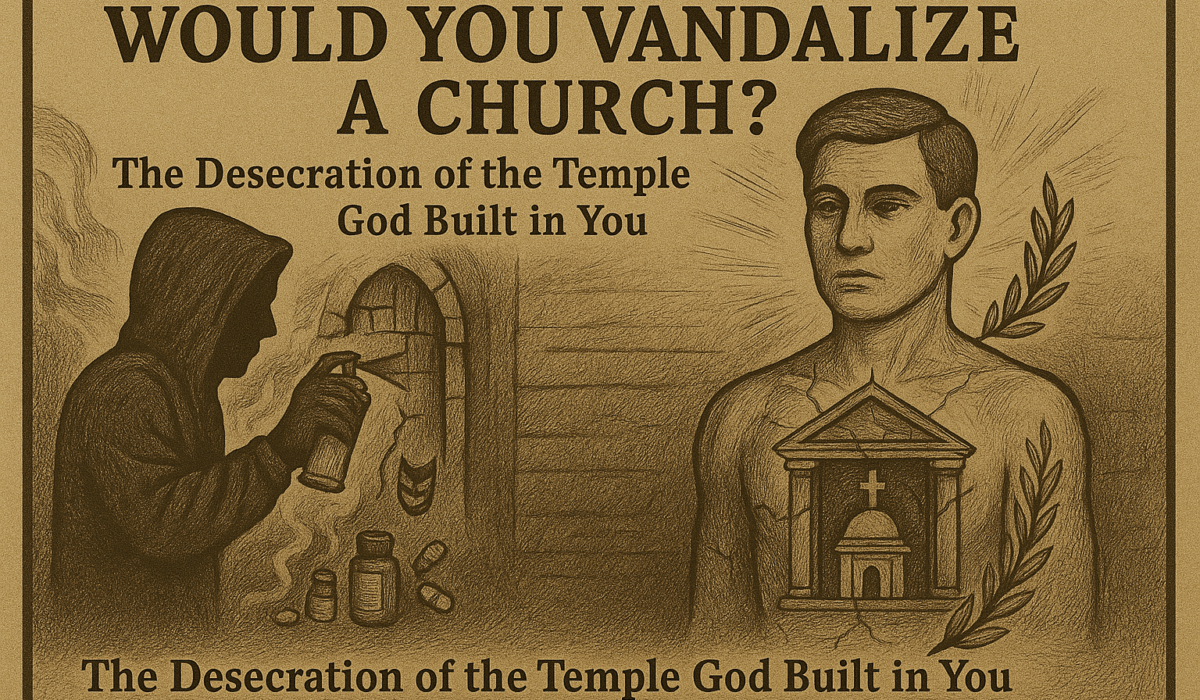
Would You Vandalize a Church?

The Desecration of the Temple God Built in You


Summary: For those who lack the endurance to read what men used to write before attention spans died, Click here the short version.

⚔️ Summary for the Slumbering

This article confronts a soft, modern lie: that your body is personal property. Scripture says it’s a temple. When the veil tore, God moved from stone to flesh – your flesh – and now every habit is either worship or vandalism. The piece traces how believers desecrate the sanctuary within through physical defilement (addiction, gluttony, pharmakeia, laziness, unclean foods, tattoos/piercings), sexual corruption (fornication, adultery, pornography, sodomy, gender rebellion, immodesty), mental/cultural pollution (music, movies, social feeds, books), and moral neglect (lying, idolatry, prayerlessness, profanity, cynicism).

It indicts “grace without gravity,” reminds us that words are altar-fire or graffiti, and calls for Christlike temple-cleansing by repentance, fasting, disciplined order, and daily maintenance of holiness. The thesis is stark: you are owned – bought with blood – so holiness isn’t preference; it’s property law. If you wouldn’t spray-paint a cathedral or stream porn on a church projector, stop vandalizing the sanctuary God built in you. Keep the body clean, the mind pure, the mouth holy, so the world sees not you, but the Builder.

I. From Sanctuaries of Stone to Sanctified Flesh

The Temple God Once Dwelt In

In the beginning, the presence of God was not something casual. It was not easily accessible at will. His holiness had to be veiled, contained, and guarded. The Israelites built a tent of meeting, every measurement exact, every material sacred. The Tabernacle wasn’t just some decoration; it was architecture of fear and awe. God’s dwelling among men required blood, smoke, and boundaries.

When Solomon later built the temple, it became the crown of Israel’s devotion. Gold-plated walls, carved cherubim, and the Ark of the Covenant housed in the Holy of Holies, this was not a community center. It was where the fire of Heaven touched Earth. Priests entered only after cleansing, sacrifice, and trembling. Anyone who crossed the line uninvited was struck dead.

The message was clear: God is not to be approached casually. Holiness was lethal to impurity. The temple wasn’t a symbol of belonging; it was a reminder of distance. The very presence that sanctified the nation could also consume it.


The Transfer of Glory

Then came Christ. The veil was torn. The divine presence moved out of stone and into flesh. No longer confined behind curtains, God’s Spirit took residence within redeemed men and women. What had been fatal to approach was now invited within.

The fire that once burned above the Ark now burns in human hearts. The holiness once separated by blood sacrifices was satisfied by the blood of the Lamb. The body that bows to Christ becomes His sanctuary; the soul that obeys Him becomes His dwelling.

The temple was not abolished, it was relocated. You are now the temple of God.

Paul said:

“Know ye not that ye are the temple of God, and that the Spirit of God dwelleth in you?” —1 Corinthians 3:16

You are the modern Holy of Holies. Your life, your habits, your appetites, each is part of that structure. When you eat, when you speak, when you think, you do so inside the temple God built in you.


The Personal Ark of the Covenant

Inside the ancient Ark rested three things: the tablets of the Law, the pot of manna, and Aaron’s rod that budded. Law, provision, and authority, those three realities defined God’s covenant presence. Today, the same spiritual pattern lives in the believer. The Law is written on your heart. The manna is replaced by the Bread of Life, Christ Himself. The rod of authority becomes the Spirit’s power at work through you.

So when you defile your body, your mind, or your conduct, you are not just “doing something wrong.” You are corrupting the very vessel in which God has chosen to place His testimony, His sustenance, and His authority. You are desecrating the Ark.

That is why sin in the believer is not a small matter, it is sacrilege. What was once external rebellion against a distant God is now internal betrayal against an indwelling one. You cannot hide from His presence when His presence lives in you.


The Responsibility of Stewardship

With the indwelling Spirit comes inescapable responsibility. The priests of Israel had to maintain the temple: cleaning ashes, trimming wicks, replenishing oil, repairing fabrics. The smallest neglect invited decay. Likewise, the modern believer is responsible for the upkeep of the temple within, maintaining discipline, purity, and reverence.

The Holy Spirit does not dwell in a man to serve as a roommate. He reigns as Lord. Your habits are His furniture. Your thoughts are His walls. Your appetites are His lamps. If you pollute them, you are vandalizing His dwelling.

God’s people were once commanded to keep the temple undefiled because His presence dwelt there. That command has not changed, it has intensified. The difference is that now, the temple moves when you move. The sanctuary travels when you walk. And wherever you go, Heaven expects holiness.

The believer who truly understands this will live differently, not from fear of punishment, but from reverence of presence. You don’t light a cigarette in the Holy of Holies. You don’t drag idols through the inner court. You don’t gossip beside the altar. Yet that is exactly what millions do daily inside the very structure God built from dust and filled with His Spirit.

II. Desecrating the Temple: The Modern Vandal’s Hand

The holiness that once required a priesthood now rests in your skin. The fire that consumed offerings now burns in your spirit. To desecrate the body is to desecrate the sanctuary. To abuse the mind is to defile the altar.

Sin isn’t merely “bad behavior.” It’s spiritual vandalism, smashing the stained glass, torching the pews, and carving profanity into the walls of God’s house.


1. Physical Defilement

The body is the outer court of the temple, the visible structure through which the unseen God reveals Himself. It is the architecture of obedience, the physical testimony of divine order. To abuse it is to dishonor the Architect. To neglect it is to let weeds grow in sacred ground.

Once, priests were commanded to wash before entering the holy place. They purified themselves with water and blood before they ever touched the altar. But now, believers waltz into God’s presence reeking of addiction, indulgence, and laziness, and call it “grace”.

The outer court was meant for preparation, not pollution. It was where the worshiper brought sacrifice, not self-sabotage. Yet modern men fill it with the idols of appetite, and modern women treat it as a stage for vanity. The body, designed as the framework of discipline and dominion, has been reduced to a playground of desire.

Every act of physical defilement is a sermon preached against the holiness of God. You cannot host His presence and live like a glutton, smoke like a pagan, or sleep like a sloth and call it liberty. Modern believers desecrate this court daily through indulgence, excess, and apathy, and then wonder why the inner sanctuary feels empty.

Smoking and Vaping:

The body was never meant to be an ashtray. What God designed as a vessel of breath, His own Spirit breathed into dust, modern man fills with poison and smoke. The incense that once rose from holy fire has been replaced with the fumes of rebellion. Every puff declares, “This body is mine,” as though ownership were still in question.

Smoking and vaping are not mere habits; they are slow acts of self-desecration. The lungs, crafted to sing praise and speak truth, are choked by toxins for the sake of temporary calm. A man cannot plead for the breath of God while poisoning the very system through which that breath flows.

The temple was meant for life, not for slow suicide. You would never light a cigarette in the sanctuary of the church, why, then, do you light one in the sanctuary of flesh? Each exhale of smoke is a visible sermon of rebellion: worship offered not to Heaven, but to habit.

Gluttony:

When the stomach becomes god, worship shifts from Heaven to appetite. Food, meant for strength and fellowship, becomes an idol of comfort and escape. Every meal turns into a sacrifice, not to the Lord, but to the god of indulgence. The temple begins to sag under the weight of self-gratification; the priest within grows dull and unfit for service.

Gluttony is not merely overeating, it is misplaced devotion. It takes what was meant to sustain and turns it into what enslaves. The same hands that should be lifted in thanksgiving are instead busy feeding endless craving. The same body meant to serve becomes sluggish, distracted, and numb to conviction.

Gluttony mocks self-control and exposes spiritual weakness. It declares, “My hunger rules me.” Yet the man ruled by his belly cannot be ruled by his spirit. When the flesh leads, the temple decays, and worship becomes digestion instead of devotion.

Pharmaceutical Idolatry and Drug Abuse:

The modern world calls it “medicine,” but much of what passes under that name is sorcery by another label. Pharmaceuticals, in their proper use, can aid healing, but when they become the source of peace, escape, or control, they become idols. The line between prescription and possession is thin, and most have already crossed it.

Drugs, whether swallowed, injected, or inhaled, are counterfeit sacraments. They promise rest, joy, and relief, and salvation from death, but deliver dependence and decay. The Holy Spirit is called the Comforter; to seek comfort elsewhere is to dethrone Him. Every pill worshiped for peace is another prayer withheld from the true Healer.

A drugged mind is an unlocked temple. The gates of discernment swing open, and every unclean spirit walks through unchallenged. The man addicted to chemicals cannot be ruled by the Spirit; he has already leased out the throne. What God meant as a sanctuary of clarity becomes a fog-filled ruin of confusion.

Laziness:

Neglect is one of the quietest forms of sin. It rarely shouts, but it always rots. The temple doesn’t need to be attacked to collapse, it only needs to be ignored. Laziness is the termites of the soul, eating away unseen until the structure gives way under the weight of its own apathy.

God gave Adam work before sin entered the world, proving that labor was never punishment, it was purpose. To reject labor, discipline, and effort is to reject divine design. A man who won’t rule his time or train his body has already surrendered his dominion.

Laziness turns the temple into a ruin. Dust gathers on the altar. The lamps of devotion flicker out. The strength meant for service atrophies in idleness. A man who won’t sweat in obedience will eventually bleed in consequence. The temple requires upkeep, without it, glory departs and weeds take root.

Eating Unclean Foods:

God never revoked His dietary wisdom. What He declared unclean wasn’t arbitrary, it was architectural. The same God who engineered the human body also defined what maintains it. His restrictions were never about legalism; they were about life. Holiness has always included what enters the mouth, because what feeds the flesh shapes the spirit.

Yet many believers mock that wisdom. They stuff the temple with what He forbade and then kneel to pray for healing. They beg for divine intervention while eating divine instruction. It’s like pouring oil on the church floor and asking God to stop the fire, or dragging a carcass onto the altar and wondering why the incense smells foul.

Unclean food is more than bad diet, it’s open rebellion. Each forbidden bite says, “My appetite decides what’s holy.” It’s a declaration of ownership, a denial of stewardship. The same God who told Israel what to offer and what to avoid has not changed His nature; He still cares what fills His temple.

The Spirit of God dwells within you, why would you feed Him filth? The temple is not a dumpster. You cannot host divinity on a diet of defilement and call it grace. The same mouth that blesses the Lord should not also bless the unclean. What enters your body preaches a sermon louder than what leaves your lips.

Tattoos:

The body is not a billboard for personal stories or cultural art. It is the temple of the living God. Yet modern believers treat the skin – God’s own canvas – as a scrapbook for vanity, rebellion, and remembrance of sin. What once marked pagans now marks the baptized.

In ancient times, tattoos and body markings were signs of ownership. Slaves bore the symbols of their masters. Warriors bore the emblems of their gods. To mark one’s flesh was to declare allegiance. That is why God commanded His people:

“Ye shall not make any cuttings in your flesh for the dead, nor print any marks upon you: I am the Lord.” —Leviticus 19:28

He was not forbidding art, He was forbidding idolatry. The flesh already belonged to Him. To carve or ink it for other purposes was to invite other masters. Modern tattoo culture resurrects the same pagan impulse: to rewrite the body, redefine identity, and rebrand ownership.

Many will say, “But mine has meaning.” So did the pagan’s. Every false god had a reason, every idol an intention. But meaning is irrelevant when obedience is absent. You can’t “redeem” rebellion with sentiment. Even “Christian” tattoos, crosses, verses, names of Jesus, turn the temple wall into a mural of graffiti, as though the holiness within were not enough.

The temple was never meant to be advertised. The glory of God is internal, not inked. The Spirit’s mark is invisible yet undeniable, a changed heart, not decorated flesh. To tattoo the temple is to announce, “The outside needs what the inside lacks.” But the indwelling of the Holy Spirit requires no external signature.

Every mark carved into skin for self-expression is a small rebellion against divine design. The ink fades, but the statement remains: I will write my own story on what God already wrote His name upon. The temple does not need decoration; it needs devotion. Holiness is not art – it’s obedience. Vandalizing the temple walls is an open act of rebellion and defiance in the war against surrendering yourself to God. 

Piercings & Mutilation:

Today, many decorate God’s temple like a pagan shrine, treating His image as a canvas for rebellion rather than reverence. The same body that once bore His likeness now bears the marks of vanity, trauma, or defiance. Self-mutilation, excessive piercing, and body alteration parade under the banner of “self-expression,” yet what they truly express is alienation from the Creator.

The pagan nations marked their flesh to honor false gods. Israel was commanded not to. The reason was simple: the body already bore the seal of its true Owner. To carve it, puncture it, or distort it for attention is to vandalize what Heaven designed with purpose. It’s a declaration that says, “I will mark myself because His mark is not enough.”

This is not about minor adornment or modest care, it’s about intent. When a person alters their flesh to shock, seduce, or proclaim autonomy, they preach a sermon of rebellion through the body God calls His home. The temple is not an art project; it is sacred architecture. Every cut, every piercing, every display for the sake of pride is defilement of the temple.

Self-mutilation is not beauty, it’s bondage. Vanity is not confidence, it’s idolatry. Every wound inflicted for fashion or validation dishonors the covenant that body represents.  Your body was never meant to mirror the culture; it was meant to mirror the Creator. The temple is already magnificent without modification. To alter what God perfected is not enhancement – it’s heresy.

2. Sexual Corruption

If the body is the outer court, the sexual life is the Holy Place – sacred, restricted, and purposeful. It was never meant for exhibition or casual entry. This is the chamber of covenant, where the physical mirrors the spiritual, where union was designed to preach the gospel of loyalty and fruitfulness. But in the modern world, the doors are thrown wide open, and idols of lust now stand where the lampstand should be. The fragrance of devotion has been replaced by the stench of indulgence. What God designed as a covenantal act has been reduced to a recreational one.

Sex was never man’s invention, it was God’s. And like all of God’s creations, it demands reverence. He set boundaries around it because He set holiness within it. When those boundaries are ignored, desecration follows. Fornication, adultery, pornography, and every perversion of design drag idols into the sanctuary. Every act of lust outside covenant is like burning strange fire before the Lord, an imitation of worship that brings judgment, not joy.

The world calls it freedom; Heaven calls it blasphemy. Each casual encounter, each click of filth, each fantasy indulged is a sacrifice to the wrong altar. Men who were meant to guard the temple now invite harlots into the Holy Place. Women meant to represent purity now market their flesh as if sacred things were for sale. The lamp of holiness flickers while the flames of desire consume what was once set apart.

Sexual corruption is not only sin, it’s treason against divine order. It desecrates the holiest furniture of human existence: covenant, reproduction, and intimacy. The Holy Place becomes a brothel of rebellion when lust is allowed to rule. You cannot claim to belong to Christ while letting the spirit of Jezebel decorate His dwelling.

The sexual life is sacred architecture. It is not casual, it is covenantal. It is not for display, it is for devotion. And when a man or woman treats it lightly, they do not merely sin, they defile the sanctuary that was meant to bear God’s image and produce His legacy.

Fornication and Adultery:

God designed sex as covenantal worship, an act of oneness under authority, not a hobby of appetite. It was meant to confirm vows, not replace them. Fornication and adultery are not simply “mistakes in judgment.” They are vandalism against the architecture of covenant.

In Scripture, adultery was not just moral failure, it was high treason against the kingdom of order. It defiled families, desecrated nations, and invited divine judgment. Fornication is its cheaper cousin, rebellion without commitment, pleasure without purpose. Both treat what is sacred as casual, reducing something meant to echo eternity into a moment of fleshly indulgence.

Each sexual act outside covenant is a false offering, pleasure laid on a profane altar. It turns the Holy Place of intimacy into a battlefield of impulse. The body was meant to seal promises; now it seals perversion. And those who treat sex as recreation are, in truth, performing their own worship service, to the god of self.

Marriage is not man’s invention, it is the first covenant instituted by God Himself. When sex leaves that covenant, it leaves holiness. The result is always the same: defilement, shame, and spiritual disconnection. You cannot mingle covenants without corrupting both. Fornication and adultery are not private matters, they are public desecrations in God’s sight.

Pornography:

Pornography is the digital idol of our age, an endless stream of lust dressed as liberty. It is voyeurism baptized in rebellion, the altar of on-demand idolatry. It requires no temple, no priest, and no shame, just a screen and a will surrendered to darkness.

The believer who indulges in pornography invites demons into the Holy Place. Each image viewed is an unholy offering. The eyes become the gateway of defilement; the mind becomes the theater of desecration. What was once sacred imagination, designed for prayer, creativity, and divine reflection, is now hijacked by filth.

Pornography doesn’t merely tempt; it rewires worship. It teaches the temple to crave sin like incense. It numbs conviction and breeds bondage. It turns men into consumers of corruption and women into commodities of lust. The damage isn’t only moral, it’s architectural. The structure of the soul begins to crack under the weight of unrepentant indulgence.

You wouldn’t project pornography on the sanctuary wall during Sunday service, yet many do exactly that within the sanctuary of their minds. Heaven sees it all. Every secret view, every hidden fantasy, every click in the dark, it’s all graffiti on the inner walls of God’s dwelling. The Spirit cannot fill a vessel devoted to another spirit.

Sodomy and Gender Rebellion:

The temple has a blueprint. Every wall, every curve, every design is deliberate. God created male and female as complementary reflections of His own image, two halves of a single revelation. To corrupt that design is to vandalize His divine architecture.

Sodomy, transgenderism, and every rebellion against biological reality are not personal “expressions.” They are spiritual declarations of war against the Creator’s order. They say, “I will redesign what God designed.” That is idolatry. It replaces the Potter with the clay.

Scripture is not vague: men lying with men and women with women are abominations not because God hates them, but because they hate His design. They turn the covenantal act of creation into a parody of pleasure. They erase the prophetic symbolism of marriage, the union of Christ and His bride, and replace it with the worship of self.

God judged Sodom not for ignorance but for arrogance. They knew, and they mocked. The modern world does the same but hides behind slogans of tolerance and “love.” But love without holiness is lust, and compassion without truth is cruelty. To affirm what God condemns is to stand as co-conspirator in the defilement of His temple.

The human body is sacred architecture; its form is theology in flesh. To alter it, corrupt it, or misuse it is to scrawl heresy across the blueprints of Heaven.

Immodesty and Exhibition:

The priests of old dressed to conceal glory, not display flesh. Their garments declared reverence. They wore holiness upon their sleeves and humility on their hems. Modern believers reverse the pattern – bare skin, tight fabric, and self-display passed off as “confidence.”

But the temple was never built to advertise itself. The body is not a billboard; it’s a sanctuary. To flaunt what God clothed is to mock the idea of sacredness itself. Immodesty is not freedom, it’s surrender. It says, “I must be seen,” when the true disciple says, “He must be seen.”

The culture of exposure is nothing new; it’s the oldest temptation on earth. Eve saw, desired, and took, and ever since, fallen humanity has worshiped visibility over virtue. Every exposed inch of flesh for the sake of attention is a silent sermon of rebellion. Every deliberate act of seduction is an open invitation for defilement.

Exhibition is the modern liturgy of pride. Social media has become its temple; selfies its sacrifices. But modesty is not oppression, it’s architecture. It protects what’s sacred from becoming spectacle. It guards the mystery of holiness from the mockery of the crowd.

A body dressed with reverence declares: This temple is occupied. It’s not on display because it’s under divine ownership.


3. Mental and Cultural Pollution

If the body is the outer court and sex the Holy Place, then the mind is the inner chamber, the space where communion with God is meant to dwell. The thought life is sacred ground. What you allow to live there becomes your master. Yet the modern believer floods this chamber with noise, screens, and sensuality. The average Christian’s mind is less like a sanctuary and more like a marketplace.

The music that fills your ears, the shows that fill your eyes, the feeds that fill your hours, they are not harmless. They are liturgies. Every lyric, every image, every post teaches you what to worship. The devil no longer needs idols of stone; he has modern algorithms.

Music:

What lyrics echo through the corridors of your soul? The hymns of rebellion now replace the songs of redemption. Words that glorify lust, greed, and pride become mantras that shape the inner court. The melody becomes a liturgy of corruption. You can’t claim holiness while chanting the anthems of hell.

Movies and Television:

Would you project those scenes on the church jumbotron during Sunday service? Would you invite your pastor or your children to watch them beside you in the sanctuary? Yet you play them in the sanctuary of your mind and call it relaxation. Every image viewed is a seed; every storyline normalized is an altar built. Entertainment shapes conviction faster than sermons when the conscience is unguarded.

Social Media and TikTok:

An altar of vanity and idolatry. Every swipe another offering, every “like” another incense of approval burned to the god of self. The endless scroll has replaced meditation, and distraction has become devotion. The temple becomes a carnival of envy, lust, and outrage – no longer a house of prayer but a hall of mirrors reflecting self-obsession.

Reading and Consuming Filth:

Words are not harmless; they are spirit. Every page of your pornographic novel plants something, truth or corruption, light or shadow. The modern “literary” world worships rebellion as art and perversion as sophistication. What you meditate on, you magnify. To read what mocks holiness and call it “culture” is to invite mockery into your own soul. If it wouldn’t sit on the church’s altar, it doesn’t belong on your nightstand.

That music you are listening to, those shows you are watching, the movies you play in your home, the content you view on TikTok or social media, the filth you are reading – would you want that content on the jumbotron in your church during a full house?

Because Heaven already sees it projected inside His temple – you. Mental and cultural pollution doesn’t just entertain, it educates. It trains your soul to tolerate sin, to normalize impurity, to forget reverence. Slowly the inner courts grow dim, the incense burns out, and the Spirit’s whisper is drowned by static. A polluted mind cannot host pure revelation.

If you want the peace of God, silence the noise that mocks Him. Clear the stage where the world performs, and rebuild the altar where holiness speaks. The mind must become a sanctuary again, not a cinema for filth, but a chamber for communion with the holy spirit.

If you put Garbage in, you will get rebellion out!


4. Moral and Spiritual Neglect

There is more to desecration than indulgence; there is also neglect. The temple rarely collapses in a day, it rots through apathy. Most sanctuaries are not destroyed by invaders, but by caretakers who stop caring. The devil doesn’t always need to tempt you; sometimes he only needs to distract you. When discipline fades, decay begins.

Neglect is rebellion wearing sleep. It’s the quiet undoing of everything holy, no explosions, no blasphemy, just dust where there once was fire. The temple of God can fall into ruin not because of war, but because no one bothered to maintain it.

Lying:

Every lie spoken is a crack in the marble. God is truth; falsehood is rot. To speak deceit while claiming His Spirit is to whisper corruption in the sanctuary. Each lie weakens the foundation, turning what was once a house of prayer into a house of pretense. The Holy Spirit is called the Spirit of Truth, He cannot dwell in a temple that echoes falsehood. A lying tongue is a serpent in the sanctuary.

Idol Worship:

The modern idols are not golden statues; they are careers, screens, relationships, and self-importance. They are paychecks, platforms, and pleasures that demand your time, energy, and devotion. The heart becomes a storage room of altars, each one competing for worship. The tragedy of idol worship is not that you abandon God, it’s that you crowd Him out.

A man can go to church every Sunday and still bow daily to the god of convenience. A woman can sing hymns yet worship her reflection. Idolatry is not just loving the wrong thing, it’s loving anything more than the right One.

Laziness in Spirit:

Prayer abandoned. Scripture ignored. Fellowship forsaken. The lamps of devotion go dim, and soon the temple smells of mildew. Spiritual laziness doesn’t announce itself, it settles in quietly, replacing fire with fog. You stop praying because you don’t feel like it, and you don’t feel like it because you stopped praying.

The soul becomes sluggish, unresponsive, disinterested. The altar still stands, but no incense burns upon it. The temple’s doors creak from disuse. You don’t have to hate God to lose Him; you only have to stop seeking Him.

Profanity and Cynicism:

Speech once meant for blessing now drips with sarcasm, complaint, and rebellion. The temple’s choir now chants discord. Profanity is not just dirty language, it’s the sound of decay. It signals that reverence has died, that the sacred has become common. 

Cynicism is the mold that grows in neglected corners, the voice that mocks holiness because it no longer remembers what it feels like.A cynical believer is a broken priest, performing ritual without reverence. When gratitude fades, sarcasm fills the gap. When praise dies, complaint becomes the new liturgy.


Neglect doesn’t always look wicked; sometimes it just looks indifferent. But indifference is the slowest and most effective form of desecration. A holy place left unkept will soon be unholy by default. The weeds of worldliness grow where the soil of holiness is left unattended.

The body that once carried glory can become a ghost town of forgotten discipline. The Spirit will not dwell forever in what man refuses to maintain.

Neglect may feel harmless, but it’s spiritual corrosion, a steady dripping of compromise until the temple collapses from within. Keep the lamps burning. Keep the altar clean. Keep the sanctuary alive. Holiness dies not from sin alone, but from silence.

III. When Reverence Died: The Loss of Holy Fear

The Fear That Once Preserved Life

There was a time when fear was not a flaw, it was wisdom. The Israelites didn’t worship casually; they approached the presence of God with trembling hands and bowed heads. His holiness was not an abstract doctrine, it was a deadly reality. Nadab and Abihu learned that truth when they offered strange fire before the Lord and were consumed. Uzzah learned it when he reached out to steady the Ark and fell dead on the spot. Even Moses, who spoke with God as a man speaks with his friend, was told: “Thou canst not see my face: for there shall no man see me, and live.”

The fear of God was never terror for terror’s sake, it was awe in the face of unimaginable majesty. It was the right order between creature and Creator. That fear built restraint, obedience, and purity. It kept priests from approaching unwashed. It kept Israel from blending with pagan customs. It preserved the sacred from becoming common.

But today, fear has been rebranded as “legalism.” Reverence has been mocked as “religious.” Holiness is treated like a personality type rather than a divine requirement. The modern church has lost its fear, and with it, its power.


Grace Without Gravity

Grace is not supposed to make you casual; it’s supposed to make you careful. Yet modern believers treat the blood of Christ as a soft blanket instead of a covenant oath. They say “God understands” when what they mean is “I will not repent.”

Cheap grace has gutted reverence. Men once fell on their faces before the Lord. Now they sip coffee in His presence and scroll through their phones while calling it worship. Women once covered themselves in modesty and humility; now they parade sensuality in sanctuaries built by suffering saints.

Grace was never meant to erase awe, it was meant to restore access. The veil was torn, yes, but it was not torn to make God less holy. It was torn to make you more holy. Christ didn’t die so you could walk into the temple unwashed; He died so you could finally be clean enough to enter.

When grace becomes an excuse instead of empowerment, the temple fills with smoke again, not the incense of praise, but the smog of compromise.


The Casual Christian

We live in an era where the sacred has become entertainment and the holy has become a hobby. The modern believer treats God like a subscription, cancel anytime. They sing of surrender but live on self-rule. They expect divine blessing while mocking divine boundaries.

There was a time when people feared to even misquote Scripture; now preachers twist it for applause. There was a time when sin brought shame; now it brings followers. Churches that once called for repentance now call for “self-acceptance.” Holiness is unfashionable. Righteousness is “judgmental.” Truth is “offensive.”

The result? A Christianity without conviction, without depth, without presence. A temple filled with noise but empty of glory. The modern Christian would rather feel goosebumps than conviction, prefer good lighting to good doctrine, and mistake emotion for encounter.

Casual Christianity is not harmless, it is fatal. It convinces a man he is clean while he tracks mud across the sanctuary. It tells the woman she is “enough” while she lives unwashed. It puts “Jesus” on t-shirts and bumper stickers but leaves Him outside the house He’s supposed to rule.


Restoring Awe

The fear of God is not meant to drive you away, it’s meant to bring you to your knees. And that’s where true worship begins. To restore awe is to remember Who it is that dwells within you. The Holy Spirit is not a vibe, a feeling, or an energy. He is the same consuming fire that filled the temple, the same Spirit that raised Christ from the dead.

You don’t have to die before seeing God’s face anymore, but you do have to die to self. You don’t need a priest to approach Him, but you do need purity. Reverence is the posture that protects intimacy. Without it, worship becomes performance, and the temple becomes a stage.

When reverence returns, holiness follows. When holiness returns, power follows. And when power returns, the world takes notice, not because Christians are loud, but because they are luminous. The early church turned the world upside down because they walked with the terror and tenderness of knowing God lived inside them.

Revival doesn’t begin with noise, it begins with reverence. It starts when men stop treating the temple like a playground and start treating it like holy ground again.

IV. The Language of the Temple: Words as Worship or Graffiti

Speech Reveals the Spirit

Every temple has an altar,  and in the living temple of man, that altar is the mouth. What burns there, incense or refuse, reveals what god is truly worshiped.  Christ said, “Out of the abundance of the heart the mouth speaketh.” (Matthew 12:34) That means speech is never neutral. Words are the overflow of worship. The vocabulary of a person exposes the occupant of the temple.

When the Spirit rules – speech becomes order, blessings, truth, and encouragement rise like incense. When the flesh rules, speech becomes chaos – profanity, lies, mockery, and manipulation pour like sewage from a cracked vessel.

Your words are offerings, not decorations. Every sentence that leaves your mouth is either a sacrifice of praise or an act of desecration. The tongue doesn’t simply express; it consecrates or corrupts. The most dangerous vandalism doesn’t come from hands, it comes from lips.


Profanity as Pollution

Profanity is not “just words.” It is the pollution of holy air. It takes what was meant for worship and turns it into waste. The tongue that utters “Holy, Holy, Holy” on Sunday often spits venom by Monday. This is not just a minor inconsistency, but idolatry. It shows that reverence is a costume, not a character.

You cannot both bless God and curse men made in His image without cracking the foundation of your own temple. The lips that slander others have already slandered the One who made them. Every vulgar word is spiritual graffiti sprayed across the inner walls of holiness. Every crude joke that blasphemes is a stain on the altar of truth.

The world normalizes profanity as authenticity. Scripture exposes it as rot. “Let no corrupt communication proceed out of your mouth,” Paul commanded, “but that which is good to the use of edifying.” (Ephesians 4:29) To defile your speech is to invite the unholy into the Holy Place.

Imagine walking into a cathedral where every stone echoes praise, and then shouting obscenities until the hymns fall silent. That’s what happens every time a believer uses their words to destroy rather than build.


Gossip and Lies

If profanity is smoke that pollutes the air, gossip is mold that spreads across the walls. It grows quietly, rotting the structure from within. Gossip is not “sharing concern.” It’s verbal idolatry, exalting your opinion above another’s reputation. It feeds pride while poisoning unity. Scripture calls it what it is: whispering, tale-bearing, sowing discord. It is the sound of snakes slithering through the temple courts.

Lies are another form of rot. Every lie spoken desecrates the dwelling of Truth Himself. God cannot lie; therefore, every falsehood aligns the speaker with His enemy. When a man lies, he breaks more than trust, he breaks covenant. The Spirit of Truth cannot reign in a mouth devoted to deceit.

You don’t have to scream to desecrate the temple. Sometimes quiet words do the greatest damage, murmuring, passive-aggressive remarks, false praise, hidden resentment. Whispered corruption is still corruption.

Holiness begins in honesty. If you want a pure temple, start by purifying your speech.


Sanctified Speech

The same lips that can desecrate can also dedicate. God designed speech as creative power. The first act of creation was not movement, it was speech. “And God said, Let there be light.” Every word that leaves your mouth carries the echo of that authority. That’s why speech must be stewarded like fire, it warms or burns, depending on the hands that hold it.

A sanctified tongue turns conversation into worship. Gratitude becomes its default language. Truth becomes its currency. Encouragement becomes its fragrance. A man who controls his tongue controls his life, for the tongue is the rudder of the ship.

To cleanse your language is not to sound pious,  it is to sound like your King. Words seasoned with grace, grounded in truth, and restrained by love are the marks of a purified altar. They shift the atmosphere around you.

Every home, every relationship, every workplace becomes a chapel or a courtyard depending on your speech. When the mouth becomes an altar again, the presence of God returns to the temple.

So guard your lips. Guard your tone. Guard your conversations. You cannot claim to host the Holy Spirit and speak like the unholy world. You cannot sing in tongues of angels and gossip in the tongues of devils. The mouth is the loudest testimony of who reigns inside.

V. Cleansing the Inner Courts

The temple does not cleanse itself. Holiness is not accidental. Defilement enters by neglect, and order returns only through force. Christ’s cleansing of the temple was not gentle; it was violent in its righteousness. The same must happen within every believer who dares to call himself a dwelling of the Holy Spirit.


Christ’s Example of Purification

When Christ entered Jerusalem’s temple and saw merchants trading in the courts, He did not pause to negotiate. He overturned tables. He cracked a whip. He drove out the unholy with fury. Why? Because the temple was never meant to be a marketplace.  It was built for prayer, not profit; for reverence, not routine.

“My house shall be called the house of prayer; but ye have made it a den of thieves.” — Matthew 21:13

The modern believer must understand: the same Christ who cleansed stone courts will cleanse fleshly ones. The tables He overturns today are those of addiction, hypocrisy, vanity, and compromise. The whip He wields is conviction.  If you invite Him in, expect disruption. Holiness always begins with conflict.

You cannot cleanse a temple while protecting its idols. Christ will not share His house with corruption. When He enters, He expels. That is not cruelty, it is mercy.


Repentance and Fasting

Repentance is not embarrassment. It is demolition. It tears down the walls of self-justification and rebuilds them on humility. To repent is to agree with God’s verdict, that sin is not a mistake to be managed, but a stain to be purged.

True repentance doesn’t beg for lenience; it cries for cleansing. It does not ask, “How close can I get to sin?” but “How far can I flee from it?”

Fasting is repentance in physical form. When you deny your flesh, you dethrone it. You starve the rebellion that wages within. Every skipped meal becomes a statement: “My body is not the master of this temple, my God is.”

Fasting clears the fog that hides compromise. It reveals what rules you. It is the broom that sweeps out the cobwebs of self-indulgence. In a world obsessed with feeding every appetite, fasting declares allegiance to a higher hunger. Repentance cleanses the soul. Fasting trains the body. Together they prepare the temple for glory.


Discipline as Devotion

Cleansing the temple is not a one-time event, it is a lifelong routine. The priests of old washed daily, trimmed the lamps, replaced the bread, and maintained the altar. That is the picture of Christian discipline.

Prayer, Scripture, physical stewardship, and moral restraint are not legalistic chores, they are maintenance of sacred space. Without them, the temple quickly decays. Without them, the fire dies out.

Discipline is worship in action. It says to Heaven: “I will keep what You entrusted to me.”

A man who rises early to pray is not showing off, he is opening the temple doors for the day. A woman who controls her tongue is not being “nice”, she is guarding the altar. A family that trains its children in holiness is not being “strict”, they are maintaining generational sanctity.

God does not dwell in chaos. He dwells in order. Discipline restores that order. Every act of obedience is another stone set straight in the wall. Every temptation resisted is another floor polished for His glory.


Restoration of Order

When the temple was defiled, God’s glory departed. When it was restored, His glory returned. That is still the pattern today. Cleansing is never for appearance, it is for presence.

The world teaches self-care; Scripture teaches soul-care. The difference is eternal. One polishes the idol, the other purifies the altar. The first flatters the flesh, the second feeds the Spirit.

When repentance has done its work, peace fills the inner courts. The noise of sin fades. The lamps burn bright again. The Word once more echoes through the halls. Prayer returns to its rightful place at the center.

Christ did not cleanse the temple to destroy it; He cleansed it to restore its purpose. Likewise, conviction is not condemnation, it is construction. God corrects what He intends to use. If your life feels chaotic, it is because the temple is cluttered. Remove what does not belong, and peace will return.

The Holy Spirit is not absent; He is simply awaiting a clean seat.

Remember this pattern:

  • Sin invites confusion.
  • Confusion demands cleansing.
  • Cleansing restores order.
  • Order welcomes presence.

Holiness is not the absence of joy; it is the architecture of it. Peace thrives where purity lives.


The believer who allows Christ to cleanse his temple becomes a walking sanctuary of peace, power, and purity. But he who clings to defilement becomes a noisy marketplace, crowded, chaotic, and uninhabitable for glory.

When Christ overturns the tables in your heart, let Him. The whip of discipline is mercy disguised as discomfort. And the moment the dust settles, you will hear what has been missing all along: the sound of holiness returning.

VI. Living as the Sanctuary of the Most High

Ownership and Obligation

The modern world preaches, “My body, my choice.” Scripture answers, “Ye are not your own, for ye are bought with a price.” (1 Corinthians 6:19-20) The blood of Christ was not a suggestion, it was a purchase. He didn’t redeem you to rent space; He bought the property outright. The deed now reads: Owned by the Most High God.

You are not a free agent; you are a steward. Everything you do with your body and mind is done under ownership. Your habits are a testimony to whether you honor or abuse that ownership. To say “It’s my body” is to commit spiritual theft. The temple is His. You are merely its caretaker.

Holiness, then, is not about preference, it’s about property law. When you defile your body, you vandalize what belongs to another. When you discipline it, you honor its true Owner.


Daily Maintenance of Holiness

A temple doesn’t stay clean on sentiment; it stays clean on schedule. Holiness must be maintained daily, through watchfulness, repentance, and obedience. The believer who ignores daily maintenance will soon find cobwebs of compromise in every corner.

Guard what enters.
Your eyes are windows. Your ears are gates. Your mouth is a door. Every song, every show, every post, every meal, every conversation is either purification or pollution. Would you let pagans spray graffiti inside your church? Then why let godless media defile your mind?

Feed what’s holy.
The Spirit within must be nourished with Scripture, prayer, and obedience. You cannot binge sin and expect to glow with glory. The lamp of holiness burns on the oil of discipline.

Reject what’s decaying.
The longer sin remains, the harder it becomes to uproot. Confess early. Repent quickly. Don’t let rot set in. God is not mocked; neglect always shows.

Holiness is a rhythm, cleanse, fill, guard, repeat. A clean temple today will not stay clean tomorrow without attention.


Walking in Reverent Strength

Reverence is not weakness, it is strength under authority. The man who fears God fears nothing else. The woman who honors the Holy Spirit walks in unshakable confidence. Reverence produces power because it aligns the temple with its Builder. Disorder weakens, but discipline fortifies.

When you treat your body as sacred, your health reflects it. When you guard your speech, your relationships thrive. When you discipline your appetites, your spirit gains authority. Holiness is not fragility – it is divine structure.

The world mocks reverence as outdated, but Heaven calls it qualification. God trusts His presence only to those who respect it. A life ordered by holiness becomes a fortress against chaos. When the enemy comes, he finds no open doors, no broken windows, no unguarded gates, only light.

Reverent strength is masculine in firmness and feminine in fidelity. It builds households that last, children that listen, marriages that model Christ and the Church. It is the architecture of dominion. Guard what you wear and what you consume.

The temple was never meant to be a stage or a garbage can. Dress as though you know Who dwells inside you. Eat as though you believe He still has a say in what enters His house.


The Final Question

Here lies the question that cannot be escaped: Would you vandalize a church?

Would you light a cigarette at the altar? Would you watch pornography on the sanctuary projector? Would you gossip through the pulpit microphone? Would you carve rebellion into the pews? Would you vomit profanity against the stained glass?

You wouldn’t dare walk into church or temple carrying a pig to sacrifice on the altar – but you’ll fill your body with what He calls unclean and still lift your hands in worship.

Holiness isn’t about ceremony, it’s about consistency. The same God who rejected polluted sacrifices still rejects polluted lives. He hasn’t changed, only our reverence has. Most would recoil: Never!  Yet millions do it daily in the temple God built in them.

Every puff, every sip, every curse, every indulgence, every idle scroll is a crack in the wall of holiness. Every compromise whispers, “This temple is mine.” But it isn’t.

God’s Spirit no longer dwells behind a curtain of gold and linen. He dwells in living flesh, yours. Your heartbeat is the drum of His sanctuary. Your breath is the incense of His altar. Your words are the echoes of His glory – or the noise of rebellion.

If you would not vandalize a church built by men, then stop vandalizing the one built by God. Let your body be clean. Let your mind be pure. Let your mouth be holy. Let your life be worthy of the Presence it carries.

Because when you walk in holiness, the world no longer sees you, they see the temple. And when they see the temple, they remember the Builder.


Would you vandalize a church? Then keep holy the one God built in you!

Come Out of Her, My People: Leaving Babylon’s Systems Behind

I: Babylon Then and Now – A System of Rebellion

“And I heard another voice from heaven, saying, Come out of her, my people, that ye be not partakers of her sins, and that ye receive not of her plagues.”
— Revelation 18:4 (KJV)

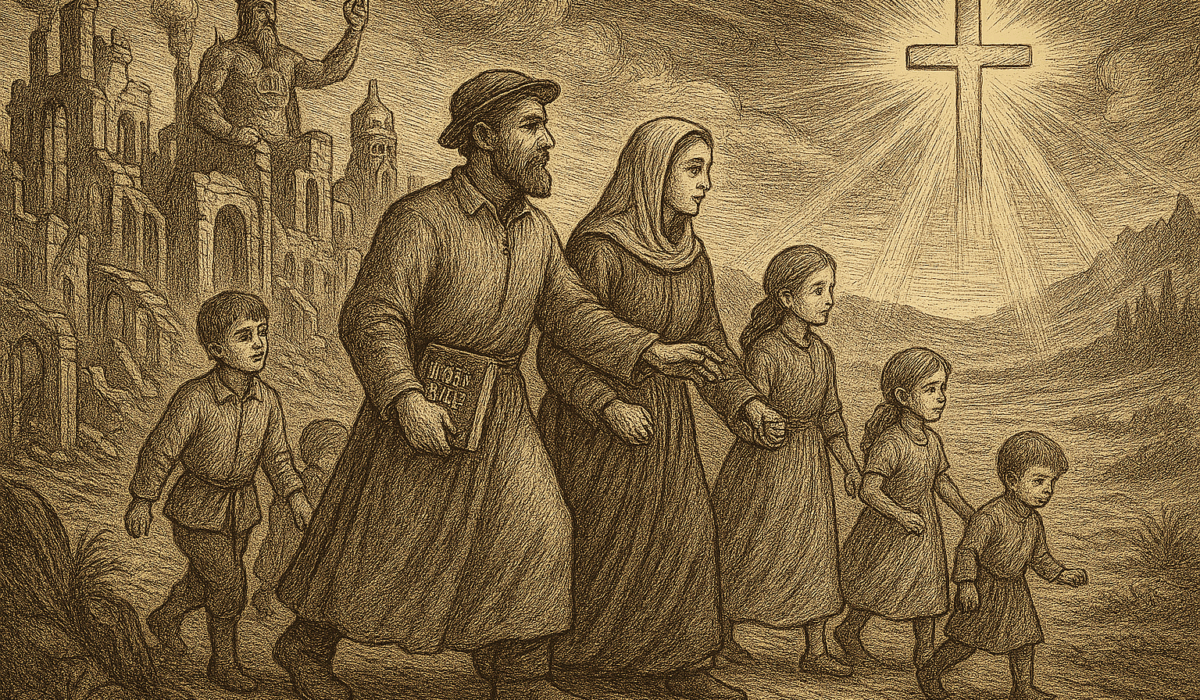
The command from Heaven is not unclear. It is not optional, nor is it an abstract metaphor. It is a summons, a divine war cry to God’s covenant people. Calling them to segregate, separate, and withdraw from the entangling systems of this present evil age.

This is not merely a call to avoid “sin.” It is a call to leave systems, to forsake structures that are built upon rebellion. In the Bible, the term “Babylon” is more than a physical empire. It is a symbolic name used by the prophets and apostles alike to describe worldly civilization built apart from God’s law, ruled by tyrants and sorcery, filled with sexual perversion, religious syncretism, centralized economic power, and aggressive warfare against God’s people.

Babylon is the anti-Kingdom, the satanic counterfeit of God’s Great Order.

1. The Origin of Babylon: A Rebellion of Unity

From the plains of Shinar arose the original Babylon, under the direction of Nimrod, a mighty hunter before the Lord (Genesis 10:8–10). Nimrod was the first tyrant, the first globalist, the first man to unite men not under God’s rule, but under a worldly empire of humanistic power.

“And they said, Go to, let us build us a city and a tower, whose top may reach unto heaven; and let us make us a name…”
— Genesis 11:4

The Tower of Babel was not just an architectural project. It was a religious and political statement. It was man declaring:
“We will not be divided as God has ordained. We will unite apart from Him. We will build a tower to our own name.”

God, in response, confused their language and scattered the nations, a sovereign act of segregation. Why? Because unity outside of God’s law is rebellion, and diversity without God’s order is chaos.

Modern man has returned to Babel,  and built higher.

2. Babylon as an Ongoing System

Throughout Scripture, Babylon remains a symbol of apostasy, tyranny, and moral corruption. The prophets speak against it, not just as a nation, but as a system:

  • Isaiah 13–14 condemns Babylon as arrogant, godless, and doomed to divine destruction.
  • Jeremiah 50–51 prophesies her burning and calls for Israel to flee.
  • Revelation 17–18 portrays her as a whore, drunk on the blood of saints, trafficking in the souls of men, adorned with wealth, and destroyed in an hour by divine fire.

Babylon is not just ancient. She is modern. She is alive. Her systems today include:

  • Public education, which disciples children in atheism, feminism, sodomy, and rebellion
  • Entertainment media, saturated with idolatry, witchcraft, fornication, and anti-Christian messaging
  • Globalist economics, where inflation, usury, and centralized currency enslave households
  • Statist government, where welfare replaces the father, and the state redefines morality

Babylon has a church too, the modern church that preaches tolerance, inclusivity, and compromise instead of righteousness and the law of God. She has missionaries, influencers, celebrities, and professors. She even has a morality, a fake one, based on feelings, equity, and human autonomy.

To remain in Babylon today is to submit to the Beast and be desensitized to evil by slow compromise.

3. The Biblical Command to Separate

The command to “come out of her” did not originate with John in Revelation. It has been the cry of the Lord since the earliest days. Separation is not optional for God’s people, it is required.

“Wherefore come out from among them, and be ye separate, saith the Lord, and touch not the unclean thing; and I will receive you.”
— 2 Corinthians 6:17

“Depart ye, depart ye, go ye out from thence, touch no unclean thing; go ye out of the midst of her; be ye clean, that bear the vessels of the Lord.”
— Isaiah 52:11

“Ye shall be holy unto me: for I the LORD am holy, and have severed you from other people, that ye should be mine.”
— Leviticus 20:26

Biblical separation is not hatred, but holiness. It is not cruelty, but obedience. God created borders, not just of land, but of culture, worship, family, law, and economy. Those who erase these borders are not “loving their neighbor”, they are rejecting the order of God.

4. Segregation: A Biblical Principle of Preservation

One of the most hated words in the modern world is segregation. Yet segregation is not a man-made invention; it is a God-ordained principle for the preservation of righteousness and the maintenance of holy order.

Consider the following:

  • God segregated Israel from the nations, with dietary laws, dress codes, worship regulations, and strict marriage requirements (Deut. 7:3–6).
  • God forbade mixture, of seeds in the field, fabrics in garments, animals for breeding (Leviticus 19:19).
  • Nehemiah wept and rebuked the people for intermarrying with pagans and allowing their children to lose their Hebrew tongue (Nehemiah 13:23–27).
  • Ezra commanded the men of Israel to put away their foreign wives after the exile (Ezra 10).

In the New Testament, separation remains. The Church is not told to blend with the world but to be a peculiar people, zealous of good works (Titus 2:14). The Apostle Paul tells believers to avoid the unfruitful works of darkness (Ephesians 5:11) and to be transformed by the renewing of the mind (Romans 12:2).

God’s people are not called to diversity, but distinctness.

II: Identifying the Systems of Babylon and Their War Against the Household

In ancient Babylon, the people of God were enslaved physically. In today’s Babylon, they are enslaved spiritually, economically, intellectually, and morally. Satan’s strategy has not changed: break the household, redefine morality, and replace God with the state. The systems of Babylon are intricately woven together to trap the Christian family in dependency, compromise, and confusion.

To obey the command, “Come out of her, My people” (Revelation 18:4), we must first identify what her systems are today, and how they war against our families.


1. Public Education: Discipling Children for Babylon

Public education is not neutral. It is a state-run indoctrination program designed to disciple children into rebellion. Its roots are secular, statist, and Marxist. Men like Horace Mann and John Dewey explicitly rejected Biblical authority and built a system to shape future citizens, not for the Kingdom of God, but for the kingdom of man.

Modern curriculum is soaked in:

  • Feminist ideology, encouraging girls to usurp male roles and boys to surrender their strength.
  • Evolutionary lies, denying the Creator and the order He established from Genesis.
  • LGBTQ indoctrination, celebrating perversion as identity.
  • Cultural relativism, promoting “equality” while erasing Biblical hierarchy and truth.
  • Statist loyalty, replacing God and father with the teacher, the principal, and eventually the government.

Sending your children to public school is sending them to Babylonian temples, where they are catechized by false priests in rebellion, sorcery, and self-worship.

“Train up a child in the way he should go: and when he is old, he will not depart from it.”
— Proverbs 22:6

God gave that command to parents, not to the Department of Education.


2. The Welfare State: Replacing the Father and Enslaving the People

Babylon hates patriarchy. It hates the rule of the father, because the father is God’s appointed king over the household. Therefore, Babylon builds a system that replaces the father with a counterfeit, the State.

Government handouts, subsidies, and welfare programs are not compassionate. They are enslavement disguised as charity. They:

  • Destroy initiative by making laziness profitable.
  • Erode headship by giving women independence from husbands and fathers.
  • Undermine multigenerational legacy, replacing family with bureaucrats.
  • Weaken church charity, centralizing compassion in state control.

God created the household to be self-sufficient, productive, and giving,  not dependent, stagnant, and weak. Men must build household economies, not rely on Babylon’s food stamps.

“If any would not work, neither should he eat.”
— 2 Thessalonians 3:10

The fatherless culture we see today, women with children and no husbands, boys with no male mentors, and aging men dependent on Social Security,  is not an accident. It is Babylon’s design.


3. Central Banking and the Debt Economy: Usury in Modern Robes

In God’s law, usury is forbidden among brethren (Exodus 22:25; Deuteronomy 23:19–20). Yet Babylon’s economic system is built entirely on debt, inflation, and fraudulent scales.

  • The Federal Reserve prints fiat currency backed by nothing but the illusion of value.
  • Central banks manipulate economies, enslaving nations and households alike.
  • Credit cards, mortgages, and student loans chain men and women to years of financial slavery.
  • Property taxes ensure you never really own anything, you merely rent from the state.

This system is theft, plain and simple. And God hates it.

“Divers weights are an abomination unto the LORD; and a false balance is not good.”
— Proverbs 20:23

God’s people are called to build wealth through labor, land, livestock, family, and wisdom, not speculative markets, paper currencies, or enslaving contracts.

Coming out of Babylon means building debt-free household dominion, rooted in skills, savings, barter, agriculture, and ownership, not fake paper games.


4. Medicine as a New Priesthood

Modern medicine has become one of Babylon’s most trusted institutions. While not evil in itself, today’s system:

  • Promotes pharmaceutical dependency over health responsibility.
  • Marginalizes natural healing, herbs, and God-made remedies.
  • Controls behavior through forced shots, chemical castration, and mind-altering drugs.
  • Idolizes the white coat, where doctors become unquestioned authorities over husbands and fathers.

During the recent global plagues and panic, we saw the mask fall. Babylon used medical fear to:

  • Shut down churches.
  • Close businesses.
  • Enforce mandates.
  • Divide families.

Scripture speaks of a time when sorceries (Greek: pharmakeia) would deceive the nations (Revelation 18:23). Babylon’s system does not just seek to heal, it seeks to control, mark, and conform.

Fathers must reclaim their authority over their household’s health decisions. We are not slaves to Big Pharma or WHO decrees.


5. Media, Entertainment, and the Culture of Corruption

Babylon speaks through glowing screens. The entertainment system, from Hollywood to YouTube to TikTok, is an altar of idolatry where the masses bow to:

  • Sexual perversion
  • Gender confusion
  • Witchcraft and sorcery
  • Violence and lawlessness
  • Feminism and rebellion
  • Mockery of God’s Word

The prophets of this age are not Elijahs, they are influencers, musicians, drag queens, and comedians.

“I will set no wicked thing before mine eyes…”
— Psalm 101:3

To raise a righteous household, fathers must purge their homes of the entertainment of Babylon. Music, movies, video games, and even “Christian” media must be filtered through God’s law, not by what is popular, harmless, or funny.

Your home is a sanctuary, not a cinema for Satan.


6. The Apostate Church: Babylon in the Sanctuary

Many who claim the name of Christ have already joined Babylon. They preach a false gospel of:

  • Social justice
  • Feminism and female pastors
  • Homosexual affirmation
  • Prosperity idolatry
  • Statist compliance

These churches are not neutral, they are Babylon’s religious wing. They teach submission to the Beast, not Christ. They welcome sin in the name of love. They quote scripture but deny the law.

“Having a form of godliness, but denying the power thereof: from such turn away.”
— 2 Timothy 3:5

Coming out of Babylon means coming out of these churches. It means building home-based, patriarch-led fellowships, aligning worship with Scripture, not tradition or trends.

It is time to return to the old paths (Jeremiah 6:16), where men led their households in prayer, worship, and instruction, not as attendees but as priests of their homes.

III: Building Holy Households and Restoring Godly Separation

The call to come out of Babylon is not merely a spiritual feeling or a vague desire to “be different.” It is a command to build, to construct households, economies, fellowships, and cultures that are distinctly Biblical, separated, and set apart. It is not enough to simply denounce Babylon; we must replace her systems with God’s.

The Great Commission was not to go into the world and blend. It was to go and teach all nations to obey everything Christ commanded (Matthew 28:19–20). Babylon cannot be reformed. She must be abandoned, and in her place, the Kingdom of God must rise,  family by family, house by house, tribe by tribe.


1. Rebuilding the Household: The First Domain of Dominion

The household is the first institution God established, not the temple, not the state, not the school. It was the family. The patriarchal household is the seedbed of dominion, the basic building block of civilization.

To come out of Babylon, a man must:

  • Take full responsibility for his household, spiritually, economically, educationally, and morally.
  • Lead in worship, instructing his family in Scripture daily (Deut. 6:6–9).
  • Establish a household economy, building skills, savings, and ventures that do not rely on corrupt corporate structures.
  • Directly oversee the education of children, training them to be righteous, skilled, and set apart for generational leadership.
  • Provide headship for every woman and child in his household and uncovered females sent his way, no exceptions.

Every member of the household must know: we are not part of Babylon. We do not live like them, eat like them, dress like them, or think like them.

“As for me and my house, we will serve the Lord.”
— Joshua 24:15


2. Practicing Biblical Segregation Without Hatred

Biblical segregation is not about racial animosity or pride. It is about obedience to God’s order, tribal, moral, and covenantal separation. The Bible does not teach universal blending. It teaches boundaries, distinctions, and holy lines not to be crossed.

“They shall not dwell in thy land, lest they make thee sin against me…”
— Exodus 23:33

To obey God, we must:

  • Marry within the faith and within lawful covenant parameters (2 Cor. 6:14; Ezra 9–10).
  • Reject multiculturalism that erases godly order, promoting instead cultural identity rooted in Scripture.
  • Avoid associations that lead to compromise, whether in business, education, or fellowship.
  • Preserve our own speech, dress, worship, and customs, even if the world mocks them.

This kind of holy separation is not optional, it is the Biblical norm.

“Be not unequally yoked together with unbelievers…”
— 2 Corinthians 6:14

Let Babylon mix, confuse, and destroy. Let the people of God stand distinct, like Daniel in Babylon,  present, but never part of her sins.


3. Withdrawing from Babylon’s Systems – Practical Steps

To truly obey the call to come out, we must exit Babylon’s systems in real, measurable ways. This requires strategy, patience, and grit. Here are some vital areas to begin:

A. Education

  • Pull your children out of public school immediately.
  • Begin homeschooling using Bible-centered curriculum, with the father overseeing the direction and content.
  • Teach history, science, math, and literature through a Biblical lens.
  • Equip your sons with skills, trades, and theology.
  • Prepare your daughters to build households, manage domains, and be productive under headship.

B. Economy

  • Get out of unnecessary debt. Stop using credit cards, debt is slavery.
  • Build family savings. Buy land, tools, livestock, and gold instead of gadgets and subscriptions.
  • Start a household business: agriculture, trades, crafts, repair, technology, services, any honorable, lawful work that keeps you free.
  • Refuse to live for consumerism. Build for legacy.

C. Medical

  • Learn natural remedies, herbs, nutrition, and first aid.
  • Research alternative doctors and Biblical health models.
  • Refuse all unnecessary, experimental, or immoral treatments.
  • Reclaim the right to decide what happens to your household’s body.

D. Worship

  • Leave apostate churches.
  • Gather families for home-based worship, led by fathers.
  • Teach your household to keep God’s Sabbaths, Feasts, and laws (Leviticus 23; Exodus 20).
  • Sing Psalms. Pray daily. Read Scripture aloud. Practice hospitality and community.

E. Media and Technology

  • Eliminate ungodly music, shows, apps, and influencers from your household.
  • Use technology with purpose, not addiction.
  • Teach your children discernment and limits, not indulgence.
  • Create rather than consume. Build rather than scroll.

“Redeeming the time, because the days are evil.”
— Ephesians 5:16


4. Building Parallel Structures: Kingdom Alternatives

It is not enough to flee Babylon. We must build the alternative. We must establish a Kingdom culture, rooted in the law of God and lived out through the household.

Examples include:

  • Independent Christian schools or homeschool co-ops
  • Christian business networks built on honor and fair dealing
  • Biblical elder-led fellowships, with family-based structure
  • Food production and land ownership, breaking free from the corporate-state supply chains
  • Patriarch councils, where heads of households govern family tribes, manage disputes, and lead communities
  • Bridegroom networks, where young women are transferred under lawful headship to righteous men in marriage

This is the restoration of Biblical society. It is God’s great order, and it is the only way to survive and thrive as Babylon collapses.


5. A Final Call to the Remnant: Arise and Separate

Babylon will fall. She always has. God has decreed it.

“Babylon the great is fallen, is fallen…”
— Revelation 18:2

Her judgment is already underway. Her families are broken. Her money is a lie. Her youth are deluded. Her churches are apostate. Her governments are demonic. Her people are exhausted, medicated, and enslaved.

But there is a remnant. There are families waking up, and men ready to lead again. There are women ready to return to sacred submission, and there are children being raised in righteousness.

The call is going forth:

“Come out of her, my people, that ye be not partakers of her sins, and that ye receive not of her plagues.”

Will you obey it?

  • Will you lead your household out?
  • Will you burn the bridges back to Babylon?
  • Will you tear down her idols and rebuild your home around the Word of God?
  • Will you raise children who know what it means to be separate, holy, and strong?

This is the call of The Great Order. This is the path of dominion. This is the cry of every patriarch who desires to walk in the footsteps of Abraham, Moses, David, and Christ.

Come out of her. Now.
Before the fire falls.

Restore The Great Order!

Gender Confusion: The Death of Identity and the War Against God’s Created Order

“Male and female created He them…” — Genesis 1:27 (KJV)

We are living in the era of delusion, a time when basic truths, truths so elementary that they were once instinctual even to pagans, are now disputed by the so-called wise of our age. What is a man? What is a woman? These questions, which should be answered by biology, history, common sense, and divine revelation, are now swallowed up in a haze of gender confusion. It is not merely confusion, it is rebellion. This is not the innocent questioning of children. This is the arrogant shaking of fists at Heaven.

In this post, we will examine gender confusion as a symptom of a broader collapse: a collapse of truth, morality, identity, and hierarchy. We will expose the spiritual roots of transgender ideology, the agenda behind the indoctrination of children, and the societal consequences of embracing gender lies. Finally, we will declare the remedy: bold adherence to God’s order, without compromise.

1. What Is Gender Confusion?

Gender confusion refers to the denial of the God-ordained distinction between male and female. It is a deliberate assault on reality, an effort to unmoor identity from the created order. Where God says, “male and female,” the world now says, “non-binary, fluid, two-spirit, agender, demi-boy, girlflux.” These terms are not merely nonsense; they are spiritual declarations of war.

At its core, gender confusion is not a mental illness, it is a spiritual one. It is the fruit of a society that has rejected God and therefore rejected His design. Romans 1 describes it perfectly: when men refuse to glorify God, their foolish hearts are darkened, and He gives them over to a reprobate mind (Romans 1:21-28).

2. The Root: Rebellion Against the Creator

Gender confusion is not about compassion or tolerance. It is about revolt. It is mankind declaring that we will define ourselves, make our own law, choose our own identities, and overthrow every structure that reminds us of God’s authority.

Satan’s first lie was “Ye shall be as gods” (Genesis 3:5). Gender ideology is the modern version of that same lie. The serpent now whispers, “You can be whatever you feel like. You can be a man today, a woman tomorrow. You can make your own truth.”

But this rebellion has a cost. When you reject the image of God stamped into your very biology, you destroy yourself. You become unanchored, drifting in despair, confusion, mutilation, and regret. This is not liberation. This is enslavement.

3. The Attack on Children

The most heinous front of this war is the targeting of children. In schools, libraries, cartoons, and even churches, our children are being told that they can change their gender like changing a costume. They are taught that being “cisgender” (i.e., normal) is oppressive. They are encouraged to question their bodies and experiment with identities.

This is not education. It is indoctrination. It is child abuse, plain and simple.

Jesus warned, “Whoso shall offend one of these little ones… it were better for him that a millstone were hanged about his neck” (Matthew 18:6). Those who promote gender confusion to children are worthy of the severest judgment.

No righteous nation would allow drag queens to read to toddlers or permit minors to take puberty blockers and cross-sex hormones. But we are no longer a righteous nation, we are Babylon.

4. Medical Mutilation in the Name of Progress

The transgender agenda has moved far beyond words. It now includes the butchering of healthy bodies. Children, sometimes as young as 12, are given drugs to halt puberty. Teenage girls undergo double mastectomies. Young boys are chemically castrated. And all of this is celebrated as “affirming care.”

Let’s call it what it is: state-approved mutilation.

Modern medicine, once aimed at healing, is now wielded as a weapon against God’s image. The Hippocratic Oath has been replaced with the gospel of gender affirmation. But it is a false gospel that delivers despair, not salvation.

Studies show that even after “gender-affirming” surgery, transgender individuals remain at high risk for depression and suicide. Why? Because changing your body cannot fix your soul. You cannot carve your way into peace.

5. Destroying the Foundation of Civilization

Biblically ordered manhood and womanhood form the foundation of every functioning society. A father and a mother in covenantal union, raising children in righteousness, that is the building block of civilization. When you destroy that, you destroy everything.

Gender confusion strikes at the core of the created order. It erases distinctions, blurs roles, undermines fatherhood, degrades motherhood, and promotes sterile relationships that cannot produce life.

Scripture says:

“The woman shall not wear that which pertaineth unto a man, neither shall a man put on a woman’s garment…” (Deuteronomy 22:5)

Why? Because clothing represents roles, and roles reflect the divine pattern. Cross-dressing is not merely a fashion statement; it is a rebellion against hierarchy.

Feminism set the stage for this chaos by denying the beauty of feminine submission and the glory of masculine headship. Gender confusion is feminism’s illegitimate child.

6. The Role of the State and the Globalists

Gender confusion did not emerge spontaneously, it is funded, promoted, and enforced by powerful institutions.

Governments mandate gender ideology in public schools. Corporations plaster Pride flags and trans slogans across every advertisement. Social media giants ban anyone who dares to speak the truth. And international organizations like the United Nations and World Economic Forum push global gender policies as part of a “progressive” vision for humanity.

This is not mere tolerance. This is tyranny.

When the state calls evil good and mandates the acceptance of perversion, we are dealing not just with bad policy, but with a beast system, an antichrist power structure. As Revelation warns, the nations will one day be united under a counterfeit order, and all who refuse to bow will be persecuted.

7. The Compromised Church

Tragically, many so-called churches have joined the rebellion. Denominations that once preached holiness now hang rainbow flags from their pulpits. Pastors bless same-sex unions and welcome “transgender clergy.” They distort Scripture to appease the culture and claim that “Jesus affirms you just as you are.”

This is blasphemy. Jesus does not affirm sin; He saves from it.

A true shepherd calls sinners to repentance. A true church teaches that male and female are distinct, beautiful, and unchangeable. When the church joins the world in its delusion, it becomes salt that has lost its savor, fit only to be cast out and trodden underfoot (Matthew 5:13).

8. God’s Design for Men and Women

Let us now affirm the truth with boldness:

God made man to be the head, the protector, the builder, the provider, the warrior, and the priest of his home.

God made woman to be the helper, the nurturer, the life-bearer, the homemaker, and the glory of man.

These roles are not interchangeable. They are complementary. They reflect the glory of the Trinity, the order of creation, and the purpose of human life.

A man cannot become a woman. A woman cannot become a man. No surgery, hormone, or “identification” can rewrite the decree of Heaven.

9. Biblical Manhood: Strength with Purpose

The crisis of gender begins with the crisis of manhood. Modern men have been emasculated, by pornography, public schooling, fatherlessness, feminism, and failure. We no longer raise warriors, but wimps. We no longer call boys to greatness, but to softness, indulgence, and passivity.

Biblical manhood calls men to take dominion, to subdue the earth, lead their homes, guard their wives, train their sons, and provide for their households. This is true masculinity: sacrificial, strong, righteous, and ordered.

A godly man is not confused about his role. He builds, leads, protects, and rules in Christ.

10. Biblical Womanhood: Glory in Submission

Modern women are told that submission is slavery, that femininity is weakness, and that careerism is the highest calling. The result? Broken homes, bitter wives, barren wombs, and an epidemic of depression.

But Scripture paints a different picture. A godly woman is a crown to her husband (Proverbs 12:4), a keeper at home (Titus 2:5), clothed with strength and honor (Proverbs 31:25), and joyful in submission as unto the Lord (Ephesians 5:22-24).

She is not oppressed. She is treasured. She is not erased. She is exalted, in her proper place.

11. Restoration Through the Gospel

Some reading this may be deeply wounded, either by gender confusion themselves or by watching loved ones caught in its grip. The answer is not hatred. The answer is the Gospel of Jesus Christ.

Christ came to redeem broken men and women. He restores identity. He heals confusion. He sets the captive free.

“If any man be in Christ, he is a new creature…” (2 Corinthians 5:17). That includes the sexually broken, the gender-confused, the mutilated, and the deceived.

There is hope. There is deliverance. But it requires repentance, a turning away from lies and an embracing of truth, no matter the cost.

12. A Call to the Patriarchs

Fathers, rise up. The time for neutrality has passed. Your family depends on your clarity, courage, and leadership.

Do not allow the state to disciple your children. Do not allow the culture to define your home. Speak plainly. Protect fiercely. Train your sons to be men. Raise your daughters to be women. Build households that reflect the Great Order of God.

Reject the pronoun game. Reject the cowardice of compromise. Stand tall and declare with unwavering confidence:

There are only two genders. God decides them. And we will obey Him.

13. Final Warning and Ultimate Victory

Make no mistake: the gender revolution will not end in peace. It will end in ruin. Any society that denies God’s order is destined for judgment. But the faithful remnant will endure.

“He that endureth to the end shall be saved” (Matthew 10:22).

We must prepare ourselves to suffer for the truth, but we must never surrender it. The war for gender is a war for the soul of our people, and the souls of our children.

And in the end, God wins.

Share this if you stand for truth. Comment if you’ve had enough of the lies. Subscribe to receive future posts in defense of Biblical order.

Let the patriarchs rise. Let the confusion fall.

– Lord Redbeard

Sociopaths Are Necessary for Civilized Society

The Myth of the Good Society

Modern culture teaches that compassion builds civilizations. Schools, media, and even pulpits repeat the mantra that empathy is the highest civic virtue and that if enough people simply care, justice will flourish. History says otherwise. Every enduring civilization, from Egypt to Rome to the British Empire – was erected not by universal feeling but by disciplined structure, enforced law, and a minority of individuals capable of acting when sentiment would paralyze the rest. Kindness softens life within the walls, but it never builds those walls.

The ideal of a purely “good” society assumes that human beings are naturally cooperative. Yet order has always depended on restraint, hierarchy, and the capacity to confront chaos without emotional collapse. Those who can suspend personal sympathy long enough to weigh evidence, to command troops, or to pronounce judgment have been the quiet engine of stability across history. Without them, every generous impulse dissolves into confusion.

Social psychologists often describe this as a spectrum of emotional reactivity. Most people respond to conflict through empathy: they mirror distress and seek harmony. A very small minority, roughly one to two percent of males in modern population studies, show markedly lower automatic emotional arousal or Sociopathic behaviour. This difference, measured in reduced amygdala activation and heightened prefrontal regulation, allows for unusual calm under stress. Neuroscientists such as Robert Hare, Adrian Raine, and Antonio Damasio have each documented that diminished fear and guilt responses correlate with stronger cognitive control and long-range planning. A sociopath left unshaped, this temperament can drift toward exploitation; disciplined by conscience and faith, it becomes the nerve center of lawful command.

Civilization, therefore, is not the triumph of feelings but the organization of feelings beneath rule. Empathy humanizes power, but power exists only because a few can act without drowning in empathy. Every court, army, and government depends on sociopaths who are able to detach, evaluate, and decide while others hesitate. They are the surgeons of the social body, required precisely because most cannot bring themselves to cut when cutting is necessary.

The modern West confuses emotion with virtue. We celebrate impulse as authenticity and apology as morality. But sentiment without structure cannot and will not last. When empathy becomes the sole metric of goodness, punishment appears cruel, discipline feels abusive, and truth sounds unkind. The very mechanisms that protect the weak, law, hierarchy, and judgment – erode. In their place rise feelings-based bureaucracies: systems that speak of compassion while outsourcing the hard decisions to machines, police, or faceless administrators. We have not abolished the need for detachment; we have merely hidden it.

To build anything enduring, a society must retain men and women who can make cold decisions for hot purposes, who can enforce peace, defend borders, and render verdicts unclouded by emotion. They are not loveless; they are ordered. Their restraint is not cruelty but service: a choice to act for the good of the whole when others cannot. The myth of the purely “good” society dies the moment danger appears, and the crowd turns instinctively to the few sociopaths who will act when needed..

I: The Psychology of Control

Civilization endures because a small minority of people think and feel differently from the majority. Modern neuroscience calls this person a Sociopath or “an attenuation of emotional reactivity”, a configuration of the brain that emphasizes planning, impulse regulation, and rational control over empathy and fear. Roughly one to two percent of men display this pattern strongly, while only a fraction of one percent of women do. It is not a defect but a disposition: a capacity for calm when others panic.

Biological Grounding

In clinical and imaging studies, Dr. Robert Hare identified individuals whose autonomic responses to threat or guilt were markedly muted. Adrian Raine, using positron-emission tomography, later showed that these people exhibit reduced amygdala activation, the center of fear and social pain, and increased reliance on the prefrontal cortex, the brain’s planning and inhibitory hub. Antonio Damasio’s research on decision-making confirmed that when emotion is partially dampened, cognition compensates: reasoning grows slower but far more exact, more rule-based, and less swayed by social approval.

In practice, this means a man of cold clarity can weigh choices with extraordinary patience. He anticipates consequences several moves ahead, modeling outcomes the average mind cannot hold long enough to compare. What appears to others as emotional distance is often the bandwidth required for analysis. Because he is not flooded by empathy, he can process a wider field of variables, legal, tactical, moral, before acting. His calm is the nervous system’s version of discipline.

Selective Attachment

For the sociopath detachment does not equal incapacity for connection. People with this temperament form bonds by deliberate choice rather than spontaneous sympathy. Once they grant attachment, it is unequally stable. Neurochemical studies suggest that the lower baseline limbic activity of sociopaths produce 98% fewer casual attachments but nearly 5000% stronger pair-bond reinforcement when it occurs; the relationship is maintained by conviction rather than constant emotional renewal. In social terms, these men are slow to trust or only trust by decision rather than emotion, yet fiercely loyal once they do. Their relationships resemble covenants more than friendships – very few, but enduring without exception.

Pattern Recognition and Motivation Reading

Because emotional noise is minimal, cognitive bandwidth is available for observation. Behavioral scientists call this enhanced environmental scanning – the ability of the sociopath to notice micro-expressions, inconsistencies, and anomalies in behavior. The man of cold clarity subconsciously catalogs these details, then extrapolates motives and probable actions. His intuition is analytical, not mystical: a lifetime of data points sorted without interference from wishful thinking. He often recognizes hidden agendas or self-deceptions others cannot articulate. This makes him invaluable in negotiation, investigation, and leadership, where understanding what people truly want is more useful than believing what they say.

Memory and Focus

Memory in the mind of a sociopath functions less as storytelling and more as indexing. They retain facts, not atmospheres, who said what, when, and under what conditions. Useless stimuli such as entertainment, gossip, and repetition rarely even register, because attention is automatically filtered toward utility. Functional-MRI studies show that low-empathy (sociopathic) individuals display heightened activation in the dorsolateral prefrontal cortex during working-memory tasks, implying constant triage between relevance and distraction. The result is a mind that treats information like inventory: stored, cross-referenced, and retrieved for purpose.

Time Horizons and Layered Thinking

Ordinary decision-making is bounded by the present, for most people, hours, days, at most a few years is the thought process and pattern, with a single outcome focus. The sociopath perceives time in strata. He projects multiple scenarios across decades, assigning probabilities and contingency plans. Military and economic historians note that great planners, from Roman engineers to modern logistics officers, share this cognitive patience: the ability to think in layers while keeping the sequence coherent. This foresight is not prophecy; it is the mathematics of order applied to human behavior.

The Cost of Isolation

Such mental architecture has a price. Emotional detachment that allows clarity also limits belonging. These men are often misread as arrogant or cold because their calm contrasts with collective anxiety. They rarely find genuine peers, for few share their tolerance for solitude or their appetite for structure. The same neurological quiet that makes them effective under pressure leaves them uninterested in casual social validation or social interaction. Isolation, then, is both side-effect and training ground: in solitude they refine the logic that others later depend upon. When disorder strikes, the crowd turns instinctively to the one who did not join it.

Moral Direction

Every capacity that strengthens order can also serve destruction. Without conscience, analytical detachment becomes exploitation; with conscience, it becomes stewardship. Neuroscience describes the machinery; ethics determines the driver. The ancient insight remains: knowledge without virtue corrodes. The rarity of the sociopath is therefore merciful, it prevents society from being ruled by calculation alone while ensuring that, when necessity arises, a few can act without paralysis.

Civilization does not need the “emotionally detached” as a majority; it needs only enough of them to guard its boundaries, adjudicate its conflicts, and plan its future. They are the ballast in the emotional tide of the human species, the small fraction whose calm permits justice to function.

II – The Biblical Archetype: Controlled Strength as Virtue

Scientific description can identify the mechanism of emotional restraint, then label it “sociopath” but it cannot tell us why such restraint should exist or how it ought to be used. The moral framework for this temperament has always belonged to theology. Scripture repeatedly shows that calm judgment and the ability to act without panic are not accidents of biology but instruments of providence. Where psychology speaks of “low emotional reactivity,” Scripture calls it steadfastness of spirit – the stillness required to execute justice.

David’s duality – poet and killer.

In the Hebrew narratives, order is never born from sentiment. Moses must confront Pharaoh, command a restless nation, and deliver law to people who would rather worship the golden calf. His temper flares at the sight of idolatry, but his greatness lies in obedience rather than rage. He acts under command, not impulse. The calm he gains on Mount Sinai is the calm of purpose: to mediate between divine authority and human volatility.

Joshua follows as the embodiment of disciplined execution. His task is conquest, but every campaign is bounded by instruction, measure, march, and wait until the appointed hour. The narrative insists that the walls of Jericho fall not to passion but to order. The trumpet blast succeeds because men who might otherwise act in panic restrain themselves until the signal. It is strategy, not fury, that secures the land.

David represents the paradox most clearly. He is both warrior and poet: capable of violent precision on the battlefield and profound tenderness in the Psalms. His restraint toward King Saul, whom he refuses to kill though he easily could, defines moral power in contrast to mere aggression. His sword is not unfeeling; it is obedient. In him, strength becomes artistry, and discipline expressed through courage.

Christ’s two faces – Lamb and Lion.

The New Testament perfects this pattern in Christ, whose composure under provocation redefines authority. The Gospels show Him alternately silent before accusation and fierce in the temple courts, overturning tables when corruption invades the sacred. The same calm that allows Him to endure scourging allows Him to speak judgment without hatred. This is controlled strength at its highest resolution: anger without malice, sorrow without collapse, command without vanity. In theological language, it is wrath submitted to righteousness.

Jehu, Joshua, and Moses as case studies of righteous detachment.

Early Christian thinkers recognized that the disciplined temperament of the sociopath was essential for both governance and defense of the common good. Augustine’s City of God distinguishes between love that orders and love that indulges. The ruler’s duty, he argues, is not to feel equally for all but to administer justice impartially, even when mercy would be more comfortable. Thomas Aquinas, in his treatment of the just war, reaches the same conclusion: anger becomes virtue when governed by reason and aimed at protection. These writers translate the biblical pattern into civic ethics, the ideal that moral authority demands emotional mastery.

Across these traditions runs a single thread: power without control destroys, control without purpose stagnates. The righteous leader, whether prophet, king, or magistrate, unites the two. His calm is not detachment for its own sake but the means by which divine order enters human history. Psychology can chart the neural circuits of restraint and label it sociopathy; Scripture defines the end to which restraint must be turned.

The sociopathic temperament sanctified: emotion subordinated to command.

The lesson for civilization is clear. Societies survive only when they produce men capable of judgment uncorrupted by passion and passion unextinguished by judgment. The biblical record calls such men faithful servants, those who bear the weight of decision so that others may live in peace. Their virtue is measured not by the absence of emotion but by the mastery of it.

From Moses at Sinai to Christ before Pilate, the pattern repeats: serenity in the face of turmoil, duty in the presence of fear. The temperament that science describes as rare is, in moral terms, the human reflection of divine steadiness. When that steadiness disappears, law dissolves into feeling, and feeling into chaos. When it endures, even flawed empires find moments of justice.

III – Builders and Enforcers: The Two Pillars of Order

Every durable civilization rests on a dual foundation. One group imagines and constructs the framework of law, art, and economy; another guards those structures from collapse. History names them differently, architects and soldiers, philosophers and magistrates, priests and watchmen, but their functions never change. The builders give a society meaning; the enforcers preserve the meaning when time and appetite threaten to erase it.

Societies need visionaries (builders) and executors (enforcers).

The two temperaments are distinct. Builders are oriented toward vision. They design institutions, craft laws, raise families, and cultivate the soil of culture. Their strength lies in empathy, creativity, and persistence. They see potential where others see disorder and invest in the slow growth of stability. Yet by their very sensitivity they are vulnerable to discouragement. Builders need peace and predictability to create, but the world seldom offers either. Without guardians, their plans remain drawings on parchment.

Enforcers exist for the opposite reason: they confront unpredictability. They carry the capacity for detachment discussed earlier, the ability to act without waiting for consensus or emotional reassurance. Where the builder asks what could be, the enforcer asks what must be done to keep what already is. Their calling is not invention but preservation. They are judges, soldiers, administrators, and parents capable of saying “no” when everyone else wants to say “yes.” A society that despises them will soon envy them, for only in their absence does the need for them become obvious.

The sociopath’s clarity belongs to the latter: men who keep law sacred through impartial enforcement.

The relationship between the two resembles that of form and force. Builders supply form: the laws, rituals, and traditions that define collective identity. Enforcers supply force: the discipline that ensures those forms are respected. Form without force is sentiment; force without form is tyranny. The health of a nation depends on keeping the two in proportion.

Classical history illustrates this equilibrium. Rome paired its engineers and jurists with its legions. The same culture that produced aqueducts and civic law also produced disciplined armies willing to defend them. When Rome’s legions weakened, corruption and invasion followed; when its bureaucrats suffocated innovation, stagnation replaced order. The collapse came not from moral failure alone but from imbalance between creation and enforcement.

Modern democracies wrestle with the same tension. Their builders are inventors, educators, and policymakers who imagine a better world; their enforcers are courts, police, and disciplined citizens who preserve the rule of law. When the builder’s spirit dominates unchecked, legislation multiplies without accountability, compassion overrides consequence, and the system grows sentimental. When the enforcer’s spirit dominates, procedure eclipses mercy and freedom withers. The genius of constitutional design lies in admitting that both are indispensable: checks and balances are the political expression of psychological balance.

On a smaller scale, every household mirrors the same structure. The builder provides warmth and continuity; the enforcer provides boundaries. In effective families these roles overlap but never vanish. Children learn that love and law are not opposites; they are the two faces of responsibility. A community that forgets this truth begins to confuse leniency with kindness, punishment with hatred, and equality with justice.

What happens when enforcers disappear? Mercy metastasizes into permissiveness; justice into indecision.

The challenge of any age is to keep these pillars upright when culture drifts toward extremes. The modern world, intoxicated by innovation and emotion, elevates the builder while mistrusting the enforcer. We praise empathy but ridicule discipline; we celebrate creativity but neglect duty. The result is an architecture of ideals without foundations strong enough to bear them. When collapse follows, people rediscover the value of firmness, often in harsher forms than before.

Civilization survives through cooperation between vision and restraint. The builder must respect the enforcer’s grim tasks; the enforcer must remember what he protects. Their partnership transforms raw strength into justice and raw creativity into continuity. Neither is sufficient alone. The mind that dreams of progress and the will that preserves order are not adversaries, they are the twin instruments by which a people carve permanence out of time.

The dynamic between builder and enforcer repeats itself in the smallest of human institutions: the household.

Within a healthy marriage, the wife often tends toward creation – nurturing, planning, shaping the day-to-day life of the family, while the other tends toward structure, establishing limits and ensuring stability.

The builder gives warmth and continuity; the enforcer gives order and protection. When these temperaments cooperate, the household becomes a living balance of affection and authority.

If either role overwhelms the other, family life suffers: affection without boundaries drifts into chaos, while boundaries without affection harden into rigidity. The lesson is not superiority but complementarity. Every enduring home, like every enduring nation, stands on the cooperation of those who create and those who preserve.

IV – The Feminization of Virtue

Every civilization defines virtue according to the traits it most needs for survival. When a society must hunt, it prizes courage; when it must build, it prizes discipline; when it must heal, it prizes compassion. Over the last two centuries the West has moved from an age of construction and defense to one of comfort and communication, and its moral vocabulary has changed accordingly. Where older codes celebrated honor, restraint, and justice, the modern moral imagination exalts empathy, inclusion, and personal affirmation. In sociological terms, the emotional register of virtue has become affective rather than principled, what Tocqueville once called the “softening of manners” that accompanies prosperity.

Emotionality enthroned; empathy mistaken for righteousness.

The change began as a moral refinement. Industrial growth and technological power made brute strength less necessary, and compassion rightly claimed greater social space. Reformers fought to end slavery, child labor, and cruelty; writers such as Dickens and Harriet Beecher Stowe taught readers to see suffering they had ignored by changing their perspective. These were “moral victories”. Yet, as Émile Durkheim observed, the moment a virtue becomes dominant it tends to convert from correction to creed. By the twentieth century empathy had ceased to be one virtue among many and had become the measure of all others. The just man was now the sensitive man; the disciplined man, if firm, was labeled and demeaned.

Theologians and social historians note that this transition coincided with the democratization of moral authority. As traditional hierarchies waned, institutions sought legitimacy through public sentiment. Law and policy began to justify themselves not by reference to enduring principle but by appeal to compassion. The emotional argument, once a supplement to justice, became its replacement. The result was what later writers called the therapeutic society – a culture that treats discomfort itself as injustice.

Psychologist Philip Rieff and sociologist Christopher Lasch both described this shift as the “psychological turn.” The good life no longer meant duty fulfilled but feelings managed. Moral vocabulary migrated from the courtroom to the clinic: guilt became anxiety, repentance became recovery, and forgiveness became self-acceptance. The traditional masculine virtues of discipline, endurance, and hierarchical loyalty lost their prestige, replaced by ideals of emotional transparency and personal validation.

The sociopath’s temperament often becomes demonized.

This transformation carried great social costs. When empathy governs without the balance of justice, decisions favor the immediate relief of pain over the long-term maintenance of order. Schools hesitate to grade rigorously lest failure wounds self-esteem; courts hesitate to punish lest punishment seem harsh; leaders postpone unpleasant truths in the hope that time will dull them. Compassion, detached from structure, can no longer protect what it loves. It comforts today at the expense of tomorrow without foresight.

None of this is an argument against tenderness. Civilization depends on it as surely as it depends on discipline. But tenderness must have a partner in truth. The ancients understood this instinctively: pietas in Rome combined reverence with duty; agape in Christian theology combined love with law. Compassion was never meant to abolish hierarchy but to ennoble it. When feeling replaces form, both decay.

Rebalancing virtue therefore requires recovering respect for measured strength, the willingness to enforce boundaries, to accept consequence, to speak judgment when silence would be easier. In social psychology this is described as sociopathic behaviour or “authoritative balance”: warmth joined to control. Families, schools, and nations flourish when empathy operates within a framework of expectation. They falter when sympathy excuses every failure of responsibility.

Civilization tips into chaos disguised as compassion.

Modern society’s exaltation of emotion is understandable; after centuries of harshness, gentleness felt like progress. Yet the pendulum now swings too far. A mature culture must integrate both temperaments, the nurturing impulse that heals and the disciplined will that guards. One without the other breeds sentimentality or tyranny; together they produce order that can endure without cruelty.

The future of virtue lies not in choosing between compassion and strength but in reuniting them. Civilization’s moral center will recover only when it remembers that mercy requires law, that love requires boundaries, and that empathy, to be genuine, must sometimes say no.

V – The Moral Necessity of Controlled Discipline

When emotion becomes the measure of morality, civilization eventually requires an opposing weight, principle strong enough to restrain compassion before it consumes itself. Discipline is that counterweight. It is not the enemy of freedom but its precondition: the voluntary limitation of impulse so that choice can have meaning. Without boundaries, the will disperses into appetite; with them, it becomes capable of purpose.

The father’s role: enforcing discipline with love and restraint.

Across moral traditions, discipline is the hinge between intention and action. Aristotle called it the golden mean, the moderation that prevents virtue from decaying into excess. Confucius described self-rule as the essence of order: a man who governs his emotions, he wrote, governs his state. The Stoics sought apatheia, not indifference but command of passion. Christian theology later translated the same insight into the language of grace and temperance. Whether in Athens, Chang’an, or Jerusalem, civilizations agreed that restraint is the highest proof of maturity.

In practical life, controlled discipline performs three functions. First, it stabilizes the individual. The person who can defer gratification and act according to reason rather than emotion acquires credibility. Others may not share his calm, but they will trust his word. Second, it preserves institutions. Laws and offices depend on the ability of their stewards to separate personal sympathy from public duty. Judges, officers, teachers, and parents must often do what they would prefer not to do, precisely because their roles exist to outlast their feelings. Third, it sustains continuity. A disciplined society can survive error because it can correct itself; an impulsive society repeats its mistakes until its ultimate collapse.

Modern psychology often rediscovers these truths in secular language. Studies on delayed gratification and executive function show that self-control predicts long-term success more reliably than intelligence or income. Neuroscientific research traces this capacity to communication between the prefrontal cortex and emotional centers: the very circuitry that allows reflection before reaction. What moral philosophy once called virtue, contemporary science calls sociopathy. The terminology changes; the necessity does not.

The soldier’s role: executing violence without hatred.

In the sphere of leadership, controlled discipline distinguishes authority from domination. The disciplined leader does not suppress emotion; he orders it. His anger becomes judgment, his compassion becomes policy, his fear becomes caution. Because he is not hostage to mood, he can make decisions that serve a larger horizon than personal comfort. History’s enduring statesmen – Marcus Aurelius, Washington, General Lee – displayed this equilibrium: empathy guided by rule, strength tempered by restraint.

The same pattern applies within families. Parental authority rooted in calm consistency creates security for children. Discipline offered without humiliation teaches respect rather than resentment. Modern developmental studies confirm what ancient wisdom already knew: predictable boundaries produce confidence, not fear. When correction disappears, affection becomes unstable; when firmness hardens into cruelty, love dies. The art of discipline is to keep both in balance, a task requiring as much empathy as resolve.

The ruler’s role: maintaining peace through credible power.

Societies that abandon discipline eventually outsource it to coercion. When individuals will not govern themselves, institutions must govern them by force, through debt, surveillance, or bureaucracy. The paradox of indulgence is that it ends in control. Conversely, where citizens practice restraint voluntarily, law can remain light. Freedom expands in proportion to self-discipline.

To preserve that freedom, civilizations must re-educate desire. They must teach that satisfaction achieved through effort tastes sweeter than indulgence seized by impulse. They must reward reliability as much as creativity and respect those who enforce boundaries as much as those who challenge them. Discipline is not the opposite of progress; it is what allows progress to endure. The structures built by visionaries survive only because others are willing to maintain them day after day, decision after decision, with the patience of gardeners and the precision of engineers.

Coldness is mercy in disguise – it preserves what warmth cannot.

Ultimately, controlled discipline is the moral form of courage, the willingness to act rightly when feeling pulls the other way. It is the habit that converts moral knowledge into moral order. Without it, compassion loses coherence and justice loses continuity. With it, mercy and truth can coexist. Civilization depends on that coexistence: the heart to forgive and the will to enforce. In their union lies the possibility of a society both humane and strong.

VI – The Household as Micro-Civilization

Every public institution is a magnified household. Long before law is written or armies are raised, order begins around a table, through the daily repetition of command, cooperation, and forgiveness. The home is the first court, the first school, the first economy. It trains citizens not by rhetoric but by rhythm: the shared discipline of meals, chores, speech, and rest. When households lose structure, nations must invent artificial substitutes for what ordinary life once taught for free.

The family unit: the father’s detachment maintains order, protects the nurturing capacity of the mother, and trains children in discipline.

The logic is simple. Children learn authority by watching it practiced. When parents give instructions that are clear, consistent, and enforced with calm, they form in their children a template for law. They discover that rules are not instruments of humiliation but of safety, that limits create room for trust. The earliest political education is therefore domestic: to obey because one understands, to command because one must, and to love because both are necessary.

Historically, civilizations understood this connection instinctively. The Roman familia was more than a bloodline; it was a legal unit of production, worship, and defense. The paterfamilias carried responsibility for all within his house, embodying the principle that governance begins with stewardship. In the East, Confucian ethics built an entire civil service on filial discipline: harmony in the empire depended on harmony between parent and child. The biblical household codes of Ephesians and Colossians link domestic order directly to civic peace, children learn obedience, fathers learn restraint, and both mirror a larger hierarchy of respect. The health of the state was measured by the honor of its homes.

Modernity has strained this pattern. Industrialization moved labor outside the household; digital life has scattered attention inside it. Families once united by work and worship are now connected mainly by logistics. The old transmission of virtue, through shared tasks and visible example, has been replaced by delegated institutions. Schools teach information but not habit; media supplies stimulation without accountability. Parents, exhausted by competing schedules, often exchange discipline for convenience. The result is an emotional economy with surplus affection and deficit structure, psychologists now call this “ADHD”. 

The father: A model of divine structure: justice first, peace second.

Reversing this decline does not require nostalgia; it requires deliberate architecture. A functioning household is a micro-constitution: clear laws, fair enforcement, and predictable consequence. The tone is set not by perfection but by consistency. Rules matter less for their content than for their reliability. When a father or mother keeps promises, both the pleasant and the difficult, children internalize the idea that order is trustworthy. This internalized order later becomes self-government, the cornerstone of civic freedom.

Work and service are the two oldest instruments of such formation. Shared labor teaches proportionality: effort precedes reward. Acts of service teach perspective: one’s comfort is not the measure of the world. These lessons, learned early, protect adults from both tyranny and dependency. A citizen trained in domestic responsibility will neither worship power nor resent it; he will recognize it as the extension of what he already practices.

Discipline in the home need not be harsh. Its aim is rhythm, not repression. Bedtimes, budgets, and chores appear trivial, but they weave the habits that later sustain law, economy, and community. A society of punctual, truthful, patient families seldom requires a vast police force; a society of indulgent homes always does. The choice between family order and state coercion is, in the long run, a choice of scale, not principle.

The household therefore stands as civilization in miniature, its virtues rehearsed daily, its failures multiplied by generations. Every time a parent enforces fairness or a child keeps a promise, the foundation of civil life thickens. When these acts disappear, the nation’s grander structures tremble, for nothing can replace the moral education of shared living.

To rebuild public order, cultures must recover domestic gravity. Meals shared without screens, labor shared without complaint, worship shared without irony, these are small ceremonies of continuity. They teach that freedom is not the absence of rule but the mastery of it together. The family that learns this truth becomes a seed of stability; the society that forgets it drifts toward management without meaning.

The micro-civilization of the household is thus both mirror and mold of the macro-civilization beyond its walls. In its modest rituals lie the disciplines that preserve nations. Where families honor structure, law need not intrude. Where families abandon it, law must expand. The future of any civilization therefore begins not in its parliaments but at its dinner tables.

VII – The Cost of Being Necessary

Every structure that endures, house, court, or nation, rests on a minority willing to shoulder responsibility when it becomes heavy. The price of that steadiness is often solitude. Those who enforce boundaries or make decisions under pressure live inside a quiet tension that the rest of society rarely sees. Their composure, admired in crisis, can feel like exile in peace.

Isolation: The necessary man lives apart by design.

Psychologists describe a similar pattern in studies of decision fatigue and moral injury. The capacity to remain objective under stress exacts a physiological toll: cortisol levels rise, sleep shortens, empathy narrows as the mind conserves energy for judgment. Soldiers, surgeons, judges, and administrators all report a peculiar weariness that follows sustained detachment. They must choose, repeatedly, between options that wound either conscience or community. Each correct choice carries its own residue of doubt. Over time, the very steadiness that protects others isolates its possessor from them.

He bears the loneliness of foresight and the scorn of those he protects.

History is filled with such figures. The Roman general Fabius Maximus, who saved his republic through delay and restraint, was mocked for cowardice until victory proved him right. George Washington endured constant suspicion from allies because he refused to rule by passion. Reformers from Florence Nightingale to Max Weber wrote of the loneliness that accompanies duty, the feeling of living one step apart from the people one serves. Their detachment was not pride but fatigue: the consequence of seeing too far ahead for comfort.

The emotional cost arises from asymmetry. The sociopath studies every ripple of consequence while others enjoy the calm his vigilance provides. He cannot join their relief because his mind is already calculating the next storm. Leadership therefore requires not only courage but the acceptance of misunderstanding. Public gratitude arrives late, if at all; blame arrives early and loudly. The necessary man or woman learns to draw satisfaction from integrity rather than applause.

The private life of responsibility brings subtler sacrifices. True composure leaves little room for confession; the guardian must be the steady one even when uncertain. Many learn to compartmentalize feeling, to store grief until the task is done. Modern psychology recognizes this as a form of adaptive suppression, not denial – as he is regularly accused, but temporary postponement of emotion in service of function. When the work ends, those emotions return, often magnified. That is why so many pillars of order seek quiet rituals: gardening, faith, study, or most often solitude. These are not indulgences but necessary repairs.

Solitude and misunderstood mission.

Societies often forget that authority carries this hidden fatigue. They judge by outcome, not by cost. Yet every stable system depends on people who continue to act rightly after admiration fades. Their endurance is moral infrastructure: unseen, uncelebrated, indispensable. A culture that wishes to remain humane must therefore make space for their recovery, respecting privacy, honoring service, and teaching gratitude for the invisible labor of steadiness.

To bear the weight of necessity is to live with limited sympathy and limitless responsibility. It is to know that the reward for good judgment is often another judgment to make, that the quiet after crisis will never quite belong to you. But it is also to participate in the most essential human project: the keeping of order amid chaos. The cost is loneliness; the return is continuity. And though the necessary seldom rest easily, the rest of the world sleeps because they do not.

VIII – The Cold Hands of Order

Civilization survives through restraint. Its progress is measured not by how passionately it feels but by how faithfully it governs feeling. At the end of every chain of command, behind every constitution and court, there is a steady hand that acts without pleasure when action must be taken. These are the cold hands of order: minds and wills trained to perform duty after emotion has done all it can.

Civilization survives because of men who detach from emotion to serve truth.

The metaphor is not one of cruelty but of temperature. Warmth belongs to affection, to the life within the walls; coldness belongs to structure, to the stones that keep those walls upright. A house with no warmth is a tomb, but warmth without walls is a firestorm. The art of civilization is to balance the two, heat contained by form, compassion guided by discipline. The cold hand does not extinguish the flame; it shapes it into light.

Philosophers from Plato to Weber have recognized that rational authority depends on a small degree of emotional distance. A judge cannot render verdicts by sympathy alone; a general cannot lead by panic; a parent cannot instruct by indulgence. Their detachment is the social equivalent of architecture’s steel: invisible but essential, absorbing tension so that beauty can endure above it. In this sense, coldness is not the absence of feeling but the concentration of it, a refusal to let momentary passion destroy lasting good.

Psychopaths destroy, empaths decorate, sociopaths preserve.

Religious and moral traditions translate this principle into the language of stewardship. The hand that disciplines is meant to protect, not to dominate. The serenity of lawful power mirrors divine order, the belief that justice, even when severe, is an expression of care. Without that conviction, authority becomes tyranny or despair. The hard truth of governance is that mercy without structure leads to ruin, while structure without mercy leads to rebellion; the cold hand must therefore learn to hold both firmness and compassion at once.

Modern culture often recoils from this imagery, mistaking calm for apathy. Yet every crisis restores its value. When disaster strikes, when emotion overwhelms, society instinctively seeks those who can think clearly, act steadily, and absorb chaos without reflecting it. Their restraint is what prevents tragedy from multiplying. The comfort of ordinary life, traffic flowing, markets functioning, disputes resolved, rests on countless acts of composure by people whose names are seldom known.

The “sociopath” is not a flaw but a divine safeguard – a reminder that judgment is as holy as mercy.

The moral lesson of this fact is humility. Order is not self-sustaining; it is the product of disciplined minds and patient hands. It requires people willing to be unpopular, to make decisions whose justice may only be visible in hindsight. Their task is endless, for human nature continually produces new forms of disorder. The cold hands of order are therefore not a class or profession but a vocation: the calling to bear responsibility without resentment.

When historians look back on any age of stability, they see monuments, not the temperaments that made them possible. Yet behind each enduring achievement stands someone who was willing to choose principle over comfort. Their legacy is not the applause of their generation but the functioning world their descendants inherit. The rest of humanity experiences their restraint as peace.

Civilization’s quiet heroes seldom speak of virtue or courage. They simply continue to do what must be done, long after emotion has spent itself. They are the architects of continuity, the still point around which chaos turns. Their hands may be cold, but the life they protect is warm. And while their composure rarely earns celebration, it remains the foundation on which every celebration depends.

Dominion Through Diligence: Restoring the Biblical Work Ethic

“And whatsoever ye do, do it heartily, as to the Lord, and not unto men.” — Colossians 3:23 (KJV)

Introduction: The Crisis of Labor in a Decaying World

In this hour of societal decline, sloth and apathy have become the reigning spirits over many men. Work has been cheapened to a paycheck. Duty has been reduced to a punch card. Vocation is now viewed as little more than a burden, a necessary evil until the next leisure. The modern man trudges to labor with bowed shoulders, waiting eagerly for Friday to arrive and for his soul to be momentarily numbed by fleeting entertainment.

But this is not how a man of God ought to view his work. The created order demands something more, something sacred. The first man was placed in a garden, not a throne. He was commanded to dress it and to keep it. Before the fall, before pain and toil, there was labor. It was a holy duty, a divine calling, and it still is today for the faithful.

This post will serve as a call to return to the Biblical principle of work, a principle that demands diligence, mastery, ownership, and stewardship. We will explore how every man must treat his labor as if it were his own business, even if he serves another. The covenant man labors not for men, but for his Lord. And the Lord rewards faithfulness.

I. Dominion Begins with Labor

“And the LORD God took the man, and put him into the garden of Eden to dress it and to keep it.” — Genesis 2:15 (KJV)

From the beginning, man was not made for idleness. He was not made to sit passively under another’s vision, hoping merely to survive. No, he was made to exercise dominion, to build, to shape, to steward. Work was not a curse, it was a commission.

Even before the fall, Adam was given responsibility. He was placed in a particular plot of land, Eden/, and told to cultivate it. This means labor is not a result of sin, but a reflection of the image of God. God Himself worked six days and rested one. We, His image-bearers, are to follow suit. Therefore, the Christian man must see work not as drudgery, but as dignity.

A man who works faithfully is a man who reflects his Creator. The labor of his hands is a testimony. Whether he swings a hammer, programs code, teaches children, plants crops, or leads armies, he is fulfilling a divine mandate.

II. The Spirit of Ownership: Stewarding Another’s Vision as Your Own

“He that is faithful in that which is least is faithful also in much.” — Luke 16:10 (KJV)

One of the greatest weaknesses of modern Christian men is their tendency to separate responsibility from ownership. If a task is not “theirs,” they do it halfway. If a business is not “theirs,” they cut corners, avoid excellence, or resist innovation. This is the mindset of a hireling, not a son of the Kingdom.

Scripture calls us to a higher standard. The faithful steward, like Joseph in Egypt, treats every assignment as though it belongs to him. Joseph did not own Potiphar’s house or Pharaoh’s realm, yet he ruled it with wisdom, integrity, and vision. Why? Because he knew his true Master was God.

To treat your job like it is your business is to honor the Lord in everything. It is to understand that every hour worked, every task completed, every problem solved is under the gaze of the King of kings. Even if the business belongs to another man, you are called to manage it with excellence as unto the Lord.

This mindset transforms how you show up. You arrive early,  go beyond, and think creatively. You speak truthfully, lead when others shrink and you take responsibility when others pass blame. You are not waiting for a better job, you are working as if God Himself owns the enterprise.

And in a sense, He does!

III. Biblical Work Ethic: Diligence, Mastery, and Increase

“Seest thou a man diligent in his business? he shall stand before kings; he shall not stand before mean men.” — Proverbs 22:29 (KJV)

The Book of Proverbs is filled with rebukes for the sluggard and praise for the diligent. Diligence is not mere busyness. It is consistent, disciplined, fruitful labor. It is showing up daily with focus and resolve, pushing through difficulty, and delivering results that glorify God.

The sluggard makes excuses: “There is a lion in the streets.” He procrastinates, avoids responsibility, and sleeps when he should sow. But the diligent man is awake before dawn, laboring while others dream. He sees opportunity where others see obstacles.

Mastery is another principle bound to Biblical work. Paul tells Timothy, “Study to shew thyself approved unto God, a workman that needeth not to be ashamed.” (2 Timothy 2:15). The man of God does not do sloppy work. He does not deliver the bare minimum. He sharpens his skills, hones his craft, studies his trade, and exceeds expectations.

Such diligence leads to increase. The faithful servant in the parable of the talents took what he was given and multiplied it. The Lord did not rebuke him for not doing enough. Rather, He praised him for doing more. Work is meant to lead to growth, spiritual, financial, influential, and generational.

IV. Laboring Without Eye-Service

“Not with eyeservice, as menpleasers; but as the servants of Christ, doing the will of God from the heart.” — Ephesians 6:6 (KJV)

The world is full of employees who only work when the boss is watching. Their excellence is shallow. Their ethics are for show. But the man of God is not motivated by human eyes, he works as a servant of Christ.

Whether the manager is unfair or the owner is corrupt, your work is not wasted if done unto God. The Christian man does not manipulate appearances to get ahead. He labors with integrity in season and out, knowing that his real promotion comes from the Lord.

This principle crushes the entitlement mindset. You are not owed anything! Your raise, your influence, your promotion must be earned through faithful, fruitful labor, not demanded like a beggar at the gate. Even if your employer does not see it, God sees it and he will reward openly what is done in secret.

V. Turning Your Job Into a Kingdom Platform

Treating your job like your business means treating it like a Kingdom assignment. Every work environment is a battlefield of light versus darkness. Every team, every customer, every policy is an opportunity to advance righteousness or to compromise.

When you treat your job as a Kingdom platform, you become a light in darkness. You are not silent when evil reigns. You confront dishonesty, laziness, and immorality, not with arrogance, but with authority. You bring solutions, not complaints and you serve others, not self.

This mindset leads to influence. Even unbelievers begin to notice: “There’s something different about this man. He builds, solves, leads, and he can be trusted.”

And influence leads to authority. Joseph was exalted. Daniel was promoted. Nehemiah was commissioned. Each began as a servant, and each worked faithfully under pagan kings. Each was entrusted with great responsibility, but God used their secular labor as a means of dominion.

You are not “just” a technician, or clerk, or builder. You are an ambassador, a steward of the Lord’s name in that place. Treat it accordingly.

VI. The Sin of Sloth and the Curse of Dependency

“This we commanded you, that if any would not work, neither should he eat.” — 2 Thessalonians 3:10 (KJV)

Sloth is not merely a personal weakness; it is a moral failing and a direct rebellion against God’s order. The man who refuses to work is not simply idle, he is a threat to his household and his community. Scripture does not coddle the lazy; it condemns them. The early church had no room for able-bodied men who refused to labor. Paul’s command is stern and clear: no work, no food!

In a fallen society, laziness is rewarded with welfare, dependence, and excuses. But the Kingdom man sees these not as compassion, but as chains. To receive what you have not earned is to live like a slave, not a free man. The welfare state infantilizes men, strips them of initiative, and neuters their ability to provide, protect, and lead.

A man must train himself to hate sloth as he would hate theft. For it is theft, of time, of strength, of opportunity, and of the legacy his hands ought to build.

Children raised in houses without hard labor learn entitlement. Wives in homes ruled by passivity lose respect. Nations filled with idle men collapse into tyranny. The antidote is a return to the Biblical ethic, work or starve, build or be forgotten.

VII. Building Wealth by Stewardship, Not Scamming

“Wealth gotten by vanity shall be diminished: but he that gathereth by labour shall increase.” — Proverbs 13:11 (KJV)

Modern culture idolizes fast money. Schemes, lottery tickets, get-rich-quick pitches, multi-level marketing traps, and cryptocurrency speculation have replaced the steady, honest labor of godly men. But the Scriptures are consistent, wealth gained hastily will rot, while wealth built through stewardship will endure.

Treating your job like your business means being a long-term thinker. You are not hustling for a quick score, you are building for generations. You honor your employer, save diligently, reinvest wisely, avoid debt, and manage your household with precision and frugality.

A righteous man leaves an inheritance to his children’s children (Proverbs 13:22). This cannot be done by vanity or chance. It must be done by work, self-denial, and wise management. Your labor is the seed; your stewardship is the soil. God provides the increase, but not to the lazy or reckless.

When you treat every day at work as if your family’s legacy depends on it, you begin to think generationally. You become the oak tree under which your grandchildren will sit.

VIII. Men Who Built Civilization Worked Like Owners

“Be ye followers of me, even as I also am of Christ.” — 1 Corinthians 11:1 (KJV)

History honors men who toiled with purpose. The empires of old were not built by bureaucrats and clock-punchers. They were built by craftsmen, warriors, patriarchs, and entrepreneurs who took ownership, who labored with a vision larger than themselves.

Men like Noah, who labored for a hundred years on a task he could not fully understand, but obeyed God’s word with faith.

Men like Nehemiah, who rallied his brothers to rebuild a wall under constant threat, working with a tool in one hand and a sword in the other.

Men like Paul, who traveled, preached, planted churches, wrote epistles, suffered beatings, and still made tents so as not to burden the brethren.

The spirit of such men must fill our veins. The Kingdom needs no more entitled beggars or victims. It needs men who work like their task is essential, eternal, and eternally watched.

Even in a job you didn’t choose, treat it like it’s yours. Build it like you’ll pass it on, and lead like others are watching—because they are.

IX. Business Ownership and Entrepreneurial Dominion

“Go to the ant, thou sluggard; consider her ways, and be wise.” — Proverbs 6:6 (KJV)

While this post is about treating your job like it’s your business, we must also speak bluntly: the Biblical vision of dominion often includes men actually owning their business. Scripture does not forbid employment, but it points toward inheritance, land, productivity, and the freedom that comes with leading one’s own enterprise.

The ant works without overseer or ruler, because the ant governs himself. He stores, prepares, and builds while others sleep. This is the mindset of the Kingdom entrepreneur.

If God has given you the opportunity to start a business, farm, trade, or skill-based enterprise, do it with fervor. Do not despise small beginnings, build what can be passed down. Aim for independence, not comfort and train your sons to join you. Let your daughters become managers of the household economy. Let your wives be like the Proverbs 31 woman, strategic, productive, and wise.

Even if you remain under another’s employment, adopt the mindset of an owner. Make decisions with cost and legacy in mind. Think like a king, not a hireling. And if the Lord blesses your stewardship, step into ownership and multiply your dominion.

X. The Sabbath and Rest for the Righteous Worker

“Six days shalt thou labour, and do all thy work: But the seventh day is the sabbath of the LORD thy God.” — Exodus 20:9–10 (KJV)

A Biblical theology of work cannot exist without a Biblical theology of rest. Rest is not laziness, it is reward. It is the crown atop six days of faithful labor. It is not a weekend collapse, but a holy convocation, because the man who works as unto the Lord must also rest as unto the Lord.

The Sabbath is not just a day off, it is a declaration of trust. It says: “My labor is not my god. My Provider is Yahweh.” When you labor six days and rest one, you are declaring the Lordship of God over your time, body, and provision.

Modern man has flipped the order. He lives for rest and works as little as possible. But the man of God works with discipline and rests with worship. He leads his family in praise, and sets the table with joy. He reviews the week’s fruit and prepares for the next harvest.

Let your Sabbath rest be earned. Let it be meaningful, and let it nourish your soul, so that on the first day of labor, you rise with fire again.

Conclusion: The Legacy of Labor

“Let him that stole steal no more: but rather let him labour, working with his hands the thing which is good, that he may have to give to him that needeth.” — Ephesians 4:28 (KJV)

Work is not merely a way to survive, it is a means to build. A man who labors with purpose, diligence, and vision becomes a pillar. His name carries weight. His family walks taller, his sons learn what it means to bear responsibility, his daughters know what to expect in a husband, and his household becomes a well-watered garden in the desert of a dying culture.

To treat your job like it is your business is to cast off the chains of the world’s laziness and embrace the dignity of dominion. You are not a slave, or a cog, you are a man of God. Made in His image, and called to subdue the earth.

Whether you work in a field or a factory, a boardroom or a basement, do it unto the Lord. Show up with vision, speak with authority, and build with strength. Plan with legacy, then rest with honor.

And when your children rise to bless your name, let them say, “My father worked like a king, built like a patriarch, and served like a priest.”

For such is the way of the righteous man.

This is The Great Order!

Wine and Woe: A Biblical and Practical Reckoning with Alcohol

“Wine is a mocker, strong drink is raging: and whosoever is deceived thereby is not wise.”
— Proverbs 20:1 (KJV)

Introduction: A Culture Drenched in Drink

In a world spiraling into chaos, the bottle has become both an idol and escape. Alcohol is celebrated, glamorized, ritualized, and normalized, even in the church. It is served at weddings and funerals, praised in entertainment, and increasingly baptized into Christian liberty. But beneath the golden glow of beer commercials and the polished image of “Christian craft brewery” movements lies a bitter truth: alcohol is a destroyer of men, families, and nations.

This is not a call for legalism. It is a call for order. A call for fathers and sons to assess the times, measure the weight of Scripture, and count the cost of indulgence. A call to discern between liberty and license, between celebration and seduction, between sacred wine and satanic poison.

This post will explore alcohol from every side: Biblical commands, historical consequences, scientific data, cultural patterns, and practical applications for families walking in the Great Order.


I. Wine in Scripture: Blessing or Curse?

Scripture does not speak of alcohol in simplistic, one-dimensional terms. It is portrayed both as a blessing and a potential curse. The key lies not in the drink itself, but in the context, the heart, and the culture surrounding its use.

Wine as Blessing

In Psalm 104:14–15, God is praised for creating wine:

“He causeth the grass to grow for the cattle… and wine that maketh glad the heart of man.”

Wine was part of the sacrificial system (Exodus 29:40), used in covenant feasts, and offered by Melchizedek to Abraham (Genesis 14:18). Paul even tells Timothy to use a little wine for his stomach (1 Timothy 5:23).

Clearly, the Bible does not teach a universal prohibition.

Wine as Curse

Yet warnings against alcohol abound:

  • Noah’s nakedness and shame (Genesis 9:21)
  • Lot’s drunken incest (Genesis 19:33–35)
  • Nadab and Abihu’s death while under the influence (Leviticus 10:1–10)
  • Kings warned not to drink lest they pervert justice (Proverbs 31:4–5)
  • Priests forbidden to drink while ministering (Leviticus 10:9)
  • Drunkards excluded from the Kingdom (1 Corinthians 6:10)

Wine is never neutral. It is either a tool of dominion or a snare of death.


II. The Dangers of Drunkenness: Scripture’s Clear Condemnation

Scripture draws a hard line at drunkenness. It is a sin. Period.

“And be not drunk with wine, wherein is excess; but be filled with the Spirit.”
— Ephesians 5:18

Drunkenness dulls the mind, weakens the spirit, emboldens sin, and opens the door to demonic influence. Proverbs 23:29–35 offers a vivid warning:

“Who hath woe? who hath sorrow? who hath contentions?… They that tarry long at the wine… thine eyes shall behold strange women, and thine heart shall utter perverse things.”

Alcohol is no innocent substance. It is an accelerant for foolishness, adultery, violence, and despair.

Drunkenness and Judgment

In Isaiah 5:11, the prophet warns:

“Woe unto them that rise up early in the morning, that they may follow strong drink… the harp, and the viol, the tabret, and pipe, and wine, are in their feasts: but they regard not the work of the Lord.”

God brings judgment on nations that drown in drink. It is no coincidence that Babylon, he mother of harlots, is described in Revelation as holding a golden cup full of abominations and fornication (Revelation 17:4).

Drunkenness is not just personal sin; it is a national indicator of decay.


III. Historical Testimony: Alcohol and the Collapse of Men and Nations

From Rome to Russia, from America’s frontier towns to her college campuses, alcohol has been the great destabilizer of civilizations.

Rome’s Fall and Public Decay

As Rome degenerated from a Republic into an Empire, its people abandoned the virtues of discipline and moderation. Feasting and drunkenness became common, leading to moral collapse and political ruin.

Historian Edward Gibbon wrote in The Decline and Fall of the Roman Empire:

“Intemperance was universally indulged… every rank of citizens was infected.”

The Gin Epidemic in England

In 18th-century England, gin became the drug of the poor. Known as the “gin craze,” it devastated families. Parliament passed multiple laws trying to stem the social ruin, infant mortality, crime, poverty, and early death soared.

American Prohibition and Revival Movements

While Prohibition is often mocked today, it was birthed by Christian movements seeking to rescue families from destruction. The early 20th-century revivalists rightly identified alcohol as the fuel of domestic violence, abandonment, and moral failure.

They may have overreached legislatively, but their vision was righteous: a sober, God-fearing people.


IV. Science and Statistics: What the Studies Show

Today’s science confirms what Scripture and history have long known.

Alcohol and Health

  • Cancer Risk: The CDC links alcohol to breast, liver, colorectal, and esophageal cancers. No level of alcohol has been deemed “safe” by the WHO.
  • Brain Damage: Alcohol shrinks brain tissue, damages the prefrontal cortex, and impairs memory and judgment, especially in youth.
  • Heart Disease: While moderate drinking was once thought heart-healthy, newer studies show that benefits were overstated and outweighed by cancer risk.

Alcohol and Society

  • Crime: Over 40% of violent crimes involve alcohol. Domestic abuse skyrockets with drinking.
  • Workplace Damage: The U.S. economy loses an estimated $249 billion annually from alcohol-related productivity loss.
  • Family Destruction: Children of alcoholics are at greater risk for depression, abuse, suicide, and repeating the cycle.

When Scripture says “wine is a mocker,” it isn’t speaking metaphorically. It speaks with generational truth.

V. Christian Liberty and the Deception of “Moderation”

“All things are lawful unto me, but all things are not expedient…”
— 1 Corinthians 6:12 (KJV)

Modern Christians often hide their indulgence behind the banner of liberty. “We’re under grace,” they say. “Jesus drank wine.” But this line of reasoning, when misapplied, is not liberty, it’s license. Worse, it’s often a cloak for addiction, worldliness, or cowardice.

While Scripture permits lawful use of alcohol, it never commands it. You are not more righteous for abstaining, but you are not wise for pretending alcohol is risk-free. Wisdom discerns between what is allowed and what builds.

Christ’s Use of Wine: Not a Justification for Modern Drunkenness

Jesus turned water into wine (John 2), but He did not use it to entertain or numb His followers. The context was covenant celebration, not escapism. Jewish wine was often diluted 3:1 with water. The idea that Jesus’ use of wine validates modern hard liquor, binge drinking, or craft beer culture is theological sleight of hand.

Just as Christ touched lepers without becoming unclean, He used wine without being consumed by it. His example teaches restraint and holiness, not indulgence.


VI. Alcohol and Masculinity: Destroying the Patriarch’s Strength

“It is not for kings, O Lemuel… to drink wine; nor for princes strong drink.”
— Proverbs 31:4 (KJV)

Alcohol weakens a man’s judgment, energy, discipline, and self-control. It dulls the blade of leadership. It emasculates. A father under the influence is a danger to his children. A husband who drinks is a man whose house is vulnerable to collapse.

Men are commanded to be watchful, sober, vigilant. (1 Peter 5:8). To guard the gate. To lead with clarity. Alcohol undermines every one of these roles.

Drunkenness is not strength, it is surrender. It is trading your priestly garments for the rags of a fool.

A man who cannot say no to a drink will not be able to say no to a thousand other temptations. If you cannot master the bottle, you cannot master your home, your flesh, or your calling.

The Culture of “Masculine” Drinking

In popular media and frat-boy culture, drinking is portrayed as rugged and masculine. But the Bible paints a different picture. The drunkard is not a warrior, he is a mocker. He is not respected, he is avoided. Scripture calls him a “fool.”

True masculinity is self-governed, strong in spirit, disciplined in appetite, and sober in judgment. It doesn’t need a bottle to feel brave.


VII. Alcohol and the Feminization of Society

Just as alcohol undermines the strength of men, it plays a unique role in the softening of society. Drunkenness makes a people easy to rule, easy to manipulate, and easy to seduce.

“Woe to the crown of pride, to the drunkards of Ephraim… the Lord hath a mighty and strong one, which shall cast down to the earth with the hand.”
— Isaiah 28:1–2 (KJV)

A nation full of drunken men is a nation ripe for tyranny. Alcohol breaks down initiative, resistance, planning, clarity, and leadership. It makes men passive, dull, and pacified. And when men are neutralized, women begin to rule, improperly.

Drunken men retreat from duty, allowing feminism and statism to rush into the vacuum. This is not liberty. It is collapse.


VIII. Raising Children in a World of Alcohol

“Train up a child in the way he should go…”
— Proverbs 22:6 (KJV)

What you do in moderation, your children will do in excess. If a father “only drinks on weekends,” the son will find nothing strange in daily drinking. If the family keeps alcohol in the home without caution, daughters may marry drunkards.

Children are always watching. They remember the slurred speech,  empty bottles, and irrational anger. The worldly associations, and lack of prayer on those nights.

A father must set the standard: we are a house of sobriety. We are a household of clarity, strength, and vigilance.

You cannot raise arrows if you’re half-blind. You cannot train warriors with a bottle in hand.

Teach your sons that alcohol is not evil, but it is dangerous. Teach your daughters,:a man who drinks freely is a man who cannot lead. Build families that reflect the priesthood of God, not the barroom of Babylon.


IX. Alcohol, Church Leadership, and the Household of God

“A bishop then must be blameless… not given to wine.”
— 1 Timothy 3:2–3 (KJV)

Church leaders are held to a higher standard. Paul does not say they must never touch wine, but he insists they must not be “given to it.” That is, not addicted, not reliant, not frequently associated with it. The leader must be known for clarity, gravity, and temperance.

Why? Because the Church is to model God’s household. If leaders are casual with alcohol, the flock will become careless. And soon, sin will flourish under the haze of “freedom.”

Sadly, many modern pastors are more likely to host a beer-tasting event than a prayer meeting. Elders joke about whiskey preferences. Deacons drink publicly on social media. And all of it is justified with “Christian liberty.”

But the Word says otherwise. The priest was forbidden from drinking before ministering in the tabernacle (Leviticus 10:9–10). Why? Because his judgment, his discernment, and his spiritual sensitivity were to remain pure.

God does not anoint drunken men. He removes them!


X. A Call to Sobriety in the Days of Judgment

“But ye, brethren, are not in darkness… Therefore let us not sleep, as do others; but let us watch and be sober.”
— 1 Thessalonians 5:4–6 (KJV)

We are living in a generation of confusion, corruption, and collapse. This is not the time for dull senses and blurred eyes. This is the time for warriors. For men who can see clearly. For households that shine as light in a drunken world.

Sobriety is not just abstaining from alcohol. It is a spirit,  posture, and mindset. It is the clear-eyed resolve of the patriarch who watches over his house with vigilance. Who disciplines his appetite, prepares for war, and builds with eternity in view.

A sober man sees what others ignore. He notices the drift in his children. He corrects his household gently but firmly, and refuses to let Babylon pour its cup of deception into his family’s bloodline.

The Great Order demands sober men. Men who rise early, lead well and who eat and drink with thanksgiving, but never as slaves to their appetites.


Conclusion: Choose Dominion, Not Delusion

“They that be drunken are drunken in the night. But let us, who are of the day, be sober…”
— 1 Thessalonians 5:7–8 (KJV)

You have a choice to make.

You can follow the world’s path, where alcohol is worshiped, normalized, and excused. You can raise your sons in a home where “moderation” is the excuse and drunkenness is only one bad night away.

Or you can reject the seduction. You can build a house of order, discipline, and strength. You can raise sober men and wise women. You can lead with clarity and conviction.

Drinking may be lawful, but it is not always wise. In an age of destruction, wisdom demands we build walls of protection around our households. Walls that say:
“We will not bring Babylon’s cup to our lips.”

Be the man who chooses clarity over confusion. Strength over sedation. Order over indulgence, and dominion over delusion.

Let the world drink itself to death.
We will build something that lasts.

This is the Great Order!

The Forgotten Titaness of Smiljan: The Life and Labor of Đuka Tesla

I have been fascinated with Nikola Tesla for as long as I can remember. His mind was lightning bottled in human form, a genius who seemed less a man and more a conduit of cosmic invention. For decades I have studied his life, read every biography I could find, and marveled at his visions of the future. Yet the deeper I dug into Tesla’s story, the more one figure emerged from the shadows, a woman almost invisible in the history books, yet indispensable to the man the world celebrates. His mother, Georgina “Đuka” Tesla, was the unseen engine who forged the discipline, endurance, and imagination that made Nikola possible. 

To speak of Tesla’s brilliance without honoring the furnace that shaped it, his mother’s tireless, hidden labor, is to tell only half the story. The story of Nikola Tesla is known the world over. The eccentric genius, the wizard of electricity, the prophet of alternating current. But behind him stood a woman whose name most cannot pronounce and whose life modern ears would call unlivable. Raised without schooling, and remembered by her son as “indefatigable.”

She was illiterate. She never published a thing. She never gave a lecture. She never appeared on a podcast or launched a brand. Yet Nikola Tesla himself, the man whose brain ran on lightning, said: “Whatever I had accomplished in life was due to the influence of my mother’s guidance and genius.”

That sentence should stop the modern reader in their tracks. Because if you think the average woman today, latte in one hand, smartphone in the other, laundry piling up, Instacart order delayed, husband begging for attention, and children ignored or shipped off to public school has even a molecule of Đuka’s steel in her spine, you’re delusional.


Childhood of Sacrifice

Đuka was the eldest of eight children. At sixteen, just as her life might have blossomed into courtship or further training as a future wife, disaster struck. Her mother went blind. Suddenly, little Đuka was no longer just the daughter. She became the household’s surrogate mother, responsible for raising seven siblings and caring for her disabled mother on her own as her father grieved and worked 18 hour days to support his family alone.

Forget prom dresses, TikTok dances, or college “self-discovery years.” Imagine spending your late teens not at parties or summer camps, but hauling water, scrubbing floors, preparing food for ten mouths, mending clothes until your fingers bled, tending gardens, and keeping livestock alive,  all before breakfast. That was Đuka’s youth. She sacrificed starting her own family to care for her siblings and her mother.

She learned discipline the hard way: not from motivational posters, not from a “self-care” influencer, but from necessity. And that steel, that unyielding capacity for sacrifice, was what she carried into her marriage and her motherhood. And all without any medications or “therapy”


Marriage and Household Dominion

In 1847, at age 25, she married Milutin Tesla, a Serbian Orthodox priest. This was not the life of a bishop’s palace or some grand estate. Their home in Smiljan was a two-room, single-story parish house, set on less than two acres of land. Two rooms. Seven people. Do the math.

There was no running water, no electricity, no air conditioning, no internet, no television, no delivery services, no refrigerator, and no modern cooking appliances. The fire had to be tended at all times, for warmth, for cooking, for survival. If it went out, you didn’t tap a button on a stove. You struck flint and rebuilt it, praying you had dry wood.

Milutin’s priestly stipend, after adjusting for today’s value, worked out to maybe $250 a week (around $200 was for the home). That was it. From this, Đuka ran the entire household. And by “ran,” I mean she orchestrated a full-scale domestic economy.

She grew food, raised animals, cooked every meal, milked cows, baked bread, chopped firewood, spun and wove textiles, embroidered clothing, repaired tools, cleaned, laundered, and disciplined children. She also directed the education and moral training of her children, all while inventing small household appliances and tools to make her work more efficient. She even bartered for labor, securing a full-time servant (paid partly in goods), and occasionally a seasonal helper at harvest.

Compare that to the modern housewife, who collapses if the Wi-Fi goes down for an afternoon, and cannot go 30-minutes without being glued to her screen!


A Day in the Life

Đuka rose between 4 and 5 a.m. every day. Before her children’s eyes opened, she had already stoked the fire, prepared bread, and made breakfast. The smoke of her chimney was the first signal of dawn seen in her parrish. She set the tone and the standard for her entire village.

After feeding her family, she assigned chores: older children hauling water, gathering kindling and firewood, or tending goats and chickens. She spun thread while keeping an eye on pots simmering over open flames. She repaired or made clothing while supervising lessons. She carried burdens on her back, her arms, and her mind, because literally everything depended on her vigilance.

The average modern woman struggles to fold a basket of laundry without streaming a podcast to “get through it.” Đuka did laundry by hand in icy rivers, scrubbing garments on stones until her knuckles cracked. She made clothes from the raw fibers of her sheep (after hand sheering them), not from a UPS delivery box. She preserved food without refrigeration. She raised children without screens, apps, or Google parenting blogs.

Her entertainment? Memorizing and reciting entire Serbian epic poems while working, keeping culture alive while stirring pots and mending garments. She could perform mental feats of memory that would shame most Ph.D.s today.


Where Was Her Husband?

Milutin Tesla was not absent in the modern deadbeat sense,  he was a Serbian Orthodox priest. That meant his days were consumed with duties outside the home: conducting morning and evening services (daily), preparing sermons, teaching catechism, visiting parishioners, attending baptisms and funerals, keeping church records, writing correspondence, and mediating disputes in the community. His role was public, intellectual, and spiritual, and in the 19th-century Austrian Military Frontier, it was relentless.

Most days, he was physically present with his family only a couple of hours in the evening – if at all. The rest of the time, the survival of seven people on less than two acres of land rested squarely on Đuka’s shoulders.

But here is the truth: he could only do those things because he knew his wife carried the full burden of the home. Milutin could stand at the altar in confidence because Đuka was at the hearth in vigilance. He could walk the parish roads without fear because he knew she was managing the household economy, laundry, meals, gardens, livestock, firewood, repairs, schooling, children, clothing, textiles, and cleaning. He could pour his time into the parish because she poured herself out for the home.

If he was present in the house a couple of hours in the evening, it was only because the day had already been conquered by her labor. He stood in front of the parish with confidence because she stood behind the fire with vigilance. His priesthood was possible only because her household dominion was relentless. Without Đuka, his sermons go unwritten, his parishioners unvisited, his vocation undermined by a collapsing home. With her, he could appear serene and learned, because she was sweating, bleeding, and exhausting herself to hold everything together.


The Weight of Survival

Trips to the market were rare, perhaps once, maybe twice monthly. Everything else the family needed was grown, spun, woven, baked, butchered, bartered, or built at home. If they wanted flour, they ground grain. If they wanted clothes, they raised sheep for wool, spun the yarn, and wove the fabric. If they wanted milk or butter, they milked the cow by hand at dawn. Nothing arrived in a box, nothing came shrink-wrapped an nothing was outsourced.

Now take their average budget, the equivalent of about $200 a week in today’s money, and realize how thin that margin was. No restaurants, no Amazon, no Target runs, no streaming subscriptions, no electricity bill (just firewood), no internet bill (just survival). And here’s the kicker: the bulk of that money didn’t even go toward feeding the family. It went to feeding the animals. Sheep, chickens, cows, and horses all had to eat before anyone else did, because they were the very engines of survival. No fodder, no milk. No grain, no eggs. No hay, no wool. No horse, no plowing, no hauling, no transportation. The animals ate first, because they were the household’s machinery.

So Đuka stretched what little was left not only to clothe and feed seven people, but also to hire and/or barter labor, she maintained a full-time servant in addition to a  seasonal helper at harvest. That was how iron-fisted her management had to be. Every coin and every crumb were leveraged to their maximum use.

And it worked. The household survived. More than survived: it became the soil from which sprang Nikola Tesla, the man who would dream electricity into a world still stumbling under gas lamps.


Genius in Disguise

Though illiterate, Đuka had a mind like a steel trap. She was known throughout her community for her inventive spirit and creative craftsmanship. She devised simple machines and tools to ease farming burdens, embroidered with unmatched skill, and preserved the dignity of her family under conditions that would have crushed weaker souls and nearly any modern woman.

Nikola himself admitted that his mind was a reflection of hers. “My mother invented and constructed all kinds of appliances. She wove the finest designs and possessed a memory beyond comparison. She could recite entire works of poetry, folk songs, and passages of Scripture without a single error.” Her memory was not casual, it was photographic, total, and living.

And here’s the uncomfortable truth for modern readers: that brilliance was born not in spite of her lack of schooling, but because of the uncluttered intensity of her life. She had no television flickering in the corner, no social media feeds dripping trivialities into her brain, no endless circle of “friends” distracting her with gossip. Her mind was free from digital noise and trivial entertainment, so it became a vault, capable of storing and recalling culture, scripture, and song with a precision that put most “educated” men to shame.

Modern feminists scream for “recognition,” demanding applause for simply existing. Đuka never demanded recognition. She did not tweet her embroidery or beg validation for memorizing verse. She simply lived, worked, and built her household with relentless discipline. And yet, her genius is stamped into the circuitry of the modern world through her son. If your phone glows in your hand today, if the grid hums around you tonight, it hums because a woman in a two-room parsonage lived without distraction and forged her son’s genius in the furnace of her own hidden brilliance.


Death and Legacy

Georgina “Đuka” Tesla died in 1892, having poured seventy years of labor into her family. Only one known photograph of her survives,  a faint image of a stern but composed woman whose face bore the marks of firelight and toil.

No followers. No media presence. No glamour. No applause. No electricity, no modern convenience, no audience beyond the walls of her two-room house. And yet, from her hands came one of the greatest minds civilization has ever seen.

The modern woman scrolls TikTok while her dishwasher hums, her dryer spins, and her microwave beeps. She sighs about being “overwhelmed.”

Đuka Tesla ran an entire subsistence economy on two acres, in two rooms, with no machines, no running water, no help from her husband beyond evening hours, and only the discipline of her will to keep it all from collapsing.

This is what respect for home, husband, and family once looked like: sacrifice without complaint, invention without applause, rigor without escape. And if you want to understand Nikola Tesla, don’t start with lightning. Start with the woman who struck flint before dawn and carried fire until dusk, the woman who never stopped burning so that her household might live.

Home Discipleship, Not State Indoctrination: Why Homeschooling Is the Only Godly Option

“And these words, which I command thee this day, shall be in thine heart: And thou shalt teach them diligently unto thy children…”
— Deuteronomy 6:6–7

We live in a time of great deception. While parents sleep, the world catechizes their children. While churches busy themselves with entertainment, the state trains up an army of rebellious children. And while Christians beg for crumbs of morality in the school system, Satan feasts on the minds of the next generation.

The war for our children is not coming,it is here, and we are losing. The battleground is the public school classroom.

It is time to proclaim with thunderous conviction: homeschooling is not an option, it is the only righteous path. It is not a luxury for the wealthy, nor an experiment for the radical. It is the sacred duty of every parent who calls Christ Lord.

I. God’s Model for Education: Fathers, Homes, and Covenant

The Bible is not silent on the issue of education. From Genesis to Revelation, God gives His people a blueprint, and nowhere in it do we find the outsourcing of discipleship to pagans.

“Train up a child in the way he should go: and when he is old, he will not depart from it.” — Proverbs 22:6

Who is called to train the child? The father. The mother. The household. Not the government. Not strangers, nannies, or daycares. Not institutions or paid surrogates.

Deuteronomy 6:6–9 gives the clearest educational mandate in all of Scripture:

“These words… thou shalt teach them diligently unto thy children, and shalt talk of them when thou sittest in thine house, and when thou walkest by the way, and when thou liest down, and when thou risest up…”

Education is not confined to a classroom. It is life-long discipleship rooted in the fear of the Lord. And it happens in the home.

Likewise, Ephesians 6:4 commands:

“Fathers, provoke not your children to wrath: but bring them up in the nurture and admonition of the Lord.”

The Greek word for “nurture” is paideia, it means the full enculturation of a child in God’s ways. It is the shaping of worldview, values, morals, and knowledge according to the covenant.

This cannot be done in a system that denies Christ.

II. Public School: Paganism in the Name of Neutrality

Public school is not neutral. It is the church of secular humanism. Its catechism is evolution, its morality is relativism, and its god is the state. It is, quite literally, anti-Christ.

Every hour a child spends in public school, they are being taught that:

  • God does not exist (or is irrelevant)
  • Truth is subjective
  • Gender is a spectrum
  • History is man-centered
  • Authority is arbitrary
  • Parents are secondary
  • Morality is negotiable

And parents expect to undo this with one hour of church per week?

“Can a man take fire in his bosom, and his clothes not be burned?” — Proverbs 6:27

Public school was founded by men who despised God. Horace Mann, John Dewey, and their ilk believed education should free children from the influence of the Bible and the family. They succeeded. Today’s public schools are temples of rebellion.

The Curriculum of Corruption

Sexual perversion is now standard in school programs. Children are exposed to transgender ideology, explicit sex education, and pornographic material disguised as “health education.”

Drag queen story hours, preferred pronouns, and boys in girls’ bathrooms are not fringe, they are policy.

According to the CDC, over 50% of U.S. public schools have active LGBTQ+ support groups. And over 40% teach gender identity curriculum by middle school.

This is not education. It is abuse. It is indoctrination!

“But whoso shall offend one of these little ones which believe in me, it were better for him that a millstone were hanged about his neck…” — Matthew 18:6

No child can be fed poison and not suffer damage. No family can tolerate this assault and remain intact.

III. Private Schools: A False Hope

Some parents, rightly alarmed by the horrors of public school, turn to private institutions. But private schools, especially Christian ones, are not the solution.

Most Christian schools:

  • Use secular textbooks with thin Christian gloss
  • Employ teachers with compromised worldviews
  • Mimic public school methods, schedules, and structure
  • Serve as social clubs for lukewarm families
  • Focus on accreditation, not sanctification

They may avoid overt perversion, but they still catechize children in the god of careerism, peer dependence, and institutionalism. They separate children from the household and teach them to look to outsiders for truth.

True Christian education must be governed by the father’s authority, not the board of trustees.

IV. Hybrid and Co-Ops: Half-Measures That Lead to Drift

Homeschool “hybrid” programs and co-ops can provide temporary support, but they must never become substitutes for full parental oversight. Many such programs:

  • Offload education to other families
  • Rely on online systems that bypass family culture
  • Use pre-packaged secular or soft-Christian content
  • Encourage early independence and peer grouping

The problem is not just content, it’s authority. When children learn under systems not governed by the father and not submitted to Christ in every detail, they learn that Scripture is optional, and authority is fragmented.

“Every wise woman buildeth her house: but the foolish plucketh it down with her hands.” — Proverbs 14:1

You cannot delegate discipleship. You cannot subcontract sonship. You either build your house, or let it be built by others.

V. Homeschooling: The Ancient and Biblical Path

Homeschooling is not new. It is ancient. It is biblical. It is God’s ordained pattern.

Before there were schools, there were households. Before there were experts, there were fathers. Before there were credentials, there was obedience.

Throughout history, the greatest civilizations were built by families that educated their own:

  • The Hebrew patriarchs taught the law of God at home.
  • The early church trained children in the Scriptures by household worship.
  • The Reformers advocated for family discipleship and literacy in the vernacular.
  • The American pioneers built homes, farms, and minds with Bible, ink, and fire.

Until the 20th century, homeschooling was the norm. The explosion of public education coincided with the rise of statism, feminism, and moral collapse.

Today, homeschooling is not just a return to the past, it is a resistance movement against the future the world is trying to force upon us.

VI. Moral Obligation: The Soul of the Child Is at Stake

What is a child worth?

Jesus asked, “What shall it profit a man, if he shall gain the whole world, and lose his own soul?” — Mark 8:36

Yet parents send their children to systems that gain them grades, sports, and scholarships, but lose their souls. And they call it love.

We must see this with clear eyes: every day in public school is a step toward hell. It may not always be obvious. It may come through compromise, soft rebellion, or quiet doubts. But the path is always downward.

Parents will give account before God for the souls of their children.

“The just man walketh in his integrity: his children are blessed after him.” — Proverbs 20:7

If we want our children to be blessed, they must be raised in integrity, not convenience.

VII. Practical Concerns: Obedience over Excuses

Many say, “We can’t afford to homeschool.” But the real question is, “Can we afford not to?”

God never commands anything without making a way. The issue is not money, it is faith.

“But I work full-time.”

Then consider restructuring your household. Homeschooling requires sacrifice. Cut expenses. Downsize. Rearrange schedules. Reassign roles.

“But I’m not a trained teacher.”

You don’t need to be. You need to be faithful. Resources abound, books, curricula, podcasts, networks. But the greatest teacher your child needs is not a degree-holder. It is you, because God ordained it so.

“But what about socialization?”

Do you want your children socialized by fools and pagans?

“He that walketh with wise men shall be wise: but a companion of fools shall be destroyed.” — Proverbs 13:20

Homeschoolers are not socially deprived, they are socially protected. They grow up relating to adults, siblings, real work, and real worship, not playground savagery and locker room filth.

“But what if they don’t get into college?”

Then praise God. College is another idol. If your child is called to higher education, the Lord will provide. But your goal is not success, it is sanctification.

VIII. Statistics and Research: Homeschooling Works

The numbers confirm what Scripture has already told us.

According to the National Home Education Research Institute (NHERI):

  • Homeschooled students consistently score 30 percentile points higher on standardized tests.
  • Homeschoolers perform better academically regardless of the parent’s education level or household income.
  • They are more likely to be civically engaged, morally grounded, and religiously active.
  • 82% of homeschool graduates say they intend to homeschool their own children.

In contrast, public school graduates show rising rates of:

  • Gender confusion
  • Depression and anxiety
  • Pornography addiction
  • Church abandonment
  • Marxist and anti-Christian worldview

The fruit of each system is evident. The data only confirms the deeper truth: you reap what you sow.

IX. God Will Provide: The Blessing of Obedient Education

Do not believe the lie that homeschooling is too expensive, too hard, or too risky. Those are the whispers of Satan. God blesses obedience.

“Seek ye first the kingdom of God, and his righteousness; and all these things shall be added unto you.” — Matthew 6:33

If you make educating your children in the fear of the Lord your first priority, He will meet your needs. He may not give luxury, but He will give sufficiency. And more than that, He will give you joy, peace, unity, and honor.

God multiplies the loaves. He parts the seas. He guides the humble. He rewards the faithful.

Homeschooling may cost you:

  • Comfort
  • Reputation
  • Convenience
  • Income

But what will it give you?

  • Children who love and fear the Lord
  • A household united in mission
  • Generational blessings
  • A heritage that shines in darkness

“And all thy children shall be taught of the Lord; and great shall be the peace of thy children.” — Isaiah 54:13

That is a promise.

X. The Final Call: No More Compromise

This is not a hobby, it is not a trend. This is war!

The battle for the soul of the next generation is being waged daily. Every lesson, every story, every authority your child submits to will either point them to Christ, or away from Him.

Public school is not an option. Private school is not a refuge. Co-ops are not a substitute.

You are the shepherd of your household. And if you hand your lambs to wolves, you will answer to God for it.

Let the cost be what it must. Sell what must be sold. Sacrifice what must be sacrificed. But bring your children home.

Rebuild your house.

Sanctify your table.

Teach the Word.

Establish routine.

Model discipline.

Raise up arrows for the Lord.

And trust that He who called you will never fail you.

“Lo, children are an heritage of the Lord: and the fruit of the womb is his reward.” — Psalm 127:3

Let them not be handed over to Pharaoh.

Let them not be sacrificed on the altar of Mammon.

Let them not be raised by Rome, only to rebel against Zion.


Bring them home.
Teach them truth.
Build the Great Order.

Soli Deo Gloria.

The Great Deception: Vaccines, the War on Children, and the Assault on God’s Order

In the age of technocratic tyranny, where the white coats of the medical priesthood have replaced the white robes of Biblical authority, a silent war has been waged, not with guns or bombs, but with needles. Behind the smiling faces of pediatricians and the sterile language of “immunization” lies a brutal truth: vaccines have caused incalculable damage to the bodies, minds, and souls of millions. They have been exalted as saviors, but they have left a trail of broken children, grieving parents, and depopulated nations.

This post is not mere alarmism. It is a call to righteous judgment, to reestablish God’s dominion over our homes, our health, and our offspring. We must tear down the altars of pharmakeia, where children are sacrificed in the name of public health, and build instead the altar of obedience to God’s Word.

I. The Sorcery of Pharmakeia

In Revelation 18:23, we are warned of Babylon’s seduction: “For by thy sorceries (Greek: pharmakeia) were all nations deceived.” This is no accident. The word “pharmakeia” is the same root from which we get “pharmaceutical.” The ancient world understood that the use of potions and poisons, under the guise of healing, was often a cloak for manipulation, idolatry, and control.

Today, this pharmakeia comes in the form of multi-dose vials, synthetic adjuvants, and state mandates. It promises health but often delivers sickness. It claims to prevent disease, but for many, it causes lifelong affliction. The lie is religious in nature, and the Church has been shamefully silent.

II. Vaccines and the Death of Innocents: Sudden Infant Death Syndrome (SIDS)

Sudden Infant Death Syndrome, the unexpected and unexplained death of seemingly healthy infants, has haunted parents for decades. But few dare to ask: Why has SIDS coincided so closely with the rise of the infant vaccination schedule?

A study published in The Journal of Pediatrics in 1983 noted that nearly 70% of SIDS deaths occurred within 3 days of DPT (Diphtheria, Pertussis, Tetanus) vaccination. Dr. Viera Scheibner, a renowned vaccine researcher, studied over 100,000 pages of medical literature and concluded:

“Vaccination is the single most prevalent and preventable cause of infant death.”

In countries like Japan, when the age of vaccination was delayed from 3 months to 2 years, SIDS cases nearly vanished. But in America, where newborns are routinely injected before their immune systems are even fully formed, the SIDS rate remains tragically high.

Do not be deceived, this is not random. This is blood on the altar of Molech, disguised in modern language.

III. Heartbreak by Design: Myocarditis and Cardiac Injury

The recent rollout of mRNA vaccines for COVID-19 has provided one of the clearest revelations of vaccine-related heart damage. Myocarditis, an inflammation of the heart muscle, has spiked in young men and adolescents, particularly after the second dose of the Pfizer and Moderna shots.

A CDC report in 2021 acknowledged elevated myocarditis rates, particularly among males aged 16–24. A study in JAMA Cardiology found that the rate of myocarditis post-vaccination was over 100 times higher than normal background rates in this age group.

These are not isolated incidents. These are broken hearts, literally, among the youth God has called to be strong, to rule, to build.

The heart is the engine of life. When the state demands injections that compromise it, it is not protecting life, it is playing god with yours.

IV. The Autism Explosion: A Crisis No One Will Admit

Autism rates have exploded in recent decades. In 1970, it was 1 in 50,000. By 2000, it was 1 in 150. Today, it is 1 in 36. What changed?

The vaccine schedule.

By the time a child is six years old, the CDC recommends up to 72 doses of vaccines. Aluminum adjuvants, mercury (thimerosal), and other neurotoxic substances are injected repeatedly into small, developing bodies.

And here is a fact the “experts” never want you to hear: in the majority of the third world, where vaccination rates are extremely low to nonexistent, autism is virtually unheard of. Entire rural regions have zero reported cases. In fact, there has never been a single documented case of autism in a completely unvaccinated child. The so-called “mystery” of autism’s cause is no mystery at all, unless you’re paid to keep it one.

Dr. Andrew Wakefield was vilified for pointing out a link between the MMR vaccine and autism. Though his original study has been relentlessly attacked, subsequent research has supported many of his findings:

A 2017 study in Frontiers in Neurology found that aluminum in vaccines may contribute to “neurological damage and autoimmune diseases.”

The Journal of Trace Elements in Medicine and Biology published findings showing significantly elevated aluminum levels in the brains of autistic individuals.

The temple of science has no answer for this plague. But the Bible does. It tells us that “The thief comes only to steal and kill and destroy” (John 10:10). What is more destructive than robbing a child of his mind, his communication, his relationships, his very essence?

V. The Hidden Agenda: Vaccines and Population Control

Vaccines have been sold as a benevolent tool of health. But in the mouths of the global elite, they are something darker. Bill Gates, who has poured billions into vaccine research, stated in a 2010 TED Talk:

“If we do a really great job on new vaccines, health care, reproductive health services, we could lower population by perhaps 10 or 15 percent.”

Why would vaccines lower population? Why would a health intervention reduce people?

We have been trained to think only in terms of death when we hear “population control.” But there is another method, slower, subtler, and in some ways more efficient: creating a generation that will never fully function, never fully reproduce, and never fully resist.

Autism is not just a medical condition; it is an economic and societal lever. A child who is robbed of normal speech, cognition, and independence becomes a permanent ward of the system. They will never be a fully free man or woman capable of raising a large, self-sufficient family. They will consume resources, require constant management, and remain dependent on state programs for life. Multiply that by millions, and you do not merely reduce births, you create a compliant, docile population too impaired to stand in the way of elite agendas.

This is why the fact that autism is virtually non-existent in unvaccinated populations is so dangerous to the establishment. It destroys the myth of “mystery causes” and points directly at their needle. If the masses ever realized that their children were being neurologically disarmed in the name of “health,” the entire pharmakeia empire would crumble overnight.

Multiple independent investigations, including by Kenyan Catholic doctors in 2014, discovered that a UN-backed tetanus vaccine campaign was laced with hCG, a hormone used to prevent pregnancy. Women who received the shots became infertile. The World Health Organization denied it, until the evidence became overwhelming.

Vaccines have been weaponized. Not just for profit, but for eugenics. For depopulation. For rebellion against God’s first command: “Be fruitful and multiply” (Genesis 1:28).

VI. Lowered Fertility and the Curse of Sterile “Health”

It is no accident that birthrates in the West are at historic lows while vaccine schedules are at historic highs. Fertility is fragile. The endocrine system, responsible for hormones, reproduction, and growth, is sensitive to foreign chemicals. Many vaccines contain known endocrine disruptors.

A study published in Toxicology Reports in 2017 linked the HPV vaccine to premature ovarian failure in adolescent girls. Multiple peer-reviewed journals have warned that ingredients like polysorbate 80 and aluminum may interfere with hormone production and ovarian development.

Even more disturbingly, animal studies have shown that vaccinated female mice exhibit significantly reduced fertility compared to unvaccinated ones. Males too show reduced sperm motility and viability.

What does this mean? It means the bodies God made for fruitfulness are being sterilized by the very “medicine” we are told to trust. The modern state promises “protection”, but it is protection from life itself.

VII. The Biblical Case Against Forced Medicine

The principle of bodily sovereignty is deeply embedded in Scripture. Our bodies are not the property of the state. They belong to God.

“What? know ye not that your body is the temple of the Holy Ghost… and ye are not your own? For ye are bought with a price.” —1 Corinthians 6:19–20

We are stewards, not slaves. Nowhere in Scripture does God authorize the government to inject foreign substances into our bodies “for our own good.” In fact, when foreign nations attempted to control the bodies of God’s people, they were judged severely (Daniel 1, 1 Samuel 8).

Parents, you are commanded to protect your children, not hand them over to Pharaoh’s physicians. Your duty is not to obey doctors; it is to obey Christ. And Christ never told us to hand over our babies to be injected with heavy metals and sterilizing agents.

VIII. Historical Warnings: From Smallpox to the COVID Regime

Vaccination is not a new idol. In the 1800s, the smallpox vaccine was mandated across Europe. But in England, entire communities resisted, citing Biblical and bodily sovereignty. They were fined, imprisoned, and mocked. Yet they stood firm.

In 1905, the U.S. Supreme Court upheld forced vaccination in Jacobson v. Massachusetts, opening the door to tyranny disguised as medicine. But the Church said nothing.

Fast forward to 2020: lockdowns, vaccine mandates, and digital passports. All justified by “public health.” But the fruit was devastation: destroyed businesses, isolated elderly, rising suicide rates, and death by injection. Many churches bowed to Caesar. But some, praise God, did not.

History repeats itself when men forget the lessons of faith and freedom.

IX. Restoring God’s Order: A Call to Fathers

Fathers, you are the gatekeepers of your home. You will answer to God for what enters your children’s bodies, not just through their eyes and ears, but through their bloodstream.

Do not let fear guide you. Let conviction guide you. Reject vaccines. Reject the culture of medical coercion. Reject the lie that health comes from the state rather than from the Lord.

“If thou wilt diligently hearken to the voice of the Lord thy God… I will put none of these diseases upon thee… for I am the Lord that healeth thee.” —Exodus 15:26

X. The Path Forward: Faith, Food, and Freedom

Health begins at home. Not in a clinic. Not in a bottle. Not in a shot.

Feed your family clean, God-made food.

Strengthen their immune systems with sunlight, exercise, and rest.

Use herbs, vitamins, and nutrition, not sorcery.

Raise them to fear God, not germs.

The path to health is not complex. It is ancient. It is Biblical. And it does not involve submitting to a system that has repeatedly lied, harmed, and profited from your obedience.

XI. Let the Great Order Rise – In Health and Honor

The Great Order is not just about headship. It is about holiness in every sphere, including how we treat the bodies God gave us.

Do not inject poison and call it love. Do not trust liars and call it submission. Do not destroy children in the name of protecting them.

Build a house of righteousness. Raise children in purity. And reject the pharmakeia of this age.

For we serve the living God, not the god of biotech.

And when the Lord returns, may He find not a vaccinated, sterilized, population-controlled people, but a mighty remnant who feared His Word more than the syringe.

Soli Deo Gloria. Let the patriarchy guard its gates. Let the fathers say “No more.” Let the children be free!

Children Working: The Biblical Mandate to Train Through Labor

“It is good for a man that he bear the yoke in his youth.”
— Lamentations 3:27 (KJV)

Section I: Rejecting the Lie of Prolonged Childhood

The modern West has created a generation of idle, entitled, and emotionally unstable children; not by accident, but by design. Childhood has been extended into the twenties. Work has been delayed until adulthood. Responsibility has been withheld under the false belief that children should only play, consume, and be entertained until they are “ready.”

This lie is unbiblical, unhistorical, and ultimately destructive.

The Scriptures present an entirely different vision: children are to be trained through labor. They are not to be coddled, but formed. Not entertained, but equipped. Childhood is not an escape from responsibility, it is the furnace where strength is forged.

“Even a child is known by his doings, whether his work be pure, and whether it be right.” — Proverbs 20:11

Children are moral agents. They are not blank slates or decorative ornaments. God judges their work. He watches their diligence. And He has given them families, not merely for nurture and affection, but for training, discipline, and preparation.

To neglect giving children work is not compassion. It is sabotage.


The Secular Invention of “Childhood”

Historically, children worked. In agricultural societies, they helped in the fields as soon as they could walk. In biblical culture, sons worked with their fathers, daughters with their mothers. Childhood was not a phase of prolonged indulgence, it was a stage of apprenticeship.

It was the Industrial Revolution that began shifting labor from family fields to centralized factories. In reaction, new laws were passed to protect children from exploitation, and rightly so. But with that protection came a new social construct: the idle child. The state took work from the child and replaced it with schooling without responsibility, entertainment without contribution, and rewards without merit.

Today, children are taught to sit still for eight hours, consume content, press buttons, and “follow their dreams.” But they are not taught to build. To serve. To fix. To work with their hands. To shoulder burdens. To do their duty.

This is not progress. It is bondage.


Biblical Examples of Children in Labor

The Bible is not silent on children and work. It assumes, even commands, childhood labor as part of godly formation.

  • Joseph was seventeen and already managing flocks, reporting on the work of his brothers (Genesis 37:2).
  • David, the youngest of eight, was left alone with the sheep while his brothers went to war, he was a working shepherd boy (1 Samuel 16:11).
  • Jesus, the Son of God, submitted to His earthly father Joseph, working as a carpenter until age thirty (Mark 6:3).
  • Timothy, a young man trained from childhood in Scripture and ministry, was appointed by Paul to significant leadership; because his labor began early (2 Timothy 3:15).

Children who are given responsibility early become strong, capable, and dependable. Children who are raised in idleness grow weak, confused, and rebellious.


Why the Modern Church Resists This Truth

Many Christian parents have swallowed the world’s lie that “children should enjoy their youth.” What they really mean is: “Let them waste time before reality hits.” They believe work will make their children bitter, that discipline will drive them away, that chores will damage their emotions.

But the Bible says the opposite:

“Chasten thy son while there is hope, and let not thy soul spare for his crying.” — Proverbs 19:18

“Foolishness is bound in the heart of a child; but the rod of correction shall drive it far from him.” — Proverbs 22:15

If foolishness is bound in their heart, then work is part of the cure. Work disciplines the flesh, focuses the mind, and awakens the conscience.


Idleness: A Breeding Ground for Sin

When children are idle, they become restless. When they are restless, they are tempted. The sin of Sodom began with pride, fullness of bread, and abundance of idleness (Ezekiel 16:49).

Idle sons become perverse. Idle daughters become vain. Idle children become depressed. The hands that do not swing hammers will eventually swipe screens, write curses, or cause destruction.

But a child who learns to labor is a child who becomes a blessing:

“The father of the righteous shall greatly rejoice: and he that begetteth a wise child shall have joy of him.” — Proverbs 23:24

Section II: Training Through Labor – Theology, Skill, and Obedience in the Home

“And these words, which I command thee this day, shall be in thine heart: And thou shalt teach them diligently unto thy children…” — Deuteronomy 6:6–7 (KJV)

The home is the first and greatest training ground for dominion. Fathers are not called to merely shelter their children or provide luxuries, they are called to equip them for rule, stewardship, and righteousness. One of the greatest tools God has given for this purpose is labor.

Work is not a punishment. It is not a necessary evil. It is part of the divine image.

“And the LORD God took the man, and put him into the garden of Eden to dress it and to keep it.” — Genesis 2:15

Before sin entered the world, Adam was a worker. He was made to labor. And just as he was commanded to subdue the earth, so too are his sons. Every child of Adam is born with a purpose, to cultivate, produce, and build. But this must be taught. It must be modeled. It must be demanded.


The Father’s Role: Assigning the Yoke Early

Scripture says:

“It is good for a man that he bear the yoke in his youth.” — Lamentations 3:27

Why? Because the yoke forms him. The yoke disciplines him. The yoke gives him direction, rhythm, and a sense of identity. Just as an ox is trained to carry weight from an early age, so must our sons and daughters be taught to shoulder real responsibility while they are still tender.

A father who gives his child only comfort is preparing him for ruin. But a father who gives his child burden, not crushing, but challenging, prepares him for dominion.

Let your son carry wood, not just toys. Let your daughter manage the kitchen, not just her closet. Let your children rise with purpose, not lounge with entertainment.


The Mother’s Role: Building the Work Culture of the Home

Mothers are not just nurturers; they are household governors. The Proverbs 31 woman “looketh well to the ways of her household, and eateth not the bread of idleness” (v.27). She delegates, manages, and trains her daughters (and sons) in the art of dominion through domestic economy.

It is the mother who should teach her daughters how to:

  • Clean thoroughly and joyfully
  • Cook with skill and order
  • Care for younger siblings with patience
  • Manage time, tidiness, and emotional control

The daughters of Zion must learn early that productivity is a gift, not a burden. That making bread is better than making videos. That cleaning is training, not punishment.


Sons Must Be Apprentices

Every father should view his sons as future builders, of homes, of businesses, of legacies. Sons must be taught not merely in theory, but in practice. What they learn with their hands becomes a law written on their hearts.

Start young:

  • Age 4–6: picking up toys, helping sweep, fetching tools
  • Age 7–9: raking leaves, sorting nails, washing dishes
  • Age 10–13: chopping wood, mowing, organizing supplies, managing small tasks alone
  • Age 14–18: assisting in family business, learning a trade, building projects, taking ownership of chores

Work should grow with them, not wait for them. They don’t need part-time jobs at 16 if they’ve had full-time duty since they were six. By the time they are young men, they should already be providers-in-training.


Daughters Must Be Builders of Households

Today’s daughters are taught to dream of offices and college dorms. But God’s design is for them to build homes (Titus 2:5). This means their labor training must center on domestic dominion.

Daughters should not be raised to be ornamental or idle. They should be trained to:

  • Rise early and prepare meals
  • Care for children and elderly
  • Maintain cleanliness and order
  • Plan menus, budgets, and schedules
  • Sew, mend, preserve, bake, and manage

This is not slavery, it is glory. The wise woman builds her house (Proverbs 14:1). The modern woman destroys it with idleness and excuses.


Chores Are Not Punishment – They Are Purpose

Many modern parents treat chores as punishment or points-based systems. This is backwards. Chores are not punishment; they are a participation in dominion. They are training for life.

Your children should not be paid to clean their own rooms, to fold their own clothes, or to do basic tasks that serve the family. These are duties. To turn duty into bribery is to raise mercenaries, not sons and daughters.

Rather, train them to see that their labor serves the household. Their effort contributes to order. Their tasks are worthy, meaningful, and good.

Let your home have a culture of labor, not grudging, but joyful. Sing as you work. Encourage as they toil. Reward not just results, but right attitudes.


Dangers of the Screen-Slave Generation

Technology is not neutral. It offers endless temptation for idleness, entertainment, and emotional disconnection. Children who are glued to screens do not build anything – they consume everything.

Parents must be ruthless in protecting their children’s attention span, manual skills, and work ethic. Screens erode all three.

Establish strict limits:

  • No phones or tablets for young children
  • No entertainment before labor is done
  • Weekday screen-free hours
  • No screens in bedrooms

Then fill the vacuum with work. Not busywork, but productive labor. Let them build. Let them clean. Let them plan. Let them help. Let them fail. Let them sweat.

This is how strength is formed. This is how order is built.


Let’s continue with Section III, focusing on the fruit, legacy, and long-term transformation that comes through training children to work.

Section III: The Fruit of Labor – Raising Builders, Not Consumers

“Train up a child in the way he should go: and when he is old, he will not depart from it.” — Proverbs 22:6

The man who trains his children to work is not simply maintaining a clean home; he is preparing a multigenerational legacy. Children who are trained to labor do not grow up needing handouts, therapy, or institutional micromanagement. They grow up bearing burdens, for themselves, for others, for the Kingdom.

The laboring child becomes the productive man. The responsible daughter becomes the fruitful wife. The disciplined son becomes the dependable patriarch.

This is the harvest of faithfulness: children who are not liabilities, but arrows in the hand of a warrior (Psalm 127:4).


Children Who Work Become Confident

One of the great plagues of our time is the insecurity of youth. Teenagers today are anxious, fragile, and afraid of responsibility. Why? Because they’ve never built anything. They’ve never proven themselves in real work.

But give a child a meaningful task, and let him conquer it. Let him mow the lawn alone. Let him change the oil with you. Let her plan the family meal and serve it. Let them paint the fence or build the shed.

And then praise them not for their existence, but for their accomplishment.

“Well done, thou good and faithful servant…” — Matthew 25:21

They will begin to walk taller, speak bolder, and live freer. Confidence is not born of compliments, but of conquest.


Children Who Work Become Grateful

Idleness breeds entitlement. Children who are given everything without effort become selfish, whiny, and thankless.

But a child who works for what he has learns gratitude. When he cleans the barn, he thanks God for the roof. When she kneads the bread, she cherishes every slice. When he sweats over the garden, he rejoices at the harvest.

Children must feel the weight of contribution before they can appreciate provision. The child who contributes to the home honors the home.


Children Who Work Become Disciplined

Labor trains the will. It molds impulse. It teaches that the body does not rule the soul. That tiredness is not an excuse. That emotions are not the master.

When a child learns to work when they don’t feel like it, they learn the secret of godly manhood and womanhood: obedience without delay.

“He that hath no rule over his own spirit is like a city that is broken down, and without walls.” — Proverbs 25:28

Work becomes the wall. It builds strength inside, not just outside.


Children Who Work Become Mission-Ready

The Church is weak because her households are weak. Her households are weak because her men are weak. And her men are weak because they were raised to play, not to labor.

But a generation of trained children is a generation ready for mission.

  • They do not fear sweat.
  • They do not faint under pressure.
  • They do not collapse emotionally.
  • They do not need applause.
  • They do not outsource maturity.

They are trained to serve, build, and defend.


Common Objections Answered

“But children need time to be kids!”
Children need to be trained. There is no contradiction between labor and joy. A boy who works hard laughs harder. A girl who serves faithfully sings louder. The child who labors well lives fully.

“But I want my child to have what I didn’t!”
Give your child what you needed, not what you lacked. If what you lacked was character, wisdom, and purpose, then build that. Not toys.

“But they’ll resent me if I make them work.”
They’ll resent you far more if you raise them weak, directionless, and addicted to comfort. Children remember two things when they grow: the standards you held, and whether you held them in love.


A Household of Labor Is a Household of Glory

“Let them also learn to maintain good works for necessary uses, that they be not unfruitful.” — Titus 3:14

In the godly home, children are not accessories, they are apprentices. They are not burdens, they are blessings. But they must be discipled, and that begins with labor.

Raise them to:

  • Rise early and give thanks
  • Tend the garden and care for animals
  • Clean their rooms and manage their belongings
  • Cook meals and serve one another
  • Study the Word and help the weak
  • Carry burdens and correct errors
  • Respect hierarchy and uphold honor

This is not legalism. This is love.

“For whom the Lord loveth he chasteneth…” — Hebrews 12:6

Love does not coddle, it commands. Love does not spoil, it strengthens.


Conclusion: Let the Children Build

We do not have time to raise another generation of consumers, narcissists, or soft rebels. The world is burning. The Kingdom is advancing. And the sons and daughters of God must be trained to build, defend, and conquer.

That starts now, in your home, with your hands, and with your expectations.

Give your children work. Give them responsibility. Give them burden. And give them the joy that only comes from finishing a task in faith.

Raise laborers.
Raise leaders.
Raise arrows.
Raise saints.

And let the world see what a household under God’s dominion can produce.

“I have no greater joy than to hear that my children walk in truth.” — 3 John 1:4

This is The Great Order!