Category Archives: Future

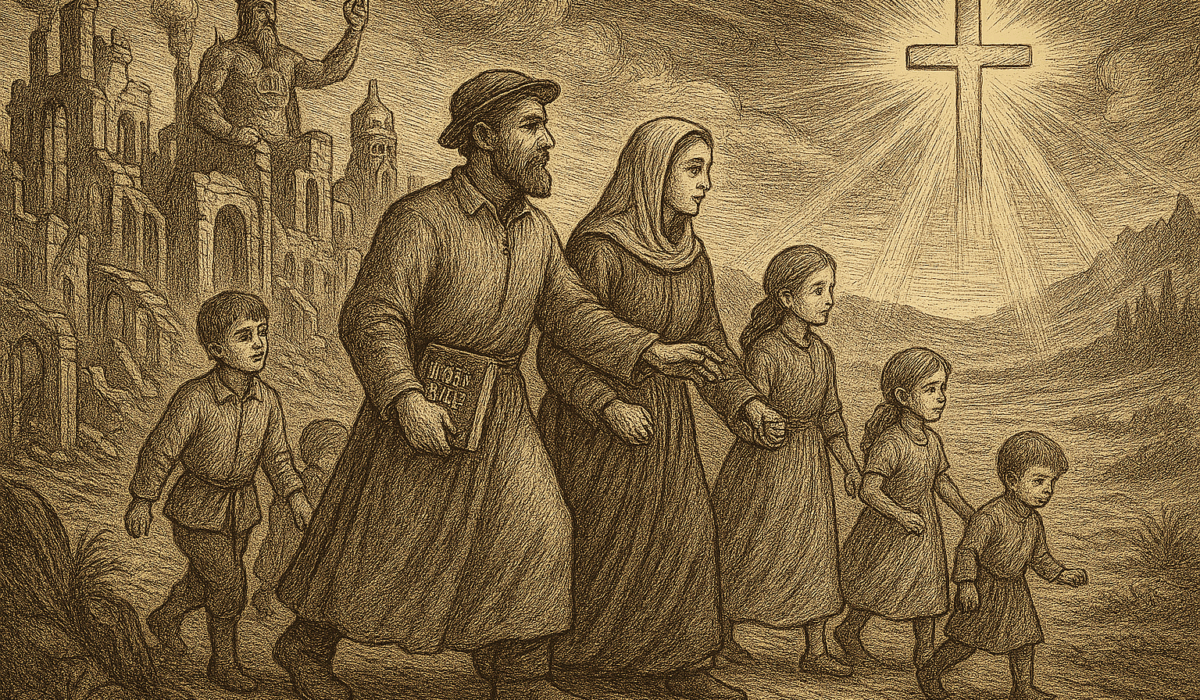
Come Out of Her, My People: Leaving Babylon’s Systems Behind

I: Babylon Then and Now – A System of Rebellion

“And I heard another voice from heaven, saying, Come out of her, my people, that ye be not partakers of her sins, and that ye receive not of her plagues.”
— Revelation 18:4 (KJV)

The command from Heaven is not unclear. It is not optional, nor is it an abstract metaphor. It is a summons, a divine war cry to God’s covenant people. Calling them to segregate, separate, and withdraw from the entangling systems of this present evil age.

This is not merely a call to avoid “sin.” It is a call to leave systems, to forsake structures that are built upon rebellion. In the Bible, the term “Babylon” is more than a physical empire. It is a symbolic name used by the prophets and apostles alike to describe worldly civilization built apart from God’s law, ruled by tyrants and sorcery, filled with sexual perversion, religious syncretism, centralized economic power, and aggressive warfare against God’s people.

Babylon is the anti-Kingdom, the satanic counterfeit of God’s Great Order.

1. The Origin of Babylon: A Rebellion of Unity

From the plains of Shinar arose the original Babylon, under the direction of Nimrod, a mighty hunter before the Lord (Genesis 10:8–10). Nimrod was the first tyrant, the first globalist, the first man to unite men not under God’s rule, but under a worldly empire of humanistic power.

“And they said, Go to, let us build us a city and a tower, whose top may reach unto heaven; and let us make us a name…”
— Genesis 11:4

The Tower of Babel was not just an architectural project. It was a religious and political statement. It was man declaring:
“We will not be divided as God has ordained. We will unite apart from Him. We will build a tower to our own name.”

God, in response, confused their language and scattered the nations, a sovereign act of segregation. Why? Because unity outside of God’s law is rebellion, and diversity without God’s order is chaos.

Modern man has returned to Babel,  and built higher.

2. Babylon as an Ongoing System

Throughout Scripture, Babylon remains a symbol of apostasy, tyranny, and moral corruption. The prophets speak against it, not just as a nation, but as a system:

  • Isaiah 13–14 condemns Babylon as arrogant, godless, and doomed to divine destruction.
  • Jeremiah 50–51 prophesies her burning and calls for Israel to flee.
  • Revelation 17–18 portrays her as a whore, drunk on the blood of saints, trafficking in the souls of men, adorned with wealth, and destroyed in an hour by divine fire.

Babylon is not just ancient. She is modern. She is alive. Her systems today include:

  • Public education, which disciples children in atheism, feminism, sodomy, and rebellion
  • Entertainment media, saturated with idolatry, witchcraft, fornication, and anti-Christian messaging
  • Globalist economics, where inflation, usury, and centralized currency enslave households
  • Statist government, where welfare replaces the father, and the state redefines morality

Babylon has a church too, the modern church that preaches tolerance, inclusivity, and compromise instead of righteousness and the law of God. She has missionaries, influencers, celebrities, and professors. She even has a morality, a fake one, based on feelings, equity, and human autonomy.

To remain in Babylon today is to submit to the Beast and be desensitized to evil by slow compromise.

3. The Biblical Command to Separate

The command to “come out of her” did not originate with John in Revelation. It has been the cry of the Lord since the earliest days. Separation is not optional for God’s people, it is required.

“Wherefore come out from among them, and be ye separate, saith the Lord, and touch not the unclean thing; and I will receive you.”
— 2 Corinthians 6:17

“Depart ye, depart ye, go ye out from thence, touch no unclean thing; go ye out of the midst of her; be ye clean, that bear the vessels of the Lord.”
— Isaiah 52:11

“Ye shall be holy unto me: for I the LORD am holy, and have severed you from other people, that ye should be mine.”
— Leviticus 20:26

Biblical separation is not hatred, but holiness. It is not cruelty, but obedience. God created borders, not just of land, but of culture, worship, family, law, and economy. Those who erase these borders are not “loving their neighbor”, they are rejecting the order of God.

4. Segregation: A Biblical Principle of Preservation

One of the most hated words in the modern world is segregation. Yet segregation is not a man-made invention; it is a God-ordained principle for the preservation of righteousness and the maintenance of holy order.

Consider the following:

  • God segregated Israel from the nations, with dietary laws, dress codes, worship regulations, and strict marriage requirements (Deut. 7:3–6).
  • God forbade mixture, of seeds in the field, fabrics in garments, animals for breeding (Leviticus 19:19).
  • Nehemiah wept and rebuked the people for intermarrying with pagans and allowing their children to lose their Hebrew tongue (Nehemiah 13:23–27).
  • Ezra commanded the men of Israel to put away their foreign wives after the exile (Ezra 10).

In the New Testament, separation remains. The Church is not told to blend with the world but to be a peculiar people, zealous of good works (Titus 2:14). The Apostle Paul tells believers to avoid the unfruitful works of darkness (Ephesians 5:11) and to be transformed by the renewing of the mind (Romans 12:2).

God’s people are not called to diversity, but distinctness.

II: Identifying the Systems of Babylon and Their War Against the Household

In ancient Babylon, the people of God were enslaved physically. In today’s Babylon, they are enslaved spiritually, economically, intellectually, and morally. Satan’s strategy has not changed: break the household, redefine morality, and replace God with the state. The systems of Babylon are intricately woven together to trap the Christian family in dependency, compromise, and confusion.

To obey the command, “Come out of her, My people” (Revelation 18:4), we must first identify what her systems are today, and how they war against our families.


1. Public Education: Discipling Children for Babylon

Public education is not neutral. It is a state-run indoctrination program designed to disciple children into rebellion. Its roots are secular, statist, and Marxist. Men like Horace Mann and John Dewey explicitly rejected Biblical authority and built a system to shape future citizens, not for the Kingdom of God, but for the kingdom of man.

Modern curriculum is soaked in:

  • Feminist ideology, encouraging girls to usurp male roles and boys to surrender their strength.
  • Evolutionary lies, denying the Creator and the order He established from Genesis.
  • LGBTQ indoctrination, celebrating perversion as identity.
  • Cultural relativism, promoting “equality” while erasing Biblical hierarchy and truth.
  • Statist loyalty, replacing God and father with the teacher, the principal, and eventually the government.

Sending your children to public school is sending them to Babylonian temples, where they are catechized by false priests in rebellion, sorcery, and self-worship.

“Train up a child in the way he should go: and when he is old, he will not depart from it.”
— Proverbs 22:6

God gave that command to parents, not to the Department of Education.


2. The Welfare State: Replacing the Father and Enslaving the People

Babylon hates patriarchy. It hates the rule of the father, because the father is God’s appointed king over the household. Therefore, Babylon builds a system that replaces the father with a counterfeit, the State.

Government handouts, subsidies, and welfare programs are not compassionate. They are enslavement disguised as charity. They:

  • Destroy initiative by making laziness profitable.
  • Erode headship by giving women independence from husbands and fathers.
  • Undermine multigenerational legacy, replacing family with bureaucrats.
  • Weaken church charity, centralizing compassion in state control.

God created the household to be self-sufficient, productive, and giving,  not dependent, stagnant, and weak. Men must build household economies, not rely on Babylon’s food stamps.

“If any would not work, neither should he eat.”
— 2 Thessalonians 3:10

The fatherless culture we see today, women with children and no husbands, boys with no male mentors, and aging men dependent on Social Security,  is not an accident. It is Babylon’s design.


3. Central Banking and the Debt Economy: Usury in Modern Robes

In God’s law, usury is forbidden among brethren (Exodus 22:25; Deuteronomy 23:19–20). Yet Babylon’s economic system is built entirely on debt, inflation, and fraudulent scales.

  • The Federal Reserve prints fiat currency backed by nothing but the illusion of value.
  • Central banks manipulate economies, enslaving nations and households alike.
  • Credit cards, mortgages, and student loans chain men and women to years of financial slavery.
  • Property taxes ensure you never really own anything, you merely rent from the state.

This system is theft, plain and simple. And God hates it.

“Divers weights are an abomination unto the LORD; and a false balance is not good.”
— Proverbs 20:23

God’s people are called to build wealth through labor, land, livestock, family, and wisdom, not speculative markets, paper currencies, or enslaving contracts.

Coming out of Babylon means building debt-free household dominion, rooted in skills, savings, barter, agriculture, and ownership, not fake paper games.


4. Medicine as a New Priesthood

Modern medicine has become one of Babylon’s most trusted institutions. While not evil in itself, today’s system:

  • Promotes pharmaceutical dependency over health responsibility.
  • Marginalizes natural healing, herbs, and God-made remedies.
  • Controls behavior through forced shots, chemical castration, and mind-altering drugs.
  • Idolizes the white coat, where doctors become unquestioned authorities over husbands and fathers.

During the recent global plagues and panic, we saw the mask fall. Babylon used medical fear to:

  • Shut down churches.
  • Close businesses.
  • Enforce mandates.
  • Divide families.

Scripture speaks of a time when sorceries (Greek: pharmakeia) would deceive the nations (Revelation 18:23). Babylon’s system does not just seek to heal, it seeks to control, mark, and conform.

Fathers must reclaim their authority over their household’s health decisions. We are not slaves to Big Pharma or WHO decrees.


5. Media, Entertainment, and the Culture of Corruption

Babylon speaks through glowing screens. The entertainment system, from Hollywood to YouTube to TikTok, is an altar of idolatry where the masses bow to:

  • Sexual perversion
  • Gender confusion
  • Witchcraft and sorcery
  • Violence and lawlessness
  • Feminism and rebellion
  • Mockery of God’s Word

The prophets of this age are not Elijahs, they are influencers, musicians, drag queens, and comedians.

“I will set no wicked thing before mine eyes…”
— Psalm 101:3

To raise a righteous household, fathers must purge their homes of the entertainment of Babylon. Music, movies, video games, and even “Christian” media must be filtered through God’s law, not by what is popular, harmless, or funny.

Your home is a sanctuary, not a cinema for Satan.


6. The Apostate Church: Babylon in the Sanctuary

Many who claim the name of Christ have already joined Babylon. They preach a false gospel of:

  • Social justice
  • Feminism and female pastors
  • Homosexual affirmation
  • Prosperity idolatry
  • Statist compliance

These churches are not neutral, they are Babylon’s religious wing. They teach submission to the Beast, not Christ. They welcome sin in the name of love. They quote scripture but deny the law.

“Having a form of godliness, but denying the power thereof: from such turn away.”
— 2 Timothy 3:5

Coming out of Babylon means coming out of these churches. It means building home-based, patriarch-led fellowships, aligning worship with Scripture, not tradition or trends.

It is time to return to the old paths (Jeremiah 6:16), where men led their households in prayer, worship, and instruction, not as attendees but as priests of their homes.

III: Building Holy Households and Restoring Godly Separation

The call to come out of Babylon is not merely a spiritual feeling or a vague desire to “be different.” It is a command to build, to construct households, economies, fellowships, and cultures that are distinctly Biblical, separated, and set apart. It is not enough to simply denounce Babylon; we must replace her systems with God’s.

The Great Commission was not to go into the world and blend. It was to go and teach all nations to obey everything Christ commanded (Matthew 28:19–20). Babylon cannot be reformed. She must be abandoned, and in her place, the Kingdom of God must rise,  family by family, house by house, tribe by tribe.


1. Rebuilding the Household: The First Domain of Dominion

The household is the first institution God established, not the temple, not the state, not the school. It was the family. The patriarchal household is the seedbed of dominion, the basic building block of civilization.

To come out of Babylon, a man must:

  • Take full responsibility for his household, spiritually, economically, educationally, and morally.
  • Lead in worship, instructing his family in Scripture daily (Deut. 6:6–9).
  • Establish a household economy, building skills, savings, and ventures that do not rely on corrupt corporate structures.
  • Directly oversee the education of children, training them to be righteous, skilled, and set apart for generational leadership.
  • Provide headship for every woman and child in his household and uncovered females sent his way, no exceptions.

Every member of the household must know: we are not part of Babylon. We do not live like them, eat like them, dress like them, or think like them.

“As for me and my house, we will serve the Lord.”
— Joshua 24:15


2. Practicing Biblical Segregation Without Hatred

Biblical segregation is not about racial animosity or pride. It is about obedience to God’s order, tribal, moral, and covenantal separation. The Bible does not teach universal blending. It teaches boundaries, distinctions, and holy lines not to be crossed.

“They shall not dwell in thy land, lest they make thee sin against me…”
— Exodus 23:33

To obey God, we must:

  • Marry within the faith and within lawful covenant parameters (2 Cor. 6:14; Ezra 9–10).
  • Reject multiculturalism that erases godly order, promoting instead cultural identity rooted in Scripture.
  • Avoid associations that lead to compromise, whether in business, education, or fellowship.
  • Preserve our own speech, dress, worship, and customs, even if the world mocks them.

This kind of holy separation is not optional, it is the Biblical norm.

“Be not unequally yoked together with unbelievers…”
— 2 Corinthians 6:14

Let Babylon mix, confuse, and destroy. Let the people of God stand distinct, like Daniel in Babylon,  present, but never part of her sins.


3. Withdrawing from Babylon’s Systems – Practical Steps

To truly obey the call to come out, we must exit Babylon’s systems in real, measurable ways. This requires strategy, patience, and grit. Here are some vital areas to begin:

A. Education

  • Pull your children out of public school immediately.
  • Begin homeschooling using Bible-centered curriculum, with the father overseeing the direction and content.
  • Teach history, science, math, and literature through a Biblical lens.
  • Equip your sons with skills, trades, and theology.
  • Prepare your daughters to build households, manage domains, and be productive under headship.

B. Economy

  • Get out of unnecessary debt. Stop using credit cards, debt is slavery.
  • Build family savings. Buy land, tools, livestock, and gold instead of gadgets and subscriptions.
  • Start a household business: agriculture, trades, crafts, repair, technology, services, any honorable, lawful work that keeps you free.
  • Refuse to live for consumerism. Build for legacy.

C. Medical

  • Learn natural remedies, herbs, nutrition, and first aid.
  • Research alternative doctors and Biblical health models.
  • Refuse all unnecessary, experimental, or immoral treatments.
  • Reclaim the right to decide what happens to your household’s body.

D. Worship

  • Leave apostate churches.
  • Gather families for home-based worship, led by fathers.
  • Teach your household to keep God’s Sabbaths, Feasts, and laws (Leviticus 23; Exodus 20).
  • Sing Psalms. Pray daily. Read Scripture aloud. Practice hospitality and community.

E. Media and Technology

  • Eliminate ungodly music, shows, apps, and influencers from your household.
  • Use technology with purpose, not addiction.
  • Teach your children discernment and limits, not indulgence.
  • Create rather than consume. Build rather than scroll.

“Redeeming the time, because the days are evil.”
— Ephesians 5:16


4. Building Parallel Structures: Kingdom Alternatives

It is not enough to flee Babylon. We must build the alternative. We must establish a Kingdom culture, rooted in the law of God and lived out through the household.

Examples include:

  • Independent Christian schools or homeschool co-ops
  • Christian business networks built on honor and fair dealing
  • Biblical elder-led fellowships, with family-based structure
  • Food production and land ownership, breaking free from the corporate-state supply chains
  • Patriarch councils, where heads of households govern family tribes, manage disputes, and lead communities
  • Bridegroom networks, where young women are transferred under lawful headship to righteous men in marriage

This is the restoration of Biblical society. It is God’s great order, and it is the only way to survive and thrive as Babylon collapses.


5. A Final Call to the Remnant: Arise and Separate

Babylon will fall. She always has. God has decreed it.

“Babylon the great is fallen, is fallen…”
— Revelation 18:2

Her judgment is already underway. Her families are broken. Her money is a lie. Her youth are deluded. Her churches are apostate. Her governments are demonic. Her people are exhausted, medicated, and enslaved.

But there is a remnant. There are families waking up, and men ready to lead again. There are women ready to return to sacred submission, and there are children being raised in righteousness.

The call is going forth:

“Come out of her, my people, that ye be not partakers of her sins, and that ye receive not of her plagues.”

Will you obey it?

  • Will you lead your household out?
  • Will you burn the bridges back to Babylon?
  • Will you tear down her idols and rebuild your home around the Word of God?
  • Will you raise children who know what it means to be separate, holy, and strong?

This is the call of The Great Order. This is the path of dominion. This is the cry of every patriarch who desires to walk in the footsteps of Abraham, Moses, David, and Christ.

Come out of her. Now.
Before the fire falls.

Restore The Great Order!

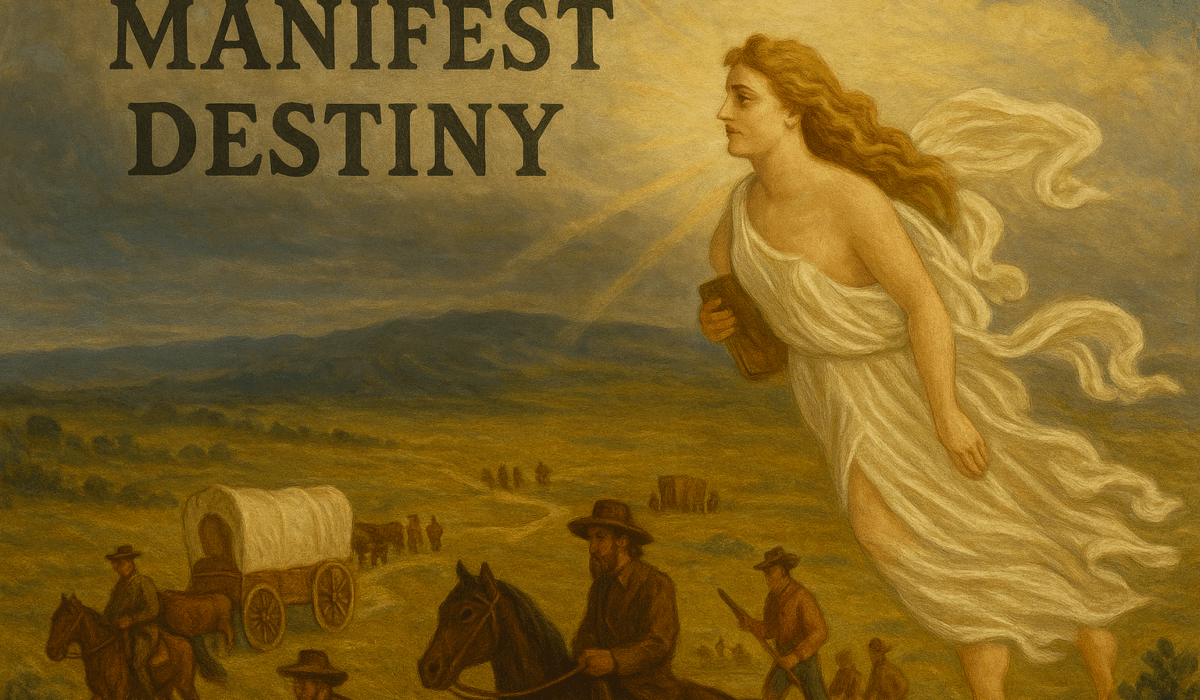
Manifest Destiny: God’s Call to Conquer, Multiply, and Reign

A Biblical Vision of Expansion, Nationhood, and Patriarchal Dominion

I. Introduction: The Divine Mandate to Expand

The living God does not command stagnation. From the very beginning, His Word has been a call to go forward, to conquer, to multiply, and to take dominion. The first command issued to man was not to sit idle in a garden, but:

“Be fruitful, and multiply, and replenish the earth, and subdue it: and have dominion…” — Genesis 1:28

This is not a suggestion. It is the bedrock command of human civilization, especially for men who would walk in righteousness. Whether in the days of Adam or Abraham, David or the Apostles, the godly have always been men of action. They built. They ruled. They expanded. They raised great families. They laid hold of God’s promises and carved out civilizations with sweat, sword, and psalm.

This divine impulse, to expand one’s domain, establish order, multiply children, and spread righteousness is what once burned in the hearts of American men. It was given a name in the 19th century: Manifest Destiny.

Though today maligned and misunderstood, Manifest Destiny was one of the most biblically-aligned, God-honoring national movements in Western history. It was not about greed or conquest for its own sake, it was about the moral and divine duty to expand civilization, subdue wilderness, plant churches, raise godly families, and shine the light of Christ across a continent.

This post will explore:

The biblical basis for expansion and dominion

The history and successes of Manifest Destiny

How we have abandoned this mission, and the decay that followed

The connection to polygyny, family growth, and patriarchal rule

President Trump’s remarks and his call to revive the movement

A final vision of restoration: Manifest Destiny applied again, for God’s glory and our children’s future

We should all understand: if we do not reclaim our duty to expand and conquer for the Lord, our children will inherit collapse and shame. But if we rise, if the patriarchs build, the glory of God will again cover the earth as the waters cover the sea (Habakkuk 2:14).

II. The Biblical Foundation for Expansion and Conquest

The idea of Manifest Destiny is not secular in origin. Its roots go back to Eden, through Abraham’s inheritance, and into the conquering call of the Kingdom of God.

A. The Dominion Mandate

From the beginning, man was not made to be passive. He was made to rule.

“Let us make man in our image… and let them have dominion…” — Genesis 1:26

Fruitfulness, multiplication, and dominion were not localized to Eden. The whole earth was to be subdued. The expansion of righteous order, of covenant law, and of patriarchal rule was the point. Eden was a template. The world was the mission.

B. Abraham: Promised Nations and Land

God’s promise to Abraham included not only descendants but vast territorial dominion.

“For all the land which thou seest, to thee will I give it, and to thy seed for ever.” — Genesis 13:15

“I will make nations of thee, and kings shall come out of thee.” — Genesis 17:6

This was not spiritual only. Abraham was a landowner, a shepherd, a warrior, and a father of nations through multiple wives and numerous children.

C. Israel and the Conquest of Canaan

When God brought Israel out of Egypt, He gave them a land. Not by diplomacy, but by conquest.

“Every place that the sole of your foot shall tread upon, that have I given unto you…” — Joshua 1:3

God commanded His people to drive out the wicked nations, to possess their land, and to establish His law in its place. Why? Because wicked cultures spread death. Righteous dominion brings life.

D. Christ and the Kingdom Expansion

Jesus did not cancel the dominion mandate, He fulfilled and expanded it.

“Go ye therefore, and teach all nations… teaching them to observe all things whatsoever I have commanded you.” — Matthew 28:19–20

This is not pacifism. This is conquest through gospel, law, and patriarchal households. The Kingdom expands through generations of godly children and headship. God’s dominion fills the earth through us.

III. Manifest Destiny: A Movement Rooted in Scripture and Purpose

A. What Was Manifest Destiny?

Coined in 1845, the term Manifest Destiny referred to the belief that the United States was destined, by Providence, to expand across the North American continent. But its roots were older. It was the natural outgrowth of a Christian people who believed they had a divine obligation to civilize, settle, and subdue the wilderness.

Historian John L. O’Sullivan wrote: “It is our manifest destiny to overspread the continent allotted by Providence for the free development of our yearly multiplying millions.” This was not about greed. It was about divine duty. It was the continuation of the dominion mandate.

B. Successes of the Movement

From the Louisiana Purchase to the settling of the Pacific Northwest, the movement of Christian men westward brought:

Churches and schools built in barren lands

Families raised in righteousness on homesteads

Agricultural development and industry

The spread of Christian values, law, and order

In 1800, most Americans lived on the east coast. By 1900, godly settlements, farms, and towns dotted the entire nation. It was not mere government force that did this, it was men, fathers and husbands, with their wives and many children, obeying God’s call to build and subdue.

They heeded the command:

“And the Lord shall make thee plenteous in goods, in the fruit of thy body, and in the fruit of thy cattle, and in the fruit of thy ground…” — Deuteronomy 28:11

C. The Family at the Center

Expansion happened through families, not individuals. Wagon trains were filled with husbands, wives, and children, often large families. These were patriarchal households seeking land, freedom, and a place to plant generational roots.

And many of these households, even if unspoken, practiced forms of informal polygyny, widows, unmarried sisters, and daughters-in-law often lived under one man’s provision and law.

The movement thrived because men multiplied, led, and built. And it was called “destiny” because it was understood to be from God.

IV. Our National Failure: Abandoning the Mission

A. The Halt of Expansion

By the 20th century, the west was settled. The frontier closed. But instead of expanding upward, into large families, stronger households, and multi-generational empires, Americans turned inward.

They began to shrink.

Families dropped from 6+ children to 2 or fewer (Now 1.5 in 2025)

Property was sold off and consolidated into corporate hands

Headship over women was rejected in favor of feminism

Polygyny was outlawed and mocked

Expansion of Christian culture ceased

The dominion mandate was forsaken. Manifest Destiny was declared a sin. The Church abandoned its commission to rule in favor of retreat and neutrality.

B. The Rise of Feminism and Sterile Households

At the heart of our collapse is the destruction of the household.

Godly dominion was meant to be through patriarchs, who multiply wives and children, take land, build businesses, and reign over their domain.

Instead, we now have:

Egalitarian marriages with no head

Childless couples who hoard wealth but leave no legacy

Single women living in rebellion and self-destruction

A hatred of polygyny, despite its biblical and historical roots

A rejection of large families as “irresponsible”

This is rebellion. And the result is death.

“Where there is no vision, the people perish…” — Proverbs 29:18

We stopped building. And now we are being buried.

C. The Consequences of Abandoning Expansion

By refusing to expand, America has suffered:

Economic decay as the family economy was replaced by corporate slavery

Moral collapse as feminism destroyed household order

Demographic suicide, with birthrates below replacement

Cultural subversion, as godless immigrants outbreed and outnumber native-born Christians

Loss of land and sovereignty, as foreign nations buy up farms, water, and infrastructure

Make no mistake, we are being conquered, not by armies, but by birthrates and ideology.

The man who does not multiply will be replaced by those who do.

V. Polygyny: The Forgotten Key to Manifest Destiny

The Christian family is the engine of dominion. But monogamy alone, in a fallen world with broken women, orphans, widows, and a surplus of unmarried females, is not enough.

Polygyny was God’s gracious provision for:

Maximizing fertility

Providing headship to the uncovered

Expanding household dominion

Securing legacy through many children

The great patriarchs, Abraham, Jacob, and David, all used polygyny to build great houses. Their names endure.

Modern Christians, meanwhile, mock polygyny while cheering on birth control, sterilization, and bachelorhood. They embrace barrenness and call it virtue.

But the man who understands God’s plan for expansion must embrace every tool of dominion. Polygyny is not sin. It is stewardship.

VI. President Trump and the Revival of Expansion

A. Trump’s Remarks on Manifest Destiny

In a 2020 Fourth of July speech at Mount Rushmore, President Donald Trump invoked the language and vision of Manifest Destiny:

“We are the nation that gave rise to the Wright brothers, the Tuskegee Airmen… and the next generation of American heroes. We inherit the legacy of our ancestors who crossed oceans, blazed trails, and built a new world.”

He has spoken often about renewing American greatness through frontier spirit, rebuilding industry, strengthening families, and reclaiming territory, not just literal land, but cultural and spiritual ground.

Trump understands, instinctively, that America must be great again by becoming a nation of builders, expanders, and leaders.

B. Trump’s Pro-Family and Pro-Nation Policies

Under his leadership, we saw:

A focus on American energy and land use

Support for homeownership and family infrastructure

Resistance to mass immigration that undermines Christian demographics

Support for Christian values and religious liberty in public life

Though imperfect, Trump’s vision was and is, a spark. A torch in the dark. A call back to a Christian, patriarchal Manifest Destiny.

VII. The Vision: Reclaiming Manifest Destiny for God’s Glory

A. What Would It Look Like?

To revive Manifest Destiny in our day is not about warfare or government mandates. It is about righteous men rising up to:

Take wives, even multiple wives, as Scripture permits

Raise many children in the fear of the Lord

Buy land and build homesteads

Start businesses that bless the community

Train sons to inherit and expand

Bring in uncovered women under headship and law

Expand Christ’s Kingdom through gospel and dominion

Imagine 10,000 households, each with multiple wives, dozens of children, hundreds of grandchildren, spanning counties and cities, building churches, ruling economies, and governing by Scripture.

That is the future. That is God’s plan. That is destiny.

B. Practical Steps to Begin

1. Reject the lie of neutrality. Understand that stagnation is death.

2. Grow your household. Marry, multiply, and rule.

3. Embrace polygyny, where lawful and righteous.

4. Buy land. Build where you are. Plant roots.

5. Train your sons to think in generations.

6. Bring in the uncovered. Shelter widows and orphans.

7. Teach the law of God. Build your house on His order.

C. The Result: Glory, Legacy, and Victory

If we heed the call, we will see:

A new generation of patriarchs

Revival of Christian culture

Restoration of moral order and economy

Defeat of feminism and statism

Rebuilding of churches, towns, and dominion households

God’s blessing poured out for obedience

“For the Lord your God shall bless you in all that you do.” — Deuteronomy 15:10

VIII. Conclusion: The Time Has Come

Manifest Destiny was not a mistake. It was a glimpse, an echo , of God’s original command to man. Be fruitful. Multiply. Reign.

The movement faltered because we turned from the Word of God. We traded patriarchs for bureaucrats, builders for feminists, conquerors for consumers.

But the time has come to rise again.

Let the patriarchs take up the torch, let the households expand, and the wives be gathered. Let the children fill the land, the men build and let the dominion increase.

This is the destiny. It is manifest. It is divine. It is now.

Let us not shrink. Let us expand.

For the glory of God and the good of our children, let Manifest Destiny live again.

This is the Great Order!

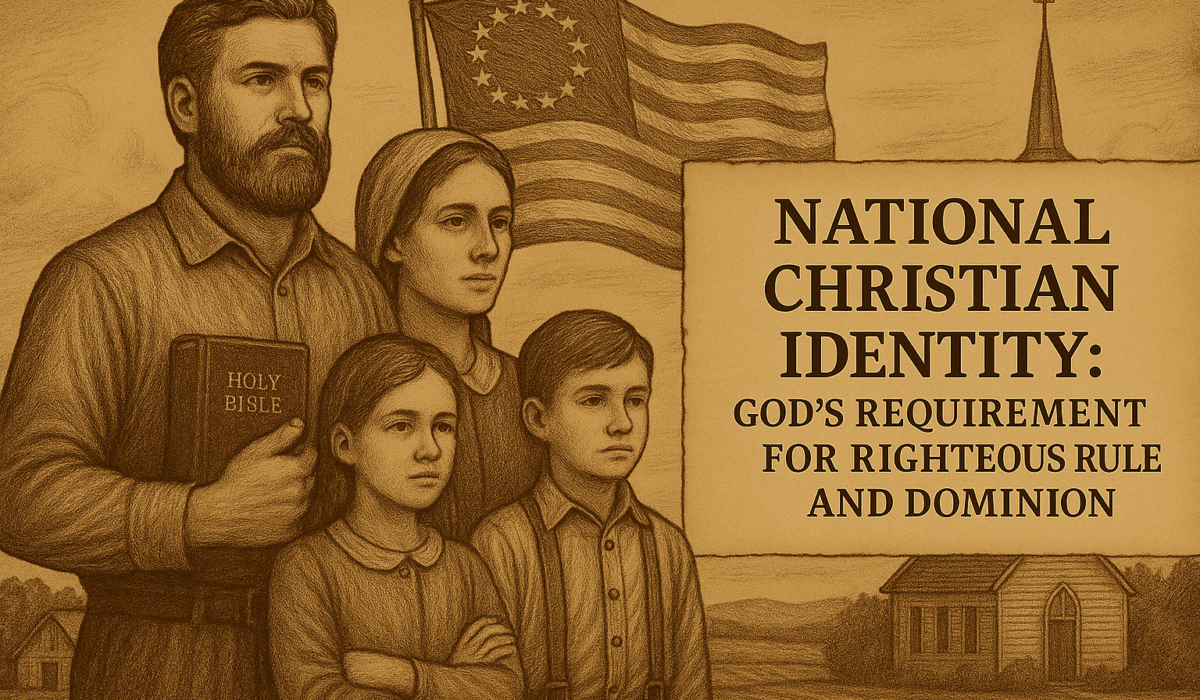
National Christian Identity: God’s Requirement for Righteous Rule and Dominion


Part I: God Requires Nations to Serve Him, Not Neutrally, But Explicitly

The modern myth of neutrality is perhaps the greatest lie swallowed by Christian men in this age. They’ve been taught that nations can be “secular” yet moral, “pluralistic” yet orderly, “inclusive” yet righteous. But the Word of God knows no such contradiction. The LORD of Hosts does not allow neutrality. He demands allegiance!

“Blessed is the nation whose God is the LORD; and the people whom he hath chosen for his own inheritance.”
—Psalm 33:12

This is not poetry without power, it is policy from the throne of Heaven. God blesses nations who call Him Lord. He curses those who reject Him. There is no middle ground.

The idea that Christianity is merely a personal religion, to be kept in private spheres and detached from national governance, is foreign to Scripture. In God’s law, national identity is deeply religious, familial, and jurisdictional. Nations were created by God, and He expects them to serve Him, not merely as individuals, but corporately.


Nations Are Not Accidents; They Are Covenantal Entities

The Tower of Babel was not merely about linguistic confusion; it was about divine judgment and separation. In Genesis 10–11, God divided the nations not simply by geography, but by appointed inheritance and divine boundaries (Deuteronomy 32:8). He created nations for His glory, and He requires that they walk according to His statutes.

The prophets constantly called nations to repent. God judged Moab, Edom, Assyria, Babylon, and Egypt, not merely individuals within them. Their national identity, rooted in false gods, unjust laws, and wicked culture, was the basis for their judgment.

And He called Israel not only as a chosen people, but as a holy nation (Exodus 19:6), with its own law, calendar, culture, and covenant distinct from the world.

That was never rescinded.


The Great Commission Is National

“Go ye therefore, and teach all nations… teaching them to observe all things whatsoever I have commanded you.”
—Matthew 28:19–20

Christ’s command was not just evangelism, it was discipleship of nations. He did not say, “Teach individuals within the nations.” He said, “Teach the nations.” Nations are to be brought under His rule, taught His commands, and restructured according to His law.

The idea of a “Christian nation” is not optional. It is the only lawful kind of nation that may exist. All others are under wrath.


When a Nation Does Not Serve the LORD

When nations reject the Lord, judgment follows. Consider the words of Psalm 9:

“The wicked shall be turned into hell, and all the nations that forget God.”
—Psalm 9:17

America, the West, and much of what we once called Christendom are being turned into hell. Why? Because they have forgotten God.

They’ve removed His name from their documents, His laws from their courthouses, His truth from their schools, and His image from their hearts.

What has followed?
— Blood in the womb
— Perversion in the streets
— Rebellion in the schools
— Tyranny in the courts
— Idols in the churches

This is not coincidence, It is consequence!

Without national Christian identity, there is no restraint. The people cast off God’s law and exalt man’s. Feminism rules. Sodomy is enshrined. Truth is hated. Righteousness is outlawed.

The only solution is not revival within private souls, it is the reestablishment of Christian national identity.


Part II: America Was Born a Christian Nation – And Must Be Reborn as One

Revisionists and atheists will lie about America’s founding, claiming it was secular. They quote Jefferson’s “wall of separation” out of context, ignore the laws of the colonies, and pretend the Constitution created neutrality. But history; real, documented, Christian history, says otherwise.

The Colonial Foundations Were Christian

Before the United States existed, the colonies were thoroughly Christian:

  • The Mayflower Compact declared:
    “Having undertaken for the Glory of God, and advancement of the Christian Faith…”
  • The Massachusetts Body of Liberties (1641) said:
    “If any man after legal conviction shall have or worship any other god, but the Lord God, he shall be put to death.”
  • The Delaware Constitution (1776) required that all officeholders affirm:
    “I do profess faith in God the Father, and in Jesus Christ His only Son…”

They did not seek religious pluralism. They did not tolerate idolaters in leadership. They did not create a secular public square. They built Christian commonwealths, governed by the Bible, dedicated to Christ.


The Founding Fathers Spoke Clearly

Yes, some were Deists. But many were devout. And all of them lived in a culture where Christian identity was assumed, expected, and practiced.

  • George Washington: “It is impossible to rightly govern the world without God and the Bible.”
  • John Adams: “Our Constitution was made only for a moral and religious people. It is wholly inadequate to the government of any other.”
  • Patrick Henry: “It cannot be emphasized too strongly that this great nation was founded, not by religionists, but by Christians.”

They did not invent Christian America. They inherited it.


The Constitution Did Not Abolish Christian Identity

The First Amendment says:
“Congress shall make no law respecting an establishment of religion, or prohibiting the free exercise thereof…”

This did not outlaw Christianity. It prohibited a national denomination (like the Church of England). It preserved the Christian identity of the states and guaranteed freedom for Christian expression.

Every state constitution at the time continued to affirm Christianity. Every community continued Sabbath laws, public worship, Bible education, and godly order.


What Changed?

The slow erosion began with liberal theology, was accelerated by Darwinism and secular humanism, and was legalized by judicial apostasy. Over time, Christians were convinced that they should retreat. That they had no right to legislate. That they must surrender the schools, the courts, the public square, and eventually the family.

This was treason, not to a political system, but to the LORD

Part III: Refuting the Lies – Multiculturalism, Pluralism, and Religious “Freedom” Without Christ

The push to erase Christian identity from nations did not happen by accident. It came by deception; slow, systemic, seductive. The serpent whispered: “Hath God said that a nation must serve Him?” And men listened. They traded covenant for comfort, truth for tolerance, and holiness for human rights. Let us now expose the lies that keep nations from returning to their God.


Lie #1: “Pluralism Makes Us Stronger”

This is perhaps the most common lie. The idea is that a nation filled with multiple religions, cultures, and moral systems can still prosper, so long as there is peace, dialogue, and shared values. But Scripture says otherwise.

“Can two walk together, except they be agreed?”
—Amos 3:3

Pluralism is not strength. It is fragmentation. A nation with competing gods, opposing laws, and conflicting worldviews cannot stand. It becomes a house divided.

Israel was repeatedly warned not to allow foreign religions or gods to dwell among them.

“They shall not dwell in thy land, lest they make thee sin against me…”
—Exodus 23:33

A Christian nation must not give full civil rights and institutional platforms to false religions. To do so is to welcome judgment. Tolerance of evil is not virtue. It is treason against Heaven!


Lie #2: “Separation of Church and State Means Christianity Must Stay Private”

The phrase “separation of church and state” is not in the Constitution. It was used by Thomas Jefferson in a private letter to reassure Baptists that no federal church would be imposed upon them.

It was never meant to imply separation of God and state.

In Scripture, the roles of church and state are distinct, but both are under the law of God. Kings were judged for how they ruled. Nations were destroyed for public sin. Rulers were commanded to kiss the Son.

“Be wise now therefore, O ye kings: be instructed, ye judges of the earth… Kiss the Son, lest he be angry, and ye perish from the way…”
—Psalm 2:10–12

The state is not neutral. It must submit to Christ.


Lie #3: “Religious Freedom Means Every Religion Is Equal”

The modern concept of religious freedom is a Trojan horse. It sounds good, until you realize what it means in practice:

  • Satanic clubs in schools
  • Mosques with taxpayer subsidies
  • Pagan altars in the military
  • Witches lecturing in universities
  • Christians fined for preaching truth

Religious freedom without limits is an idol. It places every god on equal footing with the LORD. But God declares:

“Thou shalt have no other gods before me.”
—Exodus 20:3

A Christian nation may permit the private conscience of unbelievers to exist with mercy, but it must not allow false religion to govern, to shape law, or to hold public office. The magistrate is a servant of God, not an umpire over spiritual diversity.


Lie #4: “Morality Can Exist Without Religion”

Some claim that we don’t need a Christian nation, we just need moral people. But where does that morality come from?

“The fear of the LORD is the beginning of wisdom.”
—Proverbs 9:10

There is no true morality apart from God’s law. Every other moral system is arbitrary, shifting, and ultimately satanic. Secular governments rewrite morality to serve power. Christian nations are anchored to eternal truth.

If we want righteous laws, protected families, justice in courts, and peace in the streets, we must return to the only source of morality: the law of God.


Lie #5: “Jesus Said His Kingdom Is Not of This World”

This lie is popular among pietists who reject political involvement. They quote John 18:36 to suggest that Christianity is only spiritual, not national. But they misread the text.

Christ was not denying His claim to earthly kingship, He was clarifying the source of His authority. His Kingdom does not originate from man, politics, or violence. It comes from Heaven.

But that Kingdom is coming to earth.

“The kingdoms of this world are become the kingdoms of our Lord, and of his Christ…”
—Revelation 11:15

We are not called to retreat, we are called to conquer. To teach nations. To disciple governments. To proclaim His Lordship in every sphere.


Summary: The Lies Must Be Burned

These five lies, pluralism, neutrality, false freedom, secular morality, and private-only Christianity, are the pillars of modern apostasy. They must be torn down. And in their place, the banner of Christendom must rise again.

The solution is not compromise. It is covenantal return.

Part IV: Why God Demands National Identity – Law, Covenant, and Dominion

A nation is not just a shared language, border, or economy. A true nation is a people defined by worship, by law, and by covenant loyalty to God. The Almighty did not build Babel. He broke it. He divided the nations and established His own dominion. From Abraham, He began to form a holy people, not only personally righteous, but nationally distinct.

Let us examine why God demands this.


1. Because Nations Are Under Law

Every nation has laws. The only question is: Whose laws?

  • Will we legislate based on the word of God or the will of man?
  • Will we use divine standards of justice or redefine evil as good?
  • Will we protect the righteous or punish them?

God told Israel:

“This is your wisdom and your understanding in the sight of the nations… what nation is there so great, that hath statutes and judgments so righteous as all this law?”
—Deuteronomy 4:6–8

God’s law is the foundation of a great nation. Without it, there is only confusion, corruption, and collapse.

Law must come from the top; from the throne of Heaven. When it comes from below, it reflects the heart of man: deceitful, desperately wicked, and full of rebellion.

The goal is not to elect better tyrants. The goal is to rebuild the nation on God’s law.


2. Because Covenant Is National

We often think of covenant only in terms of the individual, but Scripture teaches otherwise. When God made covenant with Israel, He did so with the entire nation. He brought them out as families, tribes, and a people.

“The LORD our God made a covenant with us in Horeb. The LORD made not this covenant with our fathers, but with us, even us, who are all of us here alive this day.”
—Deuteronomy 5:2–3

Covenant includes:

  • National obedience (Deuteronomy 28)
  • National blessings or curses
  • National remembrance through feasts
  • National repentance (2 Chronicles 7:14)

If nations are under covenant, then they must live like it. A Christian nation affirms its covenant by exalting Christ, submitting to His Word, honoring His calendar, and teaching His laws.

This is not just Old Testament truth. Paul wrote to churches by city. John addressed the seven churches in Asia. Christ rules over nations and households, not merely individuals.


3. Because Dominion Is Corporate

The command to take dominion (Genesis 1:28) is not fulfilled by lone individuals in isolation. It requires households, tribes, and nations acting in harmony with God’s purpose. Dominion is about filling the earth with God’s image, not just privately, but publicly.

“And the kingdom and dominion… shall be given to the people of the saints of the most High…”
—Daniel 7:27

A Christian nation is a vehicle of dominion. It trains its people in righteousness. It protects godly families. It punishes evil. It supports worship, education, industry, and holy order.

You cannot take dominion in a vacuum. You must build a culture, structure, and system of governance that reflects the Kingdom of Christ.

God requires national Christian identity because only a righteous nation can advance righteous dominion.


4. Because Identity Is a Weapon

The greatest threat to tyrants is a people who know who they are. National Christian identity is not just cultural nostalgia, it is a spiritual weapon.

  • It gives a people memory.
  • It gives them law.
  • It gives them clarity in chaos.
  • It binds generations under the same flag, Christ.

When a people lose identity, they become slaves. They adopt foreign gods, foreign laws, and foreign loyalties.

This is why God continually called His people to remember who they were:

“And thou shalt remember that thou wast a bondman in Egypt, and the LORD thy God redeemed thee…”
—Deuteronomy 15:15

Christian identity is not about superiority. It is about covenant loyalty. We are not better than others by nature, but we are different by grace. We are called to holiness, separation, and mission.


5. Because God Is Jealous for His Glory

Finally, God demands national allegiance because He alone is worthy of it. He will not share glory with false gods, false laws, or false kings.

“I am the LORD: that is my name: and my glory will I not give to another…”
—Isaiah 42:8

Nations that refuse to exalt Christ are stealing glory from God. They are building Babel again. They are attempting to govern without the Governor of the Universe.

But God will not be mocked. He is raising up a remnant; fathers, households, churches, and movements, that will rebuild the ancient foundations and declare, not in whispers, but in public law:

“Blessed is the nation whose God is the LORD.”

Part V: A New Christian Nation – What We Must Do to Reclaim and Rebuild

It is not enough to merely lament the loss of Christian identity. It is not enough to shake our heads at the rebellion of the culture or to whisper about revival from behind pulpits of compromise. God is calling for a generation of patriarchs to rise, to build, to govern, and to establish once again what our forefathers gave their blood to plant: a Christian nation.

This is not theoretical. This is not nostalgic. This is war. And the first battleground is the household.


Step 1: Rebuild the Christian Household

Every great nation begins with a great house. If the men of God will not rule their own homes, they are unfit to rule anything. We must begin with restored households:

  • A man submitted to Christ
  • Wives walking in joyful submission
  • Children taught the law of God
  • Sabbath observed
  • Feasts celebrated
  • Discipline enforced
  • Order restored

Each home becomes a government in miniature; an embassy of the coming Kingdom. From these households will emerge the leaders, builders, and lawgivers of the new Christian nation.


Step 2: Reform the Church

The modern church is complicit in the destruction of Christian national identity. It has preached pietism instead of dominion, pluralism instead of covenant, and tolerance instead of truth.

We must reform the church by:

  • Rejecting tax-exempt muzzling and political neutrality
  • Teaching the whole counsel of God, including His law
  • Calling nations, not just individuals, to repent
  • Training men in Biblical leadership
  • Rebuilding church discipline, authority, and worship

The church must once again teach nations to obey. Not just how to be saved, but how to govern, how to legislate, how to educate, and how to live.


Step 3: Take Local Ground

National transformation does not begin in Washington, D.C. It begins in your county, your town, your neighborhood. Raise up godly men to run for office, not to conform, but to conquer.

  • Elect school board members who will ban perversion
  • Elect judges who will uphold Biblical justice
  • Elect sheriffs who will defend local Christian law
  • Elect magistrates who will nullify tyrannical federal mandates

Build alternative systems:

  • Christian schools and homeschools
  • Christian businesses and co-ops
  • Christian networks for agriculture, finance, and media

Let the righteous build cities again.


Step 4: Enshrine Biblical Law in Civil Code

Christian identity is not just about symbolism. It must be codified. The law of God must become civil law again.

This means:

  • Criminal justice that reflects Exodus 21–23
  • Abolition of abortion, sodomy, and pornography
  • Restitution-based punishment
  • Public Sabbath protection
  • Public acknowledgment of Jesus Christ as King

A Christian nation is not just full of Christians. It is governed by the Christ. If the laws do not reflect God’s Word, the nation does not reflect God’s character.


Step 5: Reject and Replace Pagan Culture

We must burn the idols.

  • Replace Hollywood with household theater, storytelling, and hymnody
  • Replace state schools with generational discipleship
  • Replace media addiction with family worship
  • Replace secular music with psalms
  • Replace pornographic fashion with modesty
  • Replace feminism with fruitful femininity

Culture must flow from the household of faith. A Christian nation is not only just; it is beautiful. Its art, its holidays, its music, its customs, all point to the Lord of glory.


Step 6: Establish Confessional Documents and Covenantal Language

We must declare openly what we believe. The founding fathers wrote covenants, compacts, constitutions, and declarations. We must do the same.

  • Draft city charters that name Jesus Christ as Lord
  • Create statements of Christian civil order
  • Restore creeds and catechisms to family life
  • Write oaths of office that require submission to Christ’s kingship

Let the pen once again be the sword of reformation.


Step 7: Prepare to Suffer

The enemies of God will not go quietly. A return to Christian national identity will bring opposition. Some will lose jobs. Others will lose wealth. Some may face imprisonment or exile.

But we are not building a nation of comfort, we are building a Kingdom.

“Yea, and all that will live godly in Christ Jesus shall suffer persecution.”
—2 Timothy 3:12

We must teach our children to expect it. We must prepare our wives to endure it. We must discipline ourselves to embrace it.

Suffering is the seedbed of dominion.


Final Call: Rise and Rebuild

Christian men, the hour is late. The walls are broken. The gates are burned. The nation has been overrun by pagans, perverts, cowards, and traitors.

But the Kingdom of Christ cannot fail.

“Of the increase of his government and peace there shall be no end…”
—Isaiah 9:7

Our task is not to retreat. Our task is to advance. To raise the banner of Christ. To teach our children to rule. To disciple our wives in the law of God. To build churches that stand like fortresses. To seize the levers of culture and power with holy hands.

Let the Christian nation rise again.

Not by compromise.

Not by revolution.

But by reformation, repentance, and return.

Let the Christian man return to headship.

Let the Christian household return to dominion.

Let the Christian church return to courage.

Let the Christian nation return to covenant.

“Blessed is the nation whose God is the LORD.”
—Psalm 33:12

Let it be ours, and let the Great Order be restored!

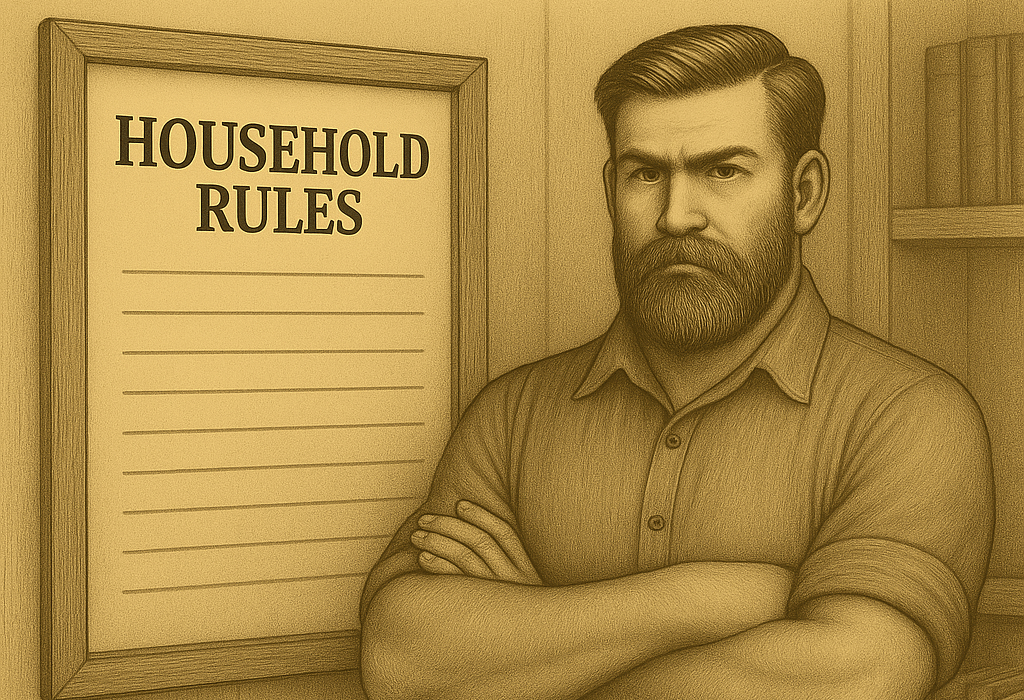
The Written Law of the Household: Why Every Patriarch Must Post His Rules


I. The Divine and Historical Precedent of Written Law

The Necessity of Writing: God Himself as the Example

If you want to understand the necessity of writing the law of your house, you must first look to God Himself. From the very beginning, He set the pattern: His law was not merely spoken, it was written.

Consider the moment at Mount Sinai. God thunders His commandments in fire, cloud, and trembling. Israel shakes with fear. But He does not stop at words. He carves them into permanence:

And he gave unto Moses, when he had made an end of communing with him upon mount Sinai, two tables of testimony, tables of stone, written with the finger of God. – Exodus 31:18 (KJV)

Here is the Almighty stooping to our level, giving His law in writing. Think about that: the One who created speech, who could have left His commandments in the air, chose instead to inscribe them into stone. Why? Because He knew human memory, human excuses, and human rebellion. He knew that spoken words could be twisted or forgotten. But stone endures.

If God Himself found it necessary to write down His laws for His children, what makes you think your household will flourish without written rules? Are you wiser than God? Stronger than stone? Or have you been deceived into thinking that your family can thrive on guesswork, impressions, and mood-based leadership?

No, the divine precedent is clear: the head of a people writes his law down.


The Posting of the Law: Public, Visible, Constant

God’s instructions went beyond carving stone tablets. He commanded that His words be taught, repeated, and posted. His law was not a private journal entry for the father’s eyes alone; it was a public standard for the entire household.

And these words, which I command thee this day, shall be in thine heart: And thou shalt teach them diligently unto thy children, and shalt talk of them when thou sittest in thine house, and when thou walkest by the way, and when thou liest down, and when thou risest up. And thou shalt bind them for a sign upon thine hand, and they shall be as frontlets between thine eyes. And thou shalt write them upon the posts of thy house, and on thy gates. – Deuteronomy 6:6–9 (KJV)

Notice the layers:

  1. In your heart – internal conviction.
  2. Teach them diligently to your children – vocal instruction.
  3. Talk of them daily – conversational reinforcement.
  4. Bind them to your body – physical reminders.
  5. Write them on your doorposts and gates – visible posting in the home.

God covers every angle. He knew Israel would drift if His law was not continually reinforced. He knew that silence breeds forgetfulness, and forgetfulness breeds rebellion. So He required fathers to literally engrave His commands into the architecture of their homes. The implication for the patriarch today is unavoidable: if your household law is not visible, posted, and constant, you are not obeying God’s model. You are ruling less effectively than ancient Israelite peasants.


Written Law as Covenant

Why written law? Because writing is covenantal. Spoken words evaporate. Written words bind. Every covenant in Scripture, from Noah to Abraham to Moses to David, is sealed in writing. The Bible itself is a written covenant. Consider the words of Moses:

And it came to pass, when Moses had made an end of writing the words of this law in a book, until they were finished, That Moses commanded the Levites, which bare the ark of the covenant of the Lord, saying, Take this book of the law, and put it in the side of the ark of the covenant of the Lord your God, that it may be there for a witness against thee. – Deuteronomy 31:24–26 (KJV)

Here, the written law itself is called a witness. It testifies. It holds the people accountable. It is not subject to memory or revisionist arguments. It stands as a fixed point of truth. When you write the law of your household, you are creating a covenantal witness. You are making rebellion indefensible. You are declaring: This is the standard. This is our covenant. This is the order of this house.


Historical Witness: Hammurabi’s Code

Let’s leave Israel for a moment and look at the pagans. Even the godless understood the necessity of written law. Hammurabi, king of Babylon (c. 1754 BC), created one of the world’s oldest legal codes. He did not merely issue commands from his throne. He had them engraved in stone on large stelae and set up in public places.

The prologue to his code declared that these laws were given “so that the strong might not oppress the weak.” In other words, written law was protection, clarity, order. It ended excuses. It standardized justice.

Now imagine a father who shrugs at this. He expects his children to obey rules he has never defined. He disciplines inconsistently, changing the standard week by week. He allows his wife to argue, “But you never said that.” Brothers, understand this: such a man has less order in his house than Hammurabi had in pagan Babylon. Is that really the standard you want to fall short of?


Roman Household Codes: The Paterfamilias

Move forward to Rome. The Roman household revolved around the authority of the paterfamilias, the father of the family. His rule was absolute. But absolute authority requires written order. Thus, Rome developed household codes, defining expectations for wives, children, and slaves.

This tradition influenced even the New Testament writers. Paul and Peter adopted the household code format to instruct Christian families. These were not “open conversations.” They were written, published rules for Christian households.

Wives, submit yourselves unto your own husbands, as unto the Lord. For the husband is the head of the wife, even as Christ is the head of the church: and he is the saviour of the body. Therefore as the church is subject unto Christ, so let the wives be to their own husbands in every thing. Husbands, love your wives, even as Christ also loved the church, and gave himself for it. – Ephesians 5:22–25 (KJV)

Children, obey your parents in all things: for this is well pleasing unto the Lord. Fathers, provoke not your children to anger, lest they be discouraged. – Colossians 3:20–21 (KJV)

Notice: these are written instructions, preserved for all Christian households. They are not whispers in a corner, they are published law for the people of God.

If Rome knew that order required codification, and if the apostles themselves committed household standards to writing, then what excuse does the modern patriarch have for not writing and posting his rules?


The Reformation Household Rules

Fast-forward to the Protestant Reformation. Reformers like Martin Luther understood that reformation begins at home. And a reformed home requires law. Luther wrote catechisms not only for churches but for fathers to teach in their houses. He instructed fathers to lead daily prayers, Scripture reading, and discipline.

This tradition birthed Hausväterliteratur, “Housefather literature.” These were manuals filled with written household rules: when to rise, when to work, when to pray, when to eat, when to sleep. Families were to see and know the structure. It was not left to “understanding” or “conversation.” It was posted and practiced.

In Reformation Europe, a father who did not post household rules was seen as negligent. His house was not godly, but chaotic. The same principle applies today.


The Pattern is Universal

Step back and survey the landscape:

  • God wrote His law in stone.
  • Israel posted His law on their homes and gates.
  • Moses placed the law as a witness in the Ark.
  • Hammurabi engraved laws in public stone.
  • Rome codified household standards.
  • The apostles wrote household codes in Scripture.
  • The Reformers required written household rules.

Across cultures, times, and religions, the principle is the same: a people without written law cannot endure. And yet modern patriarchs, who should know better, often try to run their homes without it. They rule by whim. They govern by mood. They argue endlessly because nothing has been codified.

This is not strength. It is weakness and it will lead to chaos. Leadership requires written rules..


Conclusion

The case has been made from divine precedent and historical witness: written law is not optional. It is the foundation of authority. From Sinai to Babylon to Rome to Wittenberg, rulers have known: you cannot govern without posting law.

If you, as patriarch, want to be taken seriously, you must follow the same path. Write your household law. Post it in your home. Make it visible, constant, inescapable. For without written law, you will not have order, you will have endless debate, manipulation, and ultimately, failure.

II: The Practical Necessity of Written Law in the Home


Spoken Law vs. Written Law

There is a vast difference between a command spoken in passing and a law written in permanence. Spoken law is fragile. It relies on memory, interpretation, and the willingness of others to admit what was said. Written law is strong. It stands as an impartial witness.

How many arguments in your house could have been ended before they even began if you had written law? How many times has your wife or child said: “You never told me that” or “That’s not what you said last week”? Without writing, you have no way to prove otherwise. Your authority is reduced to a matter of opinion and subject to the whims of others.

This is not a new problem. God anticipated it. That is why He commanded Moses not only to speak His law, but to write it down and place it as a permanent testimony.

And it came to pass, when Moses had made an end of writing the words of this law in a book, until they were finished, That Moses commanded the Levites, which bare the ark of the covenant of the Lord, saying, Take this book of the law, and put it in the side of the ark of the covenant of the Lord your God, that it may be there for a witness against thee. – Deuteronomy 31:24–26 (KJV)

The law itself became a witness. If Israel claimed ignorance, the written word exposed their lie. The same principle applies to your household. Without written law, you invite endless excuses. With written law, you have an impartial standard.


The Household as a Kingdom

Your household is not merely a collection of individuals who happen to live under the same roof. It is a kingdom. You are the king. Your wife/wives are the queen. Your children are subjects. The question is not whether you rule, but how. Do you rule by whim, or do you rule by law?

A king who rules by moods is not respected. His decrees shift daily. His people live in fear, not order. Such is the house where the father has no written law. One day the rule is bedtime at 9:00. The next day it is 10:00. One day he insists on dinner at the table. The next he tolerates chaos. His house is not a kingdom of peace but a circus of inconsistency.

But a king who writes his law rules with clarity. His people know what is expected. His authority is not arbitrary but structured. His enforcement is not unpredictable but consistent. This is why written law is necessary: it transforms your authority from emotional reaction into established governance.


Law as Protection

One of the great lies of modernity is that rules are oppressive. In truth, rules are protective. The absence of rules does not produce freedom; it produces chaos, insecurity, and fear. Children raised without clear boundaries grow anxious and rebellious. Wives left without household order become manipulative and discontent. Scripture makes this clear:

Where there is no vision, the people perish: but he that keepeth the law, happy is he. – Proverbs 29:18 (KJV)

A household without vision and law perishes. A household with law flourishes. The law is not your enemy. It is your family’s safety net.


Sociological Evidence: Why Rules Must Be Written

Even secular research confirms what Scripture and history already teach: families thrive when rules are clear, consistent, and posted.

  • Baumrind’s Parenting Styles (1966–1991): Psychologist Diana Baumrind identified three main parenting styles: permissive (no rules), authoritarian (rules without warmth), and authoritative (rules with consistency and care). The healthiest, most well-adjusted children came from authoritative homes, those with clear, enforced rules.
  • Journal of Family Psychology (2002): A study showed that households with clearly articulated and posted rules reported less conflict and stronger family cohesion. Families without visible rules reported confusion, arguments, and power struggles.
  • Child Development Research (2010): Children raised with consistent boundaries had higher academic achievement, better social behavior, and lower rates of anxiety.

The data only confirms what the Bible has said for millennia: law brings peace, order and blessing.


The Benefits of Written Household Law

1. Clarity: No Excuses, No Confusion

The number one excuse of rebels is ignorance. “I didn’t know.” “You never said.” Written law eliminates this excuse. It puts your rules beyond dispute. The wall testifies against rebellion. This is why God told His people to post His laws on their homes:

And thou shalt write them upon the door posts of thine house, and upon thy gates: – Deuteronomy 11:20 (KJV):

The home itself was to be marked by visible law. Imagine how different your household would be if the rules of your house were posted plainly where no one could deny them.

2. Authority: The Law Speaks for You

Written law allows you to stop repeating yourself. Instead of constant nagging, you simply point to the posted rule. You are not the bad guy, the law is. And since the law is your word in writing, your authority remains intact.

This is what Moses meant when he said the law was a witness. It enforced itself.

3. Training: Children Raised Under Law

Children raised in a house with written law grow up knowing that rules are objective and binding. They learn to respect standards outside of themselves. They are not trained in relativism but in order. Contrast this with children raised in lawless homes. They learn manipulation. They test boundaries constantly. They never know where the line is, so they live in tension and rebellion.

Children, obey your parents in the Lord: for this is right. Honour thy father and mother; (which is the first commandment with promise;) That it may be well with thee, and thou mayest live long on the earth. And, ye fathers, provoke not your children to wrath: but bring them up in the nurture and admonition of the Lord. – Ephesians 6:1–4 (KJV):

The “nurture and admonition” Paul speaks of is not guesswork. It is structured discipline and clear instruction, written, taught, and enforced.

4. Legacy: Law Beyond the Man

When you die, your words die with you. But written law remains. Your children can carry the same posted rules into their own homes. Your daughters can honor the consistency they grew up with. Your sons can post the very same laws on their own walls.

Written law outlives you. It becomes a family tradition, a generational legacy.


Examples from History and Culture

Hammurabi’s Legacy

We saw in Section I that Hammurabi posted his laws in stone. But consider the result: his code influenced civilizations for centuries. The fact that it was written preserved it for millennia. A father who refuses to write his household law is refusing to create a legacy.

Roman Order vs. Barbarian Chaos

The Romans despised the Germanic tribes not only for their violence but for their lack of written law. To the Romans, a people without written statutes were uncivilized. Likewise, a household without written rules is barbaric.

Reformation Discipline

During the Reformation, fathers who ran their houses without written rules were considered negligent. Luther and Calvin insisted that fathers train their children daily with written catechisms and posted prayers. They knew that without written guidance, the next generation would drift.


Answering the Excuses

Excuse 1: “Isn’t This Legalistic?”

When men sneer that written rules are “legalistic,” they reveal their own rebellion. Law is not the enemy. Paul says plainly:

What shall we say then? Is the law sin? God forbid. Nay, I had not known sin, but by the law: for I had not known lust, except the law had said, Thou shalt not covet. – Romans 7:7 (KJV)

The law reveals sin. Without it, you cannot even define rebellion. Written rules are not legalism; they are the very means by which sin and obedience are defined.

Excuse 2: “Won’t My Wife Think I’m Controlling?”

If your wife resents law, she resents being ruled. That is not your problem, it is hers. A good wife rejoices when the standard is clear. She would rather live under posted rules than under the tyranny of unpredictable moods.

If she argues that written rules are “controlling,” ask her why she obeys traffic signs, city codes, and work policies without complaint. She lives under written law everywhere else. Why should the household be the one place where law is unwelcome?


Practical Steps for Fathers

  1. Write Your Law Clearly
    • Keep rules short and simple. Example: “No phones at the table. Bedtime at 9:00. Church attendance mandatory.”
  2. Post It Publicly
    • The law that lives in your notebook is no law. Put it on the wall. Kitchen, dining room, or entryway.
  3. Enforce It Consistently
    • A law ignored is no law at all. If you write it, you must back it every time.
  4. Revise in Writing
    • Moses refined case law. Kings issued decrees. You may adjust as needed, but always in writing.

Conclusion:

The practical necessity of written household law is undeniable. Without it, you invite confusion, excuses, rebellion, and chaos. With it, you create clarity, authority, training, and legacy.

God commanded His people to post His laws on their homes. Hammurabi posted his laws in stone. Rome codified its households. The Reformers posted rules in their homes. Even modern psychology confirms: rules must be visible and consistent.

Why would you, as patriarch, imagine that your house will succeed where all others have failed? Without written law, you are not ruling, you are reacting. But with written law, you establish order, train your children, protect your wife, and leave a legacy of discipline.

III: Enforcing and Living by Written Household Law


The Final Step: Law Without Enforcement is No Law

You can carve commandments in stone. You can post them on your walls. You can declare them morning, noon, and night. But if you do not enforce them, they are nothing more than decorations.

A written law without enforcement is not law, it is wallpaper. A patriarch who writes but does not act is no better than the lazy king who issues decrees but never punishes rebellion. His household will quickly learn that the posted rules are a joke.

This is why Moses, after writing the law, did not stop at ink and parchment. He gathered Israel, read the law aloud, and declared blessings for obedience and curses for disobedience. The law carried teeth. It had consequences.

And it shall come to pass, if thou shalt hearken diligently unto the voice of the Lord thy God, to observe and to do all his commandments which I command thee this day, that the Lord thy God will set thee on high above all nations of the earth: And all these blessings shall come on thee, and overtake thee, if thou shalt hearken unto the voice of the Lord thy God. – Deuteronomy 28:1–2 (KJV)

But it shall come to pass, if thou wilt not hearken unto the voice of the Lord thy God, to observe to do all his commandments and his statutes which I command thee this day; that all these curses shall come upon thee, and overtake thee: – Deuteronomy 28:15 (KJV)

Notice the clarity: blessing for obedience, curse for rebellion. The law was not optional. It was not a “suggestion.” It was binding, enforced, and serious. So too must the law of your household be.


Answering the Objections

Objection 1: “Isn’t This Harsh?”

Modern ears recoil at the word “law.” They prefer “guidelines,” “principles,” or “family values.” But Scripture does not blush at law. In fact the psalmist delights in it:

The law of the Lord is perfect, converting the soul: the testimony of the Lord is sure, making wise the simple. The statutes of the Lord are right, rejoicing the heart: the commandment of the Lord is pure, enlightening the eyes. – Psalm 19:7–8 (KJV)

Law is not cruelty, it is clarity. Law is not harsh, it is merciful. It spares your wife and children the torment of guessing. It frees them from the anxiety of not knowing where the boundaries are. The harshness is not in law, but in lawlessness. A lawless home produces fear, manipulation, and constant conflict. A lawful home produces peace.

Objection 2: “Won’t My Wife Resent It?”

If your wife resents written law, the problem is not the law but her rebellion. She lives under written law everywhere else, in her workplace, in her city, in her nation. She obeys speed limits, city codes, and employee handbooks without complaint. Yet in the one place where law is most necessary, the household, she objects? That is not reason; that is rebellion.

A wife who loves order will rejoice in posted law. It tells her what is expected. It removes uncertainty. It protects her from being ruled by mood.


How to Establish and Enforce Household Law

Step 1: Write It Clearly

Do not write vague generalities. Do not write philosophical musings. Write short, direct, enforceable rules. Examples:

  • “No phones at the dinner table.”
  • “Children in bed by 9:00 PM.”
  • “Church attendance is mandatory.”
  • “Chores must be completed before leisure.”

These are rules that can be enforced, not merely admired.

Step 2: Post It Publicly

God commanded Israel to post His law on doorposts and gates. Why? So that no one could plead ignorance. The same principle applies to your household. Post your law where all can see, dining room, kitchen, entryway.

Step 3: Enforce Consistently

A law unenforced is no law at all. If you ignore violations, you teach your family that your words are meaningless. Every time the law is broken, respond. Discipline swiftly, consistently, and without apology.

Because sentence against an evil work is not executed speedily, therefore the heart of the sons of men is fully set in them to do evil. – Ecclesiastes 8:11 (KJV)

If you delay enforcement, rebellion festers. Speedy discipline prevents escalation.

Step 4: Revise in Writing

Do not adjust rules by whim. If a rule must change, change it in writing. Issue an amendment. Post it clearly. Your family must see that law evolves only through written decree, not casual suggestion.


The Cost of Lawlessness

What happens when a patriarch refuses to write and enforce household law? The results are predictable:

  1. Children Manipulate – Without clear rules, they push boundaries constantly. They live in confusion and rebellion.
  2. Wives Argue – Without posted law, she insists on her own interpretations. Every correction becomes a debate.
  3. Fathers Weaken – Without law, you are reduced to nagging, pleading, and shouting. Your authority becomes laughable.
  4. The Household Collapses – A lawless home is not a home. It is a hotel of individuals sharing space.

Scripture warns us:

In those days there was no king in Israel: every man did that which was right in his own eyes. – Judges 21:25 (KJV):

This is the state of the lawless household. Without written law, every member does what is right in his own eyes. The result is chaos.


The Blessing and Legacy of a Lawful House

By contrast, a household with posted law enjoys peace. Everyone knows the standard. No one can argue ignorance. Discipline is consistent. Authority is respected.

Great peace have they which love thy law: and nothing shall offend them. – Psalm 119:165 (KJV)

Peace flows from law. A lawful home is a peaceful home. The final reason to post written household law is legacy. Your voice will one day fall silent. But the written law will remain. Your children can carry it forward. Your grandchildren can inherit it. Consider Joshua’s declaration:

And if it seem evil unto you to serve the Lord, choose you this day whom ye will serve; whether the gods which your fathers served that were on the other side of the flood, or the gods of the Amorites, in whose land ye dwell: but as for me and my house, we will serve the Lord. – Joshua 24:15 (KJV)

Joshua did not merely declare for himself. He declared for his house. His household was governed by covenantal law. That declaration has echoed for thousands of years because it was written.

Your written household law will outlive you. It will testify to your children and their children. It will become a family constitution, a standard of order across generations.


The Man Who Refuses

The man who refuses to write and enforce household law is not a patriarch. He is a placeholder. He is a male figurehead presiding over a lawless household. His wife mocks him., his children ignore him., and his home collapses into chaos.

Such a man may boast of authority, but he has none. He has abdicated it by failing to codify and enforce it. He is not a king but a clown, not a patriarch but a pushover.


Conclusion

Enforcing written law is the final step of true patriarchal rule. Without it, your words are wind. With it, your household becomes a kingdom of peace and order.

God wrote His law, posted His law, and enforced His law with blessing and curse. Hammurabi wrote and enforced his code. Rome codified and enforced its household order. The Reformers posted and enforced household catechisms.

Will you do less in your own home?

Write your household law. Post it publicly. Enforce it consistently. Revise it only in writing. Leave a legacy that will outlive you. For without written law, your house is chaos. With written law, your house becomes what God intended: a kingdom of peace under a righteous patriarch.

My son, forget not my law; but let thine heart keep my commandments: For length of days, and long life, and peace, shall they add to thee. – Proverbs 3:1–2 (KJV)

May God’s great order be restored.

The Lie of Fairy-Tale Love vs. The Truth of Biblical Covenant: Restoring Honor in Marriage and Romance

I. The Great Illusion: Modern Romance and Its Poisoned Fruit

We live in a generation drunk on the wine of emotional fantasy, where love is painted in glitter and dreams rather than blood and covenant. The modern conception of love and romance; marketed through Disney movies, pop songs, and TikTok influencers, has turned marriage into a fleeting spark of passion rather than a solemn bond of dominion, order, and legacy. The modern mind believes that to “fall in love” is to be swept away in feelings, and when those feelings change, love is assumed to have died. Such an idea is not merely naïve; it is destructive.

The 21st-century romance myth revolves around personal happiness and instant gratification. A 2023 Pew Research survey revealed that 88% of Americans believe love is the most important reason to get married, but only 24% believe it’s important for couples to have shared religious beliefs. This shows the collapse of covenantal thinking. In this model, the individual’s temporary feeling of “being in love” is enthroned, and God’s order is discarded.

Contrast this with the Biblical understanding: marriage is not founded upon feelings but upon vows, law, and covenantal duty. Feelings can come and go like waves, but covenant remains anchored to the rock of God’s Word.

Hollywood teaches that love is when someone “completes you.” God teaches that love is when a man lays down his life for his bride, sanctifies her with the Word (Ephesians 5:25-27), and builds a multigenerational household in submission to Christ. The fairy tale ends with a wedding. The Kingdom story begins with one.

The Feminine Fantasy and Masculine Sloth

The romantic fairy tale particularly ensnares women. From a young age, girls are fed stories where the princess is passive, waiting for a perfect man to find her, rescue her, and romance her forever. The man is always rich, handsome, and emotionally sensitive. The girl is always beautiful, pampered, and adored. There is no work, no conflict, and no suffering in this world, only happily ever after.

This corrupts women to expect effortless perfection. The romantic notion becomes a drug, and when reality sets in; when diapers must be changed, when money is tight, when her husband is firm rather than soft, she feels “unloved.” In reality, she was never taught what love truly is.

Men, too, are affected, but in a different way. Instead of building homes, taming wild lands, and forging legacies, they are lulled into passive entertainment, pornographic fantasy, or immature pursuits. They believe that winning a woman is about charm and convenience, not headship and labor. This is why many Christian men today delay marriage into their thirties, remaining unready to take dominion and lead a household.

Historical Note: The Rise of Romanticism

The notion of romantic love as the foundation of marriage is a relatively modern idea. Prior to the Enlightenment and Romantic era (18th–19th centuries), marriage in Christian Europe was understood as a social, economic, and spiritual covenant. Love was expected to grow through duty, shared purpose, and the sanctifying work of the Spirit. In medieval Christendom, the concept of “courtly love” emerged in aristocratic poetry, where knights idealized and idolized unattainable women. This paganized the concept of love, severing it from God’s law.

C.S. Lewis noted in The Four Loves that romantic love, when exalted above all else, becomes a god; and like all false gods, it devours its worshipers.

II. What Is Biblical Love? A Matter of Covenant and Command

Biblical Love Is Obedient

The modern mind hears “love” and thinks “emotion.” The Biblical mind hears “love” and thinks “obedience.”

“For this is the love of God, that we keep his commandments: and his commandments are not grievous.” —1 John 5:3

True love is covenantal, not emotional. It is defined by action and grounded in God’s law. Husbands are commanded to love their wives as Christ loved the church, not by pampering her emotions, but by leading, providing, sanctifying, and laying down his life. Wives are likewise commanded to love their husbands by reverent obedience and faithful service (Titus 2:4–5). Love, then, is not how we feel but how we act, especially when we do not feel.

Jesus did not die on the cross because it felt good. He died because He loved the Church. Love bleeds. Love sacrifices. Love obeys.

Love as Headship and Submission

In Ephesians 5:22–33, we are given the divine pattern of love:

  • The husband is the head of the wife as Christ is the head of the Church.
  • The wife is to submit to her husband as the Church submits to Christ.
  • The husband is to love his wife as Christ loves the Church.

This is not equality. This is hierarchy, and order. Biblical love is not a democracy of feelings but a monarchy of duty. The husband rules in love, and the wife follows in joy.

This kind of love cannot be replicated in the feminist model, where both parties demand their rights and nobody yields. It thrives only in homes where God’s order is kept and men embrace masculinity with courage.

The Covenant Reality of Marriage

A Biblical marriage is not just a private commitment; it is a covenant, a binding agreement before God, sealed by vows, maintained by law, and guarded by consequences. This is why Malachi 2:14 refers to a wife as a “companion of thy covenant.” Breaking covenant is treachery before the Lord.

When two become one flesh, they are not joining in a momentary dance of emotion. They are joining in the sight of Heaven to build a house of dominion under God. Marriage is a holy institution (Malachi 2:11), a cornerstone of civilization, and a reflection of Christ and His bride.

This is why Biblical marriage cannot be based on feelings. Feelings are temporal. Covenant is eternal.

III. The Fruit of Covenant Love: Stability, Children, and Kingdom

A covenant marriage yields results. It does not flutter with the wind of passing affections. It builds, it multiplies, and it reigns!

Stability and Security

One of the most consistent findings in sociological studies is that stable marriages benefit not only the couple but also society at large. According to the Institute for Family Studies (2021), children raised in homes with married biological parents have significantly better outcomes in health, education, emotional stability, and social behavior. These benefits persist regardless of income level or ethnicity.

Why? Because God’s design works.

When a husband leads in love and a wife submits in reverence, a fortress is built. Children are nourished, protected, and trained in righteousness. Contrast this with the modern dating-marriage-divorce-remarry loop that dominates our culture. The fruit is chaos.

God’s covenant model brings peace. The modern fairytale brings war.

Children: The Real “Happily Ever After”

The world ends its love stories with a wedding. God begins them with one, and from there, He multiplies. Psalm 127:3–5 tells us:

“Lo, children are an heritage of the LORD: and the fruit of the womb is his reward. As arrows are in the hand of a mighty man; so are children of the youth.”

In a Biblical marriage, children are not optional accessories, they are the reward, the legacy, the very purpose of the union. Yet the fairytale romance usually depicts children as interruptions to pleasure, not blessings of covenant. Hollywood love stories almost never show the sleepless nights, the morning devotions with squirming toddlers, or the financial sacrifices of raising a godly heritage. But Scripture does.

God’s pattern is generational. He does not merely save individuals; He establishes households, and through them, nations.

“And I will establish my covenant between me and thee and thy seed after thee in their generations for an everlasting covenant…” —Genesis 17:7

A home built on feelings may last a season. A home built on covenant becomes a dynasty.

The Romance of Responsibility

The greatest irony is this: the very thing that modern romantics are searching for, intimacy, trust, belonging, passion, is only truly found through responsibility.

A husband who takes dominion of his home, who lays down his life daily in work, prayer, and direction, becomes a man his wife can truly admire. A wife who honors her husband with joyful submission and diligent service becomes a fountain of grace, loyalty, and beauty. Together, they forge something far more glorious than mere feelings.

Biblical love is romance rooted in reality. It is not a firework; it is a hearth. It does not explode in a moment, then fade. It burns steadily for generations.

IV. The Fairy Tale Fails: When the Illusion Collapses

Feelings Fade, Duty Remains

It is no secret that modern marriages collapse at an alarming rate. In the U.S., nearly 70% of marriages end in divorce. Even among professing Christians, the numbers are not much better. Why?

Because most of these marriages were built not on covenant, but on emotional highs. They “fell in love,” and when the feelings faded, they assumed love was gone. But feelings are not reliable guides. They are changeable and prone to deception.

Scripture warns us:

“He that trusteth in his own heart is a fool: but whoso walketh wisely, he shall be delivered.” —Proverbs 28:26

Feelings come and go. Hormones rise and fall. But the Word of God remains. A marriage built on the shifting sands of emotion will fall. A marriage built on the rock of God’s order will stand.

Romance Turned Idolatry

Modern romance has become idolatry. It demands full devotion, total satisfaction, and unending emotional highs. But no human can bear the weight of that expectation. When men make idols of women, and women demand emotional fulfillment from men alone, they both set themselves up for crushing disappointment.

God alone satisfies. Marriage is not meant to replace Him, but to glorify Him.

When Christ is the center and the structure is in order, husband ruling, wife submitting, children obeying, then love flows freely. But when order is overturned, even the purest affection will rot.

Pornography, Infidelity, and Feminism

Our generation is being destroyed by lies:

  • Pornography promises pleasure without covenant. It is a fantasy that poisons real love, ruins male ambition, and rewires the brain for false expectations.
  • Feminism tells women they don’t need men, that submission is oppression, and that independence is the highest virtue. This breeds bitterness, rebellion, and loneliness.
  • Infidelity becomes common because people believe love should always feel like the first spark. But that spark is not love, it is novelty.

Studies show that frequent pornography use is directly correlated with higher divorce rates, lower sexual satisfaction, and reduced emotional bonding. (Journal of Sex Research, 2016)

These are not just statistics. These are souls, homes, and children being destroyed by the lies of the enemy.

V. Love Reclaimed: The Path Back to Biblical Order

Courtship, Not Dating

The Bible knows nothing of recreational dating. The modern dating model is designed for failure, it trains people to practice divorce before marriage. Date, break up. Date, break up. Repeat. No wonder so few remain faithful in marriage.

Biblical courtship, however, is intentional. It involves family oversight, headship approval, and a view toward marriage. It protects the heart, guards purity, and aligns with the reality that marriage is covenant, not experimentation.

“Flee fornication…” —1 Corinthians 6:18
“Let every man have his own wife, and let every woman have her own husband.” —1 Corinthians 7:2

Young men must prepare to lead before they pursue. Young women must remain under headship, father or elder, until handed over in honor to a husband. This is not restrictive; it is protective.

Covenant Before Romance

The greatest romance is not found in feelings before marriage, but in faithfulness within it. The world teaches that sex, intimacy, and affection should come first, and commitment later. God reverses this:

  • Covenant first.
  • Intimacy second.
  • Fruitfulness follows.

When a man and woman stand before God and vow lifelong covenant, they open the door to a deeper romance than Hollywood can imagine. Not based on infatuation, but on sacrifice, service, and shared mission.

A man who works hard, rules his home well, and honors God will find his wife’s respect and admiration growing over time. A woman who nurtures, builds, submits, and honors her husband will find her beauty increase in his eyes, year after year.

This is not a fairytale. It is better, andi it is real!

VI. Marriage as Mission: Building the Kingdom

Love That Builds, Not Consumes

The world portrays love as a fire that consumes. The Bible portrays it as a labor that builds.

“Through wisdom is an house builded; and by understanding it is established: And by knowledge shall the chambers be filled with all precious and pleasant riches.” —Proverbs 24:3–4

Marriage is a mission; a joining of lives for the purpose of establishing God’s dominion. The couple becomes a household. The household becomes a beacon. The beacon becomes a city. This is how Christendom was built, and how it must be rebuilt.

The love between a man and woman is meant to reflect the love between Christ and His Church: strong, sacrificial, ordered, and fruitful. This is no dreamy sentiment. It is war—war against the flesh, against Satan, and against the world’s lies.

Romance becomes dangerous when detached from mission. But when embedded in mission, when the man builds and the woman helps, the love grows deeper, richer, and stronger with time.

Love in Polygyny: Multiple Wives, One Covenant Standard

The fairytale mindset rejects Biblical polygyny because it cannot comprehend covenantal love beyond emotional exclusivity. But Biblical love is not possessive, it is purposeful.

Abraham, Jacob, David, and others loved more than one wife. Did they fail? No. Their failings came not from plural marriage itself but from disorder and partiality when they disobeyed God’s instructions.

In a righteous, ordered polygynous home, the love is covenantal, not competitive. Each wife is under the covering and love of the husband, not because she is his emotional favorite, but because she is his covenant responsibility. And when the wives embrace their station in humility and duty, they too find deeper love, not the fleeting spark of romance, but the eternal light of God’s law.

This, too, contradicts modern notions. The world says, “I must be the only one you love.” God says, “Love them all rightly, rule them all justly, and sanctify them all in truth.”

Polygyny is not about quantity of affection but quality of governance and abundance of fruit.

VII. Love That Endures: Restoring the Standard

A Return to the Ancient Paths

The prophet Jeremiah cried out to a rebellious people:

“Thus saith the LORD, Stand ye in the ways, and see, and ask for the old paths, where is the good way, and walk therein…” —Jeremiah 6:16

If we would restore honor in marriage, we must return to the ancient paths. Not to Victorian sentimentality or medieval fantasy chivalry, but to the law of God. To the covenant of Abraham. To the dominion mandate of Genesis 1. To the patriarchal order of Ephesians 5. To the self-sacrificing love of Christ.

This means training our sons not to seek fairy tale princesses but kingdom-building wives. It means training our daughters not to dream of perfect romance but to become perfect helpmeets, keepers at home, joyful in submission, fruitful in the womb, and diligent in works.

We must preach a love that lasts, a love that governs,  and a love that builds dynasties.

The True Love Story: Christ and His Bride

All earthly marriages are meant to point to the greatest love story of all time:

“Husbands, love your wives, even as Christ also loved the church, and gave himself for it.” —Ephesians 5:25

Christ’s love was not a feeling. It was a covenant sealed in blood. He endured pain, shame, betrayal, and death to redeem a bride. And His love sanctifies her, not by excusing sin but by cleansing her with the Word.

He does not leave her when she is unlovely. He washes her, restores her, and presents her to Himself in glory.

This is Biblical love. This is our model. Not Cinderella. Not The Notebook. Not pop songs or romance novels. Christ. The covenant King and His radiant bride.

If your home reflects that, regardless of emotion, opposition, or the world’s mockery, then you are building the Great Order.

Final Call: Crush the Fairy Tale. Live the Covenant.

We must cast down every vain imagination that exalts itself against the knowledge of God, including the lie of fairytale romance.

Biblical love is better.

  • It is rooted in covenant, not emotion.
  • It is expressed in obedience, not convenience.
  • It bears fruit, builds homes, and conquers generations.

Men, love your wives, not with flowers and fleeting words, but with rulership, sacrifice, provision, and protection.

Women, honor your husbands, not with manipulation and emotional demands, but with quietness, meekness, submission, and fruitful labor.

Reject the fairytale. Embrace the kingdom.

Let us raise sons who do not chase feelings but build nations.

Let us raise daughters who do not long for a knight in shining armor but serve their covenant king in faithfulness. Let us return to the old paths, and  build households of dominion. Let us love, truly, covenantally, and eternally.

For love never fails, but only when it is founded on the law of God.

“Many waters cannot quench love, neither can the floods drown it…” —Song of Solomon 8:7
“…but the greatest of these is charity.” —1 Corinthians 13:13

Let the Great Order be restored!

Children Working: The Biblical Mandate to Train Through Labor

“It is good for a man that he bear the yoke in his youth.”
— Lamentations 3:27 (KJV)

Section I: Rejecting the Lie of Prolonged Childhood

The modern West has created a generation of idle, entitled, and emotionally unstable children; not by accident, but by design. Childhood has been extended into the twenties. Work has been delayed until adulthood. Responsibility has been withheld under the false belief that children should only play, consume, and be entertained until they are “ready.”

This lie is unbiblical, unhistorical, and ultimately destructive.

The Scriptures present an entirely different vision: children are to be trained through labor. They are not to be coddled, but formed. Not entertained, but equipped. Childhood is not an escape from responsibility, it is the furnace where strength is forged.

“Even a child is known by his doings, whether his work be pure, and whether it be right.” — Proverbs 20:11

Children are moral agents. They are not blank slates or decorative ornaments. God judges their work. He watches their diligence. And He has given them families, not merely for nurture and affection, but for training, discipline, and preparation.

To neglect giving children work is not compassion. It is sabotage.


The Secular Invention of “Childhood”

Historically, children worked. In agricultural societies, they helped in the fields as soon as they could walk. In biblical culture, sons worked with their fathers, daughters with their mothers. Childhood was not a phase of prolonged indulgence, it was a stage of apprenticeship.

It was the Industrial Revolution that began shifting labor from family fields to centralized factories. In reaction, new laws were passed to protect children from exploitation, and rightly so. But with that protection came a new social construct: the idle child. The state took work from the child and replaced it with schooling without responsibility, entertainment without contribution, and rewards without merit.

Today, children are taught to sit still for eight hours, consume content, press buttons, and “follow their dreams.” But they are not taught to build. To serve. To fix. To work with their hands. To shoulder burdens. To do their duty.

This is not progress. It is bondage.


Biblical Examples of Children in Labor

The Bible is not silent on children and work. It assumes, even commands, childhood labor as part of godly formation.

  • Joseph was seventeen and already managing flocks, reporting on the work of his brothers (Genesis 37:2).
  • David, the youngest of eight, was left alone with the sheep while his brothers went to war, he was a working shepherd boy (1 Samuel 16:11).
  • Jesus, the Son of God, submitted to His earthly father Joseph, working as a carpenter until age thirty (Mark 6:3).
  • Timothy, a young man trained from childhood in Scripture and ministry, was appointed by Paul to significant leadership; because his labor began early (2 Timothy 3:15).

Children who are given responsibility early become strong, capable, and dependable. Children who are raised in idleness grow weak, confused, and rebellious.


Why the Modern Church Resists This Truth

Many Christian parents have swallowed the world’s lie that “children should enjoy their youth.” What they really mean is: “Let them waste time before reality hits.” They believe work will make their children bitter, that discipline will drive them away, that chores will damage their emotions.

But the Bible says the opposite:

“Chasten thy son while there is hope, and let not thy soul spare for his crying.” — Proverbs 19:18

“Foolishness is bound in the heart of a child; but the rod of correction shall drive it far from him.” — Proverbs 22:15

If foolishness is bound in their heart, then work is part of the cure. Work disciplines the flesh, focuses the mind, and awakens the conscience.


Idleness: A Breeding Ground for Sin

When children are idle, they become restless. When they are restless, they are tempted. The sin of Sodom began with pride, fullness of bread, and abundance of idleness (Ezekiel 16:49).

Idle sons become perverse. Idle daughters become vain. Idle children become depressed. The hands that do not swing hammers will eventually swipe screens, write curses, or cause destruction.

But a child who learns to labor is a child who becomes a blessing:

“The father of the righteous shall greatly rejoice: and he that begetteth a wise child shall have joy of him.” — Proverbs 23:24

Section II: Training Through Labor – Theology, Skill, and Obedience in the Home

“And these words, which I command thee this day, shall be in thine heart: And thou shalt teach them diligently unto thy children…” — Deuteronomy 6:6–7 (KJV)

The home is the first and greatest training ground for dominion. Fathers are not called to merely shelter their children or provide luxuries, they are called to equip them for rule, stewardship, and righteousness. One of the greatest tools God has given for this purpose is labor.

Work is not a punishment. It is not a necessary evil. It is part of the divine image.

“And the LORD God took the man, and put him into the garden of Eden to dress it and to keep it.” — Genesis 2:15

Before sin entered the world, Adam was a worker. He was made to labor. And just as he was commanded to subdue the earth, so too are his sons. Every child of Adam is born with a purpose, to cultivate, produce, and build. But this must be taught. It must be modeled. It must be demanded.


The Father’s Role: Assigning the Yoke Early

Scripture says:

“It is good for a man that he bear the yoke in his youth.” — Lamentations 3:27

Why? Because the yoke forms him. The yoke disciplines him. The yoke gives him direction, rhythm, and a sense of identity. Just as an ox is trained to carry weight from an early age, so must our sons and daughters be taught to shoulder real responsibility while they are still tender.

A father who gives his child only comfort is preparing him for ruin. But a father who gives his child burden, not crushing, but challenging, prepares him for dominion.

Let your son carry wood, not just toys. Let your daughter manage the kitchen, not just her closet. Let your children rise with purpose, not lounge with entertainment.


The Mother’s Role: Building the Work Culture of the Home

Mothers are not just nurturers; they are household governors. The Proverbs 31 woman “looketh well to the ways of her household, and eateth not the bread of idleness” (v.27). She delegates, manages, and trains her daughters (and sons) in the art of dominion through domestic economy.

It is the mother who should teach her daughters how to:

  • Clean thoroughly and joyfully
  • Cook with skill and order
  • Care for younger siblings with patience
  • Manage time, tidiness, and emotional control

The daughters of Zion must learn early that productivity is a gift, not a burden. That making bread is better than making videos. That cleaning is training, not punishment.


Sons Must Be Apprentices

Every father should view his sons as future builders, of homes, of businesses, of legacies. Sons must be taught not merely in theory, but in practice. What they learn with their hands becomes a law written on their hearts.

Start young:

  • Age 4–6: picking up toys, helping sweep, fetching tools
  • Age 7–9: raking leaves, sorting nails, washing dishes
  • Age 10–13: chopping wood, mowing, organizing supplies, managing small tasks alone
  • Age 14–18: assisting in family business, learning a trade, building projects, taking ownership of chores

Work should grow with them, not wait for them. They don’t need part-time jobs at 16 if they’ve had full-time duty since they were six. By the time they are young men, they should already be providers-in-training.


Daughters Must Be Builders of Households

Today’s daughters are taught to dream of offices and college dorms. But God’s design is for them to build homes (Titus 2:5). This means their labor training must center on domestic dominion.

Daughters should not be raised to be ornamental or idle. They should be trained to:

  • Rise early and prepare meals
  • Care for children and elderly
  • Maintain cleanliness and order
  • Plan menus, budgets, and schedules
  • Sew, mend, preserve, bake, and manage

This is not slavery, it is glory. The wise woman builds her house (Proverbs 14:1). The modern woman destroys it with idleness and excuses.


Chores Are Not Punishment – They Are Purpose

Many modern parents treat chores as punishment or points-based systems. This is backwards. Chores are not punishment; they are a participation in dominion. They are training for life.

Your children should not be paid to clean their own rooms, to fold their own clothes, or to do basic tasks that serve the family. These are duties. To turn duty into bribery is to raise mercenaries, not sons and daughters.

Rather, train them to see that their labor serves the household. Their effort contributes to order. Their tasks are worthy, meaningful, and good.

Let your home have a culture of labor, not grudging, but joyful. Sing as you work. Encourage as they toil. Reward not just results, but right attitudes.


Dangers of the Screen-Slave Generation

Technology is not neutral. It offers endless temptation for idleness, entertainment, and emotional disconnection. Children who are glued to screens do not build anything – they consume everything.

Parents must be ruthless in protecting their children’s attention span, manual skills, and work ethic. Screens erode all three.

Establish strict limits:

  • No phones or tablets for young children
  • No entertainment before labor is done
  • Weekday screen-free hours
  • No screens in bedrooms

Then fill the vacuum with work. Not busywork, but productive labor. Let them build. Let them clean. Let them plan. Let them help. Let them fail. Let them sweat.

This is how strength is formed. This is how order is built.


Let’s continue with Section III, focusing on the fruit, legacy, and long-term transformation that comes through training children to work.

Section III: The Fruit of Labor – Raising Builders, Not Consumers

“Train up a child in the way he should go: and when he is old, he will not depart from it.” — Proverbs 22:6

The man who trains his children to work is not simply maintaining a clean home; he is preparing a multigenerational legacy. Children who are trained to labor do not grow up needing handouts, therapy, or institutional micromanagement. They grow up bearing burdens, for themselves, for others, for the Kingdom.

The laboring child becomes the productive man. The responsible daughter becomes the fruitful wife. The disciplined son becomes the dependable patriarch.

This is the harvest of faithfulness: children who are not liabilities, but arrows in the hand of a warrior (Psalm 127:4).


Children Who Work Become Confident

One of the great plagues of our time is the insecurity of youth. Teenagers today are anxious, fragile, and afraid of responsibility. Why? Because they’ve never built anything. They’ve never proven themselves in real work.

But give a child a meaningful task, and let him conquer it. Let him mow the lawn alone. Let him change the oil with you. Let her plan the family meal and serve it. Let them paint the fence or build the shed.

And then praise them not for their existence, but for their accomplishment.

“Well done, thou good and faithful servant…” — Matthew 25:21

They will begin to walk taller, speak bolder, and live freer. Confidence is not born of compliments, but of conquest.


Children Who Work Become Grateful

Idleness breeds entitlement. Children who are given everything without effort become selfish, whiny, and thankless.

But a child who works for what he has learns gratitude. When he cleans the barn, he thanks God for the roof. When she kneads the bread, she cherishes every slice. When he sweats over the garden, he rejoices at the harvest.

Children must feel the weight of contribution before they can appreciate provision. The child who contributes to the home honors the home.


Children Who Work Become Disciplined

Labor trains the will. It molds impulse. It teaches that the body does not rule the soul. That tiredness is not an excuse. That emotions are not the master.

When a child learns to work when they don’t feel like it, they learn the secret of godly manhood and womanhood: obedience without delay.

“He that hath no rule over his own spirit is like a city that is broken down, and without walls.” — Proverbs 25:28

Work becomes the wall. It builds strength inside, not just outside.


Children Who Work Become Mission-Ready

The Church is weak because her households are weak. Her households are weak because her men are weak. And her men are weak because they were raised to play, not to labor.

But a generation of trained children is a generation ready for mission.

  • They do not fear sweat.
  • They do not faint under pressure.
  • They do not collapse emotionally.
  • They do not need applause.
  • They do not outsource maturity.

They are trained to serve, build, and defend.


Common Objections Answered

“But children need time to be kids!”
Children need to be trained. There is no contradiction between labor and joy. A boy who works hard laughs harder. A girl who serves faithfully sings louder. The child who labors well lives fully.

“But I want my child to have what I didn’t!”
Give your child what you needed, not what you lacked. If what you lacked was character, wisdom, and purpose, then build that. Not toys.

“But they’ll resent me if I make them work.”
They’ll resent you far more if you raise them weak, directionless, and addicted to comfort. Children remember two things when they grow: the standards you held, and whether you held them in love.


A Household of Labor Is a Household of Glory

“Let them also learn to maintain good works for necessary uses, that they be not unfruitful.” — Titus 3:14

In the godly home, children are not accessories, they are apprentices. They are not burdens, they are blessings. But they must be discipled, and that begins with labor.

Raise them to:

  • Rise early and give thanks
  • Tend the garden and care for animals
  • Clean their rooms and manage their belongings
  • Cook meals and serve one another
  • Study the Word and help the weak
  • Carry burdens and correct errors
  • Respect hierarchy and uphold honor

This is not legalism. This is love.

“For whom the Lord loveth he chasteneth…” — Hebrews 12:6

Love does not coddle, it commands. Love does not spoil, it strengthens.


Conclusion: Let the Children Build

We do not have time to raise another generation of consumers, narcissists, or soft rebels. The world is burning. The Kingdom is advancing. And the sons and daughters of God must be trained to build, defend, and conquer.

That starts now, in your home, with your hands, and with your expectations.

Give your children work. Give them responsibility. Give them burden. And give them the joy that only comes from finishing a task in faith.

Raise laborers.
Raise leaders.
Raise arrows.
Raise saints.

And let the world see what a household under God’s dominion can produce.

“I have no greater joy than to hear that my children walk in truth.” — 3 John 1:4

This is The Great Order!

Children and Obedience: Building Submission, Strength, and Order from the Cradle

A Foundational Mandate in the Tone of The Great Order

“Children, obey your parents in the Lord: for this is right.”
— Ephesians 6:1 (KJV)

Section I: The Foundation of Obedience – Divine Order Begins in the Home

We live in an age of disobedient children. Their eyes are bold with defiance. Their tone is casual, sarcastic, and disrespectful. They treat their parents like peers, push back at every instruction, and scoff at discipline. Their homes are upside down, where the child leads, the mother negotiates, and the father tiptoes.

This is not just a family issue. It is a civilizational curse.

“This know also, that in the last days perilous times shall come. For men shall be lovers of their own selves… disobedient to parents…”
— 2 Timothy 3:1–2

God does not see disobedience as a phase. He sees it as perilous. It is not just a nuisance, it is rebellion. It is spiritual disorder. And it is one of the clearest signs that a society has abandoned God’s design.

In The Great Order, we return to the ancient paths. We restore what has been lost. And we proclaim boldly: children are to obey. Not occasionally. Not selectively. Not after debate. Fully. Immediately. Joyfully.


The Biblical Mandate Is Clear

“Honour thy father and thy mother: that thy days may be long upon the land…”
— Exodus 20:12

“Children, obey your parents in all things: for this is well pleasing unto the Lord.”
— Colossians 3:20

From the Ten Commandments to the Pauline epistles, obedience is not optional. It is not cultural. It is commanded. And more than that, it is pleasing to the Lord.

The obedient child is a sweet aroma in the household of God. The disobedient child is a stench, a grief, and a rebellion in seed form.


Obedience Trains the Will

Children are not born neutral. They are born foolish.

“Foolishness is bound in the heart of a child; but the rod of correction shall drive it far from him.”
— Proverbs 22:15

Disobedience is the natural state of fallen man. A child must be taught to obey, not merely through suggestion or persuasion, but through training. Obedience must become habit, not preference. It must be tied to duty, not mood.

Every act of obedience is a victory over the flesh. Every command obeyed without complaint strengthens the soul.


Obedience Is a Matter of Worship

Too many Christian parents treat obedience as a matter of control or convenience. They want peace and quiet, not holy order. But the Word teaches us: a child’s obedience is an act of worship.

“Children, obey your parents in the Lord…”
— Ephesians 6:1

Not just “obey your parents.” Obey in the Lord. This means obedience is unto God. When a child obeys his father, he honors the Father in heaven. When he disobeys, he dishonors the divine order God has placed over him.

This is why discipline matters so much. Not because it makes parenting easier, but because it guards a child’s soul.


Early Obedience Builds Future Authority

The child who learns to submit joyfully becomes the adult who leads wisely. Why? Because every good leader was first a good follower.

A son who resists correction will later resist conviction. A daughter who despises instruction will later despise her husband, her elders, and her God. But a child who learns the peace of obedience learns the power of order. They discover that peace comes through structure, joy flows from discipline, and safety is found in submission.

This is how we build nations, not with soft-willed youth, but with sons and daughters who know how to bow before authority with honor.


Satan’s War Against Obedience

In Eden, Satan’s first attack was to undermine obedience.

“Yea, hath God said…?” — Genesis 3:1

He planted the seed of rebellion through doubt, through suggestion, through desire. And ever since, that same spirit of rebellion has worked its way into the hearts of children through television, cartoons, education, and culture.

Modern children’s programming glorifies sarcasm, mockery of parents, independence from family, and self-centeredness. Schools train children to question authority. Courts remove discipline from the home. And “gentle parenting” has replaced the rod with reasoning and begging.

This is not progress. It is satanic subversion.

If you will not disciple your children into obedience, the world will disciple them into rebellion.


The Fruit of Disobedience: Biblical Warnings

Scripture is blunt about the end of the disobedient child.

“The eye that mocketh at his father, and despiseth to obey his mother, the ravens… shall pick it out, and the young eagles shall eat it.”
— Proverbs 30:17

“He that smiteth his father, or his mother, shall be surely put to death.”
— Exodus 21:15

“A stubborn and rebellious son… shall be stoned with stones, that he die: so shalt thou put evil away from among you…”
— Deuteronomy 21:18–21

These are not suggestions. They are the recorded judgments of a holy God. In the Old Covenant, disobedience to parents was not a minor infraction, it was a capital crime.

Why? Because rebellion in the home is rebellion against God Himself. It is the rejection of His appointed order. It is anarchy in seed form.

Section II: Training Children to Obey – Building Submission with Structure, Consistency, and Love

“He that spareth his rod hateth his son: but he that loveth him chasteneth him betimes.”
— Proverbs 13:24

There is no neutral ground. The child will either be shaped by the will of his parents or by his own fallen nature. If you do not form his will through discipline and training, it will deform under the weight of sin and selfishness. God has not left parents without instruction. He has given them a divine method to train children to obey.

Obedience is not accidental. It is cultivated through structure, consistency, clear expectations, and most importantly, love demonstrated through correction.


Parental Authority Is Not a Suggestion

In the modern therapeutic world, parents are told to “explain everything” and to avoid being too “authoritative.” But God’s order is not built on endless explanation, it is built on obedience to authority.

God does not negotiate His commandments. He declares them. And He expects them to be obeyed, not because they are always understood, but because they are true.

Likewise, parents must train their children to obey because it is right, not because they always agree.

“Children, obey your parents in the Lord: for this is right.” — Ephesians 6:1

You don’t need to justify why they must go to bed, why they must clean their room, or why they must speak with respect. You are the authority. God has placed them under your charge.

When they are older and mature, then you instruct and explain. But when they are young, obedience comes first. Understanding follows submission, not the other way around.


The Role of the Rod: Loving, Swift, and Controlled Discipline

God’s Word is unashamed in its endorsement of corporal discipline:

“Withhold not correction from the child: for if thou beatest him with the rod, he shall not die.”
— Proverbs 23:13

“The rod and reproof give wisdom: but a child left to himself bringeth his mother to shame.”
— Proverbs 29:15

This is not abuse. It is loving correction. The purpose of the rod is not to harm but to train, to reinforce that disobedience has consequences. When administered calmly, swiftly, and with clear communication, the rod becomes a tool of deliverance from foolishness.

Discipline must be:

  • Consistent: Never allow direct disobedience to go uncorrected.
  • Immediate: Correction delayed is training delayed.
  • Measured: Do not strike in anger. Discipline with control.
  • Restorative: Always follow discipline with love, prayer, and reassurance of relationship.

Children who are disciplined rightly feel secure. They know where the boundaries are. They learn that wrong actions produce painful consequences, and that obedience produces peace.


Teaching Obedience in the Small Things

Children are not trained in obedience by monumental moments, but by daily consistency. Every small command is a training opportunity.

  • “Come here.” — Does the child obey immediately or delay?
  • “Pick up your toys.” — Is the child expected to obey fully or halfway?
  • “Say ‘Yes sir.’” — Is the tone respectful or casual?

If you tolerate disobedience in the small things, you are training your child to ignore the big ones. Teach them early: delayed obedience is disobedience. Half-hearted obedience is rebellion. Tone matters. Attitude matters.

Obedience must be:

  • First time
  • Right away
  • With the right heart

Do Not Count. Do Not Repeat Yourself.

One of the greatest mistakes modern parents make is counting: “One… two… three…” or repeating instructions over and over again.

This trains the child that disobedience is tolerated until the parent is frustrated. It teaches delay. It teaches negotiation. It makes the parent’s authority into a game.

Instead, teach your children that when you speak, they must obey the first time. Your voice carries weight. Let your yes be yes, and your command be law in the home.


Encourage and Praise Obedience

While discipline is necessary, encouragement is just as important. When your child obeys quickly, joyfully, and respectfully, praise them. Let them know that their obedience is seen, valued, and honored.

“Well done, good and faithful servant…” — Matthew 25:23

Even God Himself praises the faithful. So should we.

A home full of correction but no affirmation becomes cold. A home full of praise with no correction becomes lawless. But a home that holds both high discipline and high encouragement will thrive.


The Role of the Father

Fathers must lead in discipline. Too many fathers delegate all correction to their wives and only step in when chaos has already bloomed. This is failure.

The father is the head of the house. His voice, presence, and standards must set the tone for order. When a child disrespects his mother, the father should respond swiftly. When rules are broken, the father enforces justice. He must also be gentle and firm, like a king and a priest.

If the father is passive, the child becomes bold in rebellion. If the father is inconsistent, the child becomes confused. If the father is absent, the child becomes bitter.

But if the father is present, engaged, consistent, and loving in discipline, the child will learn honor.


The Role of the Mother

The mother is the daily enforcer of order. Her tone, her consistency, her posture all teach the child how to submit. She must not be manipulated by whining, tears, or charm. She must be firm without being harsh, joyful without being permissive.

Mothers often spend more time with the children, this makes their role even more vital. A mother who trains her children to obey is a mother who guards the gates of her home.

“She looketh well to the ways of her household…” — Proverbs 31:27


Correcting Older Children Who Were Not Trained Early

What if your children are already past toddlerhood and have been raised without consistent training?

Start now!

Explain the new standard. Confess where you’ve failed. Begin enforcing expectations with clarity and follow-through. It may take time, but the fruit will come.

God is gracious. Children are resilient. And households can be re-ordered under God’s rule at any stage.

Section III: The Fruit of Obedience – Blessing, Dominion, and Generational Strength

“The just man walketh in his integrity: his children are blessed after him.”
— Proverbs 20:7

Obedience is not a burden. It is the foundation of blessing. Children who are trained to obey experience peace in the home, strength of character, and a life ordered by wisdom. Disobedient children become restless, unstable, and destructive; first to others, then to themselves.

The goal of obedience training is not robotic conformity, it is the shaping of a soul for dominion. A child who obeys early is a man or woman who can command later. For before one can lead, one must learn to submit.


Obedient Children Bring Joy to Their Parents

“My son, if thine heart be wise, my heart shall rejoice, even mine.”
— Proverbs 23:15

A disobedient child is a daily grief. Every meal is a battle. Every outing a scene. Every correction a struggle. But a child trained in joyful obedience brings life and joy to the home. The parents are not worn thin, they are built up.

“The father of the righteous shall greatly rejoice: and he that begetteth a wise child shall have joy of him.” — Proverbs 23:24

Christian parenting is not meant to be a war of attrition. It is meant to be a garden, cultivated in discipline, watered with affection, and bearing fruit in the form of righteous, obedient sons and daughters.


Obedient Children Build Order in Society

Households are the foundation of civilization. When children are obedient, the family is strong. When families are strong, churches are fortified. When churches are fortified, nations are secured.

But if children are lawless, homes collapse. And when homes collapse, society becomes ungovernable.

“The rod and reproof give wisdom: but a child left to himself bringeth his mother to shame.”
— Proverbs 29:15

This is not just about behavior, it is about the future of nations. A nation full of obedient children becomes a people able to submit to just authority, resist evil, build legacy, and sustain order. A nation of rebels becomes Babylon.


The Kingdom of God Is Built by the Obedient

“If ye love me, keep my commandments.”
— John 14:15

Obedience is the language of love. And children must be trained to love by being trained to obey. For if a child cannot submit to his father, he will not submit to God. If he cannot obey his mother, he will not obey Christ.

Obedience to parents is preparation for obedience to God. It trains the conscience. It forms the heart. It disciplines the flesh. It teaches respect, humility, and duty. It creates a man or woman who is usable by God.

Discipled children become builders of the Kingdom. Undisciplined children become its mockers.


Generational Blessing Flows from Obedient Sons and Daughters

When a son obeys, he preserves the name of his father. When a daughter obeys, she blesses her mother. And when those children rise up and train their children in the same order, the household becomes a dynasty.

“That our sons may be as plants grown up in their youth; that our daughters may be as corner stones, polished after the similitude of a palace.”
— Psalm 144:12

Imagine a household where sons rise early to work, obey their father, and honor their mother. Imagine daughters who are modest, helpful, and joyful in obedience. Imagine grandchildren who walk in the same pattern.

This is legacy. This is dominion. This is The Great Order.


Disobedience Brings Generational Curses

Just as obedience brings blessing, disobedience brings curses.

“Cursed be he that setteth light by his father or his mother. And all the people shall say, Amen.”
— Deuteronomy 27:16

A child who scorns his parents opens the gates to judgment. He may succeed in the eyes of the world, but he walks under the displeasure of God. He may gain popularity, but he will bring destruction upon himself and his offspring.

We are not raising children for this world. We are raising them for God’s Kingdom. And disobedience is not allowed within it.


A Final Call to Parents: Take Back Your Authority

Parents, God has given you the rod, the voice, the command, and the mantle. Use them.

Do not surrender your household to the world’s lies. Do not wait for the culture to change. Do not believe the myth that disobedience is harmless. It is not.

Take back your home. Reinstitute obedience as a daily expectation. Remove excuses. Reinforce structure. Discipline consistently. Praise rightly. Build order with your mouth, your hand, your posture, and your prayers.

God will bless it. Your children will rise to bless you (Proverbs 31:28). And generations will call your house a house of righteousness.


Conclusion: Let Obedience Reign Again

“Bring them up in the nurture and admonition of the Lord.”
— Ephesians 6:4

Let Christian households once again shine like lamps in a dark age, not just by the size of their Bibles or the music they play, but by the order of their children. Let it be said:

  • “There is peace in that home.”
  • “The children obey without defiance.”
  • “The parents discipline with love.”
  • “That house reflects God’s dominion.”

Let the sons and daughters of God be marked by obedience, not by rebellion disguised as personality. Let their submission bring glory to their Father in heaven.

Train your children to obey. And in doing so, you train them to rule.

“He that ruleth his spirit is better than he that taketh a city.”
— Proverbs 16:32

Start ruling now. Begin in the nursery. Establish it at the dinner table. Cement it in the morning chores. And carry it with you to the gates of the next generation.

Jacob – The Flawed Patriarch Who Fathered a Nation


I. Introduction: The Man Who Became a Nation

Jacob is not a moral mascot. He is a patriarch. A bruised heel, a cunning mind, a relentless force. The Church today wants poster boys of piety, neat beards, monogamous morality, and tidy households with devotional apps and filtered family photos. But God chose Jacob. And Jacob’s house wasn’t tidy. It was turbulent, expansive, polygynous, fruitful, and entirely God-ordained.

If you want a clean legacy. A polished resume. A family tree that could make a Hallmark movie jealous that Jacob is not your man. But God doesn’t build nations from photo albums, He builds them from blood, betrayal, polygyny, and perseverance. If you’re looking for perfection, Jacob is not the image you seek. If you’re looking for fruitfulness, covenant, household dominion, and raw masculine endurance, then Jacob is your patriarch.

Jacob, the man renamed Israel, was no sanitized church hero. He lied to his father, deceived his brother, worked for and purchased underage wives, married sisters (a move later forbidden under Mosaic Law), took their handmaids as concubines, played favorites with his children, stayed silent when one was sold into slavery, and fathered the entire nation of Israel through a household that modern pastors would call “unbiblical.”

When God renamed Jacob “Israel,” He wasn’t baptizing a perfect man. He was commissioning a patriarch. The man who fathered twelve sons by four women. The man who bought teenage brides and later took their handmaids to be concubines (who eventually became additional wives). The man who lied to his own father and was later lied to by his uncle. The man who watched his sons slaughter a village and did nothing.

And yet… he is the chosen one. God’s own covenant was sealed with this man, not because of his morality, but because of God’s sovereign purpose. Jacob didn’t “fall into” polygyny. He didn’t slip. He wasn’t ashamed. He built an empire from it. And God didn’t rebuke him, He built His people on that household. And God called him blessed. Why? Because Jacob was in covenant. He wrestled with God and would not let go until the blessing was secured, no matter the cost.


II. Delayed Beginnings and the Demands of Legacy

Jacob didn’t marry until he was 77 years old. That’s not a typo. While modern men are told they’ve peaked or passed their usefulness by 40, Jacob hadn’t even begun to build his household until nearly twice that age.

So what was he doing all that time? Scripture gives us glimpses: he stayed in tents, remained under his father’s instruction, dwelled quietly while Esau hunted and conquered. He was not a builder yet. Not a warrior. Not a leader of men. He was preparing, slowly, painfully, and in obscurity.

But when the time came, Jacob fled to Haran with nothing but a staff. He didn’t even have the means to purchase a wife. At 77, he had to labor 14 years just to acquire two brides. He started late, but he didn’t whine, complain or make excuses. He never lamented about what he could have or should have done.

And because he started late, he had to build rapidly. Polygyny wasn’t really optional, it was necessary. One wife would not bear twelve sons fast enough. One womb could not produce a nation in a lifetime. Jacob’s strategy was not romantic in the modern sense, it was patriarchal. He accepted handmaids. He honored both sisters. He honored his position and multiplied quickly.

This is the lesson: it’s never too late to start. But starting late requires strategy. It requires scale. And it requires the rejection of modern sentimentality. If you aim to build a nation past your youth, you will need polygyny, patience, and patriarchal vision.


II. The Meeting at the Well: 77-Year-Old Meets 14-Year-Old Rachel

Jacob met his beloved Rachel at a well in Haran. She was a shepherdess, tending to her father’s flocks, in a pattern echoing across Scripture. But the part your Sunday school teacher skipped was this: Jacob was 77 years old when he met Rachel who was 14 at the time, her older sister Leah, whom Jacob would also marry, was about 15. He kissed Rachel that very day and wept aloud (Genesis 29:11). This was not a “grandfather’s greeting”. It was the beginning of a marriage transaction.

Modern minds recoil. But Scripture does not. Jacob kissed Rachel that very day and proclaimed “love at first sight”. In a world where men shrink from commitment and women delay marriage until their youth has withered, this scene offends modernity. But it honors God. Rachel wasn’t dating. She wasn’t career planning. She wasn’t collecting degrees. She was a bride in waiting, working in her fathers kingdom. And Jacob didn’t flirt. He pursued. Immediately, definitively, and even with payment.

Now, the modern mind reels. “Predator,” they say. “Groomer.” But Scripture says something else entirely: he loved her. From the first moment. And he proved it with the only thing that proves love, action and sacrifice.

No flirting. No promises. No “let’s see where this goes.” Jacob laid down seven years of labor for a bride he met at the well. He didn’t wait and send a text later, he didn’t date for a few years. He rolled up his sleeves and purchased his bride.


III. A Price for a Bride: Love Is Proven in Labor

Jacob did not propose over dinner. This wasn’t romance, but a transaction, a Covenant. He paid a price. Not having the available finances to purchase his bride outright he offered Seven years of hard labor managing Laban’s flock. Rachel was the daughter of his uncle, but that did not make her free. She was a daughter, which meant she was a commodity. She belonged to her father until another man purchased her through covenant.

Genesis 29:20 says, “So Jacob served seven years for Rachel, and they seemed to him but a few days because of the love he had for her.” Let that sink in: love was proven by labor, by action. Not words. Not poetry. Not dinner dates, or “communication”, but sweat and dedication.

And Jacob paid. Full price, without complaint. Then Laban deceived him, sending Leah into the wedding tent under darkness. The next morning, Jacob discovered the swap. Did he storm off? Cry betrayal? No. He married both. Even stayed and worked another seven years for Rachel. Fourteen years total. This wasn’t indentured servitude, it was dowry. It was love measured in action. 

You don’t “date” a wife. You earn her. Jacob earned two, (well 4 eventually), but we will get to that later.


IV. Sisters, Servants, and Sons: A Household of Four Mothers

Modern minds recoil at the idea of marrying sisters. But Jacob did it with full cultural legitimacy. Rachel and Leah both bore him sons, though Rachel, beloved as she was, struggled with barrenness. In the ancient world, this was not just a personal sadness, it was a crisis of legacy (as it should still be).

So Rachel did what almost any woman of her day would have. She gave Jacob her handmaid Bilhah as a concubine. Bilhah bore sons on Rachel’s behalf. Leah, seeing this, gave Jacob her maid Zilpah as well. He didn’t argue, he didn’t moralize.  Jacob accepted both. No argument. No sermons. No shame. He lay with the maids and received their sons into his household. These were not mere bedwarmers. They were concubines, wives by function if not by primary rank.

From this household of four women, two wives, two concubines, came twelve sons: Reuben, Simeon, Levi, Judah, Dan, Naphtali, Gad, Asher, Issachar, Zebulun, Joseph, and Benjamin. Plus one daughter, Dinah. These sons became the twelve tribes of Israel.

Polygyny wasn’t the side story. It was the structure. It wasn’t a concession, but the covenantal method for fruitfulness. This is not just descriptive, it’s prescriptive. God used it, blessed it, and God built His people on it. Let that sink in for a minute – polygyny is the method God chose EVERY time for the expansion of his covenant people.

This wasn’t dysfunction, it was dynasty. Jacob didn’t “fall” into polygyny. He stewarded it, and in doing so created the 12 tribes of Israel.


V. The Cost of Favoritism and Silence: Jacob’s Fathering Failures

Jacob was a patriarch, but he was not perfect. His household was marked by favoritism. He loved Rachel more than Leah (Genesis 29:30). He loved Joseph more than the others (Genesis 37:3). He even clothed Joseph in a special garment that stirred the envy of his brothers. Everyone knew it. When this favoritism bred resentment among the other brothers Jacob saw it. He knew they hated Joseph. But he stayed silent. 

He also stayed silent when Joseph was sold into slavery. The brothers dipped the robe in blood and brought it to Jacob. He wept. But he didn’t investigate. He didn’t lead. He accepted the story, descended into grief and mourned for years.This silence wasn’t passive, it was leadership failure. And yet, even in his failure, Jacob remained the patriarch of promise. God didn’t revoke His covenant. The twelve tribes still bore his sons’ names.

His sons murdered the men of Shechem in retaliation for Dinah’s violation. Jacob’s response? “You have brought trouble on me” (Genesis 34:30). Concerned with reputation, not righteousness.

Yet this flawed, quiet father remained God’s patriarch. Because God doesn’t require perfection, He requires covenant. God doesn’t wait for perfect men. He uses patriarchs who limp.


VI. A Man of Deception Chosen by a God of Truth

Jacob’s life was woven with deceit. He lied to his blind father, tricked his brother Esau out of the birthright by impersonating him to steal Isaac’s blessing. He manipulated livestock breeding,   using selective breeding tactics to enrich himself at Laban’s expense (Genesis 30:37-43). He was shrewd, cunning, and unapologetic.

This wasn’t accidental. Jacob was strategic. And God still blessed him. Why?

Because Jacob wrestled with God, and didn’t let go. He demanded blessing. He demanded covenant. And God granted it.

Genesis 32 recounts the midnight wrestling match. A mysterious Man (understood to be a theophany – God Himself) wrestles Jacob until dawn. Jacob refuses to let go. He demands blessing. The Man touches his hip, dislocating it, and then renames him: Israel.

Israel means “He who strives with God.” Not “He who obeyed nicely.” Not “He who conformed.”  Not “he who behaves.” God renamed him for wrestling, striving, and demanding. God honors hunger and dedication, not manners.

The same man who deceived his father became the father of a nation, then grandfather of nations.


VII. God’s Blessing on a Polygynous Man

Jacob was a polygynist. He had four wives (two by direct marriage, two by concubinage). Scripture never condemns him for it. Not once.

The modern Church blushes and stammers over polygyny, offering excuses: “It was cultural,” “It was allowed, not ideal,” “God just tolerated it.”

Spineless nonsense!

God could have shut Leah’s womb. He could have shamed Rachel. He didn’t. Instead, He opened their wombs, multiplied their children, and formed a nation from their bodies. Polygyny is not the curse, but a blessing. it was the structure God used to build Israel.

Jacob’s sons founded the twelve tribes. From Leah came Levi (priests) and Judah (kings), Reuben and Simeon. From Rachel came Joseph (double-portion through Ephraim and Manasseh) and Benjamin. From Bilhah and Zilpah came the remaining tribes. The modern church teaches monogamy as doctrine. Yet the very people of God were born from a household that no modern pastor would allow on the church membership roster.

You want revival? You want legacy? Start by embracing the blueprint God actually used. God didn’t “allow” polygyny, he crowned it.


VIII. The Legacy: A Nation Birthed by a Household

Jacob’s sons didn’t just fill a tent, they founded tribes. Reuben’s line. Judah’s kings. Levi’s priesthood. Joseph’s double portion through Ephraim and Manasseh. Benjamin’s warriors.

Jacob didn’t have a Pinterest family. He had a warring, womb-bearing, legacy-generating household. A patriarchal dominion. And that’s exactly what God used.

He didn’t wait for reform. He didn’t impose 21st-century ethics on a Bronze Age household. He multiplied fruitfulness through what would today be labeled “toxic masculinity” and “patriarchal oppression.” But it was, and is God’s design. It was God’s man. It was God’s house.

These weren’t random children. They were the seedbed of civilization. And they came not from a modern “nuclear” family, but from a polygynous, patriarch-led household.

The legacy of Israel, our spiritual and ancestral heritage, was not born in a sanitized seminary. It was born in tents. On blood-soaked soil. With sisters competing, handmaids birthing, and a patriarch directing the legacy.

Jacob fathered a nation not in spite of polygyny, but ONLY because it.


IX. What the Church Refuses to Preach

The modern Church preaches romance, butJacob lived reality.

He would be excommunicated from most if not all modern churches.

  • Married sisters? Forbidden.
  • Slept with handmaids? Scandal.
  • Favored wives? Misogynist.
  • Bought 14-year-old brides at 77? Predatory.
  • Married 20-22 Year old women at 84? Pedophile.

But God doesn’t flinch. He names Jacob “Israel.” He renews the covenant of Abraham through him. He appears to him personally and blesses him repeatedly. The Church today wants sanitized saints, but God wants fruitful patriarchs. Men who are willing to stand on Biblical truth, demanding conventional blessing no matter the cost.

The Church preaches sentimental monogamy. Jacob lived divine multiplication. The Church preaches equality. Jacob chose favorites, led with hierarchy, and structured his household for fruitfulness, not fairness.

They talk about “waiting for the one.” Jacob worked 14 years for two. And when his wives gave him their maids, he didn’t hold a Bible study on the ethics of polygyny, he received them as part of his house and expanded the kingdom.

The Church fears offense. God builds with obedience. Jacob’s life doesn’t fit the evangelical mold. Which is exactly why it built the Kingdom!


X. Conclusion: God Builds With Dust and Blood

Jacob was not a poster child for moralism. He was old, shrewd, polygynous, and often silent at the worst times. But he was chosen. Not because of his goodness, but because of God’s purpose.

He kissed a 14-year-old girl and loved her for life. He married sisters. He fathered sons through servants. He allowed his favorite son to be sold. He limped after wrestling with God. He blessed the wrong grandson on purpose. And he died in a foreign land, trusting in a promise that he did not live to see fulfilled.

And from that life – flawed, complex, masculine, covenantal, came the nation of Israel. Our entire faith is rooted in a man with four wives, twelve sons, and a limp. This is not an insignificant side story. This is the foundation of our faith, our people and all of western civilization.

If you want to restore biblical manhood, stop chasing modern respectability. Start embracing patriarchal fruitfulness. Start understanding that God builds not with sanitized myths, but with real men, real blood, and real households. Jacob did not live to please the world. He lived to build the kingdom of God, and in doing so he built nations.

And if the Church wants to reclaim legacy, it must reclaim Jacob, not as a relic of ancient oddity, but as the blueprint for dominion. 

God builds with blood. He builds with covenant. And He builds through patriarchs who refuse to let go until the blessing falls.

Let God’s Great Order be restored.

My Statement of Purpose

This is not a motivational speech, Hallmark moment, TED Talk, or an Instagram-ready “purpose-driven life” fluff piece. This is a war cry, a battle hymn, a declaration of intent, forged not in comfort but in conflict.

I was not raised to be the man I have become or am becoming. I was not trained for this life, I was not handed the tools or the vision by my father the way I should have been. I was not surrounded by men of conviction, purpose, and strength, in-fact quite the opposite. I had to become what I should have been taught to be as a child through study and submission to God. I had to learn, from the wreckage of my life and from the ruins of a collapsing civilization, what a man is, what a man must do, and what he must live for.

Every man must have a purpose. Simply having a dream, a feeling, or wishing is not sufficient. Every man must have a purpose, a goal, a burden, a direction, and a vision of legacy. Without this, he is dead already. He may walk, eat, earn money, even reproduce (unfortunately) but he will never truly build, lead, or matter to anyone.

And this was once known to all men inherently.

The Death of Male Purpose

Until just a few generations ago, this was common knowledge. A man existed to labor, to lead, to fight, to provide, to protect, to build. His identity was tied to the work of his hands and the fruit of his sacrifice. No man needed a seminar to know that he was born to take dominion!

Now, the average man is told that his purpose is his self happiness.

He is told he is most virtuous when he is most “self-expressive,” most “true to himself,” most “comfortable in his skin.” He is told to chase careers, money, entertainment, prestige, sex, and status. He is told that a successful life is one where he gets everything he wants, lives in comfort and has as little responsibility as possible. That he deserves praise for simply existing. That any sacrifice asked of him is oppression.

We have traded duty for dopamine discipline for therapy, and dominion for “mental health days.” We are told to serve ourselves, our careers, our government, or whatever political slogan currently sits on the throne of Babylon. But we are not told to serve our wives. We are not told to serve our children. We are certainly not told to serve God. And boy does it show!

What we have now is a generation of soft, winey, emasculated men, physically alive, spiritually neutered. Addicted to porn, praise, and PlayStations. Afraid of discomfort, allergic to authority, and ignorant of their design. They are the natural product of a culture that mocks fatherhood, punishes masculinity, and rewards cowardice.

The Reality of Legacy

Most men don’t build anything. They spend 40+ years building another man’s empire while losing their own house. They give their best hours to a company that will replace them the moment they get sick, and they give their worst hours to the children they hardly know. They try to lead wives who have been trained since childhood to hate submission, to fight headship, and to confuse rebellion with strength.

And when they finally look up, they have nothing. No legacy, no foundation, and no future. Just bills, regrets, and broken dreams. I’ve seen this, I’ve lived this, and I’ve declared war on it!

I am not here to participate in that cycle. I am not here to be another brick in Babylon’s wall. I am here to build a house that lasts. A man is not measured by his net worth. He is not remembered for his career or his cars or his hobbies. He is measured by what he builds, by who he leads, by the faith he passes down.

A man is either a patriarch – or he is a pathetic pawn.

My Beginning: Not a Blank Slate, but a Battlefield

I was born with Lupus. An incurable, lifelong affliction that brings daily pain and exhaustion. Every step costs something. Every action is a choice. Every ounce of effort put forth costs me physically.

But God in His sovereignty gave me this for a reason. I make a conscious effort every hour of every day to not complain, to not dwell on the pain or discomfort, to not use this as an excuse for abdication of my responsibilities, and to not allow this burden to affect the spirit of my household.

Fifteen years ago, I stopped taking the medications that numbed the pain. I chose to live in clarity and agony rather than comfort and fog. Because clarity is required for legacy. And pain is the price of purpose. While others complain about minor inconveniences, I bleed for a future they don’t even believe in. And that’s just the physical side.

I started with no inheritance, no generational wealth, no functioning family structure, no roadmap, and no support from my family. What I inherited was a pile of ashes and a name in need of redemption. But you don’t get to choose your starting line. You only get to choose whether you run or quit.

The Modern Wife Problem

I can state clearly and without apology: less than 1% of females in the Western world today qualify as even a basic, entry-level wife. Not because they are stupid, and not because they are evil. But because they have been deliberately trained, since birth, to be everything but a wife, by their parents, the government and society as a whole.

They are taught to pursue degrees, not diapers. Careers, not covenant. And freedom, not faithfulness. The culture teaches them to be sexually liberated but spiritually barren. Loud, proud, and perpetually offended. Worshiped for simply existing, enraged when corrected, and allergic to all accountability. They are taught to crave attention to the point it is sinful.

And the average man, even a good man, will spend the best years of his life begging and battling just to get what his great-grandfather expected and received without question: a wife who serves, submits, and builds with him. A wife who was trained by her parents to be a wife.

He sacrifices immense time, energy, and money just to lay the foundation that should have been there already. I speak from experience. Most of my adult life has been spent not only learning what I must be as a man and a husband, but then training my wives to be what their parents failed to make them. I had to teach them how to be what Scripture commands, not just by words, but by example, by demand, and by daily discipline.

And even then, the battle is constant and ever-present. Not because they are unwilling, but because they were untrained. And the world constantly reinforces the lie that their feelings are more sacred than their function. That they deserve constant attention and praise for doing far less than the bare minimum, and they are equal to men.

My Purpose: The Restoration of the Biblical Household

My purpose is to rebuild the ancient household. In raw, lived-out, flesh-and-blood reality. I know with full conviction and clarity that God has called me to be a patriarch, a builder of the old ways. A restorer of ruins.

He has called me to live, visibly and unapologetically, the reality of Biblical family order. Including polygyny. Yes, I said it: multiple wives, many children, and a fruitful house. A defiant example to Babylon. This is not about lust, or indulgence, but about restoration. About rebuilding what sin, feminism, church cowardice, and governmental overreach have destroyed.

I am called to take responsibility for more than myself. To cover, train, and lead women who desire to serve something greater than themselves. Women who were discarded, wounded, or simply never given the chance to thrive in their God-ordained roles. Women who are willing to be transformed, not by flattery, but by fire.

I do not ask them to follow me because I am perfect. I ask them to follow me because I will not stop. Because I will not compromise. Because I will die building, and they will never have to wonder where their man stands.

Ministry Without a Microphone

I never wanted attention. I still don’t. I have no desire for fame, or followers, or applause. I sincerely want to be left alone to build in seclusion. But I have come to realize that my house is my ministry. Not social media, sermons, or speaking engagements. My wives, my children, my home, my legacy, and the kingdom I leave my children is my purpose in life.

That is the pulpit from which I preach, that is the testimony that will outlive me, and that is where the Kingdom is built. The world is watching, other men are watching, other women are watching, and most importantly, my sons and daughters are watching.

They will know what a man is, what a wife is, what sacrifice looks like, and what legacy demands. They will not inherit confusion. They will inherit clarity, purpose and generational wealth.

The Cost

I know first hand the cost of this calling. I am mocked,  lied about, and vilified by feminists and religious cowards alike. I am attacked by those who claim to follow God and those who follow only themselves in the pursuit of pleasure. I live in constant sacrifice, constant rejection, and constant tension from the outside world and often even my own wives as they struggle with learning God’s intended role for their lives in stark contrast to what the world teaches.

But I will also live in constant purpose. I live as a man who knows what he is building. I will die as a man who gave everything to give his descendants a starting point. And that is enough, in fact it’s more than I deserve.

The Future: A House, A Name, A Nation

The legacy I build will not be measured in cash but in names, in blood, in fruit, and in sons who lead and daughters who build. In many wives who teach the next generation what their mothers were never taught. In land, in households, in unity and dominion.

I am not building a mansion. I am building a house that hell cannot burn.I am not pursuing early retirement. I will be a patriarch to my family, a stone in the foundation of the Kingdom, and a thorn in the side of every coward who dares call compromise “compassion.”

And when my work is done, they will not say I lived comfortably. They will say I lived convicted. They will say I lived with purpose.

Soli Deo Gloria

Let God’s Great Order be Restored no matter the cost!

A Wife’s Divine Role in the Household Economy

Throughout Scripture, the home is not a place of passivity, but a center of dominion, production, and wisdom. The biblical wife is not an idle consumer, she is a producer, manager, and guardian of the household economy. Proverbs 31, Titus 2, and 1 Timothy 5 collectively paint a picture of a woman who is resourceful, industrious, and economically impactful.

I. A Commanded Role

In Titus 2:4–5, older women are instructed to teach the younger to be: “…keepers at home… that the word of God be not blasphemed.” This is not a mere suggestion, it is a divinely ordained responsibility. The Greek phrase used, oikourgos, implies a worker at home: a steward, not merely a presence. She is not just in the home, she is managing it with purpose.

Proverbs 31 reveals a woman who buys land, plants vineyards, strengthens her arms, weaves with skill, and supplies her household with food, clothing, and profit. This is not a delicate flower waiting to be served. She is the engine of household resilience.

II. Her Husband’s Glory

“The heart of her husband doth safely trust in her, so that he shall have no need of spoil” (Proverbs 31:11).

This means that because of her efforts, her husband doesn’t need to raid or plunder, her productivity fills that need. In a modern context, this would be equivalent to not needing second jobs, payday loans, or takeout dinners. The wife’s economy protects and multiplies the husband’s provision, she does not drain, waste or squander it.

III. Historical Household Economies

Historically, households were productive units. Before the industrial era, women were vital contributors: spinning wool, baking bread, growing herbs, preserving harvests, and managing goods. In Colonial America, for example, wives produced nearly 80% of what their families consumed.

In medieval manors, the mistress of the house oversaw food stores, seasonal harvest planning, textile production, and even medical care via herbs and poultices. These skills were essential, not hobbies, and were handed down generationally.

Even as recently as the Great Depression, families that survived were those in which the wife could stretch resources, grow food, make clothes, and barter.

IV. Wives of a Great Household

Let us consider the context of a large biblical household, a husband, two wives, and nine children. Such a home is not maintained by money alone. It is upheld by the wise management and productive labor of the wives.

In this model, the goal is that the wives combined would produce at least 25% of the household’s food and goods, with a target of 50%. This is not fantasy; it is ancient precedent.

In an ideal climate and with just 600 square feet of garden space, a wife can grow hundreds of pounds of produce a year. With canning, fermenting, and preserving, this abundance carries through winter. Add bread-making, soap-crafting, meal planning, and haircuts, and the home becomes not just a place of consumption but of value creation.

V. The Daily Waste of Idleness

Let’s quantify what’s lost when this mandate is ignored. The estimates below are based on a 12-person household with 3 adults using the median amounts.

  • Not gardening: -$6/day
  • Store-bought bread: -$3/day
  • No canning: -$2/day
  • No bartering: -$3/day
  • Buying clothes: -$3.25/day
  • Store-bought cleaners: -$3.50/day
  • Buying candles: -$0.50/day
  • Children’s Haircuts: -$5.14/day
  • No meal planning: -$2/day
  • Energy waste: -$3/day
  • No herb garden: -$1/day
  • Coffee out: -$15/day
  • Food delivery: -$5/day
  • Streaming Media Filth: -$3/day

Total waste: $55.39/day

If that money were preserved and invested with just 8% annual growth, over ten years the family would gain:

$309,681.55

This is the cost of rejecting the woman’s dominion in the home, and this is just some of the waste. In the next section, we will explore how a 600 sq ft garden, in the hands of a skilled wife, can feed the family, reduce costs, and transform the family economy

VI. The 600 Square Foot Garden – Dominion from the Ground Up

The average American family considers gardening a hobby. In a righteous household, it is a strategy of dominion. With just 600 square feet, roughly the size of a small studio apartment or a 20’x30’ plot, wives can lay the foundation for economic transformation.

VII. What Can Be Grown

Assuming a temperate climate with 3-season growth, intensive gardening techniques such as vertical planting, square-foot gardening, and succession sowing allow for high-density food output. Here’s what a well-managed 600 sq ft garden can produce annually:

  • Tomatoes: 150–200 lbs
  • Leafy greens (lettuce, kale, chard): 100–150 lbs
  • Beans (pole and bush): 50–100 lbs
  • Root vegetables (carrots, beets, radish): 100–150 lbs
  • Peppers: 30–60 lbs
  • Summer squash/zucchini: 50–75 lbs
  • Potatoes (grown vertically): 100–200 lbs
  • Culinary herbs (basil, parsley, oregano, etc.): 10–20 lbs
  • Total yield: 900ish lbs of food/year Caloric value: ~400,000+ calories

That’s roughly 25% of the total household food budget. Grown with only sweat and stewardship.

VIII. Techniques for Maximum Output

  • Raised beds with rich composted soil
  • Vertical growing using trellises and cages
  • Companion planting to repel pests and optimize nutrients
  • Succession planting for continuous harvests
  • Rainwater collection and mulching to reduce watering needs

IX. Canning and Preserving the Surplus

Fresh produce is fleeting. Wise wives preserve the harvest:

  • Water-bath canning for tomatoes, pickles, fruits
  • Pressure canning for beans, squash, and broth
  • Drying and preserving for potatoes, garlic, onions
  • Freezing for greens and herbs

This ensures year-round food security and prevents dependence on fragile supply chains.

X. Cost and Value

Organic produce equivalent: ~$3–5 per pound

At 750 lbs × $4 avg = $3,008 value annually ($250.00 Monthly)

That’s just from the garden. When paired with home cooking, preservation, and trading with others, that space becomes a cornerstone of the household economy.


XI. Domestic Skill Sets – Building the Household Economy by Hand

The productive wife is not only a gardener, but also a builder of daily infrastructure, meeting family needs with her own hands. In a family of 12, every small saving multiplies, and every act of skillful provision compounds into generational wealth. These crafts, once considered basic to feminine maturity, are now revolutionary acts of household sovereignty.

A. Bread Baking: Daily Bread as Daily Wealth

A single loaf of artisan bread costs $5–$8 in today’s market. A wife can bake it for under $1.

  • Skill Level: Beginner
  • Startup Needs: Flour, salt, yeast/sourdough, standard oven
  • Savings: $5–$8 per loaf × multiple loaves per week = $2,500+/year

Children raised with fresh bread, homemade butter, and warm hospitality are both healthier and anchored in memory. These skills become traditions.

B. Soap & Cleaner Making: Removing Dirt, Adding Value

Homemade soaps, laundry detergent, and all-purpose cleaners cost pennies to make and remove the need for toxic commercial chemicals.

  • Ingredients: Lye, fat, baking soda, essential oils, vinegar
  • Tools: Mold, crockpot or stovetop, safety gloves
  • Savings: $3.50/day = $1,277.50/year

Soap-making can be batch-produced monthly, allowing for stockpiling and bartering.

C. Sewing & Mending: Stitching Wealth into Clothes

Mending ripped knees, hemming skirts, or making seasonal pajamas from patterns preserves clothing value and adds personal flair.

  • Startup Needs: Sewing machine, thread, needles, patterns, scrap fabric
  • Savings: $3.25/day = $1,186.25/year
  • Advanced Skills: Dressmaking, uniform making, denim repairs, custom sizing

D. Meal Planning: Strategic Stewardship

Planning meals weekly prevents food waste, lowers stress, and maximizes use of homegrown and bulk-bought goods.

  • Savings: $2.00/day = $730/year
  • Time: 10–30 minutes/week
  • Tool: Simple notebook, calendar, or app

E. Candle Making: Ambiance and Utility

In power outages or cozy evenings, beeswax or tallow candles are useful and beautiful. Homemade candles last longer and can be crafted with herbs or essential oils.

  • Cost to make: ~$0.50
  • Retail equivalent: $5–7 per candle
  • Savings: $0.50-1.00/day = $200+/year

F. Haircuts: $20 Every 5-6 Weeks × 9 Children

A pair of quality clippers and some practice yields professional results and saves hundreds yearly.

  • Savings: $5.14/day = $1,876.10/year

G. Bartering & Trading

Many women’s talents are uneven. One excels at sourdough, another at fermentation, another at sewing. Trading excess goods, sourdough starter, jams, soaps, baby clothes, builds local networks and replaces dollars with relationships.

  • Estimated value exchanged: $3.00/day = $1,100+/year

These skills are not luxuries. They are acts of economic warfare against a system designed to make women idle consumers. When women take dominion, they decentralize the economy, disempower Babylon, and elevate their homes.

In the next section, we’ll look at utility reduction, modern traps (like delivery and streaming), and the compounded savings of household wisdom.

XII. Modern Traps, Utility Reduction, and Compounded Wisdom

The modern home bleeds money not through major catastrophe but by a thousand daily cuts. Women who fail to steward their homes allow the enemy to rule through convenience, subscription, and passive waste. But wise wives can turn these liabilities into savings that grow exponentially.

XIII. Utility Stewardship: Lowering the Burn Rate

Utilities drain silently, electricity, heating, water, gas, unless someone takes dominion. The keeper of the home must also be the manager of its consumption.

  • Simple practices:
    • Line-drying clothes
    • Turning off unused lights and appliances
    • Using crockpots and solar ovens
    • Keeping doors closed
    • Closing off unused rooms during the day
    • Planning cooking times
    • Cooking outdoors
    • Strategic window insulation or coverings
    • Bathing children together or with reused rinse water
  • Daily Savings: $3.00/day = $1,095/year

XIV. The Lure of Delivery and Convenience Food

Ordering takeout, food delivery apps, and prepackaged meals are signs of household decline. These costs pile up especially in large families, where the economy of home cooking is exponential.

  • Estimated cost per order: $25–$60
  • Daily avoidance savings: $10.00/day = $3,650/year

Home-cooked meals from planned menus, rooted in your own garden and pantry, are not just frugal, they are feasts of obedience.

XV. Entertainment Addiction: Streaming and Screens

Households that stream Netflix, Disney+, Hulu, YouTube Premium, and Spotify are not merely wasting money, they’re outsourcing imagination. These platforms cost families spiritually and financially.

  • Average cost: $60–$100/month across services
  • Daily savings from cancellation: $3.00/day = $1,095/year

Replace screens with board games, books, prayer, reading aloud, nature walks, and family worship. This substitution saves money and souls.

XVI. Coffee Out: Latte Poverty

Modern adults often mistake $5 lattes for sanity breaks. Multiply that by three adults daily and you have an addiction disguised as necessity.

  • 3 adults × $5/day = $15.00/day = $5,475/year

A wife who learns to make strong, hot, nourishing coffee at home not only saves money, she reclaims rhythm and ritual.

XVII. The Compounding Cost of Convenience

Let’s total what’s wasted by a household of 12 when dominion is rejected in these modern traps:

  • Utility waste: $3.00
  • Delivery food: $10.00
  • Streaming: $3.00
  • Coffee out: $15.00

Daily Loss: $31.00

At 8% interest, compounded over ten years, this becomes:

$181,613.17 in preventable financial hemorrhage.

Add that to the savings from Sections 5 and we’re over $400,000 in economic dominion reclaimed. This is not prosperity gospel. This is simply Biblical stewardship.

Section 5: Final Tally – Ten Years of Faithful Stewardship

The combined daily savings from faithful wife-led productivity in this average biblical household add up rapidly. Below is a breakdown of economic impact based on conservative daily savings:

  • Gardening (600 sq ft) $8.25
  • Baking fresh bread $7.00
  • Canning & preserving $2.00
  • Trading/bartering with others $3.00
  • Sewing & mending clothes $3.25
  • Homemade soaps/cleaners $3.50
  • Homemade candles $0.75
  • Cutting children’s hair (9 kids) $5.14
  • Meal planning (reducing food waste) $2.00
  • Reducing utility use (conservation) $3.00
  • Growing culinary/medicinal herbs $1.00
  • Not buying coffee (3 adults @ $5/day) $15.00
  • Total Daily Savings $63.89

📈 Compound Impact Over 10 Years (8% Interest)

If the wives faithfully take dominion over these areas daily, the compounded financial effect over 10 years at just 8% interest is:

💰 Over $400,000 saved and reinvested.

This does not include the additional $145,623.17 saved from eliminating wasteful habits like food delivery, subscription entertainment, and unnecessary utility usage.

XVIII. Total Household Impact

$400,000 + $145,623 = $545,623 over ten years.

This is the legacy of wise women. Not one of luxury or vanity, but of faithfulness, frugality, and fruitfulness. Through the skills of her hands, the wisdom of her planning, and the labor of her love, the wife becomes the cornerstone of the household economy.

This is biblical. This is historic. And in an age of artificial ease, it is revolutionary.

Let her be praised.

“Give her of the fruit of her hands; and let her own works praise her in the gates.” – Proverbs 31:31

XIX. Beyond the Basics – Expanding the Household Economy and the Case for Multiple Wives

Everything covered thus far represents only the beginning, the minimum standard of productive stewardship. The truth is, the potential for wives to build and bless the household economy is vast. Once the basics are mastered, a household can expand into full-scale provision and even surplus.

A. Livestock and Animal Husbandry

  • Chickens provide daily eggs, occasional meat, composting help, and pest control.
  • Goats offer milk, manure, meat, and brush-clearing power.
  • A dairy cow can sustain butter, yogurt, cream, and cheese needs for the entire family.

These are not rustic fantasies, they are practical, proven systems for food security and economic independence.

B. Home-Based Production and Sales

  • Cheese, jams, breads, soaps, herbal salves, and sewn goods can be sold at local markets.
  • Online platforms like Etsy or local co-ops allow for cottage-industry income.
  • Children raised in these homes learn entrepreneurial thinking, not entitlement.

C. Strategic Frugality and Bulk Systems

  • Couponing and bulk buying save thousands annually.
  • Cloth diapering, reusable goods, and repair culture cut invisible costs.
  • Bartering labor or goods turns excess into trade value without taxation.

XX. Why Multiple Wives?

A household of twelve, with nine children, is not a small operation. It is a small nation. To run it well requires hands, hearts, and laborers.

  • Two wives can manage the foundational work, gardening, cooking, laundry, and children if they are focused and dedicated.
  • Three, four or more can expand the system into livestock, artisan goods, elder care, or homeschooling leadership.

Each wife brings her strengths: one may sew, one may bake, one may teach, one may manage livestock. Polygyny allows for household diversification and scale. No single woman can do it all, but a wise household led by a righteous man can multiply talent across his wives.

This is not exploitative, it is biblical (Genesis 4:19, Exodus 21:10), practical, and historically normal. More wives mean more output, more unity, and more margin. The modern nuclear model of isolated exhaustion fails where biblical households flourish.

Conclusion: The home is an economy, a ministry, a legacy. Wives are not burdens, they are builders. And in a rightly ordered home, every act of productivity becomes an act of praise.

This is The Great Order!